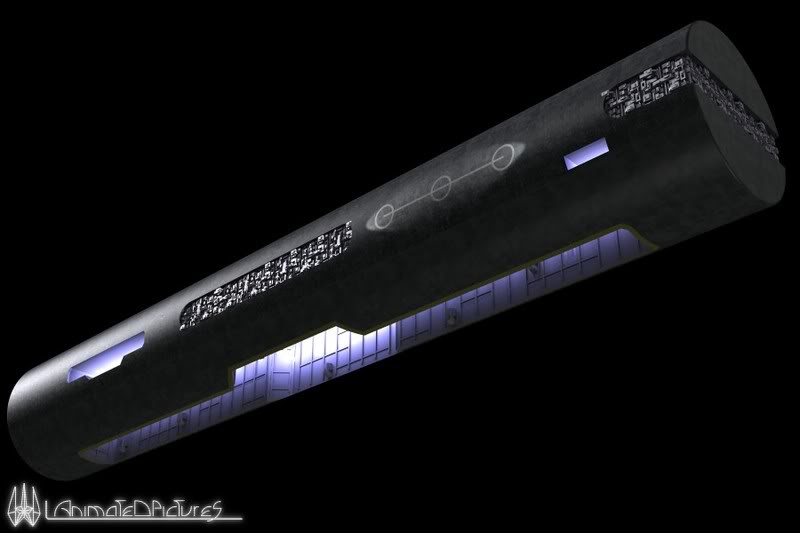
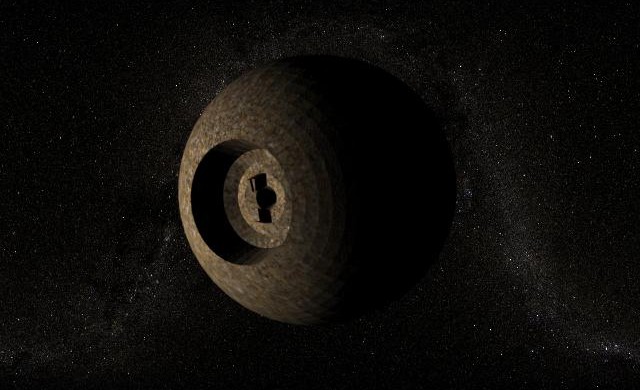
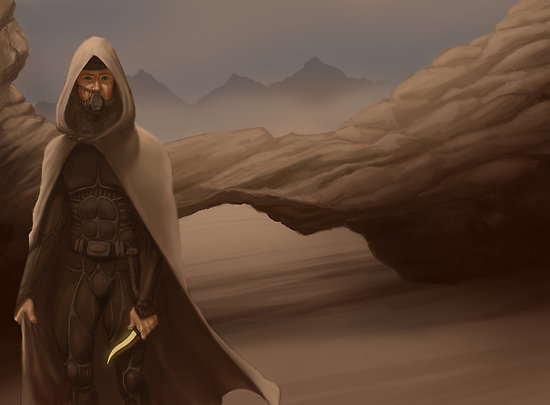
More Prometheus Trailers: Quiet Eye and Space Travel Part I

So… here we find ourselves just two days shy of the official release date of the movie Prometheus. And wouldn’t you know it, these people still aren’t finished toying with us yet! Seems they got more trailers, which I just happened to snag! Let’s be honest, sci-fi and Aliens fans everywhere are hungry as hell at this point, and these are just more tiny snacks to tease us with! But what can we do? Any snippets that come out, we gotta gobble em up! So here they are… Bon appetit!

The first video is entitled “Quiet Eye”, where an interview camera takes archeologist Dr. Elizabeth Shaw’s statement to Mr. Weyland (head of Weyland Industies). Basically, she is stating why she should be allowed to lead the Prometheus mission and speaks about its potential benefits to the company. You know, Alien-type stuff!


Second, there is this clip I dug up over at Verizon’s Facebook page (they are apparently a big sponsor. This particular one is an interview with Prometheus’ conceptual artists who talk about the eponymously named ship, its design and layout, and how all of this was intrinsic to setting the tone and feel of the movie.


Jeez… When is this damn movie coming out?!

Dark Knight Parody

Hey all, I thought I’d share this little nuggat, the “The Dark Knight is Confused” by professional spoofsters The Key of Awesome. This is an oldie, but given all the Batman news of late, I thought it might be fun to post.

If you haven’t seen it yet, you really need to! Few people like to acknowledge that the Dark Knight had some serious plot holes, but these guys manage to make fun of them in just the right way. And the Joker and Alfred impersonations are pretty spot on. Click on it!

A Tribute to the Joker

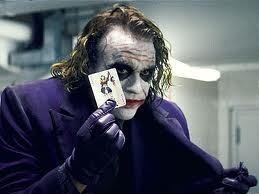
the_joker-wallpaper-1366x768Soon enough, the third and final installment in Chris Nolan’s Batman franchise will be premiering. I can’t tell you how much I want to see it. Ever since The Dark Knight ended and it was clear the Joker would not be appearing in movie 3, I’ve been itching to see what they would do with it.

And from what I’ve seen, they are taking the proper route. Combining elements from the comic book The Dark Knight Returns with a real life or death, all or nothing feel, this movie might even top the last one in some respects. Don’t want to jinx it, just saying it’s sure to be good.

But I think I speak for more than just myself when I say that it’s a shame the Joker won’t be making it back for one last dance. We all know why he won’t, of course. For one, it would have been in bad taste to try and replace Ledger after his untimely death. What’s more, after the masterful performance he gave, no actor could be expected to fill the role. I mean, c’mon, you don’t ask to go on after the Beatles, it’s just plain silly!

So in honor of Ledger, and every other actor that has ever tried to bring life to this character, I’d like to do a post detailing this villain that has remained so popular over the years.

The Joker:
To put it simply, this character, this villain, is a work of genius. Designed to be one of the many villains the “caped crusader” did battle with, it wasn’t long before this smiling psychopath became Batman’s arch-nemesis and the chief pain in his ass. The reasons for this seems pretty clear, but just for fun I’ll get into them anyway. Basically, he was the perfect villain because people loved to hate him and found him so dark and yet so fun.

Persona:
For starters, his whole work up was immensely inspired. By adopting the whole insane clown thing, he combined the macabre with the innocent, which pretty much made him the stuff of nightmares. He killed, he maimed, and he tortured people sadistically, but he always did it with a smile on his face and a quick joke. He could be insane, yes, but he could also be brilliant and cunning. His method was madness, but it was concealed behind a sort of playful, laughable exterior.

This was in stark contrast to Batman’s tough and cold character and the permanent scowl he had etched on his face. As such, he was the perfect foil for Batman’s particular brand of heroism and social control. Whereas the dark knight was obsessed with order and stability, the Joker was malevolence and disorder personified. In a way, he played Lucifer to Batman’s God, messing with his designs and subverting his sense of right and wrong. And, like Lucifer, he knew how to turn the tables and get people to do his bidding. And whereas Batman never smiled, much like God, the Joker could be counted on to see the fun side of things, even in pain, suffering and death.

Origins:
Due to the many adaptations and interpretations of this character over the years – be they in print, television or cinema –  there are more than a few different origin stories. And they don’t always agree. However, certain common elements can be seen across all the different iterations. The earliest mention of his past indicated that he was a criminal named the Red Hood before he donned the clown makeup. This changed when he fell into a vat of chemicals while trying to escape from the Batman, an experience which left his skin permanently discolored.

This was expanded further in Alan Moore’s The Killing Joke, where he was shown to be a chemical engineer who quits his job at a chemical plant to become a standup comedian. After failing in this endeavor, he agrees to help two criminals break into the plant. Shortly before the robbery can take place though, he learns that his wife and son have died in a freak accident. He tries to back out of the crime but is strong armed by the other two thugs. And of course, the crime goes south and he is left disfigured. Between this and the loss of his family, he is driven insane and becomes the Joker.

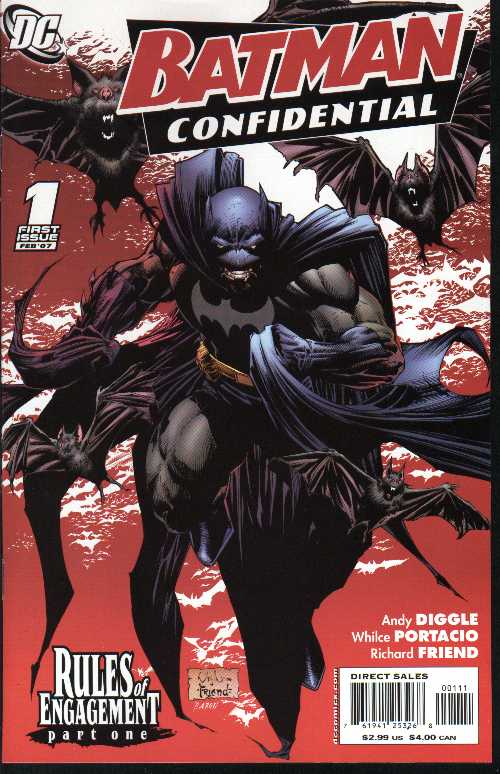
Later versions once again resurrected the concept of the Joker being a career criminal before he became a sociopathic villain. In these versions, the name Jack was used, and it was said that he had some contact with the Batman before taking on his new persona. In fact, in Batman Confidential it was suggested that it was his obsessions with the Batman that eventually led to the accident which forever changed him.

All of these elements informed Tim Burton’s adaptation of the story in the 1989 movie. Here, the Joker was portrayed as a petty thug named Jack Napier who worked for Rupert Thorn, the Gotham city crime lord. Then, after tangling with the Batman at a chemical plant, he suffered a disfiguring injury before falling into a chemical vat, which left his skin dyed and his face permanently scarred. The Joker therefore blamed Batman for his transformation, but would later come to learn that he had been the one who shot his parents when he was just a child.

Personally, I found this version to be genius in that it managed to capture the true insanity of the Joker. Faced with an image of himself that was twisted into a hideous smile, Napier could do nothing but laugh at the sick joke that had befallen him. From thence forth, he was determined to make others see the humor in it as well, right before he killed them! And by making him responsible for killing Bruce Wayne’s parents, the two were ultimately responsible for the others’ creation. Clearly, Burton interpreted the whole “flip sides of the same coin” thing quite literally!

However, Christopher Nolan took a different approach with his adaptation of the criminal mastermind. In the 2008 film The Dark Knight, we are given a version of things where we know nothing about the Jokers origins. On several occasions, he offers up explanations as to how he got his scars; but of course, the story keeps changing. No one can be sure which version is the truth and which is false. In one, he’s the victim of an abusive father who slashed his face. In another, he had a wife who gambled and had her face cut up by the Mob. His own scars were self inflicted out of grief so that he could resemble hers.

This is apparently in keeping with the fact that no definitive explanation has ever been given as to how the Joker really became what he was. Over the years, many different explanations have been given and it’s unclear which are true. In the end, this was resolved by saying that the Joker frequently lies, or can’t keep all the facts straight in his head. As he says in The Killing Joke: “Sometimes I remember it one way, sometimes another… if I’m going to have a past, I prefer it to be multiple choice!”

Weapons of Choice:
smilexThough the Joker appears to be adept at firearms and somewhat versed in hand to hand combat, his preferred method of killing has to do with various “comedic” weapons. These include razor sharp playing cards, acid-spewing flowers, cyanide pies and lethal electric joy buzzers. Clearly, the man understands irony and is willing to go the extra mile for consistency.

In addition, he has a signature poison known as “Joker Venom”, a deadly poison that leaves his victims with a ghoulish rictus grin as they die while laughing uncontrollably. This venom comes in many forms, from gas to darts to liquid, and has been his primary calling card since his character’s inception.

All of this was featured in Tim Burton’s Batman, where it was revealed that the Joker was well versed in chemistry and was using this knowledge to create his Smile-X poison. By smuggling various chemical precursors into common consumer products, he was able to disseminate his poisons into Gotham city without anyone knowing. Once these different products were used in combination, people began to die, all of them with a massive grin on their faces!

In Nolan’s version, the Joker retained his preference for simple weapons, but dropped the whimsy, poison and chemistry. As Ledger’s Joker said to a detective while in custody: “Do you want to know why I use a knife? Guns are too quick. You can’t savor all the… little emotions. In… you see, in their last moments, people show you who they really are.” Later, while free and in the company of the Russian mob, he added: “I’m a man of simple tastes. I enjoy dynamite, and gunpowder, and… gasoline!”

Between these two takes, the Joker retains one basic characteristic… Fear! Whereas a criminal with a gun is scary, a mad man with sharp objects, burning acid and explosive devices is downright terrifying!

Criminal Acts:
The Joker’s resume reads like that of a man who desperately wants to be the biggest maniac in town. Over the many years of his character’s existence, he has committed countless crimes, some whimsical and some downright brutal. All of these have been done for reasons which, in the words of the Batman: “make sense to him alone.”

In the Killing Joke, the Joker paralyzes Batgirl (aka. Barbara Gordon) by shooting her in the back. He also kidnaps Gordon and taunts him with photographs of his crime, hoping to drive him mad and thus prove his point that any man can go insane under the right circumstances. In “A Death in the Family”, the Joker also killed Jason Todd, the second Robin. This, he did with a bomb, but only after beating him senseless with a crowbar.

During one of his many stays in Arkham Asylum, the Joker also managed to convert Harleen Quinzel, a psychiatrist who was sent in to examine him, into his willing helper. Convinced that the Joker might be faking insanity to avoid the death penalty, she sets out to unlock his past. In time, he earns her sympathy and convinces her to help him escape. Eventually, she is caught and her obsession with him leads her to seek him out and become Harley Quinn, his criminal sidekick.

He also went as far as to murder Sarah Essen Gordon, Commissioner Gordon’s second wife, after kidnapping her. Once Gordon took him into custody, he once again taunted him in the hopes of driving him mad and getting him to forsake his moral code. However, Gordon sticks to his code and only kneecaps him. True to form, the Joker quickly laments that he might not walk again, but then finishes with a maniacal laugh!

Of course, the list goes on. Given his many years of sadistic stunts, it would impossible to include them all in one post. Suffice it to say, he has been a constant source of (ahem) “entertainment” to Batman, Commissioner Gordon, and the Gotham Police Department.

Death:
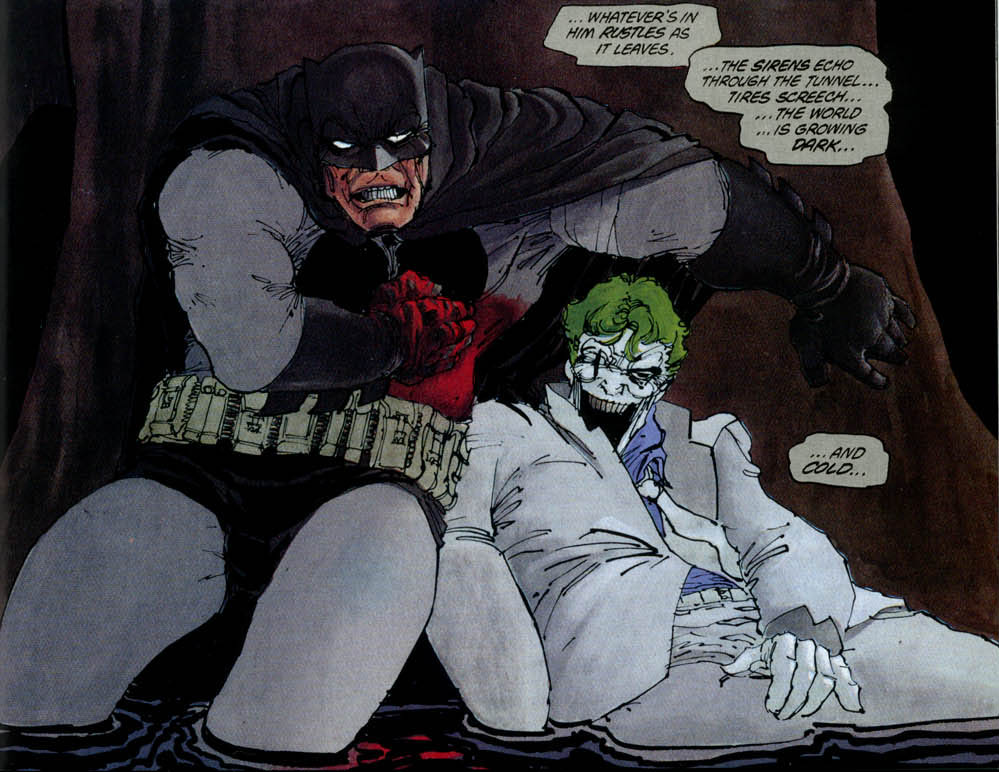
Though the Joker experienced near shaves with death on many occasions, he finally met his end in Frank Miller’s The Dark Knight Returns. It was here that, after a prolonged absence, the Batman came out of retirement to fight crime one last time. This soon inspired the Joker to awaken from his drug-induced slumber inside Arkham and begin creating havoc again.

It began with Joker once again pretending he was rehabilitated in order to gain parole from Arkham, and was followed by him releasing his toxic venom into a crowded talk show studio before making his escape. After many deaths and a chase that took them across the city and into an amusement park, the Batman finally cornered the Joker inside a tunnel and engaged him in mortal combat.

The Joker managed to stab him several times, but Batman eventually got the upper hand and snapped the Joker’s neck. However, this didn’t prove fatal, and a laughing Joker once again mocked Batman for not being able to go through with it. The Joker then took a deep breath and snapped his own neck the rest of the way. Thus, the Joker died as he lived… laughing, mocking and batshit crazy!

Final Thoughts:
What more is there to say? The Joker is just one of those characters who’s stuck with us over the years, and for good reason. Not only did he have all the right characteristics to make a fitting villain, he was also the perfect arch-nemesis for the Batman. Overall, I have to assume that he wasn’t the kind of character who was tailor made for the role, but an inspired invention that grew into the role over time and became a permanent feature before long.

To paraphrase cartoonist Berkeley Breathed, good characters aren’t just created, they wander in off the street looking for a meal and a bath and end up staying. In the Jokers case, I’m glad he stuck around. Much like the Batman, he’s probably the most realistic, dark and gritty personality to ever come out of the comic book world!

The rest, as they say, is insane cackling laughter… HAHAHAHAHAHAHAHA!

RIP Heath

Sci-Fi Drugs

The other night, I had one of those moments. It was a moment where I found myself thinking about a cool concept and realized that it would make a damn fine post. It’s also one that interests me quite a bit and has even influenced my own writing. So as quickly as I could, I hopped on my laptop (even though it was 2am) and began making a list of all the sci-fi drugs I knew!

To me, the reasons for including drugs as part of a sci-fi franchise are obvious. For one, drugs and drug cultures are very much a part of our society, so it’s only natural that a sci-fi author should have something to say about it. As Gibson said, all sci-fi is really about the time in which it is written, ergo fictionalized drugs in future settings are really a reflection on the attitudes of today.

On the other hand, creating fictitious drugs and inventing subcultures that use them are a good way to give a story some realistic background. Wherever and whenever a story takes place, you have to assume that they will have narcotic substances there, and what form they take and how they go about dealing with them tells you much about that culture.

Either way, it’s a subject that has fascinated me for quite some time. So here are some highlights from the wold of sci-fi drugs!

Can-D:
Here we have a designer drug that was created by none other than sci-fi great Philip K. Dick. As fans may know, this guy was somewhat of an expert on drugs, having taken part in the Californian drug counter-culture during the 60s and 70s. As a result, he had a lot to say about drug use, their impact, and drug policy.

In this particular case, the drug comes to us from the story of The Three Stigmata of Palmer Eldritch. Taking place in the 21st century, where global warming has sent millions of people off Earth to the hostile environments of the Solar System, people have turned to a combination of the drug Can-D and what are known as “layouts.”

Layouts are physical props intended to simulate a sort of alternate reality where life is easier than either the grim existence of the off-world colonies or life on Earth. By taking the drug in conjunction with the layouts, people are able to experience a sort of shared hallucinogenic state. This in turn has given rise to pseudo-religious cults that have grown up around the use of layouts and the drug, consisting of people who dream of better worlds than the one they are forced to endure.

Dancer:
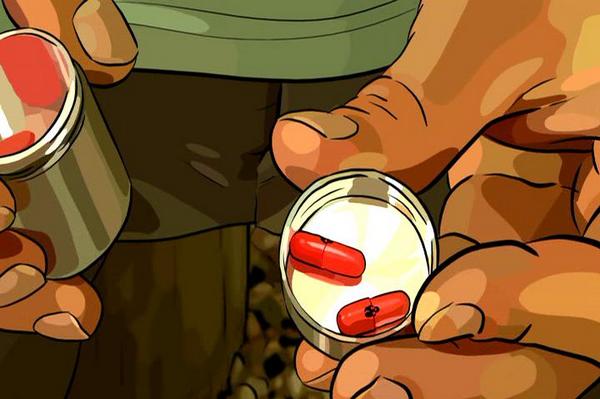
To complete the semi-dystopian setting of his Bridge Trilogy, Gibson was sure to add a designer drug that was all the rage amongst Californians in the near future. The drug was named Dancer, a powerful and addictive hallucinogen that apparently came in the form of a red dust. People would take it orally, rub it on their gums, smoke it or snort it.

In short, Dancer was like a red cocaine, except that it caused hallucinations rather than manic behavior. People who consumed it would typically become euphoric and mellow, causing them to get all rhythmic and break into dance (hence the name). However, it was was also known to make people violent from time to time, which made it more akin to the the effects of PCP.

Inspired by California’s drug culture and the emergence of designer drugs in the early 90s, Dancer was clearly meant to serve as an allegory for multiple drugs, or as a prediction of what the next big craze could be.

Dust:
Fans of Babylon 5 ought to remember this one. Basically, the drug was a hot item on the black market because it had the ability to give users temporary telepathic powers. It was violently addictive, and known for giving a very powerful and unique high. However, in the course of trying to stop the Dust trade to B5, Psi Cop Bester acknowledged that the drug was originally created by the Psi Corps as a way of creating telepaths.

When they realized it didn’t work, the drug was abandoned, but made its way to the black market because of its obvious appeal. As a longtime fan of B5, I can honestly say it was elements like this that made me like the show. Not only was the concept and the name cool, the fact that it began as a government-sanctioned drug was also believable and clearly inspired by the history of many real-world drugs.

Neuroin:
Inspired by Philip K Dick’s short story, Minority Report was a quasi-dystopian future where the use of precognitives promised to eliminate all violent crime from society. But of course, there’s a dark side to all this, and it just happens to be linked to the underworld drug known as Neuroin, a powerful and addictive psychoactive substance.

Though it is never explained in any real detail, the name suggests that it is of the opiate family and possibly combined with a neural stimulant. In addition to being the drug of choice of the protagonist, it is also the very thing that created the precognitives in the first place. All three psychics were once children who suffered brain damage in utero as a result of their mothers’ neuroin use. Though damaged neurologically, a side effect was the development of precognitive powers, which the state began to use in order to engineer the process known as “PreCrime.”

Based on the film adaptation, the principal means of taking neuroin appears to be through a specialized inhaler. This would allude to the fact that neuroin was taken in vaporized form. In the end, this drug served as both a commentary on the dangers of escapism as well as a plot device. While neuroin was the reason for the precognitives existence, it was also how the main character chose to numb himself over the loss of his son.

Nuke:
The designer drug from Robocop 2, and one man’s attempt at achieving his dream of becoming a Jesus-like figure! Designed by Cain, Nuke was an extremely pleasurable and addictive substance that began making the rounds in Old Detroit by the second movie. Coupled with a Police strike and financial ruin, Nuke seemed to be the thing that would finally break Detroit and allow the greedy bastards at OCP to finally take over.

There are several kinds of Nuke, but by far the most popular variety comes in the form of the red sludge. This is known as Red Ramrod, and was followed shortly thereafter by White Noise, Blue Velvet, and Black Thunder. The color scheme alluded to Cain’s “patriotic” sentiments, as he was known to say that his drug was making “Made in America” mean something again.

Nuke comes only in liquid form and is taken by means of small needles that inject the drug directly into the bloodstream. Because of its highly pleasurable nature and chemical properties, only a few doses are needed before a person becomes hooked and will experience intense withdrawal if they don’t get a regular dose. A commentary on the emergence of designer drugs, it was also served as a means for making some tough observations on drug use and its effect on society.

Snow Crash:
This drug is, admittedly a little off the beaten path. Featured in the Neal Stephenson novel of the same name, Snow Crash was essentially an allegory for a system crash, but in neurological form. Taking the form of both an inhalant and a digital virus, the “drug” had the effect of rendering users docile, passive and babbling an idioglossia similar to speaking in tongues.

But of course, there was more to it than all that. Basically, Snow Crash was designed by an information tycoon named L. Bob Rife who wanted control over people’s minds and daily habits. Using a Sumerian tablet, he basically encoded the ancient “Enki virus” – a virus that altered humanity’s neurology and spawned modern languages. So really, he was looking to reverse the Babel myth, making humanity neurologically simpler and thus programmable.

In addition to being a commentary on the drug culture, Snow Crash was also an observation about the proliferation of computer viruses in the early 90s and an allegory on the similarities between ancient myth and modern technology. It was also pretty cool and weird!

Soma:
When it comes to designer drugs, Soma pretty much takes the cake. Derived from Aldous Huxley’s classic tale of dystopia and social engineering, Brave New World, Soma was the kind of drug that came with the label “good for what ails ya” and meant it literally. Designed to cure any and all emotional problems, the pill was mass produced and a key feature of the World State’s apparatus of social control.

Use of Soma is prescribed at a very young age to citizens of the World State, as soon as children are old enough to begin sleep conditioning. Slogans such as “a gram is better than a damn” are programmed into their minds so that they respond to emotional stress by simply popping a pill. This is often referred to as “taking a vacation”.

To illustrate the effects of the drug, Huxley relied on his own experience using mescalin and other drugs. Apparently, subjects using Soma would enter a dream-like state where everything became pleasant and agreeable, all their worries and unpleasant emotions melting away. This dream-like state could be discerned by observing a person’s eyes, which would become noticeably glazed.

In addition, though the state freely distributed the drug and there were no shortages, Soma was still designed to be non-addictive and with no harmful side effects. This, added to its effectiveness, made it the ultimate designer drug and a very effective means of social control. A commentary on the pharmaceutical industry of his day and on the drug culture of the 1920s and 30s, Soma remains the most popular example of a fictional sci-fi drug!

Spice:
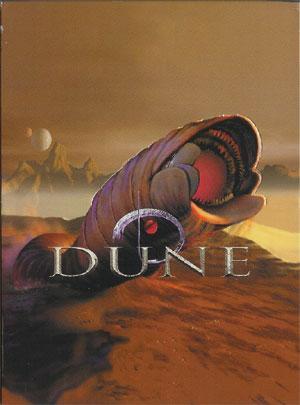
Then again, the spice melange is pretty damn popular too. However, as the only drug on this list that is not designed or synthesized, and is by definition an “awareness narcotic,” Spice is really in a category of its own. Taken from the Dune series, Spice was the most precious resource in the universe in more ways than one.

For starters, Spice could only be found on one planet, the desert world known as Arrakis. Mining Spice was also a highly hazardous duty, due to the inhospitable climate of Arrakis and the presence of Sandworms. And given its many benefits, which included prolonged life and expanded awareness, it’s little wonder why it was so damned expensive!

A clear allegory for oil, all life and commerce in the Imperium of Dune revolved around Spice in one way or another. The Guild Navigators used it to achieve their limited prescience and guide ships through foldspace. The Bene Gesserit used it to enhance their mental and physical acuity and make contact with their “Other Memory”. And every house used it to improve their health and longevity. In short, without Spice, all trade and commerce in the universe would end and countless people would die.

And of course, there never would have been a Paul Mua’dib or a Leto II, and humanity would have died as a result! That’s quite a drug them people got there!

Substance D:
Once again, we have a fictitious drug that comes to us straight from the mind of Philip K Dick. Featured in his 1977 book A Scanner Darkly about the drug subculture of California, Substance D was a powerful psychoactive drug that also went by the name “Slow Death.” The name proved apt, as the drug was not only violently addictive, but resulted in brain damage due to overuse.

According to the story, Substance-D was synthesized from the fictitious blue flower Mors ontologica, which is Latin for “death of being”. In the course of the story, the protagonist – an undercover narcotics agent – becomes addicted to the drug, suffers brain damage and is sent to one of the new recovery centers (“New Path”) to get clean.

In time, he is given the task of working on one of their many farms and learns that these places serve as grow ops for the flower. Hence, we see that “New Path” is the source of Substance-D, and is therefore benefiting from both the drug and the harmful effect it has on society. A commentary on strong-arm governments and the pharmaceutical industry perhaps?

Final Thoughts:
When it comes to fictionalized narcotics, a few basic features become evident. For one, fictional drugs can take one of two forms, being either of the organic or synthetic (i.e. designer) variety. Second, their use as part of a story’s background is meant to call attention to our current drug wars, warts and all. But above all, they seem to serve as a form of social commentary by pointing to the ongoing nature of temptation, escapism and repression. On the one hand, human beings will always be looking for escapes and ways to ease the burden of existence. On the other, we are always likely to feel the need to control the flow of narcotic substances and legislate what people can and can’t put in their bodies.

Finally, I found that just about all the authors here were taking a descriptive, rather than prescriptive, approach. Essentially, they were content to sit back and make observations on the whole issue of drug use and moral legislation, rather than making pronouncements. This would seem the preferable option considering that you can’t really offer a clear resolution without sounding either enabling or preachy. Some say that drug use destroys society, other say that people have the right to put whatever they want in their bodes. And then there are those who say that human weakness is a constant, and that criminalizing such a thing turns a flaw into a war. Complicated!

On a brighter note, all this talk puts me in mind of my own fictional creations. Years back, when I was coming up with the concept for my Legacies story, I spent a fair bit of time pondering what kind of drugs people would be using in the relatively distant future. I think I might just dedicate a page or a post to just that topic. In truth, I’d like to know what people think about my inventions. Look for it, it shall be coming soon!

Utopia in Popular Culture

Aeon Flux:
Fans of this animated cult-classic are sure to understand why this show has made the list. In the futuristic setting of the show, events revolve around an ongoing conflict between two societies. On the one side, there is Brenga, a police state run by the autocrat Trevor Goodchild. On the other is the anarchist state of Monica, where the show’s main character – Aeon, a Monican agent and spy – comes from.

Much like the world of the Cold War, these two sides are locked in an ongoing state of detente, where espionage and skirmishes take place back on both sides. The border region between them resembles that of Cold War-era Berlin, where a massive wall separates the two and those trying to cross are either shot or cut down. In one particular episode, people who are missing limbs were a focal point, demonstrating just how many people have fallen victim to the border defenses.

This is a common feature in the story, as it seems that the people of Bregna (known as Breens) would like very much to live the lives of Monicans. Its for this reason that one of Aeon’s duties as an agent is to make regular runs into Bregna to get people out through a series of underground passages. It is also suggested that it is precisely because Monica has no official representatives that it is impossible for Trevor Goodchild to deal with them. He does not seem to understand how their society works, and therefore cannot bribe, threaten, or intimidate them into a peace settlement.

Avatar:
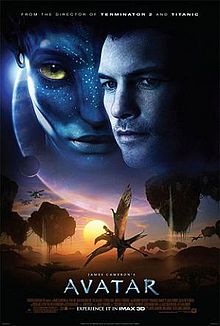
Here is a perfect example of the traditional Edenic civilization being threatened by the evil progress-driven bad guys. Though it was not my favorite movie by any means, it’s undeniable (aka. blatant) utopians themes are quite clear. In short, the Na’vi live a peaceful, contended existence with their environment, and are even telepathically linked to a planetary intelligence known as Eywa.

Borrowing elements from Native American lore, the Gaian hypothesis, and the concept of an ecological utopia, Cameron created a world where paradise was to be found by anyone with appreciative eyes. Whether it was their communion with animals, the trees, or Eywa, the Na’vi elevated the concept of living in harmony with their environment to literal levels.

Demolition Man:
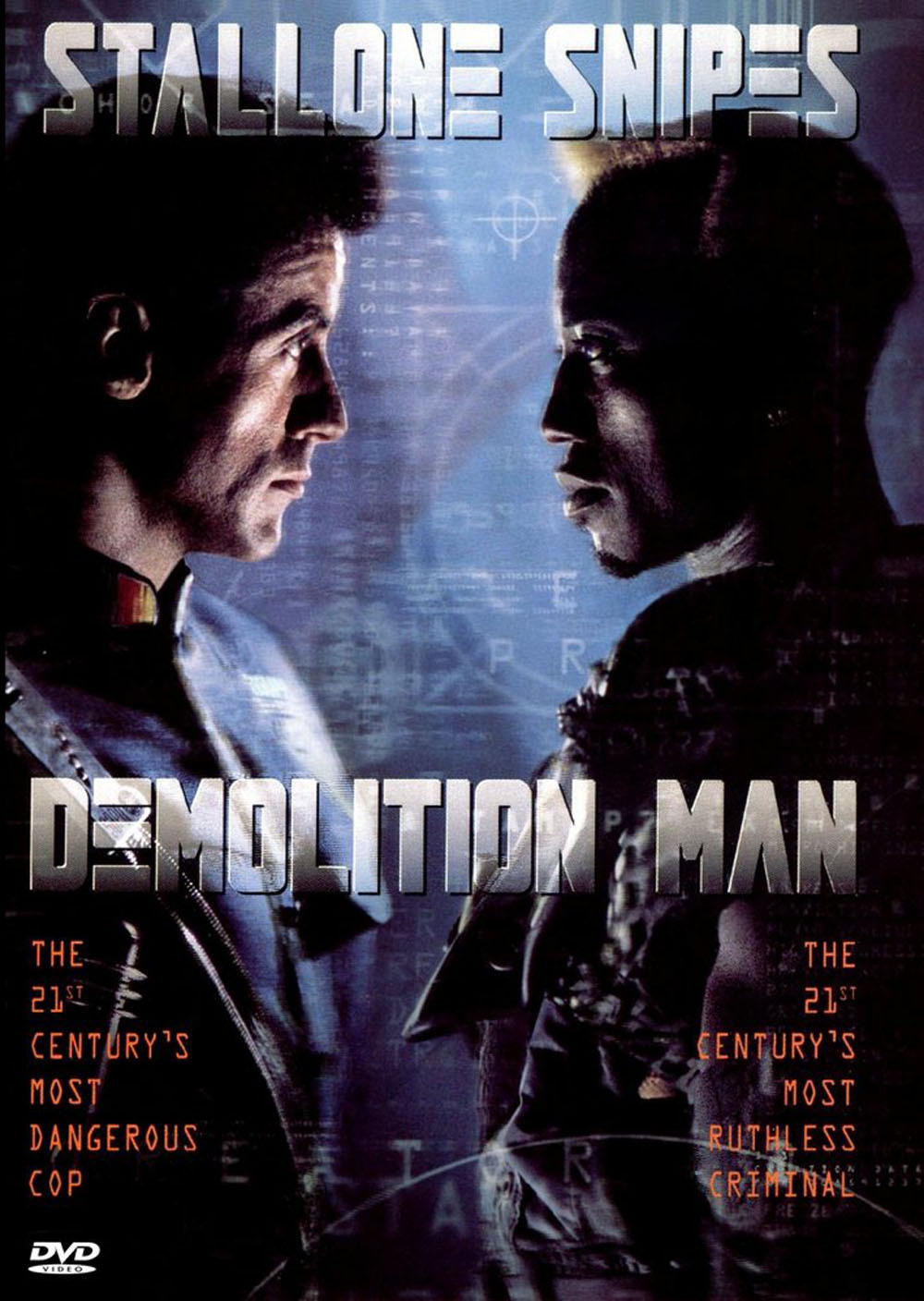
Again, we have what is often classified as a dystopia, but which is made so because of its apparent utopian elements. Set in the not-too-distant future of San Angeles – the mega-city formed from the merger of LA and San Diego – the story revolves around the social experiments of one Dr. Raymond Cocteau.

In addition to being the man who invented the cryo-stasis prison system, which was central to the plot, he is also the man who pioneered the San Angelans “utopian” way of life. In essence, this way of life is bereft of violence, crime, and drug use. The people live what can only be described as a peaceful and contented existence, believing that everything that came before them was characterized by violence and brutality.

The price tag was high, to be sure. People are no longer allowed to swear, play contact sports, own guns, or eat anything remotely unhealthy. Violent and/or sexual entertainment has also been banned, as has real sex. However, the people of San Angeles seemed to accept all this based on the state of society prior to Cocteau’s “revolution”.

The proliferation of violence, chaos, drug use and venereal diseases pretty much left them thinking they had no choice.  Such is the nature of utopian engineering, in the end, where people willingly surrender certain aspects of their lives in order to achieve something better. Much like collectivization, the banning of money, or the elimination of monogamy.

Futurama:
This might seem like a bit of a stretch, but I’ve always felt that anyone who loves science fiction can’t help but notice the classic themes and elements in this show. Usually this takes the form of dystopian elements – suicide booths, career chips, the tax monster, etc. However, at other times, some decidedly cheery and optimistic tones make it in.

For example, in one particular episode (season 1, episode 8: “A Big Piece of Garbage”), Earth finds itself being threatened by a massive ball of garbage. They deduce that only a similar ball would be able to deflect it, but unfortunately, no garbage exists. Everything on Earth is now recycled, used cans are recycled to make robots, and used robots are used to make cans. Nothing goes to waste, which is why Fry must teach them how to litter!

And then again, in season 6, episode 2: “In-A-Gadda-Da-Leela”, Leela and Zapp Brannagan land on what appears to be a mysterious, Edenic planet. Here, Leela and Zapp begin living freely as if they were Adam and Eve, which includes shedding their clothes, talking to a serpent, and living off the land. Of course, it was all a ruse by Zapp who once again just looking to get Leela in the sack, but the illusion was complete!

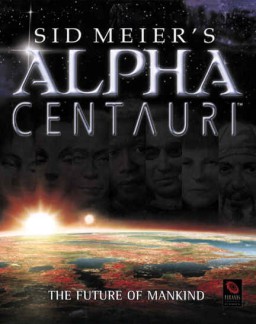
Sid Meier’s Alpha Centauri:
There’s a reason this game is one of my all-time favorites, and that is because it’s so inspired! One immediately gets the feeling upon playing this all the way through that a lot of classic sci-fi elements went into the making of it, as well as genuine cultural, sociological and scientific research.

For starters, there is the concept of colonizing a new world and the social experiments that it naturally will entail, which is in keeping with KSR Mars Trilogy. Each faction in the game represents a different take on engineering the perfect society. There are the humanitarians, the believers, the Gaians, the hive-mind people, the free-marketeers, the militarists, and the rational empiricists.

What’s more, the technology tree that is featured in the game contains many options for social engineering, the intended end result of which is a perfect society in one form or another. These include Thought Control, Cybernetic, and Eudaimonic, three basic visions of utopia which are dependent upon repression, post-humanism, and a utilitarian, social welfare approach meant to enrich the lives of as many people as possible.

There’s even the option of achieving transcendence, which is one of the victory condition’s of the game. This is achieved by merging with Alpha Centauri’s planet-wide organism, becoming part of its mass consciousness and ensuring a sort of quasi-immortality as it were. This is considered the biggest and best victory option since it ensures planetary peace, as opposed to conquering all the other factions, united them, or cornering the planet’s energy market (the three other victory conditions).

Star Trek:
When it comes to commercial sci-fi, Star Trek pretty much has the market cornered when it comes to utopian elements. Whether it was the original series, TNG, or its subsequent spinoffs, it was clear that humanity had reached a state of technical and social perfection thanks to advances made in science and technology, not to mention good old fashion optimism.

For starters, the United Federation of Planets was an egalitarian democracy where all member races were entitled to representation, a constitution guaranteed extensive rights and freedoms, and all wants and needs were addressed thanks to replicators, abundant energy, transporters and warp technology.

And of course, numerous references are made to the fact that Earth is crime free, all known diseases have been cured, and troublesome things like poverty, slavery, exploitation, inequality and human drudgery have all been eliminated. No real explanations are given as to how, but its clear it happened by the 22nd century.

Star Wars:
Though not a utopian series by any stretch of the definition, there are some tell-tale aspects of the franchise which warrant examination. For example, though the bulk of the story takes place during the “Dark Times”, when the evil Empire rules, numerous allusions are made to a time before the Empire where things are described in somewhat idealistic terms.

For example, here is how Obi-Wan describes the role of the Jedi in the good old days as follows: “For over a thousand generations, the Jedi were the guardians of peace and justice in the Old Republic.” In addition, it is also made clear that the Old Republic was governed by an interstellar democracy known as the Galactic Senate. Between the Jedi and the government, things like slavery, conquest, blatant racism, genocide, and all other forms of behavior common to the Empire were highly illegal.

In having this era of peace and relative prosperity to compare their current circumstances with, Lucas was able to drive home the point of how the Empire was illegitimate and had seized power by unjust means. It also made the heroes current predicament seem that much more emotionally involved.

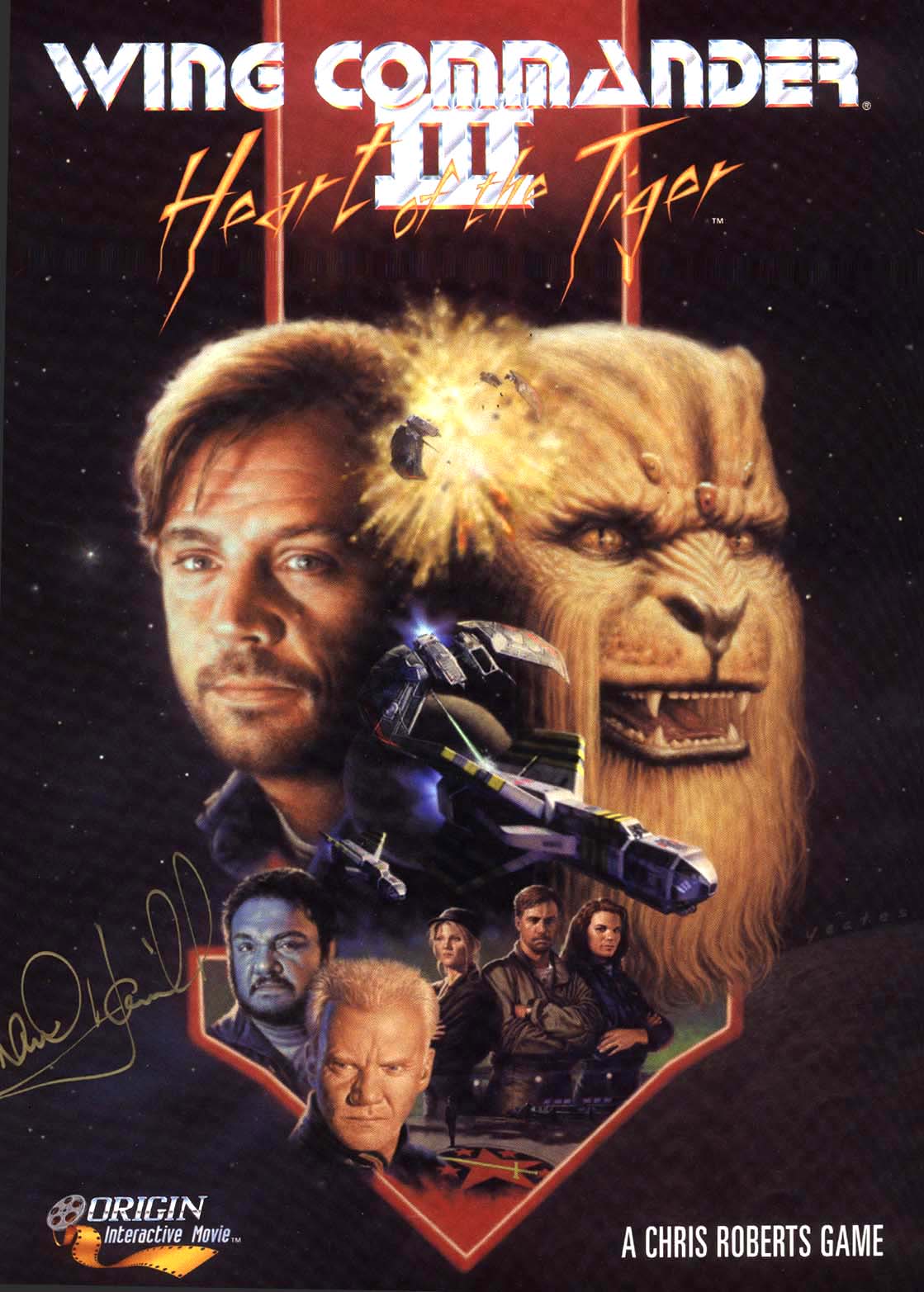
Wing Commander:
Calling to mind such franchises as Star Trek and Man-Kzin Wars, the Wing Commander series takes place in the distant future when a semi-utopian humanity is engaged in a war with a militaristic foe. As with the violent Kzin, the enemy in this series known as the Kilrathi, are a race of feline anthropoids.

Governed by a strict hierarchy and warrior code, the Kilrathi are driven to war and conquest and have been fighting humanity for generations. Though no formal description is ever made of the Earth government or human customs, many hints are given that suggest that the Terran Confederation is governed by the comparatively enlightened ideals of humanitarianism and democracy.

For instance, in the first Wing Commander it is said that Kilrathi do not place the same importance on alien life as the Confederation. Evidently not, since conquest, slavery and genocide seem to be par for the course for them! In addition, several alien species are allies with the Confederation, usually for the sake of mutual defense against the Kilrathi.

And as with Star Trek, the bad behavior of the enemy species is held in contrast to the comparatively peaceful and egalitarian behavior of humans. And as always, this is designed to illicit a point about history and human nature.

Conclusions:
When it comes to popular culture, there never seems to be a shortage of inspired science fiction elements. This is true of movies, television, and the gaming world. However, I can’t help but notice just how more common dystopian movies, shows and games are. For whatever reason, it just seems like tales of dark futures are much more popular. Is it because dark futures seem more realistic, or might it have to do with the proliferation of dystopian literature in the last century or so. Either way, believe me when I tell you that examples of modern utopian sci-fi franchises were much harder to find. No wonder Neal Stephenson challenged the sci-fi writers of the world to come up with something cheerier!

Technology in the Dune Universe

Hello again techies and social studies experts! I’m sorry, I assume those are the only two kinds of people who would enjoy these posts 😉 Regardless, I love doing them, mainly because it gives me a chance to exercise a little critical thinking when it comes to some of the most popular franchises of science fiction.

And today, I thought I’d tackle the bid baddy of classic sci-fi, Mr. Frank Herbert himself. Whereas most writers in this expansive genre tend to take a highly positive or negative view, Herbert distinguished himself by being highly subtle, ambiguous and multilayered in his approach.

Far from saying technology would save humanity, or condemn it, he seemed to be arguing that it really wouldn’t alter our basic makeup and behavior. That, presumably, would only come with thousands of years of natural evolution, selective breeding and funky narcotics!

But I digress, here are some examples of the technologies that characterized the Dune universe:

Atomics:
stoneburnerEvery house in the Dune universe keeps a nuclear arsenal in reserve. However, since the Great Convention forbids their use in war, and anyone found in dereliction would guarantee their own obliteration, they are not employed. Everybody’s got em, nobody uses em! At least not anymore…

Their last known use occurred on Selusa Secundus many years before the events of the first novel. It was here that a rogue house employed several in an attempt to destroy House Corrin. The attempt failed and the house was eradicated, their name erased from history. Unfortunately, Selusa Secundus was left a radioactive ruin, hence why it was converted to serve as the Emperor’s prison planet.

However, one type of nuclear device is still legal under the Great Convention. Known as a Stone Burner, these devices emit powerful J-radiation that destroys eye-tissue, rendering everyone in the blast vicinity blind. However, their primary function is to burn through a planet’s crust. If they are powerful enough, they are able to burn clean through to a planet’s core and destroy them planet from within.

Axlotl Tank:
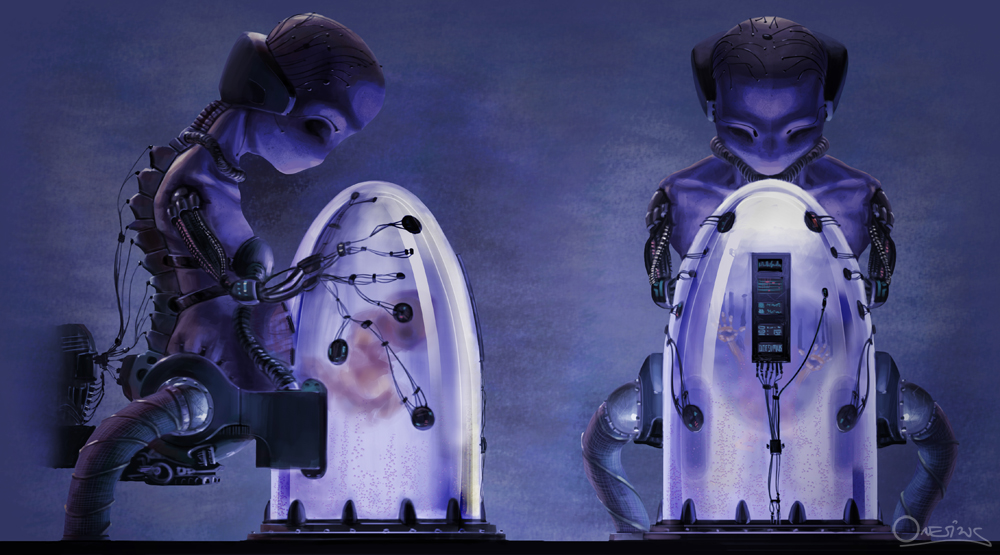
2007-8-18_DuneAxlotlTankThough widely used in the Dune universe, axlotl technology is also one of its most mysterious. A trade secret of the Tleilaxu, an axlotl tank is a “device for reproducing a living human being from the cells of a cadaver,” resulting in what is known as a ghola. In addition, the Tleilaxu Masters use these tanks in order to produce clones of themselves and keep their line going.

As the series progresses, axlotl tanks began being used to produce the spice melange, which had previously only been available on Arrakis. In time, it was also revealed that axlotl tanks were in fact Tleilaxu females, women whose bodies had been converted to grow gholas, clones and spice inside their wombs.

Guild Heighliner:
Dune_heighlinerThe principal means of interstellar transport in the Dune universe, a heighliner is a Guild ship that is capable of transporting massive amounts of people and cargo. Powered by the Holtzman Drive (see below) the ship is capable of “folding space” – jumping from one point in space-time to the next – instantaneously.

Each Guild Heighliner comes with its own navigator, a Guild mutant who uses their semi-prescient abilities to see through space and time to chart a safe rout for the ship to fly. The navigators do all this from inside their giant tanks where they remain immersed in spice gas.

Holtzman Drive:
foldspaceThis is the technology that allows Guild Heighliners to fold space, thus traveling instantaneously form one point in the universe to another. Using what is known as the “Holtzman Effect”, the same phenomena that powers personal shields as well as the catastrophic effect when one comes into contact with the beam of a lasgun.

Though it is never explained in detail, some hints are given throughout the series as to what principles of physics may be involved. For example, in Chapterhouse: Dune, an allusion was made to tachyon particles, the theoretical particle that can presumably travel faster than light.

Lasgun:
lasgunThe appendix of the first Dune novel, titled Terminology of the Imperium, defines Lasgun as follows:

continuous-wave laser projector. Its use as a weapon is limited in a field-generator-shield culture because of the explosive pyrotechnics (technically, subatomic fusion) created when its beam intersects a shield.

At one time, these directed energy weapons were the mainstay of Imperial armed forces. However, the development of shields meant that their use had to become more selective. Mounted on ships, ornithopters, and carried by infantry, lasguns remain a highly effective weapon, capable of cutting through any material.

No-Chamber/No-Ship:
ixian_noshipThis technology was first mentioned in God Emperor of Dune and took the form of a No-Chamber. This Ixian invention was basically a chamber that was cloaked in a stealth field which blocked it from prescient vision as well as more conventional means of detection.

After the death of Leto II, this technology was expanded to include No-Ships and even No-Globes. The former were basically heighliners which were equipped with no-fields and the Ixian machine which did the job of a Guild Navigator. In essence, these ships were not only sheilded from prescient vision, but were invisible to sensors and even the naked eye.

No-Globes were an even larger version of the technology, capable of covering an entire planet in a no-field and rendering it both invisible to prescience, invisible to the naked eye and undetectable. However, in Heretics of Dune and Chapterhouse: Dune, it is suggested that those of Atreides ancestry are capable of seeing through no-fields. This proved to be the case when Miles Teg was awakened to his abilities after being examined with an Ixian T-probe. His ghola also had this ability once he was awakened to his past memories.

Ornithopter:
dune_thopter1In the Dune universe, ornithopters (or ‘thopters) are the principle means of planetary transportation. Combining jet thrusters with articulated wings, the thopter is capable of vertical takeoff and landing, making it one of the most versatile flying machines ever invented.

Though most are used for commercial and personnel transport, thopters are also capable of being militarized, and often are. Armed missiles, bombs, lasguns, and even shields, they are most effective when used in an assault and/or supporting role.

Personal Shields:
Holtzmanshields-Dune1984The Terminology of the Imperium defines them as follows: the protective field produced by a Holtzman generator. This field derives from Phase One of the suspensor-nullification effect. A shield will permit entry only to objects moving at slow speeds (depending on setting, this speed ranges from six to nine centimeters per second) and can be shorted out only by a shire-sized electric field.

While these shields can be mounted on aircraft, vehicles and even large structures, the most common use is in the form of personal shielding units. These are worn by infantry for battle or for the sake of combat training in order to prevent serious injury. The introduction of this technology to the battlefield had a regressionary effect on warfare in that it forced troops to largely abandon energy and ballistic weapons in favor of hand to hand combat. Hence why swords and knives are commonly used in the Dune universe.

Stillsuit:
stillsuitThe trade secret of the Fremen! Stillsuits, as the name suggests, are a water reclamation and purification system that are worn by the desert-dwelling nomads whenever they are out on the sand dunes. Powered by the motion of it’s user, which includes foot-pumps mounted in the suit’s heels, the system turns all water loss – perspiration, urination, even feces – into usable water which they can draw from a tube near their mouth.

Given water’s scarcity on Arrakis, the purpose of these suits is clear. By preventing moisture loss and recycling it into useable water, they ensure that a person out in the open can sustain themselves indefinitely in the extremely dry and hot desert environment. As Doctor Kynes himself remarked: “With a Fremen suit in good working order, you won’t lose more than a thimbleful of moisture a day..”

Conclusions:
When it comes to science fiction franchises, one can tell a lot by the technology, big and small, that are all part of the background. And when looks over these examples of technology in the Dune universe, a few things become abundantly clear right away:

  1. The connection between environment and invention: Because the bulk of the story takes place on Arrakis, much of the technology we see was specifically adapted for desert use. Shields were useless in the desert environment, turbofans often broke down from dust and sand, and even massive crawlers were at risk of being consumed by Sandworms. In short, all the advanced technology of the Imperium was either useless or subject to hazards from the desert and its creatures. In the end, the most basic inventions, stillsuits and thumpers, were best suited to ensure survival. In short, those technologies who worked with the environment instead of against it were the most likely to work. More indications followed, such as how Paul’s father said to him that “On Caladan we ruled by sea and air power, but here on Arrakis, you need desert power.” On the one hand, this would seem to indicate that every planetary environment required its own balance of technology, Caladan being a sea planet meant ships and aircraft were the weapons of choice. On the other, he seemed to be alluding to the fact that rule on Arrakis required the allegiance of those who knew the desert best (i.e. the Fremen)
  2. Technology as regressive as well as progressive:This is something that I found particularly intriguing about the Dune universe, which was how it combined medievalism and futurism. On the one hand, humans have perfected interstellar travel and have colonized millions of planets throughout the galaxy. On the other, they fight with swords, knives, and live under a feudal system of government. As the story progresses, two reasons are given for why this is:
    1. After the Bulterian Jihad, the Great Convention established that no thinking machines or anything resembling them would ever be created again. As Leto II remarked in GEOD: “The target of the Jihad was a machine-attitude as much as the machines… Humans had set those machines to usurp our sense of beauty, our necessary selfdom out of which we make living judgments.” In short, the purpose of the Great Convention was not just to ban AI’s but the very mentality that had created them. Thenceforth, the very concept of industrial dependence was to be banned. And as Duncan Idaho later observed, such an economy was the basis for unlimited consumption and growing social equality. This ideal, borne of the Industrial Revolution, was also the cause of social chaos and the eventual rise of AI’s. By banning these and the system that ensured their creation, humanity was effectively going back to a time where feudal control by a small group of barons was basically necessary.
    2. The Great Convention also forbade the use of atomics. This meant that war had to be conventional from now on. The advent of shields also meant that energy weapons were no longer advisable, which meant that soldiers were further forced to adapt to conventional means of fighting – i.e. hand to hand combat. Swords, knives, and slow-pellet stunners were now mainstays of modern warfare, not by choice, but by necessity.

All of this leads to conclude that Frank Herbert was a freaking genius, or at least possessed a very complicated intellect. Whereas most science fiction and speculative writers tend to take a positive or negative view of technology, he preferred to take a very historic and ambiguous view of it. Setting his story in the distant future, one would immediately get the impression that humanity would be so highly evolved that it no longer resembled humanity of today.

However, Frank showed us a universe where humans were not only very much like they are today but also retained elements from our past. Much like the world of today, people are dependent on a single resource, are subject to petty rivalries, and a morally dubious system. But like the world of yesteryear, they are ruled by dukes, barons, emperors, and a system of entitlement and gross privilege and view democracy as a threatening sham.

One can only assume that Frank was making the point that human nature will not change as a result of technological innovation or space travel. Sure, AI’s and cybernetics might emerge down the road, giving humanity the ability to enhance their bodies and thought processes. But Frank’s take on this was that humans would naturally revolt against these once they came to the conclusion that they were needlessly complicated people’s lives.

So in the end, the only way out of being human was to create “mature humanity” as the Bene Gesserit said. This consisted of selective breeding and organic enhancement, relentlessly training people to strengthen their minds, bodies, and unlock the mysteries of the brain, eventually culminating in a person who could not only access their genetic memory, but merge space and time in their own mind. Interesting… and freaky!

Well, my mind is blown and I got nothing more to say. Stay tuned for something else, assuming I can overcome the effects of venturing into Frank’s head space. Man, it’s weird and awesome in there, kind of like a spice trance!

More Utopian Science Fiction

Boy this is fun, and like I said last time, overdue! For fans of literature and science fiction in particular, you really can’t do justice to a genre unless you examine its opposite as well. Not only is it fun and interesting, it kind of opens your eyes to the fact that we find a certain truth in the pairing of opposites.

For one, you come to see that they really aren’t that different. And two, that they essentially come from the same place. Much like light and dark, black and white, heaven and hell, extremes have more in common with each other than anything occupying the space between them. Is that quote? If not, it is now! MINE!

Last time, I buckled down to tackle the big names, the famous classics. Today, I thought I’d cast the net a little wider since there are a ton I missed and there really is no shortage of examples. Here’s what I got so far:

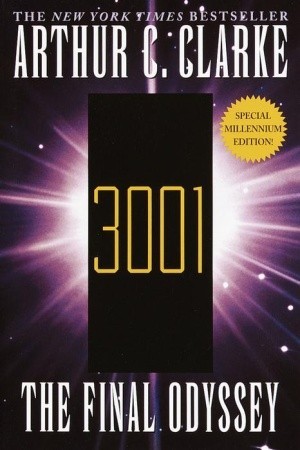
3001: The Final Odyssey:
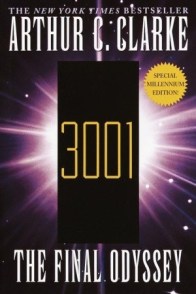
The final book in Clarke’s Odyssey series, 3001 not only provided a sense of culmination to this epic story, but also gave Clarke the opportunity to share his predictions on where humanity would be by the 31st century. Released in 1997, it also contained a great deal of speculation about the coming millennium and what the 21st century would look like.

The story begins when, just shy of the millennial celebrations, the body of Frank Poole is discovered at the edge of the solar system. This astronaut, who died in the first novel, had been floating at the far edge of the solar system for almost a thousand years. His body is resurrected using the latest technology, and his reintroduction to society is the vehicle through which things are told.

As a fish out of water, Poole is made privy to all the changes that have taken place in the last 1000 years. Humanity now lives throughout the solar system, Earth and most planets are orbited by massive rings that connect to Earth through huge towers. Sectarian religion has been abandoned in favor of a new, universal faith, and the problems of overpopulation, pollution and war have all been solved.

Amongst humanity’s technological marvels are inertia drives on their ships (no FTL exists), a form of holodeck, genetically engineered work creatures, skull caps that transmit info directly into a person’s brain, data crystals, and of course the massive space habitation modules. Though the story was meant to be predictive for the most part, one cannot deny that this book contained utopian elements. Essentially, Clarke advanced his usual futurist outlook, in which humanity’s problems would be solved through the ongoing application of technology and progress.

Though I found it somewhat naive at the time of reading, it was nevertheless an interesting romp, especially where the predictive aspects came into play. And it also contained one of the best lines I’ve ever read, a New Years toast for the 21st century which I quoted on midnight on Dec. 31st, 1999: “Here’s to the 20th century. The best, and worst, century of them all!”

Brave New World:
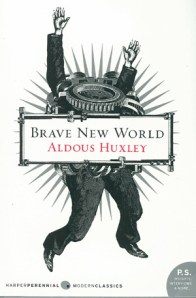
I  know, BNW is listed as one of the quintessential dystopian novels of our time, and I even listed as such on my list of dystopian classics. However, one cannot deny that this book also contained very strong utopian elements and themes, and it was how these failed to remedy the problem of being human that ultimately made BNW a dystopia.

Set in the year 2540 CE (or 632 A.F. in the book), the World State is very much the product of utopian engineering. Literally all aspects of social control, which are largely benign, are designed to ensure that all people are born and bred to serve a specific role, cannot aspire beyond it, and are emotionally and psychologically insulated against unhappiness.

In short, people have exchanged their freedom for the sake of peace, order, and predictability. In fact, these ideals are pretty much summed up with the States motto: “Community, Identity, Stability.” Another indication is the popular slogan, “everyone belongs to everyone else”. And finally, the orgy porgy song provides some insight as well: “Orgy-porgy, Ford and fun, Kiss the girls and make them One. Boys at one with
girls at peace; Orgy-porgy gives release.”

Couldn’t have said it better myself. The goal of creating oneness and sameness to prevent things like greed, jealousy, war, and strife, is a constant theme in utopian literature, elevated to the form of high art in Huxley’s vision. And above all, the dream of a perfectly regulated, peaceful society, where individuality and difference have been purged, was accomplished through pleasure and not pain. This can best be summed up in an exerpt from Huxley’s letter to Orwell after 1984 was released:

“Within the next generation I believe that the world’s rulers will discover that infant conditioning and narco-hypnosis are more efficient, as instruments of government, than clubs and prisons, and that the lust for power can be just as completely satisfied by suggesting people into loving their servitude as by flogging and kicking them into obedience. In other words, I feel that the nightmare of Nineteen Eighty-Four is destined to modulate into the nightmare of a world having more resemblance to that which I imagined in Brave New World.”

I, Robot:
In the course of examining utopian literature, a term came up with made me stop and think… Robotocracy. Hence this next example which also contains some rather interesting utopian elements. As one of Asimov’s most recognized works, this collection of interlinked short stories tells of a future where intelligent robots make their debut and gradually become more and more integrated to society.

Ultimately, Asimov portrays AI’s as loyal and gentle creatures who not only improve the lot of humanity, but are incapable of harming their human masters. Whereas most speculative works of fiction dealing with AI’s are cautionary in nature, showing how entrusting our fate to machines will result in death, in this story, all of humanity’s fears prove baseless.

In time, the employment of robots and positronic master computers leads to the development of FTL, optimizes the world’s economy and production, and even prevents problems and conflicts which they can foresee. Human beings express reservation and fear, but in the end, the robotocracy proves to be sensible and caring, not cold and inhuman.

It was for this reason that I didn’t care for the film adaptation. Not only would a repressive, world-domination plan contradict the first and most important of the Three Laws (a robot may not harm, or through inaction, allow to be harmed, a human), it really didn’t contain any inherent logic. How would putting humans under house arrest ultimately ensure their protection? With all humans deprived of their most basic rights, revolution would be inevitable, leading to more death. Ah, whatever. At least the book was good.

Island:

Also written by Aldous Huxley, this novel (published in 1962) represented a possible resolution to the central problem he raised in Brave New World. Essentially, the protagonist of John the Savage committed suicide at the end because he could not reconcile himself to either world, one characterized by primitive freedom and the other by civilized sterility.

In the foreword section of the 1946 edition, Huxley expressed regret over the fact that he could not have given John a third option, which could have taken the form of the various exile communities where the thinking people who didn’t fit in with the “civilization” of the World State were sent.

Hence the setting of Island, a utopia created on the fictional island of Pala. Told from the point of view of a cynical journalist named Will Farnaby who gets shipwrecked on the island, the story was Huxley’s final book and a message to humanity about possible third options and the positive application of technology and knowledge.

As Huxley decribed it beforehand: “In this community economics would be decentralist and Henry-Georgian, politics Kropotkinesque co-operative. Science and technology would be used as though, like the Sabbath, they had been made for man, not (as at present and still more so in the Brave New World) as though man were to be adapted and enslaved to them. This last sentence is especially important in reference to Island. Here, drug use, trance states, contraception, assisted reproduction and slogans are all used voluntarily and serve the purposes of learning and social betterment. They are not employed as a means to pacify and control people.

What’s more, from a social perspective, Huxley characterized Pala’s prevailing philosophy as:  “a kind of Higher Utilitarianism, in which the Greatest Happiness principle would be secondary to the Final End principle – the first question to be asked and answered in every contingency of life being: “How will this thought or action contribute to, or interfere with, the achievement, by me and the greatest possible number of other individuals, of man’s Final End?”

The Culture Series:
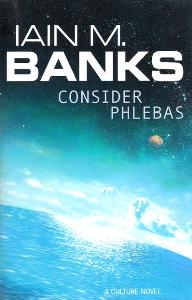
Created by sci-fi author Ian M. Banks, “The Culture” refers to the fictional interstellar anarchist, socialist, and utopian society that characterizes his novels. Encompassing ten novels – beginning with Consider Phlebas (1987) and concluding with The Hydrogen Sonata (slated for release in October 2012), Banks paints the picture of a universe where humanity has created a peaceful, stable and abundant society through the application of technology.

Told predominantly from the point of view of those who operate at the fringes of The Culture, the stories focus on the interactions of these utopian humans with other civilizations. Much in the same way as Star Trek follows the adventure of the Enterprise crew as they deal with alien cultures, often ones which are less developed or evolved, this provides a vehicle for examining humanity’s current predicament and providing possible solutions.

Overall, The Society is best characterized as post-scarcity, where advanced technologies provide practically limitless material wealth and comfort, where almost all physical constraints – including disease and death – have been eliminated, and the concept of possessions are outmoded. Through all of this, an almost totally  egalitarian, stable society has been created where compulsion or force are not needed, except as a means of self-defense.

At times however, The Culture has been known to interfere with other civilizations as a means of spreading their culture and affecting change in their neighbors. This has often been criticized as an endorsement of neo-conservatism and ethnocentrism on Banks part. However, Banks has denied such claims and many of his defenders claim that The Culture’s moral legitimacy is far beyond anything the West currently enjoys. Others would point out that this potential “dark side” the The Culture is meant to reflect the paradox of liberal societies at home and their behavior in foreign affairs.

The Mars Trilogy:
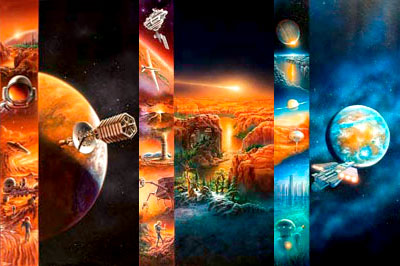
This ground-breaking trilogy by Kim Stanley Robertson about the colonization and terraforming of Mars is also a fine example of utopia in literature. taking place in the not-too-distant future, the trilogy begins with the settlement of the planet in Red Mars and then follows the exploits of the colonists as they begin transforming from a barren rock to a veritable second Earth.

Even though there are numerous dark elements to the story, including civil strife, internal divisions, exploitation and even assassination, the utopian elements far outweigh the dystopian ones. Ultimately, the focus is on the emergence of a highly advanced, egalitarian society on Mars while Earth continues to suffer from the problems of overpopulation, pollution and ecological disaster.

In addition, the colony of Mars benefits from the fact that its original inhabitants, though by no means all mentally stable and benevolent people, were nevertheless some of the best and brightest minds Earth had produced. As a result, and with the help of longevity treatments, Mars had the benefit of being run by some truly dedicated and enlightened founders. What’s more, their descendents would grow up in a world where stability, hard work, and a respect for science, technology and ecology were pervasive.

All of this reflects Robertson’s multifaceted approach to story writing, where social aspirations and problems are just as important as the technological and economic aspects of settling a new world. Much like the conquest and settlement of the New World gave rise to various utopian ideals and social experiments, he speculates that the settlement of new planets will result in the same. Technology still plays an important role of course, as the colonists of Mars have the benefit of taking advantage of scientific advancements while simultaneously avoiding the baggage of life on Earth. In the end, there’s just something to be said about a fresh start isn’t there?

The Night’s Dawn Trilogy:
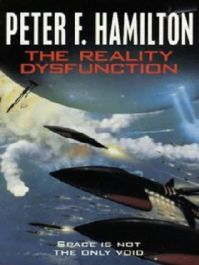
Written by British author Peter F. Hamilton, The Night’s Dawn Trilogy consists of three science fiction novels: The Reality Dysfunction (1996), The Neutronium Alchemist (1997), and The Naked God (1999). Much like Robertson’s depiction of humanity in the Mars Trilogy, Hamilton explores humanity’s dark side at length, and yet the tone of his novels are predominantly optimistic.

Set in a distant 27th century, humanity has become divided between two major factions. On the one side there are the Edenists, an egalitarian, utopian society who employ biotech (“biteck” in their lingo) to create living, sentient space stations as well as machines. The use of “Affinity” – a form of telepathy – allows them to communicate with each other and their biteck, creating a sort of mass mentality which encompasses entire communities. Thiee Edenic government is what is known as the “Consensus”, a form of direct democracy that is made possible by telepathic link.

On the one side their are the Adamists, the larger of the two where human beings live with a limited religious proscription against technology. Biteck is forbidden, but nanotechnology, FTL and other advanced applications are freely used. Because the Adamists encompass anyone not in the Edenic camp, they are larger, but far less organized and cohesive than their counterparts.

Through all this, Hamilton attempts to show  how the application of technology and the merger between biological and artificial can create the kind of society envisioned by men like Thomas More, characterized by participatory government, collective mentality, and a consensus-oriented decision-making process. While both the Edenic and Adamist societies are still pervaded by problems, not the least of which is competition between the two, the ideals of betterment through technological progress are nevertheless predominant.

Revelation Space Series:
Another series which examines the beneficial aspects of technology, particularly where governance and equality are concerned, is the Revelation Space Trilogy by Alastair Reynolds. Comprised of the five novels Revelation Space (2000), Chasm City (2001), Redemption Ark (2002), Absolution Gap (2003) and The Prefect (2007).

Taking place in the distant future (circa. 2427 to 2727), the story revolves around a series of worlds that have been settled by several different factions of humanity. The two largest factions are known as the Demarchists and the Conjoiners, both of whom have employed advanced technology to create their own versions of an ideal society.

Though much of the books are dark in tone due to the discovery of a terrible nanotechnological virus (the “Melding Plague”) and the discovery of hostile ancient aliens (the “Inhibitors”), the series still does have some discernible utopian elements. For starters, the Demarchists take their name from the concept of “Democratic Anarchy”, and employ cybernetic implants, nanotech and wireless communications to achieve this.

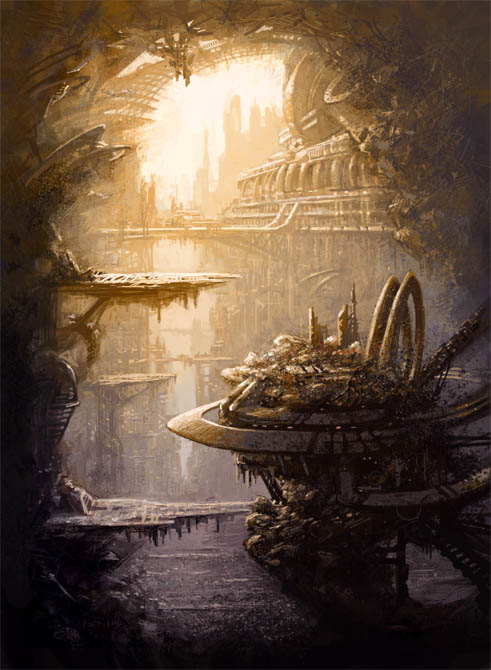
Within the Demarchist metropolis of Chasm City, all citizens are permanently wired into a central server which allows them permanent access to news, updates, and the decision-making process. As a result, Demarchist society is virtually egalitarian and marks of social status, such as ranks and titles, do not exist. This changed with the spread of the Melding Plague however, causing the city’s structures to degenerate into a gothic nightmare and the class divide to become very visible.

Another important faction are the Conjoiners. These people, who were originally inhabitants with the Great Wall of Mars (above left picture), but who became a star-faring people after the war with the “Coalition for Neural Purity” drove them off Mars. To these people, cybernetic implants were taken a step further, giving every Conjoined person the ability to telepathically link with others, preserve their memories beyond death, prolong their life, and enhance their natural thinking process.

Thus, much like Hamilton and Banks, Reynolds speculates that the advent of nanotech, biotech, and space travel will result in the emergence of societies that are predominantly egalitarian, peaceful, and dedicated to consensus and direct democracy. I personally found these stories quite inspiring since it seems that in many ways, we are already witnessing the birth of such possibilities in the here and now.

Yep, this is still fun, if somewhat tiring and conducive to burnout! I think I’ll be taking a break from these literary-criticism pieces for a day or two, maybe getting back to pieces on robots and cool gear. However, in keeping with the format I used for dystopia, I still have one more utopian article left to cover. Look for it, it will be called “Utopia in Popular Culture!” See ya there…


Technology in the Star Trek Universe (updated!)

I’ve wanted to do a post like this for awhile, ever since my conceptual post on Galactic Empires in fact. After doing my research on what distinguished one from the other, I noticed just how central technology, or the perception thereof, is to it all.

And let’s face it, Star Trek has had a lot to say about technology over the years, not all of it consistent! So with a series of examples, I thought I’d examine just what Gene Roddenberry and his successors have had to say.

Cloaking Device:
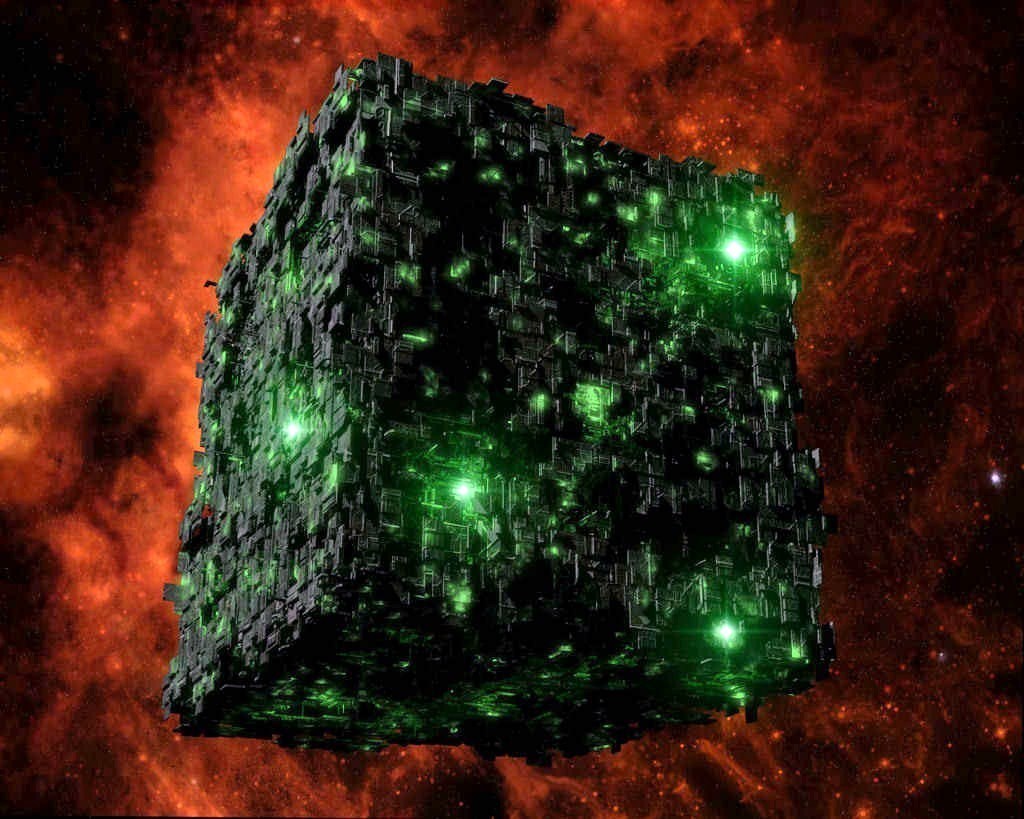
First developed by the Romulan Empire, the concept for an invisibility field that encompasses an entire ship has been picked up by just about every advanced race in the galaxy. Considered impractical by many because of the intense power drain, other races have found ways to adapt it to give their ships a decided edge in combat.

One such race are the Klingons whose vessels all come equipped with a cloak. The Romulans maintain use of this technology on their military vessels, particularly their warbirds, and even the Federation has been known to dabble in it from time to time. Another discernible weakness is the presence of tachyons and anti-protons that cloaked vessels are known to produce.

Holodecks:
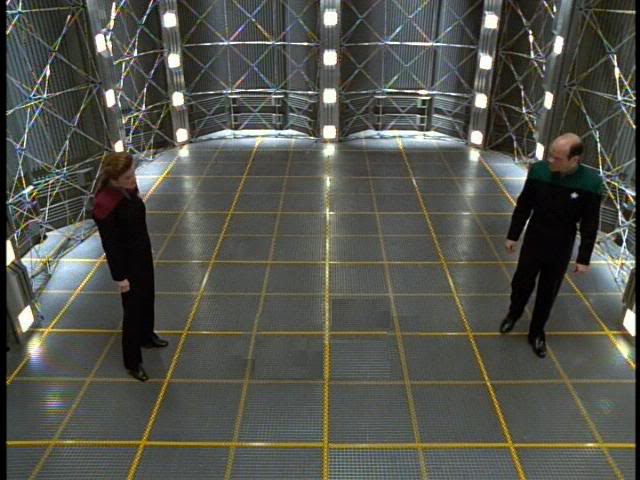
The holodeck is an advanced holoprojector device that was designed by Starfleet for use aboard starships, stations, and institutions. It serves the purpose of entertaining, training and training purposes. Using focused photons to simulate matter, the holodeck is able to create physically real virtual environments out of pure energy.

Because of their potential for danger, all holodecks come equipped with built-in safeguards. Matter created aboard the holodeck ceases to exist as soon as it passes beyond its generators, and the technology has been adapted to creating AI’s such as the ship’s emergency doctor program.

Hypospray:
This non-invasive piece of medical technology is the mainstay of Starfleet medical. Using a compressed air transport mechanism, this device is able to transfer the injectant painlessly from the device into the subdermal layer below the skin of the body, or artery.

In the original series, hyposprays resembled hypodermic needles, but by the time of the 24th century (the TNG series) they had become much more sophisticated, resembling the unit pictured at top left.

Phasers:
Short for phased-energy laser, phasers are the most common energy weapon in Starfleet and the known universe. Beginning in the 23rd century, the technology was adapted for use as hand-held weapons, military rifles, and as the primary weapons banks on ships.

The 24th century saw further developments in the development of this weapon, which included mutli-segment phaser arrays,  and phaser cannons. The former made their first appearance in TNG on the USS Enterprise D and other updated ships while the latter appeared for the first time on USS Defiant.

Replicators:
Using the same technology as the holodeck, a replicator is a matter-energy device that is capable of dematerializing quantities of small matter and reconstituting it as something else. This can take the form of food, commercial products, or machine parts. In short, anything can come out of a replicator so long as it has the atomic matrix down, and isn’t illegal!

Prior to TNG, Starfleet ships used food synthesizers, but by the 24th century, the technology had been perfected and made standard on all starships, stations, outposts and settlements. Because of their sheer usefulness and versatility, every advanced race has adapted the technology for their own use.

Shields:
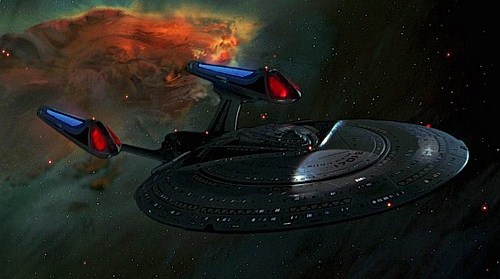
Also known as Deflector Shields or Screens, these devices are the mainstay of all advanced races in the Star Trek universe. Operating by creating a layer, or layers, of energetic distortion containing a high concentration of gravitons, they are able to provide protection against weapons fire and natural hazards.

Typically, shields are emitted from either a central emitter dish or a series that are dispersed over the hull. They usually come in six sections, covering the fore, aft, port, starboard, dorsal and ventral areas of the ship. In time, shields can be dissipated by either continuous or repeated energy discharges, leaving the ship vulnerable.

Transporters:
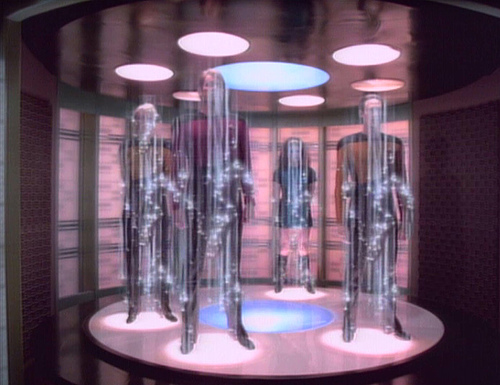
Utilizing subspace technology and the same matter-to-energy concept as a holodeck, the transport is the principle means of transportation to and from ships in the Star Trek universe. Often referred to as “beaming”, transporters are able to dematerialize, transmit and reassemble an object from one pad to another.

Making its debut in the original series, the technology has been updated in the TNG universe and its various spinoffs to allow for greater accuracy and safety through the addition of added redundancies. This increased accuracy allows for point-to-point transport, usually within smaller areas like the ship itself.

Tricorders:
A handheld sensing device, the tricorder was invented by Starfleet specifically for use by Starfleet personnel. However, since their inception in the 22nd century, they’ve gone through repeated upgrades, adaptations and have been adopted by just about every advanced race in the Alpha Quadrant.

As it stands, there are six varieties of tricorder in use within Starfleet alone. These include the psychotricorder which measures a patients brainwaves, a medical tricorder which diagnoses ailments and injury, and four models (VI,VII, X and XV) all of which are in service in one branch of Starfleet or another.

Warp Drive:
In the Star Trek universe, the warp drive is both the primary means of transport and the pinnacle of a race’s technology. In fact, Starfleet only makes contact with a new alien race once they’ve developed this technology, as it’s felt that it is only at this point in a species’ development that they will be advanced enough to experience first contact.

First developed by the human race in the late 21st century, warp technology was what precipitated First Contact with the Vulcans. Utilizing a matter/antimatter process and a dilithium chamber, a warp drive generates a “warp field” to envelope a starship. This has the effect of distorting the local spacetime continuum and moving the starship at velocities that exceeded the speed of light.

Every advanced race in the Alpha Quadrant has this technology, though some are able to achieve greater velocities (known as warp factors) than others. In the course of the old series and new, new and more advanced forms of FTL are being researched which may replace standard warp. These include transwarp, quantum slipstream, and a host of others.

Conclusions:
Technology as Utopian:
For the most, part Star Trek seems to be making the point that technology is a good thing. Whether it was the original series, TNG, or the many spinoffs to follow, it seemed that humanity owed much of its current condition to technological progress. Though they never explained how, at many points in the franchise it is said that Earth is now a paradise, bereft of crime, bigotry, hunger, and inequality. Just about all known diseases have been cured, and even money has become obsolete.

Yes, it seems that in the future, the focus of the economy has shifted to one of “self-improvement”… Might seem a bit hokey on the surface, but as I said in the Galactic Empires post, it’s really not that farfetched. Although its still pure fiction, the advent of something like warp drive, which would make space travel quick and affordable, commerce and transport between colony worlds would be open. This would mean abundant resources that went far beyond Earth and the Solar System, and we already know just how rich our system is in resources (see Asteroid Mining).

But more importantly is the development of replicator technology, which comes in the form of personal and industrial sized units. The former are used to produce everything from food and clothing to consumer products while the latter can create just about anything in bulk quantity. If this were possible, then all scarcity and deprivation would cease to exist. What’s more, the entire basis of an unequal distribution of wealth would disappear. Frankly, it puts me in mind of what Orwell said in 1984:

From the moment that the machine first made its appearance it was clear to all thinking people that the need for human drudgery, and therefore to a great extent for human inequality, had disappeared. If the machine were used deliberately for that end, hunger, overwork, dirt, illiteracy and disease could be eliminated within a few generations.

By the “machine”, Orwell was of course referring to industrial technology and the economy it spawned. However, his overall point was clear. Modern technology, dedicated to the write purpose, had the ability to significantly raise the fortunes of all people. And let’s not forget how in the Star Trek universe, hyposprays and various medical devices can solve just about all that ails you! Break a bone, you get the bone knitter! Tear your ACL, you get the… ligament bonder. I don’t know, all I do know is that pain is virtually obsolete in this universe and its because of progress.

So really, Roddenberry wasn’t far off when he envisioned a “perfect society” in the future. It was just in how he failed to explain how this could done that things seemed a little weak. But of course, there was a flip side to the whole thing.

Technology as Dystopian:
But of course, there were plenty of examples of technology gone wrong. The examples are a little too many to name, so I’ll keep it to just a few. The first comes from the first season when the Enterprise D comes to a planet of Aldea. There, a group of advanced humanoid aliens live in relative peace and prosperity, except that they are sterile and therefore dying off. Hence why they start kidnapping the Enterprise’s children!

Eventually, the Enterprise crew determines that the source of their problem is the great machine that runs their planet, otherwise known as “Custodian”. Because they’ve forgotten how to use the machine, the Aldeans have been unaware of the fact that it’s long since broken down and has been letting harmful radiation in. They assist them in fixing it, and the lesson about letting technology run your life has landed!

The second example comes from the regrettable movie Insurrection, where the Enterprise E comes to an idyllic planet inhabited by the Bak’u. Here, people live in virtually perfect harmony with the planet by denying themselves certain technology, opting instead for the simple life. Their philosophy is simple: “when you create a machine to do the job of  man, you take something away from the man”.

All of this seems inconsistent with the usual message of Star Trek, and even the movie itself. Far from being purely primitive, the Bak’u employ all kinds of labor saving technology, which includes irrigation and dams. So really, are they really so opposed to technology or just specific technologies? Nevertheless, the metaphor is clear. Combined with the fact that this place has youth-preserving powers, the metaphor of this place is pretty obvious. It is the fountain of youth, garden of Eden, and the evil Son’a who are advanced and creepy want to destroy it. Not their best movie!

But the last and best example comes in the form of The Borg. A race of cybernetic beings who have merged the organic and synthetic, run by a hive mind that quashes all individuality, and threatening to assimilate all in their path, the metaphor is so thick you need a knife to cut through it. They are the ruthless march of progress personified!

And just look at them and their ships, are they not the perfect representation of cold, unfeeling technology? Sure they are! And the way people change once they’ve been assimilated, becoming soulless automatons and losing all color and individuality. Tell me that’s not a perfect visual representation of the death of the human spirit under the weight of urbanization and anonymity.

Some might call this inconsistent, but it seemed more likely like Roddenberry and his writers were simply hedging their bets. On the one hand, he was showing how human potential could one day yield the perfect society, or at least one that was free of all the problems we know and lament today. On the other, they must have wanted to show the obvious downside and dangers at worshiping at the altar of progress. After all, if you put an ideal, any ideal, ahead of humanity and life, all you get is dystopia!

And as always, other races in the Star Trek universe serve as a mirror for the human condition, or rather different aspects of it. If the human race has got it right, then others must not have achieved that careful balance of humanity and progress just yet. Whereas some prefer to be Luddites and live in an agrarian Eden, others have become runaway cyborgs who assimilate all in their path. It’s all about balance people!

Well, that was kind of fun! And it combined two of my favorite things in the world. Sci-fi and literary criticism. Perhaps I should do more of these. As always, suggestion on which franchise should be covered would be great. I can think of a few off the top of my head – such as the Star Wars universe, Dune, Aliens, Terminator, and possibly Battletech – but I would like to hear from others too. There’s always those added few that would be perfect but I fail to think of. Thanks all!

Cool Guns (vol.3)

ARASKANA HLR-12x:
Finally, I’ve found it! After much searching and digging, I finally found my way to the lasergun from the Akira movie. And I got to say, between anime, live action, and the gaming world, this weapon is about the most realistic take on a lasergun I’ve yet to see. Used initially by military forces in Neo-Tokyo to stop Tetsuo (unsuccessfully, I might add), the protagonist Kaneda would later use one as his personal weapon.

Powered by a portable battery pack, this weapon would fire a lancing beam of focused energy at its targets. In addition to being able to cut through metal and concrete, it was also capable of hewing off limbs. And it did too! Seriously, that scene where the army opens fire on the mob, ick and whoa in equal parts!

EM-1 Railgun:
Even thought I didn’t think the movie was that hot, these guns did inspired to learn more about coilguns, gauss rifles and EM technology. Known as the EM-1, this weapon was a prototype railgun that was featured in the movie Eraser. Basically, it was this advanced technology that set up the plot, and provided Arny with an excuse to do some Terminator-style double firing!

Running on the concept of a coilgun, the EM-1 would use a super-charged magnetic tube to accelerate a caseless slug to hypersonic velocities. This gave it incredible punch as well as range, and could eviscerate man, machine and solid matter with ease. An x-ray scope was also attached to let the gunner see through solid objects, which was handy considering that this weapon was designed to punch through obstacles and kill whatever was on the other side.

Guitar Case Rocket Launcher:
Here’s a movie I never expect to take anything from. Desperado, the Mexican western-style shoot-em-up directed by Robert Rodriquez, featured a lot of cool guns. But in the end, I’d have to say the coolest were the ones sported by his band members, which came embedded in their guitar cases. Where one man relied on cases that had built-in automatic weapons, the other fired rockets out the front!

I’ve looked it up and can’t find any info on how they rigged this case to do this. Probably just a launch tube and some fire crackers. But it was still pretty cool, and not entirely ludicrous either. Assuming you don’t mind ruining a few guitar cases, this weapon would probably make a great conversation piece and its owner a hit at parties!

Joshua:
Ah, my favorite of the bunch! Known as Joshua, this BFG is named in honor of the Hebrew warrior who led the Israelites to victory over the Caananites, in brutal, genocidal fashion! It’s essentially a massive long slide, chambered for the mighty .454 Casull round which is used primarily for hunting wild game. BIG wild game!

In Alucard’s case, the gun was also fitted with silver-tipped bullets for hunting vampires and demons. So in addition to packing a massive punch, it could also turn the undead into ash with a single blast. And of course, Alucard’s super-human strength gave him the ability to endure the weapon’s massive kickback!
Jackal:
What do you know, it’s two for one day! Here we have Alucard’s second gun of choice, known as the Jackal. Officially, it’s known as the ARMS 13mm (.51 cal.) Anti-freak pistol, and in many ways represented a step-up from the earlier Joshua. Also produced by Walter, the Hellsing organization’s own gunsmith, this weapon was made in response to Alucard’s request for something “bigger”.

And that’s precisely what he got! In addition to having less kickback than its predecessor and firing spent casing to the left (so as not to obscure Alucard’s view of the target), this gun also fired 13mm (.51 cal) bullets and came in a sleek, black gunmetal design. In addition, it also had the words “Jesus Christ is in heaven” scrawled on the side, no doubt a comical reference to the man Alucard intended to use it on!

Leonhearts Gunblade:
Is it a gun, it is a blade? Well… yes. The property of Squall Leonheart, from Final Fantasy VIII, this weapon is basically a stainless steel broadsword with an inset .44 magnum revolver. Firing this gun off in the midst of a sword fight not only has the potential to punch a big hole in the enemy, it also produces a wild vibration in the blade that makes it cut even better.

Much like Cloud’s Blade from FF VII, it is heavily oversize, though not as much. Though even the designer claimed that it had an “odd appearance” in hindsight, and the configuration makes it look a little unwieldy, you can’t deny that its pretty damn cool!

Prosthetic Leg Gun:
Now here’s a novel take on both movie guns and prosthetics! Taken from the movie Planet Terror, is essentially a Bushmaster Carbine with the addition of an M203A1 grenade launcher.

This gun made its appearance when the character Wray gives Cherry Darling (played by Rose McGowan) the assault rifle grenade launcher combination as a replacement for her prosthetic leg. She put it to good use, alternately kicking and blowing bad guys away with it!

Pauza P50:

The Robocop franchise was nothing if not good at popularizing cool guns! And this one was no exception. Known as the P50, this .50 cal semi-automatic sniper rifle was featured repeatedly throughout the film. Intended as a shout out to the “Cobra Assault Rifle” from the first movie, this weapon had the same things going for it, namely explosive, punchy firepower!

It’s first appearance was during the robbery of the gun store at the beginning. It later appeared in the hands of some of Cain’s thugs who used it to blow Robocop’s hand off during his initial confrontation with the crime boss. It was then used by those same thugs later on Robocain himself. Robocop then confiscated it and used it against Robocain during their final confrontation. With one clean hit, he managed to destroy Cain’s autocannon’s with this baby. Always great when accuracy and firepower come together!

The Samaritan:
Named in honor of the fact that it puts monsters out of their misery, Hellboy named this one “The Samaritan”. Although the caliber is not listed, the bullets appear to be at least one inch (25mm or 1.00 cal) in diameter, glass tipped, and filled with holy water.

In addition, the construction of the gun is heavily consistent with the name. The metal is forged from a combination of Irish church bells, cold iron from crucifixes, blessed silver, and other mystic metals. The handle wood of the grips is believed to be that of the cross of which Jesus Christ was crucified on. Holy religiosity Batman!

It weighs ten pounds, making it double effective as an impact hammer. And of course, the size of the gun also gives it a kickback which would be capable of breaking a regular man’s hand off. Hence, nobody but Hellboy even takes it out for an evening of monster killing!

Wow, a third installment! Did NOT see that one coming. And I’m really trying to get off this guns and robots kick, I swear! I’ll be back tomorrow with something else… maybe!

More Cool Guns!

This post is a follow-up to one I did awhile back, one which featured weapons from the sci-fi universe. At the time, I really wasn’t planning on doing a follow-up. However, since I began writing about existing weapons that just happen to look like something out of sci-fi, I happened to find some more that really were. So here they are, in alphabetical order!

Auto 9:
Robocop_gunOtherwise known as the Robocop gun, the Auto 9 was fashioned out of attaching a frontal assembly to a standard Berretta 93R. This variant of the 9mm pistol is famous for being the automatic version which can fire full auto or in three round bursts. Special vents at the front made for a cooler dispersal of the flames coming out of the barrel.

One look at the handle will also tell you that this model was fitted with an extra-long magazine to ensure that Peter Weller/Robocop had plenty of ammo to take down his enemies. Rarely, if ever, was he to be seen reloading this cannon in the course of his movies!

C-14 Impaler:
C14Hello Starcraft universe! Here we have the Terran rifle that comes standard with marines serving in the Confederate and Dominion forces. As a Gauss rifle, this weapon is not a gun in the traditional sense, but an electromagnetic gun that hurls 8mm projectiles (known as “spikes”) at hypersonic speeds.

Though it is capable of firing up to 30 rounds a minute, the Impaler comes with a built-in capacitor system which restricts fire to short bursts to conserve ammo and power. It also comes with a variety of ammo, giving the average marine the ability to kick all kinds of ass.

Lasgun (Warhammer 40k):
Warhammer_LasgunsNot to be confused with the Lasguns of the Dune universe, even though the principle is the same. A directed energy weapon, it is used by all the military forces within the Imperium of Man, making it the most common energy weapon in the galaxy.

Though comparatively simple next to many Warhammer weapons, this weapon is still extremely effective. In addition to being capable of severing limbs, it is even able to penetrate the Power Armour of a Space Marine.

M6 Nonlinear Rifle:
Halo_Reach_-_Model_8_SP_LaserAlso known as the Spartan Laser, this portable and vehicle-mounted rifle is the only directed energy weapon in service with the USNC. As part of Project GUNGNIR, a program designed to provide supplemental material to the Spartans, this weapon was designed to be part of the MJOLNIR powered assault armor.

Making its first appearance in Halo: Reach, this weapon is devastating to infantry and most vehicles at any range. Unfortunately, the expense of building and maintaining them makes them somewhat impractical compared to other UNSC weapons.

RBS-80 Pulse Gun
RBS-80This baby comes highly recommended by both sides of the Terminator franchise! Designed by General Dynamics in the 21st century, the RBS-20 is a phased plasma pulse gun used by both Skynet’s Terminators and the Resistance. In the former case, it was used as a portable weapon, usually by infiltration units to take out Resistance bases. However, given the weapon’s size and weight, the Resistance preferred to mount them on their vehicles.

Making its debut appearance in Terminator when a T-800 broke into a Resistance safe house and began using its RBS-80 to kill everyone in sight. These events were recounted by Kyle Reese, who narrowly survived the encounter. It was also mentioned by name when Arny, making a gaffe, asked for one at a gunstore. “Just what you see here, pal,” replied the owner. Little wonder then why Arny chose to blow him away afterwards…

Type 25 Directed Energy Rifle:
PlasmarifleBack to the Halo universe, but this time for a more widely known Covenant weapon. More commonly known as the Plasma Rifle, this directed energy weapon, is the weapon of choice for the Elites and the Brutes, though other member races have been seen using it as well. Like much of the Covenant’s weapons, it was reverse-engineered from Forerunner technology.

Powered by a high-capacity energy cell, the Plasma Rifle is capable of semi-automatic fire at a rate of 360~540 rounds per minute. In the hands of the Elites, both the casing and plasma are colored a light shade of blue, whereas the Brutes prefer their weapons look and fire at the red end of the spectrum.

Between Halo and Halo 2, the weapon evolved somewhat, losing power and range in favor of rate of fire and the ability to duel wield. Personally, I like combining this baby with a submachine gun or a magum pistol. Plasma and bullets baby! Whooooo!

Tesla Rifle:
tesla_gunBy definition, a Tesla Rifle is a weapon that fires of electricity with a limited range and high spread. This particular version comes from District 9 and was a weapon of alien manufacture. Built by the race prejoratively known as the “Prawns”, it was confiscated by the South African government, and then fell into the hands of Wilkus (the film’s protoganist).

Since all “Prawn” weapons are attuned to their DNA, no human was able to use one. However, due to the transformation Wilkus was undergoing, he was able to use one, and did so! Surrounded by mercenaries who were in charge of clearing District 9 and taking him down, he had little choice but to blow them to gory pieces with this thing. And since the whole movie was shot in faux-documentary style, you could bet that chunks of bad guy got splattered on the camera!

The Sol:
Sol1Holy crap! I definitely saved the biggest and baddest for last today! Here is The Sol (yes THE Sol) an attack satellite which comes from the anime movie Akira. Featured towards the end of the film, The Sole was called in when Testuo Matsuo – the psychically altered teenager – began going on a rampage and threatened to destroy Neo-Tokyo.

Built around a central directed-energy weapon, The Sol gave new meaning to the term “Death from above!” Though not much is said about her, The Sol was clearly inspired by the Strategic Defense Initiative, aka. Star Wars Defense, and therefore designed to shoot down ICBM’s from orbit. Given that the story revolves around WWIII, this seems like a pretty safe assumption.

Sol2In the course of the story, she was called in by the Neo-Tokyo authorities and tried to blow the psychotic and psionic Tesuo up. It didn’t take, but the kid was psychic man! What can you do? If nothing else, it did demonstrate just how powerful it was by removing one of his arms. Tetsuo was obviously impressed too, because he commandeered the thing and began using it to wreak even more havoc. Seriously, we’re talking death from above man!

And that is all. Thanks for reading and stay tuned for more. Thinking I need to get off this whole guns and robots kick. Everything I write lately seems to revolve around one or the other…