Cyberwars: Is Putin Going to Cut Off Russia’s Internet?

Russia ButtonFew politicians today elicit the same level of controversy as Vladimir Putin. Adored by many Russians at home and abroad, he is also reviled by many for his near-absolute grip on power, intimidation of political opponents, political repression, and military aggression against neighboring states. But in this latest coup de grace, Putin may be seeking the kind of power that few modern states enjoy – the ability to shut down his country’s access to the internet.

According to the Russian business newspaper Vedomosti, Putin and his security council met this past Monday to discuss a way to disconnect Russia’s internet should it be deemed necessary. According to various sources, it is a tool that could be enacted in times of war, massive anti-government protests, or in order to “protect” Russians from Western countries like the United States or members of the European Union.

putin-sanctions-west-response.si_Citing an intelligence officer as their source, Vedomosti claims that this is the result of the Ministry of Communications conducting exercises to test vulnerabilities in Russia’s internet and can now successfully disable IP addresses outside of Russia. All of this is being done in order to see if the Runet (Russia’s internet) can operate on its own without Western web access, with the hope that it will be functional next year.

It is not hard to imagine the Kremlin justifying such a clamp-down by whipping up fears that it’s the West that wants to disconnect Russia from the web, said industry experts. In Russia’s current political environment, anti-western propaganda has been used effectively to create the impression of a siege mentality, used largely to justify their current economic woes and the ongoing Ukrainian Crisis.

RunetAnalysts say similar measures have been introduced by countries such as Iran and Cuba, which developed national Internet limits to curb the spread of Western culture and ideas. Prior to the meeting, Putin’s spokesman Dmitry Peskov confirmed that the Security Council meeting on Internet security would be taking place, but he declined to discuss details of the agenda.

In addition, he denied that Russian authorities have plans to disconnect the Internet, instead insisting this is a question for other countries to answer. He also added that Russia needs a way to protect itself from the West. Peskov cited the “unpredictability” of the European Union and the United States before implying that these countries would in fact disconnect Russia from the Internet and not the reverse.

russia-internet-putin-670-1In a statement to Russia Today – a government-run website launched in 2005 by Putin as a “PR campaign to improve [Russia’s] image in the eyes of the world.”- Russia’s communications minister, Nikolay Nikiforov, said:

Russia is being addressed in a language of unilateral sanctions: first, our credit cards are being cut off; then the European Parliament says that they’ll disconnect us from SWIFT*. In these circumstances, we are working on a scenario where our esteemed partners would suddenly decide to disconnect us from the internet.

*Society for Worldwide Interbank Financial Telecommunication

The “unilateral sanctions” he refers to are the ones that were placed upon Russia by the US and the EU in response to its seizure of the Crimea, which have since escalated thanks to Russia’s ongoing involvement in the eastern portions of Ukraine where rebels – whom many claim have been supplied with Russian-made weapons and are now being supported by Russian troops – continue to fight against the new Kiev government.

Ukraine_crisisInterestingly enough, whether it is the West that disconnects Russia from the Internet or if it is Putin that does so, both possibilities highlight the world’s dependence on Western internet. In fact, many countries, including Brazil and Germany, have been complaining about this since Edward Snowden’s revelations last year. Putin himself has expressed concern over the NSA spying on him via the web and the security of the internet in his country in the past.

Nevertheless, the question remains as to whether or not it could be done. According to Andrei Soldatov, a Russian spy expert who recently spoke to the Guardian on the subject, claims that it is technically possible given how few internet exchange points Russia has. However, it seems unlikely at this point that Putin would do this given the repercussions for Russian businesses that rely on the Western internet to function.

russia_protestsAlready, Russia has been feeling the pinch because of Western sanctions, particularly sanctions targeting its oil industry that have been leading to a drop in prices. At this rate, several economists and even Russian ministers are predicting a recession in the near future. This in turn could present Putin with a scenario whereby he would have to disconnect the internet, in order to block mass protests sites in the event of people protesting the economic downturn.

Similar measures have been taken in the past by countries like Egypt, Iran, Syria, China, the UK, and Thailand, who chose to block Facebook at various points because protesters were using it to organize. Venezuela also blocked Twitter this year during times of political unrest to prevent people from sharing information and real-time updates. But a total disconnect has yet to be seen, or even seriously contemplated.

russia-censorshipWhether or not Putin and Russia’s ruling party is the first to do so remains to be seen. But it is not entirely unfeasible that he wouldn’t, even if economic consequences were entailed. For as the saying goes, people will “cut off their nose to spite their face”, and Putin has already shown a willingness to challenge his country’s economic interdependence with the world in order to ensure control over neighboring territories.

One can only hope that he won’t feel the need to snip his country’s connection to the rest of the world. In addition to ensuring its ec0nomic isolation – which would have dire consequences and reduce the country to the status of a developing nation – it will also resurrect the specter of the Cold War years where Russians were effectively cut off from the outside world and entirely dependent on state-controlled media.

We’ve simply come too far to go back to an age where two superpowers are constantly aiming nuclear warheads at each other and entire blocs of nations are forbidden to trade or interact with each other because of political rivalries. History does not respect regression, and the only way to make progress is to keep moving forward. So let’s keep the internet open and focus on building connections instead of walls!

Source: motherboard.com, news.discovery.com, ibtimes.com
News from Aerospace: XS-1 Experimental Spaceplane

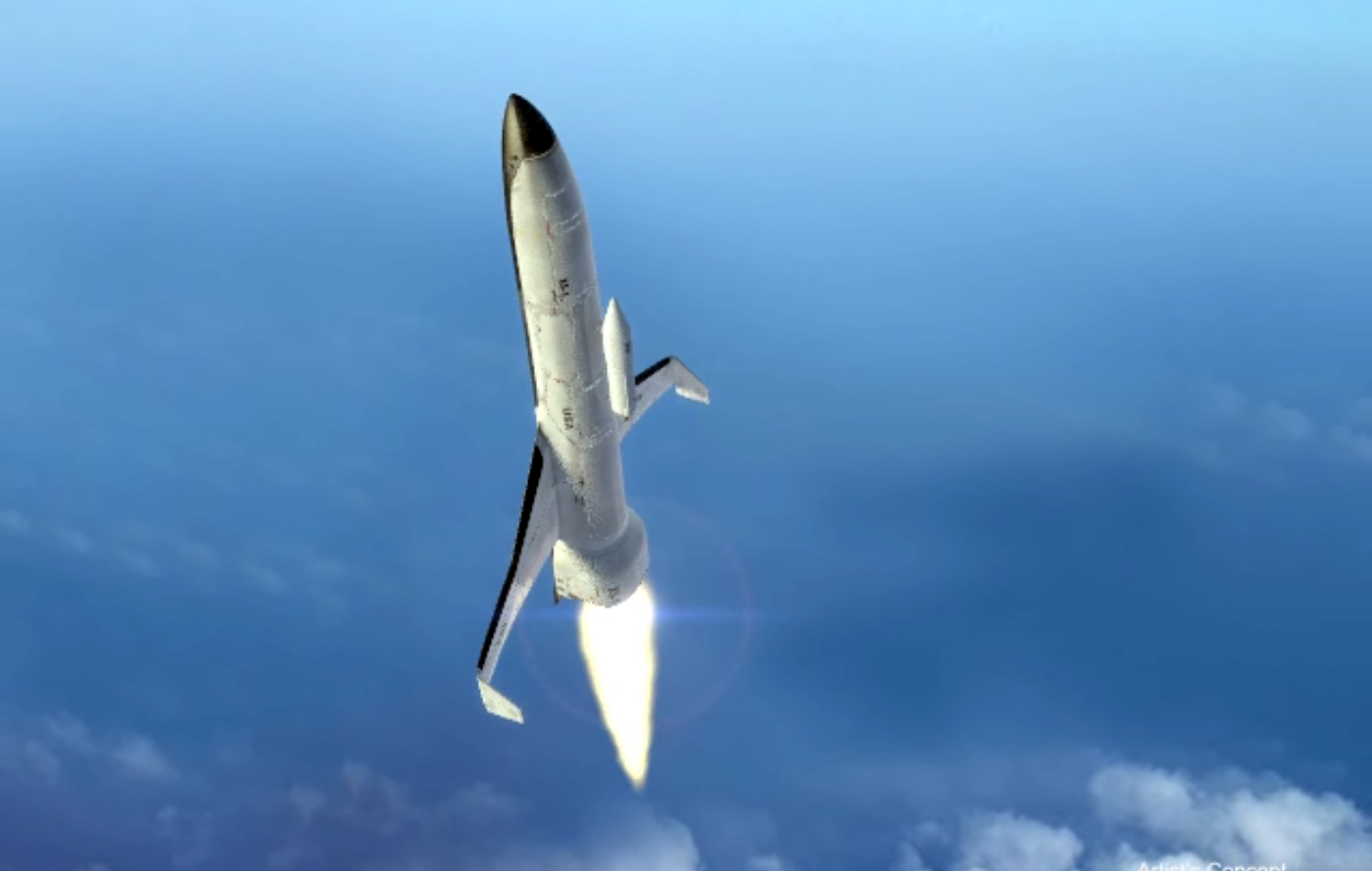
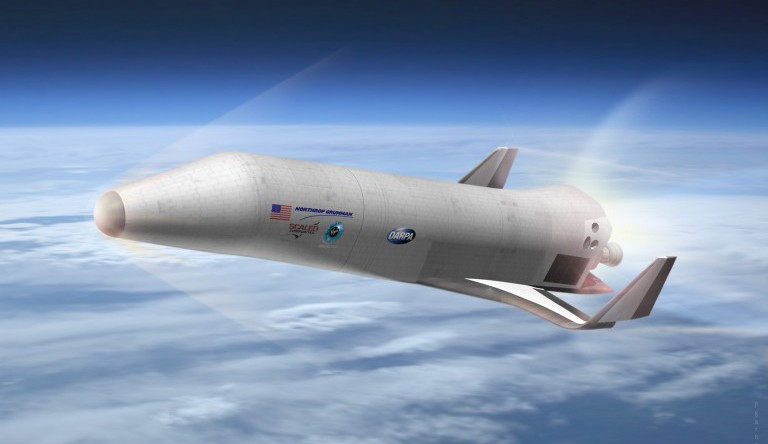
northrop-grumman-xs-1-spaceplaneThe race to produce a new era or reusable and cost-effective spacecraft has been turning out some rather creative and interesting designs. DARPA’s XS-1 Spaceplane is certainly no exception. Developed by Northrop Grumman, in partnership with Scaled Composites and Virgin Galactic, this vehicle is a major step towards producing launch systems that will dramatically reduce the costs of getting into orbit.

Key to DARPA’s vision is to develop a space-delivery system for the US military that will restore the ability of the US to deploy military satellites ingeniously. In a rather ambitious twist, they want a vehicle that can be launched 10 times over a 10-day period, fly in a suborbital trajectory at speeds in excess of Mach 10, release a satellite launch vehicle while in flight, and reduce the cost of putting a payload into orbit to US$5 million (a tenth of the current cost).

XS-1_1Under DARPA contracts, Boeing, Masten Space Systems, and Northrop Grumman are working on their own versions of the spaceplane. The Northrop plan is to employ a reusable spaceplane booster that, when coupled with an expendable upper stage, can send a 1360 kgs (3,000 pounds) spacecraft into low Earth orbit. By comping reusable boosters with aircraft-like operations on landing, a more cost-effective and resilient spacecraft results.

In flight, the Northrop version of the XS-1 will take advantage of the company’s experience in unmanned aircraft to use a highly autonomous flight system and will release an expendable upper stage, which takes the final payload into orbit. While this is happening, the XS-1 will fly back to base and land on a standard runway like a conventional aircraft, refuel, and reload for the next deployment.

Spaceshiptwo-580x256Northrop is working under a $3.9 million phase one contract with DARPA to produce a design and flight demonstration plan that will allow the XS-1 to not only act as a space launcher, but as a testbed for next-generation hypersonic aircraft. Meanwhile Scaled Composites, based in Mojave, will be in charge of fabrication and assembly while Virgin Galactic will handle commercial spaceplane operations and transition.

Doug Young, the vice president of missile defense and advanced missions at Northrop Grumman Aerospace Systems, had this to say about the collaboration:

Our team is uniquely qualified to meet DARPA’s XS-1 operational system goals, having built and transitioned many developmental systems to operational use, including our current work on the world’s only commercial spaceline, Virgin Galactic’s SpaceShipTwo. We plan to bundle proven technologies into our concept that we developed during related projects for DARPA, NASA and the U.S. Air Force Research Laboratory, giving the government maximum return on those investments.

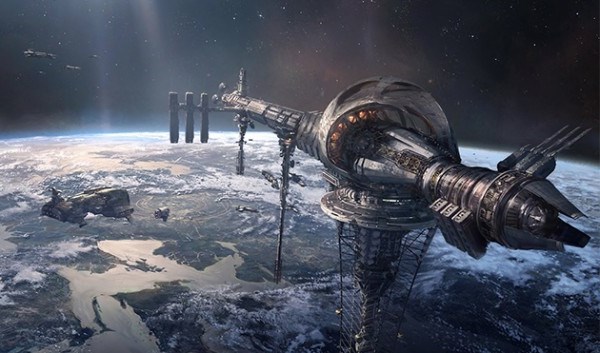
space_elevator2Regardless of which contractor’s design bears fruit, the future of space exploration is clear. In addition to focusing on cutting costs and reusability, it will depend heavily upon public and private sector collaboration. As private space companies grab a larger share of the space tourism and shipping market, they will be called upon to help pick up the slack, and lend their expertise to more ambitious projects.

Examples abound, from putting satellites, supplies and astronauts into orbit, to landing settlers on Mars itself. And who knows? In the foreseeable future, NASA, Russia, China, the ESA and Japan may also be working hand-in-hand with transport and energy companies to make space-based solar power and a space elevator a reality!

Source: gizmag.com, globenewswire.com

Cyberwars: FBIs Facial Recognition Database

facial_rec1This past summer, the FBI was compelled to release information about the operational facial recognition database they working on. As part of its Next Generation Identification (NGI) program, this database is part of the FBIs efforts to build a “bigger, faster and better” means of biometric identification. Earlier this month, the FBI announced that the system is now working at “full operational capability”, and many people are worried…

To break it down, the NGI database is made up of millions of stored mugshots and other photos, which are then used when analyzing footage taken by CCTV feeds or other cameras around the country. The full deployment of the program comes three months after James Comey, the bureau’s director, announced that the agency was “piloting the use of mug shots” alongside the bureau’s other databases, in order to catch wanted criminals.

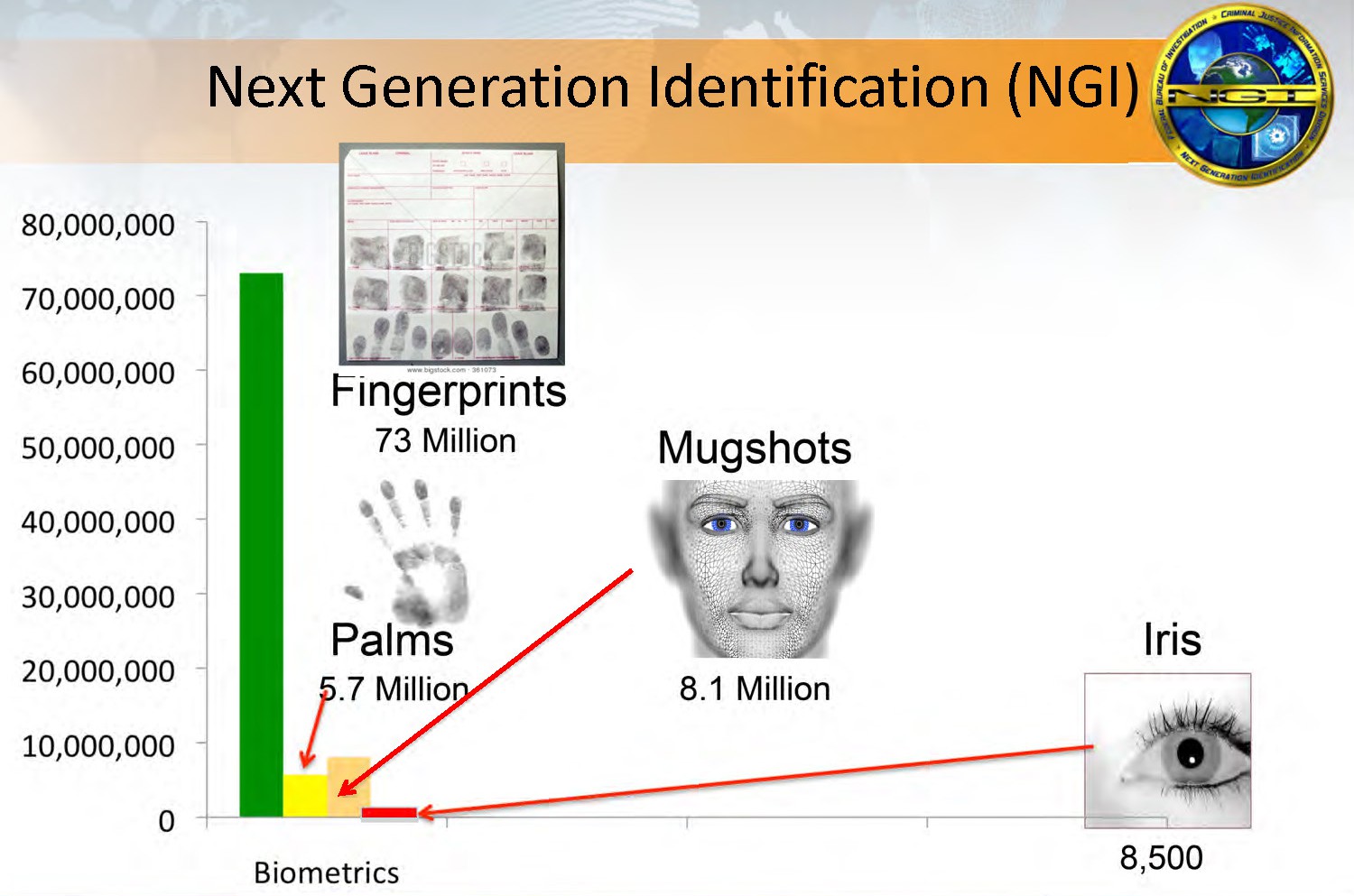
FBI_NGI_Slide_WideDesigned to replace the bureau’s aging fingerprint database, the NGI is different in that it is designed to be multimodal. This means that it will link multiple forms of biometric data to biographical information such as name, address,  ID number, age and ethnicity. It’s currently focused on fingerprint and facial records, but it will also be capable of holding iris scans and palm prints, with the possibility of added voice recognition and gate analysis (i.e. how people walk).

As the FBI said in a statement on Monday, Sept. 15th, the NGI, combined with fingerprint database:

[W]ill provide the nation’s law enforcement community with an investigative tool that provides an image-searching capability of photographs associated with criminal identities.

Naturally, the worries that this database will be another step towards “Big Brother” monitoring. However, what is equally (if not more) worrisome is the fact that the details of the program are only a matter of public record thanks to a lawsuit filed by the Electronic Frontier Foundation. The lawsuit was issued in June of 2013, wherein the EFF compelled the FBI to produce records in accordance Freedom of Information Act to detail the program and its face-recognition components.

facial_recCiting the FBI documents, the EFF claims that the facial recognition technology is not very reliable and that the way the database returns results is fundamentally flawed, as well as pointing out that it will indiscriminately combine the details of both criminals and non-criminals. Based on their own interpretation, they claim it could fail 20 percent of the time, which could lead to innocent persons becoming the subject of police investigations.

Nevertheless, the bureau remains confident that the system will simplify and enhance law enforcement both locally and federally. As they said of the program when it was first announced back in 2011:

The NGI system has introduced enhanced automated fingerprint and latent search capabilities, mobile fingerprint identification, and electronic image storage, all while adding enhanced processing speed and automation for electronic exchange of fingerprints to more than 18,000 law enforcement agencies and other authorized criminal justice partners 24 hours a day, 365 days a year.

fingerprint_databaseIn 2012, the NGI database already contained 13.6 million images (of seven to eight million individuals) and by mid-2013, it had 16 million images. We now know it aims to have 52 million facial records in its system by next year, and those will include some regular citizens. This is another source of concern for the EFF and civil liberties advocates, which is the estimated 4.3 million images taken for non-criminal purposes.

Whenever someone applies for a job that requires a background check, they are required to submit fingerprint records. These records are then entered into federal databases. Right now, the FBI’s fingerprint database contains around 70 million criminal profiles, and 34 million non-criminal records. With the NGI database now up and running, photographs can be submitted by employers and other sources along with fingerprints, which puts non-criminals on file.

FBI-facial-recognitionThe database, while maintained by the FBI, can be searched by law enforcement at all levels. According to Jennifer Lynch, the EFF attorney behind the lawsuit:

Your image would be searched every time there is a criminal investigation. The problem with that is the face recognition is still not 100 percent accurate.” This means that the system is liable to make mismatches with data. If a camera catches a criminal’s face and that is compared to images in the database, there’s no guarantee that it will pop up an accurate result. 

What’s more, when the database is searched it does not return a completely positive result; but instead provides the top hits, ranked by probability of match. So if your face just happens to be similar to a snapshot of a criminal caught in CCTV footage, you may become a suspect in that case. Combined with other forms of biometric readers and scanners, it is part of a general trend where privacy is shrinking and public spaces are increasingly permeated by digital surveillance.

internet-of-things-2This sort of data exchange and on-the-ground scanning will be made possible byand is one of the explicit aims ofFirstNet, the nationwide broadband network for law enforcement and first responders, colloquially referred to by some as the “internet of cops”. Much like all things pertaining the expansion of the internet into the “internet of things”, this sort of growth has the capacity to affect privacy and become invasive as well as connective.

As always, fears of an “Orwellian” situation can be allayed by reminding people that the best defense is public access to the information – to know what is taking place and how it works. While there are doubts as to the efficacy of the NGI database and the potential for harm, the fact that we know about its inner workings and limitations could serve as a legal defense wherever a potentially innocent person is targeted by it.

And of course, as the issue of domestic surveillance grows, there are also countless efforts being put forth by “Little Brother” to protect privacy and resist identification. The internet revolution cuts both ways, and ensures that everyone registered in the torrential data stream has a degree of input. Fight the power! Peace out!

Sources: motherboard.com, arstechnica.com, singularityhub.com

News from Space: New Horizons Passes Neptune

new-horizons-neptuneIt certainly has been a momentous few weeks for space exploration! Between the final weeks of August and the month of September, we’ve seen the Curiosity rover reach Mount Sharp, the Rosetta spacecraft created the first full map of a comet’s, the completion of the Orion space module, and the MAVEN orbiter reach Martian orbit. And before the month is out, India’s Mars Orbiter Mission (MOM) will also arrive in orbit around the Red Planet.

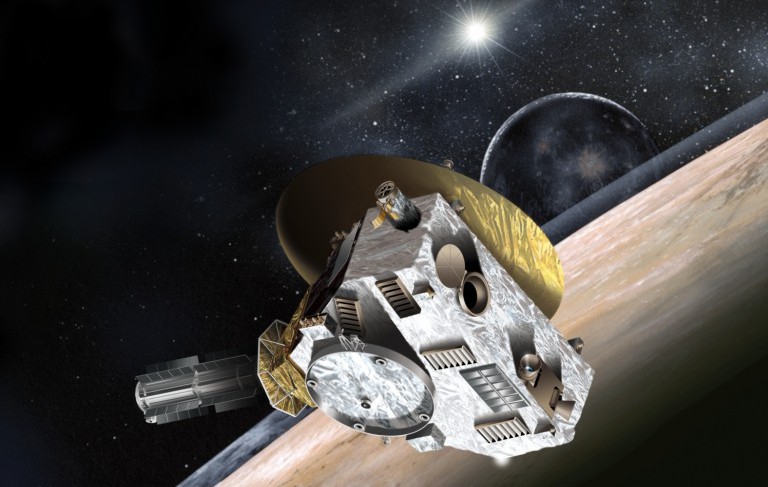
Despite all these developments, that occurred (relatively) close to home, there was even more news to be had, coming all the way from the edge of the Solar System no less. At the tail end of August, NASA announced that the New Horizons space probe passed Neptune orbit and is on its way to Pluto. Launched back in 2006 for the purpose of studying the dwarf planet, the probe is expected to arrive on July 14th of next year.

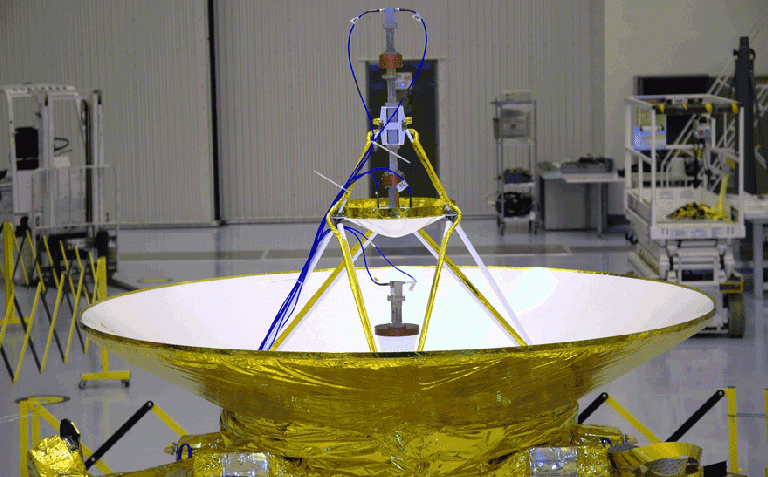
new-horizons-neptune-8NASA says that the the craft passed the Neptunian orbit at 10:04 pm EDT on Monday August 25th, which coincided with the 25th anniversary of Voyager 2’s flyby of Neptune in 1989. But where Voyager came within 4,950 km (3,080 mi) of the gas giant, the New Horizons craft passed by at a distance of 3.96 billion km (2.45 billion mi). The spacecraft is now almost 4.42 billion km (2.75 billion mi) from Earth, and is the fastest man-made object ever sent into space.

Nevertheless, New Horizons’ Long Range Reconnaissance Imager (LORRI) was still able to capture images of Neptune and its giant moon Triton. As you can see from the image below, Neptune appears as the large white disc in the middle, while Triton is the small black dot passing in front and sitting slightly to the ride. NASA says that Triton may be very similar to Pluto and the information gathered by Voyager 2 may prove helpful in the coming encounter.

new_horizons_plutoRalph McNutt of the Johns Hopkins University Applied Physics Laboratory.

There is a lot of speculation over whether Pluto will look like Triton, and how well they’ll match up. That’s the great thing about first-time encounters like this – we don’t know exactly what we’ll see, but we know from decades of experience in first-time exploration of new planets that we will be very surprised.

The first mission in NASA’s New Frontiers program, the New Horizons mission was launched on January 19, 2006 atop an Atlas V rocket from Cape Canaveral, Florida. It broke the record for the fastest man-made object on lift off with a speed of 58,536 km/h (36,373 mph). The 478 kg (1,054 lb) spacecraft was sent on a 9.5-year mission to fly by Pluto – a distance so far that radio signals from the nuclear-powered probe take four hours to reach Earth.

new-horizons-neptune-7Sent on a slingshot trajectory using the gravitational pull of Jupiter, which tacked on another 14,480 km/h (9,000 mph) to its speed, New Horizons will pass Pluto in July of next year at a distance of 13,000 km (8,000 mi). After this encounter, it will continue on out of the Solar System, during which it will be in the distant Kuiper belt studying one or more Kuiper belt objects (KBOs).

Though this will still not rival Voyager 1’s accomplishments, which left our Solar System last year, New Horizons promises to gather far more information on the Outer Solar System and what lies beyond. All of this will come in mighty handy when at last, humanity contemplates sending manned missions into deep space, either to Alpha Centauri or neighboring exoplanets.

Sources: gizmag.com, nasa.gov

Developing World Tech: BRCK Mobile Internet Device

BRCK1Far from Silicon Valley in California, there is a place that some are now calling “Silicon Savannah.” Located around Nairobi, and centered on the nonprofit collective Ushahidi, an explosion in African tech is taking shape. And this month, backers of the collective’s 2013 Kickstarter campaign are finally getting their hands on BRCK – a long-awaited device that is the antithesis of shiny, expensive internet hardware.

A mobile Internet router, BRCK is essentially a self-powered, mobile Wi-Fi device that promises to bring internet access to remote communities and underdeveloped neighborhoods all around the world. And as an added bonus, it reverses the usual order of globalization – having been invented in a developing country, built in the US, and intended for customers in any country anywhere.

BRCKIt can connect to the web in one of three ways: by plugging in a standard ethernet cable, by bridging with other Wi-Fi networks, or by accessing 3G or 4G data via a basic SIM card. Originally, Ushahidi invented it in order to overcome infrastructure challenges – specifically, inconsistent electricity and Internet connectivity – plaguing young upstarts in Nairobi. But it turns out, plenty of other people and places face the same challenges all over the world.

Contrary to public opinion, it is not just developing or underdeveloped countries that experience infrastructure challenges. Recently in the UK, Virgin Media customers across London lost service; while in the US, in what appeared to be an unrelated event, millions of Time Warner customers across the U.S. – largely in Chicago, Houston, Los Angeles, New York, and Tampa – were knocked offline.

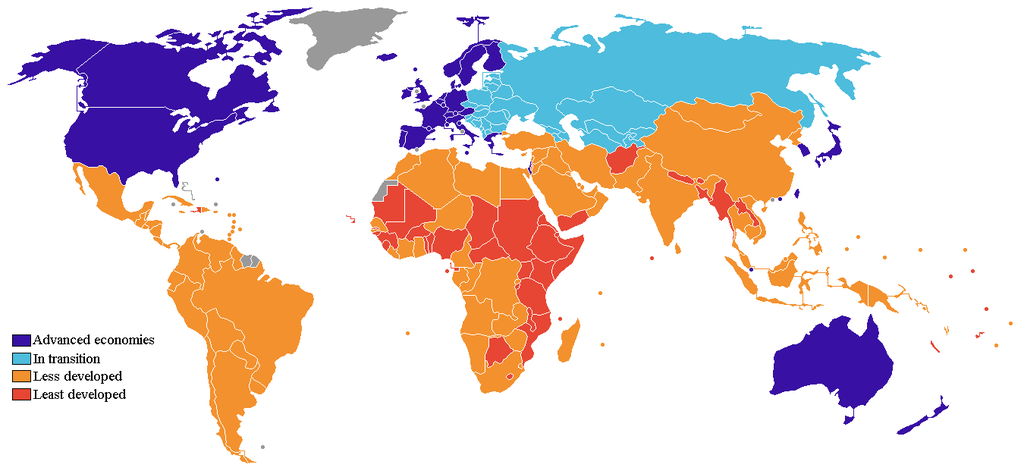
Developed-and-developing-countriesBut even just focusing on the developing world, BRCK’s potential market is enormous. While only a quarter of people from the developing world are currently connected, they already account for a staggering two-thirds of all people online today. While the technology is not exactly cutting-edge by most standards, it offers numerous advantages that take the needs of its potential market into account.

Beyond its three connection methods, BRCK can keep up to 20 users up and running for as long as eight hours during an electrical outage. And should the internet be unavailable in a given locale, the device continues operating offline, syncing up when its connection is restored. In addition, the stock hard drive is 4 gigabytes big, and it has a storage capacity of up to 32 gigabytes.

https://i0.wp.com/upload.wikimedia.org/wikipedia/commons/a/a2/Nairobi_Kibera_04.JPGBRCK CEO Erik Hersman, who cut his teeth in the industry as a blogger, sees the company’s base in Nairobi as one of its greatest assets, particularly given its target market. Having been born in Sudan and having settled in Kenya with his young family,  ( is well-suited to addressing local needs with local solutions:

I describe it as a new remix of old technology. That’s the key to understanding Africa’s technology… If it works in Africa, it’ll work anywhere… We’re playing with dirty power and crappy Internet, so the device has to be resilient.

While designed in Kenya, BRCK is manufactured and assembled in Texas by a company called Silicon Hills, which is located outside of Austin. With its matte black, rubberized case, BRCK is elegant, but mostly unassuming, and has the relative dimensions of an actual brick. It’s too large to fit in a pocket, but small enough to carry in a backpack, place on a desk, or even on the hood of your Land Rover in the African countryside.

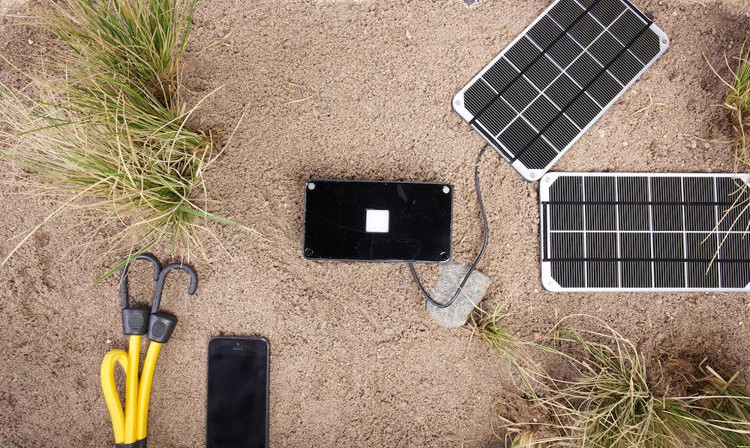
BRCK2By weight, BRCK is substantially heavier than a plastic router, but it’s also much more than one. In addition to its battery, BRCK has multiple ports, including a general-purpose input/output, enabling users to program and connect other hardware – such as sensors or a solar charger – to the device. But what is perhaps most compelling about BRCK, are its potential applications.

In truth, the greatest possibilities lies in the ability to break away from the model of centralized internet providers. This could lead to nothing short of a revolution in how people get online, and in way that would ensure a far greater measure of “equality of access”. As Hersman explained it:

We see enormous resonance with the work of other organizations. Take the proliferation of web-enabled laptops and tablets in schools; why is it that each of these devices connect to a mobile tower? Why not to a single, centralized point? …We’re at a place in history where the barriers to entry are no longer in the software space, but in the hardware space. Because we don’t yet have fully functioning maker spaces and rapid prototyping abilities here in Nairobi, the design process is still relatively slow and expensive, but the barriers are coming down.

Achuar community monitors learning to use GPSEducation, health, environmental, and even military and governmental organizations are already in conversation with BRCK and multiple entities are testing it out. For consumers in emerging markets, BRCK’s $200 price tag may be a stretch, but the company is looking at purchasing plans, which have worked well in developing nations for both the cell phone and energy sectors.

But BRCK’s business model is ultimately based more on companies than individual consumers. Digital Democracy, a nonprofit organization that has worked in two dozen countries around the world, is one such company. According to its founder and executive director, Emily Jacobi:

The reason that we backed BRCK and that I’m excited to see it come about is because it fills an important gap in hardware and tools. We’re going to remote areas and training groups – indigenous groups, refugees, and other at-risk populations – to map the land and communities using GPS devices and cameras. We’re particularly excited about BRCK’s ability to facilitate collaborative work, as well as function offline.

internetIf there was one thing that the Digital Revolution promised, it was to bring the world together. Naturally, there were those who thought this to be naive and idealistic, citing the fact that technology has a way of being unevenly distributed. And while today, people live in a world that is far more connected than in any previous age, access remains an illustrative example of the gap between rich and poor nations.

Hence why an invention like the BRCK holds so much promise. Not only does it neatly reverse the all-too-common direction of technological development – i.e. technology conceived by a wealthy country, built in a poor one, only sold in wealthy ones – it also helps to shorten the gap between rich and poor nations when it comes to accessing and enjoying the fruits of that development.

This month, orders began shipping to buyers in 45 countries around the world this month. To get your hands on one, check out Ushahidi’s website and learn more about their efforts to develop open-source, equal-access technology.

Sources: fastcoexist.com, digital-democracy.org, ushahidi.com

News from Mars: MAVEN Orbiter Arrives!

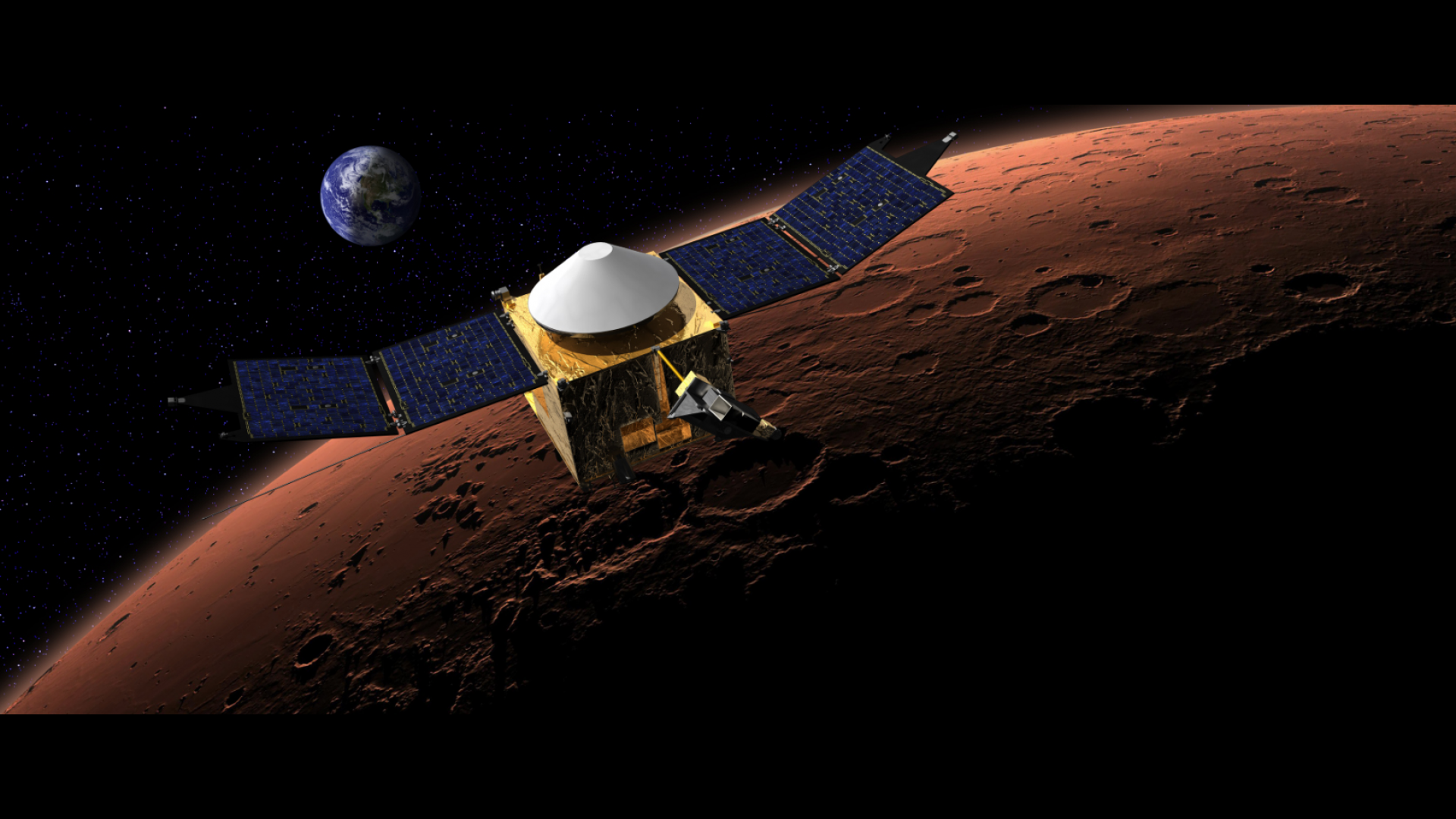
maven_tv_backdropIn November 2013, NASA launched the Mars Atmosphere and Volatile Evolution (MAVEN) space probe from Cape Canaveral. Described as a “time machine” for Mars, the orbiter would spend the next ten months traversing space, assuming an orbit around the Red Planet, and look for an answer as to how Mars went from being a planet with an atmosphere and water to the dried out husk that we know today.

And this evening, after trekking some 711 million kilometers (442 million-mile) across our Solar System, MAVEN will have arrived in orbit around Mars and will begin its year-long mission to study the planet’s upper atmosphere. The arrival will be broadcast live, courtesy of NASA TV and Space.com. The live webcast will run from 9:30 p.m. to 10:45 p.m. EDT (0130 to 0245 GMT), and if all goes well, MAVEN will enter orbit around Mars at 9:50 p.m. EDT (0250 GMT).

maven_launchAs David Mitchell, NASA’s MAVEN project manager at the Goddard Space Flight Center in Greenbelt, Maryland, said in a statement:

So far, so good with the performance of the spacecraft and payloads on the cruise to Mars. The team, the flight system, and all ground assets are ready for Mars orbit insertion.

Though plans to study Mars’ atmosphere in detail have been in the works for years, the MAVEN program received a big push from the ongoing efforts from the Curiosity rover. During its ongoing mission to study the surface of Mars, Curiosity was able to confirm that Mars had extensive surface water billions of years ago. This revelation came very early in the mission, and indicated some rather interesting things about Mars’ past.

Mars-snow-header-640x353For instance, although Mars is now too cold for flowing water today, it might have had a thicker atmosphere in the past that warmed its surface and allowed the liquid to remain stable on the surface. And while scientists have a pretty good idea how it was lost (i.e. too far our Sun, too low a gravity field), the rate of loss and when it disappeared are just some of the questions that MAVEN will attempt to answer.

Much of what scientists know about Mars’ upper atmosphere comes from just a few minutes’ worth of data from the two Viking landers that took measurements as they made their way to the Martian surface in the 1970s. This time around, NASA will be able to collect data for an entire year, gathering far more data than either the Viking landers or any other spacecraft has since had the opportunity to do.

maven_atmo1As Bruce Jakosky, the mission’s principal investigator at the University of Colorado, Boulder’s Laboratory for Atmospheric and Space Physics, explained it:

The MAVEN science mission focuses on answering questions about where did the water that was present on early Mars go, about where did the carbon dioxide go. These are important questions for understanding the history of Mars, its climate, and its potential to support at least microbial life.

NASA scientists understand that Mars’ upper atmosphere acts as an escape zone for molecules floating dozens of miles from the planet’s surface. They theorize that as the solar wind hits the atmosphere, the radiation strips away the lighter molecules and flings them into space forever. To test this hypothesis, MAVEN will be examining the state of Mars’ upper atmosphere, and ionosphere to determine its interactions with the solar wind.

maven_atmosphereIn so doing, NASA hopes to determine what the current rates of escape are for neutral gases and ions, and thus get a better picture of how long it took for the atmosphere to degrade and when it began degrading. The upper atmosphere of Mars likely changes as the sun’s activity increases and decreases, which is why MAVEN investigators hope to run the mission for longer than a year.

MAVEN will began making science measurements around Nov. 8, due to it taking a short break from its commissioning phase to watch Comet Siding Spring pass close by on Oct. 19. The $671 million MAVEN spacecraft is one of two missions that launched toward Mars last November and which are making their arrival this month. The other probe is India’s Mars Orbiter Mission, which launched just before MAVEN and will arrive at the Red Planet this Wednesday (Sept. 24).

It is an exciting time for space exploration, and the coming years are sure to be characterized by an escalating and accelerating rate of learning. Be sure to head on over to Space.com to watch the arrival broadcast live. And be sure to check out the following videos – the Mars Arrival trailer; NASA Goddard Center’s “Targeting Mars” video; and the NASA MAVEN PSA, hosted by LeVar Burton:

MAVEN Mars Arrival Trailer:


Targeting Mars:


LeVar Burton Shares MAVEN’s Story:


Sources:
space.com, (2), nasa.gov

News from Mars: Soil Good for Growing!

Mars_GreenhouseWith numerous plans for a manned mission to Mars, some of which are scheduled to one-way settlement projects, the question of how and what people on Mars will eat is an important one. What will the Martian diet look like? How will they grow their food? Will it people subsist on endless supplies of freeze-dried rations, or will they get all the veggies, fruits and protein they need from hydroponic produce?

Well, according to Dutch ecologist Wieger Wamelink, the Martian settlers might just be able to grow their food in the local soil. In a series of experiments using soil tailored to fit extra-terrestrial environments, Wamelink was able to make a mustard seed sprout. The soil was provided by NASA, a sample which they had collected from the desert, dried out, and cleansed of certain nutrients that’s meant to replicate what Martian and lunar soil would be like.

martian_plantWamelink had ordered more than 100 pounds of each type to his research greenhouse in the Netherlands to see what kinds of plant life might prosper in greenhouses on other planets. He and his team planted tomato seeds, stinging nettle, carrots, rye, and a host of other wild species in the soils in a series of 840 pots, then published their results in PLOS One late last month.

As Wamelink, who works for the Alterra Institute at the University of Wageningen, explained:

I think we’re really the first to do that. We have looked at how plants see what [nutrients are] available in these soils, and it was unknown to NASA. They were very happy when we sent our results.

MarsGreenhouse2What was perhaps most impressive about the results was how well some plants fared in the imitation Mars soil. Some seeds germinated after just 24 hours and flowered within 50 days, something Wamelink had never expected. He knew that nitrogen might not be available in alien soils, but when he analyzed the Martian soil compared to nutrient-poor sand from the banks of the Rhine, he found that Mars actually had much more going for it than he thought.

The Martian atmosphere contains nitrogen, and gusts of gases from the sun charge the nitrogen into a form that is digestible for plants. The planet also contains phosphorus, ammonium, and nitrates – all essential for plant growth. Field mustard and a tough, wild Dutch species called “reflexed stone crop” produced some of the best results. Lunar soil, by contrast, didn’t provide very friendly turf for earthling plant species.

apollo_11_bootprint-e1405838911229Soil on the moon is thin, dusty, and full of aluminum and other heavy metals. Martian soil also contains lots of heavy metals, but it is aluminum that most plants don’t do too well in the presence of. So for the time being (or rather, if and when we settle the Moon), Lunar greenhouses will have to look to imports of Earth soil while Martian settlers can simple scoop the soil they need from outside their airlocks.

However, there are a few snags. For starters, even though Wamelink’s study provided some of the first evidence that species of Earth plants can grow on planets other than Earth, it still doesn’t show how eating those plants might affect humans. The Martian surface experiences lots of radiation, and eating radioactive plants full of heavy metals might not be the best idea for the human digestive system.

mars_growopNevertheless, Wamelink believes that some aspects of the Martian climate might actually be beneficial for plant growth. On a planet with a third of the gravitational pull of Earth, he suspects that plants might be able to grow taller than they ever would on their home planet. In his mind’s eye, he pictures plants encased in skyscraper Martian greenhouses. Alas, not all scientists agree with him, and he admits its an unresolved issue.

Still, its an exciting one that is loaded with potential. And who’s to say that after a little processing and decontamination, Martian soil would have everything the settlers need to grow their own food? The very fact that it is being considered and examined so seriously shows our commitment to making an enduring human presence on Mars a reality someday. And as that day get’s closer, more and more questions are likely to be addressed.

terraformingAnd figuring out how to grow our own crops in Martian soil will provide inevitable feedback on how we could use Earth plants to one day convert the ecology of the Red Planet and make it into something a little more suited to full-scale habitation. Who knows? In a few centuries time, Red Mars may become Green Mars. And perhaps even Blue Mars. Oh, Kim Stanley Robinson, you daring dreamer, you!

Source: fastcoexist.com

The Future of Flight: Hybrid-Electric VTOL Aircraft

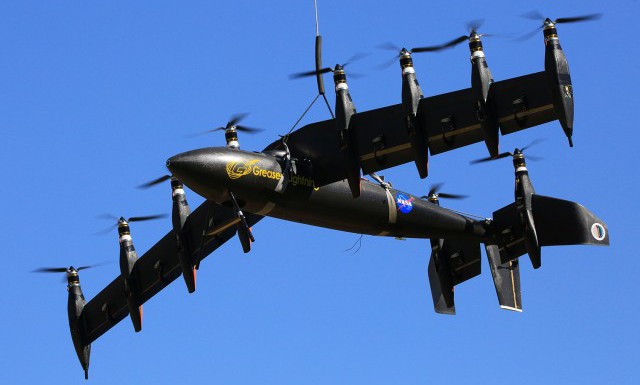
nasa-greased-lightning-10-foot-drone-640x480It may look like something a dedicated hobbyist built, and sound like something cheekily named, but NASA’s new electrical vertical take-off and landing (VTOL) machine is a very serious venture. Known as the GL-10 Greased Lightning, this unmanned hybrid-electric aircraft is the agency’s proposal for a vehicle that one day replace the reigning champion of VTOL – the helicopter.


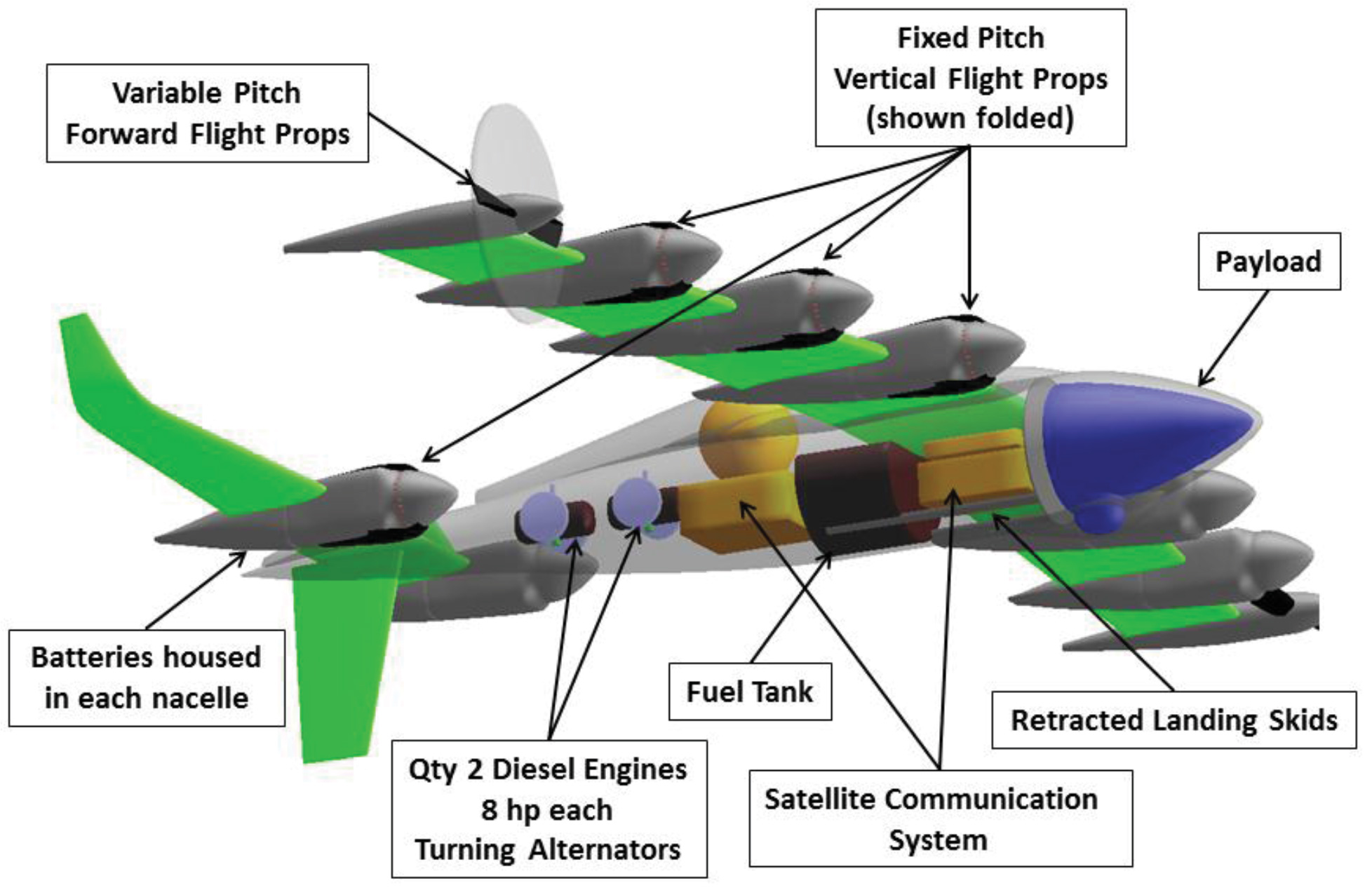
The G-10 is in part the result of the recent strides made in electric propulsion, which is made possible thanks to the growing power and energy density of batteries allows for some very efficient hybrid-electric aircraft designs. With eight prop engines mounted on the two main wings and another two mounted on the tail, the vehicle swivels them into vertical position for takeoff and landing, and then horizontal for conventional flight.

nasa-greased-lightning-prototype1While it’s not particularly hard to create an aircraft capable of VTOL, it has so far proven to be very tough to create an aircraft that can also efficiently cruise through the air after taking off vertically. The helicopter is the only common example of a VTOL aircraft that can also cruise acceptably, but at a cost. Compared to other aircraft, an everyday helicopter has a much lower-lift-drag ratio, which means it burns more fuel, has less range and can carry less weight.

However, electric propulsion allows for much more efficient designs, since vehicles no longer have to accommodate large fossil fuel-powered engines or manage the mechanical stress across the airframe. Instead, they can rely on smaller, more efficient, optimally placed electric motors, and without the mechanical complexity of big jet engines, it suddenly becomes a lot easier to have wings and propellers that can swivel between horizontal and vertical.

https://i0.wp.com/www.extremetech.com/wp-content/uploads/2014/08/nasa-greased-lightning-ground.jpgWhile pure-electric aircraft do exist – in the form of quadcopters – hybrid-electric designs with longer range are generally of more interest to military and commercial groups. In the case of NASA’s Greased Lightning, there are two small diesel engines in the body of the aircraft that turn electric alternators that constantly recharge the lithium batteries. This theoretically gives the GL-10 the same range and duration as a modern plane alongside its VTOL capability.

Interestingly, NASA also says that such a hybrid-electric design is “scale free” — meaning the same principles could be used to revolutionize everything from helicopters, to military UAVs, to massive jetliners. Much like hybrid-electric cars, the concept is set to revolutionize an entire fleet of aircraft designs that could be far more efficient than they currently are. One party who is sure to be interested in the possibilities is the US military, with its ever growing fleet of UAVs.

For now, Greased Lightning only has a wingspan of 3 meters (10 feet), and on its first test flight  – which took place on National Aviation Day, August 19 – it was tethered. Untethered flights are planned for later in the year, an event which is sure to be a media sensation and produce some viral videos!


Source: extremetech.com

News from Space: Orion Spacecraft Completed

orion_arrays1NASA’s return to manned spaceflight took a few steps forward this month with the completion of the Orion crew capsule. As the module that will hopefully bring astronauts back to the Moon and to Mars, the capsule rolled out of its assembly facility at the Kennedy Space Center (KSC) on Thursday, Sept. 11. This was the first step on its nearly two month journey to the launch pad and planned blastoff this coming December.

Orion’s assembly was just completed this past weekend by technicians and engineers from prime contractor Lockheed Martin inside the agency’s Neil Armstrong Operations and Checkout (O & C) Facility. And with the installation of the world’s largest heat shield and the inert service module, all that remains is fueling and the attachment of its launch abort system before it will installed atop a Delta IV Heavy rocket.

Orion-at-KSC_Ken-KremerThe unmanned test flight – Exploration Flight Test-1 (EFT-1) – is slated to blast off on December 2014, and will send the capsule into space for the first time. This will be NASA’s first chance to observe how well the Orion capsule works in space before it’s sent on its first mission on the Space Launch System (SLS), which is currently under development by NASA and is scheduled to fly no later than 2018.

The Orion is NASA’s first manned spacecraft project to reach test-flight status since the Space Shuttle first flew in the 1980s. It is designed to carry up to six astronauts on deep space missions to Mars and asteroids, either on its own or using a habitat module for missions longer than 21 days. The development process has been a long time in the making, and had more than its share of bumps along the way.

Orion-at-KSC_Ken-Kremer1As Mark Geyer, Orion Program manager, explained:

Nothing about building the first of a brand new space transportation system is easy. But the crew module is undoubtedly the most complex component that will fly in December. The pressure vessel, the heat shield, parachute system, avionics — piecing all of that together into a working spacecraft is an accomplishment. Seeing it fly in three months is going to be amazing.

In addition to going to the Moon and Mars, the Orion spacecraft will carry astronauts on voyages venturing father into deep space than ever before. This will include going to the Asteroid Belt, to Europa (to see if there’s any signs of life there), and even beyond – most likely to Enceladus, Titan, the larger moons of Uranus, and all the other wondrous places in the Solar System.

oriontestflightThe two-orbit, four and a half hour EFT-1 flight will lift the Orion spacecraft and its attached second stage to an orbital altitude of 5,800 km (3,600 miles), about 15 times higher than the International Space Station (ISS) – and farther than any human spacecraft has journeyed in 40 years. It will be an historic occasion, and constitute an important step in what is sure to be known as the Second Space Age.

And be sure to watch this time-lapse video of the Orion Capsule as it is released from the Kennedy Space Center to the Payload Hazardous Servicing Facility in preparation for its first flight:


Sources:
gizmag.com, universetoday.com