Seth Green’s New Star Wars Show!

George Lucas would surely fume over this, were it not for the fact that he’s probably getting massive royalties! And as they say, imitation is the sincerest form of flattery. So I suppose he is taking the news that Seth Green, creator of Robot Chicken and the voice of Chris in Family Guy, will soon be releasing another Star Wars parody.

That’s the premise behind Star Wars: Detours, a new animated show that takes the Star Wars universe and does pretty much what Robot Chicken did. Mock it, celebrate it, and just have a lot of fun playing with the characters and storyline. And much like its predecessor, anyone who grey up in the 80’s and loves having their retro/nostalgia sense played to will love it!

However, unlike its predecessor, this one isn’t likely to get all raunchy and gross. Whereas RC appeared on Adult Swim, this is one will be premiering on the Cartoon Network, meaning mainstream audiences will be watching it. Meh, I guess it pays to hedge your bets! No indication on when it will be premiering, but that news is sure to follow! In the meantime, check out the trailer for this new show.

Source: g4tv

Eh Tu, Disney?

Oh dear. It seems that Disney, not content to let other movie magnates have all the fun, will be launching (no pun) a reboot of its own. Yes, The Rocketeer, that kitsch, feel good movie about a guy who finds a rocket pack and becomes a super-hero, is getting remade for a new generation.

Personally, I got nothing against the original. Families had to have some kind of inoffensive option for super-hero movies back when Spiderman didn’t exist and Batman was still a bit Gothic for children to watch. But why does it need to be remade? Wasn’t the last one enough?

But then again, that’s a can of worms which myself and many smarter people besides have already opened. If you pull one thread in this giant tapestry known as reboot/remake/relaunch fever, it all comes tumbling down!

Luckily, some of the folks over at Vimeo made this hilarious video of what The Rocketeer would look like if it had been made into a Pixar movie. I can’t help but wonder if they have the right idea here. Seriously, when was the last time Disney ever did anything great that was live action?

http://vimeo.com/user4835392/rocketeer-pilote

And just to poke fun at Disney, here’s a musical clip from Family Guy where The Rocketeer didn’t do so well (at 1:24), not to mention Michael Jackson. Geez, MacFarlane, talk about kicking a dead horse!

Mars Lander Mission, 2016

With all the news coming back from Curiosity rover since its deployment, one would get the impression that Mars is a pretty happening place. Blue sunsets, wide open vistas, tall mountains and extensive plains. All the while, our collective fascination with the planet has been growing apace. And it seems that this trend is destined to continue…

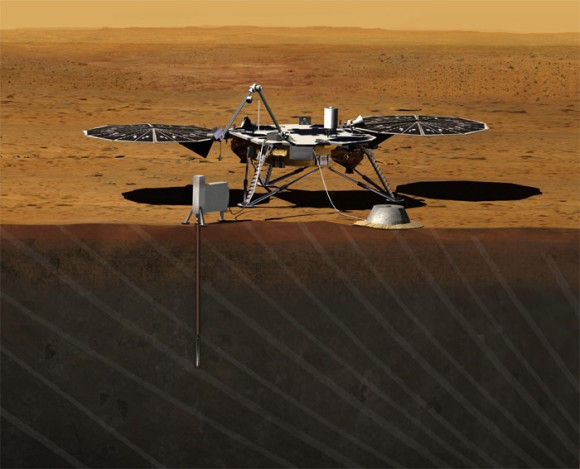
After looking at several low-cost options for their next major mission, NASA scientists decided to once again return to the Red Planet, this time to do some interior planet studies to determine whether Mars has a solid or liquid core, and determine the planet’s basic structure.

Known as the InSight lander, this mission won out over two equally enticing proposals. The first called the for the deployment of the Titan Mare Explorer (TiME), a floating high-tech buoy which would be sent to Saturn’s moon Titan. Once there, it would study the methane lakes of Titan, examining their composition and interaction with the atmosphere. Thanks to the Cassini probe, these lakes have attracted a great deal of interest of late, particularly since they may be able to support life. Understandably, many can’t wait to study them up close and see if this holds true.

The second potential mission called for the deployment of “Chopper”, a proposed Comet Hopper mission that would put a lander on comet 46P/Wirtanen where it would study the comet’s composition. This comet, which was originally discovered in 1948, belongs to the Jupiter family of comets and orbits the Solar System once every 5.4 years. Studying its make-up would go a long way to helping scientists understanding how Solar comets behave and provide clues as to the early formation of our Solar System.

But scratch those! With 2016 on the way, budget limited and Mars the happening place, InSight will be the one to go. What’s more, it’s research is likely to prove very useful in settling some ongoing arguments, not the least of which is whether Mars possesses liquid water beneath its surface. If this should prove true, it might mean terraforming could be a go sometime down the road…

People can dream! And speaking of which, check out the NASA simulation of what InSight will look like once deployed.


Source: Universe Today

The Martian Chronicles, Finally!

A funny thing happened to my wife and I while we were vacay-ing on the Sunshine Coast. After our walk in the wilderness – we asked for a Swiss Family Robinson-style vacation, we got the Hunger Games! – we put in at the town of Powell River for a little rest and recoup. In addition to drinking plenty of Townsite beer (brewed locally), we sampled local food, basked in the sun, and waited on the Blackberry Festival, which is celebrated every August.

And of course, on our first afternoon there, we did a little shopping. Our first stop took us to a second hand bookstore where we perused old titles for something to flip through over the course of the next few days. Yes, we both brought a handful of books with us for our vacay, but for some reason decided to leave them with my folks in Comox. I don’t know, I guess we figured we wouldn’t have time. But let me tell you… when you’re between pumping creek water, nursing sore muscles, and cooking dried food in your rocky, buggy campsite, a good book comes in handy. And not just for swatting!

Anyway, one of the fruits of our bookstore search was a copy of the Martian Chronicles by Ray Bradbury. Already I had mentioned this book as part of my tribute to Ray Bradbury, but in truth, I never really read it. And since it’s style and format were part of what got me thinking about my group’s latest anthology, I thought it was high time I read it and saw what all the hub-bub was about. I am now half-way finished and it’s top of my current vacay reading pile, which includes Mona Lisa Overdrive, Second Foundation, and We… ambitious maybe?

I hope to do a full review in the coming weeks and paying this timeless book its due. I also hope to truly adopt some of the themes and stylistic touches to my own work, as they were certainly most effective at capturing the travails of colonization and the settlement on a new world. In the meantime, here is the hilarious video entitled “F*ck me Ray Bradbury”, comedian Rachel Bloom’s own tribute to the venerated author. I hope the master takes no  offense 😛

Time-Lapse Footage of Curiosity Rover Landing

Amongst the awesome footage which is coming back from Mars, courtesy of the Curiosity Rover, is this lovely compilation. Using the many photos snapped by the rover as it made it’s decent, the enterprising folks over at Spaceflight 101 have created a time-lapse video of what the landing looked like.

Taken by the the Mars Descent Imager (MARDI), the images capture the separation of the heat shield from the rover and then its powered descent. Well worth watching, and stay tuned for more updates from Curiosity as it continues its journey across the Martian Landscape.

The 70th Anniversary of the Dieppe Raid

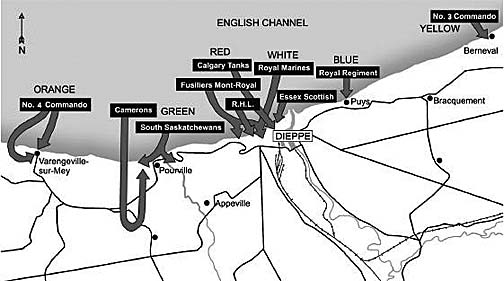
Here in Canada, few historical events from World War II inspire as much anger, sadness, and remembrance than the anniversary of the Dieppe Raid. It was 70 years ago today that Canadian Forces, in what was to be the first offensive of the war, attacked the European coastline near the small French town of Dieppe. The raid, as it was classified, was a total failure, resulting in 913 dead, almost 3000 captured, and countless more wounded. Out of the nearly 5000 men who went in, less than half made it home.

Earlier today, I read some articles that spoke of the surviving veterans, the youngest of whom is 90, as they arrived at Dieppe to take part in the commemorative ceremonies.

Countless French people welcomed them by hanging Canadian flags from their balconies and volunteering to show them about town. For the locals, honoring the veterans who fell while trying to liberate their town has become a way of life, similar to the Belgian people of Ypres and the Dutch who honor how Canadian forces liberated their country in 1944.

Naturally, when these veterans tell their stories again to reporters or the many who wabted to hear them, they conveyed some rather mixed emotions. There were moments of anger and pride intermixed with a general tone of lament, and in that respect, they are joined by all Canadians who remember. Even now, 70 years later, there is still ample speculation about the Dieppe raid.

Taking place in 1942, during the height of the war when the Allies were still on the losing end, the planned raid on Dieppe represented the culmination of many hopes, fears, and political considerations. For over a year, Soviet leader Joseph Stalin had been asking – in fact, pleading – with the Allies for a Second Front in Europe that would take pressure off the Russian forces. Ever since the Germans moved into his country roughly a year before, Russians were dying by the millions and the Red Army was struggling to hold them back.

At the same time, the Allies had been contemplating plans for the liberation of France ever since it had been overrun two years earlier. For the British and French, the memories of the summer of 1940, beginning with the invasion of Belgium, the outflanking maneuver through the Ardennes Forest, the fall of Paris and the evacuation of Dunkirk, were still phantoms they wanted to dispel. With Germany pushed out of France, the Allies would have a major ally back in the fight and put an end to Germany’s expansion, which had continued unabated since the war began.
And last, the Canadian Armed Forces were desperate to get into battle, hoping to demonstrate some of the same zeal that had popularized their forces in World War I. And with the US finally entering the war on the Allied side, there was an added push to score a victory before the Yanks got in and claimed all the glory 😉 A commando-style raid against a section of the Atlantic Wall seemed like just the thing to bolster morale and show the world that the Canadian Expeditionary Force was still a force to be feared!

Ultimately, the raid was a failure for numerous reasons, all of which proved intrinsic to helping the Allies draft Operation Overlord – the invasion of Normandy – roughly two years later. First off, the raid had little support to speak of. Aside from the 5000 men and tanks heading onto the coastline, their were very ships ships and aircraft standing by to blast German positions and take on the coastal defenses.

Second, the planners did not take into account the challenging terrain along the beaches. Rather than being sandy shores, they were composed of tiny little rocks which played havoc with tank treads, making them virtually useless. As a result, the Canadian soldiers found themselves running into German machine guns and mortar positions with no cover or support.

Third, the plan was changed over and over again so that less and less forces would be committed to the fold. This led many to question whether the raid would even have enough men or firepower to achieve their mission. However, Allied planners dismissed these objections by emphasizing that the attackers would have the element of surprise. That was not the case though, since Allied Command had been publicizing the attack for some time before it happened.

In short, the mission was the perfect recipe for failure, leading some to speculate that that had been the goal all along. With Stalin pleading for a Second Front and the Allies unable to convince him that they were not ready, some claimed that Dieppe was meant to fail as a way of illustrating their point.

In addition, new evidence is being brought to light that suggests that the raid was a diversion for a covert operation that involved commandos attacking the secret German naval headquarters in the town in order to capture a working model Germany’s new four-rotor Enigma machine and their most recent code books. At the head of this operation, so the argument runs, was Mr. Ian Fleming himself, the man who would later create James Bond.

A very interesting interpretation, and which explains quite clearly why the raid was so publicized. In keeping with Allied counterintelligence plays, it was customary to let the Germans know exactly what they were doing in the hopes that they would chomp at the bit and not realize it was a feint to cover their true aims.

What’s more, if this latter interpretation should prove to be true, it would mean that politics and incompetence was not the reason for the Dieppe Raid. Instead, it would have been a vital intelligence mission which went wrong for a number of reasons. However, this still would not change the fact that the operational planning suffered from the fact that the raid failed to take into accounts some key problems. Nor would it change the outcome.

In any case, some good did come out of the operation. Four months after the raid, the Allies managed to crack the 4-wheel Enigma code and went back to winning the intelligence war. In addition, Soviet Forces began to defeat the Germans on all fronts and initiated the slow process of pushing them back into their old stomping grounds. And in the Mediterrenean and North Africa, the German Navy and Afrika Corps began to get their asses kicked.

But most importantly of all was the operation that would succeed where Dieppe had failed. Taking on June 6th of 1944 in the Normandy region of France, Operation Overlord was the largest invasion in history, and several key factors had been adapted from the Dieppe Raid. In addition to committing all kinds of men, materiel, ships, and planes to a cohesive, multi-phased invasion plan, the Allies also conducted a vast counter-intelligence operation well in advance to trick the Germans into thinking that their real invasion force would be coming in the Pas de Calais region.

So today, like all good Canadians, I wish to honor the veterans who are currently overseas, receiving their well-deserved honors and recounting the historic Dieppe Raid that they took part in so many years later. I’d also like to salute those soldiers who are no longer with us, many of whom were wounded, captured and forced to spend the rest of the war in army hospitals and German POW camps. And I would especially like to pay tribute to those who didn’t make it back, who died on those rocky shores as the result of either politics and ineptitude, or desperation and intrigue.

Even after 70 years, surely we must be learning something from all this…

Top Five Exoplanets In The Known Universe

Hello again! Boy, I tell ya, it’s good to be back in the swing of things. You know what they say about absence making the heart grow fonder? Well, they also say a few things about being addicted to your devices! But either way, I’m happy to be back in civilization and able to communicate with my friends and colleagues who are, unfortunately, only reachable electronically.

And I’m even happier that people have had a creative outburst while I was away. I miss being able to take part in brainstorming sessions and coming up with new ideas with people. So I was pretty pleased when I came home and found my inbox so crammed full of emails and comments from my writer friends. And, like a plant that’s been deprived of water, their thoughts set my mind aflame with new ideas!

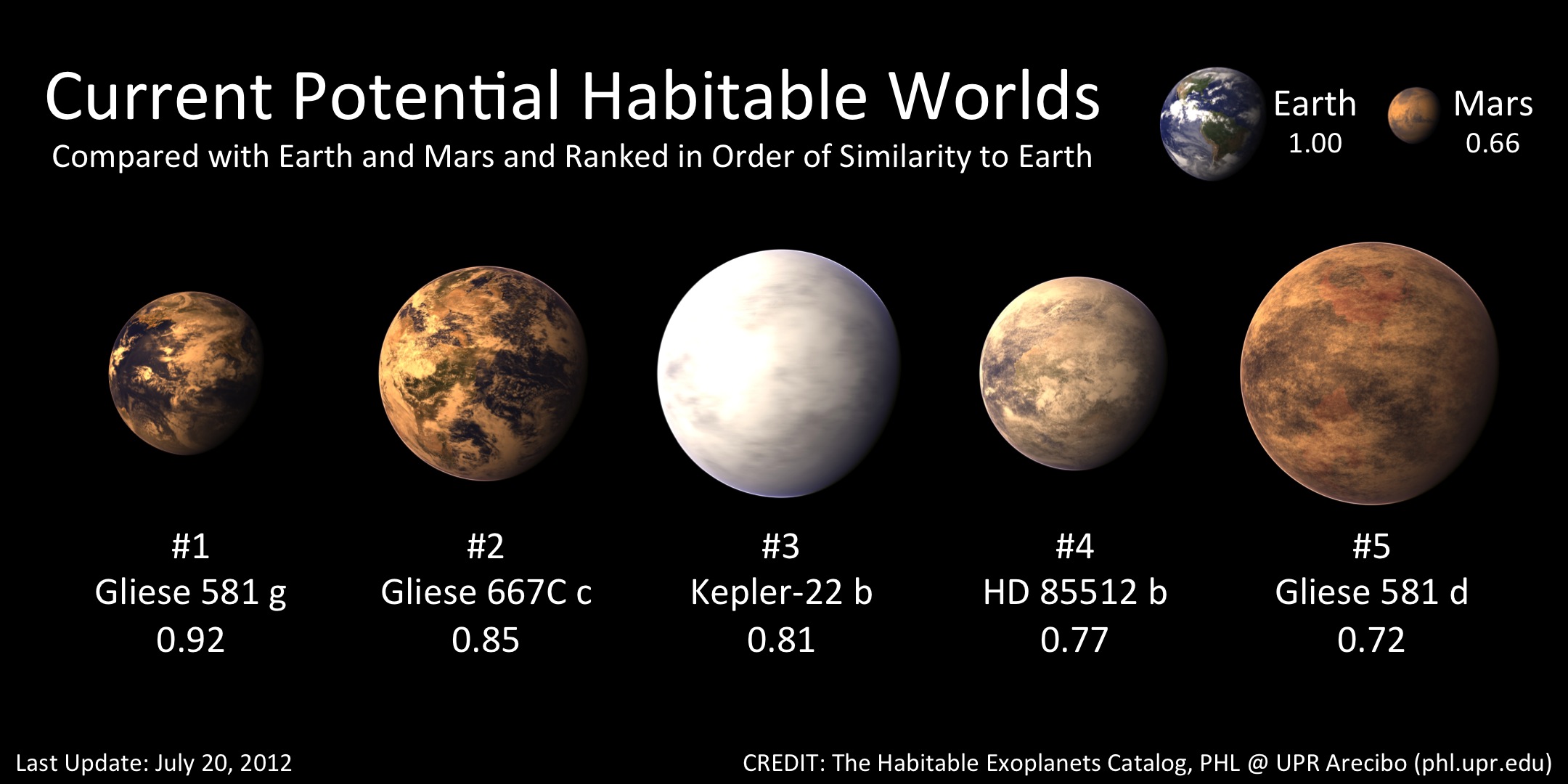
For one, I realized I had yet to discuss NASA’s top 5 Exploplanets in any real detail. Not long ago, it was announced that the planet Gliese 581 g, which is roughly 20 light years from our Solar System, is the most Earth-like planet in this region of the Galaxy, and hence, the most likely candidate for settlement someday. However, this news came as part of a larger story about all the planets, Earth-like or otherwise, that NASA has been confirming the existence of in recent years. Guess I was too busy focusing on how this effecting my writer’s group to expand on how cool these discoveries really are 😉

The table above shows the top five contenders, grouped according to how similar they are to Earth in terms of gravity, atmosphere, distance from their star, and ability to support life. Gliese 581 g, the fourth planet from the Gliese 581 star, ranks as number one with a 92 percent comparison match. Being roughly the same size as Earth, though boasting significantly more mass, it is also thought to have roughly the same gravitational pull. In addition, the astronomer who was intrinsic in it’s discovery, Steven Vogt, indicated that it is a prime candidate for extra-terrestrial life.

The second candidate, at 85%, is Gliese 667C c, a planet which orbits a red dwarf roughly 22 light-years away. It is so named because it’s parent star is part of a triple star system, or a trinary. Since c is estimated to be at least 4.5 times as massive as Earth, it has the honor of being designated a “Super-Earth”, and no doubt would have enough gravity to make even a world-class athlete feel overwrought from the simple task of walking.

Third is Kepler-22 b, an exoplanet which was spotted by NASA’s planet-hunting Kepler space telescope in 2009. An 81% match to Earth, this world is another “Super-Earth” which is speculated to have an atmosphere and climate which could be hospitable to Earth creatures. Unfortunately, this bad boy is over 600 light years away, making it a pretty poor candidate for settlement anytime soon.

Fourth up is HD 85512b, another super-Earth which orbits the orange dwarf Gliese 370, which is roughly 35 light-years away. At a relatively reasonable distance, and a 77% match to Earth, this planet could be a suitable candidate for colonization one day. NASA already estimates that its average surface temperature and presence within the star’s “Habitable Zone” would be within tolerable limits. Hopefully the gravity is the same!

And coming in at fifth place is the second planet to come to us from the Gliese 581 system, the fifth planet known as Gliese 581 d. As the above table shows, g and d are both within the systems Habitable Zone and could be made to support human populations, provided certain requirements (i.e. the existence of water, suitable temperatures and gravity) were met. When it was first discovered in 2007, it was dismissed as being “too cold” to support life. However, subsequent atmospheric modelling studies suggest that it could be habitable provided its atmosphere is capable of generating a Greenhouse Effect, as Earth’s is.

Many question how and why the discovery of exoplanets will benefit humanity. As one of my friends (hi Rami!) asked me recently, what good is it to colonize worlds do us if our problems remain? I argued that it would ensure our survival, but quickly realized that I’d need to make a better case if I was going to prove that point. As a curve-ball, I asked him to consider the possibility that maybe Earth itself, as we’ve made her in the past 15,000 years, could be the problem…

Naturally, that statement requires clarification. But that’s something for another time. Right now, all I am hoping for is that the discovery of habitable planets within humanity’s reach will mean either the possibility of extra-terrestrial life, or the option of planting the seed of humanity in a distant solar system. The implications of either would be mind-blowing, and I for one feel privileged to live in a time when such possibilities might be coming true!

Back From the Brink!

Hello all! Just wanted to let people know that my wife and I triumphantly (well, sort of) returned to civilization yesterday. After three days in the bush, we decided that our vacation and health would better be served if we detoured from our planned path and headed back into the small town of Lund to rest and recoup. Before ya’ll go thinking we’re a bunch of weaklings, let me assure you the decision wasn’t made lightly!

After being dropped off on slippery a rock face at the head of our trail, which is apparently safe to scale at high tide, we proceeded to march with 5 days of supplies on our backs through 12 kilometres (5.5 miles) of mountains forests. Our destination was 16km from the coastal point where we were dropped off, which we figured would b easy. After all, we hiked that much in the day when we were in Camino in Spain. Well, let me tell you… hiking the West Coast Trail is nothing like Spain!

After the first four we were tuckered. After the first eight, we were exhausted and drank all our water. And of course, the bugs were quite awful and my darling bride was stung by a wasp, which swelled up really bad by midday! As the day was drawing to a close, we realized we wouldn’t make it to the first cabin on our journey, not unless we wanted to arrive at 8pm (2000 hours) and finish dinner by 10. And so we decided to make camp at the first camp site which came our way.

And when I say make camp, I mean old school! Since we planned to hike from cabin to cabin along the trail, we had no tent, and were forced to sleep on the ground in our sleeping bags and thermarests (1 inch thick pads). We drew our water from the lake and used that to cook and recoup all the water we lost hiking through the summer heat and forests. Thank God for water filters and iodine tablets, I tell ya! And granted, our shelter was very improvised, consisting of a slanted rain cover and a mosquito net, but we were pretty proud. And in spite of some serious pain from sleeping on rocks and noises which kept waking my wife up, we slept alright.

The next day, braving really sore muscles and stiff backs (from sleeping on rocks) we made it to the cabin another 5.5 km away, all uphill. However, we quickly learned that there was no water there, and we had to pump our water from a rain barrel. We knew the next leg of our journey would be even harder, and would consist of 17 km if we were going to make it to the next cabin. Otherwise, we would be camping out in the open again, subject to whatever came our way. And of course, the shortages of water were scaring us just a little. With the summer heat being more than expected, most creeks in the area were thought to be dry…

So instead we came up with the alternate plan. Instead of either hiking 17 km and braving dehydration and incredible soreness and pulled muscles, or hiking another 12 and braving much the same and expecting more sleeping on rocks with the chance of visits from nocturnal predators, we hiked 5 km through clearcut landscape and marshes to the nearest road, then hiked another 4km through road construction and a dusty highway to make it to the town of Lund, which is where we set out from in the first place. We were sore, dirty, tired, and very hungry. A shower and a final camp meal later, and we were feeling somewhat human again!

It was not an easy decision. Even though we found scarcely any water along the way, which confirmed some of our worst fears, and we were so sore we could barely walk when we got into town, I still feel like we bailed on a challenge. That never sits well. However, we vowed to return sometime in the future, promising to travel light, prepare well in advance, and bring a damn tent! That way, we should be able to set out own schedule, be able to put down where we want, and not be subject to the weather or worry about night-time predators.

Of Remakes and Smart People Making Stupid Arguments

In my position as a social sciences major, I have had many opportunities to witness dumb ideas argued intelligently; cases where the stupidest premises imaginable were made to sound respectable and even plausible by academics who were in the habit of injecting cool rhetoric or intellectual claptrap into weak ideas. If nothing else, it demonstrated to me that there are apologists and defenders who invest way more thought into their arguments than other people do into their work.

One case involved a Humanities Major (I assume) arguing that Brittany Spears song “I’m Not A Girl (Not Yet A Woman)” was a possible indication that the then starlet was a closet post-modernist Hegelian philosopher. Another had to do with the hidden genius behind George W. Bush’s many uses of inventive wordplay. And both were patently brilliant in the way they tried to make the completely mundane and painfully stupid sound smart. I tell ya, you have never heard so many smart argument employed in the defence of such stupid subject matter!

But this article really took the cake for me. Entitled “Why Remakes Are One of Our Greatest Achievements as a Civilization”, this article asserts that there is a connection between the many, many Hollywood relaunches of late and some of our most venerated cultural traditions as a species. And here too, I had to doff my cap the writer. Never have I heard so much thought dedicated to pure thoughtlessness, so much intellectual rhetoric employed in the defence of something so undeserving.

First, the author asserts that remakes are really a sublimated form of folk tales, resembling how cultures in ancient times would tell the same basic stories across vast stretches of space and time. Second, they deconstruct originality by claiming it is a largely 20th century construct that was invented by Modernists hoping to make a break with the past. The conclusion? That originality is a myth and that retelling the same story is a sign of organic creativity… I guess.

Ignoring the fact that we are talking about Hollywood remakes for just a second, I noticed two fatal flaws in this argument. One, Hollywood remakes are deliberate attempts to capitalize on old ideas by simply updating them with the latest in special effects, or by simply redoing an old idea which was shown to have worked in the hopes that it will again. Only in the most farfetched ways does that resemble the organic process of how stories spread across time and space, evolving in terms of detail but remaining similar in theme.

Second, originality may have been a Modernists obsession, but it’s hardly a recent invention. In fact, writers of all ages have lamented the lack of originality in their own  generation and wishing they had lived in earlier times, when writers of great renown established reputations by being the ones who left an indelible mark on their cultures literary traditions. Ancient Greece’s own Aeschylus said his tragedies were “composed of the crumbs from Homer’s table”. Shakespeare’s own works acknowledge a huge debt to Christopher Marlowe, the man who invented blank verse Iambic Pentameter and inspired many of The Bard’s own stories.

Granted, nobody is 100 % original in any time, but to say it’s a myth is both cynical and a rhetorical dead end. And that fact that I’ve even invested this amount of thought into this argument makes me think that the authors of this and other such articles have pulled one over on me. But really, I just have to wonder… are there really people out there, so educated yet so bored, that they have to employ their argumentative and rhetorical skills to subject matter such as this. Have they nothing better to do?

In any case, here is the article. Note the comment, by me (houseofwilliams) in the comment section. I did my best to argue my previous thoughts in as succinct a form as possible. Feel free to leave your own thoughts, or do the mature thing (which I could not), and not not dignify such arguments with a response. And believe me when I say that I will be commenting on the summer or reboots and remakes shortly, and not in a particularly kind way 😉

Why Remakes Are One of Our Greatest Achievements

The Blue Martian Sunset

Ever since the Curiosity rover landed, NASA had been awash with new photos of the Martian landscape. Naturally, most have been black and white picks of the oxidized soil immediately around the rover’s landing area. But more have been arriving lately that show a feature unique to Mars. That feature is the Blue Sunset.

Scientists working for NASA claim that this phenomena is due to the particulate matter that is present in the Martian atmosphere. This red dust – which is composed of oxidized minerals, mainly iron – is what gives Mars its distinct color, but also provides for a fractal effect which shifts light towards the blue end of the spectrum. The same basic principle is true for sunsets seen from Earth, where our oxygen and nitrogen and ozone atmosphere causes the light to shift to the red end of the spectrum.

These patterns of Red Shift and Blue Shift are actually a very common element when it comes to astronomy. When observing galaxies in the night sky, scientists are able to tell that they are moving away because the light that they emit, and which is intercepted by our telescopes is shifted to the red end of the spectrum. Based on how much shift is occurring, scientists are bale to measure just how fast they are moving, relative to us.

When it comes time to hurl some objects into space ourselves, such as interstellar space craft, we can expect to see some of this close up. Out there, relativistic effects caused by high speeds will make the stars ahead of the ship look reddish, while stars seen to the rear will appear blue. Cool how that works huh?

To illustrate this Blue Sunset, NASA has released a compilation, time-elapse video which was taken two years ago by the Exploration Rover. It shows the sun setting in full, all the while emitting that cool, blue glow. Enjoy and stay tuned for more news on the Martian front!