Episode 77 of SfS – The Great Migration: Living at the Edge of the Solar System – is Now Live!

Episode 77 of SfS – The Great Migration: Living at the Edge of the Solar System – is Now Live!

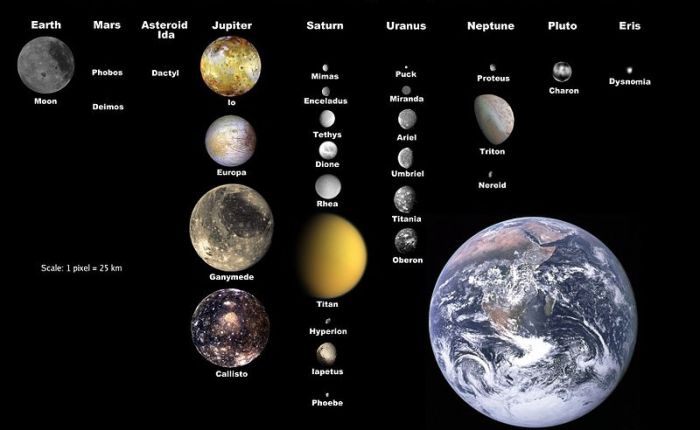
This week was the final episode of the Great Migration, which dealt with how humans may someday live around Neptune, Pluto and Charon, and the Kuiper Belt. With the right technology, resources, and strategies, humans could live on or around the many moons, dwarf planets (if you subscribe to that notion), and iceteroids that populate the outer Solar System. For starters, there are abundant resources out there that could fuel the “fusion economy” – i.e., hydrogen and helium from Neptune’s atmosphere.

And much like the Main Asteroid Belt, there are countless small bodies that are rich in materials that would enable settlement efforts elsewhere. This includes the massive amounts of water ice and volatile elements needed to terraform planets like Venus and Mars – like hydrogen, ammonia, and methane. But perhaps the greatest opportunity is for scientific research, which includes investigating the possibility that “Ocean Worlds” like Triton, Pluto, and Charon could support life in their interior oceans.

There’s also the opportunity for research involving the Search for Extraterrestrial Intelligence (SETI). Out in the farthest reaches of the Solar System, where interference from local sources would be non-existent, scientists could conduct searches for possible “technosignatures” and listen for indications of extraterrestrial transmissions. Someday, there could be branches of humanity known as Neptunians, Tritonians, Plutonians (or Hadeans), and other cool adjectives!

Follow the links below to learn more.

Where to Listen:

Episode 75 of SfS – “The Grand Tour: The Legacy of the Voyager Probes” – is Now Live!

Episode 75 of SfS – “The Grand Tour: The Legacy of the Voyager Probes” – is Now Live!

This week’s episode was dedicated to the Voyager 1 and 2 probes, and it was a long time in the making! Launching in 1977, these two probes explored the outer Solar System and accomplished many firsts. This included obtaining the first evidence that Jupiter’s moon, Europa, could have an interior ocean. They also examined Saturn’s rings and got the first close-up look at Saturn’s moon, Titan, and its dense hydrocarbon atmosphere, which led to speculation that liquid methane lakes might exist on its surface.

The Voyager Golden Record. Credit: NASA

While Voyager 2 became the first mission to visit Uranus and Neptune, a feat which has not yet been repeated, Voyager 1 conducted the Pale Blue Dot campaign, obtaining the best-known image of Earth. And, of course, they both carry the Voyager Golden Records, which contain sounds and images of Earth and simple diagrams indicating the location of Earth and the Solar System. These records could be the first interstellar message sent by humanity to another civilization or a time capsule for future generations of humans.

The two probes are now in interstellar space, where they continue to operate and return data on the interstellar medium. Regardless of how much time has passed, the Voyager probes will forever remain iconic and their accomplishments legendary. Check out the episode below:

Where to Listen:

Episode 74 of Stories from Space is now Live – Voices of the Future: Alastair Reynolds.

Episode 74 of Stories from Space is now Live –  Voices of the Future: Alastair Reynolds.

In previous installments of this series, I paid tribute to Arthur C. Clarke and Frank Herbert for the foresight they demonstrated in their respective works. In this latest installment, the subject was Alastair Reynolds, the famed Welsh astrophysicist and science fiction author. Those who are familiar with Reynolds’ work do not need an explanation as to why he has an episode dedicated to him.

But for the uninitiated, his many novels are an exciting romp through humanity’s future in space – especially his core series, The Revelation Space Universe (aka. The Inhibitor Cycle). In this and other series and standalone novels, Reynolds manages to combine hard science and space opera to create stories that are both exciting and plausible. It was especially appealing to me when I first came upon his work during the summer of 2006 and was looking to educate myself on the genre.

Over the next four years, I read just about everything the man published. I have since failed to keep up with new releases but never forgot the influence he had on me and my own journey. Follow the links below to hear more about what makes this author one of the most renowned (and arguably greatest) SF authors today.

Where to Listen:

Episode 73 of SfS – The Great Migration: Living on Uranus’ Moons – is now Live!

Episode 73 of SfS – The Great Migration: Living on Uranus’ Moons – is now Live!

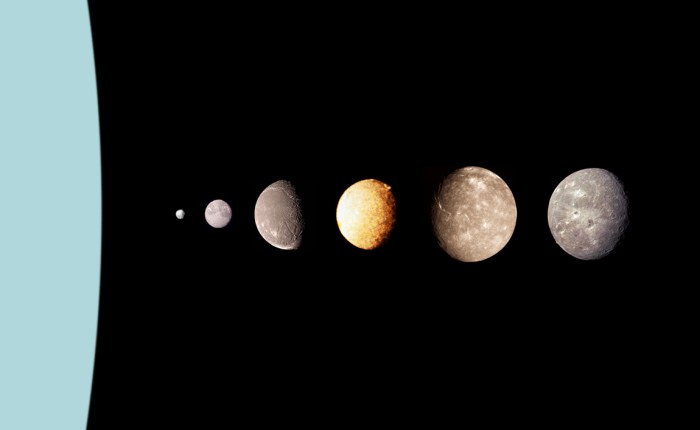
Morning all! The Great Migration continues with this week’s latest episode and asks the question: “How may humans someday settle the Uranus system and its largest moons?” In anticipation of the bad puns and giggles that it might inspire, I asked listeners to get it out of their systems ahead of time. Okey dokey? Alright then, have a listen below to hear how there could someday be a branch of humanity known as “Uranians.”

With some rotating stations, surface habitats, and a thriving export industry based on research, manufacturing, tourism, and diamonds (grabbed from inside Uranus atmosphere), the Uranians will be a force to be reckoned with. And I imagine there will be a lot of bad jokes made at their expense. Ah, shudder! Follow the links below…

Where to Listen:

Episode 72 of SfS – The Gift of Gravitational Lensing (with Dr. Slava Turyshev) – is now Live!

Episode 72 of SfS – The Gift of Gravitational Lensing (with Dr. Slava Turyshev) – is now Live!

This week, my guest was Russian-American physicist Dr. Slava Turyshev, a Senior Research Scientist, Technologist, and Project Manager at NASA’s Jet Propulsion Laboratory. Dr. Turyshev has spent years studying the phenomenon known as gravitational lenses, a consequence of General Relativity, where massive objects amplify and alter the path of light from more distant objects. Astronomers have used this phenomenon to study objects that would otherwise be very difficult to see, including some of the farthest galaxies in the Universe.

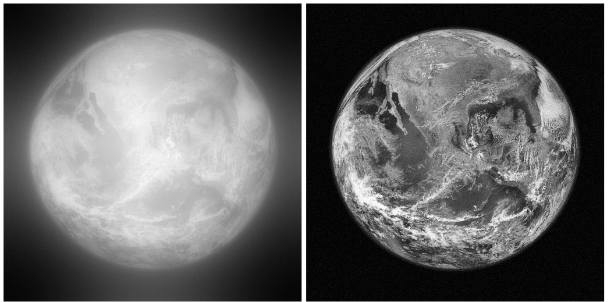
In recent years, Turyshev has published numerous studies advocating for a space telescope that would travel to the focal region of our Sun’s Gravitational Lens (SGL). Once there, it could conduct the most detailed astronomical studies ever, which includes taking extremely high-resolution images of exoplanets. In fact, astronomers predict that an SGL telescope could take pictures of exoplanets that would have the same resolution as images of Earth taken from high orbit (see below).

Toth H. & Turyshev, S.G.

Not only that, but Turyshev predicts that gravitational lenses could also be used for communications from one star system to another. These ideas could lead to an “interstellar internet,” which could be how advanced civilizations keep in touch in our galaxy. Perhaps this is why we haven’t found evidence of any extraterrestrial civilizations: they are routing all their calls through a gravitational lens network, and we aren’t hooked up to it yet!

Where to Listen:

Episode 71 of SfS – Voices of the Future: Frank Herbert – is now Live!

Episode 71 of SfS – Voices of the Future: Frank Herbert – is now Live!

This week’s episode picked up a series that I began long ago but then left untouched! Voices of the Future was intended to pay tribute to seminal thinkers and scientists who showed great insight and made some profound predictions about humanity’s future. The first installment was dedicated to the late and great Arthur C. Clarke. This week’s episode was dedicated to the man who literally wrote the book that made people “take science fiction seriously” – Frank Herbert!

In 1965, Frank Herbert released his best-known work, Dune. Over the next twenty years, he produced five sequels and died just a year after the release of the last installment: Chapterhouse: Dune. While much has been said about Frank’s social, political, philosophical, and historical commentary, what stands out for me all the years later was his predictions about humanity and AI. This was summarized in the event referred to as the “Butlerian Jihad,” which is part of the story’s deep background.

It was this event, which led to the Great Convention and its ban on AI, computers, and automation of any kind, that led to the power structure of the Imperium – with its absolute monarchy, feudal barons, religious proscriptions, and constant machinations and treachery. Basically, Frank appeared to present the Johad as something inevitable, which would have inevitable consequences. This nuance is completely lost in the prequels/sequels authored by his son and Kevin J. Anderson, who instead presented the Jihad as a cliche, humans vs. machines story.

This commentary and contrast are especially important today, amid fears about the development of AI and the often inarticulate (IMHO) existential concerns about it. Check the episode out below to hear more.

Where to Listen:

Episode 70 of SfS – The Crisis in Cosmology: What is the Hubble Tension? – is now live!

Episode 70 of SfS – The Crisis in Cosmology: What is the Hubble Tension? – is now live!

This week’s episode deals with a rather pressing matter for astronomers and cosmologists. Shortly after Einstein revealed his Theory of General Relativity in 1916, scientists began pondering how it predicted that the Universe was either expanding or contracting. The debate was settled when Georges Lemaitre and Edwin Hubble confirmed that it was expanding (in 1927 and 1929, respectively). In honor of their accomplishments, the rate at which the cosmos is expanding was named the “Hubble-Lemaitre Constant” (or more commonly, the “Hubble Constant”).

As the field of astronomy expanded and telescopes improved, scientists were able to make distance measurements for objects located farther and farther away. However, these observations were restricted to objects within 4 billion light-years due to the way Earth’s atmosphere distorts light. Depending on the distances involved, astronomers relied on different methods, which came to be known as the “Cosmic Distance Ladder.” In addition to determining the age and size of the Universe, these measurements allowed astronomers to refine their estimates of the Constant.

The Hubble Space Telescope revolutionized astronomy by gradually pushing the boundaries of the “observable Universe” to less than 1 billion years after the Big Bang (13 billion light years!) That’s when scientists noticed some discrepancies. Not only did they learn that the rate of expansion had accelerated over time, but distance measurements to objects located 13 billion light-years away (the earliest galaxies) yielded different values than local measurements. This came to be known as the “Hubble Tension” or the “Crisis in Cosmology.”

While it was hoped that the James Webb Space Telescope would resolve this crisis, its observations have only confirmed that Hubble was right on the money! The crisis endures, and scientists are seeking answers. Is Einstein’s Theory of General Relativity, which is foundational to our cosmological models, wrong? Or are there additional physics/forces at work that we haven’t yet accounted for? Once we know that, we’ll know how just about everything in the Universe works!

Check out the episode below.

Where to Listen:

Episode 69 of SfS – Rendezvousing with an Interstellar Object (with Dr. Alan Stern) – is now live!

Episode 69 of SfS – Rendezvousing with an Interstellar Object (with Dr. Alan Stern) – is now live!

Hello all, it’s been a while, I know. Life has been crazy lately. Luckily, I’ve managed to find the time to podcast again. For this latest episode, I had a conversation with Dr. Alan Stern, an astrophysicist from the Southwest Research Institute (SwRI) and the Principal Investigator of NASA’s New Horizons mission. In a recent paper, Stern and his colleagues performed a concept study for an Interstellar Object Explorer (IOE), a mission that could rendezvous with interstellar objects (ISO).

In 2017, the first-ever ISO detected passed through our system – ‘Oumuamua – leaving astronomers intrigued and baffled. Based on the available data, the object defied classification, leading to some rather exotic explanations! Two years later, a second ISO (2I/Borisov) was detected, which was clearly identified as an interstellar comet. In the near future, the Vera C. Rubin Observatory will become operational and will begin detecting dozens of ISOs a year.

Hence the desire for a spacecraft that could rendezvous with the next ISO that graces us. As Stern and I discuss, an IOE mission could have profound implications for astronomy, cosmology, and astrobiology. Studying ISOs would tell us a great deal about other star systems without actually having to go there. And if just a tiny fraction of those happened to be debris from an extraterrestrial civilization, as Prof. Loeb has suggested, the implications would be astronomical (no pun!)

Check out the links below to hear the entire conversation…

Where to Listen:

Episode 68 of SfS – The STASH Experiment and Hibernation Technology for Space, with Dr. Ryan Sprenger – is now Live!

Episode 68 of SfS – The STASH Experiment and Hibernation Technology for Space, with Dr. Ryan Sprenger – is now Live!

This week, I sat down with Dr. Ryan Sprenger, the Senior Research Physiologist at Fauna Bio Inc., a California-based biotech company specializing in genomics research. Sprenger and his colleagues have developed a new concept for testing hibernation in space, the Studying Torpor in Animals for Space-health in Humans (STASH) experiment. Their concept was selected by NASA’s Innovative Advanced Concepts (NIAC) program for Phase I development this year.

With NASA’s support, Sprenger and his team will develop a technology demonstrator that will be sent to the ISS. Their concept has the potential to revolutionize space exploration by allowing astronauts to enter synthetic hibernation during the long voyage to Mars and beyond. In essence, astronauts could sleep for the duration of long-term spaceflights, reducing the physiological impact of exposure to microgravity and radiation and the psychological impacts of months spent in a cramped spacecraft.

It will also reduce the amount of supplies missions need to bring along and the amount of waste produced. It will also have applications here on Earth, helping to mitigate aging, disease, and genetic disorders. Follow the links below to learn more!

Where to Listen:

Episode 67 – “Swarming Proxima Centauri: A Conversation with Marshall Eubanks” – is now Live!

Episode 67 – “Swarming Proxima Centauri: A Conversation with Marshall Eubanks” – is now Live!

This week, I sat down with Marshall Eubanks, a former engineer with NASA’s Jet Propulsion Laboratory (JPL), an astronomer with the U.S. Naval Observatory, and the CTO of the Lifport Group – a company dedicated to building a Space Elevator! Nowadays, he is the chief scientist of Space Initiatives Inc. and has been working with the Institute for Interstellar Studies (i4is) on Project Lyra, a spacecraft that could rendezvous with interstellar objects (like ‘Oumuamua) when they enter the Solar System.

He and his colleagues are also working on a concept that would send swarms of tiny spacecraft using direct-energy propulsion (lasers) that could travel to Proxima Centauri to explore the nearest exoplanet – Proxima b. Their concept was recently selected for Phase I development by NASA’s Innovative Advanced Concepts (NIAC) program, which includes a grant to develop the concept further.

But this was just one topic we discussed during our chat. Follow the links below to learn more!

Where to Listen: