Episode 94 – WTF is Happening at NASA? (Part I) – is Now Live!

Episode 94 – WTF is Happening at NASA? (Part I) – is Now Live!

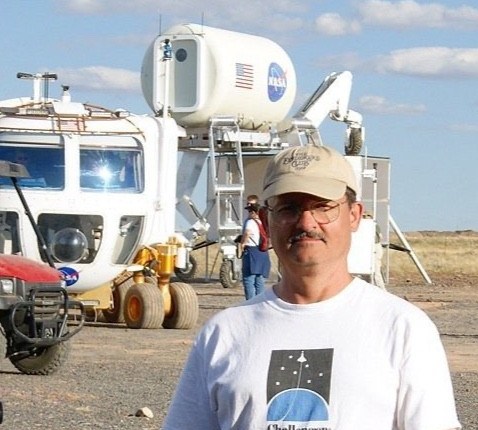
This week’s episode was a special treat! I sat down with former NASA scientist and astrobiologist Keith Cowing, the creator and editor of NASA Watch and Astrobiology.com. Keith’s extensive experience as an industry insider and a scientist has made him a trusted news source for millions of people, including myself. In his time, he witnessed many developments and advancements and played a major part in advancing the fields of astrobiology and space exploration.

He is a trained biologist, a specialist in payloads and biospecimen containment, and was part of the -Space Station Freedom Program. He is also very well-traveled, having been to Nepal and the Arctic Circle and even participated in centrifuge training and zero-g flights. I only got to hear a bit about all those experiences during our chat, but we got deep into discussing the current state of things at NASA. Our talk went so long, I had to break it into two segments to do it justice.

Follow the links below to hear Part I of our interview.

Where to Listen:

Episode 92 of SfS is now Live! “The History and Future of Space Stations.”

Episode 92 of SfS is now Live! “The History and Future of Space Stations.”

Hello again, folks. It’s been a busy few months, what with the holidays and a few life-related events that have happened since. Unfortunately, I was unable to produce new episodes every week. Fortunately, that is now over, and I have not one but TWO new episodes ready to share! This week’s installment is dedicated to the history, development, and future of Space Stations. Cue the Blue Danube Waltz and the scene from 2001: A Space Odyssey!

As I explain in the episode, the concept of space stations is time-honored and can be traced back to the early 20th century and the work of famed Russian aerospace engineer Konstantin Tsiolkovsky, who is considered the “forefather of rocketry.” Like most ideas pertaining to the future of humanity in space, he made the first recorded mention of a pinwheel station in space that would simulate gravity and have a natural environment that could provide oxygen.

Like rockets that used liquid propellants and other advanced concepts Tsiolkovsky originally proposed, his work went on to inspire the other “forefathers of rocketry”—Hermann Oberth, Robert Goddard, and Robert Esnault-Pelterie—many of whom went on to propose their own concepts. By the latter half of the 20th century, these ideas would bear fruit in the form of the Salyut space stations, Skylab, Mir, and the International Space Station (ISS).

With the decommissioning of the ISS scheduled for 2030, several nations and commercial space interests are working on proposals for successor stations. What will they look like, and how might they enable the migration of human beings throughout the Solar System as Tsiolkovsy predicted? Follow the links below to find out!

Where to Listen:

Episode 91 of Stories from Space is Now Live!

Episode 91 of Stories from Space is Now Live!

Hello folks! This week’s episode is dedicated to my friend, Kim Bannerman Pigott, who suggested it. She, too, is a creative person, as is her husband, Shaun. Between the two of them, they do literature, art, and music; they do it all! I encourage everyone to check out their website, Fox&Bee Studio. The topic of this episode is “Are Wormholes Possible?” As any fan of science fiction knows, wormholes are regularly featured in the genre, be it novels, shows, movies, or video games.

Some examples include Carl Sagan’s Contact, Star Trek, Battlestar Galactica, Babylon 5, Event Horizon, Farscape, the Wing Commander franchise, the Descent: Freespace franchise, and many more. The concept often goes by different names (FTL, jump points, jump nodes, etc.), but the idea remains the same. Pass through a wormhole (natural or artificial), and you end up a few, or few thousand, light-years away.

Like warp or hyperspace, they are a key element in the world-building process, facilitating the kind of travel that would allow for First Contact, inter-species interaction, exploring new worlds, and the emergence of new branches of humanity. In most cases, franchises tend to steer away from the science and avoid any complicated or inaccurate explanations. However, sometimes authors and producers dip their toes in and attempt to rationalize them (not very well, in my experience).

But what does the science say? As it turns out, there is a basis in theoretical physics for wormholes that goes back over a century. Check out the links below to learn more…

Where to Listen:

Episode 90 of Stories from Space is now Live!

Episode 90 of Stories from Space is now Live!

This week’s episode asks the question, “Are Red Dwarf Star Systems Habitable?” Red dwarf stars, also known as M-type stars, are pretty controversial. For starters, they are the most common type of star in the Universe, accounting for 75% of stars in our galaxy alone. In addition, red dwarfs seem particularly good at producing rocky planets that orbit within their habitable zones (HZs). In fact, of the 31 potentially habitable exoplanets located within a 50-light-year radius of our Solar System, 29 are located within red dwarf star systems.

However, there are also downsides. For starters, red dwarf suns are variable and prone to flare-ups. While the most powerful are emitted from the poles and are unlikely to affect orbiting exoplanets, the fact that these exoplanets are tidally locked with their stars (where one side constantly faces toward the star) means they would still be bombarded by radiation. But then again, there’s research suggesting this radiation could be essential for life to develop. Like I said, it’s a controversial issue, and we simply don’t know… yet!

Follow the links below to learn more:

Where to Listen:

Episode 88 of Stories from Space is now Live – “The Coming Age of Astrobiology with Kenneth Goodis-Gordon”!

Episode 88 of Stories from Space is now Live – “The Coming Age of Astrobiology with Kenneth Goodis-Gordon”!

Hello again! This week’s episode featured a special guest – Kenneth Goodis-Gordon! Ken is a Ph.D. candidate with the Planetary Science Group at the University of Central Florida (UCF) whose research focuses on exoplanets and the search for life in the cosmos (astrobiology). In a recent paper, he outlined how future exoplanet surveys could cast a wider net by examining polarized light. As he explains, this could greatly expand scientists’ ability to spot signs of life (aka. “biosignatures.”)

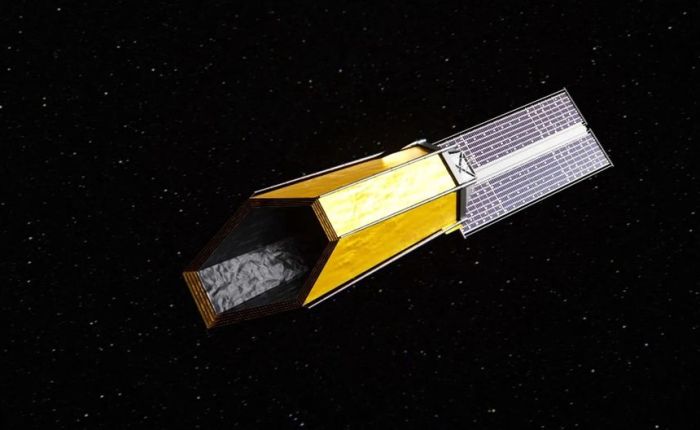
These recommendations will be especially useful when NASA’s Habitable World Observatory (HWO) launches sometime in the 2040s. This next-generation observatory will be the first space telescope specifically designed to search for signs of habitability and life on exoplanets. Learn more by following the links below…

Where to Listen:

Episode 86 of SfS – The Space Race – is now Live!

Episode 86 of SfS – The Space Race – is now Live!

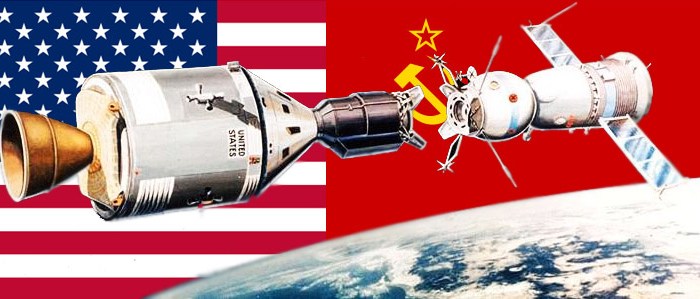
Welcome back! This week’s episode is all about the origins and evolution of the American and Soviet space programs—in other words, the Space Race! As I mentioned in previous episodes, these programs began as an effort to research rocket technology to deliver nuclear warheads. However, a parallel struggle began as both the U.S. and the Soviets realized the benefits of reaching space. Considering the atmosphere of the Cold War, which was as much about ideology as it was about weapons, they also considered it a matter of national prestige to “get their first!”

The Soviets achieved an early lead, sending the first satellite to space (Sputnik-1) in 1958. They also got their first with the first man to space in 1963 (Gagarin) and the first woman to space in 1964 (Valentina Tereshkova) with the Vostok Program. NASA caught up with the Mercury program, which sent the first American astronauts to space (the Mercury Seven), but the Soviets were still maintaining an early lead. That would change as NASA launched the Gemini program, demonstrating that they could spend extended periods there.

The stage was set for the Apollo Program, which would decide the Space Race once and for all and forever alter the course of history. Of course, that epic story has to wait for Part II of the episode, coming soon!

Where to Listen:

Episode 85 of SfS – India’s Space Program – is now Live!

Episode 85 of SfS – India’s Space Program – is now Live!

Hello again! In keeping with the theme of non-western space programs, this week’s episode was dedicated to the Indian space program – the India Space Research Organization (ISRO). Much like China’s space program, which was covered in a previous episode, India’s progress was incremental between the 1960s and 1980s. Nevertheless, the progress they made was foundational and allowed for many impressive developments by the turn of the century.

In addition, like other national space programs, India’s road to space was tied to the development of nuclear technology and weapons. Like China, India has also been forced to develop a number of technologies independently due to non-proliferation agreements and sanctions associated with the country’s nuclear testing. Last but not least, the steps they are currently taking parallel those of NASA and the Soviet space program during the “Space Race.”

This includes the development of heavier and heavier launch vehicles, the deployment of satellites, and sending robotic explorers to the Moon through the Chandrayaan program (“Moon vehicle”) and to Mars through the Mangalyaan program (“Mars vehicle”). All of this has served as a build-up to the creation of a crewed space program.

In the coming years, the ISRO will attempt to send “vyomanauts” to orbit for the first time as part of the Gaganyaan (“celestial vehicle”) program. They intend to follow this with the deployment of a space station, the Bharatiya Antariksha Station, which will facilitate their ultimate goal: sending crewed missions to the Moon and beyond by 2040. Follow the links below to learn more…

Where to Listen:

Episode 84 of SfS – Islamic and Hindu Astronomers of the Middle Ages – is now Live!

Episode 84 of SfS – Islamic and Hindu Astronomers of the Middle Ages – is now Live!

Hello all! This week’s episode is part of a new segment that is semi-related to the Indigenous Astronomers series. It takes a look at major contributions and innovations that came from non-Western astronomers—i.e., those who lived outside of Greece, Rome, or Europe. Specifically, this episode deals with the astronomical traditions of Arab, Persian, and Indian astronomers from the 5th to the 16th century. Regretably, this aspect of history is often downplayed or overlooked in Western circles.

Not only were these polymaths and scholars responsible for preserving knowledge from Classical Antiquity that had been lost to Europeans. They also expanded on it greatly and brought their own traditions to the table. Such notable figures include Aryabhata, Al Sijji, Al Biruni, Ibn al-Haytham (Alhazan), and Al-Biṭrūjī (Alpetragius), all of whom challenged Ptolemy’s geocentric model of the Universe generations before their European counterparts.

Alongside Classical Hellenic scholars like Aristarchus of Samos and Seleucus of Seleucia, their works would go on to inspire 16th-century Polish astronomer Nicolaus Copernicus to develop his heliocentric model of the Universe. In fact, it would be no exaggeration to say that the birth of modern astronomy would not have been possible without the work and innovations brought by astronomers from the Middle East, North Africa, Central Asia, and South Asia.

Check out the links below to learn more…

Where to Listen:

Episode 83 of Stories from Space – China’s Space Program – is now Live!

Episode 83 of Stories from Space – China’s Space Program – is now Live!

This week’s episode was dedicated to one of the fastest-growing space programs in the world. I’m talking about the China National Space Agency (CNSA), which has made several big strides in recent years. Like all major space programs, China’s was conceived amid the Cold War and was related to the development of nuclear weapons. A further incentive was provided when the Soviets and the U.S. began sending satellites and crewed missions to space.

Progress was slow during the latter half of the 20th century due in large part to the chaos caused by the Cultural Revolution (1966-1976). By the 1990s, with the Tiananmen Square Massacre and the collapse of the Soviet Union, the Chinese Communist Party instituted many reforms to ensure its survival. By the 2000s, this extended to its space program, and many bold programs were launched. This included a crewed space program, a robotic exploration program, and plans for a series of space stations.

This culminated in the deployment of the Tiangong modular space station (aka. Tiangong 3), several crewed missions to Low Earth Orbit (LEO), the Chang’e missions reaching the Moon, and the first Chinese mission to Mars (Tianwen-1). In the near future, China plans to create a permanent base in the Moon’s south pole region – the International Lunar Research Station (ILRS). In the coming decades, they also plan to send crewed missions to Mars.

Follow the links below to learn more…

Where to Listen:

Episode 82 of SfS – Where is Everybody? The SETI Paradox – is now Live!

Episode 82 of SfS – Where is Everybody? The SETI Paradox – is now Live!

This week’s episode was the final installment in the Fermi Paradox series. For the finale, we examine the “SETI Paradox,” a proposed resolution that asks the question, “What if everybody is listening, but no one is transmitting?” This theory reflects humanity’s own conundrum when it comes to the Search for Extraterrestrial Intelligence (SETI): should we continue to conduct “passive SETI” (listening) or engage in “active SETI” (messaging)?

In recent years, the latter has given rise to a new field known as Messaging Extraterrestrial Intelligence, or METI. While most efforts to make contact with an extraterrestrial species have been in the form of SETI, a few METI experiments have been conducted over the years. The most well-known example is the Arecibo Message, which was transmitted from the venerable Arecibo Observatory in 1974. Other examples include the Pioneer Plaques and the Voyager Golden Records. There have been other examples, but they don’t begin to rival the time or resources committed to SETI.

While METI has become a field in its own right, those who are passionate about it understand that there are necessary concerns. After all, we have no idea what’s out there. What if we broadcast our existence to the Universe and it leads to an invasion by a hostile civilization? It makes sense that other civilizations would be preoccupied with the same concerns, so perhaps this is why we aren’t hearing from anyone. As you might have guessed, there is some crossover with the Dark Forest Hypothesis here.

Follow the links below to learn more about this hypothesis and the controversy surrounding SETI vs. METI:

Where to Listen: