Episode 44 – The Brief Window Hypothesis – is now Live!

Episode 44 – The Brief Window Hypothesis – is now Live!

In this week’s episode, I returned to the well of the Fermi Paradox to address another of my favorite resolutions. While this one is not an official hypothesis, it encapsulates elements from several proposals and asks the big question – is intelligent life doomed? If humanity is any indication, intelligent creatures may eventually outgrow their resource base, ruin their natural environment, and build weapons of mass destruction that they may eventually use. This raises a key parameter of the Drake Equation, the thought experiment created by astronomer and SETI researcher Dr. Frank Drake:

N = R* x fp x ne x fl x fi x fc x L

For those who are unfamiliar, the equation basically states that the number of intelligent species (N) in our galaxy that humanity could communicate with comes down to a series of parameters (planets per star, habitable planets per system, those that have life, etc.,) multiplied by the length of time (L) a species is likely to transmit signals to space. If intelligent life is prone to destructive behavior or has a limited life expectancy, then L is the key parameter for finding evidence of it out there.

Basically, the transmission will begin when a species achieves an advanced state of development and will end when they succumb to their fate. If our antennas are not set to the right frequencies, and we don’t manage to detect their transmissions within this window, then we will never hear from them. There’s also the possibility that intelligent life undergoes a seismic shift at some point, which borrows from the Transcension Hypothesis and the concept of the “Technological Singularity.”

The idea here is that intelligent life will eventually transcend its physical biology and become something radically different. At this point, species may not be likely to communicate via radiowaves but with something radically advanced – like neutrinos or gravitational waves – or may not be interested in communicating at all. Once again, the window will have closed. But in this case, it will be due to a pattern in the evolutionary development of intelligent life. Check it out by following the links below:

Where to Listen:

Stories from Space Passes 5000 Downloads!

Stories from Space Passes 5000 Downloads!

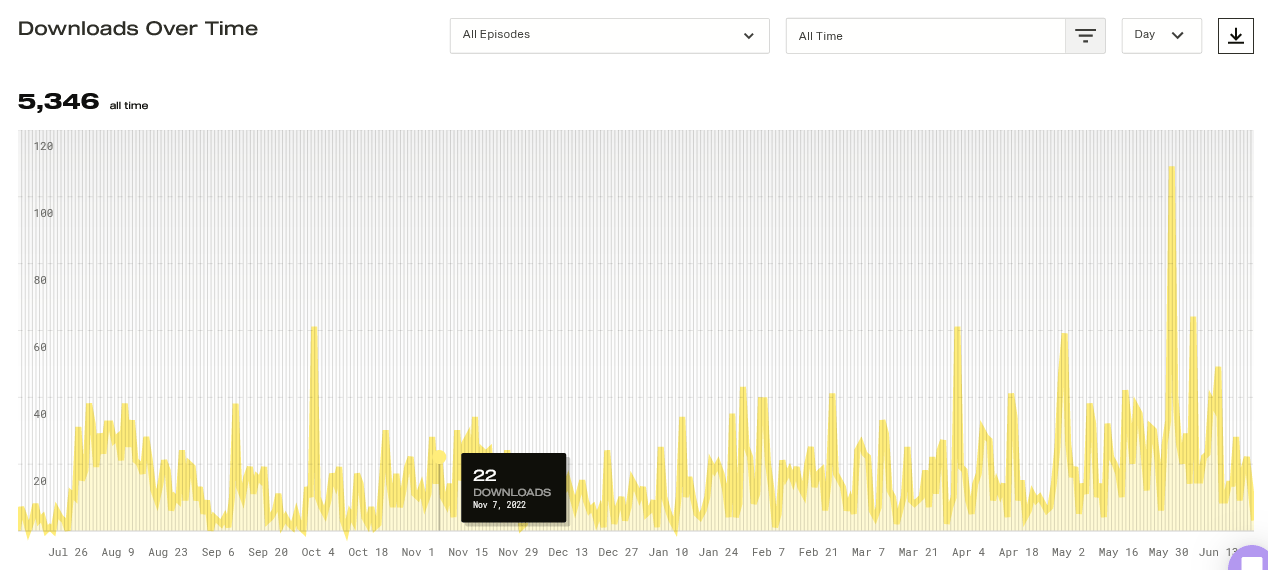
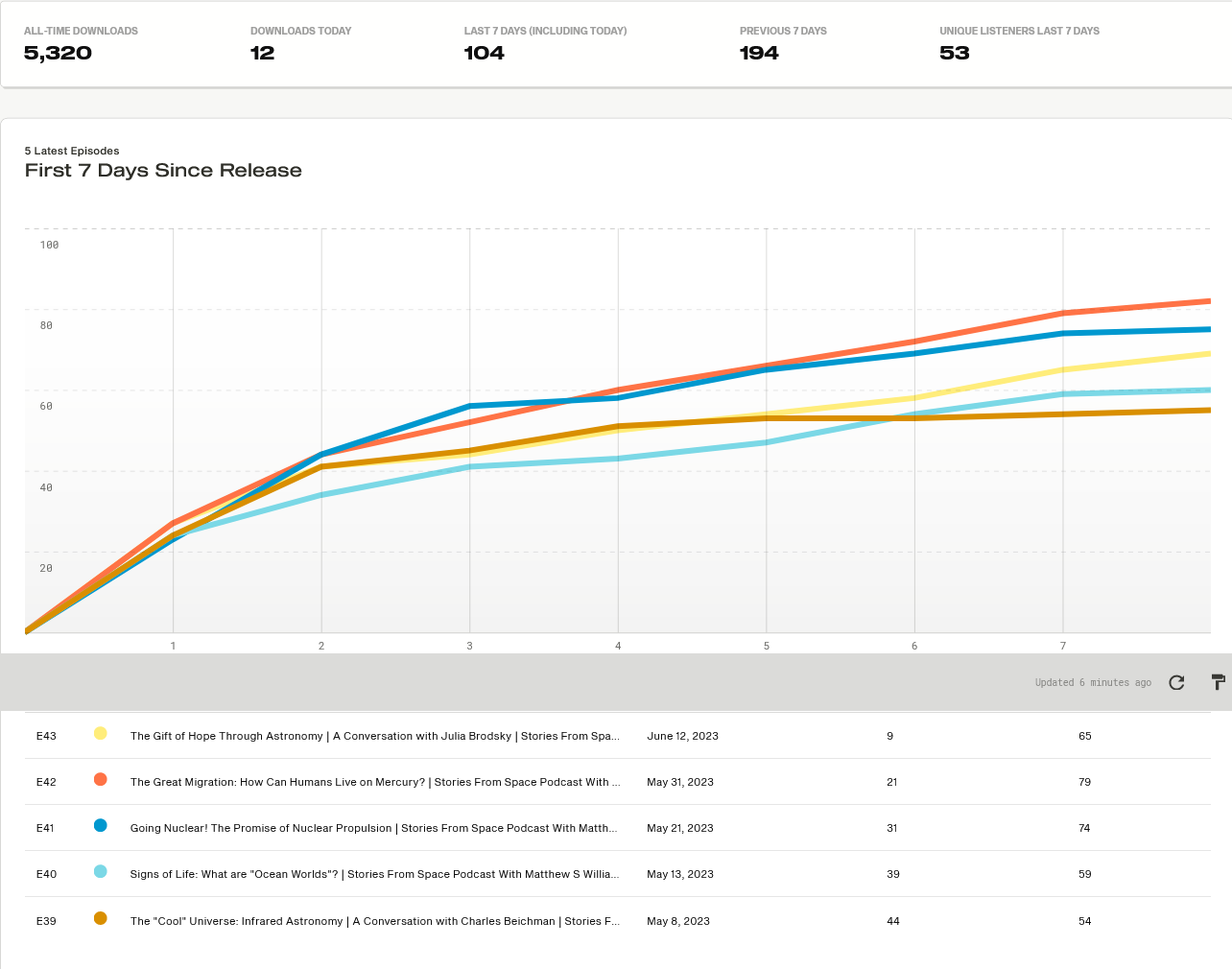
Good news, everybody! Stories from Space, the humble ship that launched one year ago (as of last week), has surpassed 5000 downloads – 5,346, to be exact. And since the show first aired, 43 episodes have been released. Doing the math, this works out to about 0.83 episodes a day, 14 downloads a day, and about 124 downloads an episode. Of course, that’s just the averages. Some episodes have done better than others, and the number of downloads has fluctuated over time (though the trend is upward).

It appears that of all the host platforms, Apple Podcasts was the greatest source, accounting for 1,359 downloads (or 26.32% of the total), followed closely behind by Spotify (1,153 downloads; 22.33%). According to the analytics, the following episodes were the ten most popular:

  1. The Great Filter Hypothesis | Guest: Dr. Robin Hanson – 371 views
  2. The Alcubierre Warp Drive | Guest: Dr. Harold “Sonny” White – 364 views
  3. Behind The Scenes At NASA | Guest: Nancy Atkinson – 260 views
  4. We’re Going to Mars! – 258 views
  5. Where Are All the Aliens? The Transcension Hypothesis – 198 views
  6. Building An Elevator To Space! | Guests: Dr. Peter Swan & Adrian Nixon – 160 views
  7. Where Are All the Aliens? The Planetarium Hypothesis – 155 views
  8. What Is The Future Of Space Law? | Guests: Christopher M. Hearsey & Nathan Johnson – 149 views
  9. Going Interstellar | Guest: Les Johnson – 140 views
  10. Marschitecture | Guest: Vera Mulyani – 124 views

According to my publishers at ITSPMagazine, this is a pretty good start. Now if we could just get some sponsorship, we’d be in business! In addition, I’m interested to know what subjects people are interested in and want to know more about. This could be anything from historical tidbits, past & future missions, and general knowledge stuff to concepts in astrophysics and the wild and wonderful world of the truly deep and speculative stuff.

The show is growing, ongoing, and evolving. And I’m hoping interested parties will share their ideas on where it should go. Let me know in the comments!

Episode 43 – The Gift of Hope Through Astronomy: Earthlings Hub with Julia Brodsky

Episode 43 – The Gift of Hope Through Astronomy: Earthlings Hub with Julia Brodsky

This week, I sat down with Julia Brodsky, astrophysicist, educator, former NASA astronaut trainer, founder and CEO of the Art of Inquiry, and researcher with the Blue Marble Space Institute of Science. She’s also a co-founder of Earthlings Hub, an education and outreach organization that conducts astronomy and STEM education programs for orphans, refugee children, and families in Ukraine.

Continue reading “Episode 43 – The Gift of Hope Through Astronomy: Earthlings Hub with Julia Brodsky”

Episode 42 – The Great Migration: How Can Humans Live on Mercury?

Episode 42 – The Great Migration: How Can Humans Live on Mercury?

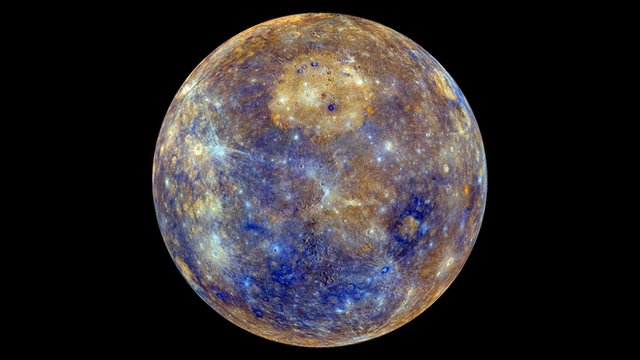
The series continues with the latest stop in the Solar System: Mercury! Hold up, that can’t be right! And yet, it is. Contrary to popular opinion, humans could actually live on Mercury, the closest planet to our Sun. Granted, it won’t exactly be a cakewalk. In addition to being an airless body (i.e., no atmosphere to speak of), Mercury is exposed to almost seven times as much radiation as Earth.

And because of its slow rotation and rapid orbit, surface temperatures range from hot enough to melt lead to cryogenically freezing! But with the right know-how, technology, and strategies, we could build a thriving outpost of civilization and economy on Mrcury based on the export of mineral wealth and energy, as well as art and ideas!

The idea has been explored in science fiction and scientific literature alike. And assuming there are enough people adventurous enough to settle there, there’d be a new branch of humanity known as “Hermeans.” Follow the links below to learn more.

Where to Listen:

Episode 41 of Stories from Space – Going Nuclear! The Promise Nuclear Propulsion

Episode 41 of Stories from Space – Going Nuclear! The Promise Nuclear Propulsion

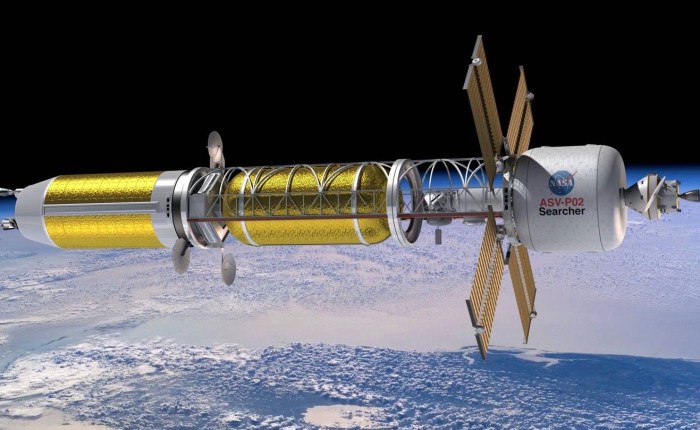
This week’s topic is near and dear to my heart (I know, when aren’t they?). But this one is especially so since so much depends on it. Around the world today, space agencies and commercial space entities are developing nuclear propulsion systems. These systems come in the form of Nuclear-Thermal (NTP), Nuclear-Electric (NEP), and Bimodal Nuclear Propulsion (BNP) – where both methods are used by a spacecraft.

Continue reading “Episode 41 of Stories from Space – Going Nuclear! The Promise Nuclear Propulsion”

Episode 40 of Stories from Space – Signs of Life: What are “Ocean Worlds”?

Episode 40 of Stories from Space – Signs of Life: What are “Ocean Worlds”?

This week, I got into one of the more intriguing aspects of astrobiology – the search for life in the cosmos! Right now, all of our astrobiology efforts are focused on Mars, the most “habitable” planet (by our standards) beyond Earth. But what of the icy moons that orbit Jupiter, Saturn, and beyond? For decades, scientists have speculated that moons orbiting gas giants beyond the “Frost Line” could have warm-water oceans that could support life.

These oceans result from the gravitational pull of the gas giants they orbit, causing tidal flexing in their interiors. This, it was theorized, would lead to hydrothermal activity at the core-mantle boundary, where the icy outer shell meets the rocky and metallic core. The energy this released would maintain a liquid-water ocean rich in the chemical elements we associate with life.

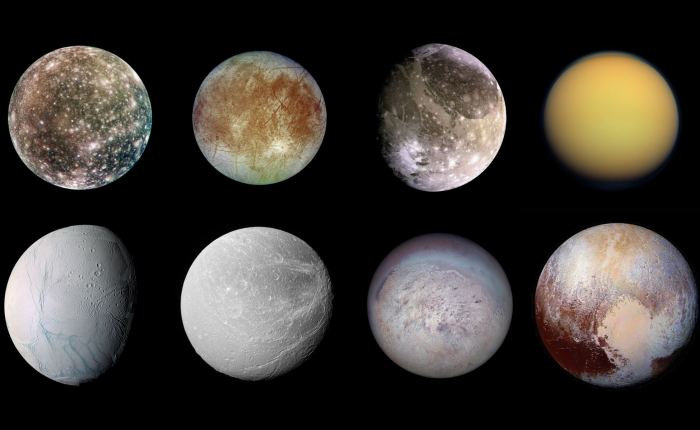
The theory emerged by the 1970s after scientists got a good look at some of Jupiter’s largest moons – Europa and Ganymede – which showed evidence of resurfacing, plume activity, and their interactions with Jupiter”s magnetic field. In recent years, the list of “Ocean Worlds” has expanded to include moons like Titan, Enceladus, Dione, Ariel, Umbriel, Titania, Oberon, Triton, Charon, and even Pluto!

In all cases, these bodies have geological activity or sufficient nuclear elements (which decay to produce heat) to maintain liquid water in their interiors. The plethora of “Ocean Worlds” in our Solar System also has implications for the search for life in extrasolar systems. After all, if icy satellites in our outer Solar System could support life, then similar bodies are sure to exist out there (in abundance). Check it out below!

Where to Listen:

Episode 39 of Stories from Space – The “Cool” Universe: Infrared Astronomy with Charles Beichman

Episode 39 of Stories from Space – The “Cool” Universe: Infrared Astronomy with Charles Beichman

This week, I sat down with NASA astronomer and exoplanet researcher Dr. Charles Beichman, the Executive Director of the NASA Exoplanet Science Institute (NExScI) at Caltech. He’s an esteemed scientist who has spent decades searching for exoplanets and led several path-finding missions. These include the Space Interferometer Mission (SIM), the Infrared Astronomical Satellite (IRAS), the Spitzer Space Telescope, and the 2 Micron All Sky Survey (2MASS).

One could say that he was looking for exoplanets before it was “cool.” Suffice it to say, the man has some very interesting stories. Very soon, he and a team of astronomers will be using the James Webb Space Telescope (JWST) to observe Alpha Centauri, where they hope to find the first definitive proof of exoplanets in that system. I think I speak for everyone when I wish him and his colleagues the best of luck!

Where to Listen:

The Best Astronomy Podcasts for 2023

The Best Astronomy Podcasts for 2023

I have to this, this was a complete surprise and I didn’t even realize anyone was keeping track. And yet, my friend and colleague James Maynard brought this bit of news to my attention. The list comes from PlayPodcast.net, a site that that offers free listening for hundreds of podcasts and (apparently) ranks them according to various categories. For this list, they ranked the best astronomy podcasts this year.

Guess who made the list?

I’m not sure if this represents their own assessment or based on reviews, but I’ll take it. Also, note that The Cosmic Companion is the podcast of my buddy James. I invite you to check it out seeing as how he has some very cool stories, is a NASA alumni, and interviews some very interesting people (scientists, researchers, astronauts, etc.).

Episode 36 of Stories from Space, “How Can We Live on the Mars?” is Now Live!

Episode 36 of Stories from Space, “How Can We Live on the Mars?” is Now Live!

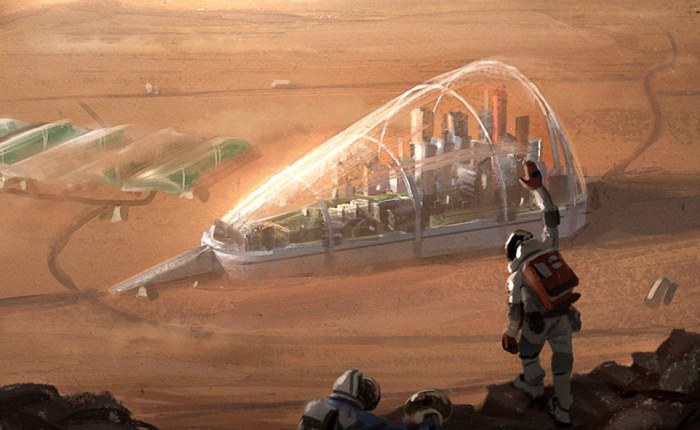
The second episode of my new segment, “Settling the Solar System,” has now aired. This week’s topic, how can humans settle on “Earth’s Twin” and create the first “Martians”? The subject has been explored for generations by scientists, speculative thinkers, science fiction writers, and more! And in the coming years, space agencies hope to send the first human explorers there. There are even plans to create a permanent human outpost there.

There’s no shortage of challenges, like the high radiation levels, low gravity, temperature extremes, and the planet’s thin and toxic atmosphere. But with the right strategies, there are incredible benefits too. These include becoming a multiplanetary species, having a “backup location” for humanity, and ushering in an era of post-scarcity economics. There’s also the potential for scientific breakthroughs. Aside from technological developments that would have countless applications here on Earth, there’s also the potential for astrobiological research Mars holds.

If humans were to find evidence of past (or present) life on Mars, we could finally answer some of the deepest mysteries – like how and when life emerged in the Solar System and if life on our two planets came from the same source. Can it be done? What will it take? And are we prepared to address the challenges, make the sacrifices, and bind ourselves to a multi-generational commitment?

Where to Listen:

Episode Twenty-Six of Stories from Space, “The Copernican Revolution,” is Now Live

Episode Twenty-Six of Stories from Space, “The Copernican Revolution,” is Now Live

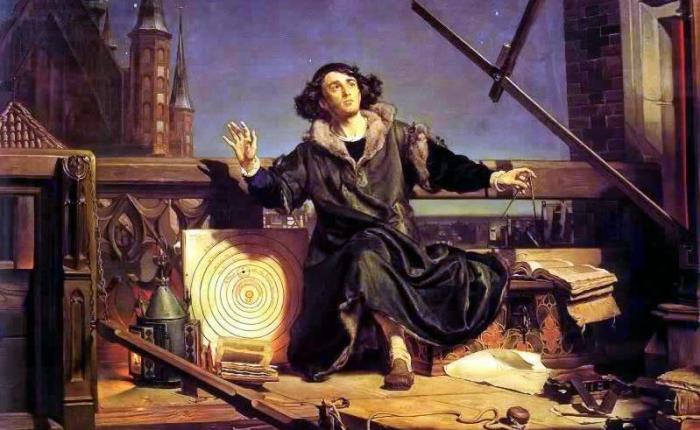
This week’s episode focuses on the life and times of Nicolaus Copernicus, the famed Renaissance Polish astronomer who proposed the heliocentric model of the Universe. The details of this model were presented in his magnum opus, On the Revolutions of the Heavenly Spheres, which Copernicus had published in 1543 when he was on his deathbed. While Copernicus is a household name and the basics of his model are well-known, the story of how he came to his grand realization is less well-known.

The heliocentric model was inspired by thousands of years of observations and calculations by astronomers. These included several pre-Socratic Greek texts lost to Europeans (but preserved by Muslim scholars) and scholars from West Asia, Iran, India, and Al-Andalus (Spain before the Reconquista). These sources contradicted the prevailing models of Aristotle and Ptolemy, both of whom were considered canon in Europe and Eurasia.

By synthesizing these observations with his own calculations, Copernicus showed how Earth and the other planets orbited the Sun, how the Moon orbited Earth, and how Earth rotated. In short, he synthesized and crystallized one of the most profound scientific discoveries ever made, one that was thousands of years in the making. And in so doing, he forever revolutionized our understanding of the cosmos and our place in it.

In fact, his observation that the Sun was NOT at the center of the Universe began a long process where humans began to realize that neither they nor Earth were unique in the cosmos. As Sagan put it: “One of the distinctions and triumphs of the advance of science has been the deprovincialization of our worldview.” Because of Copernicus’s role in this, the scientific axiom that states that humanity is NOT in a special or privileged position to view the cosmos is known as the Copernican Principle.

Where to Listen: