Well it’s come at last. The big second season finale, the wrap up after the siege of King’s Landing, and the cliffhanger ending north of the Wall. And to be honest, I think this was the first episode I truly enjoyed. Not saying the other’s weren’t enjoyable as all hell. It’s just that with this episode, I found that I was finally putting aside the critical, comparative eye and just watching the show. Too bad too. But I guess I’ll have all summer to enjoy the re-runs. In the meantime, here’s what I thought about the season finale!
Valar Morghulis: The mood is festive in King’s Landing, at least for most. Having secured the city from Stannis’ attack, Tywin Lannister and Ser Loras Tyrell are hailed as heroes. To cement the victory and the newfound alliance between House Lannister and House Tyrell, Joffrey agrees to marry Margaery Tyrell, rendering his marriage to Sansa null and void. Sansa is overjoyed, but must keep that herself. She is approached by Lord Pyter Baelish, who says he can smuggle her out of the capitol and bring her home.
Meanwhile, Tyrion wakes up in his new room to find that he’s been stripped of his duties as Hand of the King. His father has taken that role, and his Tyrion’s loyal followers have all been paid off and sent away. He is alone and virtually friendless, but luckily, he still has Shae and the allegiance of Varys, who appears to be hatching his own schemes with Ros, the lady of the night who works in Baelish’s brother. Robb announces his nuptials with Talisa, much to the chagrin of his mother. She warns him that Walder Frey is not a man to be crossed, but he is insistent that he proceed with his marriage as planned.
At Qarth, Daenerys enters the House of the Undying where she is confronted by the mages. Her dragons have been put in chains and so is she. However, her little scaled offspring begin belching fire at the mages and shattering their chains once they are reunited with her, and she quickly escapes with them in tow. Returning to Xaro’s house, Dany and her kin throw him into his chamber, which appears to be empty after all, and loot his house of anything of value. They proceed to the docks to buy what ships they can.
To the north, Theon is betrayed by his bannermen who kill him and set Winterfell ablaze. Brann, Rickson, Hodor and Osha leave the safety of the catacombs and begin heading north to the Wall where they believe they will be safe. Arya meanwhile meets up with Jaqen who is on his way back to Bravos. He invites her to come, but she says she must head north to her home. He gives her a coin and the words “Valar Morghulis” and tells her that they will buy her way to Bravos should she change her mind. He changes his face and bids her farewell.
And beyond the Wall, John and Qorin finally have at it and John manages to kill him. This moves earns him the Wildlings trust, and it appears that was what Qorin had in mind all along. He is taken to the Wildlings encampment in a frozen valley where he sees tents as far as the eye can see. And lastly, the Night’s Watch at the First of the First Men are best by White Walkers. Emerging from the snow and ice, they come in droves and shriek out a terrible, bone chilling war cry!
Final Thoughts on the Finale:
Well, once again I have to say that the did a very good job of adapting the novel to the screen. The ending was bone chilling and a real cliff-hanger,and they managed to do a good job of wrapping up all the seasons threads. When season 3 comes around, they will be in perfect firing position to pick the story up and take it even further towards resolution. Of course, changes were made again, but I have to say that with one exception, I was unanimously in favor of them this time around.
But before I get into that, I need to mention one change from the previous episodes that I totally forgot to mention. In episode 8, Arya and her pals make their escape thanks to Jaqen’s help. However, how they went about doing this was quite different than from in the book. There, Arya told Jaqen that she would un-utter his name if he freed the dungeons of all the Stark captives so they could take Harrenhal from the Lannisters. Since this would be done when Lord Tywin and the bulk of his army was away, there would not be enough men to defend against all the freed prisoners.
The plan worked, and Lord Bolton took command of the castle in the name of the Starks. However, that didn’t change Arya’s fortunes much, as she no one believed she was the Stark girl and she remained cupbearer, only this time to Lord Bolton. Jaqen had left at this point, giving her the coin and instructions on how to get to Bravos, so she had to free herself. She did this by killing a guard in the night and escaping with Gendry and Hot Pie, sans any help.
Of course, I could see why they simplified all this by having Jaqen simply kill the guards and letting her go free. It was a convoluted plot thread that took way longer in the book to resolve itself. And the same is true in this episode where we see both Theon’s betrayal and Sansa’s planned escape from King’s Landing being truncated. In the book, Theon was betrayed by one of his own, yes, but it was far more complicated. Essentially, Lord Bolton’s bastard was one of the men Theon freed from Winterfell’s dungeons, unbeknownst to him.
When he found that no help was coming from his father, he sent several men out to look for helpers. The bastard Bolton rode home, where he raised an army of his father’s men and returned just as Robb’s bannermen were outside the city. His forces set upon them and defeated them, and then were welcomed into Winterfell by Theon as liberators. However, the bastard of Bolton then killed Theon and ordered Winterfell razed, out of spite for how they put him in prison.
Complicated huh? Far better to just have Theon betrayed by his own men who then chose to raze the city and make a run for it, since it was obvious to them that no help was coming. And of course, Sansa’s planned escape from King’s Landing was more – you guessed it – complicated in the book. Here, it was Ser Dontos, the disgraced drunkard who’s life she saves at Joffrey’s tournament, offers to help free her during Joffrey’s wedding to Margaery Tyrell. In time (spoiler alert) she learns that he is being helped by Lord Pyter Baelish who is once again motivated to help her because of the love he has for her mother.
But once again, to simplify this and cut down on the necessary screen time, they leave out all of her secret meetings with Ser Dontas and speed ahead to Baelish simply telling her, “I can get you out”. Personally, I would have liked a secret deal being struck early on much better. The conspiratorial nature of it, as she was forced to endure Joffrey’s beatings and the queen’s abusive nature, was much more intriguing. Finding out that Pyter was involved was a good revelation too, which was effective since it was saved for the last minute.
Last, but not least, there was the changed nature of John’s “defection” and his fight with Qorin. Already they changed things, as I said in my previous posts, John and Qorin were taken prisoner together after he set Ygritte go. There was no prolonged scene between John and Ygritte in the wilderness with her trying to temp him with her Wildling wiles (ha!). But alas, they seemed to tie that up when it was revealed that both he and Qorin were taken and Qorin wanted him to make up for his failure.
And it was clear that Qorin was executing that plan when he attacked John Snow, baited him to anger, and then let him win their fight. But he did all that without explaining what he wanted John to do. This is something that they will be forced to answer for in season 3. Either John will decide to play the role of defector merely to stay alive, or he will be genuinely torn between his genuine affections for Ygritte and his duty to the Night’s Watch.
Oh yeah, and that added plot thread involving Ros and now Varys. Not sure what they’ve got planned there, all I can tell you is it never happened in the book. In fact, as I’ve pointed out numerous times now, nothing involving Ros happened in book II. Much like Dany’s attendant, Doreah, they seem to be inflating her role and keeping her alive a lot longer than in the book. But I assume there is a reason for it. After all, Doreah’s character very quickly dies in book II, and the way they kept her around was ultimately better in the series. I can only assume her plot with Varys will connect back to actual material from the book and wrap up nicely in the end.
But that’s another season and another series of posts! Right now, all I want to think about was that ending. White Walker everywhere, blue-eyed zombies taking to the frozen field, ready to lay down a hurting. And of course, that war cry at the end and the way the camera pans out to show just how many of them there are… Spine-tingly-dingly!
Thoughts on the Season:
Overall, I’m pretty pleased with what they did with this book and can see the logic in all the changes they made. I also liked how they brought back Jason Momoa to reprise his role as Khal Drogo, even if it was short lived. Seeing him portray the burley, tough, and yet gentle leader of the Dothraki was one of the highlights of season one. Even though I couldn’t stand the re-imagined Conan movie, or perhaps because of that, it was good to see him back in this role again.
And let’s not forget, the seige of King’s Landing, the climax of book II, was a real highlight for this season. Beautifully rendered, well-executed and choreographed, and ultimately very faithful to the book. In all adaptations, the writers and designers have their work cut out for them, but these guys have managed to pull it all off with limited resources. But then again, dedication and a great cast can do that! I can honestly say that despite all the wonderful costumes, settings and storyline, the biggest selling point of this show is the acting. George RR Martin is quite the writer, but the cast has always managed to deliver.
Well, that’s it for season two. Now begins the winter of our viewing discontent, otherwise known as summer reruns! See you next season with G-O-T… Season 3 (rhymes!), otherwise known as A Storm of Swords. It’s sure to be a blockbuster!
Soon enough, the third and final installment in Chris Nolan’s Batman franchise will be premiering. I can’t tell you how much I want to see it. Ever since The Dark Knight ended and it was clear the Joker would not be appearing in movie 3, I’ve been itching to see what they would do with it.
And from what I’ve seen, they are taking the proper route. Combining elements from the comic book The Dark Knight Returns with a real life or death, all or nothing feel, this movie might even top the last one in some respects. Don’t want to jinx it, just saying it’s sure to be good.
But I think I speak for more than just myself when I say that it’s a shame the Joker won’t be making it back for one last dance. We all know why he won’t, of course. For one, it would have been in bad taste to try and replace Ledger after his untimely death. What’s more, after the masterful performance he gave, no actor could be expected to fill the role. I mean, c’mon, you don’t ask to go on after the Beatles, it’s just plain silly!
So in honor of Ledger, and every other actor that has ever tried to bring life to this character, I’d like to do a post detailing this villain that has remained so popular over the years.
The Joker:
To put it simply, this character, this villain, is a work of genius. Designed to be one of the many villains the “caped crusader” did battle with, it wasn’t long before this smiling psychopath became Batman’s arch-nemesis and the chief pain in his ass. The reasons for this seems pretty clear, but just for fun I’ll get into them anyway. Basically, he was the perfect villain because people loved to hate him and found him so dark and yet so fun.
Persona:
For starters, his whole work up was immensely inspired. By adopting the whole insane clown thing, he combined the macabre with the innocent, which pretty much made him the stuff of nightmares. He killed, he maimed, and he tortured people sadistically, but he always did it with a smile on his face and a quick joke. He could be insane, yes, but he could also be brilliant and cunning. His method was madness, but it was concealed behind a sort of playful, laughable exterior.
This was in stark contrast to Batman’s tough and cold character and the permanent scowl he had etched on his face. As such, he was the perfect foil for Batman’s particular brand of heroism and social control. Whereas the dark knight was obsessed with order and stability, the Joker was malevolence and disorder personified. In a way, he played Lucifer to Batman’s God, messing with his designs and subverting his sense of right and wrong. And, like Lucifer, he knew how to turn the tables and get people to do his bidding. And whereas Batman never smiled, much like God, the Joker could be counted on to see the fun side of things, even in pain, suffering and death.
Origins:
Due to the many adaptations and interpretations of this character over the years – be they in print, television or cinema – there are more than a few different origin stories. And they don’t always agree. However, certain common elements can be seen across all the different iterations. The earliest mention of his past indicated that he was a criminal named the Red Hood before he donned the clown makeup. This changed when he fell into a vat of chemicals while trying to escape from the Batman, an experience which left his skin permanently discolored.
This was expanded further in Alan Moore’s The Killing Joke, where he was shown to be a chemical engineer who quits his job at a chemical plant to become a standup comedian. After failing in this endeavor, he agrees to help two criminals break into the plant. Shortly before the robbery can take place though, he learns that his wife and son have died in a freak accident. He tries to back out of the crime but is strong armed by the other two thugs. And of course, the crime goes south and he is left disfigured. Between this and the loss of his family, he is driven insane and becomes the Joker.
Later versions once again resurrected the concept of the Joker being a career criminal before he became a sociopathic villain. In these versions, the name Jack was used, and it was said that he had some contact with the Batman before taking on his new persona. In fact, in Batman Confidential it was suggested that it was his obsessions with the Batman that eventually led to the accident which forever changed him.
All of these elements informed Tim Burton’s adaptation of the story in the 1989 movie. Here, the Joker was portrayed as a petty thug named Jack Napier who worked for Rupert Thorn, the Gotham city crime lord. Then, after tangling with the Batman at a chemical plant, he suffered a disfiguring injury before falling into a chemical vat, which left his skin dyed and his face permanently scarred. The Joker therefore blamed Batman for his transformation, but would later come to learn that he had been the one who shot his parents when he was just a child.
Personally, I found this version to be genius in that it managed to capture the true insanity of the Joker. Faced with an image of himself that was twisted into a hideous smile, Napier could do nothing but laugh at the sick joke that had befallen him. From thence forth, he was determined to make others see the humor in it as well, right before he killed them! And by making him responsible for killing Bruce Wayne’s parents, the two were ultimately responsible for the others’ creation. Clearly, Burton interpreted the whole “flip sides of the same coin” thing quite literally!
However, Christopher Nolan took a different approach with his adaptation of the criminal mastermind. In the 2008 film The Dark Knight, we are given a version of things where we know nothing about the Jokers origins. On several occasions, he offers up explanations as to how he got his scars; but of course, the story keeps changing. No one can be sure which version is the truth and which is false. In one, he’s the victim of an abusive father who slashed his face. In another, he had a wife who gambled and had her face cut up by the Mob. His own scars were self inflicted out of grief so that he could resemble hers.
This is apparently in keeping with the fact that no definitive explanation has ever been given as to how the Joker really became what he was. Over the years, many different explanations have been given and it’s unclear which are true. In the end, this was resolved by saying that the Joker frequently lies, or can’t keep all the facts straight in his head. As he says in The Killing Joke: “Sometimes I remember it one way, sometimes another… if I’m going to have a past, I prefer it to be multiple choice!”
Weapons of Choice: Though the Joker appears to be adept at firearms and somewhat versed in hand to hand combat, his preferred method of killing has to do with various “comedic” weapons. These include razor sharp playing cards, acid-spewing flowers, cyanide pies and lethal electric joy buzzers. Clearly, the man understands irony and is willing to go the extra mile for consistency.
In addition, he has a signature poison known as “Joker Venom”, a deadly poison that leaves his victims with a ghoulish rictus grin as they die while laughing uncontrollably. This venom comes in many forms, from gas to darts to liquid, and has been his primary calling card since his character’s inception.
All of this was featured in Tim Burton’s Batman, where it was revealed that the Joker was well versed in chemistry and was using this knowledge to create his Smile-X poison. By smuggling various chemical precursors into common consumer products, he was able to disseminate his poisons into Gotham city without anyone knowing. Once these different products were used in combination, people began to die, all of them with a massive grin on their faces!
In Nolan’s version, the Joker retained his preference for simple weapons, but dropped the whimsy, poison and chemistry. As Ledger’s Joker said to a detective while in custody: “Do you want to know why I use a knife? Guns are too quick. You can’t savor all the… little emotions. In… you see, in their last moments, people show you who they really are.” Later, while free and in the company of the Russian mob, he added: “I’m a man of simple tastes. I enjoy dynamite, and gunpowder, and… gasoline!”
Between these two takes, the Joker retains one basic characteristic… Fear! Whereas a criminal with a gun is scary, a mad man with sharp objects, burning acid and explosive devices is downright terrifying!
Criminal Acts:
The Joker’s resume reads like that of a man who desperately wants to be the biggest maniac in town. Over the many years of his character’s existence, he has committed countless crimes, some whimsical and some downright brutal. All of these have been done for reasons which, in the words of the Batman: “make sense to him alone.”
In the Killing Joke, the Joker paralyzes Batgirl (aka. Barbara Gordon) by shooting her in the back. He also kidnaps Gordon and taunts him with photographs of his crime, hoping to drive him mad and thus prove his point that any man can go insane under the right circumstances. In “A Death in the Family”, the Joker also killed Jason Todd, the second Robin. This, he did with a bomb, but only after beating him senseless with a crowbar.
During one of his many stays in Arkham Asylum, the Joker also managed to convert Harleen Quinzel, a psychiatrist who was sent in to examine him, into his willing helper. Convinced that the Joker might be faking insanity to avoid the death penalty, she sets out to unlock his past. In time, he earns her sympathy and convinces her to help him escape. Eventually, she is caught and her obsession with him leads her to seek him out and become Harley Quinn, his criminal sidekick.
He also went as far as to murder Sarah Essen Gordon, Commissioner Gordon’s second wife, after kidnapping her. Once Gordon took him into custody, he once again taunted him in the hopes of driving him mad and getting him to forsake his moral code. However, Gordon sticks to his code and only kneecaps him. True to form, the Joker quickly laments that he might not walk again, but then finishes with a maniacal laugh!
Of course, the list goes on. Given his many years of sadistic stunts, it would impossible to include them all in one post. Suffice it to say, he has been a constant source of (ahem) “entertainment” to Batman, Commissioner Gordon, and the Gotham Police Department.
Death: Though the Joker experienced near shaves with death on many occasions, he finally met his end in Frank Miller’s The Dark Knight Returns. It was here that, after a prolonged absence, the Batman came out of retirement to fight crime one last time. This soon inspired the Joker to awaken from his drug-induced slumber inside Arkham and begin creating havoc again.
It began with Joker once again pretending he was rehabilitated in order to gain parole from Arkham, and was followed by him releasing his toxic venom into a crowded talk show studio before making his escape. After many deaths and a chase that took them across the city and into an amusement park, the Batman finally cornered the Joker inside a tunnel and engaged him in mortal combat.
The Joker managed to stab him several times, but Batman eventually got the upper hand and snapped the Joker’s neck. However, this didn’t prove fatal, and a laughing Joker once again mocked Batman for not being able to go through with it. The Joker then took a deep breath and snapped his own neck the rest of the way. Thus, the Joker died as he lived… laughing, mocking and batshit crazy!
Final Thoughts:
What more is there to say? The Joker is just one of those characters who’s stuck with us over the years, and for good reason. Not only did he have all the right characteristics to make a fitting villain, he was also the perfect arch-nemesis for the Batman. Overall, I have to assume that he wasn’t the kind of character who was tailor made for the role, but an inspired invention that grew into the role over time and became a permanent feature before long.
To paraphrase cartoonist Berkeley Breathed, good characters aren’t just created, they wander in off the street looking for a meal and a bath and end up staying. In the Jokers case, I’m glad he stuck around. Much like the Batman, he’s probably the most realistic, dark and gritty personality to ever come out of the comic book world!
The rest, as they say, is insane cackling laughter… HAHAHAHAHAHAHAHA!
Aeon Flux: Fans of this animated cult-classic are sure to understand why this show has made the list. In the futuristic setting of the show, events revolve around an ongoing conflict between two societies. On the one side, there is Brenga, a police state run by the autocrat Trevor Goodchild. On the other is the anarchist state of Monica, where the show’s main character – Aeon, a Monican agent and spy – comes from.
Much like the world of the Cold War, these two sides are locked in an ongoing state of detente, where espionage and skirmishes take place back on both sides. The border region between them resembles that of Cold War-era Berlin, where a massive wall separates the two and those trying to cross are either shot or cut down. In one particular episode, people who are missing limbs were a focal point, demonstrating just how many people have fallen victim to the border defenses.
This is a common feature in the story, as it seems that the people of Bregna (known as Breens) would like very much to live the lives of Monicans. Its for this reason that one of Aeon’s duties as an agent is to make regular runs into Bregna to get people out through a series of underground passages. It is also suggested that it is precisely because Monica has no official representatives that it is impossible for Trevor Goodchild to deal with them. He does not seem to understand how their society works, and therefore cannot bribe, threaten, or intimidate them into a peace settlement.
Avatar: Here is a perfect example of the traditional Edenic civilization being threatened by the evil progress-driven bad guys. Though it was not my favorite movie by any means, it’s undeniable (aka. blatant) utopians themes are quite clear. In short, the Na’vi live a peaceful, contended existence with their environment, and are even telepathically linked to a planetary intelligence known as Eywa.
Borrowing elements from Native American lore, the Gaian hypothesis, and the concept of an ecological utopia, Cameron created a world where paradise was to be found by anyone with appreciative eyes. Whether it was their communion with animals, the trees, or Eywa, the Na’vi elevated the concept of living in harmony with their environment to literal levels.
Demolition Man: Again, we have what is often classified as a dystopia, but which is made so because of its apparent utopian elements. Set in the not-too-distant future of San Angeles – the mega-city formed from the merger of LA and San Diego – the story revolves around the social experiments of one Dr. Raymond Cocteau.
In addition to being the man who invented the cryo-stasis prison system, which was central to the plot, he is also the man who pioneered the San Angelans “utopian” way of life. In essence, this way of life is bereft of violence, crime, and drug use. The people live what can only be described as a peaceful and contented existence, believing that everything that came before them was characterized by violence and brutality.
The price tag was high, to be sure. People are no longer allowed to swear, play contact sports, own guns, or eat anything remotely unhealthy. Violent and/or sexual entertainment has also been banned, as has real sex. However, the people of San Angeles seemed to accept all this based on the state of society prior to Cocteau’s “revolution”.
The proliferation of violence, chaos, drug use and venereal diseases pretty much left them thinking they had no choice. Such is the nature of utopian engineering, in the end, where people willingly surrender certain aspects of their lives in order to achieve something better. Much like collectivization, the banning of money, or the elimination of monogamy.
Futurama: This might seem like a bit of a stretch, but I’ve always felt that anyone who loves science fiction can’t help but notice the classic themes and elements in this show. Usually this takes the form of dystopian elements – suicide booths, career chips, the tax monster, etc. However, at other times, some decidedly cheery and optimistic tones make it in.
For example, in one particular episode (season 1, episode 8: “A Big Piece of Garbage”), Earth finds itself being threatened by a massive ball of garbage. They deduce that only a similar ball would be able to deflect it, but unfortunately, no garbage exists. Everything on Earth is now recycled, used cans are recycled to make robots, and used robots are used to make cans. Nothing goes to waste, which is why Fry must teach them how to litter!
And then again, in season 6, episode 2: “In-A-Gadda-Da-Leela”, Leela and Zapp Brannagan land on what appears to be a mysterious, Edenic planet. Here, Leela and Zapp begin living freely as if they were Adam and Eve, which includes shedding their clothes, talking to a serpent, and living off the land. Of course, it was all a ruse by Zapp who once again just looking to get Leela in the sack, but the illusion was complete!
Sid Meier’s Alpha Centauri: There’s a reason this game is one of my all-time favorites, and that is because it’s so inspired! One immediately gets the feeling upon playing this all the way through that a lot of classic sci-fi elements went into the making of it, as well as genuine cultural, sociological and scientific research.
For starters, there is the concept of colonizing a new world and the social experiments that it naturally will entail, which is in keeping with KSR Mars Trilogy. Each faction in the game represents a different take on engineering the perfect society. There are the humanitarians, the believers, the Gaians, the hive-mind people, the free-marketeers, the militarists, and the rational empiricists.
What’s more, the technology tree that is featured in the game contains many options for social engineering, the intended end result of which is a perfect society in one form or another. These include Thought Control, Cybernetic, and Eudaimonic, three basic visions of utopia which are dependent upon repression, post-humanism, and a utilitarian, social welfare approach meant to enrich the lives of as many people as possible.
There’s even the option of achieving transcendence, which is one of the victory condition’s of the game. This is achieved by merging with Alpha Centauri’s planet-wide organism, becoming part of its mass consciousness and ensuring a sort of quasi-immortality as it were. This is considered the biggest and best victory option since it ensures planetary peace, as opposed to conquering all the other factions, united them, or cornering the planet’s energy market (the three other victory conditions).
Star Trek: When it comes to commercial sci-fi, Star Trek pretty much has the market cornered when it comes to utopian elements. Whether it was the original series, TNG, or its subsequent spinoffs, it was clear that humanity had reached a state of technical and social perfection thanks to advances made in science and technology, not to mention good old fashion optimism.
For starters, the United Federation of Planets was an egalitarian democracy where all member races were entitled to representation, a constitution guaranteed extensive rights and freedoms, and all wants and needs were addressed thanks to replicators, abundant energy, transporters and warp technology.
And of course, numerous references are made to the fact that Earth is crime free, all known diseases have been cured, and troublesome things like poverty, slavery, exploitation, inequality and human drudgery have all been eliminated. No real explanations are given as to how, but its clear it happened by the 22nd century.
Star Wars: Though not a utopian series by any stretch of the definition, there are some tell-tale aspects of the franchise which warrant examination. For example, though the bulk of the story takes place during the “Dark Times”, when the evil Empire rules, numerous allusions are made to a time before the Empire where things are described in somewhat idealistic terms.
For example, here is how Obi-Wan describes the role of the Jedi in the good old days as follows: “For over a thousand generations, the Jedi were the guardians of peace and justice in the Old Republic.” In addition, it is also made clear that the Old Republic was governed by an interstellar democracy known as the Galactic Senate. Between the Jedi and the government, things like slavery, conquest, blatant racism, genocide, and all other forms of behavior common to the Empire were highly illegal.
In having this era of peace and relative prosperity to compare their current circumstances with, Lucas was able to drive home the point of how the Empire was illegitimate and had seized power by unjust means. It also made the heroes current predicament seem that much more emotionally involved.
Wing Commander: Calling to mind such franchises as Star Trek and Man-Kzin Wars, the Wing Commander series takes place in the distant future when a semi-utopian humanity is engaged in a war with a militaristic foe. As with the violent Kzin, the enemy in this series known as the Kilrathi, are a race of feline anthropoids.
Governed by a strict hierarchy and warrior code, the Kilrathi are driven to war and conquest and have been fighting humanity for generations. Though no formal description is ever made of the Earth government or human customs, many hints are given that suggest that the Terran Confederation is governed by the comparatively enlightened ideals of humanitarianism and democracy.
For instance, in the first Wing Commander it is said that Kilrathi do not place the same importance on alien life as the Confederation. Evidently not, since conquest, slavery and genocide seem to be par for the course for them! In addition, several alien species are allies with the Confederation, usually for the sake of mutual defense against the Kilrathi.
And as with Star Trek, the bad behavior of the enemy species is held in contrast to the comparatively peaceful and egalitarian behavior of humans. And as always, this is designed to illicit a point about history and human nature.
Conclusions:
When it comes to popular culture, there never seems to be a shortage of inspired science fiction elements. This is true of movies, television, and the gaming world. However, I can’t help but notice just how more common dystopian movies, shows and games are. For whatever reason, it just seems like tales of dark futures are much more popular. Is it because dark futures seem more realistic, or might it have to do with the proliferation of dystopian literature in the last century or so. Either way, believe me when I tell you that examples of modern utopian sci-fi franchises were much harder to find. No wonder Neal Stephenson challenged the sci-fi writers of the world to come up with something cheerier!
Boy this is fun, and like I said last time, overdue! For fans of literature and science fiction in particular, you really can’t do justice to a genre unless you examine its opposite as well. Not only is it fun and interesting, it kind of opens your eyes to the fact that we find a certain truth in the pairing of opposites.
For one, you come to see that they really aren’t that different. And two, that they essentially come from the same place. Much like light and dark, black and white, heaven and hell, extremes have more in common with each other than anything occupying the space between them. Is that quote? If not, it is now! MINE!
Last time, I buckled down to tackle the big names, the famous classics. Today, I thought I’d cast the net a little wider since there are a ton I missed and there really is no shortage of examples. Here’s what I got so far:
3001: The Final Odyssey: The final book in Clarke’s Odyssey series, 3001 not only provided a sense of culmination to this epic story, but also gave Clarke the opportunity to share his predictions on where humanity would be by the 31st century. Released in 1997, it also contained a great deal of speculation about the coming millennium and what the 21st century would look like.
The story begins when, just shy of the millennial celebrations, the body of Frank Poole is discovered at the edge of the solar system. This astronaut, who died in the first novel, had been floating at the far edge of the solar system for almost a thousand years. His body is resurrected using the latest technology, and his reintroduction to society is the vehicle through which things are told.
As a fish out of water, Poole is made privy to all the changes that have taken place in the last 1000 years. Humanity now lives throughout the solar system, Earth and most planets are orbited by massive rings that connect to Earth through huge towers. Sectarian religion has been abandoned in favor of a new, universal faith, and the problems of overpopulation, pollution and war have all been solved.
Amongst humanity’s technological marvels are inertia drives on their ships (no FTL exists), a form of holodeck, genetically engineered work creatures, skull caps that transmit info directly into a person’s brain, data crystals, and of course the massive space habitation modules. Though the story was meant to be predictive for the most part, one cannot deny that this book contained utopian elements. Essentially, Clarke advanced his usual futurist outlook, in which humanity’s problems would be solved through the ongoing application of technology and progress.
Though I found it somewhat naive at the time of reading, it was nevertheless an interesting romp, especially where the predictive aspects came into play. And it also contained one of the best lines I’ve ever read, a New Years toast for the 21st century which I quoted on midnight on Dec. 31st, 1999: “Here’s to the 20th century. The best, and worst, century of them all!”
Brave New World: I know, BNW is listed as one of the quintessential dystopian novels of our time, and I even listed as such on my list of dystopian classics. However, one cannot deny that this book also contained very strong utopian elements and themes, and it was how these failed to remedy the problem of being human that ultimately made BNW a dystopia.
Set in the year 2540 CE (or 632 A.F. in the book), the World State is very much the product of utopian engineering. Literally all aspects of social control, which are largely benign, are designed to ensure that all people are born and bred to serve a specific role, cannot aspire beyond it, and are emotionally and psychologically insulated against unhappiness.
In short, people have exchanged their freedom for the sake of peace, order, and predictability. In fact, these ideals are pretty much summed up with the States motto: “Community, Identity, Stability.” Another indication is the popular slogan, “everyone belongs to everyone else”. And finally, the orgy porgy song provides some insight as well: “Orgy-porgy, Ford and fun, Kiss the girls and make them One. Boys at one with
girls at peace; Orgy-porgy gives release.”
Couldn’t have said it better myself. The goal of creating oneness and sameness to prevent things like greed, jealousy, war, and strife, is a constant theme in utopian literature, elevated to the form of high art in Huxley’s vision. And above all, the dream of a perfectly regulated, peaceful society, where individuality and difference have been purged, was accomplished through pleasure and not pain. This can best be summed up in an exerpt from Huxley’s letter to Orwell after 1984 was released:
“Within the next generation I believe that the world’s rulers will discover that infant conditioning and narco-hypnosis are more efficient, as instruments of government, than clubs and prisons, and that the lust for power can be just as completely satisfied by suggesting people into loving their servitude as by flogging and kicking them into obedience. In other words, I feel that the nightmare of Nineteen Eighty-Four is destined to modulate into the nightmare of a world having more resemblance to that which I imagined in Brave New World.”
I, Robot: In the course of examining utopian literature, a term came up with made me stop and think… Robotocracy. Hence this next example which also contains some rather interesting utopian elements. As one of Asimov’s most recognized works, this collection of interlinked short stories tells of a future where intelligent robots make their debut and gradually become more and more integrated to society.
Ultimately, Asimov portrays AI’s as loyal and gentle creatures who not only improve the lot of humanity, but are incapable of harming their human masters. Whereas most speculative works of fiction dealing with AI’s are cautionary in nature, showing how entrusting our fate to machines will result in death, in this story, all of humanity’s fears prove baseless.
In time, the employment of robots and positronic master computers leads to the development of FTL, optimizes the world’s economy and production, and even prevents problems and conflicts which they can foresee. Human beings express reservation and fear, but in the end, the robotocracy proves to be sensible and caring, not cold and inhuman.
It was for this reason that I didn’t care for the film adaptation. Not only would a repressive, world-domination plan contradict the first and most important of the Three Laws (a robot may not harm, or through inaction, allow to be harmed, a human), it really didn’t contain any inherent logic. How would putting humans under house arrest ultimately ensure their protection? With all humans deprived of their most basic rights, revolution would be inevitable, leading to more death. Ah, whatever. At least the book was good.
Island: Also written by Aldous Huxley, this novel (published in 1962) represented a possible resolution to the central problem he raised in Brave New World. Essentially, the protagonist of John the Savage committed suicide at the end because he could not reconcile himself to either world, one characterized by primitive freedom and the other by civilized sterility.
In the foreword section of the 1946 edition, Huxley expressed regret over the fact that he could not have given John a third option, which could have taken the form of the various exile communities where the thinking people who didn’t fit in with the “civilization” of the World State were sent.
Hence the setting of Island, a utopia created on the fictional island of Pala. Told from the point of view of a cynical journalist named Will Farnaby who gets shipwrecked on the island, the story was Huxley’s final book and a message to humanity about possible third options and the positive application of technology and knowledge.
As Huxley decribed it beforehand: “In this community economics would be decentralist and Henry-Georgian, politics Kropotkinesque co-operative. Science and technology would be used as though, like the Sabbath, they had been made for man, not (as at present and still more so in the Brave New World) as though man were to be adapted and enslaved to them. This last sentence is especially important in reference to Island. Here, drug use, trance states, contraception, assisted reproduction and slogans are all used voluntarily and serve the purposes of learning and social betterment. They are not employed as a means to pacify and control people.
What’s more, from a social perspective, Huxley characterized Pala’s prevailing philosophy as: “a kind of Higher Utilitarianism, in which the Greatest Happiness principle would be secondary to the Final End principle – the first question to be asked and answered in every contingency of life being: “How will this thought or action contribute to, or interfere with, the achievement, by me and the greatest possible number of other individuals, of man’s Final End?”
The Culture Series: Created by sci-fi author Ian M. Banks, “The Culture” refers to the fictional interstellar anarchist, socialist, and utopian society that characterizes his novels. Encompassing ten novels – beginning with Consider Phlebas (1987) and concluding with The Hydrogen Sonata (slated for release in October 2012), Banks paints the picture of a universe where humanity has created a peaceful, stable and abundant society through the application of technology.
Told predominantly from the point of view of those who operate at the fringes of The Culture, the stories focus on the interactions of these utopian humans with other civilizations. Much in the same way as Star Trek follows the adventure of the Enterprise crew as they deal with alien cultures, often ones which are less developed or evolved, this provides a vehicle for examining humanity’s current predicament and providing possible solutions.
Overall, The Society is best characterized as post-scarcity, where advanced technologies provide practically limitless material wealth and comfort, where almost all physical constraints – including disease and death – have been eliminated, and the concept of possessions are outmoded. Through all of this, an almost totally egalitarian, stable society has been created where compulsion or force are not needed, except as a means of self-defense.
At times however, The Culture has been known to interfere with other civilizations as a means of spreading their culture and affecting change in their neighbors. This has often been criticized as an endorsement of neo-conservatism and ethnocentrism on Banks part. However, Banks has denied such claims and many of his defenders claim that The Culture’s moral legitimacy is far beyond anything the West currently enjoys. Others would point out that this potential “dark side” the The Culture is meant to reflect the paradox of liberal societies at home and their behavior in foreign affairs.
The Mars Trilogy: This ground-breaking trilogy by Kim Stanley Robertson about the colonization and terraforming of Mars is also a fine example of utopia in literature. taking place in the not-too-distant future, the trilogy begins with the settlement of the planet in Red Mars and then follows the exploits of the colonists as they begin transforming from a barren rock to a veritable second Earth.
Even though there are numerous dark elements to the story, including civil strife, internal divisions, exploitation and even assassination, the utopian elements far outweigh the dystopian ones. Ultimately, the focus is on the emergence of a highly advanced, egalitarian society on Mars while Earth continues to suffer from the problems of overpopulation, pollution and ecological disaster.
In addition, the colony of Mars benefits from the fact that its original inhabitants, though by no means all mentally stable and benevolent people, were nevertheless some of the best and brightest minds Earth had produced. As a result, and with the help of longevity treatments, Mars had the benefit of being run by some truly dedicated and enlightened founders. What’s more, their descendents would grow up in a world where stability, hard work, and a respect for science, technology and ecology were pervasive.
All of this reflects Robertson’s multifaceted approach to story writing, where social aspirations and problems are just as important as the technological and economic aspects of settling a new world. Much like the conquest and settlement of the New World gave rise to various utopian ideals and social experiments, he speculates that the settlement of new planets will result in the same. Technology still plays an important role of course, as the colonists of Mars have the benefit of taking advantage of scientific advancements while simultaneously avoiding the baggage of life on Earth. In the end, there’s just something to be said about a fresh start isn’t there?
The Night’s Dawn Trilogy: Written by British author Peter F. Hamilton, The Night’s Dawn Trilogy consists of three science fiction novels: The Reality Dysfunction (1996), The Neutronium Alchemist (1997), and The Naked God (1999). Much like Robertson’s depiction of humanity in the Mars Trilogy, Hamilton explores humanity’s dark side at length, and yet the tone of his novels are predominantly optimistic.
Set in a distant 27th century, humanity has become divided between two major factions. On the one side there are the Edenists, an egalitarian, utopian society who employ biotech (“biteck” in their lingo) to create living, sentient space stations as well as machines. The use of “Affinity” – a form of telepathy – allows them to communicate with each other and their biteck, creating a sort of mass mentality which encompasses entire communities. Thiee Edenic government is what is known as the “Consensus”, a form of direct democracy that is made possible by telepathic link.
On the one side their are the Adamists, the larger of the two where human beings live with a limited religious proscription against technology. Biteck is forbidden, but nanotechnology, FTL and other advanced applications are freely used. Because the Adamists encompass anyone not in the Edenic camp, they are larger, but far less organized and cohesive than their counterparts.
Through all this, Hamilton attempts to show how the application of technology and the merger between biological and artificial can create the kind of society envisioned by men like Thomas More, characterized by participatory government, collective mentality, and a consensus-oriented decision-making process. While both the Edenic and Adamist societies are still pervaded by problems, not the least of which is competition between the two, the ideals of betterment through technological progress are nevertheless predominant.
Revelation Space Series: Another series which examines the beneficial aspects of technology, particularly where governance and equality are concerned, is the Revelation Space Trilogy by Alastair Reynolds. Comprised of the five novels Revelation Space (2000), Chasm City (2001), Redemption Ark (2002), Absolution Gap (2003) and The Prefect (2007).
Taking place in the distant future (circa. 2427 to 2727), the story revolves around a series of worlds that have been settled by several different factions of humanity. The two largest factions are known as the Demarchists and the Conjoiners, both of whom have employed advanced technology to create their own versions of an ideal society.
Though much of the books are dark in tone due to the discovery of a terrible nanotechnological virus (the “Melding Plague”) and the discovery of hostile ancient aliens (the “Inhibitors”), the series still does have some discernible utopian elements. For starters, the Demarchists take their name from the concept of “Democratic Anarchy”, and employ cybernetic implants, nanotech and wireless communications to achieve this.
Within the Demarchist metropolis of Chasm City, all citizens are permanently wired into a central server which allows them permanent access to news, updates, and the decision-making process. As a result, Demarchist society is virtually egalitarian and marks of social status, such as ranks and titles, do not exist. This changed with the spread of the Melding Plague however, causing the city’s structures to degenerate into a gothic nightmare and the class divide to become very visible.
Another important faction are the Conjoiners. These people, who were originally inhabitants with the Great Wall of Mars (above left picture), but who became a star-faring people after the war with the “Coalition for Neural Purity” drove them off Mars. To these people, cybernetic implants were taken a step further, giving every Conjoined person the ability to telepathically link with others, preserve their memories beyond death, prolong their life, and enhance their natural thinking process.
Thus, much like Hamilton and Banks, Reynolds speculates that the advent of nanotech, biotech, and space travel will result in the emergence of societies that are predominantly egalitarian, peaceful, and dedicated to consensus and direct democracy. I personally found these stories quite inspiring since it seems that in many ways, we are already witnessing the birth of such possibilities in the here and now.
Yep, this is still fun, if somewhat tiring and conducive to burnout! I think I’ll be taking a break from these literary-criticism pieces for a day or two, maybe getting back to pieces on robots and cool gear. However, in keeping with the format I used for dystopia, I still have one more utopian article left to cover. Look for it, it will be called “Utopia in Popular Culture!” See ya there…
Welcome back my friends! A funny thing happened just this morning. I was looking at an old article – titled Dystopian Science Fiction – and realized that something was missing. Yes, this is the article that earned me most of my current followers and the bulk of my traffic on this site, but I quickly came to the conclusion that there was a hidden voice in that little study that never got a chance to have its say.
Basically, when I was looking into dystopian literature, I realized that it and utopian literature are almost the same thing. You might say that they represent two sides of the same coin, not so much opposites as interchangeable facets where one can become the other with a simple turn of the wheel. So I asked myself, why then haven’t I compiled a list of the most popular Utopian literature to go along with my dystopian one? Having read Thomas More’s seminal book that started it all, I’m nothing if not incredibly fascinating by the subject. And anyone who knows me knows that I’m a nerd for research and can’t resist sharing what I find.
So why the hell haven’t I done this yet?! Don’t know, probably got swept away with all those posts about robots, ships, and guns. In any case, it’s a mistake I rectify here and now. Using the same format as my article on dystopian sci-fi, I’ve come up with a tentative list of the greatest forerunners, classics, and modern examples of utopia in literature. The list is by no means complete, but I feel it is a faithful sampling. You be the judge, here goes:
Earliest Examples:
The first acknowledged examples of utopian literature come to us from classical antiquity, when scholars reached beyond the old strictures of writing about dynastic struggle, great wars and the foundations of their empires to tackle issues such as justice, morality, and the driving forces of history. By asking these questions, and offering up possible explanations, they were to have an immeasurable effect on subsequent generations of intellectuals, statesmen and social reformers.
The Republic: Written around 380 BCE by Plato, this is perhaps the oldest example of utopian literature. Written as an account of one of Socrates many dialogues, the chief purpose of this book was in finding the true definition of justice and what it takes to achieve a just city-state and a just man. As Plato’s best known work, it is also one of the most influential philosophical and intellectual texts in the history of western society and maybe even the world.
Made up of ten books, the account follows Socrates and his Athenian and foreign guests as they discuss various topics. Amongst them are whether or not the “just man” is happier than the “unjust man”, the theory of forms and universality, the nature of the soul, the role of the philosopher in society, and finally, what the different types of government are and what makes them just/unjust.
From Plato’s account, Socrates and his peers proposed that philosophers are the ideal statesmen and that justice can best be summed up by considering the common good rather than common sense definitions having to do with personal justice. In addition, the allegory of the cave – how we are all essentially prisoners and merely going by projections of truth rather than truth itself – was advanced. And finally, they listed the four predominant forms of government (timocracy, oligarchy, democracy and tyranny) and how they tended to devolve into each other.
Ultimately, the value of this work was in how it showed the connection between political cause and effect, and how it sought to create guidelines for good governance. It’s identification of the four major types of government has been used over and over in the history of political discourse and even became the basis of modern political sciences. And because of its focus on things like the common good and the idea of philosopher statesmen, it was also to have a profound influence on later generations of scholars, particularly Sir Thomas More, Thomas Hobbes and Karl Marx.
The City of God: Written by St. Augustine of Hippo in the early 5th century CE, The City of God is considered one of the most important texts in the history of Christianity. Written after the Visigoth sack of Rome, the text was intended as much as a consolation to Christians as it was a discourse on theological matters. Basically, Augustine claimed that though the city of Rome had fallen, the City of God, the “eternal Jerusalem” still stood strong and would endure.
Essentially, Augustine advanced a perception of history in this book that was characterized by a dialectical process, or a conflict between opposites. On the one hand, there was the City of Man, characterized by earthly pleasures and decadence, and the City of God, dedicated to eternal truth. The conflict, he claimed, would end with victory for the latter, where people would throw off the bonds of an earthly paradise in favor of a spiritual one.
Thought it did not concern itself with matters of practical governance or how an ideal state could be created in the here and now, Augustine’s treatise was to have a profound effect on the fields of theology and philosophy. Basically, his idea of a city where spiritual purity could be attained became the basis for a theocratic state, while his theory on the dialectical process of history would go on to inspire men like W.F. Hegel and (again) Karl Marx.
Tao Hua Yuan: Otherwise known as “The Tale of the Peach Blossom Spring”, this book is considered the quintessential utopian book by Chinese scholars and historians. Written in 421 CE by Tao Yuanming, it is an epic poem of how a traveler accidentally discovers an ethereal paradise where people live an idyllic existence, unaware of the world outside their walls.
Written after the collapse of the Han Dynasty, a period marked by civil war and unrest, this poem tells the tale of how a fisherman sailed up a river that was entirely surrounded by blossoming peach trees. At the end of the river, he finds a village where the people, thought surprised to see him, welcome him and treat him as one of their own. He quickly realizes that the community is an idyllic one, where people live in harmony with nature and one another.
In time, he learns from the villagers that this place was established by their ancestors during the last civil war when the Qin Dynasty was conquering all of China. Since that time, they have been cut off from the outside world and know nothing of its political shifts and wars. Upon leaving, he is told that it would be pointless to recount his discovery of the village to others. He nevertheless makes a note of the village on his map, but when he tells others of it, their attempts to locate it prove unsuccessful.
In essence, the poem suggest that this place, the idyllic village, was otherworldly, and the man’s voyage up the river was in fact a voyage into the afterlife. It also advances the idea that it is only in being cut off from the outside world that an earthly paradise can exist, and those that leave it will never be able to return. This idea was to have a profound influence on Chinese and Asian culture, no doubt inspiring such myths as that of Shangri-La. In addition, the Chinese expression shìwaì taóyuán, which refers to a remote paradise – and literally means ‘the Peach Spring beyond this world’ – has its roots in this poem.
The Classics:
By the time of the Renaissance (14th/15th century CE), Europeans began to have a renewed interest in classical learning. At first, this consisted of merely adapting and translating previously lost texts from ancient Greek and Arabic to Latin and other European languages. However, by the time of the Enlightenment (18th century CE), European scholars were adapting and expounding on classical ideas, bringing them forward into the modern age with new speculations and examples on how a perfect society could be created, or whether or not one was even possible. It was also the age that the term Utopia began to be used popularly.
Utopia: Ah yes, the man who gave it a name! Sir Thomas More, otherwise known as Saint Thomas More, was a Renaissance humanist and THE man who brought the word Utopia into modern usage. Written in 1516 CE, his seminal study on the perfect society has influenced all subsequent generations of social critics, employing social criticism, history and of course, delicious irony to make a series of points about the ideal society and whether or not it can even exist.
The story is told (much like Plato’s Republic) as a dialogue between the author and a fictitious man named Raphael Hythloday, a world traveler and tradesman. In the course of recounting his tales of all the places he’s seen he brings up one in particular place, the island nation of Utopia, which he hails as the best of all possible societies. As the story goes on, he details exactly what it is that makes it an ideal place, and by comparison, all others flawed.
To break it down succinctly, the Utopians do not value gold and silver because they long ago discovered that there worth is merely an extension of their rarity. Instead, they choose to value iron and bronze as precious and keep jewels, gold and silver in reserve in case they need to bribe foreign princes or armies. In addition, their economic activity is based on an egalitarian principle, where all people rotate from one service to another so that no sense of class hierarchy ever becomes permanent.
What’s more, when it comes to education, the Utopian have made it manifest that all people be taught to read and educated on basic matters of logic, philosophy, numeracy, etc. This is to prevent the creation of a philosopher caste which is concerned solely with matters of thought while others toil away and provide for them. Much like with their policy or rotating labor, it is customary that all people divest themselves from their tasks every now and then to pursue matters of art, science and other intellectual pursuits.
map of Utopia
And of course, politics, property ownership, and all other forms of activity on Utopia are considered communal. There is no such thing as private property, rule is exercised by council and not by kings and a court, and membership in this council is rotational, popular and considered a civic duty. In short, Utopia is an ideal society because rule by the few, greed and ownership are all forbidden. And though there are few laws to speak of, all of these practices are contained within a strict code of conduct which was passed down by the island’s founder, King Utopus.
And last, but certainly not least, is the issue of religious tolerance. Written during the time of the Reformation Wars, More claimed that in this ideal society, no one’s faith was ever held against them. Provided they believed in a higher power, no discrimination or persecution were allowed under the law. However, there was one exception, which applied to atheists (!). Essentially, it stated that anyone who did not believe in the hereafter, where they would be answerable for their sins, would be allowed to hold public office.
In the end, Hythloday claimed that there was no reason why other nations could not adopt these same principles which benefited the nation of Utopia so. The only reason, he claimed, was because all other nations of his day were “conspiracies of the rich” where enlightened reform is avoided because of greed, vanity and pride. Ultimately, More chooses to disagree with this fictitious character on numerous points as a way of distancing himself from the critique.
In addition, there are several ironic points which seem to indicate that he was also questioning whether or not such a place could even exist. The name Utopia for one translates from Latin to mean “No Place”. In addition, many of the customs he describes sound less than ideal and would seem to suggest that the only way to create a perfect society is to force people to comply with strict rules, which in turn can create its own problems. In the end, it was not clear if More was saying that such a place does not exist, could exist, or will never exist. All that is clear is the influence it had, once again by expounding on the virtues of collectivization, popular sovereignty and the removal of class distinction.
Gulliver’s Travels: Though I included this novel in my previous list as an example of dystopian fiction, there are many elements of Gulliver’s Travels that fit into the category of utopia as well. For example, between every voyage Gulliver undertakes which brings him to a land that parodies some aspect of English and European society, there is a corresponding trip to a comparatively idyllic place.
After traveling to the land of the Lilliputians, a land of moral midgets who’s size matches their outlook, he travels to the land of Brobdingnagians where the same rule applies, only in reverse. Whereas he was denounced by the Lilliputians for not helping them to subjugate their neighbors, to the Brobdingnagians he was considered a novelty and his own moral outlook was received with horror.
In addition, after traveling to Laputa, Balnibarbi, Luggnagg, Glubbdubdrib, and Japan, all of which are seen to be inherently flawed in some respect, he travels to the land of the Houyhnhnms. These horse people, who boast rational capacities that put humanity to shame, are seen as the perfection of nature whereas humans are seen as brutish. What’s more, Gulliver’s time amongst them makes him inherently sympathetic to them, but in the end they deny him the right to live amongst them since they see him as a danger to their civilization.
Ultimately, Swift did not give any details as to how the morally upright societies which stood in contrast to his parodies achieved their current state. But by including them in his story, he was employing a decidedly utopian tactic – using a fictitious, ideal society to point out the flaws in an existing one.
Erewhon: Also known as “Over the Range”, this novel by Samuel Butler is renowned as a prime example of utopian literature (though there are some dystopian elements as well). Published in 1872, the bulk of the story is an account of the fictional nation named Erewhon which is located within the mountains of New Zealand. Often compared to Gulliver’s Travels and Letters from Nowhere (1890) the tale is about a seemingly perfect society which proves to be less than all that.
In describing Erewhon, Butler paints the picture of an idyllic society where people live close to the land. There is also no machinery because the people of Erewhon fear that it will someday become intelligent and supplant them – a rather unique take on Darwin’s theory of evolution and natural selection.
However, in time, the author notes several odd customs in this land involving their justice system, religion and system of coinage. For example, criminals are treated as invalids in their society, whereas invalids are treated as criminals. In addition, religious institutions offer their own coinage and act like banks, but are immune to charges of counterfeiting because they are religious institutions. These practices were meant to satirize certain aspects of Victorian society at the time, including its religious hypocrisy, intolerance and anthropocentricism.
Clearly inspired by other utopian writers, Butler even went as far as to borrow a page from More who was also ironic with his choice of title. The name Erewhon, an anagram for “Nowhere”, makes the deliberate point that this society is fictitious, and therefore its better elements are not to be found anywhere. Though by no means a dystopian story, it is nevertheless a poignant allegory for the British Empire during the time of writing, an empire that for all intents and purposes did not live up to its own ideals.
Modern Examples:
Though by no means as popular as dystopian literature, utopian novels were still a very common feature in the 20th century. And like dystopian lit, it was used repeatedly by authors to mock and satirize the world of their day. By showing a society that had overcome mankind’s traditional flaws, some sought to demonstrate how society could be bettered. Others, however, liked to juxtapose the belief in a perfect society with the reality of an imperfect one, as a way of demonstrating how the quest was noble but was sure to encounter problems.
Men Like Gods: Published in 1923, this work of science fiction by the venerable H.G. Wells explores an parallel universe where human beings live in a world without government. Much like the time machine, the book contains equal parts speculative science and social commentary, involving a world in the future that parodied his own.
Taking place during the summer of 1921, the story opens with a cynical English journalist named Barnstaple who is mysteriously transported through time to an alternate world named (interestingly enough) Utopia. Essentially an advanced Earth, Utopia is three thousand years ahead of humanity, where people live in a perfectly realized anarchy, no government or sectarian religion exist, and scientific research flourishes.
All Utopians live by the “Five Principles of Liberty”: privacy, free movement, unlimited knowledge, truthfulness, and free discussion and criticism. After a month of staying amongst the Utopians, Barnstaple asks if he can stay amongst them but is refused. According to the people of this world, the best thing for this journalist is to return to his world. This he does, renewed of vigor and committed to the “Great Revolution that is afoot on Earth; that marches and will never desist nor rest again until old Earth is one city and Utopia set up therein.”
This was not a political revolution, in Well’s eyes, but rather the march of progress which he felt was already very much at work in society. In essence, such a revolution that was guaranteed by scientific and rational progress, he surmised, would one day wipe away all the current problems of the world. Namely, petty nationalism, sectarian turmoil, and irrational fear.
Childhood’s End: Released in 1953, this story is perhaps Arthur C. Clarke’s best known novel outside of the Space Odyssey series, and the one which established him as a writer. Embracing many themes which would show up in numerous sci-fi franchises, the book deals with the near-future possibility of contact with an alien species and the profound effect it will have on humanity. Broken down into three parts, the book begins with the arrival of aliens, moves onto the effect they have, and concludes with the aftermath of their experimentation and their departure.
The story opens with the introduction of the Overlords, a space faring race that appear suddenly in orbit around Earth in the late 20th century. With their ships poised over every major city on Earth, they issue a simple directive: End all war, now and forever. They assume a sort of indirect control over human affairs, preferring to stay aboard their spaceships, and communicating directly with only the Secretary-General of the UN.
Though many suspect of them of malicious intent, the Overlords influence is largely indirect and they promise to reveal themselves in 50 years. In the meantime, the suppression of war leads to a sort of golden age where prosperity flourishes, but at the expense of creativity. When 50 years is up, the demon-like Overlords emerge and begin conducting some seemingly benign psychic research.
Generations pass and humanity grows antsy due to a general feeling of stagnation. However, many children begin to be born who demonstrate telekinetic powers. Finally, the Overlords reveal that they are representatives of what is called the Overmind – a vast cosmic intelligence created from alien races that have all shed matter’s restrictions and become cosmic beings. The Overlords, for whatever reason, cannot join the Overmind, so they act instead as a bridge, seeking out intelligent life and fostering cosmic evolution. Humanity is now set to join this intelligence, having become post-human and ready to embrace their full potential.
Though some would see this concept of Overlords, Overminds, and tampering with evolution as a negative, Clarke presented it as an unequivocal positive. To him, the idea that humanity would need to be forced to become enlightened seemed like a perfectly plausible means of overcoming its inherent flaws. This is in keeping with Clarke’s Futurist mentality, where progress is not only inevitable and desirable and human antipathy towards progress is based on irrational fear.
The Dispossessed: Published in 1974, this novel is one of several utopian science fiction books published by famed author Ursula K. Le Guin. Written during the Vietnam War, the story takes place in a distant solar system (Tau Ceti) where two empires with diametrically opposed views become engaged in a proxy war when a neighboring state undergoes a revolution.
Set in the same universe as her critically-acclaimed story Left Hand of Darkness, the Tau Ceti system consists of two major worlds – Anarres and Urras. Urras is the focal point of the story, a planet which is dominated by two major nations which are rivals. The A-lo nation (which represents the US) is capitalistic and patriarchal whereas the Thu nation (Soviet Union) is run by an authoritarian regime that claims to rule in the name of the proletariat.
To complete the analogy, both states become embroiled in a war when an underdeveloped nation named Benbili experiences a revolution which prompts both sides to invade. Thus, Benbili comes to represent South-East Asia at the time of the Vietnam War, just as Urras represents the world at the time of writing – a world divided between two diametrically opposed empires, both of whom seem to think they are the example of a perfect society (or as close as one can come to it).
As the story goes on, we learn that Anarres, the other major world, was settled long ago by a group of proto-Anarchists who left Urras to escape the planet’s divided nature. Since that time, the Anarrean people have created an egalitarian society which maintains contact with Urras only through its capitol-city spaceport. In keeping with the story, this alternate planet can be seen as a third option for humanity, which finds itself otherwise torn between two extremes.
This calls to mind Brave New World, where Huxley had created a planet torn between madness and insanity, or primitive freedom and “civilization”. In the end, the character of John the Savage, a man who had a foot in both worlds, could not reconcile himself to either and killed himself. Huxley had long expressed regret with this outcome, thinking that he should have offered a third option in the form of the exile communities that dotted the world in his story. Seen in this light, Dispossessed seems to offer solutions to the problem of two civilization fighting over who’s “utopia” is better.
Ecotopia: Published in 1975, this novel is considered a pre-eminent work of utopian fiction and a fitting commentary on the green movement and counter-culture of the 1970’s. In it, author Ernest Callenbach describes a new society which has been founded in the Pacific Northwest by groups of ecological secessionists. Interestingly enough, his critique of this fictional society was based on environmental science and descriptions of actual communes that were being established across the mid-western US at the time.
Set in the year 1999, the story takes place from the point of view William Weston, a reporter named who is the first American to travel to the new country of Ecotopia. Most of the narrative consists of his cables back to the fictitious newspaper he works for, but other details are filled in by his diary entries. These include an affair with an Ecotopian woman, an experience which leaves him transformed and opens him up to the Ecotopian way of life.
Amongst the differences he notes between his world and this ecological utopia are the policies of universal health care, liberal cannabis use, fitness, local art and fitness (as opposed to television and spectacle sports), sexual freedom, and voluntary mock warfare. Curiously enough, they also celebrate gender roles and believe in racial separation. Not sure how those are meant to be utopian, but okay…
In the end, the narrator comes to see that the Ecotopians are not a backwards, regressionary people but simply individuals who want to live a healthier existence closer to the Earth. In addition to using modern technologies, provided they are ecologically friendly, they also maintain an advanced arms industry and stockpiles of WMD’s, a means of ensuring that a potentially revanchist US government doesn’t try to take back their territory by force. In the end, Weston chooses to stay in Ecotopia and act as a sort of cultural liaison to the outside world.
Aside from the issues of gender roles and racial segregation, this book seems to fit the description of an ideal society quite well. By demonstrating that a better life need not mean huge sacrifices or the denial of technology, Callenbach was basically arguing for an open mind when it comes to the ecological and social experiments which were taking place in the US at the time. His idea of an outsider coming to respect and embrace this culture also calls to mind More’s Utopia and Gulliver’s Travels, where the narrators did the same. He also seems to be arguing that a better society is not only possible, but within our reach.
The Giver: Although classified as a dystopian novel by some, this 1993 piece of YA fiction has undeniably utopian elements, and therefore confounds simple classification. Taking place in a fictional community where pain and strife have been eliminated through “Sameness” and people’s roles are selected by a council of elders, The Giver begins as a description of a utopian society which gradually becomes more dystopian in its outlook.
Enter into this world Jonas, a young boy who has been selected by the elders to serve as the next “Receiver of Memory”. This person occupies a venerated position in their society since they are responsible for storing all memories that predate Sameness, just in case they are ever needed to aid in the decision making process.
As Jonas receives these memories, he comes to understand just how powerful knowledge is. People in his society are happy, but only because they are ignorant to any way of life that runs counter to their own. In the end, he faces a terrible dilemma. On the one hand, he could release the memories and enlighten his people, though it will surely mean chaos. On the other, he can keep them ignorant, thus ensuring stability for the time being.
Written for young adult audiences, but intensely mature in its outlook, this story not only examines what it takes to create a perfect society but what the costs of that might be. It is also very poignant in the way it addresses a theme which is crucial to growing up – how the end of innocence is a necessary step to becoming a mature and responsible individual. This is a step we frequently wish we could avoid, but seems inevitable in the long run.
Final Thoughts:
Looking at the extensive list of utopian fiction that has been produced across time, I am once again reminded of just how closely linked it is with dystopian fiction. It seems that all utopian commentaries emerged out of a problematic world, where authors felt the need to offer up a better or even ideal society as a means of satire or consolation. Though they differed in that they were not quite cautionary in nature, they shared the same basic purpose as dystopian tales. At once, they offered people a chance to examine this thing we know as the human condition and ask if something better were truly possible.
Overall, I’m not sure which I like better. When I was penning the article on dystopian literature, I could honestly say I preferred it because it seemed more realistic. Now, I wonder if there is not a profound sense of genius and realism to utopian literature that I was perhaps overlooking. Sure, one could make the argument that works like the Republic and Utopia were simple in their intent, claiming that society could be turned into a model of justice and fairness through basic reforms. But upon closer inspection, one sees the unmistakable presence of irony. In all cases, it seems like the author is agonizing over the question of whether or not such changes are even possible.
Sure, greed could done away with if collectivization were enforced. Sure, if money were abolished, there would be far less in the way of crime. Sure, if people were made to rotate between professions, there would be less class conflict and snobbery. And of course, if government were truly representative and those in power were closer to the governed, there would be less abuses of power. But how do you go about making that happen? How, without resorting to force or Draconian measures, do you get people to treat each other as equals and respect each other.
Like it or not, the question “can’t we all just get along?” has been dogging humanity since the beginning of time. Many solutions have been suggested, like the expropriation of the ruling class, a certain means of production, or a certain way of living. But inevitably, all these proposed solutions get tied up in moral considerations (i.e. killing is wrong), or questions of practicality – i.e. getting rid of all the cars, central heating, AC and electricity will lead to millions of deaths worldwide. So really, is utopian literature meant as a proposition for change, or is it merely a tool to make us contemplate the tougher questions?
I know my answer, but in the end, the point is simply to ask, isn’t it? It’s the exploration that counts, which is precisely why such literature has been penned over the centuries. Waiting for heaven to come might be a pain in the ass, but trying to make it come can also be a ticket to hell!
On this Sunday past, we came to it at last… the siege of King’s Landing! After eight episodes building up to the climactic battle, it finally got underway. And as expected, it was pretty damn epic and bloody! And more importantly, it last all episode, no breaks!
And as usual, I had some observation to make just as soon as the episode was over.
Blackwater: The episode opens on King’s Landing just as Stannis Baratheon’s galleons begin moving up the Blackwater towards the city gates. With so many ships and troops upon them, Tyrion and his right hand man, Ser Bronn, unleash their big surprise, wildfire that sets the water ablaze! Stannis responds by ordering his men ashore at the Mud Gate where they begin to lay siege.
Meanwhile, Cersei ferries Sansa and all the women retainers into a hall where they take shelter and waits things out. True to form, she has several cups of wine and begins acting like a total bitch, telling Sansa off and wallowing in self-pity about her life. Rather than let her son do his duty and defend the gates, she has Ser Kevan take him from the battle for his own safety. And then leaves the women to their fate when Ser Kevan says that the gates have fallen.
Sansa takes up her place as morale officer, but Shae tells her to take the opportunity to run. She returns to her room to find a drunk Ser Clegane who says he’s running off, and offers to take her with him. When she refuses, he seems hellbent on raping her, but instead fades off into the night without another word.
At the gates, Tyrion takes command of the city guard when Joffrey leaves and leads them into battle. They secure the gates, only to be beset by more of Stannis’ men. Things are desperate and Tyrion is nearly killed by one of his own, a member of the Kingsgaurd in Cersei’s employ. Luckily, his squire, Podrick takes the bastard down with a spear through the head and shelters Tyrion in his arms. Good ol’ Pod!
And wouldn’t you know it, help finally comes when the Tyrells, led by Ser Loras and Tywin Lannister, show up to drive the last of the Baratheon host off. Stannis yells at his men not to retreat, but between the loss of their boats and the outflanking maneuver, the siege has been broken. Tywin arrives in the King’s Hall to announce to his daughter that the battle has been won… Cue music and roll end credits!
Good Points and Bad:
I’ll just start with the obvious stuff. The battle was pretty freaking awesome. Some might be so bold as to compare it to Lord of the Rings and say they’ve seen better, but to them I would say it takes a lot to pull of an epic battle when you don’t have hundreds of extras and a whole lot of digital effects at your disposal. And given their limited budget, I’d say they pulled it off quite well.
My only complaint about the imagery would be the wildfire scene. I’m not sure, but somehow, all that green just reminded me of industrial light and magic, aka. artificial. It was faithful to the book, mind you. In the text, George RR Martin stipulated specifically that wildfire burnt green.
Still, I couldn’t help but feel like there was something inherently alien about it, like it was something out of Green Lantern (Which I refuse to see! Ryan Reynolds, what were you thinking?).
And of course, there were some changes that deserve mention. For starters, they left out the part where Tyrion deployed his other little surprise. You see, it was originally Cersei’s idea to use wildfire, something Tyrion would not get credit for in the end because of it. But Tyrion perfected the idea by commissioning the construction of a massive chain that would be lain across the mouth of the Blackwater.
When he gave the order, the lighthouses there pulled the chain up, thus preventing Stannis’ fleet from escaping from the river. THAT was when they unleashed the hellfire, only after Stannis’ many man boats had clogged the river. It was an ingenious plan, using Stannis’ own numbers against him, hence why I was disappointed that they chose to leave it out.
But beyond that, everything was done quite faithfully. Joffrey’s own incompetence and brattyness, the desertion of Ser Clegan, Cersei’s bitchiness in the face of death, Sansa’s attempts to play the innocent fool, Tyrion’s brave stand, the betrayal… All of it was downright faithful to the original novel. And the pacing and intensity of it was really awesome to watch.
And let’s not forget Cersei’s outfit for this episode, an armored bustier. Already there’s been a lot of talk about this bit of wardrobe, and for good reason! Look at and tell me it’s not the perfect melding of medieval armor and high fashion chic!
Yes, with everything this episode had going for it, the hour just flew by and left me wanting to know how they would wrap things up next week. But of course, I didn’t want to wait when the episode was over, I wanted to know NOW! The mark of a great production if ever there was one 😉
Well, only one episode left to go, then I imagine all us GOT geeks will be in for another long wait until season 3 comes out. It’s a blessing really that Martin keeps on writing, otherwise we’d all know exactly when the show would be over. And I do wonder just how far they’ll go with the HBO adaptation. Probably until it becomes unprofitable! In the meantime, check out this video clip I stole of the big scene where wildfire meets the Blackwater:
Hey all. It’s been awhile since I opened this topic and I’ve been a bit negligent. But that’s what happens when you get on a tangent with me. You go far and wide and somehow, maybe, you accidentally find your way back to the point… what was I saying?
Oh, yeah! So getting back to the Predator universe, we left off last time with a recap of the first movie and what it was all about. Today, I’d like to tackle its sequel and the basis for the eventual crossover between the Predator and Alien franchises. In short, today it’s Predator 2!
Plot Synopsis:
The movie opens on a thermal image of a new jungle, the concrete jungle of LA to be specific. It is the not-too-distant future of 1997, where terrible summer heat and an escalating turf war between the Colombian and Jamaican cartels are threatening to tear the city apart.
Cut to a gun fight in progress, where police have cordoned off a Scorpion (Colombian cartel) compound and are taking casualties. Luckily, Lt. Mike Harringan (Danny Glover) arrives on scene and begins to coordinate things with his partners, Danny (Rubén Blades) and Leona (Maria Conchita Alonso). After some daring driving moves, he ensures that some wounded officers are finally able to get the help they need. Then he blows five Scorpion thugs away single-handedly!
However, the other five members of the gang manage to get into their hideout in the midst of the confusion and begin strapping on some heavy artillery. After grabbing all they can and coking up, something happens… the skylight above them breaks, glass rains down on their heads, and something wicked their way comes…
The police raid the building to find all but one man eviscerated. Harrington pursues the remaining one to the roof where he corners the last man, who loses it when he sees an apparition and begins shooting. Harrington shoots him down, sees the same apparition, and reasons that the heat is causing him to lose his mind.
They are in complete confusion about what happened inside the building though. The sliced bodies and the fact that one is hanging naked upside down from the ceiling just don’t seem to add up. Unfortunately, their investigation ends when the Commissioner shows up and tells them some special team is looking over it and to pull back. They naturally fight and exchange the usual, “you’re insubordinate”, “you’re a pencil-pusher” talk, and things move on…
Back at the station, we get some comic relief as the new guy, Det. Lambert (played by Bill Paxton), shows up and cracks wise and Harrington gives him the pep talk about sticking together. He then gets called into the Captains office where he’s given the usual talk about how they’re in a war and how they have to cooperate with the some federal task force that is coming in. Their boss introduces himself, who goes by the name of Special Agent Peter Keyes (played by Gary Busey).
And of course, its not long before the mystery man strikes again. This time, its at the Scorpion boss’ lair where an attack squad of Jamaicans breaks in and begins sacrificing him Voodoo style. As soon as the knife in his heart, they begin to drop when an apparition begins moving through them and taking them out one by one. The police show up, and of course are ordered to hang back and let the feds deal with it. Harrington naturally disobeys…
They break in to find the place covered in blood and broken glass, and a naked Colombian woman who keeps saying “the devil came for them”. Shortly thereafter, Keyes and the feds show up and tell Harrington to get lost. They take over the scene and ferry the woman away without incident. Harrington has Lambert tail them, but they lose him in the meat packing district.
Meanwhile, Harrington tells Danny to hang back and wait for the feds to leave the scene. But Danny has plans of his own, which include retrieving the strange blade he saw stuck in the wall from earlier. Having grown tired of waiting, Danny goes in ahead, and is caught when the Predator reveals himself. Seems he had the same idea, returning to the scene to retrieve his lost weapon. Danny dies…
His autopsy revealed the COD was a blade inserted directly into his heart. The coroner also does a test on the retrieved blade and reveals that it is composed of a completely unknown metal. And last, but not least, they notice that it is covered in cattle blood and steroids, indicating that its owner was recently in a slaughter house. Interesting…
Meanwhile, Harrington decides its time to reach out to the enemy of his enemy. He meets with Jamaican kingpin King Willy to discuss their mutual problem. However, King Willy proves to be of little help since he thinks their enemy comes to them from the spirit world to wreak death on them. Harrington leaves, and the Predator arrives to confront Willy. He falls quickly, and the Predator carries his disembodied head back to his lair to polish the skull and mount it on its wall.
The third attack comes on a subway when Lambert and Leona get caught up in an attempted robbery. The lights go out on the tram and the Predator enters, taking down everyone who was armed but leaving the civvies alone. Lambert tells Leona to lead the passengers to safety while he covers them, and he soon falls…
Leona returns to the cart as soon as the civvies are away and is attacked herself. However, the Predator leaves her be as soon as he realizes she is pregnant. Harrington arrives on the scene and begins to notice a pattern. He runs from the train and pursues the mystery man, a chase which takes him all the way to the meat packing district.
Harrington loses his quarry when his car is sideswiped by a truck. His semi-unconscious body is dragged into a portable command center where Keyes and his people are waiting. Finally, Harrington is given the answers he desires. It seems Keyes was talking literally when he said “You don’t know what you’re dealing with!”
A precis follows, where they explain how they’ve been tracking the alien ever since he showed up. It seems the first encounter in Central America (involving Arny and his commandos) prompted a great deal of interest from the feds. And thanks to Arny’s debreifing, they learned a lot from that encounter and have been waiting for another one ever since.
Ever since they realized that he comes to the slaughterhouse to feed between hunts, they’ve been lying in wait. Tonight is the night they close in! Naturally, they have a plan to capture it, involving insulated suits, UV lights, and liquid nitrogen guns. By blocking out their heat, they will be invisible to the Predator’s IR vision and able to freeze him intact.
However, the plan goes horribly wrong when the Predator realizes he’s being stalked and begins cycling through different vision modes. Selecting UV mode, he zeroes in on their lights and begins to kill them with ease. Harrington escapes from the unit, grabs some heavy artillery from his trunk, and proceeds inside. After an intense firefight, Harrington manages to corner it and knocks it flat with several blasts from his shotgun.
He begins inspecting the body, and delivers the first half of the signature line. “You’re one ugly mother – ” However, the Predator wakes up and finishes it for him. They continue to fight, Keyes jumps in the middle (seems he survived the initial attack) and then is sliced in half by the Predator’s throwing disc. It then begins beating a retreat, and Harrington follows.
After a confrontation on the roof, Harrington and the Predator end up hanging over the edge of the building. The Predator decides he’s facing capture and sets his self-destruct sequence. Harrington narrowly grabs his disc and cuts the Predator’s arm off, terminating the sequence. The Predator falls and begins retreating again with Harrington in pursuit.
This chase eventually leads Harrington into the underground space beneath an apartment block. He falls into darkness, and lands on what is clearly their mothership. Proceeding inside, he sees the Predator’s trophy case, resplendent with different skulls. He’s almost killed when the Predator surprise attacks him, but manages to defend himself long enough to deliver the death blow with the Predator’s own disc.
Standing over the dead body, he is somewhat startled when another targeting laser appears on his face. Many, many Predators emerge from the mist to uncloak and carry their dead friend away. The lead Predator tosses him a musket from 1750 and says “take it”. Must be the prize… The ship begins its take off sequence, and Harrington jumps off the back just in time to be caked in dust. He walks outside, following a burning trail, where Keyes second (played by Adam Baldwin) tells him they “were so close!”. Toting his musket, he smugly proclaims “You’ll get another chance…”
Final Thoughts:
Relative to the first movie, this one garnered a rather mixed reception. Critics generally liked Danny Glover’s portrayal of a bewildered inner-city cop, and approved of him as the choice for the hero. While the role retained a hell of a lot of elements from his recurring character from Lethal Weapon, he brought just enough anger and borderline crazy behavior to the role to distinguish them and make it work. However, critics were divided over the plot and whether it was a cliche-riddled mess or a fun addition to the franchise.
Personally, I find this movie to be a nostalgic guilty pleasure, even more so than the first. As such, it’s hard for me to point out what wasn’t so good about it. But even I am willing to admit that the cliches ran deep, and that the story was full of some rather implausible twists. For example, why did Danny Glover chase the Predator all the way back to its ship? Why not call in some back up after the encounter at the slaughterhouse?
What’s more, this necessitated that they find a way to make it possible for an aging cop to beat a seven foot killing machine. Remember how the last one beat the crap out of Arny in the first one, and only managed to win by catching it in a trap? Yet this time around, Glover manages to kill one in single combat through sheer luck and determination. And it really wasn’t believable, in fact it felt totally contrived.
Aside from that, I actually liked this movie. For one, they managed to develop the whole aspect of the Predator and it’s methods. As with the first movie, the Predator began by familiarizing itself with the field of engagement, scoping out its targets, and then eliminating them one by one. It was only at the end that he chose to go up against the top carnivore in single combat.
What’s more, the scene where they showed the Predator’s trophy case was also inspired, and provided the impetus for the later crossover with Alien. By displaying such a diverse array of skulls, which included the xenomorph, the Predator was at last established as a truly interstellar hunter.
And last, the setting of the story was actually quite fitting. Whereas the first fight took place in a literal jungle, this time around, they chose a metaphorical jungle of concrete and steel. And the near-future prediction of an LA torn apart by gang violence was quite accurate from a 1990 perspective, and I felt they pulled it off quite well. Even the terrible summer heat was a fitting metaphor for the mounting violence and chaos.
Well that’s about it for the Predator movies. To this day, I wonder why they didn’t make a third, but the fact that this particular movie didn’t do so well might be a possible answer. From here on out, the franchise would become married to Alien and in the form of AVP, which consisted entirely of comics, novelizations and video games until the studios decided it was time for a full-length film.
And frankly, the less said about those movies the better! I mean really, why the hell would you an AVP movie and set it in the modern world? The whole premise of AVP was that it took place in the future when humanity had all those cool gadgets, like Smartguns, Pulse Rifles and Drop Ships. Otherwise, humanity didn’t stand a chance against both acid-blooded xenomorphs and plasma-casting invisible Hunters! And the whole Ancient Astronomers concept of how the Hunters built all the temples on Earth, that was just plain insulting…
Ah well, at least the video games were cool. And I will be dealing with those soon enough. Stay tuned, the Predator franchise has not yet begun to be reviewed!
A short while ago, I did a review on my top ten favorite nostalgic games. I might have mentioned somewhere in there that this was an intro to a new segment I was thinking of getting into: video game reviews! Well, I’ve decided to take the plunge. In the next few weeks and months, I’d like to do full reviews on the sci-fi video games that have made an impact on me over the years, or that I’ve just taken the time to enjoy.
I’ve prepared a tentative list below and would like to know if anyone has any games they’d like to add. Keep in mind two basic criteria: One, it should be a sci-fi or fantasy game, or at least something that’s mildly futuristic (which is how I justified adding Modern Warfare to this list). And two, it needs to be something I have or will be able to get my hands on in the near future. But anything’s possible given time, so just make your suggestions and I’ll let you know if I can or can’t find it!
Thanks you and happy gaming! Expect the first reviews soon 😉 *Note that the list is a mock-up and the actual reviews need not occur in that order.
Quite exciting! It’s no fun being sick as a dog, but one benefit is that it gives you plenty of time to catch up on your TV shows and post about them. And that’s precisely what I did today. After some writing, intermixed with coughing and hacking, I managed to catch up on my GOT!
And I was pretty enthused. Last episode, I had a few gripes about the changes they had made from the original text. Yeah, most were just fine, better really since they avoided some convoluted plot twists or needless events.
But there was one, the capture of John Snow by the Wildlings, that I couldn’t quite see the wisdom of. That represented a big changeover from the text, and I wondered how they planned on resolving it with this episode. And wouldn’t you know it, they did it again! I guess the writers really do know what they’re doing with this one.
Alas, they still managed to change some other things, much to my chagrin. Now I got to wait another week to what happens with that. They sure know how to keep audiences in suspense, damn them! Anyhoo, the recap!
The Prince of Winterfell: The episode begins with Theon at Winterfell, where his sister arrives with her kinsmen from Moat Cailin to tell him no help is coming. His father has taken exception to his seizure of Winterfell, and his execution (staged, of course) of the Stark children. Rather than withdraw as ordered, Theon opts to stay and fight, even though it will mean certain death.
At Harrenhal, Arya loses her chance to kill Tywin Lannister when he decides to take advantage of the lull in the war and ride south to assist King’s Landing. She meets with Jaqen and arranges a new plan. In exchange for her not naming him as her third victim, he will help them escape. Jaqen honors his promise and kills the guards holding the gate at night. Arya, Gendry and Hot Pie escape!
Meanwhile, Robb returns to his camp to learn that his mother has set Jaime free. He is outraged and orders his mother put under guard. Shortly thereafter, he and Talis finally give into their feelings for each other and get it on! This will naturally cause problems, since Robb is compelled to follow his heart and dishonor his betrothement to the Freys. And of course, Brienne continues south with Jaime, who is driving her nuts and actively planning his escape.
At King’s Landing, Tyrion and Cersei continue to play their little game of cloak and dagger. She plans to blackmail him by seizing the woman she thinks is his whore, but Tyrion sees that she has the wrong woman. He goes to Shae and tells her they must be more careful from now on. However, more pressing is the coming siege of King’s Landing, which is only two days away!
And of course, John Snow faces capture in the North. Interestingly enough, so has Qorin Halfhand, the only remaining ranger in their group. He tells John that he must make up for his failure, and plans to do it by setting John up as a defector. On person who seems interested in this is Ygritte, who has saved his life already by claiming Rayder wants to interrogate him.
Good Points and Bad:
Okay, good stuff first since that is where I left off. Last time, I was wondering how they would resolve the little issue of how John and Qorin were supposed to be captured together, but only after John swore to him that if they were taken prisoner, he’d do what he had to to infiltrate the Wildling’s camp.
Well it seems they came up with a solution for that, probably had it in mind from the beginning. After being captured, John discovers that they took Qorin as well, thanks to the trail he left chasing Ygritte. Feeling guilty for this failure, Qorin decides to tell John that he must defect in order to make up for it. He begins denouncing John in front of the other Wildlings to make his eventual defection seem realistic.
Now the bad stuff, though it really doesn’t amount to much. Again, they made a change, but in this case it was more of an omission and possibly a delay. In the story, like the miniseries, Cersei overplayed her hand with Tyrion when she brought whom she thought was “his whore” forward. Tyrion repayed this by letting her know that she had the wrong woman and the men who she thought were working for her are in his employ. She is pissed, but can do scarcely anything about it.
However, here we see Tyrion play along and leave to find Shae, who he then tells to be careful. Seems wise, didn’t want to let her know she’s missed with her ploy, but unless they show this later, it constitutes a big omission, and this stuff is kind of important. No spoilers, but it does set up something that happens during and after the big siege.
Speaking of which, the stage is now set for that to happen! Stannis and his forces are two days away, the preparations continue, and Tywin Lannister is riding south to drum up what support he can for the defense. What’s more, the Lord of Bones was introduced – very nice by the way! – and John’s “defection” and his relationship with Ygritte stand to be developed further. I’m intrigued and looking forward to the climax. Not to keen on the long wait for season three though!
I come to it at last, the third and final installment in the prequel series, and sixth in the overall Star Wars franchise! Hard to imagine I started this whole thing three weeks ago. Seems like a lifetime has passed, but that’s the way time works!
And what can I say about this last installment? Well, I can tell you that between movies two and three, Lucas seemed to be taking mounting criticisms of his movies seriously. I can also say without exaggeration that after two generally panned movies, we were all pulling for him! Many reviewers openly wondered if the third and final movie could save the franchise, cuz Lord knew the fans weren’t likely to endure a third disappointment.
Luckily, Lucas seemed to pull if off with this third and final one. After the release, critics and fans seemed united in hailing it as the best of the three. Of course, the competition wasn’t exactly fierce, and there were still loads of problems that would become more apparent as time went on. The initial gentleness and praise with which this movie was met seemed to be the result of wishful thinking, really. No one wanted to see Star Wars fail.
Plot Synopsis: The movie opens, as always, with the crawl. WAR! It says. It then goes on to explain… See, there’s the thing known as the Clone Wars. They’re bad. Lots of people dying, lots of systems being overrun. And now, the fight seems to have come to Coruscant.
We cut, as usual, to ships in space. And after a brief, silent flyby, we see that its in fact some mad space combat! Ships everywhere are engaged in close quarters combat, destroyers, cruisers, and tons of fighters between them. And it’s all happening over the capitol. And to top it off, Skywalker and Kenobi are there too, leading the assault in their fighters.
There mission is to reach General Grievous’ command vessel, where Palpatine, a hostage, is being kept. They fight there way through several droid fighters, pull some cool moves, board the ship, take out tons of droids – all rendered with state of the art CGI of course – and begin working their way to the room where he’s being kept. Once there, a room that is made to resemble the Emperor’s own throne room, they do the deed of fighting Dooku for the second time.
And this time, things go much the same. Obi-Wan is taken out early, and dismemberment ensues. But this time, it’s Anakin hewing off Dooku’s limbs. Defeated, Palpatine tells Anakin to kill him, and after a minimum of discussion, Anakin slices his head off.
He expresses some regret, but Palpatine tells him not to worry about it. Second time Anakin has committed cold blooded murder and the whole thing’s brushed off without a second thought. They even raise the issue of the last time he did this, appropriately…
He also tries to get him to leave Obi-Wan behind, but this Anakin proves immune to. Together, they begin the process of fleeing, only to get caught and brought to meet Grievous himself. Now this guy, though he’s hasn’t been introduced yet, is apparently important. He’s killed Jedi too, judging from his collection. However, Anakin and Obi-Wan have no trouble escaping and take control of the ship.
Anakin, in demonstrating his alleged flying skills, begins trying to land the ship on Coruscant itself. A spectacular crash ensues, in which we see a surprisingly callous attitude towards the potential loss of life. But then again, they never confirm that anyone was hurt, despite all the damage they do.
Anyhoo, a tender reunion soon follows. Anakin is reunited with Padme, admits he’s missed he, and learns she’s pregnant. This is a bad thing, for as we soon learn, Anakin’s been having bad dreams again. This time about Padme dying. He remembers what happened with his mother and doesn’t want a repeat.
Meanwhile, Obi-Wan and the Jedi are getting nervous about Palpatine. He’s had his emergency powers for some time and even expanded on them. Now that the war is nearing its end, they fear he won’t give up his powers. After years of benefiting from all the chaos and confusion, it seems they are finally sensing that he’s not on the level. They propose to devise a test. Once they’ve hunted down Grievous, they’ll confront him. If he doesn’t relinquish his powers, they’ll know he’s up to no good.
At the same time, Palpatine continues to use Anakin to further his own aims. He appoints Anakin as his personal representative to the Council, who do not trust him so they don’t promote him to Master. Anakin is incensed.
However, the Council still asks that Anakin spy on Palpatine for them. They also begin to express doubts about Anakin and the prophecy, whether or not it might be misread. Seems late to be bringing this up, but the die is kind of cast at this point…
Palpatine also seems to know more about Anakin than he’d prefer to know. That much is clear when he begins to address the possibility of how the Dark Side can save people from dying. Anakin is obviously intrigued, and begins to promise Padme in the most cryptic of ways that everything will be fine.
Once more, the Council decide to divide Anakin and Obi-Wan and send them on separate missions. While Anakin spies on Palpatine, Obi-Wan is dispatched to deal with Grievous. He flies to Atapau, where the Separatists base used to be, and engages Grievous in single combat. The Clones troops arrive shortly thereafter, and a big CGI fight ensues.
After a big chase involving a giant lizard, a ZOOM, and a cliffside fight, Anakin blows Grievous away with a blaster. In a shout out to remarks made in the first movie, he then mocks the weapon that saved his life. Seems kind of callous…
Back on Coruscant, Anakin gets wise to Palpatine after he practically spells it out for him. He draws his blade, but hesitates to take him down when Palpatine reminds him that he will never save Padme without his help. Instead, Anakin runs to Master Windu and tells him what he’s learned. Windu takes some backup and goes to arrest the Chancellor and another fight ensues. Palpatine quickly dispatches his backup, but Windu manages to subdue him before long.
Of course, Anakin shows up and pleads for Palpatine’s life. Windu seems set on killing him, which seems odd considering that he’s a Jedi Master and killing prisoners is not something they do. But this forces Anakin to intervene and Windu dies. Anakin is crippled by guilt, but out of a desire to save Padme declares his loyalty to Palpatine.
His first task, it seems, is to kill everyone in the Jedi Temple, which Anakin does, including all the kids. Once he’s done that, he’s sent to Mustafar to wipe out the Seperatist leadership, a move which will end the war and eliminate the last of Palpatine’s liabilities. He kills them too, and seems to enjoy it just a little too much!
Obi-Wan returns to learn what Anakin has done. He and Yoda arrive at the Temple to find the corpses of all the “Younglings” (guess they couldn’t say kids, might have sounded too… murdery). Obi-Wan then tells Padme, who for some reason seems surprised that Anakin has done this… again.
Once more, the Jedi choose to divide their forces. Yoda will go and take on Palpatine while Obi-Wan will fly all the way to Mustafar to deal with Anakin. Palpatine then declares the formation of the Galactic Republic, and outside of Padme and Bail Organa, no one seems to mind! She issues a line meant to capture the absurdity: “So this is how liberty ends… in thunderous applause.”
And so we get two fight-scenes, almost interspersed. Yoda fights with Palpatine in the Senate and gets several floating pods thrown at him. He loses, is picked up by Senator Organa (Leia’ adoptive father), and declares he’s failed and must go into hiding.
Padme and Obi-Wan confront Anakin, who seems to have gone a little Batty McPsycho now. After all he’s done to save her from death, he then turns on Padme with a choke move. And then of course Obi-Wan and him go at it like a bunch of Highlanders on crank!
After a VERY long, drawn out fight scene, Obi-Wan takes off Anakin’s legs and remaining arm. Anakin burns on the slopes above molten magma, and Obi-Wan just leaves him there. Palpatine picks him up and takes him a medical facility where they begin the process of turning him into Vader. Simultaneously, Amidala delivers her babies and dies in childbirth. No medical reason is given, it just seems that she’s lost hope… okay.
All remaining threads are tied up nicely. It is agreed that Luke will go to Tatooine, Leia will go to Alderaan, and Obi-Wan will also go to Tatooine to hide and commune with his old master. And then, the newly-created Vader has a ham moment by wailing when Palpatine tells him that he killed Padme accidentally. “Nooooo!” is his reply. And it seems that they are no in total cahoots. The movie ends with them witnessing the construction of the Death Star.
Last Word:
Well, like I said, this movie did better than the previous two. However, there were problems that few were prepared to admit so long as the Star Wars legacy seemed on the line. Most had to do with the plot, so I’ll save those for last. First, the movie shared some problems from the previous two which really became apparent by now.
They include the shooting, how Lucas shot all his scenes from the comfort of his chair using two cameras and simply had his actors walk slowly across the screen or sitting to deliver the lines. And then there was the bad dialogue. The romance factor was diminished in this movie, but there were still those painfully awkward scenes where Anakin and Padme are forced to say how much they love each other and it all comes out tasting of ham and wood!
And it wasn’t just the romance, it was every dramatic line in the movie. Padme’s line about “how liberty ends” was one. Mace Windu’s angry declaration, “The oppression of the Sith must not be allowed to return!” was another. Why didn’t anyone ever tell Lucas, “this is NOT how people talk!” Where is Harrison Ford when you need him? And of course, the way he kept showing characters from the first as if it were necessary to cram them all in. This time it was Chewbacca, Leia, Luke, and bit more of Bail Organa, which pretty much completes the original cast. In fact, the only person he didn’t preview was Han Solo! Wonder why…
And of course there was more of the same on the recycling front. Here too, the examples were many and close together. At the beginning, we’re meant to remember Jedi where we see Palpatine in that chair in front of that window. The battle at the end was meant to call to mind the final duel between Luke and Vader. The attack on the Wookie compound on Kashyyk also seemed like a not-too-subtle attempt to resurrect the Battle of Endor (which originally called for Wookies). And the scene at the end where they are all stowed aboard a Corellian blockade runner is supposed to remind us of the first movie when Leia’s ship (same make and model) was boarded.
But none of that compared to the fact that the majority of the war, the most important aspect of the prequel movies, all happens off screen. It begins at the tail end of the movie II, then ends at the beginning of movie III, with the vast bulk of events taking place between them. Like most fanboys, I went to theaters back in 1999 expecting the prequels to be ABOUT this, but instead the war served as a backdrop to the duty of showing how Anakin fell and all the rest.
In fact, beyond a few action shots and some talk of it, the war seems to have no real consequences whatsoever to the Republic. No shortages, no recruitment drives, no resistance to the war. Even Coruscant itself seems completely unmarred by the fact that it was attacked in the beginning. A few scenes after an invasion, people are going to the opera and acting like nothing’s happened. There’s not even a single indication of damage done to the city.
Okay, plot holes time! I’ve chosen to list them in sequential order to save time and prevent overlap. Here goes!
Opening Battle: Much like in Clones, the fight between Anakin, Obi-Wan and Dooku suffered from an obvious contrivance. Once again, Obi-Wan had to go down and stay down so Anakin and Dooku could fight one on one. But this time around, there was the added necessity of making sure he unconscious while Anakin executed Dooku. Which brings me to point 2!
Murder? No Biggie: Once more, Anakin has committed a severe violation of the Jedi Code and basic morality by killing a man in cold blood, and no one seems to notice or care. Palpatine tells him to do it, he issues mild protests, but then does so without much regret. What little guilt he expresses is assuaged when Palpatine brings up how he’s done it before. That seemed appropriate, since there were no consequences then either.
The Jedi Council, Assholes!: In the first movie, the Jedi Council tell Anakin that he has to severe all ties with his mother in order to be one of them. Why? Because his fear of losing her is bad and a path to evil. Okay, seems pretty callous, but I guess they needed something to hint at his descent into evil. Now, in movie three, Anakin is told by Yoda that his fear of losing Padme is wrong. Basically, he tells her that these fears are selfish and he should be happy this person, whoever they are, is going to die. He uses better sounding words, but the reasoning is basically the same. What kind of gurus are these? Why do they insist on being so harsh in their rules? It’s like their begging people to rebel against them by making their code impossible to follow. No love, no attachment, no sadness over loss. If anything, it’s their fault Anakin turned bad. They made him leave his mother behind, she dies and he goes on a rampage. His wife is near death, once again they tell him to let her go, and he goes on rampage to save her. There’s a lesson here I’m thinking…
The Jedi Council, Idiots!: It is astounding how many stupid calls the Jedi Council make by this time in the series. First up, they’ve been saying for all three now that there’s something not quite right, some dark force, some hidden danger, but they never act on it. In this movie, they finally seem to be catching on. Mace Windu says he senses the Dark Side around Palpatine, Yoda expresses doubt about the so-called prophecy, and Mace and Yoda both fear putting Anakin in his presence. And yet, they do! Not only that, they continually fail to act to stop Palpatine even thought it’s obvious that he’s at the center of all things. Really, where is the mystery? Granted, Lucas tried to explain this away by saying the Jedi’s were being blinded by the Dark Side. But you don’t need ESP to see what’s going on here! The simple question, que bono, would have solved their entire dilemma. Who’s been benefiting from the all crises, again and again? Palpatine! And if you can sense dark energy coming from him, I’d say mystery solved!
Anakin’s Descent: Now to be fair, Anakin had already turned to the Dark Side long before this movie. The moment he murdered women and children, he was bad. That wasn’t no preview of how it happened, that was it happening! But still, the way he chooses evil in this movie seems just so stupid. He saved Palpatine, that I get. But immediately after, Palpatine tells him he doesn’t know how to save Padme. That should have been the end of it. Anakin should have gone into a rage and killed him for lying through his teeth. Instead, he agrees to join him based on the promise of helping him, and that’s enough to convince him to murder children. On top of that, did he also not realize after Palpatine said go to Mustafar and kill all the Separatists that Palpatine was the one leading them? He had ample clues, like how did he know they were there? Why were they expecting him when he arrived? Why did they keep pleading that they were all friends? Did he not know, or did he not care?
“No, not Anakin!”: I’ve harped on about how Anakin killed kids and no one, particularly Padme seemed to care. But what really makes no sense was how Padme reacts when Obi-Wan tells her he’s murdered the “younglings”. “No, not Anakin! He couldn’t!” Whaaaaat? You know he could, because he told you he’s done it before! The real answer should have been “Oh, no! Not again!”.
Constant Separations: Why was it necessary to send Obi-Wan alone to get Grievous? On the one hand, they said they wanted an experienced Jedi to go deal with him. Okay, but why does he have to go alone? They say it’s also because it might just be a wild goose chase. Still not making sense. If Anakin’s the one who’s constantly saving Obi-Wan’s bacon, then it only makes sense to keep them together. No, the real reason is so they can be apart while Anakin does all that evil shit. Second, Yoda and Obi-Wan break up to deal with Palpatine and Anakin seperately. Again… why? Why not kill Palpatine first since he’s on Coruscant, then fly to Mustafar to deal with Anakin together. In every other movie, even at the beginning of this one, they always worked in pairs. Now they suddenly they are deliberately isolating themselves to have one-on-one showdowns. Again, the only reason is plot necessity, making sure that Yoda fails while Obi-Wan has his big fight with Anakin.
The Senate, Morons!: As if the Jedi’s missing the obviousness of Palpatine’s rise to power wasn’t enough, there’s the added idiocy of the Senate. For years, these guys, have been surrendering more and more power willingly to Palpatine. And then when he announces that the Jedi attacked him, they buy it. Really? They believed that the Jedi, the servants of peace and justice for 1000 generations, are trying to take power? Not the hideously scarred man who took power in the name of security, wiped out the Jedi, and is now declaring the government a military dictatorship? They don’t see this as the slightest bit suspicious? What’s more, the entire reason they gave Palpatine “Emergency Powers” was because of the war. Now that it’s over and all the threats eliminated, he claims that arrangements is to be made permanent. And how does the Senate respond? According to Padme, “with thunderous applause”! How stupid are these people?
“Noooooo!”: Another perfect opportunity for Anakin to turn on Palpatine would have been when he told him Padme was dead. Saving her was the whole reason he turned to the Dark Side, betrayed the Jedi, killed the “younglings”, and murdered the Separatists leaders. Now he’s told she isn’t even alive, and what does he do? Cries and still agrees to be the Emperor’s lap dog. Again, I would have been like “Well then f*** you, pal! I got no reason to follow you, so I’m taking it all!” He already said how he could defeat Palpatine and run things with Padme. Why not do it now and run the whole thing himself? What kind of Sith is he, turning down obvious opportunities for personal power?
Contradictions: As a last point, I’d like to highlight how there were even contradictions here between this last movie and the originals. Didn’t Leia say that she knew her mother, and that she died when she was very young? That she was beautiful, kind, but… sad? She sure did, and this hinted at the fact that her mother was lamenting the loss of her husband, Anakin. So Padme dying in child birth kind of contradicts that. And it was just plain silly! Are we to believe that in this day and age, women die in child birth because they’ve got broken hearts? Even if she were feeling dejected and in the mood to give up, they got defibrillators and adrenaline, don’t they? They can restart a heart! And why was it necessary to have the Death Star being built at the end? Was it so important to preview it as well? As I recall, the first one was built to combat the threat of the Rebellion. Since that’s a good twenty years away at this point, the Empire has no justification to build it yet. And the second one only take a few years to build and it was bigger and badder than the first. Why then would it take them twenty years to build the first one?
Wow, that’s a lot of complaints. But like I said, time has a way of making these things more apparent. And listening to geeks way bigger than myself grip about the prequels flaws has kind of helped. And in truth, I didn’t mind this movie too much. It was just that by this point, the flaws of all the others seemed to snowball into one. So it really didn’t matter that this one was “the best of the three” because in the end, the whole production suffered from the same immutable flaws.
One thing I remember Lucas saying before the movie premiered was that he had to force himself to sit down and bang out this script. Not a good admission to make, but that seemed true of the first and second as well. It seemed like, beginning in the mid nineties, he sat down with the intent of writing a prequel, and focused entirely on how he was going to bring it to life through visuals and special effects. The plot was only important in so far as it explained everything from the original movies.
And with no one willing to question Lucas and help him with his writing, the plots for all three movies felt like they were first drafts that didn’t make much sense and were really just forced explanations and connections. Sure they explained where everyone came from. Sure, the fight scenes and CGI were pretty damn cool. But there was no tension, no suspense. We knew where everything was going since we already saw the originals. So any attempt at recapturing the feel of the originals was lost.
Really, what was the point of these movies? We all wanted them back so badly, but why couldn’t they have been about the Clone Wars and the stuff we didn’t know about? The best prequels are the ones that explore the things you don’t know, not the things you’ve already been told but haven’t yet seen. And that was where these movies were the weakest. It’s easy to criticize, I know. Especially with the benefit of hindsight. But even I could think of better plot lines and outcomes when I was watching the movies for the first time!
Well, that about does it for these movies. My apologies for not being more positive, but that’s the effect these movies tend to have. As the documentary The People Versus George Lucas contended, it’s only because people loved the original Star Wars so much that they expressed such disappointment and feelings of betrayal over these ones. I can think of one other franchise that has this sort of polarizing effect on people, except for maybe Dune!
Personally, I would be wishing Lucas well, were it not for the fact that he seems to have learned nothing from this experience. After the third and final movie was released, he completely took over the Clone Wars animated series which he didn’t seem to care about until he realized it was profitable. Then, he decided to re-release all six movies in 3D. Once again, he seems to be re-releasing his movies for no other reason than because he wants to take advantage of the latest technology. That makes three releases for the origins and two for the prequels.
On top of that, he has stalwartly refused for years to release the original movies on DVD. This was in response to fans saying they would like them available alongside the Gold Editions that feature all the added CGI and new ending where Hayden Christensen’s ghost shows up at the end. Lucasarts claimed that it was because they no longer existed, but he also went on the offensive saying it was his movie so he had the right to choose which version history would remember and which would be forgotten.
This, more than anything, would seem to indicate that Lucas has surrendered to the lure of the Dark Side of the industry, where money and power rule. All this from the man who used to resent studio control and industry greed. How bitterly ironic! Sad that he can’t see it, but what can you do? Well, some fans are taking it upon themselves to make their own versions. Topher Grace is one. As already noted, his movie, Star Wars 3.5, is slated for release one of these days. All he needs is for Lucas to give him the green light. It could happen…

 Well it’s come at last. The big second season finale, the wrap up after the siege of King’s Landing, and the cliffhanger ending north of the Wall. And to be honest, I think this was the first episode I truly enjoyed. Not saying the other’s weren’t enjoyable as all hell. It’s just that with this episode, I found that I was finally putting aside the critical, comparative eye and just watching the show. Too bad too. But I guess I’ll have all summer to enjoy the re-runs. In the meantime, here’s what I thought about the season finale!
 The mood is festive in King’s Landing, at least for most. Having secured the city from Stannis’ attack, Tywin Lannister and Ser Loras Tyrell are hailed as heroes. To cement the victory and the newfound alliance between House Lannister and House Tyrell, Joffrey agrees to marry Margaery Tyrell, rendering his marriage to Sansa null and void. Sansa is overjoyed, but must keep that herself. She is approached by Lord Pyter Baelish, who says he can smuggle her out of the capitol and bring her home.
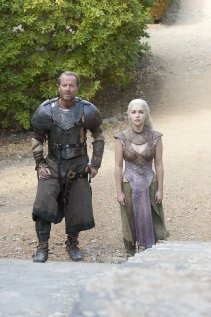 At Qarth, Daenerys enters the House of the Undying where she is confronted by the mages. Her dragons have been put in chains and so is she. However, her little scaled offspring begin belching fire at the mages and shattering their chains once they are reunited with her, and she quickly escapes with them in tow. Returning to Xaro’s house, Dany and her kin throw him into his chamber, which appears to be empty after all, and loot his house of anything of value. They proceed to the docks to buy what ships they can.
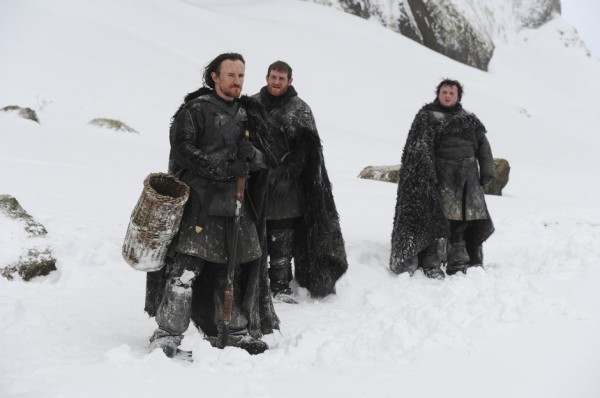 And beyond the Wall, John and Qorin finally have at it and John manages to kill him. This moves earns him the Wildlings trust, and it appears that was what Qorin had in mind all along. He is taken to the Wildlings encampment in a frozen valley where he sees tents as far as the eye can see. And lastly, the Night’s Watch at the First of the First Men are best by White Walkers. Emerging from the snow and ice, they come in droves and shriek out a terrible, bone chilling war cry!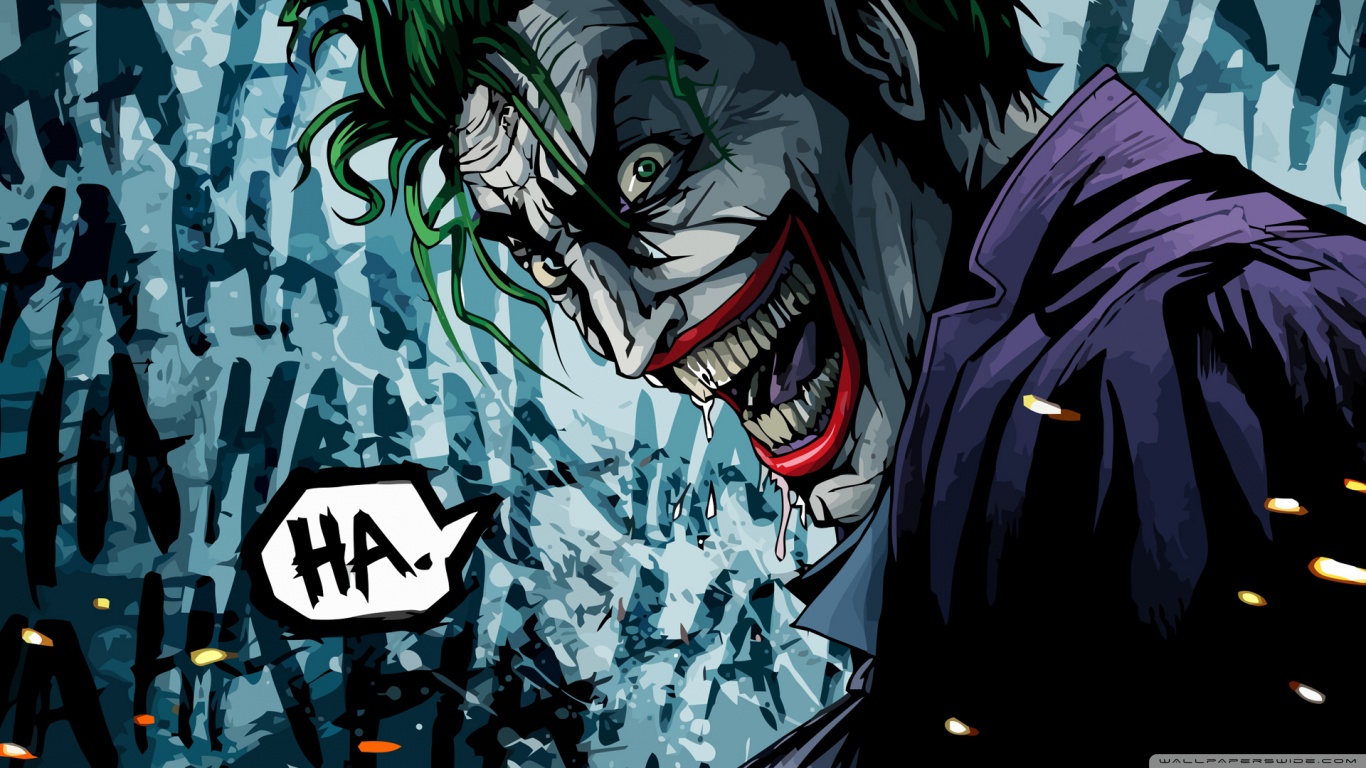

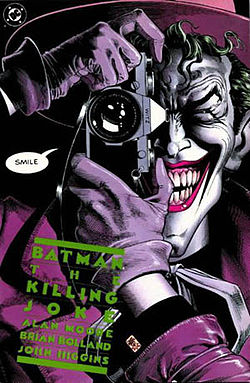
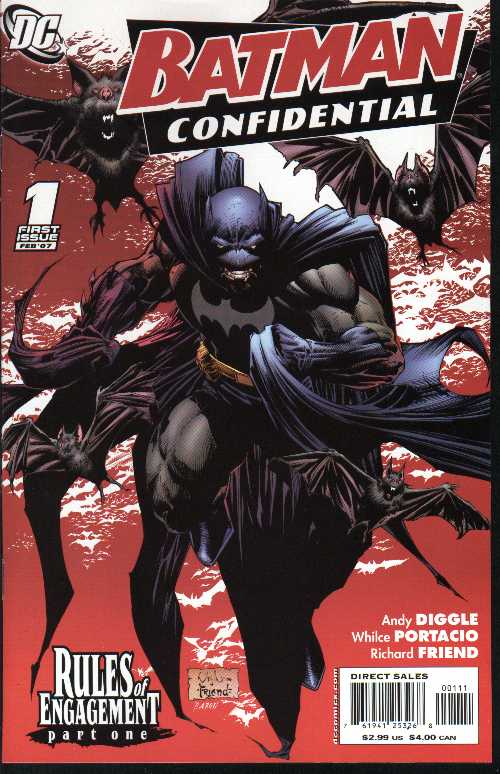


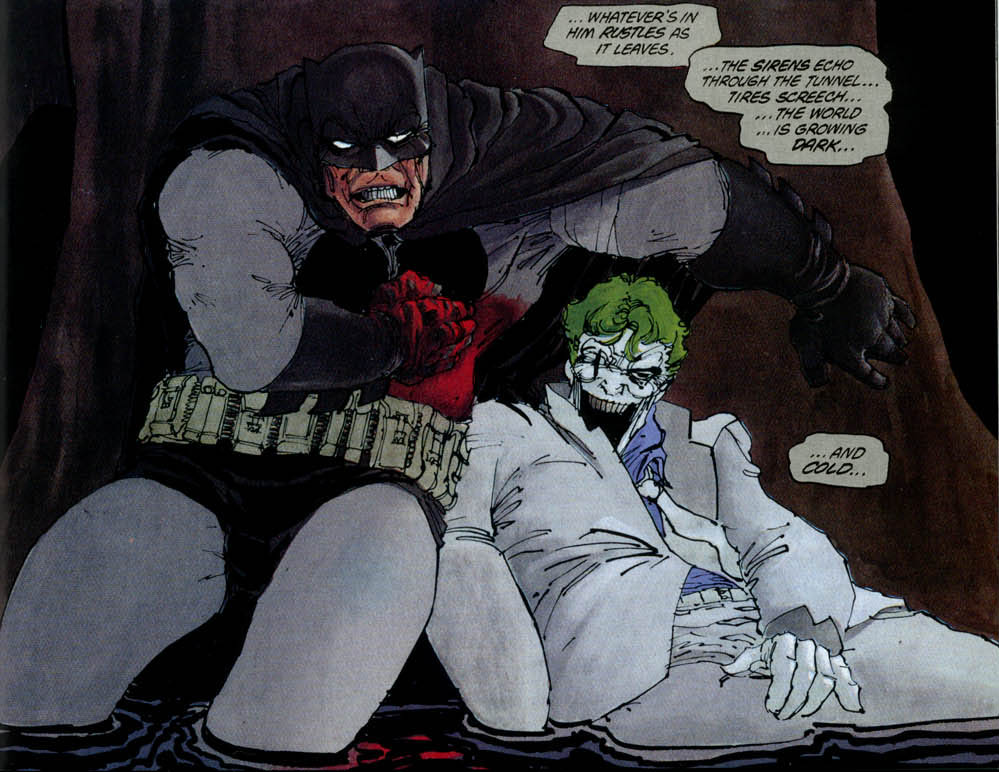
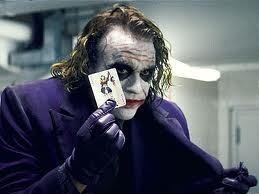

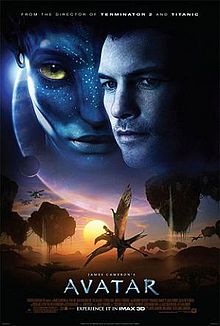
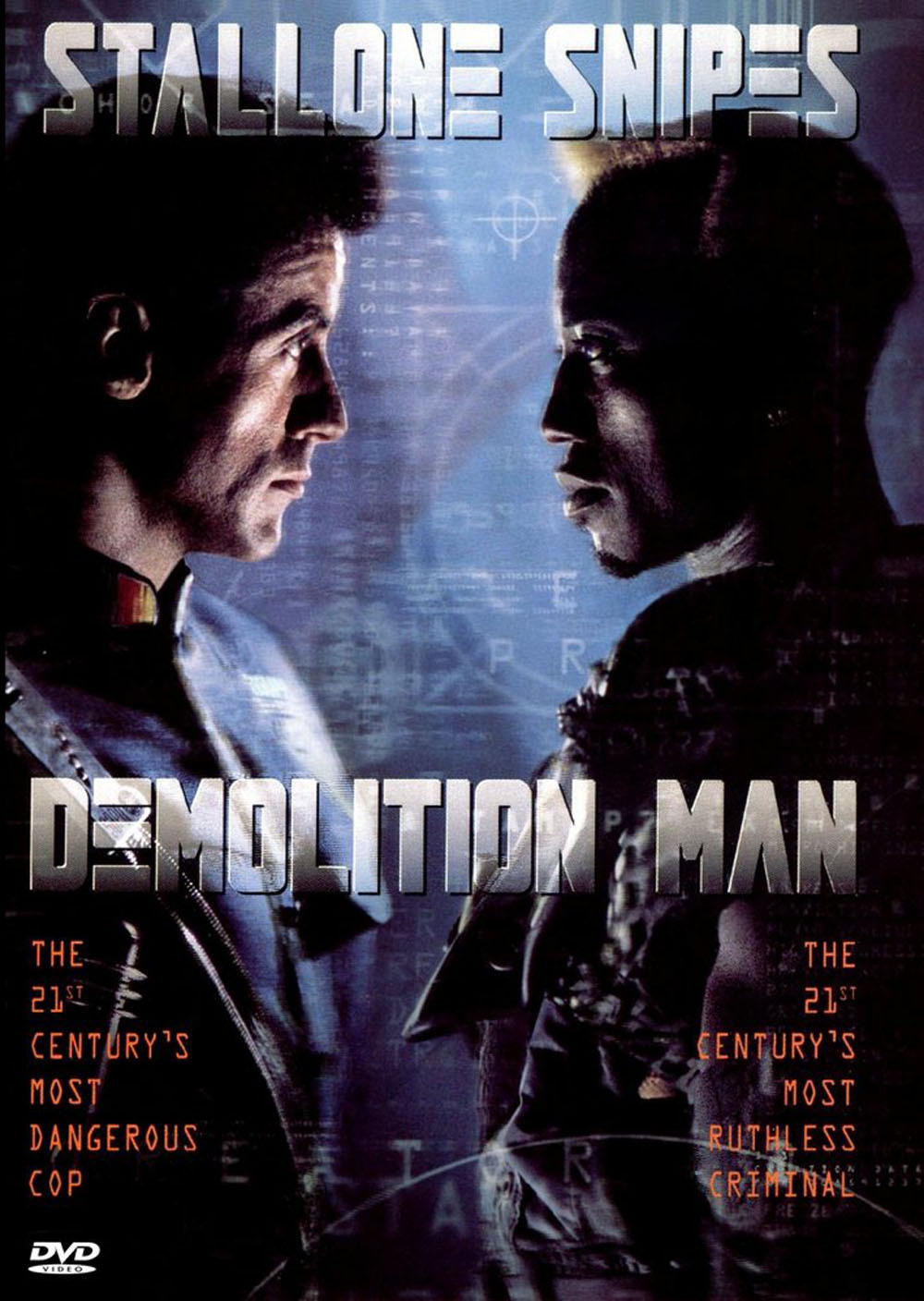
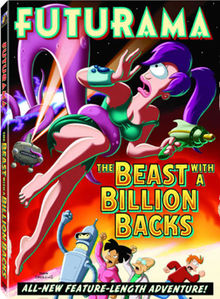
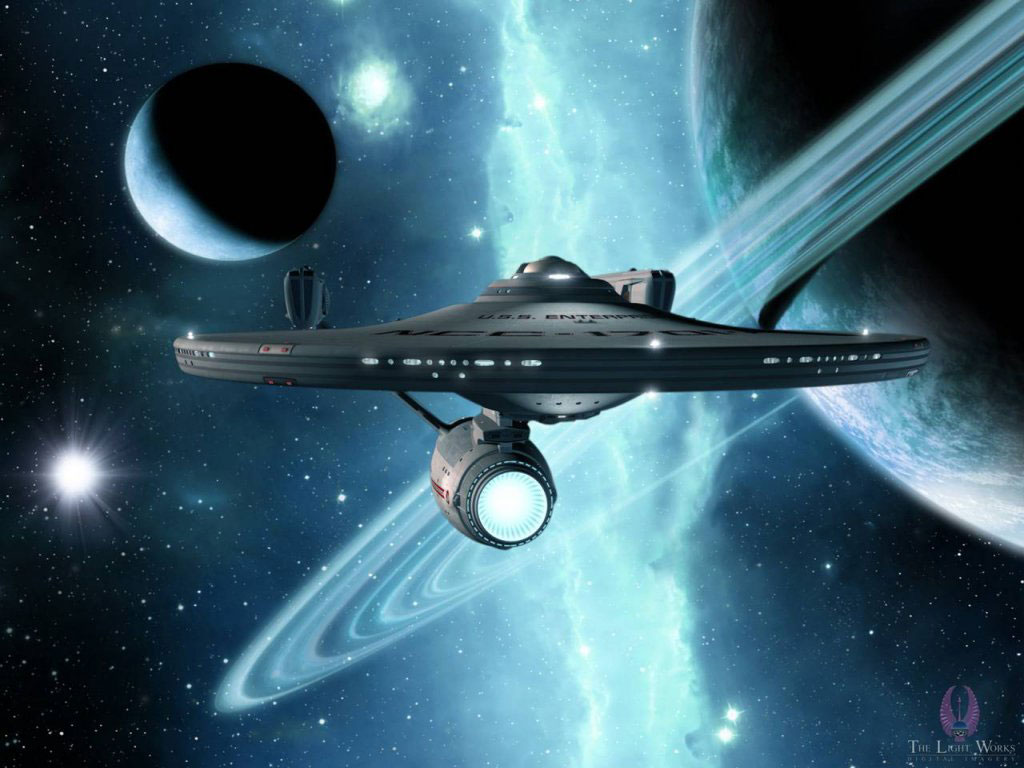

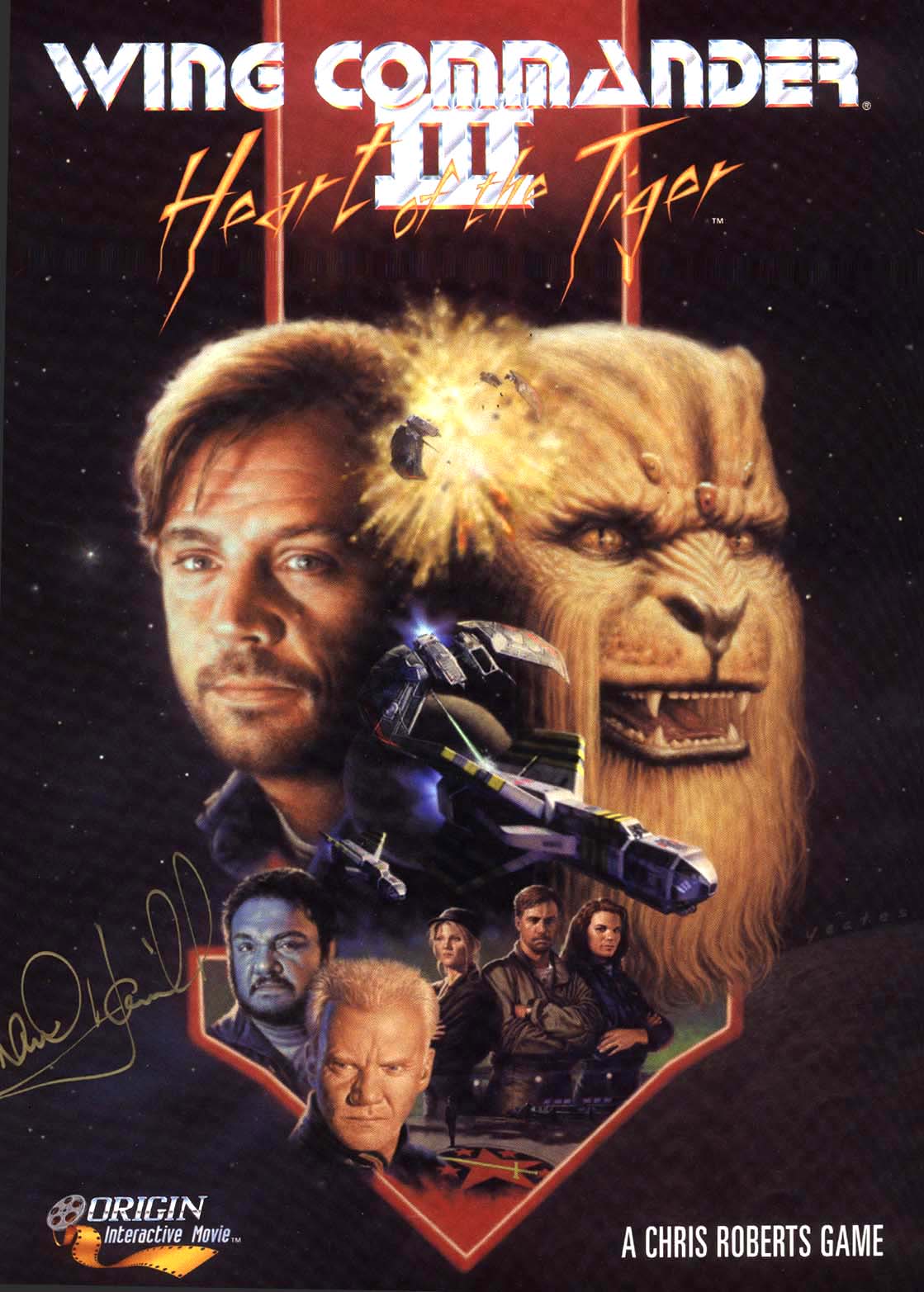
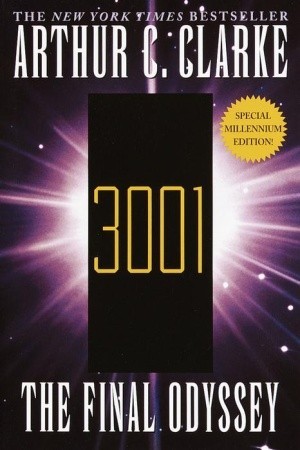


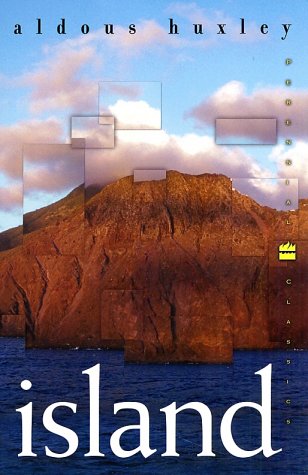
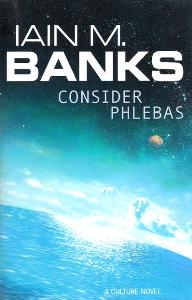
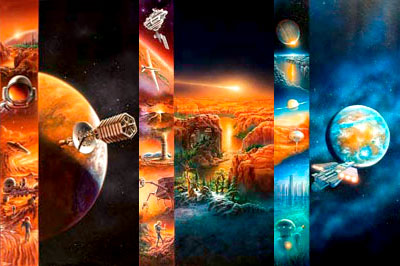


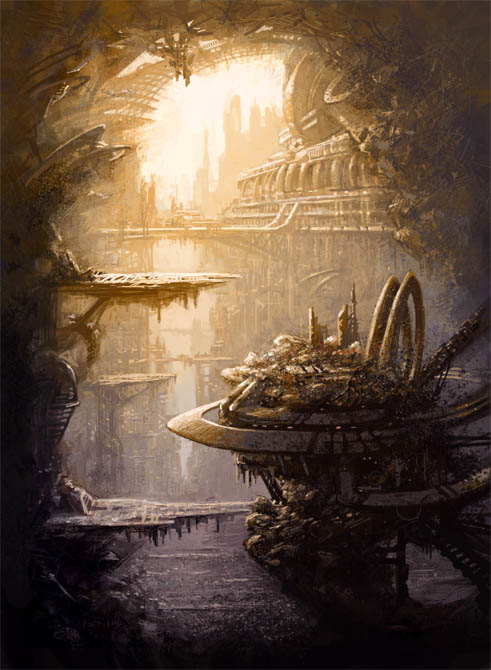


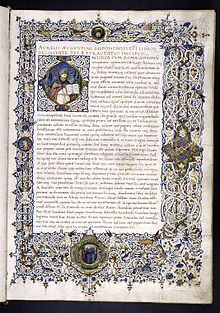


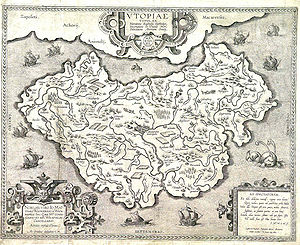


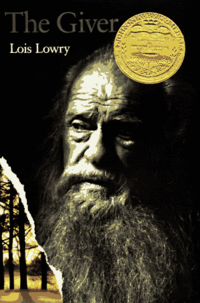

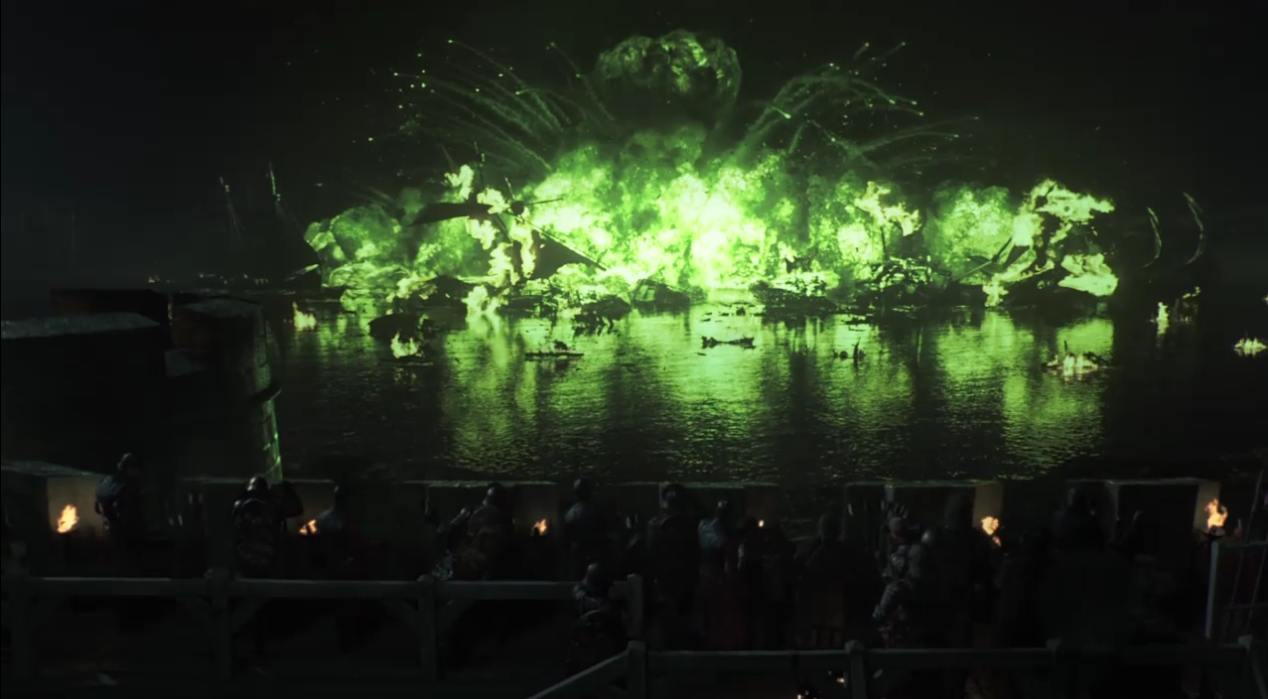
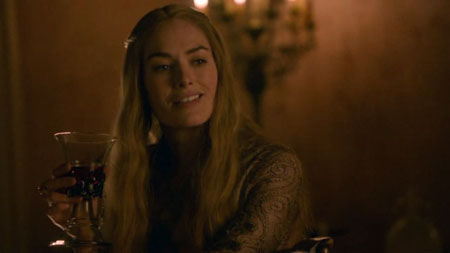


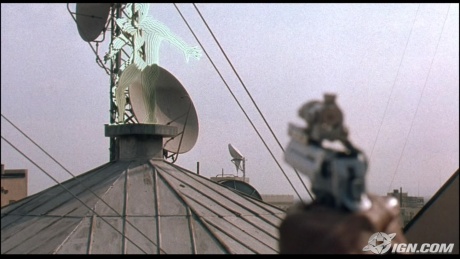





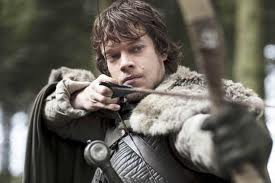
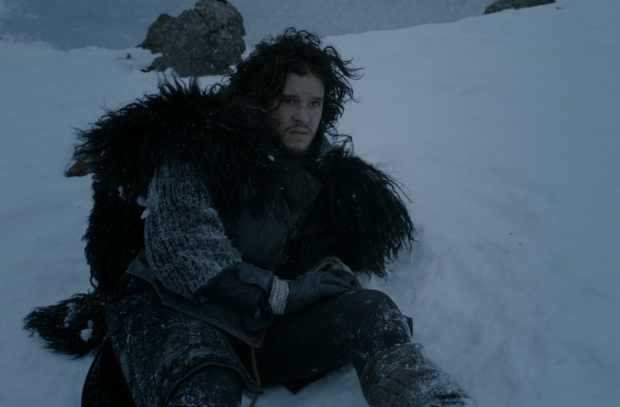

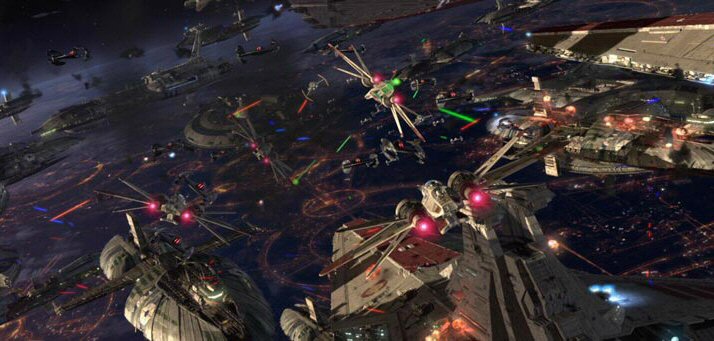


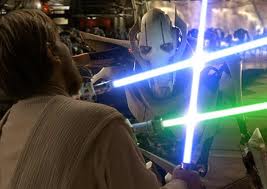
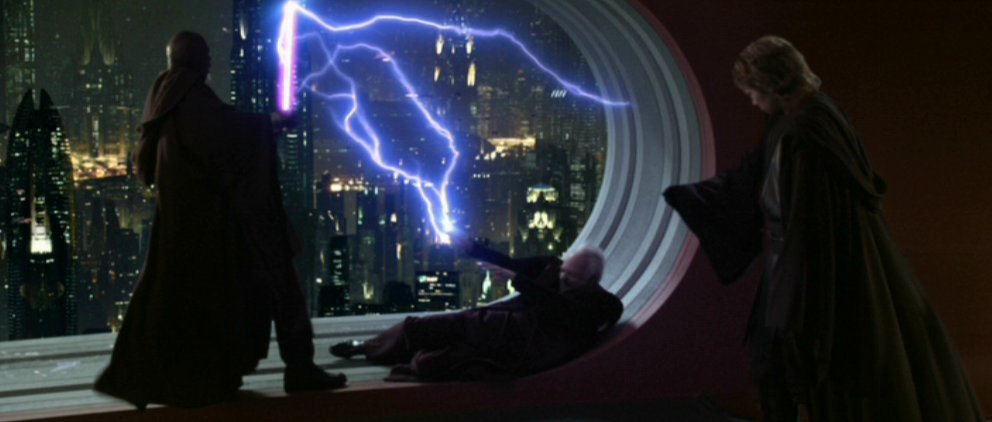

 Stories by Williams