Recently, I came across the lovely article entitled “Don’t f—- around with gods” from the Sydney Morning Herald. The subject was director Ridley Scott’s new movie, Prometheus, which is currently in post-production and set to be released in June of this year. As I’m sure everyone is aware by now, this movie is a return to the universe of Alien, a franchise which Scott began in earnest 30 years ago. Originally thought to be a prequel, Scott has since revealed that this movie is in fact a sort of standalone movie which explores the concept of Exogenesis – the idea that life came to Earth or other planets from an extra-solar source.
Although linked to the original Alien movie in that it deals with the same derelict that the crew of Nostromo encountered, the story is far more concerned with the alien race known as the Space Jockeys than the xenomorphs themselves. Or at least, that appears to be the focus. I’m sure the xenos make an appearance, and probably end up screwing everybody over, as is there tendency! But mainly, Scott emphasized that the plot, as suggested by the title, has to do with the discovery of powerful, dangerous things. When one encounters alien technology, the specter of the bound god who gave fire to humanity can’t help but be resurrected. It’s just timeless like that!
In the course of the interview, Scott also spoke extensively about his reasons for getting into science fiction in the first place. I have to say that I loved his answer: “Science fiction is a wonderful – sorry about the pun – universe for – again, another much overused word – creativity. It’s an arena where anything goes… The opportunity presents itself to fundamentally do anything you want, providing that you draw up a rule book in the first place. You’ve got to draw up the rules of your drama and within that universe you’ve got to actually stick to your own rule book. I think that’s what’s happening – we’re not drawing enough rules up when we do materials. It feels like writing a book…”
Wow. It’s wonderful when you see words that you yourself have said put into the mouths of true veterans! If I was to make a list of directors whom I admire for their creativity and vision over the years, Scott would be tied with Stanley Kubrick for first place! With movies like Alien,Blade Runner, Black Hawk Down and Gladiator to his credit, I got to say that I’m pleased as punch that he and agree on two fundamental precepts. One, science fiction is a great realm for creativity and inventiveness due to the fact that the only limitations are those of the author’s imagination. And two, that it’s best to have a detailed game plan worked out in advance. This is what sunk Lucas’ prequels people! Always know where you’re going in advance and try to stick to the plan. Otherwise you wind up with contrived plot twists and forced situations. Trust me, I know!
Another great thing to read was Scott’s indictation that Prometheus wouldn’t be a massive CGI fest. Something which set Cameron’s Aliens apart from the dubious Avatar was the use of real live actors in suits or animatronics instead of digital creations. Granted, this was done in an age when CGI wasn’t available, but those who followed in Scott and Cameron’s footsteps understood the value of shooting things this way. If there was one thing AVP did right, it was the use of costumed actors and real sets rather than blue screens and generated images.
Having set the precedent, I think it’s only right that Scott remain true to this heritage. After all, his environments, especially that of the Space Jockey Ship, were known for their dark, gritty, grimy look, something which was very… Lovecraftian! Try doing that with digital effects, it just doesn’t work! CGI might be great for creating visuals, but the textures are always too clean and sterile. Or in the case of Avatar, too cartoony! And actors are far more convincing when they’re interacting with a real person, or even a robotic alien, than a standing stick or a tennis ball on the end of a string!
In any case, here’s the link to the article. It’s a good read, and definitely for fans of Scott, the Aliens franchise, and just sci-fi in general!
Back with another conceptual post, this time about something which I’ve been pretty invested in lately. And it comes from the same general universe inhabited by cyberpunk and dystopian sci-fi. And that thing is the concept of the “Mega City”. As I’m sure I’ve said before, this is not only a very cool concept right out of modern science fiction, its also a genuine sociological and geographical theory.
In fact, it was a French geographer named Jean Gottmann who coined the term “megalopolis” in his 1961 book Megalopolis: The Urbanized Northeastern Seaboard of the United States. He used this term to describe the massive urban region which extended from the suburbs of Boston to those of Washington D.C. The concept quickly caught on, resulting in names like “BosWash” and “Northeast Megalopolis” when referring to the urban sprawl, and igniting the imaginations of science fiction writers and geographical planners.
However, in recent decades, this same concept has been extended to refer to several other “megalopolis'” as well. And not just in the US; such regions have been noticed developing in Canada, Mexico, Europe, East and South Asia. Wherever one urban center appears to be converging with another, through urban sprawl, connecting townships, and major highways, the roots of mega-cities are being laid!
First off, here are some more examples from North America, grouped from North to South, East to West:
Boston-Washington Megalopolis: As already noted, this baby inspired the concept of a megalopolis thanks to the post-war boom and growth of urban centers along the Eastern Seaboard of the US. In addition to having several major urban centers and ports closely linked by major transportation routes, some of the largest suburban developments in North America exist in this region, which have allowed for these major cities to converge by a very noticeable degree. All told, roughly forty-tw0 million people live in the BosWash according to a year 2000 census with projected estimates for 45 million by 2025.
Quebec-Windsor Corridor: Looking at the nearly unbroken urban landscape which stretches from Quebec city and the Outaouis region all the way down to Windsor on Lake Erie, one could easily get the impression that a mega-city existed throughout these regions, and was merely distributed in a long line because of geographic necessity. Embracing the St.Laurence River corridor and the National Capital Region and Southern Great Lakes Region, the Quebec-Windsor Megalopolis includes such urban centers as Quebec, Montreal, Ottawa, Toronto, Hamilton, London and Winsor and boasts a population of roughly 18 million (as of 2000) and is expected to reach 21 million by 2025. The Great Lakes Region: An alternative to the Quebec-Windsor megalopolis, which is based entirely in Canada, this megalopolis is based around the Great Lakes region and includes urban centers in in the Midwestern US, the Southern Ontario area of Canada, and parts of Pennsylvania, New York, and Quebec. The region officially extends from the Milwaukee–Chicago to the Detroit–Toronto corridor, and includes Buffalo, Cincinnati, Cleveland, Columbus, Dayton, Grand Rapids, Indianapolis, Louisville, Ottawa, Rochester, and Toledo. The region had an estimated population of 54 million, as of the 2000 Census and is expected to reach about 65 million by the year 2025. Piedmont-Atlantic: the Southern US megalopolis, running from Charlotte, North Carolina to Memphis, Tenessee, and embracing the urban regions of Atlanta, Birmingham, Chattanooga, Columbia, and everything in between. Its population as of 2000 was estimated at a modest 15 million, at least by mega-city standards. However, it is expected to reach a good twenty million or more by 2025. Florida: Named in honor of the fact that all its urban centers are located squarely in the state of Florida, this megalopolis incorporates the urban centers of Coral Springs, Fort Lauderdale, Jacksonville, Miami, Orlando, St. Petersburg, Tallahassee, and Tampa and has also has a relatively modest population of 15 million with expectations to reach 21 and a half by the quarter century. Texas Triangle and the Gulf Coast: Here are two megalopolis’ that are often considered separately, but which have already converged as far their boundaries are concerned. Thus I think it’s fitting that they be considered as one. From the east, the mega-city range embraces Pensacola and Mobile and extends south and west, with New Orleans in the middle and Corpus Christi at the southernmost tip. However, at the western edge, it then extents north-west, incorporating Houston, Dallas, Fort Worth, Oklahoma City, San Antonio, Tulsa, and Wichita. Considered as one, this region boasts a hefty 28 million inhabitants and is expected to reach as high as 40 million in the near future. So-Cal: Fans of Demolition Man ought to know this one right off the bat (if not, see below). Otherwise known as Southern California range, this region encompasses the north-south coastline and the urban regions of greater Los Angeles, San Diego, Anaheim, Tijuana, and Bakersfield, but also reaches eastward to include Las Vegas. It’s overall populated was posted at 25 million in 2000 with a projected expectation of 35 million by 2025.
No-Cal: Comparatively small next to its southern cousin, the Northern California Megapolitan region is still an impressive specimen. Reaching both north-south along the coast, and east-west into the interior, this region encompasses the cities of San Jose, San Francisco, Santa Rosa, Stockton, Fresno, and Sacramento. It’s total population, circa 2000, was estimated at roughly 13 million and is expected to reach close to 17 and a half by 2025. Cascadia:Named in honor of the Cascade Mountain Range, this mega-city, like the mountains extends from north to south and incorporates the urban centers of British Columbia and the states of Washington and Oregon. Beginning with Vancouver and Victoria in Canada and reaching south to include Bellingham, Everett, Seattle, Tacoma, Olympia and Portland in the south, the region hosts a modest 10 million inhabitants and is expected to actually recede in population! Fans of space and coastal weather, travel here! You will crushed anywhere else!
The World at Large: Blue Banana: Also known as the “European Megalopolis” or “European Backbone”, this hypothetical mega-cityscape reaches across Western Europe. Stretching along a south to north-east axis (thus forming the shape of a banana), the region runs from Milan in Italy through Southern Germany and the Low Countries and ends in northern Wales. In terms of major cities, the corridor includes Milan, Genoa, Venice, Munich, Luxembourg, Frankfurt, Brussels, London, Manchester and Leeds. It’s total population, hang onto your hats, is estimated at 92.4 million people! Greater Mexico City: The most populous metropolitan region in the Americas, embracing the entire metropolitan area of the “Valley of Mexico” and boasting a population of over 21 million, according to a 2009 survey conducted by National Population Council of Mexico. Although it does not embrace multiple urban centers, its large landmass and density are characteristic or a mega-city. Indo-Gangetic Plain: Also known as the “Northern Indian River Plain”, referring to its geographic boundary in Northern India along the Indus and Ganges river basins. The area is traditionally very dense due to its fertile soil and strategic locations between river basins, the Himalayan mountain chain to the east, and the Iranian plateau to the west. In terms of urban centers, this corridor extends between Pakistan and India to Bangladesh and includes the cities of Karachi, Faisalabad, Islamabad, Lahore, Delhi, Kanpur, Dhaka, and Kolkata. Overall, roughly 1 billion people – 1/7th of the world’s total population – live in this region, making it the most population dense area in the world! Pearl River Delta: Located in Guangdong province in the People’s Republic of China, the Pearl River Delta is one of the most densely urbanised regions in the world and one of the main hubs of China’s economic growth. This is due largely to the fact that such coastal centers as Hong Kong, Guangzhou, Shenzhen, Kowloon City, and Macua are all located in this relatively small region. In addition to these tightly packed urban centers, suburban developments have led to many geographers to think of the area as a single mega-city. According to the United Nations Human Settlements Programme, the overall population of the delta region is estimated at 120 million people, and growing fast! Taiheiyo Belt: Over to Japan, where densely populated urban centers have been a fact of life for nearly half a century. Translated literally, the term “Taiheiyo beruto” means Pacific Belt, referring to the series of linked metropolises that are nestled on Japan’s western shores. Officially, the region extends from greater Utsonomiya in the north, through to Tokyo harbor, then follows the coastline circuitously through Yokohama, Nagoya, Kyoto, Osaka, Hiroshima, Yamaguchi, and ends at Saga on the southern island of Satsuma. These areas account for the bulk of Japan’s population, its industrial base, and its major economic centers. In addition, it packs a population of 83 million into a very narrow corridor. Yangtze River Delta: Also known as the Golden Triangle of the Yangtze, this megalopolitan region has much in common with its cousin on the Pearl River. Here again, we see a bunch of urban centers built along one of the traditional river routes that are clustered around the mouth of it. In addition, this area also accounts for a very large and growing portion of China’s economic and industrial infrastructure. Linked by high-speed rail, major highways, bridges, and urban sprawl, this region unites the cities of Shanghai, Nanjing, Hangzhou, Suzhou, Wuxi, and a whole lot of others! In total, roughly 100 million people live in this densely packed area in addition to its many farms, factories, and transportation hubs; which, in conjunction with its location at the mouth of the Yangtze, makes it the leading cause of maritime pollution in the Pacific Ocean.
Examples in fiction: Mega-City One: Taken from the graphic novel of Judge Dredd, MC-1 is the setting of the majority of the series. According to the series’ background info, MC-1 grew naturally out of urban sprawl between all the major cities of the East Coast US. It was only officially made into the dark, overcrowded and heavily encapsulated place that one sees in the comics after WWIII took place. It’s current population in the series is estimated at over 400 million, the majority of whom lives in massive apartment blocks that house 50,000 people apiece. And of course, just about everything is automated, all resources (including food!) are recycled, and unemployment is almost universal. Other mega-cities are mentioned in the series as well, including Mega-City Two, which encompasses the greater urban sprawl of Southern California. Metropolis: Not to be confused with the setting for Superman, this city was the focal point for events in the classic movie of the same name. When asked where he got the idea for such a world, director Fritz Lang said that he was inspired by his first glimpse of the New York city skyline. While traveling there by ship in 1924, he saw skyscrapers for the first time, and these left quite the impression on him. This was evidenced in his conception for a massive future city where buildings were designed to look like artistic representations of the Tower of Babel, the rich lived on high in the sun and the workers lived in the dark depth below. No-Cal/So-Cal: The setting of Gibson’s Bridge Trilogy, in which California had split into two regions, the one centering around the greater San Fransisco region in the north, and the other around the LA region in the south. Most events in the story take place in San Francisco, particularly the Golden Gate Bridge, which has become a home for indigents and squatters (hence the name of the trilogy). San Angeles: The setting for the movie Demolition Man, in which a cryogenicaly frozen LA police officer is woken up in 2032 and told that it is now called San Angeles, which resulted from the merger of Los Angeles, Santa Barabara and San Diego after the “Big One” Earthquake of 2010 leveled most of LA and Southern California. The Sprawl: Otherwise known as the BAMA, or Boston-Atlanta Metropolitan Axis, this mega-city serves as the setting of Neuromancer, Count Zero and Mona Lisa Overdrive by William Gibson. But unlike the Boston-Washington megalopolis which is likely to have inspired it, this axis extends as far south as Atlanta and is contained beneath a series of geodesic domes.
Conclusions?:
For starters, one can see without the need for much imagination where the concept for “Metropolis”, “Mega-City One”, “San Angeles”, and “The Sprawl” came from. For the last century, at least, megalopolis’ have been slowly becoming a reality, and this in turn has been reflected in our literature. And when it comes to dystopian science fiction, what could be more dark and gritty than a big, overcrowded cityscape? Especially one where differences in wealth and modern technology make everything just a little more interesting and dangerous? Like most people, I can’t imagine ever wanting to live in such a world, but damn if I don’t want to read about it from time to time!
Back with more examples of cool sci-fi worlds. Last time, it was the Dune universe, today it’s Star Wars! Once again, I will looking at the original movies, with some added info from the expanded franchise, but not the prequels. Sorry, but like most Star Wars fanboys, I prefer to pretend that those installments didn’t exist. Nothing personal, its just that aside from tying things up in a nice little package and providing some dazzling visual effects, they really didn’t enrich the universe any.
But this aint a spiel on Lucas and his lost sense of direction. This is about cool Star Wars worlds! And here are the top contenders:
Alderaan: This planet was apparently the soul of the Republic, much in the same way that Coruscant was its capitol. Renowned throughout the galaxy for its peaceful inhabitants and unspoiled beauty, Alderaan was also a cultural capitol that produced many of the universe’s greatest artists, poets and performers. As the home to Princess Leia Organa and her adopted father, Senator Bail Organa – both of whom were members of the Rebel Alliance – it was also was the first planet to be destroyed by the Death Star in Episode IV: A New Hope.
In the expanded universe, Alderaan is depicted as a lush and fertile world covered in oceans, grasslands, mountain ranges and canyons. In order to preserve the planet’s beauty, Alderaan’s cities were built directly into the landscape, either within canyon walls, on stilts along the shorelines, or underneath the polar ice. The planet’s capitol, Aldera, was situated on a small island in the center of a caldera.
In terms of government, the planet was ruled by House Antilles, a constitutional monarchy, of which the Organa family were the last surviving members. Jedi master Ulic Qel Dromo, who’s name comes up in the game Knights of the Old Republic, was also from Alderaan. The popular Star Wars creature known as the “nerf” (which I believe was inspired by Herbert’s “slig”) also comes from this planet.
The name is clearly inspired by the Arabic name for for two pairs of stars alpha and beta Canis Minoris (currently known as Procyon and Gomeisa) and alpha and beta Geminorum (Castor and Pollux). Translated literally, the name means “the two forearms” or “the two front paws”. I can only surmise that Lucas learned of this disused astronomic name and decided to use it in his franchise because of its esoteric appeal.
Corellia: A bustling world of spacers and traders, Corellia is also the home planet of Han Solo, Wedge Antilles and Garm Bel Iblis. It is also the location of the Corellian shipyards, a series of orbital factories that produce such ships as the famed Millenium Falcon, the Corellian Corvette and the Imperial-class Star Destroyer. In terms of ecology, Corellia is lush world with several highly developed urban centers, resulting in a great deal in trade. Little wonder then why Corellia is famous for its spacefaring culture, smugglers, pirates, and roguish personalities.
During the time of the Galactic Republic, Corellia was the capitol of the system and chief representative of the “Five Brothers”. This refers to the five habitable planets in the system, three of which were home to their own indigenous species. Being the closest planet to Corel, and the most developed, Corellia was seen as the senior brother in this arrangement.
Another interesting feature about the Corellian system is Centerpoint Station, an ancient installation that was built over a million years before events in A New Hope. Built by an insectoid species known as Killik, the station was apparently a massive tractor-beam array that was capable of towing entire planets from one point in the galaxy to another, which is believed to be the reason why Corell boasts several worlds with their own indigenous inhabitants.
During the reign of the Galactic Empire, Corellia became an imperial mandate, but maintained its fierce spirit of independence until the arrival of the New Republic. This spirit of independence is evidenced by the fact that the Rebel Alliance was founded here when the founders convened to agree on a declaration of principles. It was also shown in the way the Corellians resisted Imperial rule, both through its production of smugglers and pirates and its anti-Imperial demonstrations.
Although it never appeared in the original series, the planet is featured in a number of novelizations and video game adaptations (particularly the Corellian Trilogy and Star Wars: The Old Republic).
Coruscant: The capitol of the Galactic Republic and Empire in the Star Wars universe, this world was essentially one massive city. According to the expanded universe, approximately one trillion humans and aliens live on the planet, of which humans make up the majority, and the planet-wide city is multitiered, reflecting a sort of class system. Whereas the upper levels are occupied by the wealthiest citizens and members of the Republic’s bureaucracy, the native inhabitants of the planet are largely extinct or live on the lower levels while the planet’s surface is inhabited solely by outcasts and indigents.
The uppermost levels were made up of skyscrapers that dwarfed even the planet’s natural mountain chains. These were lighted regularly by the planet’s sun and a series of orbital mirrors which ensured that shadows cast by the massive structures did not overcast the surrounding environment too much. At the lower levels where natural light could not reach, holograms and artificial lights provided most of the illumination. These regions were often known as the “entertainment districts” due to the availability of bars, gambling halls and other distractions. People who lived in these regions were known as “Twilighters” because of the areas seedy reputation and appearance.
Coruscant is also home to the Galactic Senate, the Jedi Order, the Jedi Temple, the Republic Archives, and the Imperial palace. All trade routes cross at the planet’s galactic coordinates, ensuring a constant coming and going of trade and transport ships in and around the planet. In addition, several artificial satellites and shipyards were placed in orbit around the planet, especially during the reign of Emperor Palpatine. The massive output of garbage and the need for food and water meant that most of the planet’s needs had to be handled from offworld.
In addition to ejecting all of its non-recyclable garbage into orbit and importing most of its food, huge feats of engineering were required to meet its daily need for water. This was accomplished by piping in freshwater from the planet’s glaciers and underwater aquifers, which were created when the planet’s vast oceans were drained to create room for more urban sprawl. Just about all buildings on the planet also had their own semi self-sufficient ecosystems built directly into their buildings, where water, like most other necessities, was recycled.
Although it did not appear in the regular series, Coruscant was a focal point in Timothy Zhan’s Thrawn Trilogy and made numerous subsequent appearances in novelizations and graphic novels (most notably, the Dark Empire series). The name is apparently derived from the Latin coruscant which translates as “vibrating” and/or “glittering”, referring to its opulent appearance from space.
Dagobah: A planet in the outer rim of the galaxy, and the home of Jedi Grand Master Yoda during his long exile. Composed of swamps and forests and teeming with life, the planet was devoid of cities or infrastructure. It was the location of Luke Skywalker’s training in The Empire Strikes Back and Return of the Jedi, and also the last known location of Yoda before he died of natural causes.
Long before events in the original trilogy, the planet was also the site of a major battle between Jedi Master Minch battled and killed a powerful Dark Jedi. As a result, the cave where he fell absorbed his dark powers and became, according to Yoda, a place that was “strong with the dark side”. It was here that Luke confronted his demons and gained the first hints as to his true ancestry.
Because of its uncharted nature and its resplendent nature, Yoda chose this world for his exile, knowing that the presence of so many creatures and dark side energy would mask his force signature.
Dantooine: An Outer Rim world, known for its mild climate and resplendent system of grasslands, rivers and lakes. Though far from most galactic trade routes, Dantooine was a popular destination for people looking to escape the crush of the Core Worlds. Nevertheless, its population was largely made up of farmers and small communities.
Being a remote and peaceful world, Dantooine was also home to the Jedi Academy. During the Sith War, most Jedi Masters were stationed here and conducted the training of Jedi Knights. Towards the end of the war, the Academy was destroyed by the Sith during an orbital bombardment. However, the academy was quickly rebuilt as soon as the war was over and a new crisis loomed.
According to the KOTOR series, the planet was also once part of the Rakatan Empire. Remnants of this occupation were demonstrated by a series of ruins which apparently contained the first of several Star Maps, the purpose of which was to safeguard the location of the Rakatan Star Forge. It was here that Revan began his descent to the dark side when he began investigating these ruins for hints as to its location. Exar Kun was also trained here, another notorious enemy of the Republic who began as a Jedi.
Endor: Also known as the “Forest Moon of Endor” and “The Sanctuary Moon”, Endor was a small moon that orbited the gas giant of Endor. The homeworld of the Ewok race, and the location of the second Death Star in Return of the Jedi. It was also the site of the Battle of Endor, where Rebel forces engaged the Imperial fleet and army in both orbit of the planet and planetside. Though intended as a trap by the Emperor, this battle became the turning point in the Galactic Civil War and led to the Rebels to their eventual victory over the Empire.
Due to the fact the the second Death Star was supposedly incomplete, the Rebels were forced to put down on the world and locate the shield generator that protected it. In the course of their search, they came upon the indigenous Ewok people and were recruited by them. This alliance allowed for them to locate the generator and, when the Emperor’s trap closed around them, overcome the Imperial forces guarding it.
According to Lucas, this world was inspired by his original ideas for Kashyyyk, the home of the Wookies (see below). Here, the surface of the planet was lush and green, covered in massive natural forests and filled with tons of natural predators. In order to survive, the Ewoks live in villages built above ground, anchored along the sides of the massive trees where land-based predators cannot reach them. These same characteristics would be recycled later in the franchise where descriptions of Kashyyyk came up.
Hoth: The sixth and furthest planet in the remote Hoth system, this planet is a desolate and ice covered world renowned for its extreme cold and harsh climate. Because of its remote location, it was also the home of the Rebel’s Echo Base for a time during the Galactic Civil War, shortly after the Rebels destroyed the Death Star and were forced to relocate from Yavin 4. The Battle of Hoth, during which time the Empire discovered and destroyed this base, was a focal point in the movie Empire Strikes Back, where Rebels fought a pitch battle to cover their evacuation from the planet.
Beyond the planet was a large asteroid belt which apparently wreaked havoc with navigation and sensors, another reason why the Rebels chose the location for their base. The cold climate resulted in a relatively small amount of native life forms, which included the tantaun and the predatorial wampas. During the events of Empire, Luke Skywalker was attacked by a wampa and forced to flee its lair after cutting off one of its arms with his lightsaber. This encounter and his subsequent near-death experience on the icy plains led to a vision in which Obi Wan instructed him to go to Dagobah and seek the training of Jedi Grand Master Yoda.
From what I can tell, this planet is named after Hermann Hoth, a German General who is best known for his command of the 4th Panzer Army during Operation Barbarossa (the invasion of Russia) and his subsequent defeat at the battles of Stalingrad and Kursk. Known for his cunning and icy temperament, it seems fitting that an ice-planet would be named after him!
Kashyyyk: Also known as “Wookiee Planet C”, “Edean”, “G5-623”, and “Wookiee World”, Kashyyyk is a planet in the Mid Rim. It was the lush, wroshyr tree-filled home world of the Wookiees and the home planet of Chewbacca. During the time of the Sith War, the planet was a source of slaves, all of which were exported by the Cserka Corporation. After slaving operations ceased, the planet became a member of the Galactic Republic, only to be reduced to the status of a slave colony again during the time of the Galactic Empire. With the fall of the Empire, the planet were once again liberated and became a member of the New Republic.
Much like Endor, on which it was based, Kashyyyk was a lush word covered by forests, the greatest of which was known as the wroshyr tree. Due to the presence of natural predators, the Wookies made their home high up in the trees branches, constructing large villages that are anchored to the trunks and connected by bridge ways. Though primitive by Galactic standards, the Wookies demonstrated great ingenuity, especially when it came to adapting and using advanced technologies for their own purposes. In addition to constructing landing pads from the tops of large trees, Wookies are also known for their use of bowcasters, a blaster modeled in the shape of a crossbow.
The forest floor is considered sacred to the Wookies and off-limits to off-worlders. This area is known as the “Shadowlands” due the fact that very little light penetrates the forest canopies and reaches the forest floor. In addition, it is populated by many species of predators that are large and fierce enough that even the Wookies are wary of them. In Knights of the Old Republic, it was revealed that the ancient race known as Rakatan’s once used the planet as a source of slaves and even terraformed it, resulting in its lush forests, as well as its powerful and diverse species. The only remaining trace of the Rakatan empire, aside from the stimulated environment, is a Rakatan Star Map that is hidden in a corner of the Shadowlands.
Korriban: This planet was the homeworld of the original Sith species, and over the course of many generations became the home of the Sith Order. According to the KOTOR series, the original Sith Lords who defied the Jedi Order and embraced the dark side traveled to this world and subjugated the native species through their command of the force. Seeing them as godlike creatures, the Sith Lords were elevated to the status of divine leaders and were interred here after their deaths.
The tombs of original Sith Masters – Naga Sadow, Marko Ragnos, Ajunta Pall and Ludo Kressh – were all built in the Valley of Darkness. The inspiration for this was clearly the great Pyramids of Giza where the Pharaohs were interred. Each master has their own story, but it is apparenly Naga Sadow, the leader of the Sith during the “Great Hyperspace War”, that is most significant. Shortly after arriving on Korriban, the original Sith Masters began to turn on each other out of jealousy and mutual recrimination. In order to bring unity to them, Sadow took advantage of the arrival of a Republic survey team to convince his people that they were being invaded and needed to go to war.
The war took place roughly 5000 years before events in A New Hope are depicted and resulted in the total destruction of the Sith Empire. Korriban was devastated in the final assault, hence why the climate of the planet is desolate and rocky with little to no native flaura or fauna. In addition, Naga Sadow fled to Yaving 4 where he built a temple to himself and left a trace of his dark spirit, which in turn led to the rise of Sith Master Exar Kun (see below).
In addition, the planet became the home of the Sith Academy during the events of KOTOR 1, after Revan reestablished a base there. This apparently had much to do with the presence of a Rakatan Star Map, which was located within one of the tombs. The presence of this device, which are known to have dark side energy, may have a lot to do with why this planet was sought out by the original Sith Lords in the first place and became the locus of such dark powers. After events in KOTOR played out, the planet was once again left desolate when both the academy and its initiates were all destroyed.
Nar Shaddaa: Also known as the “Vertical City”, the “Smuggler’s Moon” and “Little Coruscant”, Nar Shaddaa is the largest moon of the planet Nal Hutta, the homeworld of the Hutts. Like Coruscant, it is covered by a planet-wide metropolis. But unlike the galactic capitol – which is only seedy and dark at the lower levels of its sprawl – Nar Shadaa is known for being dirty, dangerous and seedy just about everywhere on the planet.
Nar Shaddaa began as a stopover for merchants and smugglers who are traveling to and from the outer rim. In time, however, cities grew between the refueling spires and loading docks and began to be permeated by illegal activities of every kind. Often serving as entertainment for merchants, bounty hunters and privateers, gambling halls, race courses and seedy establishments quickly sprung up which were either run by organized crime or paid dues to them. Most syndicates have a home on this world, including the Hutts themselves who are known for being notorious gangsters.
Because of its reputation, a great deal of technological research and development also occurred on Nar Shaddaa. Companies that wanted to avoid restrictions and regulations that were commonplace elsewhere would set up shop on this planet, knowing that certain “fees” were the worst they could expect. Hence, in addition to being a place famous for gambling, smuggling, and assorted illegal activity, it is also a technological center of sorts.
Nar Shaddaa makes appearances numerous times in the Star Wars expanded universe, notably in the KOTOR series, the Force Unleashed, and other novelizations and games. Repeatedly, it has served as a hiding place for Jedi exiles or anyone else looking to disappear.
Tatooine: Possibly the most well-known planet in the Star Wars franchise, appearing prominently in both A New Hope and Return of the Jedi, Tatooine is a desert planet that orbits the binary Tatoo star system. Tatooine is sparsely-populated, mainly by moisture farmers, scrap dealers and the indigenous Sandpeople. However, the planet was also a focal point for events during the Sith War and the Galactic Civil War.
In the former case, it was the location of one of the Star Maps, and hence was visited by Revan twice. It was later the ancestral home of Luke Skywalker and the exile home of Jedi Master Obi-Wan Kenobi, both of whom became involved in the Civil War when princess Leia’s Corvette was boarded and her droids – R2D2 and C3P0 – were forced to jettison in orbit of the planet.
Tatooine has historically been controlled by Hutts, the most notorious of which was Jabba. During the events of A New Hope, Han was indebted to Jabba and took on a contract with Luke and Obi-Wan in order to pay him back. However, due to the demands of the Civil War, Han was unable to pay off his debt and wound up becoming a fixture in Jabba’s palace. His rescue, which was carried out by Luke, Chewbacca, Leia, Lando, R2D2 and C3P0, led to Jabba’s death and the majority of his crew.
In addition to its mixed population of colonists and transient inhabitants, Tatooine is home to two sentient races of people: the Sandpeople and the Jawas. Although not indigenous to Tatooine, the Jawas had made a permanent home on the desert world, salvaging droids, ship parts, and assorted electronics for resale and repair. The Sandpeople, who are indigenous, are a fierce, nomadic people who have adapted to desert life and are hostile of outsiders. The native bantha creature is apparently sacred to them, serving as a mount and a beast of burden. Native species also include the elusive Krayt Dragon and the fearsome Rancor.
Legend has it that Tatooine was once a lush, ocean covered world which was ruled by the Infinite Empire (i.e. the Rakata). During the decline of the empire, the indigenous people rebelled and forced them off the planet. In response, the Rakata subjected the world to an orbital bombardment which devastated the planet, turning the surface to glass and rendering it inhospitable for all time. This is apparently how Tatooine became the desert world it is by the current time of the franchise.
Yavin 4: One of three habitable worlds which orbit the gas giant Yavin in the system of the same name. Known for its lush climate and jungles, this remote world would also play a pivotal role in galactic events. After the Hyperspace War ended, it served as the exiled home of Sith Master Naga Sadow and his followers. Before his death, many temples were built in honor of him and he himself was entombed in a sarcophagus where he waited in a comatose state until the day when a renewed Sith Order would find him.
Several centuries later, he would be awakened by Freedon Nadd, a fallen Jedi who sought knowledge of the ancient Sith. After learning all he could from Sadow, Nadd turned on him and killed him, in true Sith fashion. He then took Sadow’s place as the Dark Lord and died shortly thereafter. After several centuries, another fallen Jedi named Exar Kun came to Yavin and destroyed Nadd’s apparition. He then used the children of Sadow’s followers to build new temples and locate Sadow’s ship, buried beneath some old ruins.
In time, other Jedi began to join him, the most noteworthy of which was Ulic Qel Dromo. After allying himself with the Krath and the Mandalorians, he began waging war against the Republic. In time, the Jedi Order and Republic defeated him, but Kun managed to seperate his spirit from his body and would remain tied to his temples for centuries to come.
During the Galactic Civil War, Yavin 4 served as the Rebel alliances main base after they abandoned Dantooine. The Battle of Yavin occurred shortly thereafter when the Death Star, in pursuit of Princess Leia and the Millennium Falcon, arrived in the system and attempted to destroy the planet. After destroying the Death Star, the rebels were forced to abandon the planet and relocate to Hoth (see above). The moon remained relatively uninhabited and untouched for over a decade when Luke Skywalker chose to build the new Jedi Academy there.
Some Final Thoughts:
Okay, think I got them all. Or at least the ones I could squeeze in without going incredibly, incredibly long. But I’m not sure the datum, as collected from the various sources that make up the Star Wars universe support any conclusions. This might be because there are so many contributing authors, writers and conceptual artists. But I do notice a few things which should be plain to anyone who takes the time to sort through these worlds and the universe which encompasses them.
1. Borrow early, borrow often!: For one, Lucas and the franchise he created borrowed heavily from many sources. One can see without much effort inspiration from such franchises as Foundation, Dune, and various other science fiction serials. He was also not averse to taking from classic cinema, literature, and history. In addition to the familiar notions of galactic empires, an ecumenopolis (worldwide city), ancient alien empires, and multicultural, racial hierarchies, there was also plenty of gun-slinging, swashbuckling, duels, and underworld elements. All of this combined to create a universe that is quite rich and appeals to both the adult and kid in us, more often the latter.
2. This universe be big!: After looking through all the background, details, side stories and spinoffs, I could only feel that the Star Wars universe is expansive and packed. This goes for material happening both before and after the original movies. Long before Lucas and Lucasarts began tackling the pre-history of the franchise, there were writers and graphic novels makers who were writing sequels to the franchise. And while most of the novels got repetitive and cliched after awhile, some of it was pretty gutsy, proposing the fall of the New Republic and the resurgence of the Sith Empire once again.
And when it comes to the prehistory of the Galactic Civil War, it seems that the Old Republic was not as peaceful and boring as it was previously made out to be. In fact, the conflict between the Jedi and the Sith appears to be a regular feature in the pre-New Hope universe, happening periodically whenever a new Sith Lord emerged and recruited people to their cause. Sure, here too, things seem repetitive, but at least they’re not boring. And it also raises some interesting questions, like is this an ongoing fued that will never end, or is there some ultimate purpose behind the battle between the light side and dark side?
Stuff like this makes me both more sad and indifferent to the existence of the Star Wars Prequels. On the one hand, they seem all the more disappointing when held up to a franchise that is as detailed and diverse as this one. On the other, they seem dwarfed by the contributions of so many other creative minds, almost to the point where they can become irrelevant. With this in mind, it kind of makes sense why Lucas has become so jealous and bossy with the franchise in recent years. Perhaps after seeing how others could enrich his creation so much, he realized just how superfluous he could become. Hence all this “I am the CREATOR” talk! Seen this way, it could very well be that this is his way of reasserting ownership over a universe that is outgrowing him.
That was fun! Join me again for another installment in the “Conceptual Sci-Fi” series! And look for my review of Hunger Games and more chapters of Data Miners too!
First up, some news for those who asked. Back when I started this dystopian thread, a lot of people asked about The Hunger Games. This was understandable, given that its a modern take on dystopian sci-fi, and currently very popular since it’s being adapted into a movie. In fact, I got so many questions about it that I had to add an addendum to one of my posts, warning readers that it wouldn’t come up, so not to ask. However, somewhere along the line I also promised that I would tackle and review it at some point.
Well guess what? I just bought a copy! Yep, just as soon as I’m done my most recent reviews and posting chapters of my own upcoming novel (Data Miners), I will get around to reading this modern take on the classic dystopian novel. And, as a preamble, I thought I might include an article that I recently read in MacLeans. There, the author sought to shed some light on the issue of YA dystopian fiction, with particular attention being given to The Hunger Games. It raised some very interesting points before getting into the story, and so I thought I’d share them here.
Excerpt from ‘The Hunger Games’: your kids are angrier than you think by Brian Bethune:
“Imagine a life where possibilities are opening at a speed that veers unpredictably between exhilarating and terrifying. The familiar, precisely because it’s familiar and safe, still tugs at you, but even so, you want out because your old life constricts as much as it comforts. Besides, your social milieu, which often feels like an endless struggle to achieve, or resist being slotted into some arbitrary niche—pretty, ugly, smart, dumb, athlete, klutz—is changing fast. You feel driven—by inner need and outside pressure—to make choices. Meanwhile, the manipulative, often harsh, powers that be, who created the larger world they’re busy shoving you into, have clearly not done a bang-up job of it, either in their personal lives or as part of society. And they want you to get out there and fix their mistakes—just at a moment when worry over the imminent demise of their entire socio-economic structure is never far from the surface. It can be cruel and scary out there. Dystopian, even.
Chances are, anyone not imagining this life, but actually living it, is a teenager. And living it in an era of economic uncertainty, conspiracy theories and fear of environmental collapse. Western civilization used to produce literary utopias, but in the past century of world wars, financial panics, murderous totalitarian regimes and nuclear threat, dystopias have outnumbered sunny projections by several orders of magnitude. Pessimistic depictions of the future are now everywhere in popular culture. Teens and teen books are not immune to larger trends in society.”
Wow. Quite the preamble. What I liked best about it was the way it summed up the origins of dystopia. In my own posts on the subject, I noted that dystopian literature was recent compared to utopian. But I failed to note that the truest examples of the genre only really emerged around the turn of the century. And the particulars of what inspired it seemed to have everything to do with the trends of industrialization, rationalization, class conflict and the increasing pace of change. These things have only become more pronounced as time has gone on, and with the addition of such issues as environmental destruction, gender equality, and racial bigotry.
Or, as the case appears to be with The Hunger Games, issues of age. Here we have a story where the young fight for the entertainment of the old. Or at least, that’s one angle to the story. The issue of authoritarianism, reality TV, violence as entertainment and environmental catastrophe breading totalitarianism – these all appear to be present throughout, either as part of the background or as running themes.
Hello all and welcome back. Starting today, I thought I’d get into a cheerier aspect of science fiction. Not that I don’t looooove dystopian stuff, but after days and days of romping through endless examples of totalitarian, cyberpunk and just generally dark futures, I thought it might be time for a break. And it just so happened that I had an idea the other day which seemed like the perfect diversion. For those who read my site regularly, you might have noticed I did a long list of conceptual sci-fi posts. Well, today I thought I’d get back into that some.
To break it down, I wanted to do a piece that was dedicated entirely to “Cool Worlds”, an exploration of the various planets, cultures and civilizations science fiction has given us over the years. However, after coming up with just a few candidates, I quickly realized my mistake. There was no way I could possibly list all the best examples in just one post. And if I settled on just a few, then people might start writing in and saying “what about this one? what about that one?”
So rather than do all that, I decided instead to tackle specific franchises, particularly ones that made it into my Galactic Empires post, and address some of the cool worlds that existed within.And what better place to start than with my favorite galactic franchise, one of the most detailed franchises ever to be dreamed up: the venerable Dune!
Anyone who is familiar with Frank Herbert’s six volume series knows that he was pretty damn good at weaving an intricate and finely layered tale. One aspect where this was particularly evident was in his descriptions of the Imperium’s planets. Not only would Frank dedicate a great deal of time and effort to describing what a place was and what significance it held, he would also get into the lesser explored areas of ecology and what impact that had on a planet’s culture. Here are some of the best examples that I could think of, all from his original books:
Arrakis: The focal point of the Dune universe, and the most important planet in the entire franchise. It was here that the spice was manufactured, where Paul Mua’dib came face to face with his destiny, and “The Tyrant” Leto II was born and ruled for three and a half millenia. It was also eradicated when the Honored Matres attacked the Old Imperium, triggering a full-scale war which would lead humanity along the final steps of the “Golden Path”. In short, it was the backdrop for most of the story, and from a storytelling point of view, a very richly detailed place!
Much of what is known about Arrakis’ culture and ecology comes from the appendixes of the first novel where Herbert wrote about the fictitious exploits of Dr. Pardot Kynes, planetary ecologist to the Imperium. However, a great deal more came through in the course of the story once Paul and Jessica find refuge amongst the Fremen and had to learn their ways and secrets in order to survive. Much of this has to do with the spice, the Sandworms of Arrakis, and how the production of the former depended on the life cycle of the latter. They also came to learn about the Fremen’s plans to alter the planet’s ecology using moisture traps and water caches, as well as the careful introduction of plants and grasses to anchor the dunes.
Basically, Arrakis was a desert planet where moisture was the most precious commodity in existence. A fitting paradox, seeing as how the planet’s desert environment was essential to the production of spice – the most precious resource in the known universe. Two things permeated this environment, both of which kept outsiders away and ensured the security of the Fremen who lived in the deep desert. The first were the Sandworms themselves, the predominant life form on the planet. The second, though no less dangerous, were Arrakis’ famous sandstorms.
According to Dr. Yueh, worms measuring up to 450 meters had been captured and studied, but that ones which were larger still had been seen in the deep desert where no citizen of the Imperium had ever ventured. Living beneath the sand, the sandworms would be attracted to rhythmic vibrations coming from the surface. Knowing this, the Fremen were forced to develop a way of walking arrhythmical when forced to do “dune-crossings”. At other times, when they sought to ride the worms, they would plant “thumpers” to draw their attention, and then mount the worms once they came to the surface.
The worms were also the producers of the spice, which they used to fabricate nest for their young (“sand trout”), which would then leave before the nest underwent a chemical reaction, triggering a “spice blow”. Because of their central role in the life cycle of Arrakis, and the fearsome and awesome nature of the creature itself, the Fremen regarded them as godlike creatures. Shai-Hulud, “the old man of the desert”, was the name given to mature worms while “the Maker” referred to the worms role in the production of spice and the life cycle of the planet. Though Zensunni’s by descent, believing in a God that was transcendent, the Fremen still seemed to attribute some degree of divinity to the worms themselves.
Similarly, sandstorms were common to the Deep Desert, and also the reason why the capital city of Arrakeen was built within a protective outcropping of rock known as the “Shield Wall”. According to the expanded universe, sandstorms on Arrakis were electrically charged and could reach up to 500 km/h, powerful enough to destroy vehicles, equipment and strip anyone unlucky enough to be caught outside in one down to their bones! Due to the havoc they played with navigation and harvesting, all activity beyond the Shield Wall had to be timed to ensure that it happened between storms, otherwise harvesters could wind up buried beneath tons of sand.
As expected, the harsh and unforgiving conditions of this planet did much to shape its inhabitants. The “Fremen” as they are called (play on the word Free Men) were what could be expected from a nomadic desert people who were used to oppression. Recluse, mysterious, pragmatic and extremely tough, they were both feared and loathed by an Imperium that knew little about them and could not control them. However, once Paul and Jessica managed to penetrate the Fremen society by proving their worth to them, they began to see that the Fremen were also capable of extreme hospitality, fierce loyalty, great patience and uncompromisingly dedication.
Over the course of the six original novels, Arrakis was transformed from a desert planet into a lush green world, only to then be transformed back again. This had much to do with the plans of the Fremen, but also to Leto II’s “Golden Path”. In the end, it was realized that the spice-producing worms, and even the Fremen themselves, would not survive the ecological transformation, but once Leto died and the worms were reintroduced to the planet, spice production and desertification once again resumed. Knowing that worms were responsible for removing all traces of poisonous water form the planet, the Sisterhood began using some to conduct their own ecological transformations on Chapterhouse after Arrakis was destroyed.
The Fremen themselves had a saying which pretty much encapsulated their world and themselves: “God created Arrakis to train the faithful”.
Caladan: Although comparatively little time was spent detailing this planet, Caladan was nevertheless an important planet in the Dune universe. It was the ancestral home of House Atreides, Paul’s birthplace, and would eventually become the sole property of Jessica after Paul became Emperor and moved his seat to Arrakis.
Based on various descriptions from the original novels and expanded universe, Caladan was an ocean planet with few landmasses to speak of. Because of its relatively mild and agreeable climate, House Atreides was spared the expense of weather control measures. It’s primary exports consisted of biomass, plus the important agricultural produce known as pundi rice. In addition, it also traded in whale fur, gemstones, wine, corals and livestock.
According to Paul’s father, Duke Leto, House Atreides ruled this planet through air and sea power, for obvious reasons. When describing his world to Chani and the Fremen, they were incredulous to know that on some worlds, water was so commonplace that it formed oceans as big as the desert, or that plants could grow so thick that they were impassable.
Clearly, Caladan was meant to serve as a sort of Edenic setting compared to the hostile and rugged landscape of Arrakis. In addition, Paul’s exile into this harsh wilderness after the death of his father could be interpreted as a fall from grace, which he then reconciled when he became the prophet and religious leader of the Fremen and returned in the end to claim the throne. If there’s one thing Dune was known for, its religious allegories!
Chapterhouse: The home of the vaunted Bene Gesserit training facility in the later books of the series. In the original Dune, this facility was located on Wallach IX and had been for some time. However, five thousands years later in Heretics of Dune, the location had been changed to Chapterhouse. In the following and final novel, Chapterhouse: Dune when the Honored Matres began there assault, it was noted that Wallach had fallen to their advance.
According to the descriptions from Heretics and Chapterhouse, this planet was a green and fertile world. However, with the destruction of Rakis (Arrakis in the later novels) and the death of nearly every sandworm in the known universe, the Bene Gesserit began the process of terraforming it into another desert planet where the worms would be able to thrive, thus giving them control over the only source of spice in the universe.
Throughout the latter books in the series, the Bene Gesserit kept the location of this world a secret to protect it from the Honored Matres. They even went so far as to station a fleet of no-ships around the planet to ensure that no one would be able to locate them with prescient ability.
Geidi Prime: The homeworld of House Harkonnen. And if the religious metaphor which I alluded to earlier is to be believed – where Caladan is Eden and Arrakis is the real world- then this place would definitely be hell. In fact, judging by the many descriptions made of this planet and its rulers in the original series, the hellish metaphor is so thick you could cut it with a knife!
In the original Dune, we are given descriptions that emphasize the planet’s industrial nature. Hints are also given that the planet was highly volcanic and covered in wastelands. In addition to its many factories, large arenas were also built in most cities, where gladiator duels were held to entertain the populace. The Baron’s nephew, Feyd-Rathau, would often compete as a way of gaining popularity amongst the people and demonstrating his skill.
Also, in the original and subsequent novels, much is made of the Harkonnen’s sense of brutality and perversion. Whereas the Baron delighted in little boys, whom he would often kill in the course of molesting them, the planet’s artwork and decor often emphasized sex and violence.The Baron’s appearance, which is described as being so “grossly and immensely fat” that he requires an anti-gravity device just to get around. In addition, he described himself as “always hungry”.
In Heretics of Dune, when Miles Teg and the ghola of Duncan Idaho are hiding in an abandoned Harkonnen chamber, they notice an old clock where the hands are figured of a man and woman with over-sized genitalia (when the two hands line up, it looks as though a gruesome sex act is occurring!). When describing the Harkonnen’s, Leto II claimed they were “lovers of sensation”, people who were obsessed with pleasures of the body.
Hmmm, factories, volcanoes, gladiator rings and bodily pleasures? Sounds like something right out of Dante’s Inferno! In the course of adapting the novel to the big screen, David Lynch went to town on this, showing the planet to be dark, polluted and filled with terrifyingly decrepit people, many of whom had undergone hideous types of surgery (i.e. heartplugs). In the miniseries version, similar attempts were made to capture the hellish nature of the place. Here, every set was done in the colors red and black and camera angles were always askew, capturing the dark and twisted nature of the Baron and his family.
Ix: The ninth planet in the star system of Alkalurops, Ix is the home of the technocracy that is responsible for producing the vast majority of the Imperium’s machinery. The name of the planet stems from the misinterpretation of the planet’s designation in Roman numerals.
In the original six novels, we never did get a description of what Ix looks like or what really went on there. For reasons which may have a lot to do with the fact that they are technologists in a universe where technology is morally proscribed, the Ixians appear to be somewhat recluse. However, it was clear that they were responsible for creating the various technologies that were central to the plot.
In God Emperor of Dune, Leto II is found to be recording his thoughts using an illegal device that was manufactured by on Ix. It was also the Ixians who were responsible for breeding Malky, a man who’s purpose was to influence Leto into doubting his own path and purpose. Hwi Noree, who was a sort of polar opposite to Malky, was also created to lure him with her charms. Both individuals were bred inside a “no-chamber”, a special cell that hide what is within from prescient detection. This same technology would later go into created “no-ships” and even larger “no-fields” which could shield entire planets.
Another revelation which came in God Emperor of Dune was the fact that Leto, through his Golden Path, had apparently prevented the Ixians from developing a breed of hunter-seekers which would have completely destroyed humanity. Ultimately, part of his plan was to encourage the development of certain technologies while preventing others. Whereas the hunter-seekers fell into the latter category, machines that could block prescience or replace it (i.e. the machine that could do the job of a navigator) fell into the former.
Kaitain: In the original Dune novel, Kaitain was the seat of power for the Padishah Emperor and the location of the Imperial Court. It was also the homeworld of House Corrino after events on Selusa Secundus forced them to move. All of the guilds, major houses and interests in the known universe maintained a presence here, including the Spacing Guild, the Bene Gesserit, the Ixians, the Tleilaxu, the Landsraad, CHOAM, etc.
After events on Arrakis forced him to intervene, Emperor Shaddam IV relocated the royal palace to Arrakis so that he could oversee the deployment of his armies and ensure the Baron’s cooperation.
Aside from that, not much is mentioned of Kaitain, except for a description of the Golden Lion throne in the original novel’s appendices. Here, it is described as an opulent throne that had been “carved from a single piece of Hagal quartz — blue-green translucency shot through with streaks of yellow fire.”
Selusa Secundus: Once the seat of House Corrino and the Royal Court, this planet became a prison world after it was devastated in a nuclear attack. As a result, the planet’s climate is incredibly harsh and inhospitable, making it the perfect world for the condemned of society. Radiation from the attack still permeates the planet’s climate, and mortality rates amongst prisoners are apparently as high as 60 percent.
However, as is quickly made clear in the first novel and throughout the series, Selusa Secundus also serves as the training grounds for the Emperor’s dreaded Sardaukar army. This is done in secret, though most Houses within the Imperium apparently suspect it. In fact, in the first novel, the Emperor apparently became suspicious when Baron Harkonnen remarked to Count Fenrig that he would use Arrakis to conduct a similar experiment with his own armies. This was meant only in jest, but it did speak to suspicions the Emperor had.
One other person who understood this was Paul. After becoming an exile on Arrakis, he began to learn that his father had similar plans with the Fremen. By making an alliance with the Fremen, people who had been toughened by conditions worse than that on Selusa Secundus, his father would eventually be able to raise an army army that could rival the Sardaukar. Convinced that Paul was their messiah, he put this plan into action and was able to defeat the Emperor’s armies outside of Arrakeen.
After seizing control of the Golden Lion Throne, Paul exiled House Corrino to Selusa Secundus where they remained until events in Children of Dune. It was here that Shaddam’s third daughter, Princess Wensicia, began plotting the assassinate Paul’s twin children and place her own son Farad’n on the throne. When Jessica is forced to flee Arrakis with Duncan, they found shelter here and made their deal with Winsicia. In exchange for marriage between Ghanima and Farad’n, she agreed to teach him in the Bene Gesserit ways.
Beyond that, no mention is made of Selusa Secundus. Much like House Corrino, it seemed this planet was destined to fade into obscurity.
Tleilax: Yet another obscure world to come out of the Dune universe. And much like Ix, very little was said about this planet until late in the series. Nevertheless, it too played a very important role in the Dune universe and a number of key developments and inventions were apparently born here.
The sole planet in the Thalim star system, this world is also the home of the mysterious Bene Tleilax. In addition to being the training ground for “twisted Mentats”, Tleilax is also the home of the elusive axlotl tanks, which are used in the production of gholas. Though most within the Imperium frowned upon these devices, as they did all Tleilaxu inventions, the tanks and gholas in particular were used by just about all factions for the sake of their plotting and machinations.
In Dune Messiah, much is told about the Tleilaxu due to their involvement in a plot to unseat Paul Mua’dib from the Imperial Throne. This included the creation of a Duncan Idaho ghola, which had been programmed to kill Paul once he uttered the key phrase “she’s gone” in reference to his beloved Chani. However, this was soon revealed to be a plot within a plot, where the real intent was to show how the original memories of a ghola could be recovered by forcing them into a situation where their original self would reassert itself in order to fight against operate conditioning.
In God Emperor of Dune, Leto II is shown to be reliant on the Tleilaxu’s axlotl technology because he keeps demanding gholas of Duncan Idaho. For reasons unknown, he insists on having the original Duncan in his court, with his full memory restored. It is later suggested that this was an important part of his breeding program, that Duncan contained a special gene which he needed to bread into his descendents. But whatever his reasons, the Bene Gesserit continued his program and maintained an alliance with the Tleilaxu whereby they would receive gholas of Duncan Idaho so they could try to ascertain his true purpose.
In Heretics of Dune, the sixth incarnation of the Sisterhood’s Duncan Idaho is revealed to be special. Unlike the other incarnations, he has access to the memories of all other Idaho gholas, dating back to the very first who served Pual Mua’dib and all those who served and died at the hands of Leto II. In addition, the Tleilaxu clearly equipped him with the sex techniques of the Honored Matres so that he would be able to turn the tables on them when the time came, resisting their attempts to “imprint him” and imprint himself onto one of them. All of this leads Duncan to the conclusion that he now possesses Kwisatz Haderach-like abilities, which is confirmed in Chapterhouse: Dune when he begins to experience visions of the old man and lady (see below).
Also, in was in Heretics of Dune that readers got their first glimpse of the Tleilaxu homeworld and their society. Prior to this, it was understood that Tleilaxu was master geneticists who had engineered their own version of the Kwisatz Hadderach, but which had apparently committed suicide. It was also shown that they were ruled by a series of “masters”; Master Scytale being the one who participated in the plot in Dune Messiah.
However, what was not revealed was that the Tleilaxu were actually secret Zensunni’s and Sufi’s who maintained strict religious secrecy so as to keep their plans hidden from “powindah” (aka. outsiders). In addition, all masters were clones (not gholas) of their original selves and achieved a sort of immortality this way. This was apparently part of their long-term plan to assert their dominance over the known universe, a plan which was finally hatched in Heretics of Dune and involved the specially-programmed Duncan Idaho ghola.
Also central to the plot of several novels in the original series was the Face Dancer, another invention unique to the Tleilaxu. These were people specially bred to be able to take on the likeness and even the memories of people they were charged with killing and impersonating. Bred to be eunuchs and completely loyal, they were human only in the strictest sense of the word and possessed no identity of their own. However, this changed as the series progressed and it became clear that after millenia of adopting the personas of others, Face Dancers were beginning to develop personalities of their own.
This was apparently the threat the Honored Matres were themselves fleeing and which had forced them back into the universe of the Old Imperium. Throughout Chapterhouse: Dune, Duncan Idaho is haunted by visions of an old man and a woman whom he identifies as free Face Dancers. It is these people who he concludes are responsible for the greater threat they face, and who appear to want to capture him because of his special abilities as well.
Another interesting invention to come out Tleilax was the “slig”, a genetically engineered hybrid which crossed the DNA of a pig with a slug to produce a large, fleshy and slothful creature that is easily harvested for its meat. As was remarked in one of the later books in the series, this animal was considered ugly, even disgusting, due to its multiple mouths and skin that excreted a slimy and noxious residue. However, due to its sweet and terder meat, there were few in the Imperium who did not enjoy having “slig medallions” on their tables.
Final Thoughts:
Before I get into talk of patterns and conclusions, a little disclaimer first. First, there are plenty more worlds in Dune universe that are probably worth mentioning. However, there was no way to include them all without making either breaking this post in two or making it run on forever. Second, I deliberately left out information that did not come from the original six novels. True, there’s plenty more mentioned in the expanded franchise of these and other worlds in the Dune universe, but I wanted to stick to material that Frank himself was known to have written. Anything that comes from the expanded universe is likely to suffer from original though. Funny way of putting I know, but it can be known to dilute or undercut anything the original author themselves established.
Okay! Now that I’ve covered my ass, let me get to what I think about these cool worlds! Well, a few things jumped out at me after I was finished researching this list and gave it a final glance:
1. Frank loved secret societies!: Whether it was the Fremen, the Bene Gesserit, the Bene Tleilax, the Ixians, or the Emperor, the concept of recluse worlds and secrets ran through Frank’s original works like a vein. Clearly, he was a big (and I mean big, big, BIG!) fan of intrigue, secrecy, and societies that were founded on them. This is one of the things that I think made the Dune universe so readable and realistic in tone.
Regardless of their house or faction, it seemed that everybody was looking to get a leg up on someone else and found that the best way to do that was to conduct themselves in secret. Was this a commentary on humanity, the result of living under imperial rule, or the result of the complacency Paul and Leto hoped to rescue humanity from? Who knows, point is, he loved em! I think I smell another post in the wind…
2. Ecology effects people:As already mentioned, Frank paid a great of attention to the link between environments and culture. Whereas the Fremen and their values were clearly the result of their hostile and sparse world, the Atreides had apparently been rendered soft by generations of living on Caladan. House Harkonnen, with all their ugly desires and habits, boasted a world to match. And of course Selusa Secundus and Arrakis both served as the ideal training grounds for elite soldiers because life on both was just so freaking hard!
Well that’s all for now. Stay tuned, I plan to tackle the Star Wars universe next! And more chapters for Data Miners are still on the way…
Well, after many, many suggestions on how my list of dystopian franchises could be augmented – this mainly consisted of poeple asking me “what about (blank)?” – I decided there were a few that I really couldn’t proceed without mentioning. This will be my last tour of the dystopia factory, lord knows that place gets depressing after awhile! But one thing at a time. Here’s my final installment in dystopian science fiction series, a hybrid list of novels, graphic novels, and movies!
A Clockwork Orange: This dystopian novella was originally written in 1962 and was adapted into film by the great Kubrick almost a decade later. In addition, it was adapted into play after the author realized he didn’t like how the adapted movie ended. Having experienced all three, I can tell you that the movie was probably the best. In addition to the rather ingenious ideas presented by Anthony Burgess, it also benefited from Kubrick’s directorial genius and the superb acting of Malcolm McDowell.
Set in the not-too-distant future, the story revolves around a British youth named Alex who is growing up in a world permeated by youth violence. He is the leader of a group of thugs known as “The Droogs”, young men who go about committing acts of “ultra-violence” which consists of them beating up homeless people, random strangers and other gangs, as well as committing theft and gang rape.
In time, Alex and his friends go to far (even for them!) and an innocent woman is murdered during a break-in. His friends, who are already angry over his bullying and strong arming of them, decide to betray him and leave him to the police. Once in prison, Alex decides to cut his sentence short by undergoing a radical government experiment – an artificially created conscience through Pavlovian conditioning!
The result of this conditioning is that Alex is no longer capable of committing any acts of violence. In fact, even the mere thought of violence produces a reaction so strong that he breaks down and is overwhelmed by nausea. This renders him benign, but also helpless. And in time, all his past crimes begin to catch up with him and he is nearly killed. Once he wakes up in the hospital, he discovers the conditioning has worn off, and he can either resume his old ways, or strike out on a new path…
Another interesting side effect of the conditioning is that he can no longer listen to Beethoven without getting sick either. This has to be one of the most curious and intriguing scenes in the movie, where a restrained and helpless Alex begs the doctors to turn off the symphony because he can’t stand the idea of not being able to listen to it. Much like everything else he does, it speaks volumes of his sociopathic nature.
Ultimately, the movie differed from the novel in that the final chapter was omitted. Immediately before this, we see how Alex is now freed from the conditioning. He also seems intent on blaming the current government, which will oust them from power. But beyond that it not quite clear what’s going to happen. However, the following chapter shows how Alex has realized, independently, that he doesn’t want to live a life of violence anymore. Human freedom, he’s determined, is the ability to make choices for oneself, free of persuasion and operate conditioning.
As I said, I truly think the movie was an improvement on the novel, which is a rare thing with adaptations. Still, it is was in the film that the point of the story really came through, thanks to Kubrick’s usual attention to detail and subtlety. Whether it was through those long, close-up shots of McDowell and his crazy eyes, the combination of wide angle action shots in slow motion, or the way that it played to the tune of Beethoven, you really got a sense of the odd combination of genius and madness that is the anti-hero Alex. The reliance on white, sterile settings also helped to punctuate the sociopathic nature of the story – how underneath the veneer of domesticity, brutality and violence can exist! And last, by leaving the ending a mystery, the moral was more ambiguous, which made for a far more effective dystopian feel!
A Scanner Darkly: Next up, we have Philip K Dicks seminal novel about drug abuse, self-destruction and the various hypocrisies arising out of America’s war on drugs. In this near-future scenario, which takes place in California in 1994 (seventeen years after it was written), a new drug has hit the streets known as Substance D – or SD, which stands for Slow Death. This powerful hallucinogenic is a great high, is violently addictive, and can render users brain damaged after too much use and abuse. And as a result of its popularity and impact, society is gradually becoming a full-blown police state, where cameras – or “Scanners” – are on every street corner and in the home of every suspected dealer.
Written from the point of view of an undercover narcotics agent, the story follows his descent into addiction and his eventual inability to tell reality from fantasy. Through repeated use of Substance D, he gradually becomes brain damaged himself, is released from the police department, and must go to a privately run recovery-center known as “New-Path”. There, he discovers that these centers, which operate like franchises, are actually growing the plant that Substance D is synthesized from. An interesting twist in which we learn that the people profiting from the side effects are the one’s providing the drugs. A stab at strong-arm governments or the pharmaceuticals industry, perhaps?
For the sake of adapting the movie to film, director Richard Linklater shot the entire thing digitally and then had it animated through the use of interpolated rotoscope. The effect of this was to render every single image in a vivid, almost cartoon-like format, which could only be interpreted as an attempt to mimic the effects of hallucinogens. This animation also came in handy with the rendering of the “scramble suit”, a sort of cloak-like device that PKD invented to ensure that undercover agents in his story could completely disguise their appearance, voice, and any other identifying characteristics.
In addition to being science fiction genius, these cloaks were a clear allegory to the anonymity of undercover agents and a faceless system of justice. While responsible for infiltrating and busting up the narcotics subculture, PKD clearly understood that this sort of profession can lead to an identity crisis, especially if the agents in question find themselves using drugs and becoming over-sympathetic to the people they are spying on. This, of course, is precisely what happens to the main character in the story!
In short, the novel was a commentary on the dangers of recreational drug use, but also on the reasons for why such subcultures come into existence in the first place. In addition to ruining lives and causing crime, repression, domestic surveillance, and other extra-legal practices can become quite commonplace. All of this mirrored PKD’s own experiences with the drug subculture and the law, which is why he dedicated the book to all the friends he had who succumbed to drug abuse and died as a result. Very sad!
And let’s not forget the name, a play on the words from the Biblical passage, 1 Corinthians 13:12 : “Through a mirror darkly.” In this day and age, where “scanners” are the means for monitoring society and police officers spend hours looking at their feeds, the scanner has become a sort of means through which people attempt to gaze into other peoples’ souls. But, as with the Biblical passage, this title is meant to refer to how, when we look at the problems of drug use in our society, we are seeing it all through a haze, the result of our own prejudices and preconceptions.
Akira: How the hell did I forget this one last time? I mean seriously, this is one of my favorite movies and one of the most inspired Mangas of all time! Not only that, it’s a pretty good example of a dystopian franchise. And yet, I forgot it! WHAT THE HELL WAS I THINKING?! But enough self-flagellation, I came here to talk about Akira! So, here goes…
In 1988, famed Japanese writer, director and comic book creator Katsuhiro Otomo undertook the rather monumental task of adapting his Manga series Akira to the big screen. Though some predicted that a two hour movie could never do justice to the six-volume series he had written, most fans were pretty pleased with the end product. And the critical response was quite favorable as well, with the film being credited for its intense visualizations, cyberpunk theme, its post-apocalyptic feel, and the exploration of some rather heavy existential questions.
To break it down succinctly, Akira takes place in Neo-Tokyo, a massive urban center that was literally build up from the ruins of the original. According to the story’s background, WWIII took place in 1989, and after twenty years of rebuilding, the world once again appears to be one the brink. However, as we come to learn, the destruction of Tokyo was not the result of the nuclear holocaust per se. It’s destruction merely heralded it in after the world witnessed the city’s obliteration, assumed it to have been the result of a nuclear attack, and starting shooting their missiles at each other. The real cause was a phenomena known as “Akira”, an evolutionary leap that scientists had been studying and lost control of…
Quite the story, but what I loved most about the adapted movie and the manga on which it was based was the level of detail. Set in 2019 (the same year as Blade Runner, coincidentally!) this series incorporated a lot of concepts which made for a far more intricate and interesting tale. First off, there’s the concept of a post-apocalyptic generation that is filled with unrest and angst, having grown up in a world permeated by the horrors of nuclear war. Second, there’s the ever-present element of gang warfare that has sprung up amidst the social decay. Third, there’s a government slouching towards dictatorship in response to all the protests, unrest and chaos that is consuming the city.
Into all this, you get a secret military project in which the Akira phenomena is once again being studied. Though motivated by a desire to control it and prevent what happened last time from happening again, it seems that history is destined to repeat itself. Once again, the survivors must crawl from the wreckage and rebuild, their only hope being that somehow, they will get it right next time… A genuine dystopian commentary if ever I heard one!
But what was also so awesome about the series, at least to me, was the underlying sense of realism and tension. You really got the sense that Otomo was tapping into the Zeitgeist with this one, relating how after decades of rebuilding through hard work and conformity, Japan was on the verge of some kind of social transformation. Much like in real life, the characters of the story have been through a nuclear holocaust and have had to crawl their way back from the brink, and a sense of “awakening” is one everybody’s lips and they are just waiting for it to manifest.
A clear allusion to post-war Japan where the country had been bombed to cinders and was left shattered and confused! Not to the mention the post-war sense of uniformity where politicians, corporations and Zaibatsu did their best to repress the youth movements and demands for social reform. Well, that was my impression at any rate, others have their own. But that’s another thing that worked so well about Akira. It is multi- layered and highly abstract, relying on background, visuals and settings to tell the story rather than mere dialogue. In many ways, it calls to mind such classics as 2001, Clockwork Orange, and other Kubrick masterpieces.
Children of Men: Made famous by the 2006 adaptation starring Clive Owen, this dystopian science fiction story was originally written by author P.D. James in 1992. The movie was only loosely based on the original text, but most of the particulars remained the same. Set in Britain during the early 21st century, the story takes place in a world where several subsequent generations have suffered from infertility and population growth has dropped down to zero. The current generation, the last to be born, are known as “Omegas” and are a lost people.
What’s more, the growing chaos of the outside world has also led to the creation of a dictatorial government at home. This is due largely to the fact that people have lost all interest in politics, but also because the outside world has become chaotic due to the infertility crisis. Much like in V for Vendetta, the concept of “Lifeboat Britain” makes an appearance in this story and acts as one of the main driving forces for the plot.
In any case, this also leads to the birth of a resistance which wants to end the governments tyrannical control over society, and which comes to involve the main character and his closest friends. In time, the plot comes to revolve around a single woman who is apparently pregnant. Whereas some of the rebels want to smuggle her out of Britain and hand her over to the international Human Project, others want to use her as a pawn in their war against the government. It thus falls to the main character to smuggle her out, protecting her from resistance fighters and the military alike.
Naturally, the movie drew on all the novels strongest points, showing how society had effectively decayed once childbirth effectively ended. It also portrayed the consequences of impending extinction very well – chaos, withdrawal, tyranny, etc. However, when it came time to adapt it to the screen, Mexican film director Alfonso Cuaron (who brought us such hits as A Little Princess, Y Tu Mama Tambien, and Harry Potter and the Prisoner of Azkaban), also used a variety of visual techniques and sets to convey the right mood.
For example, most of the sets were designed to look like near-future versions of today. In Cuaron’s estimation, all technological progress would have ceased once the implications of the crisis had fully hit, hence all cars, structures, weapons and gadgets were only slightly altered, or used sans modification. So while the billboards, newspapers and signs were all updated and carried messages appropriate for the period, cars, guns and other assorted background pieces looked entirely familiar.
In addition, much of the movie is shot in such a way so that the images are grey and the light effect seems piercing. This conveys a general mood of drab sadness, which is very accurate considering the setting! Last, Cuaron and his camera crews made many continuous action shots using wide angle lenses in order to capture a sense of crisis and how it effected so many people. Never was there a sequence in which you only saw the main actors and their immediate surroundings. The focus, like the scope of the story, was big and far-reaching.
Ghost in the Shell: Much like Akira, this franchise comes to us by way of Japan and is cyberpunk-themed. In addition, it also came in the form of a manga, then onto a film, but with a television series to follow. And in many respects, it qualifies as dystopian, given that it took place in a dark future where technology has forever blurred the line between what is real and what is artificial. In addition, it also tapped into several cyberpunk trends which would prove to be quite apt (i.e. cyberspace).
Again, this story takes place in Japan in the early 21st century, a time when cybernetic enhancements and technological progress have seriously altered society. The main character is named Motoko Kusanagi, a member of a covert operations division of the Japanese National Public Safety Commission known as Section 9. She is affectionately known as “Major” given her previous position with the Japanese Self-Defense Forces. And did I mention she’s a cyborg? Yes, aside from her brain and parts of her spinal cord, she is almost entirely machine, and this plays into the story quite often.
In addition to facing external threats, Kusanagi and her companions also face conflicts that arise out of their own nature. These deal largely with issues relating to their own humanity, whether or not a person and their memories can even be considered real anymore if they have been replaced by digital or cybernetic enhancements. These questions were explored in depth in the movie, where events revolve around a sentient program that was developed by the government, but which has since gone rogue and is seeking an independent existence.
However, another thing that makes Ghost in the Shell a possible candidate for the category of dystopia is the setting. Whether it was the manga, the movie, or the television series, the look and feel of the world in which it takes place is quite telling. Always there is a dirty, gritty, and artificial quality to it all, calling to mind The Sprawl, Mega City One, and Neo-Tokyo.
As in these settings, things look futuristic, but also rustic, poor and improvised, hinting at extensive overcrowding and poverty amidst all the advanced technology. This is a central element to cyberpunk, or so I’m told. In addition to being futuristic, it also anticipates dystopia, being of the opinion that this “advancement” has come at quite a cost in human terms.
Logan’s Run: Considered by many to be a classic dystopian story, Logan’s Run takes place in a 22st century society where age and consumption are strictly curtailed to ensure that a population explosion – like the one experience in the year 2000 – never happens again. In addition, society is controlled by a computer that runs the global infrastructure and makes sure that the all the dictates of population and age control are obeyed.
In any case, the story revolves around this concept of an age ceiling, where people are monitored by a “palm flower” that changes color every seven years. When they reach 21 – on a person’s Lastday – the crystal turns black and they are expected to report to a “Sleepshop” where they will be executed. Those who refuse to perform this final duty are known as “Runners”, and it falls to “Deep Sleep Operatives” (aka. Sandmen) to track down and terminate these people.
The main character – Logan 3 – is one such operative. On his own Lastday, he is charged with infiltrated the underground railroad of Runners and finding the place they call “Sanctuary”. This is a place where they are able to live out their lives without having to worry about society’s dictates and controls. However, in time, Logan comes to sympathize with these people, due largely to the influence of a woman named Jessica 6. In the end, the two make plans to escape together for Sanctuary, which turns out to be a colony on Mars.
Right off the bat, some additional elements can be seen here. In addition to the concepts of Malthusian controls and ageism, there is also the timeless commentary on how rationalization and regimentation can lead to inhumanity and repression. Much like in We or Anthem (by Ayn Rand), people do not have names as much as designations. All life is monitored and controlled by a central computer, and it is made clear towards the end that the computer is in fact breaking down. I can remember this last theme appearing in an episode of Star Trek TNG, where a planet of advanced people are beginning to die off because their “Custodian” is malfunctioning and no one knows how to fix it.
Metropolis: A true classic of both film and expressionist art, this movie also has the added (and perhaps dubious) honor of being a classic of dystopian science fiction! Created in Weimar Germany in 1927 by Fritz Lang, this movie tells the story of a dystopian future where society is ruled by elites who live in vast tower complexes and the workers lives in the recesses of the city far below them where they operate the machinery that powers it all.
This physical divide serves to mirror the main focus of the story, which is on class distinction and the gap between rich and poor. To illustrate this artistic vision, director Fritz Lang relied on a combination of Gothic, classical, modern and even Biblical architecture. In an interview, Fritz claimed that his choices for the set design were based largely on his first trip to New York where he witnessed skyscrapers for the first time. In addition, the central building of the futuristic city was based on Brueghel’s 1563 painting of the Tower of Babel (right>).
The theme of class conflict is further illustrated by the fact that the workers who live in the bowels of the city are also responsible for maintaining the machinery that makes the city run. One is immediately reminded of H.G. Wells’ The Time Machine and the divide between the Morlocks and the Eloi. This comes through even more when the workers decide to revolt and begin ransacking the neighborhoods of the elites. Ultimately, it is only through the love of the two main characters – Freder and Mariah – that the gulf between the two is sealed and order is restored, a fitting commentary on how society must come together in order to survive and achieve social justice.
In another act of blatant symbolism, we learn early on in the movie that the workers have taken to congregating in a series of tunnels that run under the city. It is here that they meet with Maria, their inspirational leader, and makes plans to change society. So in addition to tall, Babel-like buildings illustrated the gap between rich and poor, we have workers who are literally meeting underground! Wow…
In addition, several other dystopian elements weave their way into the story. The line between artifice and reality also makes an appearance in the form of the robot which the movie is best known for. This robot was created by Rotwang, a scientist who is in the service of the main character’s father – Joh Fredersen, the master of the city. Apparently, this robot is able to take human form and was created to replace his late wife. Once this robot was released into the city, she began sowing chaos amongst men who begin to lust after her, and is the very reason the workers began revolting in the first place. She even causes the character of Rotwang to go insane when he can no longer distinguish between the robot and the woman she’s impersonating.
Neuromancer/Sprawl Trilogy: Gibson is one of the undisputed master’s of cyberpunk and future noire lit and it was this novel – Neuromancer – that started it all for him. In it, he coined the terms cyberspace, the matrix, and practically invented an entire genre of Gothic, techno-noire terminology which would go on to inspire several generations of writers. His work is often compared to Blade Runner given the similar focus on urban sprawl, cybernetic enhancements, the disparity between rich and poor, and the dark imagery it calls to mind.
The first installment in the “Sprawl Trilogy”, this book takes place in the BAMA – the Boston-Atlanta Metropolitan Axis (aka. The Sprawl). In this world of the 21st century, cyberspace jockeys or cowboys use their “decks” – i.e. consoles – to hack into corporate databases and steal information. The purpose is, as always, to sell off the information to the highest bidder, usually another corporate power. In addition, guerrilla tactics and domestic terrorism are often used to get employees out of their contracts, seeing as how most companies have no intention of ever letting their talent go!
picture by Maxim-Lysak on deviantArt
Also, there is the massive gulf that exists between the rich and the poor in these novels. Whereas the main characters tend to live in overcrowded tenements and dirty neighborhoods, the rich enjoy opulent conditions and control entire parts of the world. In addition, the richest clans, such as the Tessier-Ashpools and Vireks, actively use cloning and clinical immortality to cheat death, and often live in orbital colonies that they have exclusive rights to. Much like in his “Bigend Trilogy”, much attention is dedicated to the transformative power of wealth and how it affords one better access to the latest in technology.
But always, the focus is on the street. Here, jockeys, freelancers and Yakuza agents are at work, pulling jobs so they can buy themselves the latest enhancements and the newest gear. In the case of Molly Millions, a freelance lady-ninja, this includes razor nails that extend from her fingertips. In the case of Yakuza enforcer from the short-story (and movie) Johnny Mnemonic, it consists of a filament of monomolecular razor wire hidden inside his thumb. For others, it might consist of artificial limbs, new organs, implants of some kind. Whatever ya need, they got it in the Sprawl. If not, you go to Chiba City or Singapore, chances are it was made there anyway!
*Interesting Fact: according to Gibson, Blade Runner came out when he was still tinkering with the manuscript for this novel. After seeing it, he nearly threw the manuscript out because he was afraid Ridley Scott had pre-empted him! Funny how things work out, huh?
Final Thoughts: Gee, there really isn’t much more to say is there? One thing I have noticed is that much of modern dystopia comes to us in the form of the cyberpunk genre. Though the definition of cyberpunk appears to constantly be evolving, it is generally acknowledged that it is a postmodern form of science fiction that combines “high tech and low life.” Having sorted through several modern examples of dystopian sci-fi, I can say that this is certainly an apt description.
In essence, it assumed that the presence of high tech would entail the emergence of a dystopian society, that the endless march of progress would lead to the destruction of the environment, the devaluing of human life, the elimination of privacy, and the line between real and fake. This last aspect was especially important, embracing cybernetics, virtual reality, and things like cloning and clinical mortality. Since the 1980’s, all of these notions have infiltrated science fiction movies, television, and have even become cliches to some extent.
This genre has given rise to new kinds of science fiction as well. For example, it is generally acknowledged that a sub genre known as post-cyberpunk emerged in the 1990’s which broke away from its predecessor in one key respect. Whereas it too focused on the rise of technology, it did not anticipate dystopia as part of the process. This is best exemplified by books such as Neal Stephenson’s The Diamond Age, a 21st century bildungsroman which predicted vast social and political changes as a result of nanotechnology.
Other sub genres that have emerged in recent years include “Steampunk”, a literary form that combines Victorian era technologies with the punk genres noire sensibilities. Other derivatives include Dieselpunk, Nanopunk, Biopunk, and even fantasy-punk crossovers like Elfpunk. Yes, like most things in the post modern era, it seems that literary genres are becoming fragmented and tribalistic!
But alas, I still feel the need to ask the question, what’s happened to dystopian literature of late? In my initial post, I got a lot of people asking me if I could include some more modern examples. You know, stuff that’s come out since 1984 and The Handmaids Tale. But unfortunately, what I’ve found tends to be more of the same. Just about every example of dystopian fiction appears to draw its inspiration from such handy classics as the one’s I’ve already mentioned, or is in some way traceable to them. Does this mean that we’ve hit bottom on the whole genre, or could it just be we’ve moved away from it for the time being?
Well, I recently learned from an article on IO9 that Neal Stephenson himself stated that science fiction needed to stop being so pessimistic and had to start getting inspirational again. Perhaps he’s onto something… Maybe we’ve gone too far with the whole cautionary tale and need to steer things back towards a brighter future, urging people on with common sense and technological solutions rather than laments. Maybe we need to let them know that such problems as world hunger, overpopulation, pollution, climate change, poverty, war, licentiousness and greed can all be overcome.
Then again, I’m working on a couple dystopian tales right now… Is it too much to ask that this craze last just a few years longer?
Thanks to all who’ve written in and “liked” my dystopian series! Hope to see y’all again soon as I get into ore cheerful things…
Picking up where I left off last time, I thought I’d get into some examples of how dystopian fiction has influenced popular culture. And given all the feedback I got on my previous post, I also wanted to incorporate some suggested titles as well. But, just to be clear, I still haven’t read Hunger Games, so please don’t ask about it!
Alright, so last time, I mentioned just about every examples of dystopian literature I could find. From the earliest examples of Candide and Gulliver’s Travellers, onto the more modern interpretations of The Time Machine and We, and culminating with classics like BNW and 1984, I essentially ended before I could get into how these novels have had an influence on film and other media. In addition to inspiring the written words, these classics have inspired an entire culture of iconography, symbolism and motifs.
Not surprising, really. Every work of dystopian fiction and satire has sought to create images in the reader’s mind, using highly specific descriptions in order to paint a scene and inspire the right mood. Whenever these novels have been adapted to film, or directors were simply trying to convey similar themes, the task of properly conveying it all visually has always been a hefty one. The same is true for graphic novels and any other visual medium. So today, just for fun, and perhaps to complete my romp through the realm of this inspired genre, here are some examples of dystopia in modern media:
Blade Runner: Granted, Blade Runner was based on Philip K Dick’s Do Android Dream of Electric Sheep?, a dystopian story in some respects, but not in the same way that the movie was. Whereas the novel took place in a post-apocalyptic Los Angeles (circa 2019) which is sparsely populated and where a living animal is seen as a status symbol. In the movie, the year and location are the same, but the setting is starkly different. Here, it is a stuffy, polluted, mega-city made up of massive skyscrapers and giant animated billboards, where the streets are dirty and packed with people who spoke a strange dialect known as Cityspeak (check out my post on Cityspeak for on that).
And what made it all so awesome, aside from the plot, was the attention to detail. Director Ridley Scott, the same man who brought us Aliens, brought his usual artistic touch and a team of first-grade set designers to the table. Overall, they produced some pretty awesome concepts, ones which are still being praised to this day. Here are just a few:
The Tyrell Corp. building, which was kind of the focal point of the movie. Early on, we get a birds-eye view of it as Detective Deckard Cain (Harrison Ford) is being flown there in a Spinner (flying car). Later on, the leader of the Replicant party, Roy Batty, travels there as well seeking answers to some of life’s most basic questions.
For starters, the building is clearly based on a the design of a Ziggurat, the breed of ancient Babylon temple that inspired such legends as the “Tower of Babel”, and which serves as a clear representation for the almost godlike power Tyrell wields. The interior design, with its large columns, soft lighting, candles, an owl (a possible reference to Athena’s owl) and the way Tyrell can block out the sun at will all serve to further illustrate this point. That scene near the end where is dressed in lavish white robes also seemed pretty symbolic, I’d say!
And for those who read 1984, there is a possible encoded reference to the four ministries as well- Truth, Peace, Love, and Plenty – all of which were pyramid-like in design. Coincidence? Who knows? All that matter is when it comes to massive structures that harken back to ancient Egypt and Mesapotamia, the symbolic value is clear. Much like the civilizations that built them, these things stood for power and dominion, both over lesser subjects and the afterlife itself. They were the ruler’s way of achieving immortality by creating something that embodied their power and would stand the test of time. As Shelley said in his poem “Ozymandias”: “Look on my works, ye mighty, and despair!”
And when it comes right down to it, this old-world kind of mentality, updated for the modern age, is indispensable to any dystopian story: Absolute power, wielded by the few over the many and represented in conspicuous and obvious ways! In many cases, it comes in the form of totalitarian governments (a la The Party) who runs things with an iron fist and build massive government buildings to remind everyone of who’s in charge. But in other cases, it takes the form or corporate dominance, where the wealthy rule society like feudal barons while the rest live like serfs. And much like their bureaucratic peers, they choose to lord this by building lavish buildings to themselves and covering themselves with ornate symbols!
Another trademark bit of dystopian set design were the massive skyscrapers, complete with giant video-billboards. No doubt, these too were designed to give the impression of the control corporations had over the people of LA in the future. As if regular sized billboards ads weren’t enough, (or televised, print, bench, flier, blimp, and radio ads) now it seemed that corporate monopolies were splastering their logo’s on screens the size of buildings!
And just to make it realistic, Ridley Scott and his designers were also sure to use logos that were already big in the early 80′s and seemed destined to get bigger – Atari, Coca Cola, Pan Am Air, Cuisinart, Bell System. But interestingly enough, all of these companies suffered heavy losses after the movie’s release. The phenomena came to be known as the “Blade Runner Curse”. Strange, one would think audiences began associating them with dark imagery or something
But personally, I think one of the most effective aspects of the movie’s look and feel came through in the construction of the streets. Here, Scott’s design team made sure that every shot was crammed full of people who whore plastic jumpers, dark glasses, cool headgear, and carried what looked like umbrellas with neon handles. Then came the street vendors who peddled food or exotic pets in the same neighborhoods, facades that were ashen grey in color, and all kinds of neon signs written in various languages. It painted quite the scene, one which can only be described by the words “Future Noire”.
Brazil: Directed by Terry Gilliam, an old-time member of the comedy troupe Monty Python and director of such movies as The Adventures of Baron Munchausen, The Fisher King and 12 Monkeys, Brazil was a rather humorous take on the classic 1984. In it, we are presented with a dystopian society that is ruled by a totalitarian regime, but which is buffoonish and incompetent rather than exacting and brutal.
In addition, the people in this world are also overly-dependent on machinery which is rather unreliable and poorly maintained. And last of all, there is the main character of Sam Lowry, a low-level government employee who works in a mind-numbing government job, lives in a small apartment, and is having prescient dreams about a woman and a man in mask who is torturing him.
The movie shared many plot and thematic elements with 1984, but much of its genius comes through in the set design and direction. Given that the aim of the movie was to present a world in which the machinery is as undependable as the bureaucracy, Gilliam decided to go with a look that would call to mind the kind of over-the-top aesthetics of past sci-fi films. While everything was admittedly grey, dark, and shot in wide and tilted angles, there was also a sort of comic, retro feel to the whole thing. This helped to establish the central premise of the movie, in which incompetence and mind-drudging inefficiency were what was destroying humanity, not a specific agenda.
In addition, Gillian had much to say about artifice and vanity in this film. Lowry’s mother, who plays an important role in the plot, is obsessed with plastic surgery which she hopes will make her look younger. Towards the end of the movie, Lowry dreams that his mother is attending the funeral of a friend who died as a result of too many invasive procedures. And in what can only be described as an moment of oedipal confusion, his mother even looks like Jill, the much younger woman he has fallen in love with!
An interesting take on 1984 isn’t it? Rather than following a philosophy like the one espoused by O’Brien, where the Party wields absolute control over reality and people’s minds, want to eliminate all emotion except hatred, and has destroyed any activities that do not serve their interests, the totalitarian regime in Brazil is instead motivated by laziness and a desire to cover its own ass. Not being wrong literally means more to them than the lives of their citizens. What better commentary is there on a bureaucratized society?
Judge Dredd: Yes, the movie didn’t so well, and the script and plot were so simplistic that Stallone himself called it a “no-brainer”. But that doesn’t change the fact that the source material is actually one of the better graphic novels in existence, especially when it comes to depth and irony. Set in a post-apocalyptic world of the not-too-distant future, the comics take place for the most part inside “Mega City One”, one of several megalopolis’s that have sprung up in the US after a nuclear war which left it and Soviet Union utterly devastated.
Within this city, just about everything is automated and unemployment is almost universal. Every city block contains over fifty-thousand people, amounting to a population of about 400 million people per city. Due to overcrowding, massive unemployment and uncontrollable violence, the leaders of this future society created a quasi-fascist justice system whereby individual “Street Judges” (policemen) were charged with dispensing judgement and punishment on site. This had a stabilizing effect on society, but the problems remain…
Automatically, one can see a few things at work here. For starters, there’s the Hobbesian idea of man in the state of nature; how because of nuclear war, life became “nasty, brutish and short” and a tyrannical system was needed to put things back in order. In addition, there’s the whole “who polices the police?” side of things, where audiences naturally fear that the judges will abuse their power or fight to the death to hang onto it.
And last, there is the very real sociological concept of the “megalopolis”, the Northeastern mega city running from Virginia to Maine which was originally coined by French geographer Jean Gottmann. In the course of the comic’s history, it is made clear that Mega City One was not actually designed, but grew out of natural urban sprawl that predated the nuclear war. It was only after the war that it became a self-contained place where automation, unemployment and chaos become so rampant.
Now one might also get the impression that this was all meant to illustrate some preachy, “we made a mistake” kind of message (which is in fact what happened in the movie). But in truth, these issues are presented with a fair degree of subtly and irony in the graphic novel.
Knowing full well how his audience would react to fascist symbols and ideology, John Wager (creator) presented readers with a story that is loaded with both. For starters, the Judge’s symbol is an eagle, which bears a striking resemblance to the Nazi black eagle. The Judge’s uniform is also highly ornate and calls to mind the classical imperial motifs of Centurions and Gladiators. And the fact that Dredd’s face is never seen can only be seen as highly indicative. He’s a faceless law-giver, much like Stormtroopers or the SS.
What’s more, the people who sport these symbols and preach these values are presented as heroes. Judge Dredd, for all intents and purposes, is a social fascist who is bereft of sentimentality, doubt or remorse over what he does. Unlike the other Judges, there’s no crime he won’t ignore, and he never stops for more than ten minutes at a time to rest in a sleep chamber, then he’s back on the job. He also has little sympathy for people who believe in enlightened reform or who criticize the Street Judges for their abuses of power.
The purpose of this always seemed to be for the sake of ironic social commentary. Rather than condemning the Judges and the system they represent (or endorsing them) we are meant to see how – under the right circumstances – something like this could very well happen!
THX 1138: You know, its movies like this that remind us all that there was a time that George Lucas had talent, when he cared about thing like plots and inspired story-telling, and not special effects and merchandizing. But I’ll leave my riffs about the Star Wars prequels for another day. Right now, I will admit that there is plenty about this directorial debut worth praising, and not the least of which was the faithful dystopian tone it struck.
Set in a dystopian future where the human race is required by law to take drugs that suppress emotion and sexual desires, are controlled by android police, and all inhabitants worship a godlike being known as OMM 0910, the story is clearly a commentary on how rationalization and automation threatened to destroy humanity. In addition, there are clear and obvious parallels to novels like We,Brave New World and 1984.
For example, the people in this future are all given designations instead of names, the state sanctioned religion is reminiscent of Big Brother, and the mandatory use of mind altering drugs calls to mind Soma. And of course, the stark, clinical portrayal of society in the future is very similar to descriptions of the One State and Oceania in We and 1984. And let’s not forget the scene were android police torture and abuse the main character? Tell me that didn’t come directly out of the scenes where Winston was languishing in the Ministry of Love!
And of course the overall moral of the story, that love is precious and will fight the odds against the forces of cold rationality, this too was practically lifted from Orwell’s and Zamyatin ‘s classics! This is not a criticism, mind you. If anything, Lucas demonstrated a keen ability to adopt freely from novels and franchises in a way that really worked. Much as he would do with Star Wars just a few years later, he seemed to know where to borrow from and how to put it all together!
The Watchmen: Now this was one of my favorite graphic novels of all time. Lucky for me, it also falls into the realm of dystopian fiction, hence I can talk about it here! In addition to taking place in an alternate universe, the setting is one which is quite dark and gritty. Set in the 1980′s, which is the same period in which it was written, the story is of an alternate reality where the existence of superheroes has caused history to diverge quite a bit from our own. Technically, superheroes have been in existence for many decades, which helps to give the story a real sense of historicity.
However, it was with the service of superheroes in actual wars and government programs that caused history to shift. Beginning with Doctor Manhattan’s intervention in Vietnam and culminating in the development of cheap, renewable energy by Ozymandias (with Manhattan’s help), the Cold War took an unexpected turn. Russia was systematically beaten back to the point where it was becoming desperate and nuclear war seemed inevitable. Meanwhile, society began to decay as war began to occupy more and more of society’s attention and the inner cities were neglected and left to rot.
Told for the point of view of Rorschach, a borderline social fascist with deep-seated issues, the darkness and impending sense of doom really come through! As he investigates the death of the Comedian, a fellow superhero who’s death incites the whole plot, we learn how both he, the Watchmen, and society came to be the way it is. His own tragic story, and that of the Comedians, serves to illustrate how the American Dream failed and cynicism and fear took over.
But of course, the point with dystopian stories is not just to speculate, but to make a point about the time in which it was written. Looked at from this angle, the Watchmen was really telling us about the real world of the 1980′s, a world which had come very far since the post-war era in terms of technological, social and cultural development. And like many other cultural commentaries, a sense of failure and betrayal is at work. What happened to the post-war dream? What happened to the American Dream? How did poverty, crime, licentiousness and cynicism become so rampant? From Rorschach point of view, the Cold War is largely to blame, but so is human nature. And given that he is such a dark and messed up character, I don’t think his opinions were meant to be taken too seriously!
V forVendetta: Yet another awesome graphic novel, and one which also inspired a hit movie adaptation. A piece of speculative fiction, this series was produced in the 1980′s and was set in a near-future dystopian England. Over the years, this series’ thematic elements and symbolism have been compared to 1984. However, in truth, the story has much more in common with The Iron Heel and It Can’t Happen Here, by Sinclair Lewis (which should have made my list of dystopian literature, dammit!) In these two novels, especially the latter, a fascist regime takes power by appealing to the people’s sense of moral purity and a desire for order, and in the end the people got more than they bargained for!
But alas, the story in the comic book version involves nuclear war and the transformation of the UK into “lifeboat Britain”. Given that the movie was made in the early 2000′s, the story had to be updated somewhat. There, the focus shifted to terrorism and the exploitation of fear – echoes of The Handmaids Tale and “Loose Change” there, but I digress. After being passed over by the nuclear holocaust, Britain found itself being flooded with refugees and victims of the war. Bit by bit, authoritarian measures were put into place to deal with the crisis, until eventually, the fascist government of Norsefire took over, and that’s when the real changes happened!
They’re motto: “Strength Through Purity, Purity through Faith” pretty much sums it up! In addition to pushing a religious agenda, they were also very much concerned with purging British society or minorities and “undesirables”. A police state was put into place where a series of departments – the Eyes, Ears, Mouth, and Hands – were tasked with controlling and monitoring all aspects of society. The Eyes handled surveillance, the Ears listened to people’s by tapping their phones and bugging their homes, the Mouth disseminated propaganda, and the Hands investigated criminal activity. And of course all minorities, be they racial minorities, homosexuals, or just political dissidents, were sent to concentration camps where they were exterminated and experimented on.
Into all this enters the character of V, an anarchist revolutionary who is the product of one camp’s twisted experiments. As a result of their invasive procedures, he became an enigmatic genius/amnesiac with a serious chip on his shoulder who is now on a quest to pay the government back for its crimes. His famous disguise, the Guy Fawkes mask and robes of black and red, are as intrinsic to establishing his character as his monologues and affinity for blowing up government buildings!
Judging by the color scheme alone, one immediately can tell that this man is an anarchist by his use of the color black (or anarcho-syndicalist seeing as how he combines it with red). The mask is a further indication of this, given that Guy Fawkes was a radical who tried to blow up parliament because he believes any vestige of government to be anathema to freedom. So in the end, we can see that this a man who wants to bring down the system and is reaching into Britain’s forgotten past to resurrect the idea of civil liberty.
In contrast, Norsefire’s logo was pretty straightforward too. In the comic, Norsefire represented itself on its “motivational posters” with a set of white wings with a space in the middle that was in the shape of a cross, and behind it lay flames. This is obviously meant to conjure up images of religious propriety, or holy war, and of action, all of which are clear allusions to fascist and religious-right iconography. It was also meant, in my opinion, to call to mind Britain’s Action Party, a fascist political group that played a small but influential role in British political life during the 1970′s.
In any case, one can see several staples of dystopia at work in this series, hence why it earned a loyal following and garnered so much critical acclaim. In addition to the idea of a nuclear war breeding totalitarian regime in Britain (right out of 1984), of “Lifeboat Britain” giving rise to a fascist regime (which may have helped to inspire the novel Children of Men) and countless allusions to Nazism and how it really could take root in Britain – which calls to mind Orwell’s essay “England Your England” where he basically asserted that it couldn’t.
Final Thoughts:
Wow, this sort of stuff makes me feel head-heavy and tired! It seems that when you get into a subject as rich as dystopian literature and its various offshoots, there’s no shortage of material! But I think I’ve learned something from all of this and it’s important that I get it right. So bear with me…
As I said in my last post, utopian literature predates dystopian by a couple centuries at least. And I also focused on the differences between the two, how utopian lit shows our failures by using a prefect society as a comparison while dystopian societies show the logical outcome of our most worrisome flaws. However, I’ve now come to think that the issue is far more complicated than all that. For starters, one can find elements of the former in the latter and vice-versa. What’s more, utopian novels and treatises were often loaded with irony, at times truncated themselves to make the point that perfect societies were not so perfect, or perhaps unattainable.
On the other hand, all dystopian novels take as their starting point the idea of a failed utopia. Whether it was a willful lie (as O’Brien revealed in 1984) or an attempt at perfection gone wrong, all dystopians arose out of attempt to create a “perfect society”. In the case of the classics written after the 18th century, the inspiration for this is clear. Beginning with the French Revolution, then the Russian, and countless other revolutions who’s aim was to radically transform society, it seemed that every attempt to create “real equality” and an “earthly paradise” was doomed to result in tyranny and abuse. Sometimes horribly so!
But the earlier utopian writers didn’t have these failed social experiments to point to. In their case, saying that utopias were unattainable would have had to have been purely philosophical. And examples abound! The very word Utopia, for example, is Greek for “no-place”. And the narrator of this book, the man who is an apparent specialist on this fabled society, is named Raphael Hythloday. This last name has a Greek root which loosely translates to “expert in nonsense”. Samuel Butler, another utopian writer, named his fictional society Erewhon, which is simply “Nowhere” written backwards. In addition, in his “perfect” society, people are punished for being sick and treated for criminal behavior, an inversion of the usual procedure!
I guess its like the dividing line between heaven and hell, or revelation and madness. Somehow, the line is fine, and one misstep can take you from one to the other in the blink of an eye! And, as with everything else, we carry these things with us and project them wherever we go. Well… that was deep! Stay tuned, I’m sure to have something more cheerful for next time!
Lately, I’ve been feeling kind of dystopian! Perhaps it’s the fact that I’m working on an anthology of dark science fiction with some fellow writer’s over at Goodreads (called Writer’s Worth). Or it might just be that this seemed like the next logical step in the whole “conceptual science fiction” thing. Regardless, when it comes to the future, sci-fi writers love to speculate, and it usually takes one of two forms. Either humanity lives in a utopian society, where technology, time, and evolution have ferreted out our various weaknesses. Or, we live in a dystopian world, where humanity has either brought itself to the brink of annihilation or is living in dark, polluted, and overpopulated environments, the result of excess and environmental degradation.
As with all things science fiction, the aim here is to use speculative worlds of the future to offer commentary on today. As William Gibson, himself a dark future writer, once said: “Science fiction [is] always about the period in which it was written.” So today, I thought I would acknowledge some truly classic examples of dystopian literature and the books that started it all. Here they are:
Earliest Examples
Dystopian literature, contrary to popular conception, did not begin in the 20th century with Brave New World. In fact, one can find examples going as far back as the Enlightenment when philosophers and scholars used fictional contexts to illustrate the weaknesses of society and how they might be reformed. And, in many ways, this form of social critique borrowed from Utopian literature, a genre that takes its name from Thomas More’s seminal book that describes a perfect fictional society.
But where More and earlier writers (such as Plato and St. Augustine) used perfect civilizations to parody contemporary society, this newer breed of authors used dark ones to do the same. In short, Utopian literature showed society how it could be, dystopian literature as it was.
Candide: A true classic, though it is sometimes difficult to classify this work as a true dystopian work of fiction. For one, it is set in the contemporary world, not in a fictionalized society, and revolves around the life of a fictional character who travels from one region to the next, seeking to answer the fundamental question of whether or not this is “the best of all possible worlds”. However, this book remains one of the principal sources of inspiration for science fiction writers when constructing fictional worlds for the sake of satirizing their own.
Published in 1755 by the critic and philosopher Voltaire, the story was inspired by the 1755 Lisbon Earthquake and the church’s and Leibnizian’s attempts to rationalize it. At the beginning, Candide – the main character whose name means “optimism” – lives a sheltered existence where he is busy studying and living with his friends and companions. However, this existence is quickly interrupted by the arrival of war, and Candide and his companions are forced to travel from place to place, witnessing all the problems of the world.
These include war, slavery, rape, imperialism, abuse of power, and exploitation, which they observe as the story takes them from Europe to the Middle East to the Americas. Eventually, they return home and reflect on all they have seen and whether or not this is “the best of all possible worlds”. They conclude that it is not, but offer a resolution by saying that “we must cultivate our garden”.
Gulliver’s Travels: Another classic example that is often considered a combination of utopian and dystopian novels. This is because the plot involves the travels of one man – Gulliver, whose name is a play on the world gullible – whose journey takes him through many fictional worlds where life is either perfect or tragically flawed in various ways. However, since the purpose of these worlds is to parody English society in his day, it is often included as an early example of satiric literature that falls into the utopian, dystopian, and science fiction camps.
The story involves four journeys where Gulliver travels to several fictional societies and records what he sees for posterity. The first voyage takes him to the land of the Lilliputians, a race of tiny people whose morals match their physical size. After some rather brief descriptions of how these people select their leaders (limbo tournaments and other stupid games), we learn that they are a parody of the British system of parliament.
His second voyage takes him to a place that is the polar opposite of the first. Here, in the land of the Brobdingnagians, he is presented with giants whose physical size mirrors their moral outlook. They consider Gulliver to be a curious specimen, whose descriptions of his country disgust them. In the end, they consider him a cute sideshow attraction and refuse his offer of technological advances (like gunpowder). Gulliver then leaves, thinking the people are out of their minds, but ironically states that he withheld the worse about England out of a desire to save face.
His next voyage involves a little “island-hopping”, first to the flying city of Laputa, an island nation where technological pursuits are followed without a single regard for the consequences. He then detours to another island, Glubbdubdrib, where he visits a magician’s dwelling and discusses history with the ghosts of historical figures.
Then onto Luggnagg, where he encounters the struldbrugs – an unfortunate race of people who are immortal but frozen in old age, with all the infirmities that come with it. Gulliver then reaches Japan, which is in the grips of the post-war Shogunate period, where he is narrowly excused from taking part in an anti-Christian display that all foreigners were forced to perform at the time (stepping on the symbol of the Cross).
His final voyage before going home takes him country of the Houyhnhnms, a race of horse-people who see themselves as “the perfection of nature” and who rule over the race of Yahoos – deformed humans who exist in their basest form. Gulliver joins them and comes to adopt their view of humanity – that of base creatures that use reason only to advance their own appetites. However, they soon come to see him as a Yahoo and expel him from their civilization. In the end, Gulliver returns home to regal his family of his adventures but finds that he cannot relate to them anymore. His journeys have filled him with a sense of misanthropy that he cannot ignore.
Throughout the narrative, Swift’s point seems abundantly clear. Each voyage to a fictitious world serves as a means to parody a different element of British society and civilization in general. And ultimately, Gulliver serves as the perfect narrator, in that his ignorance and naivety allow him to absorb the lessons of the journey in a way that is both ironic and sufficiently detached. Can’t just hand the reader the moral, after all! Gotta make them work for it!
The Time Machine: Published in 1895, this science fiction novella inspired countless adaptations and popularized the very idea of time travel. In addition to introducing readers to the concept of time as the fourth dimension and temporal paradoxes, H.G. Wells also had some interesting social commentary to share. In this story, the narrator – known only as The Traveller – recounts to a bunch of dinner guests how he used a time machine to travel to the year 802, 701 A.D. where he witnessed a strange culture made up of two distinct peoples.
On the one hand, there were the Eloi, a society of elegant, beautiful people who live in futuristic (but deteriorating) buildings and do no work. Attempts to communicate with them prove difficult since they seem to possess no innate curiosity or discipline. He assumes that they are a communistic society who have used technology to conquer nature and evolved (or devolved) to a point where strength and intellect are no longer necessary to survive.
However, this changes when he comes face to face with a separate race of ape-like troglodytes who live in underground enclaves and surface only at night. Within their dwellings, he discovers the machinery and industry that makes the above-ground paradise possible. He then realizes that the human race has evolved into two species: the leisured class of the ineffectual Eloi, and the downtrodden working classes that have devolved into the brutish Morlocks. In the course of searching the Morlock enclave, he learns that they also feed on the Eloi from time to time. His revised analysis is that their relationship is not a benign one, but one characterized by animosity and the occasional act of kidnapping and cannibalism.
Is there not a more perfect vision of industrial society or class conflict? Written within the context of turn of the century England, where discrepancies in wealth, class conflict, and demands for reform were commonplace, this book was clearly intended to explore social models in addition to scientific ideas. And the commentary was quite effective if you ask me…
The Iron Heel: This dystopian work was written by Jack London, the same man who wrote the classic Call of the Wild, and was released in 1908. A clear expression of London’s own socialist beliefs, the novel is set in the distant future when a socialist utopia – known as the Brotherhood of Man – has finally been created. Overall, the plot revolves around the “Everhard Manuscript”, a testament that details the lives of the story’s two main protagonists and which takes place between 1912 to 1932 in the US. The work is known for its big “spoiler”, letting readers know outright that the protagonists die in the course of their pursuits, but that their efforts are rewarded by providing inspiration to later generations who succeed where they fail.
In the course of this speculative story, we learn that an oligarchy – the Oligarchs or “Iron Heel” – has seized power in the US by bankrupting the middle class and reducing farmers to a state of serfdom. Once in power, they maintained order through a combination of preferential treatment and control over the military. After a failed revolt (the First Revolt) takes place, preparations are underway for a second which is expected to succeed in restoring the Republic. Unfortunately, it too fails and the protagonists are killed. However, centuries later, when their Manuscript is discovered, the Oligarchy has been unseated and a debt is being acknowledged to these characters and their actions.
Thus, London speculates that a socialist society would someday emerge in the US, but only after centuries of dominance by oligarchs who would come to power by decimating the middle class, controlling trade unions, and transforming the military into a mercenary front. His main characters, though condemned to death in the present, will be vindicated in the distant future when humanity will, at last, overcome its greedy tendencies and usher in a state based on equality and fraternity. Apparently, this novel inspired such greats as George Orwell, but not in the way you think. Whereas London chose to offer his readers a sense of consolation by showing them everything turned out okay in the distant future, Orwell chose to take the hopeless route to make his point!
We: The story takes place in the distant future, roughly one thousand years after the One State conquered the entire world. After years of living in a perfectly synchronized, rational, and orderly world, the people of the One State are busy constructing a ship (the Integral) that will export their way of life to extra-terrestrial worlds. Published in 1921, and written by Yevgeny Zamyatin, the story was clearly inspired by life in post-revolutionary Russia, with its commitment to “scientific Marxism, but was also a commentary on the deification of reason at the expense of feeling and emotion.
The story is told from the point of view of D-503, chief engineer of the Integral who is keeping a journal which he intends to be taken on the voyage. As we learn in the course of the novel, everyone in the One State lives in glass apartments that are monitored by secret police known as the Bureau of Guardians. All sex is conducted strictly for reproductive purposes and cannot be done without state sanction. However, the main character soon comes into contact with a woman named I-330, a liberated woman who flirts with him, smokes, and drinks alcohol without regard for the law.
In time, he learns that I-330 is a member of a revolutionary order known as MEPHI which is committed to bringing down the One State. While accompanying her to the Ancient House, a building notable for being the only opaque structure in the One State where objects of historic and aesthetic importance are preserved, he is escorted through a series of tunnels to the world outside the Green Wall which surrounds the city-state. There, D-503 meets the inhabitants of the outside world – humans whose bodies are covered with animal fur. The aim of the MEPHI is to destroy the Green Wall and reunite the citizens of the One State with the outside world.
In his last entry, D-503 relates that he has undergone an operation that is mandated for all citizens of the One State. Similar to a lobotomy, this operation involved targeted x-rays that eliminate all emotion and imagination from the human brain. Afterward, D-503 informs on I-330 and MEPHI but is surprised how she refuses to inform on her compatriots once she is captured. People beyond the wall even succeed toward the story’s end in breaching a part of the Green Wall, thus ending the story on an uncertain note.
The Classics
And now we move on to the dystopian classics that are most widely known, that have inspired the most adaptations and sub-genres of noir fiction. Although updated many times over for the 20th century, these dystopian novels share many characteristics with their predecessors. In addition to timeless social commentary, they also asked the difficult question of what it would take to set humanity free.
Whereas some chose to confront this question directly and offer resolutions, other authors chose to leave the question open or chose to offer nothing in the way of consolation. Perhaps they thought their stories more educational this way, or perhaps they could merely think of none. Who’s to say? All I know is their works were inspired!
In addition to parodying the worst aspects of scientific rationalism, imperialism and the notion of progress, the story also went on to inspire some of the greatest satires ever known. In addition, many of its more esoteric elements have appeared in countless novels and films over the years, most notably the concepts of encapsulating walls, secret museums, government-sanctioned breeding, and machine-based programming.
Brave New World: There’s scarcely a high school student who hasn’t read this famous work of dystopian fiction! And although Aldous Huxley denied ever reading We, his novel nevertheless shared several elements with it. For instance, his story was set in the World State where all reproduction is carried out through a system of eugenics. In addition, several “Savage Reservations” exist beyond the veil of civilization, where people live a dirty, natural existence. But ultimately, Huxley’s aim was to comment on American and Western civilization of the early 20th century, a civilization where leisure and enjoyment were becoming the dominant means of social control.
This last aspect was the overwhelming focus of the novel. In the World State, all people are bred for specific roles. Alphas are the intellectuals and leaders of society, Betas handle high-level bureaucratic tasks, Deltas handle skilled labor, Gammas unskilled labor, and Epsilons menial tasks. Therefore, all vestiges of class conflict and generational conflict have been eliminated from society.
But to further ensure social control, all citizens are sleep-conditioned from a young age to obey the World State and follow its rules. These include the use of Soma, a perfectly legal and safe designer drug that cures all emotional ales, promiscuous sex habits, and “feelies” (movies that simulate sensation).
In the end, the story comes to a climax as two of the main characters, Bernard Marx and Lina Crowe, go to a savage reservation and find a lost child named John. His mother was apparently a citizen of the World State who became lost in the reservation and was forced to stay after she learned she was pregnant. Having experienced nothing but alienation and abuse as a “savage”, John agrees to go with Bernard and Lina back to “civilization.
However, he quickly realizes he doesn’t fit into their world either and expresses disdain for its excesses and controls. Eventually, the people who sympathize with him are sent into exile and he is forced to flee himself. But in the end, he finds that he cannot escape the people of the World State and commits suicide, a tragic act that symbolizes the inability of the individual to find a resolution between insanity and barbarity.
Overall, Huxley’s BNW was a commentary on a number of scientific developments which, under the right circumstances, could be used to deprive humanity of their freedom. In many ways, this was a commentary on how the expanding fields of psychology and the social sciences were being used to find ways to ensure the cooperation of citizens and ensure good work habits.
Nowhere was this more apparent than in factories and in the creation of “assembly-line discipline”, which was exemplified by how the people of the World State revered Henry Ford. In addition to performing eugenics on an assembly-line apparatus, the people worship Ford and cross themselves with a T (a reference to his model T car).
But above all, Huxley seemed to be asking the larger question of what is to be done about the process we know as civilization. If it was inimical to freedom, with all its rational, sterile, and domesticated luggage, and the alternative – a dirty, superstitious, and painful existence – was not preferable either, then what was the solution?
In the end, he offered no solution, allowing the reader to ponder this themselves. In his follow-up essay, Brave New World Revisited, he expressed some remorse over this fact and claimed that he wished he had offered a third option in the form of the exile communities – people who had found their own way through enlightened moderation.
1984: Ah yes, the book that did it all! It warned us of the future, taught us the terminology of tyranny, and educated us on the use of “newspeak”, “doublethink” and “thoughtcrime”. Where would dystopian literature be today were it not for George Orwell and his massively influential satire on totalitarianism? True, Orwell’s work was entirely original; in fact, he thoroughly acknowledged a debt to authors like H.G. Wells and Yevgeny Zamyatin. But it was how he synthesized the various elements of dystopia, combining them with his own original thoughts and observations, and crystallized it all so coherently that led to his popularity.
But I digress. Set in the not-too-distant future of 1984 (Orwell completed the book in 48 and supposedly just flipped the digits), the story takes place from the point of view of an Outer Party member named Winston Smith. Winston lives in London, in a time when England has been renamed Airstrip One and is part of a major state known as Oceania. As the book opens, Oceania finds itself at war with the rival state of Eurasia, though not long ago it was at war with Eastasia and will be so again. As a member of the Ministry of Truth, Winston’s job is that of a censor. Whenever the enemy changes, whenever the Party alters its policies, whenever a person disappears, or the Party just feels the need to rewrite something about the past, men like Winston are charged with destroying and altering documentation to make it fit.
Ultimately, the story involves Winston’s own quest for truth. Living in the constant, shifting lie that is life in the totalitarian state of Oceania, he seeks knowledge of how life was before the revolution; before the Party took control before objective reality become meaningless. He also meets a woman named Julia with whom he begins an affair and rediscovers love.
However, in time the two are captured and taken to the Ministry of Love, where they are tortured, brainwashed, and made to turn on each other. In the end, Winston accepts the Party’s version of reality, simply because he discovers he has no choice. His tragic end is made all the more tragic by the implicit knowledge that he will soon be killed as well.
For discerning fans of science fiction and dystopian literature, the brilliance of 1984 was not so much in how the totalitarian state of the future is run but how it came to be. According to the Goldstein Manifesto, which is the centerpiece of the novel, World War III took place sometime in the 1950s and ended in a stalemate, all sides having become convinced of the futility of nuclear war.
Shortly thereafter, totalitarian revolutionaries with similar ideologies took power all over the planet. In time, they became the three major states of Oceania, Eurasia, and Eastasia, whose boundaries were a natural extension of the post-war spheres of influence.
Also interesting is Orwell’s speculation on how these totalitarian ideologies came to be in the first place. In short, he speculates that dominance by a small group of elites has been an unbroken pattern in human history. In the past, this arrangement seemed natural, even somewhat desirable due to poverty, scarcity, and a general lack of education.
However, it was within the context of the 20th century, at a time when industrial technology and availability of resources had virtually eliminated the need for social distinction, that the most vehement totalitarians had emerged. Unlike the elites of the past, these ones had no illusions about their aims or their methods. As the antagonist, O’Brien, says “The Party seeks power entirely for its own sake… Power is not a means; it is an end. One does not establish a dictatorship in order to safeguard a revolution; one makes the revolution in order to establish the dictatorship.”
This message still resonates with us today. Even though western civilization did technically dodge the bullet of WWIII and does not resemble the world of 1984 in the strictest sense, the cautionary nature of Orwell’s critique remains. Even if the particulars of how 1984 came to be didn’t happen, the message remains the same: human freedom – meaning the freedom to live, love, and think freely – is the most precious thing we have. Beware those who would deprive you of it for your own safety or in exchange for some earthly utopia, for surely they will themselves to be your master! There is also an ongoing debate about which came true, 1984 or BNW, with the consensus being that it was Huxley’s dystopian vision that seemed more accurate. However, the jury is still out, and the debate is ongoing…
Fahrenheit451: Here is yet another dystopian novel that has become somewhat of a staple in the industry. In Bradbury’s vision of the future, society is permeated by mindless leisure and decadence. Virtually all forms of literature have been banned, and local “firemen” are responsible for enforcing the ban. Wherever illegal literature is found, firemen are responsible for arriving on the scene and putting them to the flame. Yes, in a world where all houses are fireproof, firemen are no longer responsible for putting fires out, but for starting them!
In the course of the story, the main character – a fireman named Guy Montag – begins to become intrigued with literature and discovers a sort of magic within it that is missing from his world. In addition, Guy is told by his boss that society became this way willingly. Perhaps out of fear, perhaps out of sloth, they chose convenience, ease, and gratuity over subtly, thought and reflection. In time, Guy’s choices make him a fugitive and he is forced to flee and seek refuge with other people who insist on keeping and reading books. It is also made clear that nuclear war is looming, which may provide some explanation as to how society came to be the way it is.
In this way, the book has a lot in common with both 1984 and Brave New World. On the one hand, there is active censorship and repression through the destruction of books and the criminalization of reading. On the other hand, it seems as though the people in Bradbury’s world surrendered these freedoms willingly. It is a fitting commentary on American society of the latter half of the 20th century, where entertainment and convenience seemed like the greatest threats to independent thought and learning. This, in turn, could easily form the basis of dictatorship. As we all know, a docile, narcotized society is an easily controlled one!
The Handmaid’s Tale: Here is another novel that few people get through high school without being forced to read, especially in Canada. But there’s a reason for that. Much like 1984, BNW, and F451, The Handmaid’s Tale is a classical dystopian narrative that has remained relevant despite the passage of time. In this story, the US has been dissolved and replaced by a theocracy known as the Republic of Gilead. In this state, women have been stripped of all rights in accordance with Old Testament and Christian theocracy. The head of this state is known as the Commander, the chief religious-military officer of the state.
The story is told from the point of view of a handmaid, a woman whose sole purpose is to breed with the ruling class. Her name is Offred, which is a patronym of “Of Fred”, in honor of the man she serves. Like all handmaidens, her worth is determined by her ability to procreate. And on this, her third assignment, she must get pregnant if she doesn’t want to be discarded. This time around, her assignment is to the Commander himself, a man who quickly becomes infatuated with her.
Over time, the infatuation leads to sex that is done as much for pleasure as procreation, and he begins to expose her to aspects of culture that have long been outlawed (like fashion magazines, cosmetics, and reading). She even learns of a Mayday resistance that is concerned with overthrowing Gilead, and that the Commander’s driver is apparently a member.
In the end, Offred is denounced by the Commander’s wife when she learns of their “affair”. Nick orders men from “The Eyes” (i.e. secret police) to come and take her away. However, he privately intimates that these are actually men from the resistance who are going to take her to freedom. The story ends with Offred stepping into the van, unsure of what her fate will be. In an epilogue, we learn that the story we have been told is a collection of tapes that were discovered many generations later after Gilead fell and a new, more equal society re-emerged. This collection is being presented by academics at a lecture, and is known as “The Handmaid’s Tale”.
In addition to touching on the key issues of reproductive rights, feminism, and totalitarianism, The Handmaid’s Tale presents readers with the age-old scenario of the rise of a dictatorship in the US. Apparently, the military-theological forces who run Gilead in the future seized power shortly after a staged terrorist attack that was blamed on Islamic terrorists. In the name of restoring order and ending the decline of their country, the “Sons of Jacob” seized power and disbanded the constitution. Under the twin guises of nationalism and religious orthodoxy, the new rulers rebuilt society along the lines of Old Testament-inspired social and religious orthodoxy.
This angle is not only plausible but historically relevant. For as Sinclair Lewis said back in 1936 “When fascism comes to America, it will be wrapped in the flag and carrying a cross.” This is paraphrased from his actual, more lengthy comments. But his essential point is the same. If a tyranny emerged in the US, he reasoned, it would do so by insisting that it was religiously right and that it was intent on protecting people’s freedoms, not revoking them.
In addition, the angle where an Islamic terrorist attack spawned the takeover? Tell me that’s not relevant to Americans today! Though written in 1985, Margaret Atwood’s dystopian scenario received a shot of credibility thanks to eight years of the Bush administration, a government that claimed religious orthodoxy and used security as justification for questionable wars and many repressive policies.
Final Thoughts: After years of reading dystopian literature, I have begun to notice certain things. For starters, it is clear why they are grouped with science fiction. In all cases, they are set in alternate universes or distant future scenarios, but the point is to offer commentary on the world of today. And in the end, utopian and dystopian satires are inextricably linked, even if the former predates the latter by several centuries.
Whereas Utopian literature was clearly meant to offer a better world as a foil for the world the writers were living, dystopian literature offers up a dark future as a warning. And in each case, these worlds very much resemble our own, the only real difference being a matter of degree or a catalyzing event. This is why there is a focus in dystopian literature on explanations of how things came to be the way they are. In many cases, this would involve a series of predictable events: WWIII, a terrorist attack, more overpopulation and pollution, an economic crisis, or a natural disaster.
And in the end, the message is clear: whether it is by fear, poverty, or the manipulation of critical circumstances, power is handed over to people who will deliberately abuse it. Their mandate is clear and their outlook is the exact same as any tyrant who has ever existed. But the important thing to note is that it is given. Never in dystopian literature do tyrants simply take power. Much like in real life, true totalitarianism in these novels depends upon the willingness of people to exchange their freedom for food, safety, or stability. And in all cases, they inevitably experience buyer’s remorse!
Quicknote: Since getting “freshly pressed”, a lot of people have written in and asked me about my thoughts on “The Hunger Games”. Sorry to say, haven’t read it so I can’t offer any commentary. I will however be commenting on a number of more modern dystopian franchises, specifically examples found in film and other media, in my next post. Stay tuned, hopefully, something you like will pop there!
Behold! After a few days of contemplating what I said in the Ancient Aliens post – you know, about how alien’s technology and moral capacity are often interrelated in sci-fi – I realized I needed to put it into graphic form. And as I said in that post, if we are to consider technological advancement as one axis and level of benevolence as another, then the outcome would look something like this:
click to enlarge
The design is based on the Zombie graph that’s been floating around the internet for some time. There, the designer placed different Zombie movies based on two criteria: intelligence and speed. In much the same way, I’ve designed a graph for aliens that is based on two similar criteria: technological advancement and level of friendliness.
I selected aliens that I thought best represented the range of development and behavior in the sci-fi genre. I also included as many franchises as I could think of, just off the top of my head. I certainly wasn’t scientific about it, just relative and to the best of my abilities. And when I was done, I noticed an interesting pattern…
Hostile/Advanced Aliens Rule!:
For example, notice how the vast majority of races from your well-known franchises (Star Trek, B5, Stargate, Star Craft, AvP, Halo, etc) fall into the upper left quadrant. This is the area where malevolence and technological sophistication combine in varying degrees. By contrast, the second largest concentration of races occurs in the advanced/benevolent quadrant, again to varying degrees. Almost no races fall into the nascent (i.e. primitive) quadrants, be they hostile or gentle.
On the one hand, the Xenomorph from Alien and the Arachnids from Starship Troopers both fell into the technologically backward category (technically), and were both classified as malevolent because of their innate hostility to foreign organisms. The Na’vi, from Avatar, were the only alien race that fit the bill for technologically nascent and benevolent. I’m sure there are plenty of examples that could stack this analysis in a different way, but like I said, this was off the top of my head.
The Zerg, I have to admit, were a bit of a conundrum for me. While they are technically a race that does not employ technology per se, they are highly advanced in terms of their biological evolution, to the point where they rely on specialized creatures in the same way that humans rely on machinery. But then again, that’s all for the sake of ensuring that the different factions in the video game are evenly matched. It’s not meant to be a realistic assessment. Much the same is true of the Xenomorphs. While they do not employ tools, fly around in spaceships, or use guns, they are nevertheless an extremely evolved organism that is capable of besting humanity in any contest.
And just to be clear, the middle point of the graph (0,0, where the axes meet) is where humanity stands now in terms of moral behavior and technological development. Sure, some say we’d fall into the evil quadrant, but I tend to believe that humanity is morally ambiguous, neither too good or too evil. Where aliens fall into the spectrum in most sci-fi franchises is meant to reflect this. Much the same is true of technological prowess, where aliens are classified as “advanced” or “primitive” solely in comparison to ourselves.
This all might sound anthropocentric, but that’s the point, isn’t it? These are stories written by human beings for other human beings. All the references, symbols and measuring sticks come from inside us. So in the end, aliens themselves, as represented in our best science fiction, also come from inside ourselves. Their values, their tools, and even their appearances are all constructs of what is familiar and accessible to us. In short, they are merely tools with which we measure ourselves, both morally and technically.
Conclusions:
Well, right off the cuff I’d say the reason we prefer our aliens hostile and advanced is because it makes them seem more threatening and scary that way. Clearly, this makes for a more interesting story. While an alien race that is kind, innocent and backwards can make for an effective tale about the evils of colonialism and imperialism and how one can easily find themselves on the side of evil, these seem to be fewer and farther between. I’d say this is most likely because moral allegories are less intriguing than action dramas. Or maybe just prefer to think of ourselves as the good guys. Let someone else serve as the allegory for evil, selfish and runaway imperialistic behavior!
In addition, there’s the very real possibility that humanity will be making contact with an intelligent life form at some point in the future. And when we do, it’s likely to be the most awe-inspiring and frightening of experiences. When it comes to the unknown, ignorance begets fear and we prefer to err on the side of caution. So it would make sense that whenever we think of aliens, even if its just for the sake of fiction, we would naturally prefer to think of them as both learned and potentially hostile. If indeed aliens serve as a sort of projection for humanity’s own thoughts on itself, than pitching them as potentially hostile beings with advanced technology represents our own fear of the unknown.
In any case, if there is life out there, all these questions will be resolved in the distant future. Hell, maybe even the near-future. If some theorists are to be believed, aliens have already made contact with us and might even be walking among us right now. Granted, most of these people are hanging around the 7/11 with tin foil hats on, but they can’t all be crazy, right?
After doing my due diligence to learn what I could about the Xenomorph for my post on Ancient Aliens, I found some interesting additional info that kept me reading. For one, I came to learn that there were a lot of details about the Alien universe that were revealed by Ridley Scott and James Cameron in the course of interviews, but never made it into the movies themselves. At the same time, there was plenty of info that made it into comics, novelization and other sources in the expanded franchise which fans of the movies would want to know about. There were a lot of mysteries in the Alien universe that were left deliberately vague, basic questions that never got answered.
For example:
What was that derelict ship from the first movie and where did it come from?
Why were there eggs aboard the ship in the first place?
And of course, where do the Xenomorph’s come from?
Well, here are some of the answers that I found out:
1. Space Jockeys: This is the name of the race that built the derelict craft that crashed on LV-426 and was investigated by the crew of the Nostromo. Based on the design of the skeleton that was featured in the movie, and additional material from the alien comics, this race was apparently humanoid, very large, and had elephant-like trunks on their faces. According to all sources on the subject, the Space Jockeys are millions of years old and go by many different names.
In fact, “Space Jockeys” was the name the set designers came up with, whereas H.R Giger (the designer of the Alien) called it “The Pilot”. This second name was used in the video game AVG 2, where the aliens are known as Pilots and examples of their technology as “Pilot Technology”. Yet another name comes from the novelization entitled Aliens: Original Sin by Michael Friedman, where they are known as the Mala’kak. Where they come from remains a mystery, but the fact that their ship was carrying Xenomorph eggs would seem suggests that there was some kind of relationship. Which brings us to question two…
2. The Eggs: One theory has it that the Space Jockeys were the original victims of the Xenomorphs. Another has it that they were in fact their creators. This second theory is far more detailed and shows up in various sources. Apparently, the Space Jockeys (or Mala’kak) bred the Xenomorphs for use a civil war that was raging millions of years ago. This would certainly explain why the Xenomorphs are so hostile, so adaptive, and proliferate so quickly. Ultimately, the Xenomorphs turned on their creators and caused their extinction, and live on as weapons leftover from a forgotten war.
I got to admit, I didn’t like this theory too much. Somehow, it made the Aliens less scary to know that they were cooked up in a lab as opposed to say, borne out of conditions we can hardly imagine on a planet we have yet to discover. However, I also have to admit that it fit with something I notice whenever I watch the original Alien movie. Compare the Space Jockey ship to the architecture of a Xenomorph hive. Do they not look similar? All those curved surfaces and H.P. Lovecraftian sensibilities? Would it be so crazy to conclude that the Xenomorphs inherited their sense of aesthetics from their creators?
However, there remains the question of why a derelict ship was discovered on LV-426 carrying eggs. Could it be that this was a simple transport that was hauling eggs for the sake of the war effort? If so, then the most likely scenario would be that the pilot became infected accidentally and crashed into the planet, programming the ship to send out a distress signal before his untimely demise. However, we won’t know that for sure until the new movie comes out (see below!)
3. Xenomorph Prime: According to various sources, the Xenomorph homeworld is a hostile planet named Proteus. Much like LV-426, it boasts a cold and harsh climate that is rife with volcanoes and turbulent wind storms. According to one theory, the planet is not the actual source of the Xenomorph species, but was used as a storage house by the Space Jockeys to contain and breed them.
The exact source of this info is unclear, but in the 2010 AvP video game, things end with Weyland Yutani discovering the location of their homeworld. This would seem to indicate that it will be revealed and/or detailed in the sequel. Also, the info on Proteus (as it stands) is clearly linked to the theory that the Space Jockeys were responsible for the creation of the Xenomorphs, so I can only assume that it came up in one of the AvP comics or novels.
Prometheus:
In the course of learning all this, I also came to learn that Ridley Scott has been dropping some serious hints of late. Apparently, the concept of the Space Jockeys, the Xenomorph homeworld, and the link between the two species will be explored at some length in the upcoming movie, Prometheus. For those who don’t know, this upcoming movie is a prequel to the Alien franchise where the crew of an Earth starship discover the derelict years before the Nostromo. Originally, I was planning on avoiding it. But successive previews and all the promised explanations are starting to get to me. Coming to theaters this summer, people!

 Recently, I came across the lovely article entitled “Don’t f—- around with gods” from the Sydney Morning Herald. The subject was director Ridley Scott’s new movie, Prometheus, which is currently in post-production and set to be released in June of this year. As I’m sure everyone is aware by now, this movie is a return to the universe of Alien, a franchise which Scott began in earnest 30 years ago. Originally thought to be a prequel, Scott has since revealed that this movie is in fact a sort of standalone movie which explores the concept of Exogenesis – the idea that life came to Earth or other planets from an extra-solar source.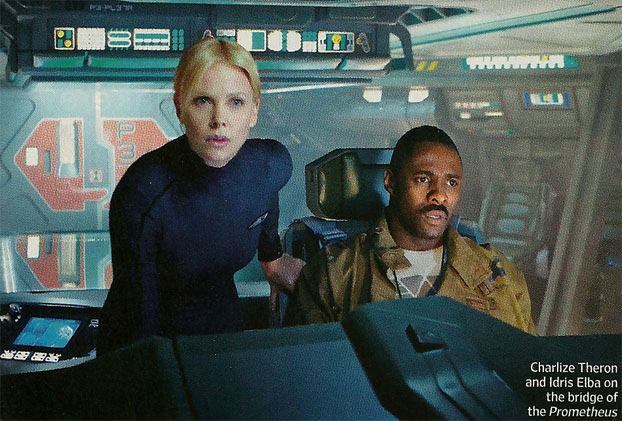







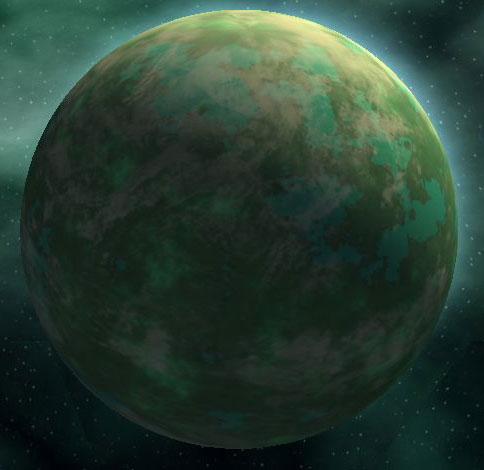




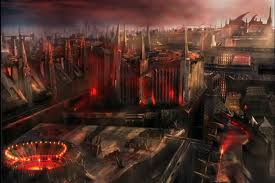


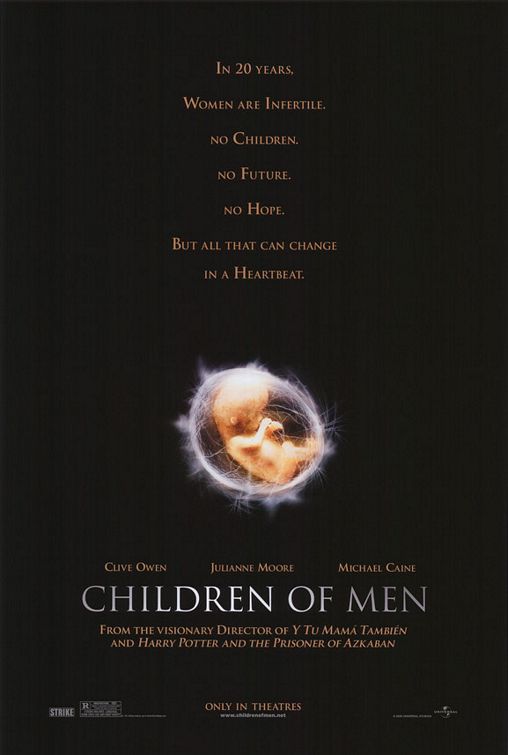
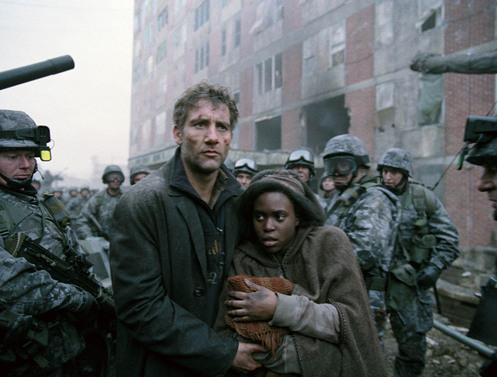


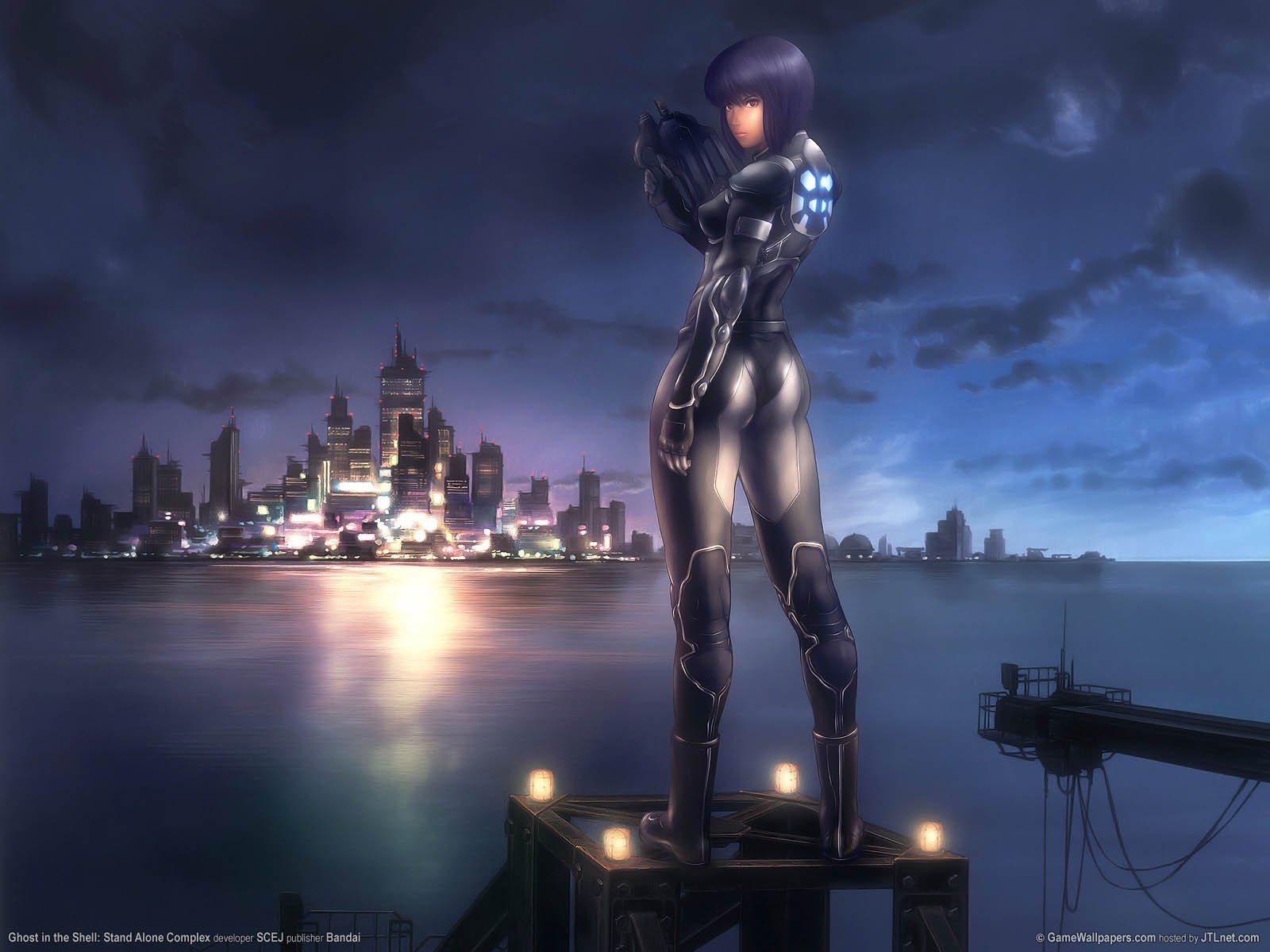




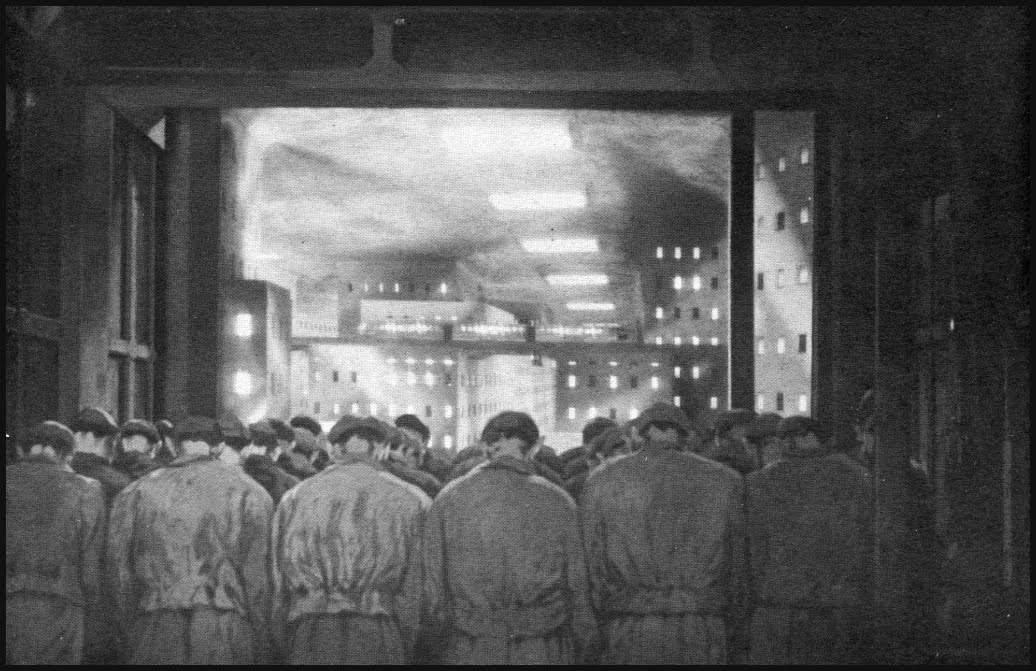
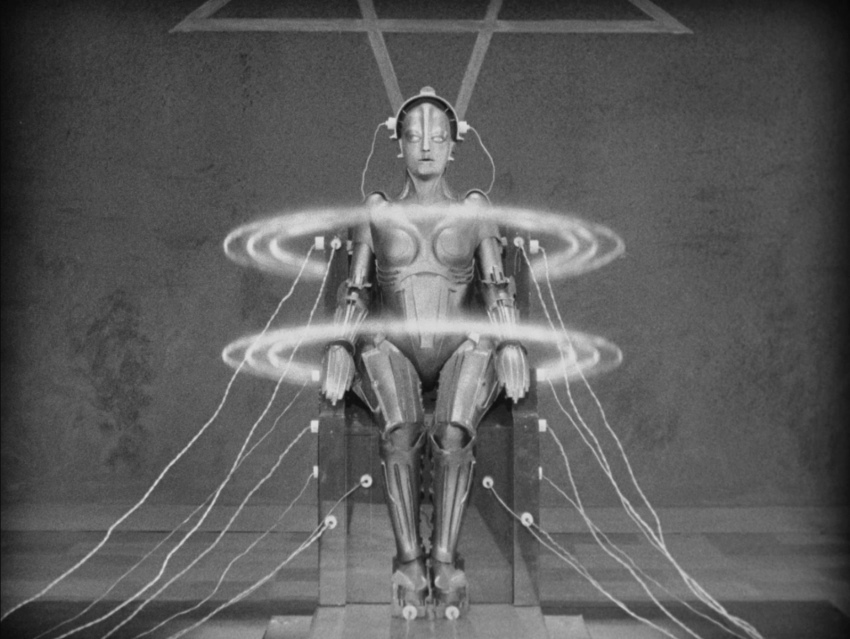


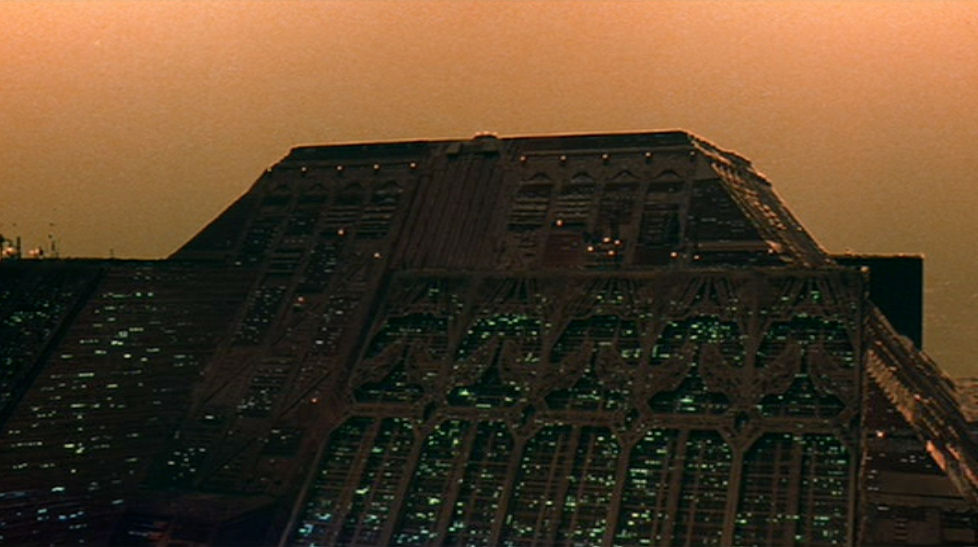




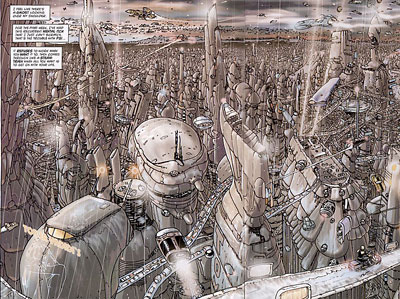
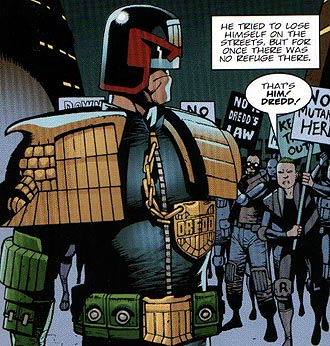









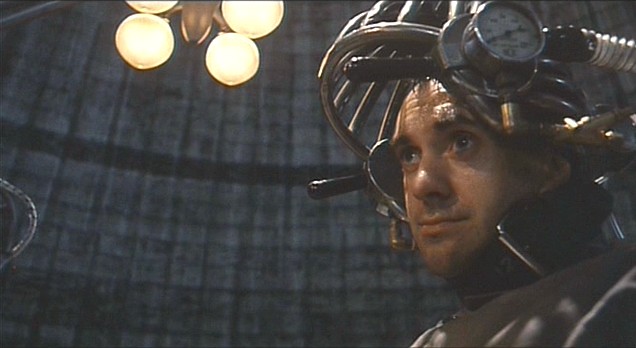

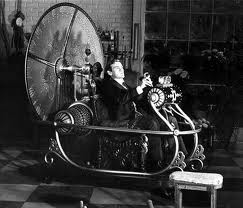




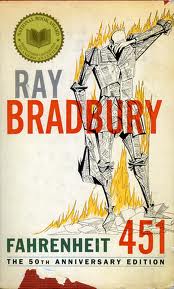


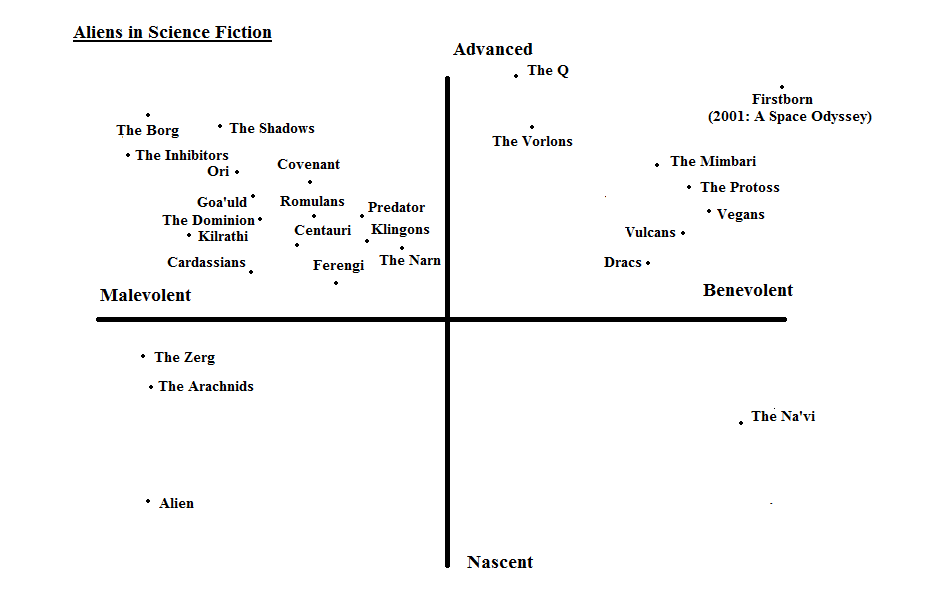


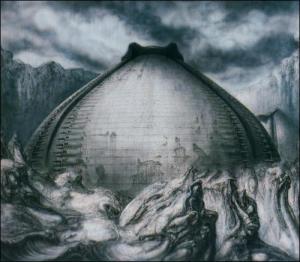
 Stories by Williams