Hello all! Now that I’ve finally finished with all my edits and revisions for Papa Zulu, I thought I might get back on the science fiction train and start working on some the ideas that have been piling up in my memory folder. Awhile back, I began proposing dusting off an old idea – the Council of Muraqaba – and making it see light again. And today, I managed to put the finishing touches on the first installment.
To recap, the story takes place in the distant future and is part of the Legacies universe I came up with many years ago. In this universe, Muraqaba is a colony that grew up around an institution started by Sufis seeking relief from the intense and rapid pace of progress taking place in the Core. However, over the course of many generations, it became an interfaith institution connected to the rest of the universe.
Within the Council, all matters pertaining to faith, belief, practice and the spirit could be contemplated and ironed out. People of all walks of life and faith were free to set up an annex in the place, either physically or virtually, and eventually, it would become a beacon for the establishment of a universal religion. But in this particular story, the institute becomes the site of something much more interesting.
Contact with a presence that is something else entirely. After generations of leading all of humanity in the contemplation of higher things, it seems a higher intelligence wants in on the discussion…
Planet Muraqaba, Gliese 581 d Sol 66, 2278
“If the Qutb is indeed the pole and axis of the universe – a man through whom divine grace did flow – does it follow that men who demonstrated wilaya would have been invincible to attack?”
The specter of Mahdi Grasciano peered intently at the others in the circle, each of which had been rendered flawlessly amidst the background of the Rifa’i. At the moment, the prayer hall was bathed in the faint glow of artificial light, courtesy of the floating embers that ensured the circle could see each other clearly now that nighttime had fallen on the Mosque in real-time.
Standing on the far side of the circle, Imam Selvanayagam hummed thoughtfully and formulated a reply to this latest challenge.
“It does, necessarily, follow. The Qutb could not have been harmed by men, being under the protection of God.”
Grasciano was quick to jump on that:
“Alas, Mohammed, the example of the armed prophet, was unvanquished by men. But Jesus, Socrates, Siddhartha Gautama, and all other candidates mentioned here today, did not share that fate. They succumbed to treachery, judgement, and poisoning, thus demonstrated that they were of mortal condition.”
Imam Koteib, who had been standing quietly by the northeast column, chose to intervene on this point:
“And yet, in An-Nisa, it clearly states ‘but they killed him not, nor crucified him, but so it was made to appear to them, and those who differ therein are full of doubts, with no (certain) knowledge, but only conjecture to follow, for of a surety they killed him not. Nay, Allah raised him up unto Himself; and God is Exalted in Power, Wise.'”
Selvanayagam spoke again.
“Such a circumstance pertains to this one of God’s Prophets, but can it be said to extend to those others as well?”
The heads in the circle turned to Zahawi, who stood at to the south-west end of their circle. Being their host, the one who had selflessly offered the Rifa’i prayer hall to conduct it, his was the place of honor – his back facing towards holy Mecca.
Scratching at the white, wispy beard that covered his chin, he offered what insight he could.“Such a condition could be said to apply, in that all such men triumphed over death in their own fashion. Who can remember the names of the Athenian statesmen who sentenced Socrates to death. And did Sidharta’s wisdom not live on in the absence of his corporeal being?”
Yusuf finally saw an opportunity to offer a point of consensus and spoke from his spot at the east end. “Indeed. Shall it be agreed upon then that the condition of death does not rule out the existence of sanctity?”
“It so shall…” Koteib said, nodding. Grasciano smiled and appeared ready to reply, but the smile quickly faded. His next words sounded almost like a pained admission.
“Hmm, I’m not sure where that leaves us.”
Zahawi also began to look grave and added his voice to Grasciano’s. “Indeed. Have we determined the existence of Qutb, or merely found a way to redefine it?”
A pause followed as each specter groped for something more to add, a comment or illumination that might break the deadlock. Eventually, a number of the Imams began to laugh. There seemed little else to do under the circumstances. Many times, expounding on such matters only served to cloud them further, expanding upon the mystery rather than dispelling it.
One could only laugh in the face of such irony, and perhaps conclude that divine obfuscation was at work. In any case, the debate had run its course, a sort of consensus settling in after many hours of discussion. It now fell to Yusuf to conclude the transmission.
“I would like to thank you all, masters of your turuqs, for your continuing participation in these majalis. In so doing, you are a part of the greatest ongoing spiritual dialogue our species has ever conducted.”
“As-salamu alaykum,” the Imams said in near-unison. Yusuf replied in kind.
“Wa alaykumu al-salam.”
They concluded with the dhikr, citing the appropriate verses and repetition of His name. The simulation began to fade a moment later – the elaborate stone walls and flickering light from the suspended aerodrones that marked the interior of the Rifa’i slowly retreated from his consciousness and was replaced by his true surroundings.
Yusuf became aware of the room, the tall metal panels and the lighting that emerged from behind them, and the cool air like a man waking up from a dream. His mind responded to it all like a harsh reality intruding upon quiet sleep.
As always, he sat on the room’s central dais with his legs crossed, but his knees ached as if he had been upright for some time. The sensation of being offworld was so immersive that he truly felt that he had been standing for hours in an entirely different setting. But of course, that was the point of the experience, and an ongoing cause of concern amongst the more conservative elements in their turuq.
The sound of the door opening behind caught Yusuf’s attention. He turned his head just in time to see Mansur appear in the open doorway.
“Maruf!” he said informally, smiling. “You’re timing is impeccable.”
“I know, Master. I waited until you were finished. I did not wish to disturb you while you were conferring with the others.”
Yusuf slowly stood up and tried his best to hide the sudden sense of chagrin he felt. It was sometimes difficult to tell how just long a session lasted. Even without the effects of dilation and correcting for local time, hours could feel like days. And knowing Mansur, he could be expected to wait indefinitely.
“So what can I do for you, Maruf?”
“It’s Lusserer, master. She asked that I come find you.”
“Ah, and what does the lady of technical support require of me?”
“Well, sir…” he said delicately. “It’s the signal. We seem to experiencing some trouble.”
“Trouble?” Yusuf stopped, turned to face him. “That’s a little vague, Maruf. Care to elaborate?”
“She did not say,” he replied. “In all truth, master, I don’t think she’s quite sure what the problem is either.”
Yusuf suppressed a scowl. Any sign of misgiving was likely to be taken on by the young Mansur, who was in the habit of taking on his master’s moods and amplifying them by varying degrees. He tried to sound as calm and even as possible as he replied.
“Then I shall go to her forthwith, and see what I can do to help.”
“She would be most pleased by that, I’m sure,” Mansur said and smiled happily. He stood there for a moment, idle and twitchy, as if expecting something more. Another quirk of the young man, always in search of a duty, and always in need of being dispatched before he could tell that a conversation had run its course.
“Perhaps she and I could do with some tea. Would you fetch us some and meet us in the ISIS lounge?”
“Certainly, master!” said the young man, quickly slapping his hands together and issuing a short bow. He was gone quickly after that, letting Yusuf address his own thoughts in private. At the moment, he only had two, and they were vying for just about every inch of his cortex.
A problem with the interstellar array and Lusserer is at a loss, he thought. This must be something of consequence…
In the course of becoming an indie writer, there is one aspect of the creative process which keeps coming back to me. To put it simply, it is the challenges and delights of world building – i.e. creating the background, context, and location in which a story takes place. For years, I have been reading other people’s thoughts on the subject, be they authors themselves or just big fans of literary fiction.
But my own experience with the process has taught me much that I simply couldn’t appreciate before I picked up my pen and pad (or in this case, opened a word doc and began typing). Ad lately, the thoughts have been percolating in my mind and I felt the need to write them out. Having done that, I thought I might share them in full.
For starters, being a science fiction writer presents a person with particular opportunities for creative expression. But at the same time, it presents its share of particular challenges. While one is certainly freer to play around with space, place, and invent more freely than with most other genres, they are still required to take into account realism, consistency and continuity in all that they do.
Sooner or later, the world a writer builds will be explored, mapped, and assessed, and any and all inconsistencies are sure to stick out like a sore thumb! So in addition to making sure back-stories, timelines and other details accord with the main plot, authors also need to be mindful of things like technology, physical laws, and the nature of space and time.
But above all, the author in question has to ask themselves what kind of universe they want to build. If it is set in the future, they need to ask themselves certain fundamental questions about where human beings will be down the road. Not only that, they also need to decide what parallels (and they always come up!) they want to draw with the world of today.
Through all of this, they will be basically deciding what kind of message they want to be sending with their book. Because of course, anything they manage to dream up about the future will tell their readers lots about the world the author inhabits, both in the real sense and within their own head. And from what I have seen, it all comes down to five basic questions they must ask themselves…
1. Near-Future/Far Future: When it comes to science-fiction stories, the setting is almost always the future. At times, it will be set in an alternate universe, or an alternate timeline; but more often than not, the story takes place down the road. The only question is, how far down the road? Some authors prefer to go with the world of tomorrow, setting their stories a few decades or somewhere in the vicinity of next century.
By doing this, the author in question is generally trying to show how the world of today will determine the world of tomorrow, commenting on current trends and how they are helping/hurting us. During the latter half of the 20th century, this was a very popular option for writers, as the consensus seemed to be that the 21st century would be a time when some truly amazing things would be possible; be it in terms of science, technology, or space travel.
Other, less technologically-inclined authors, liked to use the not-so-distant future as a setting for dystopian, post-apocalytpic scenarios, showing how current trends (atomic diplomacy, arms races, high tech, environmental destruction) would have disastrous consequences for humanity in the near-future. Examples of this include Brave New World, 1984, The Iron Heel, The Chrysalids, and a slew of others.
In all cases, the totalitarian regimes or severe technological and social regression that characterized their worlds were the result of something happening in the very near-future, be it nuclear or biological war, a catastrophic accident, or environmental collapse. Basically, humanity’s current behavior was the basis for a cautionary tale, where an exaggerated example is used to illustrate the logical outcome of all this behavior.
At the other end of the spectrum, many authors have taken the long view with their sci-fi world building. Basically, they set their stories several centuries or even millennia from now. In so doing, they are able to break with linear timelines and the duty of having to explain how humanity got from here to there, and instead could focus on more abstract questions of existence and broader allegories.
Examples of this include Frank Herbert’s Dune and Asimov’s Foundation series, both of which were set tens of thousands of years in the future. In both of these universes, humanity’s origins and how they got to where they were took a backseat to the historical allegories that were being played upon. While some mention is given to the origins of humanity and where they came from, little attempt is made to draw a line from the present into the future.
Instead, the focus is overwhelmingly on the wider nature of human beings and what drives us to do the things we do. Asimov drew from Gibbon’s Decline and Fall of the Roman Empire to make a point about the timeless nature of history, while Herbert drew on the modern age, medieval and ancient history, religion, philosophy, and evolutionary biology and ecology to investigate the timeless nature of humanity and what factors shape it.
For non-purists, Star Wars and Star Trek can also serve as examples of both tendencies in action. For decades, Star Trek used a not-too-distant future setting to endlessly expound on the human race and the issues it faces today. And always, this examination was done in the form of interstellar travel, the crew of the Enterprise going form world to world and seeing themselves in the problems, norms and social structure of other races.
Star Wars, on the other hand, was an entirely different animal. For the people living in this universe, no mention is ever made of Earth, and pre-Republic history is considered a distant and inaccessible thing. And while certain existential and social issues are explored (i.e. racism, freedom and oppression), the connections with Earth’s past are more subtle, relying on indirect clues rather than overt comparisons.
The Republic and the Empire, for example, is clearly inspired by Rome’s own example. The Jedi Code is very much the picture of the Bushido code, its practitioners a sort of futuristic samurai, and the smugglers of Tatooine are every bit the swashbuckling, gun toting pirates and cowboys of popular fiction. But always, the focus seemed to more on classically-inspired tales of destiny, and of epic battles of good versus evil.
And of course, whether we are talking near future or far future has a big influence on the physical setting of the story as well. Which brings me to item two…
2. Stellar or Interstellar:Here is another important question that every science fiction author has faced, and one which seriously influences the nature of the story. When it comes to the world of tomorrow, will it be within the confines of planet Earth, the Solar System, or on many different world throughout our galaxy? Or, to go really big, will it encompass the entire Milky Way, or maybe even beyond?
Important questions for a world-builder, and examples certainly abound. In the former case, you have your dystopian, post-apocalyptic, and near future seenarios, where humanity is stuck living on a hellish Earth that has seen better days. Given that humanity would not be significantly more adavanced than the time of writing, or may have even regressed due to the downfall of civilization, Earth would be the only place people can live.
But that need not always be the case. Consider Do Androids Dream of Electric Sheep? by Philip K Dick. In his dystopian, post-apocalyptic tale, Earth was devestated by nuclear war, forcing the wealthiest and healthiest to live in the Offworld Colonies while everyone who was too poor or too ravaged by their exposure to radiation was confined to Earth. Clearly, dystopia does not rule out space travel, though it might limit it.
And in the latter case, where human beings have left the cradle and begun walking amongst our System’s other planets and even the stars, the nature of the story tends to be a bit more ambiguous. Those who choose such a setting tend to be of the opinion that mankind either needs to reach out in order to survive, or that doing so will allow us to shed some of our problems.
Examples abound here again, but Alastair Reynolds’ Revelation Space universe seems like the ideal one here. In this series, humanity has access to near-light speed travel, nanotechnology, brain-computer interfacing, neural uploading, AI, smart materials, and has colonized dozens of new worlds. However, the state of humanity has not changed, and on many worlds, civil war and sectarian violence are common.
In either case, the setting also bears a direct relation to the state of technology in the story. For humans still living on Earth (and nowhere else) in the future, chances are, they are about as advanced or even behind the times in which the story was written. For those living amongst the stars, technology would have to advanced sufficiently to make it happen. Which brings me to the next point…
3. High-Tech or Low-Tech: What would a work of science fiction be without plenty of room for gadgets, gizmos, and speculation about the future state of technology? And once more, I can discern of two broad categories that an author can choose from, both of which have their share of potential positives and negatives. And depending on what kind of story you want to write, the choice of what that state is often predetermined.
In the former case, there is the belief that technology will continue to advance in the future, leading to things like space travel, FTL, advanced cyborgs, clones, tricorders, replicators, artificial intelligence, laser guns, lightsabers, phasers, photon torpedoes, synthetic humans, and any number of other fun, interesting and potentially dangerous things.
With stories like these, the purpose of high-tech usually serves as a framing device, providing visual evidence that the story is indeed taking place in the future. In other words, it serves a creative and fun purpose, without much thought being given towards exploring the deeper issues of technological progress and determinism. But this not be the case, and oftentimes with science fiction, high-tech serves a different purpose altogether.
In many other cases, the advance of technology is directly tied to the plot and the nature of the story. Consider cyberpunk novels like Neuromancer and the other novels of William Gibson’s SprawlTrilogy. In these and other cyberpunk novels, the state of technology – i.e. cyberpsace decks, robotic prosthetics, biotech devices – served to illustrate the gap between rich and poor and highlighting the nature of light in a dark, gritty future.
By contrast, such post-cyberpunk novels as Neal Stephenson’s The Diamond Age took a different approach. While high-tech and its effects on society were explored in great detail, he and other authors of this sub genre chose to break with their predecessors on one key issue. Namely, they did not suppose that the emergence of high-tech would lead to dystopia, but rather an ambiguous future where both good and harm resulted.
And at the other end of the spectrum, where technology is in a low state, the purpose and intent of this is generally the same. On the one hand, it may serve as a plot framing device, illustrating how the world is in a primitive state due to the collapse of civilization as we know it, or because our unsustainable habits caught up with us and resulted in the world stepping backwards in time.
At the same time, the very fact that people live in a primitive state in any of these stories serves the purpose of commentary. Simply by showing how our lives were unsustainable, or the actions of the story’s progenitor’s so foolish, the author is making a statement and asking the reader to acknowledge and ponder the deeper issue, whether they realize it or not.
At this end of things, A Boy and His Dog and Mad Max serve as good examples. In the former case, the story takes place in a post-apocalyptic landscape where a lone boy and his genetically-engineered talking dog rove the landscape in search of food and (in the boy’s case) sexual gratification. Here, the state of technology helps to illustrate the timeless nature of the human condition, namely how we are essentially the products of our environment.
In Mad Max as well, the way roving gangs are constantly looking for gasoline, using improvised weapons, and riding around in vehicles cobbled together from various parts gives us a clear picture of what life is like in this post-collapse environment. In addition, the obvious desperation created by said collapse serves to characterize the cultural landscape, which is made up of gangs, tinpot despots, and quasi-cults seeking deliverance.
But on the other hand, the fact that the world exists in this state due to collapse after the planet’s supply of oil ran dry also provides some social commentary. By saying that the world became a dangerous, anarchistic and brutal place simply because humanity was dependent on a resource that suddenly went dry, the creators of Mad Max’s world were clearly trying to tell us something. Namely, conserve!
4. Aliens or Only Humans: Another very important question for setting the scene in a science fiction story is whether or not extra-terrestrials are involved. Is humanity still alone in the universe, or have they broken that invisible barrier that lies between them and the discovery of other sentient life forms? Once again, the answer to this question has a profound effect on the nature of the story, and it can take many forms.
For starters, if the picture is devoid of aliens, then the focus of the story will certainly be inward, looking at human nature, issues of identity, and how our environment serves to shape us. But if there are aliens, either a single species or several dozen, then the chances are, humanity is a united species and the aliens serve as the “others”, either as a window into our own nature, or as an exploration into the awe and wonder of First Contact.
As case studies for the former category, let us consider the Dune, Foundation, and Firefly universes. In each of these, humanity has become an interstellar species, but has yet to find other sentiences like itself. And in each of these, human nature and weaknesses appear to be very much a constant, with war, petty rivalries and division a costant. Basically, in the absence of an “other”, humanity is focused on itself and the things that divide it.
In Dune, for example, a galaxy-spanning human race has settled millions of worlds, and each world has given rise to its own identity – with some appearing very much alien to another. Their are the “navigators”, beings that have mutated their minds and bodies through constant exposure to spice. Then there are the Tleilaxu, a race of genetic manipulators who breed humans from dead tissue and produce eunuch “Face Dancers” that can assume any identity.
Basically, in the absence of aliens, human beings have become amorphous in terms of their sense of self, with some altering themselves to the point that they are no longer even considered human to their bretherin. And all the while, humanity’s biggest fight is with itself, with rival houses vying for power, the Emperor gaurding his dominance, and the Guild and various orders looking to ensure that the resource upon which all civilization depends continues to flow.
In the Foundation universe, things are slightly less complicated; but again, the focus is entirely inward. Faced with the imminent decline and collapse of this civilization, Hari Seldon invents the tool known as “Psychohistory”. This science is dedicated to anticipating the behavior of large groups of people, and becomes a roadmap to recovery for a small group of Foundationists who seek to preserve the light of civilization once the empire is gone.
The series then chronicles their adventures, first in establishing their world and becoming a major power in the periphery – where Imperial power declines first – and then rebuilding the Empire once it finally and fully collapses. Along the way, some unforeseen challenges arise, but Seldon’s Plan prevails and the Empire is restored. In short, it’s all about humans trying to understand the nature of human civilization, so they can control it a little better.
Last, but not least, their is the Firefly universe which – despite the show’s short run – showed itself to be in-depth and interestingly detailed. Basically, the many worlds that make up “The Verse” are divided along quasi-national lines. The core worlds constitute the Alliance, the most advanced and well-off worlds in the system that are constantly trying to expand to bring the entire system under its rule.
The Independents, we learn early in the story, were a coalition of worlds immediately outside the core worlds that fought these attempts, and lost. The Border Worlds, meanwhile, are those planets farthest from the core where life is backwards and “uncivilized” by comparison. All of this serves to illustrate the power space and place have over human identity, and how hierarchy, power struggles and divisiveness are still very much a part of us.
But in universes where aliens are common, then things are a little bit different. In these science fiction universes, where human beings are merely one of many intelligent species finding their way in the cosmos, extra-terrestrials serve to make us look outward and inward at the same time. In this vein, the cases of Babylon 5, and 2001: A Space Odyssey provide the perfect range of examples.
In B5 – much as with Stark Trek, Star Gate, or a slew of other franchises – aliens serve as a mirror for the human condition. By presenting humanity with alien cultures, all of whom have their own particular quarks and flaws, we are given a meter stick with which to measure ourselves. And in B5‘s case, this was done rather brilliantly – with younger races learning from older ones, seeking wisdom from species so evolved that often they are not even physical entities.
However, in time the younger race discover that the oldest (i.e. the Shadows, Vorlons, and First Ones) are not above being flawed themselves. They too are subject to fear, arrogance, and going to war over ideology. The only difference is, when they do it the consequences are far graver! In addition, these races themselves come to see that the ongoing war between them and their proxies has become a senseless, self-perpetuating mistake. Echoes of human frailty there!
In 2001: A Space Odyssey, much the same is true of the Firstborn, a race of aliens so ancient that they too are no longer physical beings, but uploaded intelligences that travel through the cosmos using sleek, seamless, impenetrable slabs (the monoliths). As we learn in the course of the story, this race has existed for eons, and has been seeking out life with the intention of helping it to achieve sentience.
This mission brought them to Earth when humanity was still in its primordial, high-order primate phase. After tinkering with our evolution, these aliens stood back and watched us evolve, until the day that we began to reach out into the cosmos ourselves and began to discover some of the tools they left behind. These include the Tycho Monolith Anomaly-1 (TMA-1) on the Moon, and the even larger one in orbit around Jupiter’s moon of Europa.
After making contact with this monolith twice, first with the American vessel Discovery and then the joint Russian-American Alexei Leonov, the people of Earth realize that the Firstborn are still at work, looking to turn Jupiter into a sun so that life on Europa (confined to the warm oceans beneath its icy shell) will finally be able to flourish. Humanity is both astounded and humbled to learn that it is not alone in the universe, and wary of its new neighbors.
This story, rather than using aliens as a mirror for humanity’s own nature, uses a far more evolved species to provide a contrast to our own. This has the same effect, in that it forces us to take a look at ourselves and assess our flaws. But instead of showing those flaws in another, it showcases the kind of potential we have. Surely, if the Firstborn could achieve such lengths of evolutionary and technological development, surely we can too!
5. Utopian/Dystopian/Ambiguous: Finally, there is the big question of the qualitative state of humanity and life in this future universe. Will life be good, bad, ugly, or somewhere in between? And will humanity in this narrative be better, worse, or the same as it now? It is the questions of outlook, whether it is pessimistic, optimistic, realistic, or something else entirely which must concern a science fiction writer sooner or later.
Given that the genre evolved as a way of commenting on contemporary trends and offering insight into their effect on us, this should come as no surprise. When looking at where we are going and how things are going to change, one cannot help but delve into what it is that defines this thing we know as “humanity”. And when it comes right down to it, there are a few schools of thought that thousands of years of scholarship and philosophy have provided us with.
Consider the dystopian school, which essentially posits that mankind is a selfish, brutish, and essentially evil creature that only ever seeks to do right by himself, rather than other creatures. Out of this school of thought has come many masterful works of science fiction, which show humanity to be oppressive to its own, anthropocentric to aliens and other life forms, and indifferent to the destruction and waste it leaves in its wake.
And of course, there’s the even older Utopia school, which presents us with a future where mankind’s inherent flaws and bad behavior have been overcome through a combination of technological progress, political reform, social evolution, and good old fashioned reason. In these worlds, the angels of humanity’s nature have won the day, having proven superior to humanity’s devils.
In the literally realm, 1984 is again a perfect example of dytopian sci=fi, where the totalitarian rule of the few is based entirely on selfishness and the desire for dominance over others. According to O’Brien, the Party’s mouthpiece in the story, their philosophy in quite simple:
The Party seeks power entirely for its own sake.We are not interested in the good of others; we are interested solely in power. Power is in inflicting pain and humiliation. Power is in tearing human minds to pieces and putting them together again in new shapes of your own choosing. If you want a picture of the future, imagine a boot stamping on a human face — forever.
Hard to argue with something so brutal and unapologetic, isn’t it? In Orwell’s case, the future would be shaped by ongoing war, deprivation, propaganda, fear, torture, humiliation, and brutality. In short, man’s endless capacity to inflict pain and suffering on others.
Aldous Huxley took a different approach in his seminal dystopian work, Brave New World, in which he posited that civilization would come to be ruled based on man’s endless appetite for pleasure, indifference and distraction. Personal freedom and individuality would be eliminated, yes, but apparently for man’s own good rather than the twisted designs of a few true-believers:
Universal happiness keeps the wheels steadily turning; truth and beauty can’t. And, of course, whenever the masses seized political power, then it was happiness rather than truth and beauty that mattered… People were ready to have even their appetites controlled then. Anything for a quiet life. We’ve gone on controlling ever since. It hasn’t been very good for truth, of course. But it’s been very good for happiness. One can’t have something for nothing. Happiness has got to be paid for.
But even though the means are entirely different, the basic aim is the same. Deprive humanity of his basic freedom and the potential to do wrong in order to ensure stability and long-term rule. In the end, a darker, more cynical view of humanity and the path that we are on characterized these classic examples of dystopia and all those that would come to be inspired them.
Imminent Utopia by Kuksi
As for Utopian fiction, H.G. Wells’ Men Like Gods is a very appropriate example. In this novel, a contemporary journalist finds himself hurled through time into 3000 years into the future where humanity lives in a global state named Utopia, and where the “Five Principles of Liberty” – privacy, free movement, unlimited knowledge, truthfulness, and free discussion and criticism – are the only law.
After staying with them for a month, the protogonist returns home with renewed vigor and is now committed to the “Great Revolution that is afoot on Earth; that marches and will never desist nor rest again until old Earth is one city and Utopia set up therein.” In short, like most Positivists of his day, Wells believed that the march of progress would lead to a future golden age where humanity would shed it’s primitive habits and finally live up to its full potential.
This view would prove to have a profound influence on futurist writers like Asimov and Clarke. In the latter case, he would come to express similar sentiments in both the Space Odyssey series and his novel Childhood’s End. In both cases, humanity found itself confronted with alien beings of superior technology and sophistication, and eventually was able to better itself by opening itself up to their influence.
In both series, humanity is shown the way to betterment (often against their will) by cosmic intelligences far more advanced than their own. But despite the obvious questions about conquest, loss of freedom, individuality, and identity, Clarke presents this as a good thing. Humanity, he believed, had great potential, and would embrace it, even if it had to be carried kicking and screaming.
And just like H.G Wells, Clarke, Asimov, and a great many of his futurist contemporaries believes that the ongoing and expanding applications of science and technology would be what led to humanity’s betterment. A commitment to this, they believed, would eschew humanity’s dependence on religion, superstition, passion and petty emotion; basically, all the things that made us go to war and behave badly in the first place.
Summary: These are by no means the only considerations one must make before penning a science fiction story, but I think they provide a pretty good picture of the big-ticket items. At least the ones that keep me preoccupied when I’m writing! In the end, knowing where you stand on the questions of location, content, tone and feel, and what your basic conception of the future, is all part of the creation process.
In other words, you need to figure out what you’re trying to say and how you want to say it before you can go to town. In the meantime, I say to all aspiring and established science fiction writers alike: keep pondering, keep dreaming, and keep reaching for them stars!
With this year in full swing and the events of 2013 now a memory, I thought it was high time to take stock of everything I need to do in the coming twelve months. As always, I got a lot of projects in the works and plenty of things I want to get done, some of which I was supposed to be finished with already. And I seem to recall mentioning a few of these items in the course of my New Year’s resolutions…
So here goes…
1. Finish Editing Papa Zulu and Release It: Now this is one I’ve been letting linger for quite some time! Originally, I had hoped to have this book ready a year ago, but editing has proven to be a more arduous process than previously expected. However, I got my trusty and professional editor (hi Leslie!) in my corner, and she’s editing both it and Whiskey Delta. So sometime before the Spring season hits us, I plan to release the one and re-release the other. It will be a kind of one-two, launch/relaunch combo!
2. Edit Fast Forward and Release it: Back in April of 2013, I penned a number of short stories for the A to Z Challenge. Since that time, I’m coalesced the best stories, added a few extras from over the years, and created a volume of futuristic tales that I named “Fast Forward”. And with my membership over at Shutterstock.com, I also prepped a new and eyepopping cover that I think will get some attention once its published. But before that can happen, I need to go through it again and make sure its all cleaned up.
3. Bring Yuva Anthology to Completion: Khaalidah and I – a friend and fellow indie writer over at Writer’s Worth – started this anthology of space travel and colonization two years ago. At first, we found ourselves joined by several friends and respected colleagues who also wanted to see the project come to fruition. But after several months of initial progress, things began to slow down and linger.
But I’m pleased to say that in the past few weeks, things have really picked up again. Owing to a full-court press to recruit new talent, we have just about all our stories accounted for and I’m waiting for drafts from all the participants. It would be really nice if we could get this book – a tribute to Ray Bradbury and a tale that is more relevant than ever now – finished by the end of the year.
4. Finish Reading List and Review Them: Yeah, my reading list is, as always glutted and filled with stuff I was supposed to have finished a long time ago. It seemed to take me forever to finish reading World War Z: An Oral History of the Zombie War, by Max Brooks. And now that that’s finished, I am hoping to finish the last three books that I have started but not finished, and then move on to the many other novels on my nightstand.
These books include Accelerando by Charles Stross, a story about this century that is required reading for anyone trying to write about the Technological Singularity; We by Yevgeny Zamyatin, the quintessential dystopian tale about social engineering, failed utopias, and the inspiration behind such classics as 1984 and (arguably) Brave New World. And last, but certainly not least, The Quiet Game: Five Tales To Chill Your Bones by Rami Ungar.
And when I’m done all those books, which I’ve been reading simultaneously and in bursts, I can move on to Ready Player One, The Giver, and Back To The Front, an account of one man’s walking tour of the battlefields of World War I. Hey, I don’t just deal in science fiction, you know!
And with all that done and put away with, maybe the wife and I can finally find a bigger place, which is something we’ve been working on for some time. And of course, there will be the walking tour that we will be doing with my family this coming April. I need to do some research to prepare for that, and you can bet your bottom dollar you’ll be hearing about it too!
So yeah, 2014 is shaping up to be an eventful year. I hope it proves to be as productive and enjoyable as I hope, and that you all get what you want from it as well. Take care and Happy New Year!
If time travelers were real, a la Doctor Who or Doc Emmett Brown style, how would they go about sharing their gift with the world? According to astrophysicist Robert Nemiroff and physics graduate student Teresa Wilson at Michigan Technological University, they would tweet about it. And so, the two began what has proven to be one of the most interesting searches on today’s social media.
To break it down succinctly, the pair began to search the backlogs of Facebook and Twitter for any indications of time travellers posting about the future. This they did by entering search terms for two major events – the appearance Comet ISON in September of 2012 and the election of Pope Francis in March 2013 – to see if there was any mention of them before they happened.
Their theory, as presented in a paper published last month on Cornell University’s Library website, was that if there were any postings containing “Comet ISON,” “#cometison,” “Pope Francis” or “#popefrancis” from before those dates, they may very well be from a time traveler. Unfortunately, their searchers on Facebook turned up results which, in their own words, “were clearly not comprehensive.
Granted, a time-traveler would be quick to delete any status updates that appeared prescient, using Facebook’s new Graph Search privacy features. However, the the time-traveler hunting due had no better luck on Twitter, where a majority of people keep their tweets public. But of course, they went on to say in their paper that just because they didn’t see any time travelers doesn’t mean they don’t exist.
As they argue it, it might not be possible for time travelers to leave any evidence of their journey behind.
…it may be physically impossible for us to find such information as that would violate some yet-unknown law of physics… time travelers may not want to be found, and may be good at covering their tracks.
Another thing to consider is that time travelers might actively try to erase any mention of their existence. For example, in the first season of the Doctor Who reboot, where the Doctor used a special virus to delete any digital trace of himself before leaving the present age. It’s academic stuff really, and the pair really shouldn’t have expected such careless errors to show up on the internet.
And as Donald Rumsfeld, another man who went searching for something and came up empty, said: “the absence of evidence is not the evidence of absence”. Yes, I know, the comparison really doesn’t help, does it? And right now, I’m sure you might be wondering if all those tax dollars that fund research grants might be better used elsewhere.
And let’s face it, it’s something many of us would wonder, and possible check for ourselves, given half a chance…
I came across this trailer recently, thanks again to my bud over at Ellipsis Media. And although the clip is short, it does manage to intrigue and fascinate. And as the name would suggest, the movie is all about space exploration in the not-too-distant future, where humanity suddenly finds itself able to bridge the vast distance between the stars for the first time ever.
Here is the commercial description, courtesy of MOVIECLIPS:
Interstellar chronicles the adventures of a group of explorers who make use of a newly discovered wormhole to surpass the limitations on human space travel and conquer the vast distances involved in an interstellar voyage.
The movie is set for release in November 7th, 2014. Christopher Nolan is the director (Inception, Dark Knight trilogy), and the film has an all-star cast that includes Matthew McConaughey, Anne Hathaway, Casey Affleck, Topher Grace and Michael Caine. Enjoy!
Before 2013 ended, some news concerned a certain reboot emerged on the entertainment feed. Yes, after many unconfirmed rumors and updates about the upcoming Terminator relaunch, it now seems that some genuine, studio-backed news have been announced. Foremost amongst these was the casting of the two main characters, Sarah and John Conner.
After much consideration as to who would play role of the woman who gave birth to mankind’s salvation (no, not THAT one!), it has been officially confirmed that Emilia Clarke has been cast. Fans of the HBO miniseries Game of Thrones will instantly recognize her as the British actress who brought Daenerys “Stormborn” Targaryen to life.
This announcement came mere days after the studio announced that it had Jason Clarke in mind to play the role of John Conner. The 44-year old veteran of such movies as Zero Dark Thirty, Great Gatsby, The Chicago Code is a much more seasoned choice than either Garrett Hedlund (Tron: Legacy) and Boyd Holbrook (The Host). But he’s grizzled as hell and definitely has the look for John Connor.
What’s more, the casting of a 40 something man to play the son, and a 20 something woman to play the mother would seem to provide some hints as to the plot of the movie. Combined with the recently confirmed title – Terminator: Genesis – there is strong evidence to suggest that the story will revolve around John Conner going back in time to protect his own mother.
Either that, or the movie will consist of relatively equal parts of John Conner fighter the machines in the future, with flashbacks or cut-scenes showing the past, where Sarah battles to ensure her son lives to see the day when he will lead humanity to victory. Difficult to say, but personally I hope they go with the latter, since it offers a chance to cover both aspects of the story while giving the studio a chance to be fresh.
Other confirmed bit of information include that the studio is considering both Garrett Hedlund and Boyd Holbrook for the role of Kyle Reese, John Conner’s father and Sarah’s original protector. Arnold Schwarzenegger has already confirmed that he will be back for the fifth installment, and in the role of a Terminator. None of this “he’s the human template they built them from” crap!
It is also been made abundantly clear at this point that the movie will be a reboot of the franchise and the start of a new trilogy, retelling the events of 1984’s The Terminator, and is set for release July 1st, 2015 (Canada Day!). A TV series is also to be produced which will run parallel to the movie trilogy and intersecting at certain points in the trilogy’s narrative. So it won’t be a reboot of the Sarah Conner Chronicles.
All I can say is, this time around, they better get it right! Terminator: Salvation promised to be a reboot of sorts after the relative fizzle that was Terminator 3. But of course, the studio made a terrible blunder there by offering no solid resolution, and instead trying to keep the movie open-ended for the sake of potential sequels. Somehow, learning that Skynet was destroyed, but there was still a war on, just seemed like a transparent money grab.
This time around, I’m hoping the lesson will be learned. What we don’t need is a return to the original Terminator storyline. What we need is what we haven’t seen yet, a detailed account of the war against the machines and how it was ultimately won. Sure, bits and pieces were shared through Kyle Reese’s recounting and flashbacks, but that only made the story seem more interesting!
Now, and at last, it would be good if a movie covered the war and only the war. No more time-travel paradoxes, no fate crap (which John Conner repeatedly says does not exist!). Just show us how Conner managed to carve a resistance from a post-apocalyptic landscape, recruited people from the extermination camps, and turned them into an ass-kicking force that managed to stomp the machines and destroy Skynet.
Amongst the sci-fi greats of old, there were few authors, scientists and futurists more influential than Isaac Asimov and Arthur C. Clarke. And as individuals who constantly had one eye to the world of their day, and one eye to the future, they had plenty to say about what the world would look like by the 21st century. And interestingly enough, 2014 just happens to be the year where much of what they predicted was meant to come true.
For example, 50 years ago, Asimov wrote an article for the New York Times that listed his predictions for what the world would be like in 2014. The article was titled “Visit to the World’s Fair of 2014”, and contained many accurate, and some not-so-accurate, guesses as to how people would be living today and what kinds of technology would be available to us.
Here are some of the accurate predictions:
1. “By 2014, electroluminescent panels will be in common use.” In short, electroluminescent displays are thin, bright panels that are used in retail displays, signs, lighting and flat panel TVs. What’s more, personal devices are incorporating this technology, in the form of OLED and AMOLED displays, which are both paper-thin and flexible, giving rise to handheld devices you can bend and flex without fear of damaging them.
2. “Gadgetry will continue to relieve mankind of tedious jobs.” Oh yes indeed! In the last thirty years, we’ve seen voicemail replace personal assistants, secretaries and message boards. We’ve seen fax machines replace couriers. We’ve seen personal devices and PDAs that are able to handle more and more in the way of tasks, making it unnecessary for people to consult a written sources of perform their own shorthand calculations. It’s a hallmark of our age that personal technology is doing more and more of the legwork, supposedly freeing us to do more with our time.
3. “Communications will become sight-sound and you will see as well as hear the person you telephone.” This was a popular prediction in Asimov’s time, usually taking the form of a videophone or conversations that happened through display panels. And the rise of the social media and telepresence has certainly delivered on that. Services like Skype, Google Hangout, FaceTime and more have made video chatting very common, and a viable alternative to a phone line you need to pay for.
4. “The screen can be used not only to see the people you call but also for studying documents and photographs and reading passages from books.” Multitasking is one of the hallmarks of modern computers, handheld devices, and tablets, and has been the norm for operating systems for some time. By simply calling up new windows, new tabs, or opening up multiple apps simultaneously and simply switching between them, users are able to start multiple projects, or conduct work and view video, take pictures, play games, and generally behave like a kid with ADHD on crack if they so choose.
5. “Robots will neither be common nor very good in 2014, but they will be in existence.” If you define “robot” as a computer that looks and acts like a human, then this guess is definitely true. While we do not have robot servants or robot friends per se, we do have Roomba’s, robots capable of performing menial tasks, and even ones capable of imitating animal and even human movements and participating in hazardous duty exercises (Google the DARPA Robot Challenge to see what I mean).
Alas, he was off on several other fronts. For example, kitchens do not yet prepare “automeals” – meaning they prepare entire meals for us at the click of a button. What’s more, the vast majority of our education systems is not geared towards the creation and maintenance of robotics. All surfaces have not yet been converted into display screens, though we could if we wanted to. And the world population is actually higher than he predicted (6,500,000,000 was his estimate).
As for what he got wrong, well… our appliances are not powered by radioactive isotopes, and thereby able to be entirely wireless (though wireless recharging is becoming a reality). Only a fraction of students are currently proficient in computer language, contrary to his expectation that all would be. And last, society is not a place of “enforced leisure”, where work is considered a privilege and not a burden. Too bad too!
And when it comes to the future, there are few authors whose predictions are more trusted than Arthur C. Clarke. In addition to being a prolific science fiction writer, he wrote nearly three dozen nonfiction books and countless articles about the future of space travel, undersea exploration and daily life in the 21st century.
And in a recently released clip from a 1974 ABC News program filmed in Australia, Clarke is shown talking to a reporter next to a massive bank of computers. With his son in tow, the reporter asks Clarke to talk about what computers will be like when his son is an adult. In response, Clarke offers some eerily prophetic, if not quite spot-on, predictions:
The big difference when he grows up, in fact it won’t even wait until the year 2001, is that he will have, in his own house, not a computer as big as this, but at least a console through which he can talk to his friendly local computer and get all the information he needs for his everyday life, like his bank statements, his theater reservations, all the information you need in the course of living in a complex modern society. This will be in a compact form in his own house.
In short, Clarke predicted not only the rise of the personal computer, but also online banking, shopping and a slew of internet services. Clarke was then asked about the possible danger of becoming a “computer-dependent” society, and while he acknowledged that in the future humanity would rely on computers “in some ways,” computers would also open up the world:
It’ll make it possible for us to live really anywhere we like. Any businessman, any executive, could live almost anywhere on Earth and still do his business through his device like this. And this is a wonderful thing.
Clarke certainly had a point about computers giving us the ability to communicate from almost anywhere on the globe, also known as telecommunication, telecommuting and telepresence. But as to whether or not our dependence on this level of technology is a good or bad thing, the jury is still out on that one. The point is, his predictions proved to be highly accurate, forty years in advance.
Granted, Clarke’s predictions were not summoned out of thin air. Ever since their use in World War II as a means of cracking Germany’s cyphers, miniaturization has been the trend in computing. By the 1970’s, they were still immense and clunky, but punch cards and vacuum tubes had already given way to transistors, ones which were getting smaller all the time.
And in 1969, the first operational packet network to implement a Transmission Control Protocol and Internet Protocol (TCP/IP) was established. Known as a Advanced Research Projects Agency Network (or ARPANET), this U.S. Department of Defense network was set up to connect the DOD’s various research projects at universities and laboratories all across the US, and was the precursor to the modern internet.
In being a man who was so on top of things technologically, Clarke accurately predicted that these two trends would continue into the foreseeable future, giving rise to computers small enough to fit on our desks (rather than taking up an entire room) and networked with other computers all around the world via a TCP/IP network that enabled real-time data sharing and communications.
And in the meantime, be sure to check out the Clarke interview below:
Came across this trailer recently, for the upcoming movie adaptation of the 2011 novel Divergent. And while the trailer does look like impressive, this does seem like a really predictable move on Hollywood’s part. With the recent adaptation of the Hunger Games and Ender’s Game, it was only a matter of time before producers began looking farther afield to find more examples of YA dystopian literature.
In fact, that’s been a subject which I’ve been thinking about quite a lot lately. In terms of sci-fi trends, the past decade has seen a revival of dystopian literature, and the majority of it seems to be aimed at young readers. Not surprising really, seeing as how issues like the “war on terror”, domestic surveillance and NSA data mining have led to a resurgence of fears that humanity could still be living in Big Brother state in the near future.
And with the rise in publications that appeal to young adult readers – with everything from Twilight to Harry Potter – writer’s began to see just how accessible dystopian tales would be to young readers. And Divergent is certainly no exception to this rule. And just like the Hunger Games, a dystopian society is used as a metaphor to address the issues of teen angst and the struggle to belong.
Basically, the story takes place in a Chicago of the future, where live in a society that is divided into castes and membership is determined when people turn 16. Enter into this Beatrice “Pris” Prior, a young woman with a special mind who undergoes the test designed to determine what caste she belongs to, only to find out that the test failed and she has been declared “Divergent”.
The rest of the movie, as is made clear from the trailer, consists of her joining the resistance – a group composed of “casteless” people (aka. other Divergents) – and waging war against the state. So, a society where people are forced into specialized roles, where those who are different must live in secret or face persecution, and a heroine who rises up to bring down the system… sound like the teenage experience to you?
Yeah, me too. And while some criticize Divergent for being a Hunger Games ripoff, people who actually know their dystopian lit are quick to point out that that book was probably a ripoff of Battle Royale. And in reality, all these books are eating crumbs off the table of Zamyatin, Huxley and Orwell, and the YA angle with all its wish fulfillment is nothing that hasn’t been seen a hundred times before.
Anyhoo, the movie is set for release on March 21st, 2014. Enjoy the trailer!
It’s been awhile since I posted anything from my group’s upcoming Yuva anthology. But of course, there’s a reason for that. With time constraints and other commitments competing for our attention, my group and I have had little time for this ongoing project. But now that I’ve finished editing the preliminary draft of Papa Zulu, I’ve had some time on my hands and decided to rededicate it where its needed.
Below is the latest sample from my story Arrivals, the opening story for Part III of our anthology. As you may know, this story involves the colonists of Yuva, over a century after they first arrived, getting news that a Second Wave is on its way. In the last sample, the Planetary Council was discussing what to do, and a joint mission was proposed between the Ministry of Defense and Planetary Research to fly out and meet the ships while they were still in transit.
In this sample, another revelation is made, and it’s not very pleasant one! Read on to learn more…
* * *
Padda examined the design specs before her, the latest in a series of proposals from the joint task force charged with creating their diplomatic transports. It was now late afternoon and the sun was filtering in through the dome at a slight angle, lending a lovely glow to the arboretum’s generous supply of native specimens.
And in the cumulative radiance of the room, sunlight intermixed with neon-green and purples, the organic light of her Tab’s display glowed and showed her the Ministry’s latest design specs. As expected, the engineers had taken all possibilities to heart, and were producing endless iterations to ensure that the fleet that met the Flotilla would be prepared for any eventuality.
Well, almost any eventuality…
As Padda scanned through image after 3-D image of shuttles with double-hulls, upgraded thrusters, and upgraded acceleration cushions for its crew, she wondered if any amount of planning could prepare them for what they would be encountering soon. In her mind’s eye, she had run several scenarios, some practical and others fantastic. But all of them retained the same mix of awe and terror.
And in that, she knew she wasn’t alone. All over the planet, the spec and interact films were running sims that were based on the impending mission to meet the Second Wave. Word on the QIN had it that most of the simulations were nightmarish, finding an entire crew of dead colonists inside, the work of a hostile organism or a terrible disease. Others had it that the ships were a Trojan horse preceding an invasion, containing some kind of biological or nanotechnological scourge. People always loved to fantasize, and somehow, disaster scenarios remained a powerful draw.
And yet, the paranoid fantasies were not entirely unfounded. Three ships, coming from an Earth that had progressed a full century since Padda’s own ancestors had departed. And every indication they had told them that they were of greater sophistication than the ones that taken part in the First Wave. They had yet to meet them, and already one of their greatest concerns had been confirmed. Those that were on the way would be more advanced than those they were coming to meet.
Yes, despite their virtually identical genetic makeup, there was little doubt that the people they would be encountering on the other side of that airlock would seem very… alien to them. It was a thought that had crept up countless times in the past few months. And each time, she could not help but experience a slight shiver.
Finishing with her perusal of the latest draft plans, she gestured across the surface of her Tab to minimize these and call up the list of her latest messages. At the top of her Inbox, amidst countless requests, referrals, and questions regarding the latest in a million bureaucratic matters, was a message from Motlke. She called it up and looked directly head, preparing for her contacts to broadcast the video directly into her visual field.
She was surprised to see only a small text message appear as soon as it cued up.
My office, 1300 hours. Come alone.
Delete this message upon reading.
The directness and unmistakably clandestine nature of the message surprised her. Waving her hand across the screen, she quickly close and deleted the message, as instructed. Discreetly, she reattached her Tab to her suit, allowing the cells to draw power from her clothes, and left the arboretum.
___
“What are you talking about?” Padda asked, her face suddenly turning cold.
“I assure you, the information is legitimate,” Moltke replied. “My source in Defense says he’s seen all the schematics, even had the chance to peruse some documents on the stated purpose of the design. His exact words were ‘contingency situation’. That leaves very little doubt in my mind as to what it’s for.”
Padda placed her hands in front of her face in prayer fashion and took a deep breath. Though she knew Moltke well enough to give him the benefit of the doubt, her mind simply couldn’t accept what it was being told. She knew the people at Defense were in the habit of expecting and preparing for the worst. But this?
The sheer audacity and clandestine nature of it all, not to mention the severity…
“And he specifically said it was a weapon? There was no confusion on that point?”
“He was very clear,” Moltke said with a nod. Gently, he glided around to the other side of his desk, moving to the dispenser at the wall and requesting some refreshment. “Not only did the plans call for an unmanned craft, my source emphasized that a specific section was designated as ‘payload’. In the parlance of military planners, that means much the same as warhead.”
Padda took another deep breath and placed her hands on her lap. The dispenser began to buzz quietly and pour steaming tea into an awaiting pot, while another began to carefully print out biscuits onto a sheet. The noise suddenly made her realize that she had not eaten in hours and she was in fact quite hungry.
“And did he specify what nature the weapon would take?”
Moltke shrugged and then removed the teapot and biscuits from the dispenser, placing them all a small tray and bringing them over to his desk. He got to the next part as he poured the tea into two cups and handed her one.
“He could not be specific on that point. But, I did some additional checking, on a hunch, and I think I might have found out what Defense might be up to.”
Padda hummed receptively and smelled the tea. He had anticipated her desire correctly by ordering the Darjeeling. After blowing on it a few times, she took a tentative sip.
“And what did you find?”
Moltke took a sip himself and then exhaled hotly.
“Well, as you know, our high-energy labs have been working hard to produce all the antimatter we put in for. And that’s quite understandable, given the quantities that we stressed we would need. However, I placed a call to the labs to see if they had received any additional requests for fuel. As it turns out, the quantity they are now working towards is forty percent higher than what our initial projections called for. Obviously, this was no accident. I had to call in a few favors in order to get the details, but it seems a certain Councilor contacted them and put in for a greater requisition.”
“Let me guess…” Padda placed the cup down and folded her hands on her lap again. “Astrakhan?”
Moltke took another sip, chuckling to himself. “The order was not signed, but it was official and came directly from the Ministry. So between this requisition order, and the blueprints my source witnessed, I’d say it’s pretty obvious what they have planned.”
Padda shook her head. Yes, it was indeed obvious what they were up to. From all outward indications, they were prepping an antimatter warhead, something that could take out the entire Second Wave before it reached Yuva. Eliminate the potential threat before it had a chance to become a real one. But then again, Moltke’s source had used the words “contingency situation”. Was it possible Astrakhan and his colleagues would be giving them a chance to fail first? That seemed like the far more likely situation, and far less audacious. Her mind quickly began to embrace this more appealing of the two options…
“Is there any chance Defense could be planning to use this weapon as a ‘first strike’ option?”
“Possible,” Moltke conceded. “But if that is the case, he and his associates would have much to answer for once the dust settled on the whole affair. Mass murder is not something our people would look kindly upon, no matter how much he and his associates could stress that they did it to protect us.”
Padda accepted that. Granted, Astrakhan would not be the first man in history that was willing to sacrifice his career, even his life, in the name of protecting his people. But somehow, the Councilor just didn’t seem like the type to martyr himself, not when the danger was still so potential and nebulous.
No, she admitted to herself. There’s still time to do things our way.
“Assuming you’re right,” she said at last. “How do we proceed?”
Moltke shrugged again, draining the last of his tea. “I’m really not sure. Knowing doesn’t exactly change the nature of our situation right now, does it?”
Padda shook her head. “No, I guess it doesn’t. If we confront Astrakhan now, he’ll just deny it. I mean, we have nothing solid to charge with him. And if we tip our hand now, he and his people will no doubt just find a more clandestine way to prepare a ‘contingency’ weapon.”
Moltke raised his finger to her in pedagogical fashion. “Not to mention that it will let him know that I have sources within his Ministry. No, in the end, I’m afraid all we can do is… proceed with the plan we have and hope everything works out.”
“And by that you mean that we proceed with the rendezvous, and pray that our exploration teams don’t find something aboard those ships that will convince Defense that they need to blow them all to hell.”
Moltke chuckled. “Yes, that’s about right.” He looked to the biscuits sitting between them, noting that she hadn’t touched a one. “Now eat something, Anuja. You look absolutely famished.”
Hey all! Hope this holidays season finds you warm, cozy, and surrounded by loved ones. And I thought I might take this opportunity to talk about an idea I’ve been working on. While I’m still searching for a proper title, the one I’ve got right now is Seedlings. This represents an idea which has been germinated in my mind for some time, ever since I saw a comprehensive map of the Solar System and learned just how many potentially habitable worlds there are out there.
Whenever we talk of colonization, planting the seed (you see where the title comes from now, yes?) of humanity on distant worlds, we tend to think of exoplanets. In other words, we generally predict that humanity will live on worlds beyond our Solar System, if and when such things ever become reality. Sure, allowances are made for Mars, and maybe Ganymede, in these scenarios, but we don’t seem to think of all the other moons we have in our Solar System.
For instance, did you know that in addition to our system’s 11 planets and planetoids, there are 166 moons in our Solar System, the majority of which (66) orbit Jupiter? And granted, while many are tiny little balls of rock that few people would ever want to live on, by my count, that still leaves 12 candidates for living. Especially when you consider that most have their own sources of water, even if it is in solid form.
And that’s where I began with the premise for Seedlings. The way I see it, in the distant future, humanity would expand to fill every corner of the Solar System before moving on to other stars. And in true human fashion, we would become divided along various geographic and ideological lines. In my story, its people’s attitudes towards technology that are central to this divide, with people falling into either the Seedling or Chartrist category.
The Seedlings inhabit the Inner Solar System and are dedicated to embracing the accelerating nature of technology. As experts in nanotech and biotech, they establish new colonies by planting Seeds, tiny cultures of microscopic, programmed bacteria that convert the landscape into whatever they wish. Having converted Venus, Mars, and the Jovian satellites into livable worlds, they now enjoy an extremely advanced and high standard of living.
The Chartrists, on the other hand, are people committed to limiting the invasive and prescriptive nature technology has over our lives. They were formed at some point in the 21st century, when the Technological Singularity loomed, and signed a Charter whereby they swore not to embrace augmentation and nanotechnology beyond a certain point. While still technically advanced, they are limited compared to their Seedling cousins.
With life on Earth, Mars and Venus (colonized at this time) becoming increasingly complicated, the Chartrists began colonizing in the outer Solar System. Though they colonized around Jupiter, the Jovians eventualy became Seedling territory, leaving just the Saturnalian and Uranian moons for the Chartrists to colonize, with a small string of neutral planets lying in between.
While no open conflicts have ever taken place between the two sides, a sort of detente has settled in after many generations. The Solar System is now glutted by humans, and new frontiers are needed for expansion. Whereas the Seedlings have been sending missions to all suns within 20 light-years from Sol, many are looking to the Outer Solar System as a possible venue for expansion.
At the same time, the Chartrists see the Seedling expansion as a terrible threat to their ongoing way of life, and some are planning for an eventual conflict. How will this all play out? Well, I can tell you it will involve a lot of action and some serious social commentary! Anyway, here is the breakdown of the Solar Colonies, who owns them, and what they are dedicated to:
Inner Solar Colonies: The home of the Seedlings, the most advanced and heavily populated worlds in the Solar System. Life here is characterized by rapid progress and augmentation through nanotechnology and biotechnology. Socially, they are ruled by a system of distributed power, or democratic anarchy, where all citizens are merged into the decision making process through neural networking.
Mercury: source of energy for the entire inner solar system Venus: major agricultural center, leader in biomaterial construction Earth: birthplace of humanity, administrative center Mars: major population center, transit hub between inner colonies and Middle worlds
Middle Worlds: A loose organization of worlds beyond Mars, including the Jovian and Saturnalian satellites. Those closest to the Sun are affiliated with the Seedlings, the outer ones the Chartrists, and with some undeclared in the middle. Life on these worlds is mixed, with the Jovian satellites boasting advanced technology, augmentation, and major industries supplying the Inner Colonies. The Saturnalian worlds are divided, with the neutral planets boasting a high level of technical advancement and servicing people on all sides. The two Chartrist moons are characterized by more traditional settlements, with thriving industry and a commitment to simpler living.
Ceres: commercial nexus of the Asteroid Belt, source of materials for solar system (S) Europa: oceanic planet, major resort and luxury living locale (S) Ganymede: terraforming operation, agricultural world (S) Io: major source of energy for the Middle World (N) Calisto: mining operations, ice, water, minerals (N) Titan: major population center, transit point to inner colonies (N) Tethys: oceanic world, shallow seas, major tourist destination (N) Dione: major mining colony to outer colonies (C) Rhea: agricultural center for outer colonies (C)
Outer Solar Colonies: The Neptunian moons of the outer Solar System are exclusively populated by Chartrist populations, people committed to a simpler way of life and dedicated to ensuring that augmentation and rapid progress are limited. Settlements on these worlds boast a fair degree of technical advancement, but are significantly outmatched by the Seedlings. They also boast a fair degree of industry and remain tied to the Inner and Middle Worlds through the export of raw materials and the import of technical devices.
Miranda: small ice planet, source of water (C) Ariel: agricultural world, small biomaterial industry and carbon manufacturing (C) Umbriel: agricultural world, small biomaterial industry and carbon manufacturing (C) Titania: agricultural world, small biomaterial industry and carbon manufacturing (C) Oberon: agricultural world, small biomaterial industry and carbon manufacturing (C) Triton: source of elemental nitrogen, water, chaotic landscape (C)

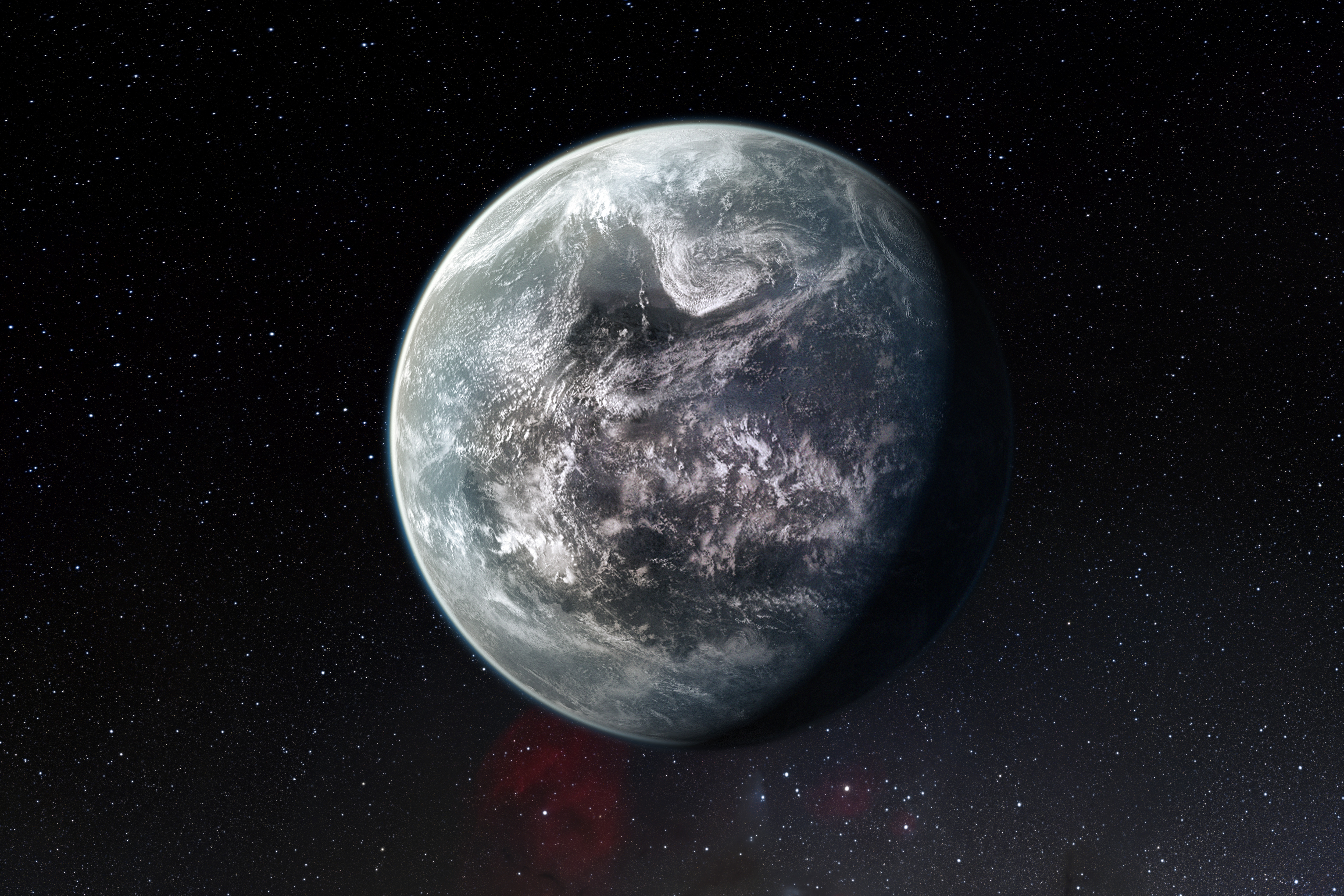 Hello all! Now that I’ve finally finished with all my edits and revisions for Papa Zulu, I thought I might get back on the science fiction train and start working on some the ideas that have been piling up in my memory folder. Awhile back, I began proposing dusting off an old idea – the Council of Muraqaba – and making it see light again. And today, I managed to put the finishing touches on the first installment.
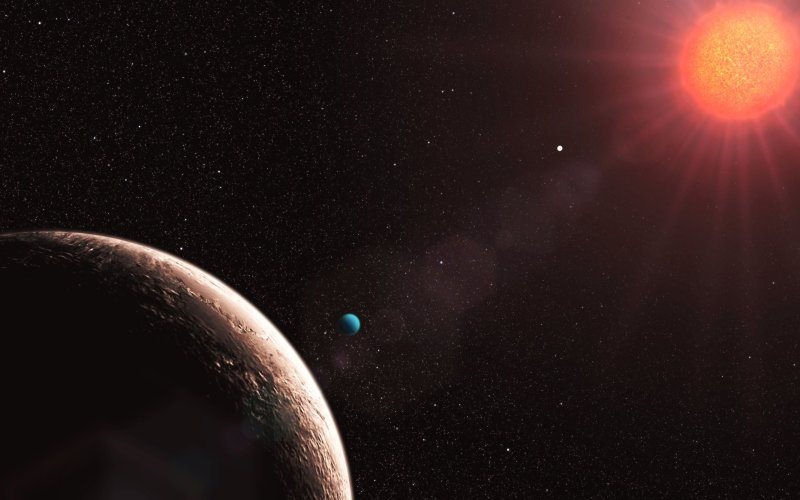 Planet Muraqaba, Gliese 581 d
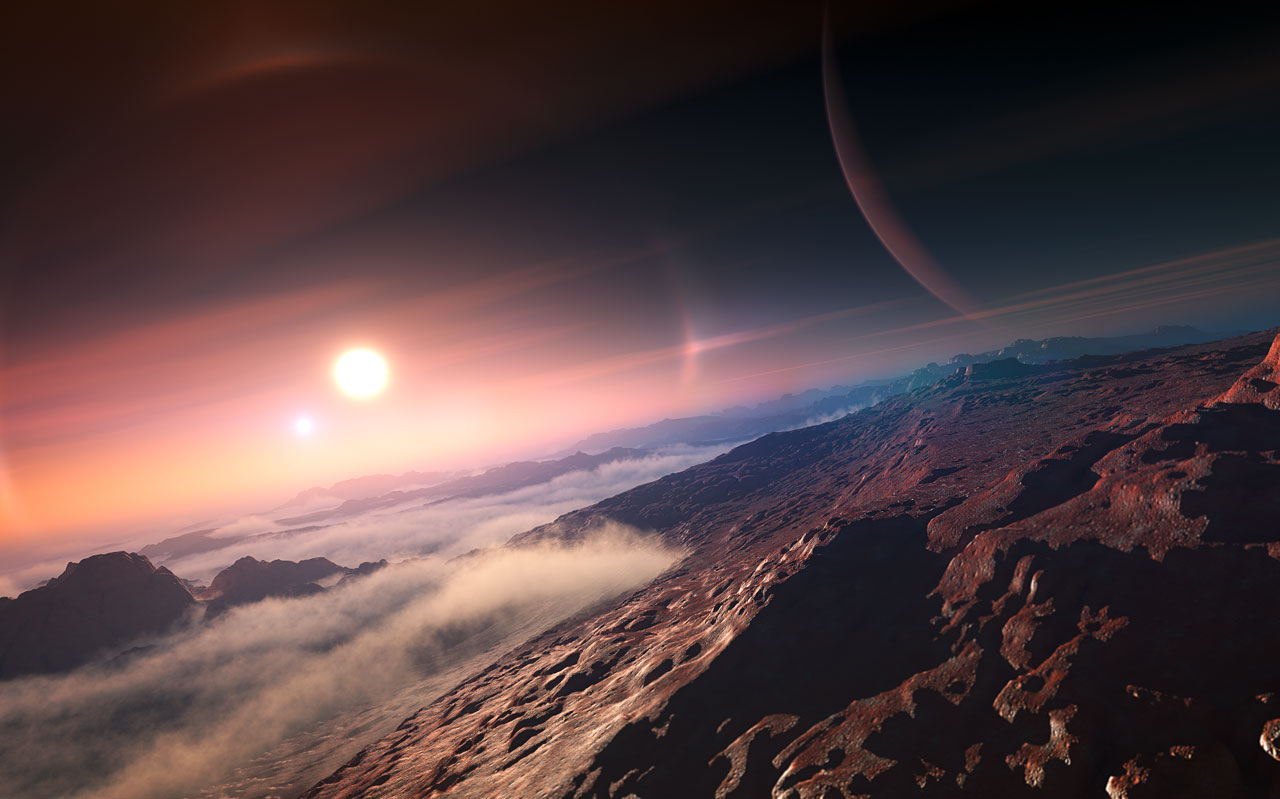
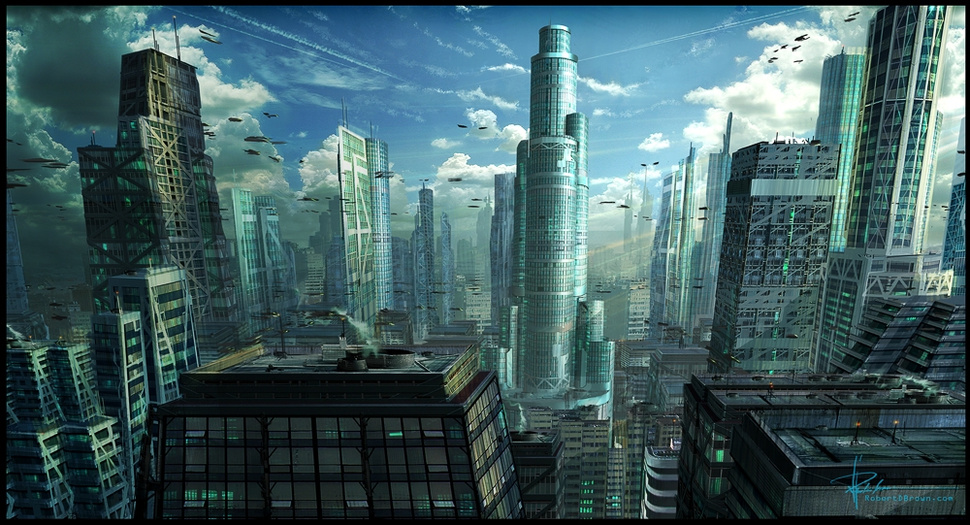
 When it comes to science-fiction stories, the setting is almost always the future. At times, it will be set in an alternate universe, or an alternate timeline; but more often than not, the story takes place down the road. The only question is, how far down the road? Some authors prefer to go with the world of tomorrow, setting their stories a few decades or somewhere in the vicinity of next century.
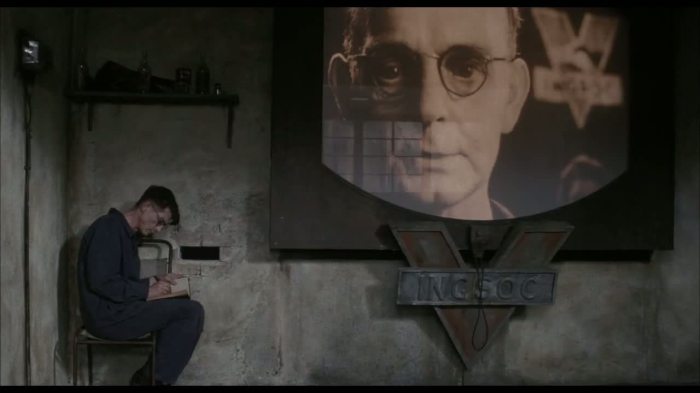 Other, less technologically-inclined authors, liked to use the not-so-distant future as a setting for dystopian, post-apocalytpic scenarios, showing how current trends (atomic diplomacy, arms races, high tech, environmental destruction) would have disastrous consequences for humanity in the near-future. Examples of this include Brave New World, 1984, The Iron Heel, The Chrysalids, and a slew of others.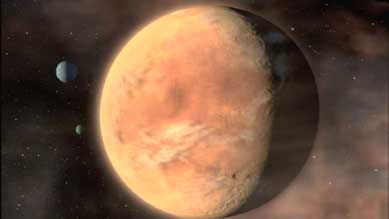


 Here is another important question that every science fiction author has faced, and one which seriously influences the nature of the story. When it comes to the world of tomorrow, will it be within the confines of planet Earth, the Solar System, or on many different world throughout our galaxy? Or, to go really big, will it encompass the entire Milky Way, or maybe even beyond?

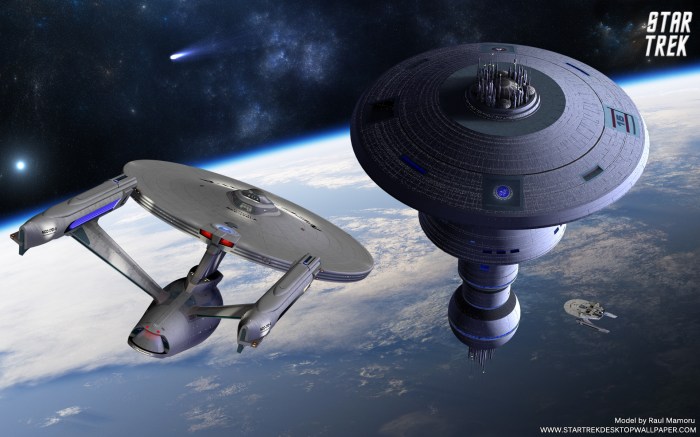 What would a work of science fiction be without plenty of room for gadgets, gizmos, and speculation about the future state of technology? And once more, I can discern of two broad categories that an author can choose from, both of which have their share of potential positives and negatives. And depending on what kind of story you want to write, the choice of what that state is often predetermined.
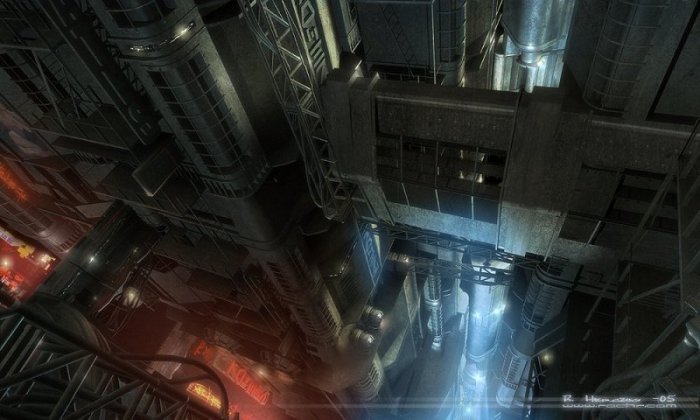 With stories like these, the purpose of high-tech usually serves as a framing device, providing visual evidence that the story is indeed taking place in the future. In other words, it serves a creative and fun purpose, without much thought being given towards exploring the deeper issues of technological progress and determinism. But this not be the case, and oftentimes with science fiction, high-tech serves a different purpose altogether.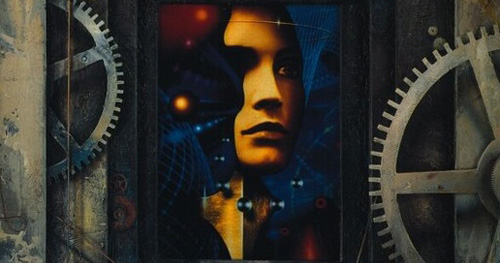
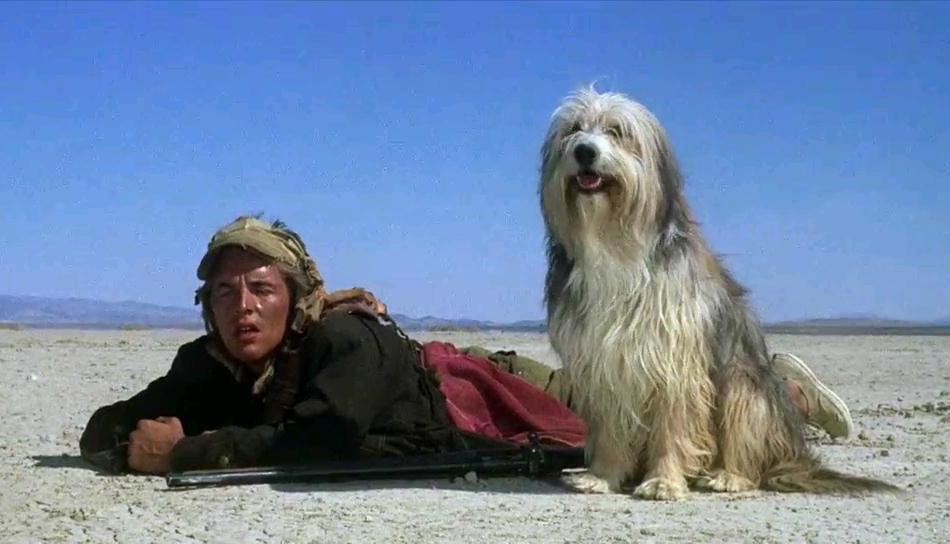
 In Mad Max as well, the way roving gangs are constantly looking for gasoline, using improvised weapons, and riding around in vehicles cobbled together from various parts gives us a clear picture of what life is like in this post-collapse environment. In addition, the obvious desperation created by said collapse serves to characterize the cultural landscape, which is made up of gangs, tinpot despots, and quasi-cults seeking deliverance.
 Another very important question for setting the scene in a science fiction story is whether or not extra-terrestrials are involved. Is humanity still alone in the universe, or have they broken that invisible barrier that lies between them and the discovery of other sentient life forms? Once again, the answer to this question has a profound effect on the nature of the story, and it can take many forms.
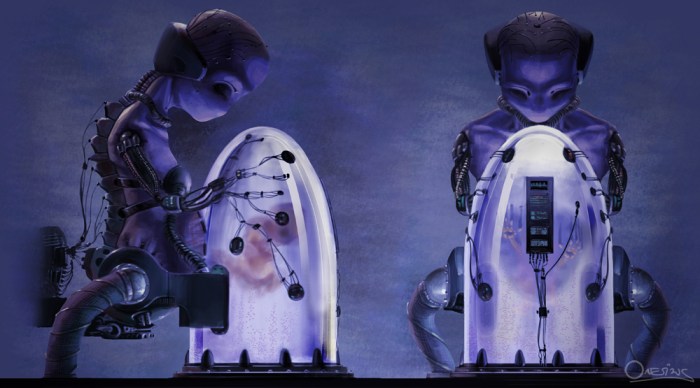

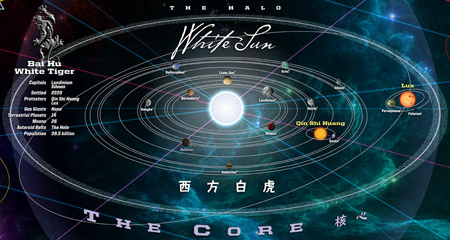 The Independents, we learn early in the story, were a coalition of worlds immediately outside the core worlds that fought these attempts, and lost. The Border Worlds, meanwhile, are those planets farthest from the core where life is backwards and “uncivilized” by comparison. All of this serves to illustrate the power space and place have over human identity, and how hierarchy, power struggles and divisiveness are still very much a part of us.
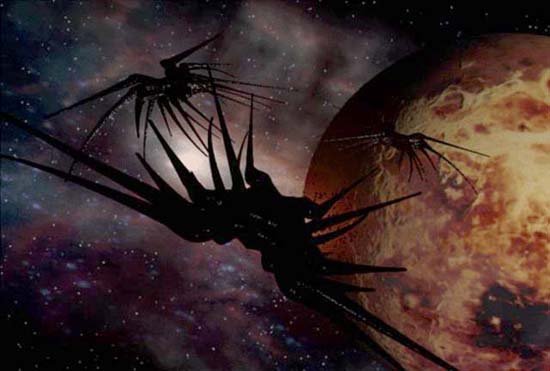 In B5 – much as with Stark Trek, Star Gate, or a slew of other franchises – aliens serve as a mirror for the human condition. By presenting humanity with alien cultures, all of whom have their own particular quarks and flaws, we are given a meter stick with which to measure ourselves. And in B5‘s case, this was done rather brilliantly – with younger races learning from older ones, seeking wisdom from species so evolved that often they are not even physical entities.
 After making contact with this monolith twice, first with the American vessel Discovery and then the joint Russian-American Alexei Leonov, the people of Earth realize that the Firstborn are still at work, looking to turn Jupiter into a sun so that life on Europa (confined to the warm oceans beneath its icy shell) will finally be able to flourish. Humanity is both astounded and humbled to learn that it is not alone in the universe, and wary of its new neighbors.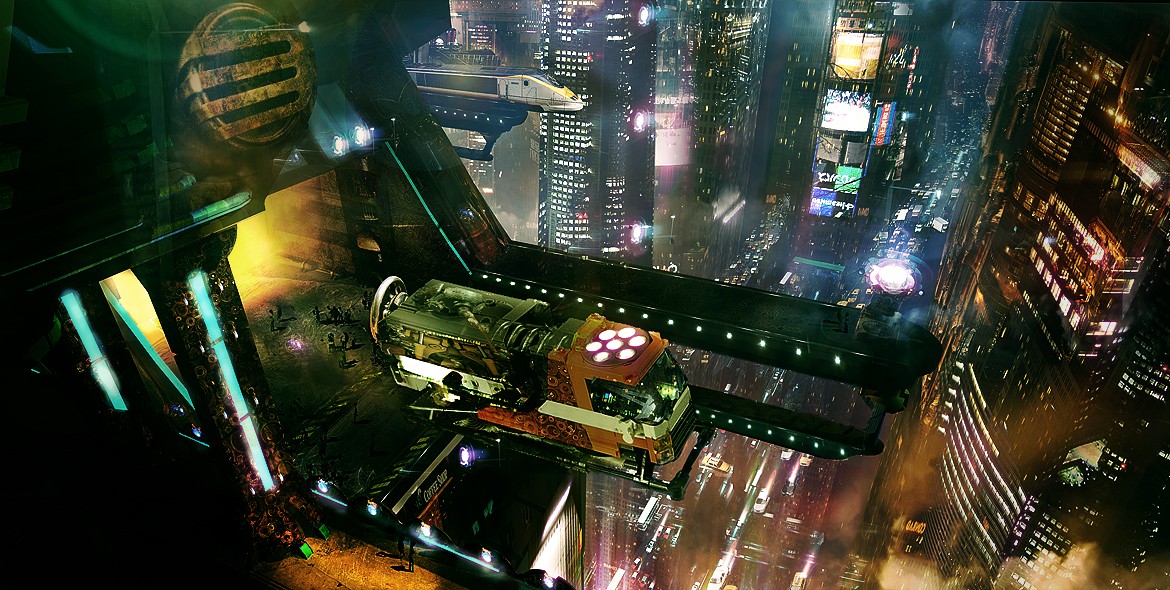


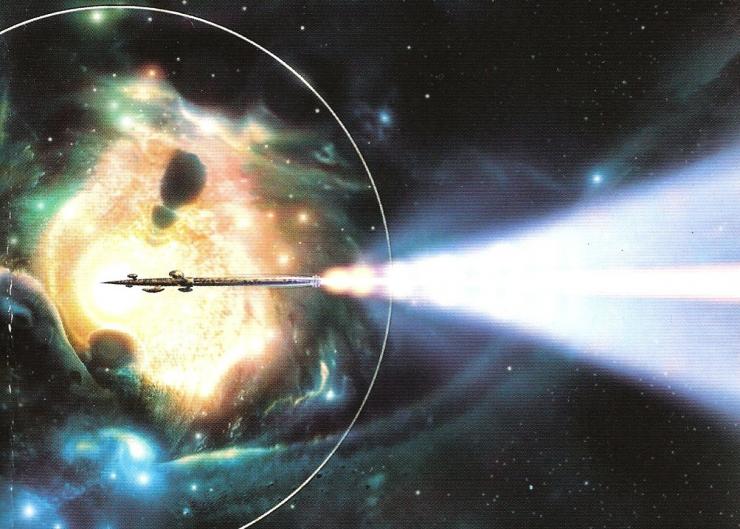

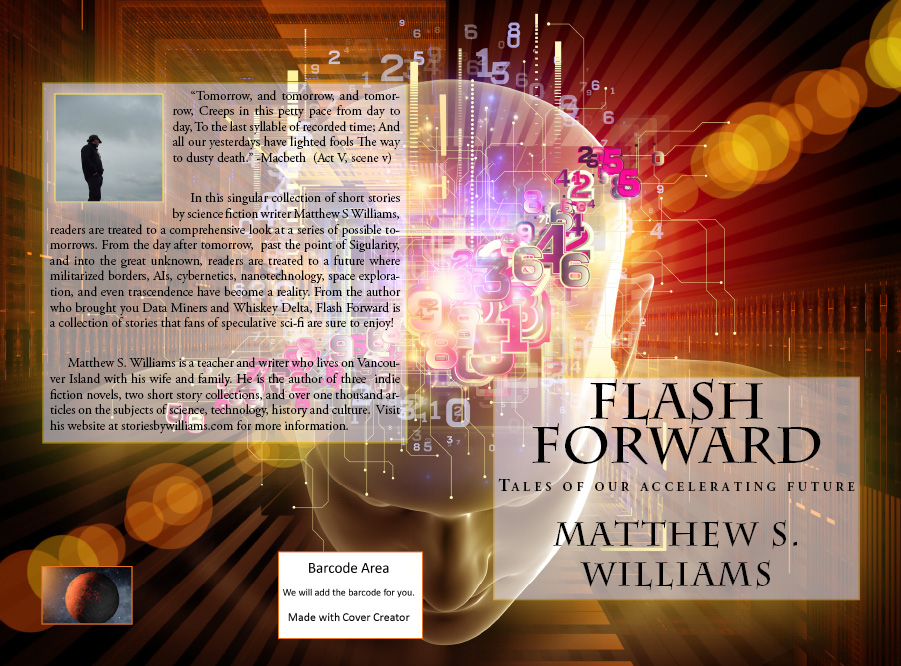


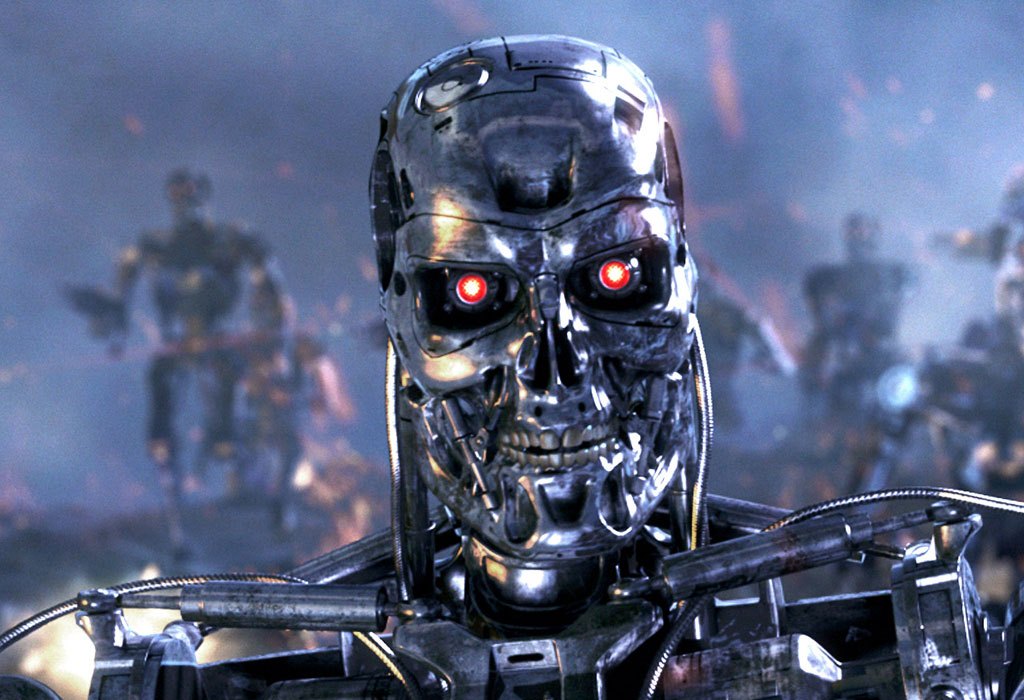


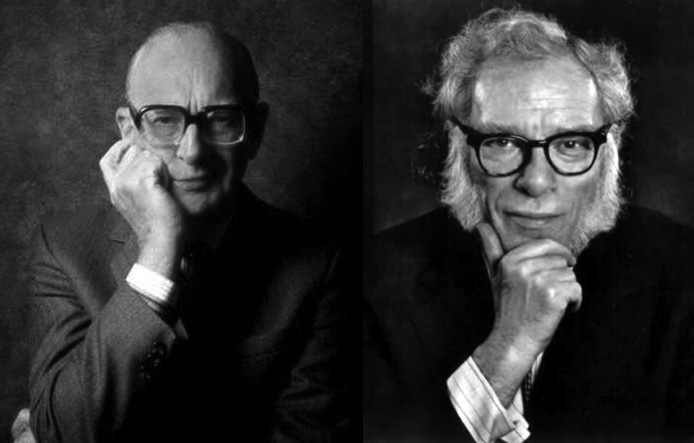
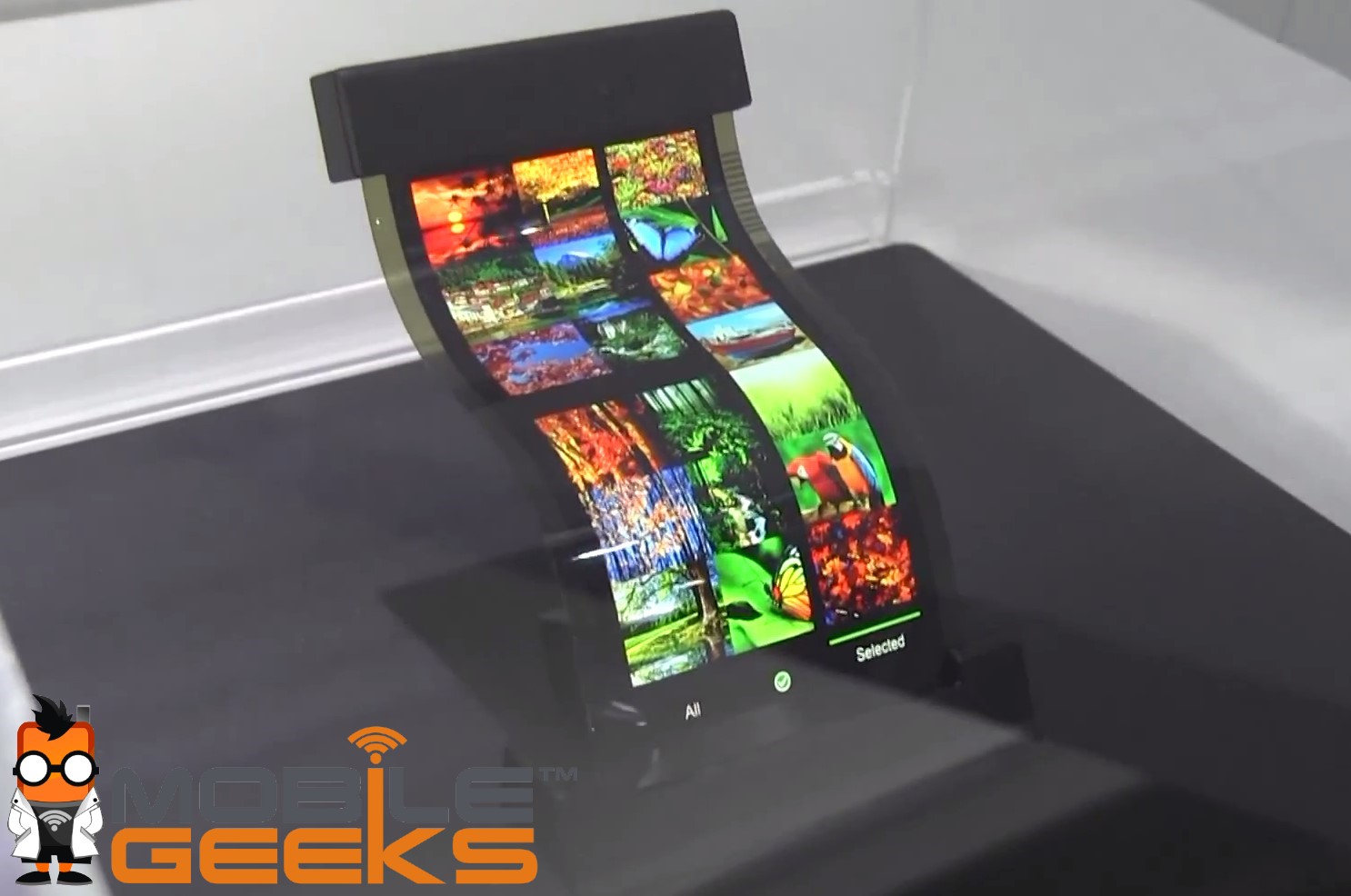
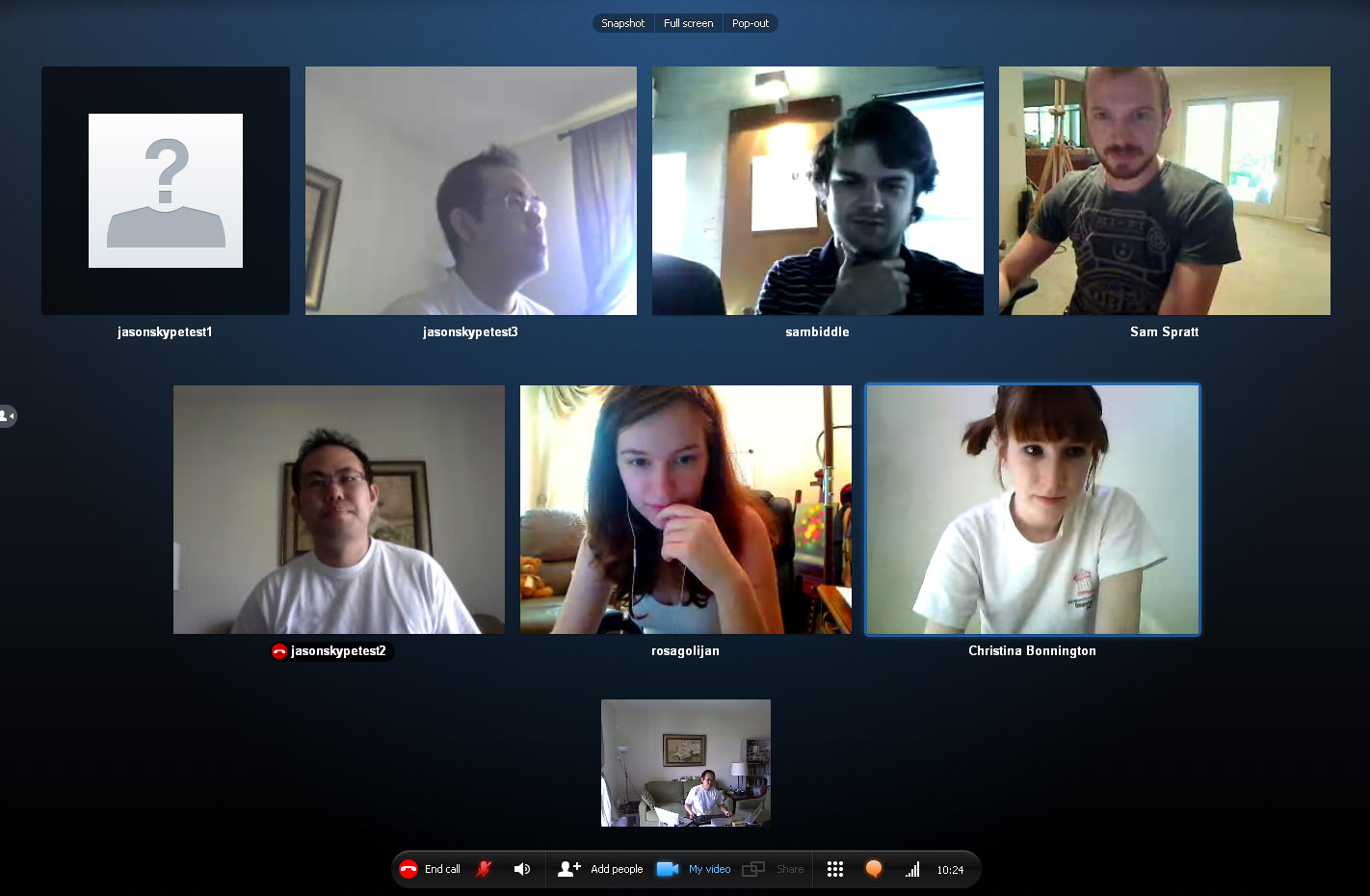

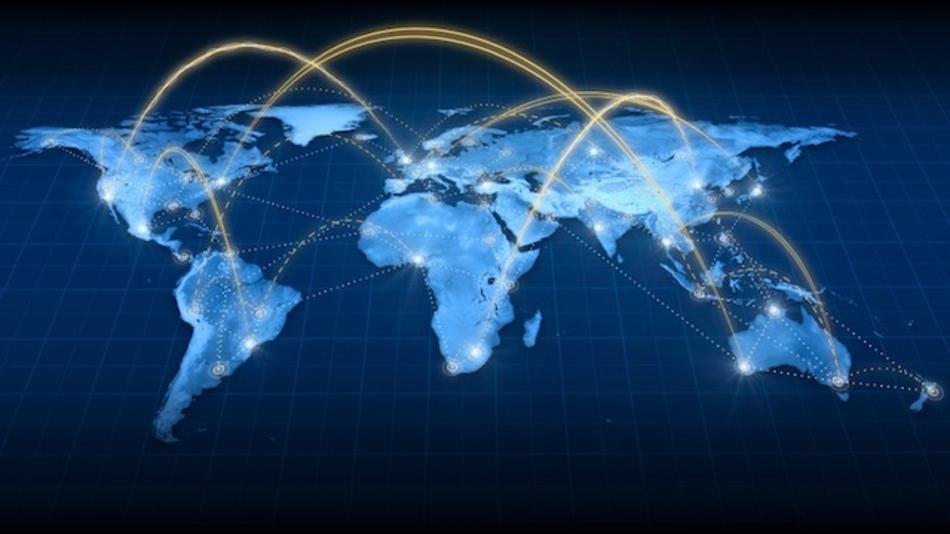



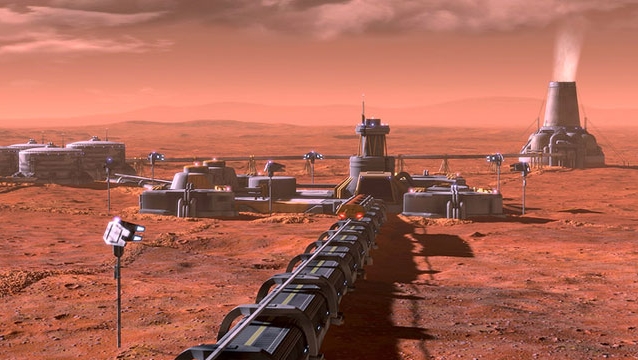
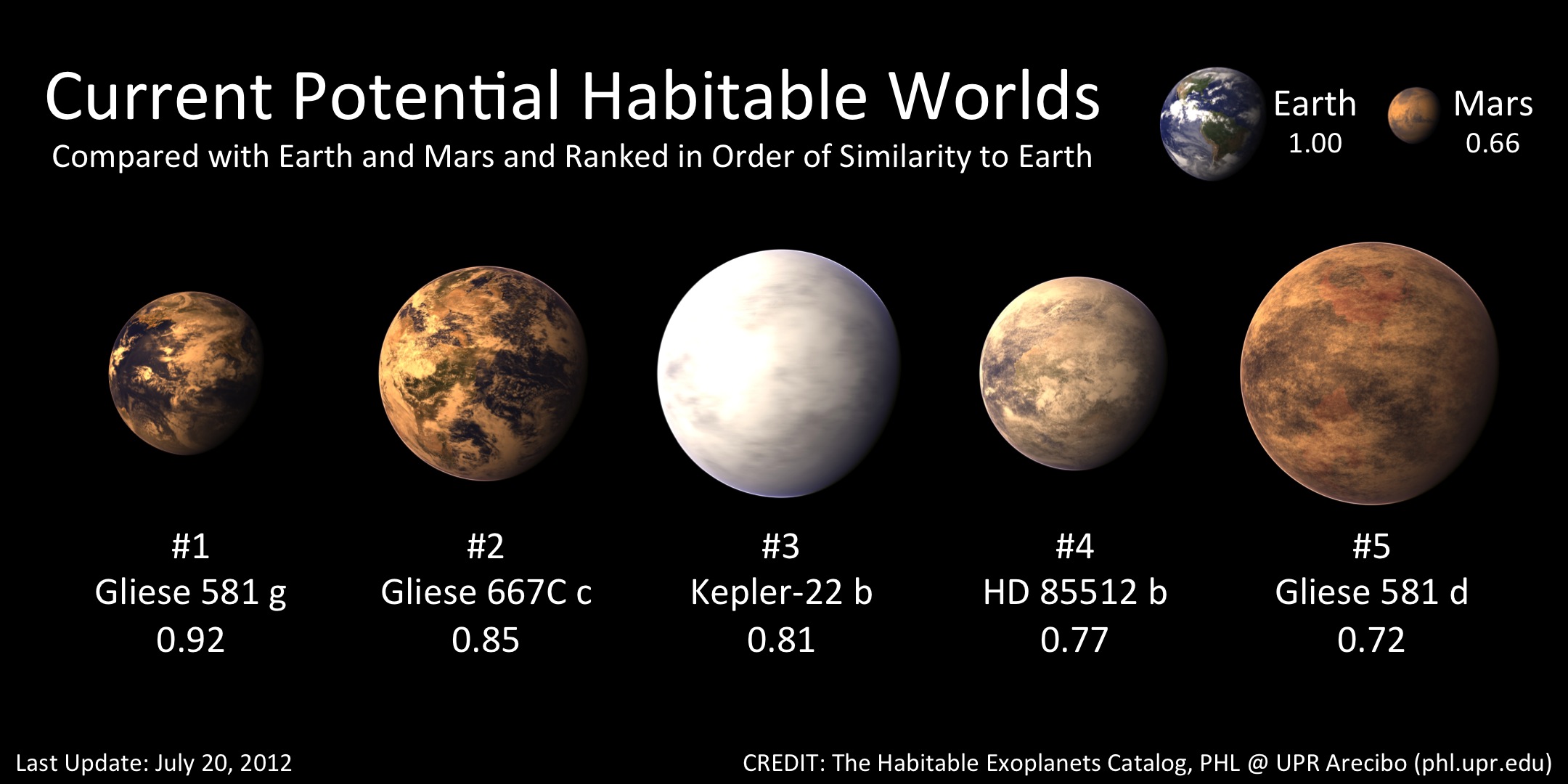
 Stories by Williams