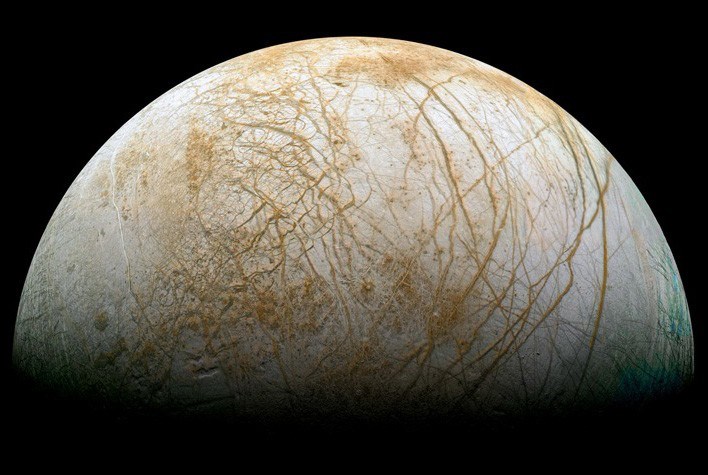
It’s one of Jupiter’s four largest moons, named the Jovians by the famed astronomer – Galileo Galilee – who first discovered them. And from all outward appearances, the moon is an icy, inhospitable place, with surface temperatures never reaching above -160º C (-256º F). Yet, beneath that frozen outer shell is believed to be a liquid, saltwater ocean, one that draws warmth from its orbit around Jupiter.
If this should indeed be the case, then Europa would be about the best candidate for extraterrestrial life in the Solar System, albeit in microbial form. For decades now, NASA has been working under that assumption and preparing for the day that it might be able to send an expedition or probe to confirm it. And it now seems that that day may be on the horizon.
According to NASA, this would likely take the form of a robot lander. Much like Curiosity, Opportunity, and other robotic research vehicles, it would packed with a variety of sensors and analytical equipment. But of course, the nature of that equipment would be specifically tailored to answer a series of unknowns pertaining to Europa itself.
Overall, the lander would have three priorities: discover the makeup of minerals and organic matter present on the moon; examine the geophysics of the ice and the ocean underneath; and determine how the geology looks (and therefore how it might have evolved) at a human scale on the surface. Basically, it would all boil down to looking at chemistry, water and energy – in other words, the conditions necessary for life.
And though NASA has not announced any official dates, it has begun to speak of the idea an indication of intent. A new article by NASA scientists published in the peer-reviewed journal Astrobiology entitled Science Potential from a Europa Lander set out their research goals in more detail, and speculated how they might be practically achieved.
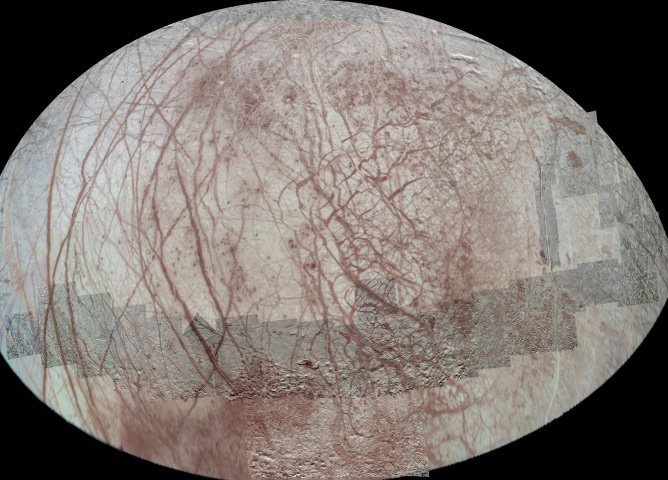
One area of focus would be Europa’s distinctive linear surface cracks which are believed to be the result of tidal forces. Europa’s eccentric orbit about Jupiter causes very high tides when the moon passes closest to the gas giant, so it is thought that this process would generate the heat necessary for simple life to survive. NASA thinks the cracks could contain biological makers, molecules indicating the presence of organic life, which have come from the ocean.
But of course, plotting a mission is not as simple as simply launching a robot into space. To ensure that such a mission would maximize returns requires that a “scientifically optimized” landing site be identified, and to do that, Europa’s surface must be thoroughly surveilled. Thus far, the little we know and think about Europa is based on a handful of flybys by Voyager 2 in the 70s and the Galileo probe in the 90s.
Lead author Robert Pappalardo of NASA’s Jet Propulsion Laboratory summed up the situation as follows:
There is still a lot of preparation that is needed before we could land on Europa, but studies like these will help us focus on the technologies required to get us there, and on the data needed to help us scout out possible landing locations. Europa is the most likely place in our solar system beyond Earth to have life today, and a landed mission would be the best way to search for signs of life.
At the present time, NASA’s exploratory itinerary is quite packed. In addition to wanting to tow an asteroid closer to Earth to study it, launching two more rovers to Mars, constructing a settlement on the far side of the Moon, and conducting a manned mission to Mars, it’s safe to say that a robot lander on Europa won’t be happening for some time.
But of course, the plans are in place and moving forward with every passing year. NASA is certainly not going to pass up a chance to examine one of the Solar Systems best candidates for extra-terrestrial life, and we can certainly expect more deep-space probes to be launched once Cassini is finished shooting pictures of Saturn.
I am willing to bet good money that any future probe sent into the outer reaches of the Solar System will be tasked with taking high-resolution photos of Europa as part of its mission. And from that, we can certainly expect NASA, the ESA, and even the Chinese, Russians and Indians to start talking turkey within our lifetimes.
What do you think? 2035 seem like a safe bet for a Europa lander mission?
Elon Musk just can’t get enough of the spotlight lately! But that’s the price you pay for being a billionaire, innovator, genius-type person! And barely a week after announcing his idea for the Hyperloop high-speed train, it now seems that SpaceX is once again making the news, thanks to its latest test of the Grasshopper reusable rocket system as well as their planned launch of the Falcon Heavy rocket.
For those unfamiliar with the Grasshopper, this is a proposed reusable rocket system that Musk and SpaceX created with the hopes of bringing the costs associated with space launches down considerably. Since September 2012, the rocket has been put through successive tests, reaching higher and higher altitudes and safely making it back to the ground.
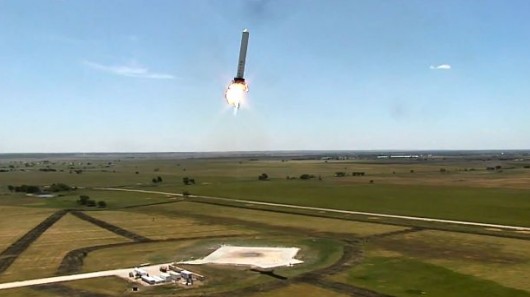
In this latest test, the rocket successfully performed a “lateral divert test”. In all previous tests, the rocket lifted off vertically from a launch pad and then used its Merlin-1D engine to ease itself back down to the pad. However, in actual launch situations, the rocket wont simply be traveling up and down. When it comes time to land, a considerable amount of lateral steering will be necessary to line it back up with the launch site.
This is what the test, which took place on Tuesday, August 13th, amounted to. It began with the Grasshopper reaching its previously-achieved altitude of 250 meters, but then continued with the rocket moving an additional 100 m (328 ft) to one side. It was subsequently still able to land safely back at the center of the launch pad, compensating for its lateral diversion.
According to SpaceX: “The test demonstrated the vehicle’s ability to perform more aggressive steering maneuvers than have been attempted in previous flights.” What’s more, it places the company that much closer to the realization of a truly reusable rocket system, something which will drastically cut costs for future space missions.
And of course, they were sure to catch the entire test on video:
But equally important for this rising company that seeks to privatize space travel was the announcement that they have are moving ahead with plans to launch their Falcon Heavy rocket system by late 2013 or early 2014. At present, the Falcon is the most power rocket system in the world, overshadowed only by the now retired – but soon to be reserviced – Saturn V booster that put the Apollo astronauts into space and on the Moon.
As Musk himself said of the rocket:
Falcon Heavy will carry more payload to orbit or escape velocity than any vehicle in history, apart from the Saturn V moon rocket, which was decommissioned after the Apollo program. This opens a new world of capability for both government and commercial space missions.
Fully loaded, the Falcon Heavy will be able to carry payloads of 53 metric tons (117,000 pounds or 53,070 kg) into orbit, and is made up of two engine stages. The first stage consists of a Falcon 9 rocket, with a nine-engine cores, followed by two additional nine-engine cores attached to either side. In addition, the Merlin engines have been upgraded to handle the additional weight, and are being tested at SpaceX’s facility in McGregor, Texas.
At liftoff the 69.2m (227 ft) long Falcon Heavy will generate 3.8 million pounds of thrust, which is equivalent to the thrust of fifteen Boeing 747’s taking off at the same time. SpaceX claims that this gives the Falcon Heavy more than twice the performance of the next most powerful vehicle – the Delta IV Heavy operated by the Boeing-Lockheed Martin joint venture United Launch Alliance.
SpaceX also says that with more than twice the payload of the Delta IV but at one third the cost, the Falcon Heavy sets a new world record in terms of economy at approximately US$1,000 per pound to orbit. This is in keeping with Musk’s promise to bring the associated costs of space travel and exploration down, hopefully one day to his goal of $500 per pound.
With the ability to carry satellites or interplanetary spacecraft to orbit, SpaceX is offering the Falcon Heavy on the commercial market for US$80–$125 million, which compares to the $435 million per launch the U.S. Air Force has budgeted for four launches in 2012. So in effect, Musk’s company is offering a money-saving alternative to both the public and private sector.
For those fascinated by the long-term potential of space travel, this is certainly exciting news. By cutting the costs of placing satellites, supplies and people in orbit, many things are being made feasible that were previously impossible. This includes conducting more research in orbit, the ability to create space-based solar arrays (a very cool solution to our current power problems and the limitations of Earth-based solar power) and perhaps even begin work on a Moon settlement.
Beyond that, there are the growing possibilities of commercial space travel, space tourism, and even setting our sights father afield with manned missions to the Moon, prospecting missions to the asteroid belt, and surveying probes to Jupiter’s Moons and to the very edge of the Solar System. Possibly even beyond…
Exciting times we live in, when the impossible is slowly becoming possible!
Placing things into orbit is something humanity has been doing since the 1940’s, beginning with Germany’s V2 Rockets, then giving way to artificial satellites like Sputnik in the 1950’s. These efforts really came into their own during the 1960’s and since, when manned missions reached high orbit and even the Moon. But despite all these milestones, little has been done to address the problems of cost.
Ever since space travel began in earnest, the only way to send satellites, supplies and shuttle craft into orbit has been with rockets. Even at its cheapest, a space launch can still cost an estimated $2000 per pound per mission, due to the fact that the rockets employed are either destroyed or rendered unusable once they’ve completed their mission.
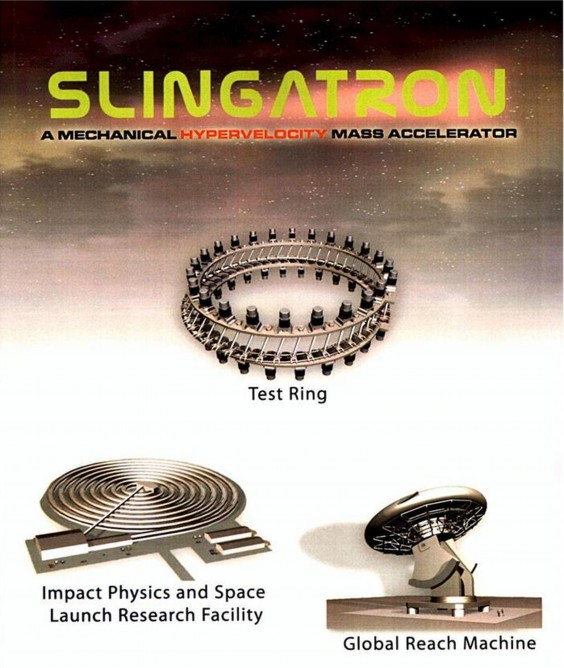
Attempts to create reusable launch systems, like the SpaceX Grasshopper, is one solution. But another involves “slinging” payloads into orbit, rather than launching them. That’s what HyperV Technologies Corp. of Chantilly, Virginia is hoping to achieve with their design for a “mechanical hypervelocity mass accelerator”, otherwise known as a “slingatron”.
Invented by Derek Tidman in the 1990s, the slingatron replaces rockets with a more sophisticated version of the sling. However, the principle differs somewhat in that the device uses something far more sophisticated than circumferential force. In the end, the name cyclotron might be more apt, which is a very simple particle accelerator.
Utilizing a vacuum tube and a series of magnetic/electostatic plates of opposing charges, an atomic particle (such as a proton) is introduced and sent back and forth as the polarity of the plates are flipped. As the frequency of the flipping is increased, the proton moved faster and faster in a series of spirals until it reaches the rim and shoots out a window at extremely high velocity.
The slingatron achieves the same result, but instead uses a spiral tube which gyrate on a series of flywheels along its length. As the slingatron gyrates, a projectile is introduced and the centripetal force pulls the projectile along. As the projectile slides through larger and larger turns of the spiral, the centripetal forces increase until the projectile shoots out the muzzle, traveling at several kilometers per second.
Ultimately, the goal here is to build a slingatron big enough to fire a projectile at velocities exceeding 7 km/s (25,000 km/h, 15,600 mph) to put it into orbit. With rapid turnarounds and thousands of launches per year while all of the launch system remains on Earth, the developers claim that the slingatron will offer lower costs for getting payloads into orbit.
However, there are weaknesses to this idea as well. For starters, any projectile going into space will also need to be fitted a small set of rockets for final orbit insertion and corrections. In addition, the G-forces involved in such launches would be tremendous – up to 60,000 times the force of gravity – which means it would be useless for sending up manned missions.
In the end, only the most solid state and hardened of satellites would have a chance of survival. The developers say that a larger slingatron would reduce the forces, but even with a reduction by a factor of 10,000, it would still be restricted to very robust cargoes. This makes it an attractive options for sending supplies into space, but not much else.
Still, given the costs associated with keeping the ISS supplied, and ensuring that future settlements in space have all the goods and equipment they need, a series of slingatrons may be a very viable solution in the not-to-distant future. Combined with concepts like the space penetrator, which fired bullet-like spaceships into space, the cost associated with space travel may be dropping substantially in coming decades.
All of this could add up to a great deal more space traffic coming to and from Earth in the not-too-distant future as well. I hope we have the foresight to construct some “space lanes” and keep them open! And in the meantime, enjoy this video interview of Dr. F. Douglas Witherspoon explaining the concept of the slingatron:
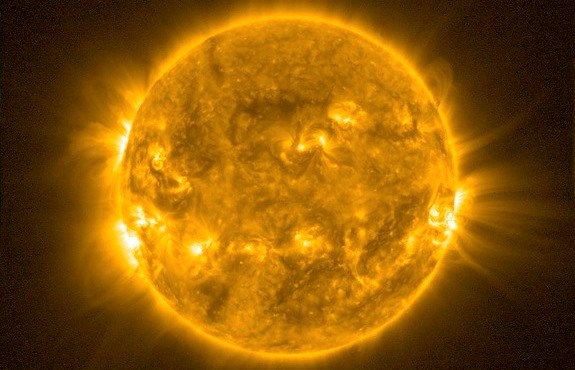
The sun is set to reverse its polarity in the next few months, something that occurs at the height of every Solar Cycle. The resulting ripple effect will be felt all across the Solar System and will even be detectable by the far-away Voyager probes. However, scientists are telling us not to fret, as this event will not lead to the end of the world.
In truth, the Sun’s reversal of polarity is something that occurs every 11 years. And the shift won’t spark an increase in powerful solar storms or other events that could have a damaging effect on Earth and its inhabitants, say the researchers. One such researcher is Phil Scherrer, a solar physicist at Stanford University, who insisted “The world will not end tomorrow.”
In addition, from a human perspective, the effects of the field shift will likely be slight and even beneficial. For example, the polarity reversal will cause the “current sheet” – an enormous surface extending out from the solar equator on which the sun’s rotating magnetic field has induced an electric current – to become much wavier.
This crinkled current sheet, in turn, will provide a better barrier against galactic cosmic rays, high-energy particles that are accelerated to nearly the speed of light by faraway star explosions. Galactic cosmic rays can damage spacecraft and hurt orbiting astronauts who don’t get to enjoy the protection of Earth’s thick atmosphere. So for space exploration, at any rate, this is certainly good news.
According to Todd Hoeksema, director of Stanford’s Wilcox Observatory, a drop in galactic cosmic ray levels could also have a subtle impact on weather here on Earth.
One of the things that helps clouds form and lightning to flash is cosmic-ray ionization of things in the Earth’s atmosphere. So when the cosmic-ray intensity is lower, it means you have fewer places where lightning will occur, and so the storms will probably be a little less intense.
He added, however, that it’s pretty much a speculative endeavor at this point, as no conclusive link has ever been demonstrated between cosmic rays and the weather.
In any case, during a reversal, the sun’s polar magnetic fields weaken all the way down to zero, then bounce back with the opposite polarity. Researchers will keep a keen eye on just how strong this recovery is over the next two years or so. The sun has been quiet during its current 11-year activity cycle, which is known as Solar Cycle 24. So it would be particularly interesting to see a strong field emerge after the impending flip.
Dean Pesnell, a project scientist for the space agency’s Solar Dynamics Observatory spacecraft at NASA’s Goddard Space Flight Center, the Sun’s latest field is likely to be a good indicator of what the next solar cycle is going to do. During its most recent cycle, known as Solar Cycle 24, the sun was rather quiet, so what happens next ought to be interesting:
If it quickly goes to a high value, then that tells us the next cycle will be high. We’ve had several of these solar minimums, and each time the polar field has been weaker. And each time, the next cycle has been a little bit weaker. So it would be nice to see one where the polar field strength was higher, and the next cycle was higher as well.
So rest easy, folks. No apocalyptic scenarios are likely to result from this latest, all-too-common solar phenomena. If anything, it will provide research benefits for scientists and aid in space exploration – especially for companies looking to mount missions to Mars in the next 11 years and trying to figure out a way around that tricky radiation problem.
As for the rest of us, we’re likely to maybe get a little break on the weather front. Maybe not. Kind of disappointing when you think about it…
But at least there’s a helpful video provided by Space.com. Enjoy!
As space exploration goes, we can do quite a bit within our own Solar System. We can land people on the Moon, rovers on Mars, and put satellites in orbit around the inner and outer planets. We even have the means of placing astronauts on Mars, presumably. But the cost are still prohibitively high, and when it comes to reaching distant celestial bodies, we remain pretty powerless.
Hence the new “space penetrator” program being contemplated by the European Space Agency. Basically, this amounts to a space missile that is fired in the direction of a celestial body, and which delivers a payload of sensors and equipment upon arrival on the surface. Classified as a “hard lander”, this program has been under development for ten years and offers many advantages over the standard soft lander.
For starters, a soft lander not only has to slow down before landing (which requires rockets and a payload of fuel), but has to be built to land rather than just crash into the ground. And if a soft lander wants to collect subsurface samples or conduct readings, it requires additional equipment to drill and scoop. By contrast, a penetrator can simply smash through a planet’s surface layer, and requires no additional fuel or landing gears.
Of course, a space penetrator also comes with its share of issues, like ensuring that its payload survives the hard landing. This requires that a special spring mechanism be included in the outer shell that cushions the payload from impact. This “suspension system” is made out of Torlon polymer, which is able to provide a 2mm gap of insulation during a high deceleration. A retrorocket will be employed in order to soften the blow a bit as well.
In order to rest the impact, the designers who built the steel penetrator fired it directly into a 10-ton block of ice. The missile traveled at 340m/s, just under the speed of sound, and turned the block into powder. But the penetrator’s casing and internal instruments remained intact and functional. Thanks to onboard sensors, the test impact will provide the developers of the missile, Rapid Space Technologies, with more information.
The space penetrator is intended to do more than just collect subsurface soil samples. Once in use, it will also help look for alien life by busting through icy surfaces, such as on Jupiter’s famous moon Europa. For years, scientists have suspected that the planet may support aquatic life beneath its icy surface. With the help of radio signals, the on-board sensors could send information up to an orbiting satellite, which could in turn relay that information back to Earth.
The European Space Agency has funded the project, but has not yet decided if it would ultimately use the space penetrator. Currently, the system isn’t designed to be launched from Earth, but rather a satellite or spaceship. There’s no telling if it will be used anytime soon, but it does present scientists and astronomers with an viable option for future interstellar exploration.
And there is huge potential as far as the exploration of Europa is concerned. Ever since it was postulated that subsurface oceans exist there – ones that are warm enough to support life – the Jovian moon has served as a source of inspiration for astronomers and science fiction writers alike. I for one am interested to see what resides underneath all that ice, provided we don’t disturb it too much!
And of course, there’s a video of the space penetrator test taking place. Check it out:
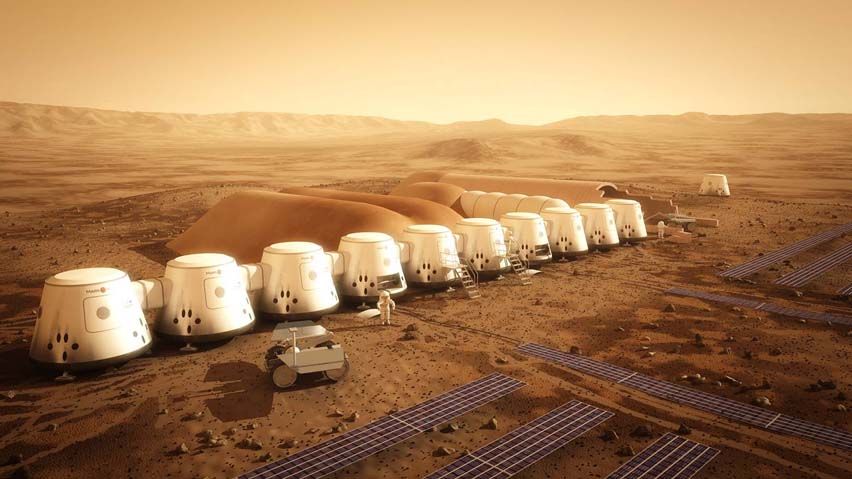
Ever since they announced their plan to establish a colony on Mars by 2022, Mars One has been flooded by applicants eager to set foot on a new planet and make it their home. In fact, according to a recent story by CNN Tech, over 100,000 people have volunteered for the mission, knowing full well that it would be a one-way trip and their stay on the Red Planet would be permanent.
Anyone who is 18 years of age or older can apply, and the fee runs anywhere from $15 to $38, depending on your nationality and the gross domestic product of your country. Ultimately, only 40 people will be selected this year, and only two couples will be sent ahead with the first mission. This mission is slated to leave by September of 2022 and land on Mars by April of 2023, with another group of four to be sent two years later.
The applicants can all be seen simply be going to their website, where each person has created a profile and can be voted on. According to Bas Lansdorp, co-founder and CEO of Mars One, only those who have completed the registration process can be seen here:
There is also a very large number of people who are still working on their profile, so either they have decided not to pay the application fee, or they are still making their video or they’re still filling out the questionnaire or their resume. So the people that you can see online are only the ones that have finished and who have set their profiles as public.
In terms of what the selectees will do once the project is up and running, the website offers a basic rundown. First, the volunteer astronauts will undergo a required eight-year training in a secluded location, where they will learn how to repair habitat structures, grow vegetables in confined spaces and address “both routine and serious medical issues such as dental upkeep, muscle tears and bone fractures.”
In terms of how settlement will occur, the plan is to send a series of Mars One landers equipped with up to 2500 kg (5,500 pounds) of food, solar panels and supplies each. After eight missions, more than 44,000 pounds of supplies and 40 people will have arrived and the capsules themselves will be formed into the settler’s habitat.
Two things Earth won’t be sending is water and oxygen, since the settlers will be manufacturing these themselves. According to Lansdrop, these will be manufactured on Mars:
We will evaporate it and condense it back into its liquid state. From the water we can make hydrogen and oxygen, and we will use the oxygen for a breathing atmosphere inside the habitat. This will be prepared by the rovers autonomously before the humans arrive.
Naturally, a good many details, such as where the $6 billion dollars for the first mission are going to come from, whether or not the technology truly exists to create a self-sustaining colony on Mars, and whether the people going up will be able to survive for extended periods of time until new waves arrive and new settlements are opened up.
In addition, there are experts who say that the risks are too high given the distance and exposure to radiation involved. A round-trip journey to Mars could exposeastronauts to the maximum amount of radiation allowed in a career under current NASA standards. While Mars One does not negate this issue, they have yet to indicate how they intend to keep their astronauts shielded from the harmful cosmic rays.
However, this has not deterred some 30,000 Americans and over 100,000 people worldwide from signing on. What’s more, Lansdrop has said repeatedly that the project will be funded by sponsors and media that will pay for broadcasting rights of shows and movies documenting everything from the astronauts’ training on Earth to their deployment and colonization of Mars.
Basically, they intend for the entire process to be a worldwide media event, a massive reality TV show, with the necessary advances and funding worked out as time goes on. Right now, all they are looking for is volunteers so that corporate and media sponsors understand just how serious this is and that the willingness to go is there. No telling if that will be enough, but it is a start.
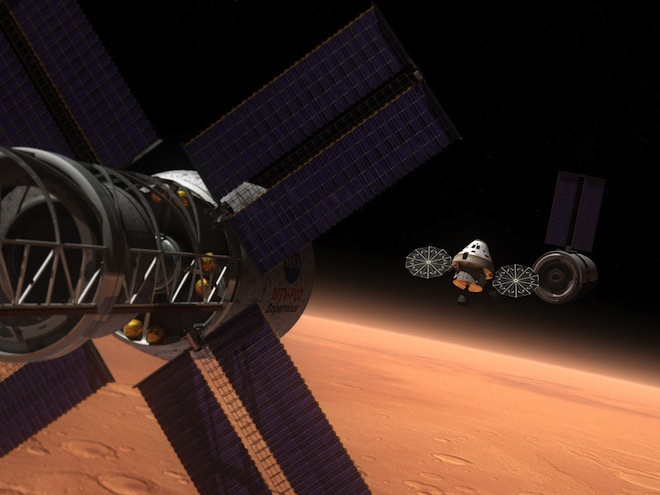
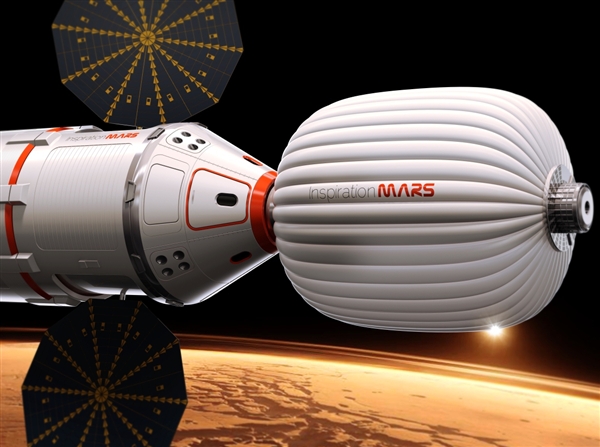
What’s more, Mars One is not alone in trying to make a trip to the Red Planet a reality. The Inspiration Mars Foundation is another such private venture, which is seeking to send a couple on a 501-day, round-trip journey aboard a space craft that will take then to Mars and back in 2018 without ever touching down on the surface.
Here too, the issue of funding, the technology involved, and the problem of radiation shielding are all being considered and ironed out in an ongoing manner, with some rather interesting possibilities being considered (such as using human feces and waste plumbing to shield the astronauts from radiation!)
Ultimately, it seems that certain private ventures are not willing to wait for NASA’s planned 2030 excursion to Mars before general settlement and terraforming can begin. And though it may prove unfeasibly by the time frames being proposed, the excitement and desire to make things happen sooner than projected are understandable.
And as Lansdorp explains, much of the project has to do with telling a story, perhaps the greatest ever told:
What we want to do is tell the story to the world. When humansgo to Mars, when they settle on Mars and build a new Earth, a new planet. This is one of the most exciting things that ever happened, and we want to share the story with the entire world.
For the full CNN story, plus video of the interview with the Mars Society, follow the link below:
The International Space Station has plans to bring a 3D printer on board by 2014. And yesterday, the model in question – the startup’s Made in Space engineering model – passed an important milestone on its way into orbit. This consisted of a battery of tests at NASA’s Marshall Space Flight Center in Huntsville, Ala., which confirmed that the machine can survive the rigors of launch and function in space.
Michael Snyder, director of research and development at Made in Space, said in a statement that:
This developmental testing was vital to the design of our flight-unit printer. We’ve engaged in a fast-paced mission starting in early 2013 to produce hardware that NASA would qualify for launch and installation to the ISS in 2014. The fact that we’ve been able to pass another milestone in an abbreviated time frame is extremely exciting.
For some time, NASA has had its eye on additive manufacturing (aka. 3D printing) as a means of making space travel cheaper and more efficient. In addition to the development a 3D pizza maker and food printing, NASA also hopes to equip future ships and stations with their own printer so crews can generate spare parts and components, rather than having to mount costly resupply missions.
Made in Space and NASA Marsall hope to jump-start this vision with their “3D Printing in Zero Gravity” experiment (3D Print for short) which aims to launch the first-ever 3D printer to the space station in August 2014. But before that can happen, the machine must pass some more rigorous tests. The first occurred several months ago when three prototype versions of Made in Space’s printer passed a series of microgravity tests during parabolic airplane flights.
This flight test, known colloquially as the “vomit comet”, demonstrated that the prototypes could indeed handle working in microgravity environments. The more recent tests at Marshall, performed with the company’s Engineering Test Unit (ETU), ensured that the printer can survive the vibrational stresses of launch and deal with electromagnetic interference, among other issues.
Data from these tests will inform the critical design review of the flight unit prototype, a big step toward clearing the machine for launch toward the space station. According to Made in Space officials, the final review process is slated for the 15th of August. Niki Werkheiser, 3D Print project manager in Marshall’s Technology Development and Transfer Office, also said in a statement that:
The successful results received from the ETU testing at [Marshall] reinforces our confidence that Made in Space, Inc. has developed the robust design required to successfully print in space. We are excited to have successfully completed yet another key step toward meeting the extensive ISS flight certification process.
If all goes well, it won’t be long before the crew of the ISS is able to regularly print out all the replacement parts they need. Given time, they might even solve the problem of what to do when freeze-dried food won’t cut it and you absolutely must have a slice of pizza!
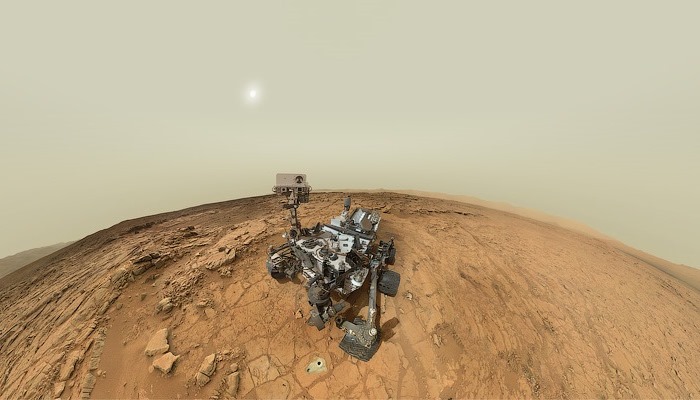
Two days ago, the Mars Rover known as Curiosity celebrated a full year of being on the Red Planet. And what better way for it to celebrate than to revel in the scientific discoveries the rover has made? In addition to providing NASA scientists with years worth of valuable data, these groundbreaking finds have also demonstrated that Mars could once have supported past life – thereby accomplishing her primary science goal.
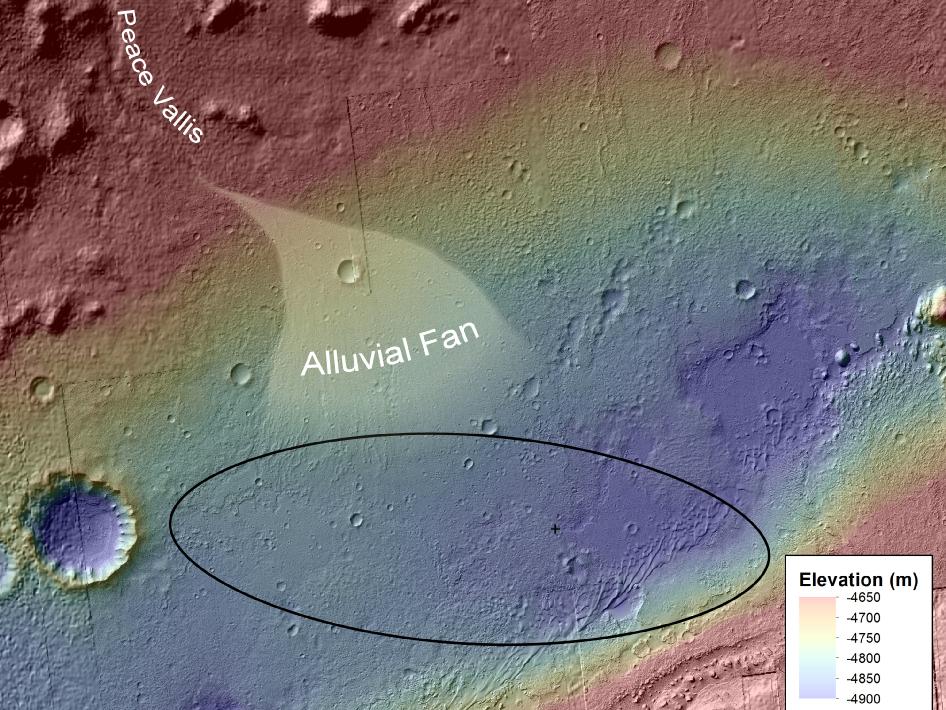
And it appears that the best is yet come, with the rover speeding off towards Mount Sharp – the 5.5 km (3.4 mile) high mountain dominating the center of the Gale Crater – which is the rover’s primary destination of the mission. This mountain is believed to contain vast caches of minerals that could potentially support a habitable environment, thus making it a veritable gold mine of scientific data!
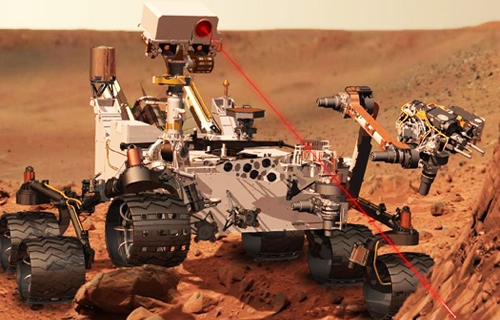
To take stock of everything Curiosity has accomplished, some numbers need to be tallied. In the course of the past year, Curiosity has transmitted over 190 gigabits of data, captured more than 71,000 images, fired over 75,000 laser shots to investigate the composition of rocks and soil, and drilled into two rocks for sample analysis by the SAM & CheMin labs housed in her belly.
On top of all that, the rover passed the 1 mile (1.6 km) driving mark on August 1st. Granted, Mount Sharp (aka. Aeolis Mons) is still 8 km (5 miles) away and the trip is expected to take a full year. But the rover has had little problems negotiated the terrain at this point, and the potential for finding microbial life on the mountain is likely to make the extended trip worthwhile.
But even that doesn’t do the rover’s year of accomplishments and firsts justice. To really take stock of them all, one must consult the long-form list of milestones Curiosity gave us. Here they are, in order of occurrence from landing to the the long trek to Mount Sharp that began last month:
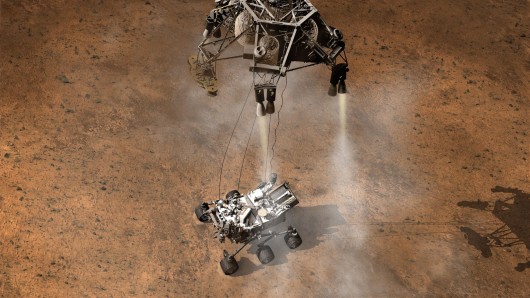
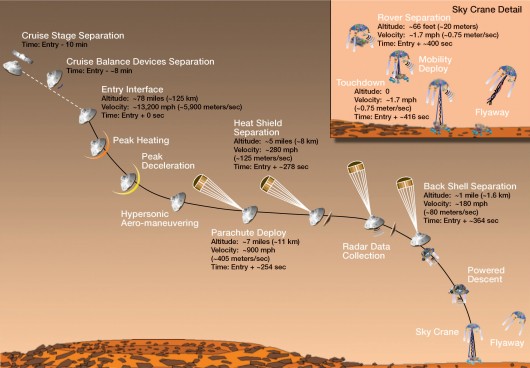
1. The Landing: Curiosity’s entrance to Mars was something truly new and revolutionary. For starters, the distance between Earth and Mars at the time of her arrival was so great that the spacecraft had to make an entirely autonomous landing with mission control acting as a bystander on a 13-minute delay. This led to quite a bit a tension at Mission Control! In addition, Curiosity was protected by a revolutionary heat shield that also acted as a lifting body that allowed the craft to steer itself as it slowed down in the atmosphere. After the aeroshell and heat shield were jettisoned, the rover was lowered by a skycrane, which is a rocket-propelled frame with a winch that dropped Curiosity to the surface.
2. First Laser Test: Though Curiosity underwent many tests during the first three weeks after its landing, by far the most dramatic was the one involving its laser. This single megawatt laser, which was designed to vaporize solid rock and study the resultant plasma with its ChemCab system, is the first of its kind to be used on another planet. The first shot was just a test, but once Curiosity was on the move, it would be used for serious geological studies.3. First Drive: Granted, Curiosity’s first drive test was more of a parking maneuver, where the rover moved a mere 4.57 m (15 ft), turned 120 degrees and then reversed about 2.4 m (8 feet). This brought it a total of about 6 m (20 ft) from its landing site – now named Bradbury Landing after the late author Ray Bradbury. Still, it was the first test of the rover’s drive system, which is essentially a scaled-up version of the one used by the Sojourn and Opportunity rovers. This consists of six 50 cm (20-in) titanium-spoked aluminum wheels, each with its own electric motor and traction cleats to deal with rough terrain.
4. Streams Human Voice: On August 28, 2012, Curiosity accomplished another historical first when it streamed a human voice from the planet Mars back to Earth across 267 million km (168 million miles). It was a 500 kilobyte audio file containing a prerecorded message of congratulations for the engineers behind Curiosity from NASA administrator Charles Bolden, and demonstrated the challenges of sending radio beams from Earth to distant machines using satellite relays.
5. Writes a Message: Demonstrating that it can send messages back to Earth through other means than its radio transmitter, the Curiosity’s treads leave indentations in the ground that spell out JPL (Jet Propulsion Lab) in Morse Code for all to see. Apparently, this is not so much a gimmick as a means of keeping track how many times the wheels make a full revolution, thus acting as an odometer rather than a message system.
6. Flexing the Arm: Curiosity’s robotic arm and the tools it wield are part of what make it so popular. But before it could be put to work, it had to tested extensively, which began on August 30th. The tools sported by this 1.88 m (6.2-ft) 33.11kg (73 lb) arm include a drill for boring into rocks and collecting powdered samples, an Alpha Particle X-ray Spectrometer (APXS), a scooping hand called the Collection and Handling for In-Situ Martian Rock Analysis (CHIMRA), the Mars Hand Lens Imager (MAHLI), and the Dust Removal Tool (DRT).
7. Discovery of Ancient Stream Bed: Curiosity’s main mission is to seek out areas where life may have once or could still exist. Therefore, the discovery in September of rocky outcroppings that are the remains of an ancient stream bed consisting of water-worn gravel that was washed down from the rim of Gale Crater, was a major achievement. It meant that there was a time when Mars was once a much wetter place, and increases the chances that it once harbored life, and perhaps still does.
8. First Drilling: In February, Curiosity conducted the first robot drill on another planet. Whereas previous rovers have had to settle for samples obtained by scooping and scraping, Curiosity’s drill is capable of rotational and percussive drilling to get beneath the surface. This is good, considering that the intense UV radiation and highly reactive chemicals on the surface of Mars means that finding signs of life requires digging beneath the surface to the protected interior of rock formations.9. Panoramic Self Portrait: If Curiosity has demonstrated one skill over and over, it is the ability to take pictures. This is due to the 17 cameras it has on board, ranging from the black and white navigation cameras to the high-resolution color imagers in the mast. In the first week of February, Curiosity used its Mars Hand Lens Imager to take 130 high-resolution images, which were assembled into a 360⁰ panorama that included a portrait of itself. This was just one of several panoramic shots that Curiosity sent back to Earth, which were not only breathtakingly beautiful, but also provided scientists with a degree of clarity and context that it often lacking from images from unmanned probes. In addition, these self-portraits allow engineers to keep an eye on Curiosity’s physical condition.
10. Long Trek: And last, but not least, on July 4th, Curiosity began a long journey that took it out of the sedimentary outcrop called “Shaler” at Glenelg and began the journey to Mount Sharp which will take up to a year. On July 17, Curiosity passed the one-kilometer mark from Bradbury Landing in its travels, and has now gone more than a mile. Granted, this is still a long way from the breaking the long-distance record, currently held by Opportunity, but it’s a very good start.
Such was Curiosity’s first 365 days on Mars, in a nutshell. As it enters into its second year, it is expected to make many more finds, ones which are potentially “Earthshaking”, no doubt! What’s more, the findings of the last year have had an emboldening effect on NASA, which recently announced that it would be going ahead with additional missions to Mars.
These include the InSight lander, a robotic craft which will conduct interior studies of the planet that is expected to launch by 2016, and a 2020 rover mission that has yet to be named. In addition, the MAVEN (Mars Atmosphere and Volatile Evolution) orbiter as just arrived intact at the Kennedy Space Center and will be blasting off to the Red Planet on Nov. 18 from the Florida Space Coast atop an Atlas V rocket.
These missions constitute a major addition to NASA’s ongoing study of Mars and assessing its past, present and future habitability. Between rovers on the ground, interior studies of the surface, and atmospheric surveys conducted by MAVEN and other orbiters, scientists are likely to have a very clear picture as to what happened to Mars atmosphere and climate by the time manned missions begin in 2030.
Stay tuned for more discoveries as Curiosity begins its second year of deployment. Chances are, this year’s milestones and finds will make this past years look like an appetizer or a warm-up act. That’s my hope, at any rate. But considering what lies ahead of it, Curiosity is sure to deliver!
In the meantime, enjoy some of these videos provided by NASA. The first shows Curiosity’s SAM instrument singing “happy birthday” to the rover (though perhaps humming would be a more accurate word):
And check out this NASA video that sums up the rover’s first year in just two minutes:
Yes, the name is a bit of a attention-getter, but when you come to understand the purpose behind Lockheed Martin’s new spacecraft, the description does appear to be quite apt. It’s known as MAVEN, which stands for Mars Atmosphere and Volatile EvolutioN, and it is currently being produced in Lockheed Martin’s Martin Space Systems facility in Denver, Colorado.
People may recall how earlier this year, MAVEN was mentioned as part of the “Going to Mars” campaign. A project that is being organized by the University of Colorado at Boulder’s Laboratory for Atmospheric and Space Physics (CU/LASP), the Martian orbiter will be carrying a DVD featuring the names of everyone who applies, as well as three specially-selected haikus.
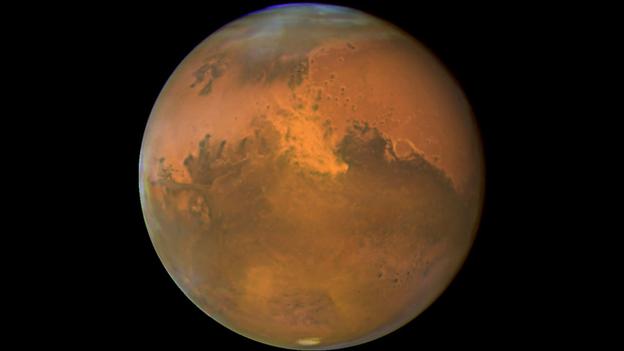
However, it is MAVEN’s larger mission which is now the focus of much interest. Later this year, NASA will be launching the orbiter to Mars for the sake of examine the atmosphere and answering some burning questions that remain about the planet. Thanks to evidence provided by Curiosity, Opportunity, and other missions, scientists now know that the Martian surface once boasted conditions suitable for life, including liquid water.
Hence, Maven’s ultimate purpose, which will be will to orbit the planet and examine whether the atmosphere could also have provided life support. Scientists working on the Maven mission want to understand what this atmosphere was like, and the processes that led to its destruction. As Guy Beutelschies, Maven Programme Manager at Lockheed Martin, put it:
What we know from our missions looking at the surface of Mars is that there used to be water there. We can see the outlines of ancient rivers, the shorelines of ancient oceans. But water can’t exist there now – the atmosphere is too thin and too dry, any water would just evaporate or freeze.
So the big question is what happened to Mars’ atmosphere? Short of being able to travel back in time into the Martian past, how would anyone go about tackling these questions with a mission today? Beutelshcies explained it as follows:
[The atmosphere] used to be thicker, warmer, wetter, now it’s thin and dry. How did we get there? In a sense we are building a little bit of a time machine. What we’re doing is understanding the processes.
Just last week, evidence provided by the Curiosity rover supports the theory that Mars may have lost most of its atmosphere billions of years ago. Still, scientists remain skeptical that Mars once had an atmosphere comparable to that of Earth. Today, that atmosphere is roughly one-hundredth the thickness of Earth’s, made up mostly of carbon dioxide and a tiny fraction of water vapor. What little remains is being stripped away by the solar wind.
And unlike Earth, Mars does not have a magnetosphere to protect its atmosphere from being blown away – at least not anymore. Such a fragile, thin band around is now unlikely to support any sort of life, as far as we know. But the atmosphere in the past must have been more substantial to allow the formation of rivers, lakes and oceans.
Bruce Jakosky, the Principal Investigator for Maven who is based at the University of Colorado’s CU/LASP lab in Boulder, claims:
We think that Mars used to have a magnetic field. We see places on the surface that retain some remnant magnetism, they were imprinted when they formed with whatever magnetism was there. We think that some four billion years ago, when the magnetic field turned off, that turn-off of the magnetic field allowed [for the] turn-on of the stripping by the solar wind.
To investigate the processes taking place today, Maven will dip into the Martian upper atmosphere with each orbit, measuring the particles, sampling gases, monitoring the magnetic field and solar wind. Whereas the rovers have looked at the atmosphere from the ground up, MAVEN will look at it from the top down. At this point, both are needed to put together a picture of what’s controlling the Mars environment.
As well as filling in the blanks about Mars’ depleted atmosphere, Maven will also provide clues to the habitability of other planets beyond the solar system. As Jakosky said, the research conducted will have far-reaching implication for our understanding:
In trying to understand the distribution of life throughout the Universe, this is a really important indicator. Understanding the environmental conditions that allow [life] to exist, or don’t allow it to exist, is key to being able to extrapolate elsewhere.
What’s more, understanding what happened to Mars will provide some key insight into the history of our Solar System, and how it went from being a star with two planets that had oceans and atmospheres to just one. Knowing why things continued to operate on Earth, while on Mars they went horribly wrong, is likely to be quite the eye-opener, and make us all thankful we evolved here on Earth.
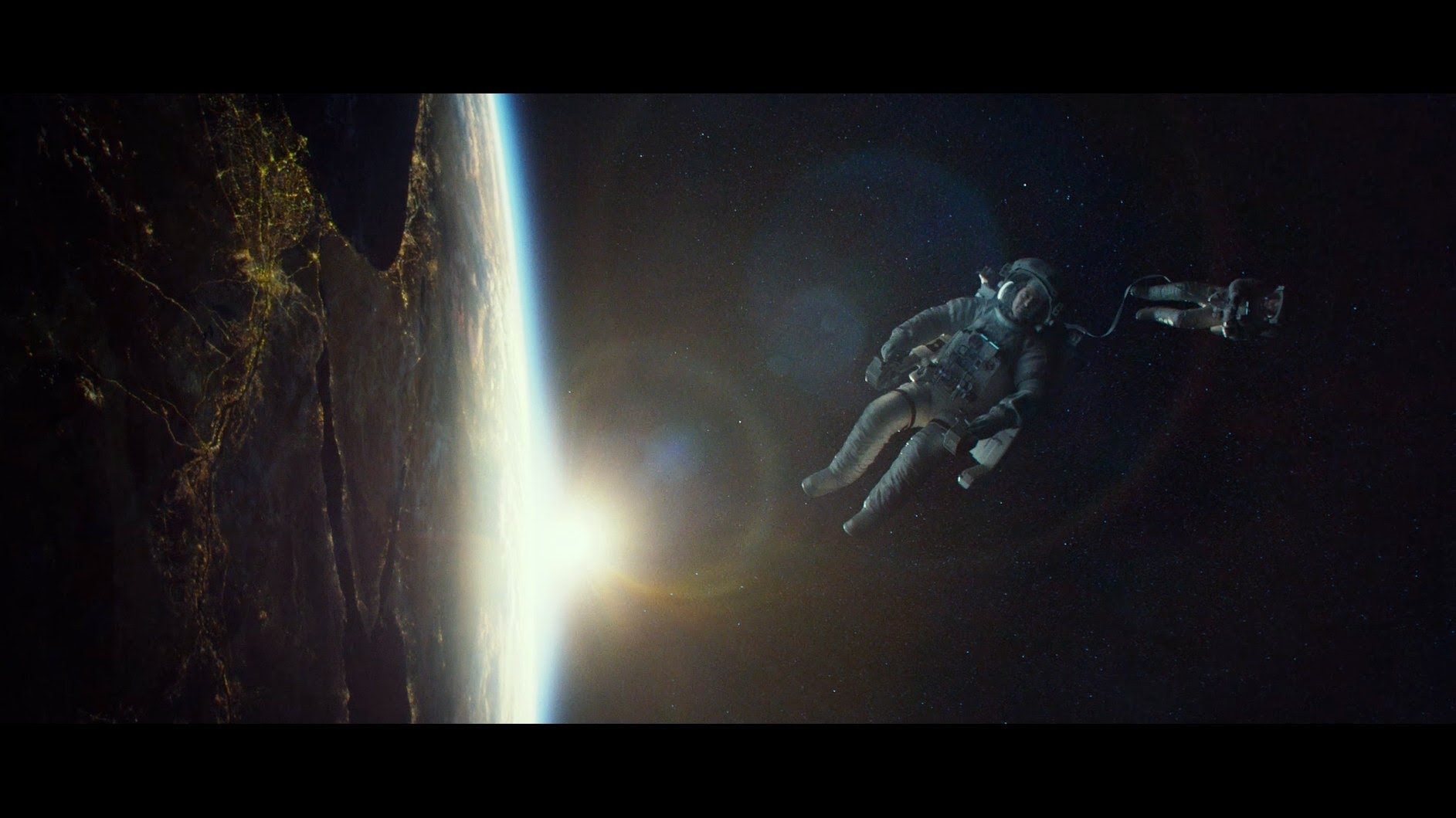
Being lost in space has to be one of the most frightening scenarios imaginable. Simply floating away, too fast to stop and with nothing hang onto, knowing that you’re doomed to drift inevitably until you run out of air. It’s the stuff of nightmares, really. That’s the kind of feel director Alfonso Cuarón was clearly going for with this movie clip that was featured at this year’s Comic Con.
Starring Sandra Bullock and George Clooney, the story focuses on two astronauts who are trying to return to the Explorer space shuttle after encountering a massive satellite debris field. As always, Cuarón’s brought his talent for wonderful long-take shots, but also utilized technology he developed specifically for the film, but was reticent to discuss. Apparently, this had to do with the patents that were “still pending”.
In any case, the end result is quite dazzling and frightening, examining what would happen if two people were lost in space without a ship. I for one would probably crap in my spacesuit, which would make for a very long and uncomfortable death as I floated off into space! The movie is set for release on October 4th. Enjoy!

 It’s one of Jupiter’s four largest moons, named the Jovians by the famed astronomer – Galileo Galilee – who first discovered them. And from all outward appearances, the moon is an icy, inhospitable place, with surface temperatures never reaching above -160º C (-256º F). Yet, beneath that frozen outer shell is believed to be a liquid, saltwater ocean, one that draws warmth from its orbit around Jupiter.
 According to NASA, this would likely take the form of a robot lander. Much like Curiosity, Opportunity, and other robotic research vehicles, it would packed with a variety of sensors and analytical equipment. But of course, the nature of that equipment would be specifically tailored to answer a series of unknowns pertaining to Europa itself.
 One area of focus would be Europa’s distinctive linear surface cracks which are believed to be the result of tidal forces. Europa’s eccentric orbit about Jupiter causes very high tides when the moon passes closest to the gas giant, so it is thought that this process would generate the heat necessary for simple life to survive. NASA thinks the cracks could contain biological makers, molecules indicating the presence of organic life, which have come from the ocean.
 Lead author Robert Pappalardo of NASA’s Jet Propulsion Laboratory summed up the situation as follows:
 But of course, the plans are in place and moving forward with every passing year. NASA is certainly not going to pass up a chance to examine one of the Solar Systems best candidates for extra-terrestrial life, and we can certainly expect more deep-space probes to be launched once Cassini is finished shooting pictures of Saturn.














 Stories by Williams