For those who love to stargaze, or people who just can’t resist having their picture taken, this weekend will present a number of cool opportunities. For many, the news that the Cassini space probe will be taking pictures of planet Earth this Friday is already known. But as it turns out, the MESSENGER space probe, currently in orbit around Mercury, has decided to get in on the action.
This is a rare opportunity indeed, and is associated with the Saturn Mosaic Project, something that Astronomers Without Borders is helping out with. The entire point is to give Earthlings a better view of the planet they call home, as well as to stimulate interest in Saturn, its rings, and many orbiting satellites. The SMP is also accepting images taken of Saturn, and has extended its deadline for submissions to July 29th.
There are also other competitions associated with the event – one is to submit photos that best represents Earth (the image must be taken on July 19th, 2013) and another is to write an original song about this event. The digital versions of the winning entries will be beamed to space at a later date.
Also, at the exact time the Cassini spacecraft is snapping pics of Earth, the Slooh Space Camera will be snapping images of Saturn with a live broadcast team. Their feed starts at 2:30 PM PDT / 5:30 PM EDT / 21:30 UTC and will be providing live views of Saturn from the Canary Islands.
If you’re looking to get in on the fun, this is the time when you should be looking at the heavens: First up, Cassini’s photo op will be taking place between 21:27 and 21:47 UTC (2:27 and 2:42 PDT, 5:27 and 5:42 p.m. EDT) on Friday, July 19th. MESSENGER, meanwhile, will be taking images at 11:49, 12:38, and 13:41 UTC (4:49 a.m., 5:38 a.m. and 6:41 a.m. PDT or 7:49 a.m., 8:38 a.m. and 9:41 a.m. EDT) on July 19th and 20th.
Sorry for the late notice. Just look up at the sky and wave. As long as you keep doing it for the next thirty-six to forty-eight hours, I’m sure you can’t miss. Man, times zones are tricky!
For decades, the Canadian Space Agency has been building the Shuttle Remote Manipulator System (SRMS) – also known as the Canadarm. Since 1981, aboard the shuttle STS-2 Columbia, this model of robotic arm has come standard on all NASA shuttles and was used as its main grasper. However, due to the progress made in the field of robotics over the past thirty years and the need for equipment to evolve to meet new challenges, the Canadarm was retired in 2011.
Luckily, the CSA is busy at work producing its successor, the Mobile Service System – aka. Canadarm2. The latest versions are in testing right now, and their main purpose, once deployed, will be to save satellites. Currently, an earlier version of this arm serves as the main grasper aboard the ISS, where it is used to move payloads around and guide objects to the docking port.
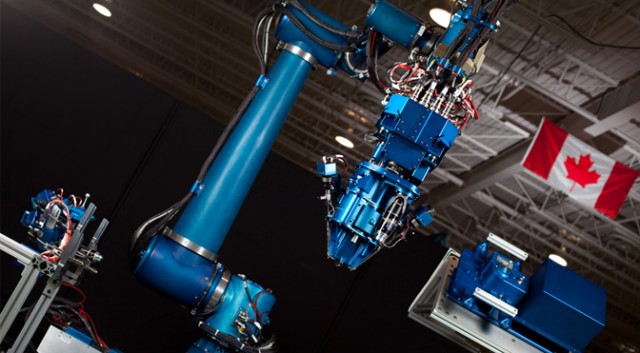
However, the newest models – dubbed Next Generation Canadarm (NGC) – are somewhat different and come in two parts. First, there is the 15 meter arm that has six degrees of freedom, extreme flexibility, and handles grappling and heavy lifting. The second is a 2.58 meter arm that comes attached to the larger arm, is similarly free and flexible, and handles more intricate repair and replacement work.
This new model improves upon the old in several respects. In addition to being more intricate, mobile, and handle a wider array of tasks, it is also considerably lighter than than its predecessor. When not in use, it is also capable of telescoping down to 5 meters of cubic space, which is a huge upshot for transporting it aboard a shuttle craft. All of this is expected to come in handy once they start the lucrative business of protecting our many satellites.
It’s no secret that there is abundance of space junk clogging the Earth’s upper atmosphere. This moving debris is a serious danger to both manned and unmanned missions and is only expected to get worse. Because of this, the ability to repair and retool satellites to keep them in operation longer is of prime importance to space agencies.
Naturally, every piece of equipment needs to undergo rigorous testing before its deployed into space. And the Canadarm2 is no exception, which is currently being put through countless simulations. This battery of tests allows operators to guide dummy satellites together for docking using the arms in both full manual and semi-autonomous mode.
No indication on when they will be ready for service, but it seems like a safe bet that any manned missions to Mars will likely feature a Canadarm2 or two. And as you can see, Chris Hadfield – another major Canadian contribution to space – is on hand to help out. Maybe he and the new arm can perform a duet together, provided it can handle a guitar!
And be sure to check out this video of the NGC Canadarm2 in action, courtesy of the Canadian Space Agency:
Ever since our astronomers have gained the ability to see into deep space and discern what lies in distant solar systems, a total of 910 extra-solar planets have been discovered. Of those, only a handful have been confirmed as potentially habitable by Earth scientists. Despite these discovered, it was not until recently that a “blue planet” outside of the Solar System, thanks to NASAs Hubble telescope.
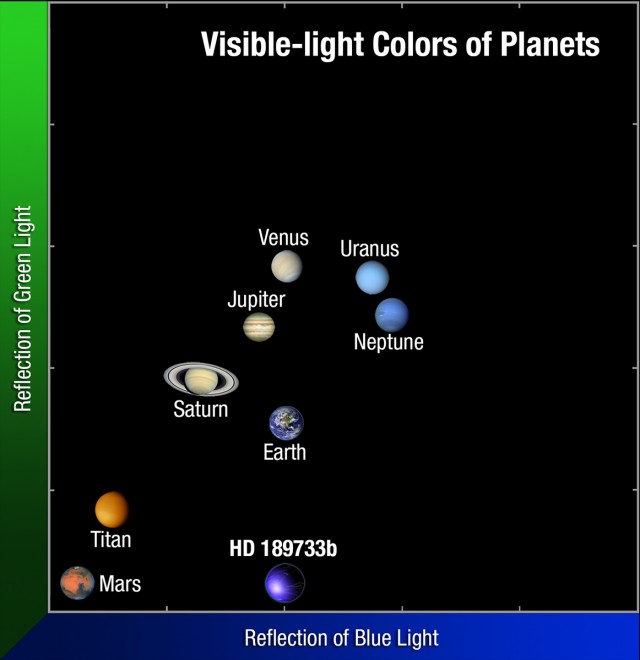
But here’s the kicker: as it turns out, the planet is not blue due to the presence of liquid water. The blue color likely comes from clouds in the atmosphere made of molten glass. The planet is known as HD 189733 b, located roughly 63 light years away from Earth in the constellation of Vulpecula (aka. the Fox). Initially discovered in 2005 by French astronomers who observed it passing in front of its star, HD 189733 b is one of the best-studied exoplanets.
Prior to this new finding, it was already known that the planet was a hot Jupiter — a massive gas giant that orbits very close to its parent star — and that, using polarimetry, it was most likely blue. Since that time, the blue color has been confirmed by a spectrograph aboard Hubble which scanned the planet during an eclipse. As it passed behind its parent star and out of our vision, Hubble recorded less blue light coming from the star, while the other colors remained the same.
This strongly indicates that the light reflected by HD 189733 b’s atmosphere is blue and thus, if we were close enough to directly observe the planet, it would appear blue. This is an apparent first for astrophysicists and astronomers, who wouldn’t normally be able to observe such a fluctuation from 63 light years away. But the size of the planet, plus the amount of light reflecting off it from its very-close-by star, mean that Hubble can do its thing.
As for the cause of the color itself, the current theory is that the planets atmosphere is full of clouds that contain tiny silicate particles, which absorb some light frequencies but reflect and scatter blue light. In the words of NASA, because the surface of the planet is around 815 Celsius (1,500 Fahrenheit), these particles are likely in a molten, liquid state that periodically turn into rain. Yes, you read that right, the planet experiences periods of molten glass rain!
In addition to that, it is also known that its orbital period (length of a year) is only 2.2 days. The planet is also tidally locked, meaning that one side is always facing towards the sun while the other experiences perpetual night. So basically, outside of its blue color, HD 189733 b is about as uninhabitable as it gets.
Ah well, the search for a truly Earth-like exoplanet continues I guess! And in the meantime, enjoy this short video from Hubble ESA – a computer graphic representation of the universe’s other “blue planet”:
Forgive the pun, but it was just too easy! Yes, SpaceX is once again making news with its Grasshopper reusable rocket system, which set the record for highest altitude ascended. On its sixth jump, which took place on June 14th, the rocket made it to a height of 325 meters (1066 feet) above the Earth and remained airborne for a minute and 8 seconds.
With each jump and new record set, Grasshopper and its inventors are bringing the age of affordable, commercial space flight that much closer. Seeing as how the goal is to send a rocket into orbit it and bring it back in one piece, this latest milestone might sound modest. But a quick look at each successive jump clearly shows that the Vertical Takeoff Vertical Landing (VTVL) rocket is making serious progress, and in a short stretch of time.
Consider the first jump which took place in September of 2012, where the rocket reached a height of 1.8 meters (6 feet) and remained aloft for three seconds. Sounds pretty meager, no? But less than two months later, the rocket was able to remain in the air for 8 seconds and reached a height of 5.4 meters (17.7 feet).
On its third run, performed in December of 2012, the rocket got 40 meters (131 feet) into the air, remained there for 29 seconds, and happened to be the first test flight where a cowboy mannequin was strapped to the rocket. On the fourth and fifth try, which were performed in March and April of this year, the rocket reached a height of 80 and then 250 meters (262 and 820 feet), remaining airborne for 34 and then 61 seconds.
This not only confirms that the rocket’s progress is exponential when it comes to height, but that its thrust-to-weight ratio has been improving vastly. Another big milestone here was the fact that for the first time, the rocket made use of its full navigation sensor suite with the F9-R closed loop control flight algorithms.
In previous tests, the rocket relied on other rocket sensors which were not as accurate, but this time around, SpaceX was directly controlling the rocket based on these new sensor readings, a move which has increased the level of accuracy in sensing the distance between Grasshopper and the ground.
To quote Nietzsche: “He who would learn to fly one day must first learn to stand and walk.” At this rate, averaging for the total rate of increase, I’d say the Grasshopper should be reaching Low-Earth Orbit (2000 km above sea level) by its 11th or 12th jump. And using the same figures, I figure the jump will be taking place sometime in May 2014. Somebody ought to be organizing a pool!
NASA’s Opportunity Rover is a special kind of vehicle. Not only did it set the record for longest distance driven on another world and discover the most compelling evidence for life on Mars thus far, it also surpassed its 90 day mission by a grand total of 3560 days, as of this past July 7th. In other words, the Opportunity Rover just celebrated its tenth anniversary, and people all over the world are marking the occasion by acknowledging the rover’s many contributions.
These include discovering the first meteorite found outside of Earth, a temperature profile of the Martian atmosphere, and uncovering a series tiny, iron-rich spheres known as “blueberries” that hinted at a time when Mars had water. In fact, Opportunity’s most important discovery may have come just last month.
This consisted of a rock that proves that Martian water was once drinkable, which in turn suggests strongly that life could once have thrived there. On top of that, it captured some amazing photos, long before Curiosity was sending back its hefty batch of panoramas. But of course, Opportunity had its share of trials and tribulations as well.
Foremost amongst these was the two months back in 2005 that it spent spent in a sand dune before its operators were able to wriggle it free centimeter by centimeter. And on the rover’s second day on Mars, it also experienced some shoulder joint problems, which proved to be the first of many, many mechanical problems.
And yet, all of that seems worth it now. After being eclipsed by its larger, more recent arrival – the Curiosity Rover – Opportunity has battled back with its incredible longevity. Who’s to say how much longer the little rover that could will remain in operation? And who’s to say what it will uncover. At this rate, its doesn’t seem unlikely that it will beat its cousin to the punch of finding the Holy Grail – organic particles on Mars!
And be sure to enjoy this video look-back at Opportunity produced by Space.com:
Ever since the Opportunity and Curiosity Rovers began their research stint on the red planet, evidence has been pouring in that indicates that the planet once supported life. And now, by examining the compositions of Martian meteorites found on Earth and data provided by the Mars rovers, Scientists from the Department of Earth Sciences at the University of Oxford have determined that the planet once boasted an oxygen-rich atmosphere.
The key determinant was the fact that the Martian surface rocks were five times richer in nickel than the meteorites found on Earth, a find which cast doubt on whether the meteorites were typical volcanic products. Whilst it is possible that the geological composition of Mars varies immensely from region to region, the team believes that it is more likely that the differences arise through a process known as subduction – in which material is recycled into the interior.
The scientists suggest that the Martian surface was oxidized very early in the history of the planet and that, through subduction, this oxygen-rich material was drawn into the shallow interior and recycled back to the surface during eruptions 4 billion years ago. The meteorites, by contrast, are much younger volcanic rocks that emerged from deeper within the planet and so were less influenced by this process.
As Professor Bernard Wood, the senior author of a study that appeared in Nature magazine, put it:
What we have shown is that both meteorites and surface volcanic rocks are consistent with similar origins in the deep interior of Mars but that the surface rocks come from a more oxygen-rich environment, probably caused by recycling of oxygen-rich materials into the interior. This result is surprising because while the meteorites are geologically young, around 180 million to 1.4 billion years old, the Spirit rover was analyzing a very old part of Mars, more than 3.7 billion years old.
In addition to evidence that Mars once had a sizable amount of surface water, in the form of rivers and lakes, this latest study demonstrates that Mars was once very much like Earth. In all likelihood, it would have been home to countless forms of bacteria, single-celled organisms, and possibly larger creatures as well. But being at the edge of our Sun’s habitable zone, it was unable to maintain the conditions for life to thrive.
Sad news, but encouraging when it comes to the prospect of making Mars able to sustain life again. And in the coming years and decades, that’s precisely what a number of space agencies, private companies and citizens want to do. And if these plans are to succeed long term, the planet will have to be converted into something that can independently support life.
In short, the colonization of Mars requires that the planet become something akin to its old self.
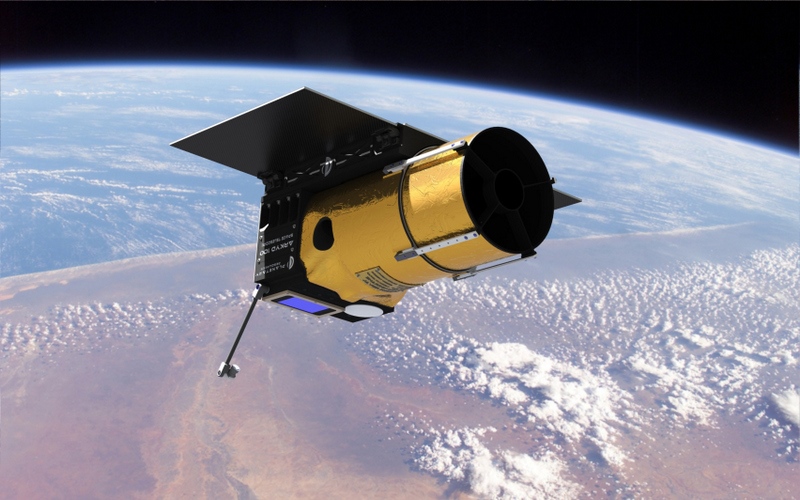
It seems that every day, the frontiers of space exploration are being pushed. In recent months, two stories occurred close to home (relatively speaking) that have stuck out in my memory. The first had to do with Planetary Resources plan to commission the world’s first crowdfunded telescope. The second came from China, where the new Shenzou 10 space ship launched on its way to dock with the prototype Tiangong-1 space station.
These stories were both groundbreaking for a number of reasons. Arkyd’s plan for a publicly-owned and funded telescope is not only an historic first, its also a major step forward in the creation of a new era of space exploration, one which is far more open and democratic than before. The second story represents a major leap for China as a major power, and their plans to conduct research aboard the Tiangong-1 shows a commitment to opening their space program to the public.
And as it happens, there have been recent developments on both fronts. On June 20th, less than a week ago, the Arkyd space telescope passed their goal of $1 million with its Kickstarter campaign. But perhaps to keep the money flowing, the company announced an ambitious aim to add extrasolar planet searching to the list they can double that goal to $2 million.
And they’ve set some other fundraising milestones just to keep things interesting:
$1.3 million: A ground station at an undisclosed “educational partner” that would double the download speed of data from the orbiting observatory.
$1.5 million: This goal, just released yesterday, is aimed at the more than 20,000 people who signed up for “space selfies” incentive where uploaded pictures are photographed on the telescope while it is in orbit. For this goal, “beta selfies” will be taken while the telescope is in the integration phase of the build.
$1.7 million: The milestone will be announced if Arkyd reaches 15,000 backers. (It has more than 12,000 as of this
With five days remaining and a total of $1,189,359 now raised, they are not likely to break that ceiling. Still, the company’s plan to begin prospecting asteroids for the sake of future mining efforts now seems well within reach. Best of luck to them!
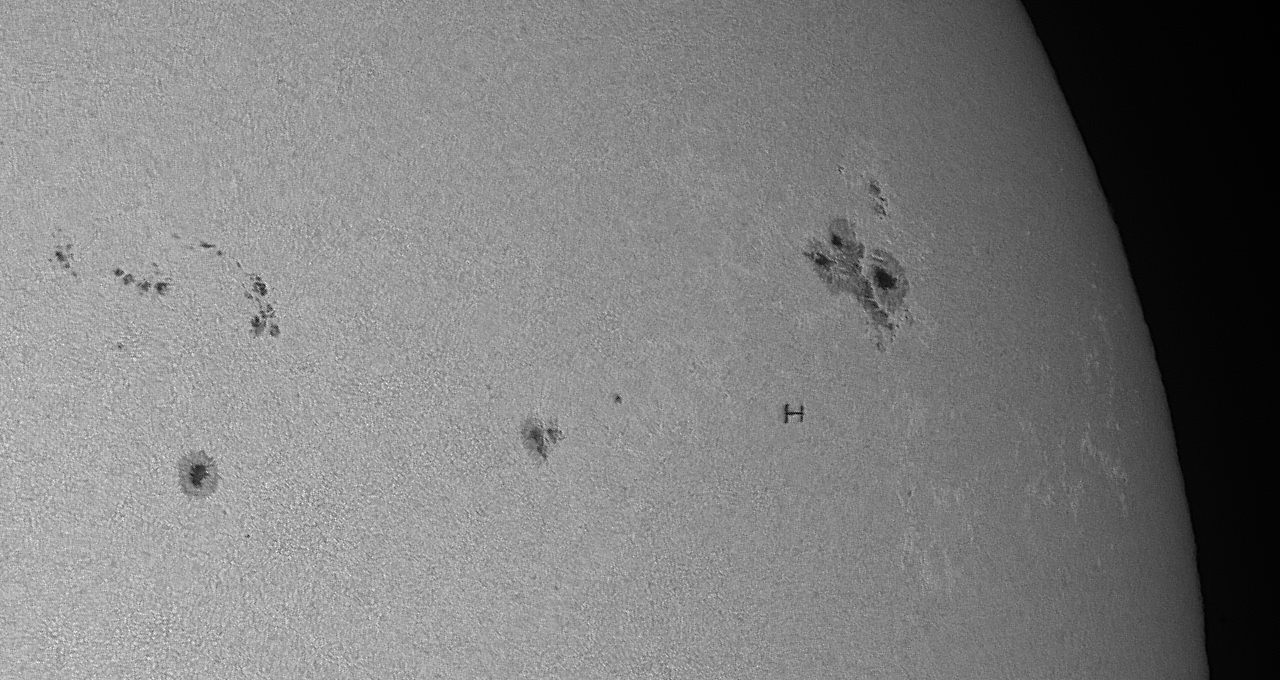
As for China’s Shenzhou 10, in an event that was captured on film, the space module is now docked with the Tiangong-1 space station and made a scenic transit in front of the sun. Astrophotographer Terry Legault had less than half a second to capture these incredible shots, but managed to get not one, but two shots in two consecutive days. Not an easy task to pull off, let alone twice!
If you look closely at the picture above, you can just make out Tiangong-1 station to the right of the sun, located below and to the left of a large cluster of sun spots. This top image is a crop of a full-face view of the Sun, taken with white light filters by Thierry from southern France on June 16, just after noon UTC. The transit duration was just 0.46 seconds, the distance of the spacecraft to observer was 365 km away, and the spacecraft was traveling at 7.4km/s (26,500 km/h or 16,500 mph).
This second imagine was taken the next day, again from the south of France, at 12:34:24 UTC on June 17, 2013. This one, in Hydrogen-alpha shows the Shenzhou-10/Tiangong-1 complex in multiple shots over the 0.46 second transit. Click on the photo to get the full resolution, then zoom in to see multiple shots of station as it made its transit across the face of the sun.
In a previous interview with Universe Today, Thierry explained how he prepares to take images like these:
For transits I have to calculate the place, and considering the width of the visibility path is usually between 5-10 kilometers, but I have to be close to the center of this path, because if I am at the edge, it is just like a solar eclipse where the transit is shorter and shorter. And the edge of visibility line of the transit lasts very short. So the precision of where I have to be is within one kilometer.”
Legault studies maps, and has a radio synchronized watch to know very accurately when the transit event will happen.
My camera has a continuous shuttering for 4 seconds, so I begin the sequence 2 seconds before the calculated time. I don’t look through the camera – I never see the space station when it appears, I am just looking at my watch!
Kudos to the man for once again capturing images of the heavens and sharing them with the world. And exciting times these are, when space exploration is once again booming and the frontiers of tomorrow are increasingly within our reach.
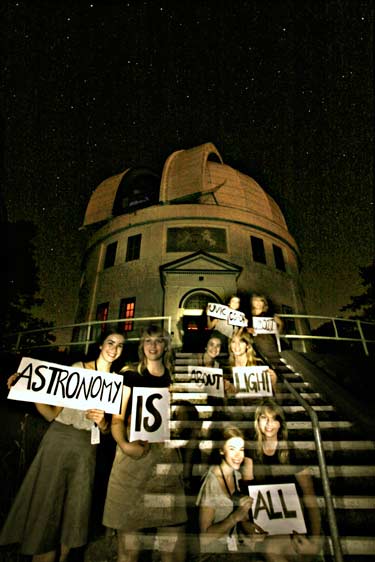
Yeah, that title might be a bit misleading. Technically, the news comes from Earth, but has everything to do with our study of the heavens. And this story comes to you from my own neck of the woods where – just a few kilometers from my house – the Dominion Astrophysical Observatory is about to shut down due to budget cuts.
Typically, it goes by the name of Center of the Universe, a national historic site and a hub for astronomy education in Victoria. And at the end of the summer, in what I can only say its a tragedy, it will be closed to the public for good. The National Research Council (NRC) put the official closing date at the end of August, right after the last of the student summer camps ends.
In addition, the facility houses historical artifacts like the original 1.8 metre mirror from the Plaskett Telescope and runs historical tours, multimedia shows, and youth programs. Unfortunately, this all costs about $32,000 to operate and $245,000 in employee wages, and brings in only about $47,000 per year in revenue. This gives the NRC a deficit of about $230,000 a year for this facility alone.
Naturally, Charles Drouin, spokesman for the NRC in Ottawa, said that the decision did not come easy, but was necessary. He confirmed that the active astronomy facility and national historic site will have no public outreach come late August or early September, and locals and visitors will no longer be able to tour the Plastkett Telescope, in operation since May 6, 1918.
On the bright side, the historical artifacts and displays in the Centre of the Universe building will remain in place after the facility is closed. The NRC will also be working with local community groups to find volunteers to use the space, so it will remain in operation, though in a limited capacity. This much is good news, since the loss of the site in its entirety would be an immeasurable loss for this community.
Interestingly enough, Drouin also claimed that the decision to close the facility was unrelated to the federal governments announcement in May to reorganize the NRC as an “industry-focused research and technology organization.” In short, the budget-driven decision is not being blamed on funding cuts or the desire to privatize. I wonder…
Personally, I am sad and ashamed to hear this news. The wife and I have been saying for ages that we need to go to this place and take a tour. Granted, that is not the easiest thing in the world to arrange, what with all the booked tours and the way the place seems to have an odd schedule. But you’d think we could have arranged something by now. It’s a national observatory, and right in my backyard for God sakes! To think we might have missed our chance is just plain sad…
However, there is still time, and I strongly recommend that anybody in the Saanich, Victoria, or Vancouver and Island region get their butts out and do what they can to see the place in operation before it shuts down. No telling what kind of hours and limited services it will be offering once its got only volunteers manning it. We need to take a gander at this star-gazing facility now before we lose the opportunity!
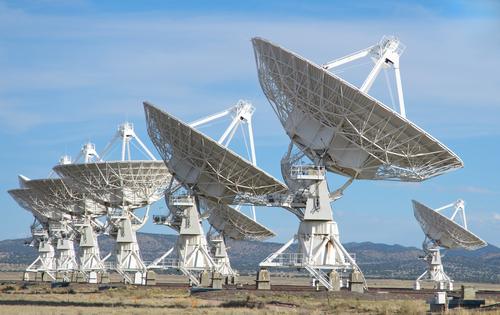
In what could be called a case of serious repurposing – beating swords into plowshares and so forth – or something out of science-fiction, a crowdfunded project has sought to turn a Cold War era dish into a deep-space communications array. This array will send messages to that’s relatively near to us, and potentially inhabited. And assuming anything sufficiently advanced lives there, we could be talking to them soon enough.
The project is known as Lone Signal, a crowdfunded effort to send a continuous stream of messages to the folks at Gliese 526, a red dwarf star 17.6 light-years away in the constellation of Bootes (aka Wolf 498). And the dish with which they intend to do this is known as the Jamesburg Earth Station, a nuke-proof satellite relay station in California that dates from the 1960s and even helped broadcast images of Neil Armstrong on the moon.
Long Signal, it should be noted, is the brainchild of The Blue Marble Space Institute of Science, non-profit virtual research institute that networks scientists from across the globe and multiple disciplines for the purpose of expanding the boundaries of knowledge, science and astronomy and promoting an open dialogue on the subject of exploration and settlement.Towards this end, they arranged for a 30-year lease on the Cold War-era dish (for a cool $3 million) and set up a project that will allow participants who contribute money to send a personalized message into space.
Ultimately, they plan to direct two beams at Gliese 526: a continuous wave with fundamental physics laws and basic information about Earth, and another consisting of crowdsourced greetings. The project is open to anyone and a series of initial short message (the equivalent of a 144-character tweet) will be available free of charge. Subsequent messages, images, and longer greetings, however, will cost money (about $1 for four texts) that will help the project fund itself.
The project’s website also lets participants track their messages and share them via social media, dedicate messages to others, and view signal stats. In an interview with Universe Today, Lone Signal co-founder Pierre Fabre, told people:
Our scientific goals are to discover sentient beings outside of our solar system. But an important part of this project is to get people to look beyond themselves and their differences by thinking about what they would say to a different civilization. Lone Signal will allow people to do that.
Indeed. Nothing like the prospect of facing another life form, a potential space invader even, to make people forget about all their petty bickering!
As our knowledge of the universe expands, we are becoming aware of the existence of more and more exoplanets. Many of these exist within the Habitable Zones of their parent star, which means two things. On the one hand, they may be candidates for potential settlement in the future. On the other, they may already be home to sentient life. If said life is sufficiently advanced, its entirely possible they could be looking back at us.
For some time, the human race has been contemplating First Contact with potential extra-terrestrial life, which was the very purpose behind the creation of NASA’s SETI (Search for Extra-Terrestrial Intelligence) program in 1961. The Pioneer space probes were another attempt at making contact, both of which carried small metal plaques identifying their time and place of origin for the benefit of any other spacefarers that might find them in the distant future.
Following in that tradition, Voyager 1 and 2 space probes contained even more ambitious messages, otherwise known as the Golden Record. These phonograph records – two 12-inch gold-plated copper disks – contained both sounds and images selected to portray the diversity of life and culture on Earth that would give any civilization that found them a good idea of what the people of Earth were capable of.
The contents of the records were selected for NASA by a committee chaired by Carl Sagan of Cornell University, and consisted of 115 images and a variety of natural sounds – surf, wind, thunder, birds, whales, and other animals. To this they added musical selections from different cultures and eras, and spoken greetings from Earth-people in fifty-five languages, and printed messages from then-President Carter and U.N. Secretary General Waldheim.
In this respect, Lone Signal represents the latest step in promoting contact and communication with other life forms. And in keeping with the trend of modern space exploration, it is being opened to the public via crowdfunding and personalized messages. But unlike SETI, which lost its government funding in 1995 and had to turn to private supporters, crowdfunded space exploration is something directly accessible by all citizens, not just corporate financiers.
Update:The Lone Signal project is now operational and on 9:00 PM EDT Monday, June 17 at a press event in New York, the team announced the transmission of the first interstellar message. The message was sent by none other than Ray Kurzweil, noted Futurist and science guru. That message was then read during his welcome talk to the Singularity University class of 2013, from the Computer History Museum in Mountain View, California:
Greetings to Gliese 526 from Singularity University. As you receive this, our computers have made us smarter, the better to understand you and the wisdom of the universe.
What he means by this is that by the time the message is recieved – roughly 18 years from now, assuming it ever is – humanity is likely to have taken the first steps towards merging our brains with computers via biotech, artificial intelligence, or other means of computer-assisted brain augmentation. At least, that’s what guys like Kurzweil hope for.
Other “alpha beamers” — including Dan Aykroyd, Alicia Keys, and Jason Silva — also sent beams Monday night. And for the time being, anyone can send a “crowdsourced” 144-character beam and pic. Better get on it before they start charging. If texting and phone rates are any indication, the price is likely to go up as the plan improves!
And be sure to enjoy this promotional video from Lone Signal:
And also check out this time-lapse video of the Jamesburg Earth Station in operation:
NASA has made some buzz with its announcement to print 3D pizza in space. And while this might sound like an awesome and appetizing use of the pioneering technology, it also has some pretty exciting implications for space exploration. For decades, astronauts have relied on freeze dried and thermostabilized food to meet their nutritional needs. But with 3D printing being considered, astronauts of the future could be using something akin to a replicator out of Star Trek.
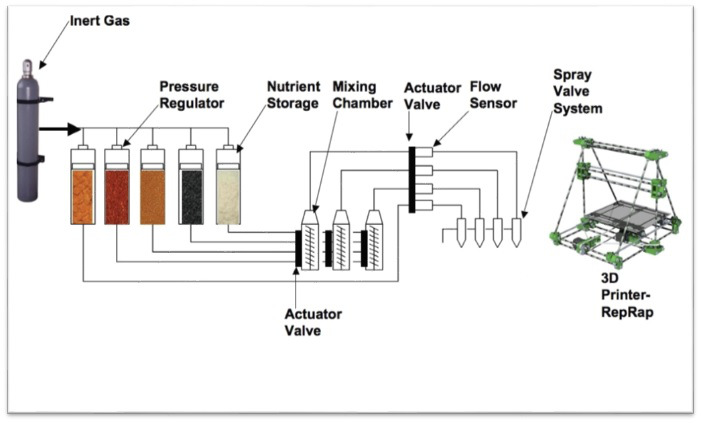
Earlier this month, Quartz broke the news that NASA’s Systems & Materials Research Corporation received a $125,000 grant to spend six months building a prototype of a 3-D food printer- one that will be able to print out a tasty pizza before venturing on to other food items. According to his NASA proposal, the printer spits out starches, proteins, fats, texture, and structure, while the inkjet sprays on flavor, smell, and micronutrients.
The pizza printer is the brainchild of Anjan Contractor, a mechanical engineer at the Systems & Materials Research Corporation who has long worked on 3-D printing technologies. In an interview with Quartz, he explained the process:
It works by first “printing” a layer of dough, which is baked at the same time it’s printed, by a heated plate at the bottom of the printer. Then it lays down a tomato base, “which is also stored in a powdered form, and then mixed with water and oil,” says Contractor. Finally, the pizza is topped with the delicious-sounding “protein layer,” which could come from any source, including animals, milk or plants.
As already mentioned, astronauts currently rely on food that is freeze dried prepackaged so that it can be eaten in microgravity. Astronauts get supplies when necessary from the International Space Station, where cargo vehicles transport their “fresh” food. But future astronauts who go to more distant places, like Mars, won’t be able to resupply. And that’s where the Advanced Food Project really comes into play.
When considering missions to Mars and farther into space, multiple issues need to be addressed. Grace Douglas, an Advanced Food Technology Project scientist at NASA, explains what these are and how 3D food can address them:
This is the only food that the crew members will have, so it needs to maintain its nutrition content for the length of the mission, and it has to be acceptable. If they don’t want to eat it, they won’t eat enough… 3-D food printers are looking at providing powdered forms of ingredients, and these would not be processed ahead.
That’s a good thing: minimally processed food has more nutrients, and it’s tastier. It also allows for even more options than what’s available today. And to address another key problem – printing in microgravity – NASA already has the option of using some of the more advanced prototypes.
Consider the Mataerial, a recently-developed 3D printer that is capable of printing in zero-gravity. NASA is exploring other processing technologies outside of the 3-D printing realm as well. High-pressure processing, which uses high pressures with a low-heat treatment to sterilize foods, is one option. Another is microwave sterilization–a process that uses high-heat treatments for a shorter period of time.
These latter technologies would make fresh foods accessible by ensuring that they are perfectly sterile, thus removing the need for food that needs to be dried or processed in advance. While all three technologies are still in the early phases of development, Douglas and others expect that they will off the ground and running by the time a manned mission to Mars is being planned.
And space is really just the tip of the iceberg when it comes to printing food. Here on Earth, it is a potential solution for ending world hunger. But that’s another, very interesting story. Stay tuned for it…
In the meantime, watch this video of a 3-D printer creating chocolate:

 For those who love to stargaze, or people who just can’t resist having their picture taken, this weekend will present a number of cool opportunities. For many, the news that the Cassini space probe will be taking pictures of planet Earth this Friday is already known. But as it turns out, the MESSENGER space probe, currently in orbit around Mercury, has decided to get in on the action.
 There are also other competitions associated with the event – one is to submit photos that best represents Earth (the image must be taken on July 19th, 2013) and another is to write an original song about this event. The digital versions of the winning entries will be beamed to space at a later date.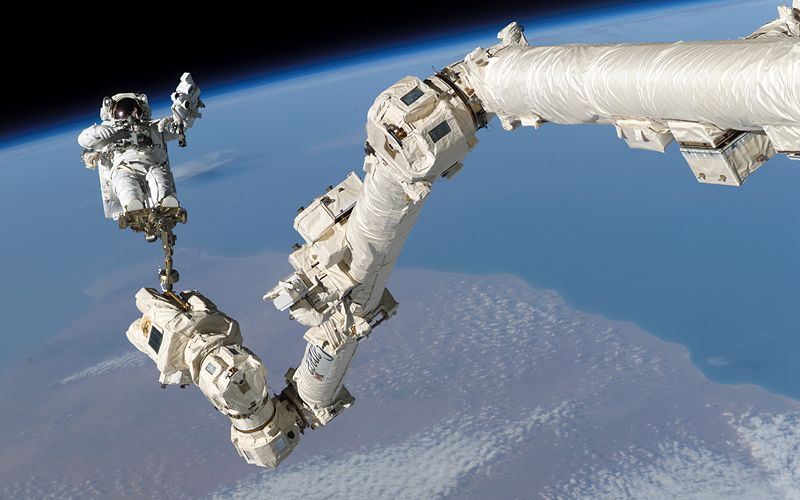




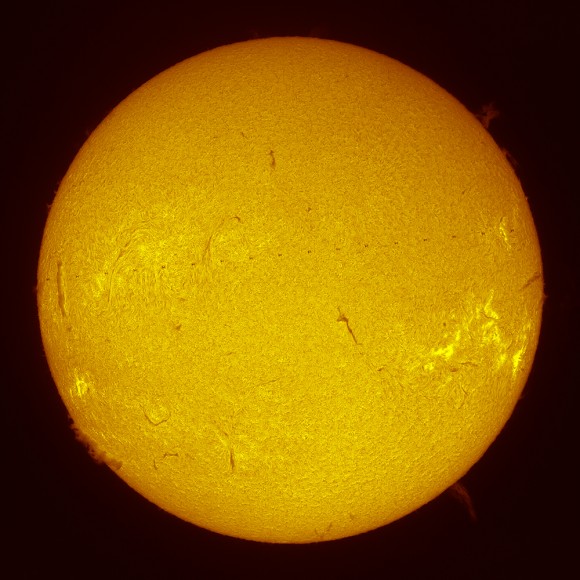 This second imagine was taken the next day, again from the south of France, at 12:34:24 UTC on June 17, 2013. This one, in Hydrogen-alpha shows the Shenzhou-10/Tiangong-1 complex in multiple shots over the 0.46 second transit. Click on the photo to get the full resolution, then zoom in to see multiple shots of station as it made its transit across the face of the sun.





 Stories by Williams