Episode 109 of Stories from Space is Live!

Episode 109 of Stories from Space is Live!

In this latest episode, I discuss the Standard Model of Cosmology, how scientists arrived at it, and how recent discoveries are causing some to question whether or not it is correct. To break it down, it is known as the Lambda Cold Dark Matter (ΛCDM) model, which basically combines the following theories.

  • The Big Bang: The theory that the Universe expanded from an initial state in which all matter was in hot, dense state (c’mon, you know the tune!) Evidence for this theory includes the Cosmic Microwave Background (CMB), the abundance of light elements (hydrogen, helium, etc.), the large-scale structure of the Universe, and cosmic expansion (see below).
  • Special Relativity: Einstein’s famous theory (E=mc2) that asserts that matter and energy are equivalent and how space and time are part of a four-dimensional framework in which the speed of light is constant and cannot be exceeded.
  • General Relativity: The extended generalized version of Einstein’s famous theory, which asserts that mass alters the curvature of spacetime.
  • Dark Matter: The theory that the majority of matter in the Universe is made up of a mysterious mass that doesn’t interact with normal matter in visible light.
  • Cosmological Constant: Also known as the Hubble-Lemaitre Constant (colloquially referred to as “Dark Energy”), wherein 68% of the cosmos is made up of energy that counteracts the force of gravity.

Over the past 120 years, these theories have come together to create the ΛCDM model of the Universe. For decades, scientists have been hoping to get a look at the very early Universe (less than 1 billion years after the Big Bang) to test this theory. When Webb finally provided the first observations of this period in cosmic history, what astronomers saw challenged many of the assumptions inherent in this model. Check out the episode below to learn more…
Where to Listen:

Episode 108 of SfS – A Conversation with Les Johnson – is Now Live!

Episode 108 of SfS – A Conversation with Les Johnson – is Now Live!

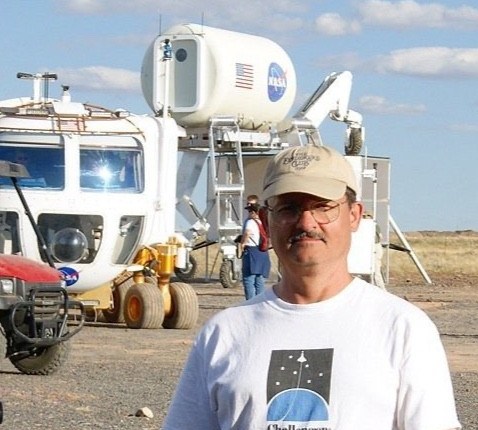
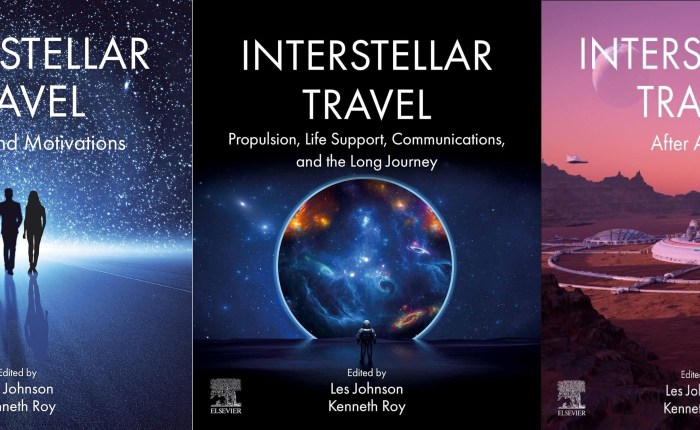
This latest episode was particularly special. In addition to having NASA technologist Les Johnson on for the second time (Episode 25 – Going Interstellar!), we got to talk about our latest collaboration and the upcoming release of a major project – the Interstellar Travel Monograph. This series, edited by Les Johnson and fellow NASA alumnus Ken Roy, details interstellar travel’s benefits, possibilities, and challenges. Volume I covered the purpose and motivations, while Volume II addressed the technical and associated requirements of making the journey.

The latest installment, Volume III: After Arrival, addresses how humans will live on a distant planet, exploring questions of governance, economics, adaptation, and (my contribution) terraforming! This work builds on Les Johnson’s previous work, A Traveler’s Guide to the Stars, which lays out the case for interstellar travel for regular, everyday readers. The Monograph series targets scientists, engineers, and technical experts and will be used as textbooks in University-level courses. Everyone who contributed is an expert in their field, and they let me join in! What an honor!

This series also builds on previous work I had the honor of participating in, The Ross 248 Project (also edited by Johnson and Roy), which addressed how humans could live on rocky planets around red dwarf stars (like Proxima b). Check out the episode to hear more about Les Johnson’s work at NASA, the Monogram, and this fascinating subject matter!

Where to Listen:

Episode 106 – Megastructures (Part III) – is now Live!

Episode 106 – Megastructures (Part III) – is now Live!

Sixty years ago, famed physicist Freeman Dyson theorized that in their ongoing quest to find more living space and energy, advanced civilizations might choose to convert their solar systems into megastructures enclosing their star. This came to be known as a “Dyson’s Sphere,” a concept that inspired countless variations and similar concepts. A few years later, Nikolai Kardashev mentioned the Dyson Sphere while presenting his scheme for classifying extraterrestrial intelligence (ETI) based on its level of technical development – aka. the Kardashev Scale.

In previous episodes, we examined the kinds of structures that a Type II and III Civilization might create. In this third and final installment, we looked at the types of megastructures a Type I+ Civilization might create (and that could include humanity someday). To break it down, these megastructures would belong to a civilization that had mastered its home planet (i.e., harnessing all of its energy sources) and was beginning to extend its presence across its solar system.

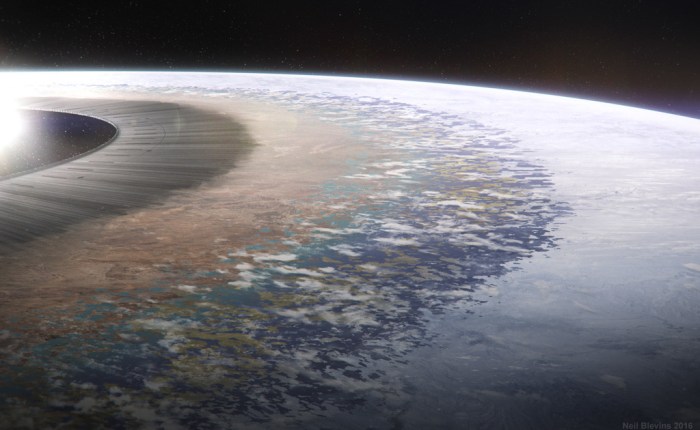
As always, these theoretical structures are a way to make futuristic predictions while also guiding SETI searches for potential technosignatures. Take a listen and be sure to check out the concept art of Neil Blevin at Soulburn Studios.

Further Reading:

Episode 105 – Megastructures (Part II) – is now live!

Episode 105 – Megastructures (Part II) – is now live!

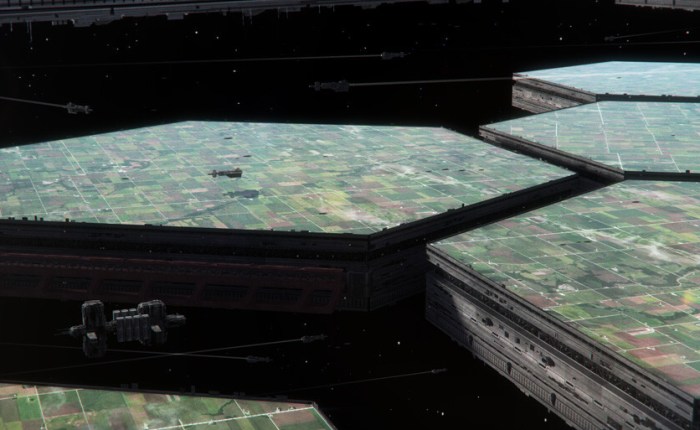
This week’s episode is the second installment in my series about megastructures. In the previous installment, we took a look at the Dyson Sphere, the concept that started it all, as well as variations like the Niven Ring and Matrioshka Brain. As promised, this episode examines some of the more exotic concepts for Dyson structures that could allow an advanced species to harness the power of its star. This includes the Alderson Disk and the Shkadov Thruster (pictured above and below).

Neil Blevins
Neil Blevins

These are all examples of megastructures that a Type II civilization (on the Kardashev Scale) could conceivably create. In part III, I hope to delve into proposed concepts that a Type I+ civilization could create someday (and that includes humanity). Some examples include a Space Elevator, an O’Neill Cylinder, a Stanford Torus, a Clarke Band, and more. As always, I will be referencing the artwork of Neil Blevins (and others) to illustrate what these fascinating concepts could look like. Follow the links below to learn more.

Where to Listen:

Episode 104 – Megastructures (Part I)! – is now Live!

Episode 104 – Megastructures (Part I)! – is now Live!

This past week, I did an episode that is long overdue! In truth, I can’t possibly explain why I’ve neglected it for so long. The subject at hand… MEGASTRUCTURES! Honestly, this is like one of my top five favorite topics and specialties when it comes to space, science fiction, and the Search for Extraterrestrial Intelligence (SETI). Yet here we are, three years (happy third anniversary, Stories from Space!) and more than 100 episodes later, and I find out I haven’t done an episode dedicated to this lovely topic.

The story begins with Freeman Dyson, the famed British-American theoretical physicist and mathematician. In 1960, he wrote a paper outlining how advanced civilizations, in their drive to find more living space and energy, would someday convert their planets into artificial biospheres that would enclose their entire star. This became known as a Dyson Sphere, a concept that spawned an entire field of study. Decades later, there are innumerable proposed concepts, all of which were proposed to help constrain SETI searches.

Similar to Nikolai Kardashev‘s paper (released a few years later), in which he proposed what is now known as the Kardashev Scale, Dyson’s proposed structure was a means of suggesting the kind of technological signatures that SETI researchers should be looking for. Thanks to him, SETI researchers are not only looking for evidence of transmissions in the cosmos, but also evidence of planetary engineering. Given the richness of this topic, this episode is part of a series that may (as I hope) run for three episodes. Check it out!

Where to Listen:

Episode 94 – WTF is Happening at NASA? (Part I) – is Now Live!

Episode 94 – WTF is Happening at NASA? (Part I) – is Now Live!

This week’s episode was a special treat! I sat down with former NASA scientist and astrobiologist Keith Cowing, the creator and editor of NASA Watch and Astrobiology.com. Keith’s extensive experience as an industry insider and a scientist has made him a trusted news source for millions of people, including myself. In his time, he witnessed many developments and advancements and played a major part in advancing the fields of astrobiology and space exploration.

He is a trained biologist, a specialist in payloads and biospecimen containment, and was part of the -Space Station Freedom Program. He is also very well-traveled, having been to Nepal and the Arctic Circle and even participated in centrifuge training and zero-g flights. I only got to hear a bit about all those experiences during our chat, but we got deep into discussing the current state of things at NASA. Our talk went so long, I had to break it into two segments to do it justice.

Follow the links below to hear Part I of our interview.

Where to Listen:

Episode 91 of Stories from Space is Now Live!

Episode 91 of Stories from Space is Now Live!

Hello folks! This week’s episode is dedicated to my friend, Kim Bannerman Pigott, who suggested it. She, too, is a creative person, as is her husband, Shaun. Between the two of them, they do literature, art, and music; they do it all! I encourage everyone to check out their website, Fox&Bee Studio. The topic of this episode is “Are Wormholes Possible?” As any fan of science fiction knows, wormholes are regularly featured in the genre, be it novels, shows, movies, or video games.

Some examples include Carl Sagan’s Contact, Star Trek, Battlestar Galactica, Babylon 5, Event Horizon, Farscape, the Wing Commander franchise, the Descent: Freespace franchise, and many more. The concept often goes by different names (FTL, jump points, jump nodes, etc.), but the idea remains the same. Pass through a wormhole (natural or artificial), and you end up a few, or few thousand, light-years away.

Like warp or hyperspace, they are a key element in the world-building process, facilitating the kind of travel that would allow for First Contact, inter-species interaction, exploring new worlds, and the emergence of new branches of humanity. In most cases, franchises tend to steer away from the science and avoid any complicated or inaccurate explanations. However, sometimes authors and producers dip their toes in and attempt to rationalize them (not very well, in my experience).

But what does the science say? As it turns out, there is a basis in theoretical physics for wormholes that goes back over a century. Check out the links below to learn more…

Where to Listen:

Episode 90 of Stories from Space is now Live!

Episode 90 of Stories from Space is now Live!

This week’s episode asks the question, “Are Red Dwarf Star Systems Habitable?” Red dwarf stars, also known as M-type stars, are pretty controversial. For starters, they are the most common type of star in the Universe, accounting for 75% of stars in our galaxy alone. In addition, red dwarfs seem particularly good at producing rocky planets that orbit within their habitable zones (HZs). In fact, of the 31 potentially habitable exoplanets located within a 50-light-year radius of our Solar System, 29 are located within red dwarf star systems.

However, there are also downsides. For starters, red dwarf suns are variable and prone to flare-ups. While the most powerful are emitted from the poles and are unlikely to affect orbiting exoplanets, the fact that these exoplanets are tidally locked with their stars (where one side constantly faces toward the star) means they would still be bombarded by radiation. But then again, there’s research suggesting this radiation could be essential for life to develop. Like I said, it’s a controversial issue, and we simply don’t know… yet!

Follow the links below to learn more:

Where to Listen:

Episode 88 of Stories from Space is now Live – “The Coming Age of Astrobiology with Kenneth Goodis-Gordon”!

Episode 88 of Stories from Space is now Live – “The Coming Age of Astrobiology with Kenneth Goodis-Gordon”!

Hello again! This week’s episode featured a special guest – Kenneth Goodis-Gordon! Ken is a Ph.D. candidate with the Planetary Science Group at the University of Central Florida (UCF) whose research focuses on exoplanets and the search for life in the cosmos (astrobiology). In a recent paper, he outlined how future exoplanet surveys could cast a wider net by examining polarized light. As he explains, this could greatly expand scientists’ ability to spot signs of life (aka. “biosignatures.”)

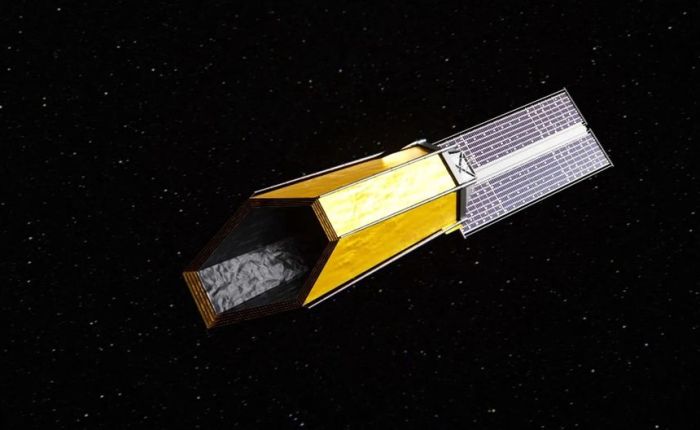
These recommendations will be especially useful when NASA’s Habitable World Observatory (HWO) launches sometime in the 2040s. This next-generation observatory will be the first space telescope specifically designed to search for signs of habitability and life on exoplanets. Learn more by following the links below…

Where to Listen:

Episode 86 of SfS – The Space Race – is now Live!

Episode 86 of SfS – The Space Race – is now Live!

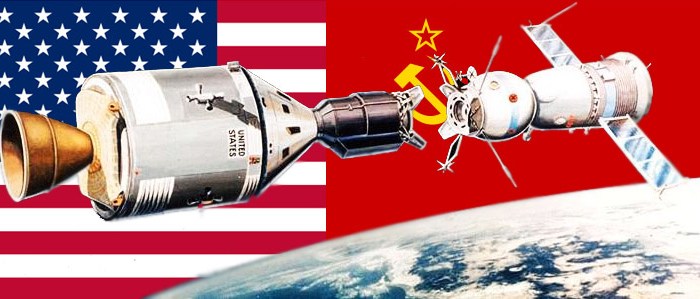
Welcome back! This week’s episode is all about the origins and evolution of the American and Soviet space programs—in other words, the Space Race! As I mentioned in previous episodes, these programs began as an effort to research rocket technology to deliver nuclear warheads. However, a parallel struggle began as both the U.S. and the Soviets realized the benefits of reaching space. Considering the atmosphere of the Cold War, which was as much about ideology as it was about weapons, they also considered it a matter of national prestige to “get their first!”

The Soviets achieved an early lead, sending the first satellite to space (Sputnik-1) in 1958. They also got their first with the first man to space in 1963 (Gagarin) and the first woman to space in 1964 (Valentina Tereshkova) with the Vostok Program. NASA caught up with the Mercury program, which sent the first American astronauts to space (the Mercury Seven), but the Soviets were still maintaining an early lead. That would change as NASA launched the Gemini program, demonstrating that they could spend extended periods there.

The stage was set for the Apollo Program, which would decide the Space Race once and for all and forever alter the course of history. Of course, that epic story has to wait for Part II of the episode, coming soon!

Where to Listen: