The Future is Here: 4-D Printing

4dprintingmaterial3-D printing has already triggered a revolution in manufacturing by allowing people to determine the length, width and depth of an object that they want to create. But thanks to research being conducted at the University of Colorado, Boulder, a fourth dimension can now be included – time. Might sounds like science fiction, until you realize that the new manufacturing process will make it possible to print objects that change their shape at a given time.

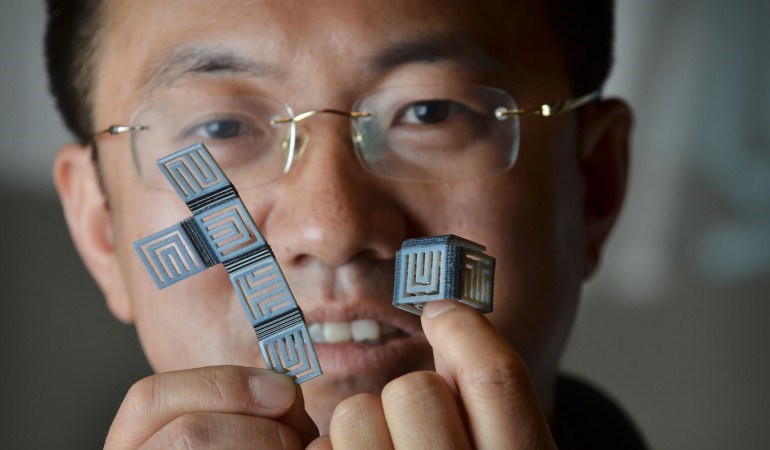
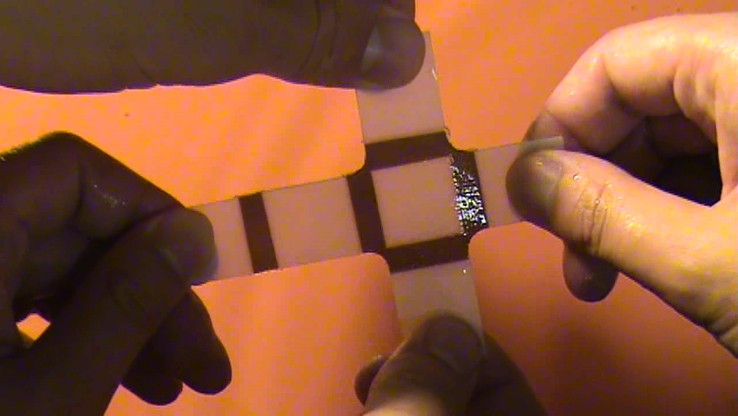
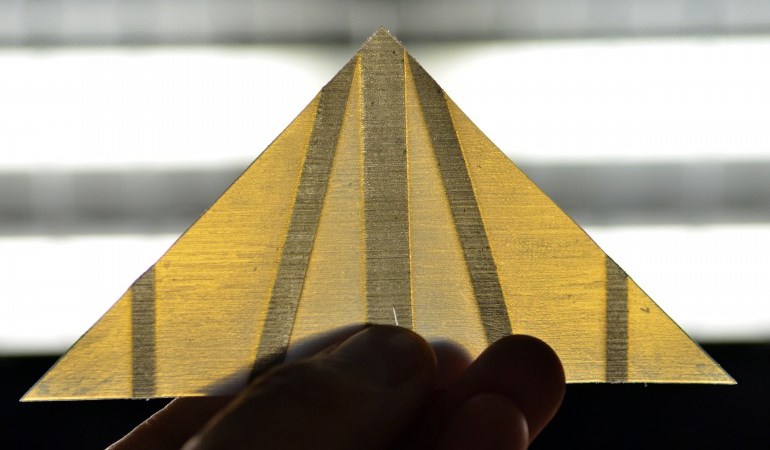
Led by Prof. H. Jerry Qi, the scientific team have developed a “4D printing” process in which shape-memory polymer fibers are deposited in key areas of a composite material item as it’s being printed. By carefully controlling factors such as the location and orientation of the fibers, those areas of the item will fold, stretch, curl or twist in a predictable fashion when exposed to a stimulus such as water, heat or mechanical pressure.
4dprintingmaterial1The concept was proposed earlier this year by MIT’s Skylar Tibbits, who used his own 4D printing process to create a variety of small self-assembling objects. Martin L. Dunn of the Singapore University of Technology and Design, who collaborated with Qi on the latest research, explained the process:

We advanced this concept by creating composite materials that can morph into several different, complicated shapes based on a different physical mechanism.

This means that one 4D-printed object could change shape in different ways, depending on the type of stimulus to which it was exposed. That functionality could make it possible to print a photovoltaic panel in a flat shape, expose it to water to cause it to fold up for shipping, and then expose it to heat to make it fold out to yet another shape that’s optimal for catching sunlight.
4dprintingmaterial2This principle may sound familiar, as it is the basis of such sci-fi concepts as polymorphic alloys or objects. It’s also the idea behind the Milli-Motein, the shape-shifting machine invented by MITs Media Labs late last year. But ultimately, it all comes back to organic biology, using structural biochemistry and the protein cell as a blueprint to create machinery made of “smart” materials.

The building block of all life, proteins can assume an untold number of shapes to fulfill an organism’s various functions, and are the universal workforce to all of life. By combining that concept with the world of robotics and manufactured products, we could be embarking upon an era of matter and products that can assume different shapes as needed and on command.

papertab-touchAnd if these materials can be scaled to the microscopic level, and equipped with tiny computers, the range of functions they will be able to do will truly stagger the mind. Imagine furniture made from materials that can automatically respond to changes in pressure and weight distribution. Or paper that is capable of absorbing your pencil scratches and then storing it in its memory, or calling up image displays like a laptop computer?

And let’s not forget how intrinsic this is to the field of nanotechnology. Smarter, more independent materials that can change shape and respond to changes in their environment, mainly so they can handle different tasks, is all part of the Fabrication Revolution that is expected to explode this century. Here’s hoping I’m alive to see it all. Sheldon Cooper isn’t the only one waiting on the Technological Singularity!

Source: gizmag.com

The Future is Here: The Space-Age Wheelchair

sugie_wheelchairFor people suffering from full or partial paralysis, interacting with the physical world can be constant source of frustration. Not only is said world designed by and for people who do not suffer from the same physical limitations, the devices used to restore mobility are so often limited themselves. Luckily, the technology is improving, thanks to input from people who have mobility issues themselves.

That’s what Satoshi Sugie, a former Japanese car designer, decided to do when he became interested in the mobility industry. After meeting a frustrated wheelchair user in Japan in 2010, he became inspired to come up with something that would address the wheelchair’s limitations and the stigma people who used them continue to suffer with.

sugie_wheelchair_oldAs Sugie describes the encounter:

He said he gave up going even two blocks away. One reason was he didn’t want to be seen. There is a negative stigma attached to the wheelchair. The second one is the functional limitation. If there is a bump, he has to avoid it. He was really scared to go outside.

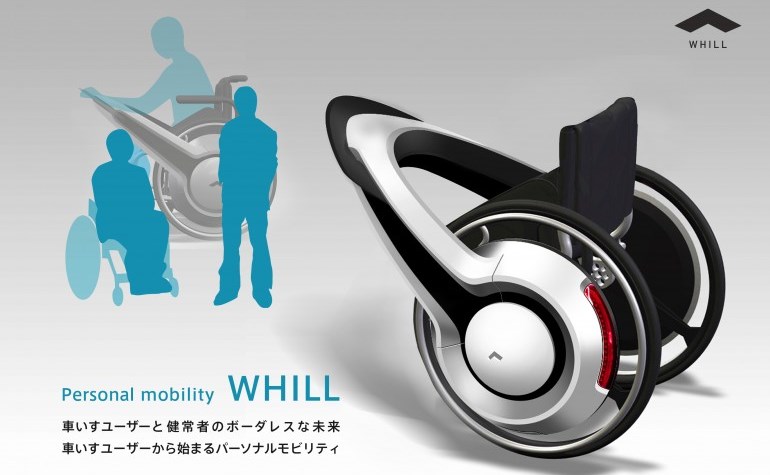
Sugie was working for Nissan at the time, designing futuristic models for motor shows, but this encounter inspired him to try his hand at futuristic wheelchair design as well. His first prototype – known as the WHILL – was released in 2011. This was a sort of turbo-charger for existing wheelchairs, and was described as a pair of enormous “headphones” given its appearance.

sugie_wheelchair1The latest version, known as the Whill Type-A, is a standalone chair aimed not just at wheelchair users, but power chair and mobility scooters riders as well. The new model is different from normal wheelchairs in several key ways. First of all, people can naturally lean forward in this chair, as they would riding a bike. This eliminates slouching and therefore makes for a more comfortable ride.

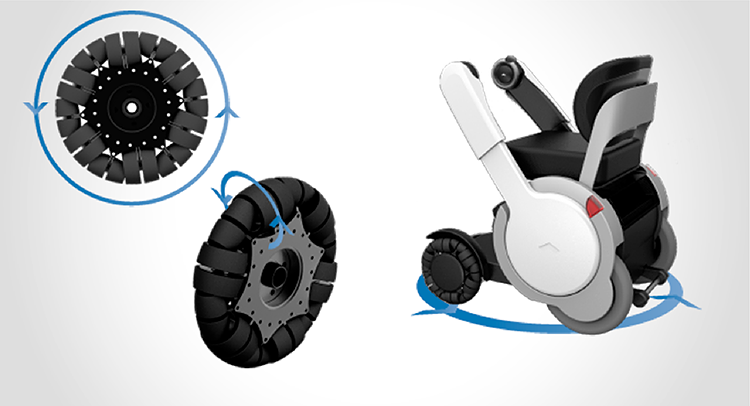
Second, the front wheel is composed of 24 separate tires, giving the vehicle very tight turning ability. And three, it looks “modern and sleek,” like something you would expect from a Japanese car designer. Riders control the Whill with a right-hand joystick while the left-hand has a simple fast- and slow-mode switch. It can also handle obstacles up to three inches high with easy, and seat rolls forwards and backwards, making getting in and out easy.


sugie_wheelchair2Sugie, who recently relocated to Menlo Park, California, is still working out pricing, but he hopes it won’t be too expensive. The wheelchair will be officially unveiled this February, and is likely to be cost a premium penny. Still, the advantages it offers are sure to go over well with wheelchair users and become something of the norm for the next-generation of such vehicles.

In addition to ease of use and the mobility it provides, it also lend users a certain high-tech chic, which may go a long way towards combatting the sense of social stigma many users feel.

Sources: fastcoexist.com, gizmag.com
 

Cyberwars: Stuxnet and Cryptolocker

cyber_security1It’s been quite the year for cybercops, cybercriminals, and all those of us who are caught in between. Between viruses which continue to involve and viruses that target sensitive information in new ways, it seems clear that the information age is fraught with peril. In addition to cyberwars raging between nations, there is also the danger of guerrilla warfare and the digital weapons running amok.

Consider the Stuxnet virus, a piece of programming that made headlines last year by sabotaging the Iranian nuclear enrichment program. At the time, the target – not to mention its source (within the US) – seemed all too convenient to have been unintentional. However, this year, Stuxnet is once again garnering attention thanks to its latest target: the International Space Station.

ISSApparently, this has been the result of the virus having gone rogue, or at least become too big for its creators to control. In addition to the ISS, the latest reports state that Stuxnet is hitting nuclear plants in countries for which the virus was not originally intended. In one case, the virus even managed to infect an internal network at a Russian power planet that wasn’t even connected to the internet.

According to Eugene Kaspersky, famed head of IT security at Kaspersky Labs, the virus can travel through methods other than internet connectivity, such as via optical media or a USB drive. Kaspersky claims that this is apparently how it made its way aboard the ISS, and that it was brought aboard on more than one occasion through infected USB drives.

computer-virus.istockFor the moment, it is unclear how this virus will be taken care of, or whether or not it will continue to grow beyond any single organization’s ability to control it. All that is clear at this point is that this particular virus has returned to its original handlers. For the time being, various nations and multinational corporations are looking to harden their databases and infrastructure against cyber attack, with Stuxnet in mind.

And they are not the only ones who need to be on their guard about protecting against intrusion. Average consumers are only at risk of having their databases being accessed by an unwanted digital visitor, one that goes by the name of Cryptolocker. Designed with aggressive salesmanship – and blackmail – in mind, this virus is bringing fears about personal information being accessed to new heights.

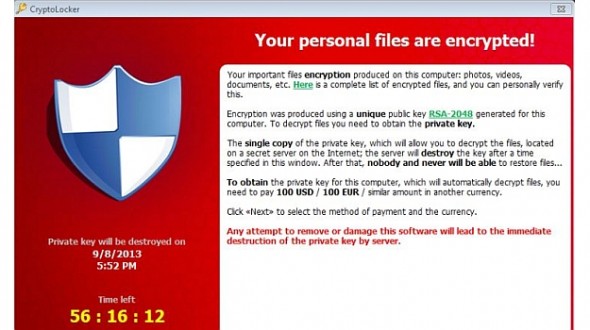
cryptolockerBasically, the Cryptolocker works by finding people’s most important and sensitive files and selling it back to them. After obtaining the files its needs, it then contacts a remote server to create a 2048-bit key pair to encrypt them so they cannot be recovered, and then contacts the owner with an ultimatum. People are told to pay up, or the virus will begin deleting the info.

When the virus first emerged in October of this year, victims were given three days to cough up roughly $200 via BitCoin or MoneyPak currency transfer. If the virus’ authors did not receive payment within 72 hours, they said, a single line would be deleted from a text file on some hidden foreign server, forever erasing the only string of numbers that could ever bring the affected files back from the dead.

cyber_virusSome users responded by simply setting their system’s internal clock back. A temporary measure, to be sure, but one which worked by tricking the virus into thinking the deadline had not expired. In addition, the three-day deadline worked against the viruses makers, since it’s proven restrictive to the types of people who mostly contract a virus like this – i.e. senior citizens and people working on corporate networks.

Such people are more vulnerable to such scams, but seldom have the computer-savvy skills to to set up BitCoin or other such accounts and transfer the money in time. Meanwhile, infecting a corporate server means that a bloated corporate bureaucracies will be responsible for making the decision of whether or not to pay, not an individual who can decide quickly.

virus-detected-640x353So basically, the designers of Cryptolocker were facing a catch-22. They could not extend the deadline on the virus without diminishing the sense of panic that makes many people pay, but would continue to lose money as long as people couldn’t pay. Their solution: If a victim does not pay up in time, the hackers simply raise the ransom – by a factor of 10!

This allows people more time to mull over the loss of sensitive data and make a decision, but by that time – should they decide to pay up – the price tag has gone up to a bloated $2000. Luckily, this has revealed a crucial bluff in the virus’s workings by showing that all the keys to the encrypted files are in fact not deleted after the three day time limit.

???????????????As such, the security industry is encouraging people to hold on to the useless, encrypted files and waiting for the criminal server to be someday seized by the authorities. Since any ransom paid is a de-facto encouragement to hackers to write a similar virus again — or indeed to re-infect the same companies twice – people are currently being told to simply hold out and not pay up.

What’s more, regular backups are the key to protecting your database from viruses like Cryptolocker. Regular backups to off-network machines that do not auto-sync will minimize the virus’ potential for damage. The best defense is even simpler: Cryptolocker infects computers via a bogus email attachment disguised as a PDF file, so simple email safety should keep you immune.

Alas, its a world of digital warfare, and there there are no discernible sides. Just millions of perpetrators, dozens of authorities, and billions of people fearing for the safety and integrity of their data. One can only wonder what an age of quantum computers, graphene and nanotube processors will bring. But more on that later!

Sources: extremetech.com, (2), fastcoexist.com

The Future of Transit: (More) Robotaxis and Podcars!

Robotaxi_2getthereIn the course of the past century, science fiction has provided us with many interesting visions of what the future of transportation will look like. And whereas not long ago, many of these seemed like hopeless fantasy – such as the failure of flying cars or robotic automated vehicles to become a reality by 2000  – recent years and developments have seen reality slowly catching up.

Case in point, last year, the European company named “2GetThere” installed a small fleet of automated podcars (aka. robotaxis) in the eco-friendly community of Masdar City. Similarly, the town of San Jose began work on the Personal Rapid Transit System – a series of on-call, point to point transit cars designed to replace the town’s system of taxis and buses, providing an environmentally friendly alternative to traditional mass transit.

London_podcarAnd most recently, the town of Milton Keynes – a sleepy city north of London – that is planning on conducting a podcar system trial run by 2015. Similar to the system at Heathrow Airport, which uses 21 on-call podcars on a  4 km (2.5 mile) stretch of track, the system will consist of a series of pods that will be able to carry two passengers, plus baggage, from the town’s train station to its downtown offices and the shopping district.

Milton Keynes’ plans is much more ambitious, calling for a fleet of 100 vehicles that will travel with far ore independently, albeit in a designated lane with curbs. The trial will assess safety and how people (and animals) react to them. The pods travel at up to 19 km/h (12 mph) and will contain GPS, cameras, and sensors to ensure they don’t crash into anything.

robotaxiAnd if all goes well, the system will be adopted by 2017 and residents will pay little more than a bus fare ($3.20) to travel in automated luxury. Purpose-built in the 1960s, Milton Keynes has an unusual grid layout that makes it an ideal testing ground for a plan that other British cities are seriously considering. Given the dual issues of congestion and pollution in British cities, a system of robotaxis seems like the perfect solution.

In fact, such a solution is ideal when it comes to all major cities around the world. The state of robotics, automation, centralized grids, and the reduced impact electrical transit has compared to gasoline-powered cars and buses, we could be looking at a world where every major city has its own system of robotaxis in the near future.

And I imagine a massive grid of Hyperoops lines will be connecting every major city… The future is likely to be mighty cool! In the meantime, enjoy this video of Heathrow’s podcar system in action:


Sources:
fastcoexist.com, heathrowairport.com
Cassini, MESSENGER, and MOM: A Space Probe Odyssey

Cassini_Saturn_Orbit_InsertionIt had has been a big month in the field of space probes and satellites. Whether they are in orbit around Mercury, on their way to Mars, or floating in the outer Solar System, there’s been no shortage of news and inspirational footage to be had. And it is a testament to the age we live in, where space news is accessible and can instantly be shared with millions of people around the world.

First up, there’s the recent release of Cassini’s magnificent image of Saturn’s rings shining in all their glory. Back in July, Cassini got a good look back at Earth from about 1.5 billion kilometers (932 million miles) away. Known as
“The Day The Earth Smiled”, NASA has spent the past few months cobbling together this picture from numerous shots taken during Cassini’s circuitous orbit around Saturn.

cassini-jupiter-annotatedCassini has always been able to take impressive pictures in Earth’s general direction, but this picture was special since it used the enormous bulk of Saturn to block the usually confounding brightness of the Sun. Cassini, which was launched to survey the outer planets in 1997, captured an absolutely incredible image of both the Earth as a pale blue dot, and of Saturn as a striking, luminous apparition.

As part of NASA’s latest awareness campaign, which tried to get everyday citizens to smile at the sky for the first posed interplanetary photo most of us have ever experienced, the photo captured the halo effect that makes our sixth planet look truly breathtaking. In the annotated version (pictured above), you can also see Venus, Mars, and some of Saturn’s moons.


Next up, there’s the MESSENGER probe, which managed to capture these impressive new videos of Mercury’s surface. As part of the NASA Advisory Council (NAC) ride-along imaging campaign, these videos were captured using the Mercury Dual Imaging System (MDIS). Even though the original high-res images were captured four seconds apart, these videos have been sped up to a rate of 15 images per second.


The views in each video are around 144-178 km (90-110 miles) across. The large crater visible in the beginning of the second video is the 191-km (118-mile) wide Schubert basin. In related news, there are new maps of Mercury available on the US Geological Survey website! Thanks to MESSENGER we now have the entirety of the first planet from the Sun imaged and mapped.

MESSENGER launched from Cape Canaveral Air Force Station back in August of 2004 and established orbit around Mercury on March 18th, 2011. It was the first man-made spacecraft ever to do so, and has provided the most comprehensive mapping of Mercury to date, not to mention evidence of ice, organic molecules, and detailed conditions on the surface.

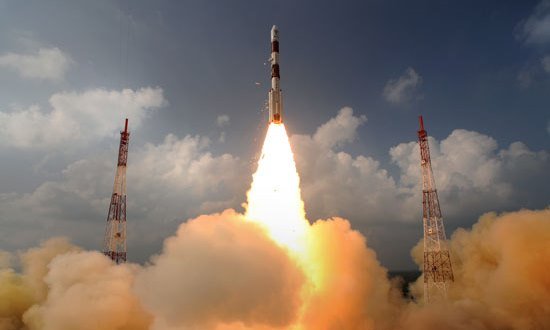
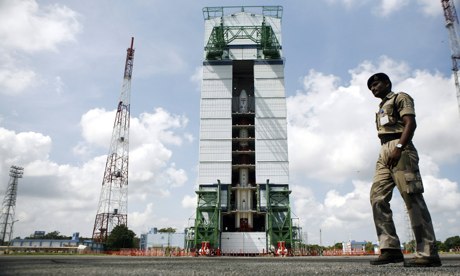
India_Mars_Orbiter1And last, but not least, there was the recent launch of the Indian Space Research Organization’s (ISRO) new Mars Orbiter Mission (aka. MOM). The launch took place on Tuesday, November 5th from the Indian space port located on a small island in the Bay of Bengal. As the nation’s first attempt to reach the Red Planet, the aim of the $70 million mission goes beyond mere research.

In addition to gathering information that might indicate if life has ever existed or could exist on Mars, the mission is also meant to showcase India’s growing prowess in the field of space and to jump ahead of its regional rival (China) in the big interplanetary march. As Pallava Bagla, one of India’s best known science commentators, put it:

In the last century the space race meant the US against the Soviets. In the 21st century it means India against China. There is a lot of national pride involved in this.

India Mars probeIn addition, there has been quite a bit of speculation that the missionw as designed to stimulate national pride in the midst of an ongoing economic crisis. In recent years, a plunging currency, ailing economy and the state’s seeming inability to deliver basic services have led many Indians to question whether their nation is quite as close to becoming a global superpower as it seemed in the last decade.

MOM is expected to arrive in the vicinity of Mars on September 24th, 2014 where it will assume an elliptical orbit around the planet and begin conducting atmospheric surveys. If all continues to goes well, India will the elite club of only four nations that have launched probes which successfully investigated the Red Planet from orbit or the surface – following the Soviet Union, the United States and the European Space Agency (ESA).

India_Mars_Orbiter2MOM was also the first of two new Mars orbiter science probes that left Earth and began heading for Mars this November. The second was NASA’s $671 million MAVEN orbiter, which launched on November 18th atop an Atlas V rocket from Cape Canaveral in Florida. MAVEN is slated to arrive just two days before MOM, and research efforts will be coordinated between the two agencies.

Much like MAVEN, MOM’s goal is to study the Martian atmosphere , unlock the mysteries of its current state and determine how, why and when the atmosphere and liquid water were lost – and how this transformed Mars climate into its cold, desiccated state it is in today. In addition to aiding our scientific understanding of the world, it may help us to transform the planet into a liveable environment once again.

For many people, these developments are an indication of things to come. If humanity ever intends to become an interplanetary species, an expanding knowledge of our Solar System is an absolute prerequisite. And in many respects, making other planets our home may be the only way we can survive as a species, given our current rate of population growth and consumption.

Sources: extremetech.com, nasa.gov, universetoday.com, planetarynames.wr.usgs.gov, theguardian.com, www.isro.org

3-D Printing Martian and Lunar Housing

3dprinted_moon_base1For enthusiasts of 3-D printing and its many possibilities, a man like Berokh Khoshnevis needs no introduction. As for the rest of us, he is the USC’s Director of Manufacturing Engineering, and has spent the last decade working on a new direction for this emerging technology. Back in 2012, he gave a lecture at TEDxTalks where he proposed that automated printing and custom software could revolutionize construction as we know it.

Intrinsic to this vision are a number of technologies that have emerged in recent years. These include Computer-Assisted Design/Computer-Assisted Manufacturing (CAD/CAM), robotics, and “contour crafting” (i.e. automated construction). By combining design software with a large, crane-sized 3-D printing machine, Khoshnevis proposes a process where homes can be built in just 20 hours.

contour-craftingKhoshnevis started working on the idea when he realized the gigantic opportunity in introducing more speed and affordability into construction. All of the technology was already in place, all that was required was to custom make the hardware and software to carry it all out. Since that time, he and his staff have worked tirelessly to perfect the process and vary up the materials used.

Working through USC’s Center for Rapid Automated Fabrication Technologies, Khoshnevis and his students have made major progress with their designs and prototypes. His robotic construction system has now printed entire six-foot tall sections of homes in his lab, using concrete, gypsum, wood chips, and epoxy, to create layered walls sections of floor.

3dprinted_moon_base3The system uses robotic arms and extrusion nozzles that are controlled by a computerized gantry system which moves a nozzle back and forth. Cement, or other desired materials, are placed down layer by layer to form different sections of the structure. Though the range of applications are currently limited to things like emergency and temporary shelters, Khoshnevis thinks it will someday be able to build a 2,500-square-foot home in 20 hours.

As he describes the process:

It’s the last frontier of automation. Everything else is made by machines except buildings. Your shoes, your car, your appliances. You don’t have to buy anything that is made by hand.

contour-crafting2As Khoshnevis explained during his 2012 lecture at TEDx, the greatest intended market for this technology is housing construction in the developing world. In such places of the world, this low-cost method of creating housing could lead to the elimination of slums as well as all the unhealthy conditions and socioeconomic baggage that comes with them.

But in the developed world, he also envisions how contour crafting machines could allow homes to be built more cheaply by reducing labor and material costs. As he pointed out in his lecture, construction is one of the most inefficient, dirty and dangerous industries there is, more so than even mining and oil drilling. Given a method that wastes far less material and uses less energy, this would reduce our impact on the natural environment.

3dprinted_moon_base2But of course, what would this all be without some serious, science fiction-like applications? For some time now, NASA and the ESA has been looking at additive manufacturing and robotics to create extra-terrestrial settlement. Looking farther afield, NASA has given Khoshnevis a grant to work on building lunar structures on the moon or other planets that humans could one day colonize.

According to NASA’s website, the construction project would involve:

Elements suggested to be built and tested include landing pads and aprons, roads, blast walls and shade walls, thermal and micrometeorite protection shields and dust-free platforms as well as other structures and objects utilizing the well known in-situ-resource utilization (ISRU) strategy.

3dprinted_moon_baseMany existing technologies would also be employed, such as the Lunar Electric Rover, the unpressurized Chariot rover, the versatile light-weight crane and Tri-Athlete cargo transporter as well some new concepts that are currently in testing. These include some habitat mockups and new generations of spacesuits that are currently undergoing tests at NASA’s Desert Research And Technological Studies (D-RATS).

Many of the details of this arrangement are shrouded in secrecy, but I think I can imagine what would be involved. Basically, the current research and development paradigm is focusing on combining additive manufacturing and sintering technology, using microwaves to turn powder into molten material, which then hardens as it is printed out.

sinterhab3To give you an idea of what they would look like, picture a crane-like robot taking in Moon regolith or Martian dust, bombarding it with microwaves to create a hot glue-like material, and then printing it out, layer by layer, to create contoured modules as hard as ceramic. These modules, once complete, would be pressurized and have multiple sections – for research, storage, recreation, and whatever else the colonists plan on getting up to.

Pretty cool huh? Extra-terrestrial colonies, and a cheaper, safer, and more environmentally friendly construction industry here on Earth. Not a bad way to step into the future! And in the meantime, be sure to enjoy this video of contour crafting at work, courtesy of USC’s Center for Rapid Automated Fabrication Technologies:


Sources:
fastcoexist.com, nasa.gov

News From Space: UrtheCast Cameras Blast Off!

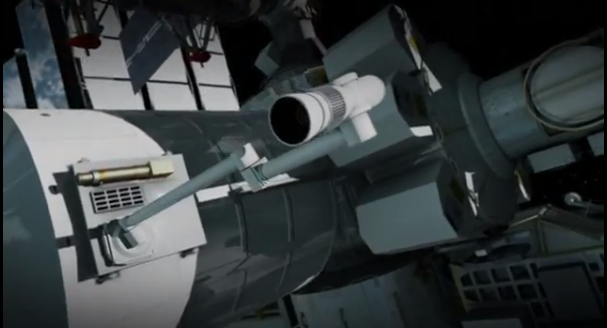
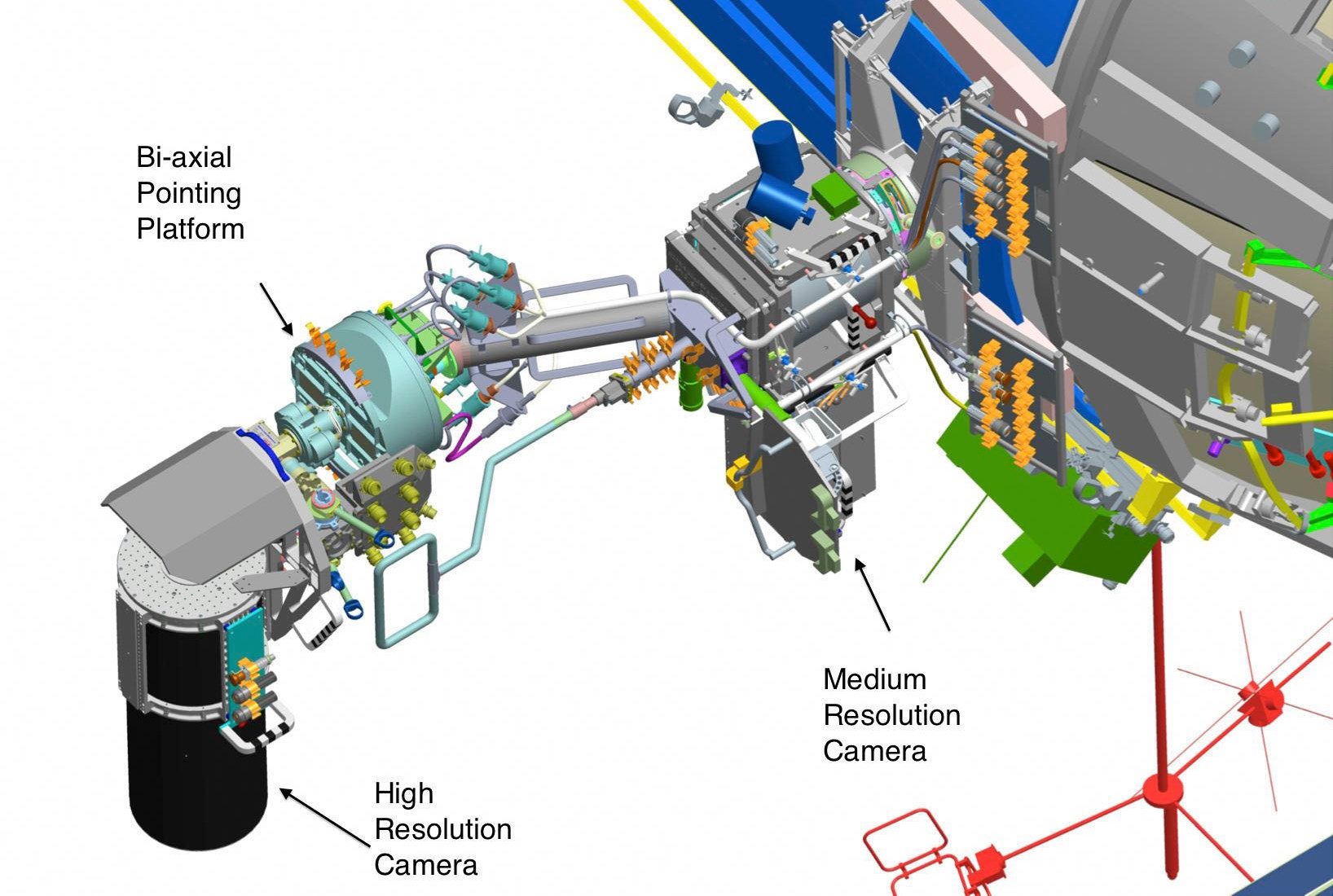
space_cameraTwo High-Definition cameras designed to stream detailed views of Earth from the International Space Station blasted off into space yesterday. The cameras are the work of UrtheCast, a Vancouver-based company that distributes operational software for publicly accessibly HD cameras and broadcasts. Once installed, they will provide a view of Earth that is usually reserved for astronauts.

The cameras – one still and one video camera – launched at 3:52 p.m. ET from the Baikonur Cosmodrome in Kazahkstan on an unmanned Russian Progress spacecraft aboard a Soyuz rocket. The two cameras will be attached to a platform on the underside of the space station that was brought up by a previous Progress flight in July and installed by Russian cosmonauts during a spacewalk.

Urthecastcam_UCThe cameras will be able to view a large band of the Earth between the latitudes of 51 degrees north and 51 degrees south, covering everything from the Canadian Prairies and the southern tip of Chile and Argentina. What’s more, their resolution will be high enough that people will be able to see things as small as cars, boats, their own homes, and even small groups of people.

The company stressed though that individual people would not be discernible as the resolution is simply not high enough to make out facial features. The fixed, still camera will take a continuous video panorama of Earth 50 kilometres wide as the space station orbits Earth 16 times each day. Meanwhile, the other camera will be pointable and able to be directed at specific points on the globe.

????????????????????????????????????????????????????????????And while many of the images they take will be available free online just a few hours after they were captured, customers will also have access to specific footage captured by the second, pointed camera. So for a small fee, people will be able to take part in what the company likes to call the “world’s first near-live HD video feed of Earth.”

The company expects customers to include governments, non-governmental organizations and corporations that would like particular types of live and archival images for purposes such as monitoring the environment. As Chris Carter, director of wealth management for ScotiaMcLeod and CBC Radio’s Vancouver business columnist, claims that this expectation is valid since UrtheCast’s business model allows it avoid a major hurdle.

urthecaste.gifBasically, the greatest impediment to providing space-based footage of the Earth is the astronomical (no pun!) cost of getting cameras into space. UrtheCast has gotten around this hurdle by partnering with Roscosmos, the Russian Space Agency, who transported their cameras in exchange for free access to images that it might otherwise have to pay for.

According to a statement made by the company earlier this month, as of Sept. 30, the company – which trades on the Toronto Stock Exchange – had annual purchase commitments worth $21 million:

Although these purchase commitments cannot be considered binding prior to the cameras being installed on the ISS, UrtheCast has already begun the process of converting these purchase commitments into binding commercial agreements.

The democratic space age is looming, people. Between regular updates on social media and webcasts from NASA rovers and space satellites, to live feeds from publicly-accessible cameras, we are entering an age where exploration and research are accessible like never before. Add to this the dream of telexploration, and we could be looking at a future where astronauts do NOT get to have all the fun!

Sources: cbc.ca, urthecast.com

The Future is Here: inFORM Tangible Media Interface

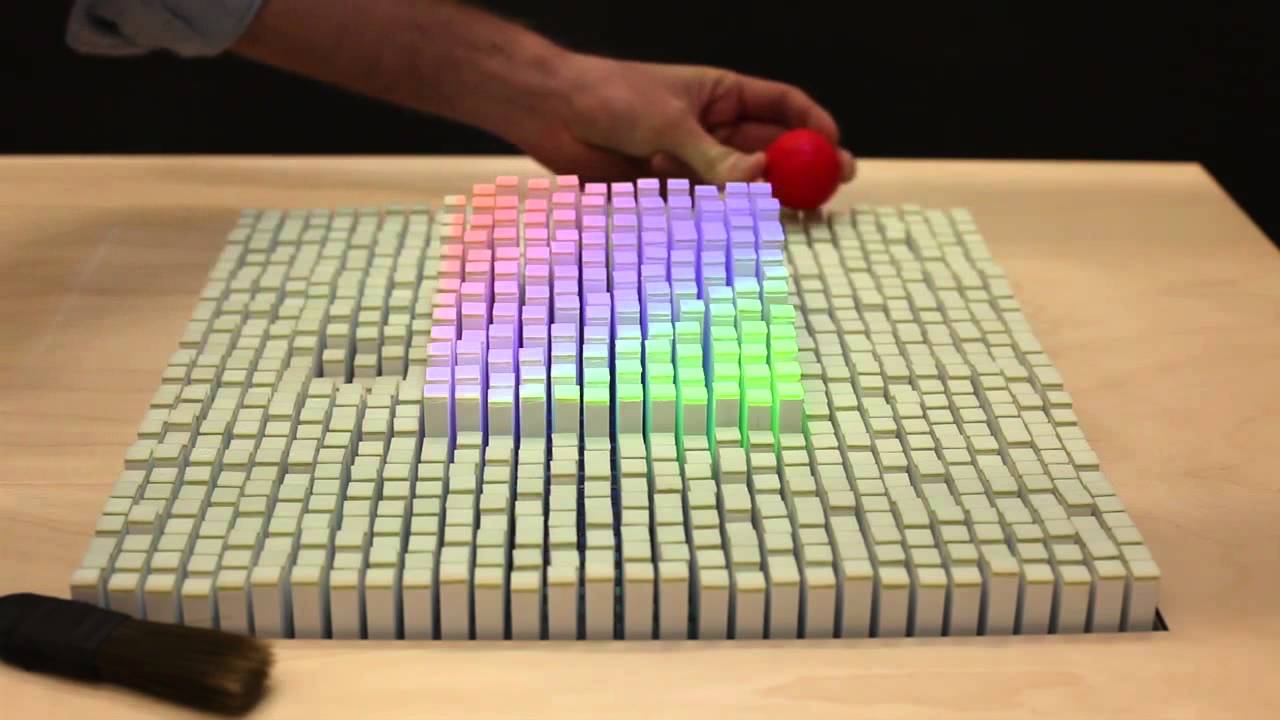
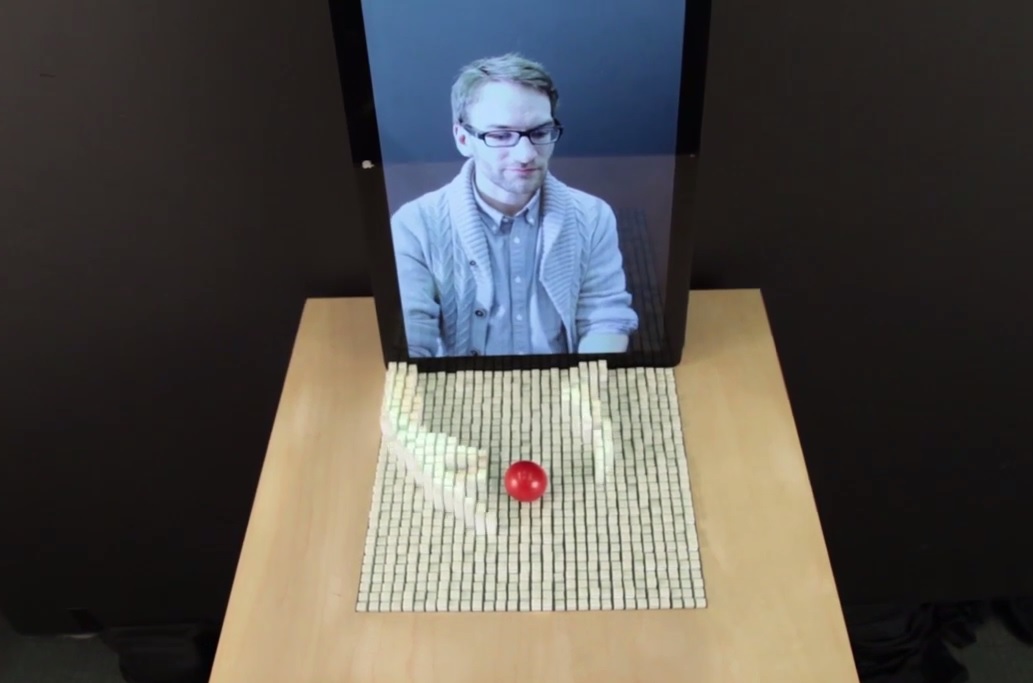
tangible_mediaThe future of computing is tactile. That’s the reasoning behind the inFORM interface, a revolutionary new interface produced by the MIT Media Lab and the Tangible Media Group. Unveiled earlier this month, the inFORM is basically a surface that changes shapes in three-dimensions, allowing users to not only interact with digital content, but even make simulated physical contact with other people.

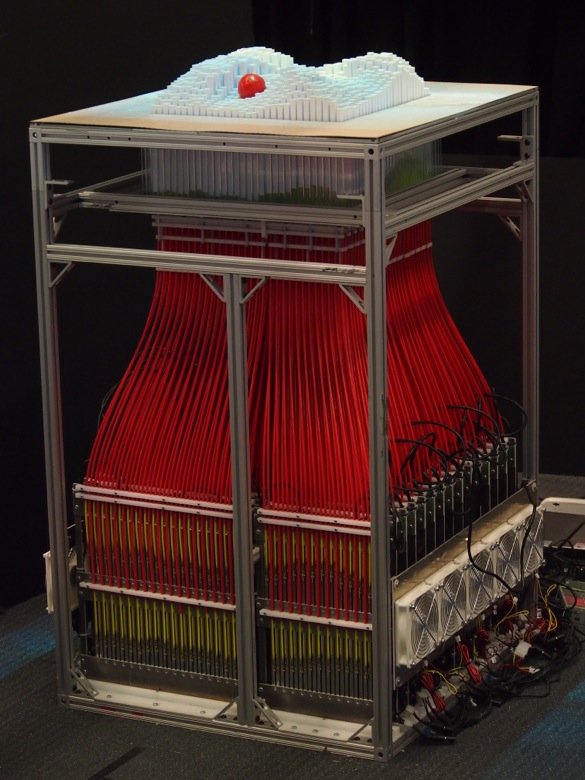
Created by Daniel Leithinger and Sean Follmer and overseen by Professor Hiroshi Ishii, the technology behind the inFORM isn’t actually quite simple. Basically, it functions like a fancy Pinscreen, one of those executive desk toys that allows you to create a rough 3-D model of an object by simply pressing it into a bed of flattened pins.

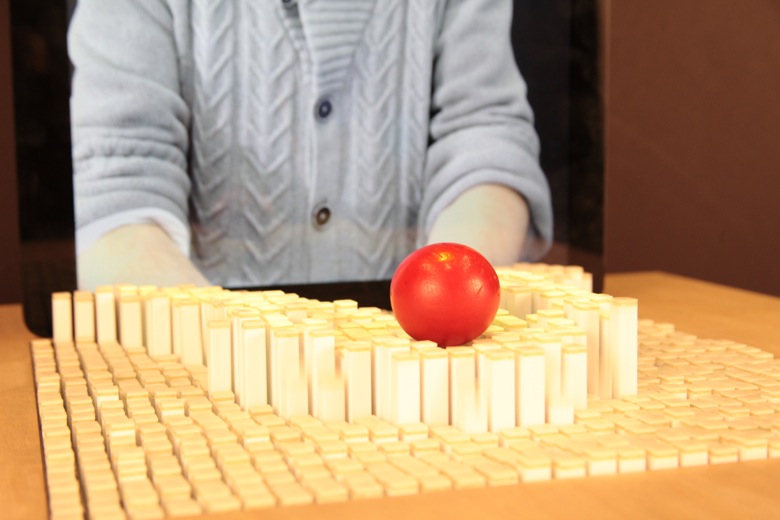
tangible_media3However, with the inFORM, each of those “pins” is connected to a motor controlled by a nearby laptop. This not only moves the pins to render digital content physically, but can also register real-life objects interacting with its surface thanks to the sensors of a hacked Microsoft Kinect. In short, you can touch hands with someone via Skype, or feel a stretch of terrain through Google Maps.

Another possible application comes in the form of video conferencing, where remote participants can be displayed physically, allowing for a strong sense of presence and the ability to interact physically at a distance. However, Tangible Media Group sees the inFORM as merely a step along the long road towards what they refer to “Tangible Bits”, or a Tangible User Interface (TUI).

tangible_media4This concept is what the group sees as the physical embodiment of digital information & computation. This constitutes a move away from the current paradigm of “Painted Bits”, or Graphical User Interfaces (GUI), something that is based on intangible pixels that do not engage users fully. As TMG states on their website:

Humans have evolved a heightened ability to sense and manipulate the physical world, yet the GUI based on intangible pixels takes little advantage of this capacity. The TUI builds upon our dexterity by embodying digital information in physical space. TUIs expand the affordances of physical objects, surfaces, and spaces so they can support direct engagement with the digital world.

It also represents a step on the long road towards what TMG refers to as “Radical Atoms”. One of the main constraints with TUI’s, according to Professor Ishii and his associates, is their limited ability to change the form or properties of physical objects in real time. This constraint can make the physical state of TUIs inconsistent with the underlying digital models.

tangible_media1Radical Atoms, a vision which the group unveiled last year, looks to the far future where materials can change form and appearance dynamically, becoming as reconfigurable as pixels on a screen. By bidirectionally coupling this material with an underlying digital model, dynamic changes in digital states would be reflected in tangible matter in real time, and vice versa.

inFORM45This futuristic paradigm is something that could be referred to as a “Material User Interface (MUI).” In all likelihood, it would involve polymers or biomaterials that are embedded with nanoscopic wires, that are able to change shape with the application of tiny amounts of current. Or, more boldy, materials that are composed of utility fogs or swarms of coordinated nanorobots that can alter their shape at will.

Certainly the ambitious concept, but as the inFORM demonstrates, its something that is getting closer. And the rate at which it is getting here is growing faster every day. And you have to admit, though the full-scale model does look a little bit like a loom, it does make for a pretty impressive show. And in the meantime, be sure to enjoy this video of the inFORM in action.


Source:
tangible.media.mit.edu

Bulletproof Classrooms: Solution or Sign of the Times?

school_shootingsWith the recent upsurge in school shootings – 43 in the last three years, resulting in 76 and 64 injuries – its little wonder why various school-based options at are being explored. These range from more guns (arming teachers and administrators) to incorporating special alarms that would allow for high-speed response. But perhaps the most creative (albeit odd) response comes in the form of a bulletproofing a classroom.

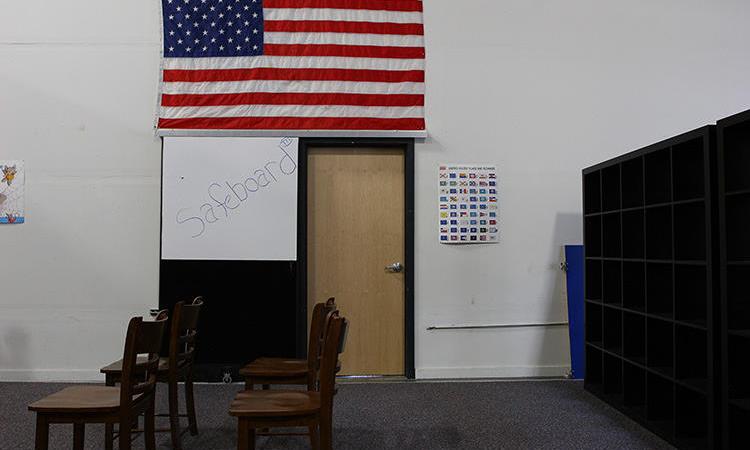
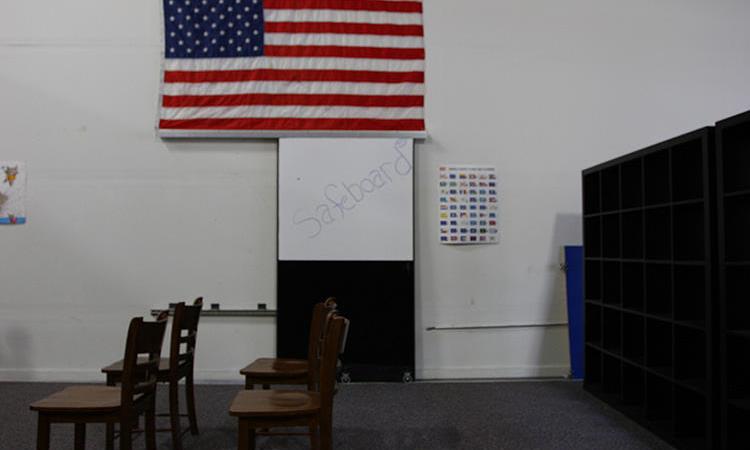
Specifically, armored whiteboards and bulletin boards (known as “Safeboards”) are being proposed as a last line of defense against gunmen. Developed by the International Armoring Corporation – a Utah-based company that manufactures lightweight armored passenger vehicles for heads of state, celebrities, and even the Pope – these boards are unobtrusive classroom objects that double as bulletproof barriers.
safeboard1In the event of a shooting, a teacher could manually slide and lock them in front of a door within a few seconds. Another version folds away from the wall to create a classroom safe haven that could fit up to 37 average-sized first graders. The Safeboards are capable of resisting the bullets of high-powered rifles, like those used in a number of school shootings in recent years.

The company began developing the product last year before the Sandy Hook shooting in Connecticut took place. After a few school officials near IAC’s headquarters heard about how the company manufacture lightweight armor for protective vehicles, they asked if there were any affordable products that could improve safety in the event of a school shooting.

safeboard2Bulletproof doors already exist, but they expensive and are very heavy. This can be problematic since these doors still need to be used by children dozens of times a day. According to IAC’s CEO Mark Burton, the sliding Safeboard, made with the firm’s standard lightweight material, starts at $1,850 and is light enough that it can be open and closed even by children.

Though no purchases have been made yet, the risk management director of the David School District of Utah (home to some 70,000 students), a school architect and a police liaison witnessed a demonstration of the technology. The district has already upgraded its alarms and camera systems, but director Scott Zigich, indicated that additional measures are being weighed:

Just this week [the country] had a shooting at an airport, a shooting at a school, a shooting at a mall. We are very active in trying to increase the safety level of our students and employees due to the frequent nature of violent attacks.

hardwireThe state of Utah and IAC are hardly alone on this issue. Earlier this year, another company in Maryland responded to the need for added security by developing small armored whiteboards that would act more like individual shields. Here, the company behind the design is Hardwire, whose product is already being featured at the Worcester Preparatory School in Berlin, Maryland.

Interestingly enough, these whiteboards use the same light material that is used by company to protect military vehicles from Improvised Explosive Devices (IEDs). In the wake of the Sandy Hook shooting, many schools have come to see the issue of gun violence in terms of guerrilla warfare, and are responding accordingly. According to Hardwire CEO George Tunis:

[The Whiteboards] basically take handguns out of the equation. We can certainly make them to stop any threat in the world, but what we wanted was something handheld for the teachers.

SchoolShootingsFor some time, a debate has raged around the United States, especially in the wake of Sandy Hook shooting. At its core is the question of what constitutes appropriate defensive measures for schools in a society where guns are easy for almost anyone to obtain. And some schools have considered armed guards or even armed teachers.

However, people like Mark Burton believes guns as a defense weapon often do more harm than good in schools, and considers the Safeboard to be a less disruptive and cost-effective measure that could give a classroom under siege needed time until police arrive. For budget-strapped schools, the decision is a financial issue as well as a safety one.

school_shootings1Over the lifetime of the product, Burton claims a Safeboard would cost as little as $5 a student, and IAC will also offer a financing program. But ultimately, its about finding ways to deal with the issue that doesn’t involve escalation. As Burton explained:

This is whole new territory. It’s kind of a fine line to walk. It is a sensitive issue, but in some cases, I think it could save lives.

And in the end, one has to wonder, are armored classrooms the only recourse to arming teachers and administrators? Is the issue of gun control really so elusive and untouchable that Americans must choose between more armor or more weapons in schools? What does it take to protect our children without treating our classrooms like they are warzones?

Sources: fastcoexist.com, www.wjla.com