The Future of Transit: Elon Musk’s Hyperloop

hyperloopThe high-speed transit tube. It’s been a staple of science fiction for many years. Remember the tubes cars in Logan’s Run, the elevators in the Jetsons, or the tubes that shoot people around New New York in Futurama? Much like flying cars, they are a feature of a futuristic society that people have been waiting on. And thanks to Elon Musk, it might finally be coming true.

Yes, the same man that brought us the Tesla electric car, PayPal, and SpaceX is now working on a design for a high-speed transit system that works the same way as the pneumatic tube. In a series of statements and documents released yesterday, the billionaire entrepreneur unveiled his concept for a tube that could whisk passengers between Los Angeles and San Francisco in just 30 minutes – half the time it takes an airplane.

hyperloop1In the newly released documents, Musk outlined the basic design, which would consist of a low-pressure steel tube that houses capsules which move back and forth. The aluminum capsules (or pods) would have skis on the bottom containing holes that pump out air, creating an air cushion. They would be propelled forward with magnets found on the skis as well as an electromagnetic pulse generated by a series of electric motors.

Linear electric motors placed at each destination would slow the pods down by absorbing their kinetic energy. That energy would then be put back into battery packs and used to accelerate the next pods, or stored for future use. Solar panels on top of the tubes would also provide energy. The pods, which have room for 28 people each, could leave every 30 seconds – transporting up to 7.4 million people on each route (SF to LA or vice versa).

hyperloop2At 1290 kilometers per hour (800 mph) the above ground Hyperloop system would be dramatically faster than a bullet train or even an airplane. Alongside boats, planes, trains and automobiles, Musk claims that the train would constitute a “fifth form” of transportation. And of course, safety would be paramount, with each pod being spaced apart by 8 km (5 miles), and the system would have an emergency brake.

The system would also be designed to deal with seismic shifts, which are common in California. In order to mitigate earthquake risk, the system would be built on pylons (the tube wouldn’t be rigidly fixed at any point). Adjustable lateral and vertical dampers would be placed inside the pylons to “absorb the small length changes between pylons due to thermal changes, as well as long form subtle height changes.”

hyperloop3What’s more, Musk was sure to play up the comfort value of the ride:

Once you’re traveling the speed you wouldn’t notice the speed at all. It would be really smooth, like you’re riding on a cushion of air. Maximum G-force of about half a G, comparable to what you might feel in an airplane but far less than what you would feel in a rollercoaster. Really quiet.

Musk estimates that price tag per ride would be $20 per person, making the Hyperloop more reasonably priced than train, plane, or automobile. The whole project would cost an estimated $6 billion if it contained “people-only pods,” but would be priced at $10 billion if it had pods for both people and cars.

As it stands, its not entirely clear when the Hyperloop would be up and running. What’s more, its unclear what tole Musk would play in its creation. Since he is currently occupied with developing things like a nationwide Supercharger network for Tesla and launching satellites with SpaceX, he thinks it could be three to four years before a demo could be finished. As for a full system that would run from LA to San Francisco, that could take between seven to ten.

hyperloop4In any event, the concept is open-source, and Musk is calling on inventors, engineers and investors to get involved. Given that it is a rather elegant solution to the problem of transit, such an idea is not likely to remain idle for too long. Originally inspired by the sad state of $70 billion California’s high-speed rail initiative, the Hyperloop could easily prove to be another transportation initiative that is never completed. At the same time, it might prove to be a “leapfrog maneuver”, bypassing lightrail completely and ushering in something better.

It might sound like a fantasy, but Musk has a reputation for making the impossible a reality. What’s more, engineers from both Tesla and SpaceX have been working on the concept for close to a year and some are now dedicated to it full-time. And given that nations like China, India, Russia and the EU are in need of expanded transit systems, don’t be surprised if we see something similar emerging overseas.

And be sure to enjoy this video of the concept, courtesy of Elon Musk and CBC news:


Sources: cbc.ca, fastcoexist.com

The Future is Here: Silk Brain Implant to Treat Epilespy

silk_implantsSilk implants are becoming the way of the future as far as brain implants are concerned, due to their paradoxically high resiliency and ability to dissolve. By combining them with nanoelectric circuits or drugs, scientists are exploring several possible applications, ranging from communications devices to control prosthetics and machines to medicinal devices that could treat disabilities and mental illnesses.

And according to a recent study released by the National Institutes of Health, treating epilepsy is just the latest application. According to the study, when administered to a series of epileptic rats, the treatment led to the rats experiencing far fewer seizures. What’s more, this new treatment represents something entirely new in terms of treatment of neurological disorder.

brain_chipFor starters, Rebecca L. Williams-Karneskyand and her colleagues used the silk implants for a timed-release therapy in rats experiencing epileptic seizures. Working on the theory that people with epilepsy suffer from a low level of adenosine – a chemical that the brain releases naturally to suppress seizures (and also perhaps movement during sleep) – they soaked the silk implants before implanting them.

Those rats who recieved the silk brain implants still had seizures, but their numbers were reduced fourfold. The implant released the chemical for ten days before they completely dissolved. And with time and testing, the treatment could very easily be made available for humans. According to the study’s co-author, Detlev Boison:

Clinical applications could be the prevention of epilepsy following head trauma or the prevention of seizures that often — in about 50 percent of patients — follow conventional epilepsy surgery. In this case, adenosine-releasing silk might be placed into the resection cavity in order to prevent future seizures.

brainscanBetween the timed release of drugs and nanoelectric circuits that improve neuroelasticity, recall and relaxation, brain implants are coming a long way. At one time, they were the province of cyberpunk science fiction. But thanks to ongoing research and development, they are quickly jumping from the page and becoming a reality.

Though they currently remain confined to medical tests and laboratories, experts agree that it will be just a few years time before they are commercially available. By sometime in the coming decade, medimachines and neural implants will probably become a mainstay, and neurological disorders a fully treatable phenomena.

Sources: io9.com, nih.gov

News From Space: Penetrators to Explore Space

space_penetrator1As space exploration goes, we can do quite a bit within our own Solar System. We can land people on the Moon, rovers on Mars, and put satellites in orbit around the inner and outer planets. We even have the means of placing astronauts on Mars, presumably. But the cost are still prohibitively high, and when it comes to reaching distant celestial bodies, we remain pretty powerless.

Hence the new “space penetrator” program being contemplated by the European Space Agency. Basically, this amounts to a space missile that is fired in the direction of a celestial body, and which delivers a payload of sensors and equipment upon arrival on the surface. Classified as a “hard lander”, this program has been under development for ten years and offers many advantages over the standard soft lander.

space_penetratorFor starters, a soft lander not only has to slow down before landing (which requires rockets and a payload of fuel), but has to be built to land rather than just crash into the ground. And if a soft lander wants to collect subsurface samples or conduct readings, it requires additional equipment to drill and scoop. By contrast, a penetrator can simply smash through a planet’s surface layer, and requires no additional fuel or landing gears.

Of course, a space penetrator also comes with its share of issues, like ensuring that its payload survives the hard landing. This requires that a special spring mechanism be included in the outer shell that cushions the payload from impact. This “suspension system” is made out of Torlon polymer, which is able to provide a 2mm gap of insulation during a high deceleration. A retrorocket will be employed in order to soften the blow a bit as well.

space_penetrator2In order to rest the impact, the designers who built the steel penetrator fired it directly into a 10-ton block of ice. The missile traveled at 340m/s, just under the speed of sound, and turned the block into powder. But the penetrator’s casing and internal instruments remained intact and functional. Thanks to onboard sensors, the test impact will provide the developers of the missile, Rapid Space Technologies, with more information.

The space penetrator is intended to do more than just collect subsurface soil samples. Once in use, it will also help look for alien life by busting through icy surfaces, such as on Jupiter’s famous moon Europa. For years, scientists have suspected that the planet may support aquatic life beneath its icy surface. With the help of radio signals, the on-board sensors could send information up to an orbiting satellite, which could in turn relay that information back to Earth.

converted PNM fileThe European Space Agency has funded the project, but has not yet decided if it would ultimately use the space penetrator. Currently, the system isn’t designed to be launched from Earth, but rather a satellite or spaceship. There’s no telling if it will be used anytime soon, but it does present scientists and astronomers with an viable option for future interstellar exploration.

And there is huge potential as far as the exploration of Europa is concerned. Ever since it was postulated that subsurface oceans exist there – ones that are warm enough to support life – the Jovian moon has served as a source of inspiration for astronomers and science fiction writers alike. I for one am interested to see what resides underneath all that ice, provided we don’t disturb it too much!

And of course, there’s a video of the space penetrator test taking place. Check it out:


Sources:
extremetech.com, bbc.co.uk

100,000 People Want to Go to Mars, And Not Come Back

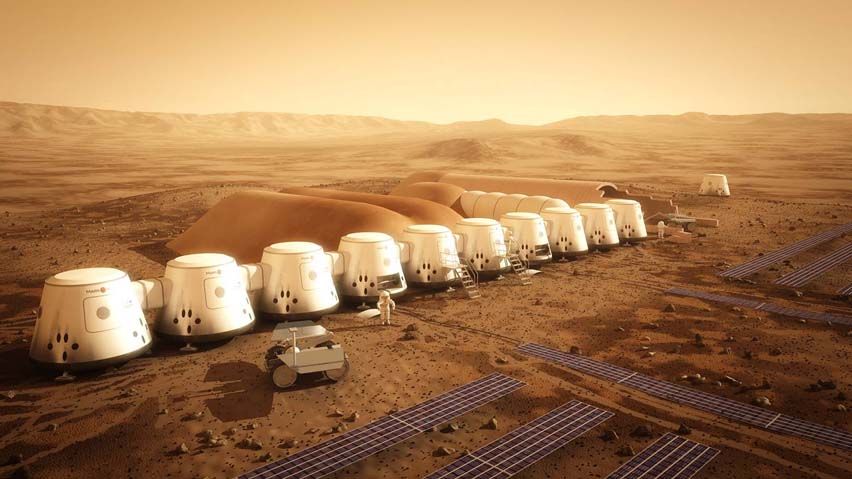
MarsOneEver since they announced their plan to establish a colony on Mars by 2022, Mars One has been flooded by applicants eager to set foot on a new planet and make it their home. In fact, according to a recent story by CNN Tech, over 100,000 people have volunteered for the mission, knowing full well that it would be a one-way trip and their stay on the Red Planet would be permanent.

Anyone who is 18 years of age or older can apply, and the fee runs anywhere from $15 to $38, depending on your nationality and the gross domestic product of your country. Ultimately, only 40 people will be selected this year, and only two couples will be sent ahead with the first mission. This mission is slated to leave by September of 2022 and land on Mars by April of 2023, with another group of four to be sent two years later.

Mars_landerThe applicants can all be seen simply be going to their website, where each person has created a profile and can be voted on. According to Bas Lansdorp, co-founder and CEO of Mars One, only those who have completed the registration process can be seen here:

There is also a very large number of people who are still working on their profile, so either they have decided not to pay the application fee, or they are still making their video or they’re still filling out the questionnaire or their resume. So the people that you can see online are only the ones that have finished and who have set their profiles as public.

In terms of what the selectees will do once the project is up and running, the website offers a basic rundown. First, the volunteer astronauts will undergo a required eight-year training in a secluded location, where they will learn how to repair habitat structures, grow vegetables in confined spaces and address “both routine and serious medical issues such as dental upkeep, muscle tears and bone fractures.”

mars-one-brian-versteegIn terms of how settlement will occur, the plan is to send a series of Mars One landers equipped with up to 2500 kg (5,500 pounds) of food, solar panels and supplies each. After eight missions, more than 44,000 pounds of supplies and 40 people will have arrived and the capsules themselves will be formed into the settler’s habitat.

Two things Earth won’t be sending is water and oxygen, since the settlers will be manufacturing these themselves. According to Lansdrop, these will be manufactured on Mars:

We will evaporate it and condense it back into its liquid state. From the water we can make hydrogen and oxygen, and we will use the oxygen for a breathing atmosphere inside the habitat. This will be prepared by the rovers autonomously before the humans arrive.

mars_astronautsNaturally, a good many details, such as where the $6 billion dollars for the first mission are going to come from, whether or not the technology truly exists to create a self-sustaining colony on Mars, and whether the people going up will be able to survive for extended periods of time until new waves arrive and new settlements are opened up.

In addition, there are experts who say that the risks are too high given the distance and exposure to radiation involved. A round-trip journey to Mars could expose astronauts to the maximum amount of radiation allowed in a career under current NASA standards. While Mars One does not negate this issue, they have yet to indicate how they intend to keep their astronauts shielded from the harmful cosmic rays.

mars_astronauts1However, this has not deterred some 30,000 Americans and over 100,000 people worldwide from signing on. What’s more, Lansdrop has said repeatedly that the project will be funded by sponsors and media that will pay for broadcasting rights of shows and movies documenting everything from the astronauts’ training on Earth to their deployment and colonization of Mars.

Basically, they intend for the entire process to be a worldwide media event, a massive reality TV show, with the necessary advances and funding worked out as time goes on. Right now, all they are looking for is volunteers so that corporate and media sponsors understand just how serious this is and that the willingness to go is there. No telling if that will be enough, but it is a start.

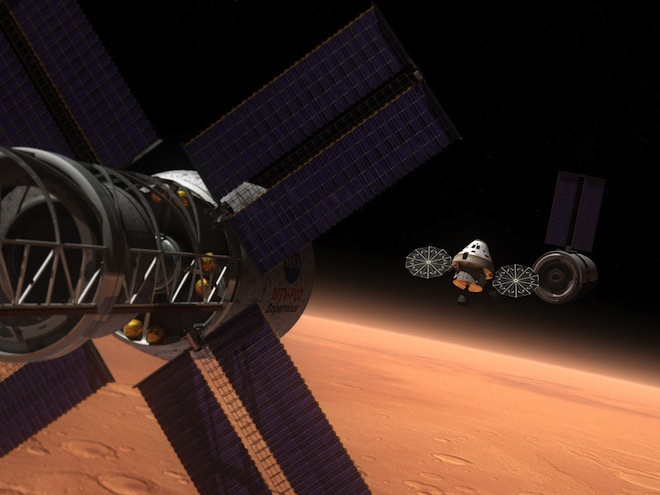
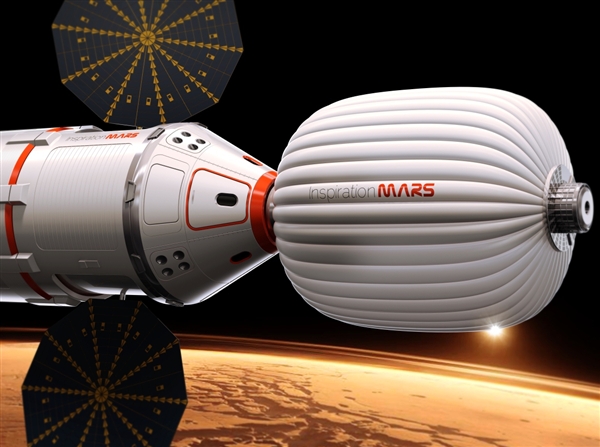
tito-mars-mission-conceptWhat’s more, Mars One is not alone in trying to make a trip to the Red Planet a reality. The Inspiration Mars Foundation is another such private venture, which is seeking to send a couple on a 501-day, round-trip journey aboard a space craft that will take then to Mars and back in 2018 without ever touching down on the surface.

Here too, the issue of funding, the technology involved, and the problem of radiation shielding are all being considered and ironed out in an ongoing manner, with some rather interesting possibilities being considered (such as using human feces and waste plumbing to shield the astronauts from radiation!)

spacecraft_marsUltimately, it seems that certain private ventures are not willing to wait for NASA’s planned 2030 excursion to Mars before general settlement and terraforming can begin. And though it may prove unfeasibly by the time frames being proposed, the excitement and desire to make things happen sooner than projected are understandable.

And as Lansdorp explains, much of the project has to do with telling a story, perhaps the greatest ever told:

What we want to do is tell the story to the world. When humans go to Mars, when they settle on Mars and build a new Earth, a new planet. This is one of the most exciting things that ever happened, and we want to share the story with the entire world.

For the full CNN story, plus video of the interview with the Mars Society, follow the link below:

http://www.cnn.com/video/data/2.0/video/world/2013/04/22/w1-mission-to-mars-willett.cnn.html

And be sure to check out Mars One promotional video:


Sources:
cnn.com, mars-one.com, applicants.mars-one.com

News From Space: 3D Printer Bound for ISS!

made-in-space-3d-printerThe International Space Station has plans to bring a 3D printer on board by 2014. And yesterday, the model in question – the startup’s Made in Space engineering model – passed an important milestone on its way into orbit. This consisted of a battery of tests at NASA’s Marshall Space Flight Center in Huntsville, Ala., which confirmed that the machine can survive the rigors of launch and function in space.

Michael Snyder, director of research and development at Made in Space, said in a statement that:

This developmental testing was vital to the design of our flight-unit printer. We’ve engaged in a fast-paced mission starting in early 2013 to produce hardware that NASA would qualify for launch and installation to the ISS in 2014. The fact that we’ve been able to pass another milestone in an abbreviated time frame is extremely exciting.

For some time, NASA has had its eye on additive manufacturing (aka. 3D printing) as a means of making space travel cheaper and more efficient. In addition to the development a 3D pizza maker and food printing, NASA also hopes to equip future ships and stations with their own printer so crews can generate spare parts and components, rather than having to mount costly resupply missions.

3DpizzaMade in Space and NASA Marsall hope to jump-start this vision with their “3D Printing in Zero Gravity” experiment (3D Print for short) which  aims to launch the first-ever 3D printer to the space station in August 2014. But before that can happen, the machine must pass some more rigorous tests. The first occurred several months ago when three prototype versions of Made in Space’s printer passed a series of microgravity tests during parabolic airplane flights.

This flight test, known colloquially as the “vomit comet”, demonstrated that the prototypes could indeed handle working in microgravity environments. The more recent tests at Marshall, performed with the company’s Engineering Test Unit (ETU), ensured that the printer can survive the vibrational stresses of launch and deal with electromagnetic interference, among other issues.

3d-printer-microgravity-flight-testData from these tests will inform the critical design review of the flight unit prototype, a big step toward clearing the machine for launch toward the space station. According to Made in Space officials, the final review process is slated for the 15th of August. Niki Werkheiser, 3D Print project manager in Marshall’s Technology Development and Transfer Office, also said in a statement that:

The successful results received from the ETU testing at [Marshall] reinforces our confidence that Made in Space, Inc. has developed the robust design required to successfully print in space. We are excited to have successfully completed yet another key step toward meeting the extensive ISS flight certification process.

If all goes well, it won’t be long before the crew of the ISS is able to regularly print out all the replacement parts they need. Given time, they might even solve the problem of what to do when freeze-dried food won’t cut it and you absolutely must have a slice of pizza!

Source: space.com

Happy Anniversary Curiosity!

curiosity_sol-177-1Two days ago, the Mars Rover known as Curiosity celebrated a full year of being on the Red Planet. And what better way for it to celebrate than to revel in the scientific discoveries the rover has made? In addition to providing NASA scientists with years worth of valuable data, these groundbreaking finds have also demonstrated that Mars could once have supported past life – thereby accomplishing her primary science goal.

And it appears that the best is yet come, with the rover speeding off towards Mount Sharp – the 5.5 km (3.4 mile) high mountain dominating the center of the Gale Crater – which is the rover’s primary destination of the mission. This mountain is believed to contain vast caches of minerals that could potentially support a habitable environment, thus making it a veritable gold mine of scientific data!

curiosity-anniversary-1To take stock of everything Curiosity has accomplished, some numbers need to be tallied. In the course of the past year, Curiosity has transmitted over 190 gigabits of data, captured more than 71,000 images, fired over 75,000 laser shots to investigate the composition of rocks and soil, and drilled into two rocks for sample analysis by the SAM & CheMin labs housed in her belly.

On top of all that, the rover passed the 1 mile (1.6 km) driving mark on August 1st. Granted, Mount Sharp (aka. Aeolis Mons) is still 8 km (5 miles) away and the trip is expected to take a full year. But the rover has had little problems negotiated the terrain at this point, and the potential for finding microbial life on the mountain is likely to make the extended trip worthwhile.

curiosity-anniversary-20But even that doesn’t do the rover’s year of accomplishments and firsts justice. To really take stock of them all, one must consult the long-form list of milestones Curiosity gave us. Here they are, in order of occurrence from landing to the the long trek to Mount Sharp that began last month:

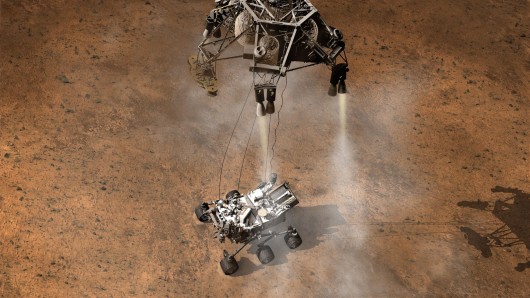
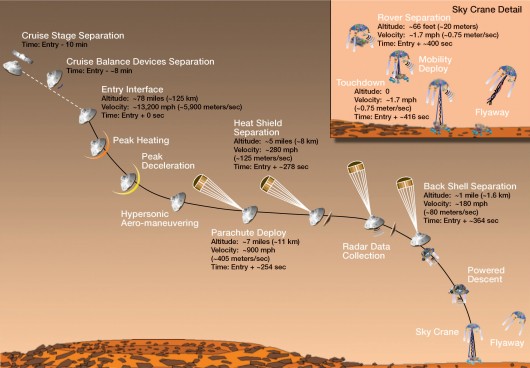
1. The Landing: Curiosity’s entrance to Mars was something truly new and revolutionary. For starters, the distance between Earth and Mars at the time of her arrival was so great that the spacecraft had to make an entirely autonomous landing with mission control acting as a bystander on a 13-minute delay. This led to quite a bit a tension at Mission Control! In addition, Curiosity was protected by a revolutionary heat shield that also acted as a lifting body that allowed the craft to steer itself as it slowed down in the atmosphere. After the aeroshell and heat shield were jettisoned, the rover was lowered by a skycrane, which is a rocket-propelled frame with a winch that dropped Curiosity to the surface.

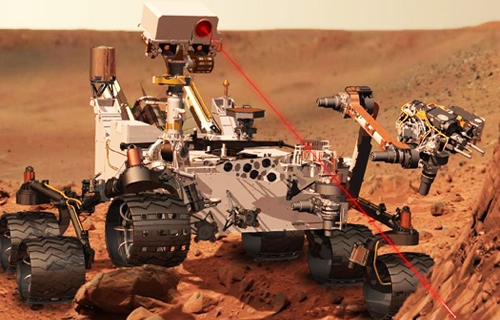
2. First Laser Test: Though Curiosity underwent many tests during the first three weeks after its landing, by far the most dramatic was the one involving its laser. This single megawatt laser, which was designed to vaporize solid rock and study the resultant plasma with its ChemCab system, is the first of its kind to be used on another planet. The first shot was just a test, but once Curiosity was on the move, it would be used for serious geological studies.Curiosity-Laser-Beam3. First Drive: Granted, Curiosity’s first drive test was more of a parking maneuver, where the rover moved a mere 4.57 m (15 ft), turned 120 degrees and then reversed about 2.4 m (8 feet). This brought it a total of about 6  m (20 ft) from its landing site – now named Bradbury Landing after the late author Ray Bradbury. Still, it was the first test of the rover’s drive system, which is essentially a scaled-up version of the one used by the Sojourn and Opportunity rovers. This consists of six 50 cm (20-in) titanium-spoked aluminum wheels, each with its own electric motor and traction cleats to deal with rough terrain.

4. Streams Human Voice: On August 28, 2012, Curiosity accomplished another historical first when it streamed a human voice from the planet Mars back to Earth across 267 million km (168 million miles). It was a 500 kilobyte audio file containing a prerecorded message of congratulations for the engineers behind Curiosity from NASA administrator Charles Bolden, and demonstrated the challenges of sending radio beams from Earth to distant machines using satellite relays.

curiosity-anniversary-45. Writes a Message: Demonstrating that it can send messages back to Earth through other means than its radio transmitter, the Curiosity’s treads leave indentations in the ground that spell out JPL (Jet Propulsion Lab) in Morse Code for all to see. Apparently, this is not so much a gimmick as a means of keeping track how many times the wheels make a full revolution, thus acting as an odometer rather than a message system.

6. Flexing the Arm: Curiosity’s robotic arm and the tools it wield are part of what make it so popular. But before it could be put to work, it had to tested extensively, which began on August 30th. The tools sported by this 1.88 m (6.2-ft) 33.11kg (73 lb) arm include a drill for boring into rocks and collecting powdered samples, an Alpha Particle X-ray Spectrometer (APXS), a scooping hand called the Collection and Handling for In-Situ Martian Rock Analysis (CHIMRA), the Mars Hand Lens Imager (MAHLI), and the Dust Removal Tool (DRT).

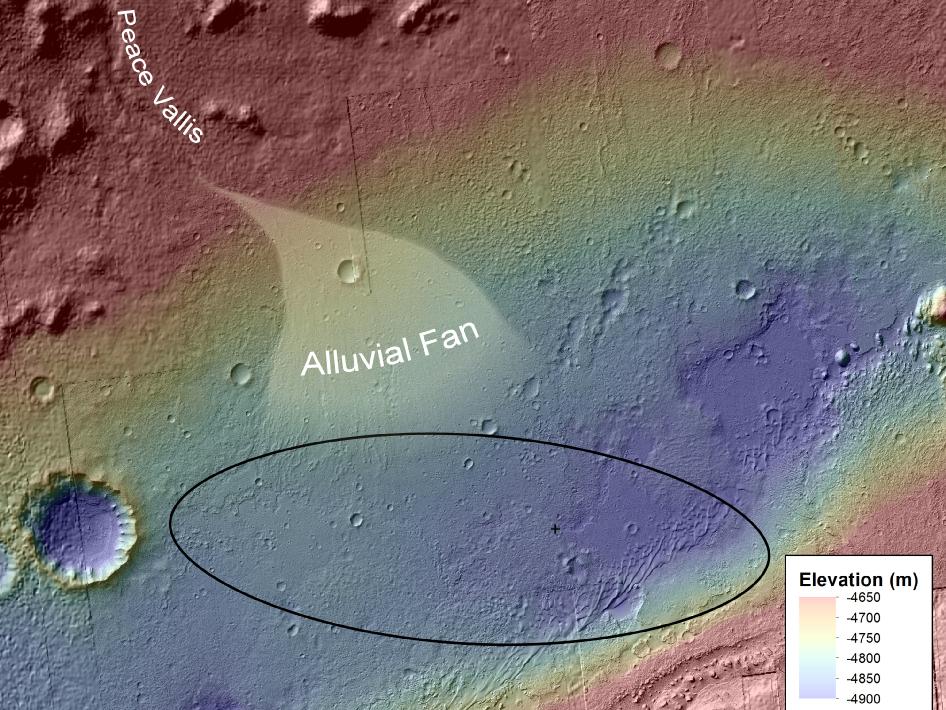
curiosity-alluvialplain7. Discovery of Ancient Stream Bed: Curiosity’s main mission is to seek out areas where life may have once or could still exist. Therefore, the discovery in September of rocky outcroppings that are the remains of an ancient stream bed consisting of water-worn gravel that was washed down from the rim of Gale Crater, was a major achievement. It meant that there was a time when Mars was once a much wetter place, and increases the chances that it once harbored life, and perhaps still does.

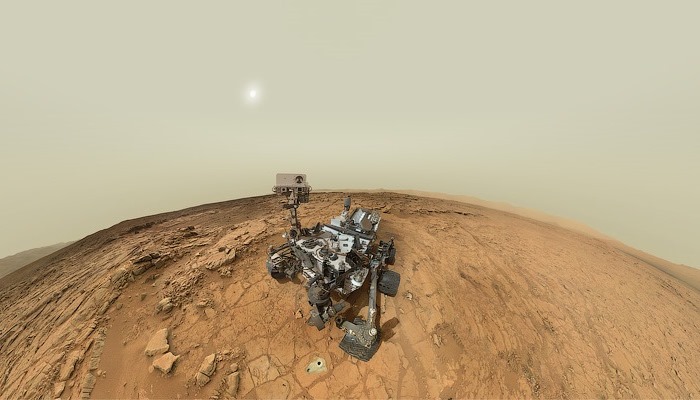
8. First Drilling: In February, Curiosity conducted the first robot drill on another planet. Whereas previous rovers have had to settle for samples obtained by scooping and scraping, Curiosity’s drill is capable of rotational and percussive drilling to get beneath the surface. This is good, considering that the intense UV radiation and highly reactive chemicals on the surface of Mars means that finding signs of life requires digging beneath the surface to the protected interior of rock formations.Curiosity_drillings9. Panoramic Self Portrait: If Curiosity has demonstrated one skill over and over, it is the ability to take pictures. This is due to the 17 cameras it has on board, ranging from the black and white navigation cameras to the high-resolution color imagers in the mast. In the first week of February, Curiosity used its Mars Hand Lens Imager to take 130 high-resolution images, which were assembled into a 360⁰ panorama that included a portrait of itself. This was just one of several panoramic shots that Curiosity sent back to Earth, which were not only breathtakingly beautiful, but also provided scientists with a degree of clarity and context that it often lacking from images from unmanned probes. In addition, these self-portraits allow engineers to keep an eye on Curiosity’s physical condition.

10. Long Trek: And last, but not least, on July 4th, Curiosity began a long journey that took it out of the sedimentary outcrop called “Shaler” at Glenelg and began the journey to Mount Sharp which will take up to a year. On July 17, Curiosity passed the one-kilometer mark from Bradbury Landing in its travels, and has now gone more than a mile. Granted, this is still a long way from the breaking the long-distance record, currently held by Opportunity, but it’s a very good start.

curiosity_roadmapSuch was Curiosity’s first 365 days on Mars, in a nutshell. As it enters into its second year, it is expected to make many more finds, ones which are potentially “Earthshaking”, no doubt! What’s more, the findings of the last year have had an emboldening effect on NASA, which recently announced that it would be going ahead with additional missions to Mars.

These include the InSight lander, a robotic craft which will conduct interior studies of the planet that is expected to launch by 2016, and a 2020 rover mission that has yet to be named. In addition, the MAVEN (Mars Atmosphere and Volatile Evolution) orbiter as just arrived intact at the Kennedy Space Center and will be blasting off to the Red Planet on Nov. 18 from the Florida Space Coast atop an Atlas V rocket.

maven_orbitThese missions constitute a major addition to NASA’s ongoing study of Mars and assessing its past, present and future habitability. Between rovers on the ground, interior studies of the surface, and atmospheric surveys conducted by MAVEN and other orbiters, scientists are likely to have a very clear picture as to what happened to Mars atmosphere and climate by the time manned missions begin in 2030.


Stay tuned for more discoveries as Curiosity begins its second year of deployment. Chances are, this year’s milestones and finds will make this past years look like an appetizer or a warm-up act. That’s my hope, at any rate. But considering what lies ahead of it, Curiosity is sure to deliver!

In the meantime, enjoy some of these videos provided by NASA. The first shows Curiosity’s SAM instrument singing “happy birthday” to the rover (though perhaps humming would be a more accurate word):


And check out this NASA video that sums up the rover’s first year in just two minutes:

The Future is Here: Augmented Reality Storybooks

ar_storybookDisney has always been on the forefront of technological innovation whenever and wherever their animation is concerned. Augmented reality has been a part of their operations for quite some time, usually in the form of displays put on at Epcot Center or their Haunted Mansion. But now, they are bringing their efforts in AR to the kind of standard storybook that you would read to your children before bedtime.

Thanks to innovations provided by Nintendo DS, the PSP, tablets and smartphones, books have become alive and interactive in ways that were simply not possible ten or twenty years ago. However, one cannot deny that ebooks simply do not have the same kind of old world charm and magic that paperbacks do. Call it nostalgic appeal or tradition, but reading to a child from a bounded tome just seems somehow more meaningful to most people.

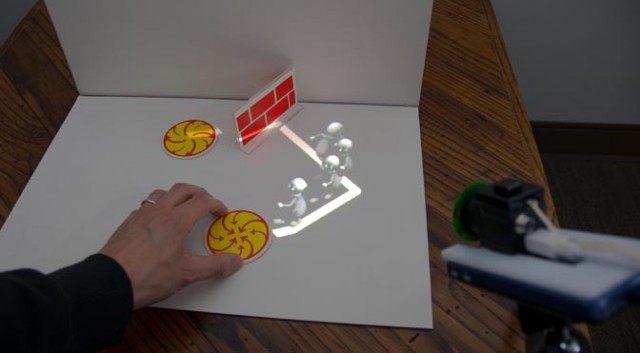
disneyhideout-640x353And that’s where Disney’s HideOut project comes into play, a mobile projector is used to create an augmented reality storybook. How it works is simple enough, and in a way, involves merging the best of electronic and paper media. Within the book, certain parts will be printed using special infrared-absorbing ink, so that sentences and images can be tracked.

The mobile projector, in turn, uses a built-in camera to sense the ink, then projects digital images onto the page’s surface that are animated to interact with the markers. In this way, it knows to show certain images when parts of the book call for them to be displayed, and can turn normal pictures into 3D animated segments.

disney_argameAnd storybooks aren’t the only application being investigated by Disney. In addition, they have been experimenting with game concepts, where a user would moves a mobile projector around a board, causing a character to avoid enemies. In another scenario, a characters projected onto a surface interacts with tangible objects placed around them. This would not be entertaining to a child, but could be educational as well.

The applications also extend to the world of work, as the demo below shows. in this case, HideOut projects a file system onto the top of a desk, allowing the user to choose folders by aiming the projector, not unlike how a person selects channels or options using a Wii remote by aiming it at a sensor bar. And the technology could even be used on smartphones and mobile devices, allowing people the ability to interact with their phone, Facetime, or Skype on larger surfaces.

disneyhideoutAnd of course, Disney is not the only company developing this kind of AR interactive technology, nor are they the first. Products like ColAR, an app that brings your coloring book images to life, and Eye of Judgment, an early PS3 game that accessed CCG cards and animated the characters on-screen, are already on the market. And while there does not appear to be a release date for Disney’s HideOut device just yet, its likely to be making the rounds within a few years tops.

For anyone familiar with the world of Augmented Reality and computing, this is likely to call to mind what Pranav Mistry demonstrated with his Sixth Sense technology, something which is being adopted by numerous developers for mobile computing. Since he first unveiled his concept back in 2009, the technology has been improving and the potential for commercial applications has been keeping pace.

In just a few years time, every storybook is likely to come equipped with its own projector. And I wouldn’t be surprised if it quickly becomes the norm to see people out on the streets interacting with images and worlds that only they can see. And those of us who are old enough will think back to a time when only crazy people did this!

In the meantime, check out this demo of the Disney’s HideOut device in action:


Source: extremetech.com

Police and 3D Printed Weapons

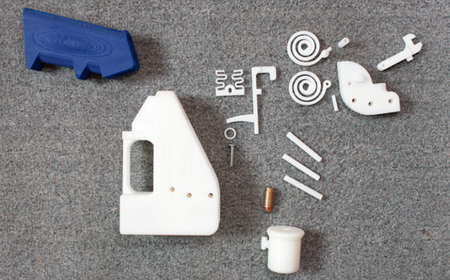
Defense Distributed new magazinesEver since Cody Wilson and Distributed Defense produced the Liberator – the world’s first working firearm made completely from 3D printed parts – there has been palatable fear about the technology and the impact it might have. But as predicted, the Liberator was not the last of its kind, as other groups around the world are rallying to see what is possible with additive manufacturing.

Recently, German federal police began producing their own printed guns, mainly to see just how dangerous they can be, but also for the potential purpose of using them. According to GigaOM, German police agencies admitted to buying a 3-D printer “in order to see whether homemade 3-D printed guns are really a threat,” and more specifically, if those plastic guns could be sneaked onto a plane.

defense-distributed-liberator,Z-M-383602-13However, the Bundespolizei (BPOL) also indicated that they are interested in determining whether or not 3-D printed guns might be a useful addition to the force’s arsenal. Apparently, this was the result of their agency liaising with with Australian police about the matter, who as it turns out, have also been conducted tests on 3-D printed weapons.

In their case, they conducted extensive tests on the $35 plastic Liberator firearm, the pride and joy of Wilson and his libertarian organization. But what they found was the firearm exploded when they test fired it. Not an encouraging end to the weapon that garnered so much controversy around the world, but it hardly means the issue is settled.

liberatorAs the designs of individual firearms and printers improve, and given the difficulty of censuring design plans on the internet, 3-D printed guns are likely to proliferate. So it makes sense for police to adopt a investigative and experimental attitude so they can see how useful the weapons are and just how far the technology goes.

Much in the same way police agencies around the world were forced to adopt cyber divisions to contend with the digital revolution, it seems only natural that they would adopt an Additive Manufacturing Division (AMD) or a 3D Printer Division (3DPD) to address the revolution being spearheaded by 3D printing technology.

I can see it now! Amongst their responsibilities would be tracking designs on the internet, liaising with cyber divisions to see who downloaded specs, and reverse engineering weapons to come up with a design signature for different printing operations. Could make for a good police drama…

Sources: fastcoexist.com, gigaom.com

Want to See Your Home from the ISS?

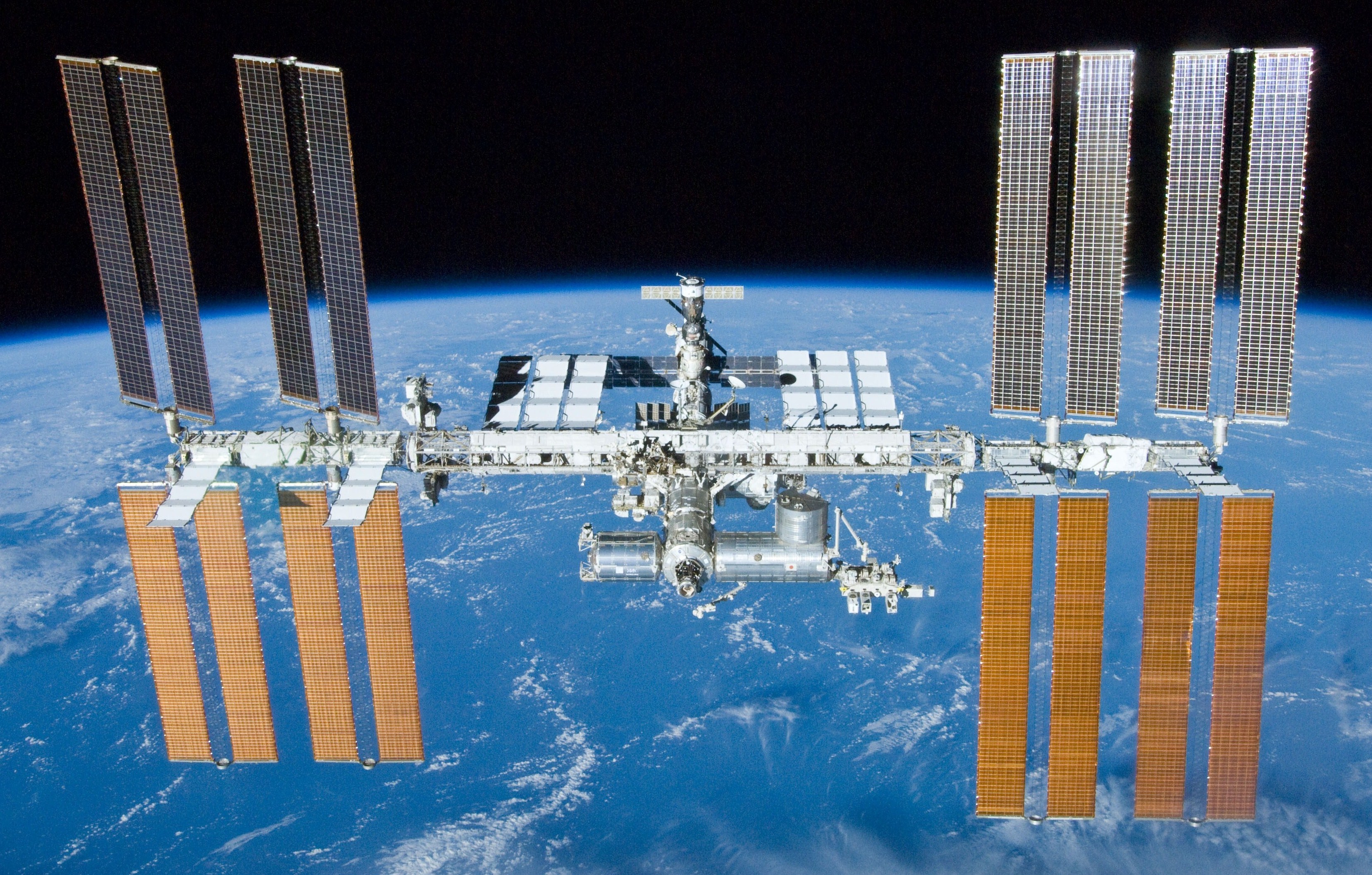
ISSA Vancouver-based company recently announced that it would be streaming images from the ISS to Earth, giving people a rare glimpse of what astronauts in orbit see on a daily basis. In an age where space travel is becoming increasingly public, thanks in part to social media, it now appears that at least one company want to get in on the ground floor of making space more accessible.

Scott Larson, CEO of Urthecast (get it?), said in a recent interview with CBC’s Curt Petrovich how his company is making this happen. This past Sunday, Urthecast launched a platform to the space station aboard the unmanned Russian Progress M-20M spacecraft as part of a delivery of 2.4 tonnes of supplies – including food, water, fuel and scientific equipment.

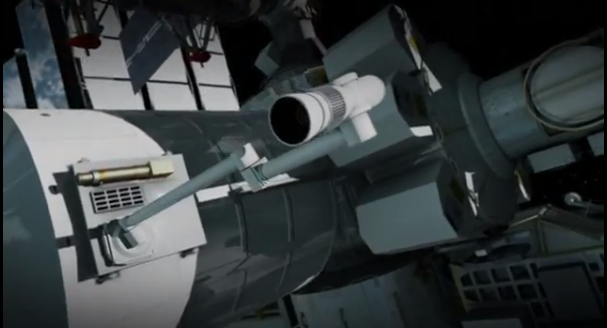
urthecaste.gifThis platform will soon be attached to the outside of the station and augmented with two HD cameras that will allow people to see things on Earth as small as one meter wide. One will be fixed will take a continuous video panorama of Earth 50 kilometers wide as the space station orbits Earth while the other will be a pointable one that customers will be able to aim at a particular spot on Earth, for a price.

These cameras will be launched aboard a different Progress flight on Nov. 20 and attached to the platform upon arrival. Though Urthecast has not specified what kind of fees will be involved for those looking to download pics of Earth, it has claimed that it intends to sell the video to corporations, governments and non-governmental organizations such as the United Nations for a wide range of need.

urthecaste_cameraHowever, these customers will not include the military since the apparatus will be on the International Space Station, which by law can only be used for “peaceful purposes”. Canadian law also requires the company to shut off the cameras as they pass over sensitive targets, if requested to do so by the federal government. Nevertheless, at least some investors are confident the company will make money of this idea. Since it first went public last month, Urthecast has raised some $46 million.

As part of what the company calls the “world’s first near-live HD video feed of Earth”, their cameras are expected to cover the planet between the latitudes of 51 degrees north (covering northern Canada, Russia and Scandinavia) and 51 degrees south (the southern tip of Chile and Argentina, South Africa and Australia). Once captured, the images will be downloaded to ground stations on Earth and be made available just a few hours later.

earth-from-ISSSo, between the accuracy of the cameras and the range they have to survey the planet, people will be able to capture images of their homes, neighborhoods, and even people that are accurate to a single meter. My advice? Get a portable device, lie down in your driveway, and then punch in your coordinates. And be sure to wave for a long time, so that when you download your images, you can see you waving back at yourself!

In the meantime, check out this video produced by Urthecast, and be sure to check out the company’s website to see how you can get in on this.

Sources: cbc.ca, extremetech.com, urthecast.com
The NSA’s New Super Computer Facilities

nsa_aerialThe extent and depth of the NSA’s snooping has been the subject of much scrutiny and controversy of late. And it seems that the more we come to learn about the issue, the worse it gets. In addition to the extensive access the NSA seems to have to our personal data, there’s also the staggering amount of power that is being concentrated in so fe hands, coupled with a serious lack of oversight. Worse yet, it appears the NSA is showing no signs of slowing down.

Just two months ago, the Army Corps of engineers began breaking ground on a new supercomputing facility in Fort Meade, Maryland – the center of the NSA’s cyber operations. Known as the High Performance Computing Center-2, this $860 million data center will span more than 600,000 square feet of space, including 70,000 square feet of technical space. The center is expected to be completed in 2016.

NSA_supercomputerBut worse yet is the fact that this is not the only center being built, nor it is even the largest. In addition to the Fort Meade facility, the NSA is also building a massive data center in Utah, a project that will feature up to 1 million square feet of facilities and cost a hefty $1.5 billion. The computers alone will take over 100,000 square feet and the facility will require its own electrical substation to power all the air conditions required.

In truth, the Fort Meade location is only necessary because of the planned facility being built in Utah. Once it is up and running, the NSA will need a separate location where analysts can look over the growing amounts of processed information and material, and in turn make reports and provide recommendations for policy-makers.

cyberwarfare1Of course, the purpose of these facilities go beyond the mere analysis and storage of information. In addition, the Utah Data Center will also employ new code-breaking capabilities. Given the extent to which modern, high-value information is encrypted – everything from commerce to diplomacy to personal information – the center will be employing the latest code-cracking tools developed by the NSA.

Naturally, the NSA’s tightly-controlled PR department has stated that the purpose of these centers is to protect national security networks and provide U.S. authorities with intelligence and warnings about cyber threats, as part of the Comprehensive National Cybersecurity Initiative (CNCI). However, this has done little to allay fears, and seems like the same song being played on repeat.

hackers_securityAs always, the NSA’s stated objective do not address the growing awareness that the NSA has and continues to conduct cyber attacks in foreign countries. As Snowden’s testimony and recent revelations about the US super-secret Cyber Command revealed, American agencies have been conducting far more than just defensive operations in recent years.

All of these efforts began in earnest during the 1990’s and expanded greatly after September 11th, 2001. Much of this has had to do with the staggering increase in the amount of data being transmitted and shared on a daily basis, and not just the issue of terrorism. But what is disturbing is the near-total removal of oversight that began after 9/11 and has continued unabated ever since.

Despite promises that the era of warrantless surveillance was at an end, all attempts to resolve the issue have become marred by what is meant by “electronic surveillance”. In the meantime, the NSA continues to enjoy some rather broad freedoms to monitor and process the information we transmit. And as those abilities continue to grow, we can only hold our breaths and pray they mean it when they say “innocent people need not be worried”.

Sources: policymic.com, datacenterknowledge.com, seattleweekly.com, wired.com