Leave it to engineers to make our world a little more transparent! In what is sure to be a novelty amongst clothiers, perfect for one-on-one social occasions and soirees – but definitely not dress parties! – designer Daan Roosegaarde has unveiled a design he calls the “Intimacy Dress”. A first amongst fashion designers, this article of clothing responds to the wearers level of arousal, and responds by turning see-through, at least in some sections.
In short, the dress works thanks to a series of “e-foils,” which are opaque coils made of “electronics, LEDs, copper and other media” that are embedded in the fabric. In response to your heartbeat, the coils become highly transparent, enhancing a romantic “close and personal encounters with people.” The only possible drawback is that the dress could just as easily turn transparent due to elevated stress levels or anger, so avoid wearing it at family occasions!
Though it has been in development for many years, the 2.0 model will be hitting the market just in time for Valentine’s Day. Good news for anyone into high-fashion, high-tech, or both! Happy Valentines to all, and in the meantime, check out this (tasteful) video of the Intimacy Dress in action!
For those deeply concerned about internet security and privacy, the year of 2013 certainly opened with a bang. First, there was the news that a cyberspy ring – apparently operating out of Russia – had been spying on embassies, governments and research institutions around the world for the past five years using a virus dubbed “Red October”. This was back in January, when the Moscow-based antivirus firm known as Kaspersky Lab announced the discovery of the international intrigue.
Then, on Jan. 30th, the New York Times announced that they too have been the target of hackers, this time from China. In a statement released by the newspaper, the company claimed that Chinese hackers have been persistently attacking their publication for the last four months, infiltrating its computer systems and getting passwords for its reporters and other employees.
The timing of the attacks coincided with a Times investigation, published online on Oct. 25, that found that the relatives of Wen Jiabao, China’s prime minister, had accumulated a fortune worth several billion dollars through business dealings. The hackers tried to cloak the source of the attacks on The Times by first penetrating computers at United States universities and routing the attacks through them.
With the help of Mandiant, the internet security company hired by The Times, they were able track the intruders, study their movements and help erect better defenses to block them. In the end, The Times reported that they had successfully expelled the attackers and kept them from breaking back in. However, the fact these hackers were able to infiltrate the network of a private news organization in the first place was much cause for worry.
For one, this is not the first time that hackers, originating in China, have used these sort of subterfuge tactics to hack US databases. According to experts at Mandiant, their company has tracked many such intrusions back to the Chinese mainland, all of which used the same approach of cloaking their efforts using US servers. In addition, this incident, which smacked of state-involvement, did not occurr in a vacuum.
Back in 2008, internet security experts indicated that Chinese hackers had begun targeting Western journalists as part of a wider campaign to identify and intimidate their sources and contacts, and to anticipate stories that might damage the reputations of Chinese leaders. The purpose behind this far-reaching and growing spy campaign aimed at corporations, government agencies, activist groups and media organizations inside the US seemed to be for the purpose of controlling China’s public image, domestically and abroad, as well as stealing trade secrets.
But of course, China is hardly alone in these sorts of covert cyber-warfare. As already mentioned, Russia has already shown signs of developing cyber weapons to assist in spying abroad, and there’s mounting evidence that Israel, Iran and the US are on board too. Starting in 2008, Iran’s main nuclear enrichment plant was hit by a sophisticated computer worm that caused damage to it, thus putting a crink in their efforts to become a nuclear power.
While no one took responsibility for this incident, the evidence seemed to indicate that the worm originated from sources within Israel and the US. Attacks which took place later on American banks and oil companies within the US were believed to have been caused by Iran, in retaliation for the worm that hurt their main source of enriched uranium and a key component in their nuclear program.
For some time now, hacking federal databases has become something of a sport for various groups and causes who are seeking to reveal government secrets and expose their inner workings to public scrutiny. The “Hacktivist” group known as Anonymous is a perfect example, a group closely linked to Assange (of Wikileaks) who’s most recent infiltration of the Federal Reserve Bank made the news earlier this month as well.
But as I’m sure all will agree, it’s one thing when private citizen attack domestic and foreign databases, and quite another when nations attack each others. While cyber criminals may constitute a vague and slippery enemy, one which is much harder to identify and prosecute, nation-states constitute a far more frightening one. Not only are their resources far more vast, the consequences of battling them are far greater.
Knowing who your enemy is, and that they have nuclear capabilities and the ability to strike at you physically… Yes, I think that’s a much scarier prospect! While the old ways of plausible deniability and covert action may apply, no one likes the idea of subtle attacks which could escalate into a full-scale conflict. Even if it is waged entirely by computer, the effects are still likely to be felt!
It’s no secret that violence in video games has been a source of concern to many for some time now. In addition to media watchdogs, family values groups, and consumer advocates, there are those who would claim that the proliferation and realistic nature of gore and violence in gaming is partly to blame for things like the school shootings at Columbine High, Virginia Tech, and Sandy Hook Elementary. And yet, after years of polarized debate, there seems to be no solid evidence tying the two together.
And in a move which is sure to polarize it even further and annoy the hell out of some gamers, a recent report from two Swiss Human-Rights organizations has gone a step further in asking for an end to video game violence. According to the report, released by Trial and Pro Juventute, there are some video games that depict war and battle actions that in real life would violate international human rights laws. In short, it is possible to commit war crimes in video games, a fact which has both groups worried about the message this sends.
Doesn’t inspire confidence, does it?
For the sake of research, the two groups selected 20 games – including Call of Duty 4, Metal Gear Solid 4, Far Cry 2, and several others – and had “young gamers” play the games as three attorneys watched to find actions in games that in real life would violate rules and regulations that govern armed conflict. The study attempted to determine if the acts gamers engage in while they play violent titles would “lead to violations of rules of international law, in particular International Humanitarian Law (IHL), basic norms of International Human Rights Law (IHRL), or International Criminal Law (ICL).”
After evaluating the 20 games, the group found that in many cases, “shooter” games failed to take into consideration international humanitarian law. In a statement, they expressed their conclusions as follows:
“The practically complete absence of rules or sanctions is nevertheless astonishing: civilians or protected objects such as churches or mosques can be attacked with impunity, in scenes portraying interrogations it is possible to torture, degrade or treat the prisoner inhumanely without being sanctioned for it and extrajudicial executions are simulated. At least a few games punish the killing of civilians or reward strategies that aim to prevent excessive damage.”
In particular, Call of Duty 4 was pretty hard hit for its violations of many rules which any army would consider standard ROE. For example, the game violates several human-rights laws by allowing gamers to:
“attack civilian buildings with no limits in order to get rid of all the enemies present in the town who are on roof tops, open areas of the town, squares featuring statues, etc. Under IHL, the fact that combatants/fighters are present in a town does not make the entire town a military objective.”
Similarly, they took issue with the scene in which the games villain, Al-Asad is beaten for information and then executed once you are finished with him:
“[the] beating of Al-Asad amounts to torture or at least inhuman treatment, which are prohibited in any context, under any circumstances, whether in peace time or during armed conflict situations. Killing him amounts to an extra-judicial, summary or arbitrary execution as it falls outside the context of any legal framework.”
Similar evaluations were given to other games the groups evaluated. Naturally, they were quick to say that their study was not intended to “prohibit the games, to make them less violent or to turn them into IHL or IHRL training tools.” Instead, they say they want to work with developers to ensure that in the future, their games observe real-life human-rights laws.
In keeping with this, they recommended that developers make it clear to gamers that in any circumstance, human-rights violations cannot be allowed, even in a game setting. It also requested that, going forward, developers adhere to international human rights laws when they depict war or battle in a game. Ultimately, they hoped that their study would act as a sort of wake-up call for game developers to consider the kind of message they are sending to young people:
“It is regrettable that game producers hardly ever use this possibility to creatively incorporate the rules of international law or even representatives of such rules as specific elements in the course of the game. Pro Juventute and Trial call upon the producers of computer and video games to use their strong creativity and innovation for this purpose. It would mean a wasted opportunity if the virtual space transmitted the illusion of impunity for unlimited violence in armed conflicts.”
Personally, I think it’s a good thing they steered away from COD: Modern Warfare 2 and 3, where far worse violations take place. In the immediate sequel to MW, players have the option of taking part in a mass shooting in the Moscow Airport, where you are required (as an undercover member of a terrorist squad) to gun your way through civilians and security guards in order to advance the story. Can you say sicko shit?! Seriously, Infinity Ward, what the hell were you thinking?!
But alas, the question is one we all need to ask ourselves. These human rights groups specifically chose video games instead of movies because of their interactive nature and the fact that gamers are not mere passive observers, but active participants in the simulated violence they are witnessing. So really, does it make a difference that in this context, a person is seeing the death and destruction and war crimes from a 1st person POV? Or is this simply a case of more gratuitous entertainment that no one sane human being would try to emulate?
The field of robotics has been heated up in recent years. With autonomous killing machines being developed by the USAF, mind-controlled prosthesis for the disabled, juggling robots by Disney, a headless Kenshiro Robot and even 3D printable android, it seems like only a matter of time before Asimov’s Three Laws will need to be applied. Either that, or we might have a Robopocalypse on our hands.
But when you see this latest project in robotics, you might find it hard to imagine an apocalyptic scenario resulting. Forget Terminator, this seems more like something from the realm of Pinocchio or AI. That’s the feeling I get from Roboy, a concept that began back in May of 2012 when the University of Zurich’s Artificial Intelligence Lab committed to creating a fully humanoid robot by March of 2013.
For those doing the math, yes, that is roughly nine months. As if his size and proposed aesthetics weren’t enough, the creators even committed to a timeline that mirrored the time it takes to birth and actual child. And just to complete the illusion, they hope to cover the finished product in a soft, artificial skin. Talk about infanto-centric (assuming that’s even a word)!
But of course, the real breakthrough of Roboy is in the design itself, which borrows from the Kenshiro humanoid and the earlier Ecce model that both rely on artificial muscles to move. At this point, the robot is near completion and should be released next month during the Robots on Tour event in Zurich, Switzerland, providing everything arrives on schedule. At the moment, the long-term purpose of Roboy is to act as a prototype for service robots that will help elderly people remain independent for as long as possible.
I smell another movie reference there, one involving and old man and his friendly robot side-kick. Can you guess which one I am referring to here? Correct, it’s Robot and Frank! And with all the developments in robots happening right now, I’d say we need to do our homework and see all these movies, and reread Asimov’s Robot series while were at it!
And while you’re doing that, be sure to check out this video of the Roboy’s design in action:
It may seem like someone at Tokyo University drank their breakfast. I mean really, a robot without a head? How is supposed to mimic our facial expressions and creep us out with its glowing red eyes? But when you consider the purpose behind the Kenshiro muscle-bot, you begin to see the rather important method behind the design.
In recent years, various robotics companies have been able to create machines that mimic the animal kingdom – from hummingbirds, to turtles and even squirrels. However, few have managed to tackle the realm of human movement, and shown truly positive results. Hence the purpose of Kenshiro, human-like musculoskeletal robot that was revealed at the Humanoids conference back in December.
For years, the University has been toying with the design for a bio-inspired robot, adding more muscles and more motors with each new design. Standing at 158 centimeters and weighing in at 50 kilograms, Kenshiro basically mimics the body of the average Japanese 12-year-old male. And with 160 pulley-like “muscles” – 50 in the legs, 76 in the trunk, 12 in the shoulder, and 22 in the neck – the robot mirrors almost all the major muscles in a human and has the most muscles of any other bio-inspired humanoid out there.
And with all the progress being made in developing a fully-functional autonomous machine mind (see Google Neural Net), not to mention a face that can mimic human expressions (see the FACE), it may just be a matter of time before we need to start thinking about applying Asimov’s Three Laws of Robotics. Don’t want a Robopocalypse on our hands!
It’s no secret that in recent years, the technology behind 3D printing has been growing by leaps and bounds, and igniting a lot of imaginations in the process. And it seems that with every passing day, new possibilities are emerging, both real and speculative. Some are interesting, some are frightening, and some are just downright mind-blowing. Consider this small sampling of what’s emerged most recently and decide for yourself…
First off, it now seems that there is a design for an android that you can download, print and assemble in the comfort of your home – assuming you have access to a 3D printer. Designer Gael Langevin, who calls his project InMoov, has spent the last year perfecting the concept for a voice-controlled android that can be constructed from parts generated by a 3D printer. And not only that, he has made the entire project freely available via open source so that any DIY’er can print it on their own.
Starting with the android’s right hand, Langevin’s idea quickly took off and morphed into a the full-body concept that is now available. Designing the bot with Blender software and printing it on a 3D Touch using ABS plastic as the material, the end product is a fully animated machine that responds to voice control and can “see” and hold objects. And as you can see from the video below, it looks quite anthropomorphic:
Then came the announcement of something even more radical which also sounds like it might be ripped from the pages of a science fiction novel. Just yesterday, a team of researchers at Heriot-Watt University in Scotland announced that they used a new printing technique to deposit live stem cells onto a surface in a specific pattern. This is a step in the direction of using stem cells as an “ink” to fashion artificial organs from a 3D printer, which is their ultimate goal.
The process involves suspending the cells in a “bio-ink,” which they were then able to squeeze out as tiny droplets in a variety of shapes and sizes. To produce clumps of cells, they printed out the cells first and then overlaid those with cell-free bio-ink, forming spheroids, which the cells began grouping together inside. Using this process, they were able to create entire cultures of tissue which – depending on the size of the spheroids – could be morphed into specific types of tissue.
In short, this technique could one day be used to print out artificial tissues, such as skin, muscles and organs, that behave like the real thing. It could even serve to limit animal testing for new drug compounds, allowing them to be tested on artificially-generated human tissue. According to Jason King, business development manager at Roslin Cellab and one of the research partners: “In the longer term, [it could] provide organs for transplant on demand, without the need for donation and without the problems of immune suppression and potential organ rejection.”
And last in the lineup is perhaps the most profound use proposed for 3D printing yet. According to the European Space Agency, this relatively new technology could turn moon dust into moon housing. You read that right! It seems that a London-based design firm named Foster+Partners is planning to collaborate with the European Space Agency to build structures on the Moon using the regolith from the surface.
The process is twofold: in the first step, the inflatable scaffolding would be manufactured on Earth and then transported to the Moon. Once there, a durable shell composed of regolith and constructed by robotically-driven 3D printers would be laid overtop to complete the structures. The scheme would not only take advantage of raw materials already being present on the lunar surface, but offers a highly scalable and efficient model for construction.
Should the plan be put into action, a research expedition or colony would first be established in the southern polar regions of the Moon where sunlight is constant. From there, the scaffolding and components of the printing “foundry” would be shuttled to the moon where they would then be assembled and put to work. Each house, once complete, would be capable of accommodating four people, with the possibility of expansion should the need arise. For now, the plan is still in the R&D phase, with the company looking to create a smaller version using artificial regolith in a vacuum chamber.
Impressed yet? I know I am! And it seems like only yesterday I was feeling disillusioned with the technology thanks to the people at an organization – that shall remain nameless – who wanted to print out “Wiki-weapon” versions of the AR-15, despite the fact that it was this very weapon that was used by the gunman who murdered several small children in the town of Newton, Connecticut before turning the weapon on himself.
Yes, knowing that this technology could be creating life-saving organs, helpful androids and Lunar housing goes a long way to restoring my faith in humanity and its commitment to technological progress. I guess that’s how technology works isn’t it, especially in this day and age. You don’t like what it’s being used for, wait five minutes!
In an effort to demonstrate how laser communications work, and perhaps just to show off a little, a team of NASA engineers shot an image of the Mona Lisa to the moon by piggybacking it on laser pulses. The transmission occurred back in mid-January, and took place between NASA’s Goddard Space Flight Center here on Earth and the Lunar Reconnaissance Orbiter (LRO) some 386,000 km (240,000 miles) away. In addition to showcases how NASA regularly communicated with the orbiter, it also presented a possible means of communicating with a future moon colony.
On any given day, scientists at the Goddard Space Flight Center use what is known as the Next Generation Satellite Laser Ranging Station to track the LRO’s position. Expanding on this, the staff reprogrammed the laser to send the massive work of art in the form of as massive JPEG file. This involved chopping the picture into a 152×200 pixel array, with each pixel assigned a gray-scale value and beamed up one at a time. All told, the process took some time, with image transmission speed clocked at about 300 bits per second.
It then fell to LOLO, the LRO’s Lunar Orbiter Laser Altimeter, to put the Mona Lisa back together based on the arrival times of the pixel data. All the while, LOLA continued to pursue its primary mission of mapping out the lunar terrain. The image was then beamed back to Earth via the LRO’s radio telemetry system, with only minor errors caused by turbulence in the atmosphere.
MIT’s David Smith, head of LOLA, had this to say about the event in a release:
“This is the first time anyone has achieved one-way laser communication at planetary distances. In the near future, this type of simple laser communication might serve as a backup for the radio communication that satellites use. In the more distant future, it may allow communication at higher data rates than present radio links can provide.”
According to NASA, the success of the demonstration could pave the way for lasers to be used for satellite communication, particularly with its Lunar Atmosphere and Dust Environment Explorer (LADEE) mission, which is set to launch this year.
No telling how DaVinci might react to the news of his classic portrait breaching the heavens and being beamed into space. However, given the man’s obvious love of his work and fascination with all things metaphysical and scientific, I think he would have been very happy. Perhaps if his enigmatic masterpiece were to be send into the cosmos as part of the search for extra-terrestrial life too. But that’s another day and another mission!
And be sure to check out the video below from the Goddard SFC explaining the process, courtesy of NASA:
It seems to be the trend these days. You take a predictions that was once the domain of science fiction and treat it as impending science fact. Then you recommend that before it comes to pass, we pre-emptively create some kind of legal framework or organization to deal with it once it does. Thus far, technologies which are being realized have been addressed – such as autonomous drones – but more and more, concepts and technologies which could be real any day now are making the cut.
It all began last year when the organization known as Human Rights Watch and Harvard University teamed up to release a report calling for the ban of “killer robots”. It was soon followed when the University of Cambridge announced the creation of the Centre for the Study of Existential Risk (CSER) to investigate developments in AI, biotechnology, and nanotechnology and determine if they posed a risk.
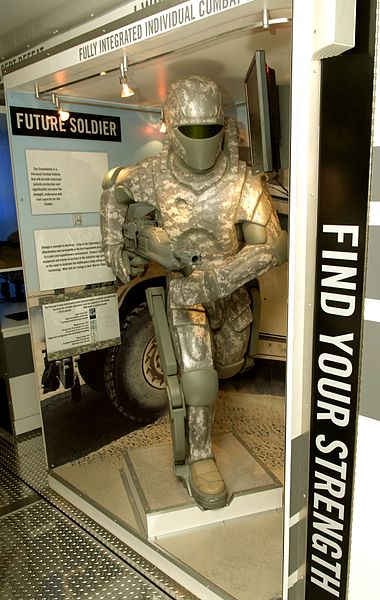
And most recently, just as the new year began, a report funded by the Greenwall Foundation examined the legal and ethical implications of using biologically enhanced humans on the battlefield. This report was filed in part due to advances being made in biotechnology and cybernetics, but also because of the ongoing and acknowledged efforts by the Pentagon and DARPA to develop super-soldiers.
The report, entitled “Enhanced Warfighters: Risks, Ethics, and Policy”, was written by Keith Abney, Patrick Lin and Maxwell Mehlman of California Polytechnic State University. The group, which investigates ethical and legal issues as they pertain to the military’s effort to enhance human warfighters, received funding from the Greenwall Foundation, an organization that specializes in biomedicine and bioethics.
In a recent interview, Abney expressed the purpose of the report, emphasizing how pre-emptive measures are necessary before a trend gets out of hand:
“Too often, our society falls prey to a ‘first generation’ problem — we wait until something terrible has happened, and then hastily draw up some ill-conceived plan to fix things after the fact, often with noxious unintended consequences. As an educator, my primary role here is not to agitate for any particular political solution, but to help people think through the difficult ethical and policy issues this emerging technology will bring, preferably before something horrible happens.”
What’s more, he illustrated how measures are necessary now since projects are well-underway to develop super soldiers. These include powered exoskeletons to increase human strength and endurance. These include devices like Lockheed Martin’s HULC, Raytheon’s XOS, UC Berkeley’s BLEEX, and other projects.
In addition, DARPA has numerous projects on the books designed to enhance a soldiers abilities with cybernetics and biotech. These include VR contact lenses, basic lenses that enhance normal vision by allowing a wearer to view virtual and augmented reality images without a headset of glasses. There’s also their Cognitive Technology Threat Warning System (CT2WS), which is a computer-assisted visual aid that instantly identifies threats by augmenting their visual faculties.
And in the cognitive realm, there are such programs as Human Assisted Neural Devices (HAND) that seeks to strengthen and restore memories and the Peak Soldier Performance (PSP) program that will boosthuman endurance, both physical and cognitive. But of course, since post-traumtic stress disorder is a major problem, DARPA is also busy at work creating drugs and treatments that can erase memories, something which they hope will give mentally-scarred soldiers a new lease on life (and military service!)
And of course, the US is hardly alone in this regard. Every industrialized nation in the world, from the EU to East Asia, is involved in some form of Future Soldier or enhanced soldier program. And with nations like China and Russia catching up in several key areas – i.e. stealth, unmanned aerial vehicles and aeronautics – the race is on to create a soldier program that will ensure one nation has the edge.
But of course, as Abney himself points out, the issue of “enhancement” is a rather subjective term. For example, medical advancements are being made all the time that seek to address disabilities and disorders and also fall into the category of “enhancement”. Such ambiguities need to be ironed out before any legal framework can be devised, hence Abney and his associates came up with the following definition:
“In the end, we argued that the best definition of an enhancement is that it’s ‘a medical or biological intervention to the body designed to improve performance, appearance, or capability besides what is necessary to achieve, sustain or restore health.”
Working from this starting point, Abney and his colleagues made the case in their report that the risk such enhancements pose over and above what is required for normal health helps explain their need for special moral consideration.
These include, but are not limited to, the issue of consent, whether or not a soldier voluntary submits to enhancement. Second, there is the issue of long-term effects and whether or not a soldier is made aware of them. Third, there is the issue of what will happen with these people if and when they retire from the services and attempt to reintegrate into normal society.
It’s complicated, and if it’s something the powers that be are determined to do, then they need to be addressed before they become a going concern. Last thing we need is a whole bunch of enhanced soldiers wandering around the countryside unable to turn off their augmented killer instincts and super-human strength. Or, at the very least, it would be good to know we have some kind of procedure in place in case they do!
What do you think of when you hear the word “super soldier”? Yeah, me too!
For over a century, scientists have sought to learn more about epilepsy, the most common form of seizure activity in humans. Basically, these seizures are what happen when neurons misfire in response to sudden exposure to light. Arising in discrete regions on either pole of the brain, this neurological disorder effects many people worldwide and can have a drastic impact on their lives. Luckily, it seems that researchers may finally have a way to predict the seizures and even eliminate them altogether.
It’s called optogenics: the science of using genetically modified viruses to insert light-responsive channels into the neurons and then following that up with the use of lasers to reduce and even eliminate TLE, or temporal lobe epilepsy. And thanks to ongoing research, there might just be a way to both predict and shut down these episodes of unwanted neurological activity just as they begin. And ironically, its all through the use of targeted laser light.
The breakthrough came in a recent study by Nature Communications, researchers were able to trigger seizures in mice by treating the hippocampus section of their brains (the part involved in seizure activity). It began with the use of an acid named kainate that is derived from seaweed, which in turn left them susceptible to spontaneously generated seizure activity. Then, through the use of a series of implanted EEG electrodes, the researchers were able to detect signs that seizures were beginning and then shut them off with light.
Naturally, there are concerns about adapting the technique to humans. Not only were the mice specifically engineered for the study, there is also the issue of achieving full optical stimulation in human subjects. To address these issues, a number of solutions are in the works. For example, biocompatible polymer electrodes have been designed to ensure that the genetically-modified virus can be delivered properly to the human brain. In addition, a number of key developers have been working on compact devices that contain hundreds of discrete delivery electrodes that ought to provide the requisite neurological stimulation.
It is research, and it’s ongoing. But the results are encouraging and with ongoing development to adapt it to humans, anti-seizure medical devices are expected to be exploding in the near future. Much like the tiny electrodes used to stimulate brain activity and recollection in a simian, we could be looking at the prototype for a new type of brain implants that addresses and eliminates neurological disorders.
And we’re back from Mars with another slew of updates and breaking news! It seems that ever since the Curiosity Rover landed back in early August, the revelations and interesting facts have been pouring in non-stop. With each bit of news, we learn a little more about the Red Planet’s composition, its history, and how both are so similar to our own.
And in recent weeks, ever since Curiosity moved into Yellowknife Bay, there have been a number of interesting developments. One came back in January when the Rover found a series of calcium-rich deposits, similar to the kind observed here on Earth. These types of deposits are observed wherever and whenever water circulates through cracks and rock fractures. This is just the latest in a long string of discoveries which support the conclusion that Mars was once home to vast rivers.
The images above show the similarity between the sulfate-rich veins seen by Curiosity rover to sulfate-rich veins seen on Earth. The view on the left is a mosaic of two shots from the remote micro-imager on Curiosity’s Chemistry and Camera (ChemCam) instrument which were taken on Dec. 14, 2012, or the 126th sol (Martian day) of operations. The image on the right is from the Egyptian desert here on Earth, which a pocket knife included for scale.
The next bit of news came on January 25th when Curiosity’s high resolution robotic arm camera – also known as the Mars Hand Lens Imager (MAHLI) – snapped its first set of nighttime images. The images were illuminated by both an ultraviolet and white light emitting LED’s (shown above and below). The rock outcropping – named “Sayunei”, located at the site of the “John Klein” outcrop – was just one of many to be found in Yellowknife Bay where Curiosity has been conducting ongoing surveys.
In this case, it was breaking the rock apart in an effort to try and expose fresh material, free of obscuring dust. Once exposed, the pictures were meant to determine the internal makeup of the rock. “The purpose of acquiring observations under ultraviolet illumination was to look for fluorescent minerals,” said MAHLI Principal Investigator Ken Edgett of Malin Space Science Systems, San Diego. “If something looked green, yellow, orange or red under the ultraviolet illumination, that’d be a more clear-cut indicator of fluorescence.”
In addition, certain classes of organic compounds are also fluorescent. Yes, that search continues!
And last, but not least, came the news at the end of January that indicated that Curiosity’s long-awaited test of its high-powered drill will finally be taking place. This first drilling operation entailed hammering a test hole into a flat rock at the John Klien formation for the purposes of making sure everything works as needed. If things pan out, then the team would conduct many more tests and collect the drillings for analysis by the Rover’s CheMin and SAM analytical labs in the coming days.
In anticipation of the planned drilling operation, the rover carried out a series of four ‘pre-load’ tests on Monday (Jan. 27), whereby the rover placed the drill bit onto Martian surface targets at the John Klein outcrop and pressed down on the drill with the robotic arm. Engineers then checked the data to see whether the force applied matched predictions. The next step was an overnight pre-load test, to gain assurance that the large temperature change from day to night at the rover’s location would not add excessively to stress on the arm while it is pressing on the drill.
The photo above shows the before and after shots of the rock where the drill conducted its hammering. And as you can see, the rock powered and is of a different color inside – slate gray as opposed to rust red. If the MSL lab deems the slab suitable, a number of test holes are likely to be drilled – using the rotation as well the percussive action – before a powdered sample is picked up and delivered to Curiosity’s onboard laboratories.
And so far, according to Curiosity project scientist John Grotzinger, things are looking good:
“The drilling is going very well so far and we’re making great progress with the early steps. The rock is behaving well and it looks pretty soft, so that’s encouraging,” he told BBC News.”
Ultimately, the purpose of the rover’s mission is to try to determine whether Gale has ever had the environments in the past that were capable of supporting bacterial life. Detailing the composition of rocks is critical to this investigation as the deposits in the crater will retain a geochemical record of the conditions under which they formed. Drilling a few centimetres inside a rock provides a fresh sample that is free from weathering or radiation damage, both of which are common to the Martian surface.
There is more to follow, for sure. And in the meantime, check out this video of the Mars Science Labs providing the latest Curiosity Rover Report explaining their finds for the month of January and plans for February.

 Leave it to engineers to make our world a little more transparent! In what is sure to be a novelty amongst clothiers, perfect for one-on-one social occasions and soirees – but definitely not dress parties! – designer Daan Roosegaarde has unveiled a design he calls the “Intimacy Dress”. A first amongst fashion designers, this article of clothing responds to the wearers level of arousal, and responds by turning see-through, at least in some sections.
























 Stories by Williams