NASA’s Next-Gen Spacesuit

NASA_suitIt’s like something Buzz Lightyear would be seen in, minus the death ray laser. It’s called the Z-1 spacesuit, a prototype that NASA hopes to incorporate into their equipment lineup by 2015. Not only does this new design offer a wide range of advantages compared with the space agency’s previous suit – the Extravehicular Mobility Unit (EMU) spacesuit – it also represents the first major overhaul in spacesuit technology since 1998.
For example, it boasts a rear-entry hatch which lets an astronaut put on the suit from the back, as opposed to putting on the top, bottom and helmet separately. This hatch also coincides with a feature known as the suit port, which allows the suit to be attached to the outside of a vehicle (such as a rover), thus allowing the astronaut to simply enter the suit from inside the vehicle. This is a big step from the current space suits which must be stored and put on internally.

I don't see a resemblance, do you?
I don’t see a resemblance, do you?

On top of that, the Z-1 excels in the areas of mobility and visibility. The former arises from the fact that the suit comes as a single piece rather than being made up of multiple segments. The larger, bubble dome helmet is what ensures that the astronauts has a better field of view. And finally, NASA plans to address the issue of life support through the portable PLSS 2.0 which condenses all life support systems into one package and does not need external components.

The PLSS 2.0 design also incorporates a massive bonus in the form of the Spacesuit Water Membrane Evaporator temperature regulator, which would actually make it possible for future astronauts to comfortably walk on extraterrestrial planets. According to NASA’s PLSS engineer Carly Watts, the PLSS 2.0 “can be used in a Martian environment. It can be frozen without damaging the unit, and it’s not particularly sensitive to contamination.” Good news for the astronauts heading to Mars in 2030, assuming the budget environment remains friendly after President Obama is no longer in power.

Check out this video of NASA Public Affairs Officer Brandi Dean talking with Cristina Anchondo, Z1 spacesuit test director, about the Z1 spacesuit at the Johnson Space Center.


Source: news.cnet.com

The Future is Here: The ASB Glassfloor!

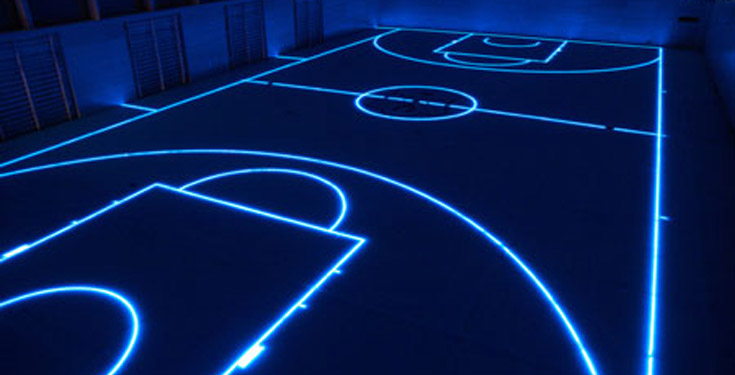
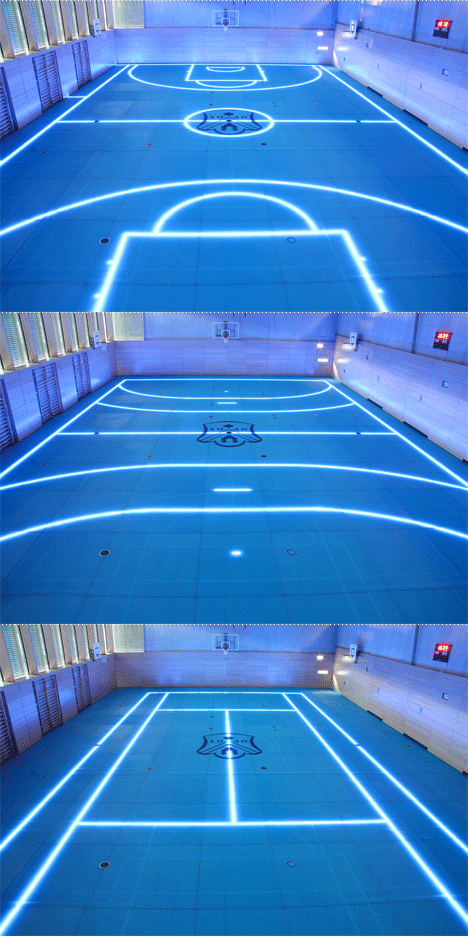
GlassFloor_TitelIt looks like something out of Tron, doesn’t it? In truth, its LED lights underneath a glass surface, but the end result is nothing short of awesome, not to mention convenient. It’s known as the ASB Glassfloor, the latest creation from German manufacturer Germany’s ASB Systembau. Using a system where an aluminum substructure supports the surface and LED’s provide light lines, a gymnasium or sports arena can be converted from a volleyball court, to a basketball court, to a series of tennis courts by simply pushing a button.

What’s more, ceramic dots on the glass re-create the feel of a wooden surface, while special etchings diffuse the LED light and prevent glare from bothering athletes. And for those who worry that the entire thing will shatter as soon as the home team takes the floor, know that this “glass” is actually a high-tech tempered security variety that is actually more durable and longer lasting than a conventional wood floor, meaning it can bear the weight of multiple teams, and is even available in different colors.

And finally, the company also indicated that since the floor’s are basically one large display device, that they can be programmed to broadcast ads in certain spaces, and that the entire floor itself can be turned into a single screen. Hence, while the player’s are playing, people can also enjoy small ads running in the end zone or sidelines, just in case they felt sports weren’t saturated by enough product placements! And at halftime, the floor can put on a show, either on its own or with the help of cheerleaders and a marching band.

My, with all the new display technologies and high-tech surfaces coming out, one would think the entire future is going to be made of “smart glass” and inundated with images and texts. Seems nobody can be satisfied with a simple, non-augmented window or floor anymore. Oh well, it looks cool and that’s what matters!

ASBGlassFloor-3xTo see the Glassfloor in action, click on the gif image above, or watch the video below:

More Plans to Colonize Mars!

mars_lifeFolks may recognize the name SpaceX, the private aerospace company that in May of last year launched a module into space to resupply  the International Space Station. An historic occasion, that was the first time a private spacecraft has has ever docked with the ISS, and signaled a growing trend in the development in commercial space travel. Well, it seems that the company’s founder has more ambitious plans now.

Yes, in a bid to make sure his company is not left behind in any future space endeavors, CEO and billionaire Elon Musk has announced plans to colonize the Red Planet with a population of 80,000. The announcement came back in November at the Royal Aeronautical Society in London, where Musk appeared to receive the Society’s gold medal for helping to advance the commercial space industry.

The first phase of the program, which is contingent on the development of reusable rocket that can take off and land vertically, would start off modestly with only a handful of explorers leaving Earth at a time. To make it happen, SpaceX has already started to work on their next-generation reusable Falcon 9 rocket, known as “Grasshopper”. This rocket has already made two short flights, including one in which it reached a height of 2 meters (6 feet), and another in which it leaped to a height of  5.4 meters (17.7 feet). Small beginnings, as they say!

The projected cost for each colonist looking to make the trip would be roughly $500,000. In short, those who are not rich or extremely adventurous need not apply! What’s more, he estimated that the entire program would cost about $36 billion, an inevitable expense to set up the initial infrastructure and transport. But once that is done, he believes enough people will be interested and find it within their means that the venture will pay for itself.

In an interview with Space.com, Musk’s vision for sending people to Mars was described as follows:

“Accompanying the founders of the new Mars colony would be large amounts of equipment, including machines to produce fertilizer, methane and oxygen from Mars’ atmospheric nitrogen and carbon dioxide and the planet’s subsurface water ice.

“The Red Planet pioneers would also take construction materials to build transparent domes, which when pressurized with Mars’ atmospheric CO2 could grow Earth crops in Martian soil. As the Mars colony became more self sufficient, the big rocket would start to transport more people and fewer supplies and equipment.”

So save your pennies and prepare for the day when tickets go on sale! Hard to say exactly when that will be, but chances are, it will be either feasible or abandoned by 2030. That’s when NASA plans to mount manned missions to the Red Planet. And like I said, men like Musk don’t want to be left behind!

Source: space.com

China’s Drones Trigger Fears of Drone Race

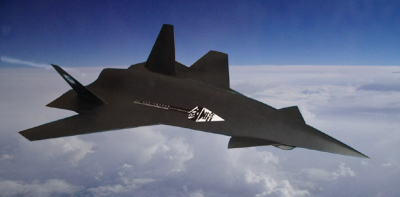
Dark SwordTwice a year, China showcases the latest in military technology at a show held in Zhuhai city, in the Guangdong province.  During the last show, held in November, a series of new unmanned aerial vehicle,s most of which bore a striking resemblance to the American drones that have been conducting attacks in Afghanistan and Pakistan for the past few years. Naturally, observers in the west were rather concerned with the wider implications.

Until recent years, the United States, Britain and Israel have maintained supremacy in the field of UAV’s. But much like stealth technology and naval aviation, the Red Dragon appears to be catching up by leaps and bounds. What’s more, it is likely China intends to take full advantage of using unmanned aerial vehicles to achieve its national interests, which includes their territorial disputes with Taiwan over the Senkaku Islands and South China Sea and Japan.

Sukhoi PAK FAIn response, the Defense Science Board released an unclassified report in they claimed: “In a worrisome trend, China has ramped up research in recent years faster than any other country. It displayed its first unmanned system model at the Zhuhai air show five years ago, and now every major manufacturer for the Chinese military has a research center devoted to unmanned systems.”

The report went on to say that “the military significance of China’s move into unmanned systems is alarming [suggested that China could] easily match or outpace U.S. spending on unmanned systems, rapidly close the technology gaps and become a formidable global competitor in unmanned systems.”

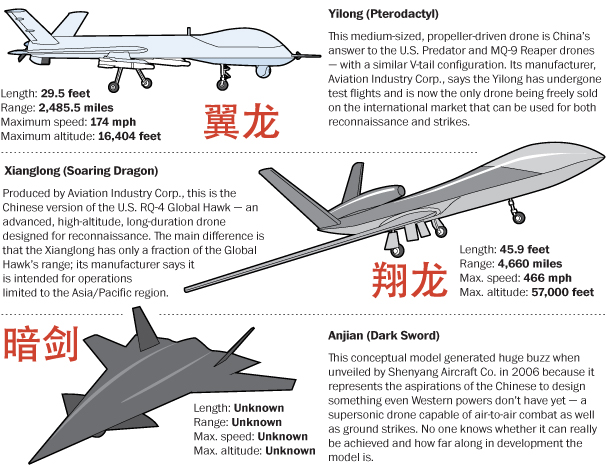
Chinese_dronesTwo Chinese models on display at the Zhuhai show — the CH-4 and the Wing Loong, or Pterodactyl — appeared to be clones of the Reaper and Predator drones that are fixtures in the U.S. arsenal. A larger drone, the Xianglong, or Soaring Dragon, is a long-range, high-altitude model that would seem to be a cousin of the RQ-4 Global Hawk.

Huang Wei, the director of the CH-4 program at the China Aerospace Science and Technology Corporation, told the state-run newspaper Global Times that his lightweight drone can carry cameras, ground-searching radar, missiles and smart bombs. “As the Americans say,” he said, “the U.A.V. is fit for missions that are dirty, dangerous and dull.”

What will this mean for the future? Drone wars? Or a new arms race where increasingly complicated unmanned aerial vehicles and stealth fighters are involved? Difficult to say, but with the advances of such weapons systems in other countries, it was only a matter of time before China followed suit. One can only hope, as the saying goes “that cooler heads prevail” before they are used in an open conflict.

Source: policymic.com, nytimes.com

The Future is Here: Smart Tattoos!

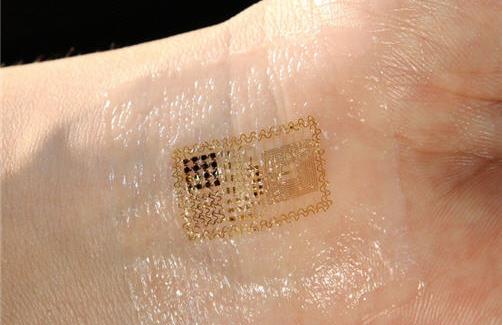
electronic_skin_patchIn recent years, scientists have been working towards electronics that come in flexible and ultra-thin packages. Back in 2011, this bore fruit as researchers from the University of Illinois unveiled the world’s first health monitoring patch, an ultra-thin device which looked like a temporary tattoo, but packed enough sensors in its flesh to monitor a person’s vitals. As a testament to the rate at which technological developments happen these days, improvements are already being made on the concept and design.

For example, a team of researchers from the University of Toronto and the University of California recently announced the creation of what they are calling the “smart tattoo”.  This device is a step up from the previous one, as it contains “ion-selective electrodes” which go beyond monitoring just your vitals. According to the collaborative team, this patch is made up of “sensors that detect the pH or salt levels of the skin, as well minerals like potassium, and even blood oxidation.”

In other words, this patch can monitor athletic performance at a granular level, but without any of the bulk or wiring of older sensors. It also means that for the first time, detailed athletic response testing would no longer be limited to the walls of a sports clinic, but could be done daily by the athlete herself. What’s more, the nature of the design and relative cost are in keeping with a mass production model and mass market appeal.

bloodstreamThis last aspect is an important indicator since one of the hallmarks of technological progress is the ability to create devices which go beyond matters of life and death and are able to address our daily concerns. In addition to proving that the technology is becoming more commonplace, it’s also a sign of growing affordability and availability. With this latest development, it seems that smart tattoos are doing just that.

Another example comes from Sano intelligence, a 2012 health startup that announced that they are in the testing phase of a smart tattoo that reads a wearer’s blood markers. This patch would be especially useful to diabetics, for whom blood monitoring is a constant hassle and often required invasive measures, such as needles. If the patch proves successful, diabetics everywhere would not only be able to forgo finger pricking and needles, but would also be freed of the burden of having to carry around bulky devices.

stretchable-electronicsFinally, there was the news from Cambridge Massachusetts, where another startup company named MC10 announced early in 2012 that they had created a “stretchable electronics” patch that was applicable not only to skin, but to human clothing and even organs. By mounting nanoscale electronics to a flexible, stretchable patch, the company hopes to be able to produce sensors that can monitor any number of health functions, from the more mundane things like heart-rate and hydration, to brain, heart, tissue, and organ function.

What is especially exciting about all of this is not so much the technology involved, but the fact that it is leading to an era where patients will have a far greater degree of control over their own health and monitoring. No longer will we be dependent on clinics and doctors for every single matter relating to our health, from checkups to surgery. Now we can take care of the former ourselves, making our information available to our doctor or specialist as needed, and going in for only serious or life-threatening procedures. This, in addition to leading to a more health-conscious public, could also bode well for medical costs.

Sources: takepart.com, technologreview.com, factcoexist.com

Drone Wars!

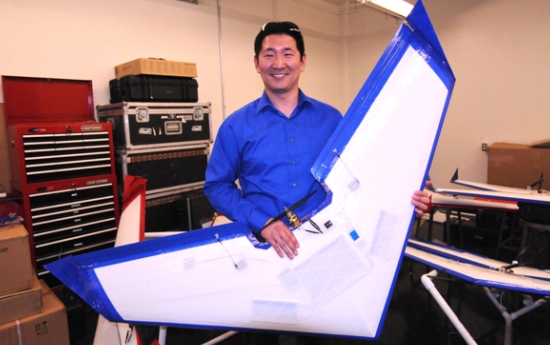
X-47BThat’s the crux of Timothy Chung’s research, an assistant professor in the Systems Engineering department at the Naval Postgraduate School in Monterey, California. For the most part, he and the Advanced Robotics Systems Engineering Lab (ARSENL) have been working on a way to construct a series of low-cost, lightweight autonomous flying vehicles known as Aerial Battle Bots that will give the US and the western allies an advantage should a full-scale conflict involving UAV’s happen.

The aspect of cost is especially important, seeing as how drones cost on the order of several million dollars apiece. By supplementing reconnaissance and hunter-killers with dogfighting drones, the army and navy of the future will have a lost cost-option for keeping their big-budget fliers safe. What’s more, it’s extremely important that the drones work in tandem, since it’s highly likely other nations will be developing similar swarms of drones in the future too.

Chung_droneWith the help of a DARPA research grant, Chung and his associates have completed a small fleet of about a dozen drones. Each is a essentially a commodity radio-controlled flying machine, called Unicorn, that has been retrofitted with an onboard computer and other gear in order to take their places in the larger group. He hopes that by this August, he and his team will be able to get the vehicles flying and be able to start experimenting with getting them working together, as well as facing off!

In other news, questions relating to drone dogfights and the issue of autonomous drones were raised once again at the White House. Back around Thanksgiving, the mounting concerns from the human rights community led Deputy Defense Secretary Ashton Carter to sign a series of instructions that were designed to ensure that human oversight would always be a factor where drone strikes and UAV’s were concerned.

john-brennanThese concerns have since mounted with the recent announcement that John Brennan, the White House’s counter-terrorism adviser and the man known as the “Drone Godfather”, was nominated to become the next head of the CIA. For years now, he has been the man in charge of the US antiterrorism efforts in Central Asia, many of which have involved the controversial use of Predator and Reaper strikes.

These concerns were voiced in a recent letter from Sen. Ron Wyden (D-Ore), a member of the Senate intelligence committee. In it, he asked Brennan pointedly when and under what conditions the president would be able to target American citizens using drones:

“How much evidence does the President need to determine that a particular American can be lawfully killed? Does the President have to provide individual Americans with the opportunity to surrender before killing them?”

Naturally, the questions were quite specific when it came to the authorization of lethal force and when such authorization would be given to target people within the US’s borders. But there were also many questions that highlighted concerns over how this same process of authorization has taken place in other countries, and how little oversight has taken place.

(U.S. Air Force photo/Staff Sgt. Brian Ferguson)(Released)In short, Wyden used the occasion to express “surprise and dismay” that the intelligence agencies haven’t provided the Senate intelligence committee with a complete list of countries in which they’ve killed people in the war on terrorism, a move which he says “reflects poorly on the Obama administration’s commitment to cooperation with congressional oversight.” And given the mounting criticism at home that using killer drones against unspecified targets in Afghanistan and Pakistan has earned, not to mention the blowback happening overseas, he is not alone in thinking this.

Like it or not, it’s a new age where “umanning” the front lines is having an effect, albeit not the desired one. At one time, the predominant thinking in military and intelligence communities was that using automated aerial, land and sea vehicles, war could be fought cleanly, effectively, and without the loss of life – at least on OUR side. However, this thinking is coming under increasing scrutiny as it comes closer and closer to realization. And at the center of it all, the philosophical and existential questions are numerous and impossible to ignore.

For starters, war is and always will be a human endeavor. Just because you are not risking the lives of your own people doesn’t mean the fight is any more sanitary or bloodless. Second, even though none of your own citizens will be mourning the death of their loved ones doesn’t mean there won’t be mounting civilian opposition as conflicts go on. In a global community, people are able to witness and empathize with the plight of others. And finally, the increased use of machinery, be it autonomous or remote controlled, will inevitably lead to fears of what will happen if that same technology would ever be turned against its own people. No weapon is so safe and no government so trustworthy that people won’t fear the possibility of it being turned on them as well.

Source: news.cnet.com, wired.com

The Future is Here: The tDCS Headband!

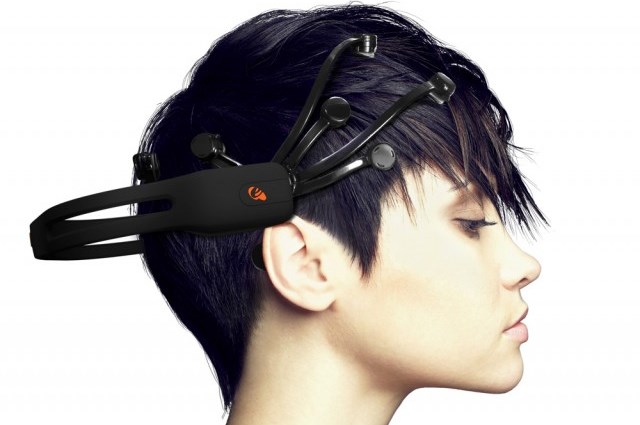
tcdsOh what a time to be alive, when more and more science fiction concepts that once seemed hokey are now becoming a reality! Take the transcranial direct current stimulation for example, otherwise known as the tDCS. It’s essentially a high-tech headband, one which is used to trigger the release of the powerful opioids – the human body’s most powerful, euphoria-inducing painkillers that are very similar to opiates such as morphine.

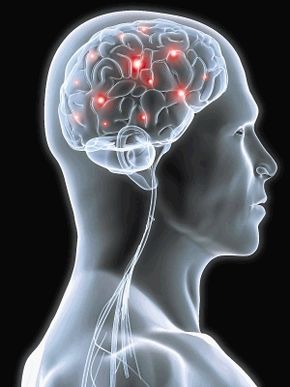
A team of international researchers headed up by the University of Michigan tested this noninvasive device and realized it could be both safe and effective. By applying a very small current to your scalp (2 milliamps), the headband alters the behavior of neurons in the brain, triggering the release of opioids that relieve pain, relax the body and create a general sense of well-being. This is big news for the medical industry and patients, since it means that artificial painkillers may not be necessary for much longer.

sniperTo be fair, the tDCS is not entirely new. Back in March of 2012, DARPA announced that it was using this device to assist in the training of military sniper. Essentially, the device was created to alter brain chemistry since the application of current to the brain was shown to make neurons fire faster and improve their neurolasticity. In short, the device could improve reaction time and help users to learn things faster.

However, Alexandre DaSilva and a team of researchers out of the University of Michigan found that the tDCS, when the electrodes are placed above the motor cortex, releases endogenous μ-opioid. In their study, the patient’s threshold for pain improved by 36% and the researchers seem confident that repeated uses of tDCS would also reduce clinical, chronic pain. By boosting the release of natural painkillers, less pharmaceutical opiates are required for managing pain, thus reducing the side effects and the risk of addiction.

neurozeneFurther analysis and long-term trials are needed to confirm these initial results, and I’m thinking a study on the possible effects of tDCS abuse might be needed as well. Sure, patients can avoid getting hooked on Oxycontin, morphine, and codeine with this device, but couldn’t they also get hooked on their headband? Yes, I can see it now. “I don’t need to wear my TransCranBand! I can quite whenever I want!”

Source: Extremetech.com

Cybersleuths Uncover Worldwide Spy Virus


computer-virus.istock

“I’m frightened because our enemies are no longer known to us. They do not exist on a map. They’re not nations, they’re individuals. And look around you. Who do you fear? Can you see a face, a uniform, a flag? No! Our world is not more transparent now, it’s more opaque! It’s in the shadows.” 

This was one of the most memorable lines from the recent Bond movie Skyfall, as spoken by Dame Judi Dench in her role as M, director of MI6. It’s memorable because of how it managed to capture the essence of spy work in the post-Cold War digital age, and because it pretty much resounds with audiences who are increasingly fearful for their privacy.

In a story that I know I must comb for material for my next cyber novel, a team of cyber sleuths recently uncovered a cyberspy ring that has been spying on embassies, governments and research institutions around the world for the past five years. The virus, which has been dubbed “Red October”, is of uncertain origin, though the culprits are believed to be Russian (hence the name).

Red-October-Infection-MapFor the past five years, the virus has been harvesting documents and data from computers, smartphones and removable storage devices (such as USB sticks), largely from victims in Easter Europe and Central Asia. However, 69 countries were reported as being targeted in total, including the U.S., Australia, Ireland, Switzerland, Belgium, Brazil, Spain, South Africa, Japan and the United Arab Emirates. So far, these victims remain unidentified except to say that in most cases, they were government agencies and embassies, institutions involved in nuclear and energy research and companies in the oil and gas and aerospace industries.

The virus was uncovered by the Kaspersky Lab, a Moscow-based antivirus firm that specializing in internet security. In a statement released on Monday the 14th: “The main purpose of the operation appears to be the gathering of classified information and geopolitical intelligence, although it seems that the information-gathering scope is quite wide.” The virus is still active, they say, but now that the operation is a matter of public record, there’s no telling if it will continue or not.

hackers1What’s more interesting is the fact that the spy ring set up an extensive and complex infrastructure consisting of a chain of at least 60 command-and-control servers that appear to rivals the massive infrastructure used by the nation-state hackers that were behind the infamous Flame spay malware that was responsible for infiltrating computers in Iran and across the Middle East last year. However, Kaspersky went on to claim that this network was not associated with Flame, meaning that there is another hacker ring out there that is equally powerful and motivated, and has comparable infrastructure.

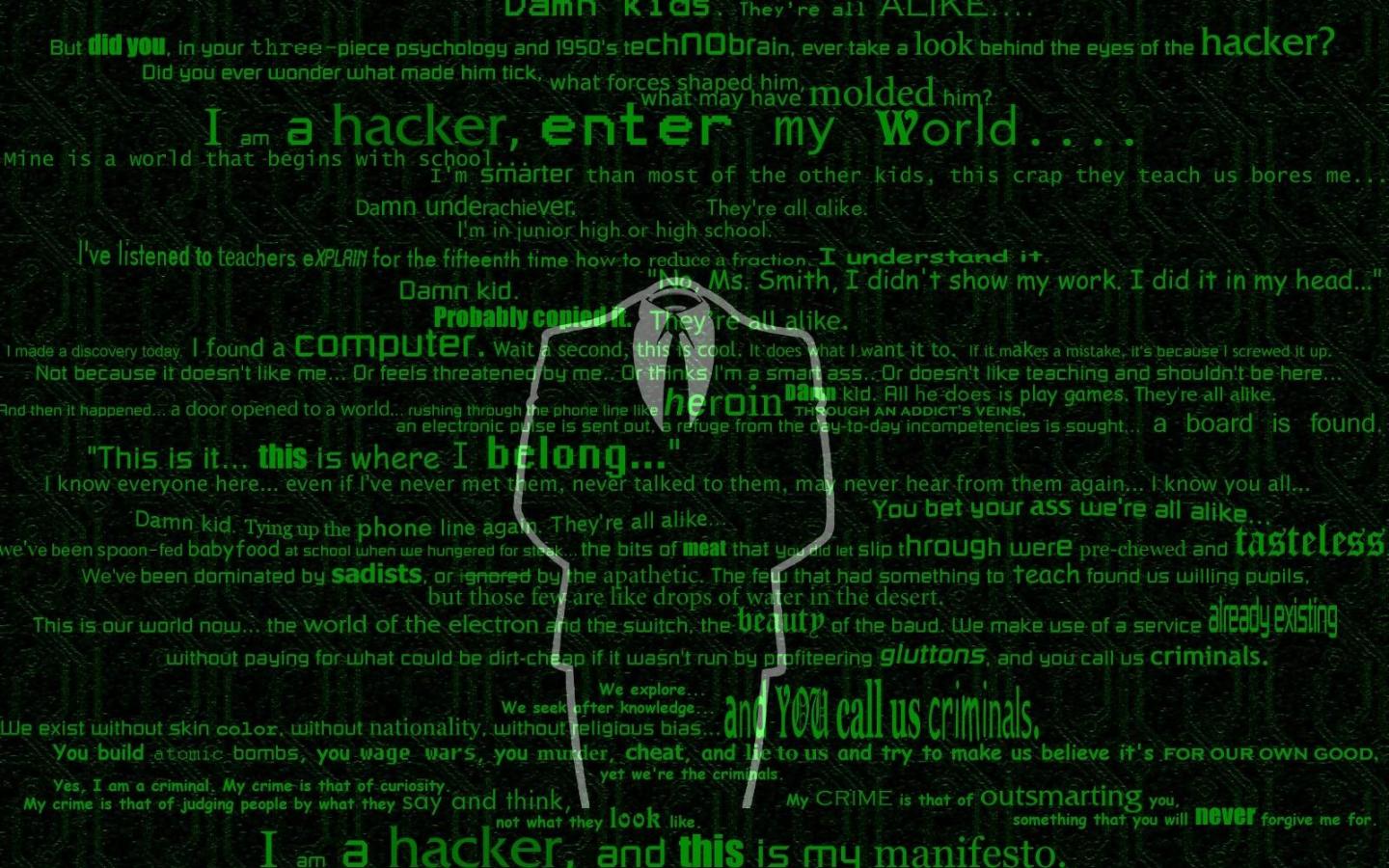
All of this calls to mind the Anonymous and the whole debate about hacking and its ethics. Whereas the concept was born of a desire to make information free, deconstruct corporate and government control of media, and break down barriers between nation states, examples like this remind us that there are also insidious hackers, the ones who’s motivation is questionable and who’s actions are less than benign. Alongside “black hat” hackers, the people who spawn malware, spyware, and other viruses from their basements, hackers have it pretty bad on the PR front!

anonymousBut good or bad, the reality is that hacking and information wars are becoming an increasingly decentralized and democratic affair. For some, this is a good sign, an indication that we are moving towards a truly open and free society. For others, its a very bad sign, since we really have no idea how to contain threats that emerge from what are essentially non-entities.

I swear to God I didn’t pick this story to promote my new book, people! But for some reason, the news cycle seems to have decided to break a story that specifically addresses what I was trying to capture with that book and its planned sequels. So in addition to all the people these “Red October” individual may have screwed over, it seems that they’ve made me look like a shameless self-promoter! I don’t know what your agenda is, be it general mischief, anti-secrecy, freedom of information, or just plain anarchism, but did you ever once think of ME???

Source: Wired.com

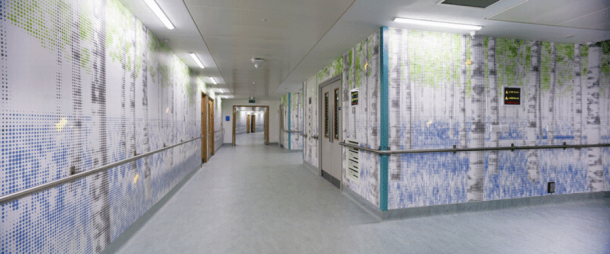
The Future is Here: The Magic Forest LED Wall

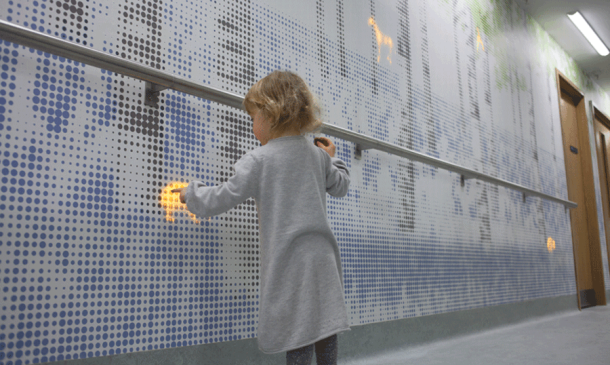
magic_forest1In an attempt to address the sterile feel of lobbies and waiting rooms in hospitals and clinics, a London design studio recently unveiled a very cool concept. Essentially, it’s an interactive wallpaper that turns clinical corridor walls into a magical forest which engages and distracts kids as they journey toward their procedure. Known as Nature Trail, the installation is a 50 meter (165 feet) long corridor that walls part of the Mittal Children’s Medical Centre at London’s Great Ormond Street Hospital.

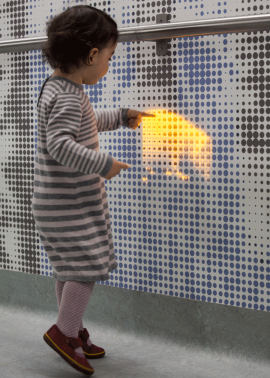
Jason Bruges, head of the Jason Bruges Studio and creator of the installation, claims that “the idea came from remembering walks in my childhood. I loved spotting and following things, those stolen glances and glimpses… I was trying to re-create this with the idea of digital lookout points along the corridor.” Relying on a series of 70 LED panels that house a total of 72,000 LEDs, the walls are triggered by motion sensors and reveal animated patterns in the shape of horses, deer, hedgehogs, birds, and frogs peeking through the foliage and trees.

magic_forestThe studio modeled the critters in 3D before translating them to low resolution to give the creatures an aesthetic similar to an old-fashioned video game character. The creators then placed the LED panels at various heights so kids of all ages, and to take into account being bedridden or in a wheelchair, can access the animals at eye level. The hospital says its young patients have been so entranced by the nature canvas that it will grow to fill more walls by 2017.

magic_forest2As it stands, doctor’s offices, dental clinics and medical centers rely on aesthetics to combat what can only be described as the “clinical feel”. But this concept just may offer them a high-tech option that will put patients at ease through the illusion of a natural setting that is dazzling the eyes. Some might accuse men like Bruges of using technology to anesthetize, but for anyone who has had sick children, its likely to be seen as a godsend!

Source: news.cnet.com

New Anthology Sample!

gliese 581Hey folks! In the past few weeks, I’ve been working diligently to get my “works in progress” pile under control. This included getting Data Miners off my computer and onto the shelves, but also to get this anthology known as Yuva moving again. I’ve done my best to get more writings on the project, and actually managed to get some writing done myself.

As a result “The Torch”, the first chapter in the story which acts as the prologue, is coming long and is almost complete. After some months of letting it accumulate dust, I finally managed to get the third section finished and plotted out how I wanted it to end. The following sample is the next half-section, which is the just shy of the final chapter. I hope you like it, and enjoy the not-too-subtle tech references which I have been researching of late and knew I had to incorporate. This is, after all, taking place in the near future…

For the sake of preserving some element of surprise and mystery, I won’t say exactly what they are or where to find them. Suffice it to say, I think that flexible, transparent computer tablets and commercial space flight will be a reality in the near future. Based on discussions that took place between myself and Khaalidah, this story’s co-author and a major anthology contributor, we also figured that orbital satellites would be island estates of the future.

In addition to orbital banking replacing “offshore banking” – a la Cayman Islands, Isle of Man, Cyprus, etc – there would also be private estates in orbit where laws were laxer and people with money could do whatever the heck they wanted! It’s like international waters, but with the added benefit of low gravity and high-tech medical treatments which would never be legal planetside.

Anyway, no more spoilers! Enjoy!

*                    *                    *

From the spacious backseat, Muktari got quite the view of the Frankfurt skyline. The window’s active display matrix was sure to keep him apprised of what he was seeing as they passed along the Schaumainkai. The patterned lights – yellow, orange, white and opal – achieved a beautiful, glittering balance, drawing the eye and appeasing the senses all at once.

In truth, it wasn’t much different from the skylines of Dubai, Mumbai or Shanghai, or even London or New York for that matter. They all were a testament to the grandeur and excesses of humanity, how people could always be expected to build higher and higher when they had run out of room to expand sideways. Or, in other cases, to avoid pillaging the lands occupied by more traditional buildings and boroughs.

But this was always the challenge of such metropolitan centers. The inflow of capital, investment, new people and technological change; one always had to find places to put the new things. And places to put the things needed to dispose of. And every new age seemed to trigger a new wave of this process: redevelopment, rezoning, and redistribution.

The car veered left and began joining the highway. For many minutes, the skyline disappeared in the distance, replaced by the developments that ran south of the river. The window had a hard time keeping up, as there weren’t many heritage sites in this area, but plenty of modern buildings of note. He turned away finally, and began paying attention to his fellow passenger. She had shown up the airport to escort him, and he was beginning to sense this would become a pattern.

“You didn’t have to meet me,” he had said as soon as he reached the front doors.

“Escorts can be so impersonal,” she said. “Besides, my father doesn’t trust specialized talent to just anyone.”

“So I can expect you to be a noose around my neck then?” he said. He had been in a bad mood after the flight, admittedly. A restless sleep and an early morning flight was known to do that to people. And changing time zones and shuttling from one part of the Earth to the next was something he had been doing far too much of lately.

Now, seated across from her, he thought some polite conversation might be in order.

“So where is Mr. Harding flying me to?”

She looked up from her Tab and smiled. “To him,” she replied simply.

“To him? You mean to his private estate somewhere, or corporate HQ?”

She chuckled mildly and continued typing and stroking at her device. Muktari sighed heavily. He was hoping to be pleasant, but the way she was preserving the surprise was beginning to annoy him. Was it too much to ask that she help him plan his evening? If he were to be taken to yet another time zone and have to face the prospect of even more lag, he would like to know about it now.

“You know, I heard that Harding was not in the best of health lately.” He let the words hang, hoping to gauge her reaction. “I might suspect we were heading for the Swiss Alps, or perhaps some clinic in Brazil.”

She made a sideways gesture with her head, like a half shake. A denial perhaps, or an indication that she could not say either way.

“It would seem ill-advised for a man who was in the twilight of his days to still be chained to his desk.”

She appeared to be finishing up with her work and put the Tab aside. She looked at him furtively and said nothing.

“No?” he said, and nodded. “Very well, keep your secrets. But know that all this running around and pretense isn’t making me any more interested in what he has to say.”

She continued to stare at him, smiling in her usual way. It too was becoming very annoying.

“What?” he said at last.

“We’re here,” she replied, motioning to the window. Muktari looked out and spotted the strip that they were now parked upon. Less than a hundred meters to their right, a small Atmo was parked.

“We’re flying in that?” he said, gesturing to the craft.

She smiled.

“Where are we going?”

“To the stars,” she replied. “Have you been topside before?”

Muktari blanched. It was one thing he had assiduously avoided, and hoped to continue not to do in his lifetime.

“Well then,” she said, taking his expression to mean he had not, “you’re in for quite the treat.”