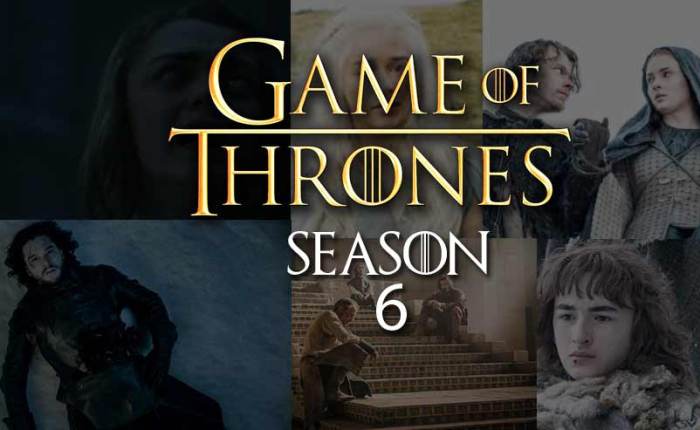
Some Thoughts On Game of Thrones Season SIx

Some Thoughts On Game of Thrones Season SIx

Hello folks! As you may know, I don’t get around to posting much in the way on this blog lately. These days, my time has been pretty much stretched thin with writing for Universe Today and HeroX, and what time I have left over I generally dedicate towards my personal writing. But I felt the need to hop on here today and share something which it pains me to admit.

I do not care for Game of Thrones anymore! And since I have friends who were so excited about Season 6 and raved about how Season 5 ended, I know this will lead to some arguments down the road. But I must be honest here…

When the show began, I was a non-initiate, someone who had never read the books or ever heard of George R.R. Martin. Once the first season was complete, I took it upon myself to read all five books and found myself quickly turned into a ASOIAF geek. Naturally, this lessened the experience of the show as for Season 2, 3, 4, and 5, I knew how the story would go and reacted predictably whenever they changed any details. But that was only because I liked the story so much.

But last season, the writers of GOT went so far off book and left so much stuff out that I became genuinely disinterested with the show. Still, I felt I had to see what they were going to do with Season 6, so when “The Red Woman” premiered, I was sure to tune in. And then I watched the follow-up in “Home” to see where things went from there. Needless to say, the way they handled things reminded me of why I lost interest.

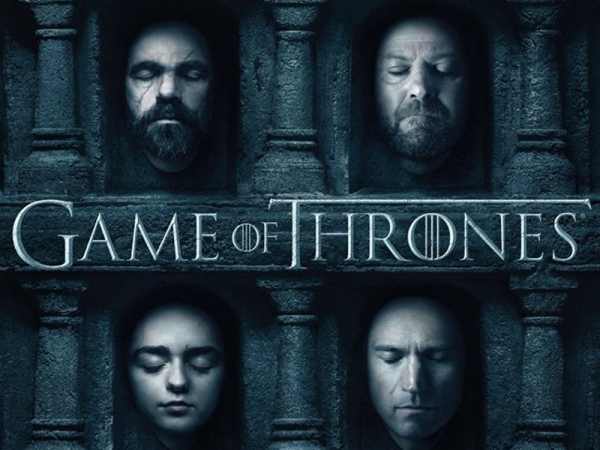
GOT6

Let me explain why…

When the show writer’s tackled season 5, they had material from two books to work with  – A Feast for Crows and A Dance with Dragons. And whereas they divided the third book (A Storm of Swords) into two seasons and ended up padding the second half with lots of things they made up, for Season 5 they skimmed over much of it, left a whole bunch of things out, and then reached the point where they had nothing more of Martin’s material to work with.

And it seems obvious to me why they did that now. In the course of making Season 5, they knew they would be flying without Martin’s net by Season 6. And so they began moving to eliminate all the material they didn’t want to work with and began simplifying the plot. Too bad, because so much of what they eliminated was intriguing and made the story interesting.

Also, it seems obvious that the promos they made for Season 6 – “Anybody can be killed” – have been less than honest. In reality, they’ve been killing off only certain kinds of characters, and it seems clear why. Now covering all of what they changed would take some time, so here’s the Cole Notes version of it. This is where the story left off in the books, and where they diverged from it…

Tyrion In Essos: Having killed his father, Tyrion fled King’s Landing with Jaime and Varys help, and travels to the free city of Pentos, where he is in the care of lllyrio Mopatis (the same man who had played host to Daenerys and her brother Varys for years). Tyrion is then sent to Volantis in order to meet with a party led by a man named Griff and his son, young Griff, which will be traveling east to find Daenerys. After spending time with them, Tyrion learns the startling truth.

tyrion_river
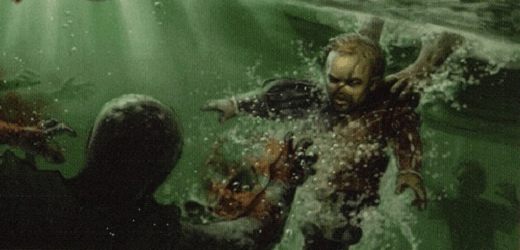
Tyrion pulled from the river, by Dimitri Bielak

Young Griff is in fact Aegon Targaryen, the son of Rhaegar Targaryen (and cousin to Daenerys) who was thought to have died in Robert’ Rebellion. Griff, meanwhile, is Jon Connington, the Hand of “The Mad King” Aerys II. For years, Aegon has been raised in secret, for the day that he could return to Westeros and reclaim the throne. With Daenerys having risen to become queen of Mereen and the “Mother of Dragons”, they now intend to find Daenerys’  and convince her to marry Aegon, at which time they will return to Westeros in force and claim the thrones.

Unfortunately, Tyrion is kidnapped by Ser Jorah Mormont, who intends to take him to Daenerys as a gift. But they are taken by slavers who intend to force them to fight in Mereen’s recently reopened fighting pits. During the opening fight, when Daenerys is attacked and flees on the back of Drogon, Tyrion, Mormont, and Penny (another dwarf taken as a slave) flee outside the city.

Beyond the walls of Mereen, the armies of Slaver’s Bay are gathered.Having retaken Yunkai and Astapor from the freed slavers, they are now gathered to lay siege to Mereen. Daenerys managed to broker a truce by reopening the fighting pits and marrying Hizdahr zo Loraq. However, with her gone from the city, the truce is broken. Tyrion and the others manage to join with a sellsword company Second Sons, and hope to switch sides while the camp suffers from a plague that has broken out (the Bloody Flux).

a-song-of-ice-and-fire-dany_drogon
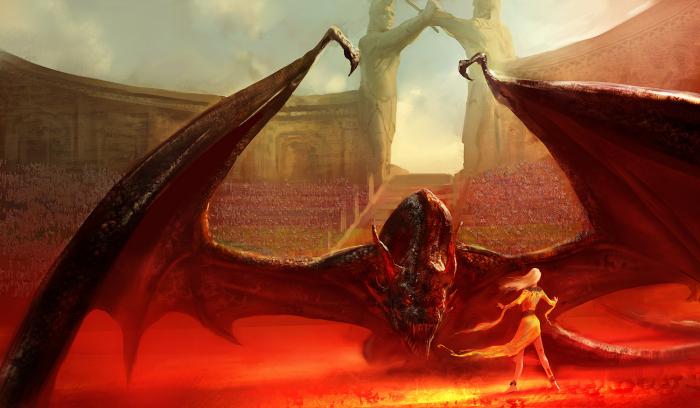
Daenerys and Drogon in Daznak’s Pit, by Marc Simonetti

While in the wilderness, Daenerys is found by an old foe – Khal Jhaqo, the man who took command of the khalasar after Khal Drogo died.

Iron Islands: The Ironborne choose a new king after Balon Greyjoy dies in a fatal fall at Pyke.  Euron, Balon’s brother, becomes the new king by promising his people victory thanks to a “dragonhorn”, an instrument which can control dragons that he managed to procure. He orders his younger brother Victarion to sail to Essos to bring Daenerys and her dragons back.

Dorne: The Sand Snakes plot to kidnap Princess Myrcella has failed thanks to the intervention of Prince Doran Martell. After freeing the ringleader – his daughter, Arianna Martell – he explains to her that he has a plot to get revenge on the Lannisters, Baratheons and Tyrells and is not the weak man they think he is. This plan involves sending his son Quentyn Martell to Mereen to marry Daenerys and bring her home to Dorne, where their kingdom will pledge support for her and take the Iron Throne for House Martell.

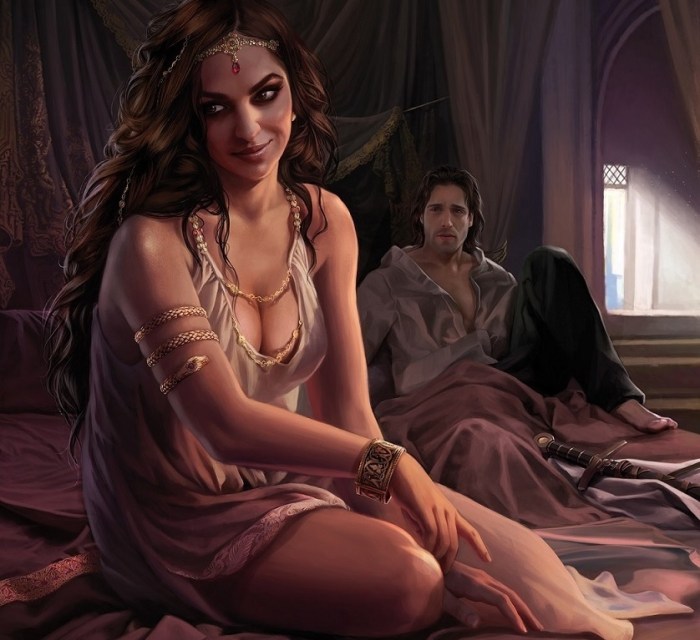
Arianna Martell and Ser Arys Oakheart, by Magali Villeneuve

However, this plan went a bit awry when Daenerys fled Mereen, and Quentyn is burned alive when he and his men try to take matters into their own hands and free her dragons. At the same time, the Ironborn are traveling to Mereen in the hopes of striking an alliance with Daenerys and bringing her and her dragons back to Westeros, also with the hope of conquering the Iron Throne for themselves.

In the Riverlands: Brienne of Tarth still searches for Sansa and Arya with the help of Podrick Payne. Along the way, she runs into the Brothers Without Banners, who arrest her and take her before their master – Lady Stoneheart. Brienne learns, to her surprise and horror, that Stoneheart is actually Lady Caitelyn Stark.

After being murdered at the Red Wedding, her body was thrown into the river and washed up on shore. The Brothers found her, and Lord Berric Dondarion (having been resurrected many times by Thoros of Myr) breathes his last life to her. A cold, viscous shadow of her former self, she orders Brienne killed on suspicion that is she working for the Lannisters, but Brienne is released after agreeing to kill Ser Jaime.

Lady Stoneheart, by Azad Injejikian

She finds Ser Jaime in the Riverlands, where is he busy negotiating an end to the sieges that are still taking place there. When they meet, she tells him that she has found Sansa Stark, but only Jaime can accompany her. The reason, she claims, is that Sandor Clegane (The Hound) is alive and with her, and that he will attack if he Brienne comes alone. In short, we are led to believe she is leading him into a trap.

In The North: Jon Snow allows the Wildlings to pass through the Wall after their defeat at the hands of Stannis. While it is believed that Mance Rayder was burned alive, along with the other Wildlings that would not bend the knee to Stannis’, Jon learns that he’s actually alive. With Melisandre’s help, who cast a spell of illusion on him, he switched places with Rattleshirt and has been carrying on in disguise. Jon asks him to travel south and rescue his sister Arya, who he was told was married to Ramsay Bolton (not knowing that he married Jeyne Poole, who is being forced to impersonate Arya).

Melisandre also warns Jon that she has seen him in her visions, where he is surrounded by daggers in the dark. As he prepares to ride south to fight the Boltons, the vision comes true when Jon is attacked and stabbed severely by Bowen Marsh and other members of the Night’s Watch. The book ends with us not knowing if he survives or not.

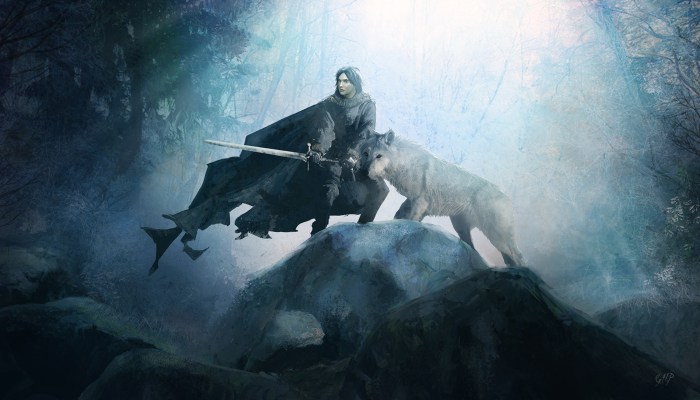
Jon Snow and Ghost by guillemhp
Jon Snow and Ghost, by guillemhp

Just south of them, Stannis has taken Deepwood Motte and captured Asha Greyjoy (Theon’s sister). However, he is unable to march on Winterfell since the winter snows have made movement impossible and hunger begins to set in. However, the Boltons are doing just as bad at Winterfell, where the Boltons and their allies begin turning on each other. In the confusion, Theon rescues Jeyne Pool (who was posing as Arya) and they escape the castle together. They flee into the wilderness, eventually being picked up by Stannis men and brought back to camp. Theon reunites with his sister for the first time since his capture.

Oldtown: Samwell Tarley, Gilly, and Maester Aemon travel from Castle Black to Oldtown via Bravos. It is there that Sam is to become a Maester, seek out the old prophecies, and learn all he can about the coming of the White Walkers and the prophecy of Azor Ahai reborn. Aemon reveals to him that he once thought that this might be Varys, but now believes it to be Daenerys. Aemon dies before they can reach Oldtown, but when Samwell arrives, he speaks to the masters at the Citadel of what Aemon told him. When they hear this,  Archmaester Marwyn leaves to go to Mereen with the intention of becoming Daenerys’ maester.

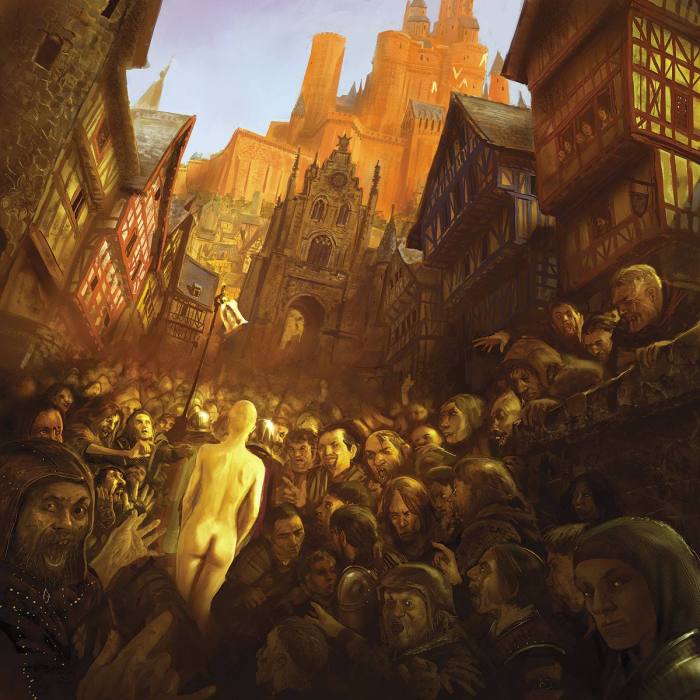
At King’s Landing: Cersei confesses to having sex with her cousin, Lancel Lannister, and performs the penace walk back to the Red Keep. There, she meets Ser Robert Strong (a resurrected Gregor Clegane) who will she is relieved to know will be fighting for her if she asks for a trial by combat. With Ser Jaime out of the city and her father dead, the task of running things has fallen to her uncle, Kevan Lannister.In addition to trying to clean up the messes Cersei and Joffrey has made, he must also deal with the fact that Aegon Targaryen’s forces appear to be landing in the east and raising a banner of war.

Walk of shame, by Marc Simonetti


Shortly after Cersei arrives home and they dine together, Ser Kevan is murdered in his quarters by Varys (who has also killed Grand Maester Pycelle). Varys explains to Kevan before he dies that he is part of the conspiracy to bring Aegon Targaryen home and to see him made king.

So that’s the story up until Season 6 (or the end of A Dance of Dragons) in a nutshell. As you can plainly see, so much of the plot had to do with Daenerys at this point, who has been revealed to be intrinsic to the whole prophecy of the coming of winter, the coming of the Others, and the war that will decide the fate of Westeros and the world. Basically, the War of Five Kings is over, and all roads lead back to Westeros by way of Mereen.

Where They’ve Change Things:

In the series, things changed drastically by Season 5. Basically, they were using material at that point from both A Feast for Crows and A Dance with Dragons, but seemed to be skimming through much of it, leaving a lot of other stuff out, and taking various story threads and tying them together.

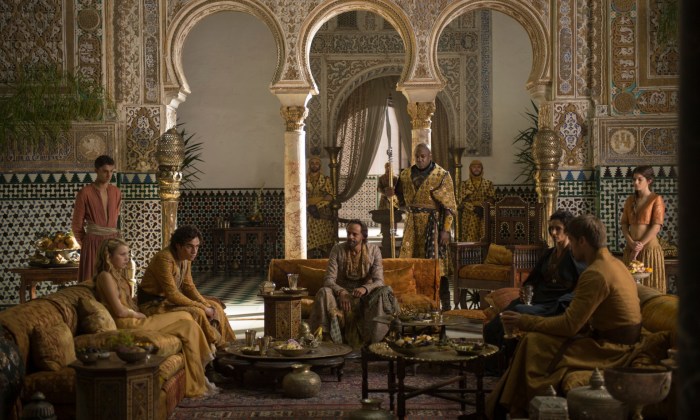
got_dorne

For example, rather than showing the full intrigue that was happening in Dorne – which included Arianna Martell’s daughter and the Sand Snakes kidnapping Myrcella and positioning her to become Queen on the Iron Throne, thus making her betrothed (Trystane Martell) king – they instead made a story about Oberyn’s paramour (Ellaria Sand) and the Sand Snakes trying to kill her. Instead of Prince Doran thwarting this and telling Arianna of his plans, we get a big mash-up with Jaime and Bronn trying to save her and the whole thing ending in failure.

Ellaria and the Sand Snakes respond by killing Doran, Myrcella and Trystane all in one shot. Not only did none of this happened in the story, but killing off ALL these people means that their attempts to get Daenerys on their side and come back to Westeros are not going to happen. It eliminates the Dorne thread from the story altogether, and also means Cersei is mourning two dead kids instead of one as she prepares for her trial.

Speaking of murdering people off, they also killed off Stannis in a way that was very sudden. Not only did he not burn his daughter at the stake in the story, his daughter and his wife weren’t even with him as he marched to lay siege to Winterfell, which only made sense. You don’t bring family with you on a war march! Another person he left behind was Melisandre, so none of these people abandoned him or committed suicide on him. He also didn’t then march on Winterfell only to get his butt handed to him by Ramsay and then killed by Brienne. The way this all happened in one episode showed that they were eager to kill off his thread.

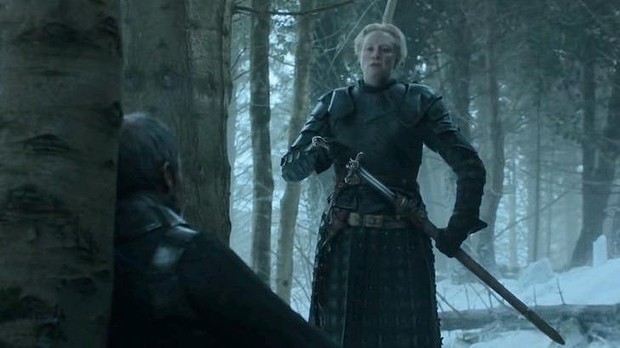
got_brienne_stannis

Speaking of Brienne, she was supposed to be in the Riverlands. But since they decided, for whatever reason, not to touch the Lady Stoneheart part of the story, this meant the writers had to give her something to do. In the same vein, Sansa had little to do, so they changed it up and made it her who was married to Ramsay Bolton and who got rescued by Theon.

At the same time, Ramsay Bolton spent the second episode of this season hatching a plot to kill his father, his stepmother, and his new brother is some big power play. With Roose gone, this means that Ramsay will now likely try to kill Jon Snow again (something they never bothered with in the books). With no epic battle looming between Stannis and he, there’s not much left for him to except get killed off himself, thus eliminating that thread as well.

Meanwhile, Theon’s father has been killed off and the island has fallen into political divide. Sure, this is close to what happened in Crows, but they’ve done it here makes it seem like this is just another minor thread they intend to tie off.

GOT4_mereen

Getting to Mereen, the show skipped over the  siege on the city. While just about everything else has happened according to the books (except that Tyrion and Mormont have not found their way into her court yet), this removes a major aspect of the story which was Martin was gearing up for book 6 – The Winds of Winter. So now, all Daenerys can do now is escape the Khal, return to Mereen and resume being queen(unless they choose to throw the sage in later).

But worst of all was the way they handled Jon Snow’s death/resurrection. After showing him to be dead in “The Red Woman”, it was quite obvious what was going to happen. A disheveled and broken Melisandre would be called upon to resurrect him, she would, and he would resume command of the Night’s Watch. It just felt so… predictable!

Ah, and of course, the entire thread involving Aegon Targaryen was completely left out. That means that in Westeros, there isn’t currently a war looming as Jon Connington lands forces loyal to Aegon, Kevan Lannister isn’t murdered, and we are not treated to the knowledge that Varys was conspiring with them all along. Instead, Varys is in Mereen conspiring to bring Daenerys home, but can’t do that until she comes back.

got6_jaime_myrcella

Why This Is Wrong (IMHO):

Basically, I didn’t like any of this because it eliminated so much of the plot. Sure, Martin can be (and is) criticized for writing stories that are too convoluted and too detailed. And in all fairness, I really began to feel by book four that things were going nowhere and I was determined to quit. But then, the ending of A Feast for Crows brought everything together quite succinctly and let us know exactly why what seemed like diversions and a drawn out tale was important.

And after the fifth book, A Dance of Dragons, things were really coming together and there was a sense of synthesis to the long tale that had been delivered thus far. By eliminating four separate threads from the story, the series writers are depriving the universe of a lot of its best material and altering the story inexorably.

For instance, the Iron Islanders are all but gone from the plot. The Dornish plans for revenge are all but gone too. Stannis’ plot to secure the crown for himself is gone, and in all likelihood, so will the war to secure the North. Aegon Targaryen and his hopes to secure the throne were never included. And Lady Stoneheart and House Stark’s hopes for revenge have also been excluded.

And in this, it seems pretty clear what the writers are doing. By closing down these other threads, they are now left with the Big Three – King’s Landing, The North, and the East. In all fairness, this was how the show started and it seemed like a classic narrative structure. And since then, Martin expanded the story greatly and took things in many different directions, to the point that a lot of people felt exhausted by books 4 and 5. And with him out of the picture, it looks like the show writers want to bring things back to a good old fashioned three-pointed story.

But doing so means that the ending will be a simplified, watered-down, and less detailed. It also means that – unless Martin gave them some indication of how the story is to end – it won’t be in keeping with the creator’s vision. Sure, at this point, they’re writing it out how they see fit and its not like they have much of a choice. But from now on, the story will be so different that it really doesn’t even make sense to call it Game of Thrones.

But of course, I just know I’m going to tune in next and watch episode three. I mean, who knows? Maybe they do have the deets on how things are supposed to proceed from here and are just giving us the scaled-down version. Only one way to find out! 🙂

The Cronian Incident – Part I complete!

The Cronian Incident – Part I complete!

Hey there, folks! As the title of this entry would suggest, I’ve made some serious progress on my latest book, The Jovian Incident. After a few months of writing, I’ve finished all nine chapters of the first installment – aka. Part I: “Hermians”. These chapters cover the part of the story that takes place on Mercury, where the main character is introduced, some details of his background are revealed, and he is eventually recruited to go do a job.

This part was also a chance to preview the universe I went about building for the story. This included not only using Mercury as the setting for a prison planet, but descriptions about what Earth, Mars, Venus looked like in this day and age. And there was the matter of how people lived in a post-Singularity universe, when a whole range of amazing technologies were at their disposal. Today, I thought I’d focus on one in particular. The subject of…

Clinical Immortality!

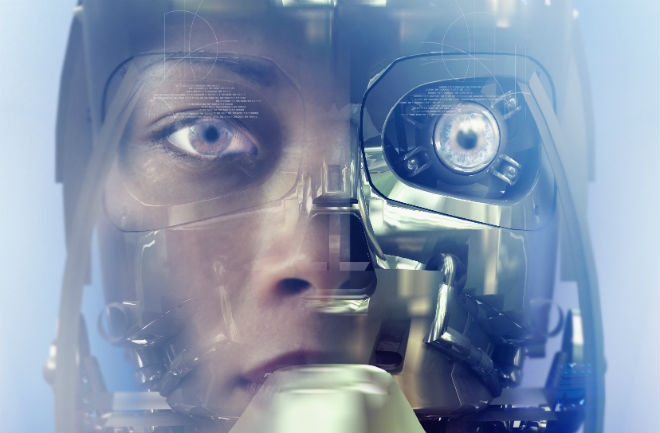
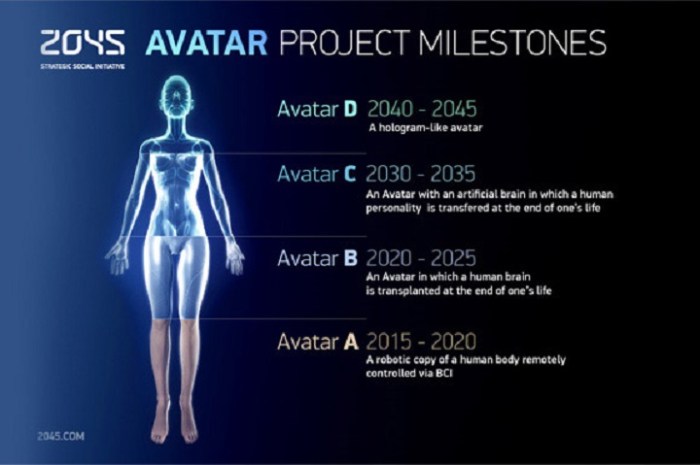
To be clear, clinical immortality in this context does not refer to cryogenics or frozen heads waiting to be stitched onto bodies once they find a cure for… whatever. In this context, clinical immortality refers to what is possible through advances in biotechnology, robotics and cybernetics, to the point where human beings can artificially prolong their lives for centuries. At the same time, it refers to knowledge of the brain and computing advancing to the point where people can back up their neurology, living on indefinitely as a digital “ghost in the machine”.

In short, those who have access to this kind of technology in my story have a lot of options for staying alive. One of the more popular (but more complicated) ways is to create clones of oneself, which are then be equipped with the host’s memories backed up to the point of their death. These “facsimiles” are able to carry on in the place of the original, creating an unbroken chain of lineage. The reason why this means is complicated is because if two versions of the same person are alive at the same time, it creates some sticky legal issues.

human-cyborg-immortality-660To put it in perspective, here’s a fragment from the story, where the MC (Jeremiah Ward) is reminiscing about a case he once had to deal with aboard an LEO Hab called Ri-La. Basically, LEO Habs are habitats that exist in Low-Earth Orbit. The owner in question was a former magnate named Xian, a man who lived in the early 21st century before “dying”:

“I went there as part of a case back in 23’. The whole place had been built by some old Terran magnate named Xian. Some Jom-gua gentleman, born in the previous century who made his fortune running bio, shipping and software. Before he died, he had a Hab commissioned in orbit for his wife and family, and then invited his extended family to move there so they could have their own orbital estate all to themselves.”

“Died?” said Guernsey, noting the one word that seemed out of place in the story. “This guy, he was an Extro. And he died? Like… for real?”

“No, no…” Ward replied, waving his hand dismissively. “Though he did forego the whole facsimile thing, the old man uploaded himself like anybody else before he got too old, suffered brain death. That way, his children, nieces and nephews had the run of the place and could summon him whenever they wanted.”

“Descendants calling up their great ancestor,” said Burton. “Fucking vain, if you ask me. But makes sense if you’re one of them Core types, all rich and shit.”

“Well and he was the traditional sort, that guy. Not a lot of people back home who were like him anymore. Most people take the idea of post-mortality too literally.”

As he goes on with the story, he explains how he was on the habitat to investigate a murder case. At the heart of the case was an inhabitant who got into a struggle with their facsimile:

“Turns out some of the Xian clan were not as traditional as their forebear. Some of them went about creating facsimiles of themselves, even woke them up before they died. I don’t know, all that time in orbit, they must have feared they’d die out unless they started cloning themselves.”

“It didn’t occur to them to get some new blood in the place? Or even someone’s DNA?”

Ward shrugged. “Who knows? Maybe they couldn’t find anyone they thought worthy. Point is, having more than one version of yourself around can get ugly, especially when there’s inheritance on the line. And in this case, one kid was killed by another version of himself.”

“Wow…” Jordon whispered. “Was it hard to figure out who did it?”

“Not even a little bit,” said Ward, shaking his head. “Forensics took all of five minutes. The trickier part was trying to deduce if the victim was an original or not. As you know, the penalty for a facsimile killing their original is way higher than the reverse.”

A little later, Ward is confronted with the man who comes to Mercury to offer him a job. His task, he learns, is to venture to the Outer Solar System and find a colleague who has gone missing. Given that the man he is tasked with finding is clearly of the Extro (Extropian) faction, he naturally feels the need to ask the obvious:

“This man, there’s a record of his DNA, yes?”

“Of course,” Chandrasekhar replied simply.

“And his neurology is on file as well, I take it?”

“Backed up directly before his departure, yes.”

“So why not just reproduce him and cut your losses?”

“Well, three reasons.” Chandrasekhar raised three fingers and began listing them off. “For one, the man in question was a conservative soul. He would not approve of being resurrected unless it was absolutely necessary. Second, if he were still alive and turned up after we produced his facsimile, there would be some sticky issues of legality to contend with. Lastly, there is the matter of what he learned while conducting our business in the Outer Worlds. We need to make every effort to retrieve the version of him that knows all of these things, if at all possible.”

I wanted to include all this stuff in the story for two reasons. On the one hand, as a way of commenting on some of the issues that are likely to come up if and when such things are possible. And two, to address the fundamental question: if people are capable of uploading themselves, and creating facsimiles of themselves, what will it mean for issues of identity, legality, and even mortality?

If death is no longer an inevitable fact of life, will death cease to have meaning? And by extension, will life cease to be valued? If someone can just recreate themselves, then what harm is there in murdering them? And if the only real loss is memory that hasn’t been backed up, will the information they carry in their minds be more valuable than the person themselves?

But this of course is all background stuff, something that is meant to frame the main story, which I am still working on. But I feel at this point that it’s off and running. So as I get into Part II: “Martians”, I hope to be getting away from some of that stuff, and more into the issues of timelines, plot, and more character development. Stay tuned!

immortality_2045

A Soldier’s Mettle

Well this is interesting. It seems that a year ago today, someone I never met cited a quote from Papa Zulu in order to pay homage to veterans everywhere. And were it not for the fact that I entered this quote into my search engine to see if I really did write it myself (Goodreads said I did, but I myself was wondering!), I never would have known!

Thanks Maiden, and keep up the good work of honoring those who have fought so other wouldn’t have to, those who fell in the commission of that service, and those who came home forever changed.

Anna's avatarMaiden on the Midway

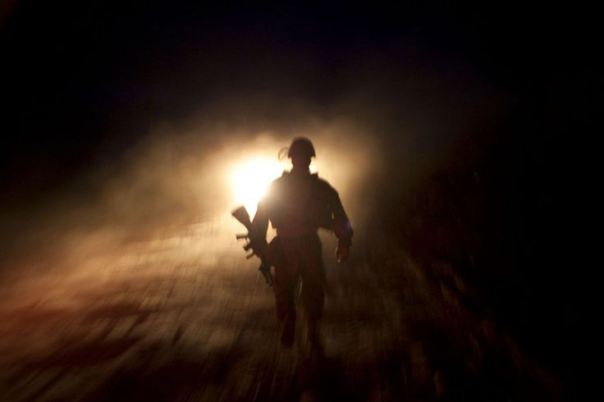
Sgt. Matthew Bland and the Marines with Cpl Sean Leahy squad prepare to RTB (return to base) after completing their mission. The Marines are assigned to 3rd Battalion 5th Marines — Nelvin C. Cepeda Sgt. Matthew Bland and the Marines with Cpl Sean Leahy squad prepare to RTB (return to base) after completing their mission. The Marines are assigned to 3rd Battalion 5th Marines — Nelvin C. Cepeda

“The true test of a soldier’s mettle is to see whether or not they will cling to what they believe in, even in the face of impending death.”
Matthew S. Williams

View original post

Featured Guest Post: “Ignored Issues in Dystopian Fiction” by Maria Ramos

race_scifi

Maria Ramos is back with another interesting look at the world of dystopian sci-fi. This time around, she offers her insight on an issue that is often overlooked in the genre. Whether it is missing from the writing itself, or is overlooked in the course of adaptations and literary criticism, somehow the issue of race – whether it is the race of the characters or how it is dealt with in a fictional setting – seems to fall by the wayside. But I’ll let her explain it, she’s better at it!


Dystopian fiction has been around for decades, with notable examples including 1984 and Animal Farm. It’s not just in old books from English class, either. This is one genre that has never gone away. From The Matrix in the 90s to V For Vendetta in the aughts, every decade has had its stories. New blockbuster hits such as The Hunger Games and Divergent are the latest additions, and this time young adults are leading the dystopian charge. With The Hunger Games: Mockingjay Part 2 slated to carry the series past the 3 billion dollar mark and the books alone selling close to 20 million copies, it looks like this angsty genre has a rosy future.

While the technology that featured in previous variants is still visible, it is overbearing governments that have really become the boogeyman in the closet. It’s not surprising, considering the audience. Just when young adults are beginning to become more independent of their parents, they are also becoming more aware of the restrictions that society and governments place on all citizens. This can be a hard pill to swallow for anyone, but the first cut is the deepest. Governments acting as Big Brother – or like an overly controlling parent – are a pretty terrifying prospect for anyone feeling that first heady rush of freedom. Tellingly, despite the many other issues faced by society today, it is these pesky totalitarian governments that are the backbone of the modern genre.

In fact, totalitarian governments are viewed by many in this demographic as something to truly fear, both in fiction and in real life. This is evidenced by protests against police brutality, the NSA, and even against Wall Street, which are all founded in the same fear of a small elite class being able to suppress the majority of the population. On the other hand, racism and sexism, two other huge issues faced by modern society, are rarely addressed at all.

For example, in The Hunger Games there is no real mention of Katniss’ gender when she goes to fight to the death. Previous victors are shown as both male and female, and an equal number of each compete. There is no mention of the physical disadvantages women might have in a hand-to-hand battle, nor of the specific additional dangers they might face. Tris’ gender in Divergent and Insurgent  (both of which are available now through Netflix, DirecTV, and Amazon) is treated the same way, though in both cases a romantic attachment is formed with a fellow warrior, offering some additional measure of protection and responsibility.

Likewise race is glossed over for the most part in The Hunger Games, though certain districts appear to be black and others white based on the tributes they have sent. This segregation is not seen as a problem in the film, nor is it a problem that the central characters are all young, attractive, and white. In both cases, racism and sexism are simply ignored, as if they do not exist. The demon of the movie is a heartless ruling class, and other issues just don’t seem to register.

This genre-wide silence in the face of such major issues is puzzling. Could it be that, rather than being non-topics, they are in fact so controversial that writers and directors are afraid to touch upon them? Or are they seen as relics of the past in a futuristic genre? Despite the huge impact these issues still have on citizens today, part of the battle activists face is even getting people to acknowledge that a problem still exists. Though these issues remain relevant, many today view racism and sexism as shrinking and government overreach as growing, possibly resulting in this void we see in the fiction.

In fact, there is also a combination of idealism and cynicism visible in many of these more recent stories – things became so terrible because people allowed them to, but eventually those same people fight back for change and improvement. It may be that same combination of naiveté and shrewdness that allows both the creators and fans to ignore issues they do not want to face. However, by refusing to address it they actually reflect it, as many of these movies and television series are overwhelming white. The main characters may often be female, but any additional struggle they face due to their gender is largely ignored. As valuable as today’s fiction is in shining a light in dark corners, it seems like right now a brighter flashlight is needed.

The Cronian Incident: Development of AI

envisioning_AIHey folks, in my ongoing drive to keep people abreast of my writing process, I have decided to do another update on my progress with The Jovian Incident. I am now six chapters in, and the word count has grown to a robust 13821. By this measure, I am 26,179 words away from a full-length novel. But as John Cleese once said, “It’s not just the number of words. I mean, getting them in the right order is just as important.”

And so is developing certain ideas, especially ones that serve an important function – like creating the background. And a big thing in this story, given the time period, is the presence of artificial intelligence.

The way I figured it, the best way to figure out how it would be used by the time period in question (22nd century) would be track its progress, going from today to the point of the Technological Singularity – where it would become compatible with human-level intelligence, and then vastly exceed it. Here’s a basic breakdown that I came up with:

Level I: Insect-level compatibility, developed in the late 20th/early 21st century. Used to program nanomachines and swarm-robots, controlled via hive-mind algorithms and collective behavior to achieve group tasks (i.e. construction, maintenance, health and diagnostic medicine).

Level II: Reptile and mammalian-level compatibility, developed in the early 21st century. Used by semi-sentient robots to perform rote tasks, menial labor, and as programming for military hardware (i.e. drones and autonomous vehicles).

Level III: Human-level compatibility, developed by the 2030s. Used to program sentient machines and personal assistants capable of performing complicated task, mathematical calculations, and interacting with human beings.

Level IV: Super-sentience level compatibility, developed by 2100.  Used to coordinate entire planetary systems – transportation, economics, virology and geological systems. Only a few in existence – Acidalia (Venus), Gaia (Earth), Harmonia (Mars).

Basically, I envision AI by the 22nd century as being something that is used at all levels of life and society. And after a century of development, the four-tier system described above applies, with simple to incredibly complex machine intelligences being used for different tasks. In this way, machines of various intelligence replaced the old division of labor, leaving humans free to pursue vocations and careers entirely of their own choosing.

Of course, this has a huge downside. Not only has humanity labor in the inner Solar System been deprived of most forms of labor (it can be a source of pride and dignity as much as a burden) but it also means that all human beings are expected to commit to various pursuits and join a faction of one sort or another before long. Life, you could say, has become no less competitive or careerist by adding intelligence machines to the mix.

And of course, life is a bit different in the outer Solar System. Whereas Level I and II intelligences are common, Level IIIs are in limited supply (and generally dated where they are available), and there are no Level IVs.

But of course, that doesn’t even include the kinds of neurological and cybernetic enhancements that humans use to augment their neurology and their biology. That’s where the transhuman and post-human stuff comes in. But that, of course, is a whole ‘nuther post!

artificial-intelligence1


New Trailer: Star Wars Episode VII – Trailer #2

star-wars-episode-7Here it is, at last! The second teaser trailer for the upcoming release of Star Wars Episode VII – The Force Awakens, just hit the internets! As always, the bastards as being sparse with their hints and giving us droplets that only make us thirstier. Still, the highlights in this one are pretty darn clear.

First, we get some more glimpses of how the legacy of the Skywalkers and the battle between the good and the dark sides continues. We get shots of a resurgent Empire and some Sith badguy  fighting it out with the good guys. There’s an ominous scene where Luke (or someone else) is holding Vader’s crumbled helmet. And to top it all off, we get Han and Chewie showing their faces for the first time!

Check it out. And if you were to tell me that you’re not counting down the days until December, I will call you a lying scumbag!

Universe Today – Total Views for December

GLOBAL-INTERNET-USEWell, it’s a new day and a new year. And unless I’m mistaken, that means that it’s time for taking stock and setting new goals. It also means that I’ve just received my tally for the month of December from Universe Today. And it seems that the longer I’m there, the more people are willing to read what I have to say. Makes sense. Still, I’ve never seen these kinds of traffic statistics before. Not with my own site, that’s for sure!

To break it down, here’s how I’ve been doing over the course the past two and half months. In October, which was my first month with UT, I garnered a total of 50,044 views for 11 articles. In November, that went up to 171,852 views for 26 articles. And for the month of December, I received 225,577 views for 23 articles. That represents a 343% increase from Oct-Nov, and a 76% increase over last month. Numbers like this make me happy!

What Percent of Earth is Water? 16,029
John Dalton’s Atomic Model 15,794
Planets Could Travel Along with Rogue ‘Hypervelocity’ Stars, Spreading Life Throughout the Universe 3,656
The Inner Planets of Our Solar System 8,918
Meteorite May Contain Proof of Life on Mars, Researchers Say 6,104
10 Facts About the Milky Way 25,643
Earth May Have Lost Some Primoridial Atmosphere to Meteors 1,234
The Science of Heat Transfer: What Is Conduction? 5,258
Solar System History: How Was the Earth Formed? 5,768
How Strong is the Gravity on Mars? 12,264
A Universe of 10 Dimensions 37,742
NASA’s RoboSimian And Surrogate Robots 932
What Causes Day and Night? 11,563
Just in Time for the Holidays – Galactic Encounter Puts on Stunning Display 1,398
What is the Average Surface Temperature of the Planets in our Solar System? 16,333
SpaceX Continues to Expand Facilities, Workforce in Quest for Space 4,413
Compromises Lead to Climate Change Deal 795
Meteoric Evidence Suggests Mars May Have a Subsurface Reservoir 2,916
The Milky Way’s New Neighbor May Tell Us Things About the Universe 2,519
What is the Average Surface Temperature on Venus? 4,722
Elon Musk’s Hyperloop Might Become A Reality After All 11,476
Student Team Wants to Terraform Mars Using Cyanobacteria 21,312
Making the Trip to Mars Cheaper and Easier: The Case for Ballistic Capture 8,788
Total Views 225,577

If there is one goal I’d like to set for the new year, its to turn some of that readership towards this here site, the sister site HeroX, and possibly towards some book sales as well. Those numbers have been comparatively pitiful lately, and I don’t think it would be too crass of me to hope for some additional readership in the New Year.

And here’s hoping the New Year proves to be a lucrative, fun and interesting time for my fellow bloggers and indie writers too (not necessarily in that order). What projects do you all have for 2015? What resolutions (if any) have you made?

Universe Today – Total Views for November

InternettrafficHey folks! As is customary on the tenth of every new month, the folks over at Universe Today do an official tally of all the articles published by their authors for the previous month. And it seems that November was a pretty good one for me, even though it wasn’t exactly much of a competition. This is only my second month working for UT, and I began almost halfway through the month of October so I published way fewer articles.

Still, going from 50,444 to 171,852 is pretty good! That’s a threefold increase, and then some. The full list appears below, along with the date of publication. If any of these sound interesting, just go click on the Articles at Universe Today link under Pages on the right there.

And to my fellow bloggers, freelancers, articlers and indie writers out there – as my friend James K Bowers would say “keep hammering away at those keys!” The breaks are coming for us all!

11/18/2014 How Do Planets Form? Semarkona Meteorite Shows Some Clues 989
11/19/2014 “Spotters Guide” for Detecting Black Hole Collisions 1,245
11/3/2014 Welcome to Mars! – Hi-SEAS and Mars Society Kick Off New Season of Missions 1,295
11/4/2014 VLTI Detects Exozodiacal Light Around Exoplanets 1,419
11/13/2014 Weather Forecasting on Mars Likely to be Trickier Than on Earth 1,609
11/7/2014 Canadian Micro-Rover and Lander “Northern Light” Aim for Launch to Mars in 2018 1,661
11/28/2014 “Eye of Sauron” Galaxy Used For New Method of Galactic Surveying 2,358
11/10/2014 NASA’s Next Exoplanet Hunter Moves Into Development 2,408
11/18/2014 Warm, Flowing Water on Mars Was Episodic, Study Suggests 2,586
11/19/2014 Elusive Dark Matter Could Be Detected with GPS Satellites 2,611
11/25/2014 Africa’s First Mission to the Moon Announced 2,669
11/1/2014 A Red Moon – NOT a Sign of the Apocalypse! 2,779
11/19/2014 Amazingly Detailed New Maps of Asteroid Vesta 3,056
11/7/2014 It’s Complicated: Hubble Survey Finds Unexpected Diversity in Dusty Discs Around Nearby Stars 3,230
11/5/2014 Where Have All the Pulsars Gone? The Mystery at the Center of Our Galaxy 3,382
11/21/2014 Subaru Telescope Spots Galaxies From The Early Universe 4,399
11/21/2014 NASA’s “Remastered” View of Europa is the Best Yet 5,411
11/14/2014 Concerns over ESA’s Data Release Policy Amidst Rosetta Comet Landing 5,816
11/20/2014 Two New Subatomic Particles Found 6,040
11/15/2014 Macro View Makes Dark Matter Look Even Stranger 6,820
11/29/2014 Astronomers Poised to Capture Image of Supermassive Milky Way Black Hole 9,210
11/25/2014 The Search for Dark Energy Just Got Easier 10,796
11/27/2014 NASA’s Van Allen Probes Spot Impenetrable Radiation Barrier in Space 18,021
11/21/2014 Earth’s Orbit Around The Sun 18,279
11/29/2014 The “Potsdam Gravity Potato” Shows Variations in Earth’s Gravity 23,686
11/10/2014 What Did Isaac Newton Discover? 30,077
Total Views 171,852

ESA’s Rosetta Mission Lands on Comet!

Rosetta_and_Philae_at_comet_node_full_imageOne hundred years ago, Europeans were engaged in the most brutal, inhuman struggle in history – one that saw millions of people killed and entire countrysides devastated. Today, Europeans stood together, hand in hand, to witness the momentous occasion of the Philae Lander setting down on the 67P/Churyumov-Gerasimenko comet. Not only was history made in this one act, it put a whole lot of history into perspective.

And my good friends over at Universe Today have been covering this news in a very as-it-happens fashion. So have countless other news sources all over the planet, and for good reason. This is the first time human beings have ever landed a robotic rover on a comet’s surface. Due to the high-speed, transitory nature of these celestial bodies, we’ve been forced to sit back and watch up until now.

Mars_comet_flybyIn fact, comets have been around for billions of years and date back to a time when the Solar System was still in its early stages of formation. For human beings, the sight of a comet in the night sky was often seen as a bad omen. For example, the presence of Halley’s Comet in the Inner Solar System is still believed by many to be a bringer of doom. During it’s last appearance in 1986, it became the first comet be observed in detail by spacecraft.

But with the Rosetta space mission, we finally have the opportunity to study the surface of a comet in detail, and up close! Who knows what mysteries lie beneath that icy surface. Most likely, there’s a whole lot of dust that is billions of years old and can tell us things about what our Solar System looked like way back when. But you never know…

Nice to know that humanity has made some progress in the past century.

Aerospace Travel: Los Angeles to Tokyo in One Hour

spaceshiptwo_flightGiven my busy schedule of late, some stories have been sitting in my stack for some time and I haven’t been able to write about them. But one’s like this are too cool to pass up, so here’s a belated acknowledgement. It seems that Virgin Galactic, having now demonstrated its ability to conduct aerospace tourism, has decided to enter into phase two of its plans for the future: aerospace travel!

In the scenario they are proposing, their planes would fly customers from Los Angeles to Tokyo, and the transit would take one hour. The takeoff system would be similar to the midair launch the company uses now with the SpaceShipTwo. Basically, a large plane flies the spacecraft off the ground, drops it in midair, a hybrid rocket engine ignites, and the spacecraft ascends into lower orbit.

spaceshiptwo-2nd-flight-2A system like this would allow patrons to fly from the West Coast to Japan in an hour, or from the United Kingdom to Australia in two hours. This is according to statements made by Virgin Galactic’s CEO, George Whitesides, back in September at a company event at New York City’s Museum of Natural History:

You can imagine a SpaceShipThree or a SpaceShipFour going outside the atmosphere, then coming back down outside an urban area and landing. We don’t have to accept the status quo. We can imagine a vehicle using liquid oxygen or liquid hydrogen to get us across the Pacific in an hour. You could do that.

For those following Branson’s exploits, this announcement should come as no surprise. For years, he has been attempting to create a supersonic airline of his own. But when a paradigm-shifting idea like “point-to-point suborbital space transportation” becomes possible, he began to sets his sights a little higher (so to speak).

Spaceshiptwo-580x256Naturally, there are a few things that need to be worked out and tested before that’s possible, but it’s entirely within the realm of possibility. In fact, the European Space Agency has been researching the idea and claimed that SpaceShipOne and SpaceShipTwo are the most promising space launch mechanisms they’ve seen to date.

Naturally, there is the nagging question of cost. If aerospace travel does become feasible, who exactly will be able to afford it? So far, Virgin Galactic’s suborbital spaceflight have attracted hundreds of customers, but at a cost of $250,000 per head. It seems unlikely that these same people would pay a quarter of a million dollars just to travel halfway around the world. And some experts maintain that the industry will fail strictly because of the costs involved.

space-trip-klmDerek Webber, is one such person. As the executive director of Spaceport Associates, he wrote a paper in 2008 that explored the idea:

Credible market studies have not been done, or at least published. The optimum technical design has not been established. The ground infrastructure is not in place… Price levels are uncertain. It is not even clear whether such flights are best characterized as tourism or as transportation; whether the passengers would be primarily tourists or business persons on urgent trips.

Nevertheless, these doubts are doing nothing to stem the flow of investment and research being made by aerospace organizations and companies. For years, KLM Royal Dutch Airlines – the national air carrier of the Netherlands – has been developing a rocket-powered sub-orbital craft of its own. California-based XCOR Aerospace also has the Lynx – a hypersonic plane that could fly between New York and Tokyo in just 90 minutes.

XCORReaction Engines Limited is also developing the Skylon hypersonic engine for commercial spacecraft, much in the same way that Boeing and NASA are  developing the X-37B space plane. While these efforts are aimed at creating reusable spacecraft that could deploy satellites and deliver crew and supplies into orbit, they are also laying the groundwork for commercial transportation that takes people into orbit.

Meanwhile, DARPA and the US Marine Corps have been working on developing their own point-to-point rockets for delivering supplies and people for roughly a decade now and the Federal Aviation Administration’s 2010 report noted that:

[the] potential for the rapid global transport of passengers and the fast distribution of goods and services make point-to-point transportation an attractive space technology concept worth exploiting.

So while a price breakdown may be lacking, and the expected costs limiting, the technology is still in its infancy and it seems likely that the future of transportation lies in space. Beyond rapid transit and space tourism, it may very well be how airlines ferry people to and from their destinations in the not-too-distant future.

Source: motherboard.vice.com