The Future of 3D Printing: Exoskeletons and Limbs

???????????????????????3-D printing is leading to a revolution in manufacturing, and the list of applications grows with each passing day. But more important is the way it is coming together with other fields of research to make breakthroughs  more affordable and accessible. Nowhere is this more true than in the fields of robotics and medicine, where printing techniques are producing a new generation of bionic and mind-controlled prosthetics.

For example, 3D Systems (a an additive manufacturing company) and EksoBionics (a company specializing in bionic prosthetic devices) recently partnered to produce the new “bespoke” exoskeleton that will restore ambulatory ability to paraplegics. The prototype was custom made for a woman named Amanda Boxtel, who was paralyzed in 1992 from a tragic skiing accident.

3d_amanda2Designers from 3D Systems began by scanning her body, digitizing the contours of her spine, thighs, and shins; a process that helped them mold the robotic suit to her needs and specifications. They then combined the suit with a set of mechanical actuators and controls made by EksoBionics. The result, said 3D Systems, is the first-ever “bespoke” exoskeleton.

Intrinsic to the partnership between 3D Systems and EksoBionics was the common goal of finding a way to fit the exoskeleton comfortably to Boxtel’s body. One of the greatest challenges with exosuits and prosthetic devices is finding ways to avoid the hard parts bumping into “bony prominences,” such as the knobs on the wrists and ankles. These areas as not only sensitive, but prolonged exposure to hard surfaces can lead to a slew of health problems, given time.

3d-printed-ekso-suit-frontAs Scott Summit, the senior director for functional design at 3D Systems, explained it,:

[Such body parts] don’t want a hard surface touching them. We had to be very specific with the design so we never had 3D-printed parts bumping into bony prominences, which can lead to abrasions [and bruising].

One problem that the designers faced in this case was that a paralyzed person like Boxtel often can’t know that bruising is happening because they can’t feel it. This is dangerous because undetected bruises or abrasions can become infected. In addition, because 3D-printing allows the creation of very fine details, Boxtel’s suit was designed to allow her skin to breathe, meaning she can walk around without sweating too much.

3d_amandaThe process of creating the 3D-printed robotic suit lasted about three months, starting when Summit and 3D Systems CEO Avi Reichenthal met Boxtel during a visit to EksoBionics. Boxtel is one of ten EksoBionics “test pilots”, and the exoskeleton was already designed to attach to the body very loosely with Velcro straps, with an adjustable fit. But it wasn’t yet tailored to fit her alone.

That’s where 3D Systems came into play, by using a special 3D scanning system to create the custom underlying geometry that would be used to make the parts that attach to the exoskeleton. As Boxtel put it:

When the robot becomes the enabling device to take every step for the rest of your life. the connection between the body and the robot is everything. So our goal is to enhance the quality of that connection so the robot becomes more symbiotic.

3D_DudleyAnd human beings aren’t the only ones who are able to take advantage of this marriage between 3-D printing and biomedicine. Not surprisingly, animals are reaping the benefits of all the latest technological breakthroughs in these fields as well, as evidenced by the little duck named Dudley from the K911 animal rescue service in Sicamous, Canada.

Not too long ago, Dudley lost a leg when a chicken in the same pen mauled him. But thanks to a 3-D printed leg design, especially made for him, he can now walk again. It was created by Terence Loring of 3 Pillar Designs, a company that specializes in 3D-printing architectural prototypes. After hearing of Dudley’s plight through a friend, he decided to see what he could do to help.

3D_buttercupfootUnlike a previous printed limb, the printed foot that was fashioned for Buttercup the Duck, Loring sought to create an entire limb that could move. The first limb he designed had a jointed construction, and was fully 3D-printed in plastic. Unfortunately, the leg broke the moment Dudley pit it on, forcing Loring to go back to the drawing board for a one-piece printed from softer plastic.

The subsequent leg he created had no joints and could bend on its own. And when Dudley put it on, he started walking straight away and without hesitation. Issues remain to be solved, like how to prevent friction sores – a problem that Mike Garey (who designed Buttercup’s new foot) solved with a silicone sock and prosthetic gel liner.

3D_Dudley2Nevertheless, Dudley is nothing if not as happy as a duck in a pond, and it seems very likely that any remaining issues will be ironed out in time. In fact, one can expect that veterinary medicine will fully benefit from the wide range of 3D printed prosthetic devices and even bionic limbs as advancement and research continues to produce new and exciting possibilities.

And in the meantime, enjoy the following videos which show both Amanda Boxtel and Dudley the duck enjoying their new devices and the ways in which they help bring mobility back to their worlds:


Amanda Boxtel taking her first steps in 22 years:


Dudley the duck walking again:


Sources: news.cnet.com, (2), (3), 3dsystems.com, 3pillardesigns.com

Star Wars – The Old Republic: Movie Shorts

Star-Wars-The-Old-Republic-640x360It seems I’m always behind on these things! Yesterday, I came across this video entirely by accident, and realized it was one of the many movie shorts that certain parties had used to create a fan trailer for the upcoming Star Wars VII movie. Basically, its the intro movie for the MMORPG Star Wars: The Old Republic, and is a whole lot of eye-popping action porn!

A trailer which included all three SWTOR movies – The Return, Hope, and Deceived –  it has all the Star Wars action staples. These include Jedis and Sith battling it out with lighstabers, the smuggler with a Corellian ship, droids and armored soldiers fighting it out with blasters and detonators, and space-borne dogfights. And of course, the entire thing takes place to a classic John Williams score. Enjoy the movie!

The Future is Here: Google Glass for the Battlefield

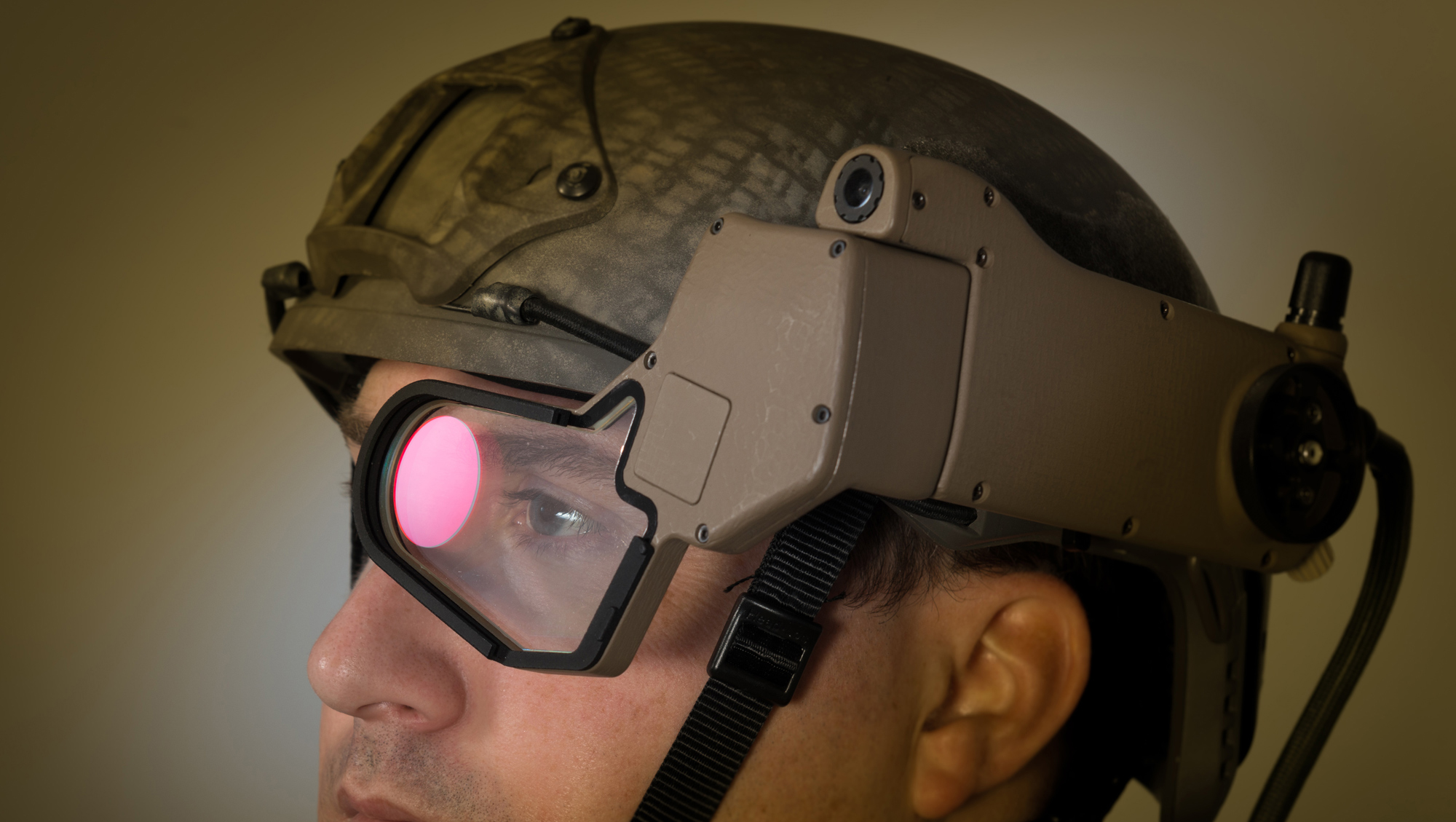
q-warrior see through displayWearing a Google Glass headset in public may get you called a “hipster”, “poser”, and (my personal favorite) “glasshole”. But not surprisingly, armies around the world are looking to turn portable displays into a reality. Combined with powered armor, and computer-assisted aiming, display glasses are part of just about every advanced nation’s Future Soldier program.

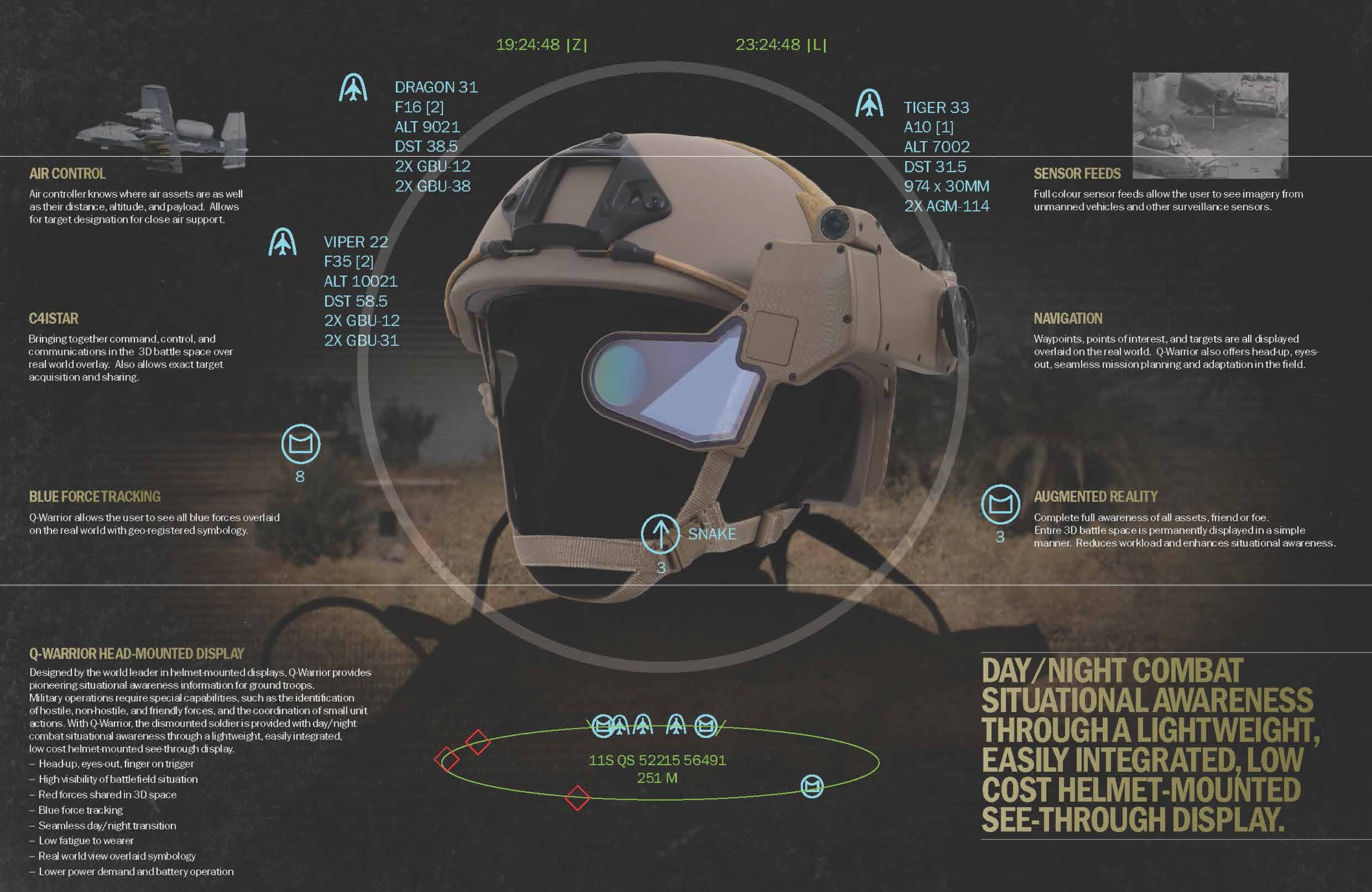
Q-Warrior is one such example, the latest version of helmet-mounted display technology from BAE Systems’ Q-Sight line. The 3D heads-up display provides full-color, high resolution images and overlays data and a video stream over the soldier’s view of the real world. In short, it is designed to provide soldiers in the field with rapid, real-time “situational awareness”.

q-warrior1The Q-Warrior also includes enhanced night vision, waypoints and routing information, the ability to identify hostile and non-hostile forces, track personnel and assets, and coordinate small unit actions. As Paul Wright, the soldier systems business development lead at BAE Systems’ Electronic Systems, said in a recent statement:

Q-Warrior increases the user’s situational awareness by providing the potential to display ‘eyes-out’ information to the user, including textual information, warnings and threats. The biggest demand, in the short term at least, will be in roles where the early adoption of situational awareness technology offers a defined advantage.

The display is being considered for use as part of the Army Tactical Assault Light Operator Suit (TALOS) system, a powered exoskeleton with liquid armor capable of stopping bullets and the ability to apply wound-sealing foam that is currently under development.

q-warrior2As Lt. Col. Karl Borjes, a U.S. Army Research, Development and Engineering Command (RDECOM) science adviser, said in a statement:

[The] requirement is a comprehensive family of systems in a combat armor suit where we bring together an exoskeleton with innovative armor, displays for power monitoring, health monitoring, and integrating a weapon into that — a whole bunch of stuff that RDECOM is playing heavily in.

The device is likely to be used by non-traditional military units with reconnaissance roles, such as Forward Air Controllers/Joint Tactical Aircraft Controllers (JTACS) or with Special Forces during counter terrorist tasks. The next level of adoption could be light role troops such as airborne forces or marines, where technical systems and aggression help to overcome their lighter equipment.

iron_man_HUDMore and more, the life in the military is beginning to imitate art – in this case, Iron Man or Starship Troopers (the novel, not the movie). In addition to powered exoskeletons and heads-up-displays, concepts that are currently in development include battlefield robots, autonomous aircraft and ships, and even direct-energy weapons.

And of course, BAE Systems was sure to make a promotional video, showcasing the concept and technology behind it. And be sure to go by the company’s website for additional footage, photos and descriptions of the Q-Warrior system. Check it out below:


Sources: wired.com, baesystems.com

New Video – The Battle of the Brick: Built for Combat

???????????????????????????????Lego has certainly been in the public eye lately, thanks in no small part to the recent release of The Lego Movie. And in this full-length video featurette from Kooberz Studio, we get a stop-motion animation of a massive Halo battle! Using a ton of ton of lego pieces and thousands of hours worth of labor, Battle of the Bricks tells the story of Red Team and Blue Team fighting it out on the shores of Zanzibar.

Watch as the battle continously escalates in glorious stop-motion style, complete with plasticine blood and colored-paper explosions!

The Future of Medicine: 3D Printing and Bionic Organs!

biomedicineThere’s just no shortage of breakthroughs in the field of biomedicine these days. Whether it’s 3D bioprinting, bionics, nanotechnology or mind-controlled prosthetics, every passing week seems to bring more in the way of amazing developments. And given the rate of progress, its likely going to be just a few years before mortality itself will be considered a treatable condition.

Consider the most recent breakthrough in 3D printing technology, which comes to us from the J.B Speed School of Engineering at the University of Louisville where researchers used a printed model of a child’s hear to help a team of doctors prepare for open heart surgery. Thanks to these printer-assisted measures, the doctors were able to save the life of a 14-year old child.

3d_printed_heartPhilip Dydysnki, Chief of Radiology at Kosair Children’s Hospital, decided to approach the school when he and his medical team were looking at ways of treating Roland Lian Cung Bawi, a boy born with four heart defects. Using images taken from a CT scan, researchers from the school’s Rapid Prototyping Center were able to create and print a 3D model of Roland’s heart that was 1.5 times its actual size.

Built in three pieces using a flexible filament, the printing reportedly took around 20 hours and cost US$600. Cardiothoracic surgeon Erle Austin III then used the model to devise a surgical plan, ultimately resulting in the repairing of the heart’s defects in just one operation. As Austin said, “I found the model to be a game changer in planning to do surgery on a complex congenital heart defect.”

Roland has since been released from hospital and is said to be in good health. In the future, this type of rapid prototyping could become a mainstay for medical training and practice surgery, giving surgeons the options of testing out their strategies beforehand. And be sure to check out this video of the procedure from the University of Louisville:


And in another story, improvements made in the field of bionics are making a big difference for people suffering from diabetes. For people living with type 1 diabetes, the constant need to extract blood and monitor it can be quite the hassle. Hence why medical researchers are looking for new and non-invasive ways to monitor and adjust sugar levels.

Solutions range from laser blood-monitors to glucose-sensitive nanodust, but the field of bionics also offer solutions. Consider the bionic pancreas that was recently trialled among 30 adults, and has also been approved by the US Food and Drug Administration (FDA) for three transitional outpatient studies over the next 18 months.

bionic-pancreasThe device comprises a sensor inserted under the skin that relays hormone level data to a monitoring device, which in turn sends the information wirelessly to an app on the user’s smartphone. Based on the data, which is provided every five minutes, the app calculates required dosages of insulin or glucagon and communicates the information to two hormone infusion pumps worn by the patient.

The bionic pancreas has been developed by associate professor of biomedical engineering at Boston University Dr. Edward Damiano, and assistant professor at Harvard Medical School Dr. Steven Russell. To date, it has been trialled with diabetic pigs and in three hospital-based feasibility studies amongst adults and adolescents over 24-48 hour periods.

bionic_pancreasThe upcoming studies will allow the device to be tested by participants in real-world scenarios with decreasing amounts of supervision. The first will test the device’s performance for five continuous days involving twenty adults with type 1 diabetes. The results will then be compared to a corresponding five-day period during which time the participants will be at home under their own care and without the device.

A second study will be carried out using 16 boys and 16 girls with type 1 diabetes, testing the device’s performance for six days against a further six days of the participants’ usual care routine. The third and final study will be carried out amongst 50 to 60 further participants with type 1 diabetes who are also medical professionals.

bionic_pancreas_technologyShould the transitional trials be successful, a more developed version of the bionic pancreas, based on results and feedback from the previous trials, will be put through trials in 2015. If all goes well, Prof. Damiano hopes that the bionic pancreas will gain FDA approval and be rolled out by 2017, when his son, who has type 1 diabetes, is expected to start higher education.

With this latest development, we are seeing how smart technology and non-invasive methods are merging to assist people living with chronic health issues. In addition to “smart tattoos” and embedded monitors, it is leading to an age where our health is increasingly in our own hands, and preventative medicine takes precedence over corrective.

Sources: gizmag.com, (2)

The Future of Medicine: Brain Scan Databanks

AI_picCloud computing and the internet are having a profound effect on the field of medicine. As more and more patients have their records digitized and posted in online medical sources, doctor’s are able to better track patient histories, conduct referrals, and make speedier diagnoses. And now, doctors at John Hopkins University are working on a cloud-computing project specifically for children’s brain scans.

By collecting and categorizing thousands of MRI scans from kids with normal and abnormal brains, they say the resulting database will give physicians a sophisticated, “Google-like” search system to help find similar scans as well as the medical records of those children. Such a system could help not only enhance the diagnosis of brain disorders, but the treatment as well, maybe even before clinical symptoms are obvious to the naked eye.

Miller_JohnHopkinsMichael I. Miller, a lead investigator on the project who also heads up the university’s Center for Imaging Science, said in a news release:

If doctors aren’t sure which disease is causing a child’s condition, they could search the data bank for images that closely match their patient’s most recent scan. If a diagnosis is already attached to an image from the data bank, that could steer the physician in the right direction. Also, the scans in our library may help a physician identify a change in the shape of a brain structure that occurs very early in the course of a disease, even before clinical symptoms appear. That could allow the physician to get an early start on the treatment.

Susumu Mori, a radiology professor at the Johns Hopkins School of Medicine and co-lead investigator on what he calls the “biobank,” says that a collection of brain scans of this size will also help neuroradiologists and physicians identify specific malformations far faster than is currently possible.

brain-activityMori has spent the past four-plus years working on a clinical database of more than 5,000 whole brain MRI scans of children who’ve come through Johns Hopkins. This project involved indexing anatomical data on 1,000 structural measurements in 250 brain regions that were ultimately sorted into 22 brain disease categories, including infections, psychiatric disorders, epilepsy, and chromosomal abnormalities.

The project, which was made possible by a three-year $600,000 grant from the National Institutes of Health, is still in its pilot stage and available only to physicians and patients within the Johns Hopkins medical system. But the researchers say it could open up and expand to other networks in the coming years. Such an expansion would presumably benefit not only other physicians and patients, but the database itself.

brainscansResearchers are also working on a similar project to collect scans of elderly patients to focus on age-related diseases and neurological disorders. Combined with the pediatric databank, this new brain scan archive will not only help recognize established neurological disorders, but could even possibly help identify and classify new ones as well.

But one of the key words here in anonymous. While cloud computing and patient files may raise the specter of privacy for many, the current project maintains patient confidentially. And one can further assume that voluntary compliance will be maintained as databases like these expand. After all, one does not need to know a patient’s name in order to examine what anomalies their brains exhibit.

And in the meantime, be sure to check out this video of Michael Miller explaining the new brain scan project and computational anatomy in greater detail:


Source:
news.cnet.com

Video Short: Batman Vs. The Terminator

batman vs. terminatorIt’s the kind of question philosophers have pondered over for millennia. Who would win in a fight: Batman in  a powered exosuit, or Skynet with it’s army of Terminators? This is the question that is explored in this new animated short by Mitchell Hammond. Set in the year 2029, we see Bruce Wayne, who has survived Judgement Day of ’97, fighting alongside the resistance against Skynet and its machine army.

Given Christian Bale’s involvement in both franchises, a crossover of this nature was inevitable. But I can honestly say that this five minute short was way better than watching Terminator: Salvation! Nothing cooler than Batman with all his high-tech gear kicking Terminator ass! Not to mention taking the fight directly to Skynet. Sorry, John Conner, ol’ Batsy beat you to it!

Check it out and enjoy the show. And be sure to comment and join me in demanding a sequel!

Drone Wars: Bigger, Badder, and Deadlier

UAVsIn their quest to “unman the front the lines”, and maintain drone superiority over other states, the US armed forces have been working on a series of designs that will one day replace their air fleet of Raptors and Predators. Given that potential rivals, like Iran and China, are actively imitating aspects of these designs in an added incentive, forcing military planners to think bigger and bolder.

Consider the MQ-4C Triton Unmanned Aerial System (UAS), a jet-powered drone that is the size of a Boeing 757 passenger jet. Developed by Northrop Grumman and measuring some 40 meters (130 feet) from wingtip to wingtip, this “super drone” is intended to replace the US Navy’s fleet of RQ-4 Global Hawks, a series of unmanned aerial vehicles that have been in service since the late 90’s.

Triton_droneThanks to a sensor suite that supplies a 360-degree view at a radius of over 3700 kms (2,300 miles), the Triton can provide high-altitude, real-time intelligence, surveillance and reconnaissance (ISR) at heights and distances in excess of any of its competitors. In addition, the drone possess unique de-icing and lightning protection capabilities, allowing to plunge through the clouds to get a closer view at surface ships.

And although Triton has a higher degree of autonomy than the most autonomous drones, operators on the ground are still relied upon to obtain high-resolution imagery, use radar for target detection and provide information-sharing capabilities to other military units. Thus far, Triton has completed flights up to 9.4 hours at altitudes of 15,250 meters (50,000 feet) at the company’s manufacturing facility in Palmdale, California.

?????????????????????????????????Mike Mackey, Northrop Grumman’s Triton UAS program director, had the following to say in a statement:

During surveillance missions using Triton, Navy operators may spot a target of interest and order the aircraft to a lower altitude to make positive identification. The wing’s strength allows the aircraft to safely descend, sometimes through weather patterns, to complete this maneuver.

Under an initial contract of $1.16 billion in 2008, the Navy has ordered 68 of the MQ-4C Triton drones with expected delivery in 2017. Check out the video of the Triton during its most recent test flight below:


But of course, this jetliner-sized customer is just one of many enhancements the US armed forces is planning on making to its drone army. Another is the jet-powered, long-range attack drone that is a planned replacement for the aging MQ-1 Predator system. It’s known as the Avenger (alternately the MQ-1 Predator C), a next-generation unmanned aerial vehicle that has a range of close to 3000 kms (1800 miles).

Designed by General Atomics, the Avenger is designed with Afghanistan in mind; or rather, the planned US withdrawal by the end 0f 2014. Given the ongoing CIA anti-terrorism operations in neighboring Pakistan are expected to continue, and airstrips in Afghanistan will no longer be available, the drones they use will need to have significant range.

(c) Kollected Pty Ltd.

The Avenger prototype made its first test flight in 2009, and after a new round of tests completed last month, is now operationally ready. Based on the company’s more well-known MQ-9 Reaper drone, Avenger is designed to perform high-speed, long-endurance surveillance or strike missions, flying up to 800 kms (500 mph) at a maximum of 15,250 meters (50,000 feet) for as long as 18 hours.

Compared to its earlier prototype, the Avenger’s fuselage has been increased by four feet to accommodate larger payloads and more fuel, allowing for extended missions. It can carry up to 1000 kilograms (3,500 pounds) internally, and its wingspan is capable of carrying weapons as large as a 2,000-pound Joint Direct Attack Munition (JDAM) and a full-compliment of Hellfire missiles.

Avenger_drone1Switching from propeller-driven drones to jets will allow the CIA to continue its Pakistan strikes from a more distant base if the U.S. is forced to withdraw entirely from neighboring Afghanistan. And according to a recent Los Angeles Times report, the Obama administration is actively making contingency plans to maintain surveillance and attacks in northwest Pakistan as part of its security agreement with Afghanistan.

The opportunity to close the gap between the need to act quickly and operating from a further distance with technology isn’t lost on the US military, or the company behind the Avenger. Frank Pace, president of the Aircraft Systems Group at General Atomics, said in a recent statement:

Avenger provides the right capabilities for the right cost at the right time and is operationally ready today. This aircraft offers unique advantages in terms of performance, cost, timescale, and adaptability that are unmatched by any other UAS in its class.

??????????????????????????????What’s more, one can tell by simply looking at the streamlined fuselage and softer contours that stealth is part of the package. By reducing the drone’s radar cross-section (RCS) and applying radar-absorbing materials, next-generation drone fleets will also be mimicking fifth-generation fighter craft. Perhaps we can expect aerial duels between remotely-controlled fighters to follow not long after…

And of course, there’s the General Atomic’s Avenger concept video to enjoy:


Sources:
wired.com, (2)

News from Space: First Detailed Map of Ganymede

ganymedeLast week, researchers released the first-ever geological map of Ganymede, Jupiter’s largest moon and the largest planetary satellite in the Solar System. Led by Geoffrey Collins of Wheaton College, these scientists produced the first global geologic map that combines the best images obtained by NASA’s Voyager 1 and 2 spacecraft (1979) and the Galileo orbiter (1995 to 2003).

The information of these probes was pieced together as a mosaic image of the planet, giving us our first complete image of the geological features of the world. This image has now been published by the U. S. Geological Survey as a global planar map. The 2D version of the planet surface illustrates the varied geologic character of Ganymede and is the first global, geologic map of the icy, outer-planet moon.

ganymede_mapAnd its about time too! As Robert Pappalardo of NASA’s Jet Propulsion Laboratory in Pasadena, California put it:

This map illustrates the incredible variety of geological features on Ganymede and helps to make order from the apparent chaos of its complex surface. This map is helping planetary scientists to decipher the evolution of this icy world and will aid in upcoming spacecraft observations.

Since its discovery in January 1610 by Galileo Galilee, Ganymede has been the focus of repeated observation; first by Earth-based telescopes, and later by the flybys and orbiting spacecraft. These studies depict a complex, icy world whose surface is characterized by the striking contrast between the dark, very old, highly cratered regions, and the lighter, somewhat younger regions marked with an extensive array of grooves and ridges.

Ganymede-JupiterMoon-GeologicMap-SIM3237-20140211The map isn’t just aesthetically pleasing; it also informs our understanding of Ganymede’s geological history. Researchers have identified three geological periods – one involving heavy impact cratering, followed by tectonic upheaval, and then a decline in geological activity. The more detailed images let them study the ridges and groves, and have revealed that the formation of cryovolcanos is rare on Ganymede.

Baerbel Lucchitta, scientist emeritus at the U.S. Geological Survey in Flagstaff, Ariz., who has been involved with geologic mapping of Ganymede since 1980, had this to say:

The highly detailed, colorful map confirmed a number of outstanding scientific hypotheses regarding Ganymede’s geologic history, and also disproved others. For example, the more detailed Galileo images showed that cryovolcanism, or the creation of volcanoes that erupt water and ice, is very rare on Ganymede.

ganymede_ridges_craters_600According to the Jet Propulsion Laboratory, Ganymede is an especially valuable body to study because it is an ice moon with a richly varied geology and a surface area that is more than half as large as all the land area on Earth. The Ganymede map will also enable researchers to compare the geologic characters of other icy satellite moons, since most features found on other icy satellites have a similar feature somewhere on Ganymede.

Laszlo Kestay, the director of the United States Geological Survey (USGS) Astrogeology Science Center, explained the implications of this in a statement:

After Mars, the interiors of icy satellites of Jupiter are considered the best candidates for habitable environments for life in our solar system. This geologic map will be the basis for many decisions by NASA and partners regarding future U.S. missions under consideration to explore these worlds.

The project was funded by NASA through its Outer Planets Research and Planetary Geology and Geophysics Programs, and the images can all be downloaded by going to the Jet Propulsion Laboratory’s website at the California Institute of Technology (Caltech). And be sure to check out the animated version of the Ganymede planetary map below:


Sources:
IO9.com, (2), jpl.nasa.gov, space.com

The Future is Here: VR Body-Swapping

simstimOne of the most interesting and speculative things to come out of the William Gibson’s cyberpunk series The Sprawl Trilogy was the concept of Simstim. A term which referred to “simulated stimulation”, this technology  involved stimulating the nervous system of one person so that they could experience another’s consciousness. As is so often the case, science fiction proves to be the basis for science fact.

This latest case of science imitating sci-fi comes from Barcelona, where a group of interdisciplinary students have created a revolutionary VR technology that uses virtual reality and neuroscience to let people see, hear, and even feel what it’s like in another person’s body. The focus, though, is on letting men and women undergo a sort of high-tech “gender swapping”, letting people experience what it’s like to be in the others’ shoes.

VR_simstim2Be Another Lab is made up of Philippe Bertrand, Daniel Gonzalez Franco, Christian Cherene, and Arthur Pointea, a collection of interdisciplinary artists whose fields range from programming and electronic engineering to interactive system design and neuro-rehabilitation. Together, the goal of Be Another Lab is to explore the concepts of empathy through technology, science, and art.

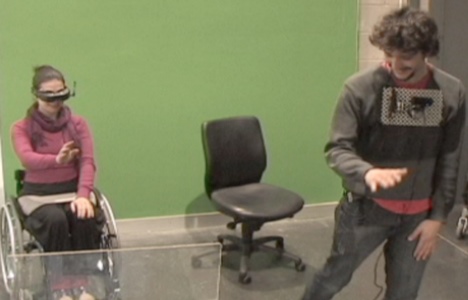
In most neuroscience experiments that examine issues of empathy and bias, participants “trade places” with others using digital avatars. If a study wants to explore empathy for the handicapped, for example, scientists might sit subjects down in front of a computer and make them play a video game in which they are confined to a wheelchair, then ask them a series of questions about how the experience made them feel.

BeanotherlabHowever, Be Another Lab takes a different, more visceral approach to exploring empathy. Instead of using digital avatars, the group uses performers to copy the movements of a subject. For example, racial bias is studied by having a subject’s actions mirrored by a performer of color. And for something like gender bias, men and women would take a run at living inside the body of one another.

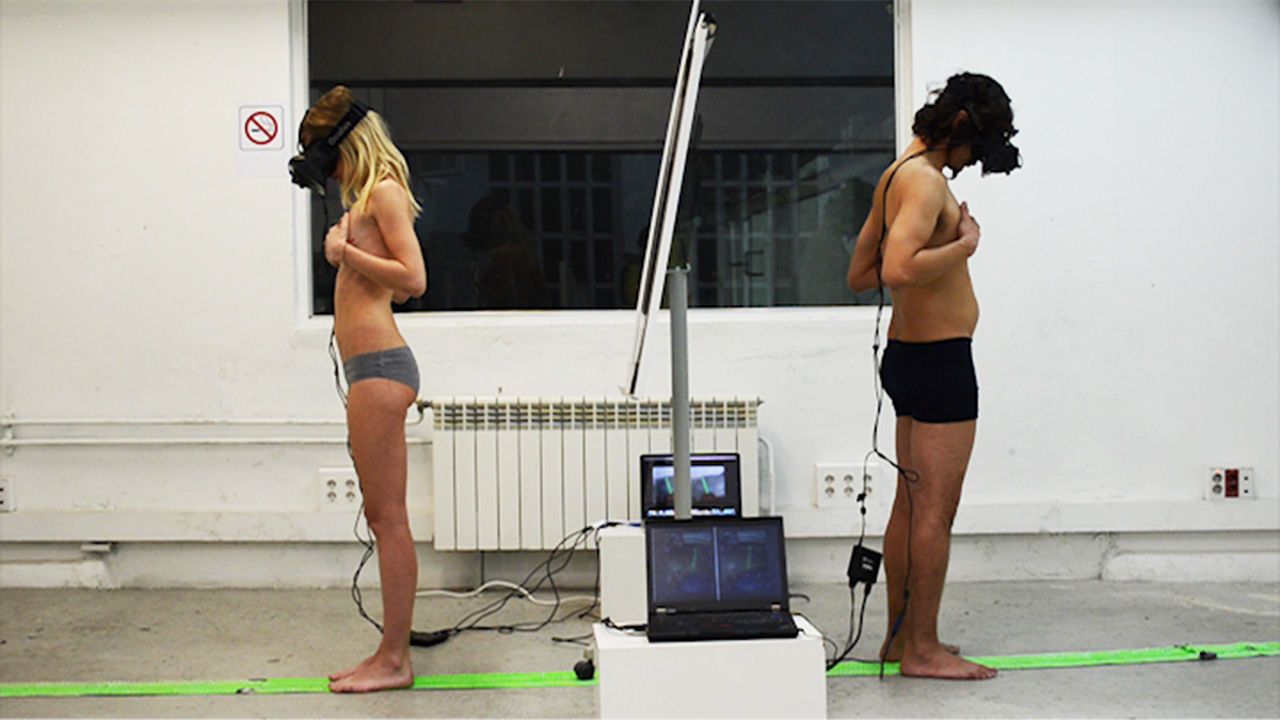
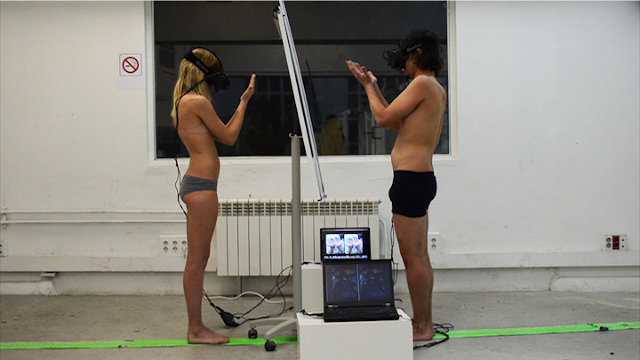
Bertrand and company have taken this approach to the next level by leveraging the tech of a paid Oculus Rift virtual reality headset, renaming it the Machine To Be Another. In the project, two participants stand in front of one another, put on their headsets, and effectively see out of one anothers’ eyes. When they look at each other, they see themselves. When they speak, they hear the other person’s voice in their ears.

VR_simstim1But things don’t end there! Working together, the two participants are encouraged to sync their movements, touching objects in the room, looking at things, and exploring their ‘own’ bodies simultaneously. Bertrand explains the experience as follows:

The brain integrates different senses to create your experience of the world. In turn, the information from each of these senses influences how the other senses are processed. We use these techniques from neuroscience to actually affect the psychophysical sensation of being in your body.

In other words, in combination with being fed video and sound from their partner’s headset, by moving and touching things at the same time, the Machine To Be Another can actually convince people that they are in someone else’s body as long as the two partners remain in sync.

VR_simstimIt’s a radical idea that Be Another Lab is only beginning to explore. Right now, their experiments have mostly focused on gender swapping, but the team hopes to expand on this and tackle issues such as transgender and homosexuality. The group is currently looking to partner with various organizations, experts and activists to help them further perfect their techniques.

It’s a unique idea, giving people the ability to not only walk a mile in another’s shoes, but to know what that actually feels like physically. I can foresee this sort of technology becoming a part of sensitivity training in the future, and even as education for sex offenders and hate criminals. Currently, such training focuses on getting offenders to empathize with their victims.

What better way to do that than making them see exactly what it’s like to be them? And in the meantime, enjoy this video of the Machine To Be Another in action:


Source:
fastcodesign.com