Apollo, Vietnam, and Global Problems: A Question of Priorities

Apollo, Vietnam, and Global Problems: A Question of Priorities

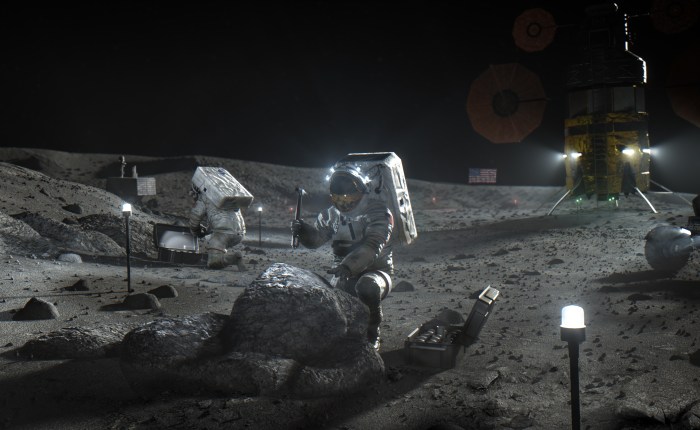
Between 1961 and 1973, there was significant pushback from people who lamented the fact that so many resources were being directed toward sending astronauts to the Moon while poverty, social injustice, and inequality were still rampant. Neil Maher, a professor of history at the New Jersey Institute of Technology, addressed this in his 2017 book Apollo in the Age of Aquarius.

According to Maher, the Apollo space program was a source of division among Americans. Whereas supporters viewed it as a way of energizing a country that had lost its way, those opposed saw it as a huge waste of money that should have gone to solving societal problems. As Maher summarized it:

“There was a debate about what America was at the time. Was it a country to spend $20 billion to land two men on a dead rock in space or try to solve some of the problems closer to home on Earth? A lot of grassroots movements argued to use the [NASA] money to solve problems here.”

Continue reading “Apollo, Vietnam, and Global Problems: A Question of Priorities”

“But he’s Always Nice to ME” — The Problem with MAGA and America

“But he’s Always Nice to ME” — The Problem with MAGA and America

When ignorance, complacency, and selfishness come together, you have the death of empathy. A lack of empathy is how mass atrocities are able to happen.

The past few weeks have been a nightmare for many people in the U.S., not to mention those of us who live in the countries immediately bordering it. Naturally, at times like this, I worry about my family, friends, and colleagues who live in the U.S. and are forced to live through another Trump administration and the dumpster fire that follows him. They are horrified by what’s happening right now and asking how it could have possibly happened again.

Continue reading ““But he’s Always Nice to ME” — The Problem with MAGA and America”

Episode 92 of SfS is now Live! “The History and Future of Space Stations.”

Episode 92 of SfS is now Live! “The History and Future of Space Stations.”

Hello again, folks. It’s been a busy few months, what with the holidays and a few life-related events that have happened since. Unfortunately, I was unable to produce new episodes every week. Fortunately, that is now over, and I have not one but TWO new episodes ready to share! This week’s installment is dedicated to the history, development, and future of Space Stations. Cue the Blue Danube Waltz and the scene from 2001: A Space Odyssey!

As I explain in the episode, the concept of space stations is time-honored and can be traced back to the early 20th century and the work of famed Russian aerospace engineer Konstantin Tsiolkovsky, who is considered the “forefather of rocketry.” Like most ideas pertaining to the future of humanity in space, he made the first recorded mention of a pinwheel station in space that would simulate gravity and have a natural environment that could provide oxygen.

Like rockets that used liquid propellants and other advanced concepts Tsiolkovsky originally proposed, his work went on to inspire the other “forefathers of rocketry”—Hermann Oberth, Robert Goddard, and Robert Esnault-Pelterie—many of whom went on to propose their own concepts. By the latter half of the 20th century, these ideas would bear fruit in the form of the Salyut space stations, Skylab, Mir, and the International Space Station (ISS).

With the decommissioning of the ISS scheduled for 2030, several nations and commercial space interests are working on proposals for successor stations. What will they look like, and how might they enable the migration of human beings throughout the Solar System as Tsiolkovsy predicted? Follow the links below to find out!

Where to Listen:

Protocol: Succession

Protocol: Succession

The following is a piece of flash fiction inspired by a conversation between science communicator and cosmobiologist Graham Lau, myself, and others via Twitter. Everything and everyone depicted within is pure fiction, though they may allude to famous people living or dead.

It hovered before him. The mass of entangled particles, shining, black, blue, and chrome, whirling around a common center like a hive of frighteningly synchronized insects. Abu knew better, but the image was unshakable. So many tiny machines coordinated by a common intelligence. And they were emitting a loud humming noise that sounded distinctly like a high-pitched buzz.

Continue reading “Protocol: Succession”

Boltzmann’s Brainchild

Boltzmann’s Brainchild

His head was hurting. His mouth was dry. His entire body felt uninspired and feeble. He felt much the same a short while ago when he left the dinner table. How long ago was that? What time was it?

He’d left his watch upstairs and hadn’t the capacity to find a clock right now. But a quick pass by the hall window confirmed that the Sun was coming up. They were firmly in the AM, and he was forced to accept that it was no longer the previous evening.

No appreciation for time! Why was that?

Continue reading “Boltzmann’s Brainchild”

Episode 91 of Stories from Space is Now Live!

Episode 91 of Stories from Space is Now Live!

Hello folks! This week’s episode is dedicated to my friend, Kim Bannerman Pigott, who suggested it. She, too, is a creative person, as is her husband, Shaun. Between the two of them, they do literature, art, and music; they do it all! I encourage everyone to check out their website, Fox&Bee Studio. The topic of this episode is “Are Wormholes Possible?” As any fan of science fiction knows, wormholes are regularly featured in the genre, be it novels, shows, movies, or video games.

Some examples include Carl Sagan’s Contact, Star Trek, Battlestar Galactica, Babylon 5, Event Horizon, Farscape, the Wing Commander franchise, the Descent: Freespace franchise, and many more. The concept often goes by different names (FTL, jump points, jump nodes, etc.), but the idea remains the same. Pass through a wormhole (natural or artificial), and you end up a few, or few thousand, light-years away.

Like warp or hyperspace, they are a key element in the world-building process, facilitating the kind of travel that would allow for First Contact, inter-species interaction, exploring new worlds, and the emergence of new branches of humanity. In most cases, franchises tend to steer away from the science and avoid any complicated or inaccurate explanations. However, sometimes authors and producers dip their toes in and attempt to rationalize them (not very well, in my experience).

But what does the science say? As it turns out, there is a basis in theoretical physics for wormholes that goes back over a century. Check out the links below to learn more…

Where to Listen:

A Sneak Peak at Exogenisis!

A Sneak Peak at Exogenisis!

Hello again! I am going to do something I haven’t done in a long time here and share some creative writing I’ve been working on. In truth, I have done a lot of creative writing these past few years that I have failed to share here. I decided it was time to rectify this, and what better way to start than to share the first chapter of one of my current WIPs? It is titled Exogenesis, and it is a story that has taken a long time for me to realize!

I described this idea a short while ago in another post (“A Visit to the Ideas Folder“). In fact, I described two ideas, one titled Pilgrimage and the other titled Exogenesis. As I wrote at the time, Pilgrimage is a short story about distant origins and how future humans may come to trace their ancestry back to Earth. It is also the first chapter in the full-length version set in the same universe, titled Exogenesis. I am told that this is how many of the greats realized their first novels, so I decided to give it a try.

In any case, here’s the first chapter in full! A word of warning: there’s a lot of linguistics and semantic evolution in here, so some words won’t make a lot of sense at first sight. But I’m hoping the context will help resolve all that. Enjoy!

Continue reading “A Sneak Peak at Exogenisis!”

Episode 90 of Stories from Space is now Live!

Episode 90 of Stories from Space is now Live!

This week’s episode asks the question, “Are Red Dwarf Star Systems Habitable?” Red dwarf stars, also known as M-type stars, are pretty controversial. For starters, they are the most common type of star in the Universe, accounting for 75% of stars in our galaxy alone. In addition, red dwarfs seem particularly good at producing rocky planets that orbit within their habitable zones (HZs). In fact, of the 31 potentially habitable exoplanets located within a 50-light-year radius of our Solar System, 29 are located within red dwarf star systems.

However, there are also downsides. For starters, red dwarf suns are variable and prone to flare-ups. While the most powerful are emitted from the poles and are unlikely to affect orbiting exoplanets, the fact that these exoplanets are tidally locked with their stars (where one side constantly faces toward the star) means they would still be bombarded by radiation. But then again, there’s research suggesting this radiation could be essential for life to develop. Like I said, it’s a controversial issue, and we simply don’t know… yet!

Follow the links below to learn more:

Where to Listen:

Episode 89 of Stories from Space is now Live!

Episode 89 of Stories from Space is now Live!

The dream of interstellar travel, of reaching another star system and setting foot on another world, has been with us for centuries. However, with the dawn of the Space Age, this dream began to materialize as multiple scientific proposals were made. These included iconic studies like Project Orion, Project Daedalus, Project Icarus, and the Enzmann Starship, concepts that either prioritized speed or settling in for a long journey!

As we enter a new era of space exploration, many of these concepts are being reconsidered while new ones are being researched. These include antimatter propulsion, the HALO Drive, the fabled Alcubierre Warp Drive, and directed energy propulsion (DEP). The question is, which of these methods are feasible within our lifetimes? More to the point, how long before we can start sending crewed missions to other stars?

Follow the links below to learn more…

Where to Listen:

Episode 88 of Stories from Space is now Live – “The Coming Age of Astrobiology with Kenneth Goodis-Gordon”!

Episode 88 of Stories from Space is now Live – “The Coming Age of Astrobiology with Kenneth Goodis-Gordon”!

Hello again! This week’s episode featured a special guest – Kenneth Goodis-Gordon! Ken is a Ph.D. candidate with the Planetary Science Group at the University of Central Florida (UCF) whose research focuses on exoplanets and the search for life in the cosmos (astrobiology). In a recent paper, he outlined how future exoplanet surveys could cast a wider net by examining polarized light. As he explains, this could greatly expand scientists’ ability to spot signs of life (aka. “biosignatures.”)

These recommendations will be especially useful when NASA’s Habitable World Observatory (HWO) launches sometime in the 2040s. This next-generation observatory will be the first space telescope specifically designed to search for signs of habitability and life on exoplanets. Learn more by following the links below…

Where to Listen: