Episode 84 of SfS – Islamic and Hindu Astronomers of the Middle Ages – is now Live!

Episode 84 of SfS – Islamic and Hindu Astronomers of the Middle Ages – is now Live!

Hello all! This week’s episode is part of a new segment that is semi-related to the Indigenous Astronomers series. It takes a look at major contributions and innovations that came from non-Western astronomers—i.e., those who lived outside of Greece, Rome, or Europe. Specifically, this episode deals with the astronomical traditions of Arab, Persian, and Indian astronomers from the 5th to the 16th century. Regretably, this aspect of history is often downplayed or overlooked in Western circles.

Not only were these polymaths and scholars responsible for preserving knowledge from Classical Antiquity that had been lost to Europeans. They also expanded on it greatly and brought their own traditions to the table. Such notable figures include Aryabhata, Al Sijji, Al Biruni, Ibn al-Haytham (Alhazan), and Al-Biṭrūjī (Alpetragius), all of whom challenged Ptolemy’s geocentric model of the Universe generations before their European counterparts.

Alongside Classical Hellenic scholars like Aristarchus of Samos and Seleucus of Seleucia, their works would go on to inspire 16th-century Polish astronomer Nicolaus Copernicus to develop his heliocentric model of the Universe. In fact, it would be no exaggeration to say that the birth of modern astronomy would not have been possible without the work and innovations brought by astronomers from the Middle East, North Africa, Central Asia, and South Asia.

Check out the links below to learn more…

Where to Listen:

Episode 83 of Stories from Space – China’s Space Program – is now Live!

Episode 83 of Stories from Space – China’s Space Program – is now Live!

This week’s episode was dedicated to one of the fastest-growing space programs in the world. I’m talking about the China National Space Agency (CNSA), which has made several big strides in recent years. Like all major space programs, China’s was conceived amid the Cold War and was related to the development of nuclear weapons. A further incentive was provided when the Soviets and the U.S. began sending satellites and crewed missions to space.

Progress was slow during the latter half of the 20th century due in large part to the chaos caused by the Cultural Revolution (1966-1976). By the 1990s, with the Tiananmen Square Massacre and the collapse of the Soviet Union, the Chinese Communist Party instituted many reforms to ensure its survival. By the 2000s, this extended to its space program, and many bold programs were launched. This included a crewed space program, a robotic exploration program, and plans for a series of space stations.

This culminated in the deployment of the Tiangong modular space station (aka. Tiangong 3), several crewed missions to Low Earth Orbit (LEO), the Chang’e missions reaching the Moon, and the first Chinese mission to Mars (Tianwen-1). In the near future, China plans to create a permanent base in the Moon’s south pole region – the International Lunar Research Station (ILRS). In the coming decades, they also plan to send crewed missions to Mars.

Follow the links below to learn more…

Where to Listen:

Episode 82 of SfS – Where is Everybody? The SETI Paradox – is now Live!

Episode 82 of SfS – Where is Everybody? The SETI Paradox – is now Live!

This week’s episode was the final installment in the Fermi Paradox series. For the finale, we examine the “SETI Paradox,” a proposed resolution that asks the question, “What if everybody is listening, but no one is transmitting?” This theory reflects humanity’s own conundrum when it comes to the Search for Extraterrestrial Intelligence (SETI): should we continue to conduct “passive SETI” (listening) or engage in “active SETI” (messaging)?

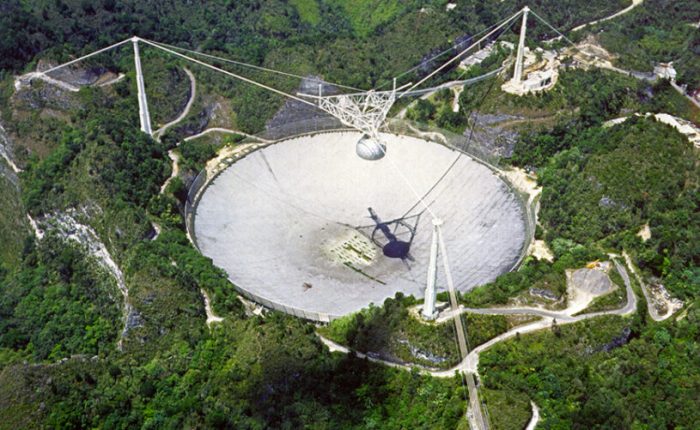
In recent years, the latter has given rise to a new field known as Messaging Extraterrestrial Intelligence, or METI. While most efforts to make contact with an extraterrestrial species have been in the form of SETI, a few METI experiments have been conducted over the years. The most well-known example is the Arecibo Message, which was transmitted from the venerable Arecibo Observatory in 1974. Other examples include the Pioneer Plaques and the Voyager Golden Records. There have been other examples, but they don’t begin to rival the time or resources committed to SETI.

While METI has become a field in its own right, those who are passionate about it understand that there are necessary concerns. After all, we have no idea what’s out there. What if we broadcast our existence to the Universe and it leads to an invasion by a hostile civilization? It makes sense that other civilizations would be preoccupied with the same concerns, so perhaps this is why we aren’t hearing from anyone. As you might have guessed, there is some crossover with the Dark Forest Hypothesis here.

Follow the links below to learn more about this hypothesis and the controversy surrounding SETI vs. METI:

Where to Listen:

Talking About Grief and Trauma

Talking About Grief and Trauma

This is not something I’ve spoken publicly about much for obvious reasons. It’s painful and difficult to discuss the things in life that have traumatized us, especially when we are still dealing with the aftermath. While I addressed this in a previous post, it’s something I have not talked about on my site since. Suffice it to say, this past year has been the worst year of our lives here—that includes my wife, our Boy Jasper, our families, and myself.

Continue reading “Talking About Grief and Trauma”

Episode 81 of SfS – An Interview with Sir Peter Beck – is now Live!

Episode 81 of SfS – An Interview with Sir Peter Beck – is now Live!

This week’s episode was special. By chance, I was able to secure an interview with Rocket Lab founder and CEO Sir Peter Beck (yes, he was knighted!). For those unfamiliar, Rocket Lab is a New Zealand-based commercial space company poised to challenge SpaceX’s near-monopoly over commercial launches. Their first launch happened in 2009 and involved the sounding rocket (a test launch vehicle) Ātea-1 launching from their launch facility on the Māhia Peninsula in New Zealand.

This launch made them the first commercial space company in the southern hemisphere to reach space. Since then, Rocket Lab has launched over 50 smallsat missions using its small-launch Electron rocket and expanded its operations to the U.S. In the coming years, it will introduce the Neutron rocket, a medium-lift launch vehicle that will give them the capability to launch satellite constellations. Check out the links below to hear the full interview:

Where to Listen:

Episode 80 of SfS – Indigenous Astronomy: The Aztecs – is now Live!

Episode 80 of SfS – Indigenous Astronomy: The Aztecs – is now Live!

In this week’s episode, I returned to the ongoing series on Indigenous Astronomy with a look at the Aztec Empire and its traditions. Like all Mesoamerican cultures, the Aztecs had a rich astronomical and cosmological tradition that was as complex as anything created by the Babylonians, Greeks, Indians, Chinese, and others. In fact, their traditions demonstrate the type of universality that observations of the heavens inspire.

To the Aztecs, the movements of the Sun, the Moon, and the visible planets were seen as evidence of a cosmic order. Every activity they performed during the year was dictated by this order and even influenced their urban planning. In addition, they followed two calendars: a 365-day solar calendar (xiuhpōhualli) and a 260-day ritual calendar (tōnalpōhualli). Every 52 years, these calendars would coincide, which was seen as the end of a historical cycle.

What is also very interesting is the number of ignorant misconceptions about the Aztecs that have endured until this day. These include but are not limited to the belief that the Aztecs were an illiterate culture, that they lacked the wheel, and that they engaged in ritual cannibalism. This last myth has been especially hard to shake and seems to have been assumed about many Indigenous cultures all across the Americas – including the Anasazi, Inca, and most cultures in North America.

In any case, I hope this episode proves enlightening to all who hear it and inspires them as it inspired me while researching and recording it. Check out the links below to learn more…

Where to Listen:

Episode 79 of SfS – What is a Habitable Zone? – is now Live!

Episode 79 of SfS – What is a Habitable Zone? – is now Live!

This week’s episode focuses on something that is central to the whole search for life in our Universe (aka. astrobiology). To put it in the form of a question: “How do we know if a planet beyond our Solar System can support life?” For many decades, this question was entirely academic, with scientists assuming that systems like our own represented the standard for “habitability.” But with the explosion in exoplanet discoveries in the past decade and a half, the question has been revisited in force!

The traditional definition of a “potentially habitable” planet is based on the orbital distance where a planet could receive enough light and heat from its star so that liquid water could exist on its surface. However, astronomers and astrobiologists have come to question this limited definition based on what we have observed in other star systems and the types of exoplanets discovered. Check out the links below to learn more…

Where to Listen:

Episode 78 of SfS – Where is Everybody? The Percolation Hypothesis – is now Live!

Episode 78 of SfS – Where is Everybody? The Percolation Hypothesis – is now Live!

This week’s episode was one of the last installments in my series exploring the Fermi Paradox (i.e., “Where are all the aliens?”). This episode was special in that it dealt with a proposed resolution that is one of my favorites and the one that I believe is the most likely explanation for the “Great Silence” – the Percolation Hypothesis. The theory was proposed by famed NASA scientist and science fiction author Geoffrey A. Landis in 1993.

To break it down, the Percolation Hypothesis takes its name from Percolation Theory, a concept in mathematics and statistics that describes the behavior of a network when links are added or taken away. In the latter case, the theory states that a large network will break down into smaller clusters if enough links are removed. When applied to the Fermi Paradox, the theory argues the challenges of interstellar space exploration impose constraints on how far a civilization can settle.

Among these are the hazards of cosmic radiation and microgravity and the unknown dangers of exploring “alien” worlds. But perhaps the most important is General Relativity, which rules out FTL travel and communications (to the best of our knowledge). This makes the entire premise of a “galactic empire” impractical and means that large portions of our galaxy would remain unsettled. This theory is not only consistent with known physics, but it doesn’t suffer from the “it only takes one” rule.

With other proposed resolutions, there is a tendency to assume a uniformity of motivation. Such theories tend to break down if just one civilization doesn’t share these motivations. Instead, this theory incorporates the idea that civilizations will be motivated by a plurality of motivations. As I said, this theory is the most plausible (IMHO) and is consistent with what the late and great Carl Sagan argued. Follow the links below to learn more.

Where to Listen:

Episode 77 of SfS – The Great Migration: Living at the Edge of the Solar System – is Now Live!

Episode 77 of SfS – The Great Migration: Living at the Edge of the Solar System – is Now Live!

This week was the final episode of the Great Migration, which dealt with how humans may someday live around Neptune, Pluto and Charon, and the Kuiper Belt. With the right technology, resources, and strategies, humans could live on or around the many moons, dwarf planets (if you subscribe to that notion), and iceteroids that populate the outer Solar System. For starters, there are abundant resources out there that could fuel the “fusion economy” – i.e., hydrogen and helium from Neptune’s atmosphere.

And much like the Main Asteroid Belt, there are countless small bodies that are rich in materials that would enable settlement efforts elsewhere. This includes the massive amounts of water ice and volatile elements needed to terraform planets like Venus and Mars – like hydrogen, ammonia, and methane. But perhaps the greatest opportunity is for scientific research, which includes investigating the possibility that “Ocean Worlds” like Triton, Pluto, and Charon could support life in their interior oceans.

There’s also the opportunity for research involving the Search for Extraterrestrial Intelligence (SETI). Out in the farthest reaches of the Solar System, where interference from local sources would be non-existent, scientists could conduct searches for possible “technosignatures” and listen for indications of extraterrestrial transmissions. Someday, there could be branches of humanity known as Neptunians, Tritonians, Plutonians (or Hadeans), and other cool adjectives!

Follow the links below to learn more.

Where to Listen:

Episode 76 of SfS – Where is Everybody? The Waterworlds Hypothesis – is now Live!

Episode 76 of SfS – Where is Everybody? The Waterworlds Hypothesis – is now Live!

In this week’s episode, I returned to the ongoing segment about Fermi’s Paradox (“Where is Everybody?”), which focuses on another proposed resolution known as the Waterworlds Hypothesis. Basically, this theory takes the traditional “follow the water” and asks the question: could rocky exoplanets orbiting distant stars have too much water to be habitable? This theory is based on the current exoplanet census, which indicates that there are many rocky planets several times the size and mass of Earth but with lower densities.

This suggests that volatile elements (such as water) make up a significant fraction of these planets’ mass. If true, this would indicate that these rocky worlds are completely covered in deep oceans. If they don’t possess a dense atmosphere, they would likely consist of an icy outer shell, an interior ocean, and a rocky and metallic core. This is similar to what we see in our own Solar System, where many satellites orbiting the gas giants are thought to have interior oceans beneath their icy crusts.

Like Jupiter’s moon Ganymede, the depths and pressure conditions in these oceans would lead to the formation of an ice layer between the ocean and the rocky, metallic core. If true, this would mean that the very things that could support the emergence of life – hydrothermal activity at the core-mantle boundary – would be missing. Based on the fossil record, this is how scientists believe life emerged on Earth (around deep-sea vents) and what is believed to be happening inside Jupiter’s moon Europa.

However, this does not mean that all Waterworlds can’t support life. In fact, there’s also research that indicates that planets lacking continents and plate tectonics could still support life, perhaps in the form of “space whales“! Still, using Earth as a template, the lack of continents and land masses could mean that evolution would be restricted, and tool-using species may not emerge. So it begs the question: If rocky planets with too much water are the norm, and Earth is an outlier, could this be why we haven’t heard from any extraterrestrial civilizations yet?

Check out the links below to learn more!

Where to Listen: