Just came across this trailer for the upcoming sequel of 2011’s Rise of the Planet of the Apes, the prequel to the venerated Planet of the Apes franchise where humans are supplanted by highly-evolved primates in the distant future. And in keeping with this origin story, the second installment – titled Dawn of the Planet of the Apes – takes place ten years after the events in the first film, where the enhanced apes unleashed a virus that devastated the planet.
Now, the human survivors of this virus have united and struck a tentative peace with the genetically-evolved apes lead by Caesar (Andy Serkis). But the peace proves to be short-lived, as both sides are brought to the brink of a war that will determine once and for all who the dominant primate on Earth is. That’s about the gist of what is shown in this first-look trailer and I’m sure fans can expect more as the release date (July 11th) approaches.
Personally, I think I’m going to skip this one, as I didn’t bother to see the first one and don’t really do prequels much. Which could be my loss, since I did hear some good things about it. But that’s the way it is. Some people love an origins story while others, like me, think they are pointless and little more than a chance to cash in again. I mean, we already know who wins right? The “damn, dirty apes!”
High-speed car chases could become a thing of the past, thanks to new technologies that are making unsafe driving a thing of the past. First, there was the joint project being developed by Emotiv and the Royal Automobile Club of Western Australia. Known as an “attention-powered car”, the driver of this vehicle wears a headset that measures their brainwaves and shuts down the engine in case of inattention.
And now, there’s a technology being developed by UK’s E2V which could shut down cars from the other end. That is to say, a technology aimed at detecting speeding cars and stopping them by electronically neutralizing their systems. It’s known as the RF Safe Stop, a system that uses electromagnetic pulses to confuse the systems of car and force its engine to stall. According to the BBC, the technology has piqued the interest of the military and police:
In demonstrations seen by the BBC, a car drove towards the device at about 24km/h (15mph). As the vehicle entered the range of the RF Safe-Stop, its dashboard warning lights and dials behaved erratically, the engine stopped, and the car rolled gently to a halt. Digital audio and video recording devices in the vehicle were also affected.
There are concerns about the technology’s effects on electronic braking and steering systems, but EV2 says the risks are low. Because RF Safe-Stop works on electronic systems, it can also be effective on boats. If adopted, the technology could find its way into road stops and traffic points, where it could be used to target people breaking the speed limit and force their cars into a shutdown until police arrive.
There are drawbacks, of course. Older vehicles, which are less dependent on electronic systems, will be immune to the Safe Stop’s signals. In this respect, low-tech trumps high-tech due to a lack of complexity. However, given the sheer proliferation of modern vehicles, and their growing dependence on electronic systems (and engines), the Safe Stop technology is likely to be adopted all across the UK in the coming years.
Looking farther down the road, its not unlikely that advanced traffic systems and countermeasures will be featured on highways and waterways all over the world. In addition to being able to monitor traffic patterns, read license plates and registries, and tag those of offenders, it will also be able to deploy a targeted EM burst on vehicles that are identified by police as criminals or possible terrorists, and stop them in their tracks.
And of course, a militarized version of the technology is a no-brainer, given the military’s long-standing love affair with EM technology. Imagine, if you will, vehicle-mounted electromagnetic weaponry that will be capable of taking out a column of enemy vehicles simply by neutralizing their systems. Or possibly a handheld device used by infantry (like Batman’s) to defend themselves against tanks and helicopters!
It’s important to dream big! And in the meantime, be sure to enjoy this BBC video short that demonstrates the technology in action:
It’s quite the interesting premise isn’t it? And one that might make an interesting movie! It’s known as the Knightscope, an “autonomous data machine” currently in development by Silicon Valley startup Knightscope Inc. Ultimately, the purpose of this new breed of robot will be to conduct the important and often monotonous task of keeping watch over property more cost effectively and comprehensively than a human security guard.
Earlier this month, Knightscope revealed that they had secured beta customers for the first two models – the K5 and K10. The robots, which share a passing resemblance to R2-D2, collect real-time data via a network of sensors. These would range from 360-degree HD video camera, microphones, thermal imaging sensors, infrared sensors, radar, lidar, ultrasonic speed and distance sensors, air quality sensors, and optical character recognition technology for scanning things like license plates.
Depending on the sensor loadout, the units can be used to monitor differences in temperature, calculate the traveling speed and distance of surrounding objects/people, observe night time activity using infrared technology, and provide precision 3D mapping of an area. There are also plans to include facial recognition technology to help recognize an offender or wanted persons once the technology has been perfected.
This data would then be fed into a centralized data center that law enforcement agencies would be able to access data in real time, giving them a unique vantage point to assess the situation before arrival. As well as providing real time alerts, Knightscope says companies will be able to analyze historical data collected over time to help predict crime and allow companies to make better business decisions.
According to William Santana Li, Chairman and CEO of Knightscope, the inspiration behind these security robots came from the terrible tragedy that occurred over a year ago in a Connecticut school:
We founded Knightscope in response to the President and Sandy Hook’s calls to action and with the ultimate goal of providing an avenue for all Americans to join the fight against crime.
The company also says that the K10 model is intended for vast open areas and on private roads, while the K5 robot is better suited to more space-constrained environments. In essence, the K10 would be well suited to things like detailed traffic analysis while the K5 would be capable of handling indoor tasks, everything ranging from security to factory inspections.
Personally, I think a fleet of robotic surveillance and security robots is an cost-effective and sensible alternative to bulletproofing classrooms or arming teachers. So far, no options have been made for arming the robots, but that’s probably for the be best. No sense in arming the machines before they are intelligent enough to turn them on their masters with hostile intent!
The K5 Beta prototype was featured at the Plug and Play Winter Expo in Sunnyvale, California and beta testing is due to commence at the end of this year. And be sure to enjoy the following video, courtesy of the Knightscope company
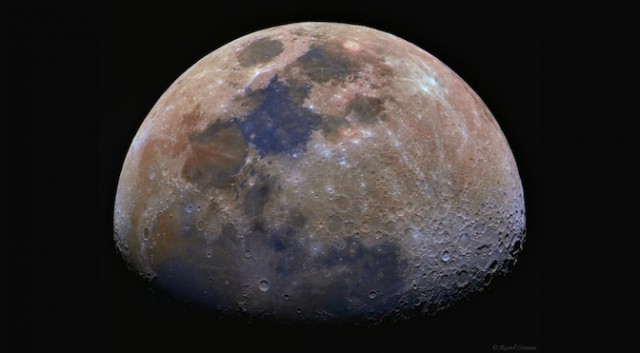
The moon remains the focal point of much of our space-related goals for the near future. In addition to China recently landing its Jade Rabbit probe, the more ambitious plans of NASA and the ESA involve building a settlement there in the near future. But of course, these and other plans to turn the moon into a new frontier from humanity are marred by the fact the environment is not habitable.
Luckily, NASA plans to change that, starting with growing plants on the lunar surface. And while this might seem like a long way away from building sealed domes and mounting full-scale terraforming, it is a big step in that direction. Aside from the obvious life support that vegetation would provide – air, food, and water – it would also provide another integral aspect to a habitable lunar environment.
Plants react to aspects of a harsh environment similarly to humans, as their genetic material can be damaged by radiation. A relatively safe way to test long-term lunar exposure is to send plants there and monitor their health. Rather than making the trip and dropping the plants off itself, NASA plans to use commercial spaceflight as the vehicle by which the plants will be sent up to the moon.
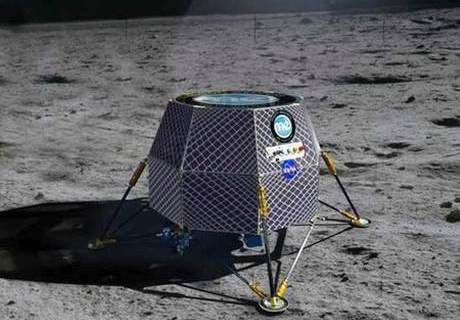
And that’s where Google comes in, NASA’s proposed partner for this venture. Using the Moon Express, a small, lightweight craft (about 1 kilogram or 2 pounds) that will act as a self-sustaining habitat for the vegetation, NASA will deliver these plants to the moon by 2015. This lunar lander is part of the Google Lunar X Prize, a competition to create a robotic spacecraft that can fly to and land on the moon.
Once the lander arrives on the moon, water will be added to the basil, turnip, and Arabidopsis (a small flowering plant) seeds kept in the habitat, then monitored for five to ten days and compared to control groups germinating back on Earth. NASA will also monitor the actual habitat itself, looking toward its scalability since the small habitat isn’t large enough to support human life.
Currently, the chamber can support 10 basil seeds, 10 turnip seeds, and around 100 Arabidopsis seeds. It also holds the bit of water that initiates the germination process, and uses the natural sunlight that reaches the moon to support the plant life. In order to study the quality of the plant growth and movement, the habitat will take images and beam them back home.
If NASA doesn’t run into any unexpected bumps, its long-term plans include attempting to grow a more diverse array of plants, longer growth periods, and reproduction experiments. The longer the experiments, the more we’ll learn about the long-term effects of a lunar environment on Earth plants, which will tell us much of what we need to know if we ever plan on building true settlements there in the future.
This was not only inspirational from a purely human standpoint, it was also really impressive in terms of the technology used. Basically, customers talked to a Santa impersonator using a real-time telepresence link, told him what they wanted, and then boarded their flights. Then, while they were flying, the Westjet staff went out and bought them what they asked for, everything from socks to LCD TVs.
When the customers arrived, they received their presents on the luggage conveyor. And of course, the entire thing was caught on video and distributed for promotional purposes. Quite the Christmas miracle, isn’t it? Check it out! And curses to Coach Muller for beating me to it 😉
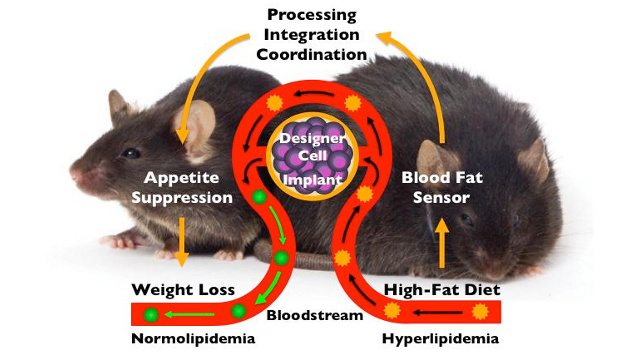
Obesity is one of the greatest epidemics effecting children in the developed world, resulting in billions spent annually on fad diets, miracle foods, and exercise programs. But researchers ETH-Zurich have come up with a potential high-tech solution to the problem. It consists of an implant that monitors fat in the blood and, in response to elevated levels, it produces a substance that tells the body that it’s not hungry.
The method relies on a “genetic circuit”, a component that perform logical operations in living cells. Originally developed by Boston University biomedical engineers Ahmad S. Khalil and James J. Collins, the regulatory circuit is put together using mostly biological components. These consisted of several genes that generate particular proteins and reactions. This compound was inserted into tiny capsules.
The circuit essentially performs two functions: monitoring the circulating fat levels in the blood, and then, in the event of detecting excess levels, produces a messenger substance that conveys a cognitive response that tells the user they are full and sated. For the sake of the experiment, the mice were continually given high-fat foods. As ETH-Zurich professor Martin Fussenegger explained in a statement:
Instead of placing the mice on a diet to achieve weight loss, we kept giving the animals as much high-calorie food as they could eat.
The implants responded as expected, causing the obese mice to stop their excessive eating, and their bodyweight dropped noticeably as a result. Once their blood-fat levels returned to normal, the implant stopped producing the fullness signal. As for the control group, mice that received normal animal feed with a 5% fat content did not lose any weight or reduce their intake of food.
Interestingly, the sensor can also detect different types of fat, including saturated and unsaturated animal and vegetable fats — even when they’re all ingested at the same time. This allows people to continue to take in the kinds of fats their bodies depend upon – such as Omega fatty acids and unsaturated fats – while limiting their intake of saturated fat, something we as a society get far too much of.
But of course, there are challenges in adapting this technology for human used. The researchers caution that it will take several more years to develop an implant that do the same job for the human body. But given the exponential rate of development with medical and health-monitoring implants, we can expect to be seeing a full range of weight-control or even diet-specific and allergen-detecting implants before long.
In addition to weight loss, this and other breakthroughs like it could facilitate the development of artificial cells designed to solve problems in medicine, energy, and the environment. It’s also a major step towards an age where people are able to manipulate their own biochemistry, and the building blocks of nature, at a microscopic level. Another step forward towards the nanotechnological revolution!
Earlier this month, Industry Minister James Moore announced that Canada’s new space plan will be made public in early in the new year. The announcement came on Monday Dec. 2nd at an aerospace forum in Montreal which also brought together leaders of Canada’s space industry. Emphasizing the achievements of Canada’s space industry, he also went on to claim that next year’s goals would reach beyond these traditional areas:
Our companies are leaders in optics, in robotics, radar imagery and satellite communications, but we will not stop at this success… The industry has spoken up, has worked collaboratively, has given the government advice on how to proceed (and) we’ve taken the advice and we’re putting it into action.
A background paper provided by Moore outlined the government’s strategic goals for its space activities, which include jobs and growth, sovereignty, security and the advancement of knowledge. Moore also told the space industry executives assembled that the government will examine all opportunities to work with the private sector and Canada’s international partners to encourage innovation in the country’s space activities.
Following up on the Emerson report’s recommendations, Moore announced various actions, including the establishment of a space advisory board composed of industry leaders and chaired by Walt Natynczyk, head of the Canadian Space Agency.
This framework will provide the foundation for the next phase of our government’s space program. It will be based on the principles of partnership with other countries and the private sector, catering to our strengths and inspiring Canadians.
The industry minister also said the government will double current support for its space technologies development program to $20 million annually by 2015-2016:
This will bring the kind of predictability and stability of funding that you asked for. And (it) will help develop more groundbreaking space technologies that Canadian space companies are so recognized for.
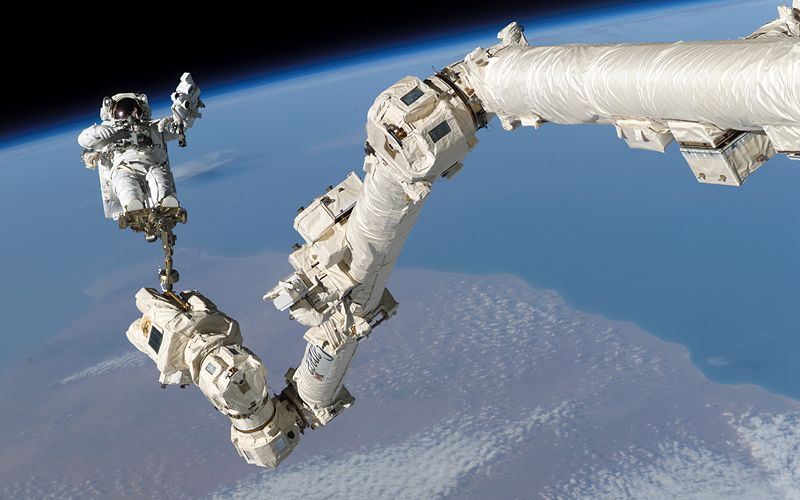
Beyond these stated objectives, its not quite clear what in store’s for the Canadian Space Agency (CSA). After Hadfield’s high-profile tour as the mission commander aboard the ISS, it is safe to say that interest in this field is growing. And with our nation’s ongoing commitment to providing new robotic arms (aka. Canadarm’s) for the ISS, parts and technical workers and astronauts for manned missions, any increase in public interest is likely to have positive results.
What’s more, with the Obama government dedicated to pursuing some extremely ambitious objectives – towing an asteroid to Near-Earth Orbit, a manned mission to Mars, establishing an outpost on the Moon – it would seem obvious that one of their greatest colleagues in space exploration and research would want to get on board.
Perhaps taking their cue from Star Wars snowflakes, graphic designer Krystal Higgins has designed a series of eight relatively easy-to-make paper snowflakes based on the sigils of the major houses in Game of Thrones. In addition to being a major GOT fan, Higgins felt inspired by the franchise sigils would present a very cool challenge for people looking to make holiday patterns.
As Higgins told Wired magazine during a recent interview:
The sigil characters inspired me to get creative about how I could abstract animal shapes into a pattern, while still keeping them recognizable. The antlers on the stags, for example, were incredibly tricky, but also ended up looking incredibly cool as part of a whole snowflake. I wanted to create something that would look interesting to folks who don’t watch the show or read the books.
And while these types of designs are outside of Higgins usual repertoire, she embraced them this year as a festive project that would be inclusive for religious and secular friends alike. Seriously, who would find GOT offensive? Unless of course you object to violence or nudity in media… As for what’s next, Higgins expressed interest in animal patterns or possibly dabbling into the Doctor Who genre.
In any case, you can download the patterns for snowflakes for the sigils of house Targaryen, Stark, Lannister, Baratheon, Greyjoy, and Tully, Arryn, and Martell from her website. Merry Christmas and happy holidays! In the meantime, check out this cool video of of the Star Wars snowflakes, or download some of the patterns by clicking here.
Just in time for the holidays, the ACLU have produced this lovely video entitled “The NSA is coming to town”. In it, Santa Claus is portrayed as a government snoop who spies on people as they text, email, and just generally do their electronic business. And it all happens to a lovely reworded version of “Santa Claus is coming to town”. Check it out, and try not to feel too paranoid this holiday season!

 Just came across this trailer for the upcoming sequel of 2011’s Rise of the Planet of the Apes, the prequel to the venerated Planet of the Apes franchise where humans are supplanted by highly-evolved primates in the distant future. And in keeping with this origin story, the second installment – titled Dawn of the Planet of the Apes – takes place ten years after the events in the first film, where the enhanced apes unleashed a virus that devastated the planet.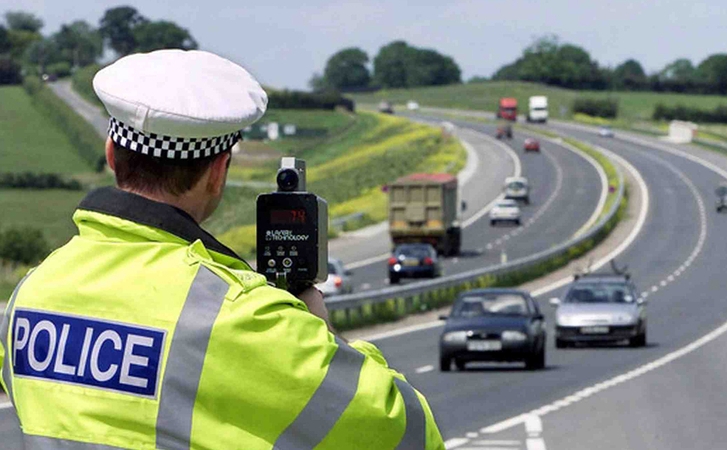













 Stories by Williams