Community’s Donald Glover, Hip-Hop Legend!

community_s1_donald_glover_003_FULLNews about Community returning for a fifth season has got the shows die-hard fans in a pretty good mood. I should know, I’m one of them! But some of the details about what will taking place are a little less enthusing. For example, news that the show was coming back was followed by Dan Harmonn – the show’s forerunner – claiming that he’d be coming back to produce the fifth next season after dropping off for the fourth.

But on the darker side, regular cast member Donald Glover, who plays the hilarious Troy Barnes, said he’d be only appearing in five of the the thirteen episodes the show is slated for. This might have something to do with his commitment to his standup or his hip hop band that goes by the name of “Childish Gambino”, which recently released such hits as the offbeat “Centipede.”

But for me, Glover’s best musical contributions occurred on the show, when he and Abed (Danny Pudi) would produce their own hip hop anthems. This included their tribute to Spanish 101, Anthropology 101 (featuring Betty White), and their Christmas rap mashup. Check em out below!

“La Biblioteca” Rap:


Anthropology Rap:


Jevoha’s Witness Rap:


Source: Wired.com

The Future of Medicine: “Hacking” Neurological Disorders

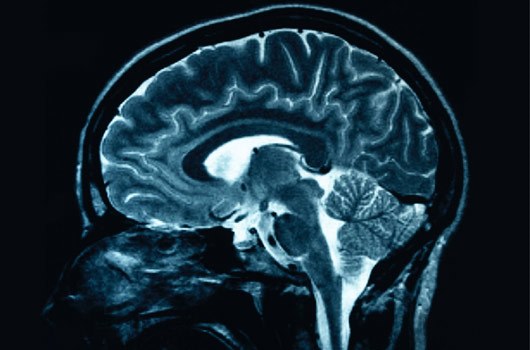
brain-scan_530Officially, it’s known as “neurohacking” – a method of biohacking that seeks to manipulate or interfere with the structure and/or function of neurons and the central nervous system to improve or repair the human brain. In recent years, scientists and researchers have been looking at how Deep Brain Stimulation (DBS) could be used for just such a purpose. And the results are encouraging, indicating that the technology could be used to correct for neurological disorders.

The key in this research has to do with the subthalamic nucleus (STN) – a component of the basal ganglia control system that is interconnected to the motor areas of the brain. Researchers initially hit upon the STN as a site for stimulation when studying monkeys with artificially induced movement disorders. When adding electrical stimulation to this center, the result was a complete elimination of debilitating tremors and involuntary movements.

DIY biohacker Anthony Johnson – aka. “Cyber AJ” – also recently released a dramatic video where he showed the effects of DBS on himself. As a Parkison’s sufferer, Johnson was able to demonstrate how the applications of a mild electrical stimulus from his Medtronic DBS to the STN region of his brain completely eliminated the tremors he has had to deal with ever since he was diagnosed.


But in spite of these positive returns, tests on humans have been slow-going and somewhat inconclusive. Basically, scientists have been unable to conclude why stimulating the STN would eliminate tremors, as the function of this region of the brain is still somewhat of a mystery. What’s more, they also determined that putting electrodes in any number of surrounding brain nuclei, or passing fiber tracts, seems to have similar beneficial effects.

In truth, when dealing with people who suffer from neurological disorders, any form of stimulation is likely to have a positive effect. Whether it is Parkinson’s, Alzheimer’s, Tourettes, Autism, Aspergers, or neurological damage, electrical stimulation is likely to produce moments of lucidity, greater recall, and more focused attention. Good news for some, but until such time as we know how and in what ways the treatment needs to happen, lasting treatment will be difficult.

brain-activityLuckily, research conducted by the Movement Disorders Group at Oxford University, led by Peter Brown, has provided some degree of progress in this field. Since DBS was first discovered, they have been busily recording activity through what is essentially a brain-computer interface (BCI) in the hopes of amassing meaningful data from the brain as it undergoes stimulation moment-by-moment.

For starters, it is known that the symptoms of Parkinson’s and other such disorders fluctuate continuously and any form of smart control needs to be fast to be effective. Hence, DBS modules need to be responsive, and not simply left on all the time. Hence, in addition to their being electrodes that can provide helpful stimulus, there also need to be sensors that can detect when the brain is behaving erratically.

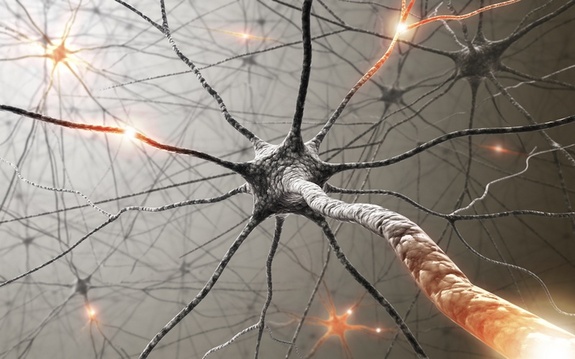
neuronsHere too, it was the Oxford group that came up with a solution. Rather than simply implanting more junk into the brain – expensive and potentially dangerous – Brown and his colleagues realized that the stimulation electrodes themselves can be used to take readings from the local areas of the brain and send signals to the DBS device to respond.

By combining BCI with DBS – lot of acronyms, I know! – the Oxford group and those like them have come away with many ideas for improvements, and are working towards an age where a one-size-fits-all DBS system will be replaced with a new series of personalized implants.

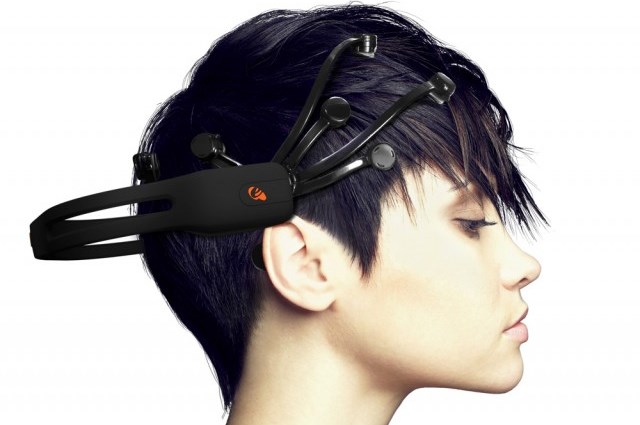
tcdsIn the meantime, a number of recreational possibilities also exist that do not involve electrodes in the brain. The tDCS headband is one example, a headset that provides transcranial direct current stimulation to the brain without the need for neurosurgery or any kind of brain implant. In addition to restoring neuroplasticity – the ability of the brain to be flexible and enable learning and growth – it has also been demonstrated to promote deeper sleep and greater awareness in users.

But it is in the field of personalized medical implants, the kinds that can correct for neurological disorders, that the real potential really exists. In the long-run, such neurological prosthesis could not only going to lead to the elimination of everything from mental illness to learning disabilities, they would also be the first step towards true and lasting brain enhancement.

transhuman3It is a staple of both science fiction and futurism that merging the human brain with artificial components and processors is central to the dream of transhumanism. By making our brains smarter, faster, and correcting for any troubling hiccups that might otherwise slow us down, we would effectively be playing with an entirely new deck. And what we would be capable of inventing and producing would be beyond anything we currently have at our disposal.

Sources: Extremetech.com, (2)

News from Space: The Orion MPCV gets a Manned Mission

Orion_arraysIt’s known as the Orion Multi-Purpose Crew Vehicle (MPCV), and it represents NASA’s plans for a next-generation exploration craft. This plan calls for the Orion to be launched aboard the next-generation Space Launch System, a larger, souped-up version of the Saturn V’s that took the Apollo teams into space and men like Neil Armstrong to the Moon.

The first flight, called Exploration Mission 1 (EM-1), will be targeted to send an unpiloted Orion spacecraft to a point more than 70,000 km (40,000 miles) beyond the Moon. This mission will serve as a forerunner to NASA’s new Asteroid Redirect Initiative – a mission to capture an asteroid and tow it closer to Earth – which was recently approved by the Obama Administration.

orion_arrays1But in a recent decision to upgrade the future prospects of the Orion, the EM-1 flight will now serve as an elaborate harbinger to NASA’s likewise enhanced EM-2 mission. This flight would involve sending a crew of astronauts for up close investigation of the small Near Earth Asteroid that would be relocated to the Moon’s vicinity. Until recently, NASA’s plan had been to launch the first crewed Orion atop the 2nd SLS rocket to a high orbit around the moon on the EM-2 mission.

However, the enhanced EM-1 flight would involve launching an unmanned Orion, fully integrated with the SLS, to an orbit near the moon where an asteroid could be moved to as early as 2021. This upgrade would also allow for an exceptionally more vigorous test of all the flight systems for both the Orion and SLS before risking a flight with humans aboard.

orion_arrays2It would also be much more technically challenging, as a slew of additional thruster firings would be conducted to test the engines ability to change orbital parameters, and the Orion would also be outfitted with sensors to collect a wide variety of measurements to evaluate its operation in the harsh space environment. And lastly, the mission’s duration would also be extended from the original 10 to a full 25 days.

Brandi Dean, NASA Johnson Space Center spokeswoman, explained the mission package in a recent interview with Universe Today:

The EM-1 mission with include approximately nine days outbound, three to six days in deep retrograde orbit and nine days back. EM-1 will have a compliment of both operational flight instrumentation and development flight instrumentation. This instrumentation suite gives us the ability to measure many attributes of system functionality and performance, including thermal, stress, displacement, acceleration, pressure and radiation.

The EM-1 flight has many years of planning and development ahead and further revisions prior to the 2017 liftoff are likely. “Final flight test objectives and the exact set of instrumentation required to meet those objectives is currently under development,” explained Dean.

orion_spacecenterThe SLS launcher will be the most powerful and capable rocket ever built by humans – exceeding the liftoff thrust of even the Saturn V, the very rocket that sent the Apollo astronauts into space and put Neil Armstrong, Buzz Aldrin and Michael Collins on the Moon. Since NASA is in a hurry to reprise its role as a leader in space, both the Orion and the SLS are under active and accelerating development by NASA and its industrial partners.

As already stated by NASA spokespeople, the 1st Orion capsule is slated to blast off on the unpiloted EFT-1 test flight in September 2014 atop a Delta IV Heavy rocket. This mission will be what is known as a “two orbit” test flight that will take the unmanned Multi-Purpose Crew Vehicle to an altitude of 5800 km (3,600 miles) above the Earth’s surface.

After the 2021 missions to the Moon, NASA will be looking farther abroad, seeking to mount manned missions to Mars, and maybe beyond…

And in the meantime, enjoy this video of NASA testing out the parachutes on the Orion space vehicle. The event was captured live on Google+ on July 24th from the U.S. Army’s Yuma Proving Ground in Arizona, and the following is the highlight of the event – the Orion being dropped from a plane!:

News from Mars: Evidence of Falling Snow

Mars-snow-header-640x353Ever since astronomers first looked up at Mars, they discerned features that few could accurately identify. For many years, speculations about irrigation, canals, and a Martian civilization abounded, firing people’s imaginations and fiction. It was not until more recently, with the deployment of the Viking probe, that Mars’ surface features have come to be seen for what they are.

Thanks several more probes, and the tireless work of rover such as Opptorunity and Curiosity, scientists have been able to amass evidence and get a first hand look at the surface. Nevertheless, they are still hard-pressed to explain everything that they’ve seen. And while much evidence exists that rivers and lakes once dotted the landscape, other geological features exist which don’t fit that model.

curiosity_rocksHowever, a recent report from Brown University has presented evidence that snowfall may be one answer. It has long been known that ice exists at the polar caps, but actual snowfall is a very specific meteorological feature, one that has serious implications for early Martian conditions. This is just another indication that Mars hosted an environment that was very much like Earths.

And this is not the first time that snow on Mars has been suggested. In 2008, NASA announced having detected snow falling from Martian clouds, but it was entirely vaporized before reaching the ground. The Brown researchers claim that snowfall in the past, and buildup on the surface leading to melting and runoff, could have created many of the tributary networks observed near tall mountain-ranges.

mars_atmoTo back this claim up, the team used a computer simulation from the Laboratoire de Météorologie Dynamique called the Mars global circulation model (GCM). This model compiles evidence about the early composition of the red planet’s atmosphere to predict global circulation patterns. And since other models predict that Mars was quite cold, the program indicated the highest probability of snowfall over the densest valley systems.

Lead researcher Kat Scanlon also relied on her background in orographic studies (science for “studying mountains”) in Hawaii to arrive at this hypothesis. This includes how tall mountains lead to divergent weather patterns on either side, with warm, wet conditions one and cold, dry ones on the other. NASA’s Curiosity rover also was intrinsic, thanks to recent information that might explain why Mars no longer displays this kind of behavior.

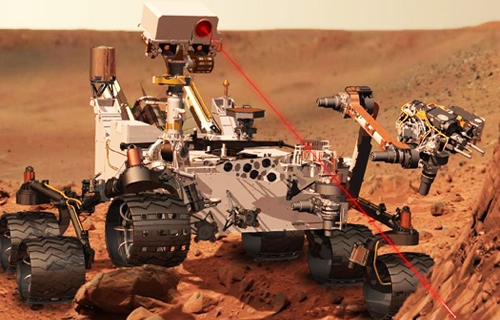
Curiosity-Laser-BeamIn short, Curiosity determined that the planet is losing its atmosphere. It has taken detailed assays of the current atmosphere, which is almost entirely carbon dioxide and about 0.6% the pressure of Earth’s at sea-level. More notably, it has used its ability to laser-blast solid samples and analyze the resulting vapor to determine that Mars has an unusually high ratio of heavy to light isotopes — most importantly of deuterium to hydrogen.

The main explanation for this is atmospheric loss, since light isotopes will escape slightly more quickly than heavy. Over billions of years, this can lead to non-standard isotope levels the show a loss of atmosphere. One major theory that might explain this loss say that about 4.2 million years ago Mars collided with an object about the size of Pluto. An impact from this body would have caused a huge expulsion of atmosphere, followed by a slow, continued loss from then on.

All of this plays into the larger question of life on Mars. Is there, or was there, ever life? Most likely, there was, as all the elements – water, atmosphere, clay minerals – appear to have been there at one time. And while scientists might still stumble upon a Lake Vostok-like reserve of microbial life under the surface, it seems most likely that Mars most fertile days is behind it.

However, that doesn’t mean that it can’t once again host life-sustaining conditions. And with some tweaking, of the ecological engineering – aka. terraforming – variety, it could once again.

Living-Mars.2Source: extremetech.com

Judgement Day Update: A.I. Equivalent to Four Year Old Mind

artificial_intelligence1Ever since computers were first invented, scientists and futurists have dreamed of the day when computers might be capable of autonomous reasoning and be able to surpass human beings. In the past few decades, it has become apparent that simply throwing more processing power at the problem of true artificial intelligence isn’t enough. The human brain remains several orders more complex than the typical AI, but researchers are getting closer.

One such effort is ConceptNet 4, a semantic network being developed by MIT. This AI system contains a large store of information that is used to teach the system about various concepts. But more importantly, it is designed to process the relationship between things. Much like the Google Neural Net, it is designed to learn and grow to the point that it will be able to reason autonomously.

child-ai-brainRecently, researchers at the University of Illinois at Chicago decided to put the ConceptNet through an IQ test. To do this, they used the Wechsler Preschool and Primary Scale of Intelligence Test, which is one of the common assessments used on small children. ConceptNet passed the test, scoring on par with a four-year-old in overall IQ. However, the team points out it would be worrisome to find a real child with lopsided scores like those received by the AI.

The system performed above average on parts of the test that have to do with vocabulary and recognizing the similarities between two items. However, the computer did significantly worse on the comprehension questions, which test a little one’s ability to understand practical concepts based on learned information. In short, the computer showed relational reasoning, but was lacking in common sense.

Neuromorphic-chip-640x353This is the missing piece of the puzzle for ConceptNet and those like it. An artificial intelligence like this one might have access to a lot of data, but it can’t draw on it to make rational judgements. ConceptNet might know that water freezes at 32 degrees, but it doesn’t know how to get from that concept to the idea that ice is cold. This is basically common sense — humans (even children) have it and computers don’t.

There’s no easy way to fabricate implicit information and common sense into an AI system and so far, no known machine has shown the ability. Even IBM’s Watson trivia computer isn’t capable of showing basic common sense, and though multiple solutions have been proposed – from neuromorphic chips to biomimetic circuitry – nothing is bearing fruit just yet.

AIBut of course, the MIT research team is already hard at work on ConceptNet 5, a more sophisticated neural net computer that is open source and available on GitHub. But for the time being, its clear that a machine will be restricted to processing information and incapable of making basic decisions. Good thing too! The sooner they can think for themselves, the sooner they can decide we’re in their way!

Source: extremetech.com

Incredible Astrophoto: Yuga Kurita’s “Galactic Volcano”

mt-fuji

I came across this stunning photo lately and just had to share it. The man who took it is none other than inspired photographer Yuga Kurita, who snapped a shot of Mt. Fuji at night to create a truly stunning image that makes the iconic Mt. Fuji appear like a galactic volcano. This effect is due largely to the heavens obliging him on a clear night, but also thanks to thousands of people climbing the mountain’s slopes.

Apparently, this is something of a pilgrimage in Japan, where people take their flashlights and climb the mountain at night in order to get a clear look from the peak of the volcano at the sun rising on the following day. Over at his account on Google+, he explains his inspiration to get a snapshot of the mountain at night:

When I arrived at Fujiyoshida in Yamanashi Prefecture, I saw people climbing up Mt. Fuji with flash lights and I thought they looked like lava streams. Then I came up with this composition, since nowadays, the Milky Way appears vertically in the sky so probably I could liken Mt. Fuji to an imaginary galactic volcano, that is, people climbing up with torches are lava streams and the Milky Way is the volcano smoke.

After deciding to get a picture of the “stellar” site, Kurita checked out several maps and then spent an entire day driving and hiking around the base of the mountain in order to get the most pristine shot. And as you can see, it worked out quite well! Between the vertical arm of the Milky Way and the lights leading up the mountainside, it looks like stars are escaping out of the mountain’s mouth and stellar flames are trickling over the edge. Truly cosmic!

To see more of Kurita’s work, click on this link here, or head on over to Google+ and simply type in his name.

Sources: plus.google.com, universetoday.com

Robert Kirkman’s The Walking Dead – Part IV

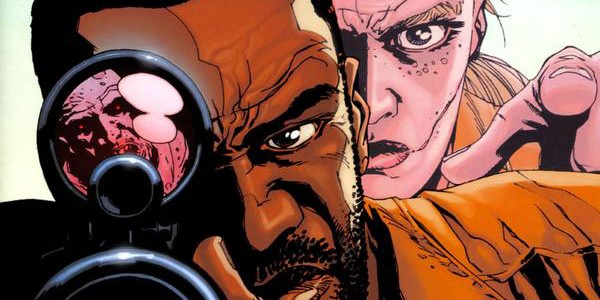
walking-dead-7-the-calm-before-billboard-600x300Welcome to the fourth and last installment in my review of Robert Kirkman’s The Walking Dead series. Today, I will be coming volumes 7 and 8, which were adapted to create the second half of season three, for the most part anyway. Basically, everything that happens between the confrontation at Woodbury and the assault of the Governor’s people on the prison falls into these two volumes.

These included Rick and the prison people’s attempts to get ready, their procurement of weapons, and the whereabouts of the Governor after Michonne’s little revenge party with him. And whereas that conclusion was rather abortive in the show, it was both startling and bloody in the comic! But as usual, I like to save the differences between the show and the source material for the end.

Bring on the mighty conclusion!

Volume 7 – The Calm Before:
the-walking-dead-Volume_7-The_Calm_BeforeThe first issue of the volume opens with Lori thinking back on her experiences with Shane. Her baby is almost due, and she decides to tell Rick that it may not even be his. He stops her and let’s her know that he already suspected, and that it doesn’t matter since he’s planning on raising the child as his own. With Hershel officiating, Glenn and Maggie have their wedding in the prison’s cafeteria and everyone attends.

Afterwards, Rick, Tyreese and Dale do an inventory of their weapons and ammo and determine they don’t have enough of either. They decide that a run will have to be made to the National Guard station where Woodbury got its weapons from. A party is formed with Tyreese, Michonne, Andrea, Axel, Glenn and Maggie and they take the RV.

Back at the prison, people continue to integrate with each other, their garden continues to produce, and people talk about all the members of their crew that have been lost. This includes Allen, Otis, Shawn, Lacy, Arnold, Rachel and Susie now. It seems that after so many deaths, people have grown numb to loss.

the-walking-dead-nationalguardpostOn the way out, they chance upon a fallen sign that tells them where to go and find the National Guard station. After grabbing all the fuel and ammo they can and commandeering a troop truck to load it up, they set fire to the place so no one else will be able to visit it later, and proceed to take off. They stop at a local Wal-Mart to stock up on food too, but are found by a bunch of armed men who were drawn by the explosion.

They discover the men are from Woodbury, and they recognize Glenn. After shooting him, Andrea opens fire and kills two of them while Michonne takes out the others with her sword. Glenn, luckily, was protected by his body armor and only suffered some cracked ribs. They load up what they can from the Wal-Mart and leave.

the-walking-dead-lorisbabyLori begins to have contractions and is brought to the infirmary where Rick and Alice begin delivery. However, the generator is about to go out and Billy and Dale rush to put more gas in it to keep the power on. Realizing they are almost out, they run to the lot to siphon more from the vehicles, and Dale is bitten on the leg by a Walker hiding beneath the cars. Andrea and the others arrive and find Billy and Dale, who is still alive.

In the infirmary, Lori gives birth to their daughter, a healthy girl. But their joy is short-lived when Andrea and the others burst in carrying Dale. Holding him down, Rick takes the saw and cuts the lower half of his leg off. He survives, and Rick reflects on how screwed up their world now is. Lori tries to restore some happiness to the moment by telling Rick they should name their daughter Judith.

In the coming days, Rick and Lori tends to their new baby, they unload the supplies, begin training in how to use the weapons they procured, and continue to plant and till their fields. Carol seems to have recovered from Lori turning down her offer for a poly-amorous relationship, and Andrea gives Dale some crutches and he is able to get out of his bed.

Everything seems to be getting back to normal, though Dale now feels useless and worries Andrea and Tyreese are sleeping together. However, his fears prove baseless, as Andrea reveals that they were working together to make him a prosthetic leg. While leading a shooting party outside the fence, Andrea is asked by Alice to procure her a living Walker for study.

the-walking-dead-carolsdeathWhen Rick learns about it, he grabs a gun and prepares to shoot it. However, Alice talks him down by saying that this having one could help them immensely, both in fighting them and perhaps finding a cure. Carol meets with Lori again and asks that she take care of Sophia if anything happens to her. After Lori agrees, she goes off and has sex with Billy. After that, she goes to the chained Walker and lets it kill her.

the-walking-dead-governor-killthemallWhen they find her, Andrea shoots the Walker and then Carol. In the coming days, people try to come to grips with her death. Tyreese is mainly angry at her for killing herself, and finds comfort in the arms of Michonne. Slowly, everyone begins to recover again. And after several months of preparing, they begin to think that the feared confrontation with the Governor isn’t coming.

Suddenly, a large convoy of trucks and an armored vehicle pulls up at the fence line. A one-armed, one-eyed Governor emerges from the armored vehicle and declares “KILL THEM ALL!”

Volume 8 – Made to Suffer:
the-walking-dead-Volume_8-Made_to_SufferThe volume opens with a recount of what happened to the Governor after Rick, Michonne and the others escaped from Woodbury. After finding him mutilated, but still alive, his men brought him to the infirmary. Realizing that doc Stevens and Alice were gone, they pulled Bob – a former medic and alcoholic that they had been keeping in a cell – out and told him to save the Governor’s life.

Though he was not able to save the Governor’s eye, reattach his arm, or his manhood, he was able to stop the bleeding and keep him alive. Of course, much of the work had already been done by Michonne, who cauterized his arm with a blowtorch after severing it. In any case, the Governor woke up even crazier than before.

the-walking-dead-governor-speechAfter his men find Martinez’s remains, he orders the head removed and presents it to his people, claiming Rick’s party murdered Martinez and left it on their doorstep as a message. After whooping them into a frenzy, he went about the task of sending his people out to find the prison.

This proved easy after they found the National Guard post destroyed and followed their tracks. However, having found it, the Governor ordered his people to wait and so as to give Rick and his people a false sense of security. After a few months had passed, he ordered his people to load up and prepare for war.

In addition to guns, two troops trucks, and about half a dozen pickups, they also deployed an Infantry Fighting Vehicle they snagged from the Nati0n Guard base. When they arrive, fifty some odd men come behind the Governor, and he orders them to open fire and kill everyone inside. They oblige him, and the bullets begin to fly.the-walking-dead-governorattacksLuckily for the prison camp, a slew of Walkers are standing outside the gate and are poised between the Governor’s army and them. Rick orders everybody to find cover and tells Andrea to get up in the guard tower and start sniping. Running inside, he alerts Lori and tells her to get Patricia and the, and load up a truck with supplies and go without him.

He returns outside where the Governor orders his people to stop firing and issues an ultimatum – for their weapons, he will let them live. When no answer comes, he orders his men to resume firing, but Andrea starts shooting them. She manages to get a shot on the Governor but since he’s armored, he survives. She takes off her helmet to get a better shot and then takes out several of his men.

the-walking-dead-Andrea-ShootingUnfortunately, a bullet grazes her now unarmored head. The Governor’s men suggest taking down the fence, but the Governor knows the prison will be useless without fences. He orders the armored vehicle to start plowing down the Walkers to clear a path for their shots. They then open fire again and hit Axel. Andrea recovers and starts sniping multiple targets, and the Governor’s forces retreat.

With their attackers pulling back, the prison crew begin to come out of cover and take stock of their wounded. Axel’s arm is hit, but he’s otherwise unharmed. Andrea suffered a graze to the head and falls unconscious. Worse though, is Rick, who was hit in the stomach and collapses. All three are brought to the infirmary, and Rick’s condition doesn’t appear too good. Alice tells them Rick needs blood, and Patricia tells her she’s a universal donor, so she volunteers.

Dale speaks to Andrea and tells her they need to start thinking about getting out of dodge before they die. He asks Lori to come too; she refuses, but Dale insists that they take Sophia, Ben and Billy with them. Maggie and Glenn agree to go with them, and pack in the RV and drive off. Rick wakes up from his coma and takes stock of their situation. Having learned that people have left, he begins to think they won’t be able to deal with another attack.

Meanwhile, Michonne discusses a reprisal attack with Tyreese, hitting the Governor and his crew before they can make it back to Woodbury. He agrees, they put on riot gear and head out. Up the road, they find the Governor’s convoy and take out his sentries. However, things get sticky when more show up and start shooting. Tyreese is eventually captured and brought before the Governor, who’s men tell him that Michonne is dead and they present her sword as evidence.

the-walking-dead-tyreese-dies1Back at the prison, Rick overlooks their defenses and decides to reposition their cars and trucks to offer barriers. They also load up an escape truck with supplies, and bring out all the grenades they have to use in a hurry. He also gives Carl his gun and tells him to keep it on him at all times, and tells the watch to wear their remains riot suits at all times. They hear a gunshot and run to the front yard.

One of the governor’s trucks has come back. The back opens to reveal the Governor standing over Tyreese, and holding Michonne’s sword. He once again demands they open the gates, and threatens to execute Tyreese and Michonne, who he claims he’s got stashed away in the cabin. Rick won’t oblige, and the Governor proceeds to cut Tyreese’s head off. Billy opens fire, but the truck makes it away.

the-walking-dead-governor_michonneBack at his camp, the Governor is angered that his plan didn’t work, but he’s interrupted when Michonne shows up pointing a gun at his head. She is shot at and has to slip away, but manages to wound the Governor and grab her sword. The Governor, extremely pissed, orders his men to turn around and head back to the prison to finish their assault.

The shooting begins again, and Axel is hit in the head and killed. Rick’s people take cover beneath their trucks. Billy is pinned in his tower and begins lobbing grenades. Andrea and Dale show up again, with her sniping from the roof, and one of the Governor’s trucks slams into it, sending her to the ground. Still, the Governor’s people are dying faster than they can stand, and he commandeers the armored vehicle and drives it over the fence.

Rick runs back to find Lori, and sees her on her knees with a gun to her head. However, he’s relieved to see its Alice, and they were staging it since they thought Rick was one of the Governor’s men. They run to the front yard and prepare to load up and leave, but the front yard is now being overrun by the Governor’s people and Walkers. As they run out, they are hit by a hail of bullets and Patricia is killed.

the-walking-dead-lorisdeathBilly is killed and Hershel falls to his knees, crying over his body. Alice tells Rick, Lori and Carl to run and covers them from a doorway. She takes out a few men, but is shot and then finished off by the Governor. Rick, Lori and Carl are near the edge of the fence now, but Lori is hit by a bullet that kills her. She falls over and lands on Judith, killing her too. Rick is traumatized, but tells Carl to keep moving…

The Governor puts a gun to Hershel’s head and kills him. The woman who shot Lori sees her body and that of her baby and loses it. She slams her gun into the Governor’s face and sticks the barrel in his mouth. The group manages to stop her from shooting him, but is then overrun by Walkers. The Governor frees himself and tries to rally them, but the woman who shot Lori pulls her pistol and shoots the Governor in the back of the head.

the-walking-dead-governorsdeathHis body crumples to the ground and is eaten by Walkers. The rest of their group is surrounded by Walkers and they are either consumed or run off into the wilderness. On the nearby hillside, Rick and Carl finally make it to safety. Carl realizes that his mother and little sister didn’t make it and tries to run back. Rick holds him and they both begin to cry.

Differences with AMC’s The Walking Dead:
We find ourselves at last at the ending of season three of the Walking Dead, and with all the cumulative changes they made from the original story. And it was by this time that the biggest change in the show’s history took place, one which has made season four likely to be very different from any of the volumes that follow. But first, I want to cover the small stuff and things they didn’t change.

the-walking-dead-governorgunFirst off, the show did contain some commitment to the spirit of the comics in how the Governor and his men assaulted the prison on two separate occasions. In the first, they shot up the yard, killed Axel, and unleashed some zombies into it. The second was where the decisive battle happened, with the Governor and his people crashing through the gates and attempting to storm the prison in force.

And Axel and Lori did die in this general area of the story, but in different ways. Whereas Axel was killed during the Governor’s raid in the show, he didn’t die until the end when the final battle took place. Also, Lori’s death wasn’t due to an emergency C-section performed in a boiler room that saw her die and her baby live. Both she and the baby died in the final fight, terribly!
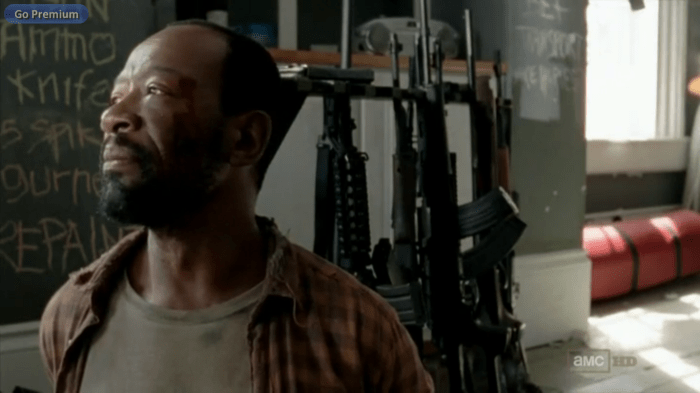
wd3_morgan1Also, the intervening period between these two battles took so much longer in the show, which I find annoying in hindsight. Much like with everything else in seasons two and three, the producers were determined to drag the confrontation out, what with Andrea trying to pick a side and brokering peace talks between Rick and the Governor. No such process ever took place in the comics. After Rick, Michonne and the rest escaped Woodbury, the Governor simply took his time in attacking, and then did!

What’s more, the buildup happened differently. Rather than show how the first assault had split the camp and people began to leave, the writers used this time to reintroduce Morgan and explain how his son died. A good episode, but once again, a case of shuffling. Morgan did not get reintroduced until after the prison assault, and he chose to join Rick and the others since Duane was now dead and he had no reason to stay behind. Also, they didn’t get their stocks of weapons from him.
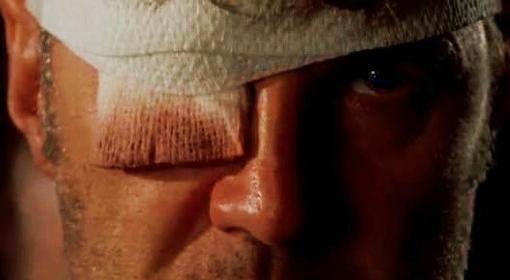
wd3_oneeyeAlso, I should take this opportunity to point out that at no point in the original comics did Rick and his people assault Woodbury. Their initial confrontation didn’t involve an attack to rescue their own people who’d been taken captive (Glenn and Maggie), it involved Rick, Michonne and Glenn being taken captive and tortured. There was no ambiguity about the Governor’s motives or the fact that he was an evil, malicious bastard.

In the show, they presented things in a more ambiguous way. While they certainly kept to the script by showing the Governor to be a psycho who treated all foreign groups as a threat and killed them, the way they had Rick and his crew attacking his town first kind of made it look like he was a sort of victim. Psycho or not, hitting him and his people where they lived was a lot like poking an already angry bear.

At this point in season three, Milton also begins to turn against the Governor and sabotages his plans. This might be a good opportunity for me to point out that in the comics – as Doctor Stevens – he was never a friend of the Governor in the first place. What’s more, he died a long time ago. Having yet another character struggle with their loyalties – a la Andrea and Dale – seemed like they were harping on an overly-familiar theme.
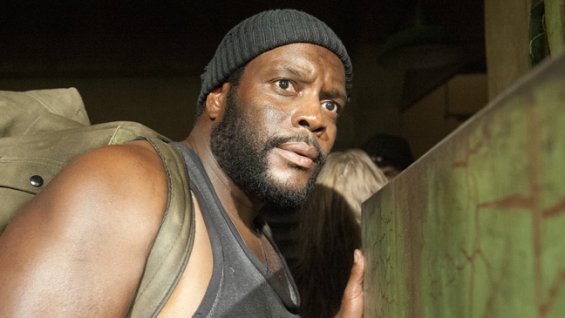
wd3_tyreeseAh, and another weird case of plot shuffling – at this point in season three we are FINALLY introduced to Tyreese, a character that was supposed to be with the show from the beginning. And in addition to his late arrival, his companions were completely different from the comic. Instead of his daughter Judie and Chris her boyfriend, he came with his sister Sasha and father and son duo who didn’t exist in the original.

On top of that, there was no case of him experiencing a crossover with the Governor and Woodbury or a conflicted sense of loyalties. Also, I couldn’t see why it was necessary to have Rick chase them off and then have them learn that the Governor’s camp were the actual bad guys. Wasn’t Andrea, Milton and Merle enough on that front? All of this seemed like a very weird case of late introductions followed by an inexplicable plot mashup.

And, most importantly, he was supposed to die at this point in the story. Not only is he being introduced late, he’s being introduced at a point in the story when his original was killed off. Seems weird. And I should also point out that Carol was also dead at this point, the victim of tragic circumstance after her attempted suicide left her feeling without friends or respect. But as usual, she’s still alive in the show despite not having much to do.

the-walking-dead-season3endBut alas, the biggest and most disappointing change came in the final battle and its outcome. In the comic, it was a devastating event, resulting in the deaths of Hershel, his son Billy, Alison, Patricia, Lori, Judith, and Axel. Rick and a handful of others managed to make it out, but only by the skin of their teeth, and the Governor himself died in the assault. The only other people who could be alive at this point were the ones who’d already left.

It was not the abortive event they made it out to be in the show, with the Governor’s people fleeing at the first sign of trouble, him gunning them all down, and then leaving with his henchmen to be heard from at some later date. That I found pretty lame, and I was hardly alone in that. He shot twenty-some odd of his own people and his henchmen – who were supposed to be dead at this point – had nothing to say about it. Then they simply drove off… weak!

And of course, after the battle Rick and the others traveled to Woodbury, collected all the people there and brought them back to the prison. This was so far off script that I wasn’t sure how to respond. So now, instead of Rick and Carl wandering around in the wilderness looking for other survivors, battling hunger, Walkers, and their own grief, they are back at the prison with more people than before and trying to integrate them. Night and day, man. Night and day!

All in all, season three was a watered-down, convoluted version of the original comics. It took its time and tried real hard to get its audience emotionally involved, but instead turned into a big build-up towards and ending that was a big letdown. Not only did the whole thing fizzle at the end, the way they left it open-ended seemed a bit trite and commercial too. But of course, its television. What can you do?

Summary:
If it wasn’t clear from all of that, reading the comics really had a dire impact of my view on the show. But then again, after the season three closer, I was already kind of disenchanted. Season two was not my favorite by any stretch due to the slow pace and the way the conflicts dragged out. And after what I thought was a good first half to the third season, the second half began to feel like more of the same.

And perhaps I’m being unfair, but being able to see how they changed things has only made that worse. It’s not the fact that they made changes, mind you. To fault for them just for doing that would be a terrible act of geek-inspired snobbery! No, it was how they made these changes and why. Between leaving some people out, pushing others in, and shuffling plot elements around, I really can’t see the logic here.

Why did they choose not to introduce Tyreese until this late juncture? Why did they choose to make the Governor’s assault on the prison so incompetent? Why did they feel the need to humanize this evil man so very much? Why did Andrea have such a hard time accepting he was evil when all the evidence was there? Why did they choose to replace well-developed characters from the comics with some of the “highest paid extras” and then just proceed kill them off?

Who knows? Who cares? At this point in the show, they can do what they like. And from the trailers, it seems like they might be veering back towards the original plot anyway, having Rick and his people abandon the prison and head off in search of a new home. Doesn’t really make sense, when you consider the hell they went through to find the place and hold it.

But whatever, more changes aren’t going to hurt at this point. And frankly, I am curious to see what happens next. And you can bet I’ll be doing comparative reviews, since I’ll be doing them anyway in my mind and will probably want to share my observations. Consider yourself warned people!

Until next time, thanks for reading and remember…
zombie_keepcalm

News from Space: Dream Chaser Begins Testing

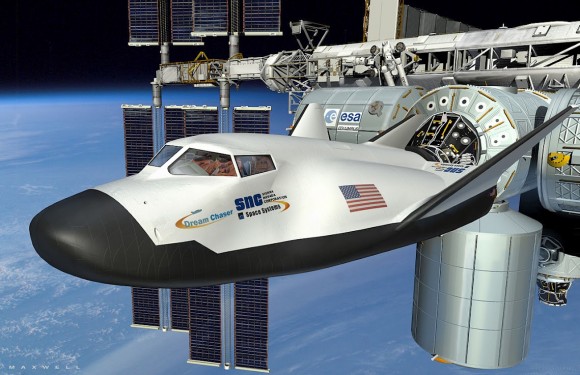
dream_chaserEver since their Space Shuttle program was forcibly shut down in 2011, NASA has been forced to look to the private sector to restore their ability to put human beings into orbit from American soil. This consists of providing the seed money needed for companies to develop a new race of “space taxis”.  One such program is the Dream Chaser, a reusable shuttle that will fly astronauts into low Earth orbit (LEO) and to the International Space Station (ISS).

Much like a standard Space Shuttle, the Dream Chaser is designed to launch atop a United Launch Alliance Atlas V rocket and land on a shuttle landing facility. And after lengthy periods of research and development, the Dream Chaser is now moving forward with a series of ground tests at NASA’s Dryden Flight Research Center in California that will soon lead to dramatic aerial flight tests throughout 2013.

dream-chaser-testThis consisted of putting the shuttle together and then conducting a series of what’s known as “Pathfinding tow tests” on Dryden’s concrete runway. The purpose here is to validate the performance of the vehicles’ nose skid, brakes, tires and other systems to prove that it can safely land an astronaut crew after surviving the searing re-entry from Earth orbit. For the initial ground tests, the ship was pulled by a tow truck at 16 and 32 km/h (10 to 20 mph).

Later this month, the next leg of the test will consist of towing it up to speeds of 64 to 95 km and hour (40 to 60 mph). The next phases of testing will take place later this year in the form of airborne captive carry tests, where an Erickson Skycrane helicopter will fly the fuselage around to see how it holds up. Approach and Landing Tests (ALT) will follow to check the aerodynamic handling, which will consist of atmospheric drop tests in autonomous free flight mode.

dream-chaser-test1In an interview with Universe Today, Marc Sirangelo – Sierra Nevada Corp. vice president and SNC Space Systems chairman – spoke on record about the shuttle and where it is in terms of development:

It’s not outfitted for orbital flight. It is outfitted for atmospheric flight tests. The best analogy is it’s very similar to what NASA did in the shuttle program with the Enterprise, creating a vehicle that would allow it to do significant flights whose design then would filter into the final vehicle for orbital flight.

In short, the Dream Chaser has a long way to go, but the program shows great promise. And as already noted, they are not the only ones benefiting from this public-private agreement that seeks to develop commercial vehicles for the sake of kick starting space travel.

dream-chaser-dockedOther companies include Boeing and SpaceX, companies that were also awarded contracts under NASA’s Commercial Crew Integrated Capability Initiative, or CCiCap. All three have their own commercial vehicles under development, such as the Boeing CST-100, SpaceX’s Dragon, which are similarly designed to bring a crew of up to 7 astronauts to the ISS and docking with it for up to 6 months.

Dream_Chaser_launchBut of course, everything depends on NASA’s approved budget, which seems headed for steep cuts in excess of a billion dollars if a Republican dominated US House has its way.This is the third contract in NASA’s Phase 1 CCiCap contracts, who’s combined value is about $1.1 Billion and runs through March 2014. Phase 2 contract awards will eventually lead to actual flight units after a down selection to one or more of the companies. The first orbital flight test of the Dream Chaser is not expected before 2016 and could be further delayed if NASA’s commercial crew budget is again slashed by the Congress – as was done in the past few years.

But as William Gerstenmaier – NASA’s associate administrator for human exploration and operations in Washington – indicated in a statement, the larger goal here is one of repatriation. As it stands, US astronauts are totally dependent on Russia’s Soyuz capsule for rides to the ISS, which costs upwards of $70 million a trip. NASA hopes to change that by rekindling the “good old days” of space travel:

NASA centers around the country paved the way for 50 years of American human spaceflight, and they’re actively working with our partners to test innovative commercial space systems that will continue to ensure American leadership in exploration and discovery.

And I for one wish NASA luck. Lord knows thirty-years of post-Cold War budget cutbacks hasn’t been easy on them. And hitching rides into space above Cold War era rockets is not the best way of getting your astronauts into space either!

In the meantime, check out this concept video of the Dream Chaser in action, courtesy of the Sierra Nevada Corporation:


Source:
universetoday.com

New Anthology Sample: Arrivals!

Yuva_coverWow, its been awhile since I’ve posted anything from my group’s Yuva anthology. But that’s been the nature of my writing in these past few weeks, picking up projects I haven’t been working on lately and getting busy on them! And one of the fruits of these labors is the next installment in the short story “Arrivals”.

It came after I finished reading over my friends’ proposal for another story – Amber Iver’s and Goran Zidar’s “Ember Storm”. Somehow, reading another’s work always seem to help stoke the creative fires. And since “Arrivals” has been sitting on my desk without improvement for months now, I figured it was time to dust it off and make some headway!

YuvaAs the story that starts off part III of the anthology, “Arrivals” deals with the Second Wave of colonists who come to the planet of Yuva some 200 years after the first Terraformers set foot on the planet. Naturally, this new group of settlers is fare more advanced than the first, and has made the trip in less time thanks to the superiority of their next-generation, interstellar space ships.

The first segment of the story, which I posted back in March, dealt with the signal from these distant ships being received. This second part deals with the repercussions, as the Yuvan authorities come to see the ships in distant space and realize they will be arriving in orbit within two years time. Preparations need to be made, and the possibilities need to be addressed.

Will these new “arrivals” be friendly, or hostile? Are they simply people looking to join the first wave in creating a new home, or are they intent on pushing them out of the way? And just as importantly, what news and developments are they bringing with them from Earth, a world the Yuvan people have not heard from in over two centuries?

Planetary Research Council
Zarmina, Vogt

Anuja Padda tapped the table before her, loud enough so that everyone arranged in the circle would hear her and come to attention. Slowly, the many conversations that were passing between the board’s various members came to an end and they looked in her direction.

“Good morning, all. I thank you all for coming, especially those who joining us from overseas. I think we can all agree, we meet here under some rather extraordinary circumstances.”

There were mumbles of agreement from all around the table. Padda continued.

“And though I’m sure everyone has had a chance to review the information, I know my colleagues won’t fault me for reviewing our situation for the sake of posterity. Future generations will certainly appreciate it.”

That got a few snickers, and some people looking around the expanse of the room. From multiple angles, holorecording devices were capturing their every word, gesture and nuance. Someday, posterity would be looking back on the recordings made, and she was determined to give them a good show.

She cleared her throat and started from the beginning. “Less then twenty-four hours ago, a remote monitoring station on the western coast on Bonfils reported receiving some anomalous readings. The station assessed the readings and determined that they were in fact a transmission, which appeared to be coming from an extra-planetary source.”

She paused for emphasis. The next segment of her introduction required a few seconds grace, given the heady nature of it all.

“Ever since we arrived on this planet almost two centuries ago, we’ve entertained the notion that one day, another flotilla would follow in our wake, bringing a second wave of colonists to this world. Yesterday, we finally heard from them. And today, we will receive our first glimpse of them.”

The room’s lights suddenly went dark and a million specks of light slowly began to appear around them and grow in luminosity. The image that was now filling the Council meeting room could be seen in every Planetary Research office on the planet, the video feeds that were being captured from orbit streaming in through their own holodisplay devices.

Raising her hands and the image responded, the holodisplay reading the embedded sensors in her fingertips and responding to her manipulations. The image began to move and zoom in on a particular region of space. Holding her left hand steady to prevent lateral movement, she pulled her right hand back several times, increasing the magnification on the desired region. Three grey blobs appeared in this area, indiscernible and bland, until the image improved the resolution.

What they saw then instantly amazed and left them all speechless.

There, at the center of the room and hovering above their heads, were the mottled images of three large space-born craft. Their edges were sharp, their profiles long and contoured. There was no mistaking them for asteroids or any other kind of stellar mass.

“The image quality leaves something to be desired, but as you can see, we are detecting three ships flying in a wedge formation.”

“In other words,” said Councilor Moltke from the other side of the room, “a formation and disposition which matches our arrival exactly.”

Padda nodded, as did numerous others who continued to watch with awe. Within seconds, questions began to follow.

“How long until they get here?”

“Our scopes indicate that at their present velocity, they will arrive in orbit of Yuva in just over two years’ time.”

“What was the message they sent?”

“We don’t know yet, as it was encrypted using a rather complex cipher. But our technicians are sure we can decode it before long. Most likely, it’s a message of greeting.”

“The ships they are using, they’re faster than the ones that brought us here, yes?”

Padda turned to address this question, though it was more of an observation. Given their apparent distance and the timeframe she gave them, one could not help but draw that conclusion.

“Yes, they do appear to be using a form of propulsion technology that is superior to the one that powered the Avincenna, , and . This should come as no surprise, given that they’ve had well over a century to refine their methods.”

“And what of their intent?”

Padda looked around the room to find the source of the question. It appeared to be coming from the back wall, an alcove which was temporarily shaded due to the display of lights above. As the speaker stepped forward, she suppressed the urge to sigh and greeted them politely.

“Minister Astrakhan, this is a surprise. We weren’t expecting a visitor from Planetary Defense.”

“Perhaps if you had invited us to this session,” he said dryly, moving closer to the center of the room. “Nevertheless, my question still stands. What is their intent?”

Padda cleared her throat. “We can’t be sure at this time. However –”

“All we really know is that have a flotilla of ships arriving in our system from Earth. They are more advanced than we are, they have sent a message we can’t interpret, and yet we assume that they are here bringing a new wave of colonists who plan to peacefully integrate into our society.” He stopped and looked at the display; nodded, as if appraising the image and finding something within it that he approved of. “Have you even considered the possibility that their intent might be hostile?”
Padda shook her head. She tried to respond, but incredulity prevented her from finishing her sentence. “I’m sorry, I –”

“It’s not unheard of for new waves of colonists to displace those that came before them,” he continued. “Or have you forgotten your Earth history?”

Padda’s face went warm. “I haven’t forgotten anything sir.”

“Ah, then you recall the last time in Earth’s history when exploration and colonization took place? During the 18th century, many waves of Europeans arrived on the shores of what they liked to refer to as ‘The New World’. In the north, settlers landed in large numbers along the eastern shores, and after clearing the lands of its native inhabitants, subsequent waves of settlers triggered a series of conflicts. Colonies switched hands as their respective nations demanded the right to control the lands that were already spoken for.”

Padda once again suppressed a sigh.

“You’re saying you think these colonists are here to push us out? Or demand we submit to their authority?”

“And why not?” he asked, turning around to face her. If they do possess superior technology, what’s to stop them?”

Low murmurs began to erupt around the room, growing in intensity as more people joined the chorus. It wasn’t long before she could hear remarks being shouted in Astrakhan’s direction. All the while, he continued to look at Padda, a cold stare on his face.

All too quickly, she remembered exactly why she hadn’t invited him to this meeting. She knew he would be likely to raise some pessimistic possibilities. Unfortunately, not inviting him had had the effect of exacerbating the situation. Amidst their awe and distraction, he had managed to sneak in and stir the pot even more.

“Excuse me, everyone!” she said finally. Slowly, silence returned to the room. “Let us not get carried away with speculation. Minister Astrakhan, it is your contention that we do not know what these ships and their crews are doing here, correct?”

“It is not my contention, Madame Councilor. It is a fact.”

She smiled. “Then it would be foolish of us to be taking an alarmist position, would it not? If we are indeed ignorant, we shouldn’t allow such ignorance to manifest itself in fear.”

No one chuckled, but she felt the room respond favorably to her remark. The only one who didn’t appear impressed was Astrakhan. Despite his next words, his face registered no reaction to her rebuttal.

“Indeed, Councilor. It would be foolish to assume the worse anymore than it would to assume the best. Perhaps we can agree then that more information is needed?”

Padda nodded silently. She sensed there was more coming, something she wasn’t going to think too highly of.

“A good first step would be to decode the message they sent. I recall you saying it had a rather advanced encryption?”

“That is correct. A quantum encryption that will take some time to crack.”

“Good…” Astrakhan brought his hands together in front of him. “Then might I suggest Planetary Defense and Resources arrange for a collaborative effort. Between our two ministries, we could be able to dedicate all our quantum processors to the task and break their codes that much quicker.”

Padda was about to respond in the affirmative, but was interrupted by Moltke.

“A valid suggestion, Minister. But might I suggest that we extend that collaboration to include all major settlements? Between all of us, we have over a dozen processors that could be networked and dedicated to the task.”

Astrakhan quickly turned around to confront Moltke. “That would require breaching whatever security we have in place with this matter. The entire planet would be made aware of the arrival of these ships.”

Stepping into the light, Moltke spread his hands in a gesture of defeat. “They are likely to have heard of it already, Minister. If we want them to remain informed and calm on the subject, I can think of no better idea than to get in front of the story. Besides, if Planetary Defense is determined to learn of their intentions is what we want, then any measure that could accomplish this task sooner is in order.”

Astrakhan bristled noticeably, then turned back to look at Padda. His face was still painfully neutral, but she could tell from his body language that Moltke had ruffled his feathers.

“I shall have to speak to my superiors, and of course the Planetary Council will need to be informed, and will retain final approval of anything we propose.”

Padda smiled, inwardly suppressing a sense of sardonic joy. “Yes, they will, Minister. I commend you and my colleague on the sensible recommendations made here today.”

Astrakhan left without further incident. The mood lightened the moment he was gone and the rooms main doors slid shut behind him. Within seconds, murmurs began to erupt again. It wasn’t long before questions began to be asked as well.

“There’s the matter of their arrival,” said another Councilor. “What shall we do to prepare?”

“A welcoming committee?” said another.

“What about a series of shuttles going into orbit to greet them?” said Moltke.

Several heads turned to him and began muttering curiously.

“An orbital meet and greet?” said Padda. “Not a bad idea, but we would still be waiting a full two years before they would be close enough for our standard aerospace jets to reach them.”

“Perhaps then we should prepare something with greater range and capability,” Council Mond suggested, their resident expert on aerospace. “If they are going to be two years in coming, we could dedicate the next year to developing shuttles that could meet them half way.” Everyone in the room began to voice their approval of this idea. Mond took that as an invitation to continue. “Until now, we’ve had no reason to build ships that were built specifically for space travel. But between the orbital stations and our resources here on the surface, we have the capability to build a series of shuttles that could be sent from orbit to meet them in space before they reach our world.

This produced additional hums and vocalizations of assent. Eventually, numerous people looked to Padda again to see if she agreed. After a brief consideration, she nodded approvingly.

“A good idea,” she said. “And one I’m sure Minister Astrakhan will be suggesting himself. No doubt he would emphasize that we need to get a look at these people before we allow them to set foot on our planet.”

“Looks like Planetary Defense and Research will be collaborating on something else.”

Everyone chuckled at Moltke’s remark.

The Future of Medicine: Smartphone Medicine!

iphone_specIt’s no secret that the exponential growth in smartphone use has been paralleled by a similar growth in what they can do. Everyday, new and interesting apps are developed which give people the ability to access new kinds of information, interface with other devices, and even perform a range of scans on themselves. It is this latter two aspect of development which is especially exciting, as it is opening the door to medical applications.

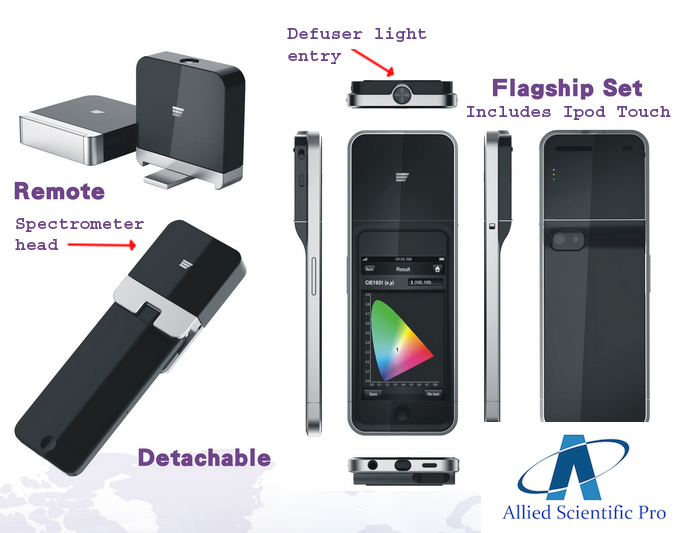
Yes, in addition to temporary tattoos and tiny medimachines that can be monitored from your smartphone or other mobile computing device, there is also a range of apps that allow you to test your eyesight and even conduct ultrasounds on yourself. But perhaps most impressive is the new Smartphone Spectrometer, an iPhone program which will allow users to diagnose their own illnesses.

iphone_spec2Consisting of an iPhone cradle, phone and app, this spectrometer costs just $200 and has the same level of diagnostic accuracy as a $50,000 machine, according to Brian Cunningham, a professor at the University of Illinois, who developed it with his students. Using the phone’s camera and a series of optical components in the cradle, the machine detects the light spectrum passing through a liquid sample.

This liquid can consist of urine or blood, any of the body’s natural fluids that are exhibit traces of harmful infection when they are picked up by the body. By comparing the sample’s spectrum to spectrums for target molecules, such as toxins or bacteria, it’s possible to work out how much is in the sample. In short, a quickie diagnosis for the cost of a fancy new phone.

Granted there are limitations at this point. For one, the device is nowhere near as efficient as its industrial counterpart. Whereas automated $50,000 version can process up to 100 samples at a time, the iPhone spectrometer can only do one at a time. But by the time Cunningham and his team plan on commercializing the design, they hope to increase that efficiency by a few magnitudes.

iphone_spec1On the plus side, the device is far more portable than any other known spectrometer. Whereas a lab is fixed in place and has to process thousands of samples at any given time, leading to waiting lists, this device can be used just about anywhere. In addition, there’s no loss of accuracy. As Cunningham explained:

We were using the same kits you can use to detect cancer markers, HIV infections, or certain toxins, putting the liquid into our cartridge and measuring it on the phone. We have compared the measurements from full pieces of equipment, and we get the same outcome.

Cunningham is currently filing a patent application and looking for investment. He also has a grant from the National Science Foundation to develop an Android version. And while he doesn’t think smartphone-based devices will replace standard spectrometry machines with long track records, and F.D.A approval, he does believe they could enable more testing.

publiclaboratoryThis is especially in countries where government-regulated testing is harder to come by, or where medical facilities are under-supplied or waiting lists are prohibitively long. With diseases like cancer and HIV, early detection can be the difference between life and death, which is a major advantage, according to Cunningham:

In the future, it’ll be possible for someone to monitor themselves without having to go to a hospital. For example, that might be monitoring their cardiac disease or cancer treatment. They could do a simple test at home every day, and all that information could be monitored by their physician without them having to go in.

But of course, the new iPhone is not alone. Many other variations are coming out, such as the PublicLaboratory Mobile Spectrometer, or Androids own version of the Spectral Workbench. And of course, this all calls to mind the miniature spectrometer that Jack Andraka, the 16-year old who invented a low-cost litmus test for pancreatic cancer and who won the 2012 Intel International Science and Engineering Fair (ISEF). That’s him in the middle of the picture below:

ISEF2012-Top-Three-WinnersIt’s the age of mobile medicine, my friends. Thanks to miniaturization, nanofabrication, wireless technology, mobile devices, and an almost daily rate of improvement in medical technology, we are entering into an age where early detection and cost-saving devices are making medicine more affordable and accessible.

In addition, all this progress is likely to add up to many lives being saved, especially in developing regions or low-income communities. It’s always encouraging when technological advances have the effect of narrowing the gap between the haves and the have nots, rather than widening it.

And of course, there’s a video of the smartphone spectrometer at work, courtesy of Cunningham’s research team and the University of Illinois:


Source:
fast.coexist.com