Came across this article in Io9 recently, then again over at Scoop.it. You can tell something is important not only when it speaks to you, but when like-minded individuals begin referencing it! And if you own a blog, you definitely want to get on that! In any case, I found the list especially interesting for two reasons. One, many of the books I have already read. And two, I haven’t even heard of the rest.
I’d say a list like this is long overdue, but it’s still highly subjective isn’t it? The books we pretend we’ve read all comes down to what we consider important and relevant, not to mention popular. And even within the genre of sci-fi, I’d say that list is too big to boil down to a simple top ten. Even so, it’s interesting to read and compare, and find out just how many you’ve read yourself. So please, check this out and tell me which of these you have read and which you think you’ll want to check out:
1. Cryptonomicon: Read it! This book is Neal Stephenson’s groundbreaking piece of historical fiction, combining narratives involving World War II cryptographers with modern day IT geeks who are looking to establish a data haven in the South Pacific. The story tells the tale of a massive shipment of Nazi gold that got lost on its way to Japan, ran aground in the Philippines, and remained hidden until the late 90’s.
Personally, I loved this book because of the way it weaves history, both recent and distant, into a seamless narrative and draws all the characters into the same overarching plot. One would think that Stephenson was making a point about how we are all subjects of our shared history, but it could just be he’s that good a writer!
2. Dune: Read it thrice! In Dune, Frank Herbert draws upon an immense store of classical sci-fi themes, a grand awareness of human nature and history, and a keen grasp of ecology and the influence environment has on shaping its inhabitants to create the classic that forever established him as one of the greatest sci-fi minds of all time.
Sci-fi geeks everywhere know this one and it saddens to me to think that it’s even on this list. Anyone who’s willing to pretend that they read this book clearly considers it important, which is why they should have read it, dammit! Not only is it a classic, it’s from the guy who literally wrote the book on science fiction that was meant to be taken seriously.
3. Gravity Rainbow: Never heard of it! Apparently, the story came out in 1974 and deals with the German V2 rocket program near the end of World War II. Pat Murphy, author of The City, Not Long After and The Wild Girls, went so far as to compare this book to James Joyce, a the great Irish modernist writer who was also renowned for being brilliant and inaccessible.
In addition to be classified as enriching, it is known for being odd and hard to get through, with many authors themselves claiming to have started it several times but never being able to finish it. The plot is also rather unique, combining transgressive sexuality with the idea of total war and technological races. But one look at the dust jacket will tell you all of that, right? Crazy Germans!
4. Foundation: Read it myself, and also am somewhat sad that it made the list. Sure, the fact that it’s a classic means that just about everyone who’s eve shown the slightest interest in sci-fi would want to read it. But I can’t for the life of me understand why people would claim to have read it. Jesus, it’s not a hard read, people. And Amazon sells used copies for cheap and handles shipping. No excuses!
And having just reviewed it, I shall say nothing of the plot, except that it in many ways inspired fellow great Frank Herbert in his creation of Dune. Like Frank, Asimov combined the idea of a Galactic Empire with a keen awareness of human history, eternal recurrence, and prescient awareness.
5. Johnathon Strange & Mr. Norrell: Now this one I have heard of, but never felt compelled to pick up and read. Apparently, its size and bulk are the reason many people react the same. This 2004 book is the first novel by British writer Susanna Clarke which deals with the nature of the English character and the boundary between reason and irrationality.
Set in 19th-century England during the time of the Napoleonic Wars, the story is an alternative history that is based on the idea that at one time, magic existed in England and has thanks to the help of two men – the namesakes of the story, Jonathan Strange and Gilbert Norrell. At once interesting and speculative, it also presents the rather romantic vision of romance returning to a world increasingly characterized by modernity and cold reason.
6. 1984: Yep, read this one thrice as well! And given it’s reputation and place in the annals of literary history, I can totally see why people pretend to have read it. Oh, and let’s not forget the way people love to reference and abuse it’s message for the sake of making a quick and easy political point! But none of that excuses not reading it.
Set in an alternate history where WWIII and revolution have led to totalitarian governments in every corner of the world, the story tells the tale of one man’s quest to find answers and facts in a world permeated by lies and absolute repression. Of course, this meager description doesn’t do it justice. In the end, so much comes into play that it would take pages and pages just to provide an adequate synopsis. Suffice it to say, it’s a book that will change your life. READ IT!
7. First and Last Men and Star Maker: Another one which I’m not too sure about. Much of what is described within are concepts I have heard of in other places, and some of the content sounds familiar. Still, can’t say I’ve ever heard of Stapledon or these two works by name. But after reading about his work, I’m thinking I ought to check him out now. Tell me if you’d agree…
Published in 1930 and 1937, these two books tackled some rather broad ground. The first deals with the history of humanity, covering 18 species of humanity from the present to two billion years into the future. Based on Hegelian concept of history, humanity goes through several different types of civilizations and passes between stability and chaos over the course of it all. However, undeniable progress is made, as each civilization reaches further the last, culminating in leaps in evolution along the way.
In Star Maker, the plot revolves around a man who is able to leave his body and venture throughout the universe. He is able to merge with more minds along the way, a snowballing effect which allows him and his companions to explore more and worlds through time and space. This leads to a climax where a cosmological mind is created and makes contact with the “Star Maker” – the creator of the universe.
Sounds cool huh? And they appear to have no shortages of accolades. For example, Arthur C. Clarke called Star Maker one of the finest works of science fiction ever written, and the concept explored therein had a profound influence on many subsequent sci-fi minds, not the least of which were Gene Roddenberry and J.M. Straczynski.
8. The Long Tomorrow: This one, I have heard of, mainly because it’s on my list as an example of post-apocalyptic fiction. I have yet to read it, but after reading about it, I think I would like to. Set in a post-apocalyptic world devastated by nuclear war, the story takes place within a society that is controlled by religious groups preaching a technophobic message.
Inevitably, the story comes to a head when young people, intrigued by stories of a neighboring community, go out in search of it, braving punishment and even exile. Sounds familiar? Well, it should. This book, which was published in 1955, has gone on to inspire countless variations and pop culture renditions. It also attempts to illustrate the connection between natural disasters and regression, traditionalism and repression.
9. Dhalgren: Yet another book that’s compared to James Joyce, largely by people that haven’t read it. I’m one of them! Apparently, this 1975 story by Samuel R. Delany takes place in a fictitious Midwestern town that has become cut off from the outside world by an event horizon. All communications are cut off, and the population become frightened by the night sky reveals two moons, and the morning sun is many times larger than our own.
More strange is the fact that street signs and landmarks shift constantly, while buildings that have been burning for days are either never consumed or show signs of damage. Gangs also begin to roam the nighttime streets, their members hidden within holographic projections of gigantic insects or mythological creatures. Against this backdrop, a group of people come together and try to make sense of what has happened as they struggle to survive.
Told from the point of view of a partial amnesiac, dysmetric, schizophrenic, as well as a bunch of other people who find themselves stranded in the city, the story is an exercise is confusion, dissociation, and a really just a big mystery. In the end, what is truly going on is never revealed, thus leaving the reader with their own interpretations. This is one of the selling points of the book, with William Gibson himself saying that it was “A riddle that was never meant to be solved.” Yeah, I definitely need to read this one!
10. Infinite Jest: This last novel is more recent, having been released in 1996. Once again, haven’t heard of it, but given its content, praise, and the fact that the author’s low life was cut tragically short, it doesn’t surprise me that its one of those books that everyone feels they must read. But given the length, complexity and the fact that story contains 388 numbered end notes, I can see why they’ve also held back!
The story focuses on the lives of a celebrity family known as the Incandezas, a clear pun on their, shall we say… luminous fame? The family is deeply involved in tennis, struggles with substance abuse, and in a state of disrepair since the father – a famous film director – committed suicide with a microwave. His last work was apparently a film (entitled “Infinite Jest”, but known throughout the story as “The Entertainment”) which is so entertaining, it causes viewer to lose all interest in everything besides watching the movie.
Clearly meant as a satire on North American culture, particularly celebrity families, entertainment, substance abuse and the sideshow that is celebrity rehab, the story is all about various people’s search for the missing tape of “The Entertainment” and what they plan to do with it. The novel received wide recognition and praise after its publication and became a testament to Wallace’s talent after he committed suicide in 2008.
Okay, that’s four out of ten for me. How did you do? And even if you could say that you’ve read most of the books on this list, or at least the one’s you’ve heard of, I’d say we’ve all come away with a more additions to our reading lists, hmmm? Yeah, I guess its back to Amazon for me!
Came across this list on Goodreads, thanks largely to Molly Spring’s post (which I will reblog next since it’s pretty dawn awesome!). Basically, the table gives graphic representation to historical trends and the popularity of dystopian lit over the past few decades. Though it does preclude Yevengy Zamyatin’s We and Jack London’s The Iron Heel by a few years, it manages to pick up in the early 30′ with the creation of Brave New World.
Cataloging what led to the creation of that and all many subsequent dystopian classics, the creator of this infographic shows how our perceptions and tastes – as expressed through popular dystopian visions – have changed over time. In the end, the point seems to be that we’ve evolved from thinking simply that the state is the primary threat to human freedom in our world. Things like body image, reproductive rights, environmental issues, nuclear weapons, epidemics (both man-made and natural) and agism.
You might think that it’s making the point that people have more to worry about today than they did before. But personally, I just think it’s pointing out how the literature is evolving to focus on our own evolving sense of self and understanding of ourselves. You know the old saying, “the world isn’t any worse, you just understand it better?” Well, it’s a little like that. The literature isn’t any darker, just more complex. Quite the little romp too, if you ask me.
Boy this is fun, and like I said last time, overdue! For fans of literature and science fiction in particular, you really can’t do justice to a genre unless you examine its opposite as well. Not only is it fun and interesting, it kind of opens your eyes to the fact that we find a certain truth in the pairing of opposites.
For one, you come to see that they really aren’t that different. And two, that they essentially come from the same place. Much like light and dark, black and white, heaven and hell, extremes have more in common with each other than anything occupying the space between them. Is that quote? If not, it is now! MINE!
Last time, I buckled down to tackle the big names, the famous classics. Today, I thought I’d cast the net a little wider since there are a ton I missed and there really is no shortage of examples. Here’s what I got so far:
3001: The Final Odyssey: The final book in Clarke’s Odyssey series, 3001 not only provided a sense of culmination to this epic story, but also gave Clarke the opportunity to share his predictions on where humanity would be by the 31st century. Released in 1997, it also contained a great deal of speculation about the coming millennium and what the 21st century would look like.
The story begins when, just shy of the millennial celebrations, the body of Frank Poole is discovered at the edge of the solar system. This astronaut, who died in the first novel, had been floating at the far edge of the solar system for almost a thousand years. His body is resurrected using the latest technology, and his reintroduction to society is the vehicle through which things are told.
As a fish out of water, Poole is made privy to all the changes that have taken place in the last 1000 years. Humanity now lives throughout the solar system, Earth and most planets are orbited by massive rings that connect to Earth through huge towers. Sectarian religion has been abandoned in favor of a new, universal faith, and the problems of overpopulation, pollution and war have all been solved.
Amongst humanity’s technological marvels are inertia drives on their ships (no FTL exists), a form of holodeck, genetically engineered work creatures, skull caps that transmit info directly into a person’s brain, data crystals, and of course the massive space habitation modules. Though the story was meant to be predictive for the most part, one cannot deny that this book contained utopian elements. Essentially, Clarke advanced his usual futurist outlook, in which humanity’s problems would be solved through the ongoing application of technology and progress.
Though I found it somewhat naive at the time of reading, it was nevertheless an interesting romp, especially where the predictive aspects came into play. And it also contained one of the best lines I’ve ever read, a New Years toast for the 21st century which I quoted on midnight on Dec. 31st, 1999: “Here’s to the 20th century. The best, and worst, century of them all!”
Brave New World: I know, BNW is listed as one of the quintessential dystopian novels of our time, and I even listed as such on my list of dystopian classics. However, one cannot deny that this book also contained very strong utopian elements and themes, and it was how these failed to remedy the problem of being human that ultimately made BNW a dystopia.
Set in the year 2540 CE (or 632 A.F. in the book), the World State is very much the product of utopian engineering. Literally all aspects of social control, which are largely benign, are designed to ensure that all people are born and bred to serve a specific role, cannot aspire beyond it, and are emotionally and psychologically insulated against unhappiness.
In short, people have exchanged their freedom for the sake of peace, order, and predictability. In fact, these ideals are pretty much summed up with the States motto: “Community, Identity, Stability.” Another indication is the popular slogan, “everyone belongs to everyone else”. And finally, the orgy porgy song provides some insight as well: “Orgy-porgy, Ford and fun, Kiss the girls and make them One. Boys at one with
girls at peace; Orgy-porgy gives release.”
Couldn’t have said it better myself. The goal of creating oneness and sameness to prevent things like greed, jealousy, war, and strife, is a constant theme in utopian literature, elevated to the form of high art in Huxley’s vision. And above all, the dream of a perfectly regulated, peaceful society, where individuality and difference have been purged, was accomplished through pleasure and not pain. This can best be summed up in an exerpt from Huxley’s letter to Orwell after 1984 was released:
“Within the next generation I believe that the world’s rulers will discover that infant conditioning and narco-hypnosis are more efficient, as instruments of government, than clubs and prisons, and that the lust for power can be just as completely satisfied by suggesting people into loving their servitude as by flogging and kicking them into obedience. In other words, I feel that the nightmare of Nineteen Eighty-Four is destined to modulate into the nightmare of a world having more resemblance to that which I imagined in Brave New World.”
I, Robot: In the course of examining utopian literature, a term came up with made me stop and think… Robotocracy. Hence this next example which also contains some rather interesting utopian elements. As one of Asimov’s most recognized works, this collection of interlinked short stories tells of a future where intelligent robots make their debut and gradually become more and more integrated to society.
Ultimately, Asimov portrays AI’s as loyal and gentle creatures who not only improve the lot of humanity, but are incapable of harming their human masters. Whereas most speculative works of fiction dealing with AI’s are cautionary in nature, showing how entrusting our fate to machines will result in death, in this story, all of humanity’s fears prove baseless.
In time, the employment of robots and positronic master computers leads to the development of FTL, optimizes the world’s economy and production, and even prevents problems and conflicts which they can foresee. Human beings express reservation and fear, but in the end, the robotocracy proves to be sensible and caring, not cold and inhuman.
It was for this reason that I didn’t care for the film adaptation. Not only would a repressive, world-domination plan contradict the first and most important of the Three Laws (a robot may not harm, or through inaction, allow to be harmed, a human), it really didn’t contain any inherent logic. How would putting humans under house arrest ultimately ensure their protection? With all humans deprived of their most basic rights, revolution would be inevitable, leading to more death. Ah, whatever. At least the book was good.
Island: Also written by Aldous Huxley, this novel (published in 1962) represented a possible resolution to the central problem he raised in Brave New World. Essentially, the protagonist of John the Savage committed suicide at the end because he could not reconcile himself to either world, one characterized by primitive freedom and the other by civilized sterility.
In the foreword section of the 1946 edition, Huxley expressed regret over the fact that he could not have given John a third option, which could have taken the form of the various exile communities where the thinking people who didn’t fit in with the “civilization” of the World State were sent.
Hence the setting of Island, a utopia created on the fictional island of Pala. Told from the point of view of a cynical journalist named Will Farnaby who gets shipwrecked on the island, the story was Huxley’s final book and a message to humanity about possible third options and the positive application of technology and knowledge.
As Huxley decribed it beforehand: “In this community economics would be decentralist and Henry-Georgian, politics Kropotkinesque co-operative. Science and technology would be used as though, like the Sabbath, they had been made for man, not (as at present and still more so in the Brave New World) as though man were to be adapted and enslaved to them. This last sentence is especially important in reference to Island. Here, drug use, trance states, contraception, assisted reproduction and slogans are all used voluntarily and serve the purposes of learning and social betterment. They are not employed as a means to pacify and control people.
What’s more, from a social perspective, Huxley characterized Pala’s prevailing philosophy as: “a kind of Higher Utilitarianism, in which the Greatest Happiness principle would be secondary to the Final End principle – the first question to be asked and answered in every contingency of life being: “How will this thought or action contribute to, or interfere with, the achievement, by me and the greatest possible number of other individuals, of man’s Final End?”
The Culture Series: Created by sci-fi author Ian M. Banks, “The Culture” refers to the fictional interstellar anarchist, socialist, and utopian society that characterizes his novels. Encompassing ten novels – beginning with Consider Phlebas (1987) and concluding with The Hydrogen Sonata (slated for release in October 2012), Banks paints the picture of a universe where humanity has created a peaceful, stable and abundant society through the application of technology.
Told predominantly from the point of view of those who operate at the fringes of The Culture, the stories focus on the interactions of these utopian humans with other civilizations. Much in the same way as Star Trek follows the adventure of the Enterprise crew as they deal with alien cultures, often ones which are less developed or evolved, this provides a vehicle for examining humanity’s current predicament and providing possible solutions.
Overall, The Society is best characterized as post-scarcity, where advanced technologies provide practically limitless material wealth and comfort, where almost all physical constraints – including disease and death – have been eliminated, and the concept of possessions are outmoded. Through all of this, an almost totally egalitarian, stable society has been created where compulsion or force are not needed, except as a means of self-defense.
At times however, The Culture has been known to interfere with other civilizations as a means of spreading their culture and affecting change in their neighbors. This has often been criticized as an endorsement of neo-conservatism and ethnocentrism on Banks part. However, Banks has denied such claims and many of his defenders claim that The Culture’s moral legitimacy is far beyond anything the West currently enjoys. Others would point out that this potential “dark side” the The Culture is meant to reflect the paradox of liberal societies at home and their behavior in foreign affairs.
The Mars Trilogy: This ground-breaking trilogy by Kim Stanley Robertson about the colonization and terraforming of Mars is also a fine example of utopia in literature. taking place in the not-too-distant future, the trilogy begins with the settlement of the planet in Red Mars and then follows the exploits of the colonists as they begin transforming from a barren rock to a veritable second Earth.
Even though there are numerous dark elements to the story, including civil strife, internal divisions, exploitation and even assassination, the utopian elements far outweigh the dystopian ones. Ultimately, the focus is on the emergence of a highly advanced, egalitarian society on Mars while Earth continues to suffer from the problems of overpopulation, pollution and ecological disaster.
In addition, the colony of Mars benefits from the fact that its original inhabitants, though by no means all mentally stable and benevolent people, were nevertheless some of the best and brightest minds Earth had produced. As a result, and with the help of longevity treatments, Mars had the benefit of being run by some truly dedicated and enlightened founders. What’s more, their descendents would grow up in a world where stability, hard work, and a respect for science, technology and ecology were pervasive.
All of this reflects Robertson’s multifaceted approach to story writing, where social aspirations and problems are just as important as the technological and economic aspects of settling a new world. Much like the conquest and settlement of the New World gave rise to various utopian ideals and social experiments, he speculates that the settlement of new planets will result in the same. Technology still plays an important role of course, as the colonists of Mars have the benefit of taking advantage of scientific advancements while simultaneously avoiding the baggage of life on Earth. In the end, there’s just something to be said about a fresh start isn’t there?
The Night’s Dawn Trilogy: Written by British author Peter F. Hamilton, The Night’s Dawn Trilogy consists of three science fiction novels: The Reality Dysfunction (1996), The Neutronium Alchemist (1997), and The Naked God (1999). Much like Robertson’s depiction of humanity in the Mars Trilogy, Hamilton explores humanity’s dark side at length, and yet the tone of his novels are predominantly optimistic.
Set in a distant 27th century, humanity has become divided between two major factions. On the one side there are the Edenists, an egalitarian, utopian society who employ biotech (“biteck” in their lingo) to create living, sentient space stations as well as machines. The use of “Affinity” – a form of telepathy – allows them to communicate with each other and their biteck, creating a sort of mass mentality which encompasses entire communities. Thiee Edenic government is what is known as the “Consensus”, a form of direct democracy that is made possible by telepathic link.
On the one side their are the Adamists, the larger of the two where human beings live with a limited religious proscription against technology. Biteck is forbidden, but nanotechnology, FTL and other advanced applications are freely used. Because the Adamists encompass anyone not in the Edenic camp, they are larger, but far less organized and cohesive than their counterparts.
Through all this, Hamilton attempts to show how the application of technology and the merger between biological and artificial can create the kind of society envisioned by men like Thomas More, characterized by participatory government, collective mentality, and a consensus-oriented decision-making process. While both the Edenic and Adamist societies are still pervaded by problems, not the least of which is competition between the two, the ideals of betterment through technological progress are nevertheless predominant.
Revelation Space Series: Another series which examines the beneficial aspects of technology, particularly where governance and equality are concerned, is the Revelation Space Trilogy by Alastair Reynolds. Comprised of the five novels Revelation Space (2000), Chasm City (2001), Redemption Ark (2002), Absolution Gap (2003) and The Prefect (2007).
Taking place in the distant future (circa. 2427 to 2727), the story revolves around a series of worlds that have been settled by several different factions of humanity. The two largest factions are known as the Demarchists and the Conjoiners, both of whom have employed advanced technology to create their own versions of an ideal society.
Though much of the books are dark in tone due to the discovery of a terrible nanotechnological virus (the “Melding Plague”) and the discovery of hostile ancient aliens (the “Inhibitors”), the series still does have some discernible utopian elements. For starters, the Demarchists take their name from the concept of “Democratic Anarchy”, and employ cybernetic implants, nanotech and wireless communications to achieve this.
Within the Demarchist metropolis of Chasm City, all citizens are permanently wired into a central server which allows them permanent access to news, updates, and the decision-making process. As a result, Demarchist society is virtually egalitarian and marks of social status, such as ranks and titles, do not exist. This changed with the spread of the Melding Plague however, causing the city’s structures to degenerate into a gothic nightmare and the class divide to become very visible.
Another important faction are the Conjoiners. These people, who were originally inhabitants with the Great Wall of Mars (above left picture), but who became a star-faring people after the war with the “Coalition for Neural Purity” drove them off Mars. To these people, cybernetic implants were taken a step further, giving every Conjoined person the ability to telepathically link with others, preserve their memories beyond death, prolong their life, and enhance their natural thinking process.
Thus, much like Hamilton and Banks, Reynolds speculates that the advent of nanotech, biotech, and space travel will result in the emergence of societies that are predominantly egalitarian, peaceful, and dedicated to consensus and direct democracy. I personally found these stories quite inspiring since it seems that in many ways, we are already witnessing the birth of such possibilities in the here and now.
Yep, this is still fun, if somewhat tiring and conducive to burnout! I think I’ll be taking a break from these literary-criticism pieces for a day or two, maybe getting back to pieces on robots and cool gear. However, in keeping with the format I used for dystopia, I still have one more utopian article left to cover. Look for it, it will be called “Utopia in Popular Culture!” See ya there…
I’ve wanted to do a post like this for awhile, ever since my conceptual post on Galactic Empires in fact. After doing my research on what distinguished one from the other, I noticed just how central technology, or the perception thereof, is to it all.
And let’s face it, Star Trek has had a lot to say about technology over the years, not all of it consistent! So with a series of examples, I thought I’d examine just what Gene Roddenberry and his successors have had to say.
Cloaking Device: First developed by the Romulan Empire, the concept for an invisibility field that encompasses an entire ship has been picked up by just about every advanced race in the galaxy. Considered impractical by many because of the intense power drain, other races have found ways to adapt it to give their ships a decided edge in combat.
One such race are the Klingons whose vessels all come equipped with a cloak. The Romulans maintain use of this technology on their military vessels, particularly their warbirds, and even the Federation has been known to dabble in it from time to time. Another discernible weakness is the presence of tachyons and anti-protons that cloaked vessels are known to produce.
Holodecks: The holodeck is an advanced holoprojector device that was designed by Starfleet for use aboard starships, stations, and institutions. It serves the purpose of entertaining, training and training purposes. Using focused photons to simulate matter, the holodeck is able to create physically real virtual environments out of pure energy.
Because of their potential for danger, all holodecks come equipped with built-in safeguards. Matter created aboard the holodeck ceases to exist as soon as it passes beyond its generators, and the technology has been adapted to creating AI’s such as the ship’s emergency doctor program.
Hypospray: This non-invasive piece of medical technology is the mainstay of Starfleet medical. Using a compressed air transport mechanism, this device is able to transfer the injectant painlessly from the device into the subdermal layer below the skin of the body, or artery.
In the original series, hyposprays resembled hypodermic needles, but by the time of the 24th century (the TNG series) they had become much more sophisticated, resembling the unit pictured at top left.
Phasers: Short for phased-energy laser, phasers are the most common energy weapon in Starfleet and the known universe. Beginning in the 23rd century, the technology was adapted for use as hand-held weapons, military rifles, and as the primary weapons banks on ships.
The 24th century saw further developments in the development of this weapon, which included mutli-segment phaser arrays, and phaser cannons. The former made their first appearance in TNG on the USS Enterprise D and other updated ships while the latter appeared for the first time on USS Defiant.
Replicators: Using the same technology as the holodeck, a replicator is a matter-energy device that is capable of dematerializing quantities of small matter and reconstituting it as something else. This can take the form of food, commercial products, or machine parts. In short, anything can come out of a replicator so long as it has the atomic matrix down, and isn’t illegal!
Prior to TNG, Starfleet ships used food synthesizers, but by the 24th century, the technology had been perfected and made standard on all starships, stations, outposts and settlements. Because of their sheer usefulness and versatility, every advanced race has adapted the technology for their own use.
Shields: Also known as Deflector Shields or Screens, these devices are the mainstay of all advanced races in the Star Trek universe. Operating by creating a layer, or layers, of energetic distortion containing a high concentration of gravitons, they are able to provide protection against weapons fire and natural hazards.
Typically, shields are emitted from either a central emitter dish or a series that are dispersed over the hull. They usually come in six sections, covering the fore, aft, port, starboard, dorsal and ventral areas of the ship. In time, shields can be dissipated by either continuous or repeated energy discharges, leaving the ship vulnerable.
Transporters: Utilizing subspace technology and the same matter-to-energy concept as a holodeck, the transport is the principle means of transportation to and from ships in the Star Trek universe. Often referred to as “beaming”, transporters are able to dematerialize, transmit and reassemble an object from one pad to another.
Making its debut in the original series, the technology has been updated in the TNG universe and its various spinoffs to allow for greater accuracy and safety through the addition of added redundancies. This increased accuracy allows for point-to-point transport, usually within smaller areas like the ship itself. Tricorders: A handheld sensing device, the tricorder was invented by Starfleet specifically for use by Starfleet personnel. However, since their inception in the 22nd century, they’ve gone through repeated upgrades, adaptations and have been adopted by just about every advanced race in the Alpha Quadrant.
As it stands, there are six varieties of tricorder in use within Starfleet alone. These include the psychotricorder which measures a patients brainwaves, a medical tricorder which diagnoses ailments and injury, and four models (VI,VII, X and XV) all of which are in service in one branch of Starfleet or another.
Warp Drive: In the Star Trek universe, the warp drive is both the primary means of transport and the pinnacle of a race’s technology. In fact, Starfleet only makes contact with a new alien race once they’ve developed this technology, as it’s felt that it is only at this point in a species’ development that they will be advanced enough to experience first contact.
First developed by the human race in the late 21st century, warp technology was what precipitated First Contact with the Vulcans. Utilizing a matter/antimatter process and a dilithium chamber, a warp drive generates a “warp field” to envelope a starship. This has the effect of distorting the local spacetime continuum and moving the starship at velocities that exceeded the speed of light.
Every advanced race in the Alpha Quadrant has this technology, though some are able to achieve greater velocities (known as warp factors) than others. In the course of the old series and new, new and more advanced forms of FTL are being researched which may replace standard warp. These include transwarp, quantum slipstream, and a host of others.
Conclusions:
Technology as Utopian: For the most, part Star Trek seems to be making the point that technology is a good thing. Whether it was the original series, TNG, or the many spinoffs to follow, it seemed that humanity owed much of its current condition to technological progress. Though they never explained how, at many points in the franchise it is said that Earth is now a paradise, bereft of crime, bigotry, hunger, and inequality. Just about all known diseases have been cured, and even money has become obsolete.
Yes, it seems that in the future, the focus of the economy has shifted to one of “self-improvement”… Might seem a bit hokey on the surface, but as I said in the Galactic Empires post, it’s really not that farfetched. Although its still pure fiction, the advent of something like warp drive, which would make space travel quick and affordable, commerce and transport between colony worlds would be open. This would mean abundant resources that went far beyond Earth and the Solar System, and we already know just how rich our system is in resources (see Asteroid Mining).
But more importantly is the development of replicator technology, which comes in the form of personal and industrial sized units. The former are used to produce everything from food and clothing to consumer products while the latter can create just about anything in bulk quantity. If this were possible, then all scarcity and deprivation would cease to exist. What’s more, the entire basis of an unequal distribution of wealth would disappear. Frankly, it puts me in mind of what Orwell said in 1984:
From the moment that the machine first made its appearance it was clear to all thinking people that the need for human drudgery, and therefore to a great extent for human inequality, had disappeared. If the machine were used deliberately for that end, hunger, overwork, dirt, illiteracy and disease could be eliminated within a few generations.
By the “machine”, Orwell was of course referring to industrial technology and the economy it spawned. However, his overall point was clear. Modern technology, dedicated to the write purpose, had the ability to significantly raise the fortunes of all people. And let’s not forget how in the Star Trek universe, hyposprays and various medical devices can solve just about all that ails you! Break a bone, you get the bone knitter! Tear your ACL, you get the… ligament bonder. I don’t know, all I do know is that pain is virtually obsolete in this universe and its because of progress.
So really, Roddenberry wasn’t far off when he envisioned a “perfect society” in the future. It was just in how he failed to explain how this could done that things seemed a little weak. But of course, there was a flip side to the whole thing.
Technology as Dystopian:
But of course, there were plenty of examples of technology gone wrong. The examples are a little too many to name, so I’ll keep it to just a few. The first comes from the first season when the Enterprise D comes to a planet of Aldea. There, a group of advanced humanoid aliens live in relative peace and prosperity, except that they are sterile and therefore dying off. Hence why they start kidnapping the Enterprise’s children!
Eventually, the Enterprise crew determines that the source of their problem is the great machine that runs their planet, otherwise known as “Custodian”. Because they’ve forgotten how to use the machine, the Aldeans have been unaware of the fact that it’s long since broken down and has been letting harmful radiation in. They assist them in fixing it, and the lesson about letting technology run your life has landed!
The second example comes from the regrettable movie Insurrection, where the Enterprise E comes to an idyllic planet inhabited by the Bak’u. Here, people live in virtually perfect harmony with the planet by denying themselves certain technology, opting instead for the simple life. Their philosophy is simple: “when you create a machine to do the job of man, you take something away from the man”.
All of this seems inconsistent with the usual message of Star Trek, and even the movie itself. Far from being purely primitive, the Bak’u employ all kinds of labor saving technology, which includes irrigation and dams. So really, are they really so opposed to technology or just specific technologies? Nevertheless, the metaphor is clear. Combined with the fact that this place has youth-preserving powers, the metaphor of this place is pretty obvious. It is the fountain of youth, garden of Eden, and the evil Son’a who are advanced and creepy want to destroy it. Not their best movie!
But the last and best example comes in the form of The Borg. A race of cybernetic beings who have merged the organic and synthetic, run by a hive mind that quashes all individuality, and threatening to assimilate all in their path, the metaphor is so thick you need a knife to cut through it. They are the ruthless march of progress personified!
And just look at them and their ships, are they not the perfect representation of cold, unfeeling technology? Sure they are! And the way people change once they’ve been assimilated, becoming soulless automatons and losing all color and individuality. Tell me that’s not a perfect visual representation of the death of the human spirit under the weight of urbanization and anonymity.
Some might call this inconsistent, but it seemed more likely like Roddenberry and his writers were simply hedging their bets. On the one hand, he was showing how human potential could one day yield the perfect society, or at least one that was free of all the problems we know and lament today. On the other, they must have wanted to show the obvious downside and dangers at worshiping at the altar of progress. After all, if you put an ideal, any ideal, ahead of humanity and life, all you get is dystopia!
And as always, other races in the Star Trek universe serve as a mirror for the human condition, or rather different aspects of it. If the human race has got it right, then others must not have achieved that careful balance of humanity and progress just yet. Whereas some prefer to be Luddites and live in an agrarian Eden, others have become runaway cyborgs who assimilate all in their path. It’s all about balance people!
Well, that was kind of fun! And it combined two of my favorite things in the world. Sci-fi and literary criticism. Perhaps I should do more of these. As always, suggestion on which franchise should be covered would be great. I can think of a few off the top of my head – such as the Star Wars universe, Dune, Aliens, Terminator, and possibly Battletech – but I would like to hear from others too. There’s always those added few that would be perfect but I fail to think of. Thanks all!
This morning, I came across a very cool article in Scoop.it, about science fiction as a genre in the former Soviet Union. As it explained, until recently this area has remained virtually unexplored, with historians focusing on the “greats” of the 1920’s – men like Eisenstein – and the “socialist realism” of the 1930’s (aka. Stalinist propaganda). However, between those decades and the opening up of the former Soviet Union in 91, a lot of interesting developments happened. And, interestingly enough, it seems as though sci-fi in the Eastern Bloc went through a similar transition to that in the west.
And let’s not forget that, even though there was a very real wall preventing cultural exchange between East and West during these years, some degree of exchange did take place. Take for example Yevgeny Zamyatin, author of “We“. His classic tale of a super-rationalized world state where emotion and individuality were suppressed and sex served only reproductive purposes had a profound influence on George Orwell, Ayn Rand and (presumably) Aldous Huxley, thought he denied ever reading it.
In addition, Yakov Protazanov’s Aelita (Queen of Mars), a story about a man who travels to Mars and finds a totalitarian government which he helps to topple, inspired a movie adaptation. Made in 1924 and featuring constructivist-style sets, the movie had a profound influence on Fritz Lang, who’s 1927 classic Metropolis featured sets of similar design. The 1957 film Road to Mars, directed by the famous Pavel Klushantsev, contained several slow-motion scenes of astronauts floating weightlessly through space. This movie apparently had a profound influence on Stanley Kubrick and his shooting of 2001: A Space Odyssey.
And with the fall of the Berlin Wall, the west was flooded with previously inaccessible stories which began to be adapted (or plagiarized, depending on your point of view). Not the least of these was Hungarian sci-fi writer István Nemere’s story Holtak harca. Translated to “Fight of the Dead”, this story is about a criminal and a police officer who are cryogenically frozen, only to wake up in a future where society has been purged of violent behavior. This story became the basis for the Hollywood movie Demolition Man, not to mention a law suit or two!
In any case, it’s a good read and makes me think I should be on the lookout for added movies and book titles. Here’s the link and I recommend checking it out:
Well, after many, many suggestions on how my list of dystopian franchises could be augmented – this mainly consisted of poeple asking me “what about (blank)?” – I decided there were a few that I really couldn’t proceed without mentioning. This will be my last tour of the dystopia factory, lord knows that place gets depressing after awhile! But one thing at a time. Here’s my final installment in dystopian science fiction series, a hybrid list of novels, graphic novels, and movies!
A Clockwork Orange: This dystopian novella was originally written in 1962 and was adapted into film by the great Kubrick almost a decade later. In addition, it was adapted into play after the author realized he didn’t like how the adapted movie ended. Having experienced all three, I can tell you that the movie was probably the best. In addition to the rather ingenious ideas presented by Anthony Burgess, it also benefited from Kubrick’s directorial genius and the superb acting of Malcolm McDowell.
Set in the not-too-distant future, the story revolves around a British youth named Alex who is growing up in a world permeated by youth violence. He is the leader of a group of thugs known as “The Droogs”, young men who go about committing acts of “ultra-violence” which consists of them beating up homeless people, random strangers and other gangs, as well as committing theft and gang rape.
In time, Alex and his friends go to far (even for them!) and an innocent woman is murdered during a break-in. His friends, who are already angry over his bullying and strong arming of them, decide to betray him and leave him to the police. Once in prison, Alex decides to cut his sentence short by undergoing a radical government experiment – an artificially created conscience through Pavlovian conditioning!
The result of this conditioning is that Alex is no longer capable of committing any acts of violence. In fact, even the mere thought of violence produces a reaction so strong that he breaks down and is overwhelmed by nausea. This renders him benign, but also helpless. And in time, all his past crimes begin to catch up with him and he is nearly killed. Once he wakes up in the hospital, he discovers the conditioning has worn off, and he can either resume his old ways, or strike out on a new path…
Another interesting side effect of the conditioning is that he can no longer listen to Beethoven without getting sick either. This has to be one of the most curious and intriguing scenes in the movie, where a restrained and helpless Alex begs the doctors to turn off the symphony because he can’t stand the idea of not being able to listen to it. Much like everything else he does, it speaks volumes of his sociopathic nature.
Ultimately, the movie differed from the novel in that the final chapter was omitted. Immediately before this, we see how Alex is now freed from the conditioning. He also seems intent on blaming the current government, which will oust them from power. But beyond that it not quite clear what’s going to happen. However, the following chapter shows how Alex has realized, independently, that he doesn’t want to live a life of violence anymore. Human freedom, he’s determined, is the ability to make choices for oneself, free of persuasion and operate conditioning.
As I said, I truly think the movie was an improvement on the novel, which is a rare thing with adaptations. Still, it is was in the film that the point of the story really came through, thanks to Kubrick’s usual attention to detail and subtlety. Whether it was through those long, close-up shots of McDowell and his crazy eyes, the combination of wide angle action shots in slow motion, or the way that it played to the tune of Beethoven, you really got a sense of the odd combination of genius and madness that is the anti-hero Alex. The reliance on white, sterile settings also helped to punctuate the sociopathic nature of the story – how underneath the veneer of domesticity, brutality and violence can exist! And last, by leaving the ending a mystery, the moral was more ambiguous, which made for a far more effective dystopian feel!
A Scanner Darkly: Next up, we have Philip K Dicks seminal novel about drug abuse, self-destruction and the various hypocrisies arising out of America’s war on drugs. In this near-future scenario, which takes place in California in 1994 (seventeen years after it was written), a new drug has hit the streets known as Substance D – or SD, which stands for Slow Death. This powerful hallucinogenic is a great high, is violently addictive, and can render users brain damaged after too much use and abuse. And as a result of its popularity and impact, society is gradually becoming a full-blown police state, where cameras – or “Scanners” – are on every street corner and in the home of every suspected dealer.
Written from the point of view of an undercover narcotics agent, the story follows his descent into addiction and his eventual inability to tell reality from fantasy. Through repeated use of Substance D, he gradually becomes brain damaged himself, is released from the police department, and must go to a privately run recovery-center known as “New-Path”. There, he discovers that these centers, which operate like franchises, are actually growing the plant that Substance D is synthesized from. An interesting twist in which we learn that the people profiting from the side effects are the one’s providing the drugs. A stab at strong-arm governments or the pharmaceuticals industry, perhaps?
For the sake of adapting the movie to film, director Richard Linklater shot the entire thing digitally and then had it animated through the use of interpolated rotoscope. The effect of this was to render every single image in a vivid, almost cartoon-like format, which could only be interpreted as an attempt to mimic the effects of hallucinogens. This animation also came in handy with the rendering of the “scramble suit”, a sort of cloak-like device that PKD invented to ensure that undercover agents in his story could completely disguise their appearance, voice, and any other identifying characteristics.
In addition to being science fiction genius, these cloaks were a clear allegory to the anonymity of undercover agents and a faceless system of justice. While responsible for infiltrating and busting up the narcotics subculture, PKD clearly understood that this sort of profession can lead to an identity crisis, especially if the agents in question find themselves using drugs and becoming over-sympathetic to the people they are spying on. This, of course, is precisely what happens to the main character in the story!
In short, the novel was a commentary on the dangers of recreational drug use, but also on the reasons for why such subcultures come into existence in the first place. In addition to ruining lives and causing crime, repression, domestic surveillance, and other extra-legal practices can become quite commonplace. All of this mirrored PKD’s own experiences with the drug subculture and the law, which is why he dedicated the book to all the friends he had who succumbed to drug abuse and died as a result. Very sad!
And let’s not forget the name, a play on the words from the Biblical passage, 1 Corinthians 13:12 : “Through a mirror darkly.” In this day and age, where “scanners” are the means for monitoring society and police officers spend hours looking at their feeds, the scanner has become a sort of means through which people attempt to gaze into other peoples’ souls. But, as with the Biblical passage, this title is meant to refer to how, when we look at the problems of drug use in our society, we are seeing it all through a haze, the result of our own prejudices and preconceptions.
Akira: How the hell did I forget this one last time? I mean seriously, this is one of my favorite movies and one of the most inspired Mangas of all time! Not only that, it’s a pretty good example of a dystopian franchise. And yet, I forgot it! WHAT THE HELL WAS I THINKING?! But enough self-flagellation, I came here to talk about Akira! So, here goes…
In 1988, famed Japanese writer, director and comic book creator Katsuhiro Otomo undertook the rather monumental task of adapting his Manga series Akira to the big screen. Though some predicted that a two hour movie could never do justice to the six-volume series he had written, most fans were pretty pleased with the end product. And the critical response was quite favorable as well, with the film being credited for its intense visualizations, cyberpunk theme, its post-apocalyptic feel, and the exploration of some rather heavy existential questions.
To break it down succinctly, Akira takes place in Neo-Tokyo, a massive urban center that was literally build up from the ruins of the original. According to the story’s background, WWIII took place in 1989, and after twenty years of rebuilding, the world once again appears to be one the brink. However, as we come to learn, the destruction of Tokyo was not the result of the nuclear holocaust per se. It’s destruction merely heralded it in after the world witnessed the city’s obliteration, assumed it to have been the result of a nuclear attack, and starting shooting their missiles at each other. The real cause was a phenomena known as “Akira”, an evolutionary leap that scientists had been studying and lost control of…
Quite the story, but what I loved most about the adapted movie and the manga on which it was based was the level of detail. Set in 2019 (the same year as Blade Runner, coincidentally!) this series incorporated a lot of concepts which made for a far more intricate and interesting tale. First off, there’s the concept of a post-apocalyptic generation that is filled with unrest and angst, having grown up in a world permeated by the horrors of nuclear war. Second, there’s the ever-present element of gang warfare that has sprung up amidst the social decay. Third, there’s a government slouching towards dictatorship in response to all the protests, unrest and chaos that is consuming the city.
Into all this, you get a secret military project in which the Akira phenomena is once again being studied. Though motivated by a desire to control it and prevent what happened last time from happening again, it seems that history is destined to repeat itself. Once again, the survivors must crawl from the wreckage and rebuild, their only hope being that somehow, they will get it right next time… A genuine dystopian commentary if ever I heard one!
But what was also so awesome about the series, at least to me, was the underlying sense of realism and tension. You really got the sense that Otomo was tapping into the Zeitgeist with this one, relating how after decades of rebuilding through hard work and conformity, Japan was on the verge of some kind of social transformation. Much like in real life, the characters of the story have been through a nuclear holocaust and have had to crawl their way back from the brink, and a sense of “awakening” is one everybody’s lips and they are just waiting for it to manifest.
A clear allusion to post-war Japan where the country had been bombed to cinders and was left shattered and confused! Not to the mention the post-war sense of uniformity where politicians, corporations and Zaibatsu did their best to repress the youth movements and demands for social reform. Well, that was my impression at any rate, others have their own. But that’s another thing that worked so well about Akira. It is multi- layered and highly abstract, relying on background, visuals and settings to tell the story rather than mere dialogue. In many ways, it calls to mind such classics as 2001, Clockwork Orange, and other Kubrick masterpieces.
Children of Men: Made famous by the 2006 adaptation starring Clive Owen, this dystopian science fiction story was originally written by author P.D. James in 1992. The movie was only loosely based on the original text, but most of the particulars remained the same. Set in Britain during the early 21st century, the story takes place in a world where several subsequent generations have suffered from infertility and population growth has dropped down to zero. The current generation, the last to be born, are known as “Omegas” and are a lost people.
What’s more, the growing chaos of the outside world has also led to the creation of a dictatorial government at home. This is due largely to the fact that people have lost all interest in politics, but also because the outside world has become chaotic due to the infertility crisis. Much like in V for Vendetta, the concept of “Lifeboat Britain” makes an appearance in this story and acts as one of the main driving forces for the plot.
In any case, this also leads to the birth of a resistance which wants to end the governments tyrannical control over society, and which comes to involve the main character and his closest friends. In time, the plot comes to revolve around a single woman who is apparently pregnant. Whereas some of the rebels want to smuggle her out of Britain and hand her over to the international Human Project, others want to use her as a pawn in their war against the government. It thus falls to the main character to smuggle her out, protecting her from resistance fighters and the military alike.
Naturally, the movie drew on all the novels strongest points, showing how society had effectively decayed once childbirth effectively ended. It also portrayed the consequences of impending extinction very well – chaos, withdrawal, tyranny, etc. However, when it came time to adapt it to the screen, Mexican film director Alfonso Cuaron (who brought us such hits as A Little Princess, Y Tu Mama Tambien, and Harry Potter and the Prisoner of Azkaban), also used a variety of visual techniques and sets to convey the right mood.
For example, most of the sets were designed to look like near-future versions of today. In Cuaron’s estimation, all technological progress would have ceased once the implications of the crisis had fully hit, hence all cars, structures, weapons and gadgets were only slightly altered, or used sans modification. So while the billboards, newspapers and signs were all updated and carried messages appropriate for the period, cars, guns and other assorted background pieces looked entirely familiar.
In addition, much of the movie is shot in such a way so that the images are grey and the light effect seems piercing. This conveys a general mood of drab sadness, which is very accurate considering the setting! Last, Cuaron and his camera crews made many continuous action shots using wide angle lenses in order to capture a sense of crisis and how it effected so many people. Never was there a sequence in which you only saw the main actors and their immediate surroundings. The focus, like the scope of the story, was big and far-reaching.
Ghost in the Shell: Much like Akira, this franchise comes to us by way of Japan and is cyberpunk-themed. In addition, it also came in the form of a manga, then onto a film, but with a television series to follow. And in many respects, it qualifies as dystopian, given that it took place in a dark future where technology has forever blurred the line between what is real and what is artificial. In addition, it also tapped into several cyberpunk trends which would prove to be quite apt (i.e. cyberspace).
Again, this story takes place in Japan in the early 21st century, a time when cybernetic enhancements and technological progress have seriously altered society. The main character is named Motoko Kusanagi, a member of a covert operations division of the Japanese National Public Safety Commission known as Section 9. She is affectionately known as “Major” given her previous position with the Japanese Self-Defense Forces. And did I mention she’s a cyborg? Yes, aside from her brain and parts of her spinal cord, she is almost entirely machine, and this plays into the story quite often.
In addition to facing external threats, Kusanagi and her companions also face conflicts that arise out of their own nature. These deal largely with issues relating to their own humanity, whether or not a person and their memories can even be considered real anymore if they have been replaced by digital or cybernetic enhancements. These questions were explored in depth in the movie, where events revolve around a sentient program that was developed by the government, but which has since gone rogue and is seeking an independent existence.
However, another thing that makes Ghost in the Shell a possible candidate for the category of dystopia is the setting. Whether it was the manga, the movie, or the television series, the look and feel of the world in which it takes place is quite telling. Always there is a dirty, gritty, and artificial quality to it all, calling to mind The Sprawl, Mega City One, and Neo-Tokyo.
As in these settings, things look futuristic, but also rustic, poor and improvised, hinting at extensive overcrowding and poverty amidst all the advanced technology. This is a central element to cyberpunk, or so I’m told. In addition to being futuristic, it also anticipates dystopia, being of the opinion that this “advancement” has come at quite a cost in human terms.
Logan’s Run: Considered by many to be a classic dystopian story, Logan’s Run takes place in a 22st century society where age and consumption are strictly curtailed to ensure that a population explosion – like the one experience in the year 2000 – never happens again. In addition, society is controlled by a computer that runs the global infrastructure and makes sure that the all the dictates of population and age control are obeyed.
In any case, the story revolves around this concept of an age ceiling, where people are monitored by a “palm flower” that changes color every seven years. When they reach 21 – on a person’s Lastday – the crystal turns black and they are expected to report to a “Sleepshop” where they will be executed. Those who refuse to perform this final duty are known as “Runners”, and it falls to “Deep Sleep Operatives” (aka. Sandmen) to track down and terminate these people.
The main character – Logan 3 – is one such operative. On his own Lastday, he is charged with infiltrated the underground railroad of Runners and finding the place they call “Sanctuary”. This is a place where they are able to live out their lives without having to worry about society’s dictates and controls. However, in time, Logan comes to sympathize with these people, due largely to the influence of a woman named Jessica 6. In the end, the two make plans to escape together for Sanctuary, which turns out to be a colony on Mars.
Right off the bat, some additional elements can be seen here. In addition to the concepts of Malthusian controls and ageism, there is also the timeless commentary on how rationalization and regimentation can lead to inhumanity and repression. Much like in We or Anthem (by Ayn Rand), people do not have names as much as designations. All life is monitored and controlled by a central computer, and it is made clear towards the end that the computer is in fact breaking down. I can remember this last theme appearing in an episode of Star Trek TNG, where a planet of advanced people are beginning to die off because their “Custodian” is malfunctioning and no one knows how to fix it.
Metropolis: A true classic of both film and expressionist art, this movie also has the added (and perhaps dubious) honor of being a classic of dystopian science fiction! Created in Weimar Germany in 1927 by Fritz Lang, this movie tells the story of a dystopian future where society is ruled by elites who live in vast tower complexes and the workers lives in the recesses of the city far below them where they operate the machinery that powers it all.
This physical divide serves to mirror the main focus of the story, which is on class distinction and the gap between rich and poor. To illustrate this artistic vision, director Fritz Lang relied on a combination of Gothic, classical, modern and even Biblical architecture. In an interview, Fritz claimed that his choices for the set design were based largely on his first trip to New York where he witnessed skyscrapers for the first time. In addition, the central building of the futuristic city was based on Brueghel’s 1563 painting of the Tower of Babel (right>).
The theme of class conflict is further illustrated by the fact that the workers who live in the bowels of the city are also responsible for maintaining the machinery that makes the city run. One is immediately reminded of H.G. Wells’ The Time Machine and the divide between the Morlocks and the Eloi. This comes through even more when the workers decide to revolt and begin ransacking the neighborhoods of the elites. Ultimately, it is only through the love of the two main characters – Freder and Mariah – that the gulf between the two is sealed and order is restored, a fitting commentary on how society must come together in order to survive and achieve social justice.
In another act of blatant symbolism, we learn early on in the movie that the workers have taken to congregating in a series of tunnels that run under the city. It is here that they meet with Maria, their inspirational leader, and makes plans to change society. So in addition to tall, Babel-like buildings illustrated the gap between rich and poor, we have workers who are literally meeting underground! Wow…
In addition, several other dystopian elements weave their way into the story. The line between artifice and reality also makes an appearance in the form of the robot which the movie is best known for. This robot was created by Rotwang, a scientist who is in the service of the main character’s father – Joh Fredersen, the master of the city. Apparently, this robot is able to take human form and was created to replace his late wife. Once this robot was released into the city, she began sowing chaos amongst men who begin to lust after her, and is the very reason the workers began revolting in the first place. She even causes the character of Rotwang to go insane when he can no longer distinguish between the robot and the woman she’s impersonating.
Neuromancer/Sprawl Trilogy: Gibson is one of the undisputed master’s of cyberpunk and future noire lit and it was this novel – Neuromancer – that started it all for him. In it, he coined the terms cyberspace, the matrix, and practically invented an entire genre of Gothic, techno-noire terminology which would go on to inspire several generations of writers. His work is often compared to Blade Runner given the similar focus on urban sprawl, cybernetic enhancements, the disparity between rich and poor, and the dark imagery it calls to mind.
The first installment in the “Sprawl Trilogy”, this book takes place in the BAMA – the Boston-Atlanta Metropolitan Axis (aka. The Sprawl). In this world of the 21st century, cyberspace jockeys or cowboys use their “decks” – i.e. consoles – to hack into corporate databases and steal information. The purpose is, as always, to sell off the information to the highest bidder, usually another corporate power. In addition, guerrilla tactics and domestic terrorism are often used to get employees out of their contracts, seeing as how most companies have no intention of ever letting their talent go!
picture by Maxim-Lysak on deviantArt
Also, there is the massive gulf that exists between the rich and the poor in these novels. Whereas the main characters tend to live in overcrowded tenements and dirty neighborhoods, the rich enjoy opulent conditions and control entire parts of the world. In addition, the richest clans, such as the Tessier-Ashpools and Vireks, actively use cloning and clinical immortality to cheat death, and often live in orbital colonies that they have exclusive rights to. Much like in his “Bigend Trilogy”, much attention is dedicated to the transformative power of wealth and how it affords one better access to the latest in technology.
But always, the focus is on the street. Here, jockeys, freelancers and Yakuza agents are at work, pulling jobs so they can buy themselves the latest enhancements and the newest gear. In the case of Molly Millions, a freelance lady-ninja, this includes razor nails that extend from her fingertips. In the case of Yakuza enforcer from the short-story (and movie) Johnny Mnemonic, it consists of a filament of monomolecular razor wire hidden inside his thumb. For others, it might consist of artificial limbs, new organs, implants of some kind. Whatever ya need, they got it in the Sprawl. If not, you go to Chiba City or Singapore, chances are it was made there anyway!
*Interesting Fact: according to Gibson, Blade Runner came out when he was still tinkering with the manuscript for this novel. After seeing it, he nearly threw the manuscript out because he was afraid Ridley Scott had pre-empted him! Funny how things work out, huh?
Final Thoughts: Gee, there really isn’t much more to say is there? One thing I have noticed is that much of modern dystopia comes to us in the form of the cyberpunk genre. Though the definition of cyberpunk appears to constantly be evolving, it is generally acknowledged that it is a postmodern form of science fiction that combines “high tech and low life.” Having sorted through several modern examples of dystopian sci-fi, I can say that this is certainly an apt description.
In essence, it assumed that the presence of high tech would entail the emergence of a dystopian society, that the endless march of progress would lead to the destruction of the environment, the devaluing of human life, the elimination of privacy, and the line between real and fake. This last aspect was especially important, embracing cybernetics, virtual reality, and things like cloning and clinical mortality. Since the 1980’s, all of these notions have infiltrated science fiction movies, television, and have even become cliches to some extent.
This genre has given rise to new kinds of science fiction as well. For example, it is generally acknowledged that a sub genre known as post-cyberpunk emerged in the 1990’s which broke away from its predecessor in one key respect. Whereas it too focused on the rise of technology, it did not anticipate dystopia as part of the process. This is best exemplified by books such as Neal Stephenson’s The Diamond Age, a 21st century bildungsroman which predicted vast social and political changes as a result of nanotechnology.
Other sub genres that have emerged in recent years include “Steampunk”, a literary form that combines Victorian era technologies with the punk genres noire sensibilities. Other derivatives include Dieselpunk, Nanopunk, Biopunk, and even fantasy-punk crossovers like Elfpunk. Yes, like most things in the post modern era, it seems that literary genres are becoming fragmented and tribalistic!
But alas, I still feel the need to ask the question, what’s happened to dystopian literature of late? In my initial post, I got a lot of people asking me if I could include some more modern examples. You know, stuff that’s come out since 1984 and The Handmaids Tale. But unfortunately, what I’ve found tends to be more of the same. Just about every example of dystopian fiction appears to draw its inspiration from such handy classics as the one’s I’ve already mentioned, or is in some way traceable to them. Does this mean that we’ve hit bottom on the whole genre, or could it just be we’ve moved away from it for the time being?
Well, I recently learned from an article on IO9 that Neal Stephenson himself stated that science fiction needed to stop being so pessimistic and had to start getting inspirational again. Perhaps he’s onto something… Maybe we’ve gone too far with the whole cautionary tale and need to steer things back towards a brighter future, urging people on with common sense and technological solutions rather than laments. Maybe we need to let them know that such problems as world hunger, overpopulation, pollution, climate change, poverty, war, licentiousness and greed can all be overcome.
Then again, I’m working on a couple dystopian tales right now… Is it too much to ask that this craze last just a few years longer?
Thanks to all who’ve written in and “liked” my dystopian series! Hope to see y’all again soon as I get into ore cheerful things…
Picking up where I left off last time, I thought I’d get into some examples of how dystopian fiction has influenced popular culture. And given all the feedback I got on my previous post, I also wanted to incorporate some suggested titles as well. But, just to be clear, I still haven’t read Hunger Games, so please don’t ask about it!
Alright, so last time, I mentioned just about every examples of dystopian literature I could find. From the earliest examples of Candide and Gulliver’s Travellers, onto the more modern interpretations of The Time Machine and We, and culminating with classics like BNW and 1984, I essentially ended before I could get into how these novels have had an influence on film and other media. In addition to inspiring the written words, these classics have inspired an entire culture of iconography, symbolism and motifs.
Not surprising, really. Every work of dystopian fiction and satire has sought to create images in the reader’s mind, using highly specific descriptions in order to paint a scene and inspire the right mood. Whenever these novels have been adapted to film, or directors were simply trying to convey similar themes, the task of properly conveying it all visually has always been a hefty one. The same is true for graphic novels and any other visual medium. So today, just for fun, and perhaps to complete my romp through the realm of this inspired genre, here are some examples of dystopia in modern media:
Blade Runner: Granted, Blade Runner was based on Philip K Dick’s Do Android Dream of Electric Sheep?, a dystopian story in some respects, but not in the same way that the movie was. Whereas the novel took place in a post-apocalyptic Los Angeles (circa 2019) which is sparsely populated and where a living animal is seen as a status symbol. In the movie, the year and location are the same, but the setting is starkly different. Here, it is a stuffy, polluted, mega-city made up of massive skyscrapers and giant animated billboards, where the streets are dirty and packed with people who spoke a strange dialect known as Cityspeak (check out my post on Cityspeak for on that).
And what made it all so awesome, aside from the plot, was the attention to detail. Director Ridley Scott, the same man who brought us Aliens, brought his usual artistic touch and a team of first-grade set designers to the table. Overall, they produced some pretty awesome concepts, ones which are still being praised to this day. Here are just a few:
The Tyrell Corp. building, which was kind of the focal point of the movie. Early on, we get a birds-eye view of it as Detective Deckard Cain (Harrison Ford) is being flown there in a Spinner (flying car). Later on, the leader of the Replicant party, Roy Batty, travels there as well seeking answers to some of life’s most basic questions.
For starters, the building is clearly based on a the design of a Ziggurat, the breed of ancient Babylon temple that inspired such legends as the “Tower of Babel”, and which serves as a clear representation for the almost godlike power Tyrell wields. The interior design, with its large columns, soft lighting, candles, an owl (a possible reference to Athena’s owl) and the way Tyrell can block out the sun at will all serve to further illustrate this point. That scene near the end where is dressed in lavish white robes also seemed pretty symbolic, I’d say!
And for those who read 1984, there is a possible encoded reference to the four ministries as well- Truth, Peace, Love, and Plenty – all of which were pyramid-like in design. Coincidence? Who knows? All that matter is when it comes to massive structures that harken back to ancient Egypt and Mesapotamia, the symbolic value is clear. Much like the civilizations that built them, these things stood for power and dominion, both over lesser subjects and the afterlife itself. They were the ruler’s way of achieving immortality by creating something that embodied their power and would stand the test of time. As Shelley said in his poem “Ozymandias”: “Look on my works, ye mighty, and despair!”
And when it comes right down to it, this old-world kind of mentality, updated for the modern age, is indispensable to any dystopian story: Absolute power, wielded by the few over the many and represented in conspicuous and obvious ways! In many cases, it comes in the form of totalitarian governments (a la The Party) who runs things with an iron fist and build massive government buildings to remind everyone of who’s in charge. But in other cases, it takes the form or corporate dominance, where the wealthy rule society like feudal barons while the rest live like serfs. And much like their bureaucratic peers, they choose to lord this by building lavish buildings to themselves and covering themselves with ornate symbols!
Another trademark bit of dystopian set design were the massive skyscrapers, complete with giant video-billboards. No doubt, these too were designed to give the impression of the control corporations had over the people of LA in the future. As if regular sized billboards ads weren’t enough, (or televised, print, bench, flier, blimp, and radio ads) now it seemed that corporate monopolies were splastering their logo’s on screens the size of buildings!
And just to make it realistic, Ridley Scott and his designers were also sure to use logos that were already big in the early 80′s and seemed destined to get bigger – Atari, Coca Cola, Pan Am Air, Cuisinart, Bell System. But interestingly enough, all of these companies suffered heavy losses after the movie’s release. The phenomena came to be known as the “Blade Runner Curse”. Strange, one would think audiences began associating them with dark imagery or something
But personally, I think one of the most effective aspects of the movie’s look and feel came through in the construction of the streets. Here, Scott’s design team made sure that every shot was crammed full of people who whore plastic jumpers, dark glasses, cool headgear, and carried what looked like umbrellas with neon handles. Then came the street vendors who peddled food or exotic pets in the same neighborhoods, facades that were ashen grey in color, and all kinds of neon signs written in various languages. It painted quite the scene, one which can only be described by the words “Future Noire”.
Brazil: Directed by Terry Gilliam, an old-time member of the comedy troupe Monty Python and director of such movies as The Adventures of Baron Munchausen, The Fisher King and 12 Monkeys, Brazil was a rather humorous take on the classic 1984. In it, we are presented with a dystopian society that is ruled by a totalitarian regime, but which is buffoonish and incompetent rather than exacting and brutal.
In addition, the people in this world are also overly-dependent on machinery which is rather unreliable and poorly maintained. And last of all, there is the main character of Sam Lowry, a low-level government employee who works in a mind-numbing government job, lives in a small apartment, and is having prescient dreams about a woman and a man in mask who is torturing him.
The movie shared many plot and thematic elements with 1984, but much of its genius comes through in the set design and direction. Given that the aim of the movie was to present a world in which the machinery is as undependable as the bureaucracy, Gilliam decided to go with a look that would call to mind the kind of over-the-top aesthetics of past sci-fi films. While everything was admittedly grey, dark, and shot in wide and tilted angles, there was also a sort of comic, retro feel to the whole thing. This helped to establish the central premise of the movie, in which incompetence and mind-drudging inefficiency were what was destroying humanity, not a specific agenda.
In addition, Gillian had much to say about artifice and vanity in this film. Lowry’s mother, who plays an important role in the plot, is obsessed with plastic surgery which she hopes will make her look younger. Towards the end of the movie, Lowry dreams that his mother is attending the funeral of a friend who died as a result of too many invasive procedures. And in what can only be described as an moment of oedipal confusion, his mother even looks like Jill, the much younger woman he has fallen in love with!
An interesting take on 1984 isn’t it? Rather than following a philosophy like the one espoused by O’Brien, where the Party wields absolute control over reality and people’s minds, want to eliminate all emotion except hatred, and has destroyed any activities that do not serve their interests, the totalitarian regime in Brazil is instead motivated by laziness and a desire to cover its own ass. Not being wrong literally means more to them than the lives of their citizens. What better commentary is there on a bureaucratized society?
Judge Dredd: Yes, the movie didn’t so well, and the script and plot were so simplistic that Stallone himself called it a “no-brainer”. But that doesn’t change the fact that the source material is actually one of the better graphic novels in existence, especially when it comes to depth and irony. Set in a post-apocalyptic world of the not-too-distant future, the comics take place for the most part inside “Mega City One”, one of several megalopolis’s that have sprung up in the US after a nuclear war which left it and Soviet Union utterly devastated.
Within this city, just about everything is automated and unemployment is almost universal. Every city block contains over fifty-thousand people, amounting to a population of about 400 million people per city. Due to overcrowding, massive unemployment and uncontrollable violence, the leaders of this future society created a quasi-fascist justice system whereby individual “Street Judges” (policemen) were charged with dispensing judgement and punishment on site. This had a stabilizing effect on society, but the problems remain…
Automatically, one can see a few things at work here. For starters, there’s the Hobbesian idea of man in the state of nature; how because of nuclear war, life became “nasty, brutish and short” and a tyrannical system was needed to put things back in order. In addition, there’s the whole “who polices the police?” side of things, where audiences naturally fear that the judges will abuse their power or fight to the death to hang onto it.
And last, there is the very real sociological concept of the “megalopolis”, the Northeastern mega city running from Virginia to Maine which was originally coined by French geographer Jean Gottmann. In the course of the comic’s history, it is made clear that Mega City One was not actually designed, but grew out of natural urban sprawl that predated the nuclear war. It was only after the war that it became a self-contained place where automation, unemployment and chaos become so rampant.
Now one might also get the impression that this was all meant to illustrate some preachy, “we made a mistake” kind of message (which is in fact what happened in the movie). But in truth, these issues are presented with a fair degree of subtly and irony in the graphic novel.
Knowing full well how his audience would react to fascist symbols and ideology, John Wager (creator) presented readers with a story that is loaded with both. For starters, the Judge’s symbol is an eagle, which bears a striking resemblance to the Nazi black eagle. The Judge’s uniform is also highly ornate and calls to mind the classical imperial motifs of Centurions and Gladiators. And the fact that Dredd’s face is never seen can only be seen as highly indicative. He’s a faceless law-giver, much like Stormtroopers or the SS.
What’s more, the people who sport these symbols and preach these values are presented as heroes. Judge Dredd, for all intents and purposes, is a social fascist who is bereft of sentimentality, doubt or remorse over what he does. Unlike the other Judges, there’s no crime he won’t ignore, and he never stops for more than ten minutes at a time to rest in a sleep chamber, then he’s back on the job. He also has little sympathy for people who believe in enlightened reform or who criticize the Street Judges for their abuses of power.
The purpose of this always seemed to be for the sake of ironic social commentary. Rather than condemning the Judges and the system they represent (or endorsing them) we are meant to see how – under the right circumstances – something like this could very well happen!
THX 1138: You know, its movies like this that remind us all that there was a time that George Lucas had talent, when he cared about thing like plots and inspired story-telling, and not special effects and merchandizing. But I’ll leave my riffs about the Star Wars prequels for another day. Right now, I will admit that there is plenty about this directorial debut worth praising, and not the least of which was the faithful dystopian tone it struck.
Set in a dystopian future where the human race is required by law to take drugs that suppress emotion and sexual desires, are controlled by android police, and all inhabitants worship a godlike being known as OMM 0910, the story is clearly a commentary on how rationalization and automation threatened to destroy humanity. In addition, there are clear and obvious parallels to novels like We,Brave New World and 1984.
For example, the people in this future are all given designations instead of names, the state sanctioned religion is reminiscent of Big Brother, and the mandatory use of mind altering drugs calls to mind Soma. And of course, the stark, clinical portrayal of society in the future is very similar to descriptions of the One State and Oceania in We and 1984. And let’s not forget the scene were android police torture and abuse the main character? Tell me that didn’t come directly out of the scenes where Winston was languishing in the Ministry of Love!
And of course the overall moral of the story, that love is precious and will fight the odds against the forces of cold rationality, this too was practically lifted from Orwell’s and Zamyatin ‘s classics! This is not a criticism, mind you. If anything, Lucas demonstrated a keen ability to adopt freely from novels and franchises in a way that really worked. Much as he would do with Star Wars just a few years later, he seemed to know where to borrow from and how to put it all together!
The Watchmen: Now this was one of my favorite graphic novels of all time. Lucky for me, it also falls into the realm of dystopian fiction, hence I can talk about it here! In addition to taking place in an alternate universe, the setting is one which is quite dark and gritty. Set in the 1980′s, which is the same period in which it was written, the story is of an alternate reality where the existence of superheroes has caused history to diverge quite a bit from our own. Technically, superheroes have been in existence for many decades, which helps to give the story a real sense of historicity.
However, it was with the service of superheroes in actual wars and government programs that caused history to shift. Beginning with Doctor Manhattan’s intervention in Vietnam and culminating in the development of cheap, renewable energy by Ozymandias (with Manhattan’s help), the Cold War took an unexpected turn. Russia was systematically beaten back to the point where it was becoming desperate and nuclear war seemed inevitable. Meanwhile, society began to decay as war began to occupy more and more of society’s attention and the inner cities were neglected and left to rot.
Told for the point of view of Rorschach, a borderline social fascist with deep-seated issues, the darkness and impending sense of doom really come through! As he investigates the death of the Comedian, a fellow superhero who’s death incites the whole plot, we learn how both he, the Watchmen, and society came to be the way it is. His own tragic story, and that of the Comedians, serves to illustrate how the American Dream failed and cynicism and fear took over.
But of course, the point with dystopian stories is not just to speculate, but to make a point about the time in which it was written. Looked at from this angle, the Watchmen was really telling us about the real world of the 1980′s, a world which had come very far since the post-war era in terms of technological, social and cultural development. And like many other cultural commentaries, a sense of failure and betrayal is at work. What happened to the post-war dream? What happened to the American Dream? How did poverty, crime, licentiousness and cynicism become so rampant? From Rorschach point of view, the Cold War is largely to blame, but so is human nature. And given that he is such a dark and messed up character, I don’t think his opinions were meant to be taken too seriously!
V forVendetta: Yet another awesome graphic novel, and one which also inspired a hit movie adaptation. A piece of speculative fiction, this series was produced in the 1980′s and was set in a near-future dystopian England. Over the years, this series’ thematic elements and symbolism have been compared to 1984. However, in truth, the story has much more in common with The Iron Heel and It Can’t Happen Here, by Sinclair Lewis (which should have made my list of dystopian literature, dammit!) In these two novels, especially the latter, a fascist regime takes power by appealing to the people’s sense of moral purity and a desire for order, and in the end the people got more than they bargained for!
But alas, the story in the comic book version involves nuclear war and the transformation of the UK into “lifeboat Britain”. Given that the movie was made in the early 2000′s, the story had to be updated somewhat. There, the focus shifted to terrorism and the exploitation of fear – echoes of The Handmaids Tale and “Loose Change” there, but I digress. After being passed over by the nuclear holocaust, Britain found itself being flooded with refugees and victims of the war. Bit by bit, authoritarian measures were put into place to deal with the crisis, until eventually, the fascist government of Norsefire took over, and that’s when the real changes happened!
They’re motto: “Strength Through Purity, Purity through Faith” pretty much sums it up! In addition to pushing a religious agenda, they were also very much concerned with purging British society or minorities and “undesirables”. A police state was put into place where a series of departments – the Eyes, Ears, Mouth, and Hands – were tasked with controlling and monitoring all aspects of society. The Eyes handled surveillance, the Ears listened to people’s by tapping their phones and bugging their homes, the Mouth disseminated propaganda, and the Hands investigated criminal activity. And of course all minorities, be they racial minorities, homosexuals, or just political dissidents, were sent to concentration camps where they were exterminated and experimented on.
Into all this enters the character of V, an anarchist revolutionary who is the product of one camp’s twisted experiments. As a result of their invasive procedures, he became an enigmatic genius/amnesiac with a serious chip on his shoulder who is now on a quest to pay the government back for its crimes. His famous disguise, the Guy Fawkes mask and robes of black and red, are as intrinsic to establishing his character as his monologues and affinity for blowing up government buildings!
Judging by the color scheme alone, one immediately can tell that this man is an anarchist by his use of the color black (or anarcho-syndicalist seeing as how he combines it with red). The mask is a further indication of this, given that Guy Fawkes was a radical who tried to blow up parliament because he believes any vestige of government to be anathema to freedom. So in the end, we can see that this a man who wants to bring down the system and is reaching into Britain’s forgotten past to resurrect the idea of civil liberty.
In contrast, Norsefire’s logo was pretty straightforward too. In the comic, Norsefire represented itself on its “motivational posters” with a set of white wings with a space in the middle that was in the shape of a cross, and behind it lay flames. This is obviously meant to conjure up images of religious propriety, or holy war, and of action, all of which are clear allusions to fascist and religious-right iconography. It was also meant, in my opinion, to call to mind Britain’s Action Party, a fascist political group that played a small but influential role in British political life during the 1970′s.
In any case, one can see several staples of dystopia at work in this series, hence why it earned a loyal following and garnered so much critical acclaim. In addition to the idea of a nuclear war breeding totalitarian regime in Britain (right out of 1984), of “Lifeboat Britain” giving rise to a fascist regime (which may have helped to inspire the novel Children of Men) and countless allusions to Nazism and how it really could take root in Britain – which calls to mind Orwell’s essay “England Your England” where he basically asserted that it couldn’t.
Final Thoughts:
Wow, this sort of stuff makes me feel head-heavy and tired! It seems that when you get into a subject as rich as dystopian literature and its various offshoots, there’s no shortage of material! But I think I’ve learned something from all of this and it’s important that I get it right. So bear with me…
As I said in my last post, utopian literature predates dystopian by a couple centuries at least. And I also focused on the differences between the two, how utopian lit shows our failures by using a prefect society as a comparison while dystopian societies show the logical outcome of our most worrisome flaws. However, I’ve now come to think that the issue is far more complicated than all that. For starters, one can find elements of the former in the latter and vice-versa. What’s more, utopian novels and treatises were often loaded with irony, at times truncated themselves to make the point that perfect societies were not so perfect, or perhaps unattainable.
On the other hand, all dystopian novels take as their starting point the idea of a failed utopia. Whether it was a willful lie (as O’Brien revealed in 1984) or an attempt at perfection gone wrong, all dystopians arose out of attempt to create a “perfect society”. In the case of the classics written after the 18th century, the inspiration for this is clear. Beginning with the French Revolution, then the Russian, and countless other revolutions who’s aim was to radically transform society, it seemed that every attempt to create “real equality” and an “earthly paradise” was doomed to result in tyranny and abuse. Sometimes horribly so!
But the earlier utopian writers didn’t have these failed social experiments to point to. In their case, saying that utopias were unattainable would have had to have been purely philosophical. And examples abound! The very word Utopia, for example, is Greek for “no-place”. And the narrator of this book, the man who is an apparent specialist on this fabled society, is named Raphael Hythloday. This last name has a Greek root which loosely translates to “expert in nonsense”. Samuel Butler, another utopian writer, named his fictional society Erewhon, which is simply “Nowhere” written backwards. In addition, in his “perfect” society, people are punished for being sick and treated for criminal behavior, an inversion of the usual procedure!
I guess its like the dividing line between heaven and hell, or revelation and madness. Somehow, the line is fine, and one misstep can take you from one to the other in the blink of an eye! And, as with everything else, we carry these things with us and project them wherever we go. Well… that was deep! Stay tuned, I’m sure to have something more cheerful for next time!
Lately, I’ve been feeling kind of dystopian! Perhaps it’s the fact that I’m working on an anthology of dark science fiction with some fellow writer’s over at Goodreads (called Writer’s Worth). Or it might just be that this seemed like the next logical step in the whole “conceptual science fiction” thing. Regardless, when it comes to the future, sci-fi writers love to speculate, and it usually takes one of two forms. Either humanity lives in a utopian society, where technology, time, and evolution have ferreted out our various weaknesses. Or, we live in a dystopian world, where humanity has either brought itself to the brink of annihilation or is living in dark, polluted, and overpopulated environments, the result of excess and environmental degradation.
As with all things science fiction, the aim here is to use speculative worlds of the future to offer commentary on today. As William Gibson, himself a dark future writer, once said: “Science fiction [is] always about the period in which it was written.” So today, I thought I would acknowledge some truly classic examples of dystopian literature and the books that started it all. Here they are:
Earliest Examples
Dystopian literature, contrary to popular conception, did not begin in the 20th century with Brave New World. In fact, one can find examples going as far back as the Enlightenment when philosophers and scholars used fictional contexts to illustrate the weaknesses of society and how they might be reformed. And, in many ways, this form of social critique borrowed from Utopian literature, a genre that takes its name from Thomas More’s seminal book that describes a perfect fictional society.
But where More and earlier writers (such as Plato and St. Augustine) used perfect civilizations to parody contemporary society, this newer breed of authors used dark ones to do the same. In short, Utopian literature showed society how it could be, dystopian literature as it was.
Candide: A true classic, though it is sometimes difficult to classify this work as a true dystopian work of fiction. For one, it is set in the contemporary world, not in a fictionalized society, and revolves around the life of a fictional character who travels from one region to the next, seeking to answer the fundamental question of whether or not this is “the best of all possible worlds”. However, this book remains one of the principal sources of inspiration for science fiction writers when constructing fictional worlds for the sake of satirizing their own.
Published in 1755 by the critic and philosopher Voltaire, the story was inspired by the 1755 Lisbon Earthquake and the church’s and Leibnizian’s attempts to rationalize it. At the beginning, Candide – the main character whose name means “optimism” – lives a sheltered existence where he is busy studying and living with his friends and companions. However, this existence is quickly interrupted by the arrival of war, and Candide and his companions are forced to travel from place to place, witnessing all the problems of the world.
These include war, slavery, rape, imperialism, abuse of power, and exploitation, which they observe as the story takes them from Europe to the Middle East to the Americas. Eventually, they return home and reflect on all they have seen and whether or not this is “the best of all possible worlds”. They conclude that it is not, but offer a resolution by saying that “we must cultivate our garden”.
Gulliver’s Travels: Another classic example that is often considered a combination of utopian and dystopian novels. This is because the plot involves the travels of one man – Gulliver, whose name is a play on the world gullible – whose journey takes him through many fictional worlds where life is either perfect or tragically flawed in various ways. However, since the purpose of these worlds is to parody English society in his day, it is often included as an early example of satiric literature that falls into the utopian, dystopian, and science fiction camps.
The story involves four journeys where Gulliver travels to several fictional societies and records what he sees for posterity. The first voyage takes him to the land of the Lilliputians, a race of tiny people whose morals match their physical size. After some rather brief descriptions of how these people select their leaders (limbo tournaments and other stupid games), we learn that they are a parody of the British system of parliament.
His second voyage takes him to a place that is the polar opposite of the first. Here, in the land of the Brobdingnagians, he is presented with giants whose physical size mirrors their moral outlook. They consider Gulliver to be a curious specimen, whose descriptions of his country disgust them. In the end, they consider him a cute sideshow attraction and refuse his offer of technological advances (like gunpowder). Gulliver then leaves, thinking the people are out of their minds, but ironically states that he withheld the worse about England out of a desire to save face.
His next voyage involves a little “island-hopping”, first to the flying city of Laputa, an island nation where technological pursuits are followed without a single regard for the consequences. He then detours to another island, Glubbdubdrib, where he visits a magician’s dwelling and discusses history with the ghosts of historical figures.
Then onto Luggnagg, where he encounters the struldbrugs – an unfortunate race of people who are immortal but frozen in old age, with all the infirmities that come with it. Gulliver then reaches Japan, which is in the grips of the post-war Shogunate period, where he is narrowly excused from taking part in an anti-Christian display that all foreigners were forced to perform at the time (stepping on the symbol of the Cross).
His final voyage before going home takes him country of the Houyhnhnms, a race of horse-people who see themselves as “the perfection of nature” and who rule over the race of Yahoos – deformed humans who exist in their basest form. Gulliver joins them and comes to adopt their view of humanity – that of base creatures that use reason only to advance their own appetites. However, they soon come to see him as a Yahoo and expel him from their civilization. In the end, Gulliver returns home to regal his family of his adventures but finds that he cannot relate to them anymore. His journeys have filled him with a sense of misanthropy that he cannot ignore.
Throughout the narrative, Swift’s point seems abundantly clear. Each voyage to a fictitious world serves as a means to parody a different element of British society and civilization in general. And ultimately, Gulliver serves as the perfect narrator, in that his ignorance and naivety allow him to absorb the lessons of the journey in a way that is both ironic and sufficiently detached. Can’t just hand the reader the moral, after all! Gotta make them work for it!
The Time Machine: Published in 1895, this science fiction novella inspired countless adaptations and popularized the very idea of time travel. In addition to introducing readers to the concept of time as the fourth dimension and temporal paradoxes, H.G. Wells also had some interesting social commentary to share. In this story, the narrator – known only as The Traveller – recounts to a bunch of dinner guests how he used a time machine to travel to the year 802, 701 A.D. where he witnessed a strange culture made up of two distinct peoples.
On the one hand, there were the Eloi, a society of elegant, beautiful people who live in futuristic (but deteriorating) buildings and do no work. Attempts to communicate with them prove difficult since they seem to possess no innate curiosity or discipline. He assumes that they are a communistic society who have used technology to conquer nature and evolved (or devolved) to a point where strength and intellect are no longer necessary to survive.
However, this changes when he comes face to face with a separate race of ape-like troglodytes who live in underground enclaves and surface only at night. Within their dwellings, he discovers the machinery and industry that makes the above-ground paradise possible. He then realizes that the human race has evolved into two species: the leisured class of the ineffectual Eloi, and the downtrodden working classes that have devolved into the brutish Morlocks. In the course of searching the Morlock enclave, he learns that they also feed on the Eloi from time to time. His revised analysis is that their relationship is not a benign one, but one characterized by animosity and the occasional act of kidnapping and cannibalism.
Is there not a more perfect vision of industrial society or class conflict? Written within the context of turn of the century England, where discrepancies in wealth, class conflict, and demands for reform were commonplace, this book was clearly intended to explore social models in addition to scientific ideas. And the commentary was quite effective if you ask me…
The Iron Heel: This dystopian work was written by Jack London, the same man who wrote the classic Call of the Wild, and was released in 1908. A clear expression of London’s own socialist beliefs, the novel is set in the distant future when a socialist utopia – known as the Brotherhood of Man – has finally been created. Overall, the plot revolves around the “Everhard Manuscript”, a testament that details the lives of the story’s two main protagonists and which takes place between 1912 to 1932 in the US. The work is known for its big “spoiler”, letting readers know outright that the protagonists die in the course of their pursuits, but that their efforts are rewarded by providing inspiration to later generations who succeed where they fail.
In the course of this speculative story, we learn that an oligarchy – the Oligarchs or “Iron Heel” – has seized power in the US by bankrupting the middle class and reducing farmers to a state of serfdom. Once in power, they maintained order through a combination of preferential treatment and control over the military. After a failed revolt (the First Revolt) takes place, preparations are underway for a second which is expected to succeed in restoring the Republic. Unfortunately, it too fails and the protagonists are killed. However, centuries later, when their Manuscript is discovered, the Oligarchy has been unseated and a debt is being acknowledged to these characters and their actions.
Thus, London speculates that a socialist society would someday emerge in the US, but only after centuries of dominance by oligarchs who would come to power by decimating the middle class, controlling trade unions, and transforming the military into a mercenary front. His main characters, though condemned to death in the present, will be vindicated in the distant future when humanity will, at last, overcome its greedy tendencies and usher in a state based on equality and fraternity. Apparently, this novel inspired such greats as George Orwell, but not in the way you think. Whereas London chose to offer his readers a sense of consolation by showing them everything turned out okay in the distant future, Orwell chose to take the hopeless route to make his point!
We: The story takes place in the distant future, roughly one thousand years after the One State conquered the entire world. After years of living in a perfectly synchronized, rational, and orderly world, the people of the One State are busy constructing a ship (the Integral) that will export their way of life to extra-terrestrial worlds. Published in 1921, and written by Yevgeny Zamyatin, the story was clearly inspired by life in post-revolutionary Russia, with its commitment to “scientific Marxism, but was also a commentary on the deification of reason at the expense of feeling and emotion.
The story is told from the point of view of D-503, chief engineer of the Integral who is keeping a journal which he intends to be taken on the voyage. As we learn in the course of the novel, everyone in the One State lives in glass apartments that are monitored by secret police known as the Bureau of Guardians. All sex is conducted strictly for reproductive purposes and cannot be done without state sanction. However, the main character soon comes into contact with a woman named I-330, a liberated woman who flirts with him, smokes, and drinks alcohol without regard for the law.
In time, he learns that I-330 is a member of a revolutionary order known as MEPHI which is committed to bringing down the One State. While accompanying her to the Ancient House, a building notable for being the only opaque structure in the One State where objects of historic and aesthetic importance are preserved, he is escorted through a series of tunnels to the world outside the Green Wall which surrounds the city-state. There, D-503 meets the inhabitants of the outside world – humans whose bodies are covered with animal fur. The aim of the MEPHI is to destroy the Green Wall and reunite the citizens of the One State with the outside world.
In his last entry, D-503 relates that he has undergone an operation that is mandated for all citizens of the One State. Similar to a lobotomy, this operation involved targeted x-rays that eliminate all emotion and imagination from the human brain. Afterward, D-503 informs on I-330 and MEPHI but is surprised how she refuses to inform on her compatriots once she is captured. People beyond the wall even succeed toward the story’s end in breaching a part of the Green Wall, thus ending the story on an uncertain note.
The Classics
And now we move on to the dystopian classics that are most widely known, that have inspired the most adaptations and sub-genres of noir fiction. Although updated many times over for the 20th century, these dystopian novels share many characteristics with their predecessors. In addition to timeless social commentary, they also asked the difficult question of what it would take to set humanity free.
Whereas some chose to confront this question directly and offer resolutions, other authors chose to leave the question open or chose to offer nothing in the way of consolation. Perhaps they thought their stories more educational this way, or perhaps they could merely think of none. Who’s to say? All I know is their works were inspired!
In addition to parodying the worst aspects of scientific rationalism, imperialism and the notion of progress, the story also went on to inspire some of the greatest satires ever known. In addition, many of its more esoteric elements have appeared in countless novels and films over the years, most notably the concepts of encapsulating walls, secret museums, government-sanctioned breeding, and machine-based programming.
Brave New World: There’s scarcely a high school student who hasn’t read this famous work of dystopian fiction! And although Aldous Huxley denied ever reading We, his novel nevertheless shared several elements with it. For instance, his story was set in the World State where all reproduction is carried out through a system of eugenics. In addition, several “Savage Reservations” exist beyond the veil of civilization, where people live a dirty, natural existence. But ultimately, Huxley’s aim was to comment on American and Western civilization of the early 20th century, a civilization where leisure and enjoyment were becoming the dominant means of social control.
This last aspect was the overwhelming focus of the novel. In the World State, all people are bred for specific roles. Alphas are the intellectuals and leaders of society, Betas handle high-level bureaucratic tasks, Deltas handle skilled labor, Gammas unskilled labor, and Epsilons menial tasks. Therefore, all vestiges of class conflict and generational conflict have been eliminated from society.
But to further ensure social control, all citizens are sleep-conditioned from a young age to obey the World State and follow its rules. These include the use of Soma, a perfectly legal and safe designer drug that cures all emotional ales, promiscuous sex habits, and “feelies” (movies that simulate sensation).
In the end, the story comes to a climax as two of the main characters, Bernard Marx and Lina Crowe, go to a savage reservation and find a lost child named John. His mother was apparently a citizen of the World State who became lost in the reservation and was forced to stay after she learned she was pregnant. Having experienced nothing but alienation and abuse as a “savage”, John agrees to go with Bernard and Lina back to “civilization.
However, he quickly realizes he doesn’t fit into their world either and expresses disdain for its excesses and controls. Eventually, the people who sympathize with him are sent into exile and he is forced to flee himself. But in the end, he finds that he cannot escape the people of the World State and commits suicide, a tragic act that symbolizes the inability of the individual to find a resolution between insanity and barbarity.
Overall, Huxley’s BNW was a commentary on a number of scientific developments which, under the right circumstances, could be used to deprive humanity of their freedom. In many ways, this was a commentary on how the expanding fields of psychology and the social sciences were being used to find ways to ensure the cooperation of citizens and ensure good work habits.
Nowhere was this more apparent than in factories and in the creation of “assembly-line discipline”, which was exemplified by how the people of the World State revered Henry Ford. In addition to performing eugenics on an assembly-line apparatus, the people worship Ford and cross themselves with a T (a reference to his model T car).
But above all, Huxley seemed to be asking the larger question of what is to be done about the process we know as civilization. If it was inimical to freedom, with all its rational, sterile, and domesticated luggage, and the alternative – a dirty, superstitious, and painful existence – was not preferable either, then what was the solution?
In the end, he offered no solution, allowing the reader to ponder this themselves. In his follow-up essay, Brave New World Revisited, he expressed some remorse over this fact and claimed that he wished he had offered a third option in the form of the exile communities – people who had found their own way through enlightened moderation.
1984: Ah yes, the book that did it all! It warned us of the future, taught us the terminology of tyranny, and educated us on the use of “newspeak”, “doublethink” and “thoughtcrime”. Where would dystopian literature be today were it not for George Orwell and his massively influential satire on totalitarianism? True, Orwell’s work was entirely original; in fact, he thoroughly acknowledged a debt to authors like H.G. Wells and Yevgeny Zamyatin. But it was how he synthesized the various elements of dystopia, combining them with his own original thoughts and observations, and crystallized it all so coherently that led to his popularity.
But I digress. Set in the not-too-distant future of 1984 (Orwell completed the book in 48 and supposedly just flipped the digits), the story takes place from the point of view of an Outer Party member named Winston Smith. Winston lives in London, in a time when England has been renamed Airstrip One and is part of a major state known as Oceania. As the book opens, Oceania finds itself at war with the rival state of Eurasia, though not long ago it was at war with Eastasia and will be so again. As a member of the Ministry of Truth, Winston’s job is that of a censor. Whenever the enemy changes, whenever the Party alters its policies, whenever a person disappears, or the Party just feels the need to rewrite something about the past, men like Winston are charged with destroying and altering documentation to make it fit.
Ultimately, the story involves Winston’s own quest for truth. Living in the constant, shifting lie that is life in the totalitarian state of Oceania, he seeks knowledge of how life was before the revolution; before the Party took control before objective reality become meaningless. He also meets a woman named Julia with whom he begins an affair and rediscovers love.
However, in time the two are captured and taken to the Ministry of Love, where they are tortured, brainwashed, and made to turn on each other. In the end, Winston accepts the Party’s version of reality, simply because he discovers he has no choice. His tragic end is made all the more tragic by the implicit knowledge that he will soon be killed as well.
For discerning fans of science fiction and dystopian literature, the brilliance of 1984 was not so much in how the totalitarian state of the future is run but how it came to be. According to the Goldstein Manifesto, which is the centerpiece of the novel, World War III took place sometime in the 1950s and ended in a stalemate, all sides having become convinced of the futility of nuclear war.
Shortly thereafter, totalitarian revolutionaries with similar ideologies took power all over the planet. In time, they became the three major states of Oceania, Eurasia, and Eastasia, whose boundaries were a natural extension of the post-war spheres of influence.
Also interesting is Orwell’s speculation on how these totalitarian ideologies came to be in the first place. In short, he speculates that dominance by a small group of elites has been an unbroken pattern in human history. In the past, this arrangement seemed natural, even somewhat desirable due to poverty, scarcity, and a general lack of education.
However, it was within the context of the 20th century, at a time when industrial technology and availability of resources had virtually eliminated the need for social distinction, that the most vehement totalitarians had emerged. Unlike the elites of the past, these ones had no illusions about their aims or their methods. As the antagonist, O’Brien, says “The Party seeks power entirely for its own sake… Power is not a means; it is an end. One does not establish a dictatorship in order to safeguard a revolution; one makes the revolution in order to establish the dictatorship.”
This message still resonates with us today. Even though western civilization did technically dodge the bullet of WWIII and does not resemble the world of 1984 in the strictest sense, the cautionary nature of Orwell’s critique remains. Even if the particulars of how 1984 came to be didn’t happen, the message remains the same: human freedom – meaning the freedom to live, love, and think freely – is the most precious thing we have. Beware those who would deprive you of it for your own safety or in exchange for some earthly utopia, for surely they will themselves to be your master! There is also an ongoing debate about which came true, 1984 or BNW, with the consensus being that it was Huxley’s dystopian vision that seemed more accurate. However, the jury is still out, and the debate is ongoing…
Fahrenheit451: Here is yet another dystopian novel that has become somewhat of a staple in the industry. In Bradbury’s vision of the future, society is permeated by mindless leisure and decadence. Virtually all forms of literature have been banned, and local “firemen” are responsible for enforcing the ban. Wherever illegal literature is found, firemen are responsible for arriving on the scene and putting them to the flame. Yes, in a world where all houses are fireproof, firemen are no longer responsible for putting fires out, but for starting them!
In the course of the story, the main character – a fireman named Guy Montag – begins to become intrigued with literature and discovers a sort of magic within it that is missing from his world. In addition, Guy is told by his boss that society became this way willingly. Perhaps out of fear, perhaps out of sloth, they chose convenience, ease, and gratuity over subtly, thought and reflection. In time, Guy’s choices make him a fugitive and he is forced to flee and seek refuge with other people who insist on keeping and reading books. It is also made clear that nuclear war is looming, which may provide some explanation as to how society came to be the way it is.
In this way, the book has a lot in common with both 1984 and Brave New World. On the one hand, there is active censorship and repression through the destruction of books and the criminalization of reading. On the other hand, it seems as though the people in Bradbury’s world surrendered these freedoms willingly. It is a fitting commentary on American society of the latter half of the 20th century, where entertainment and convenience seemed like the greatest threats to independent thought and learning. This, in turn, could easily form the basis of dictatorship. As we all know, a docile, narcotized society is an easily controlled one!
The Handmaid’s Tale: Here is another novel that few people get through high school without being forced to read, especially in Canada. But there’s a reason for that. Much like 1984, BNW, and F451, The Handmaid’s Tale is a classical dystopian narrative that has remained relevant despite the passage of time. In this story, the US has been dissolved and replaced by a theocracy known as the Republic of Gilead. In this state, women have been stripped of all rights in accordance with Old Testament and Christian theocracy. The head of this state is known as the Commander, the chief religious-military officer of the state.
The story is told from the point of view of a handmaid, a woman whose sole purpose is to breed with the ruling class. Her name is Offred, which is a patronym of “Of Fred”, in honor of the man she serves. Like all handmaidens, her worth is determined by her ability to procreate. And on this, her third assignment, she must get pregnant if she doesn’t want to be discarded. This time around, her assignment is to the Commander himself, a man who quickly becomes infatuated with her.
Over time, the infatuation leads to sex that is done as much for pleasure as procreation, and he begins to expose her to aspects of culture that have long been outlawed (like fashion magazines, cosmetics, and reading). She even learns of a Mayday resistance that is concerned with overthrowing Gilead, and that the Commander’s driver is apparently a member.
In the end, Offred is denounced by the Commander’s wife when she learns of their “affair”. Nick orders men from “The Eyes” (i.e. secret police) to come and take her away. However, he privately intimates that these are actually men from the resistance who are going to take her to freedom. The story ends with Offred stepping into the van, unsure of what her fate will be. In an epilogue, we learn that the story we have been told is a collection of tapes that were discovered many generations later after Gilead fell and a new, more equal society re-emerged. This collection is being presented by academics at a lecture, and is known as “The Handmaid’s Tale”.
In addition to touching on the key issues of reproductive rights, feminism, and totalitarianism, The Handmaid’s Tale presents readers with the age-old scenario of the rise of a dictatorship in the US. Apparently, the military-theological forces who run Gilead in the future seized power shortly after a staged terrorist attack that was blamed on Islamic terrorists. In the name of restoring order and ending the decline of their country, the “Sons of Jacob” seized power and disbanded the constitution. Under the twin guises of nationalism and religious orthodoxy, the new rulers rebuilt society along the lines of Old Testament-inspired social and religious orthodoxy.
This angle is not only plausible but historically relevant. For as Sinclair Lewis said back in 1936 “When fascism comes to America, it will be wrapped in the flag and carrying a cross.” This is paraphrased from his actual, more lengthy comments. But his essential point is the same. If a tyranny emerged in the US, he reasoned, it would do so by insisting that it was religiously right and that it was intent on protecting people’s freedoms, not revoking them.
In addition, the angle where an Islamic terrorist attack spawned the takeover? Tell me that’s not relevant to Americans today! Though written in 1985, Margaret Atwood’s dystopian scenario received a shot of credibility thanks to eight years of the Bush administration, a government that claimed religious orthodoxy and used security as justification for questionable wars and many repressive policies.
Final Thoughts: After years of reading dystopian literature, I have begun to notice certain things. For starters, it is clear why they are grouped with science fiction. In all cases, they are set in alternate universes or distant future scenarios, but the point is to offer commentary on the world of today. And in the end, utopian and dystopian satires are inextricably linked, even if the former predates the latter by several centuries.
Whereas Utopian literature was clearly meant to offer a better world as a foil for the world the writers were living, dystopian literature offers up a dark future as a warning. And in each case, these worlds very much resemble our own, the only real difference being a matter of degree or a catalyzing event. This is why there is a focus in dystopian literature on explanations of how things came to be the way they are. In many cases, this would involve a series of predictable events: WWIII, a terrorist attack, more overpopulation and pollution, an economic crisis, or a natural disaster.
And in the end, the message is clear: whether it is by fear, poverty, or the manipulation of critical circumstances, power is handed over to people who will deliberately abuse it. Their mandate is clear and their outlook is the exact same as any tyrant who has ever existed. But the important thing to note is that it is given. Never in dystopian literature do tyrants simply take power. Much like in real life, true totalitarianism in these novels depends upon the willingness of people to exchange their freedom for food, safety, or stability. And in all cases, they inevitably experience buyer’s remorse!
Quicknote: Since getting “freshly pressed”, a lot of people have written in and asked me about my thoughts on “The Hunger Games”. Sorry to say, haven’t read it so I can’t offer any commentary. I will however be commenting on a number of more modern dystopian franchises, specifically examples found in film and other media, in my next post. Stay tuned, hopefully, something you like will pop there!
Well, my book club is finally coming to the end of reading 1984. I sure am happy we picked that novel, as it is not only one of my favorites reads but one of my favorite books to teach. There’s just so much there, a real English-teachers delight! And really, I never get tired of reviewing it. There’s always something new to talk about, as you can plainly see! In addition, I’ve been hosting some 1984 chat groups over at Goodreads and that got me thinking about certain elements of the story all over again. In the first forum we were discussing whether or not a 1984-type society could still happen, and to what extent did we think we might be living in one already. In the second, we got into the differences between 1984 and Brave New World, how Orwell and Huxley had different visions on the future, and which we thought came true.
In any case, what I realized from all this was which part of the book I loved best. It was definitely the passages in Part II where Winston was reading from Goldstein’s Manifesto. Not only did it totally appeal to the historian in me, it was just so full of depth and insight that it got to me every time I read it (I think I’m up to three now). And after doing a little side research, I came to realize that Orwell wrote this section of the story first. Not only was the manifesto a major, culminating event in the story, it was also the centerpiece of Orwell’s thought, the very basis of his cautionary tale. Essentially, the manifesto detailed how inequality was a constant in human civilization, the ongoing struggle between the high, middle and low. But in addition to being a constant, it was almost a necessity as well, an inevitable side-effect of living with scarcity, drought, and recurring shortages.
It was with the advent of industrial technology however, that this pattern finally became breakable. While it took some tweaking, common sense finally convinced the barons of industry and political leaders alike to make reforms to fit the times. This began in the 19th century and carried on well into the 20th, when standards of living for the poor and common finally began to rise. And as education, the distribution of goods and services, and news media also improved, the gap between rich and poor and even the need for social distinctions began to diminish.
Curiously, it was as the need for social distinction seemed about to disappear that the totalitarian philosophies of the 20th century appeared. Whereas industrial processes had come to represent the potential for human liberation, these new thinkers (Marxist-Leninist and Fascist were their official titles) wanted to use these same things to make enslavement permanent. In other words, these folk saw the writing on the wall and decided to do everything they could to arrest the process of history. Or, as Orwell put it, “the pendulum would swing one last time and then stop forever”. Human beings could never be allowed to be fully liberated, they had to be cast down and kept there. Hence, these totalitarians took advantage of all that was happening in the 20th century to make it happen. Two World Wars had already began the process in earnest, destroying the infrastructure that was making human equality possible and turning what were once comfortable, privileged people into brutalized subjects.
In order to ensure that this continued to be the case – in other words, that the basis for oppression and inequality continued to exist – war had to be constant, but also limited. Nuclear weapons were abandoned and war would continue by conventional means, albeit for unconventional purposes. The real aim henceforth would be for the dual purposes of keeping people focused on an external enemy while ensuring that no improvement in the standard of living would ever be possible. All industrial products would be used by the war, and occasionally, planned shortages would go into effect to keep people wanting and just a little off-balance.
Or at least, this is what Orwell had predicted, in a nutshell, through his alter ego of Goldstein. And there’s a reason the second act ended with it. Up until that point in the story, Winston knew there was something wrong with society and wanted to rebel against it. The book did not really teach him anything in this respect. In truth, it did little more than confirm what he already knew. But the overall effect it had was to let him know he wasn’t alone. He finally learns that he is indeed sane for feeling the way he does, mainly because he knows he has to be right.
This readers with all of Act III to answer the final burning question of Why? Winston soon learns this after he and Julia are arrested and taken to the Ministry of Love to be tortured and brainwashed. Much like their betrayal, the hopelessness of their situation and the fact the Brotherhood does not even exist, the answer to this question is a spirit-shattering disappointment. Power, O’Brien tells Winston. Power is the only reason. For what else is there, in the final analysis that can justify the lengths that tyrants and their administrators will go to? Why else would countless generations of kings, emperors, nobles, priests and elites do what they have done over the millennia? Why torture, detain, brainwash, conquer, convert, force confessions and exterminate entire races of people? What better reason is there than to feel god-like and know that moral arguments and the truth are useless against you?
True, Orwell’s vision never really came to pass. There are those who would venture that we are living with Big Brother government and in an Oceania-style society right now but I would not be one of them. In every measurable way, we averted Orwell’s dystopian future by not getting into a third world war, by expanding the middle class, public education, and narrowing the gap between rich and poor even further. We also managed to take big steps towards the elimination of the gender gap – another thing that has been increasingly obsolete with the advent of modern society – and the racial gap. Granted we’ve only come so far, but if one looks at the post-colonial wars of independence, the civil rights movement and the feminist movement in conjunction with the victories of organized labor and the expansion of the middle class, one can see just how much progress we’ve made towards the kind of society of equals that Goldstein’s totalitarians wanted to avert.
But in the last thirty years, we’ve moved away from that ideal like never before. More and more, there are forces out there who are telling us of the need to cut taxes, deregulate the economy, globalize, privatize, cut education, eliminate collective bargaining, pensions, job security, outsource industry, streamline, downsize, etc etc. These same forces are the ones pushing for fiscal conservatism, saying “we simply cannot afford it anymore” as a justification for neutering governments by destroying their budgets and putting tax monies back into the hands of the rich and the super rich. Where that fails to sway people, the specter of “SOCIALISM!” is used quite effectively to frighten people into compliance and keep them from seeing the real agenda. All the while, smear campaigns are employed to paint protest movements, reformists, and people who question these changes as “radical”, “socialist”, “communist”, and even “elitist” – much the same labels that were used against people who protested the Vietnam War, segregation and sexism in the workplace.
This “revolution” began in earnest in the late 70’s, early 80’s as a response to the progress made in previous decades. In Britain, it was led by Margaret Thatcher, in the US by Ronald Reagan, and by various other supplicants and imitators in other parts of the Anglosphere and west. In terms of politics, the goal was clear: squeeze the concerns of the poor and the idea social responsibility out of politics by taking advantage of the fact that the poor were at an all time low. In terms of values, the objective seemed to be erase the pluralistic society that was emerging as confusing and chaotic, while emphasizing a traditional society instead. In short, these people wanted to regress because they didn’t like the society that was emerging. However, these revolutions did not really take off until a full decade later, when another event – the end of the Cold War – gave them another push. In the absence of a second hegemonic superpower, it now seemed that the US and its allies were free to push forth with a new agenda, not just abroad but at home.
Intrinsic to the agenda of these new conservatives (aka. neo-conservatives) was the idea that peace, security, and open markets should be achieve not through multilateralism, but through unilateralism and military force, if necessary. Rather than the US and its allies becoming more multinational, the world was to become more American. Britain and the Anglosphere would continue to enjoy the “special relationship” with the US, while continental Europe would be split based on “old” and “new”. The old Europe – France, Germany, Italy, Spain, all EU members who were firm in their commitment to regulated markets and in the habit of challenging US interests from time to time – would be marginalized in favor of countries that had recently emerged from dictatorships and had more fragile economies. These countries, who were not in a position to challenge the US, would be pressured into entering into military treaties that would cordon off Russia with a “missile defense shield”. The same is true of China, another major power with access to nuclear weapons. Their neighbors would also be pressured into an alliance with the US, extending the missile shield, and thus making the US (in theory) impervious to attack. Thus, with nothing to fear from these countries nuclear arsenals, the US could do as it pleased and not concern itself with the objections of its former enemies.
In the Middle East, a similar plan was put into effect. For many decades, Britain, the US, and continental European powers had maintained close ties to several “friendly dictators” in exchange for good trade relations and access to petroleum. However, by the end of the Cold War, the US and Anglosphere maintained this policy more aggressively, placing military bases on the soil of willing nations in exchange for direct political and military support. This came with obvious consequences, most notably in the form of terrorism and widespread anti-US sentiment. With country after country viewing the US presence in the region as a liability, the US and its “willing” friends decided to look for a new base of operations, a place where they could build “enduring” military bases that would give them secure access to petrol reserves and the ability to sandwich unfriendly neighboring regimes.
Finally, there was the agenda at home. For decades, this new breed of conservatives dreamed about turning their countries into one-party states, or at least marginalizing dissenting political voices until they were no longer a concern. Be they Republican, Tory, Conservative, or Likud, virtually all nations in the developed world experienced a push from the right on or after the last decade of the 20th century whose aim was to oust “liberal” concerns from politics and make a “security” agenda paramount. In addition, a clear economic agenda was being put into place as well that seemed dedicated to weakening government and allowing the private sector to fill the void. Oftentimes, this took the form of removing restrictions to trade, but also involved removing environmental, trade, and labor regulations that were designed to prevent unsafe or exploitative business practices. And finally, there was the moral dimension, where political forces of the right allied themselves to the religious right in order to push for legislation that would make abortion and stem cell research illegal, while simultaneously decriminalizing martial rape and the teaching of creationism mandatory.
What is most curious about this is the timing. Once again, it seems that forces intent of preventing freedom and imposing their singular world view mobilized when the exact opposite trends were on the cusp of being realized. With the Cold War over, former colonies freed, and minorities, natives, women and homosexuals free to be themselves and demand equality, it seemed that a new golden age might be possible. In fact, many people, of all political stripes, predicted that this would be the case, that the 21st century would be characterized by peace, the extension of free markets, and human rights. So… what happened? Personally, I would venture that it was precisely to avoid these things that the neo-cons mobilized the way they did and have done what they have done. Where they couldn’t take power, they stole it. Where they couldn’t exploit tensions, they created them. This isn’t to say that there weren’t lylegitimate security concerns at the turns of the century (i.e. terrorism), but the neo-cons certainly did all they could to make these worse through negligence, mishandling and/or overreaction.
Some would certaintly disagree and say these things are natural developments, or are necessary. But really, how can one not look at the concentration of political power, media, industry, and money into fewer and fewer hands over the last thirty years and not see an agenda. What is the purpose of all this, aside from the desire to put power into the hands of a select few? Aside from making a few people a hell of a lot richer, it would successfully reverse the trends that have been at work in western society for the past century, and that First Nations and the non-western world has been fighting to have access to for the latter half of it. That being, freedom, equality, and the elimination of vast disparities of wealth, power and privilege. Destroying that will once again create the basis for an unequal society by making sure that the middle and low do not have the means to challenge the power of the elite. If education, job security, a full belly and an informed mind are no longer possible on a grand scale, then the power of a small elite will seem justified. The only stumbling block to achieving all this lies in the ballot box or (God forbid!) technology that cannot be turned on its users to prevent the spread of information and dissenting viewpoints. But these too can be dealt with, given time…
Yes, I am aware of how soap-boxish this all must sound, but it HAS been on my mind of late. It also might sound like a conspiracy theory, but there’s a difference: Conspiracies are subtle, underhanded, and can’t be proven either way. Hence why they are called conspiracy theories. This, on the other hand, is blatant, obvious, and in everyone’s face. And the tactics aren’t rational or covert either, they have about as much subtly as a sledgehammer and are constantly being spewed. From the television, the newspaper, the pulpit, and the halls of government, there is scarcely a corner of society that hasn’t been exposed to this new take on an old rhetoric, so I don’t imagine anyone will not know what I’m talking about, even if they don’t happen to share my interpretation.
Anyhoo, I’ve gone on long enough with my own opinions. And since it was the Goodreads forums that inspired these thoughts of mine, I’ve included links to the Goodreads threads below. I’m becoming aware of how good a forum this is for discussing literature, and for aspiring authors to post their work, get feedback and network with others of their ilk. Check it out!
As I am an avid fan of all things 1984, and an incurable instigator of debate, I decided to start a thread over on Goodreads about one of the biggest questions associated with it. In short, Can it Still Happen? I deliberately and connivingly selected this topic for the very reason that it brings up a ton of particulars, like why and how it happened in the book, why it didn’t happen in real life (although some think it did!), and what conditions are necessary to establish a permanent dictatorship that will arrest history. Already, people are getting into Huxley’s vision of the future and debating whether or not that proved more accurate, so naturally I’m directing them here since I asked just that question: 1984 vs. Brave New World

 Read it! This book is Neal Stephenson’s groundbreaking piece of historical fiction, combining narratives involving World War II cryptographers with modern day IT geeks who are looking to establish a data haven in the South Pacific. The story tells the tale of a massive shipment of Nazi gold that got lost on its way to Japan, ran aground in the Philippines, and remained hidden until the late 90’s.
 Read it thrice! In Dune, Frank Herbert draws upon an immense store of classical sci-fi themes, a grand awareness of human nature and history, and a keen grasp of ecology and the influence environment has on shaping its inhabitants to create the classic that forever established him as one of the greatest sci-fi minds of all time.
 Never heard of it! Apparently, the story came out in 1974 and deals with the German V2 rocket program near the end of World War II. Pat Murphy, author of The City, Not Long After and The Wild Girls, went so far as to compare this book to James Joyce, a the great Irish modernist writer who was also renowned for being brilliant and inaccessible.
 Read it myself, and also am somewhat sad that it made the list. Sure, the fact that it’s a classic means that just about everyone who’s eve shown the slightest interest in sci-fi would want to read it. But I can’t for the life of me understand why people would claim to have read it. Jesus, it’s not a hard read, people. And Amazon sells used copies for cheap and handles shipping. No excuses!
 Now this one I have heard of, but never felt compelled to pick up and read. Apparently, its size and bulk are the reason many people react the same. This 2004 book is the first novel by British writer Susanna Clarke which deals with the nature of the English character and the boundary between reason and irrationality.
 Yep, read this one thrice as well! And given it’s reputation and place in the annals of literary history, I can totally see why people pretend to have read it. Oh, and let’s not forget the way people love to reference and abuse it’s message for the sake of making a quick and easy political point! But none of that excuses not reading it.
 Another one which I’m not too sure about. Much of what is described within are concepts I have heard of in other places, and some of the content sounds familiar. Still, can’t say I’ve ever heard of Stapledon or these two works by name. But after reading about his work, I’m thinking I ought to check him out now. Tell me if you’d agree…
 This one, I have heard of, mainly because it’s on my list as an example of post-apocalyptic fiction. I have yet to read it, but after reading about it, I think I would like to. Set in a post-apocalyptic world devastated by nuclear war, the story takes place within a society that is controlled by religious groups preaching a technophobic message.
 Yet another book that’s compared to James Joyce, largely by people that haven’t read it. I’m one of them! Apparently, this 1975 story by Samuel R. Delany takes place in a fictitious Midwestern town that has become cut off from the outside world by an event horizon. All communications are cut off, and the population become frightened by the night sky reveals two moons, and the morning sun is many times larger than our own.
 This last novel is more recent, having been released in 1996. Once again, haven’t heard of it, but given its content, praise, and the fact that the author’s low life was cut tragically short, it doesn’t surprise me that its one of those books that everyone feels they must read. But given the length, complexity and the fact that story contains 388 numbered end notes, I can see why they’ve also held back!


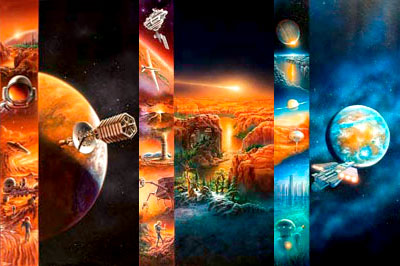


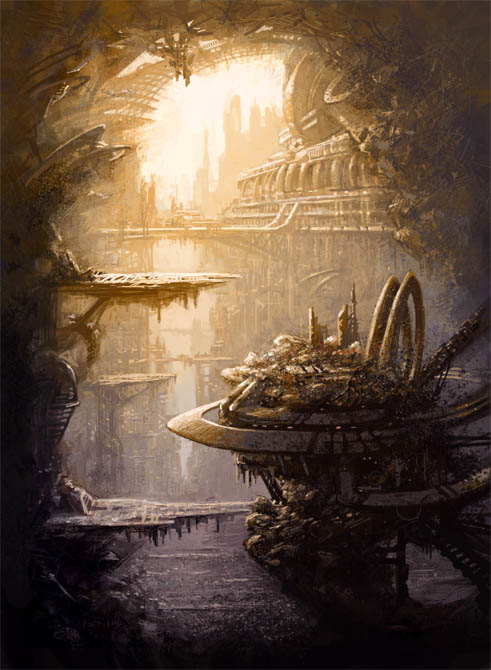

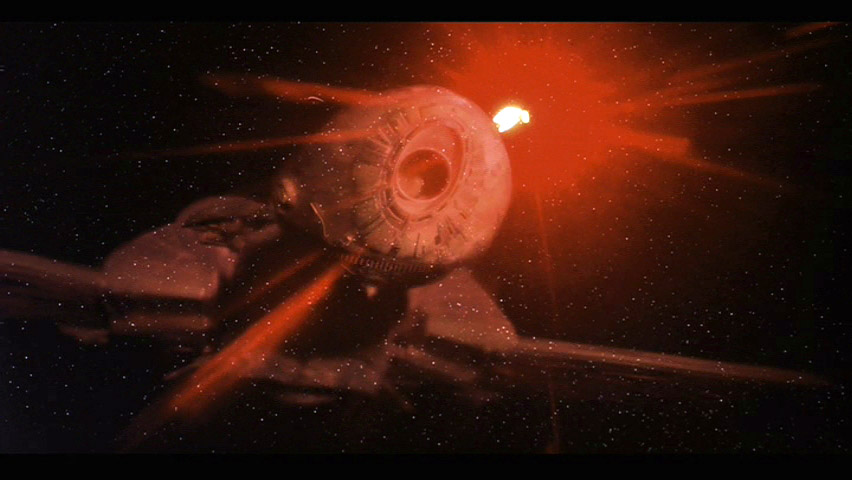
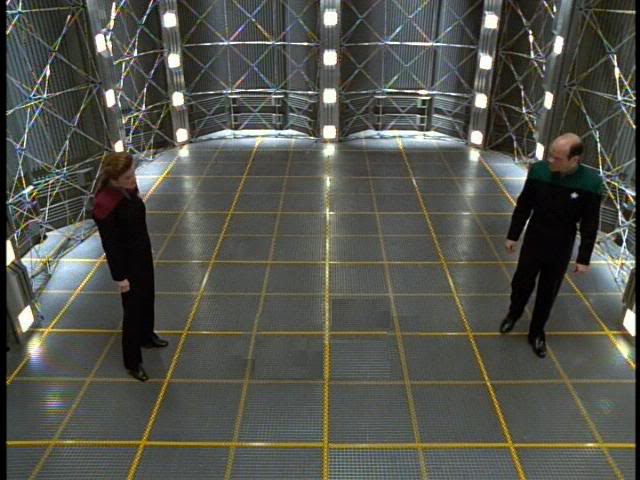




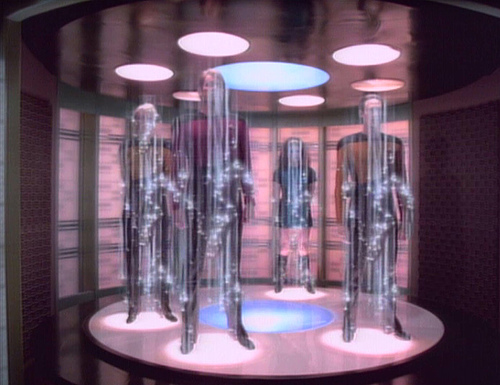




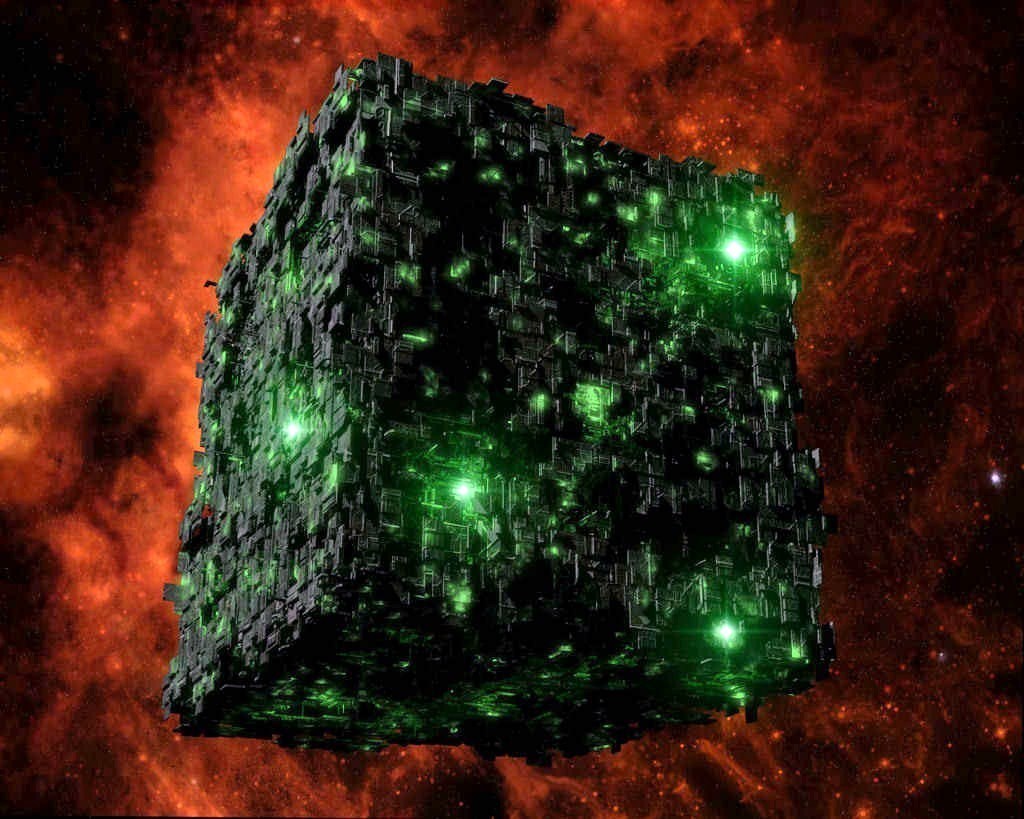


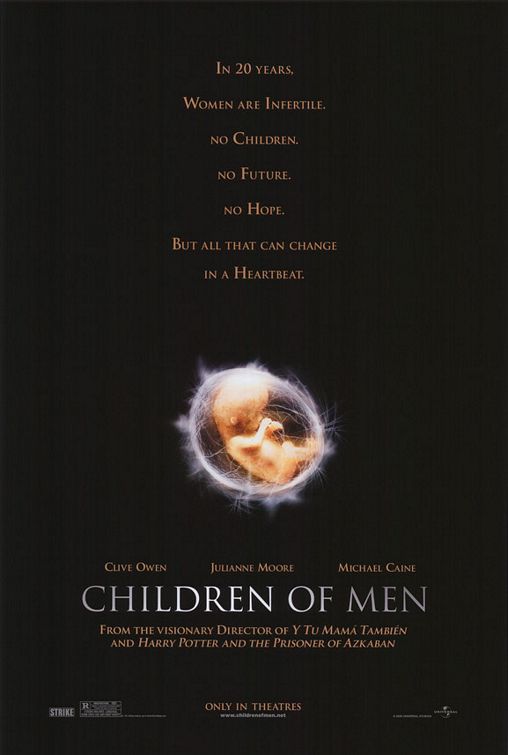
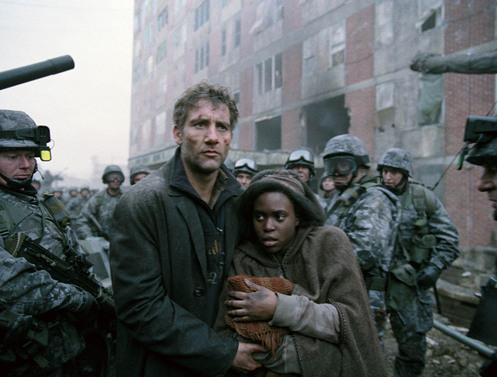





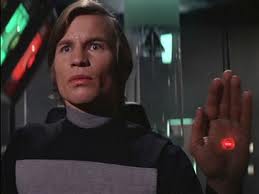


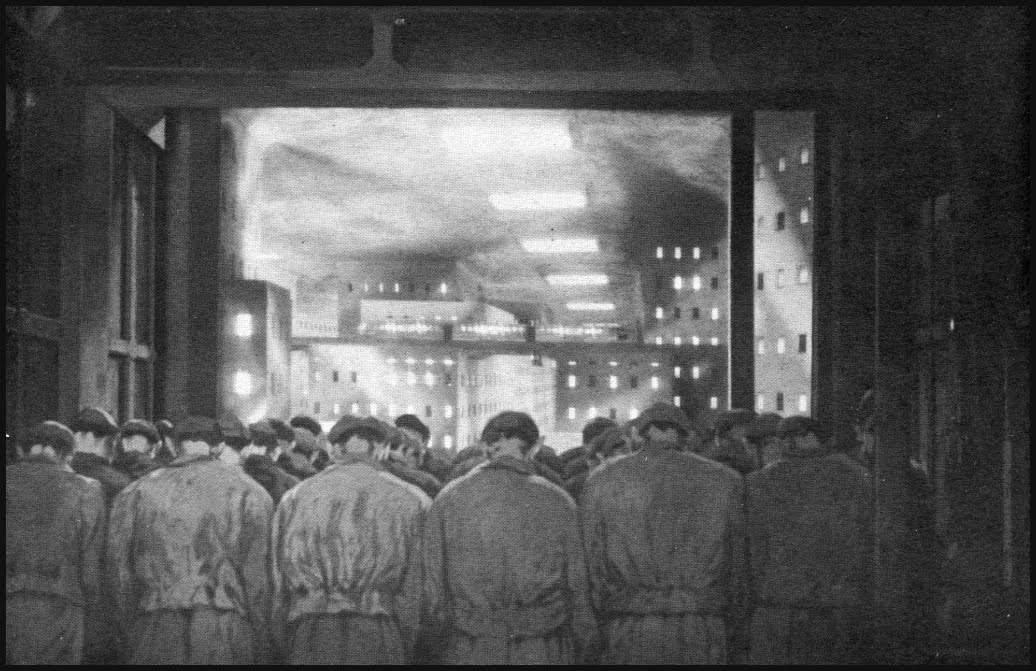
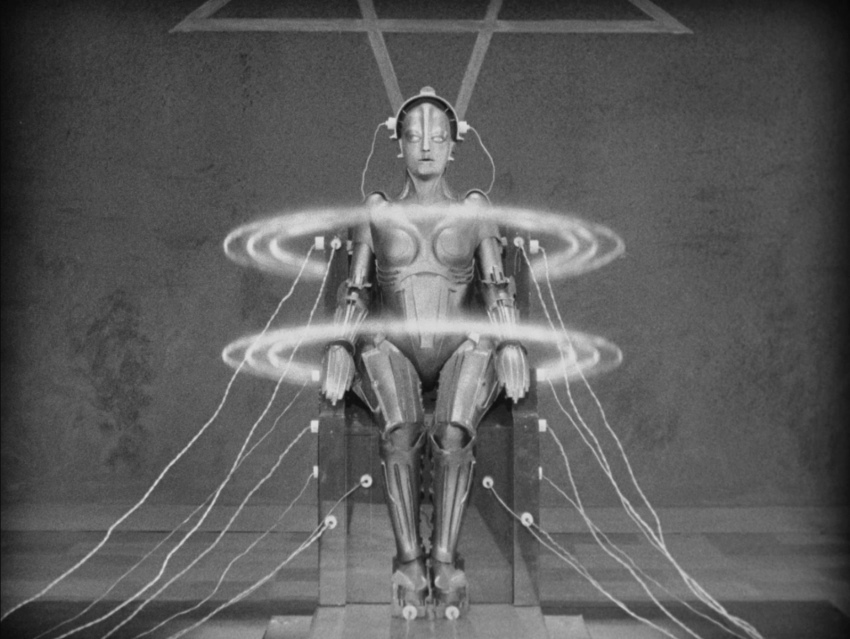


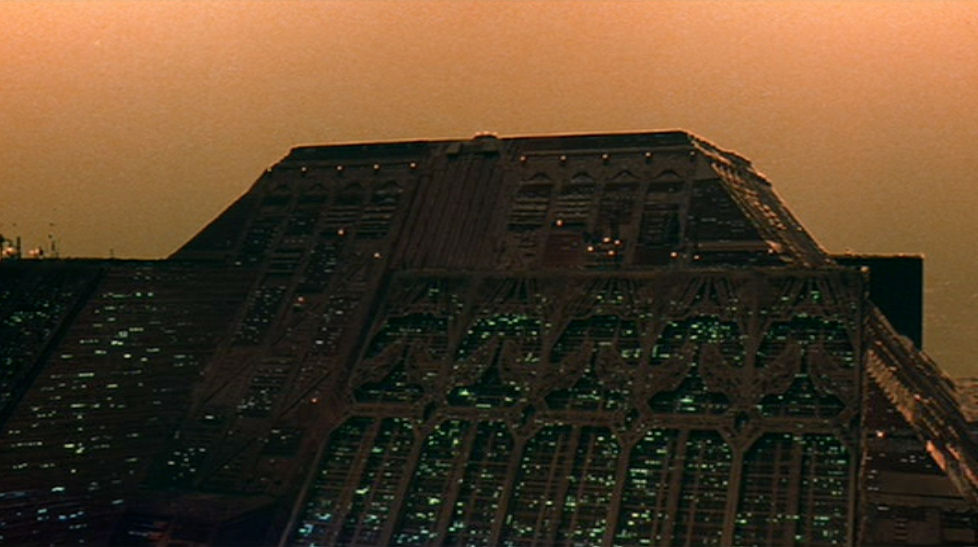
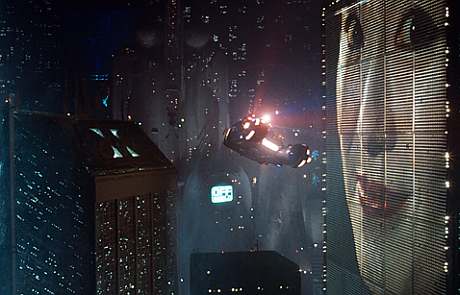


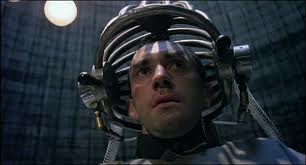


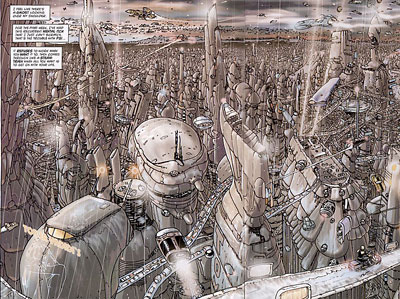
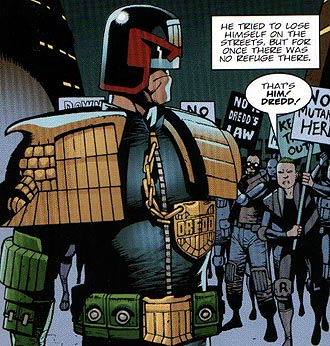

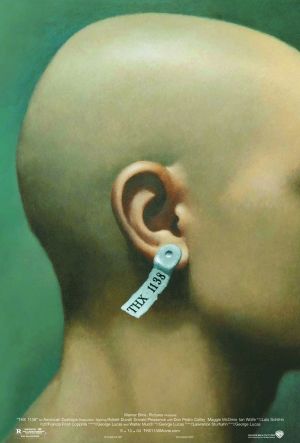

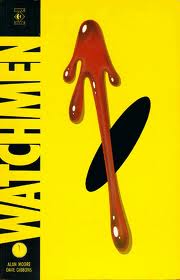


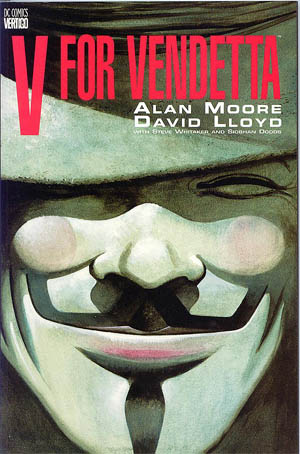


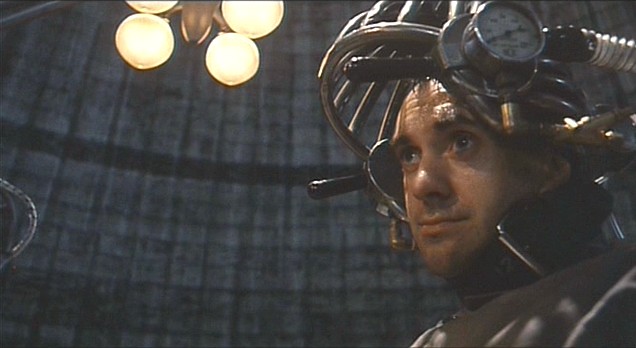

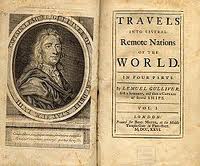
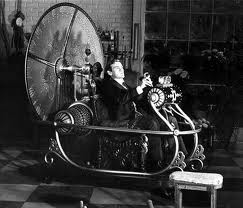




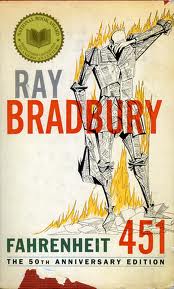


 Stories by Williams