Immortality Inc: Google’s “Calico”

calico-header-640x353Google has always been famous for investing in speculative ventures and future trends. Between their robot cars, Google Glass, the development of AI (the Google Brain), high-speed travel (the Hyperloop), and alternative energy, their seems to be no limit to what Musk and Page’s company will take on. And now, with Calico, Google has made the burgeoning industry of life-extension its business.

The newly formed company has set itself to “focus on health and well-being, in particular the challenge of aging and associated diseases.” Those were the words of Google co-founder Larry Page, who issued a two-part press release back in September. From this, it is known that Calico will focus on life extension and improvement. But in what way and with what business model, the company has yet to explain.

DNA-1What does seem clear at this point is that Art Levinson, the chairman of Apple and former CEO of Genentech (a pioneer in biotech) will be the one to head up this new venture. His history working his way from a research scientist on up to CEO of Genentech makes him the natural choice, since he will bring medical connections and credibility to a company that’s currently low on both.

Google Health, the company’s last foray into the health industry, was a failure for the company. This site, which began in 2008 and shut down in 2011, was a personal health information centralization service that allowed Google users to volunteer their health records. Once entered, the site would provide them with a merged health record, information on conditions, and possible interactions between drugs, conditions, and allergies.

Larry_PageIn addition, the reasons for the company’s venture into the realm of health and aging may have something to do with Larry Page’s own recent health concerns. For years, Page has struggled with vocal nerve strain, which led him to make a significant donation to research into the problem. But clearly, Calico aims to go beyond simple health problems and cures for known diseases.

google.cover.inddIn a comment to Time Magazine, Page stated that a cure for cancer would only extent the average human lifespan by 3 years. They want to think bigger than that, which could mean addressing the actual causes of aging, the molecular processes that break down cells. Given that Google Ventures included life extension technology as part of their recent bid to attract engineering students, Google’s top brass might have a slightly different idea.

And while this might all sound a bit farfetched, the concept of life-extension and even clinical immortality have been serious pursuits for some time. We tend to think of aging as a fact of life, something that is as inevitable as it is irreversible. However, a number of plausible scenarios have already been discussed that could slow or even end this process, ranging from genetic manipulation, nanotechnology, implant technology, and cellular therapy.

Fountain_of_Eternal_Life_cropWhether or not Calico will get into any of these fields remains to be seen. But keeping in mind that this is the company that has proposed setting aside land for no-hold barred experimentation and even talked about building a Space Elevator with a straight face. I wouldn’t be surprised if they started building cryogentic tanks and jars for preserving disembodies brains before long!

Source: extremetech.com, (2), content.time.com
The Future of Fusion: Milestone Hit Amidst Funding Fears

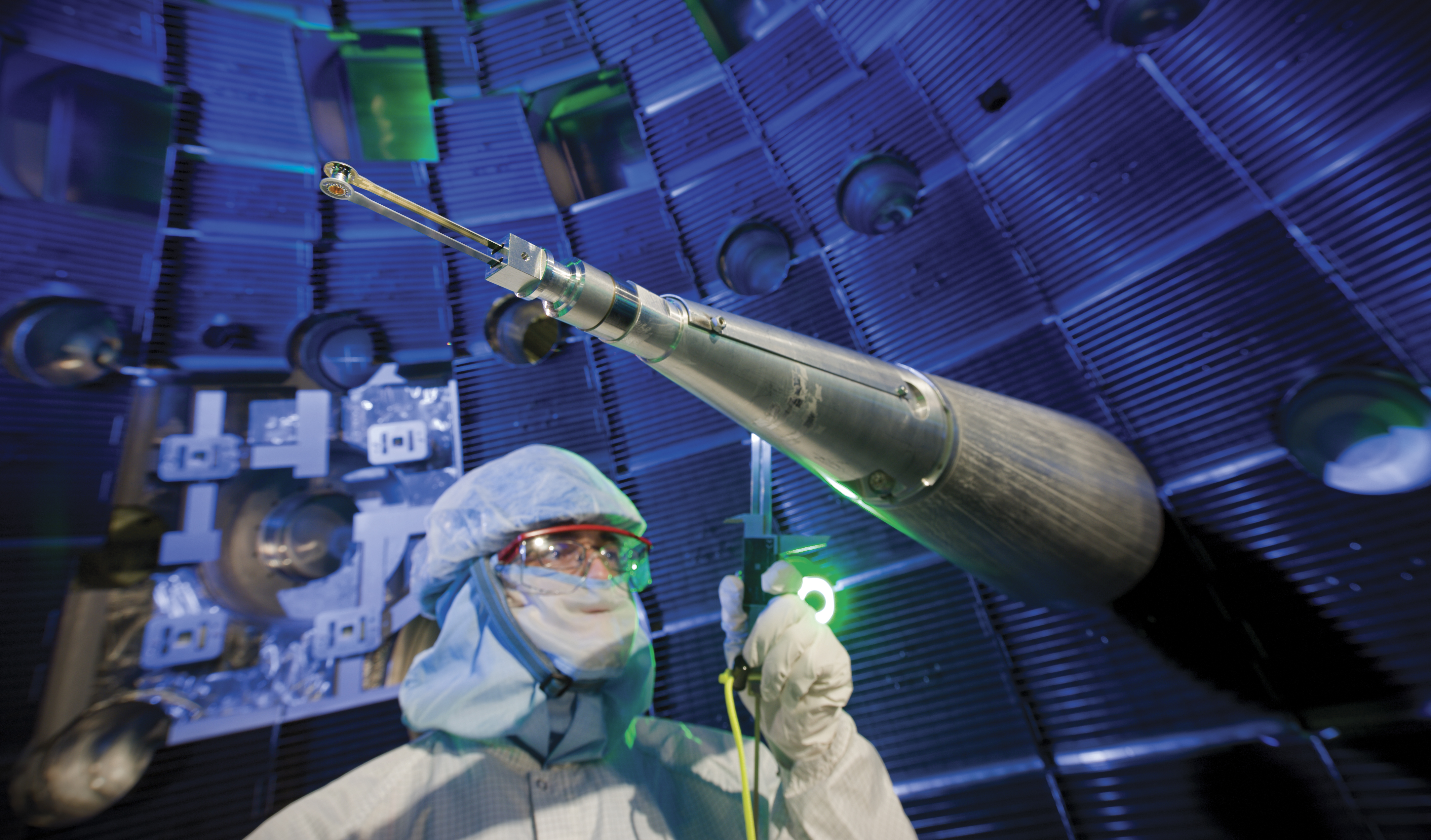
fusion_reactorThe National Ignition Facility (NIF) in Livermoore, California has made quite a bit of headlines lately. But when you’re goal is to harness fusion power – a clean, unlimited and cheap source of energy – that is abound to happen. For decades, the challenge of harnessing fusion has been to create a process that produces more energy than it consumes; a goal which has remained elusive.

However, a recent breakthrough at NIF has brought us all one step closer to viability. Apparently, the breakthrough happened in late September, where the amount of energy released through the latest controlled fusion reaction exceeded the amount of energy being absorbed by the fuel. This was the first time this had been achieved at any fusion facility anywhere in the world.

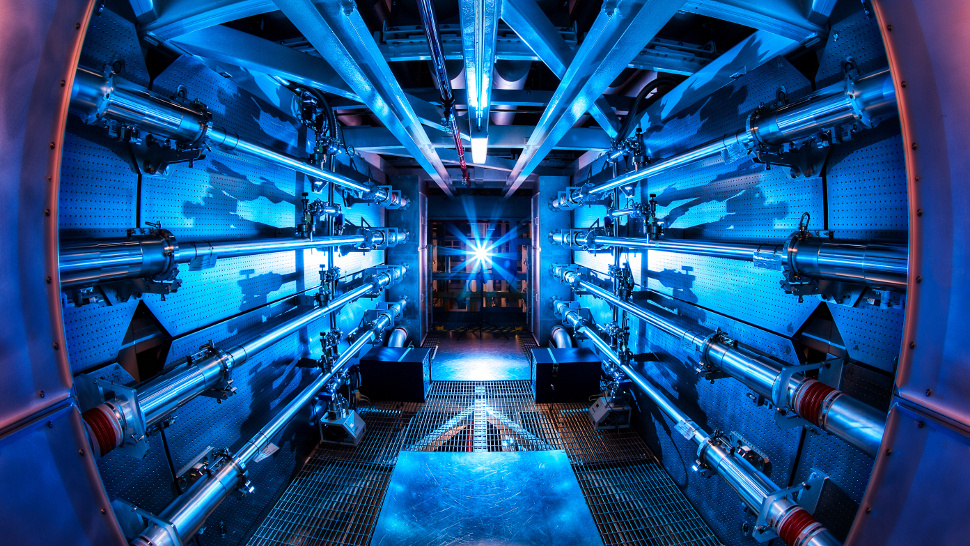
fusion_energyNIF, based at Livermore in California, uses 192 beams from the world’s most powerful laser to heat and compress a small pellet of hydrogen fuel to the point where nuclear fusion reactions take place. Viability, in this case, meant producing more energy from a fusion reaction than was consumed by the lasers themselves and any inefficiencies that cost power along the way.

As already noted, this breakthrough has been decades in the making. After nearly 50 years of experimentation and failure, the NIF announced in 2009 that its aim was to demonstrate nuclear fusion producing net energy by 30 September 2012. But unexpected technical problems ensured the deadline came and went; the fusion output was less than had originally been predicted by mathematical models.

NIF Livermore July 2008Soon after, the $3.5 billion facility shifted focus, cutting the amount of time spent on fusion versus nuclear weapons research – which was part of the lab’s original mission. However, the latest experiments showed that net energy  output is possible, which in turn will provide a welcome boost to ignition research at NIF as well as encouraging fusion research in general.

Despite this breakthrough, there are worries that the research will not be able to continue. Thanks to the government shutdown, federal funding for major research labs like the NIF is threatened. A suspension in funding can be just as harmful as it being cut off altogether, as delays at a crucial juncture can mean all progress will be lost.

NASA_coldfusionLuckily, the NIF is just one of several projects around the world aimed at harnessing fusion. They include the multi-billion-euro ITER facility, currently under construction in Cadarache, France. However, ITER will take a different approach to the laser-driven fusion, using magnetic fields to contain the hot fusion fuel – a concept known as magnetic confinement.

What’s more, NASA’s own research into cold fusion that relies on weak nuclear forces – as opposed to strong ones – is likely to continue, regardless of whether it meets the requirements for emergency exemption. And given that the prize of this research is a future where all our energy needs are provider for using a cheap, abundant, clean alternative, there is no way we’re stopping now!

Sources: bbc.co.uk, IO9.com

Winning Ideas: The Bodyheat Powered Flashlight!

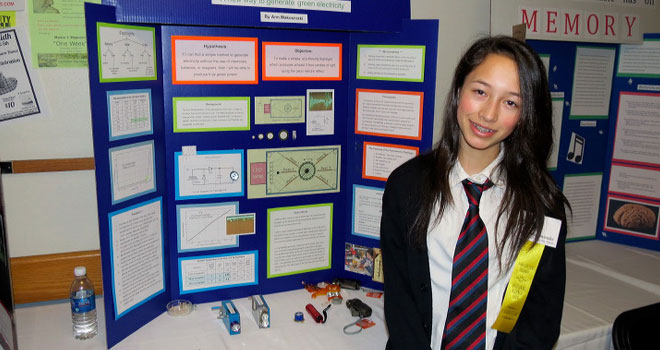
body_heat_flashlightEvery year, IT giant Google holds an online competition open to students aged 13-18 from around the globe to come up with new and challenging scientific ideas. And this year, one the winners just happens to hail from my hometown of Victoria, British Columbia. Her name is Ann Makosinki, a 15 year old high school student who invented a way to power a flashlight using only the warmth of your hand.

She claimed a trophy made of Lego for the 15-16 age category at an awards gala that was held on Monday, Sept. 23rd. Her prizes were a $25,000 scholarship and a “once-in-a-lifetime experience” from either CERN (the European Organization for Nuclear Research), LEGO or Google. Quite the impressive accomplishment for a 11th grader, but then again, Makosinki has been a scientist at heart ever since she was a little kid.

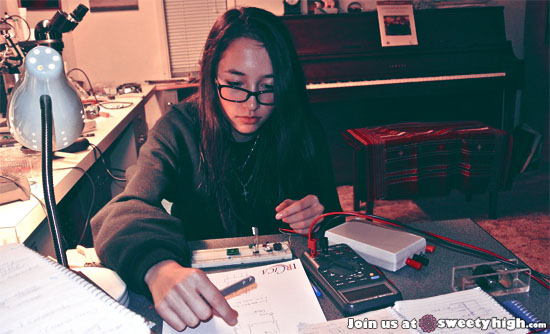
google-science-fair-winners-2013For starters, when other children were playing with toy cars and dolls, she busied herself with transistors and microcircuits. What’s more, by Grade 6, she began submitting projects to science fairs and began showing an interest in alternative energy. Still, Makosinki was surprised to be getting an award, given her competition. As she said:

I’m in shock, I’m in shock. It’s actually kind of embarrassing because I didn’t even change [before the awards ceremony]. I didn’t even comb my hair or anything. I must have looked like an absolute mess on stage because I didn’t expect to go up at all.

As for the invention itself, it is easy to see why she won. Basically, it is an LED flashlight that relies on the thermoelectric effect to generate electricity when held. This is done through a series of devices that are known as Peltier tiles, which produce electricity when heated on one side and cooled on the other. The tiles are fixed to the outside of the flashlight while the tube itself is hollow.

peltier-figure-9When held one side of the Peltier tiles are heated by the warmth of the person’s hand, air flowing through the hollow tube helps keep the other side cool. This combination of body heat and air cooling allows enough power to be generated to maintain a steady beam of light for 20 minutes. And all without the need for batteries and the resulting ewaste when they go dead.

Makosinki came up with the idea while researching different forms of alternative energy a few years ago. Already, she had experimented with Peltier tiles for her Grade 7 science fair project. While researching her project, she thought of them again as a way to potentially capture the thermal energy produced by the human body. After doing some calculations, she found that the amount of energy produced by a person’s hand was theoretically sufficient to power an LED light.

ann_makosinksiHowever, putting it into practice proved somewhat more difficult. After buying some Peltier tiles on eBay, she tested them and found that while they generated more than enough power, the voltage produced was only a fraction of what she needed. She rectified this problem after doing some further research, where she discovered that the addition of transformers could be used to boost the voltage.

She spent months doing research on the internet, experimenting with different circuits and even building her own transformers, which still didn’t provide enough voltage. In the end, she came across an article on the web about energy harvesting that suggested an affordable circuit that would provide the voltage she needed when used with a recommended transformer. Finally, the circuit worked.

ann_makosinksi1Makosinski admitted there were points in the experiment when she thought it would never work. But as she said:

You just kind of have to keep going. This took quite awhile ’cause I had to do it during the school year as well and I had homework, plays, whatever that I was also doing.

After making it to the Google Science Fair, she and her colleagues spent the day presenting at Google’s headquarters in Mountain View, California. Here, the 15 judges – which included scientists from a variety of fields, science journalists, an astronaut, and a former Google Science Fair winner – witnessed their creations and tried to determine which held the most promise.

The other winners included Viney Kumar, an Australia student who captured the 13-14 age category for an Android app that warns drivers of an approaching emergency vehicle more than a minute in advance, in order to help clear a path for it. And then there was Elif Bilgin of Turkey, a 16-year old who took home the Scientific American Science in Action Prize and the Voter’s Choice Award for inventing a way to make plastic from banana peels.

Ann-Makosinski-Google-Science-Fair-2The Grand Prize for the 17-18 age category went to Eric Chen, a 17 year old student from San Diego who is researching a new kind of anti-flu medicine using a combination of computer modelling and biological studies. He received the top prize of a $50,000 scholarship and a 10-day trip to the Galapagos Islands.

Alas, Makosinki felt the best part of the competition was getting to meet the other finalists in person at last.

It’s just so inspiring to see other people who are kind of like me and kind of want to make a difference in the community not just by talking about it but by actually doing stuff.

What’s next for the young inventor? Personally, I hope Makosinki and her fellow prize winners will be forming their own research group and looking for new and exciting ways to come up with renewable energy, recycling, vaccinations, and electronics. What do you think Makonsinky, Kumar, Bilgin, Chen? That’s what Andraka and his fellow finalists did after winning ISEF 2012, and they seem to be doing pretty good. So… hintedy, hint hint!

And be sure to enjoy this video of Ann Makosinki showing off her invention, courtesy of Technexo:


Sources:
cbc.ca, (2), gizmag.com, technexo.com, huffingtonpost.ca

Powered By The Sun: Visualizing Swanson’s Law

solar_power1For decades, solar power has been dogged by two undeniable problems that have prevented it from replacing fossil fuels as our primary means of energy. The first has to do the cost of producing and installing solar cells, which until recently remained punitively. The second has to do with efficiency, in that conventional photovoltaic cells remained inefficient as far as most cost per watt analyses went. But thanks to a series of developments, solar power has been beating the odds on both fronts and coming down in price.

However, to most people, it was unclear exactly how far it had come down in price. And thanks to a story recently published in The Economist, which comes complete with a helpful infographic, we are now able to see firsthand the progress that’s been made. To call it astounding would be an understatement; and for the keen observer, a certain pattern is certainly discernible.

PPTMooresLawaiIt’s known as the “Swanson Effect” (or Swanson’s Law), a theory that suggests that the cost of the photovoltaic cells needed to generate solar power falls by 20% with each doubling of global manufacturing capacity. Named after Richard Swanson, the founder of the major American solar-cell manufacturer named SunPower, this law is basically an imitation of Moore’s Law, which states that every 18 months or so, the size of transistors (and also their cost) halves.

What this means, in effect, is that in solar-rich areas of the world, solar power can now compete with gas and coal without the need for clean energy subsidies. As it stands, solar energy still accounts for only  a quarter of a percent of the planet’s electricity needs. But when you consider that this represents a 86% increase over last year and prices shall continue to drop, you begin to see a very trend in the making.

What this really means is that within a few decades time, alternative energy won’t be so alternative anymore. Alongside such growth made in wind power, tidal harnesses, and piezoelectric bacterias and kinetic energy generators, fossil fuels, natural gas and coal will soon be the “alternatives” to cheap, abundant and renewable energy. Combined with advances being made in carbon capture and electric/hydrogen fuel cell technology, perhaps all will arrive in time to stave off environmental collapse!

Check out the infographic below and let the good news of the “Swanson Effect” inspire you!:

swanson_effectSource: theeconomist.com

Towards a Cleaner Future: The Molten Salt Reactor

nuclear-power

What if you heard that there was such a thing as a 500 Megawatt reactor that was clean, safe, cheap, and made to order? Well, considering that 500 MWs is the close to the annual output of a dirty coal power station, you might think it sounded too good to be true. But that’s the nature of technological innovations and revolutions, which the nuclear industry has been in dire need of in recent years.

While it is true that the widespread use of nuclear energy could see to humanity’s needs through to the indefinite future, the cost of assembling and maintaining so many facilities is highly prohibitive. What’s more, in the wake of the Fukushima disaster, nuclear power has suffered a severe image problem, spurred on by lobbyists from other industries who insist that their products are safer and cheaper to maintain, and not prone to meltdowns!

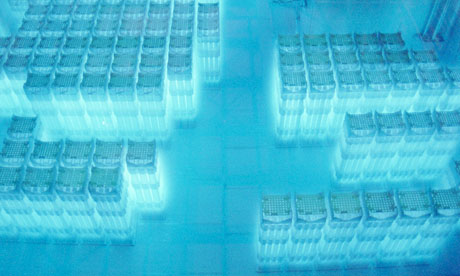
Nuclear MOX plant : recycling nuclear waste : Submerged Spent Fuel Elements with Blue Glow

As a result of all this, the stage now seems set for a major breakthrough, and researchers at MIT and Transatomic’s own Russ Wilcox seems to be stepping up to provide it. Last year, Wilcox said in an interview with Forbes that it was “a fabulous time to do a leapfrog move”. Sounded like a bold statement at the time, but recently, Transatomic went a step further and claimed it was mobilizing its capital to make the leap happen.

Basically, the plan calls for the creation of a new breed of nuclear reactor, one which is miniaturized and still produces a significant amount of mega-wattage. Such efforts have been mounted in the past, mainly in response to the fact that scaling reactors upwards has never resulted in increased production. In each case, however, the resulting output was quite small, usually on the order of 200 MW.

???????????????????????????????

Enter into this the Transatomic’s Molten Salt Reactor (MSR), a design that is capable of producing half the power of a large-scale reactor, but in a much smaller package. In addition, MSRs possess a number of advantages, not the least of which are safety and cost. For starters, they rely on coolants like flouride or chloride salts instead of light or heavy water, which negates the need to pressurize the system and instantly reduces the dangers associated with super-heated, pressurized liquids.

What’s more, having the fuel-coolant mixture at a reasonable pressure also allows the mixture to expand, which ensures that if overheating does take place, the medium will simply expand to the point that the fuel atoms too far apart to continue a nuclear reaction. This is what is called a “passive safety system”, one that kicks in automatically and does not require a full-scale shutdown in the event that something goes wrong.

moltensalt_reactor1

Last, but not least, is the addition of the so-called freeze plug – an actively cooled barrier that melts in the event of a power failure, leading all nuclear material to automatically drain into a reinforced holding tank. These reactors are “walk away safe,” meaning that in the event of a power failure, accident, or general strike, the worst that could happen is a loss of service. In a post-Fukushima industry such disaster-proof measures simply must be the future of nuclear power.

Then, there is the costs factor. Transatomic claims their reactor will be capable of pumping out 500 megawatts for a total initial cost of about $1.7 billion, compared to 1000 megawatts for an estimated $7 billion. That’s about half the cost per megawatt, and the new reactor would also be small enough to be built in a central factory and then shipped to its destination, rather than requiring a multi-year construction project to build the plant and reactor on site.

The project has raised $1 million dollars of investment so far, and Transatomic appears to be putting all their eggs in this one basket. Their researchers also claim their design is production-ready and they are just waiting for orders to come in. And given the current energy crisis, it’s not likely to be long before government and industry comes knocking!

Source: Extremetech.com

Powered by the Sun: The Artificial Leaf

solar_power1Despite progress made in recent decades, solar power still has some obstacles to overcome before it can be completely adopted. Thanks to several innovations, the price of manufacturing and installing solar panels has dropped substantially, intermittency remains a problem. So long as solar power remains limited by both geography and weather, we can expect to remain limited in terms of use.

And short of building Space-Based Solar Power (SBSP) arrays, or producing super-capacitor batteries with graphene – both of which are being explored – the only other option is to find ways to turn solar power into other forms of usable fuel. When the sun isn’t shining, people will need something else to power their homes, appliances, heating and AC. And given that the point is to reduce pollution, it will also have to be clean.

??????And that’s precisely what Daniel Nocera and his team are doing over at the University of Harvard. Their “artificial leaf” – a piece of silicon (solar cell) coated with two catalysts – is a means of turning sunshine into hydrogen fuel. Basically, when sunlight shines in, the leaf splits the water into bubbles of hydrogen and oxygen on each side, which can then be used in a fuel cell.

Efforts in the past to build similar solar cells have faltered, due largely to the costs involved. However, with the price of solar-related materials dropping in recent years, this latest device may prove commercially viable. And built to a larger scale, the device could provide a super-cheap and storable energy source from which could then be piped off and used in a fuel cell to make electricity. And combined with arrays of solar panels, we could have the energy crisis licked!

artificial-leafNocera and his team first announced the technology back in 2011, back when he was still a chemist at MIT. Since that time, they have published a follow-up paper showing how the team has improved the leaf’s efficiency, laying out future challenges, and how these might be overcome. Foremost amongst these are a field trial, with the eventual aim of building a commercial device for the developing world.

Beyond that, Nocera hopes to commercialize the technology through his company, the Massachusetts-based Sun Catalytix. Once realized, he plans to to put his dream of giving the poor “their first 100 watts of energy” into action. Here’s hoping he succeeds. The poor need power, and the environment needs a break from all our polluting!

Thank you all for reading the latest installment of PBTS! And be sure to check out this video of the artificial leaf in action: