
 For years, I have been pondering how the information age has affected society, particularly with regards to politics and social change. Many would argue that it has simply amplified the tendencies Neil Postman spoke of in Amusing Ourselves to Death, where the truth would drowned in a sea of irrelevance and mindless entertainment would keep us pacified and inert. However, others, including myself, have been the type to notice how access to information and the ability to connect the world over has helped activists and reform movements mobilize and overcome, in ways that might have been impossible in previous ages.
And Idle No More, a new reform movement here in Canada that seeks to address injustice the status of Canada’s First Nations, is a perfect example. Initially, it was a small but committed protest movements that had emerged in response to our current government and the Omnibus Bill C-45 that was passed back in 2011. But in just a few short months, thanks largely to social media, it has become a nation-wide phenomena joining countless groups and encompassing many outstanding issues, not the least of which are matters of Native sovereignty and the enduring and outdated government document known as the “Indian Act”.
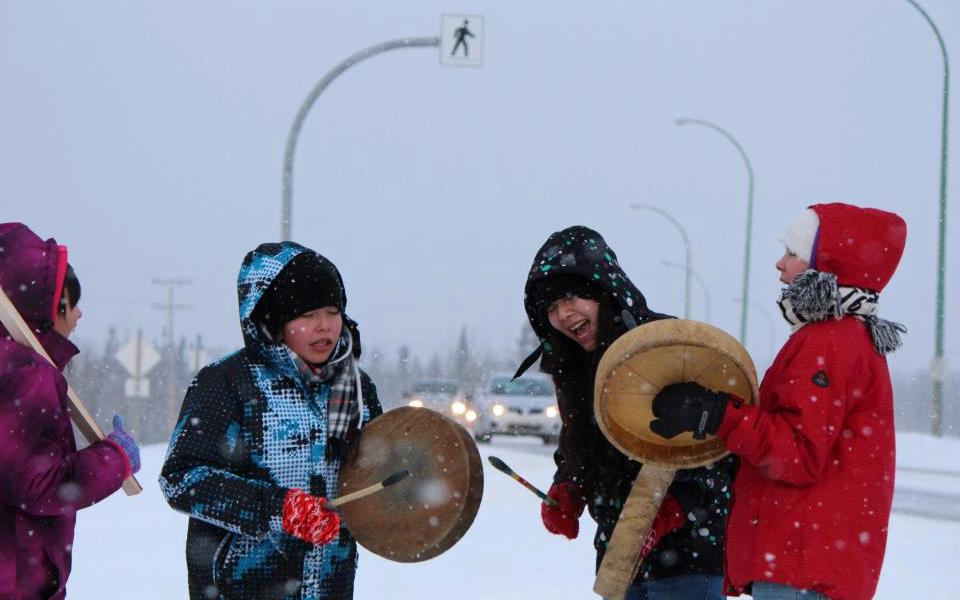 The movement officially began in November of 2012 as a series of teach-ins by activists Nina Wilson, Sheelah Mclean, Sylvia McAdam and Jessica Gordon in Saskatoon. This led to a series of teach-ins, rallies and protests that were planned by the founders in a National Day Of Action on Dec. 10th, which coincided with Amnesty Internationals Human Rights Day and similar protests already underway in British Columbia over the Northern Gateway and Pacific Trails pipelines – two other issues effecting First Nations, but which are being pushed ahead by the Conservative Government.
At about the same time, Chief Theresa Spence, leader of the Attawapiskat Nation, announced that she was going on a hunger strike (limiting herself to water and broth) until Prime Minister Stephen Harper agreed to a meeting to discuss these and other issues relating to First Nations. Idle No More timed its protests with her announcement and declared their support for her cause. And of course, Facebook became the principal means of coordinating and connecting people all over the country.
In addition to the many changes to the Indian Act that Bill C-45 contained, specifically with regards to land held by First Nations People, Idle No More’s grievances extend to the following government bills. These and other acts initiated by the Conservatives and other governments weaken environmental protection laws, effect Canada’s waterways (many of which pass through First Nations territory and are intrinsic to the health and well being of the communities), and are believed to have a negative impact on native people and native sovereignty:
- Bill C-38 (Budget Omnibus Bill #1)
- Bill C-45 (Budget Omnibus Bill #2)
- Bill C-27 First Nations Financial Transparency Act
- Bill S-2 Family Homes on Reserve and Matrimonial Interests or Right Act
- Bill S-6 First Nations Elections Act
- Bill S-8 Safe Drinking Water for First Nations
- Bill C-428 Indian Act Amendment and Replacement Act
- Bill S-207 An Act to amend the Interpretation Act
- Bill S-212 First Nations Self-Government Recognition Bill
- “First Nations” Private Ownership Act
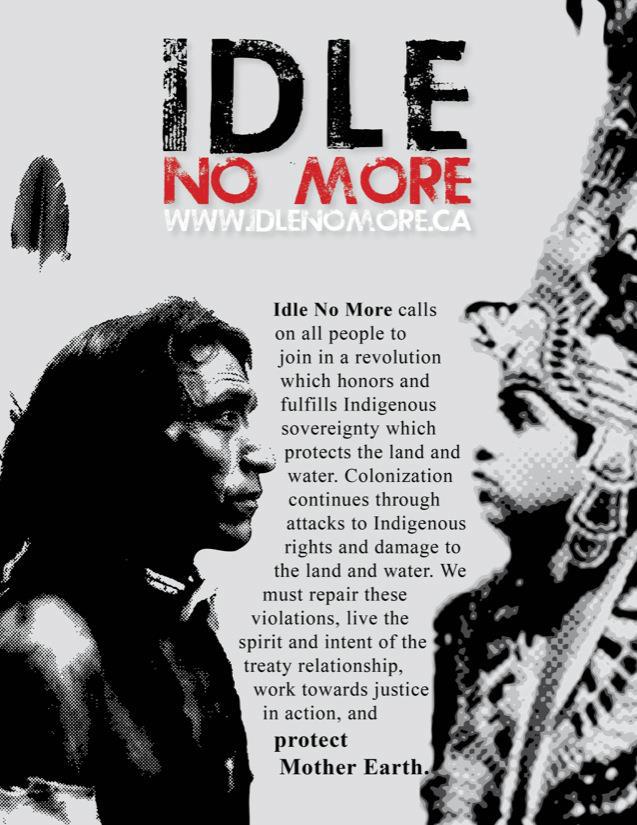 Taken together, they are seen as part of a larger agenda on behalf of the Harper government to run rough-shod over environmental and First Nation interests, to ignore the harm caused by the implementation of one or many economic projects, and to streamline the legal process to make it easier for them to push their projects through. On top of that, they seek to redress hundreds of years of abuse, neglect and genocide that remain a stumbling block to a healthy relationship between the Canadian government and its First Nation people, and an embarrassment to the world.
Naturally, the Harper government was intransigent about having a meeting, but finally agreed when it became clear that Spence meant business and the Assembly of First Nations, Canada’s many Aboriginal peoples, and a hell of a lot of its non-Aboriginal citizens (myself included) stood in solidarity with Spence. As of January 2013, his government and the Govern General of Canada both agreed to hold a meeting to discuss all outstanding issues.
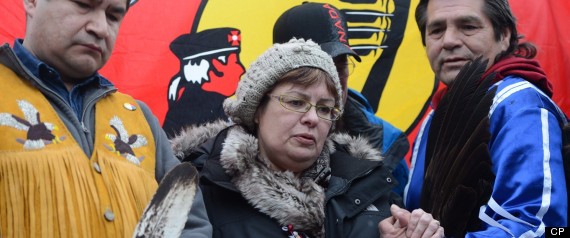 To many, this is a hard-won victory, even though the greatest battles may be yet to come. And as far as I am concerned, it is demonstration of what social media and the internet can do when used for positive political change. Much like the Arab Spring, the Wisconsin Protests, and the 2008 and 2012 elections, having the means to connect with people far and wide and share in a common goal, all the while circumventing traditional media and official procedures, may mean the difference between victory and defeat.
As we all know, sometimes it’s necessary to “wag the dog” when the system fails. More and more, we see this happening today and it gives me hope. If people the world over can rise up and bring an end to ongoing abuse and oppression, then it demonstrates that we might actually be moving towards this thing called a global community after all, and one that is united in its commitment to human rights and social justice, not just a globalized economy and cheap electronics!
You go Spence! Give Harper and his cronies hell, and don’t let them give you any crap either! Chances are, they won’t be in office much longer. Oh, how I hope and pray…
 Source: CBC.ca, Huffington Post.ca, Facebook, idlenomore.ca
 Stories by Williams