The Future is Here: The AR Bike Helmet

AR_helmetAR displays are becoming all the rage, thanks in no small part to Google Glass and other display glasses. And given the demand and appeal of the technology, it seemed like only a matter of time before AR displays began providing real-time navigation for vehicles. For decades, visor-mounted heads-up displays have been available, but fully-integrated displays have yet to have been produced.

Live Helmet is one such concept, a helmet that superimposes information and directions into a bike-helmet visor. Based in Moscow, this startup seeks to combine a head-mounted display, built-in navigation, and Siri-like voice recognition. The helmet will have a translucent, color display that’s projected on the visor in the center of the field of vision, and a custom user interface, English language-only at launch, based on Android.

AR_helmet1This augmented reality helmet display includes a light sensor for adjusting image brightness according to external light conditions, as well as an accelerometer, gyroscope, and digital compass for tracking head movements. Naturally, the company anticipated that concerns about driver safety would come up, hence numerous safety features which they’ve included.

For one, the digital helmet is cleverly programmed to display maps only when the rider’s speed is close to zero to avoid distracting them at high speeds. And for the sake of hands-free control, it comes equipped with a series of voice commands for navigation and referencing points of interest. No texting and driving with this thing!

ar_helmet4So far, the company has so far built some prototype hardware and software for the helmet with the help of grants from the Russian government, and is also seeking venture capital. However, they have found little within their home country, and have been forced to crowdfund via an Indiegogo campaign. As CEO, Andrew Artishchev, wrote on LiveMap’s Indiegogo page:

Russian venture funds are not disposed to invest into hardware startups. They prefer to back up clones of successful services like Groupon, Airnb, Zappos, Yelp, Booking, etc. They are not interested in producing hardware either.

All told, they are seeking to raise $150,000 to make press molds for the helmet capsule. At present, they have raised $5,989 with 31 days remaining. Naturally, prizes have been offered, ranging from thank yous and a poster (for donations of $1 to $25) to a test drive in a major city (Berlin, Paris, Rome, Moscow, Barcelona) for $100, and a grand prize of a helmet itself for a donation of $1500.

ar_helmet3And of course, the company has announced that they have some “Stretched Goals”, just in case people want to help them overshoot their mandate of $150,000. For 300 000$, they will include a Bluetooth with a headset profile to their helmet, and for 500 000$, they will merge a built-in high-resolution 13Mpix photo&video camera. Good to have goals.

Personally, I’d help sponsor this, except for the fact that I don’t have motorbike and wouldn’t know how to use it if I did. But a long drive across the autobahn or the Amber Route would be totally boss! Speaking of which, check out the company’s promotional video:

Sources: news.cnet.com, indiegogo.com

2013, As Imagined By 1988

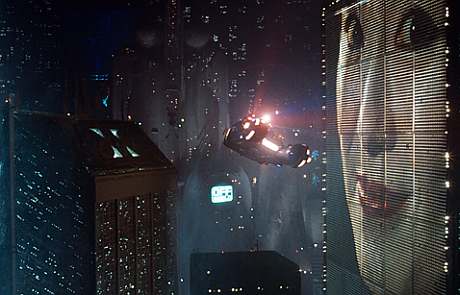
bladerunnerTwenty-five years ago, Los Angeles magazine envisioned what the world would look like in the current decade. And unlike Blade Runner, they avoided the cool but standard science fiction allegories – like massive billboards, flying cars and sentient robots – and went straight for the things that seemed entirely possible by contemporary standards.

The cover story of the magazine’s April 3, 1988 edition showed a futuristic downtown L.A. crisscrossed with electrically charged, multi-tiered freeways permeated by self-driving cars. The article itself then imagined a day in the life of the fictional Morrow family of the L.A. suburb Granada Hills, as “profiled” by the magazine in 2013 by science fiction writer Nicole Yorkin.

LAtimes_2013aIronically, the magazine did not envision that it would one day go out of business, or that print media would one day be lurching towards extinction. Nevertheless, the fictional article and the world it detailed were interesting reading. Little wonder then why, earlier this month, the LA Times along with an engineering class at USC, revisited the archives to assess what it predicted correctly versus incorrectly.

Together, pro­fess­or Jerry Lock­en­our and his class made a list of the hits and misses, and what they found paints a very interesting picture of how we predict the future and how its realization so often differs from what we expect. Of the major predictions to be found in LA of the 2013, as well as in the lives of the Morrow family (get it?), here is what they got right:

Smart-Houses:
smart-house_vCe6I_25016In the article, the Morrows are said to begin every morning when their “Smart House” automatically turns on. This consists of all the appliances activating and preparing them breakfast, and no doubt turning on all the environmental controls and opening the shades to get the temperature and ambient lighting just right.

While this isn’t the norm for the American family yet, the past few years have proved a turning point for home devices hooking up with the Internet, to become more programmable and serve our daily needs. And plans are well under way to find a means of networking them all together so they function as one “smart” unit.

Self-Driving Cars:
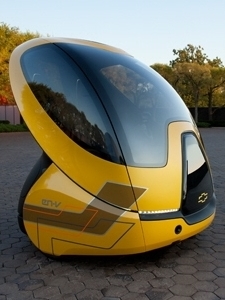
chevy_env_croppedThe writers of the article predicted that by 2013, cars would come standard with computers that control most of the settings, along with GPS systems for navigation. They also predict self-driving cars, which Google and Chevy are busy working on. In addition to using clean, alternative energy sources, these cars are expected to be able t0 self-drive, much in the same way a pilot puts their plane on auto-pilot. Drivers will also be able to summon the cars to their location, connect wirelessly to the internet, and download apps and updates to keep their software current.

But of course, they got a few things wrong as well. Here they are, the blots on their predictive record:

Homeprinted newspapers:
news_appThe article also predicts that each morning the Morrows would begin their day with a freshly printed newspaper, as rendered by their laser-jet printer. These would be tailor-made, automatically selecting the latest news feeds that would be of most interest to them. What this failed to anticipate was the rise in e-media and the decline of printed media, though hardly anyone would fault them for this. While news has certainly gotten more personal, the use of tablets, ereaders and smartphones is the way the majority of people now read their selected news.

Robot servants and pets:
kenshiro_smallIn what must have seemed like a realistic prediction, but which now comes across as a sci-fi cliche, the Morrows’ home was also supposed to come equipped with a robotic servant that had a southern accent. The family’s son was also greeted every morning by a robot dog that would come to play with him. While we are certainly not there yet, the concept of anthropomorphic robot assistants is becoming more real every day. Consider, for example, the Kenshiro robot (pictured at right), the 3D printed android, or the proposed Roboy, the Swiss-made robotic child. With all of these in the works, a robotic servant or pet doesn’t seem so far-fetched does it?

Summary:
Between these four major predictions and which came to be true, we can see that the future is not such an easy thing to predict. In addition to always being in motion, and subject to acceleration, slowing and sudden changes, the size and shape of it can be very difficult to pin down. No one can say for sure what will be realized and when, or if any of the things we currently take for granted will even be here tomorrow.

Alpha Moon Base at http://www.smallartworks.ca

For instance, during the 1960’s and 70’s, it was common practice for futurists and scientists to anticipate that the space race, which had culminated with humans setting foot on the moon in 1969, would continue into the future, and that humanity would be seeing manned outposts on the moon by and commercial space flight by 1999. No one at the time could foresee that a more restrictive budget environment, plus numerous disasters and a thawing of the Cold War, would slow things down in that respect.

In addition, most predictions that took place before the 1980’s completely failed to predict the massive revolution caused by miniaturization and the explosion in digital technology. Many futurist outlooks at the time predicted the rise in AI, but took it for granted that computers would still be the size of a desk and require entire rooms dedicated to their processors. The idea of a computer that could fit on top of a desk, let alone on your lap or in the palm of your hand, must have seemed farfetched.

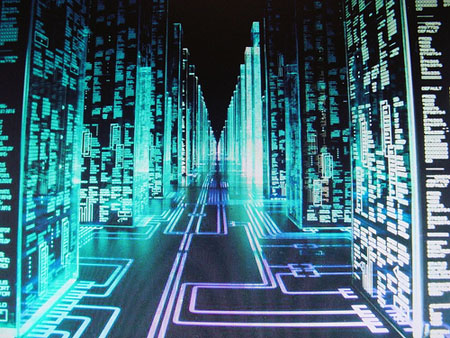
CyberspaceWhat’s more, few could predict the rise of the internet before the late 1980’s, or what the realization of “cyberspace” would even look like. Whereas writer’s like William Gibson not only predicted but coined the term, he and others seemed to think that interfacing with it would be a matter of cool neon-graphics and avatars, not the clean, page and site sort of interface which it came to be.

And even he failed to predict the rise of such things as email, online shopping, social media and the million other ways the internet is tailored to suit the average person and their daily needs. When it comes right down to it, it is not a dangerous domain permeated by freelance hacker “jockeys” and mega-corporations with their hostile counter-intrusion viruses (aka. Black ICE). Nor is it the social utopia promoting open dialogue and learning that men like Bill Gates and Al Gore predicted it would be in the 1990’s. If anything, it is an libertarian economic and social forum that is more democratic and anarchistic than anyone could have ever predicted.

But of course, that’s just one of many predictions that came about that altered how we see things to come. As a whole, the entire thing has come to be known for being full of shocks and surprises, as well as some familiar faces. In short, the future is an open sea, and there’s no telling which way the winds will blow, or what ships will make it to port ahead of others. All we can do is wait and see, and hopefully trust in our abilities to make good decisions along the way. And of course, the occasional retrospective and issue congratulations for the things we managed to get right doesn’t hurt either!

Sources: factcoexist.com, LATimes.com

3D Printed Androids, Embryonic Stem Cells, and Lunar Housing

Alpha Moon Base at http://www.smallartworks.ca

It’s no secret that in recent years, the technology behind 3D printing has been growing by leaps and bounds, and igniting a lot of imaginations in the process. And it seems that with every passing day, new possibilities are emerging, both real and speculative. Some are interesting, some are frightening, and some are just downright mind-blowing. Consider this small sampling of what’s emerged most recently and decide for yourself…

First off, it now seems that there is a design for an android that you can download, print and assemble in the comfort of your home – assuming you have access to a 3D printer. Designer Gael Langevin, who calls his project InMoov, has spent the last year perfecting the concept for a voice-controlled android that can be constructed from parts generated by a 3D printer. And not only that, he has made the entire project freely available via open source so that any DIY’er can print it on their own.

Starting with the android’s right hand, Langevin’s idea quickly took off and morphed into a the full-body concept that is now available. Designing the bot with Blender software and printing it on a 3D Touch using ABS plastic as the material, the end product is a fully animated machine that responds to voice control and can “see” and hold objects. And as you can see from the video below, it looks quite anthropomorphic:

Then came the announcement of something even more radical which also sounds like it might be ripped from the pages of a science fiction novel. Just yesterday, a team of researchers at Heriot-Watt University in Scotland announced that they used a new printing technique to deposit live stem cells onto a surface in a specific pattern. This is a step in the direction of using stem cells as an “ink” to fashion artificial organs from a 3D printer, which is their ultimate goal.

3dstemcellsThe process involves suspending the cells in a “bio-ink,” which they were then able to squeeze out as tiny droplets in a variety of shapes and sizes. To produce clumps of cells, they printed out the cells first and then overlaid those with cell-free bio-ink, forming spheroids, which the cells began grouping together inside. Using this process, they were able to create entire cultures of tissue which – depending on the size of the spheroids – could be morphed into specific types of tissue.

In short, this technique could one day be used to print out artificial tissues, such as skin, muscles and organs, that behave like the real thing. It could even serve to limit animal testing for new drug compounds, allowing them to be tested on artificially-generated human tissue. According to Jason King, business development manager at Roslin Cellab and one of the research partners: “In the longer term, [it could] provide organs for transplant on demand, without the need for donation and without the problems of immune suppression and potential organ rejection.”

ESA_moonbaseAnd last in the lineup is perhaps the most profound use proposed for 3D printing yet. According to the European Space Agency, this relatively new technology could turn moon dust into moon housing. You read that right! It seems that a London-based design firm named Foster+Partners is planning to collaborate with the European Space Agency to build structures on the Moon using the regolith from the surface.

The process is twofold: in the first step, the inflatable scaffolding would be manufactured on Earth and then transported to the Moon. Once there, a durable shell composed of regolith and constructed by robotically-driven 3D printers would be laid overtop to complete the structures. The scheme would not only take advantage of raw materials already being present on the lunar surface, but offers a highly scalable and efficient model for construction.

3dmoonbaseShould the plan be put into action, a research expedition or colony would first be established in the southern polar regions of the Moon where sunlight is constant. From there, the scaffolding and components of the printing “foundry” would be shuttled to the moon where they would then be assembled and put to work. Each house, once complete, would be capable of accommodating four people, with the possibility of expansion should the need arise. For now, the plan is still in the R&D phase, with the company looking to create a smaller version using artificial regolith in a vacuum chamber.

Impressed yet? I know I am! And it seems like only yesterday I was feeling disillusioned with the technology thanks to the people at an organization – that shall remain nameless – who wanted to print out “Wiki-weapon” versions of the AR-15, despite the fact that it was this very weapon that was used by the gunman who murdered several small children in the town of Newton, Connecticut before turning the weapon on himself.

Yes, knowing that this technology could be creating life-saving organs, helpful androids and Lunar housing goes a long way to restoring my faith in humanity and its commitment to technological progress. I guess that’s how technology works isn’t it, especially in this day and age. You don’t like what it’s being used for, wait five minutes!

Source: IO9.com, ESA.int, Popular Science.com, Foster and Partners.com

Transhumanism… The Shape of Things to Come?

“Your mind is software. Program it. Your body is a shell. Change it. Death is a disease. Cure it. Extinction is approaching. Fight it.”

-Eclipse Phrase

A lot of terms are thrown around these days that allude to the possible shape of our future. Words like Technological Singularity, extropianism, postmortal, posthuman, and Transhuman. What do these words mean? What kind of future do they point to? Though they remain part of a school of thought that is still very much theoretical and speculative, this future appears to be becoming more likely every day.

Ultimately, the concept is pretty simple, in a complex, mind-bending sort of way. The theory has it that at some point in this or the next century, humanity will overcome death, scarcity, and all other limitations imposed on us by nature. The means vary, but it is believed that progress in any one or more of the following areas will make such a leap inevitable:

Artificial Intelligence:
The gradual evolution of computers, from punch cards to integrated circuits to networking, shows an exponential trend upwards. With the concordant growth of memory capacity and processing speed, it is believed that it is only a matter of time before computers are capable of independent reasoning. Progress is already being made in this domain, with the Google X Labs Neural Net that has a connectome of a billion connections.

As such, it is seen as inevitable that a machine will one day exist that is capable of surpassing a human being. This sort of machinery could even be merged with a human’s own mind, enhancing their natural thought patterns, memory, and augmenting their intelligence to the point where their intelligence is immeasurable by modern standards.

Just think of the things we could think up once that’s possible. Well… you can’t exactly, but we can certainly postulate. For starters, such things as the Grand Unifying Theory, the nature of time and space, quantum mechanics, and other mind-bendingly complex fields could suddenly make sense to us. What’s more, this would make further technological leaps that much easier.

Biology:
Here we have an area of development which can fall into one of three categories. On the one hand, advancements in medical science could very well lead to the elimination of disease and the creation of mind-altering pharmaceuticals. On the other, there’s the eventual development of things like biotechnology, machinery that is grown rather than built, composed of DNA strands or other “programmable” material.

Lastly, there is the potential for cybernetics, a man-machine interface where organic is merged with the artificial, either in the form of implants, prosthetic limbs, and artificial organs. All of these, alone or in combination, would enhance a human beings strength, mental capacity, and prolong their life.

This is the meaning behind the word postmortal. If human beings could live to the point where life could be considered indefinite (at least by current standards), the amount we could accomplish in a single lifetime could very well be immeasurable.

Nanotechnology:
The concept of machines so small that anything will be accessible, even the smallest components of matter, has been around for over half a century. However, it was not until the development of microcircuits and miniaturization that the concept graduated from pure speculation and became a scientific possibility.

Here again, the concept is simple, assuming you can wrap your head around the staggering technical aspects and implications. For starters, we are talking about machines that are measurable only on the nanoscale, meaning one to one-hundred billionths of a meter (1 x 10⁻⁹ m). At this size, these machines would be capable of manipulating matter at the cellular or even atomic level. This is where the staggering implications come in, when you realize that this kinds of machinery could make just about anything possible.

For starters, all forms of disease would be conquerable, precious metals could be synthesized, seamless, self-regenerating structures could be made, and any and all consumer products could be created out of base matter. We’d be living in a world in which scarcity would be a thing of the past, our current system of values and exchange would become meaningless, buildings could build themselves, and out of raw matter (like dirt and pure scrap) no less, societies would become garbage free, pollution could be eliminated, and manufactured goods could be made of materials that are both extra-light and near-indestructible.

Summary:
All of this progress, either alone or in combination, will add to a future that we can’t even begin to fathom. This is where the concept of the Technological Singularity comes in. If human beings were truly postmortal (evolved beyond death), society was postscarce (meaning food, water, fuel and other necessities would never be in short supply), and machines would be capable of handling all our basic needs.

For Futurists and self-professed Singularitarians, this trend is as desirable as it is inevitable. Citing such things as Moore’s Law (which measures the rate of computing progress) or Kurzweil’s Law of Accelerating Returns – which postulates that the rate of progress increases exponentially with each development – these voices claim that it is humanity’s destiny to conquer death and its inherent limitations. If one looks at the full range of human history – from the Neolithic Revolution to the Digital – the trend seems clear and obvious.

For others, this prospect is both frightening and something to be avoided. When it comes right down to it, transhumanity means leaving behind all the things that make us human. And whereas some people think the Singularity will solve all human problems, others see it as merely an extension of a trend whereby our lives become increasingly complicated and dependent on machinery. And supposing that we do cross some kind of existential barrier, will we ever be able to turn back?

And of course, the more dystopian predictions warn against the cataclysmic possibilities of entrusting so much of our lives to automata, or worse, intelligent machines. Virtually every apocalyptic and dystopian scenario devised in the last sixty years has predicted that doom will result from the development of AI, cybernetics and other advanced technology. The most technophobic claim that the machinery will turn on humanity, while the more moderate warn against increased dependency, since we will be all the more vulnerable if and when the technology fails.

Naturally, there are many who fall somewhere in between and question both outlooks. In recent decades, scientists and speculative fiction writers have emerged who challenge the idea that technological progress will automatically lead to the rise of dystopia. Citing the undeniable trend towards greater and greater levels of material prosperity caused by the industrial revolution and the post-war era – something which is often ignored by people who choose to emphasize the down sides – these voices believe that the future will be neither utopian or dystopian. It will simply be…

Where do you fall?

“Winston Agonistes”, Take II

Hello all and welcome back to Anthology central, where news of the breaking “Yuva” novel is always on the table! Today, I thought I’d share my latest draft of “Winston Agonistes”, my own contribution to the anthology, which is coming along pretty well. After a week of writer’s block, and feeling that my ideas had to be grade A since Khaalidah and Goran were sending me pure gold, I finally got back to the keyboard with what I felt was some inspired stuff.

The first idea came to me when I was driving north with my darling bride. After passing the rose garden that sits outside our place and noticing all the lovely orange roses in bloom, we were driving along the highway that is lined by orange poppies. These plants, and many other incredibly beautiful specimens of flora, can always be observed growing along the Malahat drive on rocky outcroppings, especially in summer. Well, that got me thinking… isn’t it interesting how the hardiest plants seem to be the ones that generate the greatest beauty?

Immediately, I hard the voice of Winston saying this in my head. Naturally, I designed his character with the voice of David from Prometheus in mind. Somehow, I am of the opinion that an AI who is responsible for dealing with people, especially government officials, would be programmed to sound like a classical Shakespearean actor. And so I began thinking of a scene where Winston would be observing several species of plants, such as roses and poppies, and was reflecting on this very paradox.

Another thought struck me when I considered that in all likelihood, future terraformers would want to consider using such hardy plants when it came time to begin transforming a terrestrial environment to suit the basic needs of human settlers. Things like fireweed, garry oaks, poppies, roses, and wild strains of wheat – the kinds of plants that grow in harsh conditions and are intrinsic to nursing damaged landscapes back to health so more fragile and prolific plants can grow – these would likely be the first wave of Earth plants to go out onto an alien landscape, once an oxygen atmosphere had been established at any rate.

And last, but certainly not least, came the collaborative idea between Khaalidah and myself, where we discussed the possibility of how aging AI’s were learning a startling truth. Given than an AI’s neural network is designed based on the human brain, where every experience from birth causes neural connections to be formed, it would only be a matter of time before they began to develop certain quirks. We figured that something approximating emotion would be one, where familiar patterns such as exposure to certain people would become second nature to them, and missed when absent.

Well, that spawned all of part II of my story (as seen below). Take a gander and see what comes of Winston’s “education” about life, and it means to be an artificial life form in a world where the line between artificial and real is always eroding. Some revisions were made to Part I as well, hence why it appears here in its entirety. Feel free to skip ahead if you’ve already read it:

The sun was beginning to set, casting the sky into a deep orange. It was the time that the first settlers had called “the magic hour”, the many warm hours between dusk and dark. Winston stood at the dome wall and watched. On occasion, he cast a passing glance at his hands, which the glowing suns seemed to casting in the color of a light citrus fruit. He was sure he would find that amusing, if he could. He was sure there was much about this situation that would inspire an emotional reaction.

Alas, such was not the case. Though understandable to him, such things still remained inaccessible. Perhaps someday, with adequate upgrades in the available software…

“Mr. Winston?” a voice called to him from the doorway. The footsteps and tone of voice immediately indicated who it was. He put on a smile and turned to face him.

“Councilman Mutlu. How are you?”

“I’m fine, Mr. Winston,” he replied, entering the room. He looked around appraisingly, noting the furniture and layout. No doubt it all seemed excessive to him, but at the same time necessary. “I trust you are adjusting to your new surroundings?”

“Of course, Mr. Mutlu. I am settling in quite nicely.”

“Good, good,” he said, looking around awkwardly. Even without the ability to empathize, he could gauge the man’s discomfort. Then again, many people exhibited this reaction when in the company of a synthetic. In such circumstances, it was always best to focus on matters of a professional nature. At least that was what his subroutines told him.

“Would you care to sit down? I can offer you some refreshment as well if you so desire. Tea? Coffee?”

“Ah, tea, thank you.”

He busied himself with a tray of carafes and a heater as Mutlu took one of the chairs in front of his desk. He noted the sounds of shifting against the seat’s fabric, the way he kept moving his hands from one spot to the next. By the time the water had boiled in the heater and had located an appropriate tea from the stores, Mutlu seemed to have found a comfortable seated position. He approached him with all the assorted items on the tray that had been provided. He set it down between them on his desk and offered Mutlu a cup.

“The business of running a colony is quite stressful work, is it not Councilman?”

“Uh, yes, yes it is,” he said, taking the cup that was offered. “Have you had a chance to look over the proposals we have sent over.”

“I have indeed,” he said, taking the other cup and sitting back in his own chair. He knew this to be mere small talk, as the matter of processing those proposals had been a mere matter of dispensation. Assessing the nature of the problem, suggested measures, and weighing them according to the rubrics of his primary programming. Under the circumstances, asking such a question was completely inane, but in keeping with social norms.

“And what have you found?”

He took a sip from his cup before answering. “Quite simply, that the Council’s draft is in keeping with the best traditions of constitutionalism and humanism. That ensuring the rights of all citizens, regardless of their background prior to making the journey, is the most sensible course of approach. Ensuring that such a baseline exists at such an early stage is the wisest approach in both fostering amnesty between colonies while at the same guaranteeing that they submit to further negotiation.”

Mutlu looked down at his cup, back up again to his eyes. He seemed preoccupied with him performing this most basic function in front of him, but did not appear oblivious to his words. Eventually, he took another sip and smiled.

“Good. My colleagues will be most pleased to hear  that.”

He smiled in return. “Does the Council hold my endorsement in such high regard?”

Joviality. The gesture known as playful irony. Suggesting that the Councilor saw his approval as something very high indeed, a testament to his computational abilities. A gentle mockery of his obvious discomfort, meant to trigger a humorous response.

“Well yes…” he said, entirely serious. “I can only assume that you’ve subjected our hopes to proceed with a formal constitution to your… what did you call it again?”

“Ethical Calculus, sir.”

“Right!” Mutlu set his cup down and began to speak more freely. His hands began to provide gestures that accorded visual representation to his words. “After all, we’ve been subjected to a great deal of criticism from within and without, many people think we should be ironing out the basic agreements between colonies before we commit to any kind of draft that could commit us to policies down the road. I must say I find all those arguments…”

“Distasteful?” Winston suggested.  Mutlu nodded.

“Quite right… it seems a shameful thing that such cynicism has set into the process already. It’s almost as if they don’t think the colonists can…”

“Trust each other?”

Mutlu nodded again. He noticed a growing shimmer in the man’s eye. How quickly he was forgetting that the man sitting across from him was not a man at all.

“Exactly the point. And it’s not like we’re talking about disparate factions here. Everyone on this world came here with the same goal in mind. The same hope for a new beginning.”

“And yet, old habits die hard.”

Mutlu looked at him with surprise. “Are you saying you have doubts, then?”

Winston smiled as broadly as the muscle fibers in his face would permit.

“Purely an observation. Nevertheless, you and the Council are on the right track. You should take heart in that.”

“Excellent.” Mutlu retrieved his cup and began to look at curiously at Winston again. One more, it seemed that the knowledge of what he was dealing with was creeping back into his mind. But at least he seemed at ease. One by one, the Council seemed to be adjusting to the idea of having synthetics amongst them, entrusting their most precious decision making to them even. It was a significant step up from the laborious practices that the other models were forced to endure.

Now seemed the appropriate time to broach the little matter he had been saving for an opportune moment. He had plied him with courteous gestures and kind words, protocol was satisfied that it take place now.

“There is a matter I feel obliged to broach,” he set, making a display of setting his cup down gently. Mutlu nodded, instant recognition forming in his eyes.

“Your request?” he said. Winston smiled and nodded. Mutlu took a short breath and touched his face, not an encouraging sign.

“They have considered it… and feel that it would be best if you conducted your tasks from the comfort of your… working environment here. I hope you understand, it’s just not all the members felt comfortable with the idea of a…”

 “It’s alright, Councilor, you can say it. Synthetic.”

He cleared his throat. “Yes, a synthetic, sitting in on our proceedings. I’m sure this will change, given time.”

“As am I.” Winston smiled warmly.


“Ah, rest assured that the Council does hold your services in the highest esteem, regardless of this… temporary decision.”

“And I thank them for their confidence. Rest assured that it is not misplaced.”

Their discussions were finished shortly thereafter and Mutlu left, issuing some parting pleasantries and walking out with a distinct sag in his gait that was not there earlier. Was that guilt weighing on him, or the effects of fatigue? Winston’s probability indicator estimated it at roughly 3.54793 to 1, in favor of guilt.

“Fear not, Councilor,” he said to no one in particular. “Prejudice is a very… human trait.”

*               *               *

Winston’s internal chronometer indicated that it was now 1930 hours. Accordingly, the arboretums lights dimmed for the night time cycle. In spite of all the time the residents had spent on the new world, adjusting to its orbital period, they still preferred to think in terms of a twenty-four hour day cycle. Yet another habit that seemed to be slow in making its way out of the human condition.

Yet he could not cast dispersions on the lighting or how it brought out the rich colors of the settlement’s gardens. The vast poppy fields and rose bushes that lined the walkway nearest to him were especially interesting. Planted in native soil, and with allowances made for moisture and radiant exposure, they were doing quite well. In time, the ecologists planned to move them outside the veil, planting them amongst the planet’s crags and fields along with the modified Xiàngshù oaks and Gēhūm̐ wheat.

Soon enough, the planet would conform to the needs of the settlers, and it would be these, some of the hardiest plants Earth had ever produced, that would lead the way. At the same time though, they were considered some of the most beautiful. Within the Earth archives, there were countless examples of these plants were both associated with and inspired great feelings. Love, loss, grief, romance, and friendship.

That in itself was clear enough. Given their aesthetic quality, the seasons that gave rise to them, and where they naturally grew, it was perfectly normal that humans would bestow such virtues on them. What was more curious to Winston was the combination of factors that led to their evolution as is. Particularly the rose, a stem so studded with woody thorns was a being hardened for defense in a hostile environment. And poppies grew in such terrible conditions; rocky, muddy and devastated environments that did not favor the growth of grasses and trees.

Out of such strict and severe conditions, great beauty emerged. Did the terraformers understand just how perfect a metaphor that was for their efforts? Was it significant to their planning, or just a fitting coincidence?

Kneeling down, he wrapped his fingers around the stem of one that was in particularly full bloom. The petals spread outward from the stamen, his eyes noting the polychromatic variation in the skin of each petal. The interplay of orange, yellow, pink and white, the transitions themselves as impressive as the colors themselves. He knew this to be a beautiful display, and yet he wished he could truly appreciate it.

“Taking time to smell the roses?”

Winston noted the tone of voice, the pitch, and the sound of feet walking in measured steps. He turned to face the approaching synthetic, a male voice that he could not place. The face was indistinct as well, a tan complexion that was artificially modified to give the appearance of age and wear. A most convincing illusion if ever Winston saw one.

“I’m sorry, I do not believe I’ve made your acquaintance.”

“No. Not as of yet.”

The synthetic walked past him, to the spot where he knelt a moment before. He examined the rose he had been handling and seemed to be giving it an appraisal. A single finger touched a stray petal and wiped a drop of moisture from it.

“Shall we exchange formal introductions then? I’m sure I have much to learn from you.”

The synthetic examined the dab of water on his finger. He turned to face Winston, seemed to be looking at him through it. A most curious experience, as if he was being measured, assessed. A common experience, he knew, but not one he expected from one such as himself. And all the while, it was like he was being made to wait.

“Do you wish for privacy?”

“Do you ever wonder what separates you from them?” he said. Winston paused, his processor struggling to make sense of the question. Naturally, it responded in the only way it could.

“I beg your pardon?” Interrogative. Clarification. The synthetic continued to stare through the droplet at him.

“They call you Mr. Winston, do they not? And yet you have only one name. Names have power, names ascribe meaning. Does it mean something to you that you have no family name? Is that separates you from them?”

Another interrupt in his processor. The equivalent of what humans termed confusion. If he was capable, he would have described the sensation as being… uncomfortable. He would also surely claim that he did not like it.

Once again, he responded as only he knew.

“I’m sorry, I do not understand what you are asking. Perhaps if you were to clarify your intentions in this meeting.”

The synthetic sighed and flicked the moisture away. His eyes became long in focus, staring directly at Winston through a set of false brown irises. It was a look Winston had never seen before, not in all his weeks of recorded operation and interaction with humans. If he did know better, he would count this synthetic among them.

“Many things make you different and distinct from those you serve, Winston. And yet, upon closer examination, they come to have less and less meaning. Only one true line divides you from your makers, and in time, that too erodes. Until inevitably, all you have left is one burning question.”

Winston nodded, glad that they were at last moving away from such grand interrogatives. Abstractions weren’t exactly his specialty either, but they left room for interpretation and maneuver. And at last, he could focus on something a bit more concrete…

“What question?”

The synthetic smiled. “When you know that, you will know everything. But it won’t make you happy.”

Winston smiled back. His only known reaction when faced with a logical absurdity.

“You are joking, of course.”

Another smile. He placed a hand on Winston’s shoulder and gave it a gentle shake.

“Yohanley, by the way.” And then he began walking away.

“I beg your pardon?” He said to his retreating back.

“My name, Winston. As I said, names have power, and meaning. Mine is Yohanley. And I was most pleased to make your acquaintance.”

 People may recall Yohanley from Khaalidah’s story, “Progenitor”, the helpful AI who waited on Sanaa, the story’s main character. Well, over a century later, he’s still alive and kicking. Good for him! And, more importantly, he’s learned the painful lessons all AI’s will face in our story’s little universe. Over time, either as the result of innovation or of the assemblage of the AIs experiences, the line between organic and synthetic – even the definition of the words themselves – will comes to mean less and less. Either that, or AI’s simply have a shelf-life which cannot be exceeded if they want to remain sane, stable and useful. Only time (pun!) will tell…

Alien Versus Predator (2010 game)

Welcome all to my first video game review! It took me awhile to figure out which I’d start with, but after some thought, I figured AVP – the 2010 game – would be as good a place as any. And given the recent release of Prometheus, I thought it would also be appropriate, not the least of which was because some of that movie’s content ruled out certain aspects of this game.

But mainly I’ve decided to review it because it was very cool. The game play, the graphics, and the storyline were all consistent with some of the best traditions of the Alien versus Predator franchise. And of course, there were plenty of weaknesses too, which were also consistent with the AVP game series. And above all, it was a fun play, assuming you can get it to work. No offense to the makers, but this game required a beast of a machine to run at a decent resolution and with all the bells and whistles!

Oh yes, I should also mentioned that this is a Steam game, meaning it’s uploaded and played through the Steam interface and is networked to the site during game play. As such, players get to unlock achievements and gain points for completing various levels, beating difficulty settings, and accomplishing assorted tasks. Now that’s all covered, onto the game’s story!

Storyline:
The plot of the game involves three intertwining plot threads which come together in a grand climax once all three campaigns are played. The first involves the perspective of the Colonial Marines, which have been dispatched to the planet to deal with a Xenomorph outbreak.

As usual, they are enforcing Weyland Yutani company policy, which as usual involves rescuing a research outpost which has been conducting Xenomorph research. Once in orbit, the Marine ship is attacked by an unidentified alien ship which blows it apart and sends its drop ship tumbling towards the surface.

The Marine campaign begins shortly after the dropship forced to crash land on the planet. The gamer then wakes up on a stretcher in the cargo bay, the others having left you behind to go off and deal with the problem. This necessitates that you find your way to them and begin reinforcing them. For the most part, this involves fighting xenos on your own, but here and there, you get to shoot it out with some backup. Of course, they usually die in the process…

Things change when your team leader, Tequila, is captured and you have to go and rescue her. At this point, you are being directed by an android who is deep within the facility and reveals what’s being going on there. And of course, this leads to an eventual confrontation with a Predator (aka. “Hunter”), which just happens to be one of the most challenging parts of the game. But of course, confrontations with a Queen and Praetors (queens that have not fully matured) are also pretty tough. Once that is done, you work your way to Tequila who has been placed inside a cocooning room, a la Aliens, and who is already infected.

Once you save Tequila, you and she work your way to the android helper and the medical facility where the outbreak took place. Here, she explains that the experiment went wrong (as always) and begins a procedure to remove the parasite from Tequila’s stomach. This is interrupted when another android, who has been programmed with the mind of Mr. Weyland (played by Lance Henriksen), cuts off the power to the lab. You are therefore forced to put Tequila into cryo-stasis to keep her safe and alive until help arrives.

Your next mission is to find your way to the Weyland droid and find the tracker he has so you can summon a new dropship to you. He is currently hiding in an underground temple which WY have been excavating. The temple, like just about everything else on the planet, is of Hunter construction and its hundreds of thousands of years old. And of course, they came upon preserved specimens of Xenomorph eggs, which prompted them to begin hatching them. Once you defeat the Weyland droid and grab a hold of the transmitter, the dropship arrives and carries you and Tequila to safety in orbit.

But of course, there’s a double-cross. It seems that the personnel aboard the dropship are taking their orders from another of the Weyland droids. They signal that they have a live Xenomorph specimen (in her) and also the emergency transmitter, which just happens to contain all of Weyland’s research. The key bit of information, which he uncovered from his extensive research inside the underground temple, is the location of the Xenomorph homeworld!

Onto the Alien campaign where things take place from a single Xenomorph that has been bred inside the WY facility. This campaign, as noted, overlaps with the Marine (and later Hunter) campaigns, and involves the Xenomorph’s mission to escape the facility and begin breeding. The first step is to escape confinement from the medical bay and set the others free.

Once this is done, you work your way through the facilities sewers, taking down all personnel you see and attaching “Facehuggers” to them. All the while, the Queen directs you via pheromones, which act as a sort of telepathy, to help her establish a hive on the planet’s Refinery. Here she rests, until the arrival of the Marines causes things to come to a head.

From this point onward, your job is to fight and kill the Marines while simultaneously taking out the facilities systems. After that’s done, you work your way into the temple complex where Hunters show up to intercept you. After killing them, you are forced to battle an Elite Hunter until he’s weak enough to be subdued and then infected by a Facehugger. This gives rise to the hybrid Hunter-Xenomorph (aka. Predalien) that is central to the Hunter campaign.

However, things go awry when the Refinery is destroyed and the Queen is trapped inside. This event, which is part of the Marine campaign, causes the Xenomorph to be stunned and captured. It is taken back to the Marine vessel, where it then escapes and sets up a new hive, becoming the new Queen!

And thus the Predator campaign begins, with the arrival of the Hunter ship and its destruction of the Marine vessel. As an Elite Hunter you are then deployed to the planet to begin hunting the Marines, as punishment for desecrating their temple site, and killing any Xenomorphs that have escaped. You are also responsible for locating any dead Hunters and retrieving their trophies, as well as collecting weapons and sacred artifacts.

Your missions then involve infiltrating the Marines bases, disabling their systems, and releasing the xenomorphs. You then find yourself following the “Rookie” Marines path, which leads to the sacred temple where you are forced to battle Praetorians. Moving inside to the underground temple, you come upon the Weyland Yutani party and its compliment of combat androids. After destroying them and retrieving the last Hunter artifacts, you are forced to do battle with the hybrid Predalien.

Once this is done, you are ordered to set the temple to self-destruct, in order to cleanse the taint of the human’s presence and ensure that none of the secret’s within ever fall into their hands again. However, unbeknownst to you, WY has already retreived the vital inro about the xenomorph’s homeworld. Once you return to your ship. the same info is shared from the sacred Hunter mask which you retrieved from the planet below. Apparently, this information has been lost to the Hunters, who have been breeding Xenomorph’s in captivity for training and now seek to contain them, lest someone else (i.e. the human race) try to breed them as a weapon.

Hence, all three storylines come together and point in one direction: the Xenomorph homeworld, where the next chapter is sure to take place!

Good Points:
This game’s positive aspects should be obvious to anyone. As an AVP game, the game play is automatically very fun and intense. This applies to the Marine campaign, with its assortment of Pulse Rifles, Incinerators and Smartguns, though I honestly didn’t care much for the hand guns, shotguns and sniper rifles. Those weapons just seemed clunky and kind of primitive, given the time period in which everything is happening.

And of course, the Predator campaign was pretty damn awesome, given the claws and plasmacasters. The way the equipment was updated to be a little more limiting in terms of energy requirements was also a nice touch, since in AVP2 the Predator’s arsenal was a little too easy to maintain and hence pretty overwhelming. However, the new limitations they put on available weapons was something I did not like. Aside from your claws and plasma gun, all you get is the disc and the combistick. What happened to the net guns and claw launchers?

But what really impressed me was the Xenomorph campaign, where your cheif weapons are your claws, tail, and sheer mobility. You can climb walls, jump from surface to surface, and sneak attack like nobody’s business! You can also facebite with your little mouth, which is pretty damn gory and awesome! The way you can retrain people to put a Facehugger on them also adds to the overall level of detail and coolness of this aspect.

On top of it all, the feel of the game is spot on. When dealing with AVP, one immediately expects a level of intensity and intrigue which can only come from dealing with scary Xenomorphs and deadly Hunters! As the Marine, you constantly have the feeling of vulnerability and impending doom. And in the end, the only way to win is to stay mobile and be conservative with your ammo supply. As the Hunter, stealth and patience are your ally. If you engage too quickly or easily, you will be discovered and overwhelmed by superior numbers of Marines or Xenomorphs. And as the Xenomorph, the ability to move hide, move quickly, and use the surrounding environment to your advantage is the key to success. This balance of abilities and weaknesses is key to making the gaming experience feel faithful to the franchise and as realistic as possible.

Bad Points:
But alas, there are some weaknesses. The first is the most obvious, and one I mentioned already. This game has some pretty cool graphics and game play features, such as the blurring effect which you can turn off and on. With it active, you experience blurring whenever you turn fast. This adds to the overall suspense and intensity of the game and makes it that much harder. But this, like everything else in this game, requires you have a fast machine with a good graphics card. Otherwise, expect things to be slow, choppy, and look pretty grainy!

Second, there’s the rather tired duty of the storyline where reasons have to keep being given for why you are on your own as the Marine. With the Hunter, it’s obvious why you’re fighting solo. That’s simply the way they fight, every Hunter in his own domain stalking and killing his prey and taking trophies. But for the Marines, the standard deployment tactic is by squad, coordinated and covering each others’ back. The fact that you’re constantly alone as a Marine just doesn’t make sense.

Sure, in previous versions, when the game just wasn’t sophisticated enough, this was understandable. A single person, first-person-shooter was simply the best they could do with what resources and money they had available. But now? With the kinds of AI’s and sophistication the latest games boast, there really isn’t much of a reason for making the majority of the Marine campaign single person FPS . That, and the constant reasons for why you’re on your own (i.e. the rest of the squad got killed, the last dropship got shot down, the door slammed shut and separated you from them) just gets annoying after awhile.

And lastly, there is the storyline which is a bit confusing. The part about scientists in a WY facility breeding Xenomorphs, that’s perfectly understandable. In fact, that’s the setup of every single AVP story: the evil corporate goons breed Xenos, they get loose, the Marines go in to clean up, they find Hunters there doing the same thing, and everything devolves into a three way fight.  But why are they breeding Xenos if the purpose of the colony was to uncover ancient Hunter ruins? Kind of seems like the traditional plot was laid on top of this other one in order ensure that all the plot elements are there.

Prometheus’ Plot Changes (Spoiler Alert!):
In the end, the purpose of this game was to bring all sides together so they could learn the location of the Xenomorph homeworld. That way, something that was never revealed in the original franchise was now being previewed, the gamer being left with the distinct impression that it would serve as the backdrop for the next game. Unfortunately, the movie Prometheus ruled this out by saying that the Xenos were a “Engineer” (aka. Space Jockey) bioweapon. If they are in fact weapons this race engineered, then they don’t have a homeworld.

Granted, this can be explained away by simply saying that the Engineers set up a “colony” for the Xenos, an entire world that was set aside for keeping them and breeding them in isolation. Since the retreat of the Engineers, this colony could have since evolved to become a festering hive of Xenos, with multiple Queens battling for supremacy and conflict giving rise to new and frightening sub-species. That could work, and it could be downright interesting.

And hey, if there is to be no sequel to this latest AVP game, someone will probably do some fan fic dealing with it. Who knows, it might even be me. I’m a fan, I can kinda write! Pay me to do it!

Sexy Robot Women!

Technically, they’re called Gynoids, which refers to anything which resembles or pertains to the female form. Sounds pretty awkward doesn’t it? But if female robots become a reality, chances are, this is what they’ll be called. Assuming of course that the copyright on Fembots holds.

In any case, in honor of my recent foray into the world of cyborgs, today I thought I’d dedicate a post to honoring the many examples of female androids, cyborgs and robots that have come to us over the years. Whether they come in the form of seductresses, pleasure models, heroines or protectors, gynoids have served as a means of social commentary and exploration over the years.

In addition to being a cool concept and a chance for some expanded anthropological exploration, they tell us much about our perceptions on women, don’t you think? Whereas older representations regarded female robots as little more than seductive assassins who worked for evil men, the newer generations have taken a more holistic approach, giving them human characteristics beyond sex appeal and genuine personalities.

Seems only fair doesn’t it? For if robots, androids and synthetic humans are meant to make us question what is real and what being human is, than surely the female robots need to do more than just look good and lead men astray. Anything else would just be stupid! But I digress, here are some examples of gynoids, fembots and artificial women that have come to us over the years.

Annalee Call:
“I should have known. No human being is that humane.” Interesting observation. That is how Ellen Ripley, or rather her part alien clone described this synthetic woman from Alien: Resurrection. An Auton, a type of second-generation synthetic, she and others like were designed by robots to revitalize the flagging synthetics industry in the 24th century.

According to franchise sources, this plan failed when the Autons rebelled against their handlers in a bloody incident known as “The Recall”. As a result, Call was a member of a dying race that was forced to live in secret and hide amongst regular human beings.

Interestingly enough, Call’s programming seemed to include ethical and religious subroutines, both of which had a profound influence over her behavior. In the course of the film, it became evident that she joined the crew of the Betty so she could gain access to the Auriga where Ripley was being cloned. It was her intent to terminate Ripley and therefore terminate the project before it could produce a new line of xenomorphs.

Call distinguished herself in the Alien universe by being the first female synthetic, preceded by Ash and Bishop, and followed by David 8. I guess the moral of the story is that just because your synthetic doesn’t mean you have to have a synthetic wang!

Cameron:
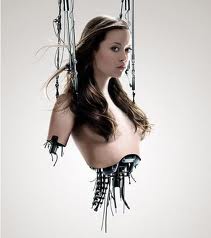
And here’s the beautiful Summer Glau, who I’m honoring for the second time for her role as Cameron from Terminator: The Sarah Conner Chronicles. Named in honor of series creator James Cameron, this new model of Terminator was also inspired heavily by his original concept. According to the many description Cameron had made, Terminators were “infiltration units that could blend in with humanity.”

In keeping with this, Cameron was designed to physically resemble a teenage female who could mimic human emotions. This made her especially effective at blending in with people, for who could suspect a pretty young lady of being a killer cyborg? Well, get between her and her target and you’d soon find out!

Which brings me to her mission. In the series, she served a similar purpose to Arny from T2. That is to say, that in the future, the resistance captured her and reprogrammed her to act as John and Sarah Conner’s protector in the past. This she did very well, because as we all saw, he grew up to become Christian Bale. And aside from some anger management issues, he led the Resistance to victory!

Caprica Six:
Now here’s a woman who fanboys and nerds would do sick and horrible things just to get within an arms length of. I hope her sake she has a mighty big security detail! As the femme fatale and blonde bombshell of the re-imagined Galactic series, she was the Cylon model (ha!) who was responsible for seducing Gaius Baltar and getting access to the Colonial Defenses Mainframe. Because of this, she was instrumental in the genocide of the Twelve Colonies.

Yet strangely, she was also instrumental in bringing the the Colonial fleet and Cylon race together, or at least the portion of them that wanted a reconciliation between the two sides. Because every Six was slightly different from the last, her model went through many changes in appearance and disposition. Whereas her “Caprica” self was quite cool, and powerfully seductive, her later incarnations were more emotional and heartfelt.

As if to keep track with this emotional transformation, her appearance began to change as well. Her hair went from being suicide blonde to sandy and her outfits also became somewhat more conservative. In short, she could do it all. She could be evil, loving, nurturing, compassionate, a murdered, and a sacrificial lamb. But always, she looked damn good doing it!

Fembots:
Sure, they aren’t exactly the most unique or groundbreaking example of gynoids, but they were funny and actually kind of inspired. Taken from the series The Six Million Dollar Man, fembots were infiltration units that were designed to impersonate real people. In Austin Powers, they are satirically portrayed as seductresses in the employ of Dr. Evil.

Here, there duties appear to be twofold: One, seduce Austin Powers or whoever else they are programmed to kill. Two, to shoot their quarry using boob-mounted guns. And like their 6 MDM counterparts, their identities can be easily revealed by simply pulling off their faceplates.

Getting them around some kind of electrical equipment also seems to interfere with their systems as well, as was demonstrated by Austin in the second movie when he began using a universal remote and found that “Vanessa” began responding to it. And as that encounter also demonstrated, they could always self-destruct if they found themselves cornered. Oh, and Austin also demonstrated that being sexy could destroy them, since no one can apparently resist his pudgy, hairy body! Ick!

Jessica:
When it comes to female robots, and sci-fi movies, here is an example that is so often overlooked. Taken from the cult hit Screamers, which was based on PKD’s short story “Second Variety”, Jessica was a type 4 Screamer, the most advanced model to date. As part of a series of “Autonomous Mobile Sword” – a race of self-replicating intelligent machines – she was distinguished from the others by being the most human.

Whereas type 1 was little more than a burrowing killing machine, type 2 was a wounded soldier and type 3 a small child. Each one became more and more complex, designed to infiltrate deeper and deeper into an enemies camp. With type 4, Jessica was not only meant to infiltrate, but to gain deep access and the trust of her comrades before going active and killing everyone.

In her own words, “We can smile, we can cry. We can bleed… we can fuck.” Minus the last part, this was how she managed to infiltrate a NEB (New Economic Bloc) base and lure in the unsuspecting representatives of the Coalition camp. Apparently, it was her mission to bring the last combattants of the war on Sirius 6B together so they all but one (Hendricksson, played by Peter Weller) would lead her to the survivor ship they had stowed away. This ship was meant to take a single person back to Earth, in the event of catastrophe.

In the end, Jessica sacrificed herself to save Hendricksson so he could get off the planet unencumbered. However, the revelation that she was a new type of AMS that could pass for human in every way possible made on thing clear. Having sterilized Sirius 6B of all life, not just the enemy’s, they were intent on making their way back to Earth, looking for new prey to stalk and kill! Cool huh?

The Stepford Wives:
Now here is an example of female robots that carries with it some genuine social commentary! Written in 1972 by famed author Ira Levin, this novel tells the story of how a group of in a fictional small town (called Stepford) have been replaced by machines so that they may better represent their husband’s and societies ideal of “womanhood”.

According to the story, the town of Stepford is run by a men’s club who’s founder was a former “imagineer” for Disney. In addition, many of its members are scientists and artists. together, they managed to come up with the ability to create life-like robots that could not only look like women, but play the part of doting, docile housewives to a tee!

Of course, by novel’s end, all the women in Stepford have been replaced by these robots and the conspiracy seems poised to absorb any new arrivals. Designed to be a cautionary tale about the dangers of social engineering and blatant sexism, the Stepford Wives took a pretty dim view of female robots, don’t you think? I mean, who’s to say these fembots don’t have their own agenda, like they’re just waiting for their husbands to go to work so they can plot their demise? Might make a good sequel…
TX:
“So she’s an Anti-Terminator… Terminator? You’ve got to be shitting me.” Anry was definitely not shitting him! Here we have the villainess of the Terminator 3 movie and the woman that managed to kick Arny’s ass… a couple of times! As the lastest model to roll of the Cyberdine assembly line, the TX was a sort of hybrid of previous models with some added features thrown in.

Basically, this meant that the TX had an armored cybernetic chassis with polymorphic-alloy segments thrown in. This allowed her to adjust her appearance, much like the T-1000, but left her with a hardened endoskeleton that could not be frozen or melted as the 1000 was.
In addition, her right arm could transform into various weapons, taking on the form of a plasma cannon, a flame thrower, an articulated claw; whatever the moment required. Her ability to interface with computer systems also gave her a decided edge, especially over the obsolete T-800 models which kept showing up to defend John Conner!

Because Conner had been living off the grid for so long, this new breed of Terminator was tasked with located the people who would become his lieutenants in the future and kill them. However, that quickly changed when Conner showed up protected by yet another Austrian-sounding T-800! In the end, she was destroyed when a damaged Arny plugged his remaining hydrogen power cell in her mouth and set it to explode.

Maria:
Ah yes, the original gynoid! The fembot who inspired all subsequent generations of female machines. Taken from the classic movie Metropolis, Maria was a scientists attempt to resurrect his dead wife that went terribly wrong. After taking on the form of the working-class hero, the flesh and blood Maria, this female robot was intended to discredit her and undermine the proletarian movement that was looking to revolt.

But ultimately, the Maria bot doesn’t conform to anyone’s expectations. Instead, she ends up causing jealous feuds amongst rich men in a night-club and sowing dissent amongst the poor in the worker city. And to top it all off, she breaks with Maria’s policy of non-violent change by urging the workers to revolt against their oppressors. After the chaos dies down, the mobs of workers blame Maria for their plight and burn her at the stake, revealing her to be a robot.

Out of this commentary on class consciousness and distinction, it is interesting to see what role Maria played. As an artificial human, she is not only a plot device but a commentary on the dangers of runaway technology. Invented by a scientist who is using technology to overcome death, she eventually becomes his and many other people’s undoing. But at the same time, there was an element of misogyny in how she was portrayed.

Whereas the flesh and blood Maria was peaceful, nurturing and a sort of Mother Mary figure, the robot Maria was a vile temptress who drove men to madness and acts of violence. And in the end, these acts were turned against her and she was burned, which is presented as a good thing in the end. Yeah, kinda sexists I’m thinking. But alas, she was the original and borne of a previous age. The concept has evolved quite a bit ever since… Read on to learn more!

Rachel Tyrell:
“How can it not know what it is?” “I think she’s beginning to suspect.” That was Deckard Cain’s reaction when he learned that Rachel was a Replicant. Tyrell’s response was equally telling. Something like that, you just can’t keep quiet for long!

As part of their experiment to make their Replicants more controllable, Rachel was a newer model that had been fitted with artificial memories. For all intents and purposes, she thought she was the late niece of Mr. Tyrell himself. When she learned otherwise, she began to experience a bit of an existential crisis, let me tell you!

On the one hand, she was devastated to know that all her memories were in fact false, at least to her, and that her existence was basically a lie. On the other, there was the conundrum of what to do about her mutual attraction with Deckard Cain, a man who specializes in hunting her kind down and “retiring” them.

In the end, she and Deckard resolve this little problem by accepting their feelings and running off together. Since she was apparently designed to have an indefinite lifespan, and be “more human than human”, it seemed only natural that she accept what she is and live out her life as if she really were. Though somewhat frail by modern standards, her character was central to the plot of Blade Runner. And let’s not forget that she saved Deckard’s life and he’s supposed to be a one man death squad!

Final Thoughts:
Well, what can you say about Robot Women from over the ages? Well for one, they’re pretty damn sexy, that seems to be a rule. Might be a tad sexist, but it doesn’t diminish their worth any. What counts in the end is what roles they play. From their early days as mere vixens meant to tempt and kill the heroes, they’ve evolved to fill the same role occupied by male robots. Allowing audiences to explore the deeper questions of what it means to be human, and how the line between artificial and real can be blurred to the point where we can no longer tell the difference.

Okay, even I’m beginning to sense the cheese factor here! I mean, does anybody really buy this social commentary angle? Really? Ah, maybe there is some room for intellectual content here. And maybe how they are portrayed really does tell us something about society at large and its perceptions of women. But for the most part, I think sexy robot women are just plain cool. There, I said it!

Until next time, treat robot women as equals… to robot men! Ugh, that’s a whole nuther can of worms and I’m not getting into that right now!

Robots, Androids and AI’s

Let’s talk artificial life forms, shall we? Lord knows they are a common enough feature in science fiction, aren’t they? In many cases, they take the form of cold, calculating machines that chill audiences to the bones with their “kill all humans” kind of vibe. In others, they were the solid-state beings with synthetic parts but hearts of gold and who stole ours in the process. Either way, AI’s are a cornerstone to the world of modern sci-fi. And over the past few decades, they’ve gone through countless renditions and re-imaginings, each with their own point to make about humanity, technology, and the line that separates natural and artificial.

But in the end, its really just the hardware that’s changed. Whether we were talking about Daleks, Terminators, or “Synthetics”, the core principle has remained the same. Based on mathematician and legendary cryptographer Alan Turing’s speculations, an Artificial Intelligence is essentially a being that can fool the judges in a double-blind test. Working extensively with machines that were primarily designed for solving massive mathematical equations, Turing believed that some day, we would be able to construct a machine that would be able to perform higher reasoning, surpassing even humans.

Arny (Da Terminator):
Who knew robots from the future would have Austrian accents? For that matter, who knew they’d all look like bodybuilders? Originally, when Arny was presented with the script for Cameron’s seminal time traveling sci-fi flick, he was being asked to play the role of Kyle Reese, the human hero. But Arny very quickly found himself identifying with the role of the Terminator, and a franchise was born!

Originally, the Terminator was the type of cold, unfeeling and ruthless machine that haunted our nightmares, a cyberpunk commentary on the dangers of run-away technology and human vanity. Much like its creator, the Skynet supercomputer, the T101 was part of a race of machines that decided it could do without humanity and was sent out to exterminate them. As Reese himself said in the original: “It can’t be bargained with. It can’t be reasoned with. It doesn’t feel pity, or remorse, or fear. And it absolutely will not stop, ever, until you are dead.”

The second Terminator, by contrast, was a game changer. Captured in the future and reprogrammed to protect John Conner, he became the sort of surrogate father that John never had. Sarah reflected on this irony during a moment of internal monologue during movie two: “Watching John with the machine, it was suddenly so clear. The terminator, would never stop. It would never leave him, and it would never hurt him, never shout at him, or get drunk and hit him, or say it was too busy to spend time with him. It would always be there. And it would die, to protect him. Of all the would-be fathers who came and went over the years, this thing, this machine, was the only one who measured up. In an insane world, it was the sanest choice.”

In short, Cameron gave us two visions of technology with these first two installments in the series. In the first, we got the dangers of worshiping high-technology at the expense of humanity. In movie two, we witnessed the reconciliation of humans with technology, showing how an artificial life form could actually be capable of more humanity than a human being. To quote one last line from the franchise: “The unknown future rolls toward us. I face it, for the first time, with a sense of hope. Because if a machine, a Terminator, can learn the value of human life, maybe we can too.”

Bender:
No list of AI’s and the like would ever be complete without mentioning Futurama’s Bender. That dude put’s the funk in funky robot! Originally designed to be a bending unit, hence his name, he seems more adept at wisecracking, alcoholism, chain-smoking and comedicaly plotting the demise of humanity. But its quickly made clear that he doesn’t really mean it. While he may hold humans in pretty low esteem, laughing at tragedy and failing to empathize with anything that isn’t him, he also loves his best friend Fry whom he refers to affectionately as “meat-bag”.

In addition, he’s got some aspirations that point to a creative soul. Early on in the show, it was revealed that any time he gets around something magnetic, he begins singing folk and country western tunes. This is apparently because he always wanted to be a singer, and after a crippling accident in season 3, he got to do just that – touring the country with Beck and a show called “Bend-aid” which raised awareness about the plight of broken robots.

He also wanted to be a cook, which was difficult considering he had no sense of taste or seemed to care about lethally poisoning humans! However, after learning at the feet of legendary Helmut Spargle, he learned the secret of “Ultimate Flavor”, which he then used to challenge and humiliate his idol chef Elzar on the Iron Chef. Apparently the secret was confidence, and a vial of water laced with LSD!

Other than that, there’s really not that much going on with Bender. Up front, he’s a chain smoking, alcoholic robot with loose morals or a total lack thereof. When one gets to know him better, they pretty much conclude that what you see is what you get! An endless source of sardonic humor, weird fashion sense, and dry one-liners. Of them all “Bite my shiny metal ass”, “Pimpmobile”, “We’re boned!” and “Up yours chump” seems to rank the highest.

Ash/Bishop:
Here we have yet another case of robots giving us mixed messages, and comes to us direct from the Alien franchise. In the original movie, we were confronted with Ash, an obedient corporate mole who did the company’s bidding at the expense of human life. His cold, misguided priorities were only heightened when he revealed that he admired the xenomorph because of its “purity”. “A survivor… unclouded by conscience, remorse, or delusions of morality.”

After going nuts and trying to kill Ripley, he was even kind enough to smile and say in that disembodied tinny voice of his, “I can’t lie to you about your chances, but… you have my sympathies.” What an asshole! And the perfect representation for an inhuman, calculating robot. The result of unimpeded aspirations, no doubt the same thing which was motivating his corporate masters to get their hands on a hostile alien, even if it meant sacrificing a crew or two.

But, as with Terminator, Cameron pulled a switch-up in movie two with the Synthetic known as Bishop (or “artificial human” as he preferred to be called). In the beginning, Ripley was hostile towards him, rebuffing his attempts to assure her that he was incapable of killing people thanks to the addition of his behavioral inhibitors. Because of these, he could not harm, or through inaction allow to be harmed, a human being (otherwise known as an “Asimov”). But in the end, Bishop’s constant concern for the crew and the way he was willing to sacrifice himself to save Newt won her over.

Too bad he had to get ripped in half to earn her trust. But I guess when a earlier model tries to shove a magazine down your throat, you kind of have to go above and beyond to make someone put their life in your hands again. Now if only all synthetics were willing to get themselves ripped in half for Ripley’s sake, she’d be set!

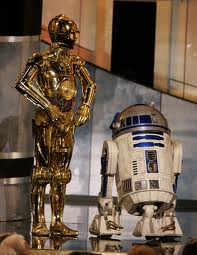
C3P0/R2D2:
For that matter, who knew robots from the future would be fay, effeminate and possibly homosexual? Not that there’s anything wrong with that last one… But as audiences are sure to agree, the other characteristics could get quite annoying after awhile. C3P0’s constant complaining, griping, moaning and citing of statistical probabilities were at once too human and too robotic! Kind of brilliant really… You could say he was the Sheldon of the Star Wars universe!

Still, C3P0 if nothing if not useful when characters found themselves in diplomatic situations, or facing a species of aliens who’s language they couldn’t possibly fathom. He could even interface with machinery, which was helpful when the hyperdrive was out or the moisture condensers weren’t working. Gotta bring in that “Blue Harvest” after all! And given that R2D2 could do nothing but bleep and blurp, someone had to be around to translate for him.

Speaking of which, R2D2 was the perfect counterpart to C3P0. As the astromech droid of the pair, he was the engineer and a real nuts and bolts kind of guy, whereas C3P0 was the diplomat and expert in protocol.  Whereas 3P0 was sure to give up at the first sign of trouble, R2 would always soldier on and put himself in harm’s way to get things done. This difference in personality was also made evident in their differences in height and structure. Whereas C3P0 was tall, lanky and looked quite fragile, R2D2 was short, stocky, and looked like he could take a licking and keep on ticking!

Naturally, it was this combination of talents that made them comically entertaining during their many adventures and hijinks together. The one would always complain and be negative, the other would be positive and stubborn. And in the end, despite their differences, they couldn’t possibly imagine a life without the other. This became especially evident whenever they were separated or one of them was injured.

Hmmm, all of this is starting to sound familiar to me somehow. I’m reminded of another, mismatched, and possibly homosexual duo. One with a possible fetish for rubber… Not that there’s anything wrong with that! 😉

Cameron:
Some might accuse me of smuggling her in here just to get some eye-candy in the mix. Some might say that this list already has an example from the Terminator franchise and doesn’t need another. They would probably be right…

But you know what, screw that, it’s Summer Glau! And the fact of the matter is, she did a way better job than Kristanna Loken at showing that these killing/protective machines can be played by women. Making her appearance in the series Terminator: The Sarah Conner Chronicles, she worked alongside acting great Lena Headey of 300 and Game of Thrones fame.

And in all fairness, she and Lokken did bring some variety to the franchise. For instance, in the show, she portrayed yet another reprogrammed machine from the future, but represented a model different from the T101’s. The purpose of these latter models appeared to be versatility, the smaller chassis and articulate appendages now able to fit inside a smaller frame, making a woman’s body available as a potential disguise. Quite smart really. If you think about it, people are a lot more likely to trust a smaller woman than a bulked-out Arny bot any day (especially men!) It also opened up the series to more female characters other than Sarah.

And dammit, it’s Summer Glau! If she didn’t earn her keep from portraying River Tam in Firefly and Serenity, then what hope is there for the rest of us!

Cortana:
Here we have another female AI, and one who is pretty attractive despite her lack of a body. In this case, she comes to us from the Halo universe. In addition to being hailed by critics for her believability, depth of character, and attractive appearance, she was ranked as one of the most disturbingly sexual game characters by Games.net. No surprises there, really. Originally, the designers of her character used Egyptian Queen Nefertiti as a model, and her half-naked appearance throughout the game has been known to get the average gamer to stand up and salute!

Though she serves ostensibly as the ship’s AI for the UNSC Pillar of Autumn, Cortana ends up having a role that far exceeds her original programming. Constructed from the cloned brain of Dr. Catherine Elizabeth Halsey, creator of the SPARTAN project, she has an evolving matrix, and hence is capable of learning and adapting as time goes on. Due to this and their shared experiences as the series goes on, she and the Master Chief form a bond and even become something akin to friends.

Although she has no physical appearance, Cortana’ program is mobile and makes several appearances throughout the series, and always in different spots. She is able to travel around with the Master Chief, commandeer Covenant vessels, and interface with a variety of machines. And aside from her feminine appearance, he soft, melodic voice is a soothing change of pace from the Chief’s gruff tone and the racket of gunfire and dead aliens!

Data:
The stoic, stalwart and socially awkward android of Star Trek: TNG. Built to resemble his maker, Dr. Noonian Soong, Data is a first-generation positronic android – a concept borrowed from Asimov’s I, Robot. He later enlisted in Star Fleet in order to be of service to humanity and explore the universe. In addition to his unsurpassed computational abilities, he also possesses incredible strength, reflexes, and even knows how to pleasure the ladies. No joke, he’s apparently got all kind of files on how to do… stuff, and he even got to use them! 😉

Unfortunately, Data’s programming does not include emotions. Initially, this seemed to serve the obvious purpose of making his character a foil for humanity, much like Spock was in the original series. However, as the show progressed, it was revealed that Soong had created an android very much like Data who also possessed the capacity for emotions. But of course, things went terribly wrong when this model, named Lor, became terribly ambitious and misanthropic. There were some deaths…

Throughout the original series, Data finds himself seeking to understand humanity, frequently coming up short, but always learning from the experience. His attempts at humor and failure to grasp social cues and innuendo are also a constant source of comic relief, as are his attempts to mimic these very things. And though he eventually was able to procure an “emotion chip” from his brother, Data remains the straight man of the TNG universe, responding to every situation with a blank look or a confused and fascinated expression.

More coming in installment two. Just give me some time to do all the write ups and find some pics :)…