NASA’s 3D Printed Moon Base

ESA_moonbaseSounds like the title of a funky children’s story, doesn’t it? But in fact, it’s actually part of NASA’s plan for building a Lunar base that could one day support inhabitants and make humanity a truly interplanetary species. My thanks to Raven Lunatick for once again beating me to the punch! While I don’t consider myself the jealous type, knowing that my friends and colleagues are in the know before I am on stuff like this always gets me!

In any case, people may recall that back in January of 2013, the European Space Agency announced that it could be possible to build a Lunar Base using 3D printing technology and moon dust. Teaming up with the architecture firm Foster + Partners, they were able to demonstrate that one could fashion entire structures cheaply and quite easily using only regolith, inflatable frames, and 3D printing technology.
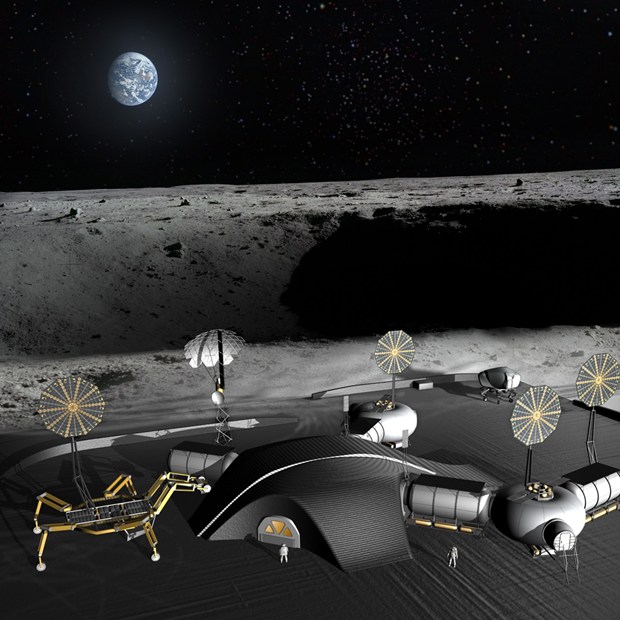
sinterhab2_1And now, it seems that NASA is on board with the idea and is coming up with its own plans for a Lunar base. Much like the ESA’s planned habitat, NASA’s would be located in the Shackleton Crater near the Moon’s south pole, where sunlight (and thus solar energy) is nearly constant due to the Moon’s inclination on the crater’s rim. What’s more, NASA”s plan would also rely on the combination of lunar dust and 3D printing for the sake of construction.

However, the two plans differ in some key respects. For one, NASA’s plan – which goes by the name of SisterHab – is far more ambitious. As a joint research project between space architects Tomas Rousek, Katarina Eriksson and Ondrej Doule and scientists from Nasa’s Jet Propulsion Laboratory (JPL), SinterHab is so-named because it involves sintering lunar dust: heating it up with microwaves to the point where the dust fuses to become a solid, ceramic-like block.

This would mean that bonding agents would not have to be flown to the Moon, which is called for in the ESA’s plan. What’s more, the NASA base would be constructed by a series of giant spider robots designed by JPL Robotics. The prototype version of this mechanical spider is known as the Athlete rover, which despite being a half-size variant of the real thing has already been successfully tested on Earth.
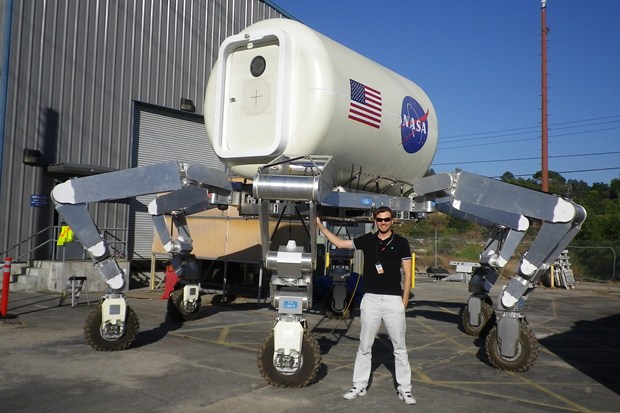
athlete_robotEach one of these robots is human-controlled, has six 8.2m legs with wheels at the end, and comes with a detachable habitable capsule mounted at the top. Each limb has a different function, depending on what the controller is looking to do. For example, it has tools for digging and scooping up soil samples, manipulators for poking around in the soil, and will have a microwave 3D printer mounted on one of the legs for the sake of building the base. It also has 48 3D cameras that stream video to its operator or a remote controlling station.

The immediate advantages to NASA’s plan are pretty clear. Sintering is quite cheap, in terms of power as well as materials, and current estimates claim that an Athlete rover should be able to construct a habitation “bubble” in only two weeks. Another benefit of the process is that astronauts could use it on the surface of the Moon surrounding their base, binding dust and stopping it from clogging their equipment. Moon dust is extremely abrasive, made up of tiny, jagged morcels rather than finely eroded spheres.

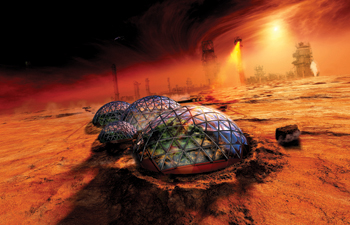
sinterhab3Since it was first proposed in 2010 at the International Aeronautical Congress, the concept of SinterHab has been continually refined and updated. In the end, a base built on its specifications will look like a rocky mass of bubbles connected together, with cladding added later. The equilibrium and symmetry afforded in this design not only ensures that grouping will be easy, but will also guarantee the structural integrity and longevity of the structures.

As engineers have known for quite some time, there’s just something about domes and bubble-like structures that were made to last. Ever been to St. Peter’s Basilica in Rome, or the Blue Mosque in Istanbul? Ever looked at a centuries old building with Onion Dome and felt awed by their natural beauty? Well, there’s a  reason they’re still standing! Knowing that we can expect similar beauty and engineering brilliance down the road gives me comfort.

In the meantime, have a gander at the gallery for the proposed SinterHab base, and be sure to check out this video of the Athlete rover in action:

Source: Wired.co.uk, robotics.jpl.nasa.gov
NASA Loses Contact With ISS

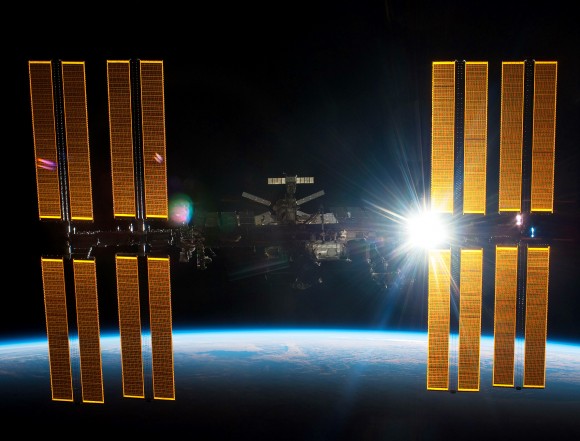
International-Space-Station-ISS-580x441It’s something no one hovering hundreds of kilometers over the Earth ever really wants to experience. Yes, when you floating in a tin can, you’re only connection to the surface being a communications relay, it can be pretty scary when it suddenly stops working. Can’t be much of a picnic for those working Mission Control either, or the families forced to sit idly by and wait for others to figure out what went wrong.

The communications blackout began on Tues, Feb. 19th at 9:45 am EST(15:45 UTC) , and lasted until 11:34 am yesterday (17:34 UTC). So for a good twenty-six hours straight, the ISS was unable to communicate with ground crews, which as anyone can guess caused a bit of a stir. Luckily, it turns out everyone on board the ISS was just fine the whole time, no injuries or space invaders to speak of!

According to a statement filed by NASA, communications were apparently lost when flight controllers in Houston were updating the software onboard the station’s flight computers and one of the station’s data relay systems malfunctioned. The primary computer that controls critical station functions defaulted to a backup computer, but was not allowing the station to communicate with NASA’s Tracking and Data Relay Satellites.

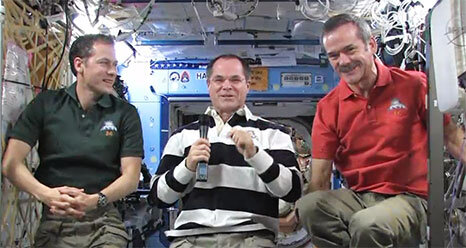
NASA_ISScrewThen, just before 11:00 a.m. EST, flight controllers were able to communicate with the crew once more as the space station flew over Russian ground stations. They then instructed the crew to connect a backup computer to begin the process of restoring communications. Once that was done, Expedition 34 Commander Kevin Ford reported the following:

“Hey, just FYI, the station is still flying straight, everybody is in good shape, or course, and nothing unexpected except lots of caution and warning [alarms]. All the systems look like they are doing just fine.”

According to the Johnson Space Center’s latest Twitter update, the crew is back at work and the crew is taking questions from fans. Click here to see what the crew had to say about the temporary communications blackout and what’s in store for them now.

In an ironic twist, sources have since indicated that Canadian astronaut Chris Hadfield Tweeted the following from the ISS shortly before the blackout took place: “Good Morning, Earth! Today we transition the Space Station’s main computers to a new software load. Nothing could possibly go wrong.” The moral here? Things can always go wrong! And don’t tempt fate, especially when you’re hurling through space, hundreds of kilometers above the Earth.

Source: universetoday.com


Exploring the Universe with Robotic Avatars and Holodecks

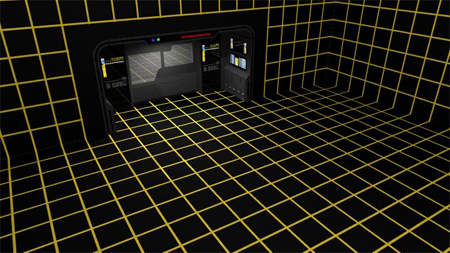
holodeck_nasaSpace exploration is littered with all kinds of hazards. In addition to the danger of dying from decompression, mechanical failures, micro-meteoroids or just crashing into a big ball of rock, there are also the lesser-known problems created by low-gravity, time dilation, and prolonged isolation. Given all that, wouldn’t it just be easier to send probes out to do the legwork, and use virtual technology to experience it back home?

That’s the idea being presented by Dr. Jeff Norris, one of the scientists who works for NASA’s Jet Propulsion Laboratory in Pasadena, California. In a recent presentation that took place at Pax Prime last year – entitled “NASA’s Got Game” – he spoke of the agency’s plans for telexploration – the process of exploring the universe using robotic avatars and holodecks, rather than sending manned flights into deep space.

avatar_imageIn the course of making this presentation, Norris noted several key advantages to this kind of exploration. In addition to being safer and cheaper, its also more readily available. Whereas deep space exploration involving space ships with FTL engines – the Alcubierre Drive they are currently working on – will eventually be available, robot space probes and advanced telecommunications technology are available right now.

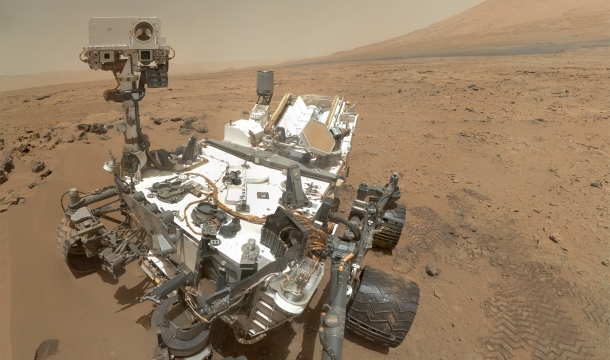
At the same time, telexploration is also more democratic. Whereas conventional space travel involves a select few of highly-trained, eminently qualified people witnessing the wonders of the universe, robotic avatars and holographic representations bring the experience home, where millions of people can experience the awe and wonder for themselves. And when you think about it, it’s something we’re already doing, thanks to the current generation of space probes, satellites and – of course! – the Curiosity Rover.

Curiosity_selfportraitBasically, rather than waiting for the warp drive, Norris believes another Star Trek technology – the holodeck – will be the more immediate future of space exploration, one that we won’t have to wait for. Yes, there are more than a few Star Trek motifs going on in this presentation, and a little Avatar too, but that’s to be expected. And as we all know, life can imitate art, and the truth is always stranger than fiction!

Check out the video of the presentation below:


And remember…

holodeck_vegasad

NASA’s Next-Gen Spacesuit

NASA_suitIt’s like something Buzz Lightyear would be seen in, minus the death ray laser. It’s called the Z-1 spacesuit, a prototype that NASA hopes to incorporate into their equipment lineup by 2015. Not only does this new design offer a wide range of advantages compared with the space agency’s previous suit – the Extravehicular Mobility Unit (EMU) spacesuit – it also represents the first major overhaul in spacesuit technology since 1998.

For example, it boasts a rear-entry hatch which lets an astronaut put on the suit from the back, as opposed to putting on the top, bottom and helmet separately. This hatch also coincides with a feature known as the suit port, which allows the suit to be attached to the outside of a vehicle (such as a rover), thus allowing the astronaut to simply enter the suit from inside the vehicle. This is a big step from the current space suits which must be stored and put on internally.

I don't see a resemblance, do you?
I don’t see a resemblance, do you?

On top of that, the Z-1 excels in the areas of mobility and visibility. The former arises from the fact that the suit comes as a single piece rather than being made up of multiple segments. The larger, bubble dome helmet is what ensures that the astronauts has a better field of view. And finally, NASA plans to address the issue of life support through the portable PLSS 2.0 which condenses all life support systems into one package and does not need external components.

The PLSS 2.0 design also incorporates a massive bonus in the form of the Spacesuit Water Membrane Evaporator temperature regulator, which would actually make it possible for future astronauts to comfortably walk on extraterrestrial planets. According to NASA’s PLSS engineer Carly Watts, the PLSS 2.0 “can be used in a Martian environment. It can be frozen without damaging the unit, and it’s not particularly sensitive to contamination.” Good news for the astronauts heading to Mars in 2030, assuming the budget environment remains friendly after President Obama is no longer in power.

Check out this video of NASA Public Affairs Officer Brandi Dean talking with Cristina Anchondo, Z1 spacesuit test director, about the Z1 spacesuit at the Johnson Space Center.


Source: news.cnet.com

Wanted: People for Mars!

MarsOneThey’re called Mars One, a nonprofit organization based in the Netherlands that intends to establish a human settlement on the Red Planet by 2023. What began as a proposed Reality TV project that would hopefully recoup the costs of sending people to Mars has since matured into a project for actual, factual colonization. There’s just one thing missing at this point…

They need people to volunteer.

A little over a week ago, they released a document specifying their application criteria. Clearly, they can’t take just anyone. Among the five key categories for qualification are Resiliency, Adaptability, Curiosity (no pun!), Ability to Trust, Creativity and Resourcefulness. Oh, and you must be at least 18 years of age, kind of like getting in to an R-rated movie. No specific technical qualifications are necessary, but if you’ve got a go-getter attitude, a positive outlook and are willing to learn, I’m sure they can teach you.

terraforming-marsThe selection process will begin during the first half of 2013, and will still be based around a reality TV concept. Basically, it will take the form of Mars One experts and viewers of a “global, televised program” choosing who they want to see go. Those ultimately selected will be assembled into teams of four, with at least six teams hoped to be prepared to launch in September 2022. But only one team will make the first trip to the Red Planet, and that team will be decided democratically.

The training process will take eight years, and will include simulated missions, practice in a restricted mobility environment, and lessons in electronics, equipment repair, basic and critical medical care. In 2016, the company plans to begin rocketing supplies to Mars, including spare parts, two rovers, and living units that can be assembled into a base once humans arrive.

It’s a testament to an age where commercial space flight is fast becoming a reality, and internet-based voting, crowdsourcing and information sharing can take the place of space agencies and government sanctioned research. Sure, it still sounds like a pipe dream, but the effort alone is impressive isn’t it? And given all the advances that are made every day, who’s to say what will and won’t be possible within the next few decades?

To read the application in detail, click here. And check out the video of Mars One’s proposed mission:

Source: wired.com, blastr.com

The Moon: The Next Hot Vacation Destination?

apollo17Back in 2006, a series of millionaires shelled out a hefty 20 million dollars for a round trip to the International Space Station. At the time, this was considered quite the privilege, seeing as how civilian personnel almost never get to go into space or spend time on the ISS. But as it turns out, this story may be on its way to becoming small potatoes, thanks in part to a new company that has announced plans to mount commercial voyages to the moon by 2020.

Apollo_11_bootprintThe company is called Golden Spike, a company made up largely of former astronauts and personnel who want to use existing and future technology to make private Lunar trips possible. Its current chairman is Gerry Griffin, Apollo flight director and former director of NASA’s Johnson Space Center. The president and CEO is planetary scientist Alan Stern, former head of all NASA science missions.

Given the cost, Golden Spike is mainly focused on offering its services to governments at the moment, much like how Russia has offering its services to governments looking to get to the ISS in the past few years. In that case and this one, these would be nations that would like to participate in space and planetary exploration but can’t afford a program of their own. But of course, should there be private citizens who want to book a ride and can afford it, they are not likely to be turned away!

Alpha Moon Base at http://www.smallartworks.ca

Granted, at one time, science fiction writers were predicting that humanity would have bases on the moon by the early 21st century. But those predictions were largely abandoned thanks to the scrapping of the Apollo program and the fact that the ISS was Earth’s only orbiting space station by the turn of the century. And of course, the only way to get there cost private citizens 20 million bucks!

But this announcement, which comes on the heels of several encouraging developments, may have reignited these hopes. First, there was Reaction Engines Ltd’s announcement of the concept for the Skylon hypersonic engine , followed shortly thereafter by Virgin Galactic’s successful deployment of SpaceShipTwo. Given the pace at which aerospace is evolving and progressing, commercial flight to the moon may be coming, though a little later than previously expected.

However, making it affordable remains a daunting task. As it stands, Golden Spike’s own estimates place the cost of a single trip to the Moon at roughly 1.5 billion dollars. Naturally, the company has also indicated that they intend to make the process more affordable so all people can make the trip. No telling how this will be achieved, but if history is any indication, time has a way of making technology cheaper and more commercially viable.

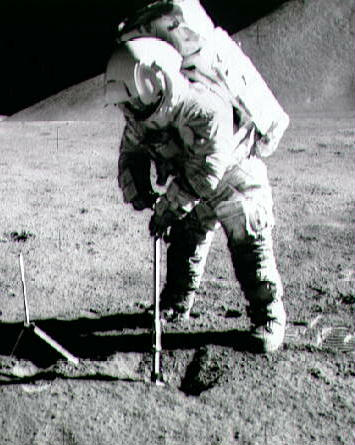
apollo14So… vacation on the moon anyone? Hell, I can envision an entire line of spas, time shares and getaways on the Lunar surface in the not-too-distant future. Sure, it may not be the Mediterranean or the Mayan Riviera, but I can think of plenty of fun activities for people to do, and the novelty factor alone ought to sell tickets. Rover tours, visits to the Apollo landing sites, low-g sports and anti-aging therapies. Oh, and if Alan Shepard and the Apollo 14 mission are any indication, you can even play golf there!

Check out this video of Golden Spike’s proposed tours to the Moon, or learn more about the company by visiting their website.

Source: news.cnet.com

NASA Takes on “Gangnam Style”

nasa-johnson-style_510x336NASA recently took a challenge to produce a music video parodying Psy’s “Gangnam Style”. Entitled “NASA Johnson Style!” the song takes its name from NASA’s Lyndon B. Johnson Space Center, a facility which houses educational programs for interns and students aspiring to progress further into the field of space science. It was there that this video was made, by several such young people who were very inspired (or perhaps had too much time on their hands).

According to the video’s description, the eclectic group of youths claimed that the parody was intended to “inform the public about the amazing work going on at NASA and the Johnson Space Center.” And in addition to its cheeky lyrics, the video also features some rather famous characters, such as veteran astronauts Tracy Caldwell Dyson, Mike Massimino and Clay Anderson.

Check it out!

Source: Cnet.com

Three-Man Soyuz Crew Headed for ISS

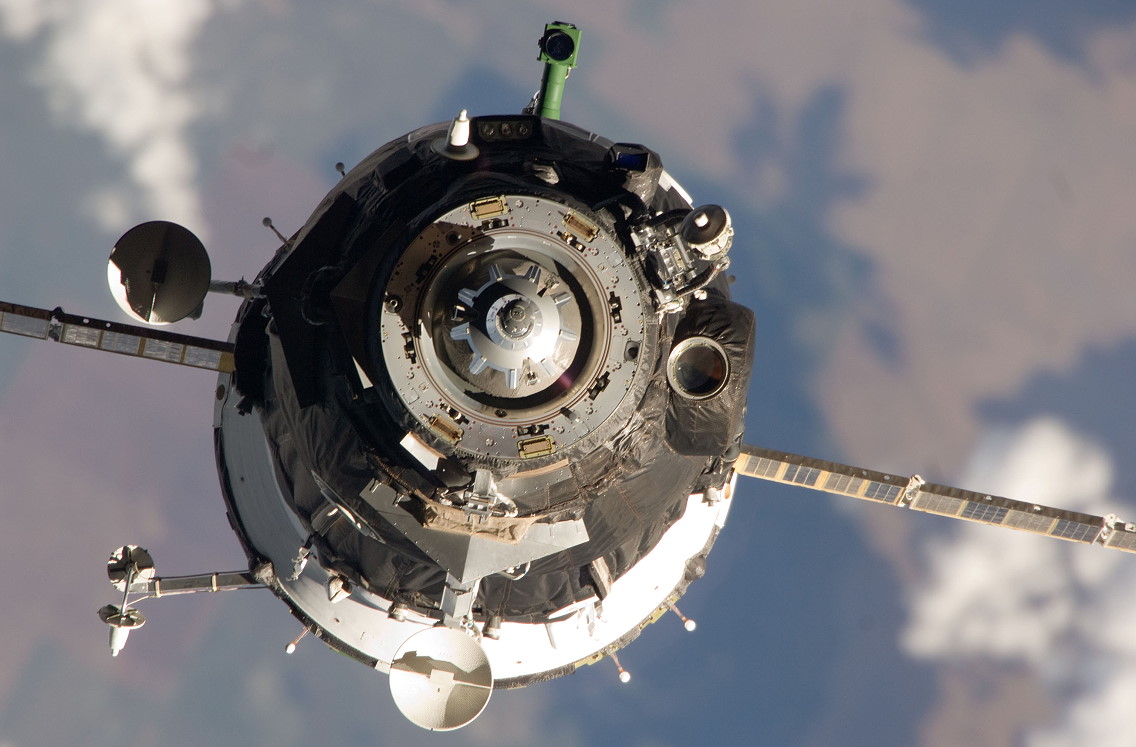
I just came across this news story on cnet.com, of how a Russian Soyuz rocket departed Earth to deposit a team of two rookies and one veteran cosmonaut on the International Space Station. Hmm, a three man crew is heading for the ISS aboard a Russian-built Soyuz rocket? That sound familiar to you? Provided you’re a fan of Big Bang Theory, it damn well ought to seeing as how this is exactly how the last season ended.

In any case, this mission has a somewhat unusual profile: to test the effect of zero-g on aquariums and aquatic life forms contained therein. I kind you not. The Soyuz craft, which lifted off at 4:51 p.m. (local time) from the Baikonur Cosmodrome in Kazakhstan, was carrying with it a tank with 32 medaka fish that were bound for a zero-gravity research aquarium aboard the ISS’s lab complex.

At the same time, the crew will be shuttling supplies to the station and conducting routine maintenance on the station’s spacewalk while they are aboard. This will consist of fixing a leak in the coolant system of the station’s far left-side solar array, which is responsible for dissipating heat within the station. The mission is expected to last a total of 143 days, with the three man crew returning to Earth in March 2013. Personally, I can’t imagine being in space, or anywhere, for that long! I hope they packed plenty of digital devices, and at least have an internet hookup up there 😉

Virtual Mars Rover Landing Party!

As you all may know, the Curiosity Rover is on its way to Mars and due to land in just a few days. And it just so happens that my buddy and mentor, Fraser Cain of Universe Today, is hosting a virtual party to mark the event. He and his crew will be in Pasadena for the event, surrounded by NASA officials and people in the know and conducting interviews, while the rest of us will be able to watch through live video.

This is an historic occasion and I for one feel privileged that I know someone who has inside access 😉 Below is a copy of the original invitation inviting people to come by Google+ to join in the party. It promises to be a very informative time so I highly recommend people check it out any way they can. I also included the link to the NASA simulation (the shortened one this time) which shows what the deployment of the Curiosity Rover will look like. Enjoy!

“To celebrate the landing of NASA’s Curiosity Rover – the Mars Science Laboratory – we’ll be running a special live hangout. 

In conjunction with +CosmoQuest. We’ll have all your favorite space/astronomy journalists on hand to discuss the mission in depth, and celebrate the landing live, when it happens.

Over the course of this 4-hour Google+ Hangout on Air, we’ll interview members of the Curiosity team live in the hangout, as well as other special guests from the +The Planetary Society and the +SETI Institute.

+Scott Lewis and +Amy Shira Teitel will be on location at the Jet Propulsion Laboratory to interview members of the engineering team, and show you what it’s like to be at NASA during this amazing moment.”