
 Hey all. Just wanted to let people know that I’m still around. And as luck would have it, I’ve found myself with some free time; free time that I’ve put towards creative writing again! In the past two weeks in fact, I have come up with a lot of new ideas for both Oscar Mike and (more importantly) Reciprocity. On this latter project, I’ve spent the past few days working through the half-written spots, and now I have a full five chapters done.
More importantly, I have revised the overall plot yet again. The last time I did this (not that long ago), I chose to change the nature of the antagonist to that of a Chinese ex-pat who was a former member of Unit 61398 – the People’s Liberation Army’s cyber warfare division. His name was Shen, and his plot involved a string of kidnapping, double-dealing, and cyber-terrorism that threatened to change the global geopolitical balance.
I liked this idea because I felt that after a good deal of research, the focus of the story should be on post-communist China, where a great deal of social confusion and economic turmoil was leading to the emergence of a semi-fascist state. In a pattern that is reminiscent to modern-day Russia, Shen sought to take advantage of these changes in order to unleash a massive cyber attack.

This would have the effect of completely preoccupying the west, disabling the US Pacific Fleet, and allowing China’s new government to occupy Taiwan and the South China Sea, thus asserting their territorial sovereignty over the region. While this was interesting (at least to me), it still fell short. What I really wanted was an antagonist in the story that would make the focus be all about the two greatest issues we will be facing in the not-too-distant future.
These issues are none other than climate change, which will result in more in the way of droughts, wildfires, flooding, coastal storms, tornadoes, and diminishing resources; and technological progress, which will result in the pace of change and getting faster and faster to the point of total unpredictability.
For awhile, I’ve been writing about these subjects, and they were supposed to be the centerpiece of the story. So here’s the new plot, in a nutshell: The year, same as always, is 2030. A technological magnate’s child disappears while slumming in the Pacific Northwest in what appears to be an act of kidnapping. However, his disappearance is in fact orchestrated as part of a complex cyber intrusion designed to steal company data.
 The man leading this theft – who is known only as Zeke – intends to leverage this data in mainland China, where a former member of Unit 61398, now himself a technological magnate, is in possession of a quantum-based cyber virus of last resort, a weapon that was created for a war that never happened. This virus is known as “Baoying”, which in Chinese, loosely translates to Reciprocity.
Zeke knows about this weapon because he spent years developing contacts around the world, bringing together gun runners, terrorists, socialist and anarchist militias, and Chinese ex-pats that reaches from Central Asia and the Middle East all the way to South America and the South Pacific. Though separated by ideological differences, these organizations are united in wanting to see an end to the status quo.
Zeke, however, has his own agenda. A one-time member of the technological magnates he is now using as pawns, he saw so much of the world and witnessed atrocities firsthand. He also witnessed how the privilege of developed countries is paid for in the blood of others. After a scandal in which he publicly aired all of his companies many shady dealings, his partners crucified him and cast him to the fringes of society.
 In an age where the richer nations are facing the prospect of limitless energy, quantum computing, abundant resources and post-mortality while other states are failing due to displacement and mass starvation, Zeke is hoping to level the playing field once and for all. He is a genius and a man moved by a personal sense of justice. But most of all, he is a man dealing with terrible demons and some deep trauma that he can’t begin to suppress.
This kind of plot, I think, works so much better. The antagonist seems much more socially relevant, the story more focused on the big issues I like to explore, and it all seems a little less hawkish than a story where the Chinese are essentially the bad guys. But most of all, I envisioned a climactic scene where the antagonist – while explaining his motivations – says something like this:
I want a future I can control. I want a future where I have a choice. I am sick of unpredictability, or chaos and confusion. I’m sick of people being left behind, and our world being torn apart. Tomorrow, everyone will find themselves on common footing. Tomorrow, we will begin thinking towards our common future.
Try getting something like that out of a former communist who just wants to see his country win a war! Well, that’s the idea as I see it right now. What do you think? Sound good?





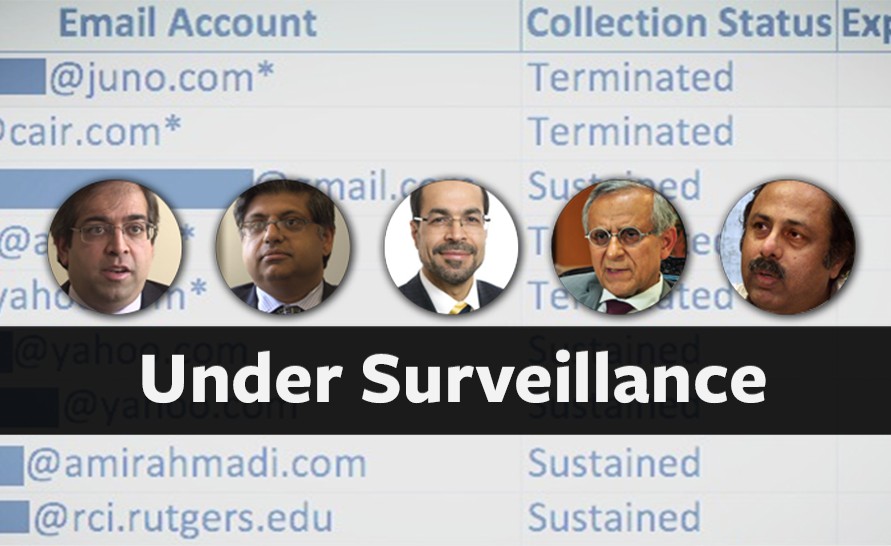

 The authorizations must be regularly renewed by the court for the surveillance to remain in effect, usually every 90 days for U.S. citizens. In none of these cases were the individuals singled out for surveillance because they were suspected of committing or planning a crime. And six years after the period the document covers, none of them has been charged with any crime related to the surveillance.
 Civil liberties groups have expressed anger that the five appear to have been targeted largely for having Muslim backgrounds. One such group is the Muslim Advocates, which released the following statement shortly after the story was published:


 The
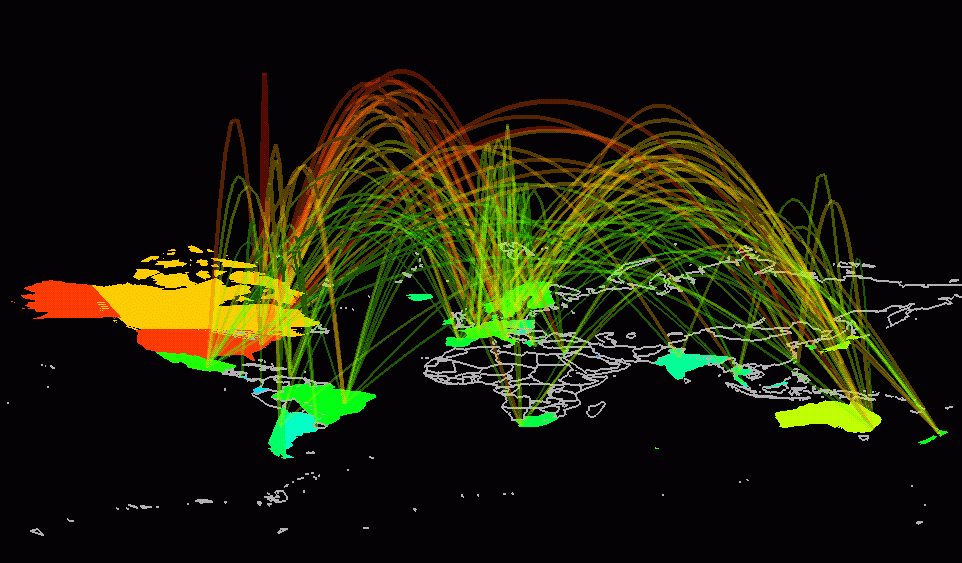
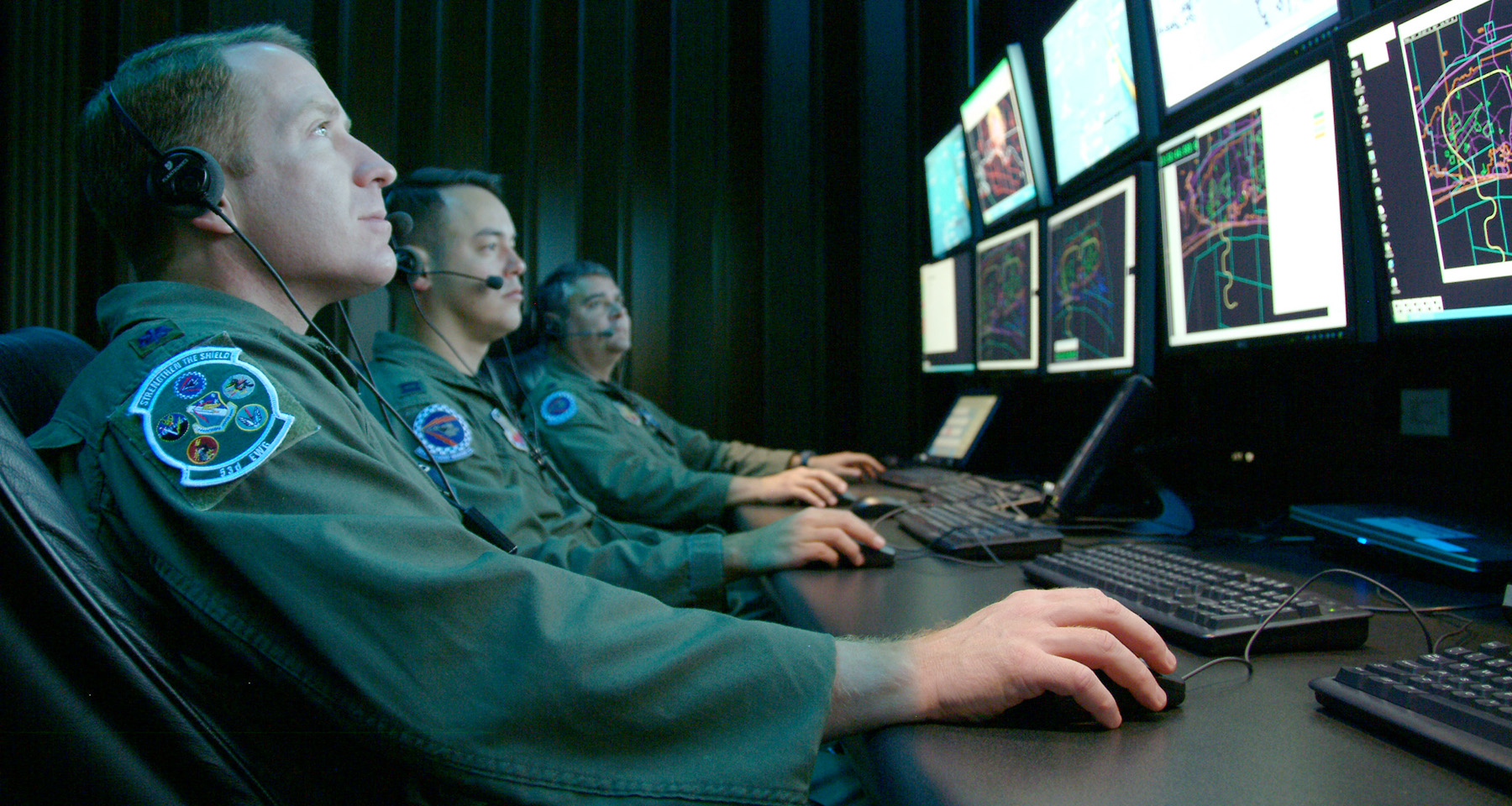
The  On occasion, the map is likely to show a big burst of coordinated attacks coming from China and directed towards the US. And while it is difficult to blame these attacks directly on the Chinese government (as they are adept at routing their attacks through other servers) government and independent researchers are confident the majority of these attacks are being directed by the People’s Liberation Army’s Unit 61398 – aka. the PLA’s cyberwarfare division.
 But a general picture of the size and shape of global hacking and cyberwarfare can be divined by looking at the stats. Back in 2012, the US DOD reported that it was the target of 10 million cyber attacks per day. Likewise, the National Nuclear Security Administration says it saw 10 million attacks per day in 2012. In 2013, BP’s CEO said it sees 50,000 cyber attacks per day, and the UK reported around 120,000 attacks per day back in 2011.

 In a recent security conference held in Canada before the Canadian Security Intelligence Service (CSIS), Alexander expressed the threat in the following, cryptic way:
 A little over two years ago, a tiny piece of code was introduced to the internet that contained a bug. This bug was known as Heartbleed, and in the two years it has taken for the world to recognize its existence, it has caused quite a few headaches. In addition to allowing cybercriminals to steal passwords and usernames from Yahoo, it has also allowed people to steal from online bank accounts, infiltrate governments institutions (such as Revenue Canada), and generally undermine confidence in the internet.

 Though security vulnerabilities come and go, this one is deemed catastrophic because it’s at the core of SSL, the encryption protocol trusted by so many to protect their data. And beyond abuse by government sources, the bug is also worrisome because it could possibly be used by hackers to steal usernames and passwords for sensitive services like banking, ecommerce, and email. In short, it empowers individual troublemakers everywhere by ensuring that the locks on our information can be exploited by anyone who knows how to do it.
 Regardless, Heartbleed does point to a much larger problem with the design of the internet. Some of its most important pieces are controlled by just a handful of people, many of whom aren’t paid well — or aren’t paid at all. In short, Heartbleed has shown that more oversight is needed to protect the internet’s underlying infrastructure. And the sad truth is that open source software — which underpins vast swathes of the net — has a serious sustainability problem.


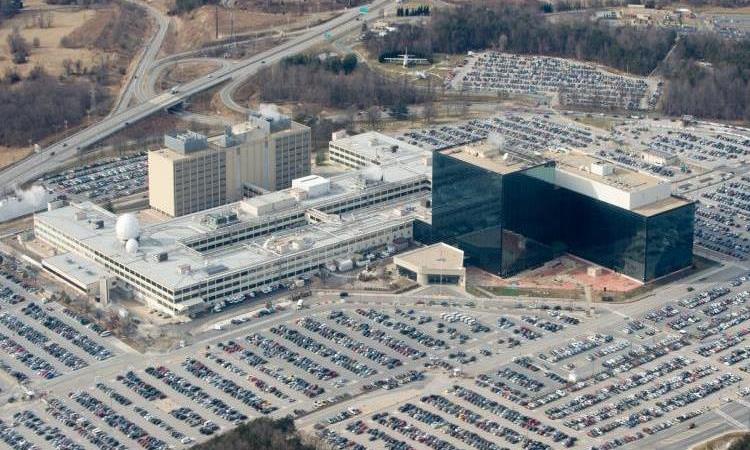
 As documents that illustrate the NSA’s clandestine behavior continue to be leaked, the extents to which the agency has been going to gain supremacy over cyberspace are becoming ever more clear. Thanks to a new series of documents released by Snowden, it now seems that these efforts included two programs who’s purpose was to create a ““useful quantum computer” that would be capable of breaking all known forms of classical encryption.




 Stories by Williams
