Google CEO Wants Land Set Aside for Experimentation

future-city-1Back in May, Google co-founder and CEO Larry Page hosted a rare Q&A session with the attendees of the Google I/O keynote speech. During this time, he gave some rather unfiltered and unabashed answers to some serious questions, one of which was how he and others should focus on reducing negativity and focusing on changing the world.

Page responded by saying that “the pace of change is increasing” and that “we haven’t adapted systems to deal with that.” He was also sure to point out that “not all change is good” and said that we need to build “mechanisms to allow experimentation.” Towards that end, he claimed that an area of the world should be set aside for unregulated scientific experimentation. His exact words were:

There are many exciting things you could do that are illegal or not allowed by regulation. And that’s good, we don’t want to change the world. But maybe we can set aside a part of the world… some safe places where we can try things and not have to deploy to the entire world.

So basically he’s looking for a large chunk of real-estate to conduct beta tests in it. What could possibly go wrong?
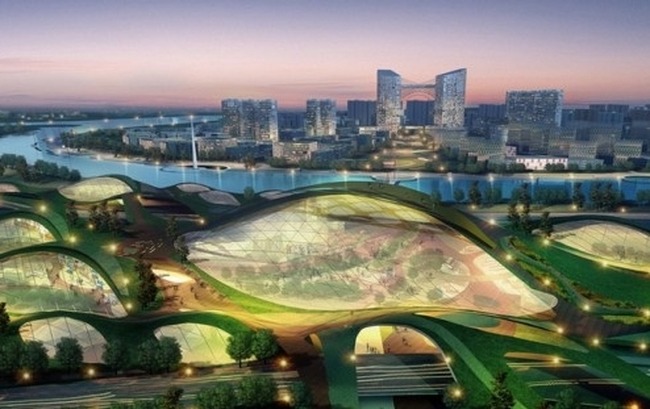
detroit_experimentOne rather creative suggestion comes from Roy Klabin of PolicyMic, who suggest that an aging and dilapidated Detroit might be just the locale Page and his associates are looking for. This past week, the city declared bankruptcy, and began offering to sell city assets and eradicate retirement funds to meet its $18 billion debt obligations.

What’s more, he suggests that SpaceX founder Elon Musk, who’s always after innovation, should team up with Google. Between the two giants, there’s more than enough investment capital to pull Detroit out of debt and work to rehabilitate the city’s economy. Hell, with a little work, the city could be transformed back into the industrial hub it once was.

And due to a mass exodus of industry and working people from the city, there is no shortage of space. Already the city is considering converting segments of former urban sprawl into farming and agricultural land. But looking farther afield, Klabin sees no reason why these space couldn’t be made available for advanced construction projects involving arcologies and other sustainable-living structures.
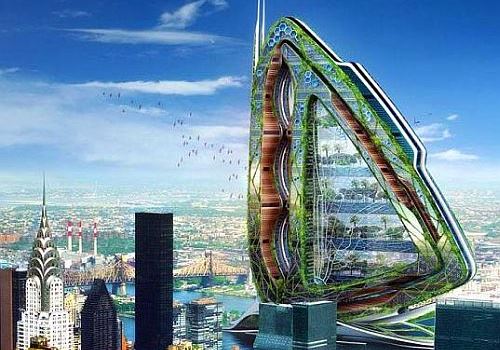
dragonfly-vertical-farm-for-a-future-new-york-1Not a bad idea, really. With cities like Boston, New York, Las Vegas, New Orleans, Moscow, Chendu, Tokyo and Masdar City all proposing or even working towards the creation of arcologies, there’s no reason why the former Industrial Heartland – now known as the “Rust Belt” – shouldn’t be getting in on the action.

Naturally, there are some who would express fear over the idea, not to mention Page’s blunt choice of words. But Page did stress the need for positive change, not aimless experimentation. And future generations will need housing and food, and to be able to provide these things in a way that doesn’t burden their environment the way urban sprawl does. Might as well get a jump on things!

And thanks to what some are calling the “New Industrial Revolution” – a trend that embraces nanofabrication, self-assembling DNA structures, cybernetics, and 3D printing – opportunities exist to rebuild our global economy in a way that is cleaner, more efficient and more sustainable. Anyone with space to offer and an open mind can get in on the ground floor. The only question is, what are they willing to give up?
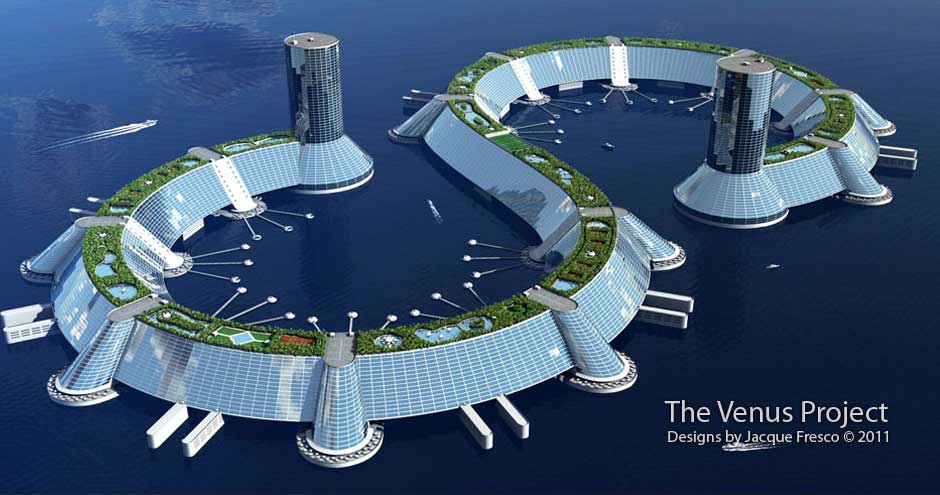
venus_projectThere’s also a precedent here for what is being proposed. The famous American architect and designer Jacque Fresco has been advocating something similar for decades. Believing that society needs to reshape the way it lives, works, and produces, he created the Venus Project – a series of designs for a future living space that would incorporate new technologies, smarter materials and building methods, and alternative forms of energy.

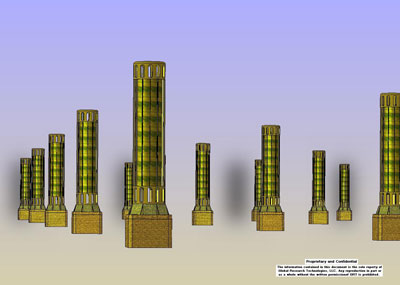
And then there’s the kind of work being proposed by designer Mitchell Joachim and Terreform ONE (Open Network Ecology). And amongst their many proposed design concepts is one where cities use vertical towers filled with energy-creating algae (pictured below) to generate power. But even more ambitious is their plan to “urbaneer” Brooklyn’s Navy Yard by turning natural ecological tissues into viable buildings.

future-city2This concept also calls to mind Arconsanti, the brainchild of architect Paolo Solari, who invented the concept of arcology. His proposed future city began construction back in the 1970 in central Arizona, but remains incomplete. Designed to incorporate such things as 3D architecture, vertical farming, and clean, renewable energy, this unfinished city still stands as the blueprint for Solari’s vision of a future where architecture and ecology could be combined.

What’s more, this kind of innovation and development will come in mighty handy when it comes to time to build colonies on the Moon and Mars. Already, numerous Earth cities and settlements are being considered as possible blueprints for extra-Terran settlement – places like Las Vegas, Dubai, Arviat, Black Rock City and the Pueblos and pre-Columbian New Mexico.

Black Rock City - home to "Burning Man" - shown in a Martian crater
Black Rock City – home to “Burning Man” – shown in a Martian crater

These are all prime examples of cities built to withstand dry, inhospitable environments. As such, sustainability and resource management play a major role in each of their designs. But given the pace at which technology is advancing and the opportunities it presents for high-tech living that is also environmentally friendly, some test models will need to be made.

And building them would also provide an opportunity to test out some of the latest proposed construction methods, one that do away with the brutally inefficient building process and replace it with things like drones, constructive bacteria, additive manufacturing, and advanced computer modelling. At some point, a large-scale project to see how these methods work together will be in order.

Let’s just hope Page’s ideas for a beta-testing settlement doesn’t turn into a modern day Laputa!

And be sure to check out this video from the Venus Project, where Jacque Fresco explains his inspirations and ideas for a future settlement:


Sources:
1.
Elon Musk and Google Should Purchase and Transform a Bankrupt Detroit (http://www.policymic.com/)
2. Larry Page wants to ‘set aside a part of the world’ for unregulated experimentation (theverge.com)

3. Six Earth Cities That Will Provide Blueprints for Martian Settlements (io9.com)
4. The Venus Project (thevenusproject.org)
5. Arcosanti Website (arcosanti.org)
6. Terreform ONE website (terreform.org)

Global Warming Slowed by Volcanoes

Klyuchevskaya Volcano. NASA Goddard Space Flight Center

Global mean temperatures have been rising in recent years, consistent with every projection provided by Climate Change specialists and planetary ecologists. However, it now seems as though the rate of increase is not as bad as it should have been, thanks to a series of small-to-moderate-sized volcanic eruptions that have spewed sunlight-blocking particles high into the atmosphere.

Between 2000 and 2010, the average atmospheric concentration of carbon dioxide rose more from about 370 parts per million to nearly 390. According to Ryan Neely III, an atmospheric scientist at the University of Colorado, Boulder, if that uptick were the only factor driving climate change, the average global temperature would have risen about 0.2°C. But a surge in the concentration of light-scattering particles in the stratosphere countered as much as 25% of that potential temperature increase.

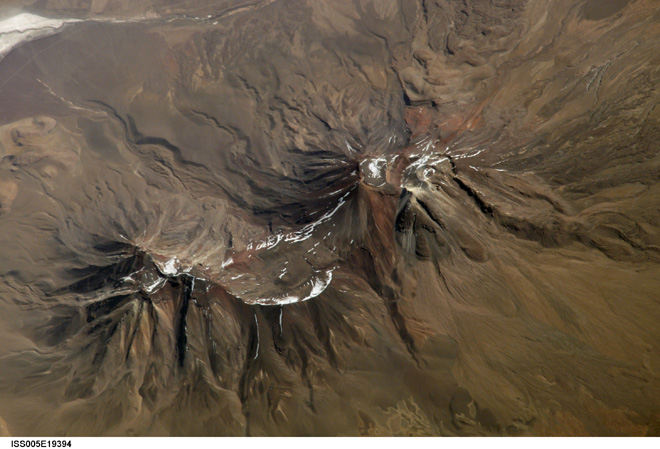
Sanpedropable Volcano as seen from the ISS
San Pedro Volcano, as seen from the ISS

In addition, Neely and his colleagues ran a series of simulations that indicated that human the human contribution of aerosols to the stratosphere – which would have had a counteractive effect to the carbon – was minimal between 2000 and 2010. William Randel, an atmospheric scientist at the National Center for Atmospheric Research in Boulder claimed that the pattern of stratospheric particulate variations during the past decade “shows the fingerprint of volcanoes, with the right episodes showing up at the right time.”

For some time now, researchers and ecologists have known that sulfur dioxide, a major biproduct of volcanic eruptions, has a global cooling effect. Once introduced into the upper atmosphere, this particulate matter blocks out solar radiation and prevents it from being absorbed by the Earth’s soil, water, and plant life. In fact, it was a massive series of eruptions which took place during the Cretaceous–Paleogene Era that is believed to be linked to the extinction of the dinosaurs.

converted PNM fileFor many years, geoengineers have considered releasing sulfur dioxide into the upper atmosphere in order to slow down the process of Climate Change, a measure intended to give Earth’s scientists more time to develop alternative fuels and its people more time to get their act together. However, at this juncture it seems that the planet has obliged us and given us a bit of window, and completely unheeded.

It’s good to know that human agency alone does not determine the course this planet will take. At the same time however, one should not get too enthused and think this means we’re in for a big reprieve. Based on the most recent data, humanity still only has a few decades before the worst begins to happen and our world slowly becomes uninhabitable.

Source: sciencemag.org, Wired.com


Engineering Life for Mars

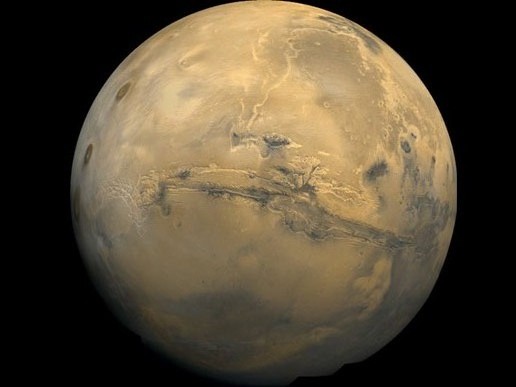
And we’re back with some more news of and about the Red Planet! Thanks to Curiosity’s ongoing efforts to discover potential life on Mars, scientists back at home have begun to seriously contemplate engineering life that will help in our own colonization efforts someday. The rational seems to be, “why search for life on Mars when you could create it?”

And the reasons for this seem pretty straightforward. Though Mars may have supported life at one time, it is not an especially hospitable environment right now. If in fact human beings settle there someday, survival won’t be easy. The average surface temperature of Mars is minus 60 degrees Celsius, and the almost-nonexistent atmosphere is 95 percent carbon dioxide.

And although water exists in Mars’ ice caps and there’s some evidence that oceans once existed, today it’s essentially a deep-frozen desert. If the would-be settlers ever want to live beyond sealed domes, and eat something other than hydroponically grown food and melted ice that is constantly being recycled, efforts to be got underway to ecologically engineer the surface.

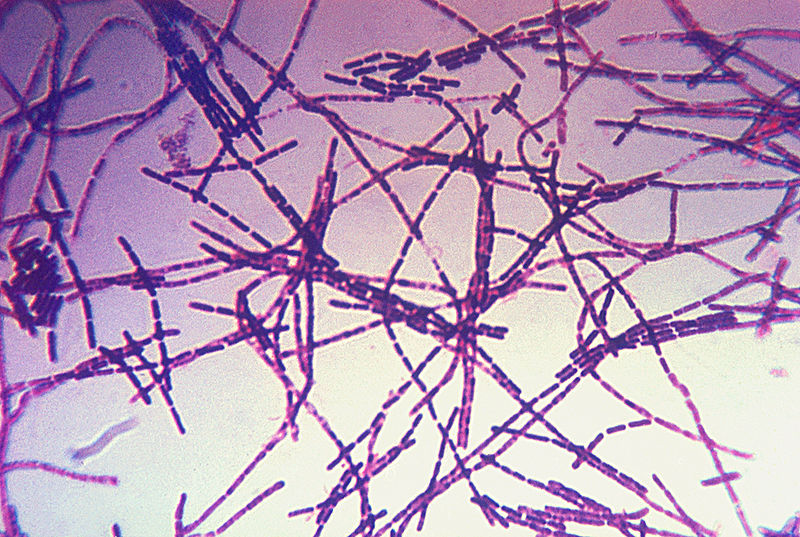
And one such group is a team of undergraduate students from Stanford and Brown Universities that are busy applying synthetic biology to space exploration, outfitting microbes to survive the extreme Martian conditions and produce resources needed to sustain a human colony. According to Ben Geilich, the team Captain, the benefits are obvious: “Obviously, bringing up heavy machinery or building materials is going to be really expensive. The benefit of having bacteria that can do this for you is they’re really small and very light. Once there, they could grow food, produce medicine, extract minerals, and build building material.”

The fruit of their labor is the Hell Cell, a genetically engineered assemblage that could enable a bacterium to withstand extreme cold, dryness and radiation. It includes genetic modules, or BioBricks, based on DNA from a variety of ultra-tough organisms, including a cold-resistant species of Siberian beetle that makes “antifreeze” proteins, a radiation-resistant bacterium that sequesters large amounts of the element manganese, and E. coli, which produces a nutrient that confers cold and drought resistance.

It’s part of a process that Andre Burnier, one of the team’s mentors and a lab technician at NASA’s Ames Research Center, described in the following way: “You go into nature and find genes, and then you can recombine them into circuits that you cannot find in nature.” After presenting their Hell Cell during the regional International Genetically Engineered Machines (iGEM) challenge this month, the team has since moved on to developing bacteria that could extract minerals from Martian sediment or recycle rare metals from spacecraft electronics. In addition, they are also investigating heat and acid-tolerance mechanisms that could be useful in other planetary environments, particulary Venus, which as you may recall, is also a candidate for terraforming.

Needless to say, Geilich is excited by all the doors theirs and the research of others is opening. “In the coming years,” he says, “I think we’re going to see a huge boom in stuff done with bacteria, only limited by our imagination and creativity.” But of course, not all agree. As Burner indicates, there are ethical implications that are likely to upset some, should the concept ever be made viable. After all, if there is no life on planet to begin with, then there are no ethical implications about transforming it. But send in the bacteria to change up a world that already boasts life, and you are essentially committing eco-genocide.

All of this puts me in mind of the Genesis Project from Star Trek II and III. There, scientists created a device which could alter the configuration of any planet within minutes. With a name like “Genesis”, the purpose was pretty self-explanatory – to create life from lifelessness. But this made it absolutely necessary to find a lifeless planet, otherwise whatever was already there would find itself permanently altered.

Funny how science fiction predicts real science, up to and including the ethical implications. They were pretty good movies too, go heck them out. And follow the link below for more reading on the subject!

Source: Wired.com

Artificial Trees to Fight Climate Change?

The indices of Climate Change have been growing in the past few decades, culminating in some serious trends that have left the scientific community worried and the general public far from calm. In addition to Arctic sea ice levels reaching a record low and record high temperatures being set during the summer, North Americans also experienced the worst wildfire season in recorded history. Over a million acres of forest burned up in the US alone, but the extended range of the fires reached from as far south as Texas to as far north as Nunavut.

For many years now, those on the forefront of climate science have been arguing that things will get a lot worse before they get better, and argue that some drastic geoengineering projects might be the only way to avert disaster. Many of these involve advanced climate science, such as evaporating more water around the mid-latitudes or “capturing” carbon in the upper atmosphere and converting it to harmless compounds. But as Gaia Vince, a science writer from BBC’s Future pointed out, the solution may be as a simple as improving upon an existing “carbon capture” technology, otherwise known as the Tree.

For some time now, climatologists and naturalists have understood the role that trees, plants, algae and plankton play in the carbon cycle. Unfortunately, the long life-cycle of trees, and the various ecological issues surrounding the artificial stimulation of algae and plants, make this aspect of ecoengineering somewhat impractical. What’s more, the growing demand for agricultural space is also putting pressure on existing green spaces. As our population continues to grow and more farmland is needed to provided for them, simply planting plants and trees more may not even be an option.

Luckily, there is an invention that takes all this into account and provides a possible solution: the artificial trees. Designed by Klaus Lackner, director of the Lenfest Center for Sustainable Energy at Columbia University, this “tree” is capable of absorbing CO2 from the air using “leaves” that are 1,000 times more efficient than the real thing, but at the same time does not require exposure to sunlight in order to carry out the process.

As Vince himself describes them: “The leaves look like sheets of papery plastic and are coated in a resin that contains sodium carbonate, which pulls carbon dioxide out of the air and stores it as a bicarbonate (baking soda) on the leaf. To remove the carbon dioxide, the leaves are rinsed in water vapour and can dry naturally in the wind, soaking up more carbon dioxide.”

Based on Lackner calculations, a single tree would be capable of removing one tonne of carbon dioxide from our atmosphere in a single day. By that reckoning, a forest of ten million would be able to remove 3.6 billion tonnes of carbon dioxide in a single year, the equivalent of about 10% of our global annual carbon dioxide emissions. One hundred million would solve our emission crisis altogether!

As for the resulting mass that the process creates, Lackner claims that could be turned into liquid fuels to power vehicles. In fact, when CO2 and water are combined, the end result is what is known as syngas, a fuel that is easily converted into methanol and diesel. So basically, while the artificial trees are scrubbing the air of fossil fuel emissions, they are also actively creating the means to generate more fossil fuel. Might seem ironic, but this in turn will allow humanity to keep using their carbon engines, all the while knowing that they are producing less than the trees are extracting. This will give the scientists of the world more time to invent a clean alternative to the fossil fuel engine, and that by the time they do it won’t already be too late.

Although some question the viability of this entire process, mainly where the issue of total cost is concerned, Lackney stresses that as global fuel supplies dwindle, fuel companies will see the wisdom in buying into this process, mainly because it offers them the possibility of fuel retention. Yes, by investing in artificial trees, oil and gas companies will be able to turn their own carbon emissions back into hydrocarbon fuel. Which will come in handy if the oil runs out as quickly as some analysts say it will. In addition, us consumers can expect a break the pump if it all goes well!

Does this strike you as ironic, or just a weird and interesting take on recycling? Who knows? All that is certain is that the technology is making some pretty bold forecasts, and if it should prove successful, we are likely to see a great deal of investment towards this new method. I can see it now, countless roofs and skyscrapers with fields of artificial trees lining their roofs. Water circulation systems that capture the CO2 once its sucked off the leaves and then channeled down to the fuel cells in the basement. And the rest trucked off by trucks that bear the logo of Haliburton, Shell, and Petro Canada. And for once, the drivers won’t feel a lick of shame!