
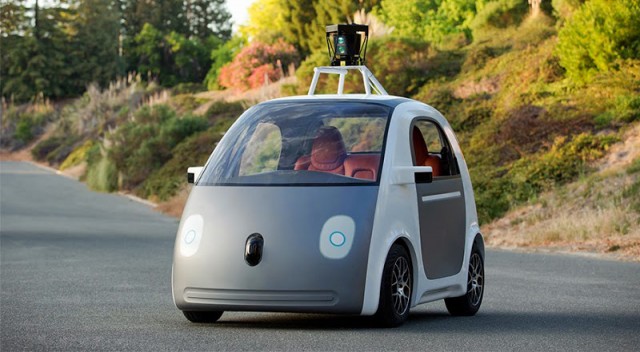
 Google has just unveiled its very first, built-from-scratch-in-Detroit, self-driving electric robot car. The culmination of years worth of research and development, the Google vehicle is undoubtedly cuter in appearance than other EV cars – like the Tesla Model S or Toyota Prius. In fact, it looks more like a Little Tikes plastic car, right down to smiley face on the front end. This is no doubt the result of clever marketing and an attempt to reduce apprehension towards the safety or long-term effects of autonomous vehicles.
The battery-powered electric vehicle has as a stop-go button, but no steering wheel or pedals. It also comes with some serious expensive hardware – radar, lidar, and 360-degree cameras – that are mounted in a tripod on the roof. This is to ensure good sightlines around the vehicle, and at the moment, Google hasn’t found a way to integrate them seamlessly into the car’s chassis. This is the long term plan, but at the moment, the robotic tripod remains.
 As the concept art above shows, the eventual goal appears to be to to build the computer vision and ranging hardware into a slightly less obtrusive rooftop beacon. In terms of production, Google’s short-term plan is to build around 200 of these cars over the next year, with road testing probably restricted to California for the next year or two. These first prototypes are mostly made of plastic with battery/electric propulsion limited to a max speed of 25 mph (40 kph).
Instead of an engine or “frunk,” there’s a foam bulkhead at the front of the car to protect the passengers. There’s just a couple of seats in the interior, and some great big windows so passengers can enjoy the view while they ride in automated comfort. In a blog post on their website, Google expressed that their stated goal is in “improving road safety and transforming mobility for millions of people.” Driverless cars could definitely revolutionize travel for people who can’t currently drive.
 Improving road safety is a little more ambiguous, though. It’s generally agreed that if all cars on the road were autonomous, there could be some massive gains in safety and efficiency, both in terms of fuel usage and being able to squeeze more cars onto the roads. In the lead-up to that scenario, though, there are all sorts of questions about how to effectively integrate a range of manual, semi- and fully self-driving vehicles on the same roadways.
Plus, there are the inevitable questions of practicality and exigent circumstances. For starters, having no other controls in the car but a stop-go button may sound simplified and creative, but it creates problems. What’s a driver to do when they need to move the car just a few feet? What happens when a tight parking situation is taking place and the car has to be slowly moved to negotiate it? Will Google’s software allow for temporary double parking, or off-road driving for a concert or party? 
Can you choose which parking spot the car will use, to leave the better/closer parking spots for someone with special needs (i.e. the elderly or physically disabled)? How will these cars handle the issue of “right of way” when it comes to pedestrians and other drivers? Plus, is it even sensible to promote a system that will eventually make it easier to put more cars onto the road? Mass transit is considered the best option for a cleaner, less cluttered future. Could this be a reason not to develop such ideas as the Hyperloop and other high-speed maglev trains?
All good questions, and ones which will no doubt have to be addressed as time goes on and production becomes more meaningful. In the meantime, there are no shortage of people who are interested in the concept and hoping to see where it will go. Also, there’s plenty of people willing to take a test drive in the new robotic car. You can check out the results of these in the video below. In the meantime, try not to be too creeped out if you see a car with a robotic tripod on top and a very disengaged passenger in the front seat!
Sources: extremetech.com, scientificamerican.com
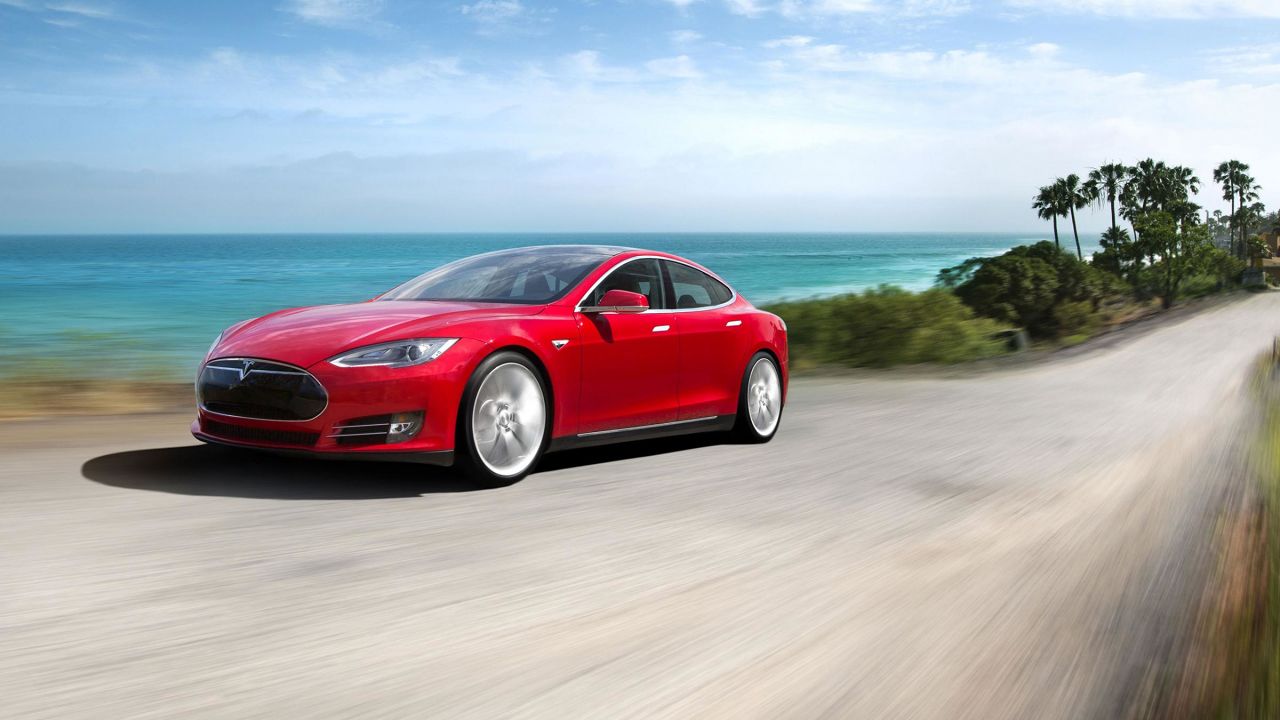 It’s official: all of Tesla’s electric car technology is now available for anyone to use. Yes, after hinting that he might be willing to do so last weekend, Musk announced this week that his companies patents are now open source. In a blog post on the Tesla website, Musk explained his reasoning. Initially, Musk wrote, Tesla created patents because of a concern that large car companies would copy the company’s electric vehicle technology and squash the smaller start-up.
 But that turned out to be an unnecessary worry, as carmakers have by and large decided to downplay the viability and relevance of EV technology while continuing to focus on gasoline-powered vehicles. At this point, he thinks that opening things up to other developers will speed up electric car development. And after all, there’s something to be said about competition driving innovation.
 And the move should come as no surprise. As the Hyperloop demonstrated, Musk is not above making grandiose gestures and allowing others to run with ideas he knows will be profitable. And as Musk himself pointed in a webcast made after the announcement, his sister-company SpaceX – which deals with the development of reusable space transports – has virtually no patents.
 As it stands, auto emissions account for a large and growing share of greenhouse gas emissions. For decades now, the technology has been in development and the principles have all been known. However, whether it has been due to denial, intransigence, complacency, or all of the above, no major moves have been made to effect a transition in the auto industry towards non-fossil fuel-using cars.


 Stories by Williams