
 Smart tattoos are the hot ticket item of modern medicine, combining ultra-thin electronics with flexible materials. When they become commonplace, they will be a great way to monitor vital signs and health. The only thing that seems to be holding them back, is finding a way to power them. Tiny batteries are one possibility, but lack practicality, and microwaves are several years away from being feasible.
Luckily, Joseph Wang – a researchers from UCSD – has come up with a way to generate power for these devices without using any external equipment. The secret, is to harness electrons from lactate acid secreted in sweat. These acids are produced when our muscles work to exhaustion, a waste product that causes muscles to “burn”, but which the brain thrives upon. Hence why it is the endpoint in lactate’s metabolization cycle.
 When lactate was discovered to be released in sweat, exercise physiologists began developing sensor technology to measure its levels in the sweat and blood. Wang has taken the next logical step of adding provisions to accumulate charge when lactate is enzymatically sensed. By embedding enzymes that process lactate into the tattoo, he was able to extract 70 microwatts per cm² of skin.
The only catch with this tattoo is that you need to be hot – as in pedaling your heart out on a bike for 30 minutes – to get the lactate out. That, however, may not be a barrier to this technology, since it is possible to selectively activate the sympathetic nerves that control the sweat glands in a discrete patch of skin. That way, you override the normal control and can sweat without the heat or exertion.
 The other part of the puzzle would be to actually generate the lactic acid. Preferably, this would be done locally as well, rather than having to have high levels circulating in the blood. But in the end, such steps would not even be necessary considering that a vitals and health monitoring that occurs into a workout – after an initial warm-up and good sweat have taken place – could be just what the doctor ordered (no pun intended!).
Other researchers have already imagined e-tattoos to read your thoughts and desires, either by reading unvocalized words or EEG readings. And compared to past generations of sensor devices, these tattoos represent a sophisticated electronic package with on-board signal processing and communications. With a discrete way to power such devices, a formidable tool for self discovery might be had.
Source: extremetech.com, acs.org
 In a first amongst firsts, a team of international researchers have
 This is a phenomenon whereby a person sees flashes of light, without light actually hitting the retina. The recipient “sees” these phosphenes at the bottom of their visual field, and by decoding the flashes — phosphene flash = 1, no phosphene = 0 — the recipient can “read” the word being sent. While this is certainly a rather complex way of sending messages from one brain to another, for now, it is truly state of the art.
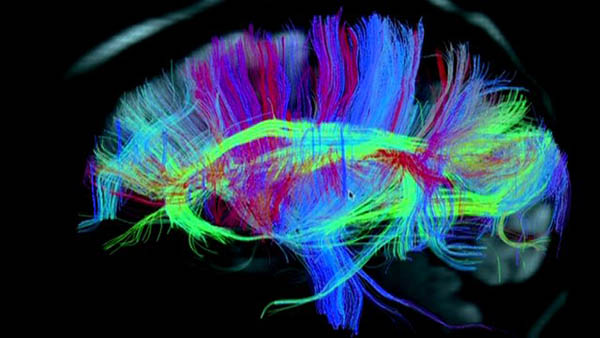
 Brainwaves can now be used to control an impressive number of things these days: prosthetics, computers, quadroptors, and even cars. But recent research released by the Technische Universität München (TUM) in Germany indicates that they might also be used to flying an aircraft. Using a simple EEG cap that read their brainwaves, a team of researchers demonstrated that thoughts alone could navigate a plane.
 According to the researchers, the accuracy with which the test subjects stayed on course was what was truly impressive. Not to mention the fact that the study participants weren’t all pilots and had varying levels of flight experience, with one having no experience at all. And yet, of the seven participants, all performed well enough to satisfy some of the criteria for getting a pilot’s license. Several of the subjects also managed to land their planes under poor visibility.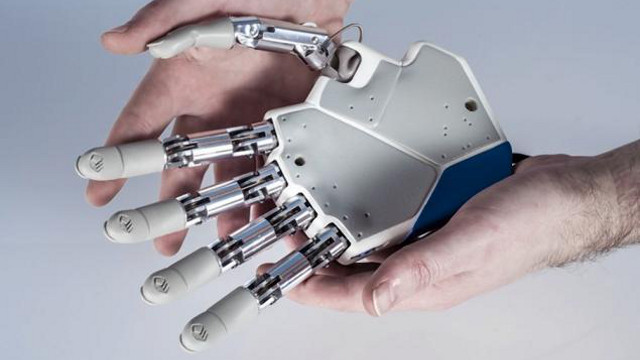



 Stories by Williams