Your Reputation: The Currency of the Future

reputation_marketingNot too long ago, I did something I haven’t done in a long time and wrote a conceptual post, one which dealt with the concept of the “Internet of Things” and where its leading us. In that spirit, and in the hopes of tackling another concept which has been intriguing me of late, I wanted to delve into this thing known as Reputation Marketing, also known as the Trust Economy.

Here too, the concept has been batted around of late, and even addressed in a Ted Talks lecture (see below). And much like the Internet of Things, it addresses a growing trend that is the result of the digital revolution and everything we do online. To break it down succinctly, Reputation Marketing states that as more and more of our activities are quantified online, our behavior will become commodified, and our actions will become the new currency.
Facebook Reece ElliottAt the heart of this trend is such things as social media, online shopping, and online reviews. With everything from used goods, furniture, clothing and cars to accommodations up for review, people are turning to web-based recommendations like never before. In fact, a 2012 study done by Neilsen Media Research suggested that 70% of all consumers trust online reviews,  which are now second only to personal recommendations.

For some, this represents a positive development, since it means we are moving away from the depersonalized world of institutional production toward a new economy built on social connections and rewards. One such person is Marina Gorbis, who explores the development of what she calls socialstructing in her book The Nature Of The Future: Dispatches From The Socialstructed World. 
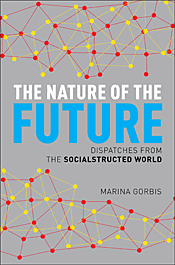
NatureOfTheFuture_cover_sml_01In Gorbis’ view, in addition to new opportunities, socialstructing will present new challenges as well. For one, there will be exciting opportunities to create new kinds of social organizations – systems for producing not merely goods but also meaning, purpose, and greater good. But at the same time, there is a possibility that this form of creation will bring new inequities, and new opportunities for abuse.

But at the same time, Gorbis was sure to point out the potential negative consequences. In the same way that one acquires friends on Facebook, or followers on Twitter, people in the near future could be able to hoard social connections for the sake of money, fame, or social standing. Basically, we need to understand the potential disadvantages of socialstructing if we are to minimize the potential pitfalls.

future_money_bitcoinOne such development she points to as an example is the rise of social currencies, such as Paypal, Bitcoin, and others. These operate much differently than regular currencies, as they are intended to facilitate social flows that often operate not on market principles but on intrinsic motivations to belong, to be respected, or to gain emotional support. But once these connections and flows begin to be measured, they may acquire a value of their own.

Basically, if we begin to value these currencies, motivations will arise (not necessarily altruistic ones) to acquire them. So instead of turning market transactions into social flows, we might be turning social interactions into market commodities. In the words of sociologist Chase, we would be applying ontic measurements to ontological phenomena. Or as she puts it in her book:

We created social technologies. Our next task is to create social organizations: systems for creating not merely goods but also meaning, purpose, and greater good. Can we imagine a society of “private wealth holders whose main objective is to lead good lives, not to turn their wealth into capital?” asks political economist Robert Skidelsky. Or better yet, might they turn their wealth into a different kind of capital—social, emotional, or spiritual? Our technologies are giving us an unprecedented opportunity to do so.
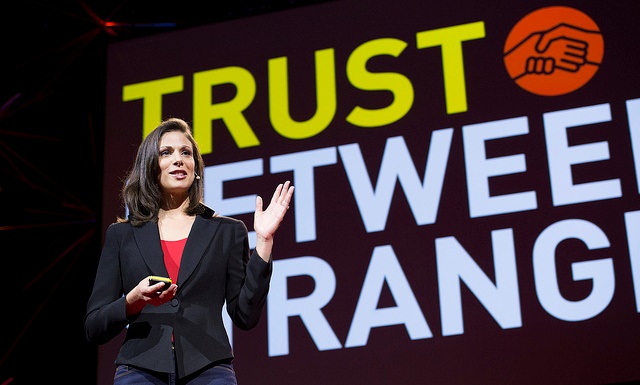
botsman-tedAnother person who sees this as a positive development is Rachel Botsman – consultant, author, former director at the William J. Clinton Foundation, and founder of the Collaborative Lab. In her ongoing series of lectures, consultations, and her book What’s Mine Is Yours: The Rise of Collaborative Consumption, she addresses the transformative power collaboration will have, giving rise to such things as “reputation capital” and the “reputation economy”.

In her 2012 Ted Talks lecture she explained how there’s been an explosion of collaborative consumption in recent years. This has embraced everything from the web-powered sharing of cars, to apartments, and even skills. In short, people are realizing the power of technology to enable the sharing and exchange of assets, skills and spaces in ways and on a scale that was never before possible.

collaborative_consumptionBut the real magic behind collaborative consumption, she explained, isn’t in the inventory or the money. It’s in using technology to build trust between strangers, something which is rarely available in the current industrialized, commodities market. Whereas this top-down economic model relies on depersonalized methods like brand name recognition and advertising to encourage consumption, this new model is far more open and democratic.

It is for this reason, and because of the potential it has for empowerment, that Botsman is such an advocate of this emerging trend. In addition to offering opportunities for micro-entrepreneurs , it also provides people with the chance to make human connections and rediscover a “humanness” that has been lost along the way. By engaging in marketplaces that are built on personal relationships, as opposed to “empty transactions”, people are able to reconnect.

future_moneyThe irony in this, as she states, is that this emerging trend is actually taking us back to old market principles which were thought to have been abandoned with modern industrial economy. Much like how Envisioning Technology predicted with their recent infographic, The Future of Money, this decentralizing, distributed trend has more in common with bartering and shopping at the local agora.

Basically, these behaviors – which predate all the rationalization and vertical/horizontal integration that’s been taking place the industrial revolution – are hardwired into us, but are being updated to take place in the “Facebook age”. Through connections enables by internet access and a worldwide network of optic cables, we are able to circumvent the impersonal economic structures of the 20th century and build something that is more akin to our needs.

future_money2Or, as Botsman summarized it in her article with Wired UK:

Imagine a world where banks take into account your online reputation alongside traditional credit ratings to determine your loan; where headhunters hire you based on the expertise you’ve demonstrated on online forums such as Quora… where traditional business cards are replaced by profiles of your digital trustworthiness, updated in real-time. Where reputation data becomes the window into how we behave, what motivates us, how our peers view us and ultimately whether we can or can’t be trusted…

Another potential irony is the fact that although online shopping does allow people to avoid face-to-face interactions at their local store, it also draws customers to businesses that they may not have otherwise heard about. What’s more, online reviews of local businesses are becoming a boon to entrepreneurs, expanding on the traditional power of written reviews and word of mouth.

And at the risk of making a shameless plug, this all puts me in mind of a short story I wrote back in April, as part of the April 2013 A to Z Challenge. It was called Repute, and deals with a young executive in charge of hiring new talent, in part based on what I referred to as their Reputation Index Placement (RIP), which was basically a tabulation of their digital presence. Like I said, the concept has been on mind for some time!

And of course, be sure to check out Botsman full lecture below:


Sources:
fastcoexist.com, wired.co.uk, ted.com
, envisioning.io
3-D Printed Prosthetics: The Open Hand Project

Open_Hand3-D Printing has been a boon for a number of industries, offering a cheaper method of production and sending those savings onto the consumer. One such industry is prosthetics, which is taking advantage of the new technology to cheaply generate all the components needed to create robotic replacement limbs. And with the proliferation of models, amputees and accident victims have a range of options that was previously unimaginable.

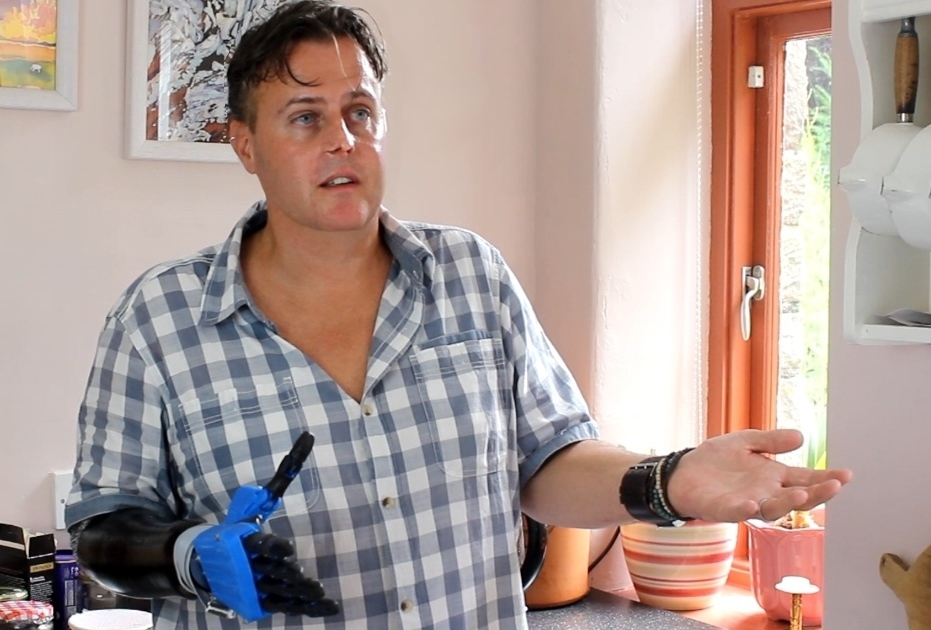
The latest comes to us from Bristol in the UK, where the robotics company known as The Open Hand Project has developed a robot limb that is cheaply produced and can be purchased for under £650 (or roughly $1000 US). At this price, their prosthetic device – known as the Dextrus robot hand = is significantly cheaper than existing robotics technology.

Open_hand3Inventor Joel Gibbard first came up with the idea for the Dextrus robotic hand while studying Robotics at the University of Plymouth in 2011. He developed a prototype for his final-year project before leaving to work for National Instruments. After two years in the workplace, he left his job in March 2013 to launch the Open Hand Project, an open-source venture that aims to make robotic prosthetic hands accessible for people in the developing world.

Gibbard’s hand relies entirely on off-the-shelf DC motors with a spool on the end that connects to a steel “tendon” that can be tightened and loosened when the user wants to move their fingers. The outer casing is composed of 3D-printed plastic parts that act like bones while a rubber coating acts as the skin. The user can control the fingers using electomyographical signals picked up from the muscle in their arm using stick-on electrodes.

open_hand2As Gibbard explained in an interview with Wired magazine:

Each finger is individually actuated so you can grasp funny shaped objects. It’s not all that complicated. I’ve put a little tensioner in between each one so you have a bit of mechanical compliance. Even if an amputee has lost their hand, all of the muscles are still in the forearm and they can still flex them, so you can use that signal.

Already, the prosthesis was tested out by a chef named Liam Corbett, who lost his hand to meningitis two years ago and contacted Gibbard via Facebook when he heard about the Open Hand Project. According to Corbett, he was very impressed with the device and said that:

I think it’s certainly going to enable me to do the finer things in life which I certainly haven’t been able to do with a hook… I would be proud to wear this, it would make me feel more confident.

open_hand1Gibbard hopes to refine the design to cut down on the electrical noise it produces, and to develop specialized software to configure the electrodes to simplify the calibration process. Back in September, he opened up a crowdfunding campaign with Indiegogo to raise the necessary money. As of writing this article, he has surpassed his goal of £39,000 and raised a total of £41,065.

However, there is still four days left before the campaign closes. So if you want to donate, thus enabling GIbbard and his colleagues to refine the design further, simply click here and follow the prompts. And be sure to check out the Indiegogo video to see how the hand works:


Sources: wired.co.uk, indiegogo.com

A Kinder, Gentler Internet: Youtube Algorithm Screens Comments

youtube_commentsThere’s scarcely a soul among us who hasn’t watched a video on YouTube. But have you ever stuck around long enough to read the comments section? It’s like a leper colony for the mind, a vindication for misanthropes everywhere. And after many years of being at the forefront of rudeness, racism, and generalized dumbassery, the YouTube comment section is getting a clean up.

Whereas the old system worked by placing the latest comments at the top nearest the video, regardless of their relevance or lack of redeeming content. The new system will employ a series of algorithms to determine what each viewer will find most relevant. This includes comments from your friends, from the video creator, and from “popular personalities” (i.e. celebs of one type or another).

youtube_convoBut it doesn’t stop there. Currently, since comments are displayed as they come in, making the act of following a conversation difficult at best. But from now on, the site will feature threaded conversations, which is consistent with Google policy, the site’s now owners. As for private conversations, the new platform will be powered by Google+, allowing users the option of deciding who they want their posts and videos to be visible to.

Additionally, there will be a sort of cross-posting between YouTube and Google+. If you post a YouTube video on Google+ and some one comments on it there, the comment will show up on the video over at YouTube, too. Alternatively, they could choose to have their comment only show up on YouTube, or only show up on Google+. There’s a lot more control.

googleplus-conversation

But perhaps most importantly of all, there are new filters that will be in place. As it stands, YouTube commenters enjoy total anonymity, which allows them to post racist, sexist, homophobic and vitriolic comments without fear. And while content creators can choose to allow all or no comments, or manually approve each comment, this is completely impractical for videos that garner millions of views a week.

But now, YouTube is introducing filters that will make it easier. The new filters basically allow content creators to not only be able to assign people to an Approved list or a Blocked list (which will auto-approve or auto-reject comments, respectively), they will be able to add keywords to a Blacklist. This will flag comments that contain those words and send them into a special list which can be reviewed and approved/rejected later.

ConversationPrism_2880x1800The threaded comments feature and began to be put into effect a little over a week ago. Filters were made available at the same time for channel pages only, but in the months to come they’ll become available for every individual video, giving content creators and commenters more control over the conversations they participate in. Basically, it will still be YouTube, but with some Facebook-like privacy and content filters.

And while many might deplore these new rules as an example of heavy handed “internet censorship”, there are many more who believe this change is overdue in coming. And given that the control rests with the users, who have the ability to share or be private, and to filter specific kinds of content, the basic spirit of a democratic, open forum remains.

Source: gizmodo.com

A Kinder, Gentler Internet: California’s “Erase Button”

cyber bullyingIn the early nineties, the internet was greeted with immense optimism and anticipation. Scarcely a week went by without some major personality – Al Gore and Bill Gates come to mind – championing its development, saying it would bring the world together and lead to “the information age”. After just a few years, these predictions were being mocked by just about everyone on the planet who had access.

Rehtaeh_ParsonsYes, despite all that has been made possible by the internet, the heady optimism that was present in those early days seem horribly naive by today’s standards. In addition to making virtually any database accessible to anyone, the world wide web has also enabled child pornographers, hate speech, conspiracy theorists and misinformation like never before.

What’s more, a person’s online presence opens them to new means of identity theft, cyberbullying, and all kinds of trolling and harassment. Who can forget the cases of Amanda Todd or Rethaeh (Heather) Parsons? Two young women who committed suicide due to relentless and disgusting bullying that was able to take place because there simply was no way to stop it all.

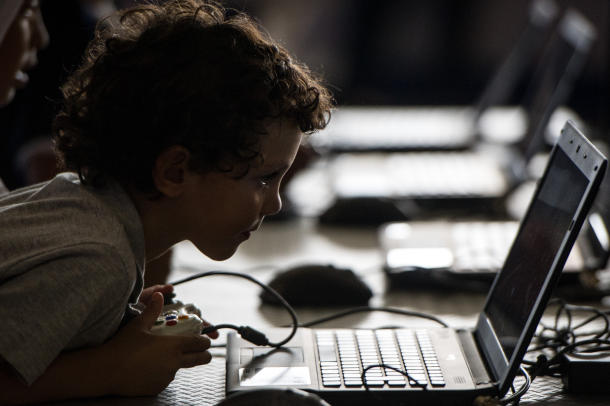
amanda_toddsuicide.jpeg.size.xxlarge.letterboxAnd with the ever expanding online presence of children and youths on the internet, and little to no controls to monitor their behavior, there are many campaigns out there that hope to reign in the offenders and protect the users. But there are those who have gone a step further, seeking to put in place comprehensive safeguards so that trollish behavior and hurtful comments can be stopped before it becomes a permanent part of the digital stream.

One such person is California Governor Jerry Brown, who recently signed a bill into law that requires all websites to provide an online “erase button” for anyone under 18 years of age. The stated purpose of the law is to help protect teens from bullying, embarrassment and harm to job and college applications from online posts they later regret. The law, which is designated SB568, was officially passed on Sept. 23rd and will go into effect Jan 1st, 2015.

kid-laptop-156577609_610x406Common Sense Media, a San Francisco based non-profit organization that advocates child safety and family issues, was a major supporter of the bill. In a recent interview, CEO James Steyer explained the logic behind it and how it will benefit youths:

Kids and teens frequently self-reveal before they self-reflect. In today’s digital age, mistakes can stay with and haunt kids for their entire life. This bill is a big step forward for privacy rights, especially since California has more tech companies than any other state.

The law is not without merit, as a 2012 Kaplan survey conducted on college admissions counselors shows. In that study, nearly a quarter of the counselors interviewed said they checked applicants’ social profiles as part of the admission process. Of those counselors, 35% said what they found – i.e. vulgarities, alcohol consumption, “illegal activities” – negatively affected their applicants’ admissions chances.

smartphoneteensBut of course, the bill has its share of opponents as well. Of those who voted against it, concerns that the law will burden websites with developing policies for different states appeared to be paramount. Naturally, those who support the bill hope it will spread, thus creating a uniform law that will remove the need to monitor the internet on a state-by-state basis.

At present, major social media sites such as Facebook, Twitter, Instagram and Vine already allow users of any age to delete their posts, photos and comments. California’s “eraser button” law requires that all websites with users in the state follow this policy from now on. And given the presence of Silicon Valley and the fact that California has one of the highest per capita usages of the internet in the country, other states are sure to follow.

facebook-privacyThe new law also prohibits youth-oriented websites or those that know they have users who are minors from advertising products that are illegal to underage kids, such as guns, alcohol and tobacco. Little wonder then why it was also supported by organizations like Children NOW, Crime Victims United, the Child Abuse Prevention Center and the California Partnership to End Domestic Violence.

In addition to being a legal precedent, this new law represents a culmination of special interests and concerns that have been growing in size and intensity since the internet was first unveiled. And given the recent rise in parental concerns over cyberbullying and teen suicides connected to online harassment, its hardly surprising that something of this nature was passed.

Sources: news.cnet.com, cbc.ca, huffingtonpost.com

The Grand Old Word Count

sb10067155f-001A little while ago, I saw a challenge – not sure where, could have been Goodreads or Facebook – where indie authors were challenged to take all the stories they had written and tabulate a total word count for them. Like a lot of writing exercises, it was clearly designed to put things in perspective.

All too often, writers can get hung up on sales numbers or the total number of books they’ve managed to get out there. Especially for indies, these numbers can seem underwhelming or discouraging at times. So naturally, its fun to take a look at some bigger numbers and see just how much we’ve really shared, because that is what writing is all about right?

So I did my grand total. And just for some added perspective, here’s some other big numbers for comparison. The average person has a vocabulary of between 35,000 – 75,000 words*, depending on their age, level of education, and life experience. And in the course of a day, people speak between 7,000 and 20,000 words, depending on their gender (apparently, women speak more than men)**.

ar_storybookBetween Data Miners, Whiskey Delta, Papa Zulu (yet to be published, but is complete), my Legacies short stories, Source, my Yuva shorts, and other assorted tales I’ve put up on this site, my grand total of words is:

531,944 words published so far!

And that doesn’t include the countless words that are sitting in my Stories folder that haven’t been published yet. I’m telling you, there has to be at least 250,000 words between all those unfinished stories, novellas, and shorts. So I really can’t count those… yet!

word_cloudBut I would be remiss if I didn’t include the roughly 1250 articles I’ve published on this site. God only knows how many words I’ve spewed in those! Obviously, I’m not about to add them all up, but a random sampling of five articles put the average at about 2000 words each. Multiply that by 1250 articles and you’ve got… oh my God… 2.5 million words!

Okay, let’s upgrade that then to roughly 3.000.000 words published so far. So basically, in the two and half years that I’ve been running this blog, I’ve written the equivalent of what an average man speaks in the course 428 days straight, or the average woman does in 150 days. Is it me, or is that nuts?

And now I put it to you indie writers… between your indie published stories, blog, articles, short stories, novellas, full-length novels, and flash fiction, just how many words have you generated and shared with the world?

*bbc.co.uk

**dailymail.co.uk

Cyberwars: Massive Government Surveillance Uncovered!

wire_tappingOn Friday, Washington DC found itself embroiled in controversy as revelations were made about the extent to which US authorities have been spying on Americans in the last six years. This news came on the heels of the announcement that the federal government had been secretly cataloging all of Verizon’s phone records. No sooner had the dust settled on that revelation that it became known that the scope of the Obama administration’s surveillance programs was far greater than anyone had imagined.

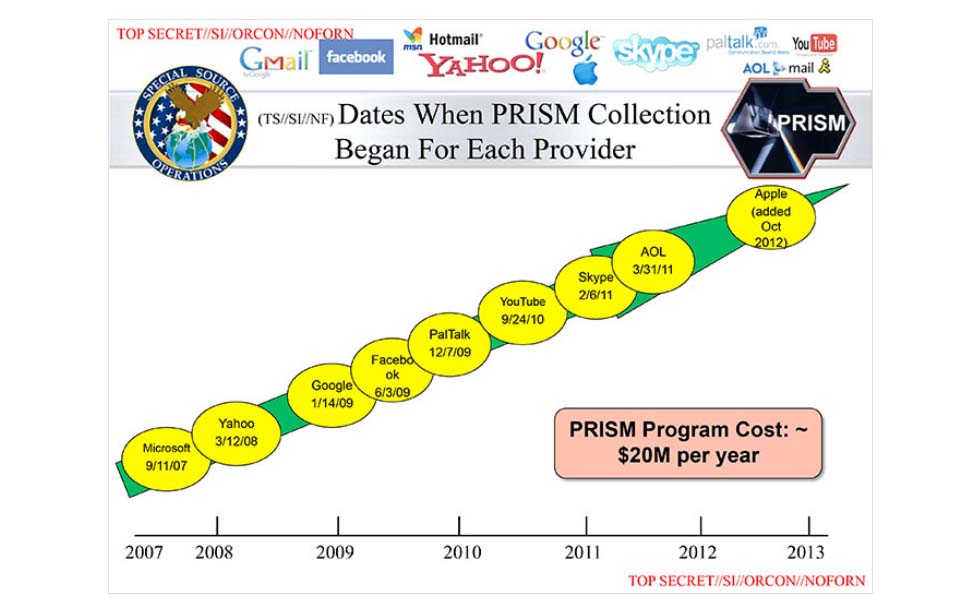
According to updated information on the matter, it is now known that The National Security Agency (NSA) and the FBI have been tapping directly into the central servers of nine leading U.S. Internet companies, extracting everything from audio and video chats, photographs, e-mails, documents, and connection logs that would enable their analysts to track foreign targets.

prism3This information was revealed thanks to a secret document that was leaked to the Washington Post, which shows for the first time that under the Obama administration, the communication records of millions of US citizens are being collected indiscriminately and in bulk – regardless of whether they are suspected of any wrongdoing. Equally distressing is the names being named: U.S. Service Providers such as Microsoft, Yahoo, Google, Facebook, PalTalk, AOL, Skype, YouTube, Apple.

The document further indicates that all of this has been taking place since 2007, when news disclosures, lawsuits and the Foreign Intelligence Surveillance Court forced then-president George W. Bush to look for new authority to justify his program warrantless domestic surveillance. It’s continuance and expansion under Obama has created a great deal of understandable intrigue, and not only because of promises made that “illegal wiretapping” would not take place under his watch.

prism1The joint FBI-NSA program responsible for mining all the data is known as PRISM, and it may very well be the first of its kind. While the NSA and FBI have a long history of monitoring suspects via phone records and computer activity, and are both accustomed to corporate partnerships that help it divert data traffic or sidestep barriers, such a vast program has never before been possible. In the current information age, there is an immense wealth of information out there, and where better to access all of this than in Silicon Valley?

Not long after the news broke in Washington, London’s Guardian reported that GCHQ, Britain’s equivalent of the NSA, also has been secretly gathering intelligence from the same internet companies through an operation set up by the NSA. According to the same leaked information, PRISM appears to allow the GCHQ to circumvent the formal legal process required in Britain to seek personal material such as emails, photos and videos from an internet company based outside of the country.

prism2But perhaps worst of all is the fact that this process is entirely above board, at least for the companies involved. Back in 2007, Congress passed the Protect America Act, and then in 2008 followed it up with the FISA Amendments Act, both of which immunized private companies that cooperated voluntarily with U.S. intelligence collection against prosecution. And late last year, when critics in Congress sought changes in the FISA Amendments Act, the only lawmakers who knew about PRISM were bound by oaths of office to hold their tongues.

An anticipated, a bi-partisan amalgam of Senators came out to defend the initial reports of phone record monitoring shortly after it was announced. In a rare display of solidarity that cut across party lines, Democrats and Republicans from both the Senate and House came forward to say that the program was justified, only spied on terrorists, and that law-abiding citizens need not worry.

National Security Agency - aerial view
National Security Agency – aerial view

Once again, the argument “if you’ve done nothing wrong, you’ve got nothing to fear” finds itself employed by people who do not want to voice criticisms about a government spying program. Echoes of the Bush administration and McCarthy era all over again. Needless to say, all of this has many people worried, not the least of which are people opposed to government intrusion and the protection of privacy for the past decade.

Ever since it became possible to “mine data”  from numerous online digital sources, there has been fear that corporations or governments might try to ascertain the habits and comings and goings of regular people in order to effectively monitor them. For some time now, this sort of monitoring has been somewhat benign, in the form of anticipating their spending habits and using targeted advertising. But always, the fear that something more sinister and totalitarian might emerge.

government-surveillanceAnd with the “War on Terror”, the Patriot Act, domestic warrantless wiretapping, the legitimization of torture, and a slew of other crimes the Bush administration was indicted in, people all over the world have become convinced that “Big Brother” government is just around the corner, if indeed it is not already here.

The fact that such processes have continued and even expanded under Obama, a man who originally pledged not to engage in such behavior, has made a bad situation worse. In many ways, it demonstrates that fears that he too would succumb to internal pressure were justified. Much as he was won over by the Pentagon and CIA to continue the war in Afghanistan and UAV programs, it seems that the constellation of FBI and NSA specialists advising him on domestic surveillance has managed to sway him here as well.

Stealth-Wear1One can only hope that this revelation causes the federal government and the Obama administration to reconsider their stances. After all, these are the same people who were convinced to stand down on the use of UAVs in oversees operations and to take measures that would ensure transparency in the future. We can also hope that the NSA and FBI will be required to once again have to rely on the court system and demonstrate “just cause” before initiating any domestic surveillance in the future.

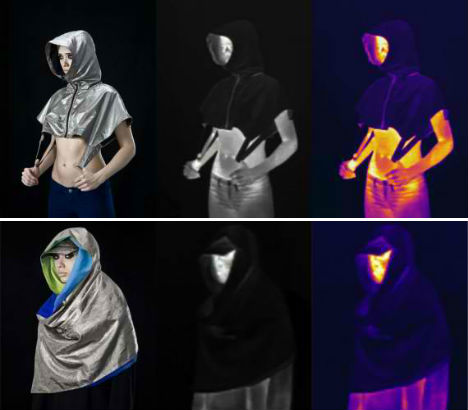
Otherwise, we might all need to consider getting our hands on some stealth wear and personal cameras, to shield ourselves and create an environment of “sousveillance” so we can spy on everything the government does. Might not hurt to start monitoring the comings and goings of every telecommunications and Silicon Valley CEO while were at it! For as the saying goes, “who watches the watchers?” I’ll give you a hint: we do!

Also, be sure to check out the gallery of artist Adam Harvey, the man who pioneered “stealth wear” as a protest against the use of drones and domestic surveillance. To learn more about sousveillance, the concept of a society monitored by common people, check out Steve Mann’s (inventor of the EyeTap) blog.

Sources: washingtonpost.com, guardian.co.uk, policymic.com, ahprojects.com, eyetap.blogspot.ca


The Future of the Classroom

virtual_learning2As an educator, technological innovation is a subject that comes up quite often. Not only are teachers expected to keep up with trends so they can adapt them into their teaching strategies, classrooms,and prepare children in how to use them, they are also forced to contend with how these trends are changing the very nature of education itself. If there was one thing we were told repeatedly in Teacher’s College, it was that times are changing, and we must change along with them.

And as history has repeatedly taught us, technological integration not only changes the way we do things, but the way we perceive things. As we come to be more and more dependent on digital devices, electronics and wireless communications to give us instant access to a staggering amount of technology, we have to be concerned with how this will effect and even erode traditional means of information transmission. After all, how can reading and lecture series’ be expected to keep kid’s attention when they are accustomed to lighting fast videos, flash media, and games?

envisioning-the-future-of-education

And let’s not forget this seminal infographic, “Envisioning the future of educational technology” by Envisioning Technology. As one of many think tanks dedicated to predicting tech-trends, they are just one of many voices that is predicting that in time, education will no longer require the classroom and perhaps even teachers, because modern communications have made the locale and the leader virtually obsolete.

Pointing to such trends as Massive Open Online Courses, several forecasters foresee a grand transformation in the not too distant future where all learning happens online and in virtual environments. These would be based around “microlearning”, moments where people access the desired information through any number of means (i.e. a google search) and educate themselves without the need for instruction or direction.

virtual_learning3The technical term for this future trend is Socialstructured Learning = an aggregation of microlearning experiences drawn from a rich ecology of content and driven not by grades but by social and intrinsic rewards. This trend may very well be the future, but the foundations of this kind of education lie far in the past. Leading philosophers of education–from Socrates to Plutarch, Rousseau to Dewey–talked about many of these ideals centuries ago. The only difference is that today, we have a host of tools to make their vision reality.

One such tool comes in the form of augmented reality displays, which are becoming more and more common thanks to devices like Google Glass, the EyeTap or the Yelp Monocle. Simply point at a location, and you are able to obtain information you want about various “points of interest”. Imagine then if you could do the same thing, but instead receive historic, artistic, demographic, environmental, architectural, and other kinds of information embedded in the real world?

virtual_learningThis is the reasoning behind projects like HyperCities, a project from USC and UCLA that layers historical information on actual city terrain. As you walk around with your cell phone, you can point to a site and see what it looked like a century ago, who lived there, what the environment was like. The Smithsonian also has a free app called Leafsnap, which allows people to identify specific strains of trees and botany by simply snapping photos of its leaves.

In many respects, it reminds me of the impact these sorts of developments are having on politics and industry as well. Consider how quickly blogging and open source information has been supplanting traditional media – like print news, tv and news radio. Not only are these traditional sources unable to supply up-to-the-minute information compared to Twitter, Facebook, and live video streams, they are subject to censorship and regulations the others are not.

Attractive blonde navigating futuristic interfaceIn terms of industry, programs like Kickstarter and Indiegogo – crowdsources, crowdfunding, and internet-based marketing – are making it possible to sponsor and fund research and development initiatives that would not have been possible a few years ago. Because of this, the traditional gatekeepers, aka. corporate sponsors, are no longer required to dictate the pace and advancement of commercial development.

In short, we are entering into a world that is becoming far more open, democratic, and chaotic. Many people fear that into this environment, someone new will step in to act as “Big Brother”, or the pace of change and the nature of the developments will somehow give certain monolithic entities complete control over our lives. Personally, I think this is an outmoded fear, and that the real threat comes from the chaos that such open control and sourcing could lead to.

Is humanity ready for democratic anarchy – aka. Demarchy (a subject I am semi-obsessed with)? Do we even have the means to behave ourselves in such a free social arrangement? Opinion varies, and history is not the best indication. Not only is it loaded with examples of bad behavior, previous generations didn’t exactly have the same means we currently do. So basically, we’re flying blind… Spooky!

Sources: fastcoexist.com, envisioningtech.com

Fundawear: A New Era of Cybersex!

long_distanceloverHave you ever experienced the frustrations and difficulty of a long-distance relationship? My wife and I did during the first few years of our courtship. And let me tell you, there’s few things worse than to be in love with someone and not be able to see them. And even in this age of high-tech communications, where we are able to talk, Skype, instant message, email and text, the physical barrier created by space can still be a killer. Luckily, the condom company Durex is working on a  solution…

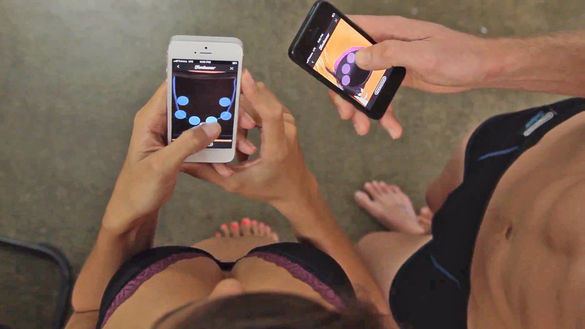
It’s called Fundawear, a new type of undergarment that is outfitted with electronic pulses that lets couples – or willing cybersexers – send physical touches to each other via remote control. Using a smartphone or tablet, the sender initiates contact by simply stroking the touchscreen, and the recipient receives a mild shock on their sensitive spots.  To make things fun, the jolt can happen anywhere the underwear has contact with the skin.

fundawearThe key word here is mild, just in case anyone is thinking that the underwear is for those who have an extreme BDSM fetish! But then again, stranger things have happened haven’t they? Of course, it should be noted that the Fundawear is not yet a mass-market product, but the company is having a contest on its Australian Facebook page and hints that those who enter will be eligible to win a pair.

Created in conjunction with the advertising firm Havas Sydney, Fundawear is Durex’s first attempt at a connected product. It comes in both women’s and men’s designs, offering stimulation for men around the nether regions, and for women in both the chest and nether area. And who knows? Given time and added guarantees of safety, we could be looking at the future of cybersex. I guess guys like Gibson were wrong, cyber stuff really isn’t all dark!

cybersexTo check it the FB contest, click here, and be sure to watch the video of the Fundawear in action below:


Source:
fastcocreate.com

Selling Yourself: The Future of Advertising

DNA-1If you thought your world was already permeated enough by adspace, hang on to your hat! According to =researchers and geneticists, the age of genetic-based advertising is right around the corner, and is likely to be even more profitable than internet, television, radio or billboard ads ever were! Yes, in this brave new future, selling yourself will take on literal dimensions, with people signing over their genetic information and tailoring what ads they receive based on that very same thing.

Call it another unintended consequence of the Human Genome Project and ENCODE, which the latter of which recently finished cataloging the function of every part of the human genome. Or it could just be a case of advertising and the commercial industry making inroads, following the path traced by researchers and scientists in the hopes of finding the next place to saturate with ads.

dna_selfassemblyRegardless, geneticist Michael Schatz of the Cold Spring Harbor Laboratory sums up the possibility as follows:

Today, it’s such a niche market, but there’s tremendous growth opportunities there. In the endgame, it’s certain [genetics is] going to become one of the factors that big retailers would consider, but I think that’s pretty far off.

But as it turns out, it may not be as far off as he thinks. Already, a Minneapolis-based startup named Miinome is building a platform that will help consumers control what offers they get from retailers based on their genetic makeup, and to possibly cash in on the value of their DNA by selling the data back to marketers and researchers.

Through an open API, Miinome plans to collect genetic and environmental data mined from social networks like Twitter, Facebook and LinkedIn and run that through their proprietary algorithm to come up with a profile of you that’s richer than anything that exists on the internet today. Then, they will be able to infer what environmental factors and personal traits are likely to cause you concern, or gives rise to special needs.

dna-computingThese could something along the work-related stress and the problems associated with it – i.e. weight gain, hair loss, erectile dysfunction, etc. – and then recommend ads that would help the person address these. If a person so chooses to broadcast this kind of information to Miinome’s business partners, they could show you very targeted ads for weight loss supplements, hair care products, boner pills and anything else you might want.

The company, which is launching in closed beta this spring, will essentially be a repository and brokerage firm for your genetic information that will allow its members to choose what academic institutions, pharmaceutical companies or marketing firms can take a peek at which of their genes. Miinome, which boasts geneticist George Church and Autodesk’s Andrew Hessel as advisers, will essentially make money every time one of your traits is accessed by companies.

DNA-molecule2Whether you are for or against such an idea, you have to admit, it’s a pretty shrewd and sound business plan. In a company statement, Miinome CEO Paul Saarinen put forth the following mission statement:

We believe we can make your genetic information useful every day, not just when you’re sick. We’re the first member-controlled, portable human genomics marketplace.

Well, that’s one way to look at it. Another way would be to say that this is yet another invasion of people’s privacy, reaching beyond cookies and web-surfing habits to find a truly effective and intrusive way to spam them. Naturally, Saarinen also pointed out that everything will be opt-in and Miinome business partners won’t be able to get their hands on raw genetic data.

Still, one can expect privacy and human rights advocates to have something to say about this real soon!

 Source: Wired.com