My First Troll!

Wow, this is what it feels like to experience hate mail! I gotta say, I’m kind of flattered. It was in reference to my article “Dune and Its Descendents”, one of many in which I praised the late Frank Herbert for his amazing work over the years and bashed the work that has followed in his wake. Like many fans of the original books, my love for them is matched only by my disappointment with how the series ended.

Plenty of times I have encountered fans of the new books, and we’ve been able to have some spirited debate. Hell, I even conversed with Kevin J Anderson himself and managed to keep a civil tongue, partly out of sympathy because this guy gets TONS of hate mail! But this person, who goes by the name of Carlos, he really took the cake. Here’s what he said:

“Of course your the big idiot ever, since the creation of the universe. And you don’t understand the work of frank Herbert, or the deep: spiritual, scientific, artistic and philosophic work of this avatar, also the reality of science fiction (reality). Frank Herbert is a genius, like Tolkien, and if you don´t understand it, its because you don´t have brains or the intelligence needed to see it. Au dare you to say something so idiot from others work, in what brainless basis of yours? It makes no sense or logic, i only see envy, some ow, and a very small brain, even smaller than a desert rat.

Carlos”

How nice, he even signed his name. It’s like F*@@$% you, you unbelievable bastard! Sincerely, Troller. Well,  I would be inclined to reply to this… um … comment here, except for two things. One, the man’s name doesn’t provide a link that goes anywhere. And two, I don’t have the slightest freaking idea what the hell he’s on about.

Correct if I’m wrong but it sounds like he thinks I’m bashing Frank Herbert, not the work of Kevin J Anderson and Brian Herbert. And what the hell is this “avatar”, does he even know what that means? That would imply a stand in, which makes me think he IS defending these two authors. But their names never come up, and rarely do their works ever inspire such heartfelt defense of the words “genius” or “deep”. Mainly people just say that they’re alright and entertaining and not hurting anyone.

Ah well, I’m clearly over thinking this. Mainly, I’m just intrigued because this is the first hate mail I’ve ever received here, which makes me think I’m coming up in the world! And second, the vociferous and confused nature of it kind of amuses me. It’s good to believe that attacks against you are the result of misunderstandings and confused emotion, and not the result of disapproval you can actually understand and get behind.

Ah well, kudos Carlos. You will always be my first hater! I just wish I knew what the hell you were talking about.

Technology in the Dune Universe

Hello again techies and social studies experts! I’m sorry, I assume those are the only two kinds of people who would enjoy these posts 😉 Regardless, I love doing them, mainly because it gives me a chance to exercise a little critical thinking when it comes to some of the most popular franchises of science fiction.

And today, I thought I’d tackle the bid baddy of classic sci-fi, Mr. Frank Herbert himself. Whereas most writers in this expansive genre tend to take a highly positive or negative view, Herbert distinguished himself by being highly subtle, ambiguous and multilayered in his approach.

Far from saying technology would save humanity, or condemn it, he seemed to be arguing that it really wouldn’t alter our basic makeup and behavior. That, presumably, would only come with thousands of years of natural evolution, selective breeding and funky narcotics!

But I digress, here are some examples of the technologies that characterized the Dune universe:

Atomics:
stoneburnerEvery house in the Dune universe keeps a nuclear arsenal in reserve. However, since the Great Convention forbids their use in war, and anyone found in dereliction would guarantee their own obliteration, they are not employed. Everybody’s got em, nobody uses em! At least not anymore…

Their last known use occurred on Selusa Secundus many years before the events of the first novel. It was here that a rogue house employed several in an attempt to destroy House Corrin. The attempt failed and the house was eradicated, their name erased from history. Unfortunately, Selusa Secundus was left a radioactive ruin, hence why it was converted to serve as the Emperor’s prison planet.

However, one type of nuclear device is still legal under the Great Convention. Known as a Stone Burner, these devices emit powerful J-radiation that destroys eye-tissue, rendering everyone in the blast vicinity blind. However, their primary function is to burn through a planet’s crust. If they are powerful enough, they are able to burn clean through to a planet’s core and destroy them planet from within.

Axlotl Tank:
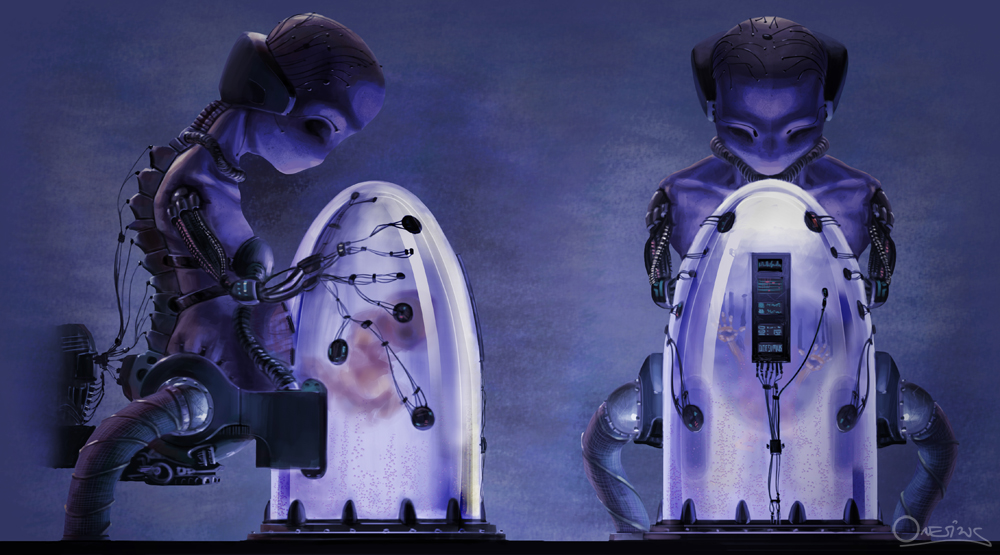
2007-8-18_DuneAxlotlTankThough widely used in the Dune universe, axlotl technology is also one of its most mysterious. A trade secret of the Tleilaxu, an axlotl tank is a “device for reproducing a living human being from the cells of a cadaver,” resulting in what is known as a ghola. In addition, the Tleilaxu Masters use these tanks in order to produce clones of themselves and keep their line going.

As the series progresses, axlotl tanks began being used to produce the spice melange, which had previously only been available on Arrakis. In time, it was also revealed that axlotl tanks were in fact Tleilaxu females, women whose bodies had been converted to grow gholas, clones and spice inside their wombs.

Guild Heighliner:
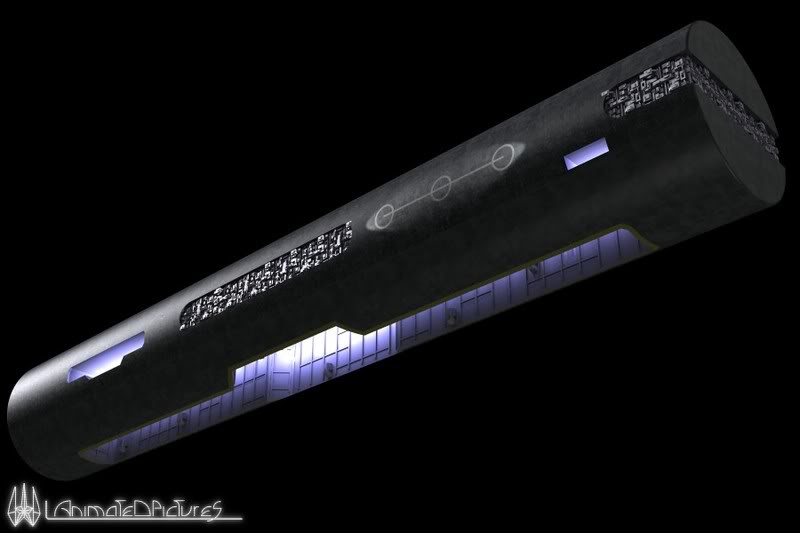
Dune_heighlinerThe principal means of interstellar transport in the Dune universe, a heighliner is a Guild ship that is capable of transporting massive amounts of people and cargo. Powered by the Holtzman Drive (see below) the ship is capable of “folding space” – jumping from one point in space-time to the next – instantaneously.

Each Guild Heighliner comes with its own navigator, a Guild mutant who uses their semi-prescient abilities to see through space and time to chart a safe rout for the ship to fly. The navigators do all this from inside their giant tanks where they remain immersed in spice gas.

Holtzman Drive:
foldspaceThis is the technology that allows Guild Heighliners to fold space, thus traveling instantaneously form one point in the universe to another. Using what is known as the “Holtzman Effect”, the same phenomena that powers personal shields as well as the catastrophic effect when one comes into contact with the beam of a lasgun.

Though it is never explained in detail, some hints are given throughout the series as to what principles of physics may be involved. For example, in Chapterhouse: Dune, an allusion was made to tachyon particles, the theoretical particle that can presumably travel faster than light.

Lasgun:
lasgunThe appendix of the first Dune novel, titled Terminology of the Imperium, defines Lasgun as follows:

continuous-wave laser projector. Its use as a weapon is limited in a field-generator-shield culture because of the explosive pyrotechnics (technically, subatomic fusion) created when its beam intersects a shield.

At one time, these directed energy weapons were the mainstay of Imperial armed forces. However, the development of shields meant that their use had to become more selective. Mounted on ships, ornithopters, and carried by infantry, lasguns remain a highly effective weapon, capable of cutting through any material.

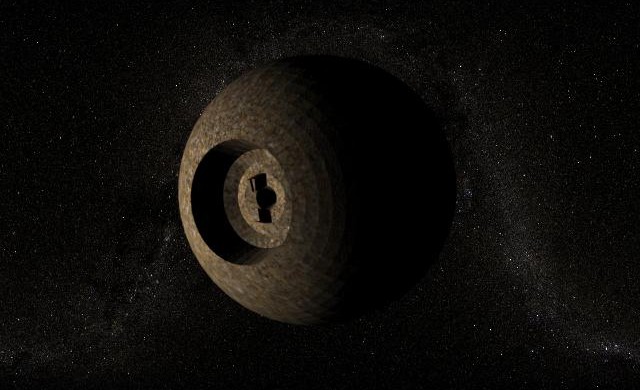
No-Chamber/No-Ship:
ixian_noshipThis technology was first mentioned in God Emperor of Dune and took the form of a No-Chamber. This Ixian invention was basically a chamber that was cloaked in a stealth field which blocked it from prescient vision as well as more conventional means of detection.

After the death of Leto II, this technology was expanded to include No-Ships and even No-Globes. The former were basically heighliners which were equipped with no-fields and the Ixian machine which did the job of a Guild Navigator. In essence, these ships were not only sheilded from prescient vision, but were invisible to sensors and even the naked eye.

No-Globes were an even larger version of the technology, capable of covering an entire planet in a no-field and rendering it both invisible to prescience, invisible to the naked eye and undetectable. However, in Heretics of Dune and Chapterhouse: Dune, it is suggested that those of Atreides ancestry are capable of seeing through no-fields. This proved to be the case when Miles Teg was awakened to his abilities after being examined with an Ixian T-probe. His ghola also had this ability once he was awakened to his past memories.

Ornithopter:
dune_thopter1In the Dune universe, ornithopters (or ‘thopters) are the principle means of planetary transportation. Combining jet thrusters with articulated wings, the thopter is capable of vertical takeoff and landing, making it one of the most versatile flying machines ever invented.

Though most are used for commercial and personnel transport, thopters are also capable of being militarized, and often are. Armed missiles, bombs, lasguns, and even shields, they are most effective when used in an assault and/or supporting role.

Personal Shields:
Holtzmanshields-Dune1984The Terminology of the Imperium defines them as follows: the protective field produced by a Holtzman generator. This field derives from Phase One of the suspensor-nullification effect. A shield will permit entry only to objects moving at slow speeds (depending on setting, this speed ranges from six to nine centimeters per second) and can be shorted out only by a shire-sized electric field.

While these shields can be mounted on aircraft, vehicles and even large structures, the most common use is in the form of personal shielding units. These are worn by infantry for battle or for the sake of combat training in order to prevent serious injury. The introduction of this technology to the battlefield had a regressionary effect on warfare in that it forced troops to largely abandon energy and ballistic weapons in favor of hand to hand combat. Hence why swords and knives are commonly used in the Dune universe.

Stillsuit:
stillsuitThe trade secret of the Fremen! Stillsuits, as the name suggests, are a water reclamation and purification system that are worn by the desert-dwelling nomads whenever they are out on the sand dunes. Powered by the motion of it’s user, which includes foot-pumps mounted in the suit’s heels, the system turns all water loss – perspiration, urination, even feces – into usable water which they can draw from a tube near their mouth.

Given water’s scarcity on Arrakis, the purpose of these suits is clear. By preventing moisture loss and recycling it into useable water, they ensure that a person out in the open can sustain themselves indefinitely in the extremely dry and hot desert environment. As Doctor Kynes himself remarked: “With a Fremen suit in good working order, you won’t lose more than a thimbleful of moisture a day..”

Conclusions:
When it comes to science fiction franchises, one can tell a lot by the technology, big and small, that are all part of the background. And when looks over these examples of technology in the Dune universe, a few things become abundantly clear right away:

  1. The connection between environment and invention: Because the bulk of the story takes place on Arrakis, much of the technology we see was specifically adapted for desert use. Shields were useless in the desert environment, turbofans often broke down from dust and sand, and even massive crawlers were at risk of being consumed by Sandworms. In short, all the advanced technology of the Imperium was either useless or subject to hazards from the desert and its creatures. In the end, the most basic inventions, stillsuits and thumpers, were best suited to ensure survival. In short, those technologies who worked with the environment instead of against it were the most likely to work. More indications followed, such as how Paul’s father said to him that “On Caladan we ruled by sea and air power, but here on Arrakis, you need desert power.” On the one hand, this would seem to indicate that every planetary environment required its own balance of technology, Caladan being a sea planet meant ships and aircraft were the weapons of choice. On the other, he seemed to be alluding to the fact that rule on Arrakis required the allegiance of those who knew the desert best (i.e. the Fremen)
  2. Technology as regressive as well as progressive:This is something that I found particularly intriguing about the Dune universe, which was how it combined medievalism and futurism. On the one hand, humans have perfected interstellar travel and have colonized millions of planets throughout the galaxy. On the other, they fight with swords, knives, and live under a feudal system of government. As the story progresses, two reasons are given for why this is:
    1. After the Bulterian Jihad, the Great Convention established that no thinking machines or anything resembling them would ever be created again. As Leto II remarked in GEOD: “The target of the Jihad was a machine-attitude as much as the machines… Humans had set those machines to usurp our sense of beauty, our necessary selfdom out of which we make living judgments.” In short, the purpose of the Great Convention was not just to ban AI’s but the very mentality that had created them. Thenceforth, the very concept of industrial dependence was to be banned. And as Duncan Idaho later observed, such an economy was the basis for unlimited consumption and growing social equality. This ideal, borne of the Industrial Revolution, was also the cause of social chaos and the eventual rise of AI’s. By banning these and the system that ensured their creation, humanity was effectively going back to a time where feudal control by a small group of barons was basically necessary.
    2. The Great Convention also forbade the use of atomics. This meant that war had to be conventional from now on. The advent of shields also meant that energy weapons were no longer advisable, which meant that soldiers were further forced to adapt to conventional means of fighting – i.e. hand to hand combat. Swords, knives, and slow-pellet stunners were now mainstays of modern warfare, not by choice, but by necessity.

All of this leads to conclude that Frank Herbert was a freaking genius, or at least possessed a very complicated intellect. Whereas most science fiction and speculative writers tend to take a positive or negative view of technology, he preferred to take a very historic and ambiguous view of it. Setting his story in the distant future, one would immediately get the impression that humanity would be so highly evolved that it no longer resembled humanity of today.

However, Frank showed us a universe where humans were not only very much like they are today but also retained elements from our past. Much like the world of today, people are dependent on a single resource, are subject to petty rivalries, and a morally dubious system. But like the world of yesteryear, they are ruled by dukes, barons, emperors, and a system of entitlement and gross privilege and view democracy as a threatening sham.

One can only assume that Frank was making the point that human nature will not change as a result of technological innovation or space travel. Sure, AI’s and cybernetics might emerge down the road, giving humanity the ability to enhance their bodies and thought processes. But Frank’s take on this was that humans would naturally revolt against these once they came to the conclusion that they were needlessly complicated people’s lives.

So in the end, the only way out of being human was to create “mature humanity” as the Bene Gesserit said. This consisted of selective breeding and organic enhancement, relentlessly training people to strengthen their minds, bodies, and unlock the mysteries of the brain, eventually culminating in a person who could not only access their genetic memory, but merge space and time in their own mind. Interesting… and freaky!

Well, my mind is blown and I got nothing more to say. Stay tuned for something else, assuming I can overcome the effects of venturing into Frank’s head space. Man, it’s weird and awesome in there, kind of like a spice trance!

Worlds of Dune

Hello all and welcome back. Starting today, I thought I’d get into a cheerier aspect of science fiction. Not that I don’t looooove dystopian stuff, but after days and days of romping through endless examples of totalitarian, cyberpunk and just generally dark futures, I thought it might be time for a break. And it just so happened that I had an idea the other day which seemed like the perfect diversion. For those who read my site regularly, you might have noticed I did a long list of conceptual sci-fi posts. Well, today I thought I’d get back into that some.

To break it down, I wanted to do a piece that was dedicated entirely to “Cool Worlds”, an exploration of the various planets, cultures and civilizations science fiction has given us over the years. However, after coming up with just a few candidates, I quickly realized my mistake. There was no way I could possibly list all the best examples in just one post. And if I settled on just a few, then people might start writing in and saying “what about this one? what about that one?”

So rather than do all that, I decided instead to tackle specific franchises, particularly ones that made it into my Galactic Empires post, and address some of the cool worlds that existed within.And what better place to start than with my favorite galactic franchise, one of the most detailed franchises ever to be dreamed up: the venerable Dune!

Anyone who is familiar with Frank Herbert’s six volume series knows that he was pretty damn good at weaving an intricate and finely layered tale. One aspect where this was particularly evident was in his descriptions of the Imperium’s planets. Not only would Frank dedicate a great deal of time and effort to describing what a place was and what significance it held, he would also get into the lesser explored areas of ecology and what impact that had on a planet’s culture. Here are some of the best examples that I could think of, all from his original books:

Arrakis:
The focal point of the Dune universe, and the most important planet in the entire franchise. It was here that the spice was manufactured, where Paul Mua’dib came face to face with his destiny, and “The Tyrant” Leto II was born and ruled for three and a half millenia. It was also eradicated when the Honored Matres attacked the Old Imperium, triggering a full-scale war which would lead humanity along the final steps of the “Golden Path”. In short, it was the backdrop for most of the story, and from a storytelling point of view, a very richly detailed place!

Much of what is known about Arrakis’ culture and ecology comes from the appendixes of the first novel where Herbert wrote about the fictitious exploits of Dr. Pardot Kynes, planetary ecologist to the Imperium. However, a great deal more came through in the course of the story once Paul and Jessica find refuge amongst the Fremen and had to learn their ways and secrets in order to survive. Much of this has to do with the spice, the Sandworms of Arrakis, and how the production of the former depended on the life cycle of the latter. They also came to learn about the Fremen’s plans to alter the planet’s ecology using moisture traps and water caches, as well as the careful introduction of plants and grasses to anchor the dunes.

Basically, Arrakis was a desert planet where moisture was the most precious commodity in existence. A fitting paradox, seeing as how the planet’s desert environment was essential to the production of spice – the most precious resource in the known universe. Two things permeated this environment, both of which kept outsiders away and ensured the security of the Fremen who lived in the deep desert. The first were the Sandworms themselves, the predominant life form on the planet. The second, though no less dangerous, were Arrakis’ famous sandstorms.

According to Dr. Yueh, worms measuring up to 450 meters had been captured and studied, but that ones which were larger still had been seen in the deep desert where no citizen of the Imperium had ever ventured. Living beneath the sand, the sandworms would be attracted to rhythmic vibrations coming from the surface. Knowing this, the Fremen were forced to develop a way of walking arrhythmical when forced to do “dune-crossings”. At other times, when they sought to ride the worms, they would plant “thumpers” to draw their attention, and then mount the worms once they came to the surface.

The worms were also the producers of the spice, which they used to fabricate nest for their young (“sand trout”), which would then leave before the nest underwent a chemical reaction, triggering a “spice blow”. Because of their central role in the life cycle of Arrakis, and the fearsome and awesome nature of the creature itself, the Fremen regarded them as godlike creatures. Shai-Hulud, “the old man of the desert”, was the name given to mature worms while “the Maker” referred to the worms role in the production of spice and the life cycle of the planet. Though Zensunni’s by descent, believing in a God that was transcendent, the Fremen still seemed to attribute some degree of divinity to the worms themselves.

Similarly, sandstorms were common to the Deep Desert, and also the reason why the capital city of Arrakeen was built within a protective outcropping of rock known as the “Shield Wall”. According to the expanded universe, sandstorms on Arrakis were electrically charged and could reach up to 500 km/h, powerful enough to destroy vehicles, equipment and strip anyone unlucky enough to be caught outside in one down to their bones! Due to the havoc they played with navigation and harvesting, all activity beyond the Shield Wall had to be timed to ensure that it happened between storms, otherwise harvesters could wind up buried beneath tons of sand.

As expected, the harsh and unforgiving conditions of this planet did much to shape its inhabitants. The “Fremen” as they are called (play on the word Free Men) were what could be expected from a nomadic desert people who were used to oppression. Recluse, mysterious, pragmatic and extremely tough, they were both feared and loathed by an Imperium that knew little about them and could not control them. However, once Paul and Jessica managed to penetrate the Fremen society by proving their worth to them, they began to see that the Fremen were also capable of extreme hospitality, fierce loyalty, great patience and uncompromisingly dedication.

Over the course of the six original novels, Arrakis was transformed from a desert planet into a lush green world, only to then be transformed back again. This had much to do with the plans of the Fremen, but also to Leto II’s “Golden Path”. In the end, it was realized that the spice-producing worms, and even the Fremen themselves, would not survive the ecological transformation, but once Leto died and the worms were reintroduced to the planet, spice production and desertification once again resumed. Knowing that worms were responsible for removing all traces of poisonous water form the planet, the Sisterhood began using some to conduct their own ecological transformations on Chapterhouse after Arrakis was destroyed.

The Fremen themselves had a saying which pretty much encapsulated their world and themselves: “God created Arrakis to train the faithful”.

Caladan:
Although comparatively little time was spent detailing this planet, Caladan was nevertheless an important planet in the Dune universe. It was the ancestral home of House Atreides, Paul’s birthplace, and would eventually become the sole property of Jessica after Paul became Emperor and moved his seat to Arrakis.

Based on various descriptions from the original novels and expanded universe, Caladan was an ocean planet with few landmasses to speak of.  Because of its relatively mild and agreeable climate, House Atreides was spared the expense of weather control measures. It’s primary exports consisted of biomass, plus the important agricultural produce known as pundi rice. In addition, it also traded in whale fur, gemstones, wine, corals and livestock.

According to Paul’s father, Duke Leto, House Atreides ruled this planet through air and sea power, for obvious reasons. When describing his world to Chani and the Fremen, they were incredulous to know that on some worlds, water was so commonplace that it formed oceans as big as the desert, or that plants could grow so thick that they were impassable.

Clearly, Caladan was meant to serve as a sort of Edenic setting compared to the hostile and rugged landscape of Arrakis. In addition, Paul’s exile into this harsh wilderness after the death of his father could be interpreted as a fall from grace, which he then reconciled when he became the prophet and religious leader of the Fremen and returned in the end to claim the throne. If there’s one thing Dune was known for, its religious allegories!

Chapterhouse:
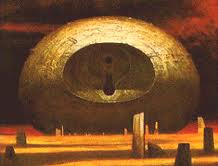
The home of the vaunted Bene Gesserit training facility in the later books of the series. In the original Dune, this facility was located on Wallach IX and had been for some time. However, five thousands years later in Heretics of Dune, the location had been changed to Chapterhouse. In the following and final novel, Chapterhouse: Dune when the Honored Matres began there assault, it was noted that Wallach had fallen to their advance.

According to the descriptions from Heretics and Chapterhouse, this planet was a green and fertile world. However, with the destruction of Rakis (Arrakis in the later novels) and the death of nearly every sandworm in the known universe, the Bene Gesserit began the process of terraforming it into another desert planet where the worms would be able to thrive, thus giving them control over the only source of spice in the universe.

Throughout the latter books in the series, the Bene Gesserit kept the location of this world a secret to protect it from the Honored Matres. They even went so far as to station a fleet of no-ships around the planet to ensure that no one would be able to locate them with prescient ability.

Geidi Prime:
The homeworld of House Harkonnen. And if the religious metaphor which I alluded to earlier is to be believed – where Caladan is Eden and Arrakis is the real world- then this place would definitely be hell. In fact, judging by the many descriptions made of this planet and its rulers in the original series, the hellish metaphor is so thick you could cut it with a knife!

In the original Dune, we are given descriptions that emphasize the planet’s industrial nature. Hints are also given that the planet was highly volcanic and covered in wastelands. In addition to its many factories, large arenas were also built in most cities, where gladiator duels were held to entertain the populace. The Baron’s nephew, Feyd-Rathau, would often compete as a way of gaining popularity amongst the people and demonstrating his skill.

Also, in the original and subsequent novels, much is made of the Harkonnen’s sense of brutality and perversion. Whereas the Baron delighted in little boys, whom he would often kill in the course of molesting them, the planet’s artwork and decor often emphasized sex and violence.The Baron’s appearance, which is described as being so “grossly and immensely fat” that he requires an anti-gravity device just to get around. In addition, he described himself as “always hungry”.

In Heretics of Dune, when Miles Teg and the ghola of Duncan Idaho are hiding in an abandoned Harkonnen chamber, they notice an old clock where the hands are figured of a man and woman with over-sized genitalia (when the two hands line up, it looks as though a gruesome sex act is occurring!). When describing the Harkonnen’s, Leto II claimed they were “lovers of sensation”, people who were obsessed with pleasures of the body.

Hmmm, factories, volcanoes, gladiator rings and bodily pleasures? Sounds like something right out of Dante’s Inferno! In the course of adapting the novel to the big screen, David Lynch went to town on this, showing the planet to be dark, polluted and filled with terrifyingly decrepit people, many of whom had undergone hideous types of surgery (i.e. heartplugs). In the miniseries version, similar attempts were made to capture the hellish nature of the place. Here, every set was done in the colors red and black and camera angles were always askew, capturing the dark and twisted nature of the Baron and his family.

Ix:
The ninth planet in the star system of Alkalurops, Ix is the home of the technocracy that is responsible for producing the vast majority of the Imperium’s machinery. The name of the planet stems from the misinterpretation of the planet’s designation in Roman numerals.

In the original six novels, we never did get a description of what Ix looks like or what really went on there. For reasons which may have a lot to do with the fact that they are technologists in a universe where technology is morally proscribed, the Ixians appear to be somewhat recluse. However, it was clear that they were responsible for creating the various technologies that were central to the plot.

In God Emperor of Dune, Leto II is found to be recording his thoughts using an illegal device that was manufactured by on Ix. It was also the Ixians who were responsible for breeding Malky, a man who’s purpose was to influence Leto into doubting his own path and purpose. Hwi Noree, who was a sort of polar opposite to Malky, was also created to lure him with her charms. Both individuals were bred inside a “no-chamber”, a special cell that hide what is within from prescient detection. This same technology would later go into created “no-ships” and even larger “no-fields” which could shield entire planets.

Another revelation which came in God Emperor of Dune was the fact that Leto, through his Golden Path, had apparently prevented the Ixians from developing a breed of hunter-seekers which would have completely destroyed humanity. Ultimately, part of his plan was to encourage the development of certain technologies while preventing others. Whereas the hunter-seekers fell into the latter category, machines that could block prescience or replace it (i.e. the machine that could do the job of a navigator) fell into the former.

Kaitain:
In the original Dune novel, Kaitain was the seat of power for the Padishah Emperor and the location of the Imperial Court. It was also the homeworld of House Corrino after events on Selusa Secundus forced them to move. All of the guilds, major houses and interests in the known universe maintained a presence here, including the Spacing Guild, the Bene Gesserit, the Ixians, the Tleilaxu, the Landsraad, CHOAM, etc.

After events on Arrakis forced him to intervene, Emperor Shaddam IV relocated the royal palace to Arrakis so that he could oversee the deployment of his armies and ensure the Baron’s cooperation.

Aside from that, not much is mentioned of Kaitain, except for a description of the Golden Lion throne in the original novel’s appendices. Here, it is described as an opulent throne that had been “carved from a single piece of Hagal quartz — blue-green translucency shot through with streaks of yellow fire.”

Selusa Secundus:
Once the seat of House Corrino and the Royal Court, this planet became a prison world after it was devastated in a nuclear attack. As a result, the planet’s climate is incredibly harsh and inhospitable, making it the perfect world for the condemned of society. Radiation from the attack still permeates the planet’s climate, and mortality rates amongst prisoners are apparently as high as 60 percent.

However, as is quickly made clear in the first novel and throughout the series, Selusa Secundus also serves as the training grounds for the Emperor’s dreaded Sardaukar army. This is done in secret, though most Houses within the Imperium apparently suspect it. In fact, in the first novel, the Emperor apparently became suspicious when Baron Harkonnen remarked to Count Fenrig that he would use Arrakis to conduct a similar experiment with his own armies. This was meant only in jest, but it did speak to suspicions the Emperor had.

One other person who understood this was Paul. After becoming an exile on Arrakis, he began to learn that his father had similar plans with the Fremen. By making an alliance with the Fremen, people who had been toughened by conditions worse than that on Selusa Secundus, his father would eventually be able to raise an army army that could rival the Sardaukar. Convinced that Paul was their messiah, he put this plan into action and was able to defeat the Emperor’s armies outside of Arrakeen.

After seizing control of the Golden Lion Throne, Paul exiled House Corrino to Selusa Secundus where they remained until events in Children of Dune. It was here that Shaddam’s third daughter, Princess Wensicia, began plotting the assassinate Paul’s twin children and place her own son Farad’n on the throne. When Jessica is forced to flee Arrakis with Duncan, they found shelter here and made their deal with Winsicia. In exchange for marriage between Ghanima and Farad’n, she agreed to teach him in the Bene Gesserit ways.

Beyond that, no mention is made of Selusa Secundus. Much like House Corrino, it seemed this planet was destined to fade into obscurity.

Tleilax:
Yet another obscure world to come out of the Dune universe. And much like Ix, very little was said about this planet until late in the series. Nevertheless, it too played a very important role in the Dune universe and a number of key developments and inventions were apparently born here.

The sole planet in the Thalim star system, this world is also the home of the mysterious Bene Tleilax. In addition to being the training ground for “twisted Mentats”, Tleilax is also the home of the elusive axlotl tanks, which are used in the production of gholas. Though most within the Imperium frowned upon these devices, as they did all Tleilaxu inventions, the tanks and gholas in particular were used by just about all factions for the sake of their plotting and machinations.

In Dune Messiah, much is told about the Tleilaxu due to their involvement in a plot to unseat Paul Mua’dib from the Imperial Throne. This included the creation of a Duncan Idaho ghola, which had been programmed to kill Paul once he uttered the key phrase “she’s gone” in reference to his beloved Chani. However, this was soon revealed to be a plot within a plot, where the real intent was to show how the original memories of a ghola could be recovered by forcing them into a situation where their original self would reassert itself in order to fight against operate conditioning.

In God Emperor of Dune, Leto II is shown to be reliant on the Tleilaxu’s axlotl technology because he keeps demanding gholas of Duncan Idaho. For reasons unknown, he insists on having the original Duncan in his court, with his full memory restored. It is later suggested that this was an important part of his breeding program, that Duncan contained a special gene which he needed to bread into his descendents. But whatever his reasons, the Bene Gesserit continued his program and maintained an alliance with the Tleilaxu whereby they would receive gholas of Duncan Idaho so they could try to ascertain his true purpose.

In Heretics of Dune, the sixth incarnation of the Sisterhood’s Duncan Idaho is revealed to be special. Unlike the other incarnations, he has access to the memories of all other Idaho gholas, dating back to the very first who served Pual Mua’dib and all those who served and died at the hands of Leto II. In addition, the Tleilaxu clearly equipped him with the sex techniques of the Honored Matres so that he would be able to turn the tables on them when the time came, resisting their attempts to “imprint him” and imprint himself onto one of them. All of this leads Duncan to the conclusion that he now possesses Kwisatz Haderach-like abilities, which is confirmed in Chapterhouse: Dune when he begins to experience visions of the old man and lady (see below).

Also, in was in Heretics of Dune that readers got their first glimpse of the Tleilaxu homeworld and their society. Prior to this, it was understood that Tleilaxu was master geneticists who had engineered their own version of the Kwisatz Hadderach, but which had apparently committed suicide. It was also shown that they were ruled by a series of “masters”; Master Scytale being the one who participated in the plot in Dune Messiah.

However, what was not revealed was that the Tleilaxu were actually secret Zensunni’s and Sufi’s who maintained strict religious secrecy so as to keep their plans hidden from “powindah” (aka. outsiders). In addition, all masters were clones (not gholas) of their original selves and achieved a sort of immortality this way. This was apparently part of their long-term plan to assert their dominance over the known universe, a plan which was finally hatched in Heretics of Dune and involved the specially-programmed Duncan Idaho ghola.

Also central to the plot of several novels in the original series was the Face Dancer, another invention unique to the Tleilaxu. These were people specially bred to be able to take on the likeness and even the memories of people they were charged with killing and impersonating. Bred to be eunuchs and completely loyal, they were human only in the strictest sense of the word and possessed no identity of their own. However, this changed as the series progressed and it became clear that after millenia of adopting the personas of others, Face Dancers were beginning to develop personalities of their own.

This was apparently the threat the Honored Matres were themselves fleeing and which had forced them back into the universe of the Old Imperium. Throughout Chapterhouse: Dune, Duncan Idaho is haunted by visions of an old man and a woman whom he identifies as free Face Dancers. It is these people who he concludes are responsible for the greater threat they face, and who appear to want to capture him because of his special abilities as well.

Another interesting invention to come out Tleilax was the “slig”, a genetically engineered hybrid which crossed the DNA of a pig with a slug to produce a large, fleshy and slothful creature that is easily harvested for its meat. As was remarked in one of the later books in the series, this animal was considered ugly, even disgusting, due to its multiple mouths and skin that excreted a slimy and noxious residue. However, due to its sweet and terder meat, there were few in the Imperium who did not enjoy having “slig medallions” on their tables.

Final Thoughts:
Before I get into talk of patterns and conclusions, a little disclaimer first. First, there are plenty more worlds in Dune universe that are probably worth mentioning. However, there was no way to include them all without making either breaking this post in two or making it run on forever. Second, I deliberately left out information that did not come from the original six novels. True, there’s plenty more mentioned in the expanded franchise of these and other worlds in the Dune universe, but I wanted to stick to material that Frank himself was known to have written. Anything that comes from the expanded universe is likely to suffer from original though. Funny way of putting I know, but it can be known to dilute or undercut anything the original author themselves established.

Okay! Now that I’ve covered my ass, let me get to what I think about these cool worlds! Well, a few things jumped out at me after I was finished researching this list and gave it a final glance:

1. Frank loved secret societies!: Whether it was the Fremen, the Bene Gesserit, the Bene Tleilax, the Ixians, or the Emperor, the concept of recluse worlds and secrets ran through Frank’s original works like a vein. Clearly, he was a big (and I mean big, big, BIG!) fan of intrigue, secrecy, and societies that were founded on them. This is one of the things that I think made the Dune universe so readable and realistic in tone.

Regardless of their house or faction, it seemed that everybody was looking to get a leg up on someone else and found that the best way to do that was to conduct themselves in secret. Was this a commentary on humanity, the result of living under imperial rule, or the result of the complacency Paul and Leto hoped to rescue humanity from? Who knows, point is, he loved em! I think I smell another post in the wind…

2. Ecology effects people: As already mentioned, Frank paid a great of attention to the link between environments and culture. Whereas the Fremen and their values were clearly the result of their hostile and sparse world, the Atreides had apparently been rendered soft by generations of living on Caladan. House Harkonnen, with all their ugly desires and habits, boasted a world to match. And of course Selusa Secundus and Arrakis both served as the ideal training grounds for elite soldiers because life on both was just so freaking hard!

Well that’s all for now. Stay tuned, I plan to tackle the Star Wars universe next! And more chapters for Data Miners are still on the way…

Cool Weapons!

Last time, I spoke (at length) about all the awesome firearms that come to us from a variety of science fiction franchises. But let’s face it, there’s a lot more than just guns to speak of! In fact, part of the genius of sci-fi is in how it is constantly inventing entire arsenals of weaponry, tools, and the various nicknacks that make the world go round. Any director or writer who show attention to detail will make sure that their characters come equipped, looked the part, and that their settings have plenty of believable gadgetry taking up space in the background. Here are just some of the cool examples:

Claws:
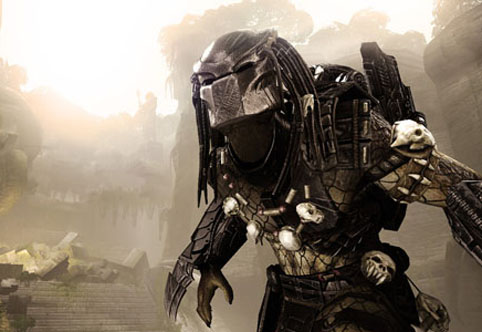
Predator_clawsAlong with the burner/plasma caster, these weapons are the most basic of Hunter weapons in the Predator universe. According to tradition, every Hunter must distinguish themselves in battle by confronting an enemy in single combat using no other weapon than their claws. Based on the two non-crossover films (Predator and Predator 2), this is apparently done once all lesser prey are eliminated and only the top prey is left. When that occurs, the Hunter will ensure that this finale opponent has been deprived of any additional weaponry, and then will shed every other weapon in their arsenal and engage them in hand to hand combat.

Combi-Stick:
Part of the Hunters arsenal, this weapon comes from the Predator universe and is part of their wider arsenal of cool weaponry. The name refers to the fact that this staff serves multiple functions. Collapses, it serves as a sort of quarter staff. However, the stick has telescoping sections with a blade like end, which when deployed turn it into a spear. In Predator 2, a hunter used his stick on multiple occasions. Against a group of the Jamaican gang members, it was used strictly for impaling, but during a later scene, it was used as a throwing spear against Danny Glover’s character.

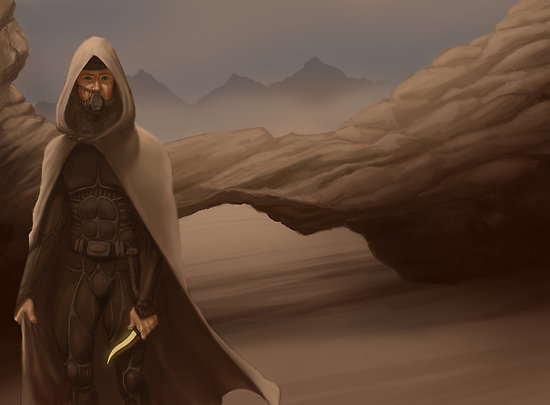
Crysknife:
The Fremen weapon of choice, made from the tooth of a Maker (i.e. a Sandworm). The name and design of the weapon are based on the kris, a ceremonial dagger that was traditionally used in Indonesia and is associated with many cultural legends.

A testament to Herbert’s ability to incorporate historic and cultural elements into his stories, the kris is an enduring symbol of the Dune universe and was used by Fremen for warfare, duals, and ceremonial purposes, much like the real thing! In addition, the Fremen had very strict rules about the use and exposure of these knives. According to the Shadout Mapes – the Fremen housekeeper in Dune – who gives one to Jessica: “Who sees that knife must be cleansed or slain!” And as Leto II remarked in Children of Dune: “The crysknife dissolves at the death of its owner.”

Lasgun:
This weapon was the brainchild of Frank Herbert, and is a familiar weapon in the Dune universe. According to Frank’s many novels, the lasgun was a continuous-wave laser projector weapon that when fired emitted a constant, narrow beam of photons. Though it was able to cut through just about anything and was the weapon of choice in the Old Imperium, it had since fallen into disuse by the first Dune novel.

This apparently had to do with the invention of personal shields. Rather than protecting against a lasgun burst, the interaction of the two would cause a reaction that rivaled that of an atomic explosion. Hence, attacker and defender would both be killed instantly if either ever came into contact. Much like the prohibition against the use of nukes in Herbert’s universe, one would get the distinct impression that he was commenting on the futility of nuclear deterrents and arms races.

But that’s another matter. The lasgun, from its first appearance in Dune, has gone on to inspire many a sci-fi franchise. One that immediately comes to mind is Akira. In this movie, riot squads and the military employed large, external cell powered weapons to fire focused beams of light on a large mob, hewing off limbs and burning holes straight through some people! The main character Kaneda also commandeered one and used it to fight his psionic friend, Tetsuo, near the end of the movie.

Lightsaber:
Just what is it about lightsabers that make them so unbelievably cool? Is it that warm glow? The otherworldly feeling one gets from seeing one being activated? Could it be that crack, hiss sound they make when they clash, or that warbling noise when they’re spun around? Or could it just be the fact that they deflect blasters and cut through anything? Well yes! It’s all of the above, clearly! Yet another brainchild of George Lucas, meant to call to mind scenes of swashbuckling and chivalry from old samurai movies, the lightsaber has since gone on to occupy a central spot in the collective unconscious of an entire generation. It is a staple, perhaps THE staple, of pop culture’s take on sci-fi.

Making its debut appearance in the first Star Wars movie, the lightsaber was the established weapon of the Jedi. In addition to being their mainstay, lightsabers were also highly personalized, every Jedi being tasked with building one as part of their training. Originally, the only two designs were that of the blue and red, the former being associated with Obi Wan and Anakin Skywalker (which Luke then inherited), and the latter being associated with Darth Vader. However, Luke went on to create his own and fashioned a green beam. With the expanded universe, significance has been given to different colors, each one associated with a different class of Jedi, and indicating whether they are a member of the Sith or the Jedi Order.

For starters, blue is the color of the Jedi Guardian, the warrior class of the order who focus on combat training and fighting. Green is used by the Jedi Consuls, people who focus more on the force and accumulating wisdom and insight. Yellow represents a sort of middle ground, belonging to those Jedi who focus on a combination of both and are usually called upon to settle disputes and act as arbiters. When it comes to the Sith, only one color appears to be used, and that is red. However, purple, orange, and other closely related colors have popped up from time to time in various places as well. In addition, Mace Windu, the Jedi Master portrayed by Samuel L. Jackson, wielded a purple lightsaber as well. However, this was apparently due to Jackson’s insistence that his character have a purple weapon, as well as the initials BMF etched onto the side!

Ma’Tok Staff:
Coming to us from the Stargate universe, the Ma’Tok is a combination laser gun, club staff that is used by Jaffa warriors (the specially-bred human servants of the Goa’uld). According to the Stargate Wiki, the Ma’Tok relies on a plasma discharge to strike and cauterize the enemy, causing severe damage and intimidating resistance. It takes its power from an internal cell that employs a liquified mineral (Naquadah) to generate plasma energy. This liquid mineral gives the staff a virtually indefinite shelf life, making it the perfect blend of aesthetics and lethality!

Monomolecular Wire:
Here’s an idea that comes in various forms, but for the purposes of this post, I shall stick to the examples that I know best. The first one comes in the form of the Yakuza enforcer from Johnny Mnemonic! Anyone who’s seen this movie (or read the short story it was based on) will remember the main badguy who had an artificial thumb that contained a long filament of glowing wire. When he pulled that thing out and started whipping it around – LOOK OUT! – things began to get lopped off and sliced up! Another example of this being used as a weapon is from the Japanese anime Hellsing. In that show, the butler of the namesake character had monomolecular wires attached to each finger which he would break out whenever there was a crisis. Perhaps they were fashioned from silver, I really can’t recall. Would make them more effective against vampires though!

Plasma Sword:
And we’re back to the Halo universe for another example of cool gear! And today, the item in question is the plasma sword. As gamers are no doubt aware, this weapon is melee weapon of the Elites, but can be employed by humans as well since it’s your basic hand-held weapon. And much like lightsabers and lasguns, it can cut through just about anything and makes short work of any opponent. In many ways, its even more effective than the ballistic and energy weapons in the game. Whereas those can take several shots to take down an enemy (especially someone infected by the flood) one good hit from this baby will turn them into pulp! And if you see an enemy approaching you with one, be sure to hang back and unload your weapon in their direction!

Stone Burner:
Doubling down on the Dune universe, the next example of cool weapons comes in the form of Stone Burner. As a tactical nuke of limited yield, this weapon was the only form of nuclear device that was not prohibited by the Great Convention. This body, in addition to banning all forms of AI’s, also put a stop to the use of nuclear weapons, though it did not forbid the Great Houses from owning any. In any case, Stone Burners, when used strategically, could have a devastating effect on an enemy.

This weapon makes only one appearance in the Dune saga. In Dune Messiah, Paul Atreides is lured into a trap in the old quarter of Arrakeen where a stone burner is set off, which leads to the loss of his eyes.  Though physically blinded, Paul was not deprived of his vision (i.e. his prescience). This all had to do with a larger plot to force Paul to surrender his power as Emperor in order to save his children. And I think we can all agree, any plot that involves a tactical nuke and blinding your enemy Samson-style is pretty badass!

Throwing Disc:
Another Hunter weapon, this particular one made its first appearance in the second Predator movie and then went on to become a regular part of the Hunters’ arsenal. Much like their other weapons, the throwing disc appears to have many variations and may even be personalized to an extent. This may be the result of constant upgrading, or it may be that individual Hunters have a hand in designing their own gear. In either case, many types of throwing discs have appeared. Some employ simple curved blades, blades with spikes, or even shuriken-like appendages (as the picture at right demonstrates). In each and every case, the result generally involves hewed limbs and decapitations!

Thermal Detonator:
“Because he’s holding a thermal detonator!” Yes, whenever a bounty hunter pulls one of these out, you know they mean business! This weapon, which comes to us from the Star Wars universe, made its first appearance in Return of the Jedi. Since that movie came out, the device has been mentioned and referenced countless times in the expanded franchise. Apparently, thermal detonators are the grenades of the future, using plasma charges that when detonated, cause a large explosion that will burn through just about anything. Always be sure to bring one to a negotiation, just be sure to get the ones with the fail-safe triggers!

Vibroblades:
My third and final act of doubling down on a single franchise! Vibroblades are an integral part of the Star Wars universe, but also appear in a number of other franchises. In each case, the weapon revolves around melee weapons that are powered by ultrasonic devices. This increases the weapons cutting effectiveness, and makes them almost as dangerous as a lightsaber. Well, more like a distant second! But non-Jedi’s got to settle for what they can get.

In the video game Knights of the Old Republic, vibroblades and melee weapons are used due to the introduction of personal shields. Some might call this a rip-off of the Dune universe, but in this case, its not so much a matter of necessity as practicality. If an enemy can absorb your blaster fire, then rushing and attacking them with a sword kind of makes sense. And it gives the characters some practice with melee combat before they learn to harness their Jedi abilities.

Last Word:
Okay, I got nothing! Yep, after looking through all the aforementioned examples of cool weaponry, I really couldn’t find any particular patterns that were worthy of comment. Basically, it all comes down to things that augment or go beyond the usual arsenal of guns. It’s only where the swords and knives come into the mix that I see anything beyond simple coolness. And just about all that drinks from the cup of Frank Herbert, a man who merged the ancient and futuristic in order to make a point about technology and how one could find the past in the future and the future in the past. Yeah, that stuff was deep!

As for the rest of it, it’s just plain cool to behold… and fantasize about! Yeah, twenty years later and I still want a lightsaber of my own! 😉

KJA and my conversation… continued

KJA and my conversation… continued

Okay, yesterday, the conversation I mentioned in the previous post, between myself and KJA (and several of his fans) began. And here’s where it ended just now. All in all, the folks there aren’t bad, their opinions notwithstanding, so I intend to stick around on it and see if I convert anyone! In any case, I more or less got the answers I was looking for. I say more or less because I got some admissions, but they seemed more or less couched in denials and ambiguities. Here’s what I mean…

Kevin’s final response, in reference to my saying that the Butlerian Jihad angle didn’t fit with Dune 7’s ending:

“Matt, Erasmus and Omnius were *our* creations–we have always been clear on that. But before his death Frank Herbert was planning on writing the story of the Butlerian Jihad with Brian, which probably influenced his thinking on tying together the grand finale of Dune 7 with earlier events in the Jihad. Again, you have every right to think it sounds contrived if it doesn’t appeal to you…I thought Isaac Asimov’s later work was a little contrived when he began tying everything together, and I never believed George Lucas meant for Luke and Leia to be brother and sister…But the books are written and published — 18 of them now over the course of more than 60 years, and you need to look at the totality of the story. I wish Frank Herbert had lived long enough to write Dune 7 himself.”

I replied with the following:

“All right then. Thank you Kevin for your honesty and forthcoming-ness (if that’s a word). Rest assured, I do look at the stories as a totality, and they remain the very thing that inspired me to write. I remember reading how Frank inspired you when you were younger and I feel that we have that very thing in common. Hell, he’s the guy who literally wrote the book that made people take sci-fi seriously! And that’s what got me off my ass and made me feel that ideas I had were worthy of putting down. I only hope the reading public feels the same way some day and I have some measure of what you’ve accomplished over the years.”

Hmm, that’s some pretty good bullshit, huh? Well, its largely true, I DO hope to have the same kind of following for my own writing someday. If nothing else, KJA is financially successful and does have fans. I want that, dammit! And of course, KJA does claim Frank as a major inspiration. Personal opinions aside, I thought I’d acknowledge that debt.

He then signed off with this statement:

“Matt, thanks for the civil tone, and if you see some anger in the other posts here, bear in mind that many of the others on Jacurutu have been quite vicious to *anyone* who dares to say they enjoy the new books.”

All I could think to say in reply was:

“Seems to be a controversial topic. Frank would be… intrigued I guess!”

Frankly, that seemed kinder than saying that his work has had a polarizing effect on people. Kind of sounds blamey, even if it is true. And from his point of view, I’m sure its true. There’s plenty of viciousness coming from his side of the aisle too, and I got a fare dose just coming on this forum! But I got a no trolling policy in place and I intend to stand by it.

Overall, what stood out for me in all this was the admissions that were made. Erasmus and Omnius were their inventions, Frank was planning on writing about it, and they established connections throughout their works. This partially explained what I was looking for, but he avoided saying the one thing that would have cinched it for me. He never confirmed nor denied that Frank had left notes that firmly connected the Butlerian Jihad to Dune 7, aka. that he intended to end it with killer robots. But he did seem to be implying that the ending he wrote was the one that Frank intended. So once again, the connection remains tenuous, you either believe it or you don’t.

However, his peeps had their contributions to make as well. The following comes from two such people who sought to show how my proof could be interpreted to support Brian and KJA’s writing who once again said the things that fans of the new books are known to say:

Here’s the first, and arguably, most eloquent:

“Matt, as I’m still a “novice” by not having read EVERYTHING so far published in Dune (although I DO own everything except the biography of Frank that Brian did), I recognize that I’m not really one most would look to for comments on things unread. That being said, I’m just looking at the quotes you mention from Chapterhouse and it seems to me that Frank could easily have been setting up a changeroo on the readers. Examples of previous changeroos are when he changed Paul from Dune to Dune Messiah. Also, he apparently does have this way of doing things “suddenly” as I’ve heard how you go from one page to another to find a planet (Dune itself if I recall correctly not having read that book) has exploded or was destroyed somehow), so him doing something drastically different about characters, and suddenly, from one novel to the next isn’t so out of touch with how he did things. So allow me to break it down based on my understanding of things regarding the end of Chapterhouse and the beginning of Hunters, not having read either one. You quote both: “That thought aroused Idaho’s suspicions because now he recognized the familiarity. They looked somewhat like Face Dancers, even to the pug noses … And if they were Face Dancers, they were not Scytale’s Face Dancers. Those two people behind the shimmering net belonged to no one but themselves.”

and

“[Tleilaxu Masters] have such a hard time accepting that Face Dancers can be independent of them.” “I don’t see why. It’s a natural consequence. They gave us the power to absorb the memories and experiences of other people. Gather enough of those and…” “It’s personas we take, Marty.” “Whatever. The Masters should’ve known we would gather enough of them one day to make our own decisions about our own future.”

As I haven’t read the book, I’ll rely on the verification of others that these are both accurate quotes from Chapterhouse.

Now I will show you how it’s quite possible Frank had intended for them not to be Face Dancers the whole time (regardless of whether he would have ever imagined Omnius and Erasmus up), and I will do it based solely on the quotes you have given.

“Idaho’s suspicions” indicates suspicions from Idaho, not certainty. He is not at all certain that they are Face Dancers although “he recognized the familiarity”.

“if they were Face Dancers” continues to show the uncertainty of this. Idaho is clearly not certain that they are Face Dancers, but “if they were Face Dancers, they were not Scytale’s Face Dancers.”

“Those two people….belonged to no one but themselves” indicates that there wasn’t any allegiance for these two, plus could easily be a foreshadowing to them not even being Face Dancers of any kind.

The second full quote sounds almost like a couple of “superior” people discussing how other “lesser” races look at each other.

“They gave us the power” could indicate the power humans gave machines to begin with and Tleilaxu being humans then that sentence following the comment about Tleilaxu could fit and be a sneaky way that Frank worded things.

“It’s personas we take” could indicate more than what I presume is the usual motif of a Face Dancer. Frank could be indicating that for these two, the “personas” they took were the personas of Face Dancers. Again, not exactly something that is immediately evident from how Frank was telling the story I’ll wager having not read that story yet, but he’s proven his sneakiness in other ways, so this could have all just been his way of foreshadowing things.

As far as Frank not coming up with computers taking over and men having to fight computers, I’ll refer to something Brian Conway told me on the phone one time, and I think Greg Arnold may have mentioned the very novel earlier, and that reference is Frank Herbert has shown in his other writings that machines can be a threat, and it’s always possible that some of his other novels about this could have been “tied together” later as being set before the events of Dune. Imagine if he actually had lived long enough to write a prequel about The Butlerian Jihad, he just may have tied the two series together with that prequel. Again, Brian Conway would be better at explaining that than I am and I hope he has time to join the conversation and add his theory about this for even greater clarification.

As far as you quoting passages Frank wrote about The Butlerian Jihad to disprove the trilogy which Brian and Kevin wrote, I’m not sure your reasoning stands.

You talk about a time period of 93 years which Frank called a “crusade” as nothing more than a rebellion. As if all rebellions never have life or death consequences. And this is one that went on for quite some time, so it’s only natural that things during that time would even escalate at various points along the way.

Even if Frank never meant for “Erasmus” and “Omnius” as specific characters from the beginning of Dune (or even at the end of his own life), when I read Dune for the first time a couple of years back (before then going back and reading The Butlerian Jihad) I got the distinct impression from Frank’s comments about that time that it was more than just humans turning off and then destroying a bunch of robotic butlers that had gone awry. The fact that he used a very war-like word such as “Jihad”, which historically has had religious and war associated with it, told me that there was definitely a story to be told, and I was glad that I had a novel handy to read after I read Dune in order to see how it all unfolded. Of course, that turned out to be a three novel ordeal, but I enjoyed every page of it. ; )

Personally, I’m enjoying both Frank’s original novels as well as what Brian and Kevin have done. I’m looking forward to when I’ve read everything to reading it all over again and breaking things down to have even further understanding as I’ve seen a lot of other fans do. It should be a lot of fun to do that. I know I’m looking forward to the new novel in January, and maybe that will help “connect” things a little better too, between the Butlerian Jihad trilogy and the House trilogy.”

And another:

“Ahhh – I see that House of William aka Matt Williams from Jacurutu is here – Welcome! Your 1st quote ” the crusade against computers, thinking machines, and conscious robots ” does lend it’s self well to the legends series, as do others from the original books. You have to consider that in KJA and BH’s books the Machines have already wrested power away from the Humans that sought to use them as tools to dominate the rest of Humanity, through their own carelessness.

Keep in mind that on other works by FH he used Artificial Consciousness as a creation of humanity that assumes control of humanity (Ship from the Destination:Void series). There is no telling what FH may have done had he lived long enough to finish it himself.”

Sound familiar? Well, they did to me. Every one smacks of the same “let’s stretch the evidence to fit the theory” kind of thing. What surprises me is that Kevin wasn’t making these claims. This could be out of a desire not to explain himself, or because he’s constrained by what he can and cannot admit. If you’re claiming to be working by Frank’s own notes, but also taking great liberties with the material, you gotta keep tight lipped about it!

And I got to admit, not sure how I feel about talking to these people the way I did. Not sure if it was cowardly, brave, disingenuous or honest. All I can say is I wanted to strike a civil tone while still telling what I thought. Hard to do that when you think someone’s work sucks! Either way, I found his overall answers to be only partially revealing, and it kind of confirmed what I suspected. I’m unplacated, but then again, I never expected this to be revelatory. Oh well, fun while it lasted!

Kevin J Anderson and I have a chat… Seriously!

Kevin J Anderson and I have a chat… Seriously!

It’s a rare treat when you get to confront a person you’ve badmouthed for some time, isn’t it? Just think of James Reston Jr., the American journalist and author who was part of David Frost’s interview team. After years of slamming Nixon with his poison pen, and welcoming the opportunity to do a scathing interview, he got a chance to meet the man face to face. And wouldn’t you know it, he shook the man’s hand and called him “Mr. President”! Yes, somehow it’s hard to be mean to a man in person.

Well, as turns out I had the same opportunity opportunity recently; to speak to a man I’ve been criticizing for quite some time. I am referring, of course, to Kevin J Anderson. After reviewing the Brian Herbert/KJA Dune spinoffs on this site (quite poorly, I might add), I began a thread over at Goodreads dedicated to the Dune finale and what people thought of it. Opinions were mixed, the debate was somewhat heated. But then, one of the contributors, a fan of the new books, advised that I go on over to the Dune Saga site on Facebook to make my opinions known. Naturally, I was a little worried when I noticed KJA himself was the man in charge of this site, and I a little peaved when I noticed that my comments at Goodreads had already garnered some rather harsh criticisms from KJA fans.

Here’s a sample of what some of them said:

“It’s the usual crew that likes to bad mouth Brian and Kevin. I had a suspicion that the guy that started it was with them. One of his posts after they started showing up confirmed that.”

“I don’t even bother adding to these posts and go out of my way to ignore them on sites. These people don’t change and are limited in their ability to separate one writer from another. I wish they would stop reading Dune books or at the very least suffer from a head injury that would make them forget that Dune even existed. That way people that actually enjoy the continued story would not have to stumble upon their adolescent, mindless blabbering. THANK YOU KEVIN AND BRIAN FOR CONTINUING THE STORY FOR US!! I look forward to each new exciting installment of the Dune Saga. I would have been tragic if this story had stopped with Frank.”

“The Talifans return!”

Well, needless to say, I was taken aback and replied in kind. I mean really, Talifans! What nerve!:

“As the person who started that forum, I would like to ask, have you really read the arguments of how these books failed? Because I’ve noticed glaring inconsistencies between the old work and the new, ones that go far beyond “hating” and other things we are accused of. What’s more, I find it ironic for people to say that these are the “same old” complaints. Whenever I hear people defending the new books, its always the same. The “styles” are different, its his son, its bound to be different, but they had notes, etc.

And given the declining sales figures, I’d say its the McDune franchise thats likely to fade away soon.”

Guess who replied? The man himself! Here’s what he said:

“Sorry you don’t like the new books, Matt. The “glaring inconsistencies” the Talifan complain about have all been addressed in the novels, but they don’t–or don’t want to–read very carefully. The fact that they have not attacked the “glaring inconsistencies” in the original Frank Herbert books with the same vehemence seems a bit of a double standard.”

And of course, one of his fans jumped in with a somewhat harsher response:

“Amen Kevin. LOL…They had NOTES….HA…..I cant remember the last time I picked up a published notes at the book store. The notes still need to be fleshed out into stories regardless of what “notes” they may have had. Again since Frank did not write these stories, only provided a guideline, they will be different….you know…because they were not written by Frank…….. But thanks for posting more of the “same ol complaint” That you Trolls always state, notes , timeline, blah blah blah. We who have stuck by the Dune saga and have paid close attention to the story know exactly how each event falls into place. I do strongly encourage you to stop reading Dune books. But that is unlikely to happen because most of you Trolls just like something to constantly complain about. As far as the “McDune” franchise falling away, that is highly unlikely to happen thanks to a strong a loyal fan base. Trolls like you have been spewing that BS for YEARS and look 3 more books are on their way. Yeah the all those Dune New york Times best sellers that Brian and Kevin wrote failed horribly…. Again….I do strongly encourage you to stop reading Dune books, it seams your time would be better spent farming a vill or something.”

Well… needless to say, I felt I was being highly misrepresented. So I took it upon myself to explain what I meant by “inconsistencies” and to set the record straight on being a “troll”.

“First off, let me say thank you Mr. Anderson for responding yourself. I feel honored and in a unique position that I can speak to you directly. Let me first assure you that I didn’t dislike all your books. In fact, I thought that the Preludes series was alright, and I enjoyed Hunters, up until the ending that is. And that is what I mean by glaring inconsistencies. Let me illustrate:

First off, the fact the entire saga ended with the old man and woman being the evil robots from the Jihad. I couldn’t see how this could possibly be the result of Frank’s own notes. I mean really, the whole thing ends with characters from your own prequels? For one, they were clearly Face Dancers, as established by Frank in Chapterhouse. Here’s some evidence to that effect:

First, where Duncan recognizes them in one of his visions:

“That thought aroused Idaho’s suspicions because now he recognized the familiarity. They looked somewhat like Face Dancers, even to the pug noses … And if they were Face Dancers, they were not Scytale’s Face Dancers. Those two people behind the shimmering net belonged to no one but themselves.”

And at the end, where Daniel and Marty describe themselves:

“[Tleilaxu Masters] have such a hard time accepting that Face Dancers can be independent of them.” “I don’t see why. It’s a natural consequence. They gave us the power to absorb the memories and experiences of other people. Gather enough of those and…” “It’s personas we take, Marty.” “Whatever. The Masters should’ve known we would gather enough of them one day to make our own decisions about our own future.”

Clearly, they were Face Dancers. And I’m not the only one who thinks so. Here’s William F. Touponce’s take on the ending, taken from his 1988 book entitled Frank Herbert:

“Herbert gives us a segment narrated from their point of view only at the very end of the novel. They are offshoots of the Tleilaxu Face Dancers sent out in the Scattering and have become almost godlike because of their capacity to assume the persona of whoever they kill — and they have been doing this for centuries, capturing Mentats and Tleilaxu Masters and whatever else they could assimilate, until now they play with whole planets and civilizations. They are weirdly benign when they first appear in the visions of Duncan Idaho as a calm elderly couple working in a flower garden, trying to capture him in their net…”

And finally, in an August 2007 review of Sandworms of Dune, John C. Snider of SciFiDimensions.com argued that it “doesn’t fit” or “add up” that Frank Herbert’s Daniel and Marty are the “malevolent” thinking machines Brian Herbert and Anderson created in their Legends of Dune prequel novels.

That was the glaring inconsistency I mentioned. Not plot holes or things not adding up in your own books. So for those who’ve already posted back and slammed by comment, I’d advice you understand what a person is saying first before you respond in kind.”

Now that I look at it, I notice I say “firstly” a lot. Not good. It looks unprofessional when you repeat yourself. And it looks unprofessional when you – okay, bad joke! Moving on! I was also sure to smack Greg back with a little “taking the high road” approach:

“And to Greg, you’re obvious disdain for us “trolls” notwithstanding, we’re fans like you and we’ve got opinions and points to make. You don’t like it fine, but I’m going to make it, and in the process show a lot more class than you’ve demonstrated thus far.”

All of this is a reiteration of what I said on Goodreads and in my review of Hunters of Dune. I of course left out the criticism of the Butlerian Jihad premise, seeing as how I was already not being brief. This, in turn, garnered some rather civilized comments from the man himself.

“And your own comments notwithstanding, you have to admit that the behavior of many of the “trolls” is vitriolic and insulting. I am not in the business of telling people which books they can or can’t read. If you don’t like the new Dune novels, I hope you’ll try my Seven Suns or some of my other books…or just read something else entirely. Don’t read all twelve of the new Dune books and keep railing about how much you hate them. For months now, the Talifan have been trashing SISTERHOOD OF DUNE, a book that none of them has read.”

Hmm, I notice he used the term “Talifan” too. Makes you wonder if he had a hand in creating it, or is just repeating what his own die-hards say. Either way, getting reamed by anyone isn’t easy so I’ll give him the benefit of the doubt here. Our conversation is ongoing at this point, with other salient issues being raised. In fact, one commenter, a highly civilized person who is a fan of the new books but has also been very polite to me, had a point to offer.

Here it is in its entirety:

“And since Kevin J. Anderson is here for the discussion, perhaps he can confirm or deny my theory I posted on the Goodreads site.

The theory broke down:

Item: Frank left next to nothing in notes for The Butlerian Jihad time which that trilogy was set in.

Item: Frank left a detailed outline for Dune 7 which was turned into two books upon fleshing it out.

Speculation: Brian and Kevin figured out from Frank’s notes on Dune 7 that certain characters were from the era of the Butlerian Jihad which they planned on writing a trilogy about.

Item: The Butlerian Jihad trilogy was published before the two Dune 7 novels were published.

Accusation: Brian and Kevin totally invented everything for The Butlerian Jihad, so therefore: They clearly inserted their own characters into the Dune 7 books.

My theory: It’s the opposite. They took what they could from the Dune 7 books in order to do better foreshadowing when they wrote The Butlerian Jihad trilogy. Therefore, not all characters in that trilogy were “made up” by Brian and Kevin even if they had to create the vast majority of the story involved to support the characters they had found in the notes of Dune 7.”

For non-fans of the Brian and KJA remakes, this is not a new theory. We’ve heard this one before, many times in fact! “The Butlerian Jihad was based on Franks notes, so it wasn’t unnatural for the series to end with characters form it.” This prompted me to reply to it by stating that this theory doesn’t add up. That’s when I posted my argument of how the Butlerian Jihad happened in the Legends series in a way that Frank couldn’t have intended, and how Brian and KJA said Frank left few notes on it so they made most of it up themselves, etc etc.

However, Kevin had this to say in response:

“David, your theory is very insightful. We had the Dune 7 outline from the time we started writing House Atreides and *always* had the final destination in mind; there are details in HOUSE CORRINO and throughout the Legends of Dune trilogy that we planted specifically to take the story and characters where we knew it was supposed to go in HUNTERS & SANDWORMS.”

His theory is insightful… I notice he’s not saying he’s right or wrong. If David had hit it on the head, I would think KJA would be the first to say so. He’s also saying how they “planted” things, but based on what – Frank’s notes, or their own inventions? In short, were they planting stuff for the sake of establishing ties between their own work and the ending ahead of time or was it something Frank left behind? You be the judge!

He also said the following to me about my proof:

“Again, thanks for giving the novels a chance, whether or not you liked all of them. Regarding your issues with Face Dancers and the remnants of the Butlerian Jihad, that was tied together in the books and detailed in Erasmus’s experiments to create the Face Dancers. It’s not my call whether or not you found the explanation or the resolution satisfying, but it’s not inconsistent with the series as a whole.”

Ties together huh?

Interesting, but again, can’t see how that’s what Frank had in mind. And I said as such. Saying Erasmus was experimenting with Face Dancers establishes a connection between Frank’s work and their ending, but does it not seem forced? Again, how could Frank have been planning on introducing robot characters in a final novel that made no appearance beforehand, were ever mentioned or even hinted at? Well, I said as much, and feel a little shmuckish at this point. I tell ya, its hard to say to someone’s face exactly what you think of their work. But as they say, “Nut up or shut up!” And remember, honesty and civility are not mutually exclusive.

I will no doubt have more to post on this as it unfolds. Needless to say, I’m just happy I get a chance to address this man directly, pose all my question directly to him. I mean, how often does someone get to do that? I want to see how he responds to these challenges, as I’m sure do many others!

Legends of Dune Prequels

Last time around, I made a big deal about prequels and why they aren’t so good. And of course, the Dune prequels were featured pretty prominently in that post. However, what I came to realize shortly after writing it was that I’ve never dedicated a post to the prequel work of Brian Herbert and Kevin J Anderson and explained what it was that was so disappointing about them. Nowhere was this more apparent for me than with their Legends of Dune series, the hackish trilogy that was supposed to detail the seminal background event known as the Butlerian Jihad.

Sure, they’ve come up here and there in my rants, always in the context of how they effectively raped Frank Herbert’s legacy. But today I feel like zeroing in, applying the rules I devised for why these prequels fall short, and mentioning a few other things that bothered me to no end about them. So, without further ado, here’s the The Butlerian Jihad, the first book in the Legends of Dune series and one of several unoriginal Dune-raping series they created and why it sucked!

Dune, The Bulterian Jihad:
In my previous post, I outlined four basic reasons for why prequels can and often do suck. As I said, they are by no means scientific or the result of expertise, just my own observations. However, when it comes to the Dune books of Brian Herbert and KJA, they certainly do apply. Hell, it was the act of wading through their books that I was able to come up with these rules in the first place. They were: 1. No Surprises, 2. Sense of Duty, 3. Less is More and 4. Denying the Audience the use of their Imagination.

These things ran like a vein throughout the works of Brian and KJA, but were by no means the only problem with their books. In addition, there were also the problems of cardboard cut-out characters, heavily contrived plot twists, cliches, and an undeniable feeling of exploitation. Add to that some truly bad writing and the fact that the story felt like a complete misrepresentation of Herbert’s ideas and you can begin to see why Dune fans found these books so offensive. As one of them, I’m happy to ran about this whenever and wherever possible. So here goes!

1. Bad Characters
In the Preludes to Dune series, this problem was not so pronounced, nor was it a huge problem in the Dune sequels (Hunters of Dune and Sandworms of Dune). But in the Legends of Dune series, it was palatable! The characters were so one-dimensional, so predictable and so exaggerated that they became downright annoying to read. And of course, their dialogue was so wooden I thought I was sitting through that horrible “love scene” from Attack of the Clones. This was a clear indication that where the elder Herbert’s own characters and notes were not available, the two authors had to rely on their own instincts and took the cheap route.

Examples! Legends of Dune revolves around the characters of Serena Butler, Vorian Atreides, and Xavier Harkonnen on the side of good, Erasmus, Omnius and Agamemnon on the side of evil, and Iblis Ginjo, Tio Holtzmann and a host of others somewhere in the middle. And in each case, they are horribly over-the-top, too good, or too evil to stand. In addition, bad dialogue and writing counts for a lot. Even the characters who are not robots speak as if they are, their traits and attributes are openly announced, and nothing beyond their topical persona’s are ever revealed.

On the one hand, Serena Butler is a crusader for the abolitionist cause and a tireless leader for free humanity. After dedicating herself to ridding the free worlds of slavery, she then selflessly volunteers to lead a mission to liberate Geidi Prime (later home of House Harkonnen) when its clear her people think its a suicide mission. Afterwards, she becomes a willing figurehead in the holy war against the machines and puts aside the love of two men in order to be an effective leader. You might think this is just her public persona, but that’s all she’s got going on. Seriously, she has no other character traits beyond being the perfect heroine!

As if she wasn’t bad enough, you also get Xavier Harkonnen, a warrior who believes in endless self-sacrifice just like her, the perfect hero to her heroine. The entire series is filled with his rallying of troops, leading them into the fray, and coming to the rescue. All the while, he naturally struggles with his love for Serena, which is repeatedly frustrated due to the needs of the war. Vorian, on the other hand, is meant to be the Han Solo type, the bad boy who stands in contrast to Xavier’s good boy. But in this too, he is horribly predictable. Whereas Xavier is the honor and nobility hero, he is the daring and risky dude who also becomes a real ladies man. And of course, he loves Serena too, creating a predictable love triangle that somehow doesn’t manage to create a shred of conflict or complication.

Okay, now for the bad guys! Well… let’s start with the absurdly named Omnius, the machine hive-mind that runs things. He has little character to speak of, being a machine, but nevertheless fits the ideal of the evil, calculating AI perfectly. Naturally, he doesn’t understand humans, but hates them enough to want to kill them in droves. And of course he would like nothing better than to bring the whole universe under his “Synchronized” control (aka. he wants to conquer the universe). Clearly, KJA and Brian thought they were doing something clever here, using an unfeeling machine to explore the human condition. But really, the character and material felt like it was ripped right from reruns of Star Trek!

Erasmus, his only free-thinking AI companion, is similarly one-dimensional and stereotypical. He conducts “experiments” to better understand humanity, because of course he doesn’t understand them either. But the really weak character trait comes through with just how evil he is! In just about all cases, his experiments amount to senseless murder, flaying people, using their organs to make art, and studying their reactions with interest when he arbitrarily decides to kill someone. Oh, and did I mention he also murders Serena’ baby (and gives her a hysterectomy) once he becomes jealous of how much time she was spending with him? Seriously, Evil the Cat is not a good archetype to model your characters on!

Agamemnon and his Titans are also very evil, but in their case, a machine-like mentality can hardly be blamed. In addition to murdering billions of people in their drive for power, they hate free humanity, consider them vermin, and will stop at nothing to obliterate them. Naturally, they hate their machine masters too, but not nearly as much as their non-Cymeck brethren. Why, you might ask. Well, beyond saying that they were appalled by humanity’s decadence and reliance on machines, no reason is given. And it seems like a pretty weak reason to reprogram said machines to take over the universe and enslave everybody.

Really, if they were appalled by dependency on machinery, why not simply shut the machines down? Furthermore, if they were so bothered by how dependent people had come to be, what’s with all the machine enhancements they got going on? Each and every “Cymeck” in this story has cheated death by putting their brains inside of massive cybernetic housings. That sound like the actions of someone who doesn’t like machine dependency? Really, the only reason to do what they did (i.e. murder billions and try to take over the universe) would be because they were total sociopaths or megalomaniacs – i.e. really, REALLY evil! But don’t expect any logic from this story, mainly we are to accept that they are evil and move on.

And finally, Holtzman, who is supposed to be the brilliant inventor who created the Holtzman drive (the FTL drive that powers Guild Highliners), is a petty, greedy man who stole his inventions from his assistant, Norma Cenva. She, naturally, was a brilliant but naive girl who was always smarter than him, but continually got the short end of the stick. Iblis Ginjo is a slave leader who masterminds the rebellion on Earth, and becomes the sleazy defacto leader of the Jihad through wheeling and dealing that makes the reader feel enmity towards him.

Whoo! That was long, but I believe my point is clear. Basically, the characters were so simple and their purpose so obvious that it genuinely felt like the authors were trying to force an emotional reaction. The only thing worse was when they were trying to make us think, which were similarly so obvious that it just felt insulting! More on that later…

2. Contrived Plot:
The examples are too numerous to count, but I shall try to stick to the big ones and ignore the rest. First, in the preamble to the story, we are told that the Titans (the evil Cymeck people) took over the known universe by reprogramming all the thinking machines so they’d be able to control them. Okay, that seems a bit unlikely, but whatever. A dozen hackers managed to take over trillions of peoples lives by reprogramming the machines they were dependent on, whatever. But the real weakness was in the motivation. Why did they do this? Because they were upset with how dependent humanity had come to be on them. Meh, I’ve already said how this was stupid so I shant go into it any further.

But another weakness which comes to mind is this: if these “Titans” were so good with programming machines, how is that they let the big brainy AI (aka. Omnius) turn the tables on them? Didn’t they think it would be wise to program it with some safeguards, kind of like Azimov’s Three Laws? Not rocket science, you just make sure you tell the machines they can’t turn on their handlers. Simple! God, two crappy points and its still just the preamble! Moving on…

Next, the main character of Vorian Atreides breaks from his father and the Cymecks in the course of the book, which was a big turning point in the plot. But the reasons are just so… flaccid! After being a loyal and doting son for many decades, he decides to betray his father and his heritage in order to aid free humanity. Why? Because of one conversation with Serena Butler in which she suggests that he check out what his father’s done in his lifetime. Vorian explains that he’s read Agamemnon’s memoirs several times, but Serena recommends he check out Omnius’ own records, the ones which are not subject to distortion and personal bias. So he does, sees the undistorted truth, experiences a crisis for about five seconds, and then makes the decision to defect. Yes, this life-shattering experience, finding out his father is a mass murderer, is not followed by any denial, anger, or shooting of the messenger. He just accepts what he sees and turns his back on everything he’s believed in up until this point because of one conversation. Weak…

Also, the slave rebellion on Earth, the thing that touches off the whole Jihad, had some rather dubious inspiration. For starters, the humans knew of no organized resistance until Erasmus decided to make a bet with Omnius. He believed that humans could be inspired to revolt against their miserable lives if they were just given a glimmer of hope. So he began circulating letters claiming to be from “the resistance” to key people. When Iblis Ginjo got one, he decides to join and starts stockpiling weapons. Oh, and he manages to do this without the machines noticing. So, when the revolt begins, they have his weapons to fight with.

Where to start? For starters, are we really to believe that a coldly rational, superior AI would risk an open rebellion simply because of a BET? How stupid are they? Also, how was Ginjo able to acquire all these weapons without them ever noticing? Erasmus knew who he sent the letters to, did he not think it would be wise to monitor what they did afterwards? Sure, they claim that Ginjo explained his curious imports by saying that he had to requisition added materials to meet his construction quotas and managed to hide the weapons amongst them. Again I’d have to ask, how stupid are these machine masters of theirs?

Ah, but there’s more. Iblis gets further inspiration when he consults a Cogitor (see below) and asks it if a human resistance really exists. It replies that “anything is possible.” Of course, that’s how it answered all his questions, in keeping with the idea that Cogitors are somehow vague, ethereal beings. And yet, Ginjo gets the feeling that this answer was somehow loaded with subtext and implication. Yes, that’s how this part of the story was written. He gets a totally vague answer and assumes it means something truly meaningful, and thats all the inspiration he needs to start running guns and risking his life!

The rebellion is then fully incited when Erasmus – as mentioned earlier – kills Serena’s baby out of jealousy. This is especially hard to believe, and KJA and Brian even tacitly admitted as much in book two. Throughout the book, we are told that Earth is a slave planet where unspeakable horrors take place and the people are too miserable and beaten down to do anything about it. And yet, the death of one child causes billions of people to rise up and risk total obliteration. And they are able to do it because one slave master, motivated by a phony message – which was itself the result of a wager – was able to smuggle tons of weapons past the robot masters. Somehow, this just doesn’t seem like a likely explanation for a game-changing, cataclysmic event!

Finally, the climax of the story comes when the good guys decide that the best way to strike at Omnius is to nuke Earth. Yes, they’ve been debating for generations how to beat the machines… and apparently this is what they’ve come up with. “Really?” I wanted to say. This is how humanity triumphed over the evil machine menace, go nuclear? No startling new technology, no brilliant new strategy? If that’s all it would take, why didn’t they do it before? Well, according to the book, its because the idea seemed immoral to them. One dissenting character even asks, “Are you suggesting we become as bad as Omnius?” “No,” replies Xavier. “I’m suggesting we become WORSE than Omnius!” Wow. That… was… AWFUL!

Oh, it also at this point that they explain the origins of the name Butlerian “jihad”. On the Senate floor, once they have decided to nuke Earth, they openly say that in order to be effective, this must be more than a war. It must be a HOLY WAR. And that’s how the Butlerian Jihad got started! It was NOT the result of long term developments, changes, and forced adaptations. It was a decision made suddenly and deliberately. They just said in the thick of the moment, “Hey, lets call this a jihad! That sounds cool! Okay, jihad it is!” Not to nitpick, but as a historian I can tell you, this shit don’t happen! People don’t suddenly look around and say, “Hey, its the Enlightenment! Hey, its the Renaissance! Hey, its World War One!” These names are applied posthumously, usually by historians who are looking for labels to describe general phenomena.

I know, who the hell cares right? Point is, this more than anything is a clear demonstration of how contrived these stories are. Its as if the authors set out not to tell a story but to explain how everything happened and felt horribly compelled to do so. Remember point #2 of why prequels suck, aka. Sense of Duty? This is what inspired it, people!

3. Cliches:
What I especially loved about this book (dripping sarcasm implied) was the evil cyborg robots, named Cymecks. There’s an especially Herbertian plot device, a pulp sci-fi concept with a name that combines Cyborg and Mechanized (in case it wasn’t obvious enough already!) Even more fun was the Cogitors (play on the word Cognition), the disembodied brains of acetic thinkers who decided to achieve some measure of immortality by placing their brains in talks so they could live out their days just thinking. Hmmm, evil cyborgs and disembodied brains, where have I heard about these before? Every crappy bit of pulp sci-fi there is, that’s where!

Ah yes, and Serena Butler, the Virgin Mary meet Joan of Arc. As I said, she’s a war leader on the one hand and a holy icon on the other. This might have been a good angle, how she must maintain the illusion of purity (hence, no lovers), but it was squandered by the fact that in the story, she really IS a pure character! Selfless, dedicated and infinitely compassionate, she leads humanity and dies for them without a though for herself. Gag! As for the men who love her – Xavier and Vorian – they are perfect cliches as well. The one is the stalwart, perfect hero who never shies away from self-sacrifice, the other a Han Solo rip-off who’s bad boy charm barely conceals the fact that he too is excessively noble.

Then there’s the slavish robots! We are told well in advance that the whole Jihad was between free humans and thinking machines. And yet, aside from Erasmus, not a single robot thinks for themselves. They are all slaved to Omnius, the big, evil hive mind with a name that seems stolen out of the pages of a sci-fi comic or an episode of Buck Rogers. And if his name is not enough, the concept of a hive-mind who hates mankind and wants to conquer the universe is a similarly bland, overdone cliche that no respectable sci-fi author would touch with a hundred foot pole!

Which brings me to one group of characters I haven’t even mentioned yet – the Sorceresses of Rossak! These women, who boast the ability to conduct electricity, levitate, and have various other “magic” powers, are supposed to be the precursors of the Bene Gesserit. Wow… Okay, first of all, this is a perfect example of shit sci-fi; the kind of stuff you’d expect from Star Wars or an X-Men movie, but not DUNE! Second, last I checked, the Bene Gesserit were never able to shoot electricity from their fingertips or magically levitate! All their powers had to do with mental abilities like prescience and truthsense, which came from the spice. So really, where did these women get all these freakish abilities? In the course of reading this, I seriously expected someone to say “Feel the Force!” Of course, none of this is explained and no attempts are made to ground these characters in any sense of realism. It’s just another bad cliche in a book chock full of them!

Brian and KJA admitted that to create the Legends series, they had to rely on their own imaginations because Frank had not left detailed notes. However, it did not seem like they were relying on their own imaginations nearly as much as a conglomeration of bad ideas taken from B movies, TV shows and comics. Seriously, all these ideas have been done to death! This is not in keeping with Herbert at all, who not only created something original but highly plausible.

4. Exploitation:
All throughout this book and the others in the series, one can’t help but feel that the authors are deliberately and shamelessly exploiting Herbert’s legacy. Its no secret that Frank was a hugely influential author who left behind an enduring legacy and millions of fans. Each and every one of them was eager to see how the Dune saga wrapped up, and couldn’t help but wonder what the events in the story’s deep background were all about. It’s little wonder then why these two paired up and decided to pick up the mantle.

On the surface, that might have seemed like a noble and brave thing to do. However, the calculated way in which they went about it clearly demonstrated there were ulterior motives at work. To begin, they didn’t tackle the Dune 7 project first, the one that they claimed Herbert had left “copious notes” for. Instead, they returned us to the universe and the characters we were already familiar with with some teaser prequels. They then moved on to the earlier prequels, books that did not wrap up the series but covered the deep background instead. Here again, it seemed like we were being toyed with! Only then, after all those prequels, did they finally decided to tackle the conclusion, and they even managed to draw THAT one out by putting it into two volumes instead of one. As if all that wasn’t enough, there’s those terrible interquels that have “cash-in again” written all over them. I tell ya, it never ends!

In short, it was obvious what they were doing. Getting audiences hooked with some quick and easy books that took place right before events in the main novel, then pulling them in deeper with some stories that went further back, and only then doing what they promised which was finishing the damn saga off! And when that finally came, it was a horribly transparent ending that had nothing in common with Herbert’s work but tied shamelessly back to their own so-called contributions. As much as I disliked these books, I couldn’t help but feel sorry for these men, especially Brian. He above all set out to take on his father’s legacy, but somewhere along the line he took a wrong turn and ended up in cash-in junction where legions of his fathers loyal fans were waiting and demanding their money back!

5. Prequel Complex:
To finish, I’d like to refer back to rule one in why prequels suck. In short, these books really didn’t contain anything new. Just about every reference to places was meant to refer back to something in the original story, every characters was meant to tie to someone in the original text, and every development was meant to forecast how the universe we were familiar with came to be. It all felt forced, contrived, and quite unnatural. For one, things don’t get created all in one lifetime, as all the inventions and schools which exist in the original Dune universe were in this series.

Literally everything, from the Mentats, Guild, Foldspace technology, spice harvesting, the Fremen, the Ginaz swordmasters, the Tleilaxu, the Bene Gesserit, etc, were created within the pages of this series and then went on to exist (virtually unchanged) for ten thousand years! All I wanted to say in the course of reading this was, “that’s not how things happen!” Things are not created in one instant and then endure for ten thousand years, they develop gradually and change over time. Forecasting how things came to be is one thing, but completely explaining them just deepens the sense of duty and contrivance from which prequels suffer. Again, rule two man! RULE TWO!

6. Wrongness of the Whole Thing!:
Added to this was the undeniable feeling that they got it all wrong. In Herbert’s original stories, references to the Butlerian Jihad were few and far between. But when it did come up, Herbert clearly indicated that the rebellion was driven by people who’s lives were becoming dominated by machines and a machine mentality. By that, one gets the impression that the jihad was not a war in the literal sense but a moral crusade to rid the universe of something that was increasingly seen as immoral. In accordance, the “enslavement” of humanity seemed metaphorical, that it was really just a sense of dependency that the jihadis were fighting.

At no point was it even hinted at that the jihad was a war between evil machines and free humans, or that humans won it by nuking every thinking machine out of existence. But that was clearly Brian and KJA’s interpretation – that the “enslavement” of humans by machines was meant literally and the war was some super-righteous titanic struggle. Clearly, subtlety means nothing to these two, either that or they just didn’t see the cash value in telling a story that boasted a little irony and nuance. Instead, they opted for a cliched story of good vs. evil with a rah rah ending that would make even Michael Bay’s eyes roll.

Such an ending did not seem at all in keeping with Herbert’s legacy, that of realistic and hard sci-fi. It was much more in keeping with the work of KJA, a man who is famous for writing fan-fiction and pulp sci-fi, a man whose won only one award for his writing and it was for kid lit (A Golden Duck!). So really, putting the name Dune on this book was more of a legality or formality than anything else. In the end, its not a Herbert tale, its a KJA tale with the name Herbert attached. And as I’ve said many times before in reference to Dune, raping the legacy of a great and venerated man for the sake of your own fame or financial gain isn’t cool!

Okay, think I definitely said enough about that book. I mean, how many ways can you possibly say a story is crap? I found six but I can still think of material that’s just looking for a proper category to plug it into. Suffice it to say, the story was bad and I strongly recommend that fans of Herbert stay away from it at all costs. Those who haven’t need to be warned, and those who have already, let me just say that I feel your pain! And speaking of pain, I shall be back with volume two in this terrible saga, The Machine Crusade. Wish me luck…

Dune Miniseries (best lines, revisited)

dune_miniseriesYesterday, more lines were coming to me as I busted my butt to get through Taekwon-Do class. I don’t know, it seems plyometric exercises are all the rage these days. Did I mention I hate them? I hate em, I HATE EM! But my aching shins and stiff muscles aside, it was good in that it shook some things loose from my mind. Basically, I realized that there were several more lines I didn’t post, and with something like Dune, you got to give it its due. That kind of sounded like a play on words, doesn’t it? Dune, due, no? Whatever, just read the damn list!

So, here are some of the ones I forgot the first time around…

Paul: What did you do to me?
Jessica: I gave birth to you!
Paul: A freak!
Jessica: No!
Paul: Then what?
(Of course, she has no answer for that one!)

Paul: Submit Captain! (Using the Voice) Submit Captain…

Guild Agent: We have surrendered without resistance, we have put ourselves at your mercy.
Paul: Mercy is a word I no longer understand.
-extended scene in which Paul and the Fremen take a Harkonnen stronghold and capture a Guild agent

Paul: Othyem, get Stilgar. Tell him to summon a Maker.
Chani: You know what this will mean. Between you and Stil… the man who wants you to call him out.
Paul: Only if I survive the Maker.

Fenrig: Her majesty has a perceptive mind.
Irulan: Should I take that as compliment or a threat, Fenrig?
Fenrig: I meant it only as a sign of my respect. I share your fear of the Baron’s schemes.
Irulan: My father can handle the Baron, Fenrig. It is this Muad’Dib that I’m curious about.

Baron: Your majesty, these people are mad! The women hurl their babies at us. They hurl themselves onto our weapons to open a wedge for their men to attack. I could wipe the planet clean of the entire race, your majesty, but then who would mine the spice? It’s a terrible dilemma.
Emperor: Do you have any idea where this Muad’Dib character came from? What he wants? What his price is?
Baron: He’s a Fremen fanatic, a religious adventurer. They crop up regularly from the fringes of civilization. You’re majesty knows this. Most seem to be simply bent on suicide.
Emperor: Have you ever stared into the eyes of a religious fanatic, Baron? Suicide and martyrdom are often the same thing.

Chani: This can’t go on. You are asking too much of yourself!
Paul: I want you to take Leto and return to the southern sietch. I want you safe.
Chani: I’m safest when we are together!
Paul: But I’m not.

Baron: You’re good material, Feyd, and I hate to waste good material (Slaps him). Now give me one good reason why I shouldn’t kill you right here.
Feyd: My brother…
Baron: Yes! That’s right, you’re dim brother. If I kill you, then he would be my only heir, and he can’t even put down a dirty mob of religious lunatics. Yes, you’re clever Feyd… but not that clever.

Irulan: History will say that the Fremen were about to find their Messiah, that Paul Atreides would find his revenge, and the world we knew it would change… forever.

Chani: Your visions frighten me, Muad’Dib
Paul: There are things still hidden from me. Places I can’t go, things I can’t see.
Chani: Do you ever worry that just trying to see the future changes it?
Paul: We’re speeding towards the abyss, Chani. I have to see a way around it.

Chani: Will we ever have peace Muad’Dib?
Paul: We’ll have victory…

Jessica: We thought you were dead…
Paul: You have no idea! (Takes her hands, shows her his vision) I’ve seen things for which there are not words to describe.
Jessica: You’ve seen the future?
Paul: The NOW mother! The future and the past! All at once, all the same… I am the whirlwind!

Jessica: You Are the Kwisatz Hadderach!
Paul: No, mother! I am something more… I’m something unexpected. I am the fulcrum, the giver and the taker. I am the one who can be many places at once. I am the master of FATE! I am the tool of that fate…

Paul: A terrible purpose awaits us mother. This vast organism we call humanity is about to reinvent itself from the ashes of its own complacency. The Sleeper has awakened… anything that tries to stop it will be crushed.
Jessica: Even the innocent?
Paul: There aren’t any innocents anymore!

Paul: Take a good look at me, mother. See something I learned after I took the Water of Life. Look into my eyes. Look back through them into my blood… Harkonnen blood, flowing in mine. It flows from you…
Jessica: (scoffs) No… I won’t believe it.
Paul: Who was your father?
Jessica: You know I can’t answer that.
Paul: Who?
Jessica: I don’t know. I don’t know, I’ve never known!
Paul: Because they hid it from you!
Jessica: Because they took me when I was an infant, and raised me in the Bene Gesserit ways. Like all the others before and since. None know their mothers… or their fathers.
Paul: THE BARON HARKONNEN MOTHER, YOU’RE HIS DAUGHTER! … The product of a clever seduction. The handiwork of your precious Bene Gesserit breeding programmers. I’m his grandson… They wanted to control things, but they couldn’t control you. You changed everything. You had a son, and now I’m here… the one they were seeking. But I’ve arrived before my time. And they’re just beginning to realize it.

Yep, amazing how many lines I forgot. I’ll admit, some of them are a little B-list, but they’re still gold in my opinion. Amazing, most of them I made a point of mentioning in the course of my review, not just because they were significant but because they were damn good bits of dialogue! And yet, somehow I forgot about them when it came time to list the most memorable lines… But I can see why, list one was dominated by the Baron’s gems, whereas this particular one seems to be all about Paul and the women in his life. I guess that’s to be expected, main characters do tend to be show-stealers!

Best Dune Lines!

Hey all! As you can plainly see, I did a rather long review of Dune, the movie and miniseries, recently. One thing that kept coming to mind was all the great lines that made it in. Some of these were taken from the novel, others were the result of John Harrison’s imagination. Either way, they were cinematic gold and I found that I could only write in a few. If I had taken the time to include them all, my connection might have done down. DSL can only handle so much…

Anyway, here is a brief list of some of the gems that have stuck out for me.

Baron Harkonnen:“By the time the traitor is fully revealed, the fate of Atreides will already be sealed.”

Paul: “Without the spice, the navigators will become blind, the Bene Gesserit will lose all power, and all commerce between the Great Houses will cease. Civilization will end! If I am not obeyed… the spice will not flow!”

Mother Superior (using the Voice): “What do you think they mean, these dreams of yours?”
Paul (Voice): “Why don’t you tell me?”

Baron: “Perhaps your incompetence will prove useful after all, in hastening the day House Atreides will fall.”

Guild agent: “It is said that the Fremen of the deep desert drink blood as well. Isn’t that true Doctor Kynes?”
Doctor Kynes: “Not the blood, sir. All of a man’s water. The body is over eighty-percent water. A dead man surely has no more use for it.”

Baron: “Never trust a traitor, even one you created yourself.”

Paul: “Then may your knife chip and shatter.”

Baron: “My family has hated the Atreides for centuries. They have been the sand in our eyes, the stink at our meals, these arrogant Atreides, always standing in our way. I want Leto to appreciate the beauty of what I’ve done to him. I want him to know that I, Baron Vladimir Harkonnen, am the instrument of his family’s demise!”

Jessica: “He has never had to kill before…”
Stilgar: “Then he had better learn!”

Baron: “Then you will squeeze, like the grips of a vice, so that our coffers become fat with the profit of spice.”

Fenrig: “ten million…”
Irulan:“Toughened by conditions worse than your own prison planet, father…
Fenrig: “The Baron would have a force to rival even your dreaded Sardaukar.”

Paul: “I knew Jamis. He taught me that when you kill, you pay for it…”

Baron: “So let the emperor mock house Harkonenn, Call us swine. Because in the end his throne will be mine.”

Jessica (using the Voice): “If you know what’s good for you, you’ll find an honorable way to let this go…”

Baron: “If you wanted to kill me, Feyd, why not just do it yourself? You’ve had plenty of opportunity.”
Feyd: “You always taught me that my own hands must remain clean.”
Baron: “Oh quick, boy! Very quick!”

Jessica: “I was supposed to have a daughter, one that could be wed to the Harkonnen heir. A way to end the feud and possibly produce the Kwisatz Haderach…”
Paul: “…the one who can be many places at once.”
Jessica: “The ultimate achievement of centuries of Bene Gesserit breeding. The man who could go where we could not. The one with perfect memory, who could provide perfect predictability.”
Paul: “And perfect power to the Bene Gesserit of course.”
Jessica: “I did what I did because I loved your father! I only wanted to give him a son. I didn’t want to create… a God!”
Paul: “Then you don’t believe its true?”
Jessica: “I’m your mother, Paul! I know who you are!”
Paul: “Do you?!”

Feyd: “You intend to draw the Emperor into this?”
Baron: “See, Feyd, this is why you need me alive: to help you think, to help you plot. Why do you think I tolerate your dim brother’s incompetence, because it amuses me? Think Feyd! There has to be method to this madness, though you’ve been too dull to divide it.”
Feyd: “The spice?”
Baron: “Of course, Feyd. The spice. The one thing important enough to draw the Emperor out here, away from his royal pleasures to the fringes of the empire. Where he is vulnerable, where he can be reached.”

Dune, the miniseries (Part I)

In my previous post, I think I made it pretty clear that the Dune movie was a flop. And I mean this in every sense of the word: commercially, critically – hell, even Lynch distanced himself from it! But that was to be expected, since Dune is just not something that translates into a movie format. There’s simply too much going on, and any fan of the series knows exactly what I’m referring to here. In terms of length, pacing, content, characters, background, detail, depth and commentary, Dune is just too dense to fold into a few hours of footage. As I also stated in my last post. Lynch attempted to address this problem in a number of ways

1.) Prologue: In the original movie, Lynch tried to cover Dune’s extensive background by having Irulan give a breakdown of how the universe works. In the Director’s Cut, he took a different route and went with a narrated preamble (using animated stills) that covered all the major events leading up to the original novel. These included the Butlerian Jihad, the founding of the Guild, the Bene Gesserits, and other secret societies, and then moved on to cover the basics about the Dune universe, such as its feudal structure, the spice, etc. Nothing wrong with either of these, except that they were both kind of awkward. They were a tad expository, and in the case of the animated opening, it went long. (Yeah, yeah, just like my reviews!)

2.) Exposition: In the opening scene, Lynch uses a reworked plotline to help the character of the Emperor set up everything that’s going to happen in the first act. In the subsequent scenes, all the other main characters do the same thing. The Baron and Piter de Vries explain their plan to attack the Atreides to his nephews, and Paul is told the reasons for their move to Arrakis by his mentors. But the problem here was, it all felt too unnatural and clunky. You really got the feeling that someone had read the book and was trying to give a synopsis to the audience, no suspension of disbelief. You can’t make a decent movie if everything feels like there’s a sense of duty behind it, then it’s just boring.

3.) Internal monologues: it goes without saying that you can’t clog up a movie with endless dialogue, especially stuff where characters are just standing around and explaining things in an unnatural way. Some degree of this is understandable, but after awhile, the audience will simply begin saying, “Nobody talks like this! Get on with it!” So Lynch tried using internal speeches, and like I said before, it was annoying as hell! Even after all the expository speeches his characters made, there was still tons of things the audience needed to be told in order to know why stuff was happening or why it was important. And, as I also said before, the movie would have worked better without it. Let the camera and the actors tell the scene, not the little voice on the track!

Okay, at this point I’m thinking anyone reading this is saying “We get it! It didn’t work, move on!” So as I’m sure I’ve said a few times already in the course of this thread, a miniseries was created in 2000 that sought to adapt Dune into a miniseries, one that wouldn’t be hampered by these difficulties. By going with a three part, six-hour format, the creators clearly felt that they would time enough to provide adequate build-up, character and plot development, and make sure that nothing big would be left out or glossed over. And, with some exceptions, they did just that! Even before I read the books, I saw the miniseries and was highly entertained, and even felt that I had been given the complete rundown of everything in the novel. Then, upon reading the novel, I decided that the miniseries was not only faithful to the original material but even improved upon it in some areas. But I’m going long here and I haven’t even got to the good stuff. Nothing worse than a long preamble, right? (Sorry Mr. Lynch, I had to!)

(Background—>)
The miniseries itself was a collaboration between several studios, which included New Amsterdam Entertainment (US), Blixa Film Produktion (Germany), Hallmark Entertainment, and the Sci Fi Channel. Much like the studios involved, the cast was also very international in scope, with actors and actresses from the US, Britain, Germany, Czech Republic, and Italy filling the top roles. These included such big names as William Hurt, Giancarlo Giannini, Ian McNeice, and P.H. Moriarty. It would take me too long to list all the movies these people have been in, but trust me, you’ve seen them! John Harrison, a veteran television writer/director with a tonne of sci-fi, fantasy and horror titles to his credit, was brought in to direct, but also had hand in writing the script. In describing the final product, he claimed that the miniseries was a “faithful interpretation”, in which changes and elements that he had introduced served to elaborate on rather than edit material from the original. Having seen the miniseries and read the novel – in both cases, more than once – I can verify this claim. While their were several differences between the miniseries and the novel, I can honestly say that they worked in its favor. But I can’t really say how without getting into specifics, as well as the differences between this adaptation and Lynch’s failed attempt. So let’s get to it!

(Content—>)
The miniseries opens with a rather brief prologue by Princess Irulan, explaining the significance of Arrakis (Dune) and the spice. We then cut to a quick montage of images that represent a nightmare being experienced by Paul, where we see Arrakis, the carnage that is to come, Chani, and of course, Paul’s father dying. Upon waking, Paul realizes he’s left one of Doctor Yueh’s recordings on, a recording which explains the importance of their move and recaps the balance of power their society rests on. This intro, unlike Lynch’s, provides a brief yet informative snapshot of the Dune universe and what is to come. And unlike the novel or the original movie, the opening scenes are not taking place on Caladan, but on the Guild space liner that will be taking them to Arrakis. I’m not sure why Harrison went with this, but I can say it doesn’t mess up the scenes at all. The setting works, and more importantly, the actors and dialogue are spot on. Paul, and everyone around him, understand that this move is a big deal, that is there is a great deal of danger involved, and that in spite of the fact that it is almost surely a trap, that they have no real choice.

What follows is an altered, but faithful reenactment of the Mother Superior scene. Having come aboard their ship to see Paul, they discuss the subject of his dreams, giving the audience a crucial hint as to how Paul is special (i.e. he’s potentially prescient) as well as some hints of how the story will unfold. From his brief, broken glimpses, Paul can tell that Arrakis holds many things for him. He tells her that he sees desert people chanting his name, terrible wars, and his father dying. The Mother Superior is intrigued, and of course, she conducts the pain box test. Naturally, Paul passes, but storms out in anger, leaving the Mother Superior and Lady Jessica to discuss her defiance to the order. As anyone who’s read the novel knows, Bene Gesserit sisters are under strict orders to produce daughters only, as part of their breeding program, until the eugenics program is complete and one will bear a son. This son, if all goes as planned, will be the Kwisatz Haderach*, their superman who has perfect memory and perfect prescience. So by giving her Duke a son, Jessica has disobeyed the sisterhood, and potentially doomed herself and her son in the process. The Mother Superior says they will suffer for this, not at their hands, but in general. She also says that they will do what they can for the boy, but “for the father, nothing…”, thus letting us know that something’s in the works, that the Bene Gesserit know about it, but appear helpless to stop it. Another thing they do right here, even though its breaking with the novel, is that at no point are the words Kwisatz Haderach mentioned! That’s something Harrison chose to reveal slowly, and in increments instead of giving it away early on.

All of this is starkly different from the original movie and even the novel. It is expository without being preachy or dutiful. If anything, its cool and intriguing, relying on well-honed dialogue that lets us know what’s coming without giving it away. Another change I should mention is Paul’s character. Whereas in the novel and original movie he’s a cheery and positive boy; here, he’s angry, impatient, and resentful, which is what any teenager would be in his situation. In fact, his angst and defiance run through all of Act I, and this is one change I highly approved of, as its far more realistic. Whereas Paul was always portrayed in the novel as the kind of child who never had playmates or a normal childhood but was still well-rounded and upbeat, here we see the realistic outcome of that. He misses his father and Duncan, the closest person he has to a friend, and chooses to take that out on his mother, the Mother Superior, and Gurney when they’re training. It just works!

Then… boom! Cut to Arrakis. Here, we see Duke Leto and Duncan Idaho for the first time as they are talking about the Fremen and their leader, a man named Liet. This is another thing the miniseries did so much better, the fact that they actually went into detail about him instead of glossing over his significance. We are told that he is the quasi-leader of the Fremen, and that Leto wants to find him so they can enlist the help of those Fremen who live in the deep desert. This too is something the miniseries does very well, showing how Leto is concerned with cultivating a relationship with the natives of the deep desert, as he is aware that their abilities and knowledge may be what they need to rule. Like in the novel, this was something that came up again and again, and it was hinted that the Emperor himself was worried over it. Basically, the Fremen of the deep desert are the toughest, meanest badasses in the universe. And while their technology might be limited, their skills are second to none. Therefore, whoever controls Arrakis, has access to what are potentially the best soldiers in the universe. But more on that later…

Several scenes follow, all true to the novel. Paul attends his father’s council meetings where he offers up effective suggestions of how they can run Arrakis and recruit the smugglers. Lady Jessica meets with the household staff, which includes the Shadout Mapes (the head servant) and they slowly learn that she may very well be the mother of their messiah. And of course, Jessica bans the water custom where servants scrounge and sell water and offers a free ration of it to everyone in the city, three times a day. Like everything in this miniseries, things are done slowly, the time being taken to develop things carefully and not drop too much info at once. There is no internal dialogue or characters constantly saying stuff like “oh, the legend, the legend!” when they see Paul or his mother. It is only after many scenes that the issue of Paul messiah-hood is brought up, when people in the streets start saying “Mahdi” in his direction, and Thufir is brought in to explain what the significance of this is to Paul’s father.

This is further exampled during the scenes where Dr. Kynes (who is also secretly Liet) is introduced and takes them out to observe a spice harvester at work. Again, these scene were faithful to the novel without being imitative. Whereas Herbert openly wrote what Kynes and Paul were thinking in the book, the miniseries manages to develop this without the need for internal monologues (even though that would a director’s first choice of how to convey thoughts). Instead, we see through a number of shots how Kynes and Paul they are becoming fascinated with one another. Kynes notices strange things about him, like how he knows how to wear a stillsuit** and understands Fremen ways, while Paul is picking up on the fact that Kynes is clearly a Fremen and is holding back information on Arrakis and the worms. All of this is made clear through simple direction, proper camera work, and dialogue, which makes it much more effective. Then, of course, the scene where the spice harvester is attacked! This, like most special effects in this series, was done through CGI, which was only a marginal improvement on the original.

What follows is a major scene, and one that didn’t make it into the original movie: The dinner banquet. Might not sound important, except that it’s a central part of Act I in the book and because its also the first time we see Princess Irulan in the series. Whereas in the original movie she was just voiceover and a background character, in the miniseries she played a central role and it begins here. Clearly, Harrison and his writers felt that the best way to resolve the ambiguity of her character was to write her in to several key scenes, where she is playing the role of the political pawn, but is actually executing an agenda of her own. This works, because it gives her character a sort of phantom presence, a behind-the-scenes quality that is consistent with her role in the novel. Her inclusion in this scene also works because, during the course of the banquet, she has a chance to talk to Paul. We see how they are similar, how they are both intelligent people who don’t like their worlds, and how this predicts their coming together in a political union by the end. Another thing that makes these scenes work is the skilled acting of Alec Newman (Paul) and Julie Cox (Irulan). You really get the feeling that these two will meet again, that they have a connection that supersedes their loyalty to their houses, and that they are likely to be friends and not lovers. Whereas Irulan is thin, fair and proper, Chani (whom Paul marries) is voluptuous, animated, and dark. Clear case of the platonic versus the sensual here!

While this is all taking place, we cut to the Harkonnen homeworld of Geidi Prime several times so that we can see how the Atreides’ arch-enemies are doing. Ian McNeice, who plays the role of the Baron, gives all of these scenes a dramatic flair that puts them light years ahead of what was done in the original movie. Instead of being revolting and loathsome, he’s graceful, animated, and even effeminate, not to mention entertaining! This is preferable is so many ways because ultimately that’s what makes for a good villain! He might be bad, but audiences will him all the more likeable, the guy they love to hate! There’s also a scene early in Act I where we cut to the royal palace. Here, the Emperor, played by Giancarlo Giannini, speaks about the Atreides and the plot against them, and yes, its not horribly expository either! Not once does he say that he’s sending his Sardaukar to help the Baron in the attack, nor that an attack is even taking place. Instead, he and Count Fenrig simply say that he needs to find a suitable husband for his daughter (Irulan), and that it’s “too bad that Atreides boy won’t be around”. See? Subtle!

Anyhoo, the attack takes place shortly thereafter. We see for the first time (unlike in the novel and movie where it was foretold) that Yueh is in fact the traitor. Here, and here alone, he reveals that he did it because the Baron has his wife and he must see her again, even if she’s already dead. More changes, Thufir is killed in the attack rather than taken prisoner. In the novel, he became the Baron’s new Mentat after Piter is killed by the Duke’s poison-gas tooth. By being his unwilling Mentat, Thufir was at the center of all the Baron’s machinations in the novel. But with him dead, his importance gets minimized. However, this did give the Baron and Feyd an expanded role by making them responsible for all the plotting that takes place between them, thus making them seem smarter and more villainous (more on that later). It is also here that we also see the Baron do some of the best acting in the whole series. We already get to see how his Shakespearean talents and flare steal the show, and how he ends every scene with a rhyming couplet. But here, it’s wonderfully over the top and just plain fun to hear! “I, Baron Vladimir Harkonnen, am the instrument… of his families demise!” “What more proof do you need of what heaven’s intention is? Atreides dead, and Harkonnen lives!” Punctuated, of course, with tons of evil laughter. And best of all, no heart plugs and boys being molested to death! Classy!

Paul and his mother, of course, then make it to safety with the help of Duncan Idaho. And much like in the movie, it feels like he’s killed off way too fast. But at least he made it this far, whereas in the original movie he’s knocked off without ever making a difference. And in the ensuing chase, we also get to see a very important scene which was (you guessed it!) left out of the original. Dr. Kynes, who helps save them by suggesting they flee into the deep desert where the Fremen will protect them, is revealed to be Liet. Paul figures it out when they are in a seitch (a Fremen hideout) and he hears someone mention the name. He explains, intrinsic to the plot arc, that he is not the Fremen’s leader, but more of a guide, who is to stay around until “Mahdi comes”. This helps to illustrate a key element in the story: how the Fremen and the planet’s Imperial ecologists have been working together since the time of Kyne’s father. Ever since the elder Kynes was welcomed into a Fremen community, he busily taught them of how Arrakis’ ecology could be changed, how moisture dens could be created and used to fertilize plants once they had been strategically planted, thus giving rise to a lusher climate. Over time, this idea merged with the legends planted by the Bene Gesserit, of how a messiah would come and lead them to freedom. Paul, and hence the audience, is now beginning to see how these prophecies (self-fulfilling though they may be) are coming true thanks to his arrival. So you can see why this is important, right? Including it only makes sense!

Then, of course, Paul and his mother flee because the enemy is coming. They take to an ornithopter, and fly even deeper into the desert. In order to escape the pursuing Harkonnen planes, they are forced to fly into one of Arrakis’ massive storm. Now this scene I got a problem with, admittedly. “You’re not going in there are you?” “They’d be crazy to follow us!” Yeah, I know David Lynch ripped off the Star Wars franchise, but that doesn’t mean you have to! Okay, then Paul recites the litany against fear, and they go for it! And Part I ends with Irulan quoting from the book, and saying that the saga of Dune is far from over…

Thus ends Act I. And given the length of this review, I shan’t go on! Tune in again tomorrow for Act II, I promise it’ll be shorter!

Endnotes:
*This term is derived from “Kefitzat Haderech”, a Kabbalah term which means “The Way’s Jump”, apparently relating to teleportation. In this context, it means “Shortening of the Way”, referring to the bridging of past, present and future, i.e. prescience.
**A suit that allows the wearer to retain water lost through respiration and perspiration by catching it all in its skin, filtering and processing it, then depositing it in a series of bags the person can draw from.