Judgement Day Update: The Robotic Bartender and DARPA’s Latest Hand

robot_bartenderRobots have come a long way in recent years, haven’t they? From their humble beginnings, servicing human beings with menial tasks and replacing humans on the assembly line, they now appear poised to take over other, more complex tasks as well. Between private companies and DARPA-developed concepts, it seems like just a matter of time before a fully-functioning machine is capable of performing all our work for us.

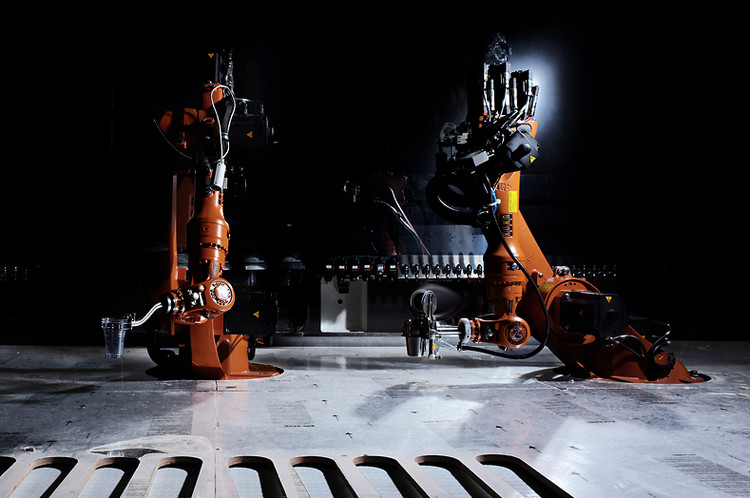
One such task-mastering robot was featured at the Milan Design Week this year, an event where fashion tales center stage. It’s known as the Makr Shakr, a set of robotic arms that are capable of mixing drinks, slicing fruit, and capable of making millions of different recipes. The result of a collaborative effort between MIT SENSEable City Lab and Carlo Ratti Associati, an Italian architecture firm, this robot is apparently able to match wits with any human bartender.
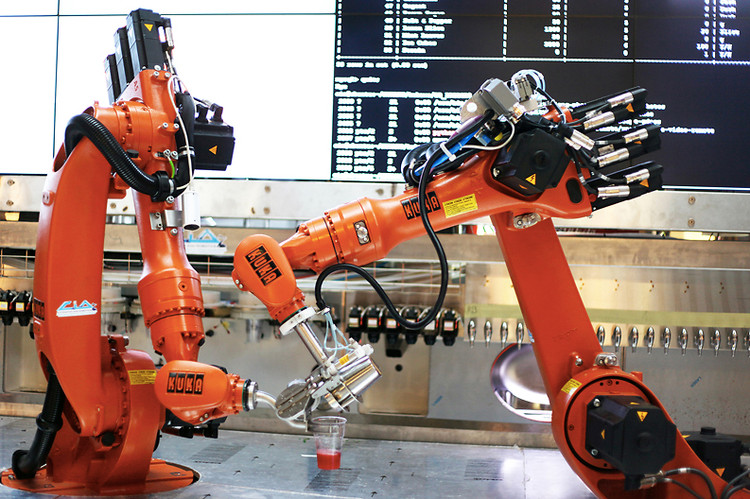
robot_bartender1While at the Milan Design Week, the three robotic arms put on quite the show, demonstrating their abilities to a crowd of wowed spectators. According to the website, this technology is not just a bar aid, but part of a larger movement in robotics:

Makr Shakr aims to show the ‘Third Industrial Revolution’ paradigm through the simple process design-make-enjoy, and in just the time needed to prepare a new cocktail.

In a press release, the company described the process. It begins with the user downloading an app to create their order to the smartphone as well as peruse the recipes that other users have come up with. They then communicate the order to the Makr Shakr and “[the] cocktail is then crafted by three robotic arms, whose movements reproduce every action of a barman–from the shaking of a Martini to the muddling of a Mojito, and even the thin slicing of a lemon garnish.”

robot_bartender2Inspired by the ballerina Roberto Bolle, whose “movements were filmed and used as input for the programming of the Makr Shakr robots”, the arms appear most graceful when they do their work. In addition, the design system monitors exactly how much booze each patron is consuming, which, in theory, could let the robot-bartenders know when it’s time to cut off designers who have thrown back a few too many.

Check out the video of the Makr Shakr in action:


Another major breakthrough comes, yet again, from DARPA. For years now, they have been working with numerous companies and design and research firms in order to create truly ambulatory and dextrous robot limbs. In some cases, as with the Legged Squad Support System (LS3), this involves creating a machine that can carry supplies and keep up with troops. In others, this involves the creation of robotic hands and limbs to help wounded veterans recover and lead normal lives again.

And you may recall earlier this year when DARPA unveiled a cheap design for a robotic hand that was able to use tools and perform complex tasks (like changing a tire). More recently, it showcased a design for a three-fingered robot, designed in conjunction with the firm iRobot – the makers of the robotic 3D printer – and with support from Harvard and Yale, that is capable of unlocking and opening doors. Kind of scary really…

DARPA_robot

The arm is the latest to come out of the Autonomous Robotic Manipulation (ARM) program, a program designed to create robots that are no longer expensive, cumbersome, and dependent on human operators. Using a Kinect to zero in on the object’s location before moving in to grab the item, the arm is capable of picking up thin objects lying flat, like a laminated card or key. In addition, the hand’s three-finger configuration is versatile, strong, and therefore capable of handling objects of varying size and complexity.

When put to the test (as shown in the video below), the hand was able to pick up a metal key, insert it into a lock, and open a door without any assistance. Naturally, a human operator is still required at this stage, but the use of a Kinect sensor to identify objects shows a degree of autonomous capability, and the software behind its programming is still in the early development phase.

And while the hand isn’t exactly cheap by everyday standards, the production cost has been dramatically reduced. Hands fabricated in batches of 1,000 or more can be produced for $3,000 per unit, which is substantially less than the current cost of $50,000 per unit for similar technology. And as usual, DARPA has its eye on future development, creating hands that would be used in hazardous situations – such as diffusing IEDs on the battlefield – as well as civilian and post-combat applications (i.e. prosthetics).

And of course, there’s a video for the ARM in action as well. Check it out, and then decide for yourself if you need to be scared yet:


Sources:
fastcoexist.com, singularityhub.com
, makrshakr.com

The Future of Medicine: The Spleen-On-A-Chip

spleen_on_a_chipSepsis, a full-body inflammatory state caused by infection, is a notorious killer, being both deadly and difficult to treat. As it stands, doctors use broad-spectrum antibiotics that have only a limited chance of success, and a misdiagnosis can cost a patient vital time. For military personnel serving overseas, where conditions are difficult and medical treatment not always readily available, it is a particular problem.

Hence why DARPA has been keen on finding new treatment options and contracted the Wyss Institute at Harvard University to the tune of $9.25 million to find it for them. Their solution: the “Spleen-on-a-Chip” – a blood-cleaning device that acts much like a kidney dialysis machine. Blood goes out through one vein, and back through another, but the real key is the magnetic nano-beads coated in a protein that binds to bacteria, fungi, parasites, and some toxins.

bloodstreamWith these impurities coated in microscopic metal beats, the blood then flows through micro-channels in the device where a magnet pulls the pathogens free, leaving the blood clean. The technique also takes out dead pathogens (killed by antibiotics) that can also cause inflammations, if there are enough of them. In this way, it not only removes the cause of sepsis, but one of the common side-effects of conventional treatment.

Don Ingber, director of Wyss Institute for Biologically Inspired Engineering at Harvard, described the benefits of their Spleen-on-a-chip:

The idea with this therapy is that you could use it right away without knowing the type of infection. You can remove pathogens and infections without triggering that whole cascade that gets worse and worse.

Since it mimics the effects of a real spleen, many have taken to calling it a “biospleen”, indicating that it is a genuine biomimetic  device. At the present time, Ingber and his associates are testing it on rats, with the hope of expanding their trials to larger animals, like pigs. But given the limits of their funding, Ingder estimates that it will be a good five years before  a serviceable model is available to the public.

blood_vialsBy that time, however, the biospleen may be just one of several organs-on-a-chip available for purchase. The Wyss Institute is hardly alone in developing biomimetics, and their spleen is just on of many devices they are working on. Ingber and his associates are currently working on the lung-on-a-chip and a gut-on-a-chip, devices that are able to oxygenate blood and process food into useable energy.

These latter devices will come in very handy for people with emphysema or other respiratory diseases, and people suffering from digestive problems or stomach cancer. And while larger aim, says Ingber, is to raise the effectiveness of drug testing and improve understanding of how the body reacts to disease, the potential is far more astounding. Within a few decades, we may be capable of getting our hands on machines that can compensate for any kind of limitation imposed by disease or our biology.

It’s a biomimetic future, people – technology imitating biology for the sake of creating enhanced biology.

Source: fastcoexist.com

Powered by the Sun: The Artificial Leaf

solar_power1Despite progress made in recent decades, solar power still has some obstacles to overcome before it can be completely adopted. Thanks to several innovations, the price of manufacturing and installing solar panels has dropped substantially, intermittency remains a problem. So long as solar power remains limited by both geography and weather, we can expect to remain limited in terms of use.

And short of building Space-Based Solar Power (SBSP) arrays, or producing super-capacitor batteries with graphene – both of which are being explored – the only other option is to find ways to turn solar power into other forms of usable fuel. When the sun isn’t shining, people will need something else to power their homes, appliances, heating and AC. And given that the point is to reduce pollution, it will also have to be clean.

??????And that’s precisely what Daniel Nocera and his team are doing over at the University of Harvard. Their “artificial leaf” – a piece of silicon (solar cell) coated with two catalysts – is a means of turning sunshine into hydrogen fuel. Basically, when sunlight shines in, the leaf splits the water into bubbles of hydrogen and oxygen on each side, which can then be used in a fuel cell.

Efforts in the past to build similar solar cells have faltered, due largely to the costs involved. However, with the price of solar-related materials dropping in recent years, this latest device may prove commercially viable. And built to a larger scale, the device could provide a super-cheap and storable energy source from which could then be piped off and used in a fuel cell to make electricity. And combined with arrays of solar panels, we could have the energy crisis licked!

artificial-leafNocera and his team first announced the technology back in 2011, back when he was still a chemist at MIT. Since that time, they have published a follow-up paper showing how the team has improved the leaf’s efficiency, laying out future challenges, and how these might be overcome. Foremost amongst these are a field trial, with the eventual aim of building a commercial device for the developing world.

Beyond that, Nocera hopes to commercialize the technology through his company, the Massachusetts-based Sun Catalytix. Once realized, he plans to to put his dream of giving the poor “their first 100 watts of energy” into action. Here’s hoping he succeeds. The poor need power, and the environment needs a break from all our polluting!

Thank you all for reading the latest installment of PBTS! And be sure to check out this video of the artificial leaf in action:

The Future is Here: The Autonomous Robotic Jellyfish!

Matt Russiello submerges the RoboJelly. Remember the Medusoid, that creepy robot jellyfish creature that debuted in July of 2012? Well, it seems that Virginia Tech was working on their own, with help from the military. Yes, whereas the medusoid was a project in organic-synthetic interfacing, a collaborative effort between Harvard University and Caltech researchers, this one is the result of ongoing work by the United States Navy.

After years of working on their own model for a robot jellyfish, they unveiled the fruits of that labor earlier this month. Named Cyro – a contraction of robot and Cyanea capillata (the species name for the lion’s mane jellyfish) – this 170 pound biomimetic machine looks and act like a jellyfish, but is in fact an autonomous robot.

cyro1And much the Medusoid and Robojelly – Cyro’s hand-sized predecessor – this second-generation model utilizes what is called “Bio-Inspired Shape memory Alloy Composites (BISMAC)” in order to mimic the motions of the real thing. This consists of a
layer of smart materials (aka. shape memory alloy) that is soft and shaped in such a way to maximize deformation and propulsion.

Underneath this layer of composite material are a number of actuators (i.e. robotic arms) that control the movements of the Cyro. These in turn are mounted on a central body that contains enough hardware to allow the robot to communicate, gather information, and make decisions. What’s more, the developers envisage a fleet of networked Cyros, conducting surveillance and research and sharing the results with each other.

cyro2And as the video below explains, this robot jellyfish is likely to have numerous applications. These included environmental monitoring, cleaning up oil spills, or conducting military surveillance. Of course, it seems pretty obvious what the primary use of the Cyro is going to be, given that the ONR and the U.S. Naval Undersea Warfare Center are responsible for funding it!

No telling how Human Right Watch will react to this, though. How safe would you feel, knowing that the next time you’re snorkeling, swimming or ocean kayaking that a perfectly innocent looking Man-of-War could be spying on you? Check out the video of the Cyro being tested below:


Sources:
fastcoexist.com, emdl.mse.vt.edu

Criminalizing Transhuman Soldiers

biosoldiersIt seems to be the trend these days. You take a predictions that was once the domain of science fiction and treat it as impending science fact. Then you recommend that before it comes to pass, we pre-emptively create some kind of legal framework or organization to deal with it once it does. Thus far, technologies which are being realized have been addressed – such as autonomous drones – but more and more, concepts and technologies which could be real any day now are making the cut.

It all began last year when the organization known as Human Rights Watch and Harvard University teamed up to release a report calling for the ban of “killer robots”. It was soon followed when the University of Cambridge announced the creation of the Centre for the Study of Existential Risk (CSER) to investigate developments in AI, biotechnology, and nanotechnology and determine if they posed a risk.

X-47BAnd most recently, just as the new year began, a report funded by the Greenwall Foundation examined the legal and ethical implications of using biologically enhanced humans on the battlefield. This report was filed in part due to advances being made in biotechnology and cybernetics, but also because of the ongoing and acknowledged efforts by the Pentagon and DARPA to develop super-soldiers.

The report, entitled “Enhanced Warfighters: Risks, Ethics, and Policy”, was written by Keith Abney, Patrick Lin and Maxwell Mehlman of California Polytechnic State University.  The group, which investigates ethical and legal issues as they pertain to the military’s effort to enhance human warfighters, received funding from the Greenwall Foundation, an organization that specializes in biomedicine and bioethics.

In a recent interview, Abney expressed the purpose of the report, emphasizing how pre-emptive measures are necessary before a trend gets out of hand:

“Too often, our society falls prey to a ‘first generation’ problem — we wait until something terrible has happened, and then hastily draw up some ill-conceived plan to fix things after the fact, often with noxious unintended consequences. As an educator, my primary role here is not to agitate for any particular political solution, but to help people think through the difficult ethical and policy issues this emerging technology will bring, preferably before something horrible happens.”

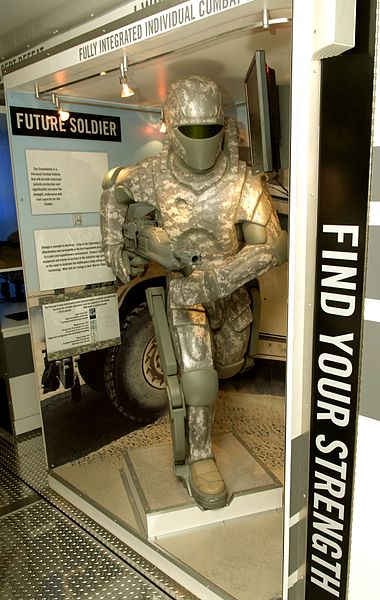
US_Army_powered_armorWhat’s more, he illustrated how measures are necessary now since projects are well-underway to develop super soldiers. These include powered exoskeletons to increase human strength and endurance. These include devices like Lockheed Martin’s HULC, Raytheon’s XOS, UC Berkeley’s BLEEX, and other projects.

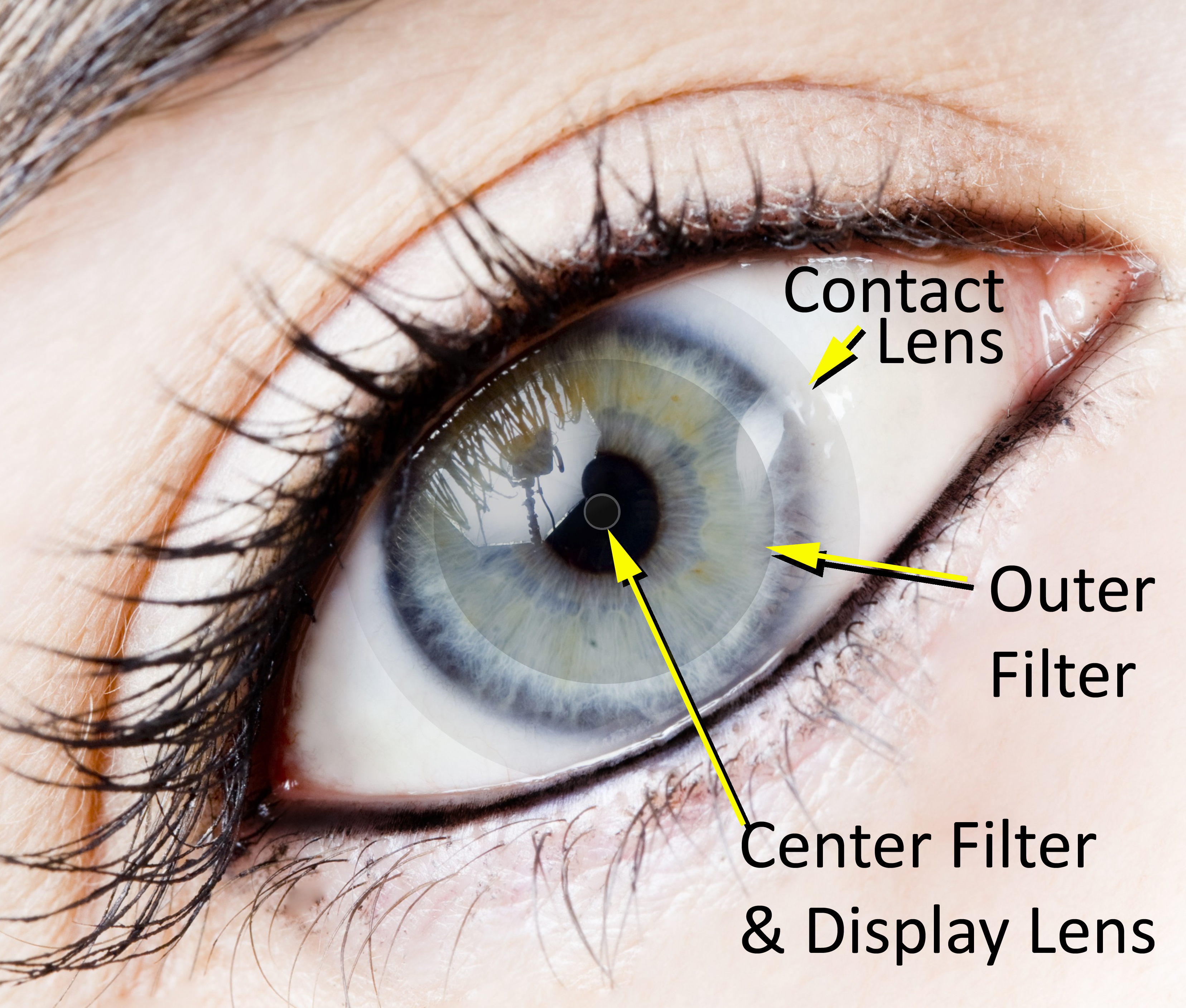
In addition, DARPA has numerous projects on the books designed to enhance a soldiers abilities with cybernetics and biotech. These include VR contact lenses, basic lenses that enhance normal vision by allowing a wearer to view virtual and augmented reality images without a headset of glasses. There’s also their Cognitive Technology Threat Warning System (CT2WS), which is a computer-assisted visual aid that instantly identifies threats by augmenting their visual faculties.

CREATOR: gd-jpeg v1.0 (using IJG JPEG v62), quality = 90And in the cognitive realm, there are such programs as Human Assisted Neural Devices (HAND) that seeks to strengthen and restore memories and the Peak Soldier Performance (PSP) program that will  boosthuman endurance, both physical and cognitive. But of course, since post-traumtic stress disorder is a major problem, DARPA is also busy at work creating drugs and treatments that can erase memories, something which they hope will give mentally-scarred soldiers a new lease on life (and military service!)

And of course, the US is hardly alone in this regard. Every industrialized nation in the world, from the EU to East Asia, is involved in some form of Future Soldier or enhanced soldier program. And with nations like China and Russia catching up in several key areas – i.e. stealth, unmanned aerial vehicles and aeronautics – the race is on to create a soldier program that will ensure one nation has the edge.

bionic_handsBut of course, as Abney himself points out, the issue of “enhancement” is a rather subjective term. For example, medical advancements are being made all the time that seek to address disabilities and disorders and also fall into the category of “enhancement”. Such ambiguities need to be ironed out before any legal framework can be devised, hence Abney and his associates came up with the following definition:

“In the end, we argued that the best definition of an enhancement is that it’s ‘a medical or biological intervention to the body designed to improve performance, appearance, or capability besides what is necessary to achieve, sustain or restore health.”

Working from this starting point, Abney and his colleagues made the case in their report that the risk such enhancements pose over and above what is required for normal health helps explain their need for special moral consideration.

These include, but are not limited to, the issue of consent, whether or not a soldier voluntary submits to enhancement. Second, there is the issue of long-term effects and whether or not a soldier is made aware of them. Third, there is the issue of what will happen with these people if and when they retire from the services and attempt to reintegrate into normal society.

It’s complicated, and if it’s something the powers that be are determined to do, then they need to be addressed before they become a going concern. Last thing we need is a whole bunch of enhanced soldiers wandering around the countryside unable to turn off their augmented killer instincts and super-human strength. Or, at the very least, it would be good to know we have some kind of procedure in place in case they do!

What do you think of when you hear the word "super soldier"? Yeah, me too!
What do you think of when you hear the word “super soldier”? Yeah, me too!

Source: IO9.com

Scientists Raise the Alarm on Human Enhancements

enhancementThe concept of technological progress and its potential consequences has been the subject of quite a bit of attention lately. First, there was the announcement  from Harvard University and Human Rights Watch that a ban on killer robots was needed before the current pace of innovation led to the machines that could so without human oversight.

Then came the University of Cambridge’s announcement about the creation of the Center for the Study of Existential Risk (CSER) to evaluate new technologies. And last, there was the news the news that the DOD had signing a series of instructions to “minimize the probability and consequences of failures that could lead to unintended engagements,” starting at the design stage.

bionic_handConcordantly, back in early November, the Royal Society along with the Academy of Medical Sciences, British Academy, and Royal Academy of Engineering concluded a workshop called “Human Enhancement and the Future of Work” in which they considered the growing impact and potential risks of augmentation technologies. In their final report, they raised serious concerns about the burgeoning trend and how humanity is moving from a model of therapy to one in which human capacities are greatly improved. The implications, they concluded, should be part of a much wider public discussion.

Specifically, the report raised concerns on drugs and digital enhancements that will allow people to work longer, hard and faster. Such technologies could easily give rise to a culture of enhanced competitiveness, more than we currently know, where the latest in cybernetics, bionics and biomedical devices are used to gain and edge, not to remedy medical problems. Currently, things like bionic prosthesis are being created to aid amputees and injury victims; but as the technology improves and such devices become more effective than organic limbs, the purpose could change.

cyberpunk-eyeWhat’s more, there are the ethical implications of having such technology available to human beings. If people can upgrade their bodies to enhance their natural abilities, what will it means for those who get “left behind”? Will the already enormous gulf between the rich and poor expand even further and take on a new dimension? Will those who want to succeed in the business world be forced to scrounge so they can get the latest upgrades.

Or, as the panel’s final report put it:

“Work will evolve over the next decade, with enhancement technologies potentially making a significant contribution. Widespread use of enhancements might influence an individual’s ability to learn or perform tasks and perhaps even to enter a profession; influence motivation; enable people to work in more extreme conditions or into old age, reduce work-related illness; or facilitate earlier return to work after illness.”

At the same time however, they acknowledge the potential efficacy and demand for such technologies, prompting the call for open discourse. Again, from the report:

“Although enhancement technologies might bring opportunities, they also raise several health, safety, ethical, social and political challenges, which warrant proactive discussion. Very different regulatory regimes are currently applied: for example, digital services and devices (with significant cognitive enhancing effects) attract less, if any, regulatory oversight than pharmacological interventions. This raises significant questions, such as whether any form of self-regulation would be appropriate and whether there are circumstances where enhancements should be encouraged or even mandatory, particularly where work involves responsibility for the safety of others (e.g. bus drivers or airline pilots).”

In many ways, this report is overdue, as it is offering some rather obvious commentary on a subject which has been the subject of speculation and fiction for some time. For example, in the Sprawl Trilogy, William Gibson explored the idea of human enhancement and the disparity between rich and poor at length. In his world, the rich were ensured clinical immortality through AI and biotech while everyone else was forced to spend their savings just to afford the latest tech, merely so they could stay in the running.

However, just about all of the panel’s recommendations were most appropriate. They included further investigations into ensuring safety, affordability, and accessibility, not to mention that some of these enhancement technologies —  be they pharmaceutical, regenerative medicines, or cybernetics — should be regulated by the government. This last article is especially appropriate given the potential for personal misuse, not to mention the potential exploitation by employers.

With all the harm that could result from having technologies that could render human beings “postmortal” or “posthuman”, some degree of oversight is certainly necessary. But of course, the real key is a public educated and informed on the issue of cybernetics, bionics, and human enhancement, and what they could mean for us. As with so much else, the issue is one of choice, and awareness of what the consequences could be. Choose wisely, that’s the only guarantee! Hey, that rhymed… I smell a quote!

Source: IO9.com

Planning For Judgement Day…

TerminatorSome very interesting things have been taking place in the last month, all of concerning the possibility that humanity may someday face the extinction at the hands of killer AIs. The first took place on November 19th, when Human Rights Watch and Harvard University teamed up to release a report calling for the ban of “killer robots”, a preemptive move to ensure that we as a species never develop machines that could one day turn against us.

The second came roughly a week later when the Pentagon announced that measures were being taken to ensure that wherever robots do kill – as with drones, remote killer bots, and cruise missiles – the controller will always be a human being. Yes, while Americans were preparing for Thanksgiving, Deputy Defense Secretary Ashton Carter signed a series of instructions to “minimize the probability and consequences of failures that could lead to unintended engagements,” starting at the design stage.

X-47A Drone
X-47A Drone, the latest “hunter-killer”

And then most recently, and perhaps in response to Harvard’s and HRW’s declaration, the University of Cambridge announced the creation of the Centre for the Study of Existential Risk (CSER). This new body, which is headed up by such luminaries as Huw Price, Martin Rees, and Skype co-founder Jaan Tallinn, will investigate whether recent advances in AI, biotechnology, and nanotechnology might eventually trigger some kind of extinction-level event. The Centre will also look at anthropomorphic (human-caused) climate change, as it might not be robots that eventually kill us, but a swelteringly hot climate instead.

All of these developments stem from the same thing: ongoing developments in the field of computer science, remotes, and AIs. Thanks in part to the creation of the Google Neural Net, increasingly sophisticated killing machines, and predictions that it is only a matter of time before they are capable of making decisions on their own, there is some worry that machines programs to kill will be able to do so without human oversight. By creating bodies that can make recommendations on the application of technologies, it is hopes that ethical conundrums and threats can be nipped in the bud. And by legislating that human agency be the deciding factor, it is further hoped that such will never be the case.

The question is, is all this overkill, or is it make perfect sense given the direction military technology and the development of AI is taking? Or, as a third possibility, might it not go far enough? Given the possibility of a “Judgement Day”-type scenario, might it be best to ban all AI’s and autonomous robots altogether? Hard to say. All I know is, its exciting to live in a time when such things are being seriously contemplated, and are not merely restricted to the realm of science fiction.Blade_runner

The Future is Here: Cyborg Flesh!

My thanks to Futurist Foresight for turning me onto this article. I would have reblogged, but it was just easier to follow the links and post on my own. You may recall some weeks back when the news hit the airwaves, about how researchers at Caltech developed the medusoid, a cybernetic jellyfish that was capable of mimicking the behavior of the original. Well, it turns out bioengineers at Harvard University have gone a step a further.

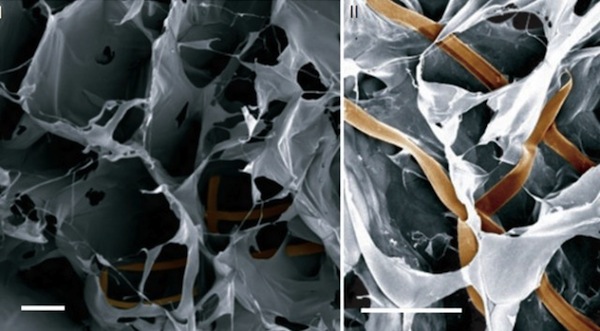
Merging the neurons, muscle cells, and blood vessels of various rats with nanowires and transistors that can monitor bioelectric impulses, these researchers were able to create the world’s first hybrid living/electronic cells. Much like the medusiod, the cells were controlled through electrical impulses, which allowed them to function like normal cells, except controlled via a computerized interface.

In time, they anticipate that this will lead to the development of nanotechnology that will allow them to make subtle changes in a person’s biochemistry. More than that, they could become the basis of tiny medical machines, such as microscopic pacemakers, or as microcircuits for prosthetics and silicate implants. On top of all that, this research is a big step along the road to the development of nanorobots, machines so tiny that they alter or maintain a person’s health at a cellular level.

“It allows one to effectively blur the boundary between electronic, inorganic systems and organic, biological ones,” said Charles Lieber, the team leader in an interview with New Scientist. And he’s absolutely right. With developments such as these and the boundaries they are pushing, human-machine interface, implant technology, robotic prosthetics and upgrades, and even the merging of our minds with computers could all be on the horizon. For some, this will mean the arrival of the long awaited Homo Superior, the new age man. For others, its a chance to tremble at the specter of a cybernetic future!

Both are fine choices, whatever floats your boat 😉