
 I came across another interesting and fascinating TED Talk recently. In this lecture, famed economist Marco Annunziata spoke about a rather popular subject – “The Internet of Things”, and how it is shaping our society. This term is thrown around a lot lately, and it refers to a growing phenomenon in our world where uniquely identifiable objects are connected to virtual representations in an Internet-like structure.
Basically, the concept postulates that if all objects and people in daily life were equipped with identifiers, they could be managed and inventoried by computers. By equipping all objects in the world with minuscule machine-readable identifiers, daily life could be transformed. How this is likely to look is the subject of Annunziata’s talk, beginning with the past two hundred years and the two major waves of innovation humanity went through.
 The first came with the Industrial Revolution (ca. 1760-1903), which permanently altered our lives with factories, machinery, railways, electricity, air travel, etc. The second wave came with the Internet Revolution (ca. 1980 – 2000), which has once again changed our lives permanently with computing power, data networks, and unprecedented access to information and communication.
Now, in the modern era, we are entering into a new phase of innovation, one which he refers to as the “Industrial Internet”. Judging by current research and marketing trends, this wave is characterized by intelligent machines, advanced analytics, and the creativity of people at work. It is a marriage of minds and machines, and once again, our lives will be permanently altered by it.
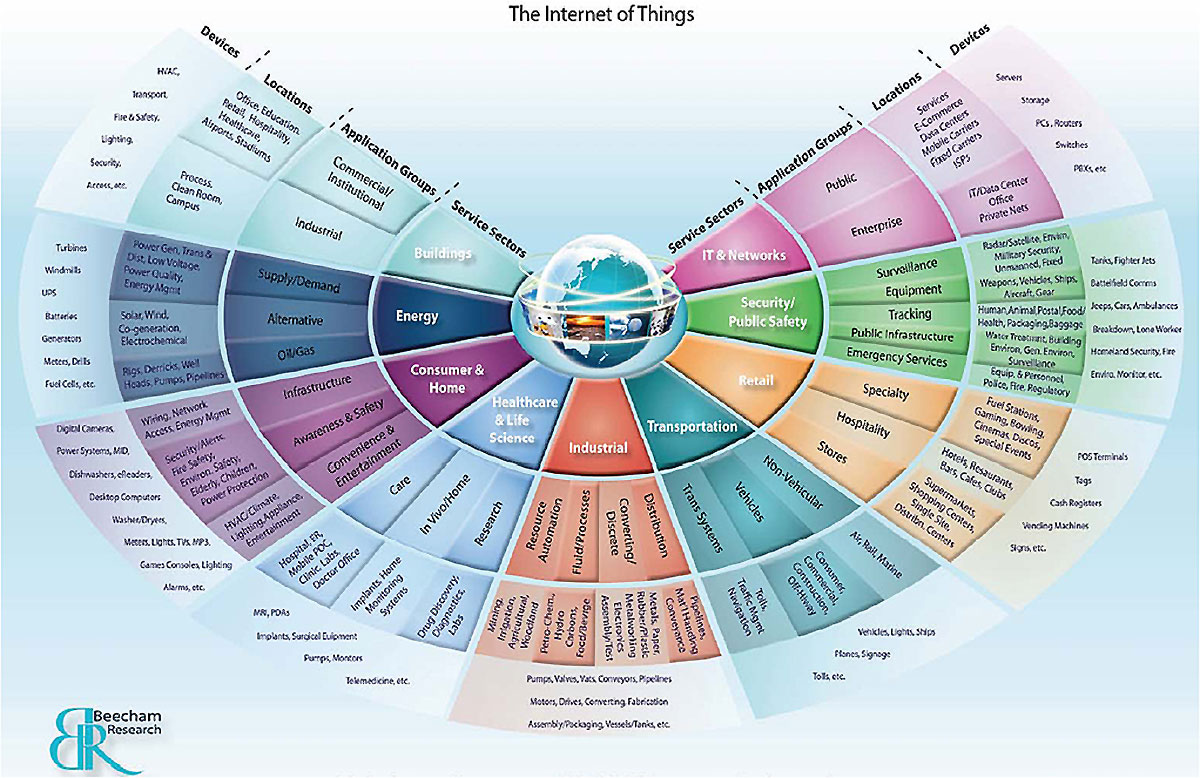 In the course of the twelve minute lecture, Annunziata explains how the emergence of machines that can see, feel, sense and react will lead to an age where the technology we depend upon will operate with far greater efficiently. Naturally, there are many who would suspect that this all boils down to AIs doing the thinking for us, but in fact, it’s much more complicated than that.
Think of a world where we would be able to network and communicate with all of our devices – not just our smartphones or computers, but everything from our car keys to our cars and home appliances. By all things being marked and represented in a virtual internet-like environment, we could communicate with or remotely check on things that are halfway across the world.
Think of the implications! As someone who is currently very fascinated with how the world will look in the not-too-distant future, and how people will interact with it, I can tell you this stuff is science fiction gold! Check it out and be sure to follow the link at the bottom of the page to comment.
Source: ted.com


 Stories by Williams