News from SpaceX: More Tests and the Coming Launch

spaceX_elonmuskElon Musk just can’t get enough of the spotlight lately! But that’s the price you pay for being a billionaire, innovator, genius-type person! And barely a week after announcing his idea for the Hyperloop high-speed train, it now seems that SpaceX is once again making the news, thanks to its latest test of the Grasshopper reusable rocket system as well as their planned launch of the Falcon Heavy rocket.

For those unfamiliar with the Grasshopper, this is a proposed reusable rocket system that Musk and SpaceX created with the hopes of bringing the costs associated with space launches down considerably. Since September 2012, the rocket has been put through successive tests, reaching higher and higher altitudes and safely making it back to the ground.
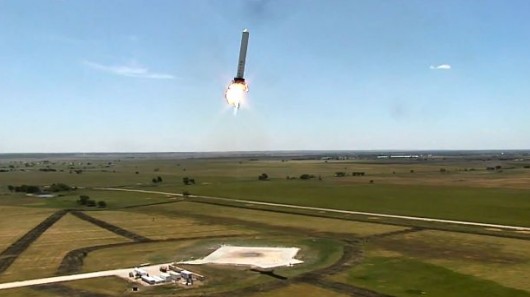
grasshopper_lateraldivertIn this latest test, the rocket successfully performed a “lateral divert test”. In all previous tests, the rocket lifted off vertically from a launch pad and then used its Merlin-1D engine to ease itself back down to the pad. However, in actual launch situations, the rocket wont simply be traveling up and down. When it comes time to land, a considerable amount of lateral steering will be necessary to line it back up with the launch site.

This is what the test, which took place on Tuesday, August 13th, amounted to. It began with the Grasshopper reaching its previously-achieved altitude of 250 meters, but then continued with the rocket moving an additional 100 m (328 ft) to one side. It was subsequently still able to land safely back at the center of the launch pad, compensating for its lateral diversion.

According to SpaceX: “The test demonstrated the vehicle’s ability to perform more aggressive steering maneuvers than have been attempted in previous flights.” What’s more, it places the company that much closer to the realization of a truly reusable rocket system, something which will drastically cut costs for future space missions.

And of course, they were sure to catch the entire test on video:


But equally important for this rising company that seeks to privatize space travel was the announcement that they have are moving ahead with plans to launch their Falcon Heavy rocket system by late 2013 or early 2014. At present, the Falcon is the most power rocket system in the world, overshadowed only by the now retired – but soon to be reserviced – Saturn V booster that put the Apollo astronauts into space and on the Moon.

spaceX-falcon9As Musk himself said of the rocket:

Falcon Heavy will carry more payload to orbit or escape velocity than any vehicle in history, apart from the Saturn V moon rocket, which was decommissioned after the Apollo program. This opens a new world of capability for both government and commercial space missions.

Fully loaded, the Falcon Heavy will be able to carry payloads of 53 metric tons (117,000 pounds or 53,070 kg) into orbit, and is made up of two engine stages. The first stage consists of a Falcon 9 rocket, with a nine-engine cores, followed by two additional nine-engine cores attached to either side. In addition, the Merlin engines have been upgraded to handle the additional weight, and are being tested at SpaceX’s facility in McGregor, Texas.

flacon-heavy-3At liftoff the 69.2m (227 ft) long Falcon Heavy will generate 3.8 million pounds of thrust, which is equivalent to the thrust of fifteen Boeing 747’s taking off at the same time. SpaceX claims that this gives the Falcon Heavy more than twice the performance of the next most powerful vehicle – the Delta IV Heavy operated by the Boeing-Lockheed Martin joint venture United Launch Alliance.

SpaceX also says that with more than twice the payload of the Delta IV but at one third the cost, the Falcon Heavy sets a new world record in terms of economy at approximately US$1,000 per pound to orbit. This is in keeping with Musk’s promise to bring the associated costs of space travel and exploration down, hopefully one day to his goal of $500 per pound.


spaceX_solararrayWith the ability to carry satellites or interplanetary spacecraft to orbit, SpaceX is offering the Falcon Heavy on the commercial market for US$80–$125 million, which compares to the $435 million per launch the U.S. Air Force has budgeted for four launches in 2012. So in effect, Musk’s company is offering a money-saving alternative to both the public and private sector.

For those fascinated by the long-term potential of space travel, this is certainly exciting news. By cutting the costs of placing satellites, supplies and people in orbit, many things are being made feasible that were previously impossible. This includes conducting more research in orbit, the ability to create space-based solar arrays (a very cool solution to our current power problems and the limitations of Earth-based solar power) and perhaps even begin work on a Moon settlement.
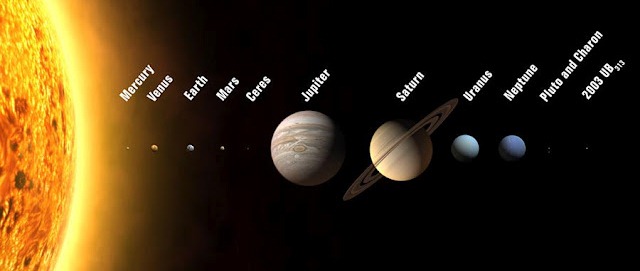
solar_system1Beyond that, there are the growing possibilities of commercial space travel, space tourism, and even setting our sights father afield with manned missions to the Moon, prospecting missions to the asteroid belt, and surveying probes to Jupiter’s Moons and to the very edge of the Solar System. Possibly even beyond…

Exciting times we live in, when the impossible is slowly becoming possible!

Sources: gizmag.com, (2), spacex.com


News from Space: The Slingatron

slingatronPlacing things into orbit is something humanity has been doing since the 1940’s, beginning with Germany’s V2 Rockets, then giving way to artificial satellites like Sputnik in the 1950’s. These efforts really came into their own during the 1960’s and since, when manned missions reached high orbit and even the Moon. But despite all these  milestones, little has been done to address the problems of cost.

Ever since space travel began in earnest, the only way to send satellites, supplies and shuttle craft into orbit has been with rockets. Even at its cheapest, a space launch can still cost an estimated $2000 per pound per mission, due to the fact that the rockets employed are either destroyed or rendered unusable once they’ve completed their mission.

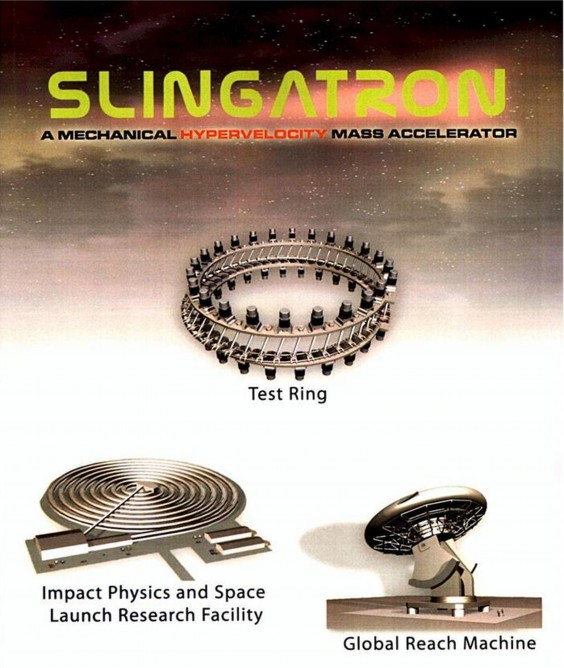
slingatron-20Attempts to create reusable launch systems, like the SpaceX Grasshopper, is one solution. But another involves “slinging” payloads into orbit, rather than launching them. That’s what HyperV Technologies Corp. of Chantilly, Virginia is hoping to achieve with their design for a “mechanical hypervelocity mass accelerator”, otherwise known as a “slingatron”.

Invented by Derek Tidman in the 1990s, the slingatron replaces rockets with a more sophisticated version of the sling. However, the principle differs somewhat in that the device uses something far more sophisticated than circumferential force. In the end, the name cyclotron might be more apt, which is a very simple particle accelerator.


slingatron-11Utilizing a vacuum tube and a series of magnetic/electostatic plates of opposing charges, an atomic particle (such as a proton) is introduced and sent back and forth as the polarity of the plates are flipped. As the frequency of the flipping is increased, the proton moved faster and faster in a series of spirals until it reaches the rim and shoots out a window at extremely high velocity.

The slingatron achieves the same result, but instead uses a spiral tube which gyrate on a series of flywheels along its length. As the slingatron gyrates, a projectile is introduced and the centripetal force pulls the projectile along. As the projectile slides through larger and larger turns of the spiral, the centripetal forces increase until the projectile shoots out the muzzle, traveling at several kilometers per second.

slingatron-13Ultimately, the goal here is to build a slingatron big enough to fire a projectile at velocities exceeding 7 km/s (25,000 km/h, 15,600 mph) to put it into orbit. With rapid turnarounds and thousands of launches per year while all of the launch system remains on Earth, the developers claim that the slingatron will offer lower costs for getting payloads into orbit.

However, there are weaknesses to this idea as well. For starters, any projectile going into space will also need to be fitted a small set of rockets for final orbit insertion and corrections. In addition, the G-forces involved in such launches would be tremendous – up to 60,000 times the force of gravity – which means it would be useless for sending up manned missions.

slingatron-15In the end, only the most solid state and hardened of satellites would have a chance of survival. The developers say that a larger slingatron would reduce the forces, but even with a reduction by a factor of 10,000, it would still be restricted to very robust cargoes. This makes it an attractive options for sending supplies into space, but not much else.

Still, given the costs associated with keeping the ISS supplied, and ensuring that future settlements in space have all the goods and equipment they need, a series of slingatrons may be a very viable solution in the not-to-distant future. Combined with concepts like the space penetrator, which fired bullet-like spaceships into space, the cost associated with space travel may be dropping substantially in coming decades.

All of this could add up to a great deal more space traffic coming to and from Earth in the not-too-distant future as well. I hope we have the foresight to construct some “space lanes” and keep them open! And in the meantime, enjoy this video interview of Dr. F. Douglas Witherspoon explaining the concept of the slingatron:

Source: gizmag.com

Want to See Your Home from the ISS?

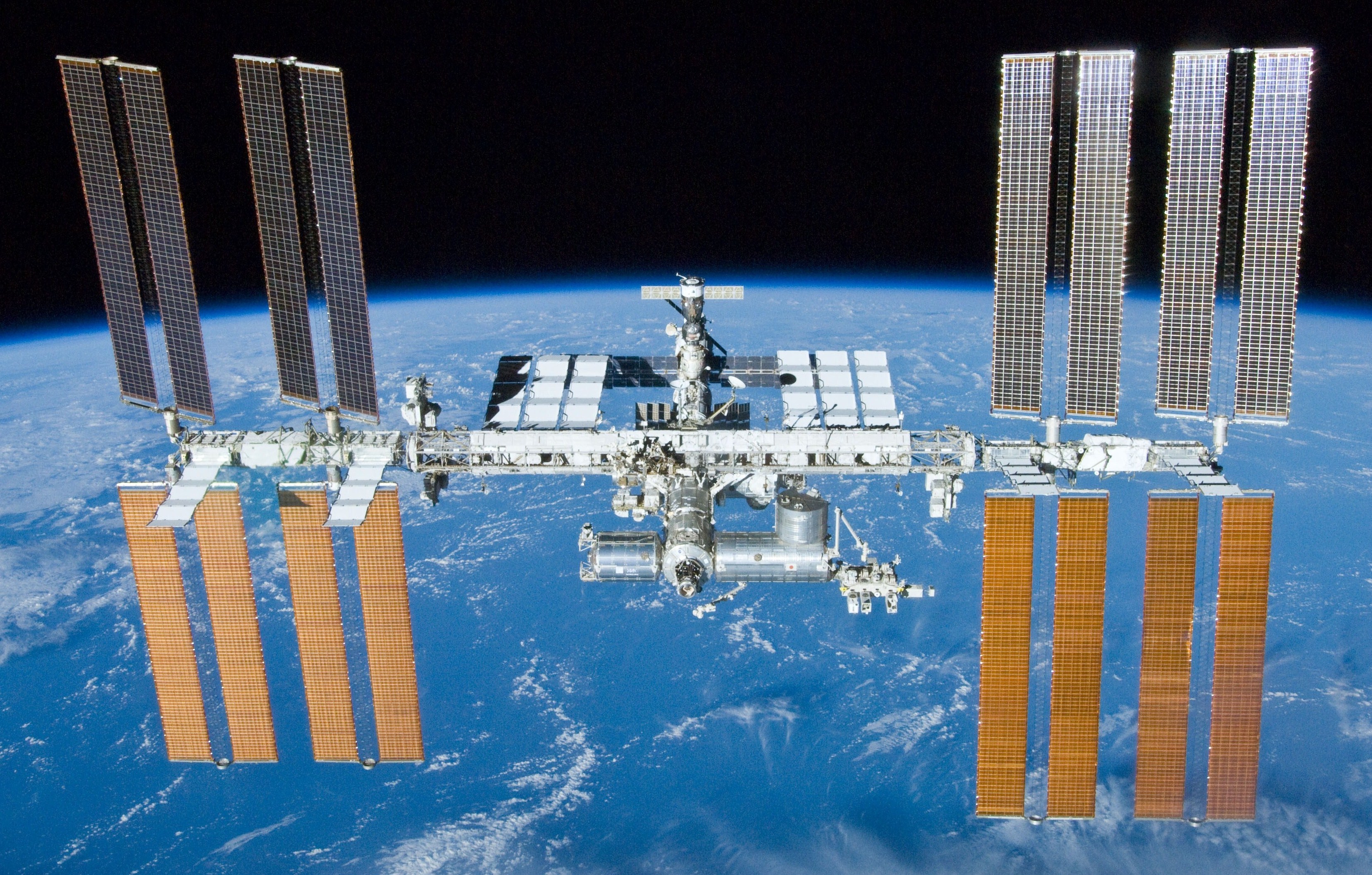
ISSA Vancouver-based company recently announced that it would be streaming images from the ISS to Earth, giving people a rare glimpse of what astronauts in orbit see on a daily basis. In an age where space travel is becoming increasingly public, thanks in part to social media, it now appears that at least one company want to get in on the ground floor of making space more accessible.

Scott Larson, CEO of Urthecast (get it?), said in a recent interview with CBC’s Curt Petrovich how his company is making this happen. This past Sunday, Urthecast launched a platform to the space station aboard the unmanned Russian Progress M-20M spacecraft as part of a delivery of 2.4 tonnes of supplies – including food, water, fuel and scientific equipment.

urthecaste.gifThis platform will soon be attached to the outside of the station and augmented with two HD cameras that will allow people to see things on Earth as small as one meter wide. One will be fixed will take a continuous video panorama of Earth 50 kilometers wide as the space station orbits Earth while the other will be a pointable one that customers will be able to aim at a particular spot on Earth, for a price.

These cameras will be launched aboard a different Progress flight on Nov. 20 and attached to the platform upon arrival. Though Urthecast has not specified what kind of fees will be involved for those looking to download pics of Earth, it has claimed that it intends to sell the video to corporations, governments and non-governmental organizations such as the United Nations for a wide range of need.

urthecaste_cameraHowever, these customers will not include the military since the apparatus will be on the International Space Station, which by law can only be used for “peaceful purposes”. Canadian law also requires the company to shut off the cameras as they pass over sensitive targets, if requested to do so by the federal government. Nevertheless, at least some investors are confident the company will make money of this idea. Since it first went public last month, Urthecast has raised some $46 million.

As part of what the company calls the “world’s first near-live HD video feed of Earth”, their cameras are expected to cover the planet between the latitudes of 51 degrees north (covering northern Canada, Russia and Scandinavia) and 51 degrees south (the southern tip of Chile and Argentina, South Africa and Australia). Once captured, the images will be downloaded to ground stations on Earth and be made available just a few hours later.

earth-from-ISSSo, between the accuracy of the cameras and the range they have to survey the planet, people will be able to capture images of their homes, neighborhoods, and even people that are accurate to a single meter. My advice? Get a portable device, lie down in your driveway, and then punch in your coordinates. And be sure to wave for a long time, so that when you download your images, you can see you waving back at yourself!

In the meantime, check out this video produced by Urthecast, and be sure to check out the company’s website to see how you can get in on this.

Sources: cbc.ca, extremetech.com, urthecast.com

News from Space: Dream Chaser Begins Testing

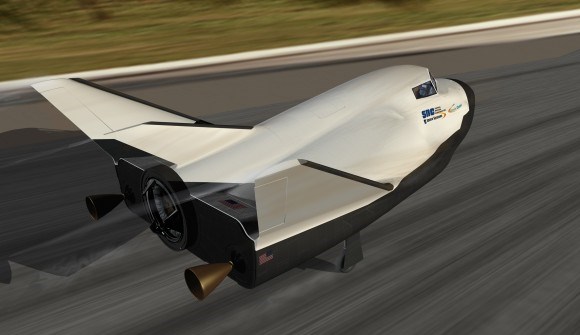
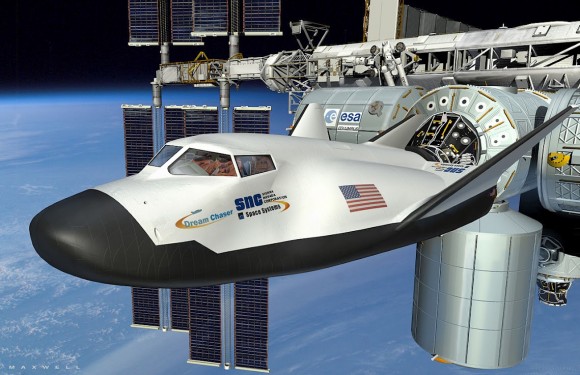
dream_chaserEver since their Space Shuttle program was forcibly shut down in 2011, NASA has been forced to look to the private sector to restore their ability to put human beings into orbit from American soil. This consists of providing the seed money needed for companies to develop a new race of “space taxis”.  One such program is the Dream Chaser, a reusable shuttle that will fly astronauts into low Earth orbit (LEO) and to the International Space Station (ISS).

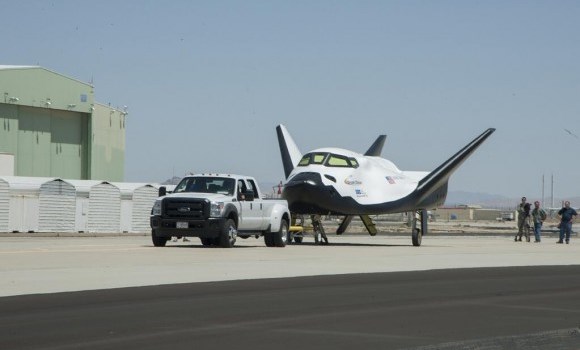
Much like a standard Space Shuttle, the Dream Chaser is designed to launch atop a United Launch Alliance Atlas V rocket and land on a shuttle landing facility. And after lengthy periods of research and development, the Dream Chaser is now moving forward with a series of ground tests at NASA’s Dryden Flight Research Center in California that will soon lead to dramatic aerial flight tests throughout 2013.

dream-chaser-testThis consisted of putting the shuttle together and then conducting a series of what’s known as “Pathfinding tow tests” on Dryden’s concrete runway. The purpose here is to validate the performance of the vehicles’ nose skid, brakes, tires and other systems to prove that it can safely land an astronaut crew after surviving the searing re-entry from Earth orbit. For the initial ground tests, the ship was pulled by a tow truck at 16 and 32 km/h (10 to 20 mph).

Later this month, the next leg of the test will consist of towing it up to speeds of 64 to 95 km and hour (40 to 60 mph). The next phases of testing will take place later this year in the form of airborne captive carry tests, where an Erickson Skycrane helicopter will fly the fuselage around to see how it holds up. Approach and Landing Tests (ALT) will follow to check the aerodynamic handling, which will consist of atmospheric drop tests in autonomous free flight mode.

dream-chaser-test1In an interview with Universe Today, Marc Sirangelo – Sierra Nevada Corp. vice president and SNC Space Systems chairman – spoke on record about the shuttle and where it is in terms of development:

It’s not outfitted for orbital flight. It is outfitted for atmospheric flight tests. The best analogy is it’s very similar to what NASA did in the shuttle program with the Enterprise, creating a vehicle that would allow it to do significant flights whose design then would filter into the final vehicle for orbital flight.

In short, the Dream Chaser has a long way to go, but the program shows great promise. And as already noted, they are not the only ones benefiting from this public-private agreement that seeks to develop commercial vehicles for the sake of kick starting space travel.

dream-chaser-dockedOther companies include Boeing and SpaceX, companies that were also awarded contracts under NASA’s Commercial Crew Integrated Capability Initiative, or CCiCap. All three have their own commercial vehicles under development, such as the Boeing CST-100, SpaceX’s Dragon, which are similarly designed to bring a crew of up to 7 astronauts to the ISS and docking with it for up to 6 months.

Dream_Chaser_launchBut of course, everything depends on NASA’s approved budget, which seems headed for steep cuts in excess of a billion dollars if a Republican dominated US House has its way.This is the third contract in NASA’s Phase 1 CCiCap contracts, who’s combined value is about $1.1 Billion and runs through March 2014. Phase 2 contract awards will eventually lead to actual flight units after a down selection to one or more of the companies. The first orbital flight test of the Dream Chaser is not expected before 2016 and could be further delayed if NASA’s commercial crew budget is again slashed by the Congress – as was done in the past few years.

But as William Gerstenmaier – NASA’s associate administrator for human exploration and operations in Washington – indicated in a statement, the larger goal here is one of repatriation. As it stands, US astronauts are totally dependent on Russia’s Soyuz capsule for rides to the ISS, which costs upwards of $70 million a trip. NASA hopes to change that by rekindling the “good old days” of space travel:

NASA centers around the country paved the way for 50 years of American human spaceflight, and they’re actively working with our partners to test innovative commercial space systems that will continue to ensure American leadership in exploration and discovery.

And I for one wish NASA luck. Lord knows thirty-years of post-Cold War budget cutbacks hasn’t been easy on them. And hitching rides into space above Cold War era rockets is not the best way of getting your astronauts into space either!

In the meantime, check out this concept video of the Dream Chaser in action, courtesy of the Sierra Nevada Corporation:


Source:
universetoday.com

News from Space: The Canadarm2!

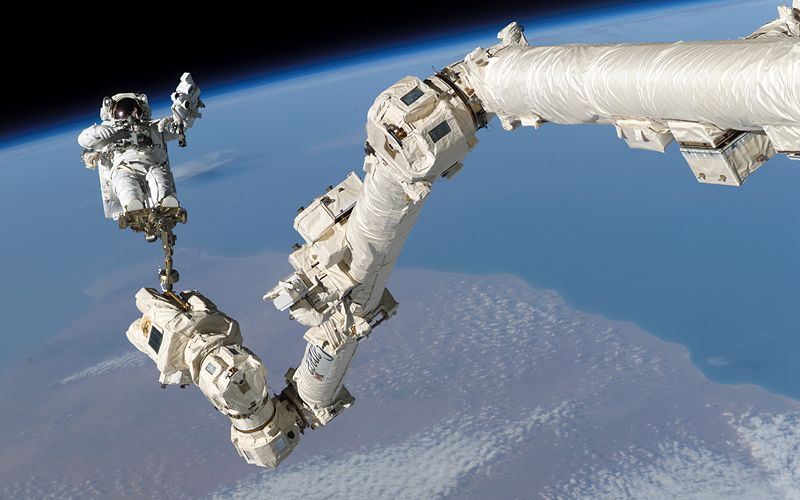
Astronaut Steve K. Robertson during STS-114

For decades, the Canadian Space Agency has been building the Shuttle Remote Manipulator System (SRMS) – also known as the Canadarm. Since 1981, aboard the shuttle STS-2 Columbia, this model of robotic arm has come standard on all NASA shuttles and was used as its main grasper. However, due to the progress made in the field of robotics over the past thirty years and the need for equipment to evolve to meet new challenges, the Canadarm was retired in 2011.

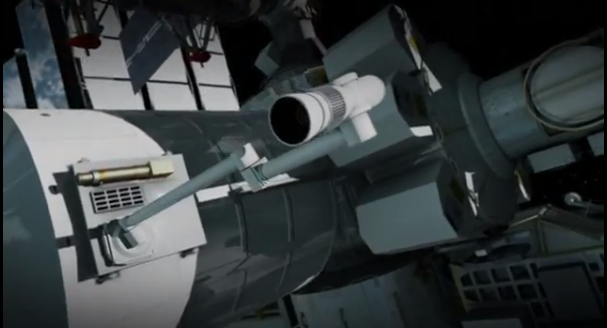
Luckily, the CSA is busy at work producing its successor, the Mobile Service System – aka. Canadarm2. The latest versions are in testing right now, and their main purpose, once deployed, will be to save satellites. Currently, an earlier version of this arm serves as the main grasper aboard the ISS, where it is used to move payloads around and guide objects to the docking port.

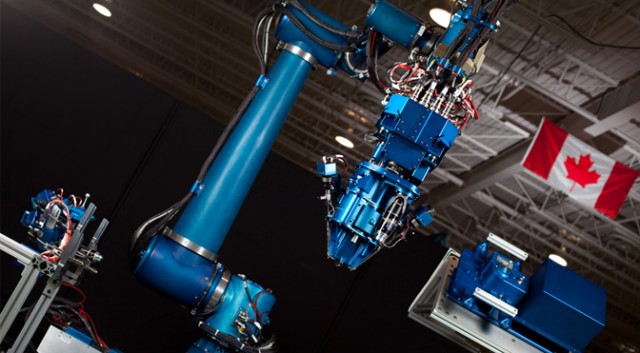
canadarm2However, the newest models – dubbed Next Generation Canadarm (NGC) – are somewhat different and come in two parts. First, there is the 15 meter arm that has six degrees of freedom, extreme flexibility, and handles grappling and heavy lifting. The second is a 2.58 meter arm that comes attached to the larger arm, is similarly free and flexible, and handles more intricate repair and replacement work.

This new model improves upon the old in several respects. In addition to being more intricate, mobile, and handle a wider array of tasks, it is also considerably lighter than than its predecessor. When not in use, it is also capable of telescoping down to 5 meters of cubic space, which is a huge upshot for transporting it aboard a shuttle craft. All of this is expected to come in handy once they start the lucrative business of protecting our many satellites.

canadarm2_missioncontrolIt’s no secret that there is abundance of space junk clogging the Earth’s upper atmosphere. This moving debris is a serious danger to both manned and unmanned missions and is only expected to get worse. Because of this, the ability to repair and retool satellites to keep them in operation longer is of prime importance to space agencies.

Naturally, every piece of equipment needs to undergo rigorous testing before its deployed into space. And the Canadarm2 is no exception, which is currently being put through countless simulations. This battery of tests allows operators to guide dummy satellites together for docking using the arms in both full manual and semi-autonomous mode.

canadarm2_chrishadfieldNo indication on when they will be ready for service, but it seems like a safe bet that any manned missions to Mars will likely feature a Canadarm2 or two. And as you can see, Chris Hadfield – another major Canadian contribution to space – is on hand to help out. Maybe he and the new arm can perform a duet together, provided it can handle a guitar!

And be sure to check out this video of the NGC Canadarm2 in action, courtesy of the Canadian Space Agency:


Source:
Wired.com

Happy Canada Day!

happy_canada_dayWell, it’s Canada’s birthday, a day of celebration and national holiday. And I thought what better to celebrate that day on this site than with a video of Chris Hadfield playing for audience on Parliament Hill. Back when I used to live in the nation’s capitol, I’d turn out on the Hill with roughly 100,000 other people to take in the show and then stay for the fireworks.

And I can honestly say I wish I could have been there. Since his return to Earth on May 13th of this year, Hadfield has been showing absolutely no signs of slowing down. After months of educational, inspirational and musical broadcasts from the International Space Station, he’s now making guest appearances, giving talks, and as usual, showcasing his musical talents!

chris-hadfield-852-17888-8colOther than that, I hope my friends back in Ottawa are having fun today. I know that some of them are likely braving the crush of people downtown right now, suffering through the sweltering heat to take part in the festivities and patriotic fervor. Wish I was there with ya, buds!

And also, I would like to take this opportunity to wish one of my best friends, Chi hung-La, currently residing in Edmonton, Alberta, a happy birthday. Lucky for him, and all of us who care about him, the flooding didn’t effect his neck of the woods. And also to longtime family friend Shannon Hagerman. Happy birthday to you too!

And to any fellow Canucks out there, hope this day finds you happy, comfortable, and having a good time surrounded by family and friends. And since it is vacation season, I’ll be gone for about a week on the Sunshine Coast Trail again this year. But expect me back soon enough! Happy Canada Day, and a glorious summer to all!

Food From Space: NASA’s 3D Pizza Printer

3DpizzaNASA has made some buzz with its announcement to print 3D pizza in space. And while this might sound like an awesome and appetizing use of the pioneering technology, it also has some pretty exciting implications for space exploration. For decades, astronauts have relied on freeze dried and thermostabilized food to meet their nutritional needs. But with 3D printing being considered, astronauts of the future could be using something akin to a replicator out of Star Trek.

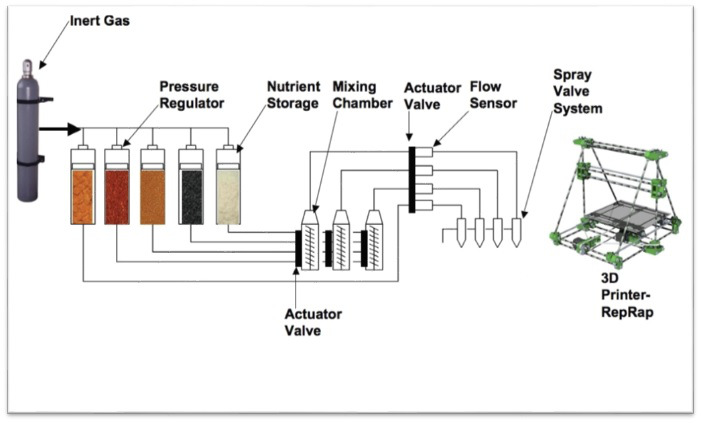
Earlier this month, Quartz broke the news that NASA’s Systems & Materials Research Corporation received a $125,000 grant to spend six months building a prototype of a 3-D food printer- one that will be able to print out a tasty pizza before venturing on to other food items. According to his NASA proposal, the printer spits out starches, proteins, fats, texture, and structure, while the inkjet sprays on flavor, smell, and micronutrients.

3d-pizza_printerThe pizza printer is the brainchild of Anjan Contractor, a mechanical engineer at the Systems & Materials Research Corporation who has long worked on 3-D printing technologies. In an interview with Quartz, he explained the process:

It works by first “printing” a layer of dough, which is baked at the same time it’s printed, by a heated plate at the bottom of the printer. Then it lays down a tomato base, “which is also stored in a powdered form, and then mixed with water and oil,” says Contractor. Finally, the pizza is topped with the delicious-sounding “protein layer,” which could come from any source, including animals, milk or plants.

As already mentioned, astronauts currently rely on food that is freeze dried prepackaged so that it can be eaten in microgravity. Astronauts get supplies when necessary from the International Space Station, where cargo vehicles transport their “fresh” food. But future astronauts who go to more distant places, like Mars, won’t be able to resupply. And that’s where the Advanced Food Project really comes into play.

pizzaWhen considering missions to Mars and farther into space, multiple issues need to be addressed. Grace Douglas, an Advanced Food Technology Project scientist at NASA, explains what these are and how 3D food can address them:

This is the only food that the crew members will have, so it needs to maintain its nutrition content for the length of the mission, and it has to be acceptable. If they don’t want to eat it, they won’t eat enough… 3-D food printers are looking at providing powdered forms of ingredients, and these would not be processed ahead.

That’s a good thing: minimally processed food has more nutrients, and it’s tastier. It also allows for even more options than what’s available today. And to address another key problem – printing in microgravity – NASA already has the option of using some of the more advanced prototypes.

anti-grav3d2Consider the Mataerial, a recently-developed 3D printer that is capable of printing in zero-gravity. NASA is exploring other processing technologies outside of the 3-D printing realm as well. High-pressure processing, which uses high pressures with a low-heat treatment to sterilize foods, is one option. Another is microwave sterilization–a process that uses high-heat treatments for a shorter period of time.

These latter technologies would make fresh foods accessible by ensuring that they are perfectly sterile, thus removing the need for food that needs to be dried or processed in advance. While all three technologies are still in the early phases of development, Douglas and others expect that they will off the ground and running by the time a manned mission to Mars is being planned.

And space is really just the tip of the iceberg when it comes to printing food. Here on Earth, it is a potential solution for ending world hunger. But that’s another, very interesting story. Stay tuned for it…

In the meantime, watch this video of a 3-D printer creating chocolate:


Sources:
fastcoexist.com, qz.com

A Tribute to Valentina Tereshkova

valentina_tereshkovaOn June 16th, 1963, in what was to become a first amongst firsts, Russian Cosmonaut Valentina Tereshkova made history by being the first woman to go into space. Today, exactly fifty years later, Tereshkova’s achievements continue to serve as a reminder that all people – regardless of their gender – are capable of doing just about anything. And at the age of 76, Tereshkova lives on as a national and historic icon, inspiring younger generations of women to follow their dreams.

On Friday, President Vladimir Putin praised Tereshkova during a meeting at his residence. Tereshkova was on hand for the event, which was covered by several major networks and global news agencies, during which time Putin awarded her accomplishments in space by giving her the Order of Alexander Nevsky for meritorious public service, one of the highest Russian honors.

tereshkova_putin_50thannHer historic flight came a little more than two years after the Soviet Union put the first man – Cosmonaut Yuri Gagarin – into orbit. Shortly thereafter, Soviet space officials started considering a space mission by a woman, seeing it as another chance to advertise the nation’s prowess. Much like Gagarin, Tereshkova was part of the Vostok program, the earliest Soviet space missions, and her flight (Vostok-6) was the final mission of the program.

Vostok-6 rocket
Vostok-6 rocket

Of over four hundred candidates, Tereshkova was selected for a number of reasons. In addition to conforming to the height and weight specifications needed to fit within the Vostok capsule, she was also a qualified parachutist – which given the nature of the Vostok space craft (the re-entry craft was incapable of landing) was absolutely essential. But perhaps most important reason was her background, since she was the daughter of war hero Vladimir Tereshkova who died in Finland during the Second World War.

To make the mission even more spectacular for propaganda purposes, Moscow decided to score another first by making it the first simultaneous flight of two spaceships. Valery Bykovsky blasted off aboard the Vostok-5 ship on June 14, 1963, and Tereshkova followed him on June 16. During her flight, Tereshkova orbited the Earth forty-eight times and spent almost three whole days in space.

Vostok-6 craft
Vostok-6 craft

Aside from some nausea, which she would later claim was the result of tainted food, she maintained herself for the full duration and successfully parachuted down upon re-entry. Her landing was a little rough, however, and she experienced some serious bruising of her face. Tereshkova also claimed that during the flight, she noticed a fault in the ship’s controls, which she corrected to prevent from being stranded in space.

With this single flight, Tereshkova logged more flight time than the combined times of all American astronauts who had flown before that date. Tereshkova also maintained a flight log and took photographs of the horizon, which were later used to identify aerosol layers within the atmosphere. Many of the details of her flight, including her nausea, the technical problems, and the hard landing she made, were kept a secret until the collapse of the Soviet Union, since government officials feared they would expose flaws in their program.

tereshkova_historicTereshkova received a hero’s welcome after the flight and was showered with awards. A few months later she married cosmonaut Andrian Nikolayev with Soviet leader Nikita Khrushchev presiding over the wedding party. She now holds a Parliament seat on the ticket of the main Kremlin party, serving as deputy chairman of the foreign affairs committee in the lower house.

Tereshkova’s story is all the more poignant due to the fact that none of the other planned missions involving female cosmonauts took place and the Soviet’s cancelled the pioneering woman cosmonaut program in 1969. It would be many years before another woman would go into space, once again with the Soviet space program when Svetlana Savitskaya participated in the Soyuz-T7/T5 space mission on August 19th, 1982. Less than a year later, Sally Ride would become the first American woman to go into space as part of the STS-7  mission that went up on Jun. 18, 1983.

???????????????????????????????????????????????????????????????????????????????????????????????????????????????????????????????????????????????????????????????????????????????????????????????????????????????????????????????????????????????????????????????????????????????????????????????????????????????????????????????????????????????????????????????????????????????????????????????????????????????????????????????????????????????????????????????????????????????????????????????????????????????????????????????However, as time progressed, more and more women have come to join the space profession, and Tereshkova has been on hand to honor some of them. One such person was South Korea’s first astronaut, biosystems engineering student Yi So-Yeon (picture above). Tereshkova is seen accompanying her while she boards the spacecraft that would take her to the ISS on April 8th, 2008 from the Baikonur Cosmodrome in modern-day Kazakhstan.

Since her time, a total of 56 women have gone into space, and that doesn’t even count the female astronauts who have taken part in mission that didn’t go up or offered technical assistance to crewed missions from the ground. In all cases, these women owe an undeniable debt to Tereshkova, the first woman to enter what was (and still is) considered a man’s profession and who helped pave the way for all those that followed.yuri_gagarin1And in what is an interesting twist, the anniversary of her spaceflight comes just days after the release of a series of declassified documents which reveal the truth of Yuri Gagarin’s death. This seems appropriate since Tereshkova and Gagarin’s stories are connected in so many ways. In truth, it’s virtually impossible to speak of one without mentioning the other, as their careers and destinies were so very intertwined.

In addition to both individuals being pioneering space cosmonauts with the Soviet space program, Gagarin’s death also led to some serious changes in Tereshkova’s career in space. Though she remained an important figure within the program, she was barred from taking part in any more space missions, and for obvious reasons. Having lost one historic figure to tragic circumstances, the Soviet government did not want to lose her as well.

valentina_tereshkova_1However, Tereshkova expressed nothing but relief to hear the truth about Gagarin’s death, which was apparently caused by a mid-air collision when another pilot accidentally steered his jet plane into the path of Gagarin’s training plane. After 45 years of official silence on the matter, she claimed that “The only regret here is that it took so long for the truth to be revealed. But we can finally rest easy.”

At 76, she is still a model of dignity and class, and in pretty good health too for someone her age! I think I speak for all of us in wishing her many more years of health, happiness and accomplishments. One of the most tragic realities of our time is the loss of people who not only witnessed major turning points in history, but made them happen. As such, I hope the world can continue to hang on to Valentina a little while longer…

Source: cbc.ca

News From Space: China’s Launches Shenzou 10 Manned Spaceship

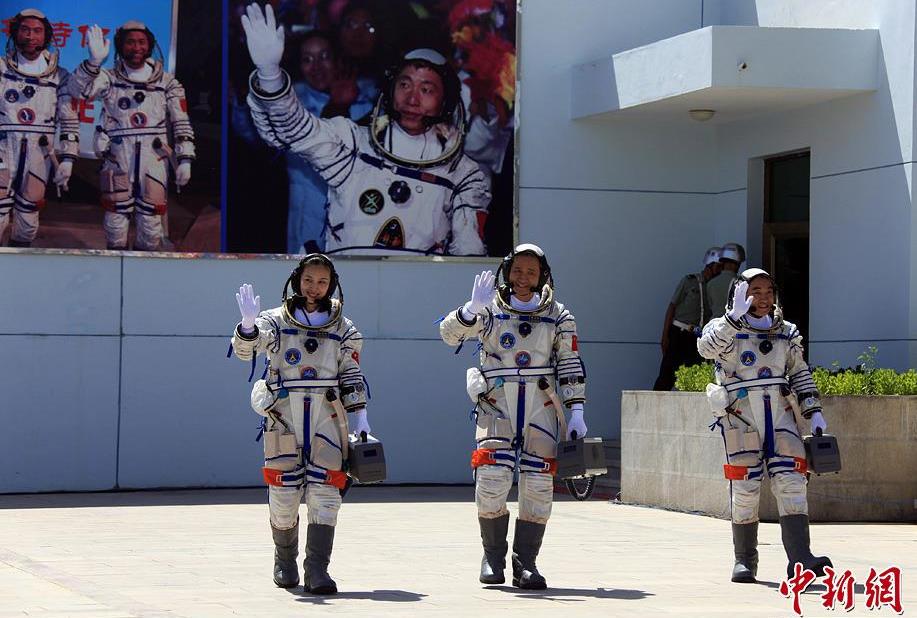
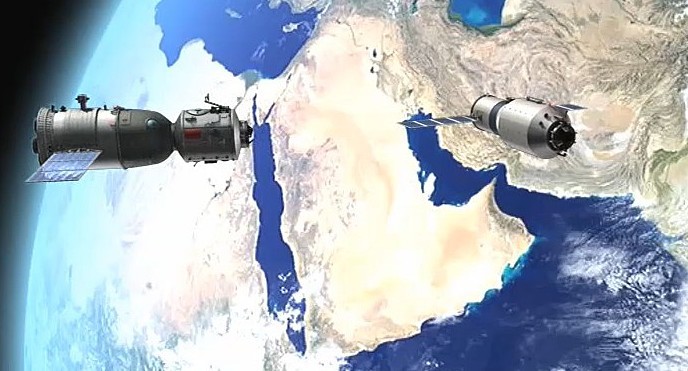
shenzou_10Yesterday, at approximately 5:38 am ET, China took yet another step towards establishing itself as a major player in space. It’s latest manned spacecraft, known as the Shenzhou 10, departed the Jiuquan Satellite Launch Center at the edge of the Gobi Desert, carrying three astronauts on what is planned to be a fifteen day mission that will see them rendezvousing with the prototype Tiangong-1 space lab in Earth’s orbit.

This is China’s fifth manned mission into space and will be its longest to date. The purpose of the mission is to educate young people about science, but for the Chinese state, it also presents an opportunity to flex its muscles as one of the new leaders in space exploration. Much of this has to do with the Tiangong-1, which is intended to serve as an experimental prototype for a much larger Chinese space station that will be launched in 2020.

shenzhou-10-crewIn this respect, China is hoping to reach beyond its membership as on the three nations to send manned craft into space and join the United States and Russia by being able to send independently maintained space stations into orbit as well. If all goes well, China’s space station will join the likes of Mir and the ISS in Earth’s lower orbit. And with this kind of infrastructure in place, China will be well suited to play a role in future missions to Mars and the outer Solar System.

The craft carried two men, mission commander Nie Haisheng and Zhang Xiaoguang, and China’s second female astronaut, Wang Yaping. After rendezvousing with the space lab, the crew will spend a total of 12 days living in zero-gravity and conducting scientific experiments, the results of which will be shared with people on Earth.

shenzou_10_dockBorrowing a page from astronaut Chris Hadfield and his many popular Youtube videos that cataloged his crew’s mission aboard the ISS, the Chinese crew plans to deliver a series of talks to students while aboard the Tiangong. This development of “space classrooms” marks the boldest step so far for the Chinese space program, turning what was a military-backed program into something that will impact on the lives of ordinary Chinese citizens.

Here too, China is following in the footsteps of NASA, which uses student outreach to inspire interest in space exploration and sustain support for its budgets. At a news conference on Monday, Wang said she was “eager to explore and feel the magic and splendor of space with young friends.” Her fellow astronaut Zhang told reporters they would conduct dozens of space science experiments and would “enjoy personalized space foods especially designed by our nutritionists.

China_launchcenterOn the day of the launch, President Xi Jinping was shown live on television at the launch center. State television showed Xi watching the launch, as well as Premier Li Keqiang who was at the space command center in Beijing. Prior to the launch, Xi delivered a statement to the astronauts, commending them on their efforts and wishing them luck on their journey:

You have made [the] Chinese people feel proud of ourselves. You have trained and prepared yourselves carefully and thoroughly, so I am confident in your completing the mission successfully. I wish you success and look forward to your triumphant return.

The space program is a source of enormous national pride for China, reflecting its rapid economic and technological progress and ambition to rank among the world’s leading nations. Little wonder then why the launch was met with such fanfare and overseen by both the President and Premier. The mission comes at the height of ten years of Chinese space exploration and if successful, will mark China as a true superpower in the space race of the 21st century.

And be sure to check out the video of the launch of the Shenzou 10:


Source:
cbc.ca, news.xinhuanet.com

Eyes on the Sky: The X-51A Goes Hypersonic!

x-51aWhen it comes to high-tech flight, hypersonic is the undisputed way of the future. Not only is it the next logical step in the long chain from the Wright Brothers to supersonic flight (which humanity achieved in 1947), it is sort of a prerequisite in order for commercial space travel to take place. And on May 1st, the US Air Force tested its latest concept vehicle for going hypersonic, known as the X-51A Waverider.

The test took place at Edwards Air Force Base in California, when a B-52H Stratofortress carried the scramjet to a height of 15,000 meters (50,000 feet) and then released it. A solid rocket booster then kicked in and brought the X-51A to a speed of Mach 4.8 in just 26 seconds. The solid rocket booster then separated and the X-51A’s air-breathing supersonic combustion ramjet – or scramjet – engine pushed it up the rest of the way to Mach 5.1 and up to an altitude of 18,300 meters (60,000 feet).

x-51a_specsFour minutes later, its fuel supply was spent and the scramjet nosed down, finally crashing (as planned) into the Pacific Ocean. The previous air speed record for manned flight is just under Mach 3, making this a rather large leap forward. In addition, in just over six minutes, the scramjet traveled over 425 kilometers (264 miles), making it the longest air-breathing hypersonic flight ever.

In addition to being record-breaking, it also tested out an important concept which may soon get more of us here on Earth into orbit. Considering the cost of sending a single rocket into space, concepts for a reusable space craft that could break the Earth’s gravitational pull, fly itself into high-earth orbit, and then land again have been under review for some time. All that was missing was an engine that could accomplish the kind’s of speeds needed without relying on criminally-fuel efficient rockets.

skylon-orbit-reaction-enginesNeedless to say, this is a difficult task, since maintaining airspeed above mach 2 is a serious challenge. This is due to the fact that at these speeds, its very difficult for jet engines to continue to intake air. What makes the X-51A special is the fact that it has no moving parts. Whereas scramjets of the past used hydrogen fuel which would be injected into a combustion chamber and mixed with incoming air, the X-51A differs in that it uses a hydrocarbon fuel as sort of a pilot light, effectively“lighting a match in a hurricane.”

This apparently makes more sense logistically, and therefore could allow the technology to be applied on a broader scale. As it stands, this test involved the last of four X-51As to be constructed, the previous tests having taken place between 2004 and 2012. No plans exist for the construction of future X-51A vehicles, perhaps because the program cost a staggering $300 million. Nevertheless, Air Force officials indicated that the Waverider has left a valuable legacy.

And certainly think so! Not only has the Waverider established a new air speed record, and set a hypersonic distance record, it has also taken an important step as far as the next generation of space flight is concerned. In time, and perhaps in conjunction with rocket boosters, we could be seeing commercial spacecraft capable of breaking the atmosphere very soon.

Think of it, aerospace flights making deliveries to the ISS, and perhaps even beyond… Also, check out the video of the X-51A below making it’s historic, record-breaking flight:


Sources:
singularityhub.com, space.com