News From The Red Planet!

mars_lifeIt’s been quite the busy month for NASA and the Curiosity Rover Team. In addition to the hectic research schedule and the excitement over all the potential finds, there’s also been a lot of planning as to what future mission will be like. Already, NASA announced that they plan to send another rover (InSight) to Mars in 2016, this one for the purpose of conducting interior planet studies. But given the success of Curiosity thus far, NASA announced recently that the multi-year, robotic rover program will continue, and will include an additional launch in 2020.

Apparently, this has much to do with the reelection of Barack Obama, whose commitment to space exploration also means that NASA can go ahead with its plans to create an outpost on the Moon. According to NASA Administrator Charles Bolden, this and the planned 2020 launch will ensure that “America remains the world leader in the exploration of the Red Planet, while taking another significant step toward sending humans there in the 2030s.”

The planned mission portfolio includes the Curiosity and Opportunity rovers, two NASA spacecraft and contributions to one European spacecraft currently orbiting Mars, the 2013 launch of the Mars Atmosphere and Volatile EvolutioN (MAVEN) orbiter to study the Martian upper atmosphere, the Interior Exploration using Seismic Investigations, Geodesy and Heat Transport (InSight) mission, and participation in the European Space Agency’s 2016 and 2018 ExoMars missions.

That alone is pretty exciting  news. But in and around these grand announcements, the Mars Science Labs also released some information a week ago concerning the Martian soil samples which were thought to contain organics. Though the samples did prove to be “earthshaking” as was hoped, they did present some rather interesting findings which are now being released.
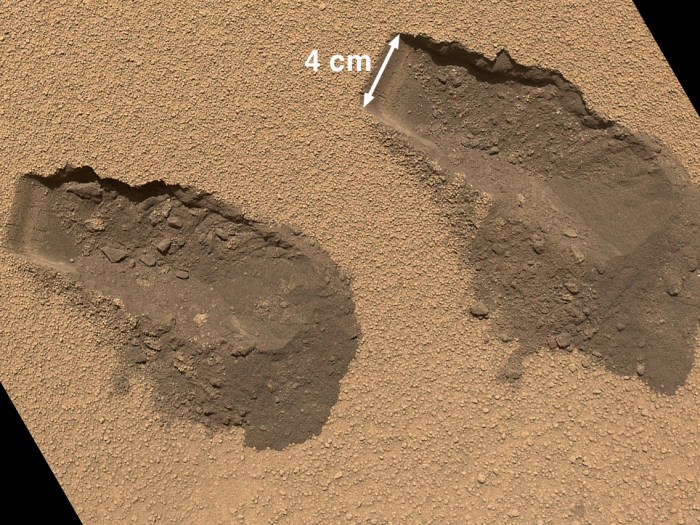
curiosity_samplesApparently, the samples taken with the “Rocknest” inside the Gale Crater showed signs of water, sulfur and chlorine-containing substances, among other ingredients, that were delivered by Curiosity’s arm to the analytical laboratory inside the rover. Lamentably, this does not confirm the existence of organic compounds, as the team hoped. But the find does confirm what Curiosity team and NASA scientists have been postulating for some time – which includes the existence of water on Mars and the existence of complex chemical compounds.

Also, it’s important to note that this kind of soil surveying was not possible with any previous rovers or exploratory missions in space. Curiosity is the first Mars rover that is able to scoop soil into analytical instruments and conducts tests in the way it has, so really, any findings should be considered a windfall. Detection of the substances during this early phase of the mission also demonstrated the ability of the rover laboratory to analyze diverse soil and rock samples, which will continue over the course of the next two years.

And as the team was sure to mention in a Tweet made shortly after the “earthshaking” discovery did not materialize, there’s still plenty of time to find all that they are looking for. Curiosity’s mission is far from over, and she will hardly be the last surveyor – man-made or manned – that will be roving the landscape of the Red Planet.

Source: NASA Jet Propulsion Laboratory
NASA’s Next Mission to the Moon

moonThe buzz about NASA is that the human race is once again going to the moon, and planning to stay there! According to space policy expert John Logsdon, there are plans to establish a manned base on the dark side of the moon under the Obama administration. He further indicated that with the election pending, this news has been kept under wraps. But with Obama now secure in a second term, it is expected that there will be an announcement soon.

“NASA has been evolving its thinking, and its latest charts have inserted a new element of cislunar/lunar gateway/Earth-moon L2 sort of stuff into the plan,” said Logsdon in a recent interview with SPACE.com. “They’ve been holding off announcing that until after the election, noting that NASA’s mission, direction, and budget could have been revised under a Romney administration.”

For those who have been following the Obama administration’s plans for space, this should not come as a surprise. In 2010, the president signed the NASA 2010 Authorization Act into law, a bill which freed up $60 billion for NASA through 2013. This move was intended to reignite space exploration at a time when the US found itself lagging behind Russia, China, the European Union and India in terms of bold new space projects.

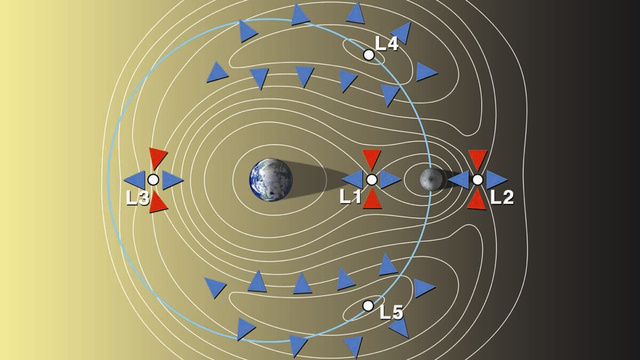
These project include a planned asteroid visit by 2025 and a manned mission to Mars in 2030. A manned outpost at the Earth-moon L2 “gateway” (shown in the diagram below) could serve as an important stepping stone to the outer solar system. But right now, NASA’s eyes are firmly fixed on Mars itself, since a manned mission is the next logical step in their research of the Red Planet.

NASA_moon“There are many options – and many routes – being discussed on our way to the Red Planet. In addition to the moon and an asteroid, other options may be considered as we look for ways to buy down risk – and make it easier – to get to Mars.” At a conference held this past September, NASA deputy chief Lori Garver went even further to outline NASA’s goals for the coming years:

“We just recently delivered a comprehensive report to Congress outlining our destinations which makes clear that SLS  – NASA’s new heavy-lift “Space Launch System” – will go way beyond low-Earth orbit to explore the expansive space around the Earth-moon system, near-Earth asteroids, the moon, and ultimately, Mars. Let me say that again, we’re going back to the moon, attempting a first-ever mission to send humans to an asteroid and actively developing a plan to take Americans to Mars.”

Suffice it to say, NASA is happy the election turned out the way it did. With their budget secure, the course of future space exploration has been set and remains in effect. Who’s to say where it will take us beyond Mars? To the Jovian satellites of Europa, Ganymede and Io? The Saturnalian moons of Titan, Rhea, Dione and Enceladus? I call Gliese 581 after that. I want to know for sure if the fourth planet (the setting of our story Yuva) is inhabitable or not already!

These are exciting times we live in, aren’t they?

Source: IO9, Space.com

Curiosity Rover’s First X-Ray Analysis of Martian Soil

Curiosity_cheminanalysisA bit of retro news from the Curiosity front here. Roughly one month ago, before the big announcement about “earthshaking news” was made, there was some other news regarding Curiosity’s ongoing soil analyses. And given all the attention that was dedicated to the possibility of organic molecules, this is one news story that might have been overlooked.

Put simply, Curiosity performed tests that were previously impossible on Mars, using an x-ray scanner that was roughly the size of shoebox in order to conduct detailed analyses of Martian soil. The purpose, of course, was to determine what kinds of minerals it contains and how its soils first came into being.

The device in question, called CheMin, takes a sample of sand – just a thimbleful – and shakes it 2,000 times a second, all the while bombarding it with x-rays. The rays then penetrate the grains, and the way in which they diffract can tell scientists about their constituent atoms. The results are then scanned to see just what kind of mineral composition it has (take a look up top to see the results rendered in stunning technicolor!)

Up until now, this technique has been impossible simply because the equipment needed to carry out such operations were far too large and clunky to fit on a rover. But thanks to NASA engineers, the device in question was shrunk down exponentially in size and even boasts improved electronics, ensuring it is both portable and energy-efficient.

As a result, the Curiosity rover has made some very interesting discoveries. For starters, Curiosity has determined that the soils in the area are extremely similar to those found around the Mauna Kea shield volcano in Hawaii. In fact, it’s identified crystalline feldspar, pyroxenes, and olivine – all of which are common to the soil here on Earth.

Yes, not exactly earthshaking news is it? But it’s interesting nonetheless, and let’s us know once again that Mars and Earth have plenty in common.

Source: Wired.com

Ice and Organics Found on Another Planet!

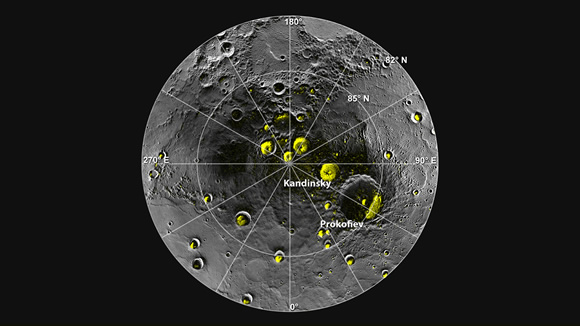
mercury_messengerYes, the announcement from the Curiosity team yesterday that no organics have been found on Mars (yet) certainly came as a big disappointment. However, people may be interested to hear that organic molecules were discovered on a different planet in our Solar System, along with water and ice. Would you believe it, the planet is Mercury? Yes, the world famous for lakes of molten metal and extreme heat may actually boast the building blocks of life.

This information is the latest to come from NASA’s MESSENGER spacecraft, which is now orbiting the closest planet to our Sun. It confirms what was postulated 20 years ago, after images were taken of the polar region and detected radar-bright materials which were beleived to be water and ice. And where water and ice occur, organic molecules are often sure to follow. Though Mercury boasts the hottest environment of any planet in the Solar System, the area in question lies within a permanent shadowed series of craters on the northern pole.

Scientists today said that Mercury could hold between 100 billion to 1 trillion tons of water ice at both poles, and the ice could be up to 20 meters deep in places. Additionally, intriguing dark material which covers the ice could hold other volatiles such as organics. Unfortunately, all of this water comes in the form of ice, as surface temperatures in the poles are too cold to allow for a thaw. In addition, the total lack of atmosphere on Mercury would mean that any liquid would evaporate and be sucked into space very quickly.

At a briefing which was held yesterday, Sean Solomon – MESSENGER Principal Investigator – has this to say about the news: “These findings reveal a very important chapter of the story of how water ice has been delivered to the inner planets by comets and water rich asteroids over time.” In short, it is believed that these ice deposits and organic molecules were delivered to the planet through a series of meteor impacts, and which have survived thanks to the existence of Mercury’s permanently shadowed polar regions.

Granted, no settlers are ever likely to be making a home on Mercury – not without some serious technological innovations! – but the discovery is a very interesting find and does help scientists to understand how life may have begun here on Earth. What’s more, this news may help Curiosity and other science teams to determine where and how organic molecules and ice could be found on Mars. The challenges there are similar to those on Mars, since she too is an inner planet that has virtually no atmosphere and a great deal of surface radiation, not to mention that she too would have been the recipient of water ice and organics through meteoric impacts.

So c’mon Mars! Show us what you got. You don’t want to be outdone by your Hermian cousin do ya?

Animation of Curiosity’s 1st “Touch and Go” Maneuver

In the days leading up to Thanksgiving in the US, Curiosity performed her first “touch and do” maneuver. This was the process whereby the rover drove up to and inspected an interesting looking rock using the Alpha Particle X-Ray Spectrometer (APXS) on its arm, then moved onto the next point of interest on the same day.

This latest maneuver now puts Curiosity inside the ‘Glenelg’ geologic formation. The NASA science team selected this as the first major science destination because it lies at the intersection of three diverse types of geological areas that will help unlock the secrets of Mars’ ancient watery history and evolution to modern times.

What makes this historic is that it is the first time the rover has conduct a touch and go maneuver on the same day. Ordinarily, the rover performs these duties separately. According to Curiosity Mission Manager Michael Watkins (of NASA’s Jet Propulsion Laboratory in Pasadena, Calif), “[this] is a good sign that the rover team is getting comfortable with more complex operational planning, which will serve us well in the weeks ahead.”

In honor of this event, NASA scientists created a animation of the maneuver using the same software they do to plan the rover’s movements. Beginning with the examination it made using its arm sensor, the animation then shows (with painful accuracy) the rover making the 25.3 meter (83 foot) transit to its next location.

News From Mars!

An interesting slew of news has been coming from NASA recently, courtesy of the Curiosity Rover and its mission to Mars. First, there was the announcement by John Grotzinger on NPR radio that Curiosity’s science team had discovered something potentially “earth-shattering” on the Red Planet, which came just two days ago. Since then, researchers over at NASA have been keeping a tight lip on what that might be, though it seems to be taking an extraodinary effort to do so. One can only imagine what they’re dying to tell us…

But it seems more stories are coming in the wake of this. First, there was the revelation by the Curiosity Rover that Mars radiation levels, once thought to be problematic for life, are actually safe for humans. According to Don Hassler, the principal investigator on Curiosity’s Radiation Assessment Detector instrument (RAD), Curiosity determined that “the Mars atmosphere is acting as a shield for the radiation on the surface and as the atmosphere gets thicker, that provides more of a shield and therefore we see a dip in our radiation dose.”

Apparently, the levels are equal to what astronauts deal with on the International Space Station, which means people in suits will be able to walk on the Red Planet safely once a manned mission is mounted. Knowing that they can conduct surveys on the surface without additional radiation shields should prove to be a boon for colonization as well. More settlers will certainly be drawn to Mars now that they know they can settle in without having to worry about little things like radiation sickness or mutations!

Third, there was the news that in the wake of making its “one for the history books” discovery, that Curiosity has finished collecting and analyzing soil samples and is preparing to move on. The final checks and preps were made amidst ethereal whirlwinds and twisters, which are characteristic of the region known as the “Gale Crater”, where it has been conducting its research for the past month. The rover is now being prepared to move on in search of suitable targets for a compact rock drill, the final major sample acquisition system to be tested.

Ashwin Vasavada, the deputy project scientist for the Mars Science Laboratory rover at the Jet Propulsion Laboratory in Pasadena, Calif, had this to say on the next phase of the mission: “We still would like to get a little further into this Glenelg region where we see this diversity of rocks and layered rocks and other really interesting terrain. And then we still have a goal in the next month or two of doing the big U-turn and heading up to Mount Sharp.”

Mount Sharp is a 3-mile-high mound of layered terrain that sits in the center of the Gale Crater, where Curiosity is expected to spend the bulk of its planned two-year mission. In the meantime, the research team needs to go over all the information Curiosity has sent back, including an ongoing analysis of the martian weather.

On top of all that, there’s still the matter of that “earth shaking news”. How about it NASA? You too, Grotzinger? We’re ready and waiting… how much more time do your researchers need before they’re sure and are free to break the news they are so clearly dying to share? I still say its organic molecules, but what do I know?

Source: news.cnet.com

“Earthshaking” News From the Red Planet?

In an interview with NPR earlier today, John Grotzinger – the Principal Investigator for NASA’s Mars Science Labs – said a recent soil sample test with the SAM instrument (Sample Analysis at Mars) shows something”‘earthshaking.” Like any good scientist (or a terrible tease), Grotzinger and his team are awaiting confirmation before announcing just what it is they’ve found. Nevertheless, the announcement of a potential discovery which could be “one for the history books” has fueled speculation and put many on the edge of their seats.

Thus far, the smart money has been on the discovery of organic molecules in the Martian soil, which is precisely what Curiosity has been up to for the past few months. This is because the very purpose of the SAM instrument to examine the chemical and isotopic composition of the Martian atmosphere and soil, specifically to determine if anything organic is capable of living there. If so, it will end the age-old argument of whether or not life can exist on the surface Mars, even if it doesn’t currently.

It will also prove to be a boon for those who are seriously looking ahead, and plotting manned missions to the Red Planet with the intent of making it habitable for humans. As I’m sure all people are aware of by now, there are plenty of people who are monitoring Curiosity’s findings and hoping they will help determine whether or not terraforming can be carried on the the planet, with the long-term goal of creating a “Green Mars” where terrestrial species can live and thrive, crops can grow, and oceans and rivers can once again exist.

I think I speak for them and myself when I say, “Grotzinger, best of luck to you, and this better not be some kind of media stunt!” Oh, I can’t wait to hear what they find!

Source: Universe Today

Curiosity’s Best Image Yet!

In case you were worried that Curiosity had fallen into a ditch, more news has just come from the Red Planet featuring everybody’s favorite rover! It seems the robot has been taking pictures again, and word around the campfire is that it is Curiosity’s best yet! Having taken a break from its usual round of performing scientific research on soil samples and surface terrain, Curiosity took a pause to snap a self-portrait

Well, in truth, it was fifty-five photos, all of which were taken by the Rover’s hi-resolution Mars Hand Lens Imager. These photos were then combined back at Mission Control by NASA personnel to form a panoramic image that shows Curiosity at work digging holes in the sand and with Mount Sharp in the background. The area of the shoot is appropriately known as the “Rocknest” since this is where Curiosity has been for the past few months, gathering scoops of Martian soil for analysis.

In addition to its aesthetic appeal, the images serve an important function. According to NASA’s website, “Self-portraits like this one document the state of the rover and allow mission engineers to track changes over time, such as dust accumulation and wheel wear.” Apparently, they also ensure that Curiosity continues to function within established parameters while personnel are not at the helm.

Check out the full image below. As you can plainly see, it is high-resolution and extremely detailed.

Engineering Life for Mars

And we’re back with some more news of and about the Red Planet! Thanks to Curiosity’s ongoing efforts to discover potential life on Mars, scientists back at home have begun to seriously contemplate engineering life that will help in our own colonization efforts someday. The rational seems to be, “why search for life on Mars when you could create it?”

And the reasons for this seem pretty straightforward. Though Mars may have supported life at one time, it is not an especially hospitable environment right now. If in fact human beings settle there someday, survival won’t be easy. The average surface temperature of Mars is minus 60 degrees Celsius, and the almost-nonexistent atmosphere is 95 percent carbon dioxide.

And although water exists in Mars’ ice caps and there’s some evidence that oceans once existed, today it’s essentially a deep-frozen desert. If the would-be settlers ever want to live beyond sealed domes, and eat something other than hydroponically grown food and melted ice that is constantly being recycled, efforts to be got underway to ecologically engineer the surface.

And one such group is a team of undergraduate students from Stanford and Brown Universities that are busy applying synthetic biology to space exploration, outfitting microbes to survive the extreme Martian conditions and produce resources needed to sustain a human colony. According to Ben Geilich, the team Captain, the benefits are obvious: “Obviously, bringing up heavy machinery or building materials is going to be really expensive. The benefit of having bacteria that can do this for you is they’re really small and very light. Once there, they could grow food, produce medicine, extract minerals, and build building material.”

The fruit of their labor is the Hell Cell, a genetically engineered assemblage that could enable a bacterium to withstand extreme cold, dryness and radiation. It includes genetic modules, or BioBricks, based on DNA from a variety of ultra-tough organisms, including a cold-resistant species of Siberian beetle that makes “antifreeze” proteins, a radiation-resistant bacterium that sequesters large amounts of the element manganese, and E. coli, which produces a nutrient that confers cold and drought resistance.

It’s part of a process that Andre Burnier, one of the team’s mentors and a lab technician at NASA’s Ames Research Center, described in the following way: “You go into nature and find genes, and then you can recombine them into circuits that you cannot find in nature.” After presenting their Hell Cell during the regional International Genetically Engineered Machines (iGEM) challenge this month, the team has since moved on to developing bacteria that could extract minerals from Martian sediment or recycle rare metals from spacecraft electronics. In addition, they are also investigating heat and acid-tolerance mechanisms that could be useful in other planetary environments, particulary Venus, which as you may recall, is also a candidate for terraforming.

Needless to say, Geilich is excited by all the doors theirs and the research of others is opening. “In the coming years,” he says, “I think we’re going to see a huge boom in stuff done with bacteria, only limited by our imagination and creativity.” But of course, not all agree. As Burner indicates, there are ethical implications that are likely to upset some, should the concept ever be made viable. After all, if there is no life on planet to begin with, then there are no ethical implications about transforming it. But send in the bacteria to change up a world that already boasts life, and you are essentially committing eco-genocide.

All of this puts me in mind of the Genesis Project from Star Trek II and III. There, scientists created a device which could alter the configuration of any planet within minutes. With a name like “Genesis”, the purpose was pretty self-explanatory – to create life from lifelessness. But this made it absolutely necessary to find a lifeless planet, otherwise whatever was already there would find itself permanently altered.

Funny how science fiction predicts real science, up to and including the ethical implications. They were pretty good movies too, go heck them out. And follow the link below for more reading on the subject!

Source: Wired.com

The Case for Terraforming Venus

This weekend appears to be shaping up with a theme: news from space that isn’t about Mars. I swear that it’s entirely accidental. First there was the discovery of the diamond planet, 55 Cancri e, and now a story about the merits of terraforming another planetary neighbor. And wouldn’t you know it, it’s not Mars for a change.

Yes, it seems that there is a strong case for terraforming Venus instead of the Red Planet, and it comes from numerous scientists who claim that altering the climate on that planet could help us save our own. The reason being – and stop me if this sounds frightening – is because our planet could one day look just like our lifeless, acid ridden, cloud covered neighbor.

In short, Venus underwent a carbon-dioxide fueled cataclysm a long time ago, when it was still young and was believed to have oceans. In those early days, and as the sun got brighter, Venus’s oceans began to boil and evaporate into the atmosphere. As a result, carbon dioxide accumulated in the atmosphere, due in part to the lack of carbon recycling which depends on the presence of oceans and seaborne algae. This is essentially a magnified version of the Greenhouse Effect, which scientists identify as the reason for rising temperatures and melting polar ice caps here at home.

Because of this, Venus became the hot, deadly planet that we are familiar with today, with surface temperatures that average 467°C (872°F), hot enough to melt lead. What’s more, its atmosphere consists of 96% carbon dioxide, which appear as thick layers of clouds that float 50-70 km above the surface. Above that, clouds and mist of concentrated sulfuric acid and gaseous sulfur dioxide lead to acid rains that could literally melt the flesh off your bones and the metal off a landing craft. Combined with the amount of sunlight it gets (twice that of Earth) and the lack of a magnetosphere, Venus is a pretty damn awful place to visit!

Of course, some would say that this makes terraforming the planet a pretty dangerous and poor prospect, at least compared to Mars. However, the benefits of terraforming Venus are far greater, certainly when we consider that the lessons gleamed from it could help us reverse the Greenhouse Effect here on Earth. In addition, it’s closer than Mars, making it easier and quicker to travel back and forth. And like the Earth, it resides within the solar system’s habitable zone and has its own atmosphere, not to mention it is nearly the same mass and size as Earth.

All of this, when taken together, would make Venus a far more suitable place to live once the terraforming process was complete. In short, its easier to convert an existing atmosphere than to create one from scratch. And, as noted, the process of converting the CO2 and sulfur-rich atmosphere into one that a breathable one that is rich with water and precipitation would go a long way to helping us device solutions to cleaning up our own atmosphere here at home.

This may sound like pure speculation, but in truth, many solutions have already been proposed. In fact, Carl Sagan began proposing that we introduce genetically-modified airborne algae into Venus atmosphere 50 years ago. Thought not 100 percent practical, it was a stepping stone to some more recent ideas which may prove doable. In 1981, NASA engineer James Oberg proposed that all the CO2 could be blown out into space. Again, not the most practical idea, but they were thinking and that’s what matters!

More recently, Paul Birch, a writer for the British Interplanetary Society, proposed flooding Venus with hydrogen. Once it interacting with the high concentrations of CO2 in the atmosphere, the end products would be graphite and plenty of water. Other plans involve carbon capture, nanotechnology, and other advanced forms of ecological engineering. These, alone or in combination, could prove to be the difference between thick glass clouds and sulfuric oceans and a lush green planet covered with water and vegetation.

A pretty interesting prospect; and if it all works out, humanity could end up with three habitable planets within the Solar System alone. Combined with pressure domes and sealed arcologies on the system’s various moons and larger asteroids, planet Earth could one day retire as the sole host of humanity and this thing we call “civilization”. In fact, I could foresee a time when our world goes on to become hallowed ground, hosting only a few hundred million people and free of heavy industry or urban sprawl. Hello idea for a story!

And, to mix up what I usually say at the end of every one of these posts, stay tuned for more news from Mars and other planets within our Solar System. There’s a lot of them out there, and someday, they might all places that our species calls “home”.

Source: IO9