More News from Mars… Lots More!

marsIt’s a good thing I’ve come down with a cold and have little to do but sit at my computer. Because in the last week, some very interesting news stories have been piling up that just scream for recognition. And wouldn’t you know it, more than a few have to do with our big red neighbor Mars, that world many human beings will one day think of as home.

The first story comes to us from the Siding Spring Observatory in New South Wales, where noted astronomer Robert McNaught recently sighted an new comet. From his observations, the icy interloper appeared to have originated in the Oort Cloud – a hypothetical cloud surrounding the solar system and containing billions of icy planetesimals that were cast out from our Solar System billions of years ago.

Mars_A1_Latest_2014After news of the discovery was released, the astronomers at the Catalina Sky Survey in Arizona looked back over their observations to find “prerecovery” images of the comet dating back to Dec. 8, 2012. These observations placed the orbital trajectory of the comet – now known as C/2013 A1 – through the orbit of Mars on Oct. 19, 2014. This means, in essence, that this comet could very well strike the Red Planet late next year.

Luckily, NASA’s Jet Propulsion Laboratory has run the calculations and indicated that their close approach data suggests the comet is most likely to make a close pass of the Martian surface. And by close, they mean at roughly 0.0007 AU, or approximately 100,000 kilometers (63,000 miles) from the Martian surface. So in all likelihood, Curiosity and Opportunity will be safe from a serious impact that could turn them into scrap metal!

But of course, predicting its exact trajectory at this time is subject to guess work, and ongoing observations will be needed. No doubt, the predictions will be refined a the next 20 months go by, and we’ll know for sure if this comet plans to miss Mars completely, or slam head-on into the surface at 200,000 km/h (126,000 mph).

Source: news.discover.com, astroblogger.blogspot.ca
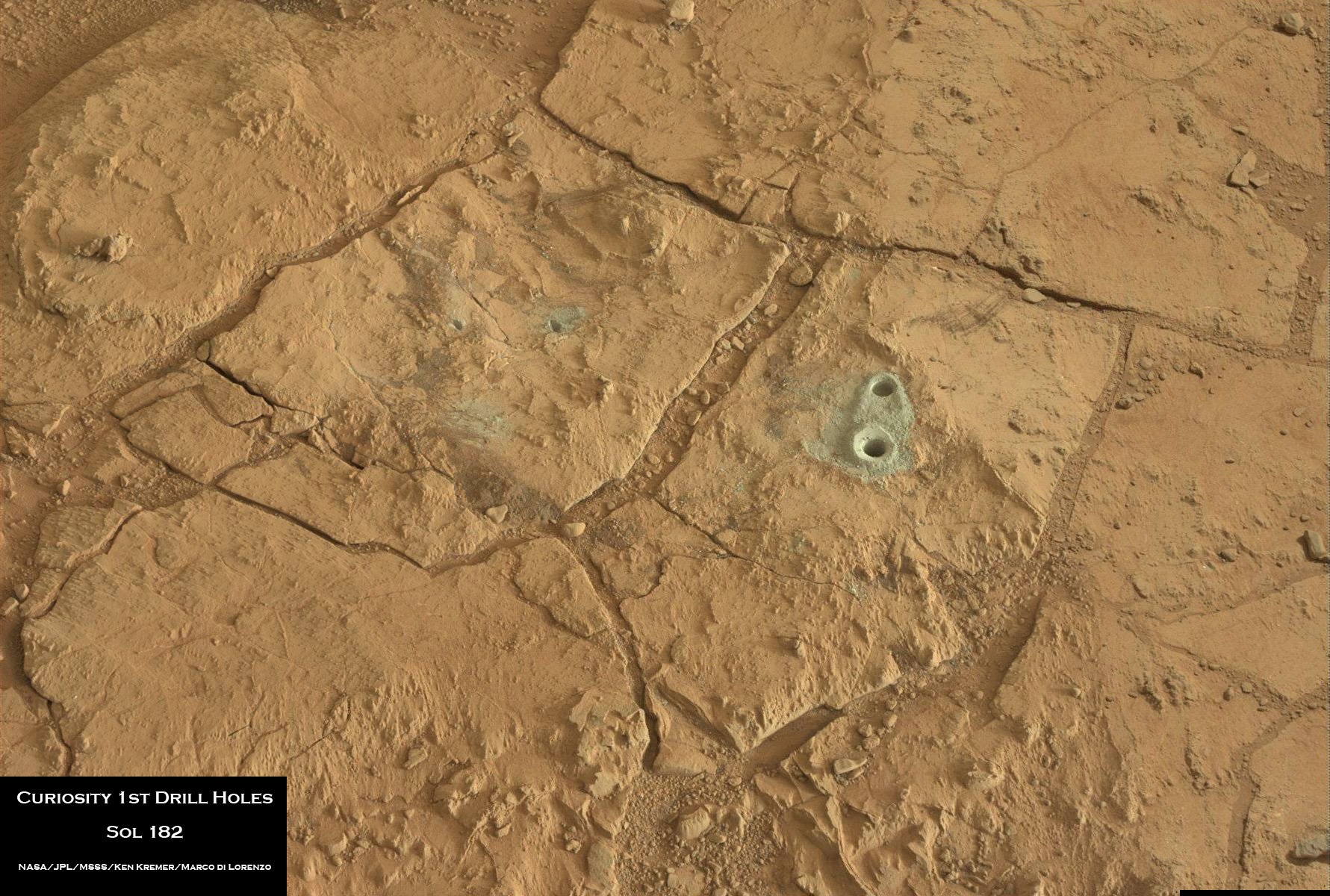
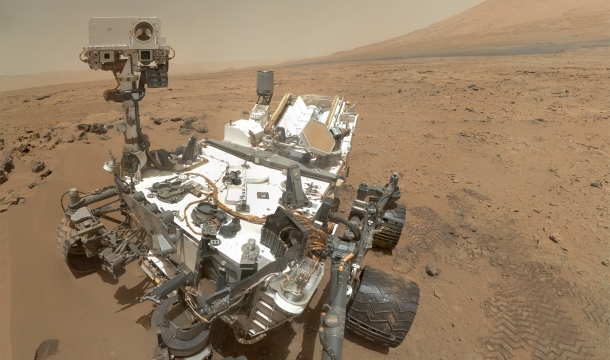
Mars_curiosity_drillingThe second bit of news comes to us from the good-ole Curiosity Rover! Roughly four weeks after conducting the first drilling operation into the Martian surface, the Rover ate its first sample of the grey dust that resulted. The delivery of the two aspiring-sized tablets of dust took place on Feb. 22nd and 23rd respectively after the robotic arm delivered them into the rover’s Chemistry and Mineralogy (CheMin) and Sample Analysis at Mars (SAM) laboratories for analysis. Results expected in two weeks!

Among other things, the results from the analysis are expected to give clues as to what the color change between the red surface and the grey interior means. One theory is that it might be related to different oxidations states of iron that could potentially inform us about the habitability of Mars inside the rover’s Gale Crater landing site.
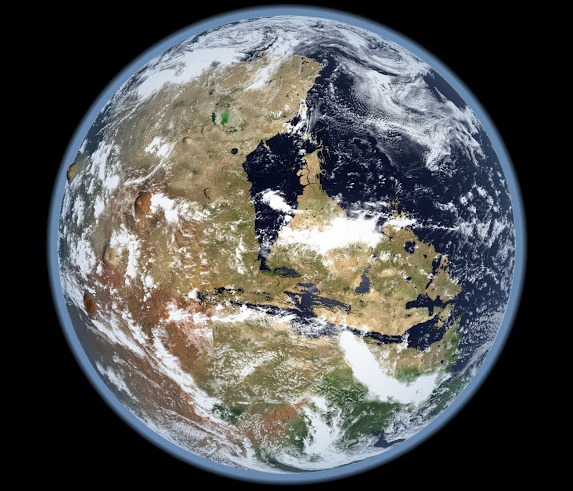
Living-Mars.2At the same time, the Mars Science Laboratory team expects to find further evidence of what life was like in previous geological eras. The Curiosity team believes that the area inside the Gale Crater, known as Yellowknife Bay, experienced repeated exposure to flowing liquid water long ago when Mars was warmer and wetter – and therefore was potentially more hospitable to the possible evolution of life.

The rover will likely remain in the John Klein area for a month or more to obtain a more complete scientific characterization of the area which has seen repeated episodes of flowing water. Eventually, the six-wheeled mega rover will set off on a year long trek to her main destination: the sedimentary layers at the lower reaches of the  5 km (3 mile) high mountain named Mount Sharp.

Source: universetoday.com

mars_hieroglyphsAnd last, but not least by any stretch of the imagination, is the discovery of “hieroglyphs” on the Martian surface. While they might appear like ancient glyphs to the untrained eye, they are in fact evidence of past subsurface water. The images were caught by the HiRISE camera on the Mars Reconnaissance Orbiter as it passed the surface area known as Amazonis Planitia.

Known as ‘rootless cones,’ these geological features are the result of an explosive interaction of lava with ground ice or water contained within the regolith beneath the flow. Vaporization of the water or ice when the hot lava comes in contact causes an explosive expansion of the water vapor, causing the lava to shoot upward, creating what appears to be a button hole on the surface.
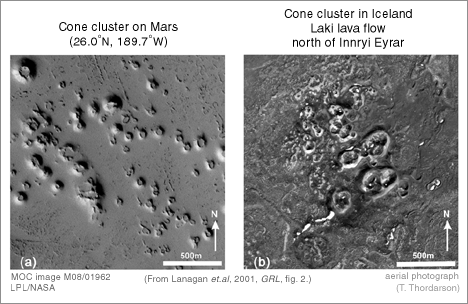
rootlessConesIn the past, Mars scientists have used geological patterns on Earth to make sense of similar ones found on Mars. For example, when the Curiosity Rover discovered veins of hydrated calcium in the rock surface in the Gale Crater, they compared them to similar patterns found in Egypt to determine that they were the result of long-term exposure to water flows. In this case, the rootless cones found in Amazonis Planitia are comparable to those found in Iceland’s Laki Lava Flow (as seen above).

According to Colin Dunas, from the US Geological Survey, the cones are rather large and most likely very old:

“The cones are on the order of a hundred meters across and ten meters high. The age of these specific cones isn’t known. They are on a mid- to late-Amazonian geologic unit, which means that they are young by Martian standards but could be as much as a few hundred million to over a billion years old.”

terraformingOnly time will tell if any subsurface water is still there, and hence usable by future teams of terraformers and settlers. According to Dundas, the odds are not so good of that being the case. Given the surface depth at which the ice was found, not to mention that at the low latitude at which it was found (22 degrees north), shallow ground ice is unstable. Dundas added that since ice stability varies as the obliquity changes, it’s even possible that ice has come and gone repeatedly since the lava erupted.

Too bad. That could have come in really handy for hydroponics, fuel cells, and even restoring surface water to the planet. Guess future generations of Martians will just have to look for their ground and irrigation water elsewhere, huh? Just another challenge of converting the Red Planet to a green one, I guess 😉

Stay tuned for more news Mars. As it stands, there’s plenty to be had! Stick around!

Source: hirise.lpl.arizona.edu, universetoday.com

Eyes in the Sky: The Future of Asteroid Defense

asteroid_beltWith the recent passage of DA14 – an asteroid half as large as a football field and packing the power of a hydrogen bomb – and the rather explosive display that occurred above Russian skies, it’s little wonder then why NASA and other space agencies are publicizing various existing and proposed solutions to our “asteroid problem”.

Granted, there really isn’t much of a threat of an asteroid colliding with the Earth in the foreseeable future. And we also know that the meteor that graced the skies over the Urals was unrelated to the DA14 behemoth. But given that an impact could mean an Extinction Level Event, similar to the Cretaceous-Paleogene event that caused the extinction of the dinosaurs, a little planning doesn’t hurt.

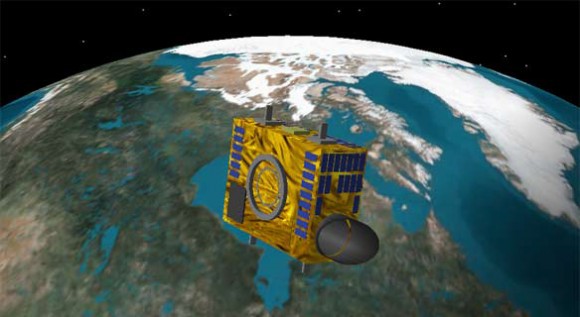
neossat-580x317The first in a series of three existing or proposed designs is the NEOSSat – Short for Near-Earth Object Surveillance Satellite – that was built in Canada and was deployed last week on an Indian rocket with six others. In addition to watching space debris in orbit and tracking their movements, it will also be keeping a sharp eye out for asteroids that may swing by Earth in the future.

AIDA_mission_conceptThen there is the ESA’s proposed Asteroid Impact and Deflection Assessment mission (or AIDA), a group of planetary defense satellites that will are designed to collide with an asteroid, then push it off course. And after two years of planning, research teams from the US and Europe have selected the mission’s target – a so called ‘binary asteroid’ named Didymos – that AIDA will intercept when it passes the Earth by a mere 11 million km in 2022.

The third and final proposed solution is something that sounds ripped from the pages of a science fiction novel. Known as the DE-STAR, or Directed Energy Solar Targeting of Asteroids and exploRation, this satellite is essentially a orbiting laser that would be capable of destroying approaching asteroids 10 times larger than the DA14 and at a distance as far away as the Sun.

NASA_destarProposed by two California scientists – UC Santa Barbara physicist and professor Philip M. Lubin, and Gary B. Hughes, a researcher and professor from California Polytechnic State University – the satellite is designed to harness the power of the sun and convert it into a massive phased array of laser beams that can destroy asteroids that pose a potential threat to Earth. At the same time, it will be capable of changing an asteroid’s orbit – deflecting it away from Earth, or into the Sun.

Feel safer? Well, considering that the odds of Earth getting anytime soon are pretty low, and are likely to fall even farther once we get these rock killers destroyed. Once more, it seems that sane planning and sensible solutions are winning out over doomsday predictions. Good for us!

Robots Meet the Fashion Industry

robot_fashionRobotics has come a long way in recent years. Why, just take a look at NASA’s X1 Robotic exoskeleton, the Robonaut, robotaxis and podcars, the mind-controlled EMT robot suit, Stompy the giant robot, Kenshiro and Roboy, and the 3D printed android. I suppose it was only a matter of time before the world of fashion looked at this burgeoning marketplace and said “me too!”

And here are just some of the first attempts to merge the two worlds: First up there’s the robot mannequin, a means of making window shopping more fun for consumers. Known as the MarionetteBot, this automaton has already made several appearances in shops in Japan and can expected to be making debut appearances across Asia, in North America and the EU soon enough!

Check out the video below to see the robot in action. Designed by the Japanese robotics company United Arrows, the mannequin uses a Kinect to capture and help analyze the movements of a person while a motor moves a total of 16 wires to match the person’s pose. Though it is not yet fast or limber enough to perfectly mimic the moves of a person, the technology shows promise, and has provided many a window-shopper with plenty of entertainment!


And next up, there’s the equally impressive FitBot, a shape-shifting mannequin that is capable of emulating thousands of body types. Designed by the British virtual shopping company Fits.Me, the FitBot is designed to help take some of the guesswork out of online shopping, where a good 25% of purchases are regularly returned because they were apparently the wrong size.

But with the FitBots, along with a virtual fitting room, customers will be able to see right away what the clothes will look like on them. The only downside is you will have to know your exact measurements, because that’s what the software will use to adjust the bot’s body. Click here to visit the company’s website and see how the virtual fitting room works, and be sure to check out there video below:


What does the future hold for the fashion industry and high-tech? Well, already customers are able to see what they look like using Augmented Reality technology displays, and can get pictures thanks to tablet and mobile phone apps that can present them with the image before making a purchase. Not only does it take a lot of the legwork out of the process, its much more sanitary as far as trying on clothes is concerned. And in a world where clothing can be printed on site, it would be downright necessary.

The "magic mirror"
The “magic mirror”

But in the case of online shopping, its likely to take the form of a Kinect device in your computer, which scans your body and lets you know what size to get. How cool/lazy would that be? Oh, and as for those AR displays that put you in the clothes you want? They should come with a disclaimer: Objects in mirror are less attractive than they appear!

Source: en.akihabaranews.com, technabob.com

NASA Loses Contact With ISS

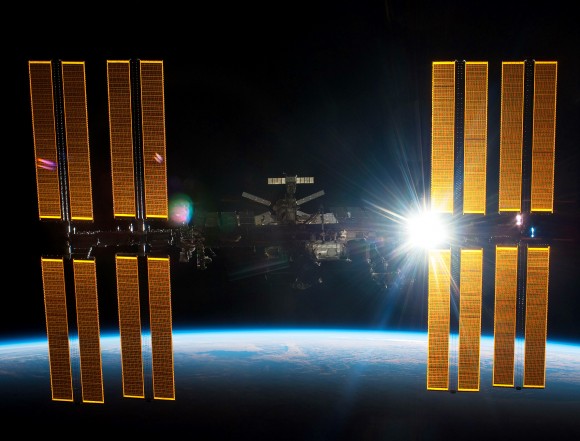
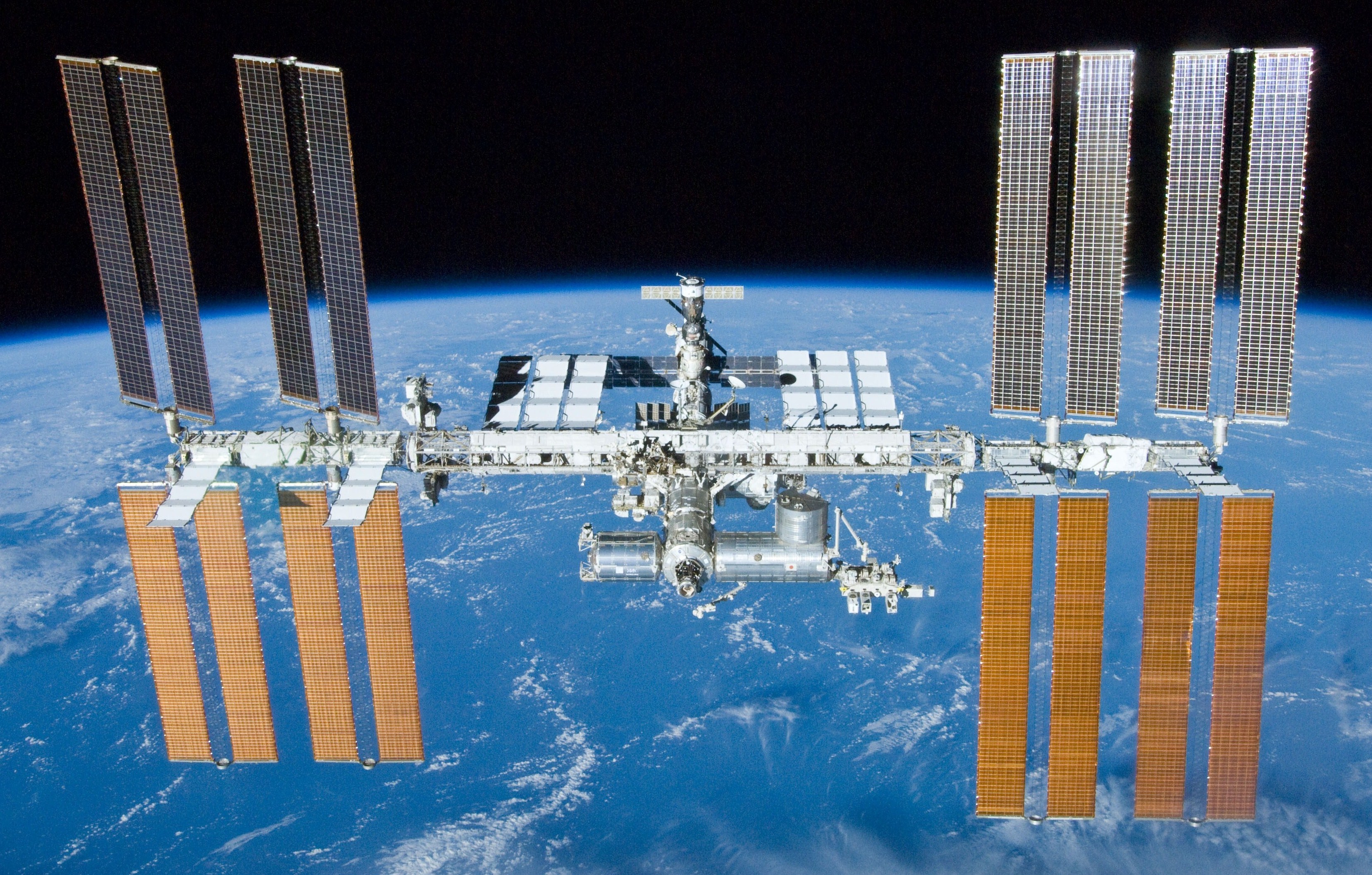
International-Space-Station-ISS-580x441It’s something no one hovering hundreds of kilometers over the Earth ever really wants to experience. Yes, when you floating in a tin can, you’re only connection to the surface being a communications relay, it can be pretty scary when it suddenly stops working. Can’t be much of a picnic for those working Mission Control either, or the families forced to sit idly by and wait for others to figure out what went wrong.

The communications blackout began on Tues, Feb. 19th at 9:45 am EST(15:45 UTC) , and lasted until 11:34 am yesterday (17:34 UTC). So for a good twenty-six hours straight, the ISS was unable to communicate with ground crews, which as anyone can guess caused a bit of a stir. Luckily, it turns out everyone on board the ISS was just fine the whole time, no injuries or space invaders to speak of!

According to a statement filed by NASA, communications were apparently lost when flight controllers in Houston were updating the software onboard the station’s flight computers and one of the station’s data relay systems malfunctioned. The primary computer that controls critical station functions defaulted to a backup computer, but was not allowing the station to communicate with NASA’s Tracking and Data Relay Satellites.

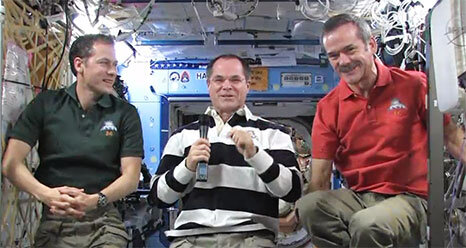
NASA_ISScrewThen, just before 11:00 a.m. EST, flight controllers were able to communicate with the crew once more as the space station flew over Russian ground stations. They then instructed the crew to connect a backup computer to begin the process of restoring communications. Once that was done, Expedition 34 Commander Kevin Ford reported the following:

“Hey, just FYI, the station is still flying straight, everybody is in good shape, or course, and nothing unexpected except lots of caution and warning [alarms]. All the systems look like they are doing just fine.”

According to the Johnson Space Center’s latest Twitter update, the crew is back at work and the crew is taking questions from fans. Click here to see what the crew had to say about the temporary communications blackout and what’s in store for them now.

In an ironic twist, sources have since indicated that Canadian astronaut Chris Hadfield Tweeted the following from the ISS shortly before the blackout took place: “Good Morning, Earth! Today we transition the Space Station’s main computers to a new software load. Nothing could possibly go wrong.” The moral here? Things can always go wrong! And don’t tempt fate, especially when you’re hurling through space, hundreds of kilometers above the Earth.

Source: universetoday.com


Exploring the Universe with Robotic Avatars and Holodecks

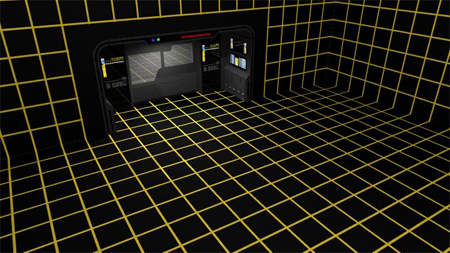
holodeck_nasaSpace exploration is littered with all kinds of hazards. In addition to the danger of dying from decompression, mechanical failures, micro-meteoroids or just crashing into a big ball of rock, there are also the lesser-known problems created by low-gravity, time dilation, and prolonged isolation. Given all that, wouldn’t it just be easier to send probes out to do the legwork, and use virtual technology to experience it back home?

That’s the idea being presented by Dr. Jeff Norris, one of the scientists who works for NASA’s Jet Propulsion Laboratory in Pasadena, California. In a recent presentation that took place at Pax Prime last year – entitled “NASA’s Got Game” – he spoke of the agency’s plans for telexploration – the process of exploring the universe using robotic avatars and holodecks, rather than sending manned flights into deep space.

avatar_imageIn the course of making this presentation, Norris noted several key advantages to this kind of exploration. In addition to being safer and cheaper, its also more readily available. Whereas deep space exploration involving space ships with FTL engines – the Alcubierre Drive they are currently working on – will eventually be available, robot space probes and advanced telecommunications technology are available right now.

At the same time, telexploration is also more democratic. Whereas conventional space travel involves a select few of highly-trained, eminently qualified people witnessing the wonders of the universe, robotic avatars and holographic representations bring the experience home, where millions of people can experience the awe and wonder for themselves. And when you think about it, it’s something we’re already doing, thanks to the current generation of space probes, satellites and – of course! – the Curiosity Rover.

Curiosity_selfportraitBasically, rather than waiting for the warp drive, Norris believes another Star Trek technology – the holodeck – will be the more immediate future of space exploration, one that we won’t have to wait for. Yes, there are more than a few Star Trek motifs going on in this presentation, and a little Avatar too, but that’s to be expected. And as we all know, life can imitate art, and the truth is always stranger than fiction!

Check out the video of the presentation below:


And remember…

holodeck_vegasad

NASA Engine Will Take Us To The Moon (And Beyond)

NASA_Moon1For almost a year now, NASA has been discussing plans which will eventually culminate in a return to the Moon. Initially, such plans were kept under wraps just in case NASA found itself in a budget environment that did not favor renewed space exploration. But since the 2012 election, and the re-election of President Obama, NASA publicly announced its plans, confident that the budget voted on in 2010 (which included lucrative funding for them) would continue.

And now, NASA has been unveiling the tools that will take us there and beyond in the coming years. Far from simply shooting for the Moon for the first time in decades, NASA’s plans also include manned missions to Mars, and exploratory missions which will take it out to Jupiter and the outer Solar System. And since they are thinking big, its clear some budget-friendly and powerful tools will be needed for the job.

jx-2rocketAbove, we have the latest. It’s called the JX-2, a liquid-fuel cryogenic rocket engine is the modernized version of the J-2, the engine that NASA used in the late-’60s and early-’70s to thrust humans beyond low Earth orbit. With the conclusion of the Apollo program, these babies fell into disuse. But with the upgrades made to these new versions, NASA hopes to send people back to the Moon, and a few places beyond.

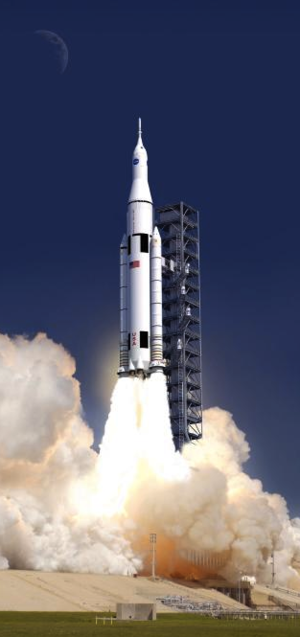
Of course, there are other noted improvements in NASA’s arsenal that will also come into play. For starters, the J-2 was part of the general assembly of the Saturn V rocket, the mainstay of the space agency’s fleet at the time. In the years to come, NASA will be deploying its new Space Launch System (SLS) and the Orion Multi-Purpose Crew Vehicle (MPCV).

NASA_marsThe SLS is NASA’s next-generation rocket, a larger, souped-up version of the Saturn V’s that took the Apollo teams into space and men like Neil Armstrong to the Moon. According to NASA spokesmen, the SLS rocket will “incorporate technological investments” and “proven hardware” from previous space exploration programs.” Essentially, this means that projects which have been shelved and retired have been updated and incorporated to create a rocket that can do the job of sending men into deep space again.

The Orion MPCV, on the other hand, is the module that will sit atop the SLS, carrying its crew compliment and delivering them to their destination once the rocket has put them into space and disassembled itself. Announced back in September of 2011, the SLS and MPCV constitute the largest and most powerful space rocket system ever built by a space agency.

No date has been given as to when the SLS and MPCV will be sent into space, courtesy of the new JX-2 rocket engine. But NASA claims there will be a launch sometime next year. As for the Moon, well, we’re waiting on that too, but it’s clear that with Mars slated for 2030, a manned mission to the Moon is sure to happen before this decade is out.

In the meantime, check out the infographic on the new rocket system below, and keep your eyes on the skies! We’re going back, and this time, we mean to stay!

nasa-spaceship-mpcv-orion-capsule-comparison-apollo-shuttle-infographic-110525b-02

Sources: IO9.com, (2), Space.com

Mercury Mapped for the First Time

mercury_mapMercury is the smallest planet in the Solar System and has the closest proximity to our sun. As a result, it’s one of the most neglected when it comes to scientific study. While Mars, Venus, Jupiter and Saturn have been probed and photographed in exquisite detail during the space age, the closest planet to the Sun has had to make do with a few flybys from the Mariner 10 spacecraft in the early 1970s.

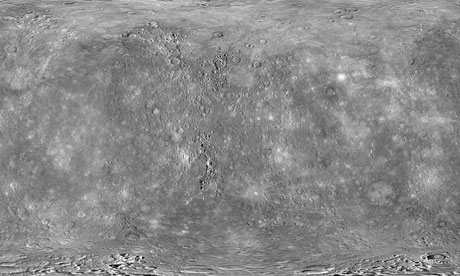
However, that is now changing thanks to NASA’s Messenger spacecraft. In addition to confirming the existence of ice and organic molecules back in November, the probe has also transmitted thousands of images of the planet over the past year. These have allowed NASA personnel to construct the first high-resolution maps of the planet, its own high-resolution maps, down to the scale of kilometers.

Global Map Of Mercury From Messenger.According to David Blewett, a scientist at the Applied Physics Laboratory at Johns Hopkins University and part of the Messenger team, part of the reason it has taken more than 30 years to revisit the planet since the Mariner 10 flybys was because a lack of public interest. Messenger, he claims, has changed all that. Speaking ahead of a briefing on Friday at the annual meeting of the American Association for the Advancement of Science in Boston, Blewett had this say:

“Messenger has revealed Mercury to be a fascinating, dynamic and complex world. We know now that it is an oddball planet. It’s the smallest of the eight planets but has the highest density. The interior structure is different than the other planets. The geologic surface is different to the moon and Mars. The surface composition is enigmatic because … it consists of rock types that we don’t have much experience with. It has a global, Earth-like magnetic field, Venus and Mars do not.”

messenger_mercuryThe new global map is an enhanced image that shows the different compositions of rocks on the surface of Mercury by color-coding them. The more orange areas are volcanic plains while the make-up of the rocks in the deep blue areas is unknown. Though Messenger was able to detect an abundance of individual elements on Mercury’s surface – including iron, titanium, sulphur and potassium – without rock samples to study, scientists cannot determine the exact compounds or minerals in which those elements are arranged.

But the biggest surprise came on the surface, where there was an abundance of relatively volatile elements such as potassium and sulphur was seen to be very high. Most of the models for the formation of Mercury predict that these elements should have evaporated away during the planet’s formation. So in addition to learning more about its surface features, scientists are now presented with the opportunity to study and learn more about the planet’s early history as well.

But of course, much of that information and research are going to have to wait for future generations of Rovers. These are likely to be similar in nature to Curiosity, in that they are remote controlled, networked robots with internal labs. But unlike those currently combing the Red Planet, these ones will have to be able to withstand surface temperatures in excess of 400 C and some dangerous surface activity. Hard to know exactly when NASA will be rolling any of those out, but the simplest answer is, not too bloody soon!

Check out the video of Mercury’s new color map as it rotates to show its fully-detailed surface. And FYI, this bit of breaking news has become my 900th post! Woohoo!

Source: gaurdian.co.uk

Asteroid Misses Earth, Again!

asteroid_DA14Well it seems that Earth has survived yet another close shave with an asteroid. This time around, the object in question was a celestial body known as DA14, a rock measuring 45 meters (150 feet) in diameter and weighing in at 130,000 metric tons in mass. Discovered last year by astronomers working out of the La Sagra Sky Survey at the Astronomical Observatory of Mallorca, this asteroid performed the closest fly-by of Earth ever observed by astronomers.

Basically, the asteroids passage took it within Earth’s geosynchronous satellite ring, at a paltry distance of 27,000 kilometers (17,000 miles). That may sound like its still pretty far away, but to give you a sense of scale, consider that Earth’s geosynchronous satellite ring, which the asteroid passed within, is located about 35,800 km above the equator. So basically, this asteroid was closer to you than the satellite that feeds your TV set. Scared yet?

asteroid_DA14pathNaturally, NASA was quick to let people know that DA14’s trajectory and orbit about the Sun would bring it no closer to the Earth’s surface than 3.2 Earth radii on February 15, 2013. In a statement released in advance of the asteroid’s passage, they claimed:

“There is very little chance that asteroid 2012 DA14 will impact a satellite or spacecraft. Because the asteroid is approaching from below Earth, it will pass between the outer constellation of satellites located in geosynchronous orbit (22,245 miles/35,800 kilometers) and the large concentration of satellites orbiting much closer to Earth. (The International Space Station, for example, orbits at the close-in altitude of 240 miles/386 kilometers.). There are almost no satellites orbiting at the distance at which the asteroid will pass.”

However, they were sure to warn satellite operators about the passing, providing them with detailed information about the flyby so they could perform whatever corrections they needed to to protect their orbital property. All in all, we should be counting our lucky stars, given the asteroid’s mass and size. Were it to have landed on Earth, it would have been an extinction-level-event the likes of which has not been seen since the age of the dinosaurs.

In related news, NASA was quick to dispel notions that this asteroid was in any way related the recent arrival of the meteor above the Urals in Russia. In a statement issued earlier today, they said the following:

“According to NASA scientists, the trajectory of the Russia meteor was significantly different than the trajectory of the asteroid 2012 DA14, making it a completely unrelated object. Information is still being collected about the Russia meteor and analysis is preliminary at this point. In videos of the meteor, it is seen to pass from left to right in front of the rising sun, which means it was traveling from north to south. Asteroid DA14’s trajectory is in the opposite direction, from south to north.”

Good news! We’re not witnessing the End of Days just yet. Take that Apocalyptics! Don’t you people get tired of being wrong? (fingers crossed!)

Source: IO9.com, NASA.gov, (2)

Curiosity Drills!

curiosity_drillsIn what is a first amongst cosmic first, the Curiosity Rover drilled into Martian rock and collected fresh samples from the resulting dust. The precision drilling took place this past Friday, Feb. 8, 2013 – during the 182nd day of the mission – after numerous tests and procedures were conducted. The images were beamed back to Earth on the following day (Saturday, Feb 9) amidst a great deal of fanfare and celebration.

Given the fact that it took them nearly a decade of painstaking work and effort to design, assemble, launch and land the Curiosity Mars Science Laboratory (MSL) rover, it’s obvious while the rover team is overjoyed with this latest development. What’s more, this was more than just a first in the history of space exploration, it also marked Curiosity’s 6 month anniversary on the Red Planet since touching down on Aug. 6, 2012 inside Gale Crater.

John Grunsfeld, NASA’s associate administrator for the agency’s Science Mission Directorate, had this to say about the drilling:

“The most advanced planetary robot ever designed now is a fully operating analytical laboratory on Mars. This is the biggest milestone accomplishment for the Curiosity team since the sky-crane landing last August, another proud day for America.”

curiosity_drilling_sightCuriosity drilled a circular hole about  16 mm (0.63 inch) wide and 64mm (2.5 inches) deep into the red slab at the “John Klein” rock site. The  fine-grained sedimentary rock, which is rich with hydrated mineral veins of calcium sulfate, parted to produce a slurry of grey trailings surrounding the hole. These dust samples were then collected for examination using the rover’s on board laboratory.

The team believes the area known as Yellowknife Bay, where the drilling took place, repeatedly experienced percolation of flowing liquid water eons ago when Mars was warmer and wetter, and potentially more hospitable to the possible evolution of life. These latest samples, they hope, will offer additional compelling evidence to this effect, and also some traces of organic molecules.

curiosity_drillbitWhile this may sound like an ordinary day around NASA, it represents a quantum leap in terms of what remote landed craft are capable of doing. At no time in the past have astronauts been able to place mobile research platforms on a distant planet, collect samples of said planet, and conduct research on them, all the while beaming the results and images back to labs at Earth for analysis.

What’s next for the rover? Well, once the analysis is complete, the 1 ton robot will continue to investigate Yellowknife Bay and the Glenelg area. After that, it will set off on a nearly year long trek to her main destination – the sedimentary layers of the lower reaches of the  5 km (3 mile) high mountain named Mount Sharp – some 10 km (6 miles) away from its current position.

Source: universetoday.com

Captain Kirk Hails the ISS

ISSIn a move that was sure to give Trekies a collective fangasm, William Shatner made contact with the International Space Station this week. This past Thursday, thanks to the marvels of 21st century communications technology, the man who portrayed Captain Kirk was able to speak to Chris Hadfield, an astronaut on board the International Space Station.

Captain-KirkThe conversation began when Shatner – ahem! – opened hailing frequencies and contacted the ISS. Hadfield replied and, using some Star Trek sound effects as background, the two had a live, streaming video conversation. The entire conversation was recorded and uploaded to Youtube for the benefit of fans and amateur astronomers everywhere.

Needless to say, when science fiction and reality collide like this, it is an epic day in nerdom! Check out the video below…


Source:
universetoday.com