
 The rocky surface of Mars has turned up some rather interestingly-shaped objects in the past. First there was the Martian rat, followed shortly thereafter by the Martian donut; and very recently, the Martian thighbone. And in this latest case, the Curiosity rover has spotted what appears to be a perfectly-round ball. Even more interesting is the fact that this sphere may be yet another indication of Mars’ watery past.
The rock ball was photographed on Sept. 11 – on Sol 746 of the rover’s mission on Mars – while Curiosity was exploring the Gale Crater. One of Curiosity’s cameras captured several images of the centimeter-wide ball as part of the stream of photographs was taking. The scientists working at the Mars Science Laboratory based at NASA’s Jet Propulsion Laboratory (JPL), immediately began to examine it for indications of what it could be.
 As Ian O’Neill of Discovery News, who spoke with NASA after the discovery, wrote:
According to MSL scientists based at NASA’s Jet Propulsion Laboratory (JPL) in Pasadena, Calif., the ball isn’t as big as it looks — it’s approximately one centimeter wide. Their explanation is that it is most likely something known as a “concretion”… and they were created during sedimentary rock formation when Mars was abundant in liquid water many millions of years ago.
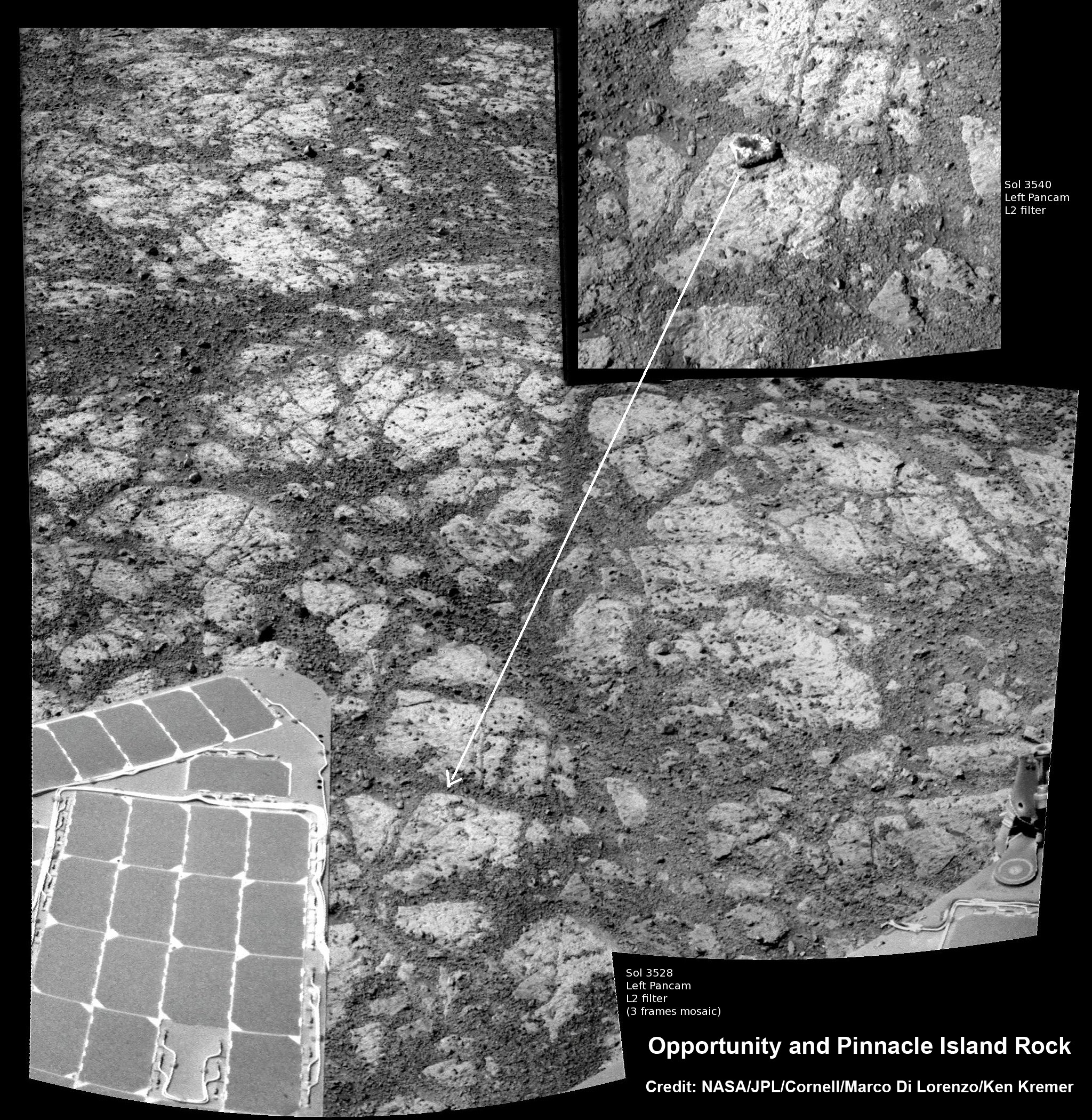
Curiosity has already found evidence of water at a dig site in Yellowknife Bay, which took place shortly after it landed in the Gale Crater two years ago. In addition, this is not the first time a Mars rover has found rocky spheres while examining the surface. In 2004, NASA’s Opportunity rover photographed a group of tiny balls made of a ferrous mineral called hematite. Opportunity photographed still more spheres, of a different composition, eight years later.
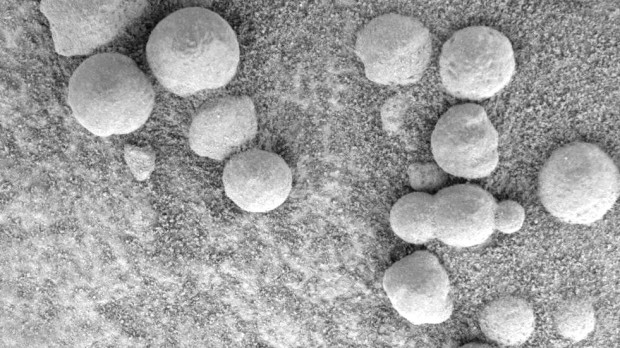 The spheres likely formed through a process called “concretion”, where minerals precipitate within sedimentary rock, often into oval or spherical shapes. When the rock erodes due to wind or water, it leaves the balls of minerals behind and exposed. If in fact concretion caused the Mars spheres, then they would be evidence there was once water on the planet. However, some scientists believe the rock balls might be leftover from meteorites that broke up in the Martian atmosphere.
Curiosity is now at the base of Mount Sharp (Aeolis Mons) – The 5.6 km-high (3.5 mile) mountain in the center of Gale Crater – scientists are excited to commence the rover’s main science goal. This will consists of more drilling into layered rock and examining the powder so scientist can gain an idea about how habitable the Red Planet was throughout its ancient history, and whether or not it may have been able to support microbial life.
 Mission managers will need to be careful as the rover has battered wheels from rougher terrain than expected. Because of this, the rover will slowly climb the slope of Mount Sharp driving backwards, so as to minimize the chance of any further damage. The Mars Reconnaissance Orbiter (MRO) will also be on hand to help, photographing the route from above to find the smoothest routes.
Despite the wear and tear that the little rover has experienced in its two years on the Martian surface, it has discovered some amazing things and NASA scientists anticipate that it will accomplish much more in the course of its operational history. And as it carried on with its mission to decode the secrets of Mars, we can expect it will find lots more interesting rocks – spherical, rat-shaped, ringed, femur-like, or otherwise.
Sources: cbc.ca, universetoday.com, news.discovery.com




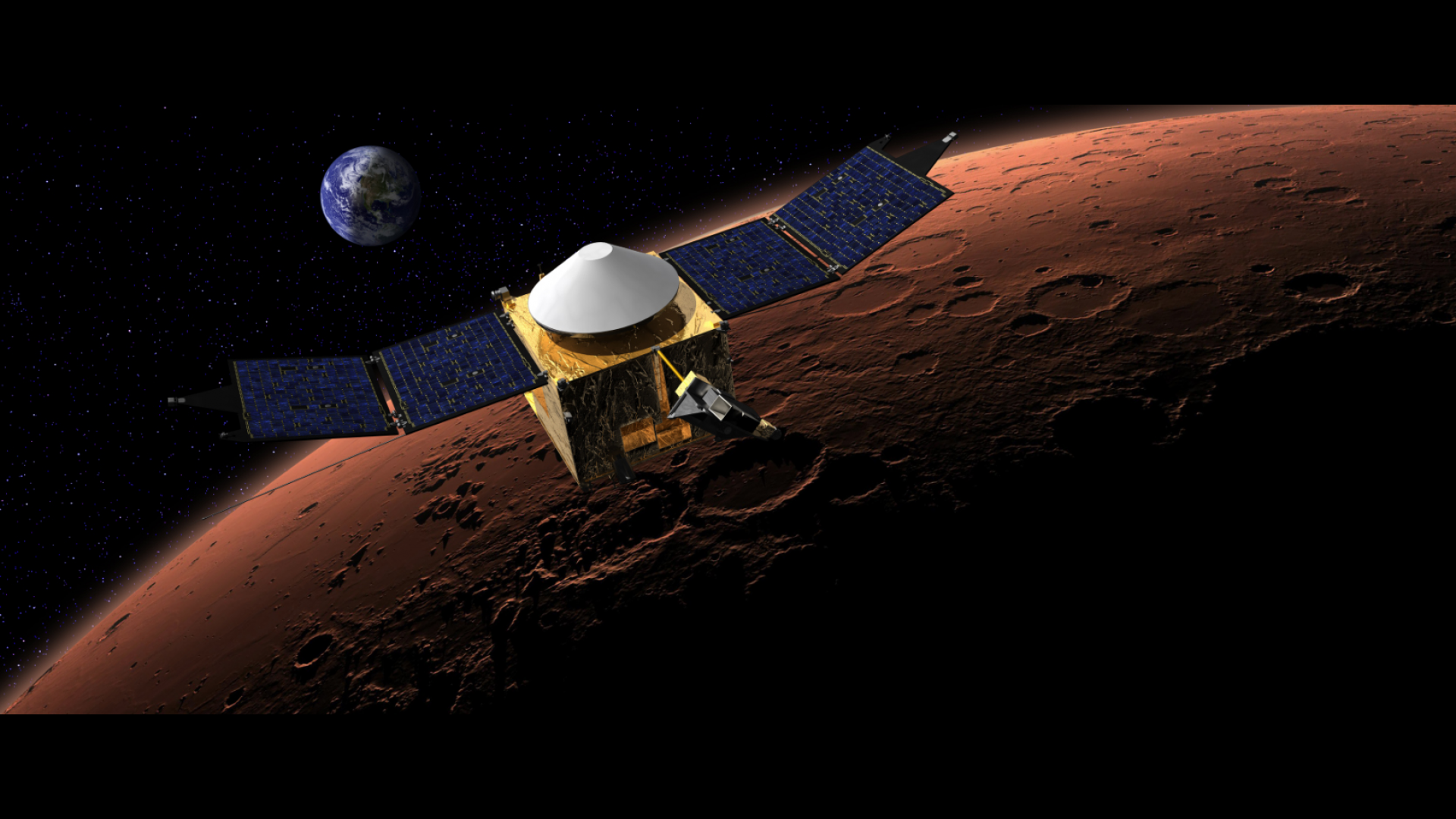
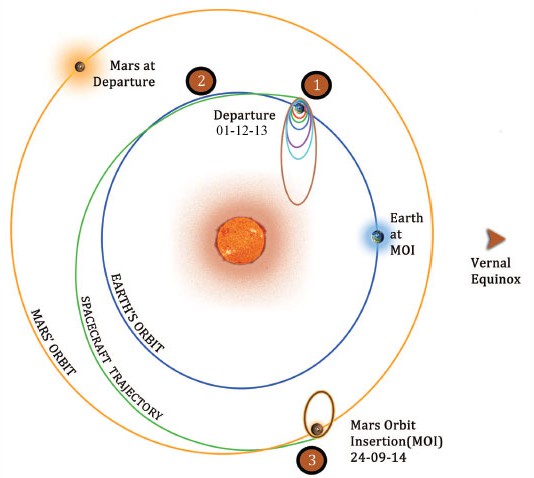
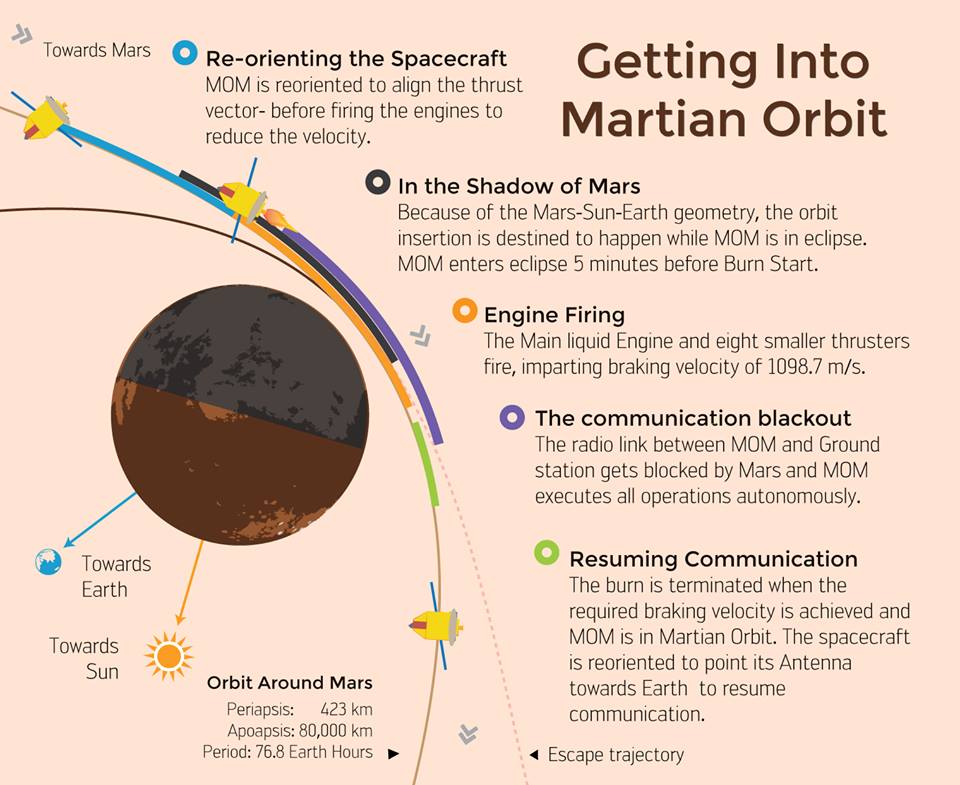
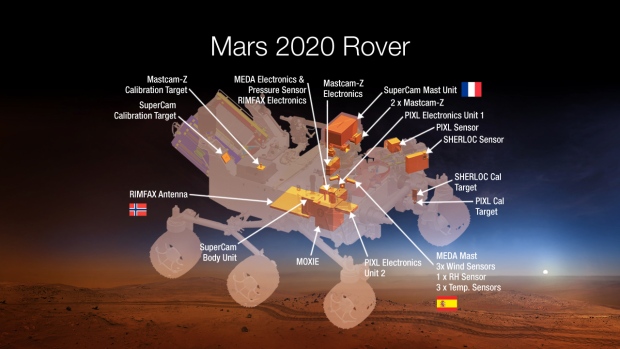
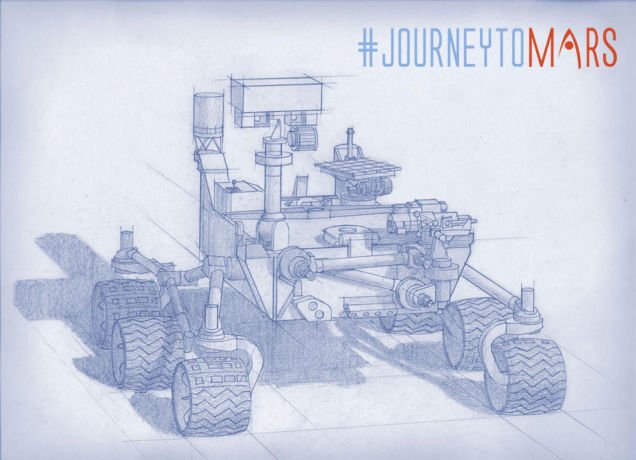

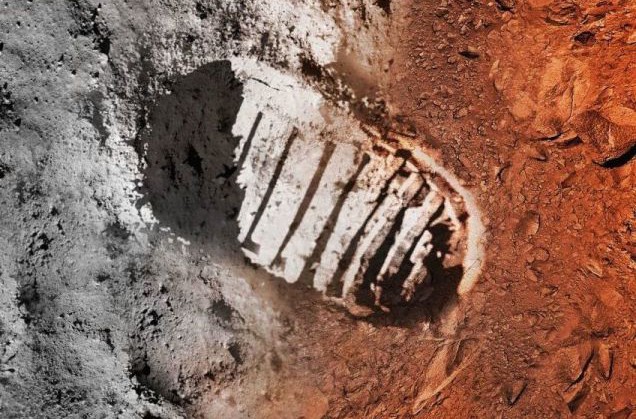 NASA addressed these goals and more two weeks ago with their mission to Mars panel at the 2014 Comic-Con. This event, which featured retired astronaut and living legend Buzz Aldrin, spoke at length to a packed room about how Apollo 11 represented the “the first Giant Leap”. According to Aldrin, the Next Giant Leap could be “Apollo 45 landing humans on Mars.”
 So we can expect a lot more news and revelations about the Red Planet in the coming months and years. Who knows? Maybe we may finally find evidence of organic molecules or microbial life there soon, a find which will prove once and for all that life exists on other planets within our Solar System. And if we’re really lucky, we might just find that it could feasibly support life once again…


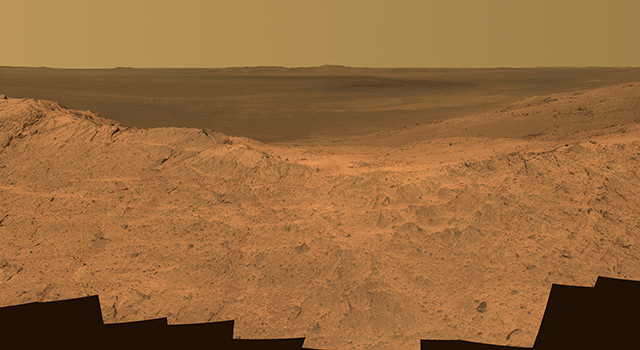 Initial measurements at this site with the element-identifying alpha particle X-ray spectrometer at the end of Opportunity’s arm indicate that bright-toned veins in the rock contain calcium sulfate. Scientists deduce this mineral was deposited as water moved through fractures on Endeavour’s rim. The rover found similar veins of calcium sulfate farther north along the rim while investigating there earlier last month.
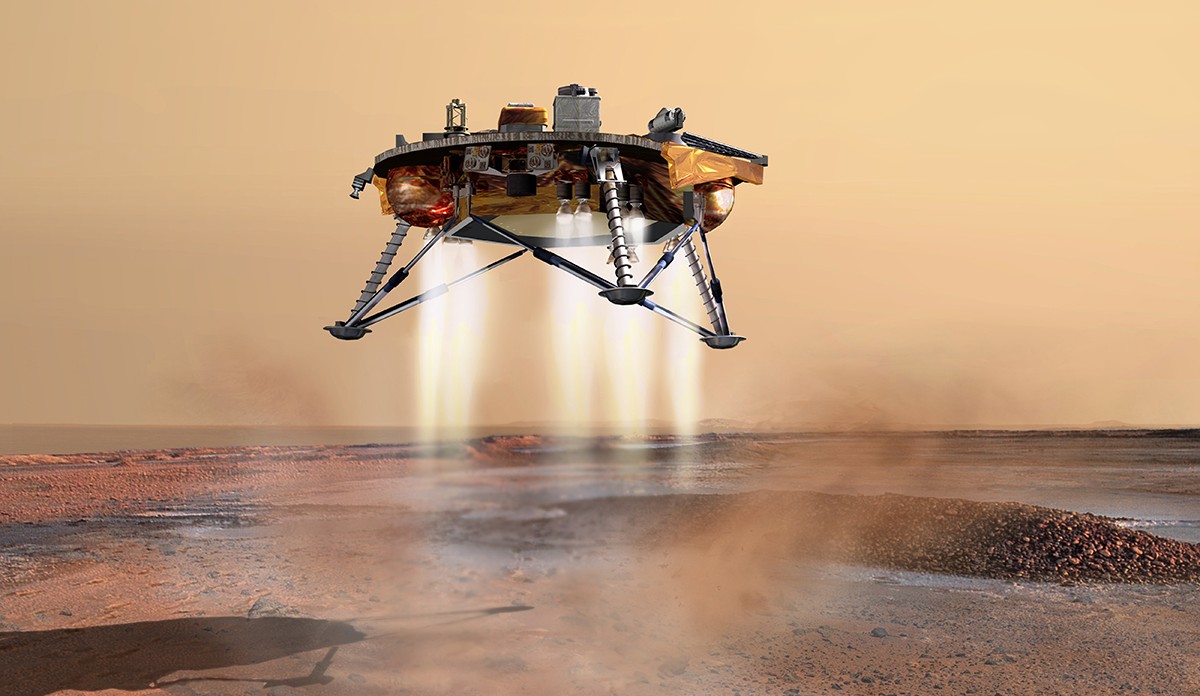

 After the daring new type of landing that was performed with the Curiosity rover, NASA went back to the drawing table to come up with something even better. Their solution: the “Low-Density Supersonic Decelerator”, a saucer-shaped vehicle consisting of an inflating buffer that goes around the ship’s heat shield. It is hopes that this will help future spacecrafts to put on the brakes as they enter Mar’s atmosphere so they can make a soft, controlled landing.



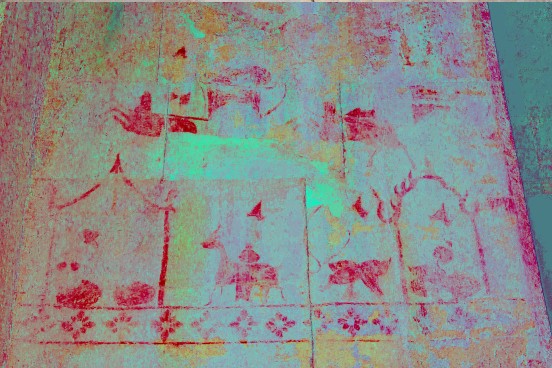
 And though researchers can’t be sure exactly when the paintings were created, Tan speculates that the most elaborate artworks may have been commissioned by Cambodia’s King Ang Chan, who made an effort to restore the temple during his reign between 1528 and 1566. During this time, unfinished carvings were completed and Angkor Wat began its transformation into a Buddhist pilgrimage site, which are confirmed by some of the newly revealed paintings that show Buddhist iconography.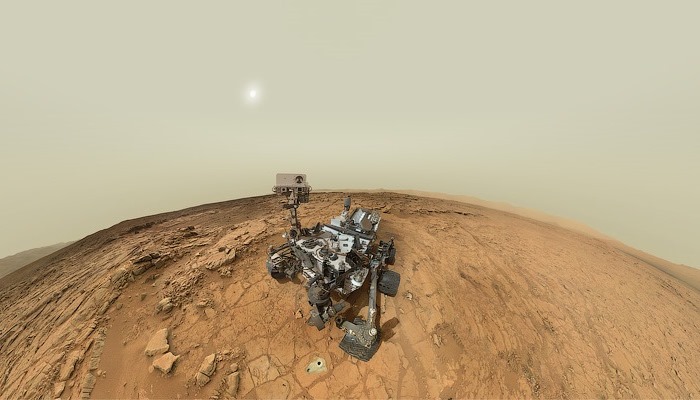

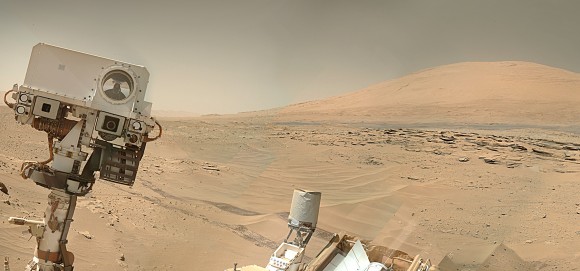 As for the latest in Curiosity’s long-line of panoramic self-portraits, this one comes to us courtesy of Jason Major. As a graphic designer and amateur space explorer, Major assembled the picture from about the dozen or so images acquired with the rover’s Mars Hand Lens Imager (MAHLI) instrument on April 27-28, 2014 (Sol 613). In the background, one can see the 5.5-km-high (3.4 miles) Mount Sharp (Aeolis Mons) that sits in the center of the Gale Crater.




 Stories by Williams