
 Reducing the cost of space missions is one of the greatest challenges facing engineers and technicians today. With a myriad of planned missions, ranging from everything to a settlement on the Moon, sending satellites to Near-Earth asteroids, and manned missions to Mars, the goal of making space travel more affordable is a persistent and important one.
As it stands, most efforts are directed towards created craft that are either reusable, repurposed, or simply don’t rely on big, expensive and disposable rockets to get them into orbit. But another angle at bringing the cost of missions down is focusing on the size of the space craft themselves. If they could be shrunk down to the point where they are no larger than a paperweight, sending them into space could be done on the cheap.
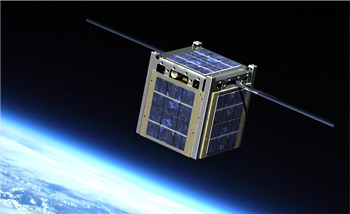 Already we are seeing this idea at work with CubeSats, a new breed of satellites that are roughly the size of a Rubik’s cube. Over the past decade, dozens of these satellites have been sent into space, often as part of University projects. Since most sensor and survey equipment is now small enough that it can fit into a shoebox, the CubeSat design is ideal for departments that cannot afford to mount multimillion dollar space missions.
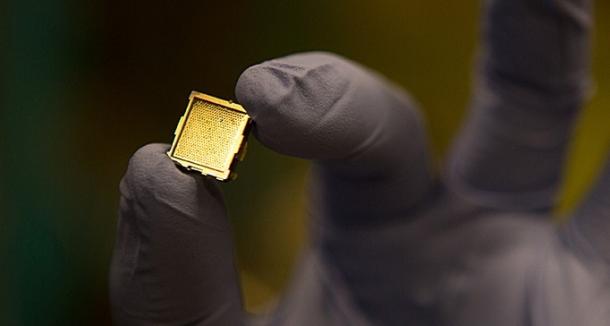
Expanding on this concept, MIT’s Poalo Lozano, a professor and the director of the Institute’s Space Propulsion Laboratory, has unveiled a new type of “microthruster” which, when added to the scaled-down satellites, could radically reduce the cost of space missions even further. Roughly the size of a stamp, these tiny ion-engines would prolong the use of satellites by ensuring they could maneuver in space.
 Up until now, CubeSat’s have had a limited life expectancy as their orbits inevitably decay and they burn up in the Earth’s atmosphere. But by equipping them with an Electrospray Propulsion System (iEPS), these pint-sized satellites would be able to conduct life-saving maneuvers that would extend their period of service and give them new functionality.
The thrusters are basically a liquid-fuel system that, when a voltage is applied, emit a stream of ions through tiny nozzles that propel the satellite forward. According to Lozano, four of these thrusters could provide attitude control and main propulsion for standard solar-powered “1U” CubeSat, which measures about 10 centimeters (4 inches) on a side and weighs 1 kilogram (2.2 pounds).
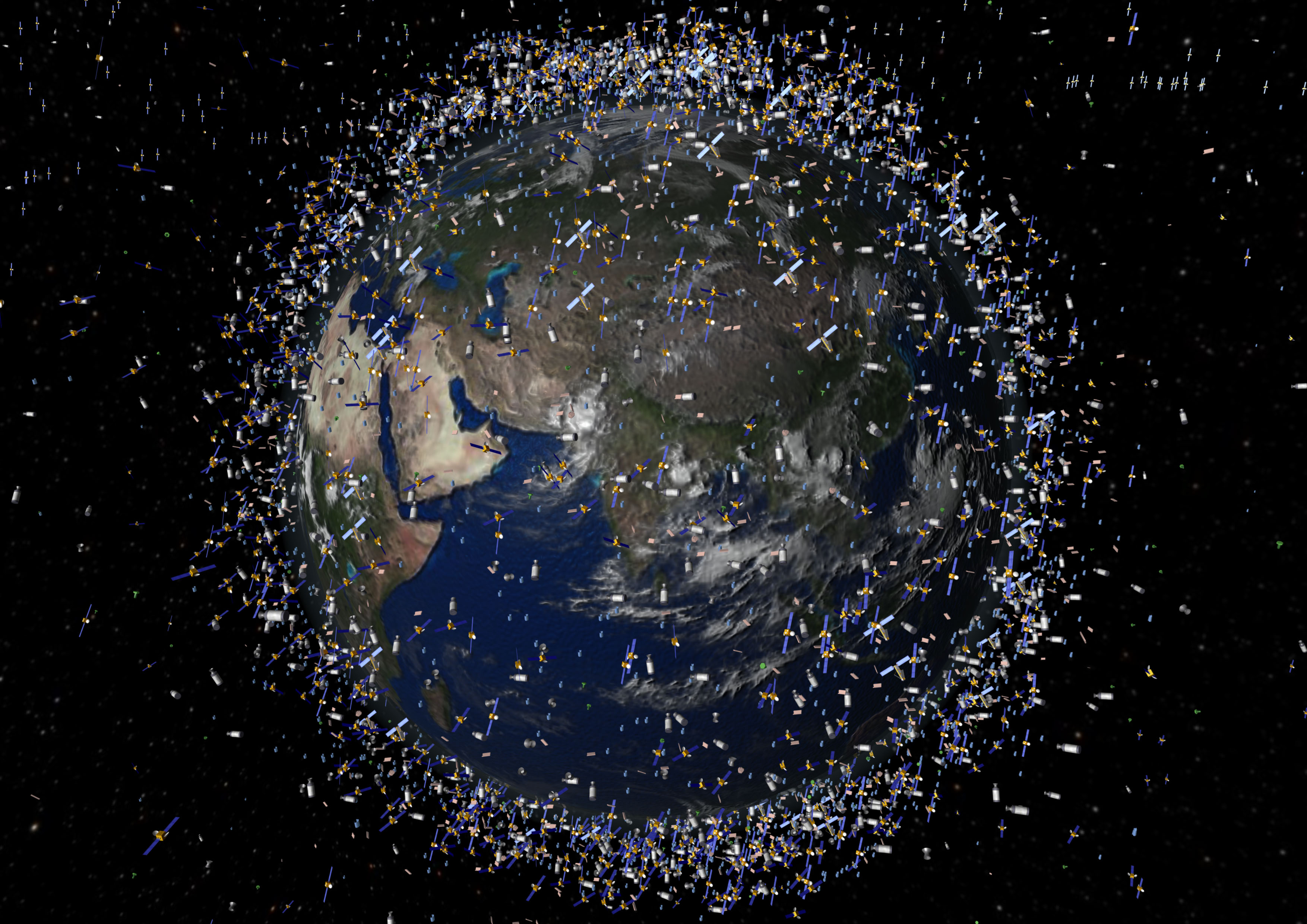
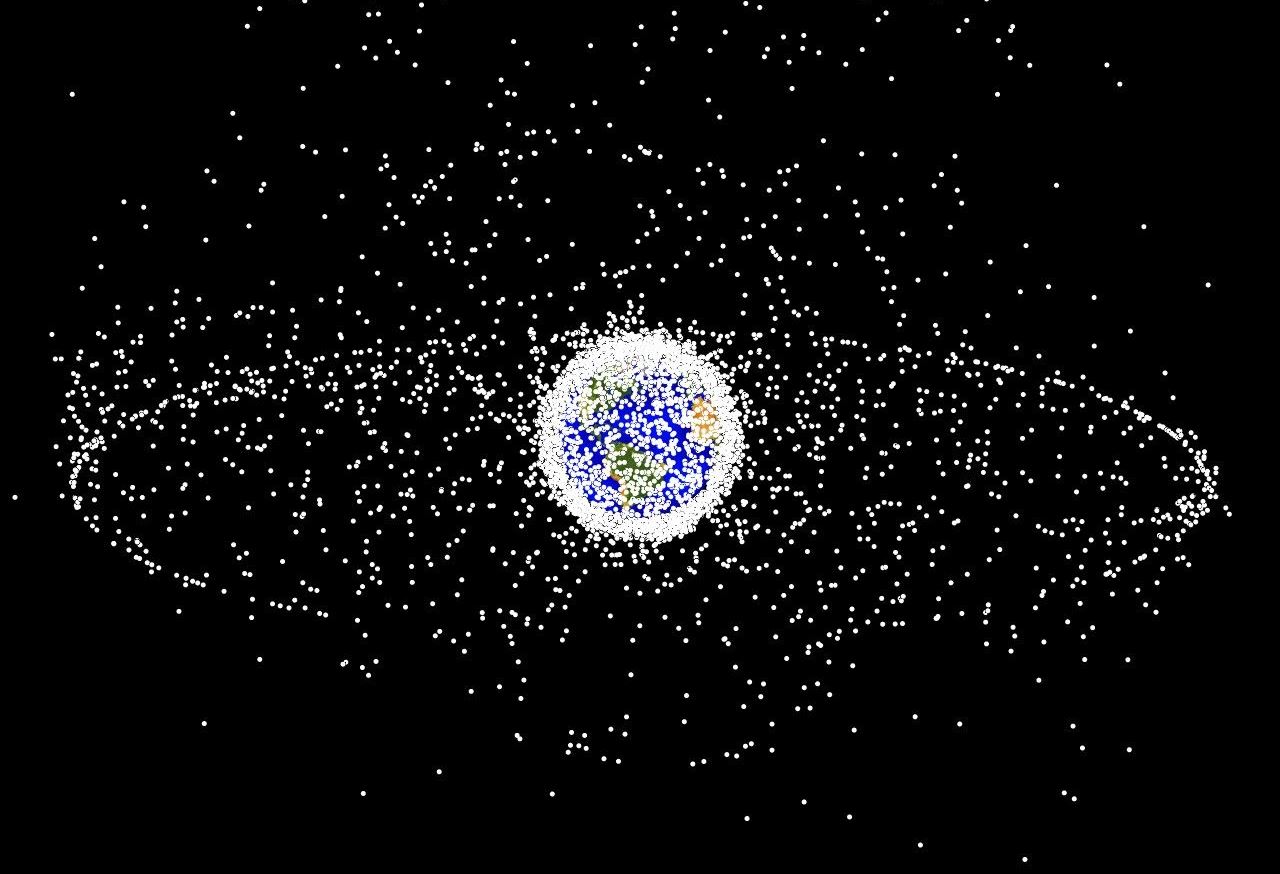
 But more exciting are the long-term prospects created by the addition of these tiny thrusters. For the price of sending a large spacecraft, a fleet of CubeSats could be dispatched to explore the moons of Jupiter. Other possible missions include clearing the massive pile of orbital debris floating around the Earth, de-orbiting satellites at the end of their service lives, and correcting atmospheric drag in low Earth orbit.
Part of what makes plans like these so feasible is the fuel-to-weight ratio it allows for spacecraft, something which astronauts and space agencies always have to take into account. As the Space Propulsion Laboratory claims on their website:
Less than 150 g of propellant would be required by a 1U CubeSat to reach Earth’s escape velocity from [low Earth orbit] and explore interplanetary space.
 Other possibilities arise from the fact that iEPS units require very little in the way of fuel, so even scaled-up versions can be fitted to small satellites to provide cost-effective and fuel-efficient thrust. Scientists in Switzerland, for instance, say they can send a shoebox-size satellite to the moon in six months with only a few drops of fuel.
As Professor Lozano said, in regards to the long term plans for the iEPS concept:
The goal is to make [CubeSats] do most of the things we already do with big satellites, except in a less expensive way. People have very big plans for these very small spacecraft.
 But in reality, even the outer Solar System is not limit when it comes to this scaled-down satellite technology. Looking even further abroad, tiny satellites could be sent into deep space to map out what lies between our Solar System and other stars, or investigate the mysteries of the Milky Way. Asteroid prospecting could also benefit from small, cost-effective probes that are capable of navigating between rocks.
And when the technology is scaled down even further, perhaps even to the nano level, millions of tiny probes could be sent out into space to study dark matter, high-energy particles, and seek out new life. Combined with new technologies like space penetrators, entire solar systems and even galaxies could be seeded with tiny space sats. Exciting possibilities indeed!
And in the meantime, be sure to check out this video on CubeSat’s, courtesy of Singularity HUB:
Sources: news.cnet.com, web.mit.edu, singularityhub.com


 Stories by Williams