Judgement Day Update: The Robotic Bartender and DARPA’s Latest Hand

robot_bartenderRobots have come a long way in recent years, haven’t they? From their humble beginnings, servicing human beings with menial tasks and replacing humans on the assembly line, they now appear poised to take over other, more complex tasks as well. Between private companies and DARPA-developed concepts, it seems like just a matter of time before a fully-functioning machine is capable of performing all our work for us.

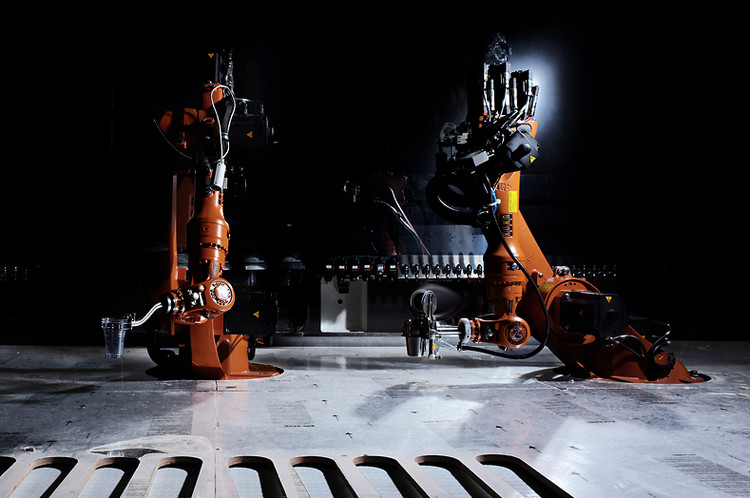
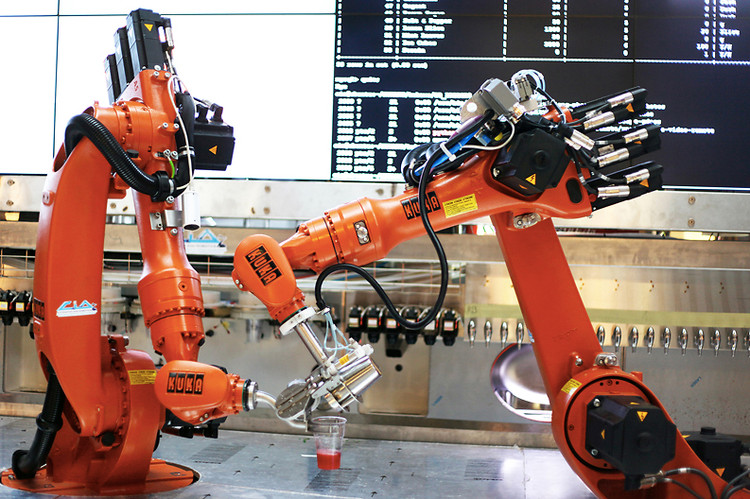
One such task-mastering robot was featured at the Milan Design Week this year, an event where fashion tales center stage. It’s known as the Makr Shakr, a set of robotic arms that are capable of mixing drinks, slicing fruit, and capable of making millions of different recipes. The result of a collaborative effort between MIT SENSEable City Lab and Carlo Ratti Associati, an Italian architecture firm, this robot is apparently able to match wits with any human bartender.
robot_bartender1While at the Milan Design Week, the three robotic arms put on quite the show, demonstrating their abilities to a crowd of wowed spectators. According to the website, this technology is not just a bar aid, but part of a larger movement in robotics:

Makr Shakr aims to show the ‘Third Industrial Revolution’ paradigm through the simple process design-make-enjoy, and in just the time needed to prepare a new cocktail.

In a press release, the company described the process. It begins with the user downloading an app to create their order to the smartphone as well as peruse the recipes that other users have come up with. They then communicate the order to the Makr Shakr and “[the] cocktail is then crafted by three robotic arms, whose movements reproduce every action of a barman–from the shaking of a Martini to the muddling of a Mojito, and even the thin slicing of a lemon garnish.”

robot_bartender2Inspired by the ballerina Roberto Bolle, whose “movements were filmed and used as input for the programming of the Makr Shakr robots”, the arms appear most graceful when they do their work. In addition, the design system monitors exactly how much booze each patron is consuming, which, in theory, could let the robot-bartenders know when it’s time to cut off designers who have thrown back a few too many.

Check out the video of the Makr Shakr in action:


Another major breakthrough comes, yet again, from DARPA. For years now, they have been working with numerous companies and design and research firms in order to create truly ambulatory and dextrous robot limbs. In some cases, as with the Legged Squad Support System (LS3), this involves creating a machine that can carry supplies and keep up with troops. In others, this involves the creation of robotic hands and limbs to help wounded veterans recover and lead normal lives again.

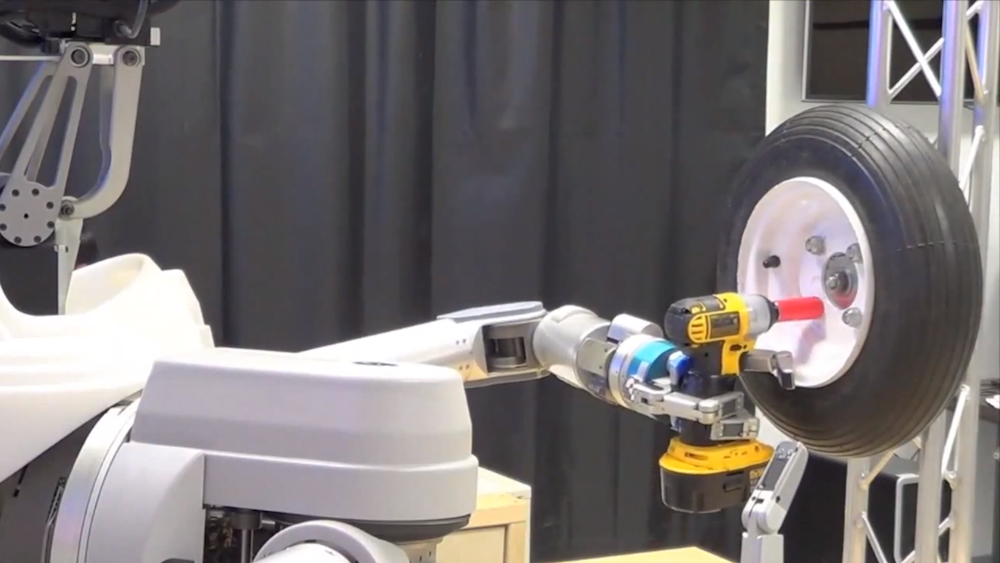
And you may recall earlier this year when DARPA unveiled a cheap design for a robotic hand that was able to use tools and perform complex tasks (like changing a tire). More recently, it showcased a design for a three-fingered robot, designed in conjunction with the firm iRobot – the makers of the robotic 3D printer – and with support from Harvard and Yale, that is capable of unlocking and opening doors. Kind of scary really…

DARPA_robot

The arm is the latest to come out of the Autonomous Robotic Manipulation (ARM) program, a program designed to create robots that are no longer expensive, cumbersome, and dependent on human operators. Using a Kinect to zero in on the object’s location before moving in to grab the item, the arm is capable of picking up thin objects lying flat, like a laminated card or key. In addition, the hand’s three-finger configuration is versatile, strong, and therefore capable of handling objects of varying size and complexity.

When put to the test (as shown in the video below), the hand was able to pick up a metal key, insert it into a lock, and open a door without any assistance. Naturally, a human operator is still required at this stage, but the use of a Kinect sensor to identify objects shows a degree of autonomous capability, and the software behind its programming is still in the early development phase.

And while the hand isn’t exactly cheap by everyday standards, the production cost has been dramatically reduced. Hands fabricated in batches of 1,000 or more can be produced for $3,000 per unit, which is substantially less than the current cost of $50,000 per unit for similar technology. And as usual, DARPA has its eye on future development, creating hands that would be used in hazardous situations – such as diffusing IEDs on the battlefield – as well as civilian and post-combat applications (i.e. prosthetics).

And of course, there’s a video for the ARM in action as well. Check it out, and then decide for yourself if you need to be scared yet:


Sources:
fastcoexist.com, singularityhub.com
, makrshakr.com

The Future is Here: The Mantis Hexapod Tank!

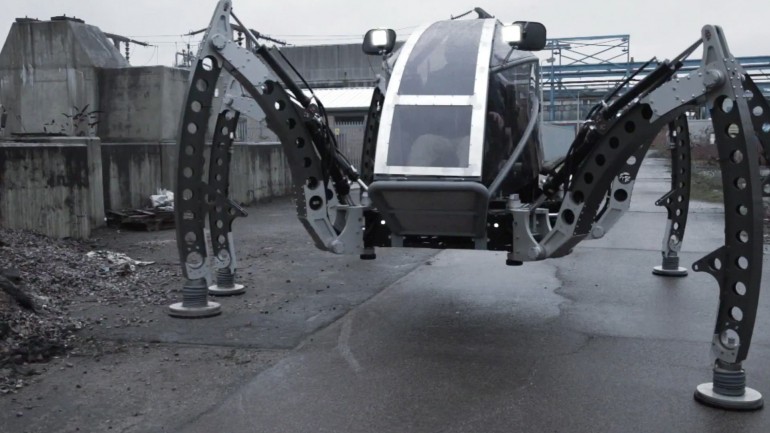
MantisWhen it comes to vehicles of the future, which may or may not include militarized land-crawlers, hexapods seem to be the way to go! Remember Project Hexapod and their Kickstarter-funded concept, Stompy? Well, it turns out an animatronics and special-effects designer who’s movie credits include “Prometheus” and “Lost in Space”  has produced his own. It’s known as Mantis, and while it may not be the first hexapod robot he’s ever built, it is the first giant-sized version.

The product of four years of research and development, Denton has managed to create what he claims is the biggest operational hexapod in the world. Measuring some 2.8 meters (9.2 feet) in height and weighing in at a hefty1815 kilos (2 tons), the giant robot is powered by a 2.2-liter turbo diesel engine and is designed to take on any type of terrain. But given the fact that it relies on six articulating legs to get around, that shouldn’t come as a surprise.

In addition, it can be controlled remotely via Wi-Fi, but why do that when you can climb into the cockpit and operate it like a true cartoonish supervillain? Naturally, you won’t seem so intimidating since the speed and power are still pretty limited, but the machine is relatively new. And in truth, hexapod technology is still in its early phases. We might have to wait a few more years before the nuclear-powered, missile-toting version is available.

According to the Mantis Web site, the hexapod is available for private hire, custom commissions, events, and sponsorship. Much like Stompy, Mantis is not intended for general sale, so don’t make any plans to ride one to work in the near future either. But you might want to earmark some of your savings for the commercial model that’s sure to be released sometime in the 2020’s.

And be sure to check out the video of the Mantis in action:


Source:
news.cnet.com

Judgement Day Update: The Tool-Using Robot Hand

darparobot

As if robotics weren’t advancing fast enough, what with robotic astronauts or androids that can be 3D printed, it seems that DARPA has developed a robotic hand that can perform complex, dextrous tasks. But to make matters worse, this particular robot can be cheaply produced. Up until now, cost has remained a factor in the creation of robotic limbs that are capable of matching human skill. But from now on, we could very well be seeing robots replacing skilled labor on all fronts!

As we’re all no doubt aware, one of the key differences between humans and other mammals is the use of tools. These not only allowed our earliest ancestors the ability to alter their environment and overcome their disadvantages when faced with larger, deadlier creatures. They also allowed homo sapiens as a species to gain the upper hand against other species of hominids, those who’s brains and hands were not as developed as our own.

darparobot1

So what happens when a robot is capable of matching a human being when it comes to a complicated task – say, like changing a tire – and at a cost most businesses can afford? To add insult to injury, the robot was able to conduct this task using tools specifically designed for a human being. But of course, the purpose was not to demonstrate that a robot could replace a human worker, but that it was possible to create more dextrous prosthetics for the sake of replacing lost limbs.

Ordinarily, such machinery would run a person a good $10,000, but DARPA’s new design is estimated at a comparatively modest $3000. This was made possible by the use of consumer-grade tech in the construction process, such as cameras from cellphones. And in addition to being able to work with tools, the robot can perform more intricate maneuvers, such as handling an object as small as a set of tweezers.

LS3-AlphaDog6reduced

However, DARPA was also quick to point out that the robot shown in the video featured below is actually an older model. Since its creation, they have set their sights on loftier goals than simple tool use, such as a robot that can identify and defuse Improvised Explosive Devices (IEDs). Much like many of their robotic projects, such as the Legged Squad Support System (LS3), this is part of DARPA’s commitment to developing robots that will assist future generations in the US army.

So if you’re a member of a pit crew, you can rest easy for now. You’re job is safe… for the moment. But if you’re a member of a bomb squad, you might be facing some robotic competition in the near future. Who knows, maybe that’s a good thing. No one likes to be replaced, but if you’re facing a ticking bomb, I think most people would be happier if the robot handled it!

And in the meantime, check out the video of the robotic hand in action:

Source: Extremetech.com

The Future is Here: The Child’s Mecha!

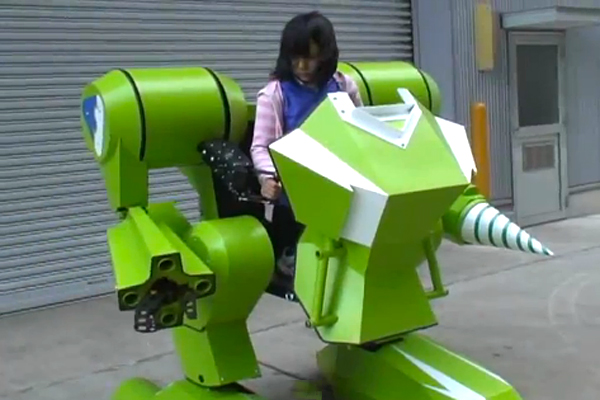
cyclops_walkerMove over coin-powered rocket ship! A Japanese company has just produced a robotics mecha suit for kids. It’s known as the Kid’s Walker Cyclops, a bright green robot that measures 2 meters (6’9″) tall, a meter (3’6″) wide, weighs in at a cool 750 pounds, and runs off rechargeable batteries. And most cool of all, it comes with two appendages: one a grappling claw and the other a drill, most likely for intimidating your enemies!

And much like the Kuratos robot that was unveiled at the Wonder Festival in Tokyo by Suidobashi Heavy Industry in July of last year, this machine does not walk, but glides along on foot-mounted wheels. This lends it the appearance of shuffling along as the driver moves it forward. It can also rotate in place, and has a range of movement for its arms.

Naturally, this design doesn’t come cheap. The manufacturers, Sakakibara Machinery Works, are selling it for nearly ¥2m (about $20,500), but it is apparently available for rent as well. Good thing too, since just about every kid I know will want to take a ride for their birthday! The only downside is that the time will come to give it back, a tear-filled and tantrum-ridden moment no doubt.

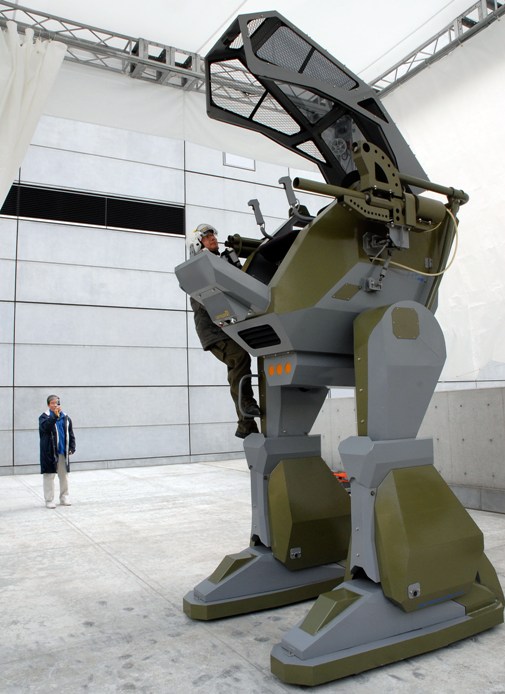
Landwalker_robotThis is actually Sakakibara’s second mecha design, coming on the heels of their Landwalker robot, an armless mecha that comes equipped with some seriously badass air cushion ball guns! That machine sells for a much heftier ¥37,800,000 (about $387,500), measures 3.35 meters (11 feet) and weighs a full metric ton. And apparently, they offer boxing robots that actually fight each other too. Take that, Rock em Sock em Robots!

Good to know that every day, we get close to something out of Battletech or Macross Plus! And as they say, its never too early to educate our kids on how the use of battle mechas. Someday, we might all have to know how to use one…

And of course, there’s a video of a child operating the Kid’s Walker Cyclops. Take a gander:


Source:
Wired.com, sakakibara-kikai.co

NASA’s 3D Printed Moon Base

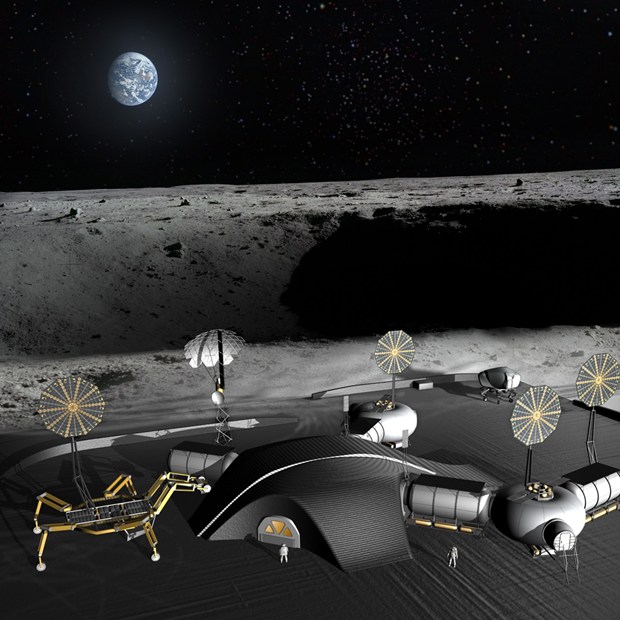
ESA_moonbaseSounds like the title of a funky children’s story, doesn’t it? But in fact, it’s actually part of NASA’s plan for building a Lunar base that could one day support inhabitants and make humanity a truly interplanetary species. My thanks to Raven Lunatick for once again beating me to the punch! While I don’t consider myself the jealous type, knowing that my friends and colleagues are in the know before I am on stuff like this always gets me!

In any case, people may recall that back in January of 2013, the European Space Agency announced that it could be possible to build a Lunar Base using 3D printing technology and moon dust. Teaming up with the architecture firm Foster + Partners, they were able to demonstrate that one could fashion entire structures cheaply and quite easily using only regolith, inflatable frames, and 3D printing technology.

sinterhab2_1And now, it seems that NASA is on board with the idea and is coming up with its own plans for a Lunar base. Much like the ESA’s planned habitat, NASA’s would be located in the Shackleton Crater near the Moon’s south pole, where sunlight (and thus solar energy) is nearly constant due to the Moon’s inclination on the crater’s rim. What’s more, NASA”s plan would also rely on the combination of lunar dust and 3D printing for the sake of construction.

However, the two plans differ in some key respects. For one, NASA’s plan – which goes by the name of SisterHab – is far more ambitious. As a joint research project between space architects Tomas Rousek, Katarina Eriksson and Ondrej Doule and scientists from Nasa’s Jet Propulsion Laboratory (JPL), SinterHab is so-named because it involves sintering lunar dust: heating it up with microwaves to the point where the dust fuses to become a solid, ceramic-like block.

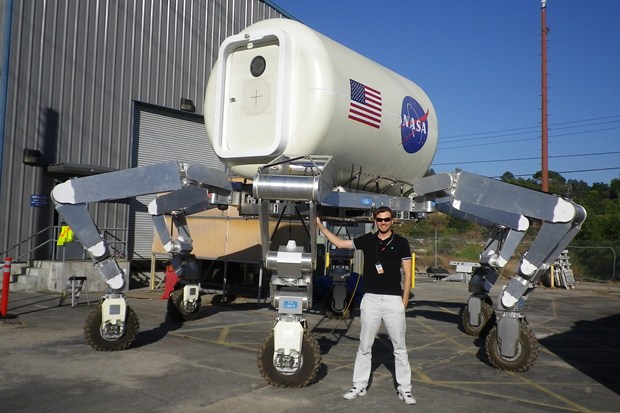
This would mean that bonding agents would not have to be flown to the Moon, which is called for in the ESA’s plan. What’s more, the NASA base would be constructed by a series of giant spider robots designed by JPL Robotics. The prototype version of this mechanical spider is known as the Athlete rover, which despite being a half-size variant of the real thing has already been successfully tested on Earth.

athlete_robotEach one of these robots is human-controlled, has six 8.2m legs with wheels at the end, and comes with a detachable habitable capsule mounted at the top. Each limb has a different function, depending on what the controller is looking to do. For example, it has tools for digging and scooping up soil samples, manipulators for poking around in the soil, and will have a microwave 3D printer mounted on one of the legs for the sake of building the base. It also has 48 3D cameras that stream video to its operator or a remote controlling station.

The immediate advantages to NASA’s plan are pretty clear. Sintering is quite cheap, in terms of power as well as materials, and current estimates claim that an Athlete rover should be able to construct a habitation “bubble” in only two weeks. Another benefit of the process is that astronauts could use it on the surface of the Moon surrounding their base, binding dust and stopping it from clogging their equipment. Moon dust is extremely abrasive, made up of tiny, jagged morcels rather than finely eroded spheres.

sinterhab3Since it was first proposed in 2010 at the International Aeronautical Congress, the concept of SinterHab has been continually refined and updated. In the end, a base built on its specifications will look like a rocky mass of bubbles connected together, with cladding added later. The equilibrium and symmetry afforded in this design not only ensures that grouping will be easy, but will also guarantee the structural integrity and longevity of the structures.

As engineers have known for quite some time, there’s just something about domes and bubble-like structures that were made to last. Ever been to St. Peter’s Basilica in Rome, or the Blue Mosque in Istanbul? Ever looked at a centuries old building with Onion Dome and felt awed by their natural beauty? Well, there’s a  reason they’re still standing! Knowing that we can expect similar beauty and engineering brilliance down the road gives me comfort.

In the meantime, have a gander at the gallery for the proposed SinterHab base, and be sure to check out this video of the Athlete rover in action:

Source: Wired.co.uk, robotics.jpl.nasa.gov

Robots Meet the Fashion Industry

robot_fashionRobotics has come a long way in recent years. Why, just take a look at NASA’s X1 Robotic exoskeleton, the Robonaut, robotaxis and podcars, the mind-controlled EMT robot suit, Stompy the giant robot, Kenshiro and Roboy, and the 3D printed android. I suppose it was only a matter of time before the world of fashion looked at this burgeoning marketplace and said “me too!”

And here are just some of the first attempts to merge the two worlds: First up there’s the robot mannequin, a means of making window shopping more fun for consumers. Known as the MarionetteBot, this automaton has already made several appearances in shops in Japan and can expected to be making debut appearances across Asia, in North America and the EU soon enough!

Check out the video below to see the robot in action. Designed by the Japanese robotics company United Arrows, the mannequin uses a Kinect to capture and help analyze the movements of a person while a motor moves a total of 16 wires to match the person’s pose. Though it is not yet fast or limber enough to perfectly mimic the moves of a person, the technology shows promise, and has provided many a window-shopper with plenty of entertainment!


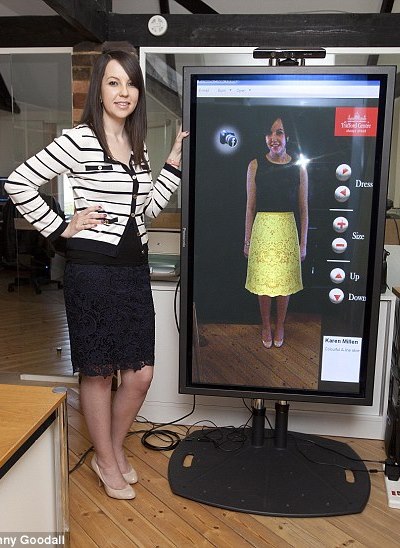
And next up, there’s the equally impressive FitBot, a shape-shifting mannequin that is capable of emulating thousands of body types. Designed by the British virtual shopping company Fits.Me, the FitBot is designed to help take some of the guesswork out of online shopping, where a good 25% of purchases are regularly returned because they were apparently the wrong size.

But with the FitBots, along with a virtual fitting room, customers will be able to see right away what the clothes will look like on them. The only downside is you will have to know your exact measurements, because that’s what the software will use to adjust the bot’s body. Click here to visit the company’s website and see how the virtual fitting room works, and be sure to check out there video below:


What does the future hold for the fashion industry and high-tech? Well, already customers are able to see what they look like using Augmented Reality technology displays, and can get pictures thanks to tablet and mobile phone apps that can present them with the image before making a purchase. Not only does it take a lot of the legwork out of the process, its much more sanitary as far as trying on clothes is concerned. And in a world where clothing can be printed on site, it would be downright necessary.

The "magic mirror"
The “magic mirror”

But in the case of online shopping, its likely to take the form of a Kinect device in your computer, which scans your body and lets you know what size to get. How cool/lazy would that be? Oh, and as for those AR displays that put you in the clothes you want? They should come with a disclaimer: Objects in mirror are less attractive than they appear!

Source: en.akihabaranews.com, technabob.com

The Future is Here: Roboy the Robotic Child!

roboy_splashThe field of robotics has been heated up in recent years. With autonomous killing machines being developed by the USAF, mind-controlled prosthesis for the disabled, juggling robots by Disney, a headless Kenshiro Robot and even 3D printable android, it seems like only a matter of time before Asimov’s Three Laws will need to be applied. Either that, or we might have a Robopocalypse on our hands.

But when you see this latest project in robotics, you might find it hard to imagine an apocalyptic scenario resulting. Forget Terminator, this seems more like something from the realm of Pinocchio or AI. That’s the feeling I get from Roboy, a concept that began back in May of 2012 when the University of Zurich’s Artificial Intelligence Lab committed to creating a fully humanoid robot by March of 2013.

For those doing the math, yes, that is roughly nine months. As if his size and proposed aesthetics weren’t enough, the creators even committed to a timeline that mirrored the time it takes to birth and actual child. And just to complete the illusion, they hope to cover the finished product in a soft, artificial skin. Talk about infanto-centric (assuming that’s even a word)!

But of course, the real breakthrough of Roboy is in the design itself, which borrows from the Kenshiro humanoid and the earlier Ecce model that both rely on artificial muscles to move. At this point, the robot is near completion and should be released next month during the Robots on Tour event in Zurich, Switzerland, providing everything arrives on schedule. At the moment, the long-term purpose of Roboy is to act as a prototype for service robots that will help elderly people remain independent for as long as possible.

I smell another movie reference there, one involving and old man and his friendly robot side-kick. Can you guess which one I am referring to here? Correct, it’s Robot and Frank! And with all the developments in robots happening right now, I’d say we need to do our homework and see all these movies, and reread Asimov’s Robot series while were at it!

And while you’re doing that, be sure to check out this video of the Roboy’s design in action:


Source: news.cnet.com, ailab.ifi.uzh.ch

The Future is Here: The Kenshiro Muscle-bot

kenshiroIt may seem like someone at Tokyo University drank their breakfast. I mean really, a robot without a head? How is supposed to mimic our facial expressions and creep us out with its glowing red eyes? But when you consider the purpose behind the Kenshiro muscle-bot, you begin to see the rather important method behind the design.

In recent years, various robotics companies have been able to create machines that mimic the animal kingdom – from hummingbirds, to turtles and even squirrels. However, few have managed to tackle the realm of human movement, and shown truly positive results. Hence the purpose of Kenshiro, human-like musculoskeletal robot that was revealed at the Humanoids conference back in December.

For years, the University has been toying with the design for a bio-inspired robot, adding more muscles and more motors with each new design. Standing at 158 centimeters and weighing in at 50 kilograms, Kenshiro basically mimics the body of the average Japanese 12-year-old male. And with 160 pulley-like “muscles” – 50 in the legs, 76 in the trunk, 12 in the shoulder, and 22 in the neck –  the robot mirrors almost all the major muscles in a human and has the most muscles of any other bio-inspired humanoid out there.

And with all the progress being made in developing a fully-functional autonomous machine mind (see Google Neural Net), not to mention a face that can mimic human expressions (see the FACE), it may just be a matter of time before we need to start thinking about applying Asimov’s Three Laws of Robotics. Don’t want a Robopocalypse on our hands!


Source:
spectrum.ieee.org

Criminalizing Transhuman Soldiers

biosoldiersIt seems to be the trend these days. You take a predictions that was once the domain of science fiction and treat it as impending science fact. Then you recommend that before it comes to pass, we pre-emptively create some kind of legal framework or organization to deal with it once it does. Thus far, technologies which are being realized have been addressed – such as autonomous drones – but more and more, concepts and technologies which could be real any day now are making the cut.

It all began last year when the organization known as Human Rights Watch and Harvard University teamed up to release a report calling for the ban of “killer robots”. It was soon followed when the University of Cambridge announced the creation of the Centre for the Study of Existential Risk (CSER) to investigate developments in AI, biotechnology, and nanotechnology and determine if they posed a risk.

X-47BAnd most recently, just as the new year began, a report funded by the Greenwall Foundation examined the legal and ethical implications of using biologically enhanced humans on the battlefield. This report was filed in part due to advances being made in biotechnology and cybernetics, but also because of the ongoing and acknowledged efforts by the Pentagon and DARPA to develop super-soldiers.

The report, entitled “Enhanced Warfighters: Risks, Ethics, and Policy”, was written by Keith Abney, Patrick Lin and Maxwell Mehlman of California Polytechnic State University.  The group, which investigates ethical and legal issues as they pertain to the military’s effort to enhance human warfighters, received funding from the Greenwall Foundation, an organization that specializes in biomedicine and bioethics.

In a recent interview, Abney expressed the purpose of the report, emphasizing how pre-emptive measures are necessary before a trend gets out of hand:

“Too often, our society falls prey to a ‘first generation’ problem — we wait until something terrible has happened, and then hastily draw up some ill-conceived plan to fix things after the fact, often with noxious unintended consequences. As an educator, my primary role here is not to agitate for any particular political solution, but to help people think through the difficult ethical and policy issues this emerging technology will bring, preferably before something horrible happens.”

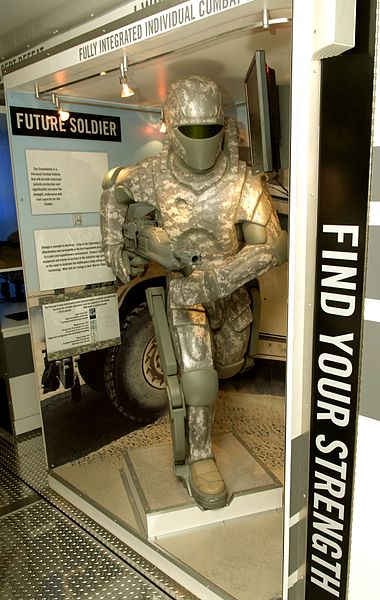
US_Army_powered_armorWhat’s more, he illustrated how measures are necessary now since projects are well-underway to develop super soldiers. These include powered exoskeletons to increase human strength and endurance. These include devices like Lockheed Martin’s HULC, Raytheon’s XOS, UC Berkeley’s BLEEX, and other projects.

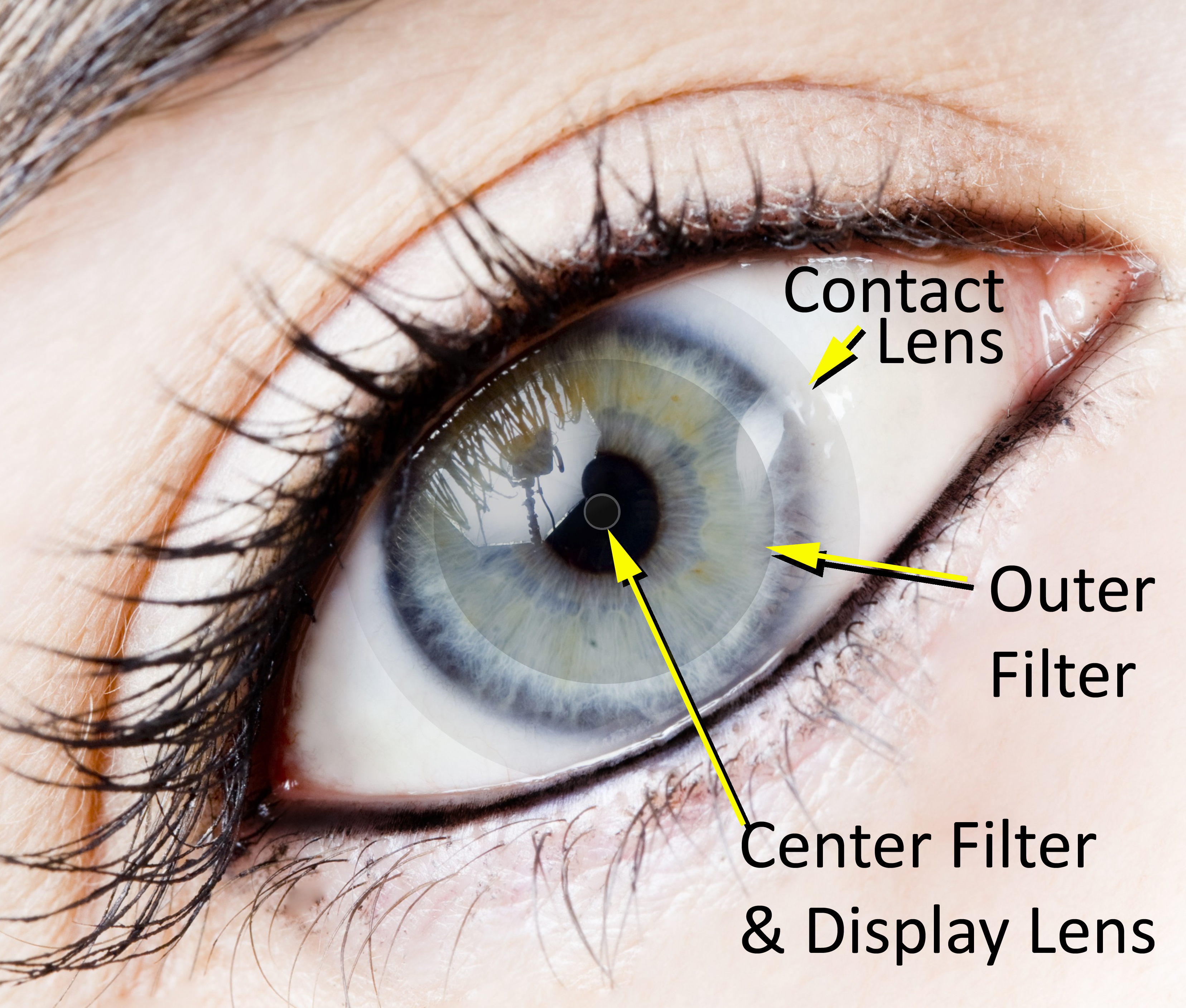
In addition, DARPA has numerous projects on the books designed to enhance a soldiers abilities with cybernetics and biotech. These include VR contact lenses, basic lenses that enhance normal vision by allowing a wearer to view virtual and augmented reality images without a headset of glasses. There’s also their Cognitive Technology Threat Warning System (CT2WS), which is a computer-assisted visual aid that instantly identifies threats by augmenting their visual faculties.

CREATOR: gd-jpeg v1.0 (using IJG JPEG v62), quality = 90And in the cognitive realm, there are such programs as Human Assisted Neural Devices (HAND) that seeks to strengthen and restore memories and the Peak Soldier Performance (PSP) program that will  boosthuman endurance, both physical and cognitive. But of course, since post-traumtic stress disorder is a major problem, DARPA is also busy at work creating drugs and treatments that can erase memories, something which they hope will give mentally-scarred soldiers a new lease on life (and military service!)

And of course, the US is hardly alone in this regard. Every industrialized nation in the world, from the EU to East Asia, is involved in some form of Future Soldier or enhanced soldier program. And with nations like China and Russia catching up in several key areas – i.e. stealth, unmanned aerial vehicles and aeronautics – the race is on to create a soldier program that will ensure one nation has the edge.

bionic_handsBut of course, as Abney himself points out, the issue of “enhancement” is a rather subjective term. For example, medical advancements are being made all the time that seek to address disabilities and disorders and also fall into the category of “enhancement”. Such ambiguities need to be ironed out before any legal framework can be devised, hence Abney and his associates came up with the following definition:

“In the end, we argued that the best definition of an enhancement is that it’s ‘a medical or biological intervention to the body designed to improve performance, appearance, or capability besides what is necessary to achieve, sustain or restore health.”

Working from this starting point, Abney and his colleagues made the case in their report that the risk such enhancements pose over and above what is required for normal health helps explain their need for special moral consideration.

These include, but are not limited to, the issue of consent, whether or not a soldier voluntary submits to enhancement. Second, there is the issue of long-term effects and whether or not a soldier is made aware of them. Third, there is the issue of what will happen with these people if and when they retire from the services and attempt to reintegrate into normal society.

It’s complicated, and if it’s something the powers that be are determined to do, then they need to be addressed before they become a going concern. Last thing we need is a whole bunch of enhanced soldiers wandering around the countryside unable to turn off their augmented killer instincts and super-human strength. Or, at the very least, it would be good to know we have some kind of procedure in place in case they do!

What do you think of when you hear the word "super soldier"? Yeah, me too!
What do you think of when you hear the word “super soldier”? Yeah, me too!

Source: IO9.com

Should We Be Afraid? A List for 2013

emerg_techIn a recent study, the John J. Reilly Center at University of Notre Dame published a rather list of possible threats that could be seen in the new year. The study, which was called “Emerging Ethical Dilemmas and Policy Issues in Science and Technology” sought to address all the likely threats people might face as a result of all developments and changes made of late, particularly in the fields of medical research, autonomous machines, 3D printing, Climate Change and enhancements.

The list contained eleven articles, presented in random order so people can assess what they think is the most important and vote accordingly. And of course, each one was detailed and sourced so as to ensure people understood the nature of the issue and where the information was obtained. They included:

1. Personalized Medicine:
dna_selfassemblyWithin the last ten years, the creation of fast, low-cost genetic sequencing has given the public direct access to genome sequencing and analysis, with little or no guidance from physicians or genetic counselors on how to process the information. Genetic testing may result in prevention and early detection of diseases and conditions, but may also create a new set of moral, legal, ethical, and policy issues surrounding the use of these tests. These include equal access, privacy, terms of use, accuracy, and the possibility of an age of eugenics.

2. Hacking medical devices:
pacemakerThough no reported incidents have taken place (yet), there is concern that wireless medical devices could prove vulnerable to hacking. The US Government Accountability Office recently released a report warning of this while Barnaby Jack – a hacker and director of embedded device security at IOActive Inc. – demonstrated the vulnerability of a pacemaker by breaching the security of the wireless device from his laptop and reprogramming it to deliver an 830-volt shock. Because many devices are programmed to allow doctors easy access in case reprogramming is necessary in an emergency, the design of many of these devices is not geared toward security.

3. Driverless zipcars:
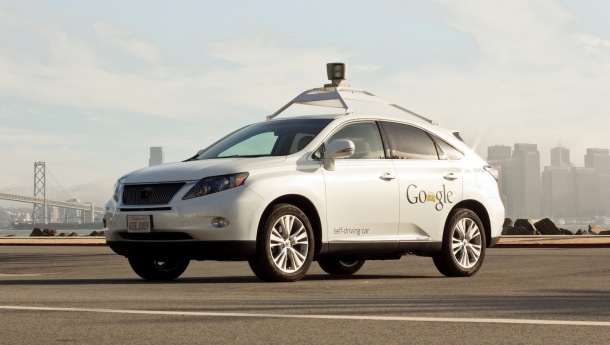
googlecarIn three states – Nevada, Florida, and California – it is now legal for Google to operate its driverless cars. A human in the vehicle is still required, but not at the controls. Google also plans to marry this idea to the zipcar, fleets of automobiles shared by a group of users on an as-needed basis and sharing in costs. These fully automated zipcars will change the way people travel but also the entire urban/suburban landscape. And once it gets going, ethical questions surrounding access, oversight, legality and safety are naturally likely to emerge.

4. 3-D Printing:
AR-153D printing has astounded many scientists and researchers thanks to the sheer number of possibilities it has created for manufacturing. At the same time, there is concern that some usages might be unethical, illegal, and just plain dangerous. Take for example, recent effort by groups such as Distributed Defense, a group intent on using 3D printers to create “Wiki-weapons”, or the possibility that DNA assembling and bioprinting could yield infectious or dangerous agents.

5. Adaptation to Climate Change:
climatewarsThe effects of climate change are likely to be felt differently by different people’s around the world. Geography plays a role in susceptibility, but a nation’s respective level of development is also intrinsic to how its citizens are likely to adapt. What’s more, we need to address how we intend to manage and manipulate wild species and nature in order to preserve biodiversity.This warrants an ethical discussion, not to mention suggestions of how we will address it when it comes.

6. Counterfeit Pharmaceuticals:
Syringe___Spritze___by_F4U_DraconiXIn developing nations, where life saving drugs are most needed, low-quality and counterfeit pharmaceuticals are extremely common. Detecting such drugs requires the use of expensive equipment which is often unavailable, and expanding trade in pharmaceuticals is giving rise to the need to establish legal measures to combat foreign markets being flooded with cheap or ineffective knock-offs.

7. Autonomous Systems:
X-47BWar machines and other robotic systems are evolving to the point that they can do away with human controllers or oversight. In the coming decades, machines that can perform surgery, carry out airstrikes, diffuse bombs and even conduct research and development are likely to be created, giving rise to a myriad of ethical, safety and existential issues. Debate needs to be fostered on how this will effect us and what steps should be taken to ensure that the outcome is foreseeable and controllable.

8. Human-animal hybrids:
human animal hybrid
Is interspecies research the next frontier in understanding humanity and curing disease, or a slippery slope, rife with ethical dilemmas, toward creating new species? So far, scientists have kept experimentation with human-animal hybrids on the cellular level and have recieved support for their research goals. But to some, even modest experiments involving animal embryos and human stem cells are ethical violation. An examination of the long-term goals and potential consequences is arguably needed.

9. Wireless technology:
vortex-radio-waves-348x196Mobile devices, PDAs and wireless connectivity are having a profound effect in developed nations, with the rate of data usage doubling on an annual basis. As a result, telecommunications and government agencies are under intense pressure to regulate the radio frequency spectrum. The very way government and society does business, communicates, and conducts its most critical missions is changing rapidly. As such, a policy conversation is needed about how to make the most effective use of the precious radio spectrum, and to close the digital access divide for underdeveloped populations.

10. Data collection/privacy:
privacy1With all the data that is being transmitted on a daily basis, the issue of privacy is a major concern that is growing all the time. Considering the amount of personal information a person gives simply to participate in a social network, establish an email account, or install software to their computer, it is no surprise that hacking and identity theft are also major conerns. And now that data storage, microprocessors and cloud computing have become inexpensive and so widespread, a discussion on what kinds of information gathering and how quickly a person should be willing to surrender details about their life needs to be had.

11. Human enhancements:
transhumanismA tremendous amount of progress has been made in recent decades when it comes to prosthetic, neurological, pharmaceutical and therapeutic devices and methods. Naturally, there is warranted concern that progress in these fields will reach past addressing disabilities and restorative measures and venture into the realm of pure enhancement. With the line between biological and artificial being blurred, many are concerned that we may very well be entering into an era where the two are indistinguishable, and where cybernetic, biotechnological and other enhancements lead to a new form of competition where people must alter their bodies in order to maintain their jobs or avoid behind left behind.

Feel scared yet? Well you shouldn’t. The issue here is about remaining informed about possible threats, likely scenarios, and how we as people can address and deal with them now and later. If there’s one thing we should always keep in mind, it is that the future is always in the process of formation. What we do at any given time controls the shape of it and together we are always deciding what kind of world we want to live in. Things only change because all of us, either through action or inaction, allow them to. And if we want things to go a certain way, we need to be prepared to learn all we can about the causes, consequences, and likely outcomes of every scenario.

To view the whole report, follow the link below. And to vote on which issue you think is the most important, click here.

Source: reilly.nd.edu