Technology in the Dune Universe

Hello again techies and social studies experts! I’m sorry, I assume those are the only two kinds of people who would enjoy these posts 😉 Regardless, I love doing them, mainly because it gives me a chance to exercise a little critical thinking when it comes to some of the most popular franchises of science fiction.

And today, I thought I’d tackle the bid baddy of classic sci-fi, Mr. Frank Herbert himself. Whereas most writers in this expansive genre tend to take a highly positive or negative view, Herbert distinguished himself by being highly subtle, ambiguous and multilayered in his approach.

Far from saying technology would save humanity, or condemn it, he seemed to be arguing that it really wouldn’t alter our basic makeup and behavior. That, presumably, would only come with thousands of years of natural evolution, selective breeding and funky narcotics!

But I digress, here are some examples of the technologies that characterized the Dune universe:

Atomics:
stoneburnerEvery house in the Dune universe keeps a nuclear arsenal in reserve. However, since the Great Convention forbids their use in war, and anyone found in dereliction would guarantee their own obliteration, they are not employed. Everybody’s got em, nobody uses em! At least not anymore…

Their last known use occurred on Selusa Secundus many years before the events of the first novel. It was here that a rogue house employed several in an attempt to destroy House Corrin. The attempt failed and the house was eradicated, their name erased from history. Unfortunately, Selusa Secundus was left a radioactive ruin, hence why it was converted to serve as the Emperor’s prison planet.

However, one type of nuclear device is still legal under the Great Convention. Known as a Stone Burner, these devices emit powerful J-radiation that destroys eye-tissue, rendering everyone in the blast vicinity blind. However, their primary function is to burn through a planet’s crust. If they are powerful enough, they are able to burn clean through to a planet’s core and destroy them planet from within.

Axlotl Tank:
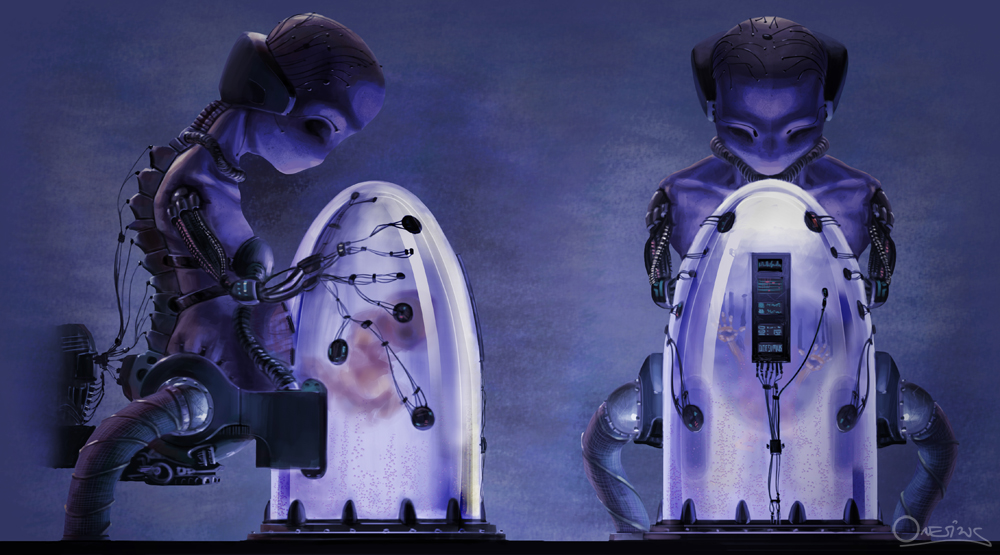
2007-8-18_DuneAxlotlTankThough widely used in the Dune universe, axlotl technology is also one of its most mysterious. A trade secret of the Tleilaxu, an axlotl tank is a “device for reproducing a living human being from the cells of a cadaver,” resulting in what is known as a ghola. In addition, the Tleilaxu Masters use these tanks in order to produce clones of themselves and keep their line going.

As the series progresses, axlotl tanks began being used to produce the spice melange, which had previously only been available on Arrakis. In time, it was also revealed that axlotl tanks were in fact Tleilaxu females, women whose bodies had been converted to grow gholas, clones and spice inside their wombs.

Guild Heighliner:

Dune_heighlinerThe principal means of interstellar transport in the Dune universe, a heighliner is a Guild ship that is capable of transporting massive amounts of people and cargo. Powered by the Holtzman Drive (see below) the ship is capable of “folding space” – jumping from one point in space-time to the next – instantaneously.

Each Guild Heighliner comes with its own navigator, a Guild mutant who uses their semi-prescient abilities to see through space and time to chart a safe rout for the ship to fly. The navigators do all this from inside their giant tanks where they remain immersed in spice gas.

Holtzman Drive:
foldspaceThis is the technology that allows Guild Heighliners to fold space, thus traveling instantaneously form one point in the universe to another. Using what is known as the “Holtzman Effect”, the same phenomena that powers personal shields as well as the catastrophic effect when one comes into contact with the beam of a lasgun.

Though it is never explained in detail, some hints are given throughout the series as to what principles of physics may be involved. For example, in Chapterhouse: Dune, an allusion was made to tachyon particles, the theoretical particle that can presumably travel faster than light.

Lasgun:
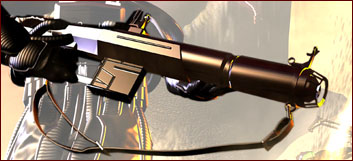
lasgunThe appendix of the first Dune novel, titled Terminology of the Imperium, defines Lasgun as follows:

continuous-wave laser projector. Its use as a weapon is limited in a field-generator-shield culture because of the explosive pyrotechnics (technically, subatomic fusion) created when its beam intersects a shield.

At one time, these directed energy weapons were the mainstay of Imperial armed forces. However, the development of shields meant that their use had to become more selective. Mounted on ships, ornithopters, and carried by infantry, lasguns remain a highly effective weapon, capable of cutting through any material.

No-Chamber/No-Ship:
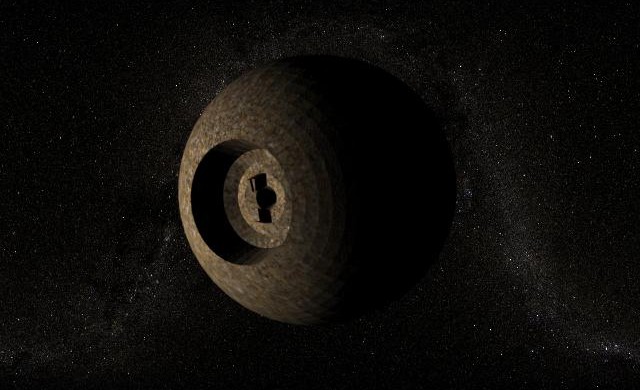
ixian_noshipThis technology was first mentioned in God Emperor of Dune and took the form of a No-Chamber. This Ixian invention was basically a chamber that was cloaked in a stealth field which blocked it from prescient vision as well as more conventional means of detection.

After the death of Leto II, this technology was expanded to include No-Ships and even No-Globes. The former were basically heighliners which were equipped with no-fields and the Ixian machine which did the job of a Guild Navigator. In essence, these ships were not only sheilded from prescient vision, but were invisible to sensors and even the naked eye.

No-Globes were an even larger version of the technology, capable of covering an entire planet in a no-field and rendering it both invisible to prescience, invisible to the naked eye and undetectable. However, in Heretics of Dune and Chapterhouse: Dune, it is suggested that those of Atreides ancestry are capable of seeing through no-fields. This proved to be the case when Miles Teg was awakened to his abilities after being examined with an Ixian T-probe. His ghola also had this ability once he was awakened to his past memories.

Ornithopter:
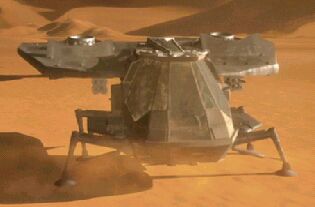
dune_thopter1In the Dune universe, ornithopters (or ‘thopters) are the principle means of planetary transportation. Combining jet thrusters with articulated wings, the thopter is capable of vertical takeoff and landing, making it one of the most versatile flying machines ever invented.

Though most are used for commercial and personnel transport, thopters are also capable of being militarized, and often are. Armed missiles, bombs, lasguns, and even shields, they are most effective when used in an assault and/or supporting role.

Personal Shields:
Holtzmanshields-Dune1984The Terminology of the Imperium defines them as follows: the protective field produced by a Holtzman generator. This field derives from Phase One of the suspensor-nullification effect. A shield will permit entry only to objects moving at slow speeds (depending on setting, this speed ranges from six to nine centimeters per second) and can be shorted out only by a shire-sized electric field.

While these shields can be mounted on aircraft, vehicles and even large structures, the most common use is in the form of personal shielding units. These are worn by infantry for battle or for the sake of combat training in order to prevent serious injury. The introduction of this technology to the battlefield had a regressionary effect on warfare in that it forced troops to largely abandon energy and ballistic weapons in favor of hand to hand combat. Hence why swords and knives are commonly used in the Dune universe.

Stillsuit:
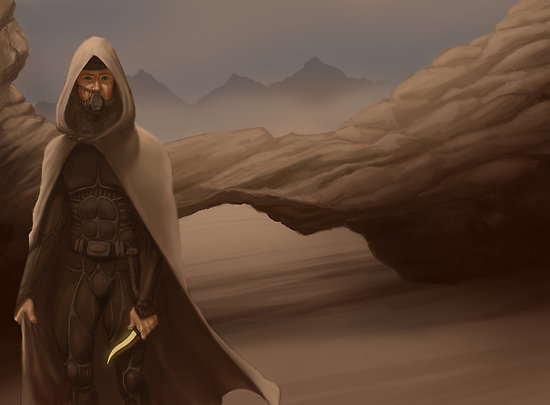
stillsuitThe trade secret of the Fremen! Stillsuits, as the name suggests, are a water reclamation and purification system that are worn by the desert-dwelling nomads whenever they are out on the sand dunes. Powered by the motion of it’s user, which includes foot-pumps mounted in the suit’s heels, the system turns all water loss – perspiration, urination, even feces – into usable water which they can draw from a tube near their mouth.

Given water’s scarcity on Arrakis, the purpose of these suits is clear. By preventing moisture loss and recycling it into useable water, they ensure that a person out in the open can sustain themselves indefinitely in the extremely dry and hot desert environment. As Doctor Kynes himself remarked: “With a Fremen suit in good working order, you won’t lose more than a thimbleful of moisture a day..”

Conclusions:
When it comes to science fiction franchises, one can tell a lot by the technology, big and small, that are all part of the background. And when looks over these examples of technology in the Dune universe, a few things become abundantly clear right away:

  1. The connection between environment and invention: Because the bulk of the story takes place on Arrakis, much of the technology we see was specifically adapted for desert use. Shields were useless in the desert environment, turbofans often broke down from dust and sand, and even massive crawlers were at risk of being consumed by Sandworms. In short, all the advanced technology of the Imperium was either useless or subject to hazards from the desert and its creatures. In the end, the most basic inventions, stillsuits and thumpers, were best suited to ensure survival. In short, those technologies who worked with the environment instead of against it were the most likely to work. More indications followed, such as how Paul’s father said to him that “On Caladan we ruled by sea and air power, but here on Arrakis, you need desert power.” On the one hand, this would seem to indicate that every planetary environment required its own balance of technology, Caladan being a sea planet meant ships and aircraft were the weapons of choice. On the other, he seemed to be alluding to the fact that rule on Arrakis required the allegiance of those who knew the desert best (i.e. the Fremen)
  2. Technology as regressive as well as progressive:This is something that I found particularly intriguing about the Dune universe, which was how it combined medievalism and futurism. On the one hand, humans have perfected interstellar travel and have colonized millions of planets throughout the galaxy. On the other, they fight with swords, knives, and live under a feudal system of government. As the story progresses, two reasons are given for why this is:
    1. After the Bulterian Jihad, the Great Convention established that no thinking machines or anything resembling them would ever be created again. As Leto II remarked in GEOD: “The target of the Jihad was a machine-attitude as much as the machines… Humans had set those machines to usurp our sense of beauty, our necessary selfdom out of which we make living judgments.” In short, the purpose of the Great Convention was not just to ban AI’s but the very mentality that had created them. Thenceforth, the very concept of industrial dependence was to be banned. And as Duncan Idaho later observed, such an economy was the basis for unlimited consumption and growing social equality. This ideal, borne of the Industrial Revolution, was also the cause of social chaos and the eventual rise of AI’s. By banning these and the system that ensured their creation, humanity was effectively going back to a time where feudal control by a small group of barons was basically necessary.
    2. The Great Convention also forbade the use of atomics. This meant that war had to be conventional from now on. The advent of shields also meant that energy weapons were no longer advisable, which meant that soldiers were further forced to adapt to conventional means of fighting – i.e. hand to hand combat. Swords, knives, and slow-pellet stunners were now mainstays of modern warfare, not by choice, but by necessity.

All of this leads to conclude that Frank Herbert was a freaking genius, or at least possessed a very complicated intellect. Whereas most science fiction and speculative writers tend to take a positive or negative view of technology, he preferred to take a very historic and ambiguous view of it. Setting his story in the distant future, one would immediately get the impression that humanity would be so highly evolved that it no longer resembled humanity of today.

However, Frank showed us a universe where humans were not only very much like they are today but also retained elements from our past. Much like the world of today, people are dependent on a single resource, are subject to petty rivalries, and a morally dubious system. But like the world of yesteryear, they are ruled by dukes, barons, emperors, and a system of entitlement and gross privilege and view democracy as a threatening sham.

One can only assume that Frank was making the point that human nature will not change as a result of technological innovation or space travel. Sure, AI’s and cybernetics might emerge down the road, giving humanity the ability to enhance their bodies and thought processes. But Frank’s take on this was that humans would naturally revolt against these once they came to the conclusion that they were needlessly complicated people’s lives.

So in the end, the only way out of being human was to create “mature humanity” as the Bene Gesserit said. This consisted of selective breeding and organic enhancement, relentlessly training people to strengthen their minds, bodies, and unlock the mysteries of the brain, eventually culminating in a person who could not only access their genetic memory, but merge space and time in their own mind. Interesting… and freaky!

Well, my mind is blown and I got nothing more to say. Stay tuned for something else, assuming I can overcome the effects of venturing into Frank’s head space. Man, it’s weird and awesome in there, kind of like a spice trance!

More Utopian Science Fiction

Boy this is fun, and like I said last time, overdue! For fans of literature and science fiction in particular, you really can’t do justice to a genre unless you examine its opposite as well. Not only is it fun and interesting, it kind of opens your eyes to the fact that we find a certain truth in the pairing of opposites.

For one, you come to see that they really aren’t that different. And two, that they essentially come from the same place. Much like light and dark, black and white, heaven and hell, extremes have more in common with each other than anything occupying the space between them. Is that quote? If not, it is now! MINE!

Last time, I buckled down to tackle the big names, the famous classics. Today, I thought I’d cast the net a little wider since there are a ton I missed and there really is no shortage of examples. Here’s what I got so far:

3001: The Final Odyssey:
The final book in Clarke’s Odyssey series, 3001 not only provided a sense of culmination to this epic story, but also gave Clarke the opportunity to share his predictions on where humanity would be by the 31st century. Released in 1997, it also contained a great deal of speculation about the coming millennium and what the 21st century would look like.

The story begins when, just shy of the millennial celebrations, the body of Frank Poole is discovered at the edge of the solar system. This astronaut, who died in the first novel, had been floating at the far edge of the solar system for almost a thousand years. His body is resurrected using the latest technology, and his reintroduction to society is the vehicle through which things are told.

As a fish out of water, Poole is made privy to all the changes that have taken place in the last 1000 years. Humanity now lives throughout the solar system, Earth and most planets are orbited by massive rings that connect to Earth through huge towers. Sectarian religion has been abandoned in favor of a new, universal faith, and the problems of overpopulation, pollution and war have all been solved.

Amongst humanity’s technological marvels are inertia drives on their ships (no FTL exists), a form of holodeck, genetically engineered work creatures, skull caps that transmit info directly into a person’s brain, data crystals, and of course the massive space habitation modules. Though the story was meant to be predictive for the most part, one cannot deny that this book contained utopian elements. Essentially, Clarke advanced his usual futurist outlook, in which humanity’s problems would be solved through the ongoing application of technology and progress.

Though I found it somewhat naive at the time of reading, it was nevertheless an interesting romp, especially where the predictive aspects came into play. And it also contained one of the best lines I’ve ever read, a New Years toast for the 21st century which I quoted on midnight on Dec. 31st, 1999: “Here’s to the 20th century. The best, and worst, century of them all!”

Brave New World:
I  know, BNW is listed as one of the quintessential dystopian novels of our time, and I even listed as such on my list of dystopian classics. However, one cannot deny that this book also contained very strong utopian elements and themes, and it was how these failed to remedy the problem of being human that ultimately made BNW a dystopia.

Set in the year 2540 CE (or 632 A.F. in the book), the World State is very much the product of utopian engineering. Literally all aspects of social control, which are largely benign, are designed to ensure that all people are born and bred to serve a specific role, cannot aspire beyond it, and are emotionally and psychologically insulated against unhappiness.

In short, people have exchanged their freedom for the sake of peace, order, and predictability. In fact, these ideals are pretty much summed up with the States motto: “Community, Identity, Stability.” Another indication is the popular slogan, “everyone belongs to everyone else”. And finally, the orgy porgy song provides some insight as well: “Orgy-porgy, Ford and fun, Kiss the girls and make them One. Boys at one with
girls at peace; Orgy-porgy gives release.”

Couldn’t have said it better myself. The goal of creating oneness and sameness to prevent things like greed, jealousy, war, and strife, is a constant theme in utopian literature, elevated to the form of high art in Huxley’s vision. And above all, the dream of a perfectly regulated, peaceful society, where individuality and difference have been purged, was accomplished through pleasure and not pain. This can best be summed up in an exerpt from Huxley’s letter to Orwell after 1984 was released:

“Within the next generation I believe that the world’s rulers will discover that infant conditioning and narco-hypnosis are more efficient, as instruments of government, than clubs and prisons, and that the lust for power can be just as completely satisfied by suggesting people into loving their servitude as by flogging and kicking them into obedience. In other words, I feel that the nightmare of Nineteen Eighty-Four is destined to modulate into the nightmare of a world having more resemblance to that which I imagined in Brave New World.”

I, Robot:
In the course of examining utopian literature, a term came up with made me stop and think… Robotocracy. Hence this next example which also contains some rather interesting utopian elements. As one of Asimov’s most recognized works, this collection of interlinked short stories tells of a future where intelligent robots make their debut and gradually become more and more integrated to society.

Ultimately, Asimov portrays AI’s as loyal and gentle creatures who not only improve the lot of humanity, but are incapable of harming their human masters. Whereas most speculative works of fiction dealing with AI’s are cautionary in nature, showing how entrusting our fate to machines will result in death, in this story, all of humanity’s fears prove baseless.

In time, the employment of robots and positronic master computers leads to the development of FTL, optimizes the world’s economy and production, and even prevents problems and conflicts which they can foresee. Human beings express reservation and fear, but in the end, the robotocracy proves to be sensible and caring, not cold and inhuman.

It was for this reason that I didn’t care for the film adaptation. Not only would a repressive, world-domination plan contradict the first and most important of the Three Laws (a robot may not harm, or through inaction, allow to be harmed, a human), it really didn’t contain any inherent logic. How would putting humans under house arrest ultimately ensure their protection? With all humans deprived of their most basic rights, revolution would be inevitable, leading to more death. Ah, whatever. At least the book was good.

Island:
Also written by Aldous Huxley, this novel (published in 1962) represented a possible resolution to the central problem he raised in Brave New World. Essentially, the protagonist of John the Savage committed suicide at the end because he could not reconcile himself to either world, one characterized by primitive freedom and the other by civilized sterility.

In the foreword section of the 1946 edition, Huxley expressed regret over the fact that he could not have given John a third option, which could have taken the form of the various exile communities where the thinking people who didn’t fit in with the “civilization” of the World State were sent.

Hence the setting of Island, a utopia created on the fictional island of Pala. Told from the point of view of a cynical journalist named Will Farnaby who gets shipwrecked on the island, the story was Huxley’s final book and a message to humanity about possible third options and the positive application of technology and knowledge.

As Huxley decribed it beforehand: “In this community economics would be decentralist and Henry-Georgian, politics Kropotkinesque co-operative. Science and technology would be used as though, like the Sabbath, they had been made for man, not (as at present and still more so in the Brave New World) as though man were to be adapted and enslaved to them. This last sentence is especially important in reference to Island. Here, drug use, trance states, contraception, assisted reproduction and slogans are all used voluntarily and serve the purposes of learning and social betterment. They are not employed as a means to pacify and control people.

What’s more, from a social perspective, Huxley characterized Pala’s prevailing philosophy as:  “a kind of Higher Utilitarianism, in which the Greatest Happiness principle would be secondary to the Final End principle – the first question to be asked and answered in every contingency of life being: “How will this thought or action contribute to, or interfere with, the achievement, by me and the greatest possible number of other individuals, of man’s Final End?”

The Culture Series:
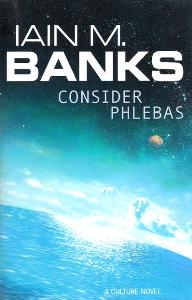
Created by sci-fi author Ian M. Banks, “The Culture” refers to the fictional interstellar anarchist, socialist, and utopian society that characterizes his novels. Encompassing ten novels – beginning with Consider Phlebas (1987) and concluding with The Hydrogen Sonata (slated for release in October 2012), Banks paints the picture of a universe where humanity has created a peaceful, stable and abundant society through the application of technology.

Told predominantly from the point of view of those who operate at the fringes of The Culture, the stories focus on the interactions of these utopian humans with other civilizations. Much in the same way as Star Trek follows the adventure of the Enterprise crew as they deal with alien cultures, often ones which are less developed or evolved, this provides a vehicle for examining humanity’s current predicament and providing possible solutions.

Overall, The Society is best characterized as post-scarcity, where advanced technologies provide practically limitless material wealth and comfort, where almost all physical constraints – including disease and death – have been eliminated, and the concept of possessions are outmoded. Through all of this, an almost totally  egalitarian, stable society has been created where compulsion or force are not needed, except as a means of self-defense.

At times however, The Culture has been known to interfere with other civilizations as a means of spreading their culture and affecting change in their neighbors. This has often been criticized as an endorsement of neo-conservatism and ethnocentrism on Banks part. However, Banks has denied such claims and many of his defenders claim that The Culture’s moral legitimacy is far beyond anything the West currently enjoys. Others would point out that this potential “dark side” the The Culture is meant to reflect the paradox of liberal societies at home and their behavior in foreign affairs.

The Mars Trilogy:
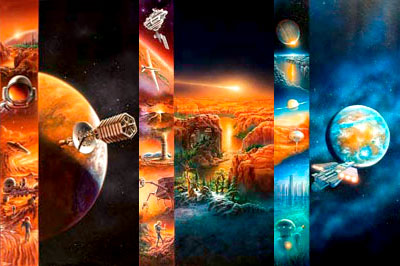
This ground-breaking trilogy by Kim Stanley Robertson about the colonization and terraforming of Mars is also a fine example of utopia in literature. taking place in the not-too-distant future, the trilogy begins with the settlement of the planet in Red Mars and then follows the exploits of the colonists as they begin transforming from a barren rock to a veritable second Earth.

Even though there are numerous dark elements to the story, including civil strife, internal divisions, exploitation and even assassination, the utopian elements far outweigh the dystopian ones. Ultimately, the focus is on the emergence of a highly advanced, egalitarian society on Mars while Earth continues to suffer from the problems of overpopulation, pollution and ecological disaster.

In addition, the colony of Mars benefits from the fact that its original inhabitants, though by no means all mentally stable and benevolent people, were nevertheless some of the best and brightest minds Earth had produced. As a result, and with the help of longevity treatments, Mars had the benefit of being run by some truly dedicated and enlightened founders. What’s more, their descendents would grow up in a world where stability, hard work, and a respect for science, technology and ecology were pervasive.

All of this reflects Robertson’s multifaceted approach to story writing, where social aspirations and problems are just as important as the technological and economic aspects of settling a new world. Much like the conquest and settlement of the New World gave rise to various utopian ideals and social experiments, he speculates that the settlement of new planets will result in the same. Technology still plays an important role of course, as the colonists of Mars have the benefit of taking advantage of scientific advancements while simultaneously avoiding the baggage of life on Earth. In the end, there’s just something to be said about a fresh start isn’t there?

The Night’s Dawn Trilogy:
Written by British author Peter F. Hamilton, The Night’s Dawn Trilogy consists of three science fiction novels: The Reality Dysfunction (1996), The Neutronium Alchemist (1997), and The Naked God (1999). Much like Robertson’s depiction of humanity in the Mars Trilogy, Hamilton explores humanity’s dark side at length, and yet the tone of his novels are predominantly optimistic.

Set in a distant 27th century, humanity has become divided between two major factions. On the one side there are the Edenists, an egalitarian, utopian society who employ biotech (“biteck” in their lingo) to create living, sentient space stations as well as machines. The use of “Affinity” – a form of telepathy – allows them to communicate with each other and their biteck, creating a sort of mass mentality which encompasses entire communities. Thiee Edenic government is what is known as the “Consensus”, a form of direct democracy that is made possible by telepathic link.

On the one side their are the Adamists, the larger of the two where human beings live with a limited religious proscription against technology. Biteck is forbidden, but nanotechnology, FTL and other advanced applications are freely used. Because the Adamists encompass anyone not in the Edenic camp, they are larger, but far less organized and cohesive than their counterparts.

Through all this, Hamilton attempts to show  how the application of technology and the merger between biological and artificial can create the kind of society envisioned by men like Thomas More, characterized by participatory government, collective mentality, and a consensus-oriented decision-making process. While both the Edenic and Adamist societies are still pervaded by problems, not the least of which is competition between the two, the ideals of betterment through technological progress are nevertheless predominant.

Revelation Space Series:
Another series which examines the beneficial aspects of technology, particularly where governance and equality are concerned, is the Revelation Space Trilogy by Alastair Reynolds. Comprised of the five novels Revelation Space (2000), Chasm City (2001), Redemption Ark (2002), Absolution Gap (2003) and The Prefect (2007).

Taking place in the distant future (circa. 2427 to 2727), the story revolves around a series of worlds that have been settled by several different factions of humanity. The two largest factions are known as the Demarchists and the Conjoiners, both of whom have employed advanced technology to create their own versions of an ideal society.

Though much of the books are dark in tone due to the discovery of a terrible nanotechnological virus (the “Melding Plague”) and the discovery of hostile ancient aliens (the “Inhibitors”), the series still does have some discernible utopian elements. For starters, the Demarchists take their name from the concept of “Democratic Anarchy”, and employ cybernetic implants, nanotech and wireless communications to achieve this.

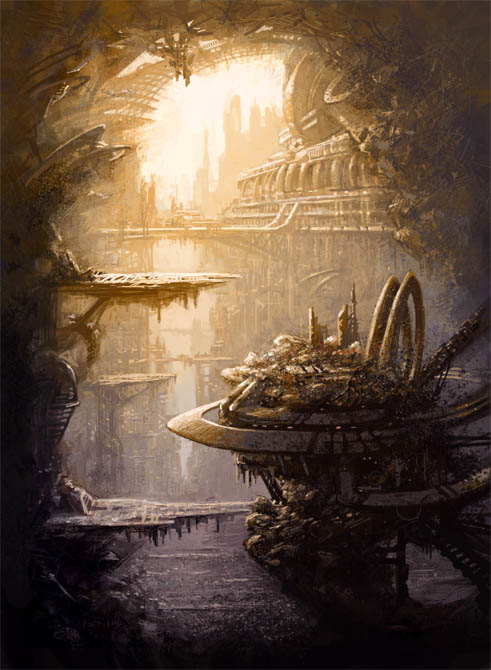
Within the Demarchist metropolis of Chasm City, all citizens are permanently wired into a central server which allows them permanent access to news, updates, and the decision-making process. As a result, Demarchist society is virtually egalitarian and marks of social status, such as ranks and titles, do not exist. This changed with the spread of the Melding Plague however, causing the city’s structures to degenerate into a gothic nightmare and the class divide to become very visible.

Another important faction are the Conjoiners. These people, who were originally inhabitants with the Great Wall of Mars (above left picture), but who became a star-faring people after the war with the “Coalition for Neural Purity” drove them off Mars. To these people, cybernetic implants were taken a step further, giving every Conjoined person the ability to telepathically link with others, preserve their memories beyond death, prolong their life, and enhance their natural thinking process.

Thus, much like Hamilton and Banks, Reynolds speculates that the advent of nanotech, biotech, and space travel will result in the emergence of societies that are predominantly egalitarian, peaceful, and dedicated to consensus and direct democracy. I personally found these stories quite inspiring since it seems that in many ways, we are already witnessing the birth of such possibilities in the here and now.

Yep, this is still fun, if somewhat tiring and conducive to burnout! I think I’ll be taking a break from these literary-criticism pieces for a day or two, maybe getting back to pieces on robots and cool gear. However, in keeping with the format I used for dystopia, I still have one more utopian article left to cover. Look for it, it will be called “Utopia in Popular Culture!” See ya there…

20,000 Hits!

Morning! Some good news, netter news, and bad on this rainy day here in Victoria BC. Good news first, I’m finally over my flu… well mostly. For days it’s been dogging me and keeping me grounded. Luckily, I turned this  time towards more articling and have topped 250! Good for me. As for the better news, I just learned that my hit ticker, the thing that monitors my overall traffic, has just passed 20,000. YAAAAAAY!

Okay, now for the bad news… I lied, there is no bad news! At least none that I can see right now, but I’m heavily biased by this good news. Perhaps I’m tempting fate… Who cares?! Point is, I’ve finally reached this milestone and there are plenty of people to thank!

For starters, I want to thank Worpdress.com for the FP back in March of this year. Were it not for them posting my article Dystopian Science Fiction, on their home page, I never would have made it this far. I know, the moderators give FP’s to like a dozen people a day, but thanks to that sliver of recognition, I got over 7000 hits in the space of 24 hours. That’s almost twice what I managed to get in the 12 months leading up to it. In the space of a day, my overall traffic went from just over 4000 to 11,000, just in the space of a day!

Wow. But more importantly, that day allowed me to pick up roughly 100 new followers. 100 new colleagues, peers, friends, and collaborators to spin ideas with, bounce my thoughts off of and help with ideas of their own. This meant that every day thereafter, whenever I published something, I had 100 people to share it with, rather than just speaking my thoughts to the void. That kind of interaction is invaluable and matters far more than overall traffic, let me tell you 😉

And things only got better from there. As March rolled in April and April to May, more and more people came by to comment on what I had to say and began following my blog. In those eight weeks, my total followers went from just over 100 to 200, on WordPress that is (think I got like 600 from twitter, but they rarely stop by!) So naturally, my endless gratitude goes to all the people who came by, liked what they saw, and decided to stay. Without you, this would really be impossible!

And of course there’s my family, my darling bride, the good folks at Grim5Next, and Story Time to thank. You’re encouragement, invitations to join in writer’s projects, proofreading and editing and helpful comments have always been a source of help and inspiration. I dream of someday writing professionally, which in addition to committing all my time to it means that I’ll also get paid. Hopefully, that dream isn’t too far from realization. I can’t tell you how annoying I’ll be when that happens, at least to those who sign my checks… Freaking PAY ME!

So once again, thank you all and I hope you’ll keep coming by in the future. I have plenty more to share, new ideas to formulate, and about a million more articles concerning science fiction, pop culture and the changing world we live in. And rest assured, if I EVER get famous, I’ll be taking all of you with me! Good luck and good day!

Crashland – Chapter 10, Now Appearing at Story Time!

Well, it’s about that time again. Audiences have once again voted, indicated what they want to see happen, and the story goes on. But before I get into what chapter 10 of Crashland is going to be like, I want to thank all the people who take time out of their busy day schedules to come on by and read my work. You are the life blood of the serial novel industry, so take a bow!

To recap, chapter 9 ended with Holden once again facing a choice. The mysterious man Jacobs who saved him has now explained exactly who he and his friends are and what they do. Exigencies, they are called, a global anti-terrorism task force that specializes in dealing with clean-ups. When the worst happens, they get called in to put it right. Infopocalypse is just one of many scenarios they are trained to deal with.

With a series of safehouses across the world, and armories stacked with analogue and virus-proof weapons, they are about to set out and reign in the people responsible for the Crash. They have asked for Holden’s help, but only if he’s prepared to make the ultimate sacrifice: not only must he be prepared to die, he must be prepared to kill! With all that in mind, the only question for Holden was yes, no, or some possible third option.

Well, audiences decided they wanted Holden to come up with a third option. Somewhere between saving the world and taking out anyone who got in his way, the majority of voters seemed to think that some kind of provisions needed to be met first. And so the next chapter opens with a little negotiation, followed by an introduction that has been coming for some time. Yes, in the last chapter, there was a mysterious new character alluded to, someone without whom Jacobs and his men would never be able to rebuild society. This mysterious “other” is about to be introduced…

So come on by to Story Time, have a look at chapter 10, and once again stick around to vote on what happens next! Things are coming together, and it’s all thanks to you fine folks. Give yourselves a hand, man! If you were closer, I’d say let’s finish this chapter and hit the bar. Author buys first round!

Crashland – Chapter 9: Cybercops or Apocalyptic Soldiers?

 Well, it’s happening again. Once more, we seem to have a bit of a deadlock forming over at Story Timeover which direction the next chapter should take. It seems that between Cybercops and Apocalyptic Soldiers, audiences were a bit torn over which they would like to see more.First of all, let me thank all the people who came by and took the time to vote on Chapter 8. You’re suggestions and ideas made that one of the funnest chaperts thus far, mainly because it gave me the chance to set things up and determine which way they were going.

Unfortunately, that set-up seems to have created a bit of a logjam. When chapter eight ended, Holden was learning exactly who his saviours were. It seemed they knew who he was and wanted his help to end the Crash crisis. This, combined with all their training, weapons and resources led Holden to ask exactly who these men were. Who could they be?

The choices were: 1. Apocalyptic warriors who were waiting for this to happen. 2. Cybercops who are charged with hunting down the terrorists who made it happen, and 3. The terrorists themselves, who are just using them for their own ends. As it stands, only one vote stands between option one and two. Doesn’t really seem like a fair marging for selecting one and rejecting the other. So before I can proceed with chapter 9, I’m going to need more votes to move things forward.

You got time, you like cyberpunk and post-apocalyptic settings? Then please come on by and vote for your favorite outcome. I promise that whichever way it goes, there will be action, twists and lost of intrigue 😉

Cool Ships (volume VIII)

Battleship Yamato:
A couple times now I’ve given praise to ship designs that went beyond the usual airplane/ seafaring paradigm. But what can you say about a spaceship which is a carbon copy of a old sea battleship? I don’t know, gutsy maybe? That its paying homage to the original? That’s all I can really say on this one, since it is identical to its namesake from the Imperial Japanese Navy.

Taken from the anime series of the same name, the Yamato was a prototype ship which was built in secret by Earth forces in the ruins of the original. Using alien technology, it was the first Earth ship to boast FTL and a “wave-motion-gun”. These devices were meant to give it an edge in the ongoing war with a race known as the “Gamilons”.

Early in this war, the Gamilons had bombarded Earth with radioactive meteorites. The result was that all human settlements had to be moved underground. However, the radiation was slowly working its way down to the inhabitants, and the only hope for survival came in the form of a message from a distant star. After completion, the Yamato was meant to fly to this world and retrieve the device which apparently could cleanse Earth of its poisonous radiation.

Thus, the Yamato was created to perform a mission that meant the very survival of the human race. It’s drive system was to make sure it could make the trip, while its weapons were meant to ensure it could defend itself.

Cylon Heavy Raider:
Another installment from the BSG universe, here we have the heavy hitter of the Cylon fleet, the dual purpose attack and transport craft, otherwise known as “the turkey”. Capable of atmospheric entry, space flight and FTL travel, the Heavy Raider is capable of attacking, transporting troops and conducting boarding operations.

Unlike the standard Raider, the heavy can either fly itself on autopilot or be piloted by actual an Centurion. However, its automated functions do not appear to be the result of a sentient nervous system. In terms of armaments and capacity, the heavy has six cannons mounted under its cockpit and its bay is capable of holding up to ten Centurions.

The Heavy Raider made its first appearance in season one (“Scattered”) when one crashed into the starboard flight pod. On Caprica, Sharon Valerii (Boomer) commandeers one to provide fire support to the resistance and save Starbuck as she escaped from a Cylon medical facility (“The Farm”). The Heavy Raider would go on to make several more appearances in the series, particularly whenever assault missions or heavy raids were concerned.

Quasar Fire-class Cruiser:
Once more onto the Star Wars universe, my friends! But this time, its into the expanded universe with a ship that is somewhat obscure by most standards. Known as the Quasar Fire-class cruiser, or Alliance Escort Carrier, this ship made its first appearance in the Thrawn Trilogy during the Battle of Bilbringi then again in the novel The Truce At Bakura.

Designed by the Sullustans as a cargo transport, many of these vessels were given to the Alliance and converted for combat. This consisted of stripping down the cargo bays and turning into hangars, and mounting defensive turrets at the front and rear.

Thought lightly armored, armed, and shielded, the Quasar’s small size and versatility make it a ship of choice for small fleets and minor attack forces. It’s six squadrons of fighters also give it an effective defensive screen, making it all the more suitable as a small fleet command ship.

The Leviathan:
Did I say once more, I meant twice… maybe more! And this one goes way back, to roughly 4000 years before events in the original movies. Officially known as an Interdictor-class cruiser, this vessel was the mainstay of the Republican navy during the time of the Mandalarion Wars and was featured heavily in Star Wars: Knights of the Old Republic.

During the outbreak of the Sith War which immediately followed, the Leviathan served as Darth Revan’s flagship. After he was captured by the Jedi Order, ownership of this vessel changed to Darth Malak. The ship was responsible for obliterating the surface of Taris and was later the site where Darth Revan, now working for the Jedi Order, confronted Darth Malak for the first time since his defection.

Measuring 600 meters in length, the ship carries an arsenal of 20 quad laser cannons, 4 turbolasers, 2 ion cannons, and four squadrons of fighters. Although somewhat mild by modern Star Wars standards, she was designed to be a forerunner to the modern Star Destroyer design.

Negh’var-class Cruiser:
Despite their brawling, yelling and terrible table manners, you gotta admit; the Klingons make a fine looking ship! And this is especially true of the Negh’var-class warship, the heaviest of the heavies in the Klingon armada, serving as the command ship on many different occasions (and in multiple universes).

Ships of this kind made their first appearance in the series finale of Star Trek: TNG when two attacked the USS Pasteur. Another appeared in DS9 when a changling posing as General Martok led the Klingon fleet against the Cardassian Union, and again against Deep Space 9 when the Federation chose to oppose the invasion. They also went on to play an important role in the Dominion War alongside Federation and Romulan warships.

In addition to the standard cloaking device, the Negh’var carries an impressive array of armaments, including two massive disruptor pods mounted underneath the ship’s wings. It also carries multiple photon torpedo launchers, and several smaller emitters mounted across the ship. She is also capable of standing toe to toe with most other ships in the Alpha Quadrant in terms of velocity, making it up to speeds of Warp 9.

Ornithopter:
Not long ago, I was lamented the fact that I kept forgetting to mention anything from the Dune universe. Now I can’t seem to do a single post without including a Dune ship! This time, its the ornithopter, the curious cool ship that’s perplexed readers and conceptual artists for some time.

The most common vessel in the Imperium, the ornithopter (or ‘thopter for short) was an extremely versatile vessel that served primarily as a cargo vessel and transport. In addition, they often served in a military capacity, being fitted with lasguns, bombs and missiles. This was particulalry the case during Paul Muad’ib’s uprising, when House Atreides ‘thopters were fitted for the assault on Arrakeen and the Imperial Palace.

According to numerous descriptions taken from the expanded Dune universe, the thopter was primarily powered by jet propulsion, but relied on a set of beating wings to maintain altitude and maneuver. The concept has gone through several renditions over the years, due to the many attempts to adapt Dune to the screen. In David Lynch’s 1984 movie adaptation, ‘thopters appeared as small, box-like crat with swept wings that retracted and deployed from the fuselage.

In the 2000 miniseries, they were pictured as vertical take off and landing craft with fans mounted in pivoting wings. The featured picture (shown above left) is taken from The Road to Dune and is an artists concept of what a ‘thopter would look like. Here, we see beating wings which deploy for takeoff and retract upon landing.

USNC In Amber Clad:
Feels like its been awhile since I included anything from the Halo universe. And so here’s the Reunion, a Vladivostok-class guided missile frigate. Though somewhat old and outclassed by modern Covenant standards, several frigates played a crucial role in the Great War against Covenant forces. One such vessel was the In Amber Clad.

Armed with 12 Point Defense Guns, 40 missile pods, 5 twin rail gun turrets, a magnetic accelerator cannon, a compliment of Shiva nuclear missiles and a full compliment of Marines, dropships and escort fighters, the In Amber Clad was considered the mainstay of the old Earth fleet. Capable of atmospheric entry and landing, this ship did not need to rely on drop pods or shuttles, and could land an entire Marine force by itself.

During the Covenant War, these frigates were replaced by the larger and more heavily armed Halcyon-class cruisers. However, the In Amber Clad managed to score a significant victory over the Covenant during the Battle of Installation 05. During the course of the battle, it served as the flagship and won the day when it crashed into the Covenant ship High Charity.

VF-1 Veritech:
As requested, I’ve finally found an example from the Robotech universe! And to be honest, I wondered how long it would take. Though I’m not too familiar with this franchise, the RPG is something I remember fondly from my childhood, and some of the designs still percolate in my consciousness.

One of which is this, the VF-1 Vertiech, also known as the “Valkyrie”. This battleoid, which was adapted from alien technology (known as Protoculture),was originally designed for hand-to-hand combat with aliens which were up to 15 meters in height, the Veritech and subsequent breeds of mechas became the new face of warfare.

Mechas can function in both the fighter and mech role. Capable of flying through space, atmospheres and fighting on land, the Veritech was one of the most versatile and maneuverable mechas in the known universe. With a flight speed of Mach 3 (in atmosphere), and a top speed of 100 km/h running, she is as fast as any land vehicle or aerospace vessel. In addition, the standard Veritech carries two high-powered lasers, head mounted laser cannons, guided missiles, a rotary cannon, and is even capable of engaging in hand to hand combat.

YT-2400 Corellian Freighter:
To finish, I’m in the mood for something Corellian! And so it’s back to the Star Wars universe for this one. Much like its predecessor, the YT-1300 (a.k.a. the Millennium Falcon), the 2400 was a class of light freighter that was fast, tough and endlessly modifiable. So like the Falcon, it was a favorite amongst smugglers, merchants and privateers.

Smaller and lighter than the 1300 series, the 2400 boasted only one servo-turret for defense in addition to its shield array and armor plating. However, this could easily be remedied with the addition of extra guns and missile launchers. And its ample hull space and engine power, the 2400’s could easily accommodate additional mounts and the added weight.

One such ship which acheived notoriety during the Galactic Civil War was the Outrider, the ship of famed smuggler Dash Rendar. This ship, like most other 2400’s, was heavily modified to accommodate additional systems and weapons. Clearly, when the Corellian shipyard designated this vessel as freight transport, it was a nod and a wink!

Thank you all and good hunting! See you in next time in volume 9!

The Future is Here: Powered Exoskeletons!

Hello and welcome to a new segment on this site. With all the futuristic developments emerging on a daily basis, and given my own obsession with the coming singularity, I thought a segment on new inventions might be worthwhile.

And thanks go to Dave DeMar for giving me the idea for today’s post! As usual, his cheeky and fun take on the day’s events were a source of inspiration. And they also got me thinking… The clip below shows the news story on Rewalk, the latest development for paraplegics which actually helps them walk. Fans of Glee will no doubt remember it being featured in a recent episode, where the character of Artie got one for Christmas and said how an inventor in Israel was responsible for the development.

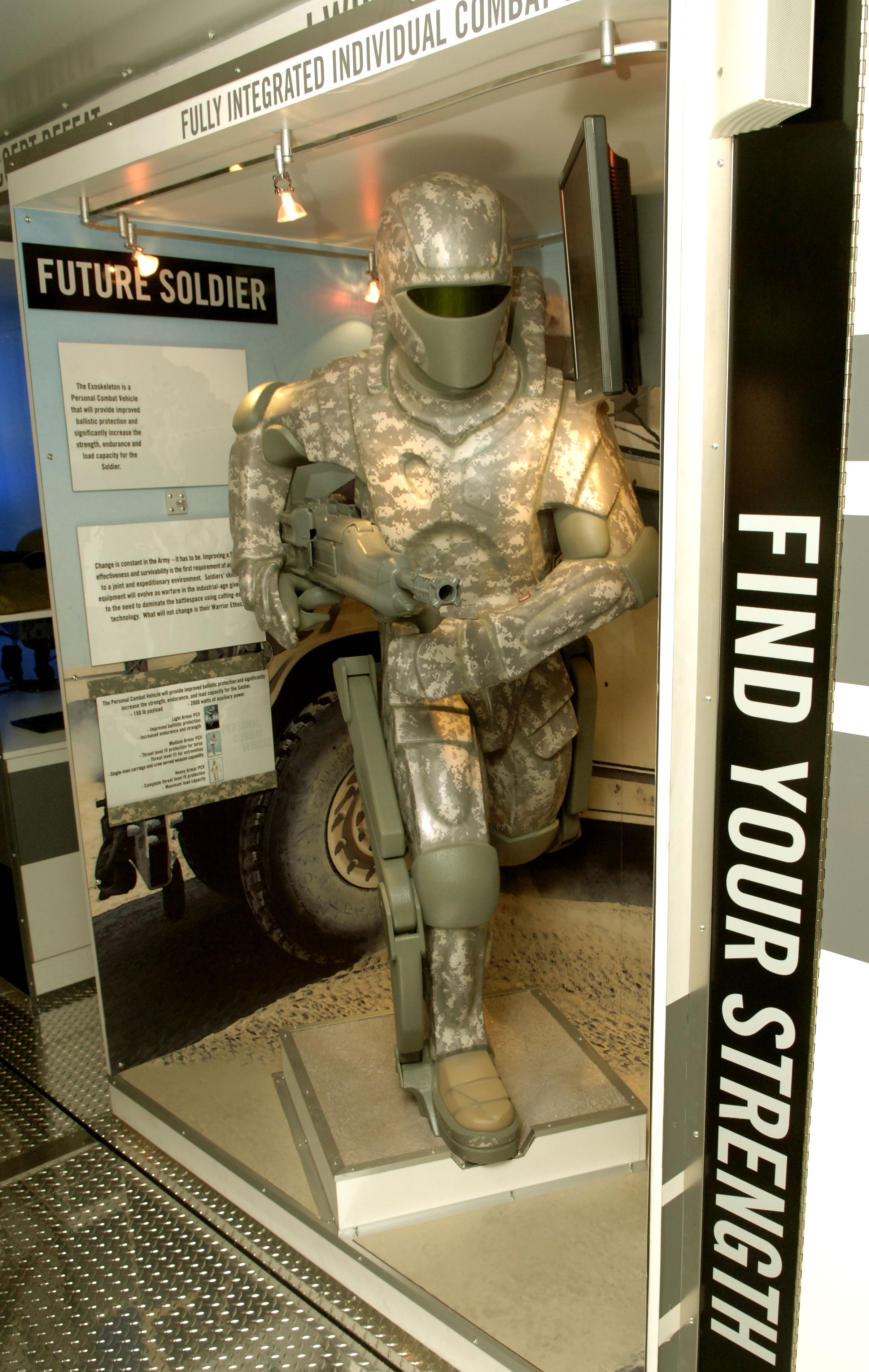
File:Hybrid Assistive Limb.jpgSeeing that again got me thinking. I’ve been fascinated with the topic of powered exoskeletons for some time, ever since I began researching it for an upcoming book of mine (the planned sequel to Data Miners: Data Pirates!). As part of the larger phenomena known as Future Soldier, it is the latest in a series of advanced technologies which are being proposed for 21st century warfare.

But of course, the civilian applications are just as interesting and a lot more endearing. Sure, giving soldiers super strength and endurance is cool, but providing the handi-capable with the means to walk and achieve the kinds of full-range of motion the rest of us take for granted is kinda more important, wouldn’t ya say?

However, the coolness doesn’t stop there. Powered exoskeletons are also likely to come in handy in an age of deep-space travel and colonization, should we ever get there. After all, acceleration inside of a ship can produce some pretty fierce stress on the human body, and there are a lot of terrestrial environments where the gravity is more than we’re used to dealing with. Suits of powered armor could be just what we need to get around and do our thing until our bodies adapt to spacing and alien environments.

Way cool! With inventions like these, things like the Iron Man suit may not be as farfetched as all that. Once more, we see the future coming faster than previously thought. But then again, science fiction becomes science fact all the time. Also, check out the clip below and prepare to be inspired!

‘Prometheus’ writer Jon Spaihts on science fiction worldbuilding

Recently, iO9 – the online technology magazine – caught up with Jon Spaihts, one of the writers for the upcoming Prometheus movie. In the course of their interview, they discussed what it takes to build sci-fi worlds and the challenges facing sci-fi writers. Of particular interest was Spaihts inclusion of hard science in his sci-fi scripts, the nature of the movie, the Alien universe, and what it was like to work with Ridley Scott. Interesting reading, follow the link below to read about the whole interview:

Prometheus Writer Jon Spaihts Interview

Crashland, Voting Closing Soon!

Hey all. I wanna thank people who’ve been coming by in the last few weeks to read my story chapters and vote on what they wanted to see happen. Overall, I am very impressed with the response and have been enjoying the process immensely. However, Chapter 6 has been experiencing a bit of deadlock. Between the three options I typically offer, there has been no clear winner as of yet.

Since things ended on a cliffhanger note, I am very eager to get Chapter 7 going, but that can’t happen until an outcome is determined. And believe me when I say that the best is yet to come! Action, adventure, and some generally post-apocalyptic coolness that is just waiting to happen!

I’m calling on all Story Time fans (and my personal ones, if there are any ;)) to come on by and vote on their favorite outcome. Things are really coming together now but I need you to give them that added push. Voting shall remain open until the end of the weekend, so there’s still time. Come on by and help make this story unfold 🙂

The Technological Singularity

This is a little off the beaten path right now, but lately, I’ve been spending a lot of time contemplating this big concept. In fact, it’s been informing the majority of my writing for the past year, and during my recent trip back to Ottawa, it was just about all my friend and I could talk about (dammit, we used to club!) And since I find myself explaining this concept to people quite often, and enjoying it, I thought I’d dedicate a post to it as well.

It’s called the Technological Singularity, and was coined in 1993 by sci-fi author Vernor Vinge. To put it concisely, Vinge predicted that at some point in the 21st century, human beings would be able to augment their intelligence using artificial means. This, he argued, would make the future completely unpredictable beyond that point, seeing as how the minds that contemplating the next leaps would be beyond anything we possess now.

The name itself is derived from the concept of the Quantum Singularity or Event Horizon, the region that resides at the center of a black hole beyond which, nothing is visible. In the case of a black hole, the reason you can’t see beyond this point is because the very laws of physics break down and become indistinguishable. The same is being postulated here, that beyond a certain point in our technological evolution, things will get so advanced and radical that we couldn’t possibly imagine what the future will look like.

how-nanotechnology-could-reengineer-us

Bad news for sci-fi writers huh? But strangely, it is this very concept which appears to fascinate them the most! Just because we not be able to accurately predict the future doesn’t stop people from trying, especially writers like Neal Stephenson, Greg Bear, and Charles Stross. Frankly, the concept was coined by a sci-fi writer so we’re gonna damn well continue to talk about it. And besides, when was the last time science fiction writers were bang on about anything? It’s called fiction for a reason.

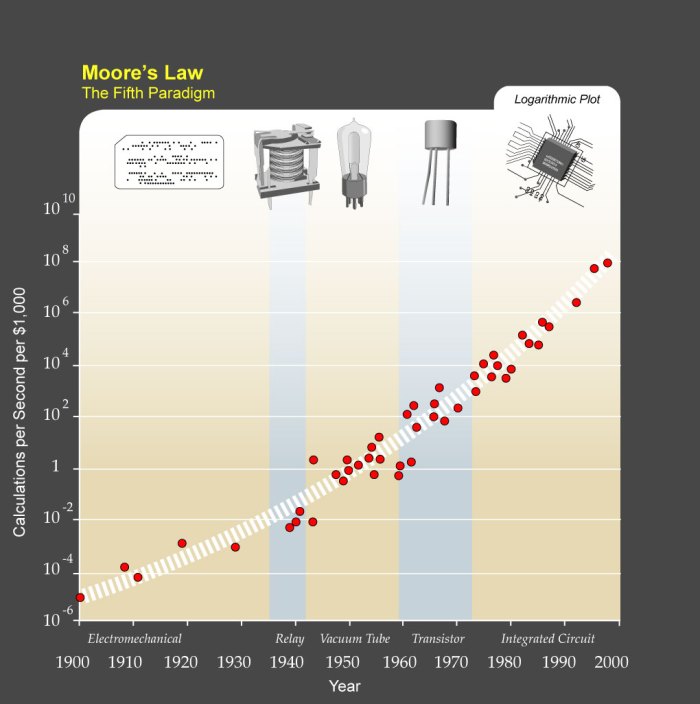
Men like Ray Kurzweil, a futurist who is all about achieving immortality, have popularized this idea greatly. Thanks to people like him, this idea has ventured beyond the realm of pure sci-fi and become a legitimate area of academic study. Relying on ongoing research into the many, many paradigm shifts that have taken place over time, he and others have concluded that technological progress is not a linear phenomena, but an exponential one.

Consider the past few decades. Has it not been a constant complaint that the pace of life and work have been increasing greatly from year to year? Of course, and the driving force has been constant technological change. Whereas people in our parents generation grew up learning to use slide rules and hand-cranked ammonia copiers, by the time they hit the workforce, everything was being done with calculators and Xerox printers.

PPTMooresLawai

In terms of documents, they used to learn typewriters and the filing system. Then, with the microprocessor revolution, everything was done on computer and electronically. Phones and secretaries gave way to voicemail and faxes, and then changed again with the advent of the internet, pager, cell phone and PDA. Now, all things were digital, people could be reached anywhere, and messages were all handled by central computers.

And that’s just within the last half-century. Expanding the time-frame further, let’s take a much longer view. As a historian, I am often fascinated with the full history of humanity, going back roughly 200,000 years.  Back then, higher order primates such as ourselves had emerged in one small pocket of the world (North-Eastern Africa) and began to circulate outwards.

By 50,000 years ago, we had reached full maturity as far as being homo sapiens is concerned, relying on complex tools, social interaction, sewing and hunting and gathering technigues to occupy every corner of the Old World and make it suitable for our purposes. From the far reaches of the North to the Tropics in the South, humanity showed that it could live anywhere in the world thanks to its ingenuity and ability to adapt. By 15,000 years ago, we had expanded to occupy the New World as well, had hunted countless species to extinction, and began the process of switching over to agriculture.

By 5000 years ago, civilization as we know it was emerging independently in three corners of the world. By this, I mean permanent settlements that were based in part or in full on the cultivation of crops and domestication of animals. Then, 500 years ago, the world’s collided when the Spanish landed in the New World and opened up the “Age of Imperialism”. Because of the discovery of the New World, Europe shot ahead of its peer civilizations in Africa, Asia and the Middle East, went on to colonize every corner of the world, and began to experience some major political shifts at home and abroad. The “Age of Imperialism” gradually gave way to the “Age of Revolutions”.

100 years ago, the total population of the Earth reached 1 billion, industrialization had taken full effect in every developed nation and urban populations were now exceeding that of rural. 50 years ago, we had reached 3 billion human beings, were splitting the atom, sending rockets into space, and watching the world decolonize itself. And only 10 years ago, we had reached a whopping 6 billion human beings, were in the throws of yet another technological revolution (the digital) and were contemplating nanotechnology, biomedicine and even AI.

In short, since our inception, the trend has been moving ever upwards, faster and faster. With every change, the pace seems to increase exponentially. The amount of time between paradigm shifts – that is, between revolutionary changes that alter the way we look at the world – has been getting smaller and smaller. Given this pattern, it seems like only a matter of time before the line on the graph rises infinitely and we have to rethink the whole concept of progress.

Is your nooble baked yet? Mine sure is! It’s get like that any time I start contemplating the distant past and the not too distant future. These are exciting times, and even if you think that the coming Singularity might spell doom, you gotta admit, this is an exciting time to be alive. If nothing else, its always a source of intrigue to know that you are on the cutting edge of history, that some day, people will be talking about what was and you will be able to say “I was there”.

Whoo… deep stuff man. And like I said, fun to write about. Ever since I was a senior in high school, I dreamed of being able to write a book that could capture the Zeitgeist. As soon as I learned about the Technological Singularity, I felt I had found my subject matter. If I could write just one book that captures the essence of history at this point in our technological (and possibly biological) evolution, I think I’ll die a happy man. Because for me, it’s not enough to just have been there. I want to have been there and said something worthwhile about it.

Alright, thanks for listening! Stay tuned for more lighter subject matter and some updates on the latest from Story Time and Data Miners. Plus more on Star Wars, coming soon!