Episode 109 of Stories from Space is Live!

Episode 109 of Stories from Space is Live!

In this latest episode, I discuss the Standard Model of Cosmology, how scientists arrived at it, and how recent discoveries are causing some to question whether or not it is correct. To break it down, it is known as the Lambda Cold Dark Matter (ΛCDM) model, which basically combines the following theories.

  • The Big Bang: The theory that the Universe expanded from an initial state in which all matter was in hot, dense state (c’mon, you know the tune!) Evidence for this theory includes the Cosmic Microwave Background (CMB), the abundance of light elements (hydrogen, helium, etc.), the large-scale structure of the Universe, and cosmic expansion (see below).
  • Special Relativity: Einstein’s famous theory (E=mc2) that asserts that matter and energy are equivalent and how space and time are part of a four-dimensional framework in which the speed of light is constant and cannot be exceeded.
  • General Relativity: The extended generalized version of Einstein’s famous theory, which asserts that mass alters the curvature of spacetime.
  • Dark Matter: The theory that the majority of matter in the Universe is made up of a mysterious mass that doesn’t interact with normal matter in visible light.
  • Cosmological Constant: Also known as the Hubble-Lemaitre Constant (colloquially referred to as “Dark Energy”), wherein 68% of the cosmos is made up of energy that counteracts the force of gravity.

Over the past 120 years, these theories have come together to create the ΛCDM model of the Universe. For decades, scientists have been hoping to get a look at the very early Universe (less than 1 billion years after the Big Bang) to test this theory. When Webb finally provided the first observations of this period in cosmic history, what astronomers saw challenged many of the assumptions inherent in this model. Check out the episode below to learn more…

Where to Listen:

Episode 100 of Stories from Space is now Live!

Episode 100 of Stories from Space is now Live!

Welcome all! This week’s episode is one that I consider very important. Since the Trump administration was inaugurated, people at NASA were understandably afraid. Uncertainty about the future can do that to people, especially when an unelected, unconfirmed member of government (Elon Musk) begins making seemingly arbitrary cuts to departments, jobs, and spending. Those fears were confirmed with the release of the White House’s Fiscal Year 2026 Budget Request (FY 2006).

In addition to deep cuts, the Budget also calls for the cancellation of programs that NASA has been pursuing for years as part of its “Moon to Mars” mission architecture. These include the Space Launch System (SLS), the Orion Spacecraft, and the Lunar Gateway, which are integral to the Artemis Program and plans to send the first crewed missions to Mars. The Budget also pushes privatization as the solution to every proposed cut, and very deliberately and specifically targets funding for “woke” programs that seek to increase representation in the STEM fields.

To call this Budget a disaster in the making only undersells it. If enacted, it could throw NASA’s entire future into jeopardy. Whereas the Budget specifies that NASA’s only priority should be beating China to the Moon and Mars, it will likely make that goal much harder to achieve. And it would almost surely compromise the agency’s longstanding reputation for leadership in space.

The release of this episode is also a milestone for me and the podcast I launched almost three years ago (July 12th, 2022). Its inception can be trace to an interview I had with the hosts of the Intersection of Technology and Society Magazine (ITSM), Sean Martin and Marco Ciappelli. The funny thing is, they wanted to interview me for an article I wrote for Interesting Engineering titled “Life in 2050: A Glimpse at Education in the Future.”

Afterward, I told them what my main subject was (i.e., space and spacey stuff), and they had me back on for two more episodes to discuss the future of space exploration and exoplanet studies. During the second interview, we announced that I was joining ITSP with a new podcast – Stories from Space!

As such, I wish this episode’s subject were less alarming or depressing. But I promise future episodes (knock on wood!) will be cheerier and feature better news!

Where to Listen:

Episode 91 of Stories from Space is Now Live!

Episode 91 of Stories from Space is Now Live!

Hello folks! This week’s episode is dedicated to my friend, Kim Bannerman Pigott, who suggested it. She, too, is a creative person, as is her husband, Shaun. Between the two of them, they do literature, art, and music; they do it all! I encourage everyone to check out their website, Fox&Bee Studio. The topic of this episode is “Are Wormholes Possible?” As any fan of science fiction knows, wormholes are regularly featured in the genre, be it novels, shows, movies, or video games.

Some examples include Carl Sagan’s Contact, Star Trek, Battlestar Galactica, Babylon 5, Event Horizon, Farscape, the Wing Commander franchise, the Descent: Freespace franchise, and many more. The concept often goes by different names (FTL, jump points, jump nodes, etc.), but the idea remains the same. Pass through a wormhole (natural or artificial), and you end up a few, or few thousand, light-years away.

Like warp or hyperspace, they are a key element in the world-building process, facilitating the kind of travel that would allow for First Contact, inter-species interaction, exploring new worlds, and the emergence of new branches of humanity. In most cases, franchises tend to steer away from the science and avoid any complicated or inaccurate explanations. However, sometimes authors and producers dip their toes in and attempt to rationalize them (not very well, in my experience).

But what does the science say? As it turns out, there is a basis in theoretical physics for wormholes that goes back over a century. Check out the links below to learn more…

Where to Listen:

Episode 90 of Stories from Space is now Live!

Episode 90 of Stories from Space is now Live!

This week’s episode asks the question, “Are Red Dwarf Star Systems Habitable?” Red dwarf stars, also known as M-type stars, are pretty controversial. For starters, they are the most common type of star in the Universe, accounting for 75% of stars in our galaxy alone. In addition, red dwarfs seem particularly good at producing rocky planets that orbit within their habitable zones (HZs). In fact, of the 31 potentially habitable exoplanets located within a 50-light-year radius of our Solar System, 29 are located within red dwarf star systems.

However, there are also downsides. For starters, red dwarf suns are variable and prone to flare-ups. While the most powerful are emitted from the poles and are unlikely to affect orbiting exoplanets, the fact that these exoplanets are tidally locked with their stars (where one side constantly faces toward the star) means they would still be bombarded by radiation. But then again, there’s research suggesting this radiation could be essential for life to develop. Like I said, it’s a controversial issue, and we simply don’t know… yet!

Follow the links below to learn more:

Where to Listen:

Episode 87 of SfS is now Live! “The Space Race: Part II”

Episode 87 of SfS is now Live! “The Space Race: Part II”

This week’s episode is the second installment in the Space Race. In the previous installment, we examined how the American and Soviet space programs were locked in a competition to “get there first.” This included sending the first satellites, animals, and astronauts/cosmonauts to space, in which the Soviets obtained an early lead. By the mid-60s, with the Gemini program, NASA surpassed its Soviet counterparts and was poised to make the Moonshot!

From 1966 onward, both NASA and the Soviets pursued the same goal: sending crewed missions to the Moon. While NASA’s efforts were bold and public, the Soviets developed their own plans in secret. In 1969, history was made when Neil Armstrong and Edwin “Buzz” Aldrin became the first humans to set foot on the lunar surface. They would be followed by no less than six more Apollo missions and twelve astronauts.

With the Space Race officially over, both NASA and the Soviet space program began to set their sights on more long-term goals. They also entered into a new era of cooperation in space, which was demonstrated in the famous “handshake in space” and would eventually lead to the International Space Station (ISS).

Where to Listen:

Episode 83 of Stories from Space – China’s Space Program – is now Live!

Episode 83 of Stories from Space – China’s Space Program – is now Live!

This week’s episode was dedicated to one of the fastest-growing space programs in the world. I’m talking about the China National Space Agency (CNSA), which has made several big strides in recent years. Like all major space programs, China’s was conceived amid the Cold War and was related to the development of nuclear weapons. A further incentive was provided when the Soviets and the U.S. began sending satellites and crewed missions to space.

Progress was slow during the latter half of the 20th century due in large part to the chaos caused by the Cultural Revolution (1966-1976). By the 1990s, with the Tiananmen Square Massacre and the collapse of the Soviet Union, the Chinese Communist Party instituted many reforms to ensure its survival. By the 2000s, this extended to its space program, and many bold programs were launched. This included a crewed space program, a robotic exploration program, and plans for a series of space stations.

This culminated in the deployment of the Tiangong modular space station (aka. Tiangong 3), several crewed missions to Low Earth Orbit (LEO), the Chang’e missions reaching the Moon, and the first Chinese mission to Mars (Tianwen-1). In the near future, China plans to create a permanent base in the Moon’s south pole region – the International Lunar Research Station (ILRS). In the coming decades, they also plan to send crewed missions to Mars.

Follow the links below to learn more…

Where to Listen:

Episode 82 of SfS – Where is Everybody? The SETI Paradox – is now Live!

Episode 82 of SfS – Where is Everybody? The SETI Paradox – is now Live!

This week’s episode was the final installment in the Fermi Paradox series. For the finale, we examine the “SETI Paradox,” a proposed resolution that asks the question, “What if everybody is listening, but no one is transmitting?” This theory reflects humanity’s own conundrum when it comes to the Search for Extraterrestrial Intelligence (SETI): should we continue to conduct “passive SETI” (listening) or engage in “active SETI” (messaging)?

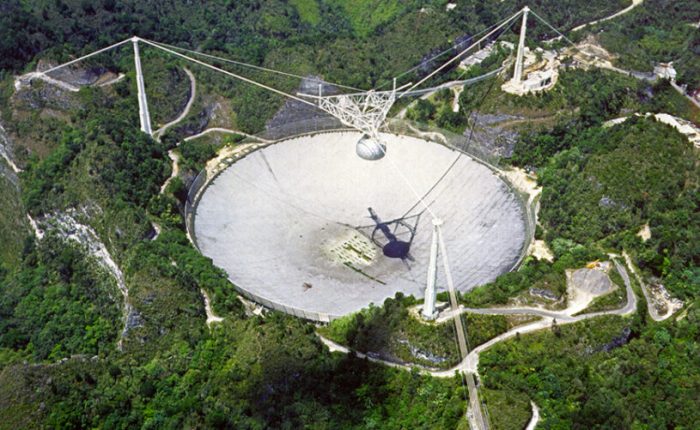
In recent years, the latter has given rise to a new field known as Messaging Extraterrestrial Intelligence, or METI. While most efforts to make contact with an extraterrestrial species have been in the form of SETI, a few METI experiments have been conducted over the years. The most well-known example is the Arecibo Message, which was transmitted from the venerable Arecibo Observatory in 1974. Other examples include the Pioneer Plaques and the Voyager Golden Records. There have been other examples, but they don’t begin to rival the time or resources committed to SETI.

While METI has become a field in its own right, those who are passionate about it understand that there are necessary concerns. After all, we have no idea what’s out there. What if we broadcast our existence to the Universe and it leads to an invasion by a hostile civilization? It makes sense that other civilizations would be preoccupied with the same concerns, so perhaps this is why we aren’t hearing from anyone. As you might have guessed, there is some crossover with the Dark Forest Hypothesis here.

Follow the links below to learn more about this hypothesis and the controversy surrounding SETI vs. METI:

Where to Listen:

Episode 76 of SfS – Where is Everybody? The Waterworlds Hypothesis – is now Live!

Episode 76 of SfS – Where is Everybody? The Waterworlds Hypothesis – is now Live!

In this week’s episode, I returned to the ongoing segment about Fermi’s Paradox (“Where is Everybody?”), which focuses on another proposed resolution known as the Waterworlds Hypothesis. Basically, this theory takes the traditional “follow the water” and asks the question: could rocky exoplanets orbiting distant stars have too much water to be habitable? This theory is based on the current exoplanet census, which indicates that there are many rocky planets several times the size and mass of Earth but with lower densities.

This suggests that volatile elements (such as water) make up a significant fraction of these planets’ mass. If true, this would indicate that these rocky worlds are completely covered in deep oceans. If they don’t possess a dense atmosphere, they would likely consist of an icy outer shell, an interior ocean, and a rocky and metallic core. This is similar to what we see in our own Solar System, where many satellites orbiting the gas giants are thought to have interior oceans beneath their icy crusts.

Like Jupiter’s moon Ganymede, the depths and pressure conditions in these oceans would lead to the formation of an ice layer between the ocean and the rocky, metallic core. If true, this would mean that the very things that could support the emergence of life – hydrothermal activity at the core-mantle boundary – would be missing. Based on the fossil record, this is how scientists believe life emerged on Earth (around deep-sea vents) and what is believed to be happening inside Jupiter’s moon Europa.

However, this does not mean that all Waterworlds can’t support life. In fact, there’s also research that indicates that planets lacking continents and plate tectonics could still support life, perhaps in the form of “space whales“! Still, using Earth as a template, the lack of continents and land masses could mean that evolution would be restricted, and tool-using species may not emerge. So it begs the question: If rocky planets with too much water are the norm, and Earth is an outlier, could this be why we haven’t heard from any extraterrestrial civilizations yet?

Check out the links below to learn more!

Where to Listen:

Episode 75 of SfS – “The Grand Tour: The Legacy of the Voyager Probes” – is Now Live!

Episode 75 of SfS – “The Grand Tour: The Legacy of the Voyager Probes” – is Now Live!

This week’s episode was dedicated to the Voyager 1 and 2 probes, and it was a long time in the making! Launching in 1977, these two probes explored the outer Solar System and accomplished many firsts. This included obtaining the first evidence that Jupiter’s moon, Europa, could have an interior ocean. They also examined Saturn’s rings and got the first close-up look at Saturn’s moon, Titan, and its dense hydrocarbon atmosphere, which led to speculation that liquid methane lakes might exist on its surface.

The Voyager Golden Record. Credit: NASA

While Voyager 2 became the first mission to visit Uranus and Neptune, a feat which has not yet been repeated, Voyager 1 conducted the Pale Blue Dot campaign, obtaining the best-known image of Earth. And, of course, they both carry the Voyager Golden Records, which contain sounds and images of Earth and simple diagrams indicating the location of Earth and the Solar System. These records could be the first interstellar message sent by humanity to another civilization or a time capsule for future generations of humans.

The two probes are now in interstellar space, where they continue to operate and return data on the interstellar medium. Regardless of how much time has passed, the Voyager probes will forever remain iconic and their accomplishments legendary. Check out the episode below:

Where to Listen:

Episode 72 of SfS – The Gift of Gravitational Lensing (with Dr. Slava Turyshev) – is now Live!

Episode 72 of SfS – The Gift of Gravitational Lensing (with Dr. Slava Turyshev) – is now Live!

This week, my guest was Russian-American physicist Dr. Slava Turyshev, a Senior Research Scientist, Technologist, and Project Manager at NASA’s Jet Propulsion Laboratory. Dr. Turyshev has spent years studying the phenomenon known as gravitational lenses, a consequence of General Relativity, where massive objects amplify and alter the path of light from more distant objects. Astronomers have used this phenomenon to study objects that would otherwise be very difficult to see, including some of the farthest galaxies in the Universe.

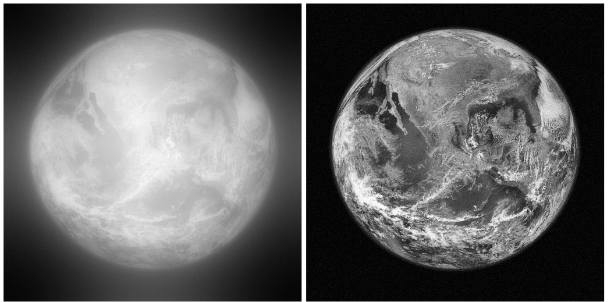
In recent years, Turyshev has published numerous studies advocating for a space telescope that would travel to the focal region of our Sun’s Gravitational Lens (SGL). Once there, it could conduct the most detailed astronomical studies ever, which includes taking extremely high-resolution images of exoplanets. In fact, astronomers predict that an SGL telescope could take pictures of exoplanets that would have the same resolution as images of Earth taken from high orbit (see below).

Toth H. & Turyshev, S.G.

Not only that, but Turyshev predicts that gravitational lenses could also be used for communications from one star system to another. These ideas could lead to an “interstellar internet,” which could be how advanced civilizations keep in touch in our galaxy. Perhaps this is why we haven’t found evidence of any extraterrestrial civilizations: they are routing all their calls through a gravitational lens network, and we aren’t hooked up to it yet!

Where to Listen: