A Sneak Peak at Exogenisis!

A Sneak Peak at Exogenisis!

Hello again! I am going to do something I haven’t done in a long time here and share some creative writing I’ve been working on. In truth, I have done a lot of creative writing these past few years that I have failed to share here. I decided it was time to rectify this, and what better way to start than to share the first chapter of one of my current WIPs? It is titled Exogenesis, and it is a story that has taken a long time for me to realize!

I described this idea a short while ago in another post (“A Visit to the Ideas Folder“). In fact, I described two ideas, one titled Pilgrimage and the other titled Exogenesis. As I wrote at the time, Pilgrimage is a short story about distant origins and how future humans may come to trace their ancestry back to Earth. It is also the first chapter in the full-length version set in the same universe, titled Exogenesis. I am told that this is how many of the greats realized their first novels, so I decided to give it a try.

In any case, here’s the first chapter in full! A word of warning: there’s a lot of linguistics and semantic evolution in here, so some words won’t make a lot of sense at first sight. But I’m hoping the context will help resolve all that. Enjoy!

Continue reading “A Sneak Peak at Exogenisis!”

Episode 71 of SfS – Voices of the Future: Frank Herbert – is now Live!

Episode 71 of SfS – Voices of the Future: Frank Herbert – is now Live!

This week’s episode picked up a series that I began long ago but then left untouched! Voices of the Future was intended to pay tribute to seminal thinkers and scientists who showed great insight and made some profound predictions about humanity’s future. The first installment was dedicated to the late and great Arthur C. Clarke. This week’s episode was dedicated to the man who literally wrote the book that made people “take science fiction seriously” – Frank Herbert!

In 1965, Frank Herbert released his best-known work, Dune. Over the next twenty years, he produced five sequels and died just a year after the release of the last installment: Chapterhouse: Dune. While much has been said about Frank’s social, political, philosophical, and historical commentary, what stands out for me all the years later was his predictions about humanity and AI. This was summarized in the event referred to as the “Butlerian Jihad,” which is part of the story’s deep background.

It was this event, which led to the Great Convention and its ban on AI, computers, and automation of any kind, that led to the power structure of the Imperium – with its absolute monarchy, feudal barons, religious proscriptions, and constant machinations and treachery. Basically, Frank appeared to present the Johad as something inevitable, which would have inevitable consequences. This nuance is completely lost in the prequels/sequels authored by his son and Kevin J. Anderson, who instead presented the Jihad as a cliche, humans vs. machines story.

This commentary and contrast are especially important today, amid fears about the development of AI and the often inarticulate (IMHO) existential concerns about it. Check the episode out below to hear more.

Where to Listen:

Episode 55 – “The Firstborn Hypothesis” – is now Live!

Episode 55 – “The Firstborn Hypothesis” – is now Live!

This week, I decided it was time to get back into the Fermi Paradox! This time, I addressed the Firstborn Hypothesis, the notion that humanity may be the first advanced civilization to emerge in our Galaxy. Much like the Brief Window Hypothesis, I’m not sure it’s an official proposal. In fact, I’m pretty sure I assigned a name to a general idea that has been raised many times over the years and is considered one of the more obvious resolutions.

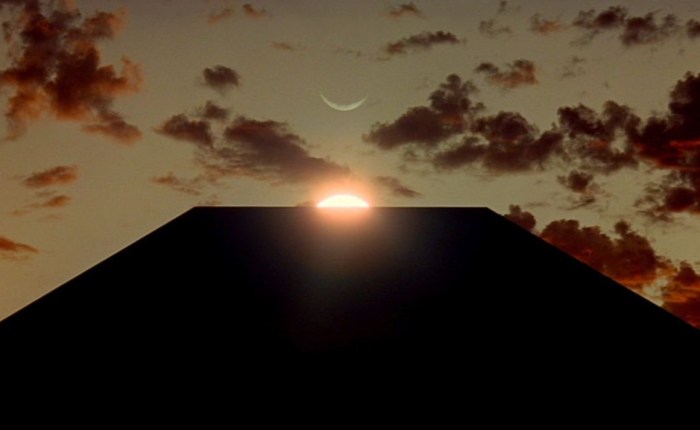
The name itself was inspired by Arthur C. Clarke’s 2001: A Space Odyssey. In this series, “Firstborn” is the name of the advanced species that was the first civilization to emerge in our galaxy. These were the aliens that created the monoliths and tampered with human evolution in the distant past, and are contemplating whether they made a mistake (and need to correct it) in the present. If true, then humanity has a pretty massive responsibility before it! Tune in to hear more:

Where to Listen:

Episode 48 – “Where Are All the Aliens? The Dark Forest Hypothesis” – is now Live!

Episode 48 – “Where Are All the Aliens? The Dark Forest Hypothesis” – is now Live!

This week’s episode was dedicated to another proposed resolution to the Fermi Paradox. This one was inspired by the novel of the same name, The Dark Forest, written by Chinese science fiction author Liu Cixin. The book is the second installment in the Memories of Earth’s Past trilogy, which started with The Three-Body Problem. The concept is explained thusly:

“The universe is a dark forest. Every civilization is an armed hunter stalking through the trees like a ghost, gently pushing aside branches that block the path and trying to tread without sound. Even breathing is done with care. The hunter has to be careful, because everywhere in the forest are stealthy hunters like him. If he finds other life — another hunter, an angel or a demon, a delicate infant or a tottering old man, a fairy or a demigod — there’s only one thing he can do: open fire and eliminate them. In this forest, hell is other people. An eternal threat that any life that exposes its own existence will be swiftly wiped out. This is the picture of cosmic civilization. It’s the explanation for the Fermi Paradox.

I got an especially nice surprise while prepping this episode. While looking for possible links to include, I came across a link to the University of Edinburgh. On Halloween night in 2021, Dr. Anna Lisa Varri delivered a lecture at the Higgs Center for Theoretical Physics about the Dark Forest Hypothesis. Guess who she listed as her first source? ME! Or rather, the article I wrote for Universe Today about six months prior! How cool is that? Check it out below…

Where to Listen:

Episode 37 of Stories from Space – “Where Are All the Aliens? The Planetarium Hypothesis” – is Now Live!

Episode 37 of Stories from Space – “Where Are All the Aliens? The Planetarium Hypothesis” – is Now Live!

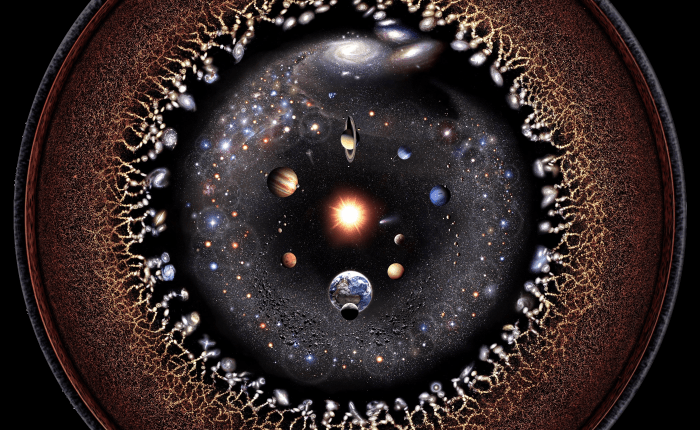
This week, I got into another favorite proposed resolution to the Fermi Paradox. In 2001, famed scientist and SF author Stephen Baxter wrote a paper titled “The Planetarium Hypothesis – A Resolution of the Fermi Paradox.” Addressing Fermi’s question, Baxter suggested that the reason humanity hasn’t heard from advanced civilizations is that the Universe (as we know it) is a simulation.

To put it another way, what we see when we look up at the night sky is a giant virtual reality “planetarium” built by an advanced species to give the illusion of an empty Universe. The purpose of this could be to keep humanity contained, possibly for its own good or that of other species (i.e., intelligent life is dangerous), or to keep less-advanced species from developing too quickly and becoming a threat.

Like the Berserker Hypothesis, the idea is science fiction gold but admittedly unlikely (phew!) Another problem is that the hypothesis is untestable. While Baxter and other scientists suggested ways this theory could be tested (based on the principles of quantum mechanics and thermodynamics), critics have pointed out that the laws of physics themselves could be part of the simulation.

Personally, I think that the laws of physics and the fact that they make space exploration so challenging is the most compelling evidence for the hypothesis. What better way is there to control the growth of a species than to set the physics model to “extra hard”? If I were an advanced civilization looking to keep a species in the dark, this is precisely what I’d do! Check it out below:

Where to Listen:

Episode Six: The Berserker Hypothesis

Episode Six: The Berserker Hypothesis

Could it be that the reason we are confronted by the “Great Silence” is that advanced civilizations are being wiped out? This is the essence of the Berserker Hypothesis, inspired by science fiction, but rooted in scientific theory. It combines the concept of von Neuman Probes, nanotechnology, and the idea that the greatest threat to advanced life is itself!

(Updated) Advice for Aspiring Writers!

(Updated) Advice for Aspiring Writers!

Good morning! There’s something I’ve wanted to do for a long time now but never got around to it. And that is, share some tidbits of wisdom that I have learned over the years about writing. Most of these tidbits are things I learned from people who really knew what they were talking about, so I was sure to listen! Some others are just things I concluded along the way.

And wouldn’t you know it, the list has grown to include another important item since I originally scrawled them down. In any case, almost twenty years after I began writing, I’ve managed to condense the most important lessons I’ve learned down to six main tips. Here they are…

Continue reading “(Updated) Advice for Aspiring Writers!”

Revitalizing an Old Idea: Thirteenth

Revitalizing an Old Idea: Thirteenth

It came to me when I was in University and eventually grew to become the seed of my very first written work. It was intended to become part of a series called Legacies, and I had big plans for it. I even wrote a few short stories over the years that were part of this fictional universe. However, as years passed and I became more committed to hard science fiction, I fell out of love with the series. Since it was my first effort, I also felt that the writing was amateurish and needed serious polishing.

But the other day, I found myself musing about the seed. It wasn’t a bad idea, and I could still recall the sense of inspiration I felt when plotting it all out. And over the years, the basic concept was still there, always trying to find expression in new form or variation on the old. I can’t help it. There’s just something about ancient migrations, long-lost tribes, and forgotten histories that is so damn intriguing!

And since I’m at a transitional point in my writing – my first trilogy down and an open field in front of me – I’m once again contemplating if this idea has a future. While it’s not exactly hard science-fiction (more space opera), I still think it has the potential to be fun and intriguing.

Continue reading “Revitalizing an Old Idea: Thirteenth”

Introducing The Martian Dispatches!

Introducing The Martian Dispatches!

At long last, this special project (which I’ve been busy with for many months) has been released. Which means I can finally talk about it! But first, a little preamble…

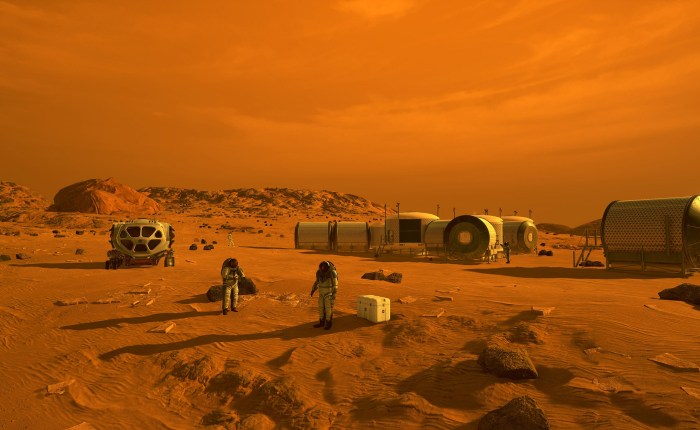
About a year ago, I joined Mars City Design®, a non-profit innovation and design platform dedicated to merging architecture, design, and the creative industry with the commercial space sector (aka. NewSpace). Since their inception in 2016, they’ve hosted an annual design competition where architects and designers from around the world submit ideas for how humans could live sustainably on Mars someday.

Continue reading “Introducing The Martian Dispatches!”

Science Fiction, Babylon Style!

Science Fiction, Babylon Style!

There are times when ideas come along that just feel inspired. Then there are times when you think, “this is something I really should do because it sounds awesome in concept.” Those are the kind of ideas that you know readers will appreciate, provided you can do them justice! Otherwise, they’ll just sit on the shelf (or your Documents folder) and gather dust. The following list of ideas sort of straddle these two categories.

They came to me while researching ancient Mesopotamian myths that remain a part of our culture today. In fact, many of the myths that are considered to be foundational to western culture trace their roots to the “land between two rivers” (between the Euphrates and Tigris rivers). Here are the ideas I was mulling over after reading up on some ancient myths.

Continue reading “Science Fiction, Babylon Style!”