
 As Yogi Berra would say, “It’s like deja vu, all over again.” Designed to be paper thin, flexible, and printable using a 3D printer device, this latest advancement combines several technological breakthroughs into one package. But instead of being a display device, a PDA, a smartphone, or some high-tech component, this latest piece of future tech is a simple battery. And in a world where technology is becoming increasingly smart, thin and ergonomic, it just may be the way of the future for electrical devices.
Well, simple might be a bit of a stretch. Developed by Imprint Energy, the key piece of technology here is a polymer electrolyte that allows the zinc-based battery to be recharged. In typical batteries, liquid electrolytes are used, which tend to experience the formation of “fingers” which bridge across the lithium interior of the battery and make charging impossible. But in this case, the flexible and customizable zinc anode, electrolyte, and metal oxide cathode of the battery are printed in the form of electrochemical inks.
This is turn leads to the creation of a battery that is not only flexible and printable, but also rechargeable, safer, cheaper, and more powerful than anything currently on the market. The printing process is similar to old-fashioned silk-screening where material is deposited in a pattern by squeezing it through a mesh over a template. While this screen printing is different from what we tend to think of nowadays as 3D printing, it is in keeping with the concept of printing where manufacturing is done on the micro-level, leading to the creation of all kinds of consumer products.
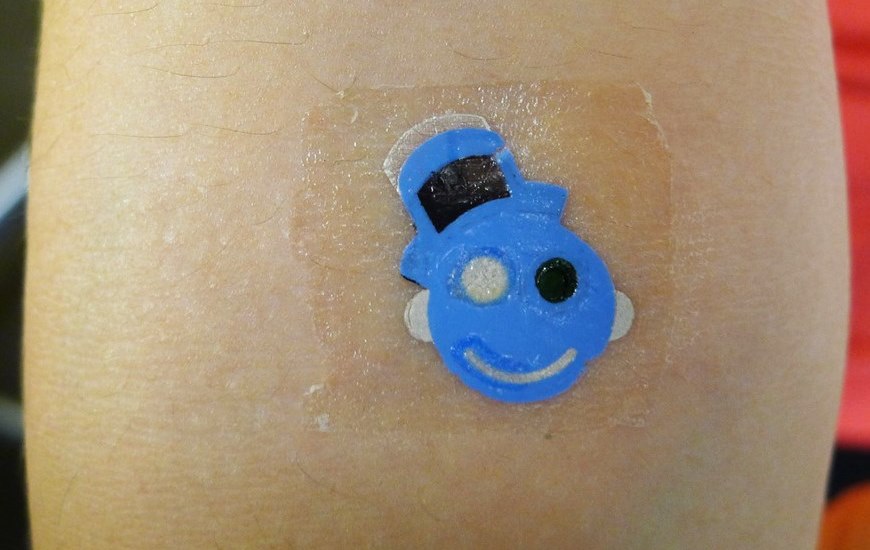 And like all technological advancements, this one occurred not in a vacuum but amidst a backdrop of cool and interesting breakthroughs. For example, numerous tech c0mpanies and start-ups are using screen printing to fabricate electronic components that will address the need for cheap and disposable electronics in the next few years.
Norway-based Thin Film Electronics is one such group, which has created a prototype all-printed devices that includes temperature sensors, memory, logic, and uses Imprint Energy’s new battery. In addition, smart tattoos are being created to monitor patient vitals, blood pressure, pulse rate, and blood glucose levels. Printable “smart stickers” for time-sensitive food or medicines are being contemplated as well, patches that would be able to store details of a products temperature, chemical exposure, freshness, and history of shock and vibe during handling.
All of this, coupled with ultra-thin devices, could led to a future where all devices and electronics are the size of a business card, as thin as a sheet of construction paper, and can be worn on a person’s body. Hey, there’s a reason they call it “smart technology” 😉
Source: Extremetech.com

 Stories by Williams