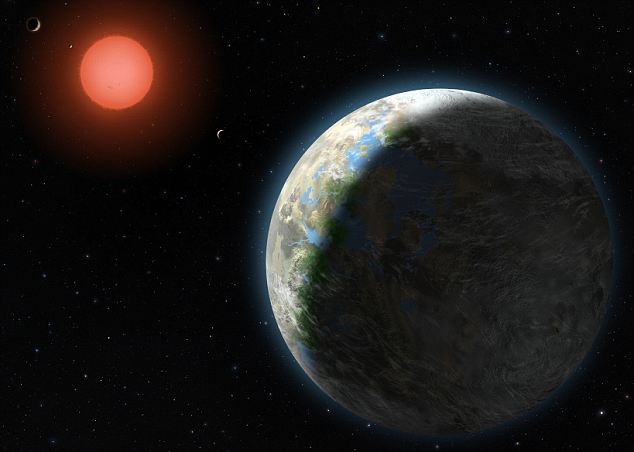
 Hello all and welcome back for another Anthology Update. As I said a few days ago, there is still plenty of news to be had vis a vis my groups ongoing efforts to create our our Magnum Opus about colonization and space travel, aka. Yuva. And the latest is that I’ve finally begun writing the prologue for the entire series.
Entitled “The Torch”, this first installment in the anthology shows the origins of the story’s central character (Magid Muktari) and his lifelong mission to see humanity colonize a distant world. Thanks to Khaalidah Muhammed-Ali who coauthored this with me and once again provided the characters and impetus for it’s creation! Hope you all enjoy!
“A man of cold, hard science, most assume that Magid Muktari was not a man of faith. At the press conference following the acceptance of his final proposal for the creation and international funding of the Yuva Colonization Project, Muktari was questioned thus by one young reporter: “Sir, can you please explain to us why this project is so important?” Muktari said in cryptic form, “Our Earth is alive.” When asked to elaborate Muktari said: “Has not Allah promised us in that every soul shall taste of death?”
-Magid Muktari, 2108
Masdar City, UAE, 2048
Magid Muktari took a deep breath and tried to remain calm. Oh how he hated waiting! Even after all the years he had spent on the front lines of his industry, waiting for meetings, trips to end, and plans to reach fruition, he still couldn’t stand the time it took to wait for a presentation. But that was the way of it, he knew. Anticipation was the thousand little deaths that preceded the actual execution. One could only surmise from this that humans weren’t designed to wait on others. Either that or the Universe had a very poor sense of humor.
To pass the time, Muktari began to punch up his presentation info. Adjusting his compad to a convex shape and resting it on his knees, he placed his contacts to display mode and waited for the computer to warm up. A command prompt appeared in his field of vision and asked for his password. He typed it in promptly.
Meşale
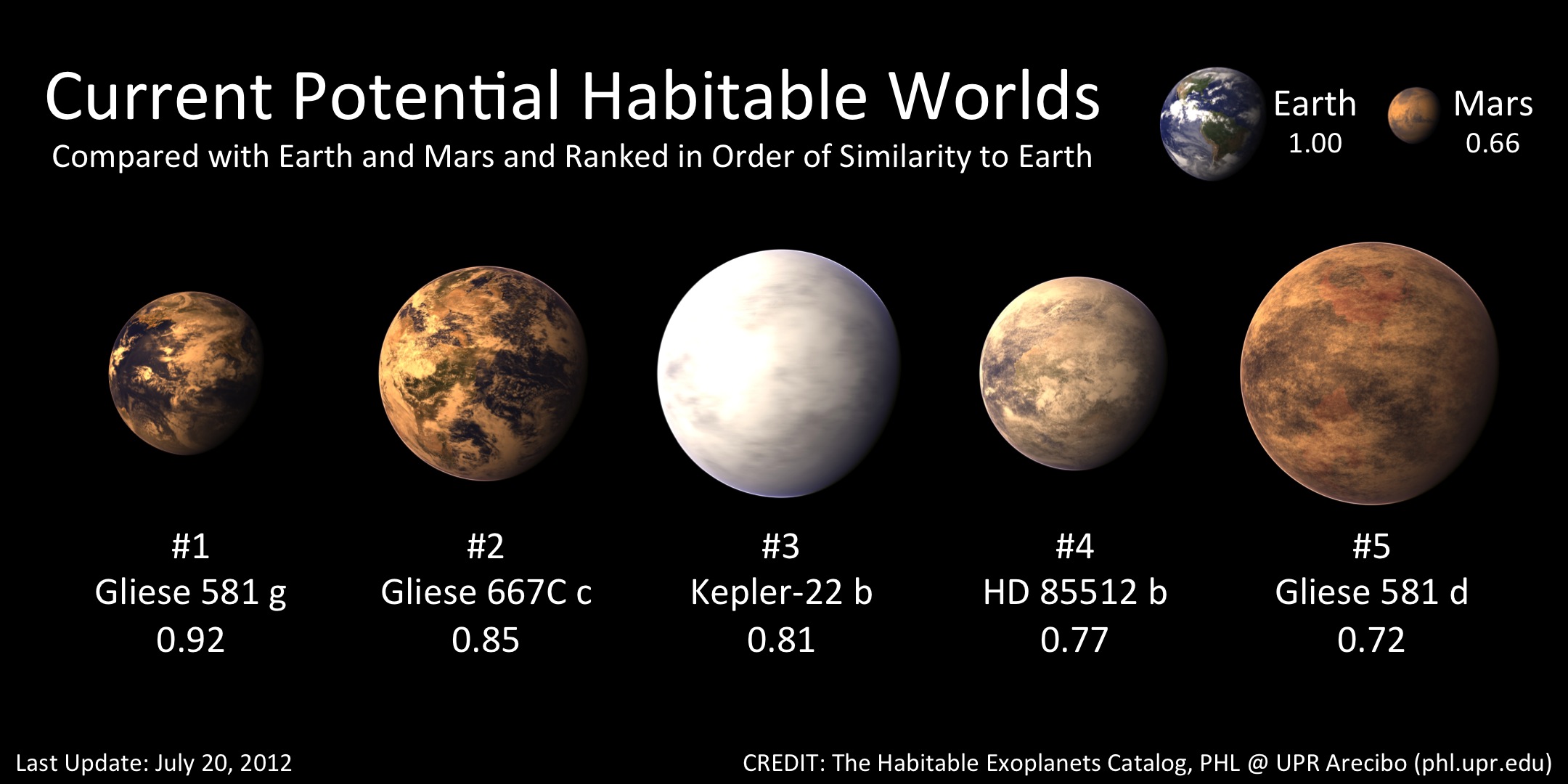
His eyes filled with a cerulean blue sky, small clouds and a series of desktop icons dotted the projected heavens. Accessing the proper folder, he accessed the presentation and waited a moment. The opening display image, five planets arranged from left to right, appeared in his visual field shortly thereafter.
The Future of Off-World Settlement, ran the title. A title bar appeared beneath the five planets, their names scrolling out as the marble-sized pictures became animated.
Gliese 581 g, Gliese 667C c, Kepler 22 b, HD 85512 b, Gliese 581 d
Placing his hands above the compad again, Muktari brought up the first of the five. The brown marble moved to the center of his visual field, displacing the rest and growing exponentially in size. A soft contralto began to speak in the background.
“Planet Gliese 581 g, fourth planet of the Gliese 581 star system. Discovered in 2000 by Lick-Carnegie Exoplanet Survey, led by principal investigator Steven S. Vogt, who named the planet Zarmina after his wife – ”
Muktari terminated the audio and began interfacing with the image. Zooming in on the planetary mass, he began to assess the features that had been observed from the most recent astronomical surveys. Being a tidally-locked body, only so much was visible, and most of that was only clear when the space telescope and the exoplanet’s rotations were in perfect sync. He moved back and forth, noting the outlines of a large continent facing towards the sun.
No, not a lot happening there, he thought gravely.
Putting it back in its place, he called forth the second in the list. Here too, the disc look particularly brown and mottled. However, its size and relevant characteristics set it apart from the previous entry, and here too Muktari began to worry. Super-Earth’s were not exactly a popular destination for colonists, not when they could expect a serious and potentially punitive adjustment period.
Muktari shut the display down and took a deep breath. Moments away from the greatest presentation he would ever make, that perhaps anyone would ever make, and he was already beginning to write himself off. Not a good sign, not if he wanted to have any chance at convincing Zimmerman of his sincerity.
There were those who said that the great Magid Muktari could sell ice to the Eskimos. Other’s said he could sell sand to the Arabs. He never cared for either assessment; both seemed to be both inaccurate and quite bigoted in his estimation. But the sentiment he understood.
But then again, the sheer scope of what he was proposing might have had something to do with that. Were this just another pitch, a proposal for more allocations, more surveys or more satellite deployments, he probably wouldn’t be giving it a second thought. And after years of bending the ears of government and industry officials who did business with them, he had earned himself enough capital to make a few pitches of his own.
If he screwed this up, all that capital would burn up and be gone. What’s more, he would be humiliated in front of the man he had come to respect more than any other…
Across from him, seated at her desk, the assistant seemed to stir. In her eye piece, the image of a face appeared and she began conversing with it. Muktari was only privy to one half of the conversation, which was mainly her agreeing.
“Yes… yes… yes, sir. I will pass that along.”
The image faded and she looked over to Muktari.
“Mr. Zimmerman’s plane has just landed. He will be here in five minutes.”
Muktari nodded. Another thing that hadn’t changed over the years. Regardless of how much time transit really took, it was an administrative habit to say that it would take five. And he knew from experience that a pod ride from the aerospace port to the office building would take at least ten. And then he would no doubt be mobbed by half a dozen assistants and corporate middle-men who needed to advise him and brief him on his way in. In truth, he would be lucky if he spoke to him before the hour was out.
He checked his chrono just to get a sense of the time. His watch was still set to orbital time. He shook his head when he realized that that was the last time he had slept, in a room near the tip of the axis looking out at the southern tip of Chile. Ever since, he had been running on a non-stop diet of aerospace lag, adrenaline and EBME.
At last, the woman at her desk looked up again and got that distant look in her eyes. She repeated the familiar string of secretary talk.
“Yes… Hello. Yes, sir, he is. Right away, sir.” Her call ended and her eyes focused on him. “Mr. Zimmerman will see you now.”
Muktari smiled and placed his compad back in the satchel. Getting to his feet, he ran a hand through his hair and straightened his blazer. His clothes were fresh, but his skin still felt like it was carrying a few days’ worth of residue. He discreetly checked for any telltale signs of body odor as well, and was reasonably confident the natural musk he was carrying wouldn’t kill his boss. After many minutes in the same room as him, the secretary seemed undisturbed.
Here we go, he thought, and set off for the door.
The door slid open, revealing Zimmerman in the middle of freshening up. This consisted of him shedding his blazer and replacing it with one of the many he kept hanging in his side closet. He looked up with mild amusement at Muktari’s entrance.
“Magid,” he said, throwing on a fresh top. “You’ve travelled some distant to and come see me.”
“Yes I have, but only a fraction of your own, from what I hear.”
“Yes,” he said with a sigh. “The Jovian tour was quite extensive. One has to wonder why we can’t just teleconference the entire process.”
Muktari smiled. Though he tended to complain upon his returns, everyone knew that Zimmerman remained an engineer at heart. Whenever new facilities went in and processing began, he insisted on conducting spot checks in person. Somehow, the virtual variety did not inspire much in the way of confidence from people like him, men who openly bragged about being educated in a simpler time.
“So…” he said, taking his seat. “What’s so important you had to see me as soon as I got back?”
“Well sir, I wanted to see you while the trip was still fresh in your mind.”
“Oh?” Zimmerman said with a nod. “Then this ought to be good.”
Muktari chuckled and placed his satchel down beside the seat in front of him. He removed his compad again and placed it directly on top of Zimmerman’s desk. He keyed up the 3D display and sat back.
“As it stands, this company is responsible for almost half of the development taking place in the outer Solar System. Unlike many other firms that see little promise in anything beyond the Belt, we’re renowned for taking the long view. That’s what I’m hoping to tap into.”
Zimmerman grumbled. “Why do I have the sinking feeling you’re winding up for a very slow pitch?”
Muktari chuckled. “Shall I cut to the chase?”
“Please do. Formal presentations are for board rooms and junior execs.”
Muktari terminated the display on his compad and stood. He walked to the room’s window and looked outside. The glittering spires of Abu Dhabi shined in the distance, visible just beyond the cities limits. He took a deep breath and started from the beginning.
“How long have I been in your employ, sir? Ten years, the last six of which I’ve spent as the head of our eco-engineering division. Much of the technology that was borne here and is now being adapted by other cities worldwide originated in our labs. And yet, everywhere I go, I hear the same basic reports, the same alarming assessments.”
Zimmerman looked on and pursed his lips. He was still waiting for the point to emerge. His recent travel had clearly taxed his patience to its very limit. He decided to expedite things.
“As it stands, eco-engineering accounts for over twenty percent of our government’s annual global spending. Investment and development have been moving more and more to off world locations. And it’s estimated that by the end of this century, the majority of our planet’s heavy industry will be relocated to Luna, Mars, and the Asteroid Belt. All this points towards a singular trend.”
“Extra-terrestrial development,” Zimmerman said obviously. “What of it?”
“But what drives it?” Muktari asked, turning to look him in the eye. “What knowledge prompted us to create orbital facilities, off-world mining and agricultural settlements, and to spend so much, year after year, trying to keep global mean temperatures down?”
Zimmerman nodded. The inclusion of that last detail was indication enough of what he was getting at. Naturally, he let him continue.
“The Earth is still cycling towards death, its oceans are still rising, its coastal areas are still plagued by floods and storms, drought and famine are still causing untold damage and death in the most densely populated regions, and humanitarian crises abound. What’s more, off-world settlement was hoped to be a means of relieving population pressures here at home; but you are certainly aware, the Solar Colonies maintain some of the highest birth rates, compared to Earth. Soon enough, there won’t be enough room and expansion will just shift the burden, but not by enough to make a difference here at home. When it comes right down to it, the scientific consensus on Earth’s longevity is clear.”
Zimmerman nodded, quoting from the latest findings. “Barring some major technological developments, such as the development of full-spectrum nanotechnology and/or a full-spectrum development of the Earth’s equatorial regions, and we can expect that most of the planet will be only partially habitable by 2100.”
Muktari extended his hand, palm facing up. The point was laid bare. He went back to his seat and lowered himself into it, careful not to strain any of his tired muscles.
“We proceed on track as if our current measurements will be enough to stay the torrent, but the problem continues to grow unabated. And just about everywhere I go, I am asked how we will save the planet.”
Zimmerman allowed for a brief pause and then raised his hands. “I’m on the edge of my seat, Muktari. What are you proposing?”
Muktari sighed and held his hands in front of him. This was where things would truly be tested. It was do or die time, he could hesitate no longer.
“Not too long ago, a colleague of mine, Adamcik, you’ve met him.” Zimmerman hummed affirmatively. “He hit me with a rejoinder not too long ago which truly vexed me. I asked him how we would go about addressing this planet’s needs. He retorted by asking me, ‘what if this planet is the problem?’”
Zimmerman frowned. Muktari had done much the same when he first Serge say it.
“When it comes right down to it, our homeworld is plagued by three separate problems – overpopulation, environmental degradation, and economic underdevelopment.” He raised his fingers, counting them off. “All of these are interrelated and compounded by one another. What’s more, attempts to remedy any one of them inevitably meets with failure due to the presence of the other two. We address the planet at the expense of the economy, we promote economic development at the expense of the environment, and all attempts at addressing the population fails as long as the economic divide remains. And our Extra-Terrestrial colonies aren’t going to solve this problem any time soon, and simply are not big enough to host our civilization should Earth fall.” He paused for the last time and took a deep breath. “So what if we looked farther abroad?”
Zimmerman raised an eyebrow. He was intrigued, Muktari was thankful for that much.
“Within this arm of the Galaxy, we’ve already confirmed the existence of several dozen Earth-like planets. Of the top five contenders, four are within 35 light-years from us; which, given the current state of technology and a hefty investment, can be traversed in just over a century.”
“Wait a minute!” Zimmerman raised his hand. “You’re talking about actual exoplanet colonization?” Muktari nodded. Zimmer waited for a moment, seemingly waiting for the punch line, and then scoffed. “Magid, you know as well as I do that research and development for deep space travel is a mere fraction of what we dedicate to aerospace development. For anyone to even begin contemplating an interstellar expedition, billions in investment capital would have to be poured into research and development.”
“I know,” replied Muktari. “Which is precisely what I suggest we do. If we create an exoplanet division, right away, we could produce a worthy vessel within a quarter of a century. Of all the viable candidates, two exist within the same star system and happen to be closest. Give them one-hundred years to reach –”
“How much?” Zimmerman said intrusively.
“All told, roughly fifteen percent of our annual gross. However, we’d need to outsource some of concerns, which would mean partnering with other corporations worldwide. We might also be able to convince a number of NGO’s and government bodies to –”
“Magid!” Zimmerman raised his hand again and kept it raised. When a few seconds of silence passed, he lowered it and sighed before talking again. Not that he needed to, Muktari had known for some time that he had lost him. He sighed and resigned himself for what was coming.
“You’ve compiled all this into a presentation, yes?”
“Yes,” Muktari said with a resigned nod.
“Good. Let me look over it and present it at the next board meeting. I’m sure they will find it all… very illuminating.”
Muktari fetched his compad and keyed up the transfer sequence. Within seconds, a copy of his full presentation was transferred to Zimmerman’s personal files and the system acknowledged the receipt. Standing, he extended his hand and shook Zimmerman’s. He didn’t bother to get up.
He turned to leave, knowing there was little more that could be said. Unfortunately, something was holding him back once he reached the door. Some small shred still needed to be shared, a final push before he abandoned the office and trusted in his boss’ judgment to make the right decision. He knew that if he left without saying it, his idea would fall on deaf ears. With that degree of certainty, what else did he have to lose?
“Sir, if I may say one final thing…?” He turned to face his boss again, received a nod of approval. “Since time immemorial, civilizations have used the symbol of the torch to symbolize the life of their civilizations. I think the reason for this is obvious. Flames banish the darkness of confusion, death and despair. They light the way to the future. But most importantly, they are temporal. A flame, like a culture, or any other living thing, is impermanent. It requires care and commitment to keep it alight. When the flame begins to falter, or the bearer of it loses their footing, they must pass it onward. They throw the torch, as it were, to keep it aflame. If we are facing the death of our civilization here at home, then we must contemplate passing it onward, and to a suitable place. Before it’s too late.”
Zimmerman took a few slow, heavy breaths. When he was finished, all he could do was shook his head and offer the same tired reassurances.
“I admire your passion, Magid. However, I think your sights are focused just a little too far. In time, what you’re proposing might be feasible, but as it stands, no one is going to jump on this, not when the payoff is so immensely distant and the risks so high. I’d set your sights closer, focus on the work and development which needs to be done here. Then we’ll talk about looking to the stars.”
He smiled, a warm little gesture to let Muktari know he still held him in esteem. Muktari smiled back, thankful for that much, and showed himself out.


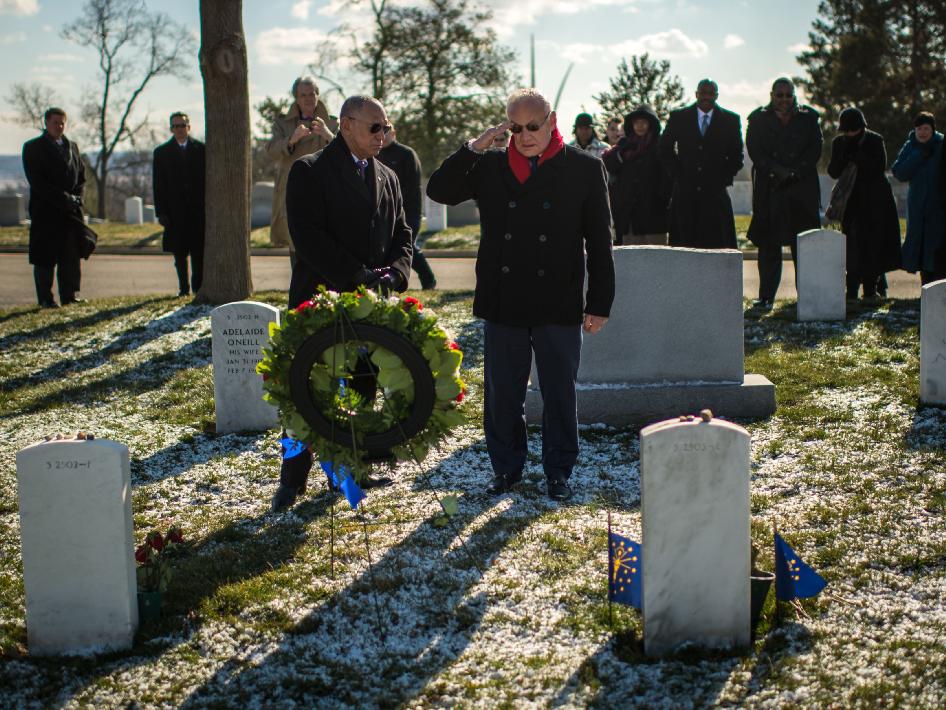 The seven person crew of the STS-107 Columbia, which included Rick D. Husband, William C. McCool, David Brown, Laurel Blair Salton Clark, Michael P. Anderson, Ilan Ramon, and Kalpana Chawla, died just 15 minutes before they were meant to touch down at Kennedy Space Center. Addressing the nation, then-President Bush said, “mankind is led into the darkness beyond our world by the inspiration of discovery and the longing to understand. Our journey into space will go on.”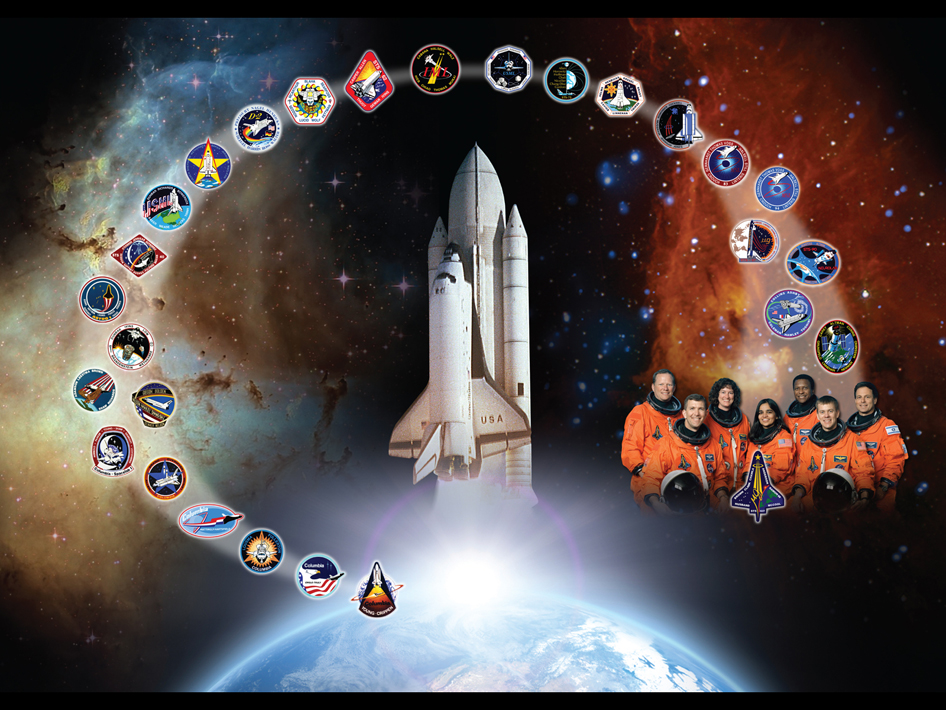


 Stories by Williams