Let’s talk artificial life forms, shall we? Lord knows they are a common enough feature in science fiction, aren’t they? In many cases, they take the form of cold, calculating machines that chill audiences to the bones with their “kill all humans” kind of vibe. In others, they were the solid-state beings with synthetic parts but hearts of gold and who stole ours in the process. Either way, AI’s are a cornerstone to the world of modern sci-fi. And over the past few decades, they’ve gone through countless renditions and re-imaginings, each with their own point to make about humanity, technology, and the line that separates natural and artificial.
But in the end, its really just the hardware that’s changed. Whether we were talking about Daleks, Terminators, or “Synthetics”, the core principle has remained the same. Based on mathematician and legendary cryptographer Alan Turing’s speculations, an Artificial Intelligence is essentially a being that can fool the judges in a double-blind test. Working extensively with machines that were primarily designed for solving massive mathematical equations, Turing believed that some day, we would be able to construct a machine that would be able to perform higher reasoning, surpassing even humans.
Arny (DaTerminator): Who knew robots from the future would have Austrian accents? For that matter, who knew they’d all look like bodybuilders? Originally, when Arny was presented with the script for Cameron’s seminal time traveling sci-fi flick, he was being asked to play the role of Kyle Reese, the human hero. But Arny very quickly found himself identifying with the role of the Terminator, and a franchise was born!
Originally, the Terminator was the type of cold, unfeeling and ruthless machine that haunted our nightmares, a cyberpunk commentary on the dangers of run-away technology and human vanity. Much like its creator, the Skynet supercomputer, the T101 was part of a race of machines that decided it could do without humanity and was sent out to exterminate them. As Reese himself said in the original: “It can’t be bargained with. It can’t be reasoned with. It doesn’t feel pity, or remorse, or fear. And it absolutely will not stop, ever, until you are dead.”
The second Terminator, by contrast, was a game changer. Captured in the future and reprogrammed to protect John Conner, he became the sort of surrogate father that John never had. Sarah reflected on this irony during a moment of internal monologue during movie two: “Watching John with the machine, it was suddenly so clear. The terminator, would never stop. It would never leave him, and it would never hurt him, never shout at him, or get drunk and hit him, or say it was too busy to spend time with him. It would always be there. And it would die, to protect him. Of all the would-be fathers who came and went over the years, this thing, this machine, was the only one who measured up. In an insane world, it was the sanest choice.”
In short, Cameron gave us two visions of technology with these first two installments in the series. In the first, we got the dangers of worshiping high-technology at the expense of humanity. In movie two, we witnessed the reconciliation of humans with technology, showing how an artificial life form could actually be capable of more humanity than a human being. To quote one last line from the franchise: “The unknown future rolls toward us. I face it, for the first time, with a sense of hope. Because if a machine, a Terminator, can learn the value of human life, maybe we can too.”
Bender: No list of AI’s and the like would ever be complete without mentioning Futurama’s Bender. That dude put’s the funk in funky robot! Originally designed to be a bending unit, hence his name, he seems more adept at wisecracking, alcoholism, chain-smoking and comedicaly plotting the demise of humanity. But its quickly made clear that he doesn’t really mean it. While he may hold humans in pretty low esteem, laughing at tragedy and failing to empathize with anything that isn’t him, he also loves his best friend Fry whom he refers to affectionately as “meat-bag”.
In addition, he’s got some aspirations that point to a creative soul. Early on in the show, it was revealed that any time he gets around something magnetic, he begins singing folk and country western tunes. This is apparently because he always wanted to be a singer, and after a crippling accident in season 3, he got to do just that – touring the country with Beck and a show called “Bend-aid” which raised awareness about the plight of broken robots.
He also wanted to be a cook, which was difficult considering he had no sense of taste or seemed to care about lethally poisoning humans! However, after learning at the feet of legendary Helmut Spargle, he learned the secret of “Ultimate Flavor”, which he then used to challenge and humiliate his idol chef Elzar on the Iron Chef. Apparently the secret was confidence, and a vial of water laced with LSD!
Other than that, there’s really not that much going on with Bender. Up front, he’s a chain smoking, alcoholic robot with loose morals or a total lack thereof. When one gets to know him better, they pretty much conclude that what you see is what you get! An endless source of sardonic humor, weird fashion sense, and dry one-liners. Of them all “Bite my shiny metal ass”, “Pimpmobile”, “We’re boned!” and “Up yours chump” seems to rank the highest.
Ash/Bishop: Here we have yet another case of robots giving us mixed messages, and comes to us direct from the Alien franchise. In the original movie, we were confronted with Ash, an obedient corporate mole who did the company’s bidding at the expense of human life. His cold, misguided priorities were only heightened when he revealed that he admired the xenomorph because of its “purity”. “A survivor… unclouded by conscience, remorse, or delusions of morality.”
After going nuts and trying to kill Ripley, he was even kind enough to smile and say in that disembodied tinny voice of his, “I can’t lie to you about your chances, but… you have my sympathies.” What an asshole! And the perfect representation for an inhuman, calculating robot. The result of unimpeded aspirations, no doubt the same thing which was motivating his corporate masters to get their hands on a hostile alien, even if it meant sacrificing a crew or two.
But, as with Terminator, Cameron pulled a switch-up in movie two with the Synthetic known as Bishop (or “artificial human” as he preferred to be called). In the beginning, Ripley was hostile towards him, rebuffing his attempts to assure her that he was incapable of killing people thanks to the addition of his behavioral inhibitors. Because of these, he could not harm, or through inaction allow to be harmed, a human being (otherwise known as an “Asimov”). But in the end, Bishop’s constant concern for the crew and the way he was willing to sacrifice himself to save Newt won her over.
Too bad he had to get ripped in half to earn her trust. But I guess when a earlier model tries to shove a magazine down your throat, you kind of have to go above and beyond to make someone put their life in your hands again. Now if only all synthetics were willing to get themselves ripped in half for Ripley’s sake, she’d be set!
C3P0/R2D2: For that matter, who knew robots from the future would be fay, effeminate and possibly homosexual? Not that there’s anything wrong with that last one… But as audiences are sure to agree, the other characteristics could get quite annoying after awhile. C3P0’s constant complaining, griping, moaning and citing of statistical probabilities were at once too human and too robotic! Kind of brilliant really… You could say he was the Sheldon of the Star Wars universe!
Still, C3P0 if nothing if not useful when characters found themselves in diplomatic situations, or facing a species of aliens who’s language they couldn’t possibly fathom. He could even interface with machinery, which was helpful when the hyperdrive was out or the moisture condensers weren’t working. Gotta bring in that “Blue Harvest” after all! And given that R2D2 could do nothing but bleep and blurp, someone had to be around to translate for him.
Speaking of which, R2D2 was the perfect counterpart to C3P0. As the astromech droid of the pair, he was the engineer and a real nuts and bolts kind of guy, whereas C3P0 was the diplomat and expert in protocol. Whereas 3P0 was sure to give up at the first sign of trouble, R2 would always soldier on and put himself in harm’s way to get things done. This difference in personality was also made evident in their differences in height and structure. Whereas C3P0 was tall, lanky and looked quite fragile, R2D2 was short, stocky, and looked like he could take a licking and keep on ticking!
Naturally, it was this combination of talents that made them comically entertaining during their many adventures and hijinks together. The one would always complain and be negative, the other would be positive and stubborn. And in the end, despite their differences, they couldn’t possibly imagine a life without the other. This became especially evident whenever they were separated or one of them was injured.
Hmmm, all of this is starting to sound familiar to me somehow. I’m reminded of another, mismatched, and possibly homosexual duo. One with a possible fetish for rubber… Not that there’s anything wrong with that! 😉
Cameron: Some might accuse me of smuggling her in here just to get some eye-candy in the mix. Some might say that this list already has an example from the Terminator franchise and doesn’t need another. They would probably be right…
But you know what, screw that, it’s Summer Glau! And the fact of the matter is, she did a way better job than Kristanna Loken at showing that these killing/protective machines can be played by women. Making her appearance in the series Terminator: The Sarah Conner Chronicles, she worked alongside acting great Lena Headey of 300 and Game of Thrones fame.
And in all fairness, she and Lokken did bring some variety to the franchise. For instance, in the show, she portrayed yet another reprogrammed machine from the future, but represented a model different from the T101’s. The purpose of these latter models appeared to be versatility, the smaller chassis and articulate appendages now able to fit inside a smaller frame, making a woman’s body available as a potential disguise. Quite smart really. If you think about it, people are a lot more likely to trust a smaller woman than a bulked-out Arny bot any day (especially men!) It also opened up the series to more female characters other than Sarah.
And dammit, it’s Summer Glau! If she didn’t earn her keep from portraying River Tam in Firefly and Serenity, then what hope is there for the rest of us!
Cortana: Here we have another female AI, and one who is pretty attractive despite her lack of a body. In this case, she comes to us from the Halo universe. In addition to being hailed by critics for her believability, depth of character, and attractive appearance, she was ranked as one of the most disturbingly sexual game characters by Games.net. No surprises there, really. Originally, the designers of her character used Egyptian Queen Nefertiti as a model, and her half-naked appearance throughout the game has been known to get the average gamer to stand up and salute!
Though she serves ostensibly as the ship’s AI for the UNSC Pillar of Autumn, Cortana ends up having a role that far exceeds her original programming. Constructed from the cloned brain of Dr. Catherine Elizabeth Halsey, creator of the SPARTAN project, she has an evolving matrix, and hence is capable of learning and adapting as time goes on. Due to this and their shared experiences as the series goes on, she and the Master Chief form a bond and even become something akin to friends.
Although she has no physical appearance, Cortana’ program is mobile and makes several appearances throughout the series, and always in different spots. She is able to travel around with the Master Chief, commandeer Covenant vessels, and interface with a variety of machines. And aside from her feminine appearance, he soft, melodic voice is a soothing change of pace from the Chief’s gruff tone and the racket of gunfire and dead aliens!
Data: The stoic, stalwart and socially awkward android of Star Trek: TNG. Built to resemble his maker, Dr. Noonian Soong, Data is a first-generation positronic android – a concept borrowed from Asimov’s I, Robot. He later enlisted in Star Fleet in order to be of service to humanity and explore the universe. In addition to his unsurpassed computational abilities, he also possesses incredible strength, reflexes, and even knows how to pleasure the ladies. No joke, he’s apparently got all kind of files on how to do… stuff, and he even got to use them! 😉
Unfortunately, Data’s programming does not include emotions. Initially, this seemed to serve the obvious purpose of making his character a foil for humanity, much like Spock was in the original series. However, as the show progressed, it was revealed that Soong had created an android very much like Data who also possessed the capacity for emotions. But of course, things went terribly wrong when this model, named Lor, became terribly ambitious and misanthropic. There were some deaths…
Throughout the original series, Data finds himself seeking to understand humanity, frequently coming up short, but always learning from the experience. His attempts at humor and failure to grasp social cues and innuendo are also a constant source of comic relief, as are his attempts to mimic these very things. And though he eventually was able to procure an “emotion chip” from his brother, Data remains the straight man of the TNG universe, responding to every situation with a blank look or a confused and fascinated expression.
More coming in installment two. Just give me some time to do all the write ups and find some pics :)…
You know those characters, people who come to us from our favorite movies, TV shows, or pop culture in general. The kinds of people who excel at kicking ass and taking names? The kinds of people that just never seem to die, they just keep getting bigger and badder the more time passes? Yeah, we all have people like that in our collective imagination, the inspiration heroes and villain who just impressed the hell out of us and made us want to be badass like them!
Well today, I felt inspired to do a little tribute piece to characters such as these. On the one hand, this seemed like a good diversion from my usual conceptual pieces which deal with big and potentially boring stuff. I mean, outside of people like me, who really cares about planetary cultures and mega cities? On the other, it felt like an overdue acknowledgement to all the characters that were well written, well scripted and well executed over the years. Yes, today I’m paying tribute to all the people in sci-fi who were so good at being so bad, or just bad enough…
Here they are!
Alucard: The main character from the short-lived by popular Hellsing series. Not to be confused with Van Hellsing, also about a vampire hunter, this series was all about an organization in the UK that was dedicated to fighting vampires, ghouls, and other hellish creatures. Their chief operative, a mysterious vampire named Alucard (Dracula backwards), was quite the epitome of badassness!
In addition to his cape, Victorian-era clothes, and massive handgun, he had the supreme confidence and “man of few words” thing going that can only come from being alive for so freaking long. As they say with most vampire series, the longer they live, the more powerful they get. And Alucard has been around for a long, long time!
Ordinarily, he would just dispatch his enemies with a few blasts of his massive double-action pistol. But when faced with truly powerful demons, he would break the really scary shit! We’re talking seriously dark, scary energies that would tear an enemy to pieces, body and soul! Though it was never made clear why he was helping humanity in the animated series, the original comic did a better job of exploring his back story and motivations.
Taking its cue from Bram Stoker’s original novel, Dracula was apparently defeated by the notorious Abraham Van Hellsing and agreed to become the family’s loyal servant. The main story takes place several hundred years, later when the latest descendent of the Hellsing family is carrying on the tradition of keeping England safe from the forces of evil.
Blade: Here we have another vampire hunter who’s more than just your average guy! Though his real name is Eric Brooks (according to the comic series), this street hunter goes by the professional name of “Blade”. Little wonder, considering that just about every weapon in his arsenal features an acid edged pig-sticker or a sharpened silver stake! But of course, the real twist comes in why he does what he does.
As if that wasn’t badass enough though, he also alternates between a Gran Torino and a motorbike, wears a leather cape over segmented body armor, and packs enough firepower to take down an entire SWAT team single-handedly! All the while, he utters his few, but cryptic lines through those big, vampire incisors.
Known ominously as the “Daywalker” to vampires who are scared shitless of him, he combines the best of both worlds when it comes to human and vampires. He is immune to silver, garlic and daylight, but can heal almost instantaneously and has super strength. His only weakness however comes in the form of the “thirst”, the need for blood which every vampire suffers from and must eventually succumb to, or die. In order to preserve his humanity, Blade relies on a synthetic “serum” which temporarily satisfies his cravings.
In a theme that has growing in popularity and familiarity since the early 80’s, Blade is a half-man, half-vampire who’s mother was bitten while pregnant with him. Tormented by his split identity, and the supposed loss of his mother, he has chosen to resolve this crisis by hunting those that made him what he is and robbed him of his human life. However, the question of what he will do once he’s rid the world of the last vampire, and what he will do when the serum stops working, are questions that remain unresolved, and help to drive the story.
Boba Fett: When you hear the name Star Wars and the word badass, what naturally comes to mind? Assuming you know anything about Star Wars, then chances you thought of Boba Fett! This notorious bounty hunter was probably the most badass thing about the series, dwarfing Vader, Jabba, and the Emperor in terms of shear awesomeness!
Hell, this guy not only appeared repeatedly in movies two and three (with a small cameo in a deleted scene in movie one), he also had entire novels, comics, and games dedicated to him. Annnnd, if the Dark Horse series Dark Empire is to be believed, Fett even escaped the mighty sarlacc. Who else amongst the expanded cast of the Star Wars saga can boast that kind of record? Lando? HA!
Though Lucas attempted to explain Boba’s origins in the prequel movie Attack of the Clones, other stories from the expanded universe claims that Boba was in fact a former Stormtrooper of Mandalorian origin.
However, on this latter point, all sources agree. Clearly, Boba Fett was of Mandalorian origin, a warrior race that had become virtually extinct after the Sith Wars and had relegated themselves to the role of bounty hunters and mercenaries. Boba had apparently distinguished himself amongst his rivals by delivering on contracts, charging exorbitant fees, and being very hard to kill. Hell, somebody who crawled their way free of the sarlacc aint no pushover!
The Joker: Batman’s nemesis, and Gotham’s smiling psychopath, the Joker is one of those villians you just love to hate! And yes, he’s also pretty damn badass! Though he has gone through countless renditions and adaptations over the years, all the variations revolve around the same basic theme.
Basically, the Joker is a sociopathic criminal who thrives on chaos, the perfect polar-opposite to Batman’s vigilante persona. Over the years, he has been in and out of Gotham’s Arkham Asylum, examined by doctors, but always seems to escape to stir up shit again.
In his most recent incarnation, as performed by Heath Ledger, the Joker reached new heights of popularity and badassery! Not only did he manage to rip off the mob, turn Gothamites against the Batman, drive Harvey Dent mad, commandeer the mob, bring Gotham to the brink, and stay one step ahead of the Batman and police the whole time. He managed to do it all with a twisted smile on his face! That’s an awful lot for a man who claims he doesn’t do planning!
Looking to the comics and expanded franchise, one sees even more examples of badassery! Here, as well as in the movies, new and old, the Joker is notorious for causing trouble and doing it with a shit-eating grin. In addition to the general mayhem he’s been known to cause, his credentials include turning a psychologist into his willing sidekick (Harley Quinn), kidnapping and torturing the Commissioner’s daughter, killing one of the Robin’s, and nearly killing Batman on numerous occasions. Yet somehow, he always manages to escape, survive, and live to inspire chaos another day. Malevolent? Yes. Psychotic. Oh yes! But a notorious badass as well? You betcha!
Raven: “Until a man is twenty-five, he still thinks, every so often, that under the right circumstances he could be the baddest motherfucker in the world… Hiro used to feel this way, too, but then he ran into Raven. In a way, this was liberating. He no longer has to worry about being the baddest motherfucker in the world. The position is taken.”
That pretty much says it all. Taken from Neal Stephenson’s Snow Crash, Raven is one of the chief antagonists of the story and one of the baddest motherflechter’s around! An Aleut by ancestry, he is skilled in the art of harpoon throwing, knife fighting, killing people, and being untouchable. Of course, this might have a lot to do with the fact that in the sidecar on his motorbike (pretty badass in itself!) he has a thermonuclear device stashed. This, apparently, he got off a Russian sub after stowing aboard and killing the entire crew with glass knives, and its wired to go off in case anybody does the unthinkable and kills him. Hence, nobody messes with Raven, as if his size and skill with weapons weren’t intimidating enough!
People recognize Raven not only by his obvious size, leather jacket, and motorbike, but also by the words “Poor Impulse Control” tattooed on his forehead. This is a holdover from his years in the corrections system of the future, where they’ve resorted to tattooing a prisoner’s particular maladjustments directly on their forehead for all to see. But for those who’ve pissed him off, or are just on his hit list, the first indication that Raven’s around is the telltale presence of his harpoon in your chest!
Molly Millions: Also known as “Sally Shears”, Molly is a recurring character in William Gibson’s Sprawl Trilogy. Technically, she is what is known as a “razor girl”, though cyber-ninja works just as well. Basically, she’s a gun (or razor blade) for hire who gets paid by high-rollers to take out anyone who stands between them and their objectives. This, she typically does by slashing people with razor claws that are imbedded in her fingertips, though she’s adept at hand to hand combat and wield firearms with the best of them too!
Thought tough, deadly and ruthlessly efficient, she has shown herself to have a softer, sensitive side, not to mention a sympathetic past. For instance, her first appearance is in Gibson’s short story (and film adaptation) of Johnny Mnemonic. Here, she goes beyond her usual mandate and begins to fall in love with the story’s protagonist, Johnny.
In her follow-up appearance in Neuromancer, she admits that he was the first “client” she overstepped her boundaries with and still mourns him years later. She also reveals that she began as a “meat puppet”, a form of prostitute who allows their body to be controlled by handlers while they are maintained in a blank-outed state. This is how she apparently paid for her cybernetic enhancements and became a mercenary ninja.
On top of all that, she is a fiercely loyal and levelheaded woman who, despite the nature of her job, is committed to her moral code and values the kinds of human relationships that are becoming increasingly rare in Gibson’s world. One might say that she’s tough because she has to be and would much rather live an ordinary life where love is not obsolete and murder for hire is not the only way for street people to get ahead. Still, don’t mess with her! Just because she’s got a soft side doesn’t mean she won’t fillet your ass!
Ripley: Mother, warrior, humanitarian and xenocidal ass-kicker, Ellen Ripley defined female badassery for an entire generation of moviegoers! From her humble origins as a crewman aboard the Nostromo to her showdown with the mother Alien, Ripley demonstrated the full range of the heroine protagonist. She was began as a regular officer who was put into a terrifying and claustrophobic situation, a lone survivor of a xenomorph attack aboard a confined spacecraft.
But living to fight another day, she faced her vulnerability, overcame her fear, and put it all on the line to save a little girl. And in the course of that, she also strapped on some heavy artillery and kicked some serious ass! And in the end, the showdown between herself and the Alien hive queen was not only cinematic gold, it was so thick with allegory you could cut it with a knife! Two mothers, two titanic forces, coming together to fight for their young!
Let’s face it, this is what makes Sigourney Weaver and her character so awesome and sympathetic. She’s a regular woman who, when faced with treacherous odds, went above and beyond to do the right thing. And let’s not forget that her motives were purer than anyone else’s. Whereas some people were interested in their bonuses and others in shooting shit up, she fought tooth and nail to protect and save the life of a young child, a girl who reminded her of the daughter she lost.
And it worked. In the end, she outlived all the professionals who ignored her or were sent in to “protect her”. When all else failed, this lady came through and showed that you don’t come between a mother and her child and you don’t underestimate a determined woman, or she’ll kick your ass! Yes, years later and Ripley still remains an inspiration to women everywhere, and a reminder to us boys to respect and honor the women in their lives. In the end, they are a hell of a lot tougher than you think 😉
Vampire Hunter D: Yet another vampire hunter who’s got some questionable ancestry! Vampire Hunter D is based on a novel series with manga and anime adaptations. Taking place in the distant future, thousands of years after WWIII took place, D wanders through a pre-industrial world hunting the demons, vampires and assorted creatures that have come to plague it. Apparently, in the distant future, vampires have established themselves as a sort of Nobility that control their fiefdoms through a combination of advanced technology and magic.
Much like Alucard, D has a questionable ancestry which is gradually established as time goes on. Right off the bat, it is clear that he is a dhampire, the child of a vampire mother and a human mother. As time goes on, it becomes established that he is fact the son of the ancient Count himself. As a result, he has some pretty badass powers, which include spontaneous healing, super strength, and some pretty dark powers! Unfortunately, he also has his share of weaknesses as well. Sun-sickness, garlic; all the things that are fatal to vampires are pretty harmful to him as well.
Believing that vampires have overstepped their traditional authority, D is dedicated to sending them back to the darkness from whence they came. Though he is part vampire, he values his human side and cannot condone how vampires abuse the humans they have dominion over.
Ah, and his weapon of choice for dispatching vampires and demons? A big katana-style sword! This weapon can decapitate even the most powerful vampire, or rend him from his neck to his navel. Oh, and did I mention he also has a smartass symbiot living on his hand? Might sound weird, but this thing keeps him company, keeps him honest, and has even saved his life a few times.
Vasquez: Yes, I realize I’m doubling down on a single franchise. But no list of badasses would be complete without mentioning Private Vasquez. Also of Aliens fame, this woman put the bad in badass, toting that massive smartgun and telling everybody who got smart with her where to go! Seriously, those iconic lines, “Let’s ROOOOOCK!” and “I just want to know one thing… where-they-are!” Bam! There wasn’t a single person in the audience who wasn’t get goose bumps.
Not only was she clearly a tough, take-no-prisoners kind of woman, she commanded the respect of those around her, particularly the men. Hudson, played by Bill Paxton, would get smacked down anytime he tried to sass her. Recall the lines: “Vasquez, anybody ever mistake you for a man?” “No, how about you?” Classic! And of course Private Drake, her partner in arms, practically followed her around, even though he was twice her size!
But of course, she too had a sensitive side. When Drake fell protecting their group, she took it really hard. She was even willing to go back into the den of the xenomorph’s when it became clear he was still alive. Even though it was obvious he and the others were being used as symbiotes and the odds of them making it out alive were virtually nil, she was still willing to risk her life. One seriously got the impression that she loves the big lug after all…
But mainly, she was an ice cold chick and tough as nails. When those around her began to panic and cry “game over, man!”, she raised her gun and started kicking ass! And when at last she was cornered and wounded, did she roll over and die? Hell no! She grabbed hold of that grenade and went down with a bang, taking as many of those buggers as she could buggers with her! RIP Vasquez. You rock!
Well that’s all for now. I was going to include some non sci-fi examples in this list as well, but that would made it too long to post! Stay tuned, I’m thinking I’ll save those examples of mainstream badassery for next time. And I might just have some final thoughts to offer on this whole phenomenon known as badassesness. I love inventing words! Bye!
Recently, I came across the lovely article entitled “Don’t f—- around with gods” from the Sydney Morning Herald. The subject was director Ridley Scott’s new movie, Prometheus, which is currently in post-production and set to be released in June of this year. As I’m sure everyone is aware by now, this movie is a return to the universe of Alien, a franchise which Scott began in earnest 30 years ago. Originally thought to be a prequel, Scott has since revealed that this movie is in fact a sort of standalone movie which explores the concept of Exogenesis – the idea that life came to Earth or other planets from an extra-solar source.
Although linked to the original Alien movie in that it deals with the same derelict that the crew of Nostromo encountered, the story is far more concerned with the alien race known as the Space Jockeys than the xenomorphs themselves. Or at least, that appears to be the focus. I’m sure the xenos make an appearance, and probably end up screwing everybody over, as is there tendency! But mainly, Scott emphasized that the plot, as suggested by the title, has to do with the discovery of powerful, dangerous things. When one encounters alien technology, the specter of the bound god who gave fire to humanity can’t help but be resurrected. It’s just timeless like that!
In the course of the interview, Scott also spoke extensively about his reasons for getting into science fiction in the first place. I have to say that I loved his answer: “Science fiction is a wonderful – sorry about the pun – universe for – again, another much overused word – creativity. It’s an arena where anything goes… The opportunity presents itself to fundamentally do anything you want, providing that you draw up a rule book in the first place. You’ve got to draw up the rules of your drama and within that universe you’ve got to actually stick to your own rule book. I think that’s what’s happening – we’re not drawing enough rules up when we do materials. It feels like writing a book…”
Wow. It’s wonderful when you see words that you yourself have said put into the mouths of true veterans! If I was to make a list of directors whom I admire for their creativity and vision over the years, Scott would be tied with Stanley Kubrick for first place! With movies like Alien,Blade Runner, Black Hawk Down and Gladiator to his credit, I got to say that I’m pleased as punch that he and agree on two fundamental precepts. One, science fiction is a great realm for creativity and inventiveness due to the fact that the only limitations are those of the author’s imagination. And two, that it’s best to have a detailed game plan worked out in advance. This is what sunk Lucas’ prequels people! Always know where you’re going in advance and try to stick to the plan. Otherwise you wind up with contrived plot twists and forced situations. Trust me, I know!
Another great thing to read was Scott’s indictation that Prometheus wouldn’t be a massive CGI fest. Something which set Cameron’s Aliens apart from the dubious Avatar was the use of real live actors in suits or animatronics instead of digital creations. Granted, this was done in an age when CGI wasn’t available, but those who followed in Scott and Cameron’s footsteps understood the value of shooting things this way. If there was one thing AVP did right, it was the use of costumed actors and real sets rather than blue screens and generated images.
Having set the precedent, I think it’s only right that Scott remain true to this heritage. After all, his environments, especially that of the Space Jockey Ship, were known for their dark, gritty, grimy look, something which was very… Lovecraftian! Try doing that with digital effects, it just doesn’t work! CGI might be great for creating visuals, but the textures are always too clean and sterile. Or in the case of Avatar, too cartoony! And actors are far more convincing when they’re interacting with a real person, or even a robotic alien, than a standing stick or a tennis ball on the end of a string!
In any case, here’s the link to the article. It’s a good read, and definitely for fans of Scott, the Aliens franchise, and just sci-fi in general!
Back with more examples of cool sci-fi worlds. Last time, it was the Dune universe, today it’s Star Wars! Once again, I will looking at the original movies, with some added info from the expanded franchise, but not the prequels. Sorry, but like most Star Wars fanboys, I prefer to pretend that those installments didn’t exist. Nothing personal, its just that aside from tying things up in a nice little package and providing some dazzling visual effects, they really didn’t enrich the universe any.
But this aint a spiel on Lucas and his lost sense of direction. This is about cool Star Wars worlds! And here are the top contenders:
Alderaan: This planet was apparently the soul of the Republic, much in the same way that Coruscant was its capitol. Renowned throughout the galaxy for its peaceful inhabitants and unspoiled beauty, Alderaan was also a cultural capitol that produced many of the universe’s greatest artists, poets and performers. As the home to Princess Leia Organa and her adopted father, Senator Bail Organa – both of whom were members of the Rebel Alliance – it was also was the first planet to be destroyed by the Death Star in Episode IV: A New Hope.
In the expanded universe, Alderaan is depicted as a lush and fertile world covered in oceans, grasslands, mountain ranges and canyons. In order to preserve the planet’s beauty, Alderaan’s cities were built directly into the landscape, either within canyon walls, on stilts along the shorelines, or underneath the polar ice. The planet’s capitol, Aldera, was situated on a small island in the center of a caldera.
In terms of government, the planet was ruled by House Antilles, a constitutional monarchy, of which the Organa family were the last surviving members. Jedi master Ulic Qel Dromo, who’s name comes up in the game Knights of the Old Republic, was also from Alderaan. The popular Star Wars creature known as the “nerf” (which I believe was inspired by Herbert’s “slig”) also comes from this planet.
The name is clearly inspired by the Arabic name for for two pairs of stars alpha and beta Canis Minoris (currently known as Procyon and Gomeisa) and alpha and beta Geminorum (Castor and Pollux). Translated literally, the name means “the two forearms” or “the two front paws”. I can only surmise that Lucas learned of this disused astronomic name and decided to use it in his franchise because of its esoteric appeal.
Corellia: A bustling world of spacers and traders, Corellia is also the home planet of Han Solo, Wedge Antilles and Garm Bel Iblis. It is also the location of the Corellian shipyards, a series of orbital factories that produce such ships as the famed Millenium Falcon, the Corellian Corvette and the Imperial-class Star Destroyer. In terms of ecology, Corellia is lush world with several highly developed urban centers, resulting in a great deal in trade. Little wonder then why Corellia is famous for its spacefaring culture, smugglers, pirates, and roguish personalities.
During the time of the Galactic Republic, Corellia was the capitol of the system and chief representative of the “Five Brothers”. This refers to the five habitable planets in the system, three of which were home to their own indigenous species. Being the closest planet to Corel, and the most developed, Corellia was seen as the senior brother in this arrangement.
Another interesting feature about the Corellian system is Centerpoint Station, an ancient installation that was built over a million years before events in A New Hope. Built by an insectoid species known as Killik, the station was apparently a massive tractor-beam array that was capable of towing entire planets from one point in the galaxy to another, which is believed to be the reason why Corell boasts several worlds with their own indigenous inhabitants.
During the reign of the Galactic Empire, Corellia became an imperial mandate, but maintained its fierce spirit of independence until the arrival of the New Republic. This spirit of independence is evidenced by the fact that the Rebel Alliance was founded here when the founders convened to agree on a declaration of principles. It was also shown in the way the Corellians resisted Imperial rule, both through its production of smugglers and pirates and its anti-Imperial demonstrations.
Although it never appeared in the original series, the planet is featured in a number of novelizations and video game adaptations (particularly the Corellian Trilogy and Star Wars: The Old Republic).
Coruscant: The capitol of the Galactic Republic and Empire in the Star Wars universe, this world was essentially one massive city. According to the expanded universe, approximately one trillion humans and aliens live on the planet, of which humans make up the majority, and the planet-wide city is multitiered, reflecting a sort of class system. Whereas the upper levels are occupied by the wealthiest citizens and members of the Republic’s bureaucracy, the native inhabitants of the planet are largely extinct or live on the lower levels while the planet’s surface is inhabited solely by outcasts and indigents.
The uppermost levels were made up of skyscrapers that dwarfed even the planet’s natural mountain chains. These were lighted regularly by the planet’s sun and a series of orbital mirrors which ensured that shadows cast by the massive structures did not overcast the surrounding environment too much. At the lower levels where natural light could not reach, holograms and artificial lights provided most of the illumination. These regions were often known as the “entertainment districts” due to the availability of bars, gambling halls and other distractions. People who lived in these regions were known as “Twilighters” because of the areas seedy reputation and appearance.
Coruscant is also home to the Galactic Senate, the Jedi Order, the Jedi Temple, the Republic Archives, and the Imperial palace. All trade routes cross at the planet’s galactic coordinates, ensuring a constant coming and going of trade and transport ships in and around the planet. In addition, several artificial satellites and shipyards were placed in orbit around the planet, especially during the reign of Emperor Palpatine. The massive output of garbage and the need for food and water meant that most of the planet’s needs had to be handled from offworld.
In addition to ejecting all of its non-recyclable garbage into orbit and importing most of its food, huge feats of engineering were required to meet its daily need for water. This was accomplished by piping in freshwater from the planet’s glaciers and underwater aquifers, which were created when the planet’s vast oceans were drained to create room for more urban sprawl. Just about all buildings on the planet also had their own semi self-sufficient ecosystems built directly into their buildings, where water, like most other necessities, was recycled.
Although it did not appear in the regular series, Coruscant was a focal point in Timothy Zhan’s Thrawn Trilogy and made numerous subsequent appearances in novelizations and graphic novels (most notably, the Dark Empire series). The name is apparently derived from the Latin coruscant which translates as “vibrating” and/or “glittering”, referring to its opulent appearance from space.
Dagobah: A planet in the outer rim of the galaxy, and the home of Jedi Grand Master Yoda during his long exile. Composed of swamps and forests and teeming with life, the planet was devoid of cities or infrastructure. It was the location of Luke Skywalker’s training in The Empire Strikes Back and Return of the Jedi, and also the last known location of Yoda before he died of natural causes.
Long before events in the original trilogy, the planet was also the site of a major battle between Jedi Master Minch battled and killed a powerful Dark Jedi. As a result, the cave where he fell absorbed his dark powers and became, according to Yoda, a place that was “strong with the dark side”. It was here that Luke confronted his demons and gained the first hints as to his true ancestry.
Because of its uncharted nature and its resplendent nature, Yoda chose this world for his exile, knowing that the presence of so many creatures and dark side energy would mask his force signature.
Dantooine: An Outer Rim world, known for its mild climate and resplendent system of grasslands, rivers and lakes. Though far from most galactic trade routes, Dantooine was a popular destination for people looking to escape the crush of the Core Worlds. Nevertheless, its population was largely made up of farmers and small communities.
Being a remote and peaceful world, Dantooine was also home to the Jedi Academy. During the Sith War, most Jedi Masters were stationed here and conducted the training of Jedi Knights. Towards the end of the war, the Academy was destroyed by the Sith during an orbital bombardment. However, the academy was quickly rebuilt as soon as the war was over and a new crisis loomed.
According to the KOTOR series, the planet was also once part of the Rakatan Empire. Remnants of this occupation were demonstrated by a series of ruins which apparently contained the first of several Star Maps, the purpose of which was to safeguard the location of the Rakatan Star Forge. It was here that Revan began his descent to the dark side when he began investigating these ruins for hints as to its location. Exar Kun was also trained here, another notorious enemy of the Republic who began as a Jedi.
Endor: Also known as the “Forest Moon of Endor” and “The Sanctuary Moon”, Endor was a small moon that orbited the gas giant of Endor. The homeworld of the Ewok race, and the location of the second Death Star in Return of the Jedi. It was also the site of the Battle of Endor, where Rebel forces engaged the Imperial fleet and army in both orbit of the planet and planetside. Though intended as a trap by the Emperor, this battle became the turning point in the Galactic Civil War and led to the Rebels to their eventual victory over the Empire.
Due to the fact the the second Death Star was supposedly incomplete, the Rebels were forced to put down on the world and locate the shield generator that protected it. In the course of their search, they came upon the indigenous Ewok people and were recruited by them. This alliance allowed for them to locate the generator and, when the Emperor’s trap closed around them, overcome the Imperial forces guarding it.
According to Lucas, this world was inspired by his original ideas for Kashyyyk, the home of the Wookies (see below). Here, the surface of the planet was lush and green, covered in massive natural forests and filled with tons of natural predators. In order to survive, the Ewoks live in villages built above ground, anchored along the sides of the massive trees where land-based predators cannot reach them. These same characteristics would be recycled later in the franchise where descriptions of Kashyyyk came up.
Hoth: The sixth and furthest planet in the remote Hoth system, this planet is a desolate and ice covered world renowned for its extreme cold and harsh climate. Because of its remote location, it was also the home of the Rebel’s Echo Base for a time during the Galactic Civil War, shortly after the Rebels destroyed the Death Star and were forced to relocate from Yavin 4. The Battle of Hoth, during which time the Empire discovered and destroyed this base, was a focal point in the movie Empire Strikes Back, where Rebels fought a pitch battle to cover their evacuation from the planet.
Beyond the planet was a large asteroid belt which apparently wreaked havoc with navigation and sensors, another reason why the Rebels chose the location for their base. The cold climate resulted in a relatively small amount of native life forms, which included the tantaun and the predatorial wampas. During the events of Empire, Luke Skywalker was attacked by a wampa and forced to flee its lair after cutting off one of its arms with his lightsaber. This encounter and his subsequent near-death experience on the icy plains led to a vision in which Obi Wan instructed him to go to Dagobah and seek the training of Jedi Grand Master Yoda.
From what I can tell, this planet is named after Hermann Hoth, a German General who is best known for his command of the 4th Panzer Army during Operation Barbarossa (the invasion of Russia) and his subsequent defeat at the battles of Stalingrad and Kursk. Known for his cunning and icy temperament, it seems fitting that an ice-planet would be named after him!
Kashyyyk: Also known as “Wookiee Planet C”, “Edean”, “G5-623”, and “Wookiee World”, Kashyyyk is a planet in the Mid Rim. It was the lush, wroshyr tree-filled home world of the Wookiees and the home planet of Chewbacca. During the time of the Sith War, the planet was a source of slaves, all of which were exported by the Cserka Corporation. After slaving operations ceased, the planet became a member of the Galactic Republic, only to be reduced to the status of a slave colony again during the time of the Galactic Empire. With the fall of the Empire, the planet were once again liberated and became a member of the New Republic.
Much like Endor, on which it was based, Kashyyyk was a lush word covered by forests, the greatest of which was known as the wroshyr tree. Due to the presence of natural predators, the Wookies made their home high up in the trees branches, constructing large villages that are anchored to the trunks and connected by bridge ways. Though primitive by Galactic standards, the Wookies demonstrated great ingenuity, especially when it came to adapting and using advanced technologies for their own purposes. In addition to constructing landing pads from the tops of large trees, Wookies are also known for their use of bowcasters, a blaster modeled in the shape of a crossbow.
The forest floor is considered sacred to the Wookies and off-limits to off-worlders. This area is known as the “Shadowlands” due the fact that very little light penetrates the forest canopies and reaches the forest floor. In addition, it is populated by many species of predators that are large and fierce enough that even the Wookies are wary of them. In Knights of the Old Republic, it was revealed that the ancient race known as Rakatan’s once used the planet as a source of slaves and even terraformed it, resulting in its lush forests, as well as its powerful and diverse species. The only remaining trace of the Rakatan empire, aside from the stimulated environment, is a Rakatan Star Map that is hidden in a corner of the Shadowlands.
Korriban: This planet was the homeworld of the original Sith species, and over the course of many generations became the home of the Sith Order. According to the KOTOR series, the original Sith Lords who defied the Jedi Order and embraced the dark side traveled to this world and subjugated the native species through their command of the force. Seeing them as godlike creatures, the Sith Lords were elevated to the status of divine leaders and were interred here after their deaths.
The tombs of original Sith Masters – Naga Sadow, Marko Ragnos, Ajunta Pall and Ludo Kressh – were all built in the Valley of Darkness. The inspiration for this was clearly the great Pyramids of Giza where the Pharaohs were interred. Each master has their own story, but it is apparenly Naga Sadow, the leader of the Sith during the “Great Hyperspace War”, that is most significant. Shortly after arriving on Korriban, the original Sith Masters began to turn on each other out of jealousy and mutual recrimination. In order to bring unity to them, Sadow took advantage of the arrival of a Republic survey team to convince his people that they were being invaded and needed to go to war.
The war took place roughly 5000 years before events in A New Hope are depicted and resulted in the total destruction of the Sith Empire. Korriban was devastated in the final assault, hence why the climate of the planet is desolate and rocky with little to no native flaura or fauna. In addition, Naga Sadow fled to Yaving 4 where he built a temple to himself and left a trace of his dark spirit, which in turn led to the rise of Sith Master Exar Kun (see below).
In addition, the planet became the home of the Sith Academy during the events of KOTOR 1, after Revan reestablished a base there. This apparently had much to do with the presence of a Rakatan Star Map, which was located within one of the tombs. The presence of this device, which are known to have dark side energy, may have a lot to do with why this planet was sought out by the original Sith Lords in the first place and became the locus of such dark powers. After events in KOTOR played out, the planet was once again left desolate when both the academy and its initiates were all destroyed.
Nar Shaddaa: Also known as the “Vertical City”, the “Smuggler’s Moon” and “Little Coruscant”, Nar Shaddaa is the largest moon of the planet Nal Hutta, the homeworld of the Hutts. Like Coruscant, it is covered by a planet-wide metropolis. But unlike the galactic capitol – which is only seedy and dark at the lower levels of its sprawl – Nar Shadaa is known for being dirty, dangerous and seedy just about everywhere on the planet.
Nar Shaddaa began as a stopover for merchants and smugglers who are traveling to and from the outer rim. In time, however, cities grew between the refueling spires and loading docks and began to be permeated by illegal activities of every kind. Often serving as entertainment for merchants, bounty hunters and privateers, gambling halls, race courses and seedy establishments quickly sprung up which were either run by organized crime or paid dues to them. Most syndicates have a home on this world, including the Hutts themselves who are known for being notorious gangsters.
Because of its reputation, a great deal of technological research and development also occurred on Nar Shaddaa. Companies that wanted to avoid restrictions and regulations that were commonplace elsewhere would set up shop on this planet, knowing that certain “fees” were the worst they could expect. Hence, in addition to being a place famous for gambling, smuggling, and assorted illegal activity, it is also a technological center of sorts.
Nar Shaddaa makes appearances numerous times in the Star Wars expanded universe, notably in the KOTOR series, the Force Unleashed, and other novelizations and games. Repeatedly, it has served as a hiding place for Jedi exiles or anyone else looking to disappear.
Tatooine: Possibly the most well-known planet in the Star Wars franchise, appearing prominently in both A New Hope and Return of the Jedi, Tatooine is a desert planet that orbits the binary Tatoo star system. Tatooine is sparsely-populated, mainly by moisture farmers, scrap dealers and the indigenous Sandpeople. However, the planet was also a focal point for events during the Sith War and the Galactic Civil War.
In the former case, it was the location of one of the Star Maps, and hence was visited by Revan twice. It was later the ancestral home of Luke Skywalker and the exile home of Jedi Master Obi-Wan Kenobi, both of whom became involved in the Civil War when princess Leia’s Corvette was boarded and her droids – R2D2 and C3P0 – were forced to jettison in orbit of the planet.
Tatooine has historically been controlled by Hutts, the most notorious of which was Jabba. During the events of A New Hope, Han was indebted to Jabba and took on a contract with Luke and Obi-Wan in order to pay him back. However, due to the demands of the Civil War, Han was unable to pay off his debt and wound up becoming a fixture in Jabba’s palace. His rescue, which was carried out by Luke, Chewbacca, Leia, Lando, R2D2 and C3P0, led to Jabba’s death and the majority of his crew.
In addition to its mixed population of colonists and transient inhabitants, Tatooine is home to two sentient races of people: the Sandpeople and the Jawas. Although not indigenous to Tatooine, the Jawas had made a permanent home on the desert world, salvaging droids, ship parts, and assorted electronics for resale and repair. The Sandpeople, who are indigenous, are a fierce, nomadic people who have adapted to desert life and are hostile of outsiders. The native bantha creature is apparently sacred to them, serving as a mount and a beast of burden. Native species also include the elusive Krayt Dragon and the fearsome Rancor.
Legend has it that Tatooine was once a lush, ocean covered world which was ruled by the Infinite Empire (i.e. the Rakata). During the decline of the empire, the indigenous people rebelled and forced them off the planet. In response, the Rakata subjected the world to an orbital bombardment which devastated the planet, turning the surface to glass and rendering it inhospitable for all time. This is apparently how Tatooine became the desert world it is by the current time of the franchise.
Yavin 4: One of three habitable worlds which orbit the gas giant Yavin in the system of the same name. Known for its lush climate and jungles, this remote world would also play a pivotal role in galactic events. After the Hyperspace War ended, it served as the exiled home of Sith Master Naga Sadow and his followers. Before his death, many temples were built in honor of him and he himself was entombed in a sarcophagus where he waited in a comatose state until the day when a renewed Sith Order would find him.
Several centuries later, he would be awakened by Freedon Nadd, a fallen Jedi who sought knowledge of the ancient Sith. After learning all he could from Sadow, Nadd turned on him and killed him, in true Sith fashion. He then took Sadow’s place as the Dark Lord and died shortly thereafter. After several centuries, another fallen Jedi named Exar Kun came to Yavin and destroyed Nadd’s apparition. He then used the children of Sadow’s followers to build new temples and locate Sadow’s ship, buried beneath some old ruins.
In time, other Jedi began to join him, the most noteworthy of which was Ulic Qel Dromo. After allying himself with the Krath and the Mandalorians, he began waging war against the Republic. In time, the Jedi Order and Republic defeated him, but Kun managed to seperate his spirit from his body and would remain tied to his temples for centuries to come.
During the Galactic Civil War, Yavin 4 served as the Rebel alliances main base after they abandoned Dantooine. The Battle of Yavin occurred shortly thereafter when the Death Star, in pursuit of Princess Leia and the Millennium Falcon, arrived in the system and attempted to destroy the planet. After destroying the Death Star, the rebels were forced to abandon the planet and relocate to Hoth (see above). The moon remained relatively uninhabited and untouched for over a decade when Luke Skywalker chose to build the new Jedi Academy there.
Some Final Thoughts:
Okay, think I got them all. Or at least the ones I could squeeze in without going incredibly, incredibly long. But I’m not sure the datum, as collected from the various sources that make up the Star Wars universe support any conclusions. This might be because there are so many contributing authors, writers and conceptual artists. But I do notice a few things which should be plain to anyone who takes the time to sort through these worlds and the universe which encompasses them.
1. Borrow early, borrow often!: For one, Lucas and the franchise he created borrowed heavily from many sources. One can see without much effort inspiration from such franchises as Foundation, Dune, and various other science fiction serials. He was also not averse to taking from classic cinema, literature, and history. In addition to the familiar notions of galactic empires, an ecumenopolis (worldwide city), ancient alien empires, and multicultural, racial hierarchies, there was also plenty of gun-slinging, swashbuckling, duels, and underworld elements. All of this combined to create a universe that is quite rich and appeals to both the adult and kid in us, more often the latter.
2. This universe be big!: After looking through all the background, details, side stories and spinoffs, I could only feel that the Star Wars universe is expansive and packed. This goes for material happening both before and after the original movies. Long before Lucas and Lucasarts began tackling the pre-history of the franchise, there were writers and graphic novels makers who were writing sequels to the franchise. And while most of the novels got repetitive and cliched after awhile, some of it was pretty gutsy, proposing the fall of the New Republic and the resurgence of the Sith Empire once again.
And when it comes to the prehistory of the Galactic Civil War, it seems that the Old Republic was not as peaceful and boring as it was previously made out to be. In fact, the conflict between the Jedi and the Sith appears to be a regular feature in the pre-New Hope universe, happening periodically whenever a new Sith Lord emerged and recruited people to their cause. Sure, here too, things seem repetitive, but at least they’re not boring. And it also raises some interesting questions, like is this an ongoing fued that will never end, or is there some ultimate purpose behind the battle between the light side and dark side?
Stuff like this makes me both more sad and indifferent to the existence of the Star Wars Prequels. On the one hand, they seem all the more disappointing when held up to a franchise that is as detailed and diverse as this one. On the other, they seem dwarfed by the contributions of so many other creative minds, almost to the point where they can become irrelevant. With this in mind, it kind of makes sense why Lucas has become so jealous and bossy with the franchise in recent years. Perhaps after seeing how others could enrich his creation so much, he realized just how superfluous he could become. Hence all this “I am the CREATOR” talk! Seen this way, it could very well be that this is his way of reasserting ownership over a universe that is outgrowing him.
That was fun! Join me again for another installment in the “Conceptual Sci-Fi” series! And look for my review of Hunger Games and more chapters of Data Miners too!
Picking up where I left off last time, I thought I’d get into some examples of how dystopian fiction has influenced popular culture. And given all the feedback I got on my previous post, I also wanted to incorporate some suggested titles as well. But, just to be clear, I still haven’t read Hunger Games, so please don’t ask about it!
Alright, so last time, I mentioned just about every examples of dystopian literature I could find. From the earliest examples of Candide and Gulliver’s Travellers, onto the more modern interpretations of The Time Machine and We, and culminating with classics like BNW and 1984, I essentially ended before I could get into how these novels have had an influence on film and other media. In addition to inspiring the written words, these classics have inspired an entire culture of iconography, symbolism and motifs.
Not surprising, really. Every work of dystopian fiction and satire has sought to create images in the reader’s mind, using highly specific descriptions in order to paint a scene and inspire the right mood. Whenever these novels have been adapted to film, or directors were simply trying to convey similar themes, the task of properly conveying it all visually has always been a hefty one. The same is true for graphic novels and any other visual medium. So today, just for fun, and perhaps to complete my romp through the realm of this inspired genre, here are some examples of dystopia in modern media:
Blade Runner: Granted, Blade Runner was based on Philip K Dick’s Do Android Dream of Electric Sheep?, a dystopian story in some respects, but not in the same way that the movie was. Whereas the novel took place in a post-apocalyptic Los Angeles (circa 2019) which is sparsely populated and where a living animal is seen as a status symbol. In the movie, the year and location are the same, but the setting is starkly different. Here, it is a stuffy, polluted, mega-city made up of massive skyscrapers and giant animated billboards, where the streets are dirty and packed with people who spoke a strange dialect known as Cityspeak (check out my post on Cityspeak for on that).
And what made it all so awesome, aside from the plot, was the attention to detail. Director Ridley Scott, the same man who brought us Aliens, brought his usual artistic touch and a team of first-grade set designers to the table. Overall, they produced some pretty awesome concepts, ones which are still being praised to this day. Here are just a few:
The Tyrell Corp. building, which was kind of the focal point of the movie. Early on, we get a birds-eye view of it as Detective Deckard Cain (Harrison Ford) is being flown there in a Spinner (flying car). Later on, the leader of the Replicant party, Roy Batty, travels there as well seeking answers to some of life’s most basic questions.
For starters, the building is clearly based on a the design of a Ziggurat, the breed of ancient Babylon temple that inspired such legends as the “Tower of Babel”, and which serves as a clear representation for the almost godlike power Tyrell wields. The interior design, with its large columns, soft lighting, candles, an owl (a possible reference to Athena’s owl) and the way Tyrell can block out the sun at will all serve to further illustrate this point. That scene near the end where is dressed in lavish white robes also seemed pretty symbolic, I’d say!
And for those who read 1984, there is a possible encoded reference to the four ministries as well- Truth, Peace, Love, and Plenty – all of which were pyramid-like in design. Coincidence? Who knows? All that matter is when it comes to massive structures that harken back to ancient Egypt and Mesapotamia, the symbolic value is clear. Much like the civilizations that built them, these things stood for power and dominion, both over lesser subjects and the afterlife itself. They were the ruler’s way of achieving immortality by creating something that embodied their power and would stand the test of time. As Shelley said in his poem “Ozymandias”: “Look on my works, ye mighty, and despair!”
And when it comes right down to it, this old-world kind of mentality, updated for the modern age, is indispensable to any dystopian story: Absolute power, wielded by the few over the many and represented in conspicuous and obvious ways! In many cases, it comes in the form of totalitarian governments (a la The Party) who runs things with an iron fist and build massive government buildings to remind everyone of who’s in charge. But in other cases, it takes the form or corporate dominance, where the wealthy rule society like feudal barons while the rest live like serfs. And much like their bureaucratic peers, they choose to lord this by building lavish buildings to themselves and covering themselves with ornate symbols!
Another trademark bit of dystopian set design were the massive skyscrapers, complete with giant video-billboards. No doubt, these too were designed to give the impression of the control corporations had over the people of LA in the future. As if regular sized billboards ads weren’t enough, (or televised, print, bench, flier, blimp, and radio ads) now it seemed that corporate monopolies were splastering their logo’s on screens the size of buildings!
And just to make it realistic, Ridley Scott and his designers were also sure to use logos that were already big in the early 80′s and seemed destined to get bigger – Atari, Coca Cola, Pan Am Air, Cuisinart, Bell System. But interestingly enough, all of these companies suffered heavy losses after the movie’s release. The phenomena came to be known as the “Blade Runner Curse”. Strange, one would think audiences began associating them with dark imagery or something
But personally, I think one of the most effective aspects of the movie’s look and feel came through in the construction of the streets. Here, Scott’s design team made sure that every shot was crammed full of people who whore plastic jumpers, dark glasses, cool headgear, and carried what looked like umbrellas with neon handles. Then came the street vendors who peddled food or exotic pets in the same neighborhoods, facades that were ashen grey in color, and all kinds of neon signs written in various languages. It painted quite the scene, one which can only be described by the words “Future Noire”.
Brazil: Directed by Terry Gilliam, an old-time member of the comedy troupe Monty Python and director of such movies as The Adventures of Baron Munchausen, The Fisher King and 12 Monkeys, Brazil was a rather humorous take on the classic 1984. In it, we are presented with a dystopian society that is ruled by a totalitarian regime, but which is buffoonish and incompetent rather than exacting and brutal.
In addition, the people in this world are also overly-dependent on machinery which is rather unreliable and poorly maintained. And last of all, there is the main character of Sam Lowry, a low-level government employee who works in a mind-numbing government job, lives in a small apartment, and is having prescient dreams about a woman and a man in mask who is torturing him.
The movie shared many plot and thematic elements with 1984, but much of its genius comes through in the set design and direction. Given that the aim of the movie was to present a world in which the machinery is as undependable as the bureaucracy, Gilliam decided to go with a look that would call to mind the kind of over-the-top aesthetics of past sci-fi films. While everything was admittedly grey, dark, and shot in wide and tilted angles, there was also a sort of comic, retro feel to the whole thing. This helped to establish the central premise of the movie, in which incompetence and mind-drudging inefficiency were what was destroying humanity, not a specific agenda.
In addition, Gillian had much to say about artifice and vanity in this film. Lowry’s mother, who plays an important role in the plot, is obsessed with plastic surgery which she hopes will make her look younger. Towards the end of the movie, Lowry dreams that his mother is attending the funeral of a friend who died as a result of too many invasive procedures. And in what can only be described as an moment of oedipal confusion, his mother even looks like Jill, the much younger woman he has fallen in love with!
An interesting take on 1984 isn’t it? Rather than following a philosophy like the one espoused by O’Brien, where the Party wields absolute control over reality and people’s minds, want to eliminate all emotion except hatred, and has destroyed any activities that do not serve their interests, the totalitarian regime in Brazil is instead motivated by laziness and a desire to cover its own ass. Not being wrong literally means more to them than the lives of their citizens. What better commentary is there on a bureaucratized society?
Judge Dredd: Yes, the movie didn’t so well, and the script and plot were so simplistic that Stallone himself called it a “no-brainer”. But that doesn’t change the fact that the source material is actually one of the better graphic novels in existence, especially when it comes to depth and irony. Set in a post-apocalyptic world of the not-too-distant future, the comics take place for the most part inside “Mega City One”, one of several megalopolis’s that have sprung up in the US after a nuclear war which left it and Soviet Union utterly devastated.
Within this city, just about everything is automated and unemployment is almost universal. Every city block contains over fifty-thousand people, amounting to a population of about 400 million people per city. Due to overcrowding, massive unemployment and uncontrollable violence, the leaders of this future society created a quasi-fascist justice system whereby individual “Street Judges” (policemen) were charged with dispensing judgement and punishment on site. This had a stabilizing effect on society, but the problems remain…
Automatically, one can see a few things at work here. For starters, there’s the Hobbesian idea of man in the state of nature; how because of nuclear war, life became “nasty, brutish and short” and a tyrannical system was needed to put things back in order. In addition, there’s the whole “who polices the police?” side of things, where audiences naturally fear that the judges will abuse their power or fight to the death to hang onto it.
And last, there is the very real sociological concept of the “megalopolis”, the Northeastern mega city running from Virginia to Maine which was originally coined by French geographer Jean Gottmann. In the course of the comic’s history, it is made clear that Mega City One was not actually designed, but grew out of natural urban sprawl that predated the nuclear war. It was only after the war that it became a self-contained place where automation, unemployment and chaos become so rampant.
Now one might also get the impression that this was all meant to illustrate some preachy, “we made a mistake” kind of message (which is in fact what happened in the movie). But in truth, these issues are presented with a fair degree of subtly and irony in the graphic novel.
Knowing full well how his audience would react to fascist symbols and ideology, John Wager (creator) presented readers with a story that is loaded with both. For starters, the Judge’s symbol is an eagle, which bears a striking resemblance to the Nazi black eagle. The Judge’s uniform is also highly ornate and calls to mind the classical imperial motifs of Centurions and Gladiators. And the fact that Dredd’s face is never seen can only be seen as highly indicative. He’s a faceless law-giver, much like Stormtroopers or the SS.
What’s more, the people who sport these symbols and preach these values are presented as heroes. Judge Dredd, for all intents and purposes, is a social fascist who is bereft of sentimentality, doubt or remorse over what he does. Unlike the other Judges, there’s no crime he won’t ignore, and he never stops for more than ten minutes at a time to rest in a sleep chamber, then he’s back on the job. He also has little sympathy for people who believe in enlightened reform or who criticize the Street Judges for their abuses of power.
The purpose of this always seemed to be for the sake of ironic social commentary. Rather than condemning the Judges and the system they represent (or endorsing them) we are meant to see how – under the right circumstances – something like this could very well happen!
THX 1138: You know, its movies like this that remind us all that there was a time that George Lucas had talent, when he cared about thing like plots and inspired story-telling, and not special effects and merchandizing. But I’ll leave my riffs about the Star Wars prequels for another day. Right now, I will admit that there is plenty about this directorial debut worth praising, and not the least of which was the faithful dystopian tone it struck.
Set in a dystopian future where the human race is required by law to take drugs that suppress emotion and sexual desires, are controlled by android police, and all inhabitants worship a godlike being known as OMM 0910, the story is clearly a commentary on how rationalization and automation threatened to destroy humanity. In addition, there are clear and obvious parallels to novels like We,Brave New World and 1984.
For example, the people in this future are all given designations instead of names, the state sanctioned religion is reminiscent of Big Brother, and the mandatory use of mind altering drugs calls to mind Soma. And of course, the stark, clinical portrayal of society in the future is very similar to descriptions of the One State and Oceania in We and 1984. And let’s not forget the scene were android police torture and abuse the main character? Tell me that didn’t come directly out of the scenes where Winston was languishing in the Ministry of Love!
And of course the overall moral of the story, that love is precious and will fight the odds against the forces of cold rationality, this too was practically lifted from Orwell’s and Zamyatin ‘s classics! This is not a criticism, mind you. If anything, Lucas demonstrated a keen ability to adopt freely from novels and franchises in a way that really worked. Much as he would do with Star Wars just a few years later, he seemed to know where to borrow from and how to put it all together!
The Watchmen: Now this was one of my favorite graphic novels of all time. Lucky for me, it also falls into the realm of dystopian fiction, hence I can talk about it here! In addition to taking place in an alternate universe, the setting is one which is quite dark and gritty. Set in the 1980′s, which is the same period in which it was written, the story is of an alternate reality where the existence of superheroes has caused history to diverge quite a bit from our own. Technically, superheroes have been in existence for many decades, which helps to give the story a real sense of historicity.
However, it was with the service of superheroes in actual wars and government programs that caused history to shift. Beginning with Doctor Manhattan’s intervention in Vietnam and culminating in the development of cheap, renewable energy by Ozymandias (with Manhattan’s help), the Cold War took an unexpected turn. Russia was systematically beaten back to the point where it was becoming desperate and nuclear war seemed inevitable. Meanwhile, society began to decay as war began to occupy more and more of society’s attention and the inner cities were neglected and left to rot.
Told for the point of view of Rorschach, a borderline social fascist with deep-seated issues, the darkness and impending sense of doom really come through! As he investigates the death of the Comedian, a fellow superhero who’s death incites the whole plot, we learn how both he, the Watchmen, and society came to be the way it is. His own tragic story, and that of the Comedians, serves to illustrate how the American Dream failed and cynicism and fear took over.
But of course, the point with dystopian stories is not just to speculate, but to make a point about the time in which it was written. Looked at from this angle, the Watchmen was really telling us about the real world of the 1980′s, a world which had come very far since the post-war era in terms of technological, social and cultural development. And like many other cultural commentaries, a sense of failure and betrayal is at work. What happened to the post-war dream? What happened to the American Dream? How did poverty, crime, licentiousness and cynicism become so rampant? From Rorschach point of view, the Cold War is largely to blame, but so is human nature. And given that he is such a dark and messed up character, I don’t think his opinions were meant to be taken too seriously!
V forVendetta: Yet another awesome graphic novel, and one which also inspired a hit movie adaptation. A piece of speculative fiction, this series was produced in the 1980′s and was set in a near-future dystopian England. Over the years, this series’ thematic elements and symbolism have been compared to 1984. However, in truth, the story has much more in common with The Iron Heel and It Can’t Happen Here, by Sinclair Lewis (which should have made my list of dystopian literature, dammit!) In these two novels, especially the latter, a fascist regime takes power by appealing to the people’s sense of moral purity and a desire for order, and in the end the people got more than they bargained for!
But alas, the story in the comic book version involves nuclear war and the transformation of the UK into “lifeboat Britain”. Given that the movie was made in the early 2000′s, the story had to be updated somewhat. There, the focus shifted to terrorism and the exploitation of fear – echoes of The Handmaids Tale and “Loose Change” there, but I digress. After being passed over by the nuclear holocaust, Britain found itself being flooded with refugees and victims of the war. Bit by bit, authoritarian measures were put into place to deal with the crisis, until eventually, the fascist government of Norsefire took over, and that’s when the real changes happened!
They’re motto: “Strength Through Purity, Purity through Faith” pretty much sums it up! In addition to pushing a religious agenda, they were also very much concerned with purging British society or minorities and “undesirables”. A police state was put into place where a series of departments – the Eyes, Ears, Mouth, and Hands – were tasked with controlling and monitoring all aspects of society. The Eyes handled surveillance, the Ears listened to people’s by tapping their phones and bugging their homes, the Mouth disseminated propaganda, and the Hands investigated criminal activity. And of course all minorities, be they racial minorities, homosexuals, or just political dissidents, were sent to concentration camps where they were exterminated and experimented on.
Into all this enters the character of V, an anarchist revolutionary who is the product of one camp’s twisted experiments. As a result of their invasive procedures, he became an enigmatic genius/amnesiac with a serious chip on his shoulder who is now on a quest to pay the government back for its crimes. His famous disguise, the Guy Fawkes mask and robes of black and red, are as intrinsic to establishing his character as his monologues and affinity for blowing up government buildings!
Judging by the color scheme alone, one immediately can tell that this man is an anarchist by his use of the color black (or anarcho-syndicalist seeing as how he combines it with red). The mask is a further indication of this, given that Guy Fawkes was a radical who tried to blow up parliament because he believes any vestige of government to be anathema to freedom. So in the end, we can see that this a man who wants to bring down the system and is reaching into Britain’s forgotten past to resurrect the idea of civil liberty.
In contrast, Norsefire’s logo was pretty straightforward too. In the comic, Norsefire represented itself on its “motivational posters” with a set of white wings with a space in the middle that was in the shape of a cross, and behind it lay flames. This is obviously meant to conjure up images of religious propriety, or holy war, and of action, all of which are clear allusions to fascist and religious-right iconography. It was also meant, in my opinion, to call to mind Britain’s Action Party, a fascist political group that played a small but influential role in British political life during the 1970′s.
In any case, one can see several staples of dystopia at work in this series, hence why it earned a loyal following and garnered so much critical acclaim. In addition to the idea of a nuclear war breeding totalitarian regime in Britain (right out of 1984), of “Lifeboat Britain” giving rise to a fascist regime (which may have helped to inspire the novel Children of Men) and countless allusions to Nazism and how it really could take root in Britain – which calls to mind Orwell’s essay “England Your England” where he basically asserted that it couldn’t.
Final Thoughts:
Wow, this sort of stuff makes me feel head-heavy and tired! It seems that when you get into a subject as rich as dystopian literature and its various offshoots, there’s no shortage of material! But I think I’ve learned something from all of this and it’s important that I get it right. So bear with me…
As I said in my last post, utopian literature predates dystopian by a couple centuries at least. And I also focused on the differences between the two, how utopian lit shows our failures by using a prefect society as a comparison while dystopian societies show the logical outcome of our most worrisome flaws. However, I’ve now come to think that the issue is far more complicated than all that. For starters, one can find elements of the former in the latter and vice-versa. What’s more, utopian novels and treatises were often loaded with irony, at times truncated themselves to make the point that perfect societies were not so perfect, or perhaps unattainable.
On the other hand, all dystopian novels take as their starting point the idea of a failed utopia. Whether it was a willful lie (as O’Brien revealed in 1984) or an attempt at perfection gone wrong, all dystopians arose out of attempt to create a “perfect society”. In the case of the classics written after the 18th century, the inspiration for this is clear. Beginning with the French Revolution, then the Russian, and countless other revolutions who’s aim was to radically transform society, it seemed that every attempt to create “real equality” and an “earthly paradise” was doomed to result in tyranny and abuse. Sometimes horribly so!
But the earlier utopian writers didn’t have these failed social experiments to point to. In their case, saying that utopias were unattainable would have had to have been purely philosophical. And examples abound! The very word Utopia, for example, is Greek for “no-place”. And the narrator of this book, the man who is an apparent specialist on this fabled society, is named Raphael Hythloday. This last name has a Greek root which loosely translates to “expert in nonsense”. Samuel Butler, another utopian writer, named his fictional society Erewhon, which is simply “Nowhere” written backwards. In addition, in his “perfect” society, people are punished for being sick and treated for criminal behavior, an inversion of the usual procedure!
I guess its like the dividing line between heaven and hell, or revelation and madness. Somehow, the line is fine, and one misstep can take you from one to the other in the blink of an eye! And, as with everything else, we carry these things with us and project them wherever we go. Well… that was deep! Stay tuned, I’m sure to have something more cheerful for next time!
Behold! After a few days of contemplating what I said in the Ancient Aliens post – you know, about how alien’s technology and moral capacity are often interrelated in sci-fi – I realized I needed to put it into graphic form. And as I said in that post, if we are to consider technological advancement as one axis and level of benevolence as another, then the outcome would look something like this:
click to enlarge
The design is based on the Zombie graph that’s been floating around the internet for some time. There, the designer placed different Zombie movies based on two criteria: intelligence and speed. In much the same way, I’ve designed a graph for aliens that is based on two similar criteria: technological advancement and level of friendliness.
I selected aliens that I thought best represented the range of development and behavior in the sci-fi genre. I also included as many franchises as I could think of, just off the top of my head. I certainly wasn’t scientific about it, just relative and to the best of my abilities. And when I was done, I noticed an interesting pattern…
Hostile/Advanced Aliens Rule!:
For example, notice how the vast majority of races from your well-known franchises (Star Trek, B5, Stargate, Star Craft, AvP, Halo, etc) fall into the upper left quadrant. This is the area where malevolence and technological sophistication combine in varying degrees. By contrast, the second largest concentration of races occurs in the advanced/benevolent quadrant, again to varying degrees. Almost no races fall into the nascent (i.e. primitive) quadrants, be they hostile or gentle.
On the one hand, the Xenomorph from Alien and the Arachnids from Starship Troopers both fell into the technologically backward category (technically), and were both classified as malevolent because of their innate hostility to foreign organisms. The Na’vi, from Avatar, were the only alien race that fit the bill for technologically nascent and benevolent. I’m sure there are plenty of examples that could stack this analysis in a different way, but like I said, this was off the top of my head.
The Zerg, I have to admit, were a bit of a conundrum for me. While they are technically a race that does not employ technology per se, they are highly advanced in terms of their biological evolution, to the point where they rely on specialized creatures in the same way that humans rely on machinery. But then again, that’s all for the sake of ensuring that the different factions in the video game are evenly matched. It’s not meant to be a realistic assessment. Much the same is true of the Xenomorphs. While they do not employ tools, fly around in spaceships, or use guns, they are nevertheless an extremely evolved organism that is capable of besting humanity in any contest.
And just to be clear, the middle point of the graph (0,0, where the axes meet) is where humanity stands now in terms of moral behavior and technological development. Sure, some say we’d fall into the evil quadrant, but I tend to believe that humanity is morally ambiguous, neither too good or too evil. Where aliens fall into the spectrum in most sci-fi franchises is meant to reflect this. Much the same is true of technological prowess, where aliens are classified as “advanced” or “primitive” solely in comparison to ourselves.
This all might sound anthropocentric, but that’s the point, isn’t it? These are stories written by human beings for other human beings. All the references, symbols and measuring sticks come from inside us. So in the end, aliens themselves, as represented in our best science fiction, also come from inside ourselves. Their values, their tools, and even their appearances are all constructs of what is familiar and accessible to us. In short, they are merely tools with which we measure ourselves, both morally and technically.
Conclusions:
Well, right off the cuff I’d say the reason we prefer our aliens hostile and advanced is because it makes them seem more threatening and scary that way. Clearly, this makes for a more interesting story. While an alien race that is kind, innocent and backwards can make for an effective tale about the evils of colonialism and imperialism and how one can easily find themselves on the side of evil, these seem to be fewer and farther between. I’d say this is most likely because moral allegories are less intriguing than action dramas. Or maybe just prefer to think of ourselves as the good guys. Let someone else serve as the allegory for evil, selfish and runaway imperialistic behavior!
In addition, there’s the very real possibility that humanity will be making contact with an intelligent life form at some point in the future. And when we do, it’s likely to be the most awe-inspiring and frightening of experiences. When it comes to the unknown, ignorance begets fear and we prefer to err on the side of caution. So it would make sense that whenever we think of aliens, even if its just for the sake of fiction, we would naturally prefer to think of them as both learned and potentially hostile. If indeed aliens serve as a sort of projection for humanity’s own thoughts on itself, than pitching them as potentially hostile beings with advanced technology represents our own fear of the unknown.
In any case, if there is life out there, all these questions will be resolved in the distant future. Hell, maybe even the near-future. If some theorists are to be believed, aliens have already made contact with us and might even be walking among us right now. Granted, most of these people are hanging around the 7/11 with tin foil hats on, but they can’t all be crazy, right?
Last time, I spoke (at length) about all the awesome firearms that come to us from a variety of science fiction franchises. But let’s face it, there’s a lot more than just guns to speak of! In fact, part of the genius of sci-fi is in how it is constantly inventing entire arsenals of weaponry, tools, and the various nicknacks that make the world go round. Any director or writer who show attention to detail will make sure that their characters come equipped, looked the part, and that their settings have plenty of believable gadgetry taking up space in the background. Here are just some of the cool examples:
Claws: Along with the burner/plasma caster, these weapons are the most basic of Hunter weapons in the Predator universe. According to tradition, every Hunter must distinguish themselves in battle by confronting an enemy in single combat using no other weapon than their claws. Based on the two non-crossover films (Predator and Predator 2), this is apparently done once all lesser prey are eliminated and only the top prey is left. When that occurs, the Hunter will ensure that this finale opponent has been deprived of any additional weaponry, and then will shed every other weapon in their arsenal and engage them in hand to hand combat.
Combi-Stick: Part of the Hunters arsenal, this weapon comes from the Predator universe and is part of their wider arsenal of cool weaponry. The name refers to the fact that this staff serves multiple functions. Collapses, it serves as a sort of quarter staff. However, the stick has telescoping sections with a blade like end, which when deployed turn it into a spear. In Predator 2, a hunter used his stick on multiple occasions. Against a group of the Jamaican gang members, it was used strictly for impaling, but during a later scene, it was used as a throwing spear against Danny Glover’s character.
Crysknife: The Fremen weapon of choice, made from the tooth of a Maker (i.e. a Sandworm). The name and design of the weapon are based on the kris, a ceremonial dagger that was traditionally used in Indonesia and is associated with many cultural legends.
A testament to Herbert’s ability to incorporate historic and cultural elements into his stories, the kris is an enduring symbol of the Dune universe and was used by Fremen for warfare, duals, and ceremonial purposes, much like the real thing! In addition, the Fremen had very strict rules about the use and exposure of these knives. According to the Shadout Mapes – the Fremen housekeeper in Dune – who gives one to Jessica: “Who sees that knife must be cleansed or slain!” And as Leto II remarked in Children of Dune: “The crysknife dissolves at the death of its owner.”
Lasgun: This weapon was the brainchild of Frank Herbert, and is a familiar weapon in the Dune universe. According to Frank’s many novels, the lasgun was a continuous-wave laser projector weapon that when fired emitted a constant, narrow beam of photons. Though it was able to cut through just about anything and was the weapon of choice in the Old Imperium, it had since fallen into disuse by the first Dune novel.
This apparently had to do with the invention of personal shields. Rather than protecting against a lasgun burst, the interaction of the two would cause a reaction that rivaled that of an atomic explosion. Hence, attacker and defender would both be killed instantly if either ever came into contact. Much like the prohibition against the use of nukes in Herbert’s universe, one would get the distinct impression that he was commenting on the futility of nuclear deterrents and arms races.
But that’s another matter. The lasgun, from its first appearance in Dune, has gone on to inspire many a sci-fi franchise. One that immediately comes to mind is Akira. In this movie, riot squads and the military employed large, external cell powered weapons to fire focused beams of light on a large mob, hewing off limbs and burning holes straight through some people! The main character Kaneda also commandeered one and used it to fight his psionic friend, Tetsuo, near the end of the movie.
Lightsaber:
Just what is it about lightsabers that make them so unbelievably cool? Is it that warm glow? The otherworldly feeling one gets from seeing one being activated? Could it be that crack, hiss sound they make when they clash, or that warbling noise when they’re spun around? Or could it just be the fact that they deflect blasters and cut through anything? Well yes! It’s all of the above, clearly! Yet another brainchild of George Lucas, meant to call to mind scenes of swashbuckling and chivalry from old samurai movies, the lightsaber has since gone on to occupy a central spot in the collective unconscious of an entire generation. It is a staple, perhaps THE staple, of pop culture’s take on sci-fi.
Making its debut appearance in the first Star Wars movie, the lightsaber was the established weapon of the Jedi. In addition to being their mainstay, lightsabers were also highly personalized, every Jedi being tasked with building one as part of their training. Originally, the only two designs were that of the blue and red, the former being associated with Obi Wan and Anakin Skywalker (which Luke then inherited), and the latter being associated with Darth Vader. However, Luke went on to create his own and fashioned a green beam. With the expanded universe, significance has been given to different colors, each one associated with a different class of Jedi, and indicating whether they are a member of the Sith or the Jedi Order.
For starters, blue is the color of the Jedi Guardian, the warrior class of the order who focus on combat training and fighting. Green is used by the Jedi Consuls, people who focus more on the force and accumulating wisdom and insight. Yellow represents a sort of middle ground, belonging to those Jedi who focus on a combination of both and are usually called upon to settle disputes and act as arbiters. When it comes to the Sith, only one color appears to be used, and that is red. However, purple, orange, and other closely related colors have popped up from time to time in various places as well. In addition, Mace Windu, the Jedi Master portrayed by Samuel L. Jackson, wielded a purple lightsaber as well. However, this was apparently due to Jackson’s insistence that his character have a purple weapon, as well as the initials BMF etched onto the side!
Ma’Tok Staff: Coming to us from the Stargate universe, the Ma’Tok is a combination laser gun, club staff that is used by Jaffa warriors (the specially-bred human servants of the Goa’uld). According to the Stargate Wiki, the Ma’Tok relies on a plasma discharge to strike and cauterize the enemy, causing severe damage and intimidating resistance. It takes its power from an internal cell that employs a liquified mineral (Naquadah) to generate plasma energy. This liquid mineral gives the staff a virtually indefinite shelf life, making it the perfect blend of aesthetics and lethality!
Monomolecular Wire: Here’s an idea that comes in various forms, but for the purposes of this post, I shall stick to the examples that I know best. The first one comes in the form of the Yakuza enforcer from Johnny Mnemonic! Anyone who’s seen this movie (or read the short story it was based on) will remember the main badguy who had an artificial thumb that contained a long filament of glowing wire. When he pulled that thing out and started whipping it around – LOOK OUT! – things began to get lopped off and sliced up! Another example of this being used as a weapon is from the Japanese anime Hellsing. In that show, the butler of the namesake character had monomolecular wires attached to each finger which he would break out whenever there was a crisis. Perhaps they were fashioned from silver, I really can’t recall. Would make them more effective against vampires though!
Plasma Sword: And we’re back to the Halo universe for another example of cool gear! And today, the item in question is the plasma sword. As gamers are no doubt aware, this weapon is melee weapon of the Elites, but can be employed by humans as well since it’s your basic hand-held weapon. And much like lightsabers and lasguns, it can cut through just about anything and makes short work of any opponent. In many ways, its even more effective than the ballistic and energy weapons in the game. Whereas those can take several shots to take down an enemy (especially someone infected by the flood) one good hit from this baby will turn them into pulp! And if you see an enemy approaching you with one, be sure to hang back and unload your weapon in their direction!
Stone Burner: Doubling down on the Dune universe, the next example of cool weapons comes in the form of Stone Burner. As a tactical nuke of limited yield, this weapon was the only form of nuclear device that was not prohibited by the Great Convention. This body, in addition to banning all forms of AI’s, also put a stop to the use of nuclear weapons, though it did not forbid the Great Houses from owning any. In any case, Stone Burners, when used strategically, could have a devastating effect on an enemy.
This weapon makes only one appearance in the Dune saga. In Dune Messiah, Paul Atreides is lured into a trap in the old quarter of Arrakeen where a stone burner is set off, which leads to the loss of his eyes. Though physically blinded, Paul was not deprived of his vision (i.e. his prescience). This all had to do with a larger plot to force Paul to surrender his power as Emperor in order to save his children. And I think we can all agree, any plot that involves a tactical nuke and blinding your enemy Samson-style is pretty badass!
Throwing Disc: Another Hunter weapon, this particular one made its first appearance in the second Predator movie and then went on to become a regular part of the Hunters’ arsenal. Much like their other weapons, the throwing disc appears to have many variations and may even be personalized to an extent. This may be the result of constant upgrading, or it may be that individual Hunters have a hand in designing their own gear. In either case, many types of throwing discs have appeared. Some employ simple curved blades, blades with spikes, or even shuriken-like appendages (as the picture at right demonstrates). In each and every case, the result generally involves hewed limbs and decapitations!
Thermal Detonator: “Because he’s holding a thermal detonator!” Yes, whenever a bounty hunter pulls one of these out, you know they mean business! This weapon, which comes to us from the Star Wars universe, made its first appearance in Return of the Jedi. Since that movie came out, the device has been mentioned and referenced countless times in the expanded franchise. Apparently, thermal detonators are the grenades of the future, using plasma charges that when detonated, cause a large explosion that will burn through just about anything. Always be sure to bring one to a negotiation, just be sure to get the ones with the fail-safe triggers!
Vibroblades: My third and final act of doubling down on a single franchise! Vibroblades are an integral part of the Star Wars universe, but also appear in a number of other franchises. In each case, the weapon revolves around melee weapons that are powered by ultrasonic devices. This increases the weapons cutting effectiveness, and makes them almost as dangerous as a lightsaber. Well, more like a distant second! But non-Jedi’s got to settle for what they can get.
In the video game Knights of the Old Republic, vibroblades and melee weapons are used due to the introduction of personal shields. Some might call this a rip-off of the Dune universe, but in this case, its not so much a matter of necessity as practicality. If an enemy can absorb your blaster fire, then rushing and attacking them with a sword kind of makes sense. And it gives the characters some practice with melee combat before they learn to harness their Jedi abilities.
Last Word:
Okay, I got nothing! Yep, after looking through all the aforementioned examples of cool weaponry, I really couldn’t find any particular patterns that were worthy of comment. Basically, it all comes down to things that augment or go beyond the usual arsenal of guns. It’s only where the swords and knives come into the mix that I see anything beyond simple coolness. And just about all that drinks from the cup of Frank Herbert, a man who merged the ancient and futuristic in order to make a point about technology and how one could find the past in the future and the future in the past. Yeah, that stuff was deep!
As for the rest of it, it’s just plain cool to behold… and fantasize about! Yeah, twenty years later and I still want a lightsaber of my own! 😉
I’m getting hooked on writing conceptual posts, mainly because it gives me the chance to explore a lot different franchises of sci-fi without being too constrained. Not only that, I really like digging into subject matter of finding the common elements; in this case, the stuff that makes cool stuff cool! So far, I’ve covered the concepts of Galactic Empires, Planetkillers and Ancient Aliens. But today, I thought I’d tackle something a little simpler that’s been known to make sci-fi geeks experience collective nerdgasms! Today the topic is: COOL GUNS!
BFG 9000: Starting off this review right is the BFG (Big F***ing Gun) that comes to us from the Doom universe. Fans of that old franchise know this one by heart, and I’m sure they remember with some nostalgia what it was like firing this thing. Given that Doom was like most first-person shooters, this weapon would turn up late in the game as a way of dealing with the more tenacious evil critters. And it worked! One shot released a big cloud of green plasma which killed everything in the vicinity. Unless it was a boss, in which case, it might take two or three… Apparently, Quake II and Quake III Arena pay homage by including their own version, known as the BFG10K.
“Blow Dryer”: Also known as a “burner” or plasma caster, this weapon was the mainstay of the Predator aliens and is featured in the many movies, comics, video games, and novels of the franchise. Mounted on the shoulder, this weapon would discharge a ball of red-hot plasma into objects, causing damage akin to an explosive device, but with none of the messy shrapnel. Though the standard model is shoulder mounted and aimed using a heads-up-display and laser sight, the Predators in later movies were also known to carry wrist-mounted versions of this weapon as well. Like their claws and wrist bombs, they were embedded in the cuffs and served as a backup. One of these makes an appearance in Predator 2 during the meat locker shoot-out.
BR55 Battle Rifle: This baby is a Halo universe invention, and is the mainstay of the UNSC infantry. Aesthetically, this rifle is based on several bull-pup assault rifles designs from the modern era, a design which is clearly growing in popularity. Some potential sources for inspiration include the Austrian-made Steyr AUG, the French FAMAS, the British L85, the Belgian F2000, and the experimental PAPOP design. Like all bull-pup rifles, this gun loads from the rear and can cut through Covenant opposition with ease! Even when I’m playing as the Covenant, this was my second favorite weapon to be carrying (the first was either two submachine guns or two pistols, or a combinati0n thereof!)
Blade Runner Gun: In the classic move Blade Runner, Detective Rick Deckard was responsible for locating and “retiring” replicants. And the weapon he used to do just that is featured here. This is the model of a Blade Runner service revolver, for which little information exists, but whose appearance and performance pretty much speaks for itself. Based on a standard service revolver with several extra bits added on for effect, this gun pretty much screams cyberpunk.
In addition, there are several scenes in the movie where Deckard’s gun turned flesh (artificial though it was) into mush! Recall the scene where Deckard uses this gun to punch several holes in Zhora? Or how about the scene immediately thereafter where Leon is beating the crap out of him, and Rachael manages to save him by using his own weapon? Yeah, whenever this gun was brought out of his holster, some big holes resulted!
Blasters: When asked about his idea for a “Galactic Empire”, George Lucas said that he wanted to create something that was as aesthetically similar to Nazi Germany as possible. This was reflected in the weapons as well. Numerous guns that were modified and used as props in the movie were based on WWII vintage weapons. The first and most recognizable is Han’s blaster, aka. the DL-44. Based on the German C96 Mauser pistol, this weapon was apparently a popular item amongst smugglers and traders, being very powerful and compact. It was also quick on the draw, which comes in handy when in a bar and looking down the barrel of a bounty hunter’s gun (Han shot first!)
The next was the standard issue blaster used by both the Stormtroopers and the heroes, especially in the first movie during their daring breakout from the Death Star. This blaster, known as the E-11, was based on the Sterling submachine gun of WWII. Simple, consisting of little more than a barel, a handle, and a side-mounted magazine, the gun was easily altered with a few pieces of molded plastic and a scope that made it look suitably futuristic.
The heavier T-21 Blaster Rifle was yet another WWII adaptation. Built around a Lewis machine gun, it was featured in the first movie during the Mos Eisley scene where Stormtroopers were seen walking through the streets searching for Luke and Obi Wan.
Last, there was the DLT-19 Heavy Blaster, the heaviest infantry weapon in the Star Wars franchise. In keeping with his love of WWII kit, Lucas’ set designers used a German MG42 to fashion this one. This blaster appeared aboard the Death Star in the hand of the search party that went over the Millenium Falcon, and again when Chewy commandeered one to take out the remote blasters and cameras in the cell block.
GE M134 Minigun Handheld: How could I have forgotten this one? I mean really, is there a better visual representation of sheer badassery than the handheld minigun from Predator? Sure, the mere idea of a man carrying a minigun around by hand is so unbelievable its makes me want to laugh out loud. Considering the weight of the weapon, even before you factor in all the ammo, coupled with the killer recoil that no human could withstand – all of this makes the physics totally implausible! But what the heck? It was fun to watch! I can’t imagine anyone not feeling the hair on the back of their neck stand on end as those barrels started whirling and the bullets streamed out, so fast it sounded like a turbine! And I know from talking to actual pilots who’ve seen this baby in action that if you add tracers to the mix, its like watching a laser show. WHURRRRRRRRRRRR! Total carnage!
Grammaton Cleric Pistol: Though it was not my favorite movie, there were undeniably cool aspects to the movie Equilibrium. One of which was all the cool Gun Kata moves pulled by Christain Bale, Angus Macfadyen, and the other Grammaton Clerics with their special pistols. These guns were clearly souped-up versions of the Beretta 92FS. They clearly fire in both semi-automatic and automatic bursts, and were retrofitted in one scene with impact hammers on the handles.
In addition, some rather curious reloading tricks were devised. One involved arm-rails that would deliver fresh magazines from inside the cleric’s sleeve. Another included magazines that could be balanced upright, which gave the cleric the ability to simply slam his gun down on the fresh magazine once the empty ones had been ejected and go right on shooting. It’s all about rate of fire in this movie, making sure the bullets (and dust) keep flying!
The Lawgiver II: Also known as the Judge Dredd gun, this pistol is also a modified version of the Beretta 92FS, with molded plastic and LED lights giving it a future-city look. In addition to a rapid-fire setting, the gun also boasts a grenade launcher, signal flare launcher, and a special dual round known as the “double-whammy”. It also has a taser device built into the handle so that only a Judge can operate it, and a DNA tagging system that ensures that every slug fired can be traced back to the person operating it.
M41A Pulse Rifle:
The franchise Alien gave so much to the world of sci-fi geeks, not the least of which came in the form of cool guns. And the Pulse Rifle was arguably the mainstay of that contribution. In fact, it was this gun that inspired entire generations of futuristic weapons, and the name itself has been used many times over to refer to energy and slug-thrower weapons in sci-fi franchises.
This is an important disctintion seeing as how “pulse”, to most sci-fi acolytes, refers to weapons that fire out pulsing beams of energy (most likely plasma). But in this case, it referred to pulses of caseless ammo, big bursts of projectiles that would tear through acid-spewing aliens by the dozen. And let’s no forget the grenade launcher that was attached to the underside, how cool was that? The signature, click-click, BOOM! combination was as pleasing to the ears as it was to the eyes.
But in addition to being just so freaking cool to look at, the amount of creative energy and ingenuity that went into making it was quite impressive. For example, the people in charge of set design wanted a prop that would actually fire, so they built their rifle concept around the M1A1 Thompson submachine gun, a WWII vintage weapon that was small and sturdy enough to get the job done. To simulate the grenade launcher, they attached a cutdown Remington 870 shotgun beneath it and mounted the foregrip of the SPAS 12 shotgun on top of that. Then, they applied pieces of molded plastic and a little LED display to the side to make it look especially badass! Remember that scene where Ripley used it to level that room full of egg’s with the Alien queen inside? Iconic!
M56 Smart Gun: I know, I’m shoving two examples from a single franchise into one post. But I think it’s worth it. And for fans of Aliens and sci-fi junk, you just can’t make a list of cool guns and not include the Smart Gun! Much like the Pulse Rifle, this weapon was the perfect marriage of aesthetics and ingenuity.
To fashion it, the set designers for Aliens used another vintage WWII weapon (like Lucas, they used the German MG42 machinegun) some motorcycle handles, and the arms from a Steadicam mount. The result, once again, was pure badassery! And the name, according to the expanded Aliens universe, comes from the fact that these weapons could aim themselves. Marines would simply employ their eyepieces and helm cameras, and the guns would pick up movement and target it. Oh, and that scene where Vasquez opens fire in the Alien lair… classic! “Let’s roooooock!”
PPG’s: The PPG, or Phased Plasma Gun, is the standard weapon of security officers and soldiers in the Babylon 5 universe. According to franchise sources, the PPG fires a small charge of superheated helium which retains its shape and small volume via a residual magnetic field. Upon impact with an object, the magnetic field is dissipated and the heat discharged. PPG bolts also cause visible distortion as they travel through air, hence the blurred effects when people in the show fire off their weapons.
The PPG comes in several standard models. First, there’s the service pistol which every security officer and member of station personnel. The heavier rifles are busted out during riots and times of war, along with the vests and riot helmets. In two episodes (S01E20 Babylon Squared and S05E19 Wheel of Fire ) Garibaldi has scenes where he busts out the BFG version.
Reason: This weapon is both deadly and cheekily-named, and is taken from Neal Stephenson’s smash-hit novel Snow Crash. This picture doesn’t quite do it justice, but its a close approximation. In the novel, Reason was a gatling gun that was the property of Uncle Enzo’s Mafia, an organization that ran a series of franchulates along the west coast of the former US. But unlike your conventional gatler, it fired caseless depleted-uranium slugs, bullets that are incredibly dense and very heavy. Hence, the weapon packed a massive punch and a mad recoil.
During one of the later chapters, Enzo’s men use the gun to take out a pirate yacht while firing from a life raft. A single burst demolished the pirate ship, but the recoil sent their boat about fifty meters in the opposite direction! This scene also had a hilarious set up when the mafiosos first broke it out, saying that if they ran afoul of any privateers, they were sure they’d “listen to Reason.”
Phaser Rifle:
Over the years, Star Trek has been a source of many weapons designs. However, some were arguably more cool than others, at least in my opinion. These came largely from the later spinoffs and movies, in particular DS9 and Voyager. Prior to this, phaser designs were either too boxy, too bulbous, or just too… Buck Rogers-y! When you’re repelling boarders, or on an away mission, one thing you want is a kick-ass weapon to bolster your confidence and inspire fear in your enemies.
These requirements were met by a new model of weapon, known as the type 3 Phaser Rifle. This weapon went through many variations throughout the course of the show. The first design was very boxy-looking, whereas later models tended to be more sleek and menacing (as shown above). Then came a whole new design, known as the Compression Rifle (seen below), which was apparently an even more powerful model. These weapons were specifically created for use on starships where heavy combat was expected, or in times of war.
Final Thoughts:
Man, that was a long list! But that’s the thing with cool ideas, they tend to get around. And as usual, I noticed some key patterns in the mix which I think should be pointed out. In all of these cases, there were apparently two classes that each weapon fell into.
Directed-Energy Weapons:Arguably the more science-fictiony of the two. These weapons first made their appearance in Saturday morning serials like Buck Rogers from the 1950’s. They come in many forms – ray guns, death rays, beam guns, blasters, laser guns, and phasers – but the core concept is the same. Phased or directed energy, usually in the form of plasma, that is focused into a tight beam and then emitted. The ironic thing is, since the 1950’s, sci-fi franchises have moved away from these seemingly farfetched devices and come to rely on ballistic weapons designs more and more. Meanwhile, Directed Energy Weapons have become more and more feasible, with several prototypes being explored by military contractors today.
Ballistic Weapons: In the context of sci-fi, these often take the form of weapons that use caseless ammunition, electromagnetically-propelled ammunition, or just standard bullets. But in each case, the weapons that use them are adapted to look more futuristic. Interestingly enough, the future seems to be coming sooner than we thought. In just about every developed nation, firearm technologies are being explored under the banner of the “Future Soldier” program. Having studied many of these, I can tell you that they put much of what was shown in Aliens to shame, especially where Heads-Up-Displays and portable computers are concerned! Again, the future seems to be coming sooner than we thought!
What is it about doomsday devices that make them simultaneously scary and freakishly cool? Oh, I don’t know. Maybe it’s the fact that they can turn an entire planet into glass, render it completely uninhabitable, or just plain blow it to smithereens? If none of these things do it for you, I suggest you stop reading now, this is what the whole post is about!
Where these ideas come from is a source of debate, but it goes without saying that apocalypticism is part of our collective unconscious. The very concept of the end of the world has worked its way into every world religion and is as intrinsic to our beliefs as creation. And I suppose that it goes without saying that since humanity began to develop weapons that could actually level entire cities, depopulate entire countrysides, or even raze whole continents, that this obsession with the end of days has expanded beyond the spiritual world and has become an everyday preoccupation.
So it’s little wonder then why science fiction writers have taken it upon themselves to come up with concepts of machines that can destroy and sterilize entire worlds. It just seems like the next logical step after anthrax and thermonuclear weapons doesn’t it? And in the course of this, some pretty cool concepts have been thought up. Here are some examples from various popular sci-fi franchises:
The Death Star: Without a doubt, this planet killer is the best known in the business. Making its first appearance in A New Hope where it destroyed the planet Alderaan, the Death Star was a massive space station that was created to inspire fear and silence all dissent to the Emperor’s rule. At the center of this force of unrivaled terror was a massive, high-powered laser that resembled a huge eye or a massive crater on the station’s surface. A single beam from this weapon was capable of breaking planets apart and obliterating all life on the surface.
Granted, this same station was then destroyed by a ragtag group of Rebel pilots, guys in tiny fighters who knew about a tiny exhaust vent in the side. But its replacement was even more badass! The second Death Star, which appeared in Return of the Jedi boasted a laser that was capable of recharging more quickly between shots and was accurate enough to take out large vessels as well. Before being destroyed by the Rebels at the Battle of Endor, the new Death Star managed to destroy two Mon Calamari cruisers with ease.
But alas, this weapon’s fatal flaw lay in its design. Being so big, small craft were capable of penetrating its defenses and attacking its vulnerable points. In the case of the first incarnation, this involved firing torpedoes into an exhaust port which would then reach the main reactor. In the second version, there were to be no exhaust ports so the station would have no outward vulnerability. But as long as it was still under construction, the station was vulnerable and hence open to attack. And given it’s sheer size and the time it would take to complete just one, that’s a pretty big window! I guess it’s true what they say: the bigger they are…
The Vorlon/Shadow Planet Killers:
In the B5 universe, a few different types of planet killers existed, both of which were the property of the oldest races. Given the amount of energy that would be required to destroy an entire planet, it was reasoned that only ancient races like the Shadows and Vorlons would be capable of constructing such a thing. However, the younger races had their own means of leveling a planet, if not destroying it completely. This involved mass drivers, which the Centauri used in season two to hurl asteroids into the surface of the Narn homeworld, causing massive destruction and forcing the Narn to surrender. But that’s another matter. Here are what the proper examples of planet killers in the B5 universe looked like:
The Vorlon planetkiller was essentially just a massive gun that was built into a ship. The long, flattened spheroid with plenty of tentacle like things would be escorted through space, fly into position around the enemy planet, and then fire a massive energy discharge that would obliterate the entire thing. By comparison, the Shadow’s planetkiller was much more complex, not to mention insidious!
In what appeared to be a massive, black cloud, a Shadows Shroud held a massive buckminsterfullerene-like assembly that would move into position around a planet and then enclose itself around it. The assembly would then unleash a massive swarm of missiles which would bore into the surface and then detonate, releasing a massive thermonuclear payload near the core of the planet which would trigger tectonic activity that would rip the planet apart.
The former planet killer got its fair share of attention in the series proper, where the combined forces of Sheridan and Delenn’s alliance managed to destroy one only by calling in the help of the First Ones. Between all their races, only they possessed the kind of firepower that was needed in order to destroy a ship of that size. Some attention is also given to the Shadow’s Shrouds, but it wasn’t until the TV movie “A Call to Arms” came out that any in-depth explanations of how they worked or how they could be beat ever came up. In this movie, we see for the first time what the internal structure of the Shroud looks like and how the device could be defeated by attacking its nerve center. This alone would not destroy it, but would prematurely trigger it, causing it to unleash all its missiles, which would then impact and destroy the assembly itself.
The Behemoth: This planet killer comes to us courtesy of the Wing Commander videogame and made its appearance in the third installment in the series. Much like the Vorlon planet killer, the Behemoth was essentially a big gun that was designed to blow up planets by firing a single, concentrated beam directly into its surface. Simple, and effective, were it not for the fact that the weapon suffered from some congenital defects, which included gaps in the shielding array and the fact that it had no defensive mounts anywhere along the hull.
However, given the fact that the Terran Confederation (the good guys in the story) were losing to the Kilrathi Empire (the bad guys), the weapon had to be pressed into service before it was complete. Its intended purpose was to destroy the Kilrathi homeworld, a move which they believed was the only way to win the war outright at that point. Naturally, the vessel was destroyed due to a combination of its weaknesses and high-level treason. However, the good guys still won in the end due to alternate plans and daring-do, so don’t fret!
Unicron: The Transformers franchise was something I enjoyed for many years as a kid. And were it not for Michael Bay, I might have enjoyed it again as a result! But whatever… In the course of telling the story of machines that could transform to hide their true identities, one robot in particular truly stands out. Mainly because of his size! His name is Unicron, a massive machine that can transform from a robot to a planet-sized sphere, and which preys on smaller planets. A pretty cool concept, really, especially for a children’s cartoon! Unlike other planet killer devices though, Unicron was unique in that he was a sentient being, and not a simple machine that was under the control of others. His first and only appearance was in Transformers: The Movie, where he was also destroyed. He did not appear again in the course of the original series, but was mentioned several times, particularly in the CGI-animated spinoff, Beast Wars.
The Doomsday Machine: Gene Roddenberry weighed in on the planet killer thing back in the late 60’s with his own version of a doomsday weapon. It was known simply as the Doomsday Machine, a massive, lamprey-like device that was capable of consuming entire planets into its massive maw. In the course of the episode where it makes its appearance (episode 35, of the same name), the crew of the Enterprise learns that the machine is drawn to populated worlds which it then destroys and converts into fuel so that it can keep going. The process is entirely automated, the ship itself having destroyed its masters and sterilized its own region of the universe a long time ago.
Airing in the late 60’s, the Doomsday Machine was clearly a commentary on the Cold War and the creation on doomsday weapons which were intended for use as a “deterrent”. In fact, at one point Captain Kirk theorizes that the machine was never intended for use, merely to serve as a instrument to inspire fear in an enemy. However, once it was activated, it ran amok and destroyed its enemies and those who created it. In the end, the crew manages to destroy it by (ironically) letting it ingest a ship which they rig to go thermonuclear once its inside.
Halo Array: Gamers are no doubt familiar with this one! In the Halo universe, much of the focus is on alien artifacts which were built by a race known as the Forerunners. The Covenant, the alien antagonists in the game, believe them to be holy, particularly the Halo devices which are central to the plot. These devices, it turns out, are “weapons of last resort” which the Forerunners built to sterilize all worlds of sentient life that are within range. Their reason for this have to do with a hostile organism known as the Flood, a parasitic life form that infects sentient organisms and turns them into zombie-like creatures.
Unfortunately, the Forerunners died off shortly after concluding their war with the Flood, leaving the Halos and several other artifacts behind. In time, these were stumbled upon by the Covenant who began to reverse-engineer the devices and used them to advance significantly. In time, the Convenant came to believe that the artifacts had been left behind by a holy race and built a religion and even a theocracy around this belief.
The Halo is apparently the crowning piece of the Convent faith. They believe that activating them will lead them on the “Great Journey” (aka. entrance into the hereafter). However, the main characters in the story quickly learn that this would actually cause the destruction of Earth and every inhabited planet in the sector. Inspired by Larry Niven’s Ringworld series, the concept of the Halo devices and the thematic elements which drive the story (i.e. blind faith, theocracy, evolution and ancient alien artifacts) are all prime examples of classic science fiction. Nice to see that they make their way into the gaming world once in awhile!
The Necromongers: The Chronicles of Riddick is yet another example of theocracy, apocalypticism, and doomsday devices. Within the context of the story, we have a faction of hostile force known as Necromongers, a faction of humanity that worships death and believes that better world (known as Underverse) lies at the edge of the known universe. Leading them is a man known as the High Marshall, a person who apparently traveled to Underverse and returned half-man, half… something else. No kidding, this is how he’s described in the movie, verbatim!
In any case, in their drive to reach the edge of the universe, the Necromongers conquer, pillage and convert every planet in their path. The final step in this process, before moving on, is the use of a planet-killing device of their own, one which leaves the planet itself intact, but destroys all remaining life on the surface. In short, after they replenish their ranks and bring in fresh converts from the conquered populace, they commit whats called the “Final Protocol” before dusting off. Basically, it involves a series of ships standing up on end and releasing payloads into the air which then explode, unleashing a massive shock wave that kills everything in its path. This process gives literal meaning to the words: “Convert, or fall forever!”
The Inhibitors: As I final example, I have included one of my personal favorites: the hostile alien species known as the Inhibitors, which come to us from Alastair Reynolds’ Revelation Space universe. According to the first novel in the series, the Inhibitors are all that remains of several ancient alien races which went extinct long ago. These machines, which are semi-intelligent and automated, are programmed to seek out and destroy sentient life.
The reason for their existence apparently has to do with a series of terrible events that are collectively known as the Dawn War. This war was apparently fought by all the earliest sentient races in the Milky Way Galaxy which began shortly after they discovered each other, but which lasted for eons. Finally, what was left of the various races decided to merge their consciousness with a series of specialized machines which they then programmed to ensure that no such wars ever happened again. These machines take the form of tiny black boxes which are capable of multiplying, replicating and seem next to impossible to kill.
Ostensibly, these machines were designed to nip the development of sentient life in the bud by sterilizing any planet that supported a potentially star-faring race. In short, they were meant to inhibit the growth of sentient life, hence their name. However, in books II and III, their motivations are explained further. In addition to wanting to prevent another major war from taking place, the Inhibitors were also concerned about the eventual galactic collision which is scheduled to take place between the Andromeda and Milky Way Galaxies several million years from now. When that happens, our two galaxies will merge, but the consequences for any lifeforms living within either of them will be disastrous.
The only way to prevent this, it is said, is to either ensure the development of a single race that has the requisite technological development to resist the destruction brought on by the collision, or to inhibit the growth of any sentient species until after the collision takes place. Once the collision is complete and the galaxy returns to a state of gravitational equilibrium, life can resume, but not before. Sounds crass, but the way they see it, they are doing sentient beings a favor by making sure they don’t get off the ground, rather than letting them die by the billions when the stars all come crashing together!
In the end, these machines destroy planets through various means. In fact, much attention is given to how the Inhibitors employ a great deal of creativity in designing ways to sterilize worlds. Instead of just parking a giant gun in orbit around a planet or covering with a toxic blanket, they will use the system’s natural resources to construct tools and weapons which they will then use to take planet’s or suns apart, bit by bit. The process can take years, even centuries for them. But they plan ahead, and are very patient…
Ultimately, the Inhibitors are not defeated in the Revelation Space universe, but are beaten back, pushed to the fringes of known space where humanity fights an ongoing fight with them that lasts beyond the final novel in the series. They do this by incorporating technology from other extinct races as well as one’s that have developed extremely clever ways to survive. And like with everything else in Reynold’s universe, it all comes down to technology that is both plausible and fascinating to read about!
Well, that’s about all the planet killing I can stand for now. Sure, there are plenty more examples in the realm of sci-fi, but these are the ones that stand out for me. Plus, if I were to take the time to research and list them all, we’d both be stuck on this one post forever. Remember, it takes longer to write than it does to read! So in keeping with the theme of this post, let me leave you with some words of advice:
No matter what you’ve done, its not the end of the world. Unless it is, in which case, it probably didn’t matter anyway 😉
Hello again, fellow sci-fi fans! Today, I thought I’d write about something conceptual, something that is intrinsic to so much science fiction and keeps popping up in various forms. It’s something that has appeared in countless serials, novels, tv shows, movies, and RPG’s. I am referring, of course, to the concept of the Galactic Empire, a science fiction trope that has seen many incarnations, but revolves around a singular theme of a political entity that spans the known universe.
Whether it’s a loose federation of humans and aliens spanning many different star systems, or a despotism made up of millions of worlds, all populated by human beings, or something somewhere in the middle, this trope has proven to be one of the most enduring ideas of classic science fiction.
But where exactly did this idea come from? Who was the first to come up with a futuristic, galaxy-spanning polity where millions of star systems and quadrillions of sentient beings all found themselves living underneath one roof?
Asimov’s Foundation Series:
An artists rendering of Trantor
Isaac Asimov is arguably the first science fiction author to use the concept of a galaxy-spanning empire in his literature. Known simply as the Galactic Empire, this organization was the centerpiece of his Foundation series. As fans of the books know, the entire series was built around the idea of the imminent collapse of said empire and how a small band of scientists (led by Hari Seldon) were dedicated to ensuring that the collective knowledge of the universe would be preserved in its absence. The books were based heavily on Gibbon’s History of The Decline and Fall of the Roman Empire, a compendium which explored the various reasons for the collapse of Rome and the resulting Dark Ages.
The universe of the Galactic Empire centered on a planet named Trantor. Based on his descriptions, the planet was covered by a massive urban landscape, every habitable area having been built over in order to accommodate the planet’s huge population. In addition to being the capitol of the Empire, it was also its administrative head, cultural hub, and economic epicenter. Much like Rome of antiquity, it depended heavily on the surrounding territories for food and raw materials in order to sustain itself, and was terribly hit when the Empire began to decline.
However, beyond some passing descriptions of its size, centrality and the problems facing its encapsulated population, not much is said about Trantor or many other worlds of the Galactic Empire. In fact, not much is said about the Empire itself, other than the fact that it has endured for millennia and is on the verge of collapsing. Mainly, the focus in Asimov’s Foundation is on the events that precipitated its fall and the work of the Foundation once that was complete; how they went about the process of restoring civilization in the absence of a central authority. However, the subsequent Foundation novels, which included some prequels, helped to flesh out the Empire further, providing details on member worlds and the events which preceded the development of Hari Seldon’s “psychohistory”.
Frank Herbert’s Dune:
Arrakis (aka. Dune), the main setting of the story
One of the greatest examples of a galactic empire in my opinion. In the first installment of the Dune series, we are made immediately aware that humanity now inhabits the entire galaxy and are ruled from a world called Kaitan by a sovereign known as the Padishah Emperor. However, it is also made clear that while the emperor is the supreme leader, power is shared in a quasi-feudal arrangement between the noble houses (the Landstraad), a corporate entity that controls all economic affairs (CHOAM), and the various guilds (of which the Spacing Guild is arguably the most powerful). In this universe, much attention is given to the breakdown of power, the history of how it came to be, and the various member worlds and houses.
For starters, there is House Corrino, the ruling dynasty of the empire that is centered on Kaitan. Their house once ruled from a planet known as Selusa Secundus, but which has since been reduced to ashes from a nuclear attack and now serves as the emperor’s prison planet (where his elite armies are trained). More important, and central to the story, is House Atreides, the family which rules from an ocean planet named Caladan, but come to inherit the desert planet Arrakis (aka. Dune). Passing attention is also given to Geidi Prime, the industrial world run by House Harkonnen, the nominal villains of the story.
But by far, the most detailed and developed descriptions are that of the planet Arrakis, where most of the story takes place. Throughout the first novel, the planet’s ecology, native species, and inhabitants (the Fremen) are richly detailed. Given that it is the only world where the spice (an awareness drug the entire universe depends on) is mined, the world is understandably the focal point of the Dune universe. Clearly analogous to oil, the spice is a metaphor for human dependence on a single resource, and the consequences thereof. By taking control of the planet at story’s end and threatening to destroy the spice, Paul Atreides effectively becomes the universe’s new ruler. For as the sayings go: “He who controls the spice, controls the universe”, and “He who can destroy a thing controls that thing.”
Frank Herbert cited a number of influences for his galactic empire. Like Asimov, he relied a great deal on history, particularly that of the Middle East, the Crusades, and a number of feudal societies. At the same time, Herbert became fascinated with ecology, a result of his living in Florence, Oregon where the US Department of Agriculture was using poverty grasses to stabilize the expanding Oregon dunes. The article which he wrote about them, entitled “They Stopped the Moving Sands” was never completed and only appeared decades later in The Road to Dune. Nevertheless, it was from this combination of real history and ecology, how the living environment affects its inhabitants and shapes history, that the universe of Dune emerged.
Star Wars:
Coruscant, capitol of the Old Republic and Empire
Perhaps the best known example of a galactic empire, which in turn emerged from what Lucas called the Old Republic. When asked about his inspirations, George Lucas claimed that he wanted to create an empire that was as aesthetically and thematically similar to Nazi Germany as possible. This is made abundantly clear when one looks into the back story of how the Empire emerged, how its malevolent dictator (Palpatine, a Sith Lord) rose to power and began launching campaigns to eliminate anyone who stood in his way. In addition, the use of Storm Troopers, the uniforms of the imperial officers, and the appearance of Darth Vader also add visual representation to this.
However, a great deal of antiquity works its way into the Star Wars universe as well. Much like Herbert and Asimov, there is a parallel between the past and the future. The incorporation of royalty, swordfights between Bushido-like warriors, gun-toting smugglers, cantinas, dangerous towns in the middle of the desert, and all the allusions to the “Republic” and “Galactic Senate”, fair and noble institutions which ruled the galaxy before the dark times – all of these are themes taken from ancient Greece, Rome, feudal Japan, medieval Europe, and the Wild West.
Urban sprawl on Coruscant
In any case, at the center of Lucas’ galactic empire lies Coruscant, a planet that was clearly inspired by Trantor. Whereas in the original series, the planet was not shown or even mentioned, it receives a great deal of attention in the Star Wars novelizations, comics, and prequel movies. Much like Trantor, it is a planet that is completely dominated by urban sprawl, literally every corner of it is covered by massive sky-scrapers and multi-leveled buildings.
According to the Star Wars Wiki (Wookiepedia), roughly a trillion humans and aliens live on its surface, which is another detail that is noteworthy about Lucas’ universe. Unlike Foundation or Dune, in Star Wars, the galactic empire includes countless sentient races, though humans do appear to be the dominant species. This racial aspect is something else that is akin to World War II and Nazi Germany.
Whereas the Rebellion is made up of humans and aliens who are struggling for freedom and tolerance, the Empire is composed entirely of humans who believe in their own racial superiority. However, in a tribute to Lucas’ more creative days, not much is said about this divide, the audience is instead left to infer it from the outward appearances and behavior of the characters on screen. However, the idea receives much development in the novelizations, particularly Timothy Zhan’s Thrawn Trilogy.
StarTrek:
Star Fleet Command, in orbit above Earth
Yet another take on the concept of a galactic polity: Gene Roddenberry’s United Federation of Planets. Much like the Empire of Lucas’ own universe, the Federation is made up of hundreds of member worlds and any number of races. But unlike its peers in the Foundation, Dune or Star Wars universes, the Federation only encompasses a small portion of the galaxy – between ten and fifteen percent, depending on where you look in the storyline.
Beyond their range of influence lie several competing or cooperative empires – the Klingons, the Romulans, the Cardasians, the Dominion, and the Borg. Each of these empires represent a threat to the Federation at one time or another in the story, largely because their ideologies are in direct conflict with the Federations policy of peace, multiculturalism and understanding.
This may sound a tad tongue-in-cheek, but it is the main vehicle for the story. In Star Trek, like many other sci-fi franchises, Gene Roddenberry uses alien races as mirrors for the human condition. Whereas in his vision of the future humanity has evolved to overcome the scourges of war, poverty, disease, intolerance and oppression, other races are either less advanced or openly embrace these things.
The Klingons, for example, were the enemies of the Federation because of their commitment to warrior politics. The Romulans are locked in an ongoing cold war with them because of their belief in their own racial superiority. The Dominion seeks dominance over all “solid” life forms because, as shape shifters, they fear being controlled themselves. And the Borg are an extremely advanced cybernetic race that seeks to “perfect” organic life by merging it – by force, if necessary – with the synthetic. The metaphors are so thick, you could cut them with a knife!
Yes, subtlety was never Roddenberry’s greatest attribute, but the franchise was an open and inclusive one, borrowing freely from other franchises and sci-fi concepts, and incorporating a great deal of fan writing into the actual show itself. And whereas other franchises had firm back-stories and ongoing plots, Star Trek has always been an evolving, ad hoc thing by comparison.
Roddenberry and the producers and writers that took over after his death never did seem to plan that far ahead, and the back story was never hammered out with that much precision. This has allowed for a degree of flexibility, but also comes with the painstaking task of explaining how and why humanity became a utopian society in the first place. But for the most part, the franchise leaves that one vague, arguing that space travel, technology and contact with other sentient races allowed for all of this to happen over time.
Babylon 5:One of my favorite franchises of all time! And possibly one of the most detailed examples of a galactic empire, due largely to the fact that it took shape in the course of the show, instead of just being there in the background from the beginning. Here too, we see a trade off between other franchises, the most similar being Star Trek. In this universe, there is no single galactic empire, but rather a series races that exist is a web of alliances, rivalries and a loose framework of relations.
But as time goes on, many of them come together to form an alliance that is reminiscent of the Federation, though arguably more detailed and pluralistic in its composition. When the show opens, we see that humanity is merely one of many races in the cosmic arena, most of whom are more advanced and older than we are.
The Earth Alliance, as its called, controls only a few colonies, but commands a fair degree of influence thanks to the construction of an important space station in neutral territory. This station (namesake of the show) is known as Babylon 5, aptly named because it is a place of trade, commerce, and the intermixing of peoples and cultures. And much like its namesake, it can be a dangerous and chaotic place, but is nevertheless the focal point of the known universe.
According to the back story, which is explored in depth in the prequel movie “In the Beginning”, the station began as a way of preventing wars based on cultural misunderstandings. Such a war took place between the human race and the Mimbari, a race that is central to the story, ten years prior to the show. After four abortive attempts, the station finally went online and was given the designation of five because it was the fifth incarnation of the project.
Once completed, all major races in the area sent representatives there in order to make sure their interests and concerns were being represented. Chief amongst them was Earth, the Mimbari, the Narns, the Centauri and the Vorlons, who together made up the stations executive council. Beyond them was the “League of Non-Aligned Worlds”, a group made up of fifteen sentient races who were all smaller powers, but together exercise a fair degree of influence over policy.
The Centauri, who were based on the late-period Roman Empire, are a declining power, the once proud rulers of most of the quadrant who have since regressed and are looking to reverse their fortunes. The Narns are their chief rival, a younger race that was previously occupied and brutalized by the Centauri, but who have emerged to become one of the most powerful forces in the quadrant.
Based heavily on various revisionists powers of history, they are essentially a race that is familiar with suffering and freely conquers and subjugates others now to ensure that such a thing never happens to them again. The Mimbari, an older and somewhat reclusive race, is nominally committed to peace. But as the war demonstrated, they can easily become a force to be reckoned with given the right provocation. And then there are the Vorlons, a very old and very reclusive race that no one seems to know anything about, but who nevertheless are always there in the background, just watching and waiting…
As the show progresses, we come to see that B5 will actually serve a purpose that is far greater than anyone could have foreseen. It seems that an ancient race, known only as the Shadows, are returning to the known universe. Before they can to invade, however, they must recruit from the younger races and encourage them to make war on their rivals and neighbors. This will sow the seeds of chaos and ensure that their eventual advance will be met with less resistance.
The Vorlons and the Mimbari ambassadors (Kosh and Delenn) are aware of this threat, since their people have faced it before, and begin recruiting the station’s two human commanders (Jeffrey Sinclair and John Sheridan) to help. This proves difficult, as the Shadows appear to have contacts on Earth as well and are backing the power play of Vice President Clarke, an ambitious man who wants to be a dictator. They are also ensuring that the Centauri and Narn go to war with each other as a way of keeping all the other member races preoccupied.
However, using the station as a rallying point, Sheridan, Sinclair, Delenn and Kosh eventually manage to organize the younger races into a cohesive fighting force to turn back the Shadows. Things become more complicated when they realize that the Vorlons are also the enemy, being involved in a power struggle with the Shadows that goes back eons. However, with the help of other First Ones (very old races) and a commitment to stand on their own, they manage to force both sides to leave the known universe.
In the wake of the war, a new spirit of cooperation and cohesion is formed amongst the younger races, which eventually gives rise to the Interstellar Alliance. This organization is essentially an expanded version of the League, but where members are fully aligned economically and politically and committed to defending each other. This comes in handy when the allies of the Shadows, younger races who are armed with all their old mentors’ gear, come out of hiding and begin to make trouble!
Naturally, the full story is much more complex and I’m not doing it justice, but this is the bare bones of it. Relying on historic examples and countless classic science fiction themes, J. Michael Straczynski establishes a detailed universe where multiple races and political entities eventually come together to form a government that rules the known universe and stands the test of time.
Battletech:
Here we have a franchise that had multiple inspirations, according to the creators. The focal point of the franchise is on massive war machines, known as battlemechs, which were apparently inspired by Macross and other anime. However, the creators also came to incorporate a back story that was very European in its outlook, which revolved around the concept of an ongoing war between feudal states.
One could make the case that the Shogunate period of Japan, a time of ongoing civil war, was also a source of inspiration for this story. However, upon familiarizing myself with the background of the series, I couldn’t help but feel that the whole thing had a predominantly Russian feel to it. In addition to the heroic characters being named Alexandr and Nicholas Kerensky, something about the constant feudal warfare and the morally ambiguous nature of humanity in the story seemed analogous to much of Russia’s troubled history.
To break it down succinctly, the story takes place in the 31st century, a time marked by incessant warfare between different clans and worlds, all of which are populated by humans.Terra (as Earth is now called) was once the center of a grand empire known as the Star League. After centuries of conflict, in what is known as the “Succession Wars”, Earth and many its immediate neighbors were rendered damaged or completely uninhabitable.
As a result, the focal point of the universe resides within the Inner Sphere, a region that is 500 light years away from Earth and dominated by five Great Houses. The leader of each house claims to be the rightful successor of the Star League, and hence the houses are all known as the Successor States. Outside the Inner Sphere lies the Periphery, a large ring of independent star systems that predate the League and the Successor States, but are inferior to them in terms of technology. Though nominally independent, none of these regions have the ability to stand against the houses of the Inner Sphere, and thus avoid conflict with them whenever possible.
A key feature of the Battletech universe is the absence of sentient species outside of the human race. This serves to make the ongoing warfare more realistic, as well as establishing how the current state of war is a direct extension of earlier rivalries (some dating all the way back to the 20th century). Another interesting feature about this franchise is the fact that humanity has not evolved very far beyond its current state, in spite of the lengthy passage of time.
Again, the constant state of warfare has much to do with this, which has had a slowing and even reversing effect on the technological development of many worlds. In short, the franchise is gritty, realistic, and has a pretty dim view of humanity. In addition, there is a palatable sense that humanity’s best years are behind it, and that barring the appearance of some external threat, humanity will war itself into extinction.
Key Features:
A couple of things stand out about each of these examples of a galactic empire. And for anyone interesting in creating their own, they are considerations which have to be taken into account. All of the previous creators, from Isaac Asimov to Weisman and Babcock, either took a singular approach on these issues, or adopted a combined one. Here they are, as I see them:
Humans and Aliens: This is arguably the most important consideration when developing a sci-fi franchise, especially one where a galactic empire is concerned. The creator must decide, is this going to be a universe where humans and aliens coexist with one another, or is it going to be strictly human? Both options open up a range of possibilities; for example, are humans and aliens living together in harmony in this story, is one subjugated to another, or something else entirely? What’s more, what role will the aliens play? Are they to be the benign, enlightened aliens who teach us “flawed humans” how to be better, or will we be the the species that’s got things figured out and they be allegorical representations of our past, flawed selves? Inevitably, aliens serve as a sort of mirror for the human condition or as examples of past human societies, in any story. There’s simply no way around it, not if we want them to be familiar and relateable.
Utopian/Dystopian: Another very important decision to make when creating a universe is the hue its going to have. In short, is it going to be a bright place or a dark place? Would humanity advance as a result of technology and space exploration, or regress because improved weapons and tools merely meant we could do more harm? Both visions serve their purpose, the one eliciting hope for the future and offering potential solutions to contemporary problems, the other making the point that the human condition is permanent and certain behaviors will never be overcome. However, in my opinion, the most respectable approach is to take the middle road on this. Sci-fi franchises, like those of Straczynski and Alastair Reynolds (creator of the Revelation Space universe) did their best to present humanity as being morally ambiguous. We were neither perfect nor unsalvageable. We simply did our best and tried to make a difference, but would always have our share of flaws.
Space Travel: Almost all galactic empires are agreed on this one front. When it comes to creating a extra-solar empire, one that encompasses hundreds or even thousands of star systems, one needs to be able to travel faster than the speed of light. It might mean contravening the laws of physics (causing Einstein to roll over in his grave!) but you can’t really do it otherwise. Whether it’s by the Alcubierre drive, hyperspace, warp, jump gates, or folding space, all of the aforementioned franchises incorporated some kind of FTL. Without it, humanity would require thousands or even millions of years in order to expand to encompass the known universe, at which point, we’d probably have evolved to the point where we were no longer even human! In addition, the problems of subjective time and perspective would wreak havoc with story lines, continuity, and the like. Better and easier to just say “Here (zoom!) Now there!”
Technology: Following on the heels of FTL is the issue of how technology in general is treated within the universe in question. Will it be the source of man’s betterment and salvation, of their downfall, or something in between? Star Trek is a perfect example of the former approach, set in a future where all hunger, disease, poverty and inequality have been eliminated through the application of technology. Despite the obvious utopianism of this view, the franchise really isn’t that far off if you think about it. If we did have matter replicators, machines that could manufacture food, materials and consumer goods out of simple trace elements, then money, precious metals and other artificial means of measuring wealth would become obsolete. In addition, there’d be no more food shortages or distribution problems to speak of, not as long as everyone had access to this technology. And if fusion power and warp technology were available, then energy would be cheap and abundant and commerce would be rapid and efficient.
However, Roddenberry would often show the downside of this equation by portraying societies in which technology had been allowed to run amok. A good example is an episode in Star Trek TNG where the Enterprise comes upon a planet that is run by an advanced machine named Custodian. The people of the planet have grown entirely dependent on the machine and have long since forgotten how to run and maintain. As a result, they have become sterile due to radiation poisoning and are slowly dying off. Another perfect example is the Borg, a race of cybernetic beings that are constantly expanding and assimilating anything in their path. In terms of aesthetics, they are dark, ugly and sterile, traveling around in ships that look like giant cubes that were slapped together out of toxin-spewing industrial junk. Is there a more perfect metaphor for the seemingly unstoppable march of technological progress, in all its darker aspects?
Asimov’s Foundation series also had a pretty benign view of technology. In his universe, the people of Terminus and other Foundation worlds distinguished themselves from their neighbors through their possession of superior technology and even used it to their advantage wherever possible. In the first novel, for instance, the Foundation’s scientists began to travel to neighboring worlds, places that had the use of nuclear power and began teaching them how to rebuild it. Over time, they became a sort of priestly caste who commanded reverential respect from the locals thanks to all the improvements their inventions brought to their daily lives. When in the first book a warlord from the neighboring planet of Anacreon tries to conquer them, they then respond by cutting off all power to the planet and their forces, and use their status as religious leaders to foment rebellion against him.
However, other franchises have a different take on technology and where it will take us. For example, Battletech tends to look at technology in a darker perspective. In this future, the focus of technological development is overwhelmingly on battlemechs and weapons of war. In addition, the ongoing war in the series has had a negative effect on the development of other forms of technology, particularly the kinds that are beneficial to society as a whole. In short, technology has not corrected for mankind’s flaws because it has failed to remove the greatest cause of war and suffering – i.e. ambition!
Frank Herbert, on the other hand, took what could be construed as a mixed view. Whereas in his universe, instantaneous space travel is possible, energy shields, laser guns and nuclear power are all in existence, the overall effect on humanity has not been progressive. In the first Dune novel, we learn that humanity fought a holy war against thinking machines and automation over ten thousands years prior to the main story (the Butlerian Jihad). The target of the jihad was apparently a machine mentality as much as the machines themselves, and the result was a sort of compact whereby future generations promised never to develop a machine that could take the place of a human being. That, in addition to the invention of energy shields, led to the development of a feudal society where nobles and merchant princes were once again responsible for controlling planetary resources, and where armies went to war using swords and daggers in addition to lasers, slug throwers and missiles.
In subsequent novels, this was developed even further to present a sort of twofold perspective on technology. On the one hand, it is shown as being potentially harmful, where a machine mentality and a society built on unrestricted production of material goods can lead to social chaos and anarchy. Not necessarily because it can be harmful in and of itself, but because it can lead to a situation where humans feel so alienated from themselves and each other that they are willing to regress to something simpler and less free. On the other hand, advanced technology is also shown to have a potentially retrogressive effect as well, forcing people to look backwards for solutions instead of forwards. One can see genuine parallels with history, like how industrial civilization, in spite of all its benefits, led to the rise of fascism and communism because of its atomizing and alienating effects on society. Or how the Japanese of the post-Shogunate period deliberately regressed by destroying their stores of muskets and cannons because they feared that the “coward weapons” were detrimental to the Bushido.
Personally, I thought Herbert’s perspective on things was by far the most brilliant and speculative, packed full of social commentary and irony. It was therefore a source of great disappointment that his successors (Brian Herbert and KJA) chose to present things in a far more myopic light. In the prequels to Dune, particularly the Legends of Dune series, the jihad is shown to be a struggle between advanced machines that have enslaved the human race and the few free human worlds that are locked in a life and death struggle to defeat them. However, in twist that is more contradiction than irony, they find the solution to their problem by using nukes to level every machine planet. The fact that the “free worlds” relied on slave labor to compensate for the loss of automation was somewhat interesting, but would have been far more effective if the enemy machines were not portrayed as purely evil and the protagonists as selfless heroes.
Final Thoughts:
The concept of a galactic empire is something that has a long history and many, many incarnations. But as always, the purpose of it seems to be to expand the focus of the commentary so that as many possible aspects of the human condition can be explored. By placing human beings on hundreds or thousands of planets, authors generally seek to show how different places can give rise to different cultures. This is as true of different parts on the globe as it is for different planets in the universe. In addition, the incorporation of aliens also gives us a chance to explore some of the deeper sociological questions, things that arise out of how we interact with different cultures around the world today. For in the end, all science fiction is really about history and the period in which it is conceived, regardless of it being set in the future. Like all other genres, the real aim is to serve as a vehicle for speculation and investigation, answering questions about who we are and what makes us us.
Whew! I think I got a little tongue and cheek there myself! In any case, I enjoy delving into this conceptual stuff, so I think I’m going to do it more often here. Next time, something a bit lighter and more specific. I was thinking about something along the lines of PLANETKILLERS! Stay tuned!

 Who knew robots from the future would have Austrian accents? For that matter, who knew they’d all look like bodybuilders? Originally, when Arny was presented with the script for Cameron’s seminal time traveling sci-fi flick, he was being asked to play the role of Kyle Reese, the human hero. But Arny very quickly found himself identifying with the role of the Terminator, and a franchise was born!
 No list of AI’s and the like would ever be complete without mentioning Futurama’s Bender. That dude put’s the funk in funky robot! Originally designed to be a bending unit, hence his name, he seems more adept at wisecracking, alcoholism, chain-smoking and comedicaly plotting the demise of humanity. But its quickly made clear that he doesn’t really mean it. While he may hold humans in pretty low esteem, laughing at tragedy and failing to empathize with anything that isn’t him, he also loves his best friend Fry whom he refers to affectionately as “meat-bag”.
 Here we have yet another case of robots giving us mixed messages, and comes to us direct from the Alien franchise. In the original movie, we were confronted with Ash, an obedient corporate mole who did the company’s bidding at the expense of human life. His cold, misguided priorities were only heightened when he revealed that he admired the xenomorph because of its “purity”. “A survivor… unclouded by conscience, remorse, or delusions of morality.”
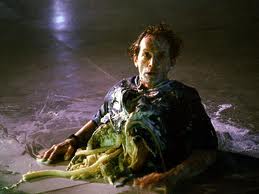 But, as with Terminator, Cameron pulled a switch-up in movie two with the Synthetic known as Bishop (or “artificial human” as he preferred to be called). In the beginning, Ripley was hostile towards him, rebuffing his attempts to assure her that he was incapable of killing people thanks to the addition of his behavioral inhibitors. Because of these, he could not harm, or through inaction allow to be harmed, a human being (otherwise known as an “Asimov”). But in the end, Bishop’s constant concern for the crew and the way he was willing to sacrifice himself to save Newt won her over.
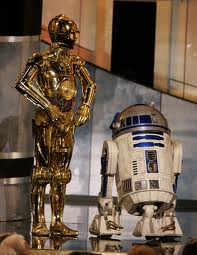 For that matter, who knew robots from the future would be fay, effeminate and possibly homosexual? Not that there’s anything wrong with that last one… But as audiences are sure to agree, the other characteristics could get quite annoying after awhile. C3P0’s constant complaining, griping, moaning and citing of statistical probabilities were at once too human and too robotic! Kind of brilliant really… You could say he was the Sheldon of the Star Wars universe!
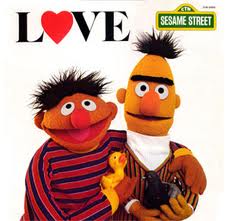 Hmmm, all of this is starting to sound familiar to me somehow. I’m reminded of another, mismatched, and possibly homosexual duo. One with a possible fetish for rubber… Not that there’s anything wrong with that! 😉
 Some might accuse me of smuggling her in here just to get some eye-candy in the mix. Some might say that this list already has an example from the Terminator franchise and doesn’t need another. They would probably be right…
 Here we have another female AI, and one who is pretty attractive despite her lack of a body. In this case, she comes to us from the Halo universe. In addition to being hailed by critics for her believability, depth of character, and attractive appearance, she was ranked as one of the most disturbingly sexual game characters by Games.net. No surprises there, really. Originally, the designers of her character used Egyptian Queen Nefertiti as a model, and her half-naked appearance throughout the game has been known to get the average gamer to stand up and salute!
 The stoic, stalwart and socially awkward android of Star Trek: TNG. Built to resemble his maker, Dr. Noonian Soong, Data is a first-generation positronic android – a concept borrowed from Asimov’s I, Robot. He later enlisted in Star Fleet in order to be of service to humanity and explore the universe. In addition to his unsurpassed computational abilities, he also possesses incredible strength, reflexes, and even knows how to pleasure the ladies. No joke, he’s apparently got all kind of files on how to do… stuff, and he even got to use them! 😉

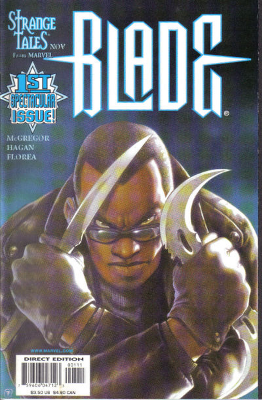
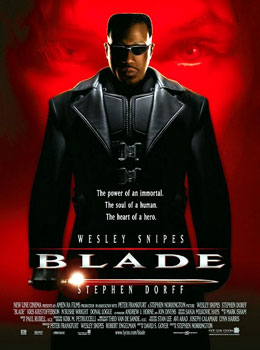
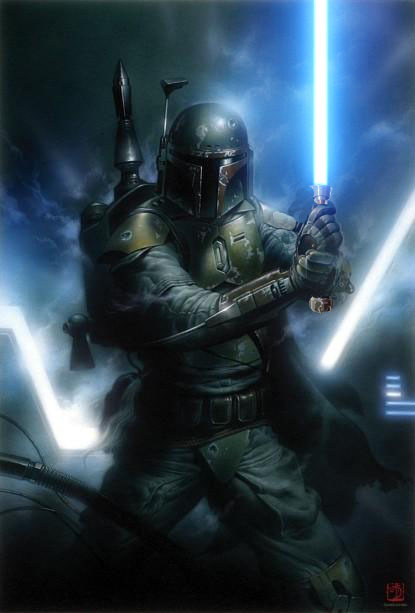
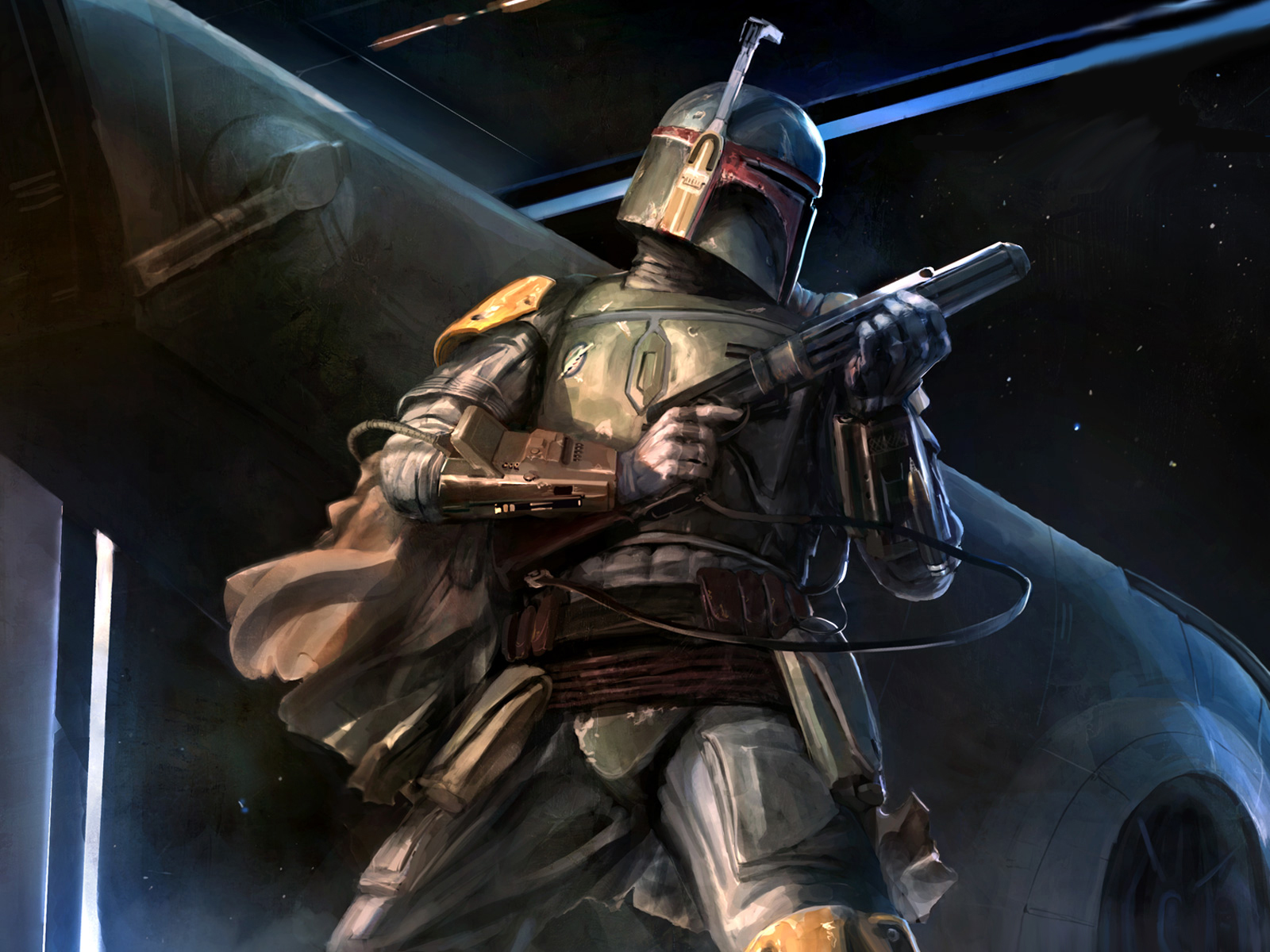


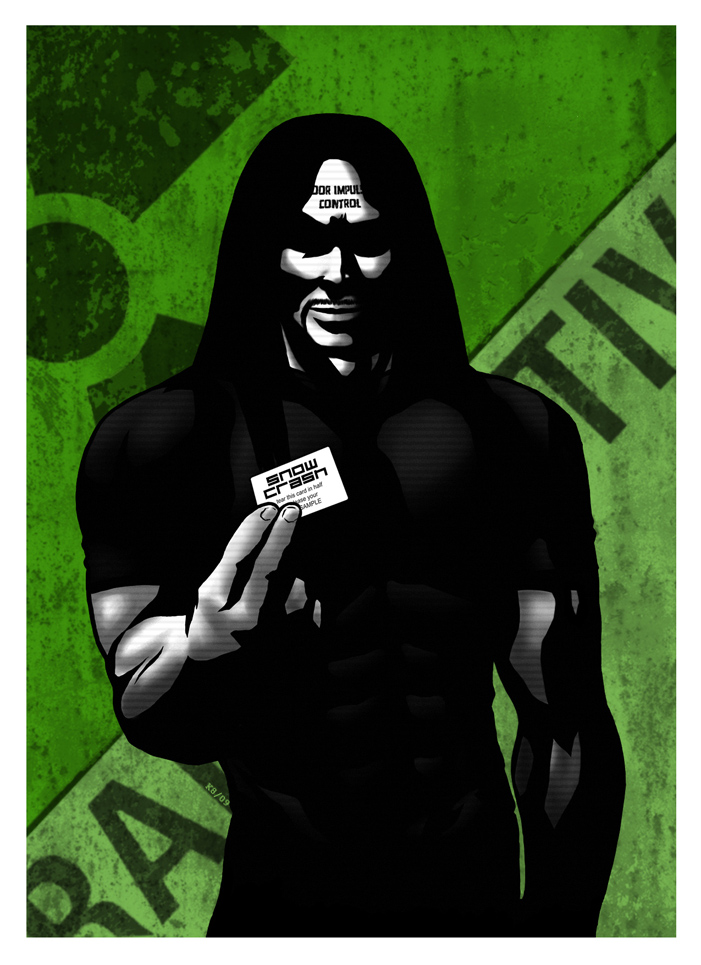
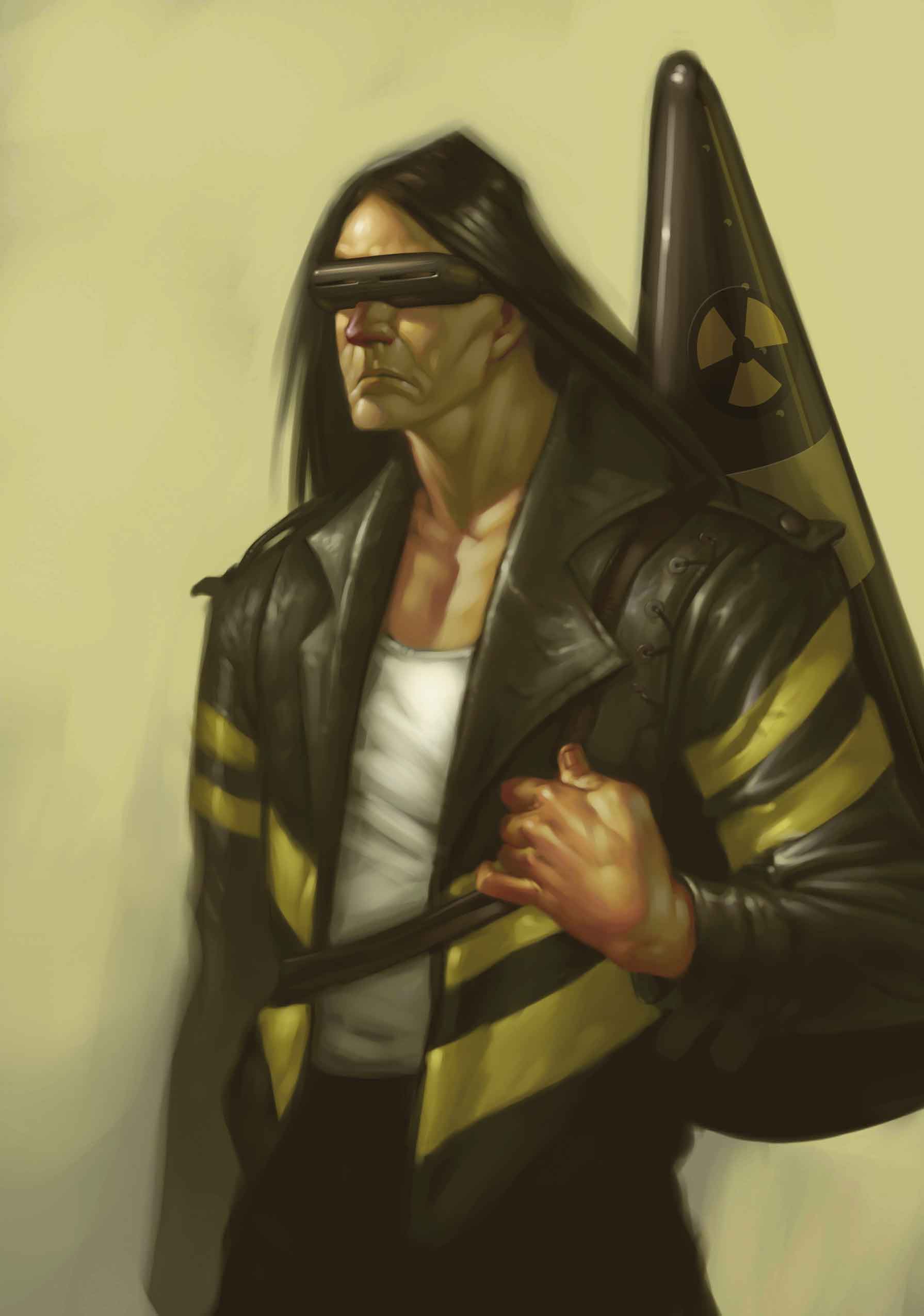

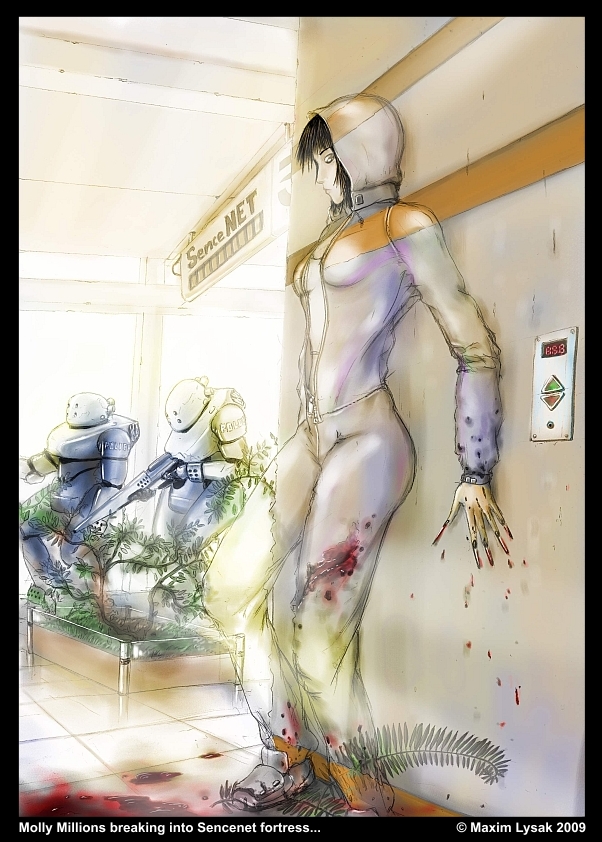




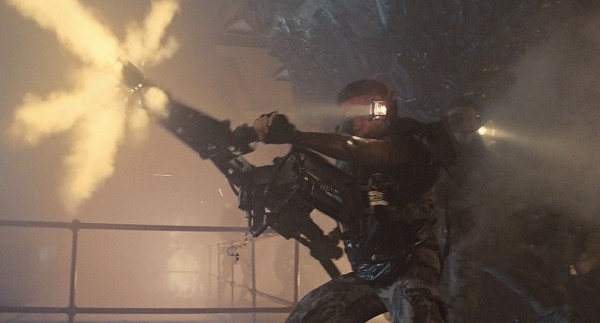

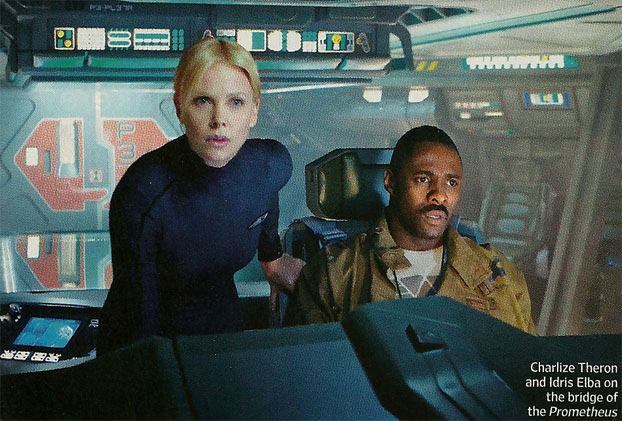








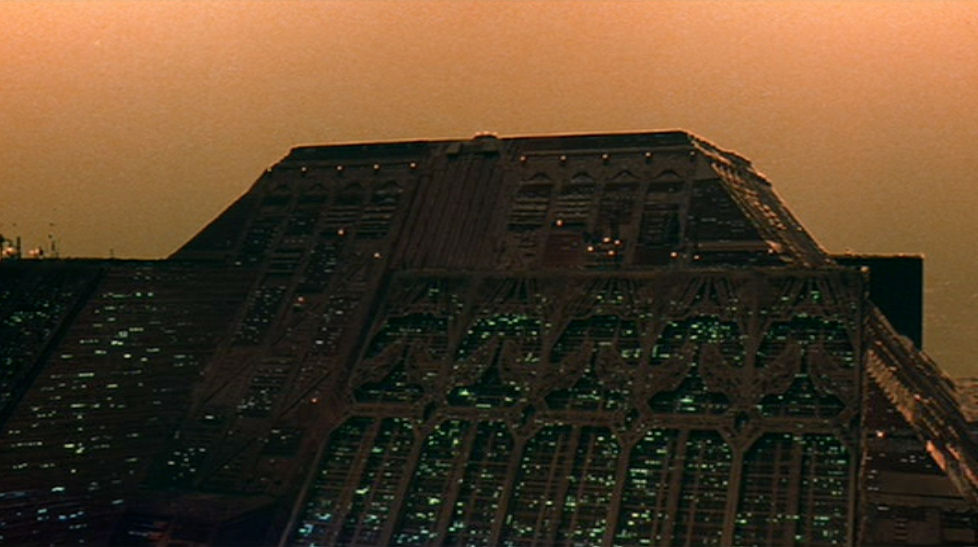
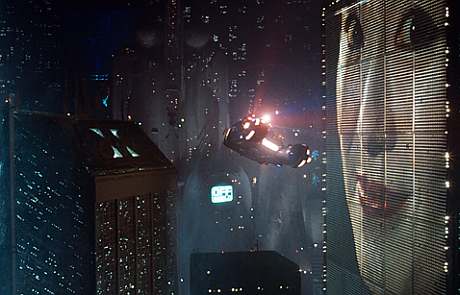


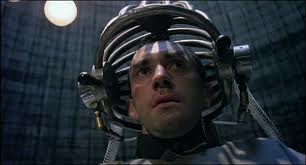


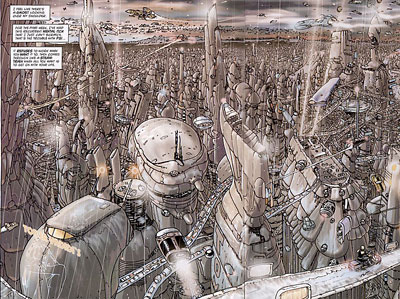
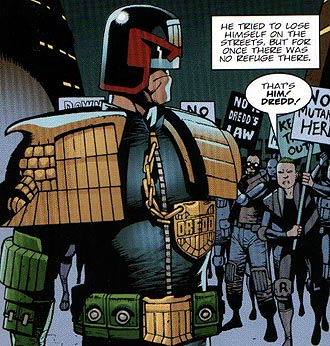









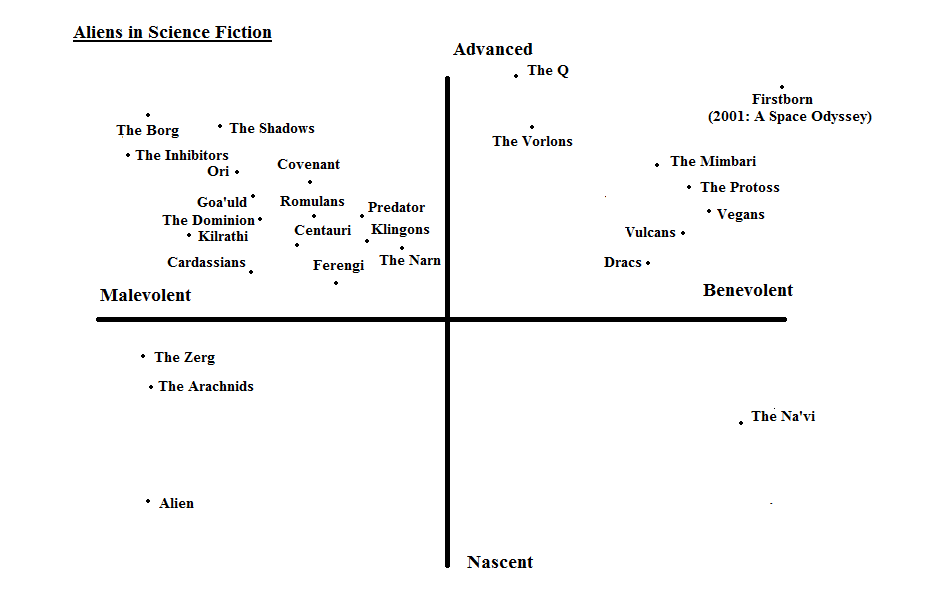












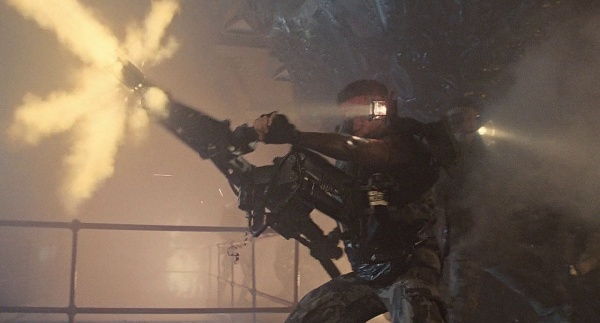


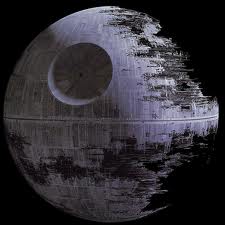
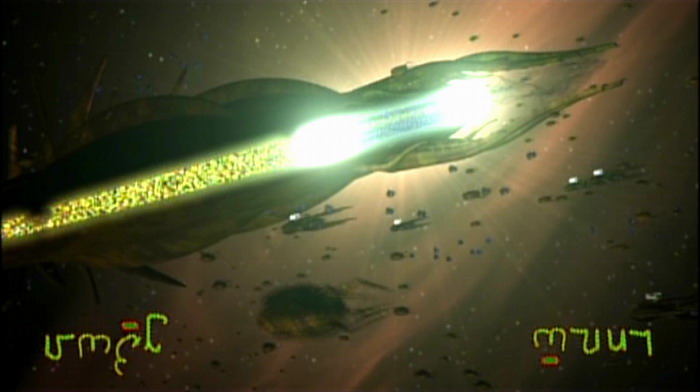






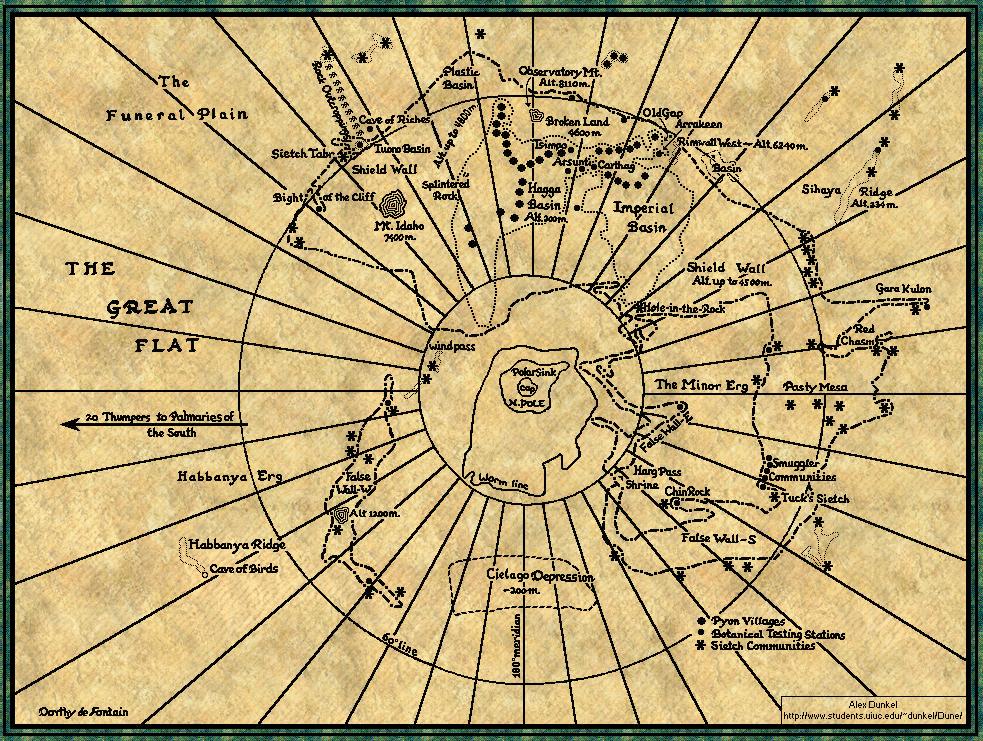


 However, using the station as a rallying point, Sheridan, Sinclair, Delenn and Kosh eventually manage to organize the younger races into a cohesive fighting force to turn back the Shadows. Things become more complicated when they realize that the Vorlons are also the enemy, being involved in a power struggle with the Shadows that goes back eons. However, with the help of other First Ones (very old races) and a commitment to stand on their own, they manage to force both sides to leave the known universe.
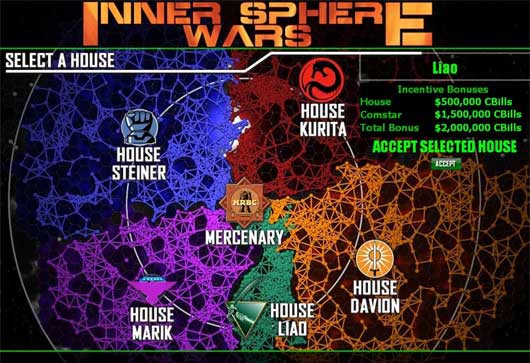
 Stories by Williams