Welcome back! You know, it feels like I’ve been a little wan in my output lately. Perhaps it’s because I’ve been hard at work on my stories… or not. Hard to say really, but I will say that the anthology me and my colleagues have been working on is coming along nicely! In an attempt to keep pace with my group, I’ve come up with another installment in the Winston Agonistes story.
And just for fun, much of this installment was inspired by real-life tales of Shàngdū, China. It is this ruined city that was once the summer capital of the Yuan Dynasty, as decreed by the Mongol ruler Khublai Khan. Often referred to as Xanadu or Sanadu (in Mongolian), this city is the same place that is mentioned in Marco Polo’s account of China, the one which inspired European dreams of traveling to the Orient and finding cities of gold. It also inspired the poem “Kubla Khan” by Samuel Taylor Coleridge and a musical which I will not get into, even to save my own life!
Anyway, here it is, fresh from the press. Behold!
As expected, a greeting party was waiting for them in the Transport Bay. Dressed in their ceremonial robes and wearing pressure masks, they stood on the platform overlooking the main deck. Winston eyed them through the cabin window as their ATV came to a complete stop, noting the individuals and their respective positions from the mantles they wore.
There were five in total, arranged by twos around the one in the middle who wore the most flamboyant garb of all. The ladies he denoted by the choice of red robes, while the males wore the traditional blue, consistent with Shiangdu’s code of customs. Aside from that, there was only a single distinction, which came in the form of the orange inlaying that the man in the center had on his robe. That could be none other Commissioner Yan Moon Kim, Wu’s second in command.
The seals disengaged and the door opened. The top segment rose above the ATV’s roof while the bottom one lowered to form their exit ramp. Winston allowed the Councilors on the other side to file out first and fitted his helmet, which at this point in their mission had remained unused, over his head. Though the Shangdu settlers were no strangers to synthetics, their reaction to seeing one in the capitol’s delegation could not be fully predicted.
As their team filed into the bay, the Shangdu representatives climbed down the steps to the deck to meet them. Handshakes were exchanged between Kim and Mutlu, Kim gesturing to the pressure doors immediately thereafter so that further pleasantries could be conducted without the need for helmets. Mutlu nodded and they marched together, mounting the steps and entering through the cycling doors that would lead them within.
Winton looked back upon the bay, noted the deck hands that began to pour over their ATV. As a courtesy, they refueled the vehicle, removed the excess traces of fungal deposits from its wheels, and packed them away in biohazard containers. Some of the tendrils looked rather large this trip.
The pressure doors opened, admitting them into a small vestibule located next to the main colony. Much like all decontamination bays, the walls were studded with sensors, vents and irradiation panels, all of which became active as soon as the doors closed behind them. Many in their crew drew a hand to their face to cover their visors, protection against the onset of the harsh lighting that began to fill the confines of the room. Winston needed no protection, as his eyes adjusted automatically to the onslaught of the harmful rays. In a few seconds, it was over. All airborne pathogens that had clung to their shells rendered completely inert.
The harsh lights disappeared and were replaced by a green glow. The interior doors began to slide open slowly. Beyond, the grey paneling of the entrance hallway appeared and the Shangdu welcoming committee stepped out and ushered the rest of them forward.
Winston could not help but think this was a momentous occasion. It would be the first time he had ever witnessed a colony outside of Zarmina. He had conducted all the research necessary to prepare himself for the trip. He knew the interior layout of the colony well and the significance of every detail contained within. And yet, to actually see it for himself seemed beyond compare.
We’re he able to describe the situation; the word exciting would certainly come to mind. If only he were capable of truly feeling that.
* * *
They came to it at last, the doors that led into the settlement proper, where the expectation of excitement would certainly be at apogee. Winston had learned from his many archival studies on emotions that it was in the last moments before the reveal that feelings of anticipation reached their highest, in what was described as a fever’s pitch. It was fortunate then that he did not feel such feverish emotions, otherwise he might not have noticed the fine details that were in front of him.
The colonies main doors, for example. Constructed of a crystalline-polymer composite, they were clearly meant to resemble a marble gateway that had been etched with classical motifs from the late Yuan Period. And in keeping with the design of the original city, the colony had been laid out in four-quadrants with mayoral palace towards the center-rear, though the layout was circular instead of square. Such a profile would never support the settlements enclosed nature, which invariably required some degree of revision to the original plan.
The doors slid open and Winston’s eyes shifted to long focus, every detail being absorbed as it became clear. He was immediately aware of lush greenery and emerald color schemes, of gilded columns and carved surfaces. A few meters from the doorway, a second party of three people who also ornately dressed, stood and waited for them. In the exact center, dressed to resemble a Manchu-dynasty tyrant, no doubt, was Wu himself. Their greeting party of five joined his, forming a perfect eight.
“Councilman, I am honored,” Wu said in a strained, lightly accented voice. Mutlu stepped forward and bowed gently towards him.
“Mayor Wu, the honor is mine.” Wu returned the gesture and they came together to exchange kisses on each other’s cheeks. The initial exchange was going well, respect being given for each leader’s particular cultural niceties. Winston began to wonder if his request for a seat at the meeting was more or less likely to succeed at this point.
More conversation followed as they walked down the length of the settlement’s main foyer, into what appeared to be a preserve featuring various Terrestrial plants. A path of what resembled cobbled stone stretched out before them, stretching to the far end of the enclosure where the city itself would be accessible. For all newcomers to the settlement, this was the first thing they would see as they made their way into the vast collection of marketplaces, tenements, facilities, and of course, the mayoral palace at the far end.
As they walked, Winston’s olfactory receptors noted the presence of cherry blossoms and plum trees, his eyes detecting the bright colors of birds of paradise plants and even animals prancing about. Most impressive amongst these was the Pelicans that were drinking by the small creak running through the enclosure.
Winston turned to Bhutto next to him. “Synthetics?” he asked. Bhutto looked in the direction he was pointing and shook her head.
“No Winston, those are real. The settlers arranged for ova and sperm to be stowed in their supplies well in advance.”
He looked back at the animals as they continued to graze and drink from the artificial creek. It seemed unlikely that organic creatures would have been transplanted here, given the cost to bread them and added upkeep. And yet, he was being told to believe this very thing. And for a moment, he considered the possibility that what he was experiencing the emotional state known as confusion. Another unlikelihood.
His attention returned to Bhutto when she playfully slapped his arm.
“Imagine that, a synthetic that can’t tell the different between organic and synthetics.”
Wilson smiled obligingly. “For that, you will have to blame the makers, madam. They do their work too well.”
She laughed again and placed both hands on his arm. He registered a gentle squeeze through the layers of his sleeve. His calculated jocularity appeared to be having an interesting effect. In addition to entertaining the Councilor, he was almost sure she was beginning to… like him.

 It’s done! After weeks and weeks of writing, editing and running by my peers, my short story contribution for the Yuva Anthology is finally done. Entitled “Winston Agonistes”, the story tells the tale of synthetic human (i.e. AI) who is in the employ of the planetary government. His basic programming centers around the a social science known as Ethical Calculus, a means by which he is able to calculate the outcomes of decisions.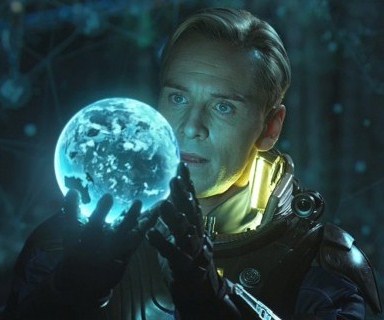



 Stories by Williams