COD: Modern Warfare 2

Welcome back to my ongoing series of video game reviews! Today, picking up from where I left off last time, is Call of Duty: Modern Warfare 2. Having just completed the entire series, I felt it was time to pay tribute to this series and tackle all that was right and wrong with it.

With COD: Modern Warfare, Infinity Ward essentially established a new standard of online gaming and first person shooters. Combining the best in AI’s, graphics, and gaming platforms, this game also had the honor of being the most high-profile “modern” first-person shooter of all time.

Prior to this, all the big name FPSs were either set in WWII or in the future, being either based in historical recreations or science fiction. Hence what was so interesting about this game, it incorporated up-to-date weaponry, tactics, and a storyline that boasted a great deal of socio-political speculation.

And much like the last one, it had its high and low points, which I shall get into now…

Plot Summary:
modern-warfare-russThe game picks up 5 years after the event of the first game (roughly 2016). According to General Shepherd, one the game’s pivotal characters, Russia has fallen to the ultra-nationalists and Imran Zakhaev is now considered a national hero, despite the fact that he very nearly unleashed WWIII on the populace. Meanwhile, a terrorist by the name of Makarov continues to fight Zakhaev’s fight, hoping to trigger another major conflict which will make his nation to force to be reckoned with once more.

The game opens with a Ranger Battalion in Afghanistan, where you are part of an attack (led by General Shepherd) into a contested town controlled by insurgents. After fighting your way across a destroyed bridge, you are required to fight your way to the center of town and clear a school which the insurgents are using as their forwards base. Upon completion, Shepherd alerts your character (PFC Allen) that you are being transferred to the CIA to do an undercover mission.

MW2_afghanistanNote: As I’m sure I’ve mentioned at least twice before, this entire mission was inspired by Generation Kill, specifically the footage of the 1st Recon’s assault on Nasariya and their passage through the town of Muwafaqiyah where Fedayeen were using a school as a fire base.

At the same time, Capt. John “Soap” McTavish has been promoted and is now the leader of the new international anti-terrorism squad known as Task Force 141. No mention is given as to the whereabouts of Captain Price, and given what happened in the last game, it appears as though he might be dead.

MW2_siberiaYour character for this portion of the campaign is Garry “Roach” Sanderon, another FNG with a delightfully absurd call sign. While the Marines are in Afghanistan, you and Captain Price are busy breaking into a Russian airbase in Siberia hoping to obtain the Attack Characterization System (ACS) module from a downed American satellite. After retrieving it, you and McTavish are forced to beat a hasty retreat using snowmobiles.

What follows next is the part of the game that warrants the big advisory at the beginning and which gamers have the option of skipping if they so choose. This inolves part of Allen’s “undercover assignment” where he witnesses first-hand Makarov’s monstrosity as he leads an assault on Moscow’s International Airport, where he and his thugs murder countless civilians with US-made guns.

When that’s over, Makarov shoots Allen (aka. you) and leaves him there for dead, knowing that the thousands of spent shell casings and the body of an American will make it look like the US perpetrated the attack. My advice: skip this mission! It’s gratuitous and frankly creepy. For the life of my I can’t imagine who thought putting this borderline psycho shit in would be entertaining or fun.

Immediately afterwards, Task Force 141 is dispatched to Rio de Janeiro to hunt down the weapons dealer who supplied Makarov. This takes you and your team through the “favella”, Rio’s most notoriously violent neighborhoods, where you are shot at by the local “militia”. Once you have your man, he indicates that he doesn’t know where Makarov is, but that there is one man he hates and fears more than anyone, and who just happens to be languishing in a gulag on the Kamchatka peninsula.

Meanwhile, back in the US, Russian forces get the drop on the Northeastern Seaboard. Having cracked the ACS, they are able to pass into US airspace without Norad noticing, and begin landing paratroopers and armored forces in Virginia, New York, and Washington DC. The second major thread in the game now opens, where you play as Pvt. James Ramirez, an Army Ranger in West Virginia who’s unit is deployed to a suburb to thwart a Russian attack and protect a HVI (high-value individual) who’s chopper was shot down.

After fighting off several waves, your unit is redeployed to Arcadia where you are tasked with retrieving another HVI who turns out to have been killed by Russian special forces. With assaults happening all along the Seaboard, the Russians are getting the upper hand on US forces by capturing key personnel, locations and intelligence.

MW2_gulagOver in Kamchatka, you and Task Force 141 assault the gulag and fight your way through defenders and Soviet-era electrical systems to find prisoner 141, the man who Makarov apparently wants dead. When you arrive at his cell, it turns out to be Captain Price, who is alive after all. He and McTavish have a brief reunion which is cut short as the Navy begins bombarding the gulag early to cover your escape.

Back in the US, you and your Ranger unit are redeployed to Washington DC which has become a smoking ruin. Your mission is to fight your way through the federal buildings on Capitol Hill and retake them from the attacking Russians. The fight takes you from the trenches, through the White House, and finally into the air. After your chopper is shot down, you find yourself cornered and about to be overrun…At the same time, Price makes contact with General Shepherd and proposes a bold plan. With Price alongside, you and Task Force 141 assault a Russian sub base not far from the gulag and seize control of a Russian missile sub. Though the plan is not altogether clear, you and McTavish manage to provide cover for Price long enough for him to get aboard the Russian sub, where he promptly unleashes a nuke bound for Washington DC! The nuke flies into orbit above the city, where it is detonated, taking out the ISS and unleashing a massive EMP.
Inside the city, the EMP knocks every piece of electronic equipment in the area, crippling the Russian assault. You and your unit, which had been cornered seconds before, now must run and find cover as countless jets and choppers come crashing down around you.

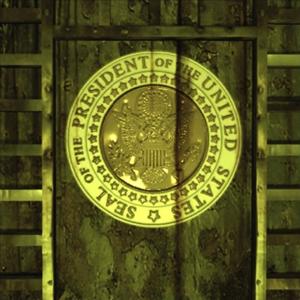
Once you resupply, you are tasked with advancing on Whiskey Hotel (aka. WH, for White House) and retake it in one last, desperate assault. Once this is done, you are notified by radio that the USAF is conducting “Hammer Down”, an emergency air assault that will level all capitol buildings that are still in enemy hands. You are then forced to run to the roof and pop green smoke to indicate that the White House is in friendly hands.

MW2_estate2With Washington DC saved, Shepherd is hailed a hero for his foresight in predicting that a war was coming. He is given a “blank check” and declares that he is going to use every cent reigning Makarov in. With this in mind, Task Force 141 splits into two forces, with Price and McTavish checking an aircraft boneyard in Afghanistan while you and the rest are deployed to a safehouse in Kazakhstan.

After taking down the house and downloading Makarov’s computer files, you are intercepted by an air rescue, where General Shepherd himself comes out and shoots you! He then shoots Ghost and his men dispatch the rest of your squad, leaving your burning remains in a ditch as he takes the files and flies off.

MW2_safehouseOver in Afghanistan, Price and McTavish get the words that Shepherd has killed the others and realize he’s been playing them all along. With Makarov’s information now in his hands, he’s effectively cleaning house and making sure he doesn’t get caught so the war can proceed.

At the same time, Shepherd’s forces are descending on the boneyard, looking to kill you and Makarov at the same time. After fighting your way the edge, you are rescued by an old friend – McTavish’s Russian contact Nikolai. Price is also able to contact Makarov and obtain the location of Price’s base in Afghanistan.

As McTavish, you and Price now assault Shepherd’s base and take down its defenders. After a lengthy chase, you manage to corner Shepherd and fight it out; unfortunately he gets a hold of your knife and stabs you in the stomach with it. Producing his gun, he explains his motivations.

MW2_shepherd_baseApparently, he was in command of the Marine assault force that was supposed to take down Al-Asad and lost 30,000 men when Zakhaev’s forces detonated the nuke. His bitterness inspired him to start a war in the hopes of shocking America out of its complacency, which he feels he’s now done. As he puts it, “tomorrow there will be no shortage of volunteers, no shortage of patriots.”

Before he can shoot you though, Price tackles Shepherd and the two begin to fight it out. Shepherd eventually gets the upper hand on Price, and you are forced to pull the knife out of your chest and toss into Shepherd’s face, killing him instantly. Nikolai then shows up with a chopper, in defiance of Price’s order that this be a “one way trip”, and he and Price begin to carry you (McTavish) aboard. The game ends with Nikolai warning you that everyone is now out to get you, but that he knows a safe place to put down and get medical help.

Summary:
I don’t imagine I need to say that this installment in the series has some kick-ass gameplay, but screw it, I still want to! It has kick-ass gameplay! In fact, when it comes to shear badassery, this game has got the first one beat. In addition to more and better guns for yourself, there are also some very cool added features. These include more claymores and the use of Stinger Missiles, but also Sentry guns, laser guided heavy weapons fire from armored vehicles, and even Predator drone strikes. This last aspect is especially cool, as you get to do overwatch on a target and then fire Hellfire missiles at targets.

In terms of the weapons you have access to, there are the usual M4’s, SAWs and M16’s that are standard US Army issue, but also SCARs, sniper rifles with thermal sights, FAMAS’, USAS-12 shotguns, and Steyr AUG’s. But in addition, the Russians also boast some new and impressive gear which you can use too. Of these, my favorites are the Tavor assault rifle and the Striker shotgun. There’s nothing like automatic shotgun fire to make you feel like a bad ass mutha!

And of course, all these features extend into the multiplayer realm which is even bigger, badder, and more detailed than the last. But even if you’re not feeling the mulitplayer community, there is the new Special Ops feature where you get the best of both world, the ability to conduct missions and earn points, but still as a single player. And I can attest that most of these missions, though some are hard as hell, are also fun as hell. And in many ways, they preview things which comes up in the third installments (such as Juggernauts).

As for the downsides… Well, in that respect, this game was much like the first. The storyline seems a bit unrealistic, and is kind of confusing in terms of who’s doing what and for whom. For instance, you’ve got Makarov who represents a continuation of Zakhaev’s agenda, but seems to be operating outside the realm of normal politics. Didn’t they say that the Ultra-nationalists took power? Why then is this man killing his own people? Isn’t that what you do when your kind is NOT in power? Or is he really that desperate for a nuclear war to take place?

And second, Shepherd’s motivations seem a bit flaccid. I get that he’s pissed about the loss of so many Marines int he first game, though they seem to have padded the body count because by my reckoning, most of the Marines got out. They had plenty of warning, but your own chopper turns back to rescue a downed pilot, hence why you die. Still, even if the body count is 30 or 30,000, risking total war with Russia seems like a bad way to stoke the fires of patriotism. As anybody is well aware, Cold War or not, any large-scale confrontation between the US and Russia would still involve their nuclear arsenals, and nobody would be walking away from that fight in one piece!

And another thing, so was he working with Makarov all along or just taking advantage of the man’s actions? This is never made clear. On the one hand, it was Shepherd who assigned Allen to infiltrate their group, so Shepherd DID give them the American body that they left behind to implicate the US. But at the same time, he is openly trying to track the guy down and have him killed, but quietly so the world won’t know the entire war is based on a lie. So what is it then? A collaboration between enemies, or two equally malevolent forces that just had happened to collide?

I for one would prefer the latter interpretation because it would be a fitting commentary on the “War on Terror”. In fact, throughout the game you have quotes from Donald Rumsfeld and Dick Cheney, the ones which are notorious for being stupid or questionable, which flash across the screen when you die. In that war, we saw a neo-conservative agenda colliding with a Salafist agenda, where two mortal enemies were effectively feeding off each other to the point that some openly suggested collusion. Of course there was no real evidence to suggest such a thing, but it was interesting to note just how much George W and Osama Bin Laden benefited from each others presence.

Ah, but the biggest bone of contention with this game comes in the form of its controversy. In fact, this is such a big subtopic that it deserves its own heading…

Controversy:
For obvious reasons, the shoot-up scene involving the Moscow International Airport caused quite a stir in the gaming and consumer community. Why, many asked, was it necessary to include a scene where the player is forced to take part in what can only be described as Columbine-like behavior? I for one could not believe my eyes the first time I played this game and didn’t realize I could skip the whole thing. Who, I wondered, would actually want to play this mission? Was it really such a good idea to include it all, even if the option was there to skip it? Why not say that it happened between missions?

And would it be at all farfetched to think that some psycho person, who just happened to play the mission, might get the idea to shoot up a crowded public space? The scenes are far too visceral and real, which I found disturbing since the game makers would have had to do their homework on something like this, taking into account how crowded areas are death traps once armed men begin firing automatic weapons, how panicked crowds tend to bunch up, and how they become especially vulnerable when they all run into a bottleneck and become easy targets.

See what I mean? It’s disturbing! It’s the kind of sick freak stuff that made me seriously question the sanity of the game makers and the nature of the game itself. Some will naturally argue that it’s just a game and therefore harmless, bad taste notwithstanding. But I’d say that given the numerous mass shootings that have taken place, not just recently, but all over the US in the past decade, that this was in horrible taste and just plain risky!

Others also questioned the mentality of showing Washington DC burning, with its many monuments shown scorched and even the White House itself burning and full of holes. Personally, I didn’t see the big deal here. I mean, if we’re going to penalize this game for displaying this kind of disaster porn that we’ll have to round up Rupert Emmerich and every other movie producer who’s ever destroyed landmarks in their films. There’s a reason people like this stuff, and it’s not because they secretly fantasize about seeing them destroyed.

If anything, it lends some urgency and a sense of emotional involvement to the story by showing them how things they know and love, or at the very least are familiar with, are being overrun and must be saved. Now that’s just me and I could be wrong, but I found this aspect of the game very cool! How many games allow you to fight in realistically-rendered environments of actual places? This was something that they intensified with the third one and I appreciated it there as well!

So that’s Modern Warfare 2, in a nutshell. Great game-play, exciting and intense, but containing some questionable content. It was a good thing that they stayed away from that for the third game, at least for the most part. Granted there was plenty of violence and they still had to issue the content warning for anyone playing it for the first time, but at least there weren’t any mass shootings where you’re the bad guy and are supposed to be taking part in it! Seriously, Infinity Ward, what were you thinking? Bad software developer!

Starship Troopers

Here we have yet another example of a sci-fi book adapted to film, with significant changes being made! And, much like with Blade Runner and 2001: Space Odyssey, this wasn’t necessarily a bad thing. Whereas the novel was an in-depth look at the timeless nature of military service with some rather interesting social commentary thrown in, the movie was all about a war with a hostile alien species. In the book, there really wasn’t much about the Bugs or humanity’s fight with them by comparison. Rather than being the focal point of the story, it operated as a sort of background to the main premise, which was the armed forces and their role in society. So its not surprising that in adapting the book to the big screen, they chose to focus on the war stuff and gloss over the rest. While this allowed for a more entertaining movie, it didn’t come without its share of consequences.

(Background—>)
Interestingly, and perhaps ironically, the movie was to have a polarizing effect on audiences and critics, much like the original novel. Though Heinlein was a gifted author and one of the “Big Three” of science fiction (along with Asimov and Clarke) I can honestly say that Starship Troopers was not his best work. But it was the themes and the central message of the book that seemed to divide the critical and the general reception it got. Was he advocating violence without a second thought and a quasi-fascist social code, or simply depicting a future society in which these things came to be? Was he serious when he said that how violence had solved more problems in history than any other means? Or was he being cynical or facetious? Who knows? In fact, Heinlein wrote Starship Troopers largely to explain and defend his feelings about the military and nuclear policy. Much like his feelings, the book was nuanced, and was therefore likely to elicit mixed reactions.

In any case, the movie had the same effect on audiences. Some were mad that it wasn’t faithful to the original novel – no doubt because of all the pretty actors and actresses and all that love triangle crap – while others were happy for the changes, hailing it for its action, costumes, settings and the way it expanded on the Bug War. Me? I kind of fall in the middle camp. While I appreciate the acting and the fact that we actually got to see much of what was explained being acted out, I didn’t much care for the cast or the teenage-type drama. I felt that it was a good effort, and a fitting addition to Paul Verhoeven’s sci-fi lineup (director of such movies as Robocop and Total Recall). Still, it would have benefited from a different cast and some script changes, though it would have definitely done less well as the box office as a result. In the end, its best when filed under guilty pleasures; kind of like Independence Day, but with way less cheese!

Oh, and for the record, I will NOT be getting into this movie’s sequels! Far as I’m concerned, the less said about them the better! I’ve caught snippets and what I saw was so demoralizing, I knew I couldn’t sit through the whole thing. I can’t even begin to wonder what the hell the producers were thinking there! So… avoiding those, let’s get into the first and, as far as I’m concerned, only Starship Troopers movie worth mentioning!

(Content—>)
So this bad boy opens with a scene from Klendathu, the battle scene on the Bug homeworld that’s pretty important later on in the movie. This set up does much to establish tension and give us a preview of the movie’s later carnage. Then, cut to the comparatively domestic scene of Johnny Rico (played by Casper Van Dien) in his high school History and Moral Philosophy class. Here, we get a watered down version of what Heinlein said in the original book, emphasizing the quasi-fascist morality of voting and violence, and sans the moral responsibility stuff. But what are you gonna do? This movie is an action film, talking about the legitimacy of violence can only be seen as a set-up for how they plan to deal with a hostile alien species, one that does not understand mercy, coexistence or peace. And of course, that annoying triangle I mentioned is clear even at this point. Johnny loves Carmen (Denise Richards), Dizzy Flores (Dina Meyer) loves Johnny, and Carmen… she wants to be a pilot. We get an earful on the Federation and how service entitles one to basic rights – like voting – something civilians don’t enjoy, and in the course of a futuristic football scene, we see Carmen get all gaga for some dude who is a naval pilot.

In the ensuring scenes, during graduation and a whole lot of expository talk about life decisions, it becomes painfully obvious what’s going to happen. Carmen is going to join the Federation, Johnny is going to join to follow her, Dizzy is going to join to follow him, and Carmen is going to dump Rico. We also meet Carl Jenkins (Neil Patrick Harris), who is a latent psychic and is joining and getting bumped to the top because of his abilities. It’s also obvious that he’s going to develop the ability to psychically communicate with people. Why? Because he said he couldn’t… yet! And of course, Johnny and Carmen are annoying as hell. That might be prejudice on my part, but I have a hard time taking anything Denise Richards does seriously. Casper Van Diem? Can’t get past that cleft chin! And frankly, he looks the part of the clean-cut American teenager too well! And with a name like Johnny Rico, someone who’s actually Latino would have seemed like a better bet. Having these pretty cardboard cut-outs as stand-ins might have been effective as an ironic statement, pitting beauty against the ugliness of war. But that’s just not what I got from this. Seems the beauty was meant to be a box-office draw, the violence strictly for entertainment purposes. Didn’t really get the sense that there was any real meaning or depth at work there.

Quick sidenote: NONE of this happened in the novel! For starters, Johnny did have feelings for a girl named Carmen, but she was NOT his girlfriend nor even a central character, nor did she figure that prominently in his decision to join the Federation. In addition, Dizzy Flores was a MAN! Yes, in the novel this woman who was in fact a fellow grunt in the Mobile Infantry, not some love-sick girl who followed Johnny into the service (and incidentally, to her death). Oh, and the man who was Johnny’s moral philosophy teacher, Jean Rasczak (Michael Ironside) was not the same man who led the Roughnecks! In the novel, it was a man named DuBois (a stand-in for Heinlein himself) who was the teacher. Rasczak was a commander he would later meet, and who would promptly die off during the Klendathu battle. This last aspect I can understand. Having his teacher return later in the book as his CO makes sense, since the teacher was a citizen in both the book and movie. And killing him off promptly wouldn’t make much sense, not if you plan on expanding on the action. But the rest… yeah, box-office draw!

Oh, and I should also mention that whereas the novel was nuanced in its approach, the movie was not. Clearly, Verhoeven chose to go with the quasi-fascist school of thought on this one. Regardless of what he thought about Heinlein message, he clearly thought the movie would be more effective if the whole issue of service and citizenship were presented in very rigid terms. Civilians have few rights, society is informed by propaganda reels instead of independent news sources, and those who serve are “meat for the grinder” (an actual line from the recruiting sergeant!). While this proved interesting at times, it was not in keeping with the message of the book. In some cases, these elements were wholesale inventions of the writers and not mere exaggerations on what was in the novel. Still, they did at times feel like a fitting commentary on the nature of war and social issues, which WAS in keeping with the spirit of the novel (if not the actual content).

Anyway, we soon get to the myriad of scenes where Rico is receiving his training at the hands Sgt. Zim (masterfully protrayed by Clancy Brown). He and his buds are run through a training regimen that is far more brutal than anything in the novel (constant cries of “medic!” demonstrate this point) but the point here is clearly to draw parallels with the kinds of brutal discipline which the Marines and other elite military units are notorious for. We also get scenes of Carmen’s comparatively cushy experiences, and in the course of her video correspondence with Rico, she of course sends him a Dear John. This, coupled with a terrible accident in which a grunt dies, causes Rico to resign. He, however, changes his mind when a sudden and unprovoked attack (echoes of Pearl Harbor) destroys his home of Beunos Aires and kills his folks. Again, not in the book people! While Rico’s training was explored at length in the novel, there was none of this high-drama stuff where he got dumped, felt responsible for getting someone killed, and took a whole bunch of whippings. Nor did he suddenly quit, only to have walk out interrupted by a declaration of war. In addition, his folks did not die in the attack. In fact, he went on to meet his father later in the novel when he himself enlisted so he could do his part for the war. This served as a resolution between Rico and his father in the novel, after the latter disowned him for joining the military against his wishes. But, like I said, high-drama! It was effective, of course; each and every one of us was probably thinking “he can’t quit now! It’s payback time!” And the news reel that followed in the wake of the attack was very effective at parodying war propaganda films, something they did often in the film. Like many elements, it gives us a sense of the timelessness of war, while at the same time highlighting the quasi-fascist nature of the Federation.

Oh, and did I mention that somewhere in between all that we got the infamous coed shower scene? Now why was it that this scene was so totally over-hyped! Are audiences really this smut-obsessed and/or puritanical? I mean really people, we saw a few breasts and Van Dien’s ass! What’s all the hubbub about? Word is that Verhoeven even got undressed while shooting just to show the actors that it wasn’t that big a deal. How’s that for irony? And considering what he got Sharon Stone and Elizabeth Berkley to do in Basic Instinct and Showgirls, this was NOTHING! Why then should this have been such a focal point when it came to the movie’s reception? But that’s Hollywood for ya. A little T&A and suddenly everybody starts going gaga and losing their minds!

Moving on, after a few minor scenes with a reunion between Rico and Carmen, Rico brawling with her new pilot boyfriend (showing the obvious conflict between the services) and the grunts getting tattoos that say “Death From Above” (a common war slogan meant to draw parallels with past wars), we cut to the battle scene at Klendathu. And as I said earlier, this first action scene was a big improvement on the book. For one, we actually get to see the fighting! Second, the Bugs are presented as a hostile swarm, not as semi-intelligent things with actual lasers mounted to their limbs (as they were in the book). I have to say I approve of this take on things, either the Bugs are an individually sentient species or a hive mind. Can’t have it both ways! Second, the scene is a faithful recreation of an invasion, reminiscent of D-Day and Iwo Jima any other “storming the beach” kind of scenario. It’s full of tension, the usual last-minute reassurances (“remember your training and you will make it back alive”), the lull as the troops hit the ground and wait for the shooting… and then, the shooting! Oh, the shooting! Yes, for the next few minutes, carnage ensues as the Bugs counter-attack, the MI get the crap kicked out of them and are forced to beat a hasty retreat. And, fulfilling the preview from the beginning, Rico gets mortally wounded, on camera no less! In orbit, the fleet does little better, getting schmucked by plasma streams – reminiscent of AAA and Flack – and are also forced to withdraw. Cue the hospital scene immediately afterwards, with all kinds of gore and a massive list full of MIA and KIA scrolling by on a huge wall screen to drive the point home. “The Bugs don’t take prisoners,” says Mr. Navy pilot man. Yeah, we get it, it was a disaster!

But of course, Rico is alive. Turns out his listing as KIA was a clerical error or something (another familiar army theme!) Another reunion follows as they get reassigned to the Rough Necks and find that their former teacher, Mr. Rasczak, is the CO. Yep, they are now part of Rasczak’s Roughnecks! WHOO! And true to form, Michael Ironside is missing a limb. That guy always seems to be losing limbs in Verhoeven’s movies! And at this point, its a clear indication of what service to the Federation means, aka. sacrifice! They take part in a new mission designed to gather intel, Rico and Flores have their hot sex scene, and then we cut to a pitch battle where they are forced to defend a fort while waiting for emergency evac. As plot contrivances would have it, their rescue just happens to be Carmen and her pilot beau! Yet another reunion! And of course, Ironside loses MORE limbs and dies as Rico is forced to kill him, Dizzy is killed too, and Rico is left crestfallen but hardened. Seems he’s finally learned what it means to be a citizen! Good for him! Too bad Dizzy had to die in order to get into Rico’s pants though. But according to her, as she said while bleeding out on the shuttle’s floor, it was worth it. And I thought guys were willing to die to get laid!

After her funeral we get another (wait for it!) REUNION, as NPH walks in wearing what is clearly an SS officer’s uniform. More quasi-fascist symbolism! And just to make it clear that he’s become an unfeeling Machiavellian dick, his eyes are sunken in and he talks like a real hard-ass now. “Oh, I’m sorry, you don’t approve (of my methods). Well that’s too bad! We’re in this for the species, boys and girls! It all comes down to numbers, they have more!” And of course, he lets them in on their plan. Seems they believe there is a sort of “brain bug” on the planet below, that each colony of drones has one that runs it like a hive mind. Which means they got another mission to fly: attack, and capture the brain! Rico, having come up through the ranks, is now CO of the Roughnecks – Rico’s Roughneck! Whoo! Convenient that his name starts with an R, keeping the tradition of alliteration alive! Naturally, events conspire to place Carmen in harms way. Her ship is destroyed by that same plasma-AAA, a little reminder that the Fleet has it tough too! And she and her beau crash land on the planet and are taken prisoner by the brain. It sucks out her beau’s brains (ick!) and is about to do her in too. But luckily, Rico and his squad come to her rescue, guided by NPH’s ability to telepathically communicate with humans now (told you he’d figure it out!). And they have one final (do I even need to say it?) reunion on the field of battle. And they even bring back Sgt. Zim, seems he’s busted himself to private just so he could get into combat and capture the brain bug himself! So, with their reunion complete, the movie ends with a propaganda reel telling the people of Earth to enlist because they need more bodies! Rico, Carmen and NPH all get some screen time as examples of what to live up to, cue the war music and roll credits!

(Synopsis—>)
Okay, so the things I liked about this film. Yes, the propaganda reels and the familiar war themes were pretty effective. Rather than being a cheap way to elicit emotions (the way Emmerich does with landmarks), it felt like there was some genuine attempts to get into the collective unconscious and call up the memory of wars past. Ultimately, it felt like the goal here was to keep with the spirit of Heinlein’s novel and show how conflict is timeless and how our experience of it mirrors those of people in the past. Things like unprovoked attacks, military disasters, recruiting drives, propaganda and inspirational pieces… all of these are common experiences and got a pretty good treatment by Verhoeven. While Verhoeven’s interpretation of the Federation as a militarized and obviously right-wing state was also debatable, he did do a good job demonstrating just how it would look and feel for those living in it. It was done subtly, much like he had done with Robocop, the viewer is not told these things as much as shown them, giving them the freedom to figure it out on their own. And the action scenes were pretty damn good! Especially the attack on Klendathu, that one really set a good tone. You really got the rah rah tempo as the MI are hitting the ground and running into the fight, and you felt pretty let down in the aftermath when it became clear what a disaster it was. “100,000 dead in the first hour” said the propaganda reel in the very next scene. 100,000? Damn! Just like Dieppe, Omaha Beach, and Iwo Jima, only not real! Also, the one-liners that were ripped from history. Like “Death from Above”, a slogan that was coined by the 505th Parachute Infantry Regiment, 82nd Airborne in World War II, and popularized by the film Apocalypse Now. Or “C’mon you apes, you wanna live forever?”, a paraphrasing of Sgt Dan Daley seminal words: “C’mon you sons-of-bitches, do you want to live forever!” at the Battle of Belleau Wood in WWI. And as for “Everybody fights, nobody quits” or “Fleet does the flying, Mobile Infantry does the dying”… probably all Heinlein, but good lines nonetheless!

Also, with regards to another major difference between the novel and the movie: fans of the former could not have failed to notice that the MI were fighting in body armor and firing rifles and bazookas, whereas in the novel they were in powered armor and used all kinds of weapons. Slug throwers, flame throwers, lasers, tactical nukes. This change probably offended some, but I have to imagine the studios felt that this kind of thing wasn’t too practical. For one, its hard to create the sense of a grand battle, the kind that reminds one of D-Day, Iwo Jima and Hamburger Hill, if you’ve got small groups of soldiers in big suits jetpacking around. That kind of technology naturally calls for smaller attack squads, not a massive hoard of grunts throwing themselves into a wholesale slaughter. Second, from a strictly technical standpoint, recreating this would have meant either meant some expensive animatronics or just a whole lot of CGI. The Bugs were already being digitally added, so if they were faithful to the book, chances are they’d have gone the cheaper route and done all the action sequences on computer. That would kind of be a rip for the actors and would have made the battles look a lot less realistic. And speaking of CGI, this was yet another thing that the movie did right. I have no idea which company provided the digital effects, but they were good! Even now, the effects still stand up and look impressive. At no point do you really feel like, “holy crap, that looked totally fake!” And I’ve said as much of some of the Star Wars prequels, and that was with Lucasarts doing the effects!

Okay, now for the bad… First up, the cast: Casper Van Dien did a reasonably good job of acting, but as I’ve said already, he simultaneously doesn’t look the part and looks it too much. He’s too clean-cut, buffed-out, and that cleft chin of his is TOTALLY DISTRACTING! At the same time, there’s no way in hell this guy’s a Johnny Rico. Rico is a Latino name, the boy’s from Buenos Aires! Much the same is true of Denise “Who did I have to screw to become a star” Richards and Dina Meyer. Whereas Meyer is a good actress and veteran of sci-fi, Richards is a one-trick pony who does nothing but smile and look wooden! More to the point, neither of them look Argentinian, and with names like Ibanez and Flores, you kind of get the impression that they should! Might seem like a minor point, but I truly felt that this clean-cut white cast was a whitewash! Did the studios think they wouldn’t be able to sell as many tickets if they used people other than these shiney-happy poster children? As I said at the beginning, this might have been a neat point if the idea was to contrast such homey looking people with the realities of war and a militarized state. It might have even been cool as a subtle parallel between the Federation and the Aryanism of the Nazis. But I mean… c’mon! I think we can all agree that Verhoeven and the producers were just hedging their bets. Some pretty faces and partial nudity to bring in the teens, some deeper themes to pacify the critics and Heinlein fans. But ultimately, the movie erred on the side of pandering and angered critics and Heinlein fans for the most part. That’s what you get when you hedge your bets. So don’t hedge em, people, place em! Even if the end products sucks, you’ll know it sucked honestly.

Also, there’s the matter of the plot being full of reunions and convenient plot twists that are simply annoying! In an entire universe full of soldiers, pilots and service people, how is it that these four friends from Buenos Aires keep meeting up? And the final scene where Rico, Carmen and Carl are all together and its like “we all knew we’d be best friends forever” is just plain dumb! For one, one of the four is dead! To boot, she’s dead because she loved Rico and followed him into the service, and hence the war. In short, Rico’s unrequited love is kinda responsible for her death, and she died saying it was worth it because she finally got to have him. Are you seriously telling me he would have absolutely no feelings about that? And of course there’s the whole love triangle thing, which in the first place is annoying and childish! I get that some drama was needed in the course of the adaptation (the novel was kinda dry!), but this was not the way to go about it. Something a little less teeny-bopper would have been just as effective, and probably way more respectable.

Aside from that, the plot is relatively solid, moving between segments that tell us about the war, the Bugs, and the Federation without getting bogged down in the myriad descriptions that Heinlein’s book focused on. This much I liked because it focused on what, for me, seemed what the book itself was supposed to be about. Aka. the Bug War, and not a detailed description of the armed services in the future. I have since learned that Heinlein had a purpose in writing this book other than just creating a fantastical story about aliens and ships, but with a name like Starship Troopers, you figure its supposed to be a war movie with an actual war. Anyone adapting this movie to film would likely be inclined to follow the same course Verhoeven did, making it a cool shoot-em up with some relatable themes about the timelessness of war.

But in the end, Verhoeven and his movie managed to succeed financially, even though he pissed off a lot of critics and Heinlein fans in the process. The movie was a big box office draw, it remains a sort of cult hit for some, and for people like me (and I do believe I am in the majority here) it’s an enduring guilty pleasure. Even though it was followed by some horrible, horrible sequels (which I will not speak of further!) and was the beginning of Denise Richard’s appalling career, the movie was still fun, enjoyable, and had just enough going on to be somewhat respectable… at times. Hell, just talking about it makes me kinda watch it again. Maybe I shall, maybe I shall…

Starship Troopers:
Entertainment Value: 8/10
Plot: 6/10
Direction: 8/10
Total: 7/10

1984 vs. Brave New World

Whenever I’m confronted by a virtual bookshelf or asked to list my favorite authors, I always make sure that George Orwell and Aldous Huxley are ranked among the top 10. Both of these men were immensely influential for me, inspiring not only my love of literature but also my desire to write. In that, I am hardly alone. Literally millions of people list these men as major influences, claiming that 1984 and/or Brave New World had a huge impact on their personal and/or intellectual development. It is probably for these reasons that I love teaching them so much, they’re just so chock full of all the elements a literary teacher likes to get into! Picture a quarry full of gold nuggets, one that never runs out and pays out for every new person who’s willing to mine it, and you’ve got a good idea of what these books are like.

Geez, was that sycophantic enough for ya? Okay, both books have their share of weakness too, and while I must admit that 1984 was certainly better structured and more serious than Brave New World, arguably it is the latter which proved to be more accurate. This is another aspect of these two books which has helped to establish their timeless nature: both are distopian visions of the future, both are works of satire that – like all works of satire – were set in the future but were really about the times in which they were written. And, most importantly, both were extremely critical of the day and age they were written in, addressing the many ways in which freedom was being suppressed. But since their approaches and their visions contrasted heavily , future generations were left to debate: which came true?

Huxley sought to answer this question himself in his essay “Brave New World Revisited”. Naturally, he thought that it was his vision that proved more accurate, but of course he’d say that! It was his vision! He also had the advantage in that Orwell had died shortly after writing his magnum opus so he wasn’t exactly around to rebut. But alas, Huxley’s contemporaries and subsequent generations of scholars tend to agree with him. Between a future where humanity is controlled by a series of brutal dictatorships who suppress free thought and control their citizens through the destruction of language, the rewriting of history, and the constant manipulation of emotions, and a future where humanity belongs to a global state where people are made compliant through pleasure and conditioning, it is arguably the latter which came true. The jury is still out, and the trial never ends, but right here, right now, Huxley’s vision is still taking the lead.

Of course, a few years ago, proponents of the 1984 school of thought believed the odds might have been tipped in Orwell’s favor thanks to the rise of the Bush administration, Afghanistan and Iraq, domestic spying and the controlled paranoia of orange alerts and patriotic orthodoxy. However, with the worsening situation in Iraq, Hurricane Katrina, and a series of blatant scandals, each one a “slow-bleed” on Bush’s approval rating, those fears were put to rest. With every passing month after the 2004 election, it seemed that Bush’s “War on Terror”, which many believed to be little more than a justification for waging war on American civil liberties or launching a global neo-con agenda, was doomed to fail. So once again, the pendulum swung back to Huxley. Thank God too! I don’t know about you, but between Feelies and Soma on the one hand and he Thought Police and Room 101, I’ll take being amused to death over being brutalized to death any day!

Naturally, the debate shall continue, most likely well into the “information age”, a time in which new ways and opportunities for encouraging social cohesion or suppressing human freedom will present themselves. But it is such a good debate isn’t it? Not only is it fun, from an intellectual standpoint anyway, but it also forces us to confront the ways in which our personal, intellectual, and creative freedoms are not being addressed, by circumstance or design. It forces us to take stock of our society and think of ways with which we could address the ways in which our governments and even we as a people fall short. It forces us to think for ourselves, which, I don’t know about you, but to me seems to be the point of these novels in the first place. For it is only in individual thought and the freedom to do so that any kind of social control or attempts to make us compliant fail. Well, that and armed rebellion, but this way is much cleaner, I think you’ll agree!

What does Osama’s death mean (part II)?

What is to be done? Well for starters, the US and its coalition allies should withdraw from Afghanistan. If history has taught us anything, its that occupations are a losing battle, especially in places like Afghanistan. That country has made a name for itself grinding up invaders and spitting them back out. It’s mountainous terrain, hardened people and impenetrable network of tribal loyalties have always proven to be the undoing of invaders, no matter who they were or what kind of technological superiority they possessed. But above and beyond all that, it is startling how much Afghanistan is beginning to look like Iraq, which in turn showed the same signs of failure early on that haunt all occupations and foretell their failure. To break it down succinctly, there are five basic indicators that indicate that an occupation has failed.

1. Insurgency: If the population turns against you and begins mounting an armed resistance, you know you’ve lost. Little to nothing can be done at this point because tougher measures will only aid in their recruitment, they have the home field advantage, and can recruit endlessly from their own population. The occupier, no matter how benign their original intentions, can’t allow violence to go unchecked, and so they inevitably play into the hands of their enemy. Already Afghanistan has mounted its own insurgency in the form of a resurgent Taliban that is actively recruiting from the country’s Pashtun majority. Recruits spill over the border on a regular basis from Pakistan, where millions of Pashtuns also live, and there is little the US and Coalition can do about it because the Khyber Pass (the mountainous region that spans the border) is too vast and rugged to keep sealed.

Much like in Iraq, what we’re seeing is a major resistance that is actively recruiting from a major ethnic group that is fighting to regain the power it once enjoyed. In some ways, it worse than with the Sunnis of Iraq, because the Pashtuns constitute the largest ethnic group in Afghanistan with 40 percent of the population, the remaining 60 being made up of Tajiks, Uzbeks, Turkmen, Arabs, and many other groups. In short, they constitute a larger chunk of the population, and their counterparts are disparate and divided.

2. Weak/Crooked Allies: Hamid Karzai, an ethnic Pashtun who served in the post-Soviet Afghani government, has a long history of allying himself with US interests. During the Russian occupation, he was a secret contact for the CIA and helped run guns and money to the mujahedin from neighboring Pakistan. During the Taliban’s rise to power, he became a vocal opponent, and after 9/11 he became a major ally of the US . It is also rumored that he was a consultant for Unocal, a major oil firm with strong ties to the Bush family. It’s little wonder then why he was installed as president once Coalition forces had ousted the Taliban. Unfortunately, since the invasion, his government has been notorious for its corruption and impotence. In the former category, his election win in 2009 was tainted by scandal and blatant instances of fraud. His family have also thrived under his rule and committed numerous criminal acts, the most notorious of which were by his half-brother Ahmad Wali Karzai, a prominent drug trafficker and CIA contractor.

In the latter category, Karzai’s political impotence is legendary. In fact, he is often playfully referred to as the “mayor of Kabul” because his power does not extend beyond the capitol. Warlords who owe no allegiance to him or coalition authorities, who were bought off in order to fight the Taliban, are largely responsible for controlling the other regions of the country. Though corrupt and weak, Karzai’s remains an important political ally to the US because of his background and ethnic-ties. He is able to put a Pashtun face on a government dominated by non-Pashtun groups, and is a long-standing enemy of the Taliban which it is still doing battle with. Beyond that, however, he is powerless and fast becoming a liability.

3. Civil War: When the people turn on each other as a result of the occupation, you know you’re not doing a very good job. Iraq is a prime example of this, with the Sunni minority doing battle with the Shia majority and the US and its allies playing the role of arbiter. No one, especially the Iraqi people, can forget the carnage of that episode. But worrying still is how Afghanistan is going in the exact same direction. While the country is no stranger to civil war, it is clear that it has been inching in that direction for years now and another civil war seems inevitable. And when that happens, the general chaos tends to be blamed on the occupation force. Not only is their presence seen as the catalyzing force, which it usually is, but their inability to contain the situation also makes them accountable.

4. Unclear Enemy: While the US and its allies have always claimed that their fight is with the Taliban on behalf of the Afghani people, the reality is quite different. The line between Taliban and Pashtuni’s became blurred sometime ago, with US and Coalition forces now waging war on the dominant ethnic group. This is not a choice position for an occupier to be in. When you can’t tell the difference between your enemy and the general population, you know you’re in trouble. When the line that separates them becomes blurred, and not just to you, you know your mission is doomed to failure. In any failed occupation, this is precisely what happened. What began as a controlled, limited engagement, spilled over and became messy, brutal and confusing. This is what happened to the United States in Vietnam and to the Russians in Afghanistan, not to mention every colonial ruler everywhere. And, inevitably, it backfired… horribly!

5. Criticism at Home and Abroad: When your own people begin to criticize you, not to mention your allies, you know you’ve overstayed your welcome. In any democracy, one cannot prosecute a war without popular support. Dictatorship’s fare slightly better with domestic opposition, but sooner or later, any war effort can be broken because of popular resistance. For years now, public opposition to the presence of US and Coalition troops has been on the rise. Recent survey’s conducted by US news services even went as far as to claim that Afghanistan was becoming “Obama’s Vietnam”. A comparison to Iraq would be more apt, but the existing metaphor has more power.

In addition, Karzai himself has become increasingly vocal in his condemnation of Coalition forces “methods”. In this respect, he is not unlike Nouri al-Maliki, the current Prime Minister of Iraq, who also skirted the fine line between supporting and condemning his US-allies. In time, Maliki even began to go as far as to say that Iraq would demand a total withdrawal of US forces if things continued on their current track. Karzai may not be in that kind of position, he knows he cannot survive without US support for the time being, but he also cannot sit idly by while Afghani civilians are killed and not speak up. In time, as civilians casualties mount, he may very well be forced to choose sides, no longer able to skirt the line between his allies and his people.

6. Widening Conflict: When your conflict begins to spill into neighboring countries, you’ve got a full blown quagmire! Remember the US bombing of Cambodia during the 70’s, which took part because US forces believed the Viet Cong were running guns through that country? Well, the outcome – hundreds of thousands of people killed, no change in the course of the war, and the rise of Khmer Rouge in Cambodia – was hardly a success, regardless of what Nixon would say. Much the same is true of Iraq, where Iran began exercising a sizable influence over Shia politics in the south and had to be called in to mediate. Turkey’s border conflicts with the Northern Kurds is another example, lucky for everyone it did not end in an invasion! But in any case, the rule is clear. If you have to widen the scope of the conflict to strike at your enemy, you got a problem and need to examine your options.

For many years now, this has been the problem in Afghanistan. The conflict has been spilling over the border into Pakistan, due in part to the fact that Osama found refuge there, but also because the shared border region, which remains unsealed, is heavily populated by militants, most of whom share ethnic and cultural ties to Afghanistan Pashtuni population . The US began conducting Predator strikes in the area in 2008, and has since expanded its involvement to include special forces and CIA operatives. While the death of Bin Laden is certainly a symbolic victory for this expansion, it cannot be expected to make the war in Afghanistan itself any easier. In the long run, its more likely to destabilize Pakistan’s already shaky government and create a permanent haven for Islamic militants, much like Cambodia became a radical communist regime.

So, since the war in Afghanistan possesses all of these things in abundance, I would argue that the time has come to pack up and leave. In addition to it being a potential disaster, and that its really not making life any better for those affected, there is also the fact (as stated in my previous article) that it ceased being about Al-Qaeda and Bin Laden some time ago. Now that he is dead and his whereabouts confirmed, perhaps this is just the justification that’s needed to put an end to the last war in the “war on terror.” I doubt anyone would buy it, but what can you do?

What Does Osama’s Death Mean?

I did not start this blog with the intention of getting into politics. There are few things more subjective and divisive than where one stands on various issues, political parties, or where they fall in the big spectrum. However, once in awhile something comes along and you just have to take to whatever forum you have available and comment on it.

And so I come here, to my webpage where I usually do reviews, to comment on this groundbreaking story.

Yes, it finally happened. After ten years of obscurity and unconfirmed whereabouts, after years and years of being told “we think he is in the border region between Afghanistan and Pakistan”, Bin Laden was not just found, but killed. And the big question that seems to be on everyone’s lips is, what happens now? Obviously, 9/11 was a turning point in history.

https://www.ksat.com/resizer/yqlLuH0Z9k6DQyBhL7WYyuSGcAw=/1600x1042/smart/filters:format(jpeg):strip_exif(true):strip_icc(true):no_upscale(true):quality(65)/cloudfront-us-east-1.images.arcpublishing.com/gmg/A6FBIWFP6VAWTEZ4LPRRPV7WV4.jpg

Whether or not you agreed with the assessment that it “changed everything”, you had to admit that it was what Gibson described as a “nodal point” in our history. It changed many things, for better or for worse, including but not limited to how the world thinks of terrorism, how the US executed its foreign policy, what that policy entailed, and had a huge impact on international relations.

It also put a face on global terrorism, again for better or for worse. And with Bin Laden’s escape from the US-led invasion of Afghanistan and the subsequent invasion of Iraq and torture controversies, many people have been left wondering about the course of the whole “war on terror” and whether or not it was even worth pursuing anymore.

And now, ten years, and two inconclusive wars later – not to mention some “enhanced interrogation techniques”, hundreds of thousands dead, and a whole lot of unanswered questions – the man responsible for 9/11 and this detour in our history is finally dead. But the question remains…

What Now?

Does Bin Laden’s death mean anything for the “war on terror”? Even though the term has been dropped from the US’ foreign policy lexicon, will this affect the position of the US on the world stage or have any impact on the problems of extremism or terrorism?

https://api.time.com/wp-content/uploads/2019/09/september-11-memorial.jpg?quality=85&w=1200&h=628&crop=1

Second, and perhaps of equal importance, how will future generations look back on this period in our history? Will they see it as an aberratio, as our generation tends to do with Vietnam? Or will they see it as something that began with tragedy and ended with triumph, albeit with some bumps along the way?

Not Really, No

Personally, I think the answer to the first question is a resounding no. While Bin Laden’s death is certainly a symbolic victory, and definitely a victory for Obama (if he exploits it just right), his death really doesn’t change things vis a vis the bigger picture. Why? Because the war on terror ceased being about Osama many years ago, shortly after Afghanistan was invaded in fact.

Which I think helps to answer question two, but one thing at a time! As it stands, the US is still engaged on a number of fronts with its former “war on terror”, and its enemies go far beyond Bin Laden and his small band of people. Whether it’s the resurgent Taliban, Islamic militants in Pakistan, or the possibility of Al-Qaeda in Yemen, the US finds itself committed to a war on several fronts.

And they aren’t going so well! While the Obama administration’s focus on relying on drone strikes and tactical operations is certainly better than having boots on the ground, this strategy isn’t working too well either. Drone strikes are not as surgical as advertised and the civilian death toll is something the current administration is deliberately keeping from the public.

https://ctc.usma.edu/wp-content/uploads/2019/09/181031-Z-YV608-1012-1200x800.jpg

On the plus side, the US has pulled out of Iraq after seven disastrous years of occupation. The long-term effects that it will have on the region are also unclear. But one thing is for sure… after years of insurgency, civil war, and most areas of the country still living in fear and dire poverty, things couldn’t get much worse.

Any hopes the neo-cons have that something good will come out of the Iraqi war, hence saving Bush’s legacy, cannot be taken seriously anymore. There are those who predict it will get even worse, that the sectarian violence is nearing phase two, that the current government can’t possibly control the country, and that some kind of fundamentalist autocracy with strong ties to Iran is inevitable.

Some think there’s nowhere to go but up, but even many of them believe that it was the withdrawal of the US that now makes this possible – i.e. that nothing good could happen so long as the occupation continued, the Iraqis needing to “build democracy” on their own.

Addendum: these hopes were dashed as well, due to the rise of ISIS and the extreme sectarian violence that followed. While it’s clear that ISIS is a long-term consequence of the US invasion of Iraq and the civil war in Syria, there is also plausible speculation that the rather abrupt withdrawal of US troops from Iraq in 2009 was a factor.

https://media.npr.org/assets/img/2011/05/02/osama-death-celebrated-by-crowd-at-white-house_7137673_wide-81d420967a48ee88ca7c8ae54004993f7a213f5f.jpg?s=1400

So realistically, Osama’s departure from the international scene is really not the decisive factor it could have been roughly a decade ago. At least, not in my humble opinion. And this, as I said earlier, goes a long way towards answering how this whole episode will be viewed by future generations, – provided I’m correct, of course! 😉

Given the fact that the US can’t use this as a pretext to pull out of Afghanistan, stabilize Iraq, restore the US’s tarnished reputation in the Middle East or amongst it allies, mend fences with Russia, end North Korea and Iran’s defiance, or bring back the hundreds of thousands of dead Iraqis or Afghans, future generations are likely to see this whole campaign as a resounding failure.

So indeed… what now? What can be done to salvage the situation that 9/11, Osama Bin Laden, and the “war on terror” has left us with? What can we do, short of turning back the clock and killing him back in 2002 when the opportunity first presented itself, thus avoiding all the crap that happened between now and then?