Patenting Genes: New Questions over Property Rights

People walk in front of the Supreme Court building in WashingtonToday, in Washington DC, the US Supreme Court heard arguments made for and against the belief that the human genome can be claimed as intellectual property. For almost thirty years now, US authorities have been awarding patents on genes to universities and medical companies. But given the recent publication of the human genome, this practice could have far reaching consequences for human rights.

Ever since USC researchers published ENCODE – The Encyclopedia of DNA Elements Project – scientists and law-makers have been scrambling to determine what the next step in human genetics research will be. In addition to using the complete catalog of genetic information for the sake of bioresearch, medicine and programmable DNA structures, there are also legal issues that go back decades.

encodeFor example, if companies have the right to patent genes, what does that say about the human body? Do property rights extend to our mitochondrial DNA, or do the rights over a particular gene belong to those who discovered it, mapped its functions, or those who just plain planted their flag in it first? One of the most interesting aspects of the 21st century may be the extension of property wars and legal battles down to the cellular level…

Currently, researchers and private companies work to isolate genes in order to use them in tests for gene-related illnesses, and in emerging gene therapies. According to researchers at Weill Cornell Medical College in the US, patents now cover some 40% of the human genome, but that is expected to increase in the coming years, accounting for greater and greater swaths of human and other living creature’s DNA.Genes1This particular lawsuit, filed by the American Civil Liberties Union in conjunction with the Public Patent Foundation, relates to seven specific patents that were made on two human genes held by US firm Myriad Genetics. These genes are linked to breast and ovarian cancer, and Myriad has developed a test to look for mutations in these genes that may increase the risk of developing cancer.

The company argued that the genes patented were “isolated” by them, making them products of human ingenuity and therefore patentable. But of course, The ACLU rejected this argument, saying that genes are products of nature, and therefore can’t be patented under US or any other man-made law.

genesWithout a doubt, there concerns are grounded in what this could mean for future generations, if people themselves could be subject to patents simply because they carry the gene that a company holds the patent on. And who can blame them? With almost half of the stuff that makes our bodies tick belonging to private companies, how big of a stretch would it be for companies to effectively own a human being?

Alternately, if companies are not allowed to patent genes, what will this mean for medical and bio research? Will cures, treatments, and medical processes become a complete free for all, with no one holding any particular distribution rights or having their exclusive work recognized. And of course, this would have the effect of hurting a research or corporate firms bottom line. So you can expect them to have something to say about it!

It’s a new age, people, with patents and prospecting extending not only into space (with asteroids), but into the human genome as well. Predictable I suppose. As humanity began expanding its field of view, focusing on wider and more distant fields, as well as gaining a more penetrating and deeper understanding of how everything works, it was only a matter of time before we started squabbling over territory and boundaries again!

Sources: bbc.co.uk, reuters.com

Movie Trailer Monday: Elysium

ElysiumHello people and welcome back to another installment of MTM! Today, its a full-length trailer for the upcoming movie Elysium, a dystopian tale that takes place in the year 2159, where the class divide between rich and poor extends into orbit. The very wealthy live on a man-made space station (named Elysium) while the rest of the population resides on a ruined Earth.

Into this, a cybernetically-enhanced man from Earth takes on a mission that could bring equality to the polarized worlds. Written and directed by Neil Blomkamp, who wrote District 9, and starring Matt Damon, Jodie Foster and Sharlto Copley (who played the protagonist of District 9), the sci-fi makes use of a lot of classic dystopian themes and showcases some very impressive looking sets.

I for one shall bookmark this movie as a must-see/must rent/catch on Netflix/worst-case-scenario must download. Stuff happens, what can I say?

Cyberwars: The Biggest Cyber Attack in History?

cyber_virusIt’s been declared: the largest cyber attack in the history of the internet is happening right now. But you can forget about the US and China, this one is going on between private organizations, both of whom . In short, the fight comes down to Cyberbunker – a decommissioned NATO bunker located just outside of Kloetinge in the Netherlands – and a non-profit anti-spam organization named Spamhaus.

But first, a little background information is required for those of us not well-versed in the comings and goings of cyberwarfare (I include myself in this mix). Cyberbunker, as its name suggests, is an internet service provider and data haven that hosts websites and data stores for various companies. Founded in 1998, it began with the mission of hosting companies and protecting their data-assets from intrusion and attack.

cyberbunkerSpamhaus, on the other hand, is a non-profit that tracks internet addresses that are sources of email spam, and adds their addresses to a blacklist. Companies that use this blacklist—which include pretty much every email provider and most internet service providers on the planet—automatically block those addresses. Hence, to be blacklisted by this organization is to have your bottom line seriously effected.

The conflict between these two belligerents began in 2011, when Spamhaus began targeting Cyberbunker through one of its clients – and internet service provider named A2B. At the time, Spamhaus was trying to convince said provider that Cyberbunker was a haven for spam email, which led A2B to drop them as a client. Shortly thereafter, Cyberbunker moved onto a new internet service provider, leaving Spamhaus free to blacklist them directly.

Spamhaus attack … did it affect you?When they did, Cyberbunker responded in a way that seemed to suggest they wanted to live up to the reputation Spamhaus was bestowing on them. This involved massive retaliation by launching a cyberattack of some 300 billion bits of data per second, designed to clog Spamhaus’s connection to the internet and shut down their infrastructure.

Might sound like a tiff between two internet companies and nothing more. But in truth, this attack was so big that it began affecting service for regular people like you and me who happen to rely on some of the internet connections the attack is commandeering. In short, millions were effected by this “largest attack in internet history”, as their internet slowed down and even shorted out. Some even went as far as to say that it “almost broke the internet”.

internetBut for many others, this attack went unnoticed. In fact, according to an article by Gizmodo, most people were relatively unaffected. While some companies, like Netlix, reported sluggish streaming, they did not go down, mega net-enterprises such as Amazon reported nothing unusual, and organizations that monitor the health of the web “showed zero evidence of this Dutch conflict spilling over into our online backyards”.

In short, the attack was a major one and it had a profound impact on those sites it was directed at, and the collateral damage was noticeable. But aside from that, nothing major happened and this tiff remains a war between an organization known for spamming and one known for targeting them. And it shows no signs of slowing down or stopping anytime soon.

computer-virus.istockAccording to Patrick Gilmore, chief architect at the internet hosting service Akamai who was interviewed by the New York Times, the bottom line for CyberBunker is that “they think they should be allowed to spam.” CyberBunker is explicit on its homepage that it will host anything but child pornography and “anything related to terrorism.”

So while this latest incident did not cause “Infopocalype”, it does raise some interest questions. For one, how hard is it to wage a full-scale cyberwarfare in this day and age? Apparently, it is rather easy to create massive networks of “zombie PCs and use them to carry out related attacks, not to mention cheap since the hardware and software is hardly sophisticated.

cyber-war-1024x843And as it stands, numerous groups, including military hackers, are engaged in a back and forth with government and industrial giants that involves stealing information and spying on their activities. If things were to escalate, would it not be very easy for hackers or national cyberwarfare rings – especially ones operating out of China, Israel, Iran, Russia or the US – to try and shut down their enemies infrastructure by launching terabytes of useless data at them?

Oh, I shudder to think! An entire nation brought to its heels by adds for Russian brides, discount watches and cheap Viagra! But for the moment, it seems this latest apocalyptic prediction has proven to be just as flaccid as the others. Oh well, another day, another dollar…

Sources: qz.com, gaurdian.co.uk, gizmodo.com

The Future of Medicine: The Breathalyzer Cancer Test

cancer_cellAs any medical practitioners will tell you, when it comes to cancer, early detection is key. And interestingly enough, there are a number of ways to do this. In addition to visual identification (i.e. change in skin pigment), or feel (i.e. noticing lumps), there is also the means of olfactory detection. Apparently, on top of its many other noticeable effects, cancer emits a smell which can lead to early detection and treatment.

Over the years, a great deal of anecdotal and clinical research has shown that dogs are capable of sniffing out cancer in patients. Building on this knowledge, a group of scientists from Israel and China and working at Technion (the Israel Institute of Technology) have developed a stomach-cancer-sniffing device made out of nanomaterials that essentially works the same way as a breathalyzer.

Cancer patientsIn an initial screening test, the device was used on 130 patients and was over 90% accurate in detecting not only the existence of cancer, but determining what stage it was in. Compared to conventional methods, which involves inserting a flexible tube that is inserted through the patient’s nose and into their digestive system, this test is far less invasive and unpleasant.

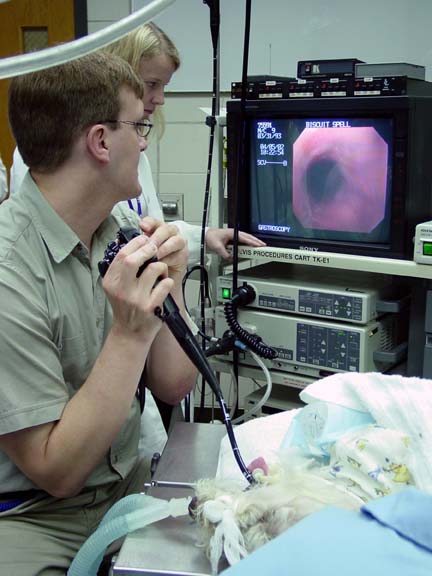
endoscopy 2What’s more, this process – known as endoscopy – is quite expensive, making a comparatively cheap breathalyzer even more attractive to both doctor’s and patients. And of course, this test is generally used when the patient begins showing signs of being in an advanced stage of cancer development, and is therefore not part of an early detection regimen.

In an interview with the British Journal of Cancer, Professor Hossam Haick, lead researcher from the Technion, desribed the benefits of their new device:

The promising findings from this early study suggest that using a breath test to diagnose stomach cancers, as well as more benign complaints, could be a future alternative to endoscopies… Nevertheless, these results are at an early stage and support the concept of a breath test to detect stomach cancers but further validations are needed… But if found to be accurate enough, the nanomaterial breath test presents a new possibility for screening a population for stomach cancer, which would hopefully lead to earlier diagnosis of the disease.

cancer_breathalyserIn an interview with the Guardian, Kate Law, the director of clinical research at Cancer Research UK, said the test could lead to earlier detection of stomach cancer, which could save lives:

The results of this latest study are promising – although large-scale trials will now be needed to confirm these findings. Only one in five people are able to have surgery as part of their treatment as most stomach cancers are diagnosed at stages that are too advanced for surgery. Any test that could help diagnose stomach cancers earlier would make a difference to patients’ long-term survival.

Naturally, Professor Haick admitted that more testing is needed before this can become a regular practice, but both he and his staff are encouraged by their results thus far. What’s more, they clearly have the support of many doctors in the field who see this test as an effective and preferable means of diagnosing cancer over conventional methods.

So for intents and purposes, it would not be farfetched to imagine that during your a trip to see your doctor, he or she might tell you to insert a tube into your mouth and blow, just to make sure you stomach tissue was healthy, pink, and cancer free!

Sources: fastcoexist.com, guardian.co.uk


The Future is Here: Thinx Underwear!

thinx_mainThere are those who believe that underwear can change the world. And when you consider the way that young girls are disadvantaged, disrespected, and neglected worldwide, you have to believe they’re onto something. In many poverty-stricken countries, young women are disadvantaged simply by being young women, and because of a lack of health and medical services as well as sanitary products.

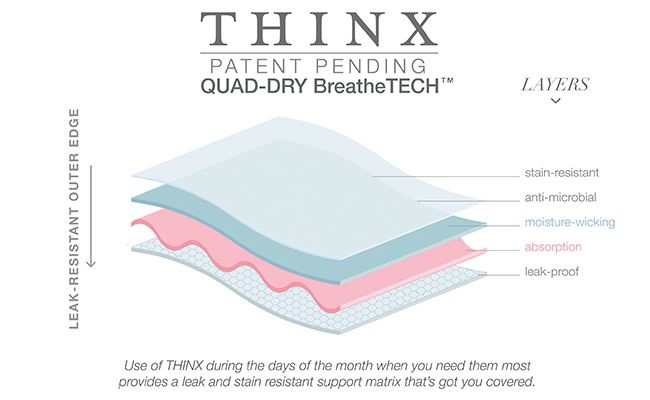
And that’s one of the reasons that Antonia, Miki and Radha Agrawal decided to come up with the product known as the Thinx. After a series of harrowing experiences and inspiration gained from traveling abroad, they developed the idea for a leak/stain-resistant, anti-microbial, and moisture-wicking underwear. And with a little crowdfunding through Kickstarter ($130,000 to be exact), they were able to make it a reality.

thinxThe women also partnered with Uganda-based organization AFRIpads, which creates washable pads for women in developing countries so they don’t have to miss work or school for a week each month. For each pair of underwear Thinx sells, it donates enough money for AFRIpads to create seven pads for young women in their country.

And as a final boost, the women beat out another 145 entrepreneurs in a contest held by the online marketplace known as the Daily Grommet, to have their product sold on the online marketplace, promoted in the media and be featured on the funding website Indiegogo. Here, the ladies appear together to offer their thoughts on insights on how their product can help change the world, as well as relating the story of how they came came up with it.

afripad

So in addition to showing how new media and international marketing to help change the world, this also demonstrates the power of crowdfunding and taking socially-conscious, sustainable ideas directly to the marketplace. What an age we live in! And one also has to consider what this case demonstrates about small things making big impacts.

In addition to helping women in the industrialized world avoid embarrassment and infection, it also will help girls abroad overcome the disadvantages that are so often heaped upon them because of their gender. And this comes not long after the development of the Smart Bra, a revolutionary undergarment that helps women beat breast cancer through early detection. Who say’s underwear can’t change the world?

And be sure to check out the video of the Agrawal sisters Indiegogo interview:


Source:
shethinx.com, fastcompany.com
, indiegogo.com

Dinosaur Eggs Found With Embryos Still Inside

Dinosaur-eggsThis past week, a Canadian group of paleontologists from the University of Toronto announced a rather amazing find. In the course of examining a large fossil bed in China’s Yunnan province, they discovered a series of fossilized dinosaur eggs that are apparently the oldest ever found. But it’s gets even better. Within the nest, they learned that many of these eggs had been crushed, and the remains of several dinosaur embryos perfectly preserved.

The eggs belong to the Late Jurassic, a geologic period that occurred roughly 190 million years ago. It was during this time that a group of huge, long-necked plant-eating dinosaurs called Lufengosaurus gathered together at the site in China’s Yunnan province to lay clutches of softball-sized eggs. It is here that Robert Reisz, leader of the paleontologist group, and his colleagues found the rare preserved remains.

UofT_reiszThese included the crushed eggshells —the oldest dinosaur eggshells ever found — and 200 tiny bones from at least 20 Lufengosaurus embryos, including some that amazingly still appeared to have some protein attached to them. Reisz said it appears that Lufengosaurus chose a nesting site close to a river and some years the nesting site flooded, smothering the embryos. At the time of the dinosaurs, the area had a tropical climate and was likely prone to monsoons during the wet season.

In an interview, Reisz claimed that “[the] eggs were caught at different stages of development. That’s what makes this project really exciting.” It’s exciting because it allows paleontologists to examine how dinosaurs grew while still in the earliest phase of their development. And already, the returns on this discovery are proving very intriguing.

UofT_fossilsFor example, by examining at the thigh bones of embryos of different ages, Reisz and his researchers found evidence that this particular species moved around inside their eggs as birds do, and similar to the way developing mammals move around inside the womb. This is the first time that phenomenon has been documented in a fossil animal, but the real breakthrough was the detection  of the chemical fingerprint of a protein inside the bones.

Ordinarily, paleontologist do not expect to find any protein samples in fossils dating back this far. However, the Taiwanese members of the research team were insistent that they look for proteins using synchrotron radiation and an infrared spectrometer, which looks for the telltale chemical signatures caused by specific molecules absorbing characteristic colours of light. Given what it turned up, Reisz was happy they did!

t-rexThe protein that was detected is believed likely to be collagen, a common protein found in connective tissues such as bones and tendons. Once again, the significance of this is in how it will allow future generations of researchers to examine the links between today’s species and those from previous eras. According to Reisz: “If this is collagen, then the potential for extracting collagen and comparing to those of living animals really opens a new area of research.”

And who knows? If the protein sample proves to be in good enough shape, this particular species of dinosaur might actually find itself being added to the list for de-extinction, right alongside Aurochs, Wooly Mammoths, Do Do birds, and Sabretooth Tigers. Hmm… I guess Jurassic Park isn’t as farfetched as previously thought. In fact, it could one of many geological era-themed parks put all over the world. Personally, I’d hate to be the zoning board that has to find places to host them!

Source: cbc.ca/news

KLM – Claim Your Place In Space

KLM-Space-balloonOnce again, my boundless gratitude – and tumultuous envy! – to Raven Lunatick for learning about this before me and making me aware of it. It’s called the “Claim Your Place In Space” challenge, a social media campaign that offers a ticket on a maiden space voyage, and which is being hosted by the Royal Aviation Company – or Koninklijke Luchtvaart Maatschappij (KLM), as they are known in the Netherlands.

In just a few days time – eight days and fourteen hours as of the time of this article’s writing – they will be launching a high altitude balloon from the Nevada Desert that will ascend into Earth’s orbit. When and where the balloon pops is the subject of the social media campaign they are conducting, and people are encouraged to place bets by selecting the specific altitude and grid references where it will happen.

SXC-001_2-600x392The person who is closest will win the ultimate prize: a flight aboard the companies new zero gravity SXC Lynx Spacecraft! Much like Virgin Galactic’s SpaceShipTwo, this aerospace ship is a prototype that is intended to serve as the mainstay for the company’s commercial space flight fleet in the near future. But unlike the SS2, this vehicle is capable of performing its own take offs as well as landing.

Also relying on a rocket engine, but weighing considerably less than the SS2, the plane has successfully demonstrated the ability to perform vertical takeoffs from a runway, achieve a maximum speed of over mach 2.9, and achieve a suborbital ceiling 100 km above sea level. The entire flight will last only a few minutes, and aside from the pilot only one person will be on board… the winner!SXC-flight-information-space-expedition-astronaut-e1349979084549

To enter, simply go to space.klm.com and place your bets on where and how high the balloon will go. Then join me, Raven, and anyone else looking for a free trip to space in waiting with baited breath for the official draw on April 22nd. I wish everyone who enters luck, but you’ll forgive me if I secretly want this all to myself! Go orbital balloon, hit my grid spot, pleaaaase! Daddy needs a flight into space!

And of course, be sure to check out this promotional video:


Source: space.klm.com

Whiskey Delta Published!

Whiskey_DeltaOh yeah, I went ahead and did it! Lord knows I wanted more time to get some spit and polish in her, but some things wait for no one. And in a lot of ways, I’m happy it came to this because there are times I need a boot in the ass! So my thanks to Rami for giving me that push, due in no small part to the fact that he did the mega-solid of mentioning my work to Mr. Max Brooks!

Yes, the author of World War Z himself recently visited Rami’s stomping grounds of Ohio State University to talk about writing, horror, and his fascination with the undead. And in the course of his talk, Mr. Brooks did me the honor of mentioning my name and the title of my book, as part of his shout out to authors who also tackle the zombie apocalypse. Who am I withhold publishing this book now that the name has crossed the lips of someone who’s actually famous?

So check it out, available on Amazon and Kindle in both paperback and ebook formats!

Amazon.com

Killer Bee

HIV_beevenom

A little bird has confided in me

That in your small carapace lies the key

And teaming masses yearning to live safely

Cry out as one for a demonstration

The good people at Caltech do their best

And make nanoparticles that will pass the test

To kill the viral cells, but leave the rest

Alive and without harmful depletion

And now, we think we’ve won the war at last

And so put an end to a harmful past

Killed the plague that infects the host so fast

And sentences death upon mutation

Alas, my friend, the good news comes too late

Such stories and demos, they will not slate

Our growing demands, or prevent the fate

That foretells of your gory extinction

Note: For those following the A to Z challenge, I apologize for the late posting of my entry for April 11th (or J day). Which is why I’ve posted both J and K today. And just in case you’re wondering what today’s entry is all about, it’s a tragic ode to the Bee, since it is now known that Bee venom is capable of killing HIV, but which comes at a time when the global Bee population is being depleted due to urban sprawl, pollution and loss of natural habitats.

And in keeping with my sci-fi roots, I wrote this poem as if it were dedicated from the near future, where the Bee population had become extinct and the chance for a cure for HIV effectively lost. It’s also written in iambic pentameter and has a rhyme scheme of AAAB, CCCB, DDDB, EEEEB. Hope you enjoyed it and were suitably depressed!

Dealing with Spam

No-SpamI’ll say it right off the bat, I hate spam. No, let me express that properly: I HATE SPAM! And not the cheap, spiced ham that comes in a can. No, that at least has some comedic value, and the Monty Python troop made such good fun of it that the name has a permanent place in my heart. No, I refer of course to the useless adverts and unwanted solicitations that appear in your comments section whenever you log on to your website to see who’s stopping by.

Seeing as how feedback, especially the kind that lets you know you are reaching people, is so encouraging, is it not the most annoying thing in the world to find yourself beset by these uncaring, fishing, and indifferent messages? Sure, we all have been forced to accept that such garbage is simply the price we pay for using an unregulated internet, where its an open sea and you can expect to find your share of trolls, scammers, pirates and thieves. But lately, it’s becoming a total nuisance for me!

In fact, it’s gotten so bad that I’ve actually had to delete a post just so I would stop getting the free flow of useless comments that its come to attract. It was named “Anatomy of the Xenomorph”, and it contained a simple video clip that explains how the Alien costume designers have tinkered with the concept over the years. Don’t ask me why, but something in this article sends up the green flag for people looking to sell me Gucci, Cartier, glasses, handbags, running shoes, sexcam membership, free credit checks, and no credit check loans.

Because of this, it no longer appears on this site, mainly because I sank it in the hopes that it would take the rats down with it. Weeks of this stuff and I still wonder why these buggers were targeting it specifically. I’m sure many of you have seen the stuff I am referring to,  either on your own site or one you cruise by regularly, so tell me is these ring any bells…

One of the most recurring are ones that come with the name “lista de emails”, and they usually contain some nonsense message that lauds your post in such generalized terms so as not to give away the fact that they don’t have the slightest idea what you wrote in it. Others are less subtle, advertising their product directly in the message, cramming a whole of lot poorly formatted verbiage about deals and discounts and even services you can use to improve your website.

Seriously, do these sound familiar? Is it not just me getting hit up by these desperate bungholes? If so, what are you doing to dissuade these people? More than once, I’ve actually approved a comment from a repeat offender just so I could write back and tell them to F off! And now, I’ve deleted a post so they wouldn’t find that open door when next they come around. Do I need to modify my spam filter settings? Because seriously, far too much garbage is getting through here.

Oh, and if any spammers happen to be reading this, do NOT take this opportunity to solicit me, post how much you love my site with an advert link, or tell me I need to upgrade to some service of yours. Seriously deadbeats, back yer sh*t up! Not interested, don’t care, and trying to run a serious, refuse-free site here. So look for a sucker somewhere else!